Shutdown Readiness
Review
ANIL KUMAR MALIK
InternalInternal
Contents
• Shutdown Dimensions
• What is SDRR
• Why SDRR
• When – Numbers and timeline
• SDRR 1 Elements
• SDRR 2 Elements
• How to conduct SDRR?
• Who is should conduct SDRR?
• SDRR Reporting
• Conclusion
InternalInternal
Shutdown Dimensions
Shutdown is a major event with high stakes
 Cost
 Production Loss
 HSE
Objectives :
 Scope,
 Cost,
 Duration,
 Quality,
 HSE
InternalInternal
Shutdown Readiness Review (SDRR)
• The systematic and independent review of readiness and
alignment of all stakeholders to meet shutdown objectives.
• Conducted at appropriate time of turnaround lifecycle and can be
done more than once based on complexity of shutdown.
Internal
Why - SDRR
• There will be risk of NOT meeting one or more objectives - Scope,
Cost, Duration, Quality, HSE if we don’t assess the readiness.
• May have further negative consequences on revenue, reputation
(not meeting customer commitments), HSE loss, penalties, low
morale, plant integrity and reliability.
• Informed stakeholders
• Gated Process
InternalInternal
How Many & When to do SDRR?
• Will depend on complexity : Scope / manhours, duration, organization &
team maturity, technology, competing events (Projects, TA, operation)
• Typically done two times
Internal
Initiation Detailed Planning Pre-Execution Execution
Scope Selection /
Definition
Close-out
Internal
SDRR-1 Initiation
Alignment to business plan
(production, customers, projects),
Steering committee, budget
authorization, High level objectives
SDRR-2 End of Planning Phase
Before starting pre-execution /
execution – Readiness of scope,
definition, detailed planning,
documents (quality, HSE, workpacks
etc), manpower and resources.
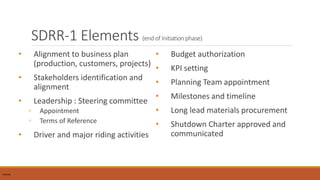
SDRR-1 Elements (end of Initiation phase)
• Alignment to business plan
(production, customers, projects)
• Stakeholders identification and
alignment
• Leadership : Steering committee
◦ Appointment
◦ Terms of Reference
• Driver and major riding activities
• Budget authorization
• KPI setting
• Planning Team appointment
• Milestones and timeline
• Long lead materials procurement
• Shutdown Charter approved and
communicated
InternalInternal
SDRR-2 : Elements (almost at the end of planning phase)
InternalInternal
Project Management
Scope Management
• Frozen List
• Late Worklist Control
• Completeness
• Accuracy
• Well Defined
Risk Management
• Risk Register updated
• Remaining risk
acceptable
• New risk identification
and mitigation
Steering Committee
• Composition
• Authorities and
responsibilities
• Terms of Reference
• Effectiveness
• Alignment
Planning & Execution
Teams
• Composition
• Roles and
responsibilities
• Alignment
• Capability Assessment
and Development
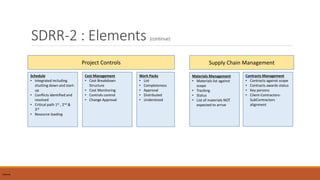
SDRR-2 : Elements (continue)
InternalInternal
Supply Chain Management
Materials Management
• Materials list against
scope
• Tracking
• Status
• List of materials NOT
expected to arrive
Contracts Management
• Contracts against scope
• Contracts awards status
• Key persons
• Client-Contractors-
SubContractors
alignment
Project Controls
Schedule
• Integrated including
shutting down and start-
up
• Conflicts identified and
resolved
• Critical path 1st , 2nd &
3rd
• Resource loading
Cost Management
• Cost Breakdown
Structure
• Cost Monitoring
• Controls control
• Change Approval
Work Packs
• List
• Completeness
• Approval
• Distributed
• Understood
SDRR-2 : Elements (continue)
InternalInternal
Execution
Infrastructure and Resources
• List
• Completeness
• Approval
• Distributed
• Understood
Preparation
• Tagging
• Scaffolding
• Pre-fabrication
Shutdown & Start-Up
• Procedures
• Schedule
• Systems sequence
• Communication
• Handover / Takeover
Documentation
• Execution Packs
• Checklists
SDRR-2 : Elements (continue)
InternalInternal
Engineering
Capital Projects
• Scope integration
• Schedule Integration
• Part of TASC and Planning
teams
• Alignment
Small Projects
• Scope integration
• Schedule Integration
• Part of TASC and
Planning teams
• Alignment
Quality
• Quality Management
System
• Scheme of Examination
• Inspection and Test Plan
• Non-conformance
management
• Documentation
HSE
• HSE Management
• Compliance Audit
• Workforce Vs Safety
Officers
• Safety Culture
• PTW Strategy
Quality HSE
How to conduct SDRR
• Formal Appointment of SDRR Team
• Prepare agenda & Plan for review
• Review Checklist
• Conduct review
• Agreement on Strengths, Gaps and opportunities
• Sharing of experiences
• Opportunity to improve internal alignment
InternalInternal
Review Methodology
Interviewing
Document Review
Observation /
Physical verification
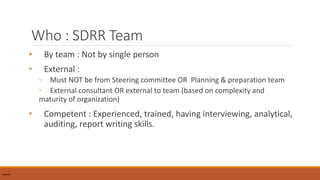
Who : SDRR Team
• By team : Not by single person
• External :
◦ Must NOT be from Steering committee OR Planning & preparation team
◦ External consultant OR external to team (based on complexity and
maturity of organization)
• Competent : Experienced, trained, having interviewing, analytical,
auditing, report writing skills.
InternalInternal
SDRR Reporting
• Comprehensive report : Must cover all areas
• Expected Vs Actual : Provide reference / basis documents
• Share experiences : Lessons Learnt
• Must have Gaps and proposed “Action Plan”
• Agreement with auditee team lead
• Present and agreement with Steering Committee
• Must be presented to higher management
InternalInternal
0
2
4
6
8
10
Project Control
Project Management
Execution
Supply ChainEngineering
HSE
Quality
SDRR Report
Planned Actual
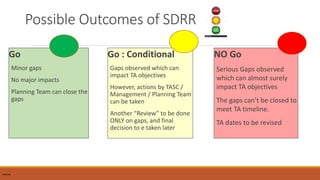
Possible Outcomes of SDRR
Go
Minor gaps
No major impacts
Planning Team can close the
gaps
Go : Conditional
Gaps observed which can
impact TA objectives
However, actions by TASC /
Management / Planning Team
can be taken
Another “Review” to be done
ONLY on gaps, and final
decision to e taken later
Internal
NO Go
Serious Gaps observed
which can almost surely
impact TA objectives
The gaps can’t be closed to
meet TA timeline.
TA dates to be revised
Internal
Conclusion
• Effective Shutdown Readiness Review (SDRR) is MUST
• Advisable to have at least two numbers of SDRRs
• Must be done by independent with organization or by external
consultant
• Improves alignment with teams and contractors
• Results in better predictability of SD outcomes
• Improved SD performance
InternalInternal
Internal
About presenter
Anil Kumar Malik is post graduate in Mechanical Engineering and holding Project Management Professional
PMP certificate. He is an accomplished professional with 23 years of experience in shutdown & turnaround
management, maintenance system development, operational excellence and strategy development in multi-
cultural multi-nationalities environment.
He had participated, led and delivered over 40 large-scale and complex turnarounds projects in energy and
petrochemical industries. He has presented in various international conferences on shutdown and turnarounds
in Australia, Europe, Far-East, Asia and Middle East. He is involved in capability developed.
Anil can be reached at anilkm132103@gmail.com
Internal
Internal
Thanks
Internal

Shutdown readiness review

  • 1.
  • 2.
    Contents • Shutdown Dimensions •What is SDRR • Why SDRR • When – Numbers and timeline • SDRR 1 Elements • SDRR 2 Elements • How to conduct SDRR? • Who is should conduct SDRR? • SDRR Reporting • Conclusion InternalInternal
  • 3.
    Shutdown Dimensions Shutdown isa major event with high stakes  Cost  Production Loss  HSE Objectives :  Scope,  Cost,  Duration,  Quality,  HSE InternalInternal
  • 4.
    Shutdown Readiness Review(SDRR) • The systematic and independent review of readiness and alignment of all stakeholders to meet shutdown objectives. • Conducted at appropriate time of turnaround lifecycle and can be done more than once based on complexity of shutdown. Internal
  • 5.
    Why - SDRR •There will be risk of NOT meeting one or more objectives - Scope, Cost, Duration, Quality, HSE if we don’t assess the readiness. • May have further negative consequences on revenue, reputation (not meeting customer commitments), HSE loss, penalties, low morale, plant integrity and reliability. • Informed stakeholders • Gated Process InternalInternal
  • 6.
    How Many &When to do SDRR? • Will depend on complexity : Scope / manhours, duration, organization & team maturity, technology, competing events (Projects, TA, operation) • Typically done two times Internal Initiation Detailed Planning Pre-Execution Execution Scope Selection / Definition Close-out Internal SDRR-1 Initiation Alignment to business plan (production, customers, projects), Steering committee, budget authorization, High level objectives SDRR-2 End of Planning Phase Before starting pre-execution / execution – Readiness of scope, definition, detailed planning, documents (quality, HSE, workpacks etc), manpower and resources.
  • 7.
    SDRR-1 Elements (endof Initiation phase) • Alignment to business plan (production, customers, projects) • Stakeholders identification and alignment • Leadership : Steering committee ◦ Appointment ◦ Terms of Reference • Driver and major riding activities • Budget authorization • KPI setting • Planning Team appointment • Milestones and timeline • Long lead materials procurement • Shutdown Charter approved and communicated InternalInternal
  • 8.
    SDRR-2 : Elements(almost at the end of planning phase) InternalInternal Project Management Scope Management • Frozen List • Late Worklist Control • Completeness • Accuracy • Well Defined Risk Management • Risk Register updated • Remaining risk acceptable • New risk identification and mitigation Steering Committee • Composition • Authorities and responsibilities • Terms of Reference • Effectiveness • Alignment Planning & Execution Teams • Composition • Roles and responsibilities • Alignment • Capability Assessment and Development
  • 9.
    SDRR-2 : Elements(continue) InternalInternal Supply Chain Management Materials Management • Materials list against scope • Tracking • Status • List of materials NOT expected to arrive Contracts Management • Contracts against scope • Contracts awards status • Key persons • Client-Contractors- SubContractors alignment Project Controls Schedule • Integrated including shutting down and start- up • Conflicts identified and resolved • Critical path 1st , 2nd & 3rd • Resource loading Cost Management • Cost Breakdown Structure • Cost Monitoring • Controls control • Change Approval Work Packs • List • Completeness • Approval • Distributed • Understood
  • 10.
    SDRR-2 : Elements(continue) InternalInternal Execution Infrastructure and Resources • List • Completeness • Approval • Distributed • Understood Preparation • Tagging • Scaffolding • Pre-fabrication Shutdown & Start-Up • Procedures • Schedule • Systems sequence • Communication • Handover / Takeover Documentation • Execution Packs • Checklists
  • 11.
    SDRR-2 : Elements(continue) InternalInternal Engineering Capital Projects • Scope integration • Schedule Integration • Part of TASC and Planning teams • Alignment Small Projects • Scope integration • Schedule Integration • Part of TASC and Planning teams • Alignment Quality • Quality Management System • Scheme of Examination • Inspection and Test Plan • Non-conformance management • Documentation HSE • HSE Management • Compliance Audit • Workforce Vs Safety Officers • Safety Culture • PTW Strategy Quality HSE
  • 12.
    How to conductSDRR • Formal Appointment of SDRR Team • Prepare agenda & Plan for review • Review Checklist • Conduct review • Agreement on Strengths, Gaps and opportunities • Sharing of experiences • Opportunity to improve internal alignment InternalInternal Review Methodology Interviewing Document Review Observation / Physical verification
  • 13.
    Who : SDRRTeam • By team : Not by single person • External : ◦ Must NOT be from Steering committee OR Planning & preparation team ◦ External consultant OR external to team (based on complexity and maturity of organization) • Competent : Experienced, trained, having interviewing, analytical, auditing, report writing skills. InternalInternal
  • 14.
    SDRR Reporting • Comprehensivereport : Must cover all areas • Expected Vs Actual : Provide reference / basis documents • Share experiences : Lessons Learnt • Must have Gaps and proposed “Action Plan” • Agreement with auditee team lead • Present and agreement with Steering Committee • Must be presented to higher management InternalInternal 0 2 4 6 8 10 Project Control Project Management Execution Supply ChainEngineering HSE Quality SDRR Report Planned Actual
  • 15.
    Possible Outcomes ofSDRR Go Minor gaps No major impacts Planning Team can close the gaps Go : Conditional Gaps observed which can impact TA objectives However, actions by TASC / Management / Planning Team can be taken Another “Review” to be done ONLY on gaps, and final decision to e taken later Internal NO Go Serious Gaps observed which can almost surely impact TA objectives The gaps can’t be closed to meet TA timeline. TA dates to be revised Internal
  • 16.
    Conclusion • Effective ShutdownReadiness Review (SDRR) is MUST • Advisable to have at least two numbers of SDRRs • Must be done by independent with organization or by external consultant • Improves alignment with teams and contractors • Results in better predictability of SD outcomes • Improved SD performance InternalInternal
  • 17.
    Internal About presenter Anil KumarMalik is post graduate in Mechanical Engineering and holding Project Management Professional PMP certificate. He is an accomplished professional with 23 years of experience in shutdown & turnaround management, maintenance system development, operational excellence and strategy development in multi- cultural multi-nationalities environment. He had participated, led and delivered over 40 large-scale and complex turnarounds projects in energy and petrochemical industries. He has presented in various international conferences on shutdown and turnarounds in Australia, Europe, Far-East, Asia and Middle East. He is involved in capability developed. Anil can be reached at anilkm132103@gmail.com Internal
  • 18.