WHAT IS PAGET'SDISEASE?
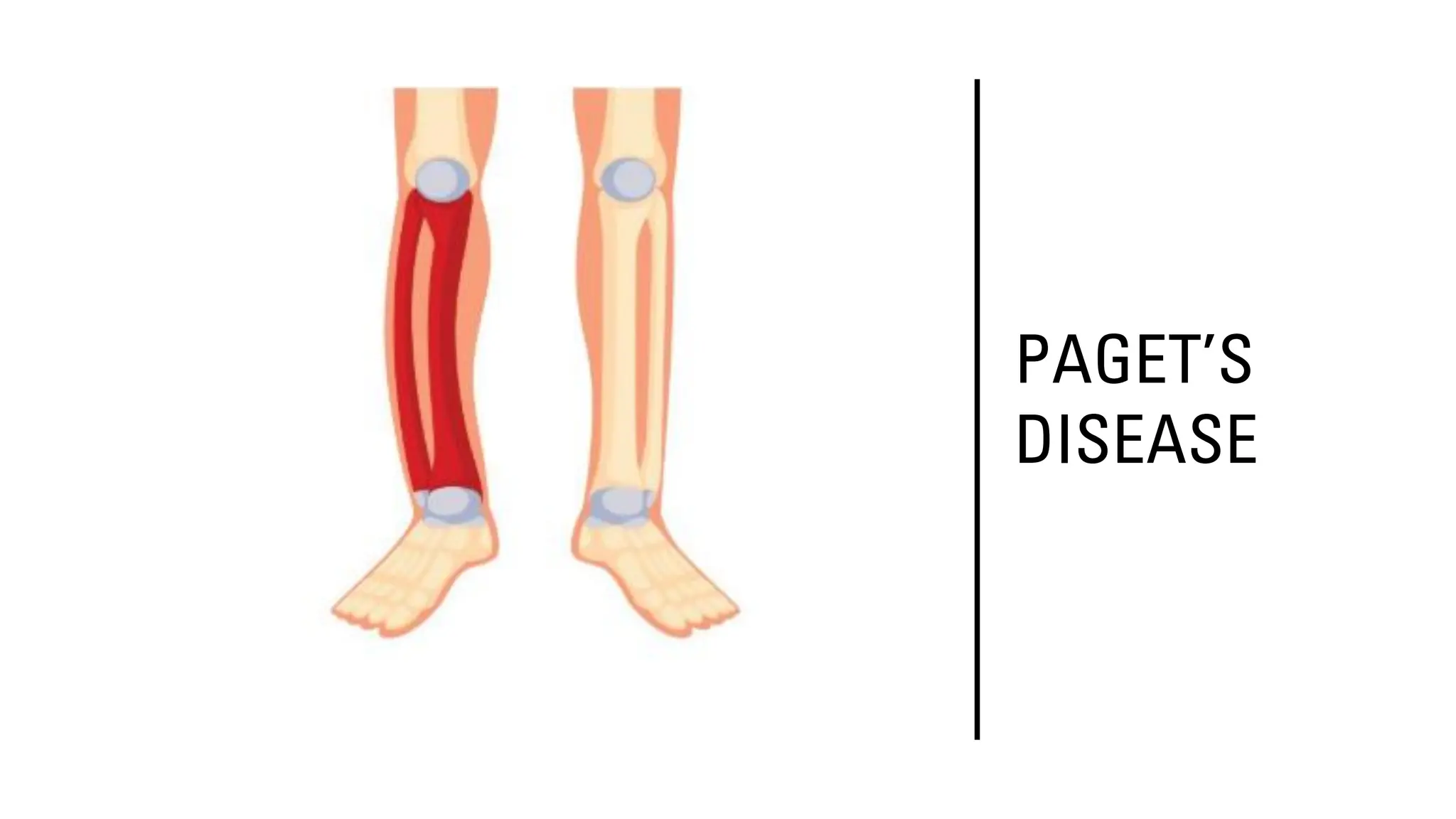
Paget's disease of bone (osteitis deformans) is a chronic
disorder where the normal cycle of bone renewal and repair
is disrupted. This leads to bone that is weak, misshapen,
and larger than normal.
Normally, your body continuously breaks down old bone
(resorption) and builds new, strong bone (formation) in a
balanced process. In Paget's disease, this balance is lost.
3.
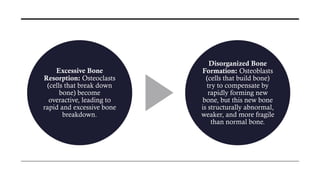
Excessive Bone
Resorption: Osteoclasts
(cellsthat break down
bone) become
overactive, leading to
rapid and excessive bone
breakdown.
Disorganized Bone
Formation: Osteoblasts
(cells that build bone)
try to compensate by
rapidly forming new
bone, but this new bone
is structurally abnormal,
weaker, and more fragile
than normal bone.
4.
• This resultsin bones that are enlarged, misshapen, and prone to fractures. It most commonly
affects the pelvis, spine, skull, and long bones of the legs.
5.
WHY IS IT
IMPORTANTTO
UNDERSTAND
PAGET'S DISEASE?
• Prevalence
• Significant Morbidity
• Effective Treatment
Options
• Differential Diagnosis
6.
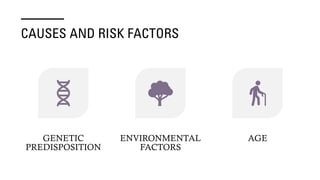
CAUSES AND RISKFACTORS
GENETIC
PREDISPOSITION
ENVIRONMENTAL
FACTORS
AGE
KEY TAKEAWAYS
Paget's diseaseis a
chronic bone disorder
involving abnormal bone
remodeling.
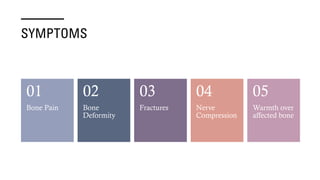
It can lead to bone pain,
deformities, fractures, and
nerve compression.
Early diagnosis (often via
elevated ALP and X-rays)
is crucial.
Bisphosphonates are
highly effective in
managing the disease and
preventing complications.
Regular monitoring and
multidisciplinary care are
essential for optimal
outcomes.




![PERI-PROSTHETIC FRACTURE NAIL-PLATE CONSTRUCT [NPC].pptx](https://cdn.slidesharecdn.com/ss_thumbnails/drarunkumardrmohamedashrafperiprostheticfrasturenail-plateconstructnpc-260209164459-7e9d15a1-thumbnail.jpg?width=640&height=640&fit=bounds)


