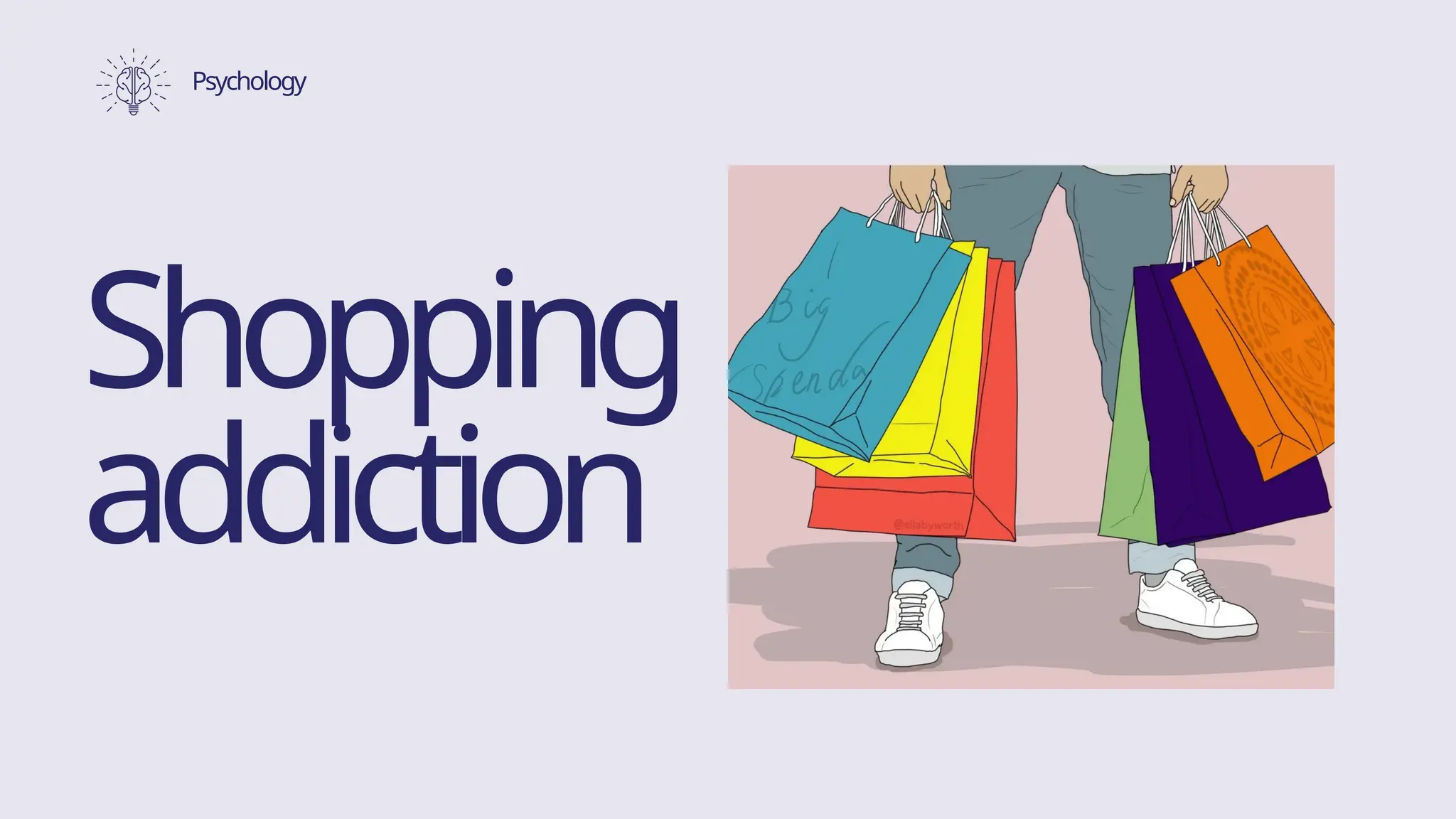
Shopping
addiction
Psychology
1-Introductiontomodern
addictions:Shopping.
Definitionsandkeyconcepts
• Definition of Modern Addiction and
Introduction to Shopping Addiction
(Oniomania)
• Causes, Effects, Solutions
2-CausesofShoppingAddiction
• Factors Contributing to Oniomania
1.Psychological Influences: Some people shop to feel better when they are
sad, stressed, or anxious.
2.Social Influences: Seeing friends, celebrities, or ads showing off new things
can make people want to buy more.
3.Technological Influences: Online shopping makes it very easy to buy things
anytime, anywhere.
• Role of Endorphins and Emotional Regulation
When people shop, their brains release chemicals called endorphins that
make them feel happy. This can make shopping feel like a way to cope with
negative emotions.
• Real-life Examples and Case Studies
For example, a person might shop a lot after a breakup to feel better, but this
can lead to serious problems if it becomes a habit.
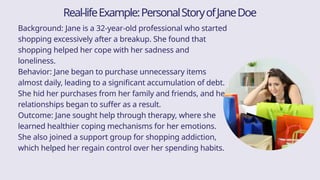
Background: Jane is a 32-year-old professional who started
shopping excessively after a breakup. She found that
shopping helped her cope with her sadness and
loneliness.
Behavior: Jane began to purchase unnecessary items
almost daily, leading to a significant accumulation of debt.
She hid her purchases from her family and friends, and her
relationships began to suffer as a result.
Outcome: Jane sought help through therapy, where she
learned healthier coping mechanisms for her emotions.
She also joined a support group for shopping addiction,
which helped her regain control over her spending habits.
Real-lifeExample:PersonalStoryofJaneDoe
3-EffectsofShoppingAddiction
• Impact on Individuals
Financial Consequences: Shopping too much can lead to huge debts and financial
trouble.
Emotional Stress and Psychological Well-being: After shopping sprees, people
might feel guilty, ashamed, or stressed.
• Impact on Society
Consumer Culture: Our society often encourages buying more and more, which
can worsen shopping addiction.
Environmental Impacts: Producing and buying too many products can harm the
environment.
Social Relationships: Shopping addiction can hurt relationships with family and
friends because it can lead to arguments and isolation.
• Illustrative Examples and Case Studies
For instance, someone might buy expensive clothes to impress others, but end up
feeling lonely because they miss out on meaningful connections.
Background: John, a successful entrepreneur, developed a
shopping addiction after experiencing high stress levels
from work.
Behavior: John started buying luxury items and expensive
gadgets as a way to reward himself for his hard work. Over
time, his spending escalated, and he began to use credit
cards to fund his purchases.
Outcome: John's financial situation deteriorated, leading to
bankruptcy. He also faced strained relationships with his
family due to his secretive and compulsive buying
behavior. John eventually sought help from a financial
advisor and a therapist to address his addiction and
rebuild his life.
Real-lifeExample:TheFinancialDownfallofJohnSmith
• Strategies for Prevention
Education: Teaching people, especially kids, about the risks of shopping addiction can help
prevent it.
Financial Literacy: Learning how to manage money wisely can stop people from
overspending.
Mindfulness Techniques: Practicing mindfulness can help people find healthier ways to deal
with stress.
• Role of Individuals, Families, and Society
Individuals can seek help, families can offer support, and society can create programs to help
those affected.
• Effective Programs and Initiatives
Support groups, counseling services, and financial planning can help people recover from
shopping addiction.
4.SolutionsandPrevention
Conclusion
1.Shopping addiction is caused by psychological, social,
and technological factors. It has serious effects on
individuals and society, but there are ways to prevent
and treat it.
2. It’s important to understand and address these
modern addictions to improve our well-being and
society.
3. Let’s think about this: “How can we balance
consumerism with mental well-being?”
By working together, we can help people avoid and recover
from shopping addiction and lead healthier, happier lives.
Thanksforyour
attention!

Shopping Addiction - Psychology Presentation.pptx

  • 1.
  • 2.
    1-Introductiontomodern addictions:Shopping. Definitionsandkeyconcepts • Definition ofModern Addiction and Introduction to Shopping Addiction (Oniomania) • Causes, Effects, Solutions
  • 3.
    2-CausesofShoppingAddiction • Factors Contributingto Oniomania 1.Psychological Influences: Some people shop to feel better when they are sad, stressed, or anxious. 2.Social Influences: Seeing friends, celebrities, or ads showing off new things can make people want to buy more. 3.Technological Influences: Online shopping makes it very easy to buy things anytime, anywhere. • Role of Endorphins and Emotional Regulation When people shop, their brains release chemicals called endorphins that make them feel happy. This can make shopping feel like a way to cope with negative emotions. • Real-life Examples and Case Studies For example, a person might shop a lot after a breakup to feel better, but this can lead to serious problems if it becomes a habit.
  • 4.
    Background: Jane isa 32-year-old professional who started shopping excessively after a breakup. She found that shopping helped her cope with her sadness and loneliness. Behavior: Jane began to purchase unnecessary items almost daily, leading to a significant accumulation of debt. She hid her purchases from her family and friends, and her relationships began to suffer as a result. Outcome: Jane sought help through therapy, where she learned healthier coping mechanisms for her emotions. She also joined a support group for shopping addiction, which helped her regain control over her spending habits. Real-lifeExample:PersonalStoryofJaneDoe
  • 5.
    3-EffectsofShoppingAddiction • Impact onIndividuals Financial Consequences: Shopping too much can lead to huge debts and financial trouble. Emotional Stress and Psychological Well-being: After shopping sprees, people might feel guilty, ashamed, or stressed. • Impact on Society Consumer Culture: Our society often encourages buying more and more, which can worsen shopping addiction. Environmental Impacts: Producing and buying too many products can harm the environment. Social Relationships: Shopping addiction can hurt relationships with family and friends because it can lead to arguments and isolation. • Illustrative Examples and Case Studies For instance, someone might buy expensive clothes to impress others, but end up feeling lonely because they miss out on meaningful connections.
  • 6.
    Background: John, asuccessful entrepreneur, developed a shopping addiction after experiencing high stress levels from work. Behavior: John started buying luxury items and expensive gadgets as a way to reward himself for his hard work. Over time, his spending escalated, and he began to use credit cards to fund his purchases. Outcome: John's financial situation deteriorated, leading to bankruptcy. He also faced strained relationships with his family due to his secretive and compulsive buying behavior. John eventually sought help from a financial advisor and a therapist to address his addiction and rebuild his life. Real-lifeExample:TheFinancialDownfallofJohnSmith
  • 7.
    • Strategies forPrevention Education: Teaching people, especially kids, about the risks of shopping addiction can help prevent it. Financial Literacy: Learning how to manage money wisely can stop people from overspending. Mindfulness Techniques: Practicing mindfulness can help people find healthier ways to deal with stress. • Role of Individuals, Families, and Society Individuals can seek help, families can offer support, and society can create programs to help those affected. • Effective Programs and Initiatives Support groups, counseling services, and financial planning can help people recover from shopping addiction. 4.SolutionsandPrevention
  • 8.
    Conclusion 1.Shopping addiction iscaused by psychological, social, and technological factors. It has serious effects on individuals and society, but there are ways to prevent and treat it. 2. It’s important to understand and address these modern addictions to improve our well-being and society. 3. Let’s think about this: “How can we balance consumerism with mental well-being?” By working together, we can help people avoid and recover from shopping addiction and lead healthier, happier lives.
  • 9.