Share & Share Alike:
How Texas Libraries (Big & Small) Can
Make Resource Sharing More Effective


 Nora Dethloff, University of Houston
  Ryan Litsey, Texas Tech University
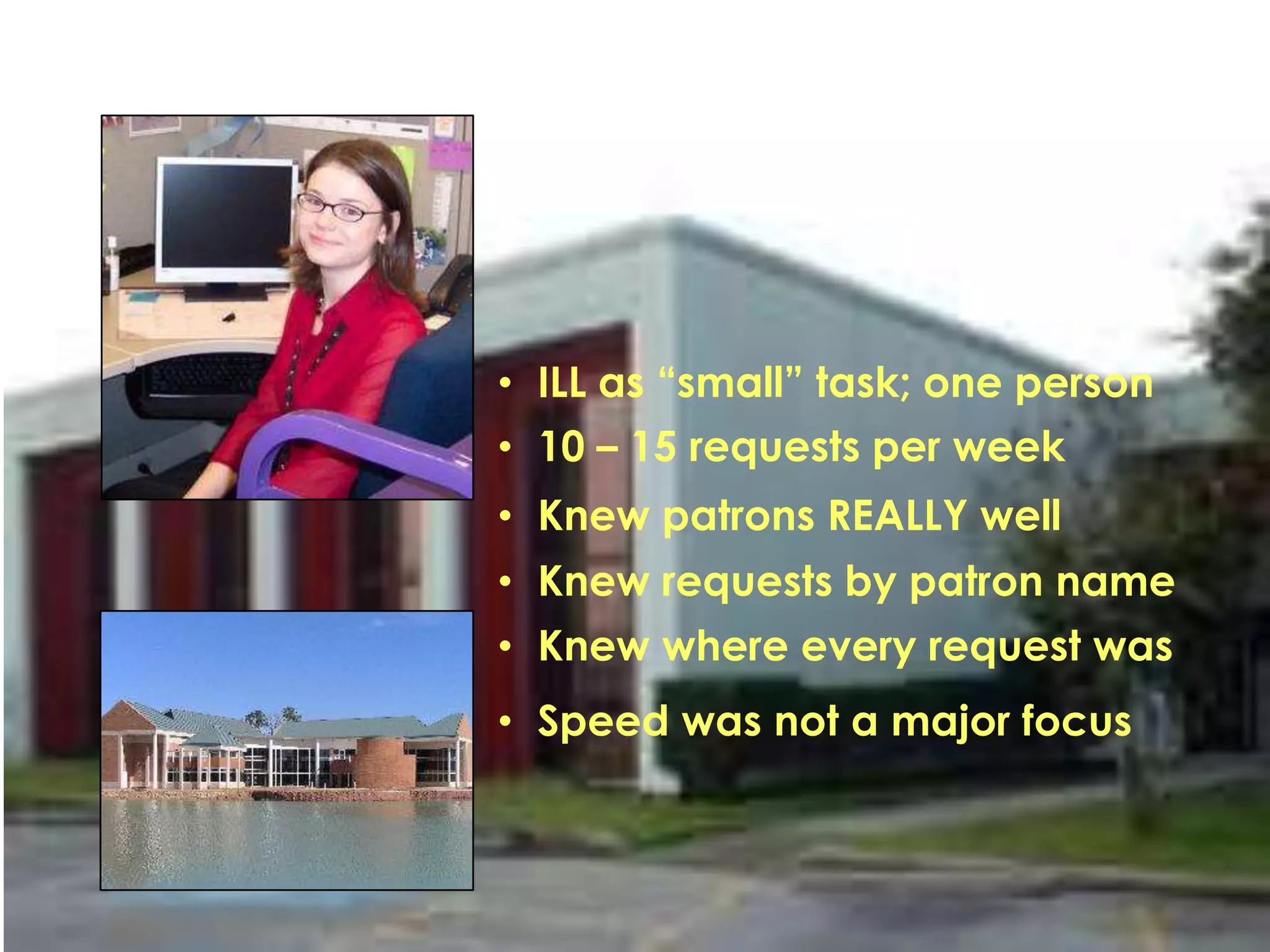
• ILL as “small” task; one person
• 10 – 15 requests per week
• Knew patrons REALLY well
• Knew requests by patron name
• Knew where every request was
• Speed was not a major focus
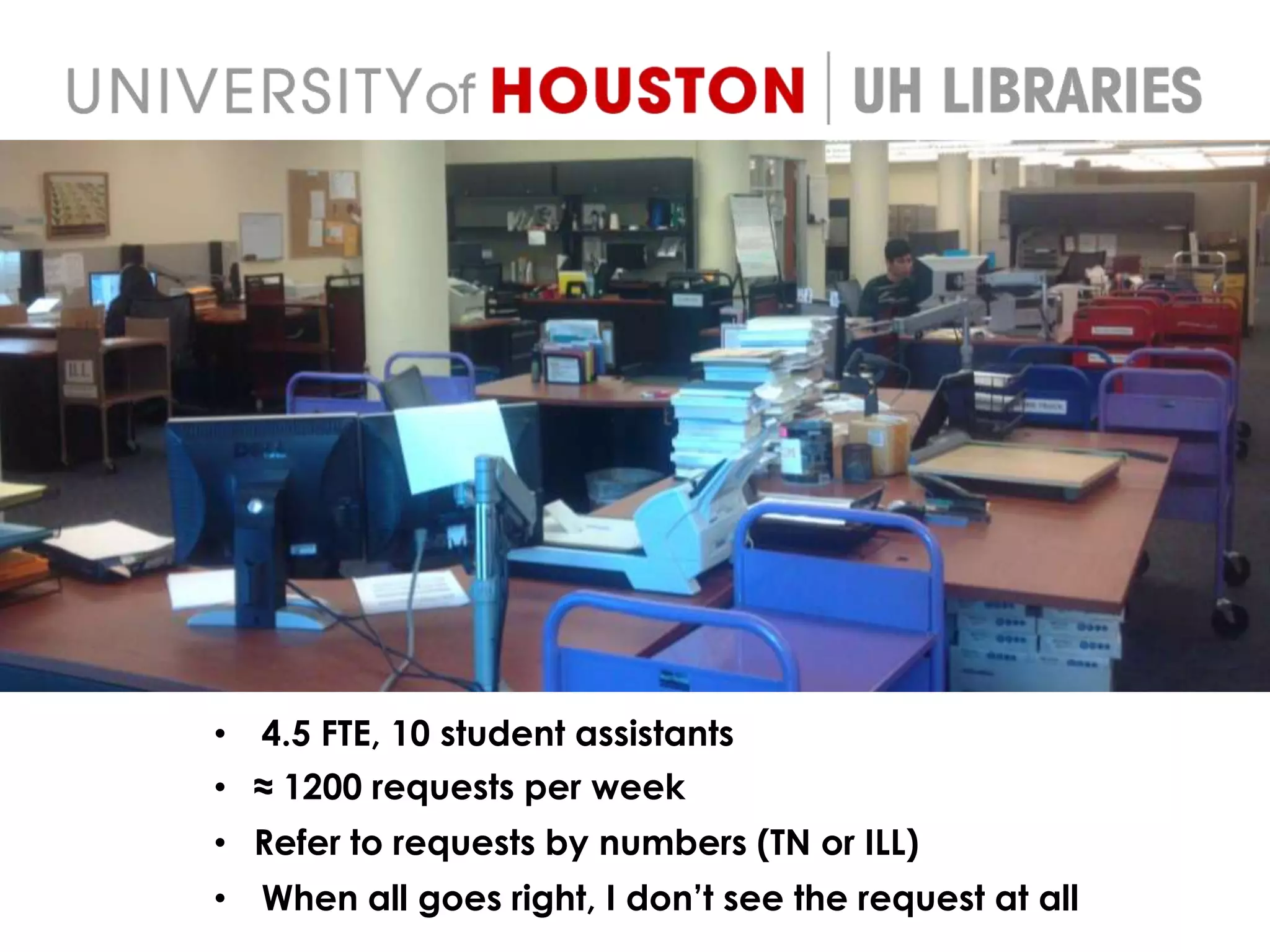
• 4.5 FTE, 10 student assistants
• ≈ 1200 requests per week
• Refer to requests by numbers (TN or ILL)
• When all goes right, I don’t see the request at all
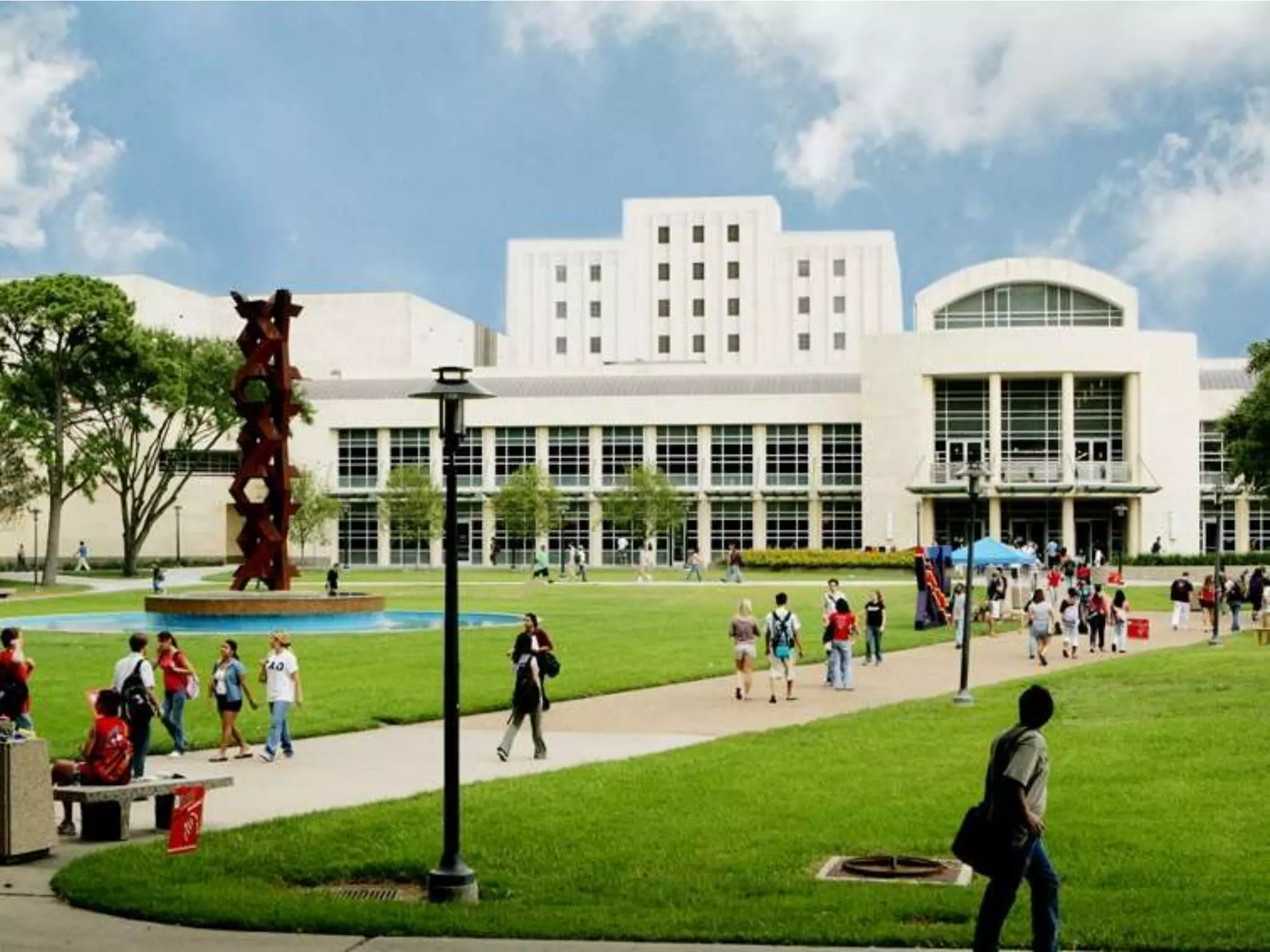
• 7.5 FTE, 14 student assistants
• ≈ 1400 requests per week
• Refer to requests by numbers (TN or ILL)
• When all goes right, I don’t see the request at all
It’s
all about
    the
            TAT
                   (Turn Around Time)


Image: flickr.com/photos/jesssseeee/4829566733/
There are a lot of us…


                                                      Image: flickr.com/photos/dsuniaga/4980023445/


We’re very process-oriented

We streamline / automate whatever we can

We think everyone is like us – Sorry!

Use the systems to your advantage:
    - Unit email is better than a personal email (phone too!)
    - Online request form is better than an ALA request
    - Check the OCLC Policies Directory or our Lending web pages
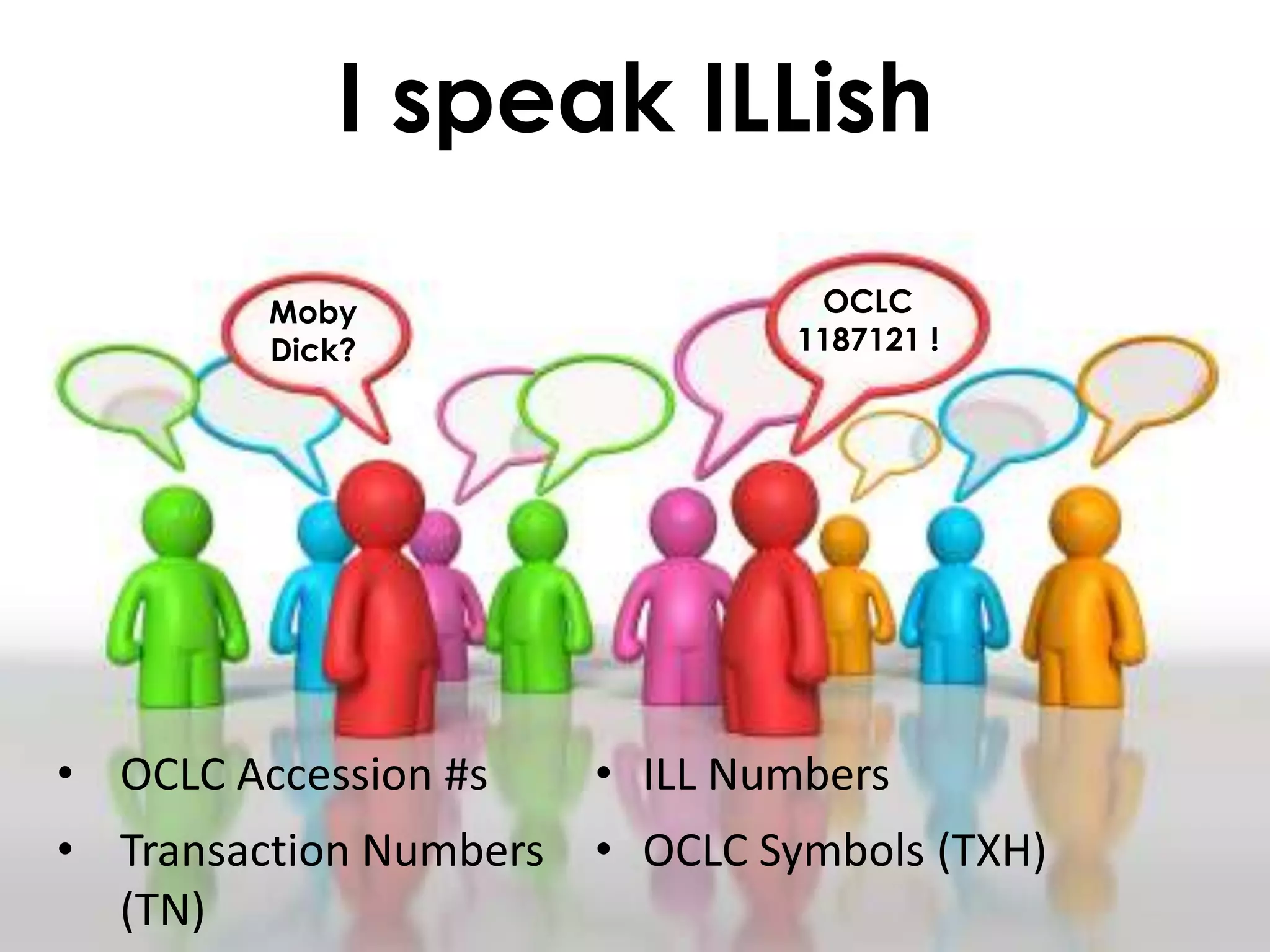
I speak ILLish

         Moby                    OCLC
         Dick?                  1187121 !


• OCLC Accession #s     • ILL Numbers
• Transaction Numbers   • OCLC Symbols (TXH)
  (TN)
Getting to know you...

                         • Up-to-date
                           policies
                           directory

                         • Complete
                           constant
                           data

                         • Email

                         • Web pages
And now…


           The Technical Part
Technology can help us
There are several technologies that can help large and
            small libraries work together
  •   Odyssey standalone
  •   OCLC article Exchange
  •   Worldcat.org
  •   ILLiad
      – Lending WebPages
Odyssey standalone
• Odyssey standalone is a free version of the
  document delivery software used by ILLiad
  libraries
• This helps you both send and receive ILL requests
  in a format familiar to academic libraries
• More info can be found here:
  – http://www.atlas-sys.com/odyssey/
  – http://workflowtoolkit.wordpress.com/odyssey-
    standalone/
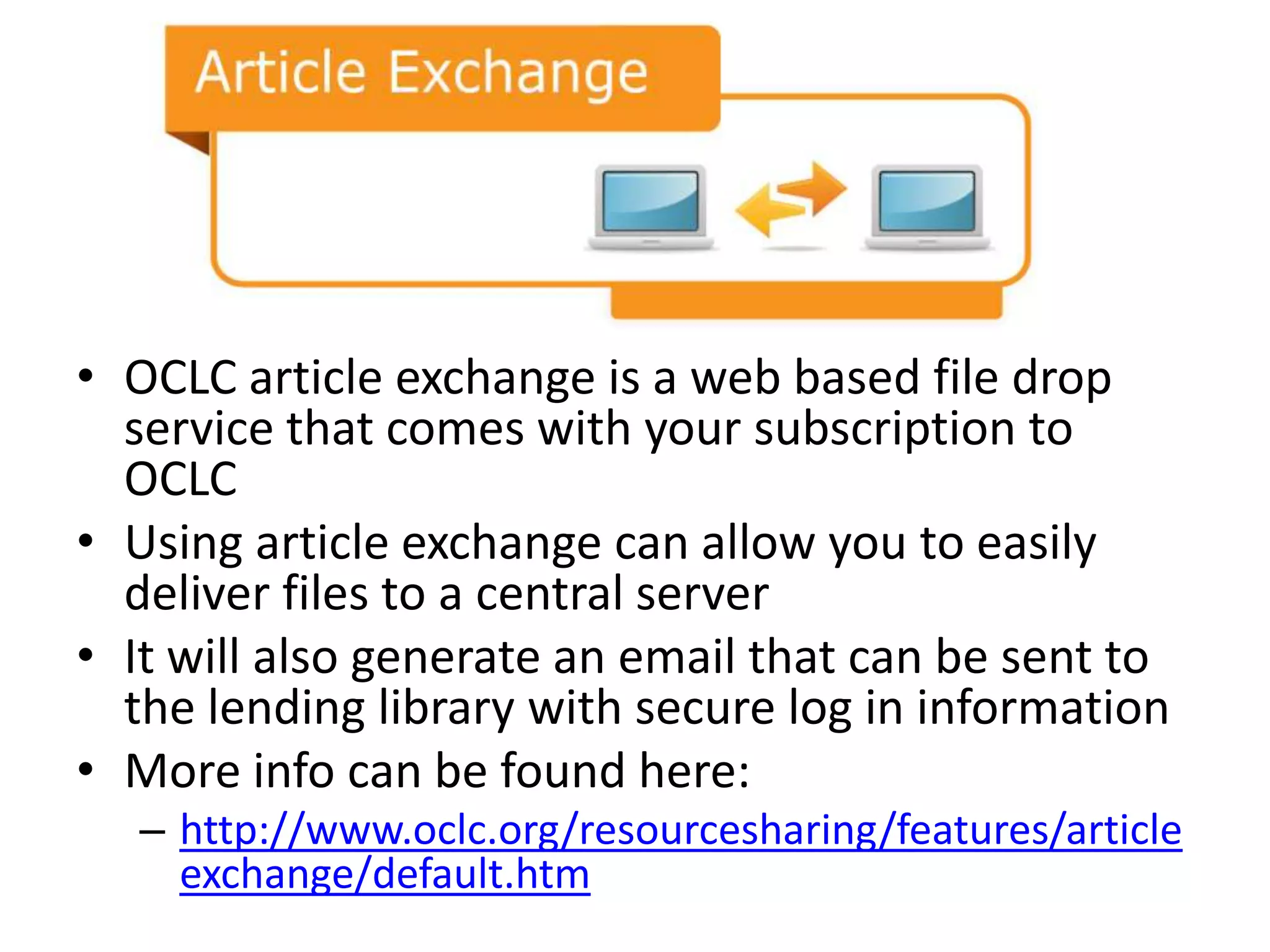
• OCLC article exchange is a web based file drop
  service that comes with your subscription to
  OCLC
• Using article exchange can allow you to easily
  deliver files to a central server
• It will also generate an email that can be sent to
  the lending library with secure log in information
• More info can be found here:
   – http://www.oclc.org/resourcesharing/features/article
     exchange/default.htm
• Larger libraries are looking for easily
  identifiable information to process requests in
  bulk
• Worldcat.org can provide some of those key
  details
• The first is the OCLC number
• Most large academic           Lending WebPages
  libraries use ILLiad

• The use of ILLiad means
  you do not have to fill out
  an ARL form

• These schools have specific
  request pages for outside
  requests, they are called
  the lending WebPages

• You can access these pages
  by contacting the lending
  library
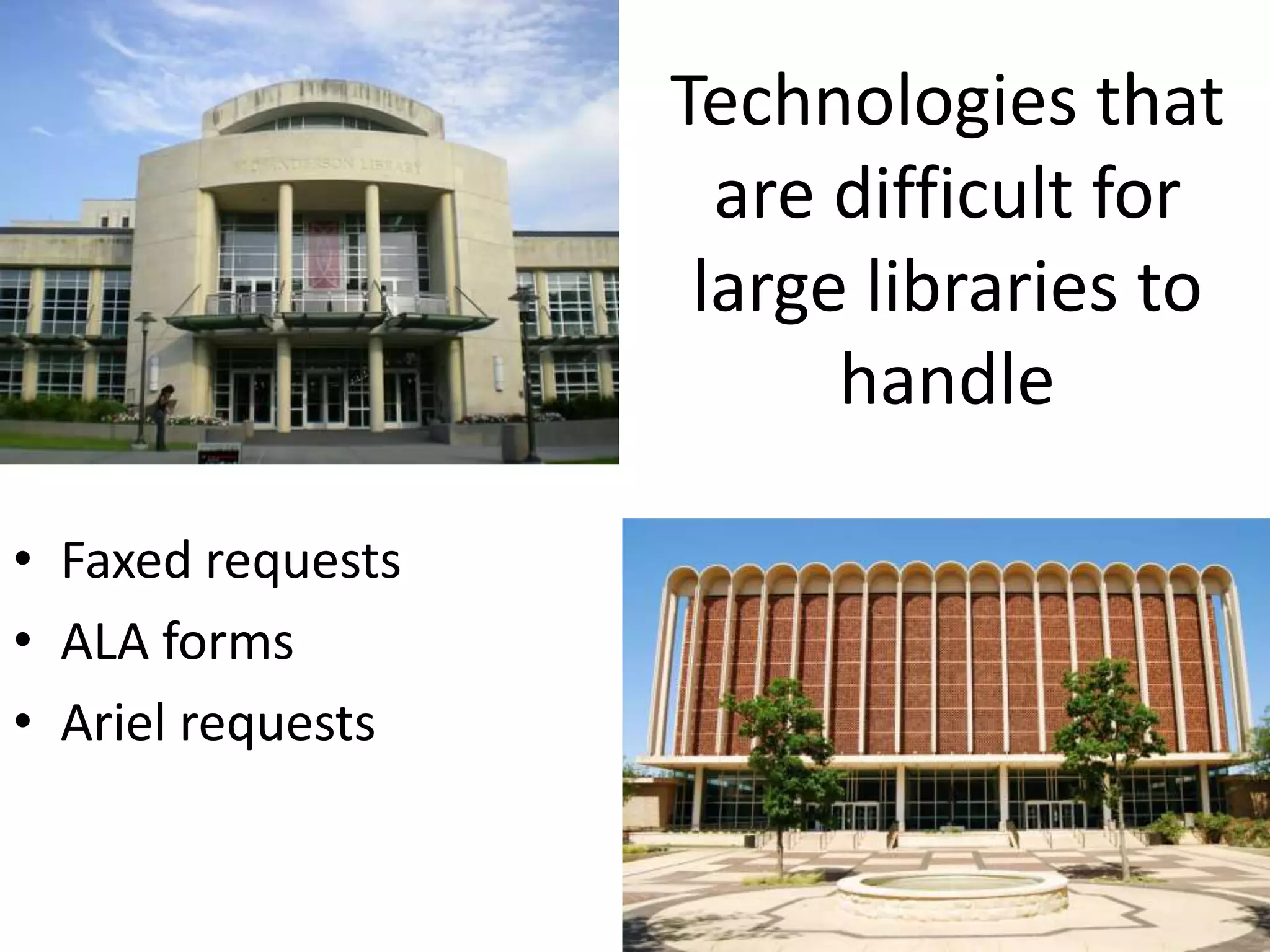
Technologies that
                     are difficult for
                    large libraries to
                         handle

• Faxed requests
• ALA forms
• Ariel requests
What’s your story?


                     ndethloff@uh.edu
                     ryan.litsey@ttu.edu
Thank you!

Share & share alike

  • 1.
    Share & ShareAlike: How Texas Libraries (Big & Small) Can Make Resource Sharing More Effective Nora Dethloff, University of Houston Ryan Litsey, Texas Tech University
  • 2.
    • ILL as“small” task; one person • 10 – 15 requests per week • Knew patrons REALLY well • Knew requests by patron name • Knew where every request was • Speed was not a major focus
  • 4.
    • 4.5 FTE,10 student assistants • ≈ 1200 requests per week • Refer to requests by numbers (TN or ILL) • When all goes right, I don’t see the request at all
  • 5.
    • 7.5 FTE,14 student assistants • ≈ 1400 requests per week • Refer to requests by numbers (TN or ILL) • When all goes right, I don’t see the request at all
  • 6.
    It’s all about the TAT (Turn Around Time) Image: flickr.com/photos/jesssseeee/4829566733/
  • 7.
    There are alot of us… Image: flickr.com/photos/dsuniaga/4980023445/ We’re very process-oriented We streamline / automate whatever we can We think everyone is like us – Sorry! Use the systems to your advantage: - Unit email is better than a personal email (phone too!) - Online request form is better than an ALA request - Check the OCLC Policies Directory or our Lending web pages
  • 8.
    I speak ILLish Moby OCLC Dick? 1187121 ! • OCLC Accession #s • ILL Numbers • Transaction Numbers • OCLC Symbols (TXH) (TN)
  • 9.
    Getting to knowyou... • Up-to-date policies directory • Complete constant data • Email • Web pages
  • 10.
    And now… The Technical Part
  • 11.
  • 12.
    There are severaltechnologies that can help large and small libraries work together • Odyssey standalone • OCLC article Exchange • Worldcat.org • ILLiad – Lending WebPages
  • 13.
    Odyssey standalone • Odysseystandalone is a free version of the document delivery software used by ILLiad libraries • This helps you both send and receive ILL requests in a format familiar to academic libraries • More info can be found here: – http://www.atlas-sys.com/odyssey/ – http://workflowtoolkit.wordpress.com/odyssey- standalone/
  • 14.
    • OCLC articleexchange is a web based file drop service that comes with your subscription to OCLC • Using article exchange can allow you to easily deliver files to a central server • It will also generate an email that can be sent to the lending library with secure log in information • More info can be found here: – http://www.oclc.org/resourcesharing/features/article exchange/default.htm
  • 15.
    • Larger librariesare looking for easily identifiable information to process requests in bulk • Worldcat.org can provide some of those key details • The first is the OCLC number
  • 16.
    • Most largeacademic Lending WebPages libraries use ILLiad • The use of ILLiad means you do not have to fill out an ARL form • These schools have specific request pages for outside requests, they are called the lending WebPages • You can access these pages by contacting the lending library
  • 17.
    Technologies that are difficult for large libraries to handle • Faxed requests • ALA forms • Ariel requests
  • 18.
    What’s your story? ndethloff@uh.edu ryan.litsey@ttu.edu
  • 19.

Editor's Notes

  • #2 Poll question: What type of library are you from?