GABRIELA GUEVARA Q
SIXTH SEMESTER OF LANGUAGES


  Who was William
   Shakespeare?
Be not afraid of greatness: some
 are born great, some achieve
   greatness, and some have
 greatness thrust upon them.
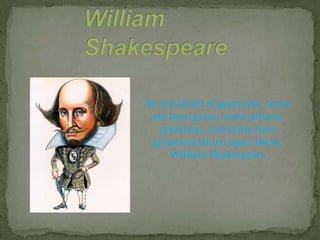
     William Shakespeare
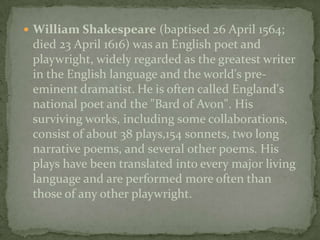
 William Shakespeare (baptised 26 April 1564;
 died 23 April 1616) was an English poet and
 playwright, widely regarded as the greatest writer
 in the English language and the world's pre-
 eminent dramatist. He is often called England's
 national poet and the "Bard of Avon". His
 surviving works, including some collaborations,
 consist of about 38 plays,154 sonnets, two long
 narrative poems, and several other poems. His
 plays have been translated into every major living
 language and are performed more often than
 those of any other playwright.
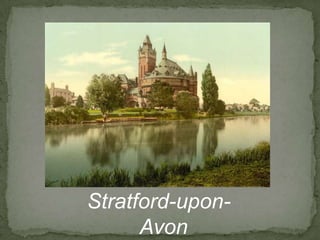
Stratford-upon-
      Avon
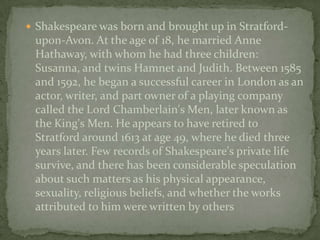
 Shakespeare was born and brought up in Stratford-
 upon-Avon. At the age of 18, he married Anne
 Hathaway, with whom he had three children:
 Susanna, and twins Hamnet and Judith. Between 1585
 and 1592, he began a successful career in London as an
 actor, writer, and part owner of a playing company
 called the Lord Chamberlain's Men, later known as
 the King's Men. He appears to have retired to
 Stratford around 1613 at age 49, where he died three
 years later. Few records of Shakespeare's private life
 survive, and there has been considerable speculation
 about such matters as his physical appearance,
 sexuality, religious beliefs, and whether the works
 attributed to him were written by others
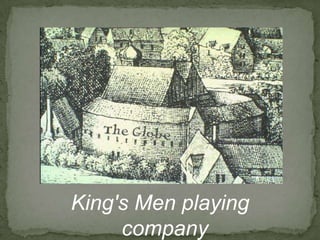
King's Men playing
     company
 Shakespeare produced most of his known work
 between 1589 and 1613.His early plays were mainly
 comedies and histories, genres he raised to the
 peak of sophistication and artistry by the end of
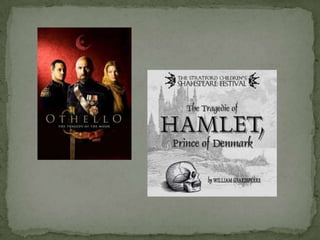
 the 16th century. He then wrote mainly tragedies
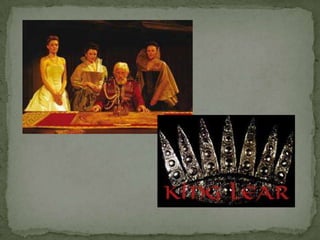
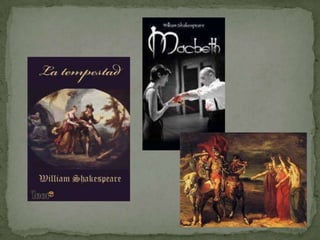
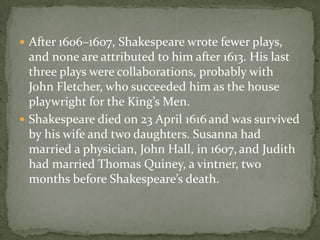
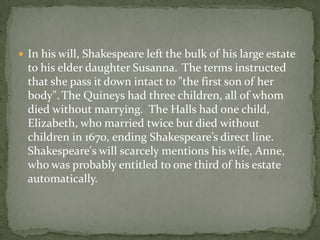
 until about 1608, including Hamlet, King Lear,
 Othello, and Macbeth, considered some of the
 finest works in the English language. In his last
 phase, he wrote tragicomedies, also known as
 romances, and collaborated with other
 playwrights.
 After 1606–1607, Shakespeare wrote fewer plays,
  and none are attributed to him after 1613. His last
  three plays were collaborations, probably with
  John Fletcher, who succeeded him as the house
  playwright for the King’s Men.
 Shakespeare died on 23 April 1616 and was survived
  by his wife and two daughters. Susanna had
  married a physician, John Hall, in 1607, and Judith
  had married Thomas Quiney, a vintner, two
  months before Shakespeare’s death.
 In his will, Shakespeare left the bulk of his large estate
  to his elder daughter Susanna. The terms instructed
  that she pass it down intact to "the first son of her
  body". The Quineys had three children, all of whom
  died without marrying. The Halls had one child,
  Elizabeth, who married twice but died without
  children in 1670, ending Shakespeare’s direct line.
  Shakespeare's will scarcely mentions his wife, Anne,
  who was probably entitled to one third of his estate
  automatically.
 He did make a point, however, of leaving her "my
  second best bed", a bequest that has led to much
  speculation. Some scholars see the bequest as an insult
  to Anne, whereas others believe that the second-best
  bed would have been the matrimonial bed and
  therefore rich in significance.
 Shakespeare was buried in the chancel of the Holy
  Trinity Church two days after his death. The epitaph
  carved into the stone slab covering his grave includes a
  curse against moving his bones, which was carefully
  avoided during restoration of the church in 2008:
1. Nobody knows Shakespeare's actual birthday. Scholars think he was
    born on April 23, 1564, three days before his baptism was recorded at
    a church in Stratford, England. Strangely enough, his death in 1616
    also occurred on April 23.
2. As far as we know, he never went beyond grammar school, probably
    finishing in his early to mid-teens. In those days, grammar school was
    way more advanced than now: Students learned Latin, math and
    religion; they read classical literature and studied using a hornbook
    (paper glued to a piece of wood and covered with clear animal
    horn).
3. Shakespeare applied to the College of Heralds for a coat of arms for
   his father. A coat of arms was a symbol of higher rank in British society.
   The Shakespeare family's coat of arms has a spear in the middle and
   a falcon on top. Shakespeare inherited the coat of arms when his
   father died and was then permitted to call himself a gentleman.
4. Shakespeare and his wife, Anne Hathaway, had three
 children: Susanna and twins Judith and Hamnet. The
 twins were named after neighbors who named their son
 William. Although Hamnet died at age 11, his name lives
 on: It was sometimes written as Hamlet, the title of one
 of his father's greatest characters and plays.
 Shakespeare's last descendant, a granddaughter, died
 in 1670.

5. "Shakespeare" was spelled 80 different ways, including
  "Shaxpere" and "Shaxberd.”

6. Shakespeare is the most translated author ever. His work
  is read in at least 80 languages, including Chinese,
  Italian, Armenian, Bengali, Tagalog, Uzbek and Krio
  (spoken by freed slaves in Sierra Leone).
7. Shakespeare is thought to have written 39 plays. About half
   were printed in small booklets before his death. But some of
   his most famous works, including Macbeth and Julius Caesar,
   were not printed in his lifetime. They would not have been
   handed down to us had not two men in Shakespeare's
   acting company—John Heminge and Henry Condell—
    printed 36 of his plays in a book called the First Folio. When
   the book was published in 1623, seven years after
   Shakespeare's death, it sold for 1 British pound (several
   hundred dollars in today's money). One sold in 2006 for nearly
   $5 million
8. While most people regularly use about 2,000 words,
   Shakespeare used more than 25,000 in his writing.

9. Did Shakespeare really write Shakespeare? Some people
   think that other authors wrote the works credited to him. This
   is a debate that likely will continue.

Shakespeare experts

  • 1.
    GABRIELA GUEVARA Q SIXTHSEMESTER OF LANGUAGES Who was William Shakespeare?
  • 2.
    Be not afraidof greatness: some are born great, some achieve greatness, and some have greatness thrust upon them. William Shakespeare
  • 3.
     William Shakespeare(baptised 26 April 1564; died 23 April 1616) was an English poet and playwright, widely regarded as the greatest writer in the English language and the world's pre- eminent dramatist. He is often called England's national poet and the "Bard of Avon". His surviving works, including some collaborations, consist of about 38 plays,154 sonnets, two long narrative poems, and several other poems. His plays have been translated into every major living language and are performed more often than those of any other playwright.
  • 4.
  • 5.
     Shakespeare wasborn and brought up in Stratford- upon-Avon. At the age of 18, he married Anne Hathaway, with whom he had three children: Susanna, and twins Hamnet and Judith. Between 1585 and 1592, he began a successful career in London as an actor, writer, and part owner of a playing company called the Lord Chamberlain's Men, later known as the King's Men. He appears to have retired to Stratford around 1613 at age 49, where he died three years later. Few records of Shakespeare's private life survive, and there has been considerable speculation about such matters as his physical appearance, sexuality, religious beliefs, and whether the works attributed to him were written by others
  • 6.
  • 7.
     Shakespeare producedmost of his known work between 1589 and 1613.His early plays were mainly comedies and histories, genres he raised to the peak of sophistication and artistry by the end of the 16th century. He then wrote mainly tragedies until about 1608, including Hamlet, King Lear, Othello, and Macbeth, considered some of the finest works in the English language. In his last phase, he wrote tragicomedies, also known as romances, and collaborated with other playwrights.
  • 11.
     After 1606–1607,Shakespeare wrote fewer plays, and none are attributed to him after 1613. His last three plays were collaborations, probably with John Fletcher, who succeeded him as the house playwright for the King’s Men.  Shakespeare died on 23 April 1616 and was survived by his wife and two daughters. Susanna had married a physician, John Hall, in 1607, and Judith had married Thomas Quiney, a vintner, two months before Shakespeare’s death.
  • 12.
     In hiswill, Shakespeare left the bulk of his large estate to his elder daughter Susanna. The terms instructed that she pass it down intact to "the first son of her body". The Quineys had three children, all of whom died without marrying. The Halls had one child, Elizabeth, who married twice but died without children in 1670, ending Shakespeare’s direct line. Shakespeare's will scarcely mentions his wife, Anne, who was probably entitled to one third of his estate automatically.
  • 13.
     He didmake a point, however, of leaving her "my second best bed", a bequest that has led to much speculation. Some scholars see the bequest as an insult to Anne, whereas others believe that the second-best bed would have been the matrimonial bed and therefore rich in significance.  Shakespeare was buried in the chancel of the Holy Trinity Church two days after his death. The epitaph carved into the stone slab covering his grave includes a curse against moving his bones, which was carefully avoided during restoration of the church in 2008:
  • 14.
    1. Nobody knowsShakespeare's actual birthday. Scholars think he was born on April 23, 1564, three days before his baptism was recorded at a church in Stratford, England. Strangely enough, his death in 1616 also occurred on April 23. 2. As far as we know, he never went beyond grammar school, probably finishing in his early to mid-teens. In those days, grammar school was way more advanced than now: Students learned Latin, math and religion; they read classical literature and studied using a hornbook (paper glued to a piece of wood and covered with clear animal horn). 3. Shakespeare applied to the College of Heralds for a coat of arms for his father. A coat of arms was a symbol of higher rank in British society. The Shakespeare family's coat of arms has a spear in the middle and a falcon on top. Shakespeare inherited the coat of arms when his father died and was then permitted to call himself a gentleman.
  • 15.
    4. Shakespeare andhis wife, Anne Hathaway, had three children: Susanna and twins Judith and Hamnet. The twins were named after neighbors who named their son William. Although Hamnet died at age 11, his name lives on: It was sometimes written as Hamlet, the title of one of his father's greatest characters and plays. Shakespeare's last descendant, a granddaughter, died in 1670. 5. "Shakespeare" was spelled 80 different ways, including "Shaxpere" and "Shaxberd.” 6. Shakespeare is the most translated author ever. His work is read in at least 80 languages, including Chinese, Italian, Armenian, Bengali, Tagalog, Uzbek and Krio (spoken by freed slaves in Sierra Leone).
  • 16.
    7. Shakespeare isthought to have written 39 plays. About half were printed in small booklets before his death. But some of his most famous works, including Macbeth and Julius Caesar, were not printed in his lifetime. They would not have been handed down to us had not two men in Shakespeare's acting company—John Heminge and Henry Condell— printed 36 of his plays in a book called the First Folio. When the book was published in 1623, seven years after Shakespeare's death, it sold for 1 British pound (several hundred dollars in today's money). One sold in 2006 for nearly $5 million 8. While most people regularly use about 2,000 words, Shakespeare used more than 25,000 in his writing. 9. Did Shakespeare really write Shakespeare? Some people think that other authors wrote the works credited to him. This is a debate that likely will continue.