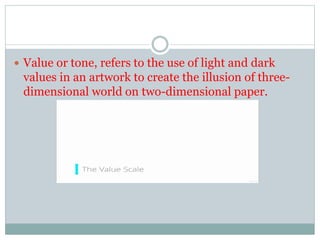
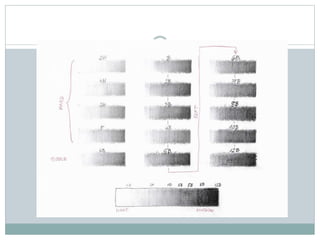
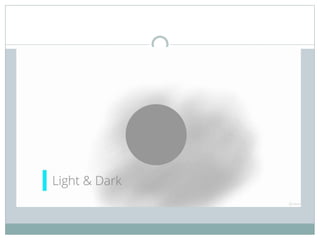
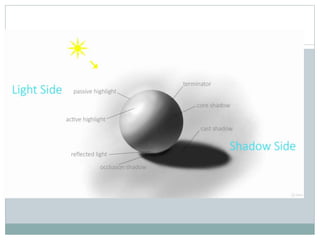
 Value or tone, refers to the use of light and dark
values in an artwork to create the illusion of three-
dimensional world on two-dimensional paper.
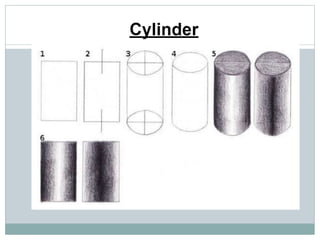
 sphere, cube, cylinder, and cone in three different
shading techniques:
shading
Stippling
 crosshatch
 Shading
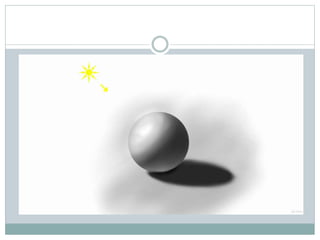
 Shading is applying and blending pencil to create a
smooth transition from dark to light values
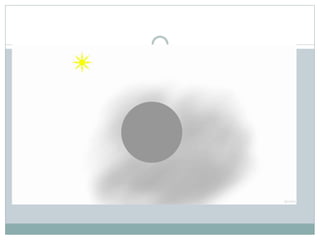
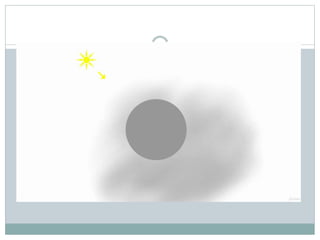
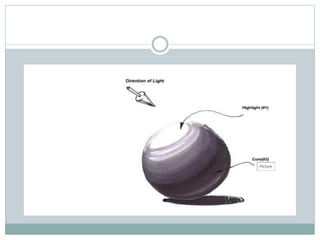
 To create accurate shading you have to pay attention
to light and position of the light to the objects. You
also have to pay attention to shadows.
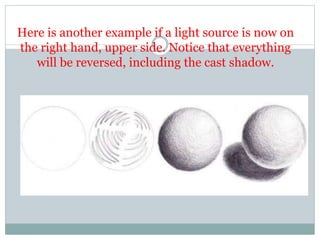
Here is another example if a light source is now on
the right hand, upper side. Notice that everything
will be reversed, including the cast shadow.
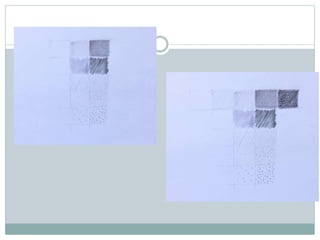
 Stippling
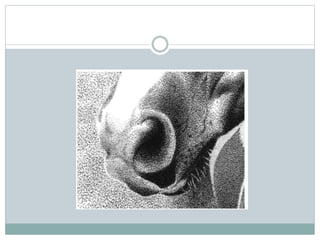
 Stippling is the creation of a pattern simulating shading
by using small dots. Such a pattern may occur in nature
and these effects are frequently emulated by artists.
 The shading aspect will be the same as in previous slides
except it will be executed in dots instead.
 Make sure you take your time though. It is not desirable
for your stipples to look like checkmarks or big circles.
The quality of your dots will affect your grade.
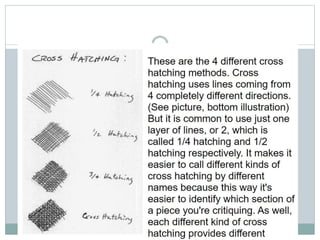
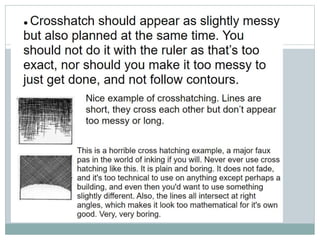
 Crosshatch
 Cross-Hatching is an artistic technique used to
create tonal or shading effects by drawing (or
painting or scribing) closely spaced parallel lines.
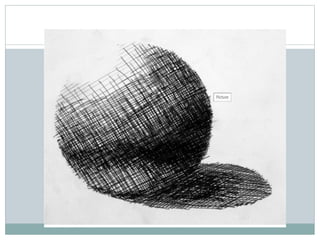
 Hatching lines should always follow (i.e. wrap
around) the forms. By increasing quantity, thickness
and closeness, a darker area will result.
shading 01.pptx
shading 01.pptx
shading 01.pptx

shading 01.pptx

  • 18.
     Value ortone, refers to the use of light and dark values in an artwork to create the illusion of three- dimensional world on two-dimensional paper.
  • 26.
     sphere, cube,cylinder, and cone in three different shading techniques: shading Stippling  crosshatch
  • 27.
     Shading  Shadingis applying and blending pencil to create a smooth transition from dark to light values  To create accurate shading you have to pay attention to light and position of the light to the objects. You also have to pay attention to shadows.
  • 29.
    Here is anotherexample if a light source is now on the right hand, upper side. Notice that everything will be reversed, including the cast shadow.
  • 31.
     Stippling  Stipplingis the creation of a pattern simulating shading by using small dots. Such a pattern may occur in nature and these effects are frequently emulated by artists.  The shading aspect will be the same as in previous slides except it will be executed in dots instead.  Make sure you take your time though. It is not desirable for your stipples to look like checkmarks or big circles. The quality of your dots will affect your grade.
  • 33.
     Crosshatch  Cross-Hatchingis an artistic technique used to create tonal or shading effects by drawing (or painting or scribing) closely spaced parallel lines.  Hatching lines should always follow (i.e. wrap around) the forms. By increasing quantity, thickness and closeness, a darker area will result.