Open Source Governance between Community and Business
Mirko Boehm

South Tyrol Free Software Conference 2017
What are the behavioural expectations outside organisations have
to be aware of to successfully collaborate with FLOSS
communities?
Question
About Me: Free and Open Source Software contributor
Founder and CEO, Endocode.
Director, Linux System Definition, Open Invention Network.
KDE contributor since 1997, former board member.
Visiting lecturer and researcher at the Technical University of Berlin.
Fellowship representative in the FSFE general assembly.
Openforum Academy fellow.
The “Open Source Way” - a social process for the production of
common information goods.
A free software community produces common information goods
based on voluntary participation of contributors.
The need for community governance: specialisation/division of labor
(internal), contributor fluctuation (external).
C.p., social norms develop depending on community composition.
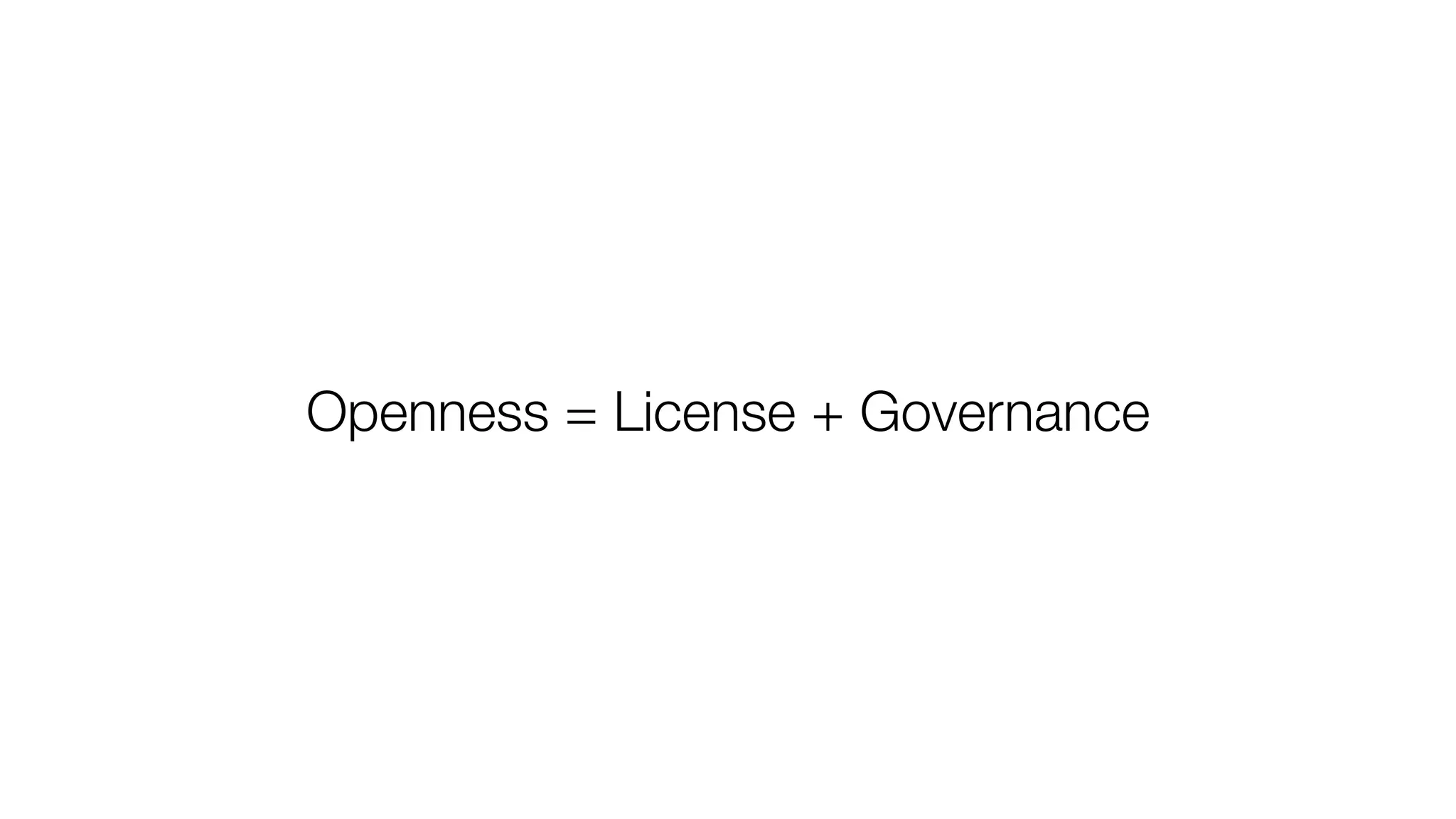
Software is free if it is licensed freely.
The governance of community processes define their openness.
These issues are orthogonal.
The Mindset Behind Community Governance
Engaging In A Community Of Makers
• “come for the technology, stay for the people”
•  To create that product needs to be a positive, creative challenge to be
motivative.
• Growing to be a part of the social group becomes important over time,
• …because the community mission is something “worth fighting for”.
• Most limiting factor to own contributions: time.
Equality Of Opportunity Among Peers
• “doing” over “talking”
• The need for more than grass-root meritocracy develops in medium and late
stage.
• Subgroups form “little villages with chieftains” to maintain a sense of
productivity.
• Productive contribution opportunities are expected to match ethical
convictions.
Makers And Community Builders
Over time, being a member of the community
becomes a goal in itself, where previously
community membership was a means to
facilitate contributions to a product.
An Ambitious, Productive Meritocracy Of Equals
• Contributors develop strong loyalty to their community.
• What contributors expect from their community: a welcoming, inviting culture;
meritocracy; equality of opportunity
• they want their communities to be useful and productive
• ...and ambitious
Ethical Principles Applicable To Community Governance
• Individual ethical principles are considered an outside variable. Community
governance norms need to reflect them.
• Principles contributors apply to their community are:
• working code/code first (actions over words)
• meritocracy
• solidarity
• transparency
Lessons
“Code First”
Openness = License + Governance
Be aware of growing barriers of entry!
Transparency
Authority
We Live in a Hybrid
Open/Closed World.
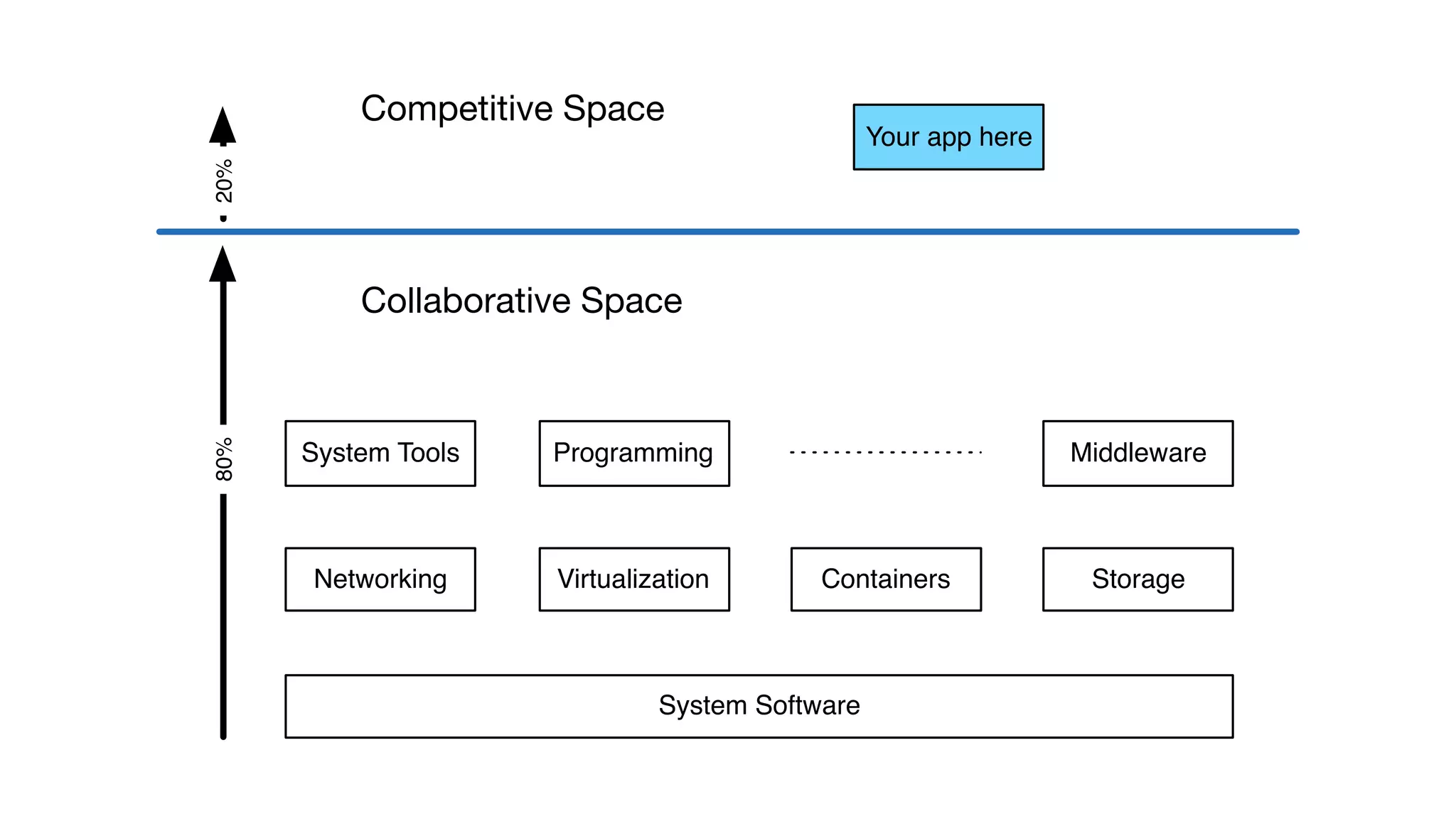
80%20%
Competitive Space
Collaborative Space
System Software
MiddlewareSystem Tools Programming
Networking Virtualization Containers Storage
Your app here
Voluntary Participation
Thank you!
Any Questions?
mirko@endocode.com
@mirkoboehm

SFScon17 - Mirko Boehm: "Open Source Governance between Community and Business"

  • 1.
    Open Source Governancebetween Community and Business Mirko Boehm South Tyrol Free Software Conference 2017
  • 2.
    What are thebehavioural expectations outside organisations have to be aware of to successfully collaborate with FLOSS communities? Question
  • 3.
    About Me: Freeand Open Source Software contributor Founder and CEO, Endocode. Director, Linux System Definition, Open Invention Network. KDE contributor since 1997, former board member. Visiting lecturer and researcher at the Technical University of Berlin. Fellowship representative in the FSFE general assembly. Openforum Academy fellow.
  • 5.
    The “Open SourceWay” - a social process for the production of common information goods.
  • 6.
    A free softwarecommunity produces common information goods based on voluntary participation of contributors.
  • 7.
    The need forcommunity governance: specialisation/division of labor (internal), contributor fluctuation (external).
  • 8.
    C.p., social normsdevelop depending on community composition.
  • 9.
    Software is freeif it is licensed freely. The governance of community processes define their openness. These issues are orthogonal.
  • 10.
    The Mindset BehindCommunity Governance
  • 11.
    Engaging In ACommunity Of Makers • “come for the technology, stay for the people” •  To create that product needs to be a positive, creative challenge to be motivative. • Growing to be a part of the social group becomes important over time, • …because the community mission is something “worth fighting for”. • Most limiting factor to own contributions: time.
  • 12.
    Equality Of OpportunityAmong Peers • “doing” over “talking” • The need for more than grass-root meritocracy develops in medium and late stage. • Subgroups form “little villages with chieftains” to maintain a sense of productivity. • Productive contribution opportunities are expected to match ethical convictions.
  • 13.
    Makers And CommunityBuilders Over time, being a member of the community becomes a goal in itself, where previously community membership was a means to facilitate contributions to a product.
  • 14.
    An Ambitious, ProductiveMeritocracy Of Equals • Contributors develop strong loyalty to their community. • What contributors expect from their community: a welcoming, inviting culture; meritocracy; equality of opportunity • they want their communities to be useful and productive • ...and ambitious
  • 15.
    Ethical Principles ApplicableTo Community Governance • Individual ethical principles are considered an outside variable. Community governance norms need to reflect them. • Principles contributors apply to their community are: • working code/code first (actions over words) • meritocracy • solidarity • transparency
  • 16.
  • 17.
  • 18.
    Openness = License+ Governance
  • 19.
    Be aware ofgrowing barriers of entry!
  • 20.
  • 21.
  • 22.
    We Live ina Hybrid Open/Closed World.
  • 23.
    80%20% Competitive Space Collaborative Space SystemSoftware MiddlewareSystem Tools Programming Networking Virtualization Containers Storage Your app here
  • 26.
  • 27.