Building Sustainable Communities:
Lessons from Open Source.
Vineel R. Pindi
16 September 2023
Components of engaging and fostering a group of individuals into a thriving,
cohesive and sustainable community.
Why do people contribute to an Open Source community and what makes them
continue to do so?
1. Purpose and Shared values
○ Having a sense of belonging and ownership.
○ Enabling shared and individual experiences.
○ Building trust.
○ Put community at the heart of everything you do.
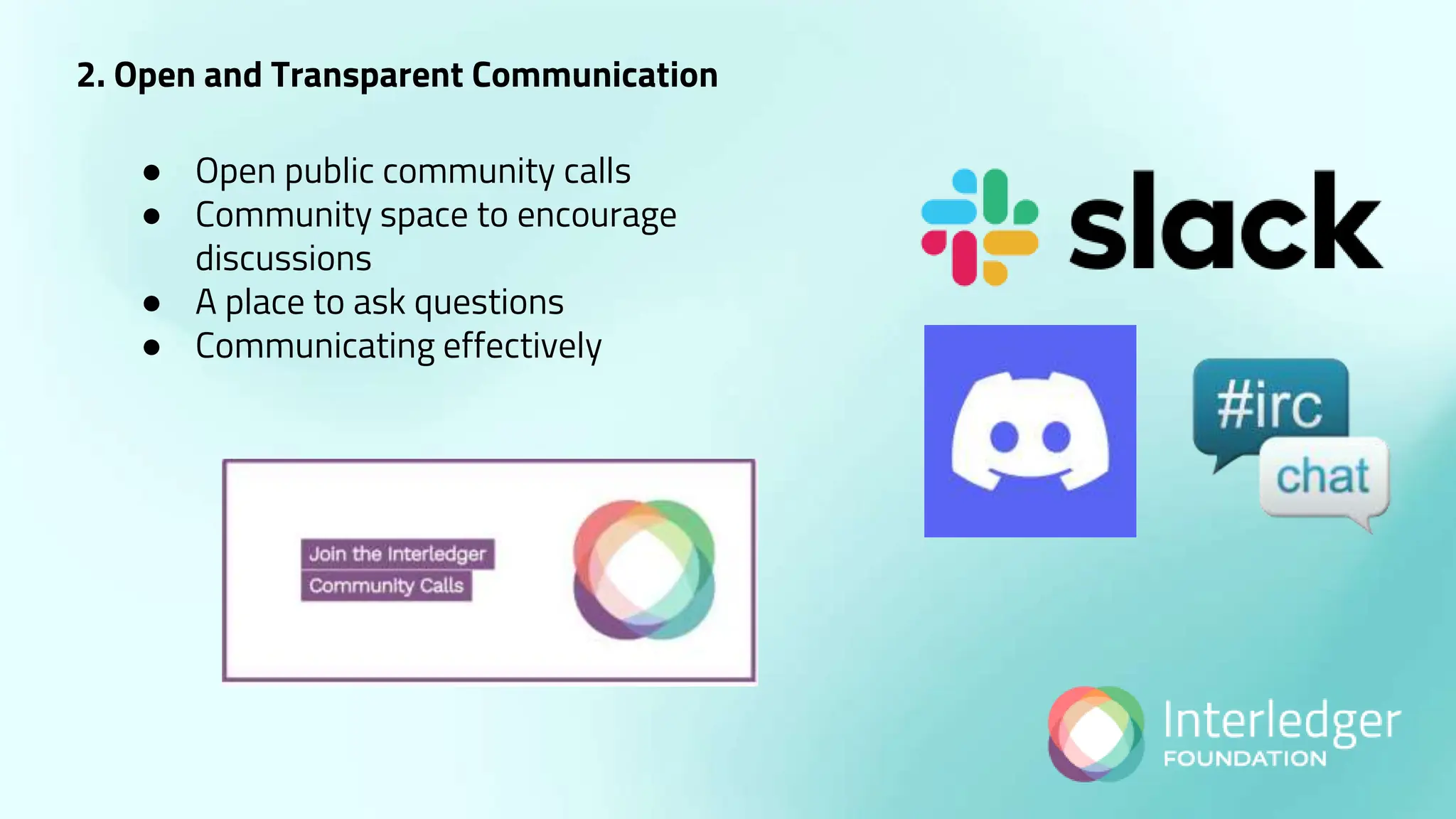
2. Open and Transparent Communication
● Open public community calls
● Community space to encourage
discussions
● A place to ask questions
● Communicating effectively
3. Low Entry Barrier
● Not all developers are as well versed with your project as you do.
● Not everyone can do code contributions.
● One of the challenges of Open Source communities is its DIY (Do it yourself)
nature.
● The DIY is both crucial for the growth, development and innovation of the
project, but that is also frustrating for someone who is looking to just get
started.
4. Contribution Pathways
● Show ways for people to bring in their skills and creativity from their
own area of expertise and how to use it to make the world a better
place.
● Create meaningful and practical pathways for participation and create
guidelines on how one can get started.
● Advocacy, Testing, Solving Bugs, Documentation, Localisation, Content
creation, and more.
5. Consistency and Adaptability
● The key to community building is to balance the discipline that is needed for
sustaining with the chaos that is needed for progress.
○ “To Innovate we need creative freedom, then we need structure to make those
ideas scale. “
● Engage online and offline
○ Two ways to engage:
■ Go where your people are [cross-pollinate] and
■ Create your own initiatives and invite people to learn about you.
● Gather feedback and adapt to the community needs.
6. Mentorship: Nurture and empower the community
○ One of the best things about open source communities is the learning and
experience one create by being part of the community.
○ Many contributors join the community for the sense of belonging and
ownership to contribute to the cause, at the same time based on how their
own learning, growth and impact with in the project is shaping.
○ Projects that foster mentorship lead to better collaboration and have long-
lasting benefits for productivity, satisfaction, and retention.
○ This not only leads to higher quality contribution on your project, it will also
encourage up and coming community members to take on active role and
become a core contributor.
○ All this contributes to the overall sustainability of the project.
○ Empower your community to take lead, support them with mentorship,
tools, resources and opportunities.
7. Rewards, Recognition and Growth
○ Internships
○ Ambassadorship
○ Grants to travel
○ Feature active community members on Newsletter, Community calls and
Social Media
○ Invite to Community events
○ Merchandise!
8. Tools, Resources and Guidelines
○ Contribution guidelines, tools, documentation and resources significantly
help your community to effectively engage in the Open Source projects.
■ Open Source repositories with clear contribution guidelines are more
productive than those without*.
○ Github Repository
○ Documentation
○ Deep dive webinars
* Source report
9. Code of Conduct (CoC)
○ Individuals are attracted and engaged by safe, supportive community
culture.
○ A Code of Conduct helps define how people should act and engage with
other people in the community.
○ CoC ensuring your community behaves in a respectful, meaningful, and
impactful manner.
○ It is the responsibility of the Open Source projects to be inclusive and
considerate when interacting in collaborative online spaces.
What will you do to make the person you’re interacting with feel safe, welcome,
and valued?
10. Storytelling
● Craft a compelling narrative for your community.
● A strong community brand can help members identify with the
community's identity and mission.
○ Community Toolkit
● Share key stories from the community to the broader ecosystem.
○ Blogpost
○ Social Media
○ Newsletter
○ Youtube
11. DEI - Diversity, Equity and Inclusion
● Create an inclusive environment where individuals from various backgrounds,
experiences, and perspectives feel welcome and valued.
● Diversity enriches discussions and promotes creativity.
● Equity refers to fair and just practices and policies that ensure all the community
members can thrive.
● Equity is different than equality in that equality implies treating everyone as if
their experiences are exactly the same.
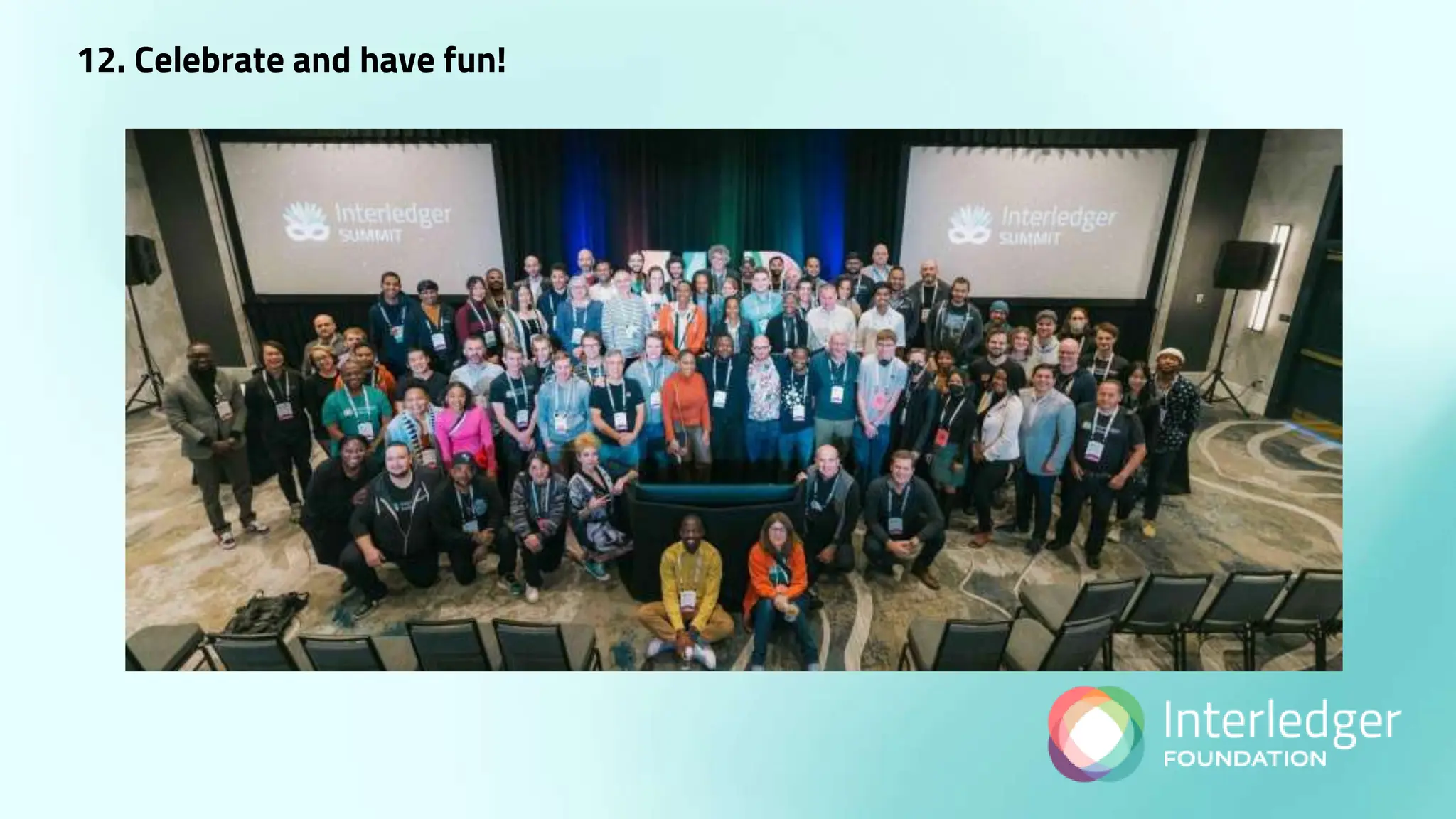
12. Celebrate and have fun!
Interledger.org
@interledger #openpayments
Email: vineel@interledger.org
Twitter: @vineelreddy
Building Sustainable Communities: Lessons from Open Source

Building Sustainable Communities: Lessons from Open Source

  • 1.
    Building Sustainable Communities: Lessonsfrom Open Source. Vineel R. Pindi 16 September 2023
  • 2.
    Components of engagingand fostering a group of individuals into a thriving, cohesive and sustainable community.
  • 3.
    Why do peoplecontribute to an Open Source community and what makes them continue to do so?
  • 4.
    1. Purpose andShared values
  • 5.
    1. Purpose andShared values ○ Having a sense of belonging and ownership. ○ Enabling shared and individual experiences. ○ Building trust. ○ Put community at the heart of everything you do.
  • 6.
    2. Open andTransparent Communication ● Open public community calls ● Community space to encourage discussions ● A place to ask questions ● Communicating effectively
  • 7.
    3. Low EntryBarrier ● Not all developers are as well versed with your project as you do. ● Not everyone can do code contributions. ● One of the challenges of Open Source communities is its DIY (Do it yourself) nature. ● The DIY is both crucial for the growth, development and innovation of the project, but that is also frustrating for someone who is looking to just get started.
  • 8.
    4. Contribution Pathways ●Show ways for people to bring in their skills and creativity from their own area of expertise and how to use it to make the world a better place. ● Create meaningful and practical pathways for participation and create guidelines on how one can get started. ● Advocacy, Testing, Solving Bugs, Documentation, Localisation, Content creation, and more.
  • 9.
    5. Consistency andAdaptability ● The key to community building is to balance the discipline that is needed for sustaining with the chaos that is needed for progress. ○ “To Innovate we need creative freedom, then we need structure to make those ideas scale. “ ● Engage online and offline ○ Two ways to engage: ■ Go where your people are [cross-pollinate] and ■ Create your own initiatives and invite people to learn about you. ● Gather feedback and adapt to the community needs.
  • 10.
    6. Mentorship: Nurtureand empower the community ○ One of the best things about open source communities is the learning and experience one create by being part of the community. ○ Many contributors join the community for the sense of belonging and ownership to contribute to the cause, at the same time based on how their own learning, growth and impact with in the project is shaping. ○ Projects that foster mentorship lead to better collaboration and have long- lasting benefits for productivity, satisfaction, and retention. ○ This not only leads to higher quality contribution on your project, it will also encourage up and coming community members to take on active role and become a core contributor. ○ All this contributes to the overall sustainability of the project. ○ Empower your community to take lead, support them with mentorship, tools, resources and opportunities.
  • 11.
    7. Rewards, Recognitionand Growth ○ Internships ○ Ambassadorship ○ Grants to travel ○ Feature active community members on Newsletter, Community calls and Social Media ○ Invite to Community events ○ Merchandise!
  • 12.
    8. Tools, Resourcesand Guidelines ○ Contribution guidelines, tools, documentation and resources significantly help your community to effectively engage in the Open Source projects. ■ Open Source repositories with clear contribution guidelines are more productive than those without*. ○ Github Repository ○ Documentation ○ Deep dive webinars * Source report
  • 13.
    9. Code ofConduct (CoC) ○ Individuals are attracted and engaged by safe, supportive community culture. ○ A Code of Conduct helps define how people should act and engage with other people in the community. ○ CoC ensuring your community behaves in a respectful, meaningful, and impactful manner. ○ It is the responsibility of the Open Source projects to be inclusive and considerate when interacting in collaborative online spaces. What will you do to make the person you’re interacting with feel safe, welcome, and valued?
  • 14.
    10. Storytelling ● Crafta compelling narrative for your community. ● A strong community brand can help members identify with the community's identity and mission. ○ Community Toolkit ● Share key stories from the community to the broader ecosystem. ○ Blogpost ○ Social Media ○ Newsletter ○ Youtube
  • 15.
    11. DEI -Diversity, Equity and Inclusion ● Create an inclusive environment where individuals from various backgrounds, experiences, and perspectives feel welcome and valued. ● Diversity enriches discussions and promotes creativity. ● Equity refers to fair and just practices and policies that ensure all the community members can thrive. ● Equity is different than equality in that equality implies treating everyone as if their experiences are exactly the same.
  • 16.
  • 17.