Service Adhesives Tries
Again
Group Members
• Palani Babu
• Nithin Mohan
• Jovita Miranda
• Akhilesh Chaudhary
• Rashid Alsuwaidi
• Frank Herman Witt
Agenda
 Introduction
 Summary of the Case
 Operations Concept – People, Job & Organization
 Operations Concept – Task Allocation
 Operations Issue Faced
 Case Question & Answer ( Q1, Q2, Q3, Q4 )
 Conclusion
 References
Introduction
 Service Adhesives Ltd was a mid-sized company
founded over twenty years ago to produce specialist
adhesives for FMCG business where adhesives had to
be guaranteed non – irritating and non – toxic
 A profitable organization because of its patented
products
Summary of the Case
 The case is about Service Adhesives LTD and the Operational Resource
Perspective, team work and job designing
 A midsized company, 20 years old
 They make patented adhesives
 They are facing issues of low profits due the following reasons:
High cost of production lower than sales value
Being Order Qualifiers and not Order Winners
 Their many ways to bring about a change in working environment and quality
of products has failed.
 They want to follow the footsteps of their largest customer and adopt the team
work organizational structure as against their traditional hierarchical one.
Operational Concept-Peoples, Job &
Organization
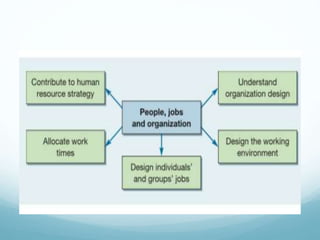
 Operations Management is considered as a subject
with focus on technology , system, procedures ,
facilities etc.
 An Organization’s human resources has a great
impact on performance of operations function.
 Operation Managers contribute to human resource
strategy, job design and allocation of work times to
operational activities.
Task Allocation
 Division of labor – dividing the total task into smaller
parts which can be accomplished by an individual or
team
 Concept by Famous Economist Mr. Adam Smith in
1746
 Advantages – Promotes faster learning , Reduce non –
productive work , Automation becomes easier
 Drawbacks – Monotony , Physical Injury , low flexibility,
poor robustness
Operational Issues Faced
 20% of staff are on contract basis
 These 20% come from Poland and Czech Republic,
therefore language is a barrier
 Conflicts between temporary and permanent staff
 Modern Operational philosophies such as TQM ( total
quality management ) and Lean had proved
disappointing
Case – Q & A
Q.1
Service Adhesives Ltd currently employs up to 20% of their workfor
ce on short-term contracts. What effect will this have on
the proposed team-based working structure?
 A change in the Top Down perspective to Operations Resource
perspective does bring about a reluctant to change attitude among the
workers, however, with efforts of team building from the management
this gap can be covered.
 Even if 20% of the staff are on contract basis that does not
discourage the idea of team work. As the definition of team work
rightly states : Team working – where staff, often with overlapping
skills, collectively perform a defined task and have a high degree of
discretion over how they actually perform the task. By designing the
jobs efficiently and getting the staff contribute and made to feel
important member of the team it does not seem difficult to have
contract workers work in a team based environment.
Q2. In considering a transition from a traditional organizational work
structure to a team-based work structure, what sort of barriers are
Service Adhesives Ltd likely to encounter? Think about formal structures
(e.g. roles and procedures) and informal structures (e.g. social groups and
communication)
 There are advantages and drawbacks for both the structure
 Job Designing: The job in team work flow needs to be done efficiently if
done in a wrong way may make the team and individual fall apart.
 Some people simply don't like working in groups, which could put a group at
a disadvantage when it comes to a lack of communication.
 Lazy members in a team can be a hindrance in the progress of the team work
and organization
 Other drawbacks are greater chance of conflict between individual learners,
decision-making takes more time, segregation of individuals can occur, less
extroverted individuals can feel intimidated and be hesitant to contribute the
trainer may need to intervene and provide leadership
Q3. Senior management of Service Adhesives thought that the reason for
ineffective improvement initiatives in the past was due mainly to the apparent
lack of cohesion amongst the organization’s human resource. Could a team-
based work organization be the answer to their organizational difficulties?
Why do think that previous initiatives at Super Supply had failed?
 Teaching and training people in the workplace can build a team and
improve and develop their skills.
 Benefit of Team-Based Learning is that everyone on the team
participates in the developmental activities on a consistent basis
and can motivate inside the team.
 A team not only develop its members it also contributes in the
functions of an organization
 Those team members who did not have certain skill set needed to
complete the project will make up in another area of the project
 A Team based learning makes everyone good for something
Q4. Employee empowerment is a key element of team-based
working; what difficulties could Service Adhesives face in
implementing empowerment?
 https://www.youtube.com/watch?v=f60dheI4ARg
 Empowerment means more than autonomy. It means giving staff the ability to
change how they do their jobs and the authority to make changes to the job
itself, as well as how it is performed. (Slide 38 chp 9) Service Adhesive has
the foll factors to consider in order to launch empowerment successfully:
 They have contract based workforce
 20% of this contract based workforce do not understand English as they come
from Poland and Czech Republic
 There is a cold war between the temporary and permanent employees
 If they leave it to the employees to do their job at their own discretion it will
create great chaos and conflicts within the teams due the above barriers.
 https://www.youtube.com/watch?v=jop2I5u2F3U
Conclusion
Questions.. ??
References
 Operations Management – Nigel Slack , Stuart
Chambers , Robert Johnston ( Page
No. 233 – 260 )
Thank You !!!!

Services Adhesives Tries Again

  • 1.
  • 2.
    Group Members • PalaniBabu • Nithin Mohan • Jovita Miranda • Akhilesh Chaudhary • Rashid Alsuwaidi • Frank Herman Witt
  • 3.
    Agenda  Introduction  Summaryof the Case  Operations Concept – People, Job & Organization  Operations Concept – Task Allocation  Operations Issue Faced  Case Question & Answer ( Q1, Q2, Q3, Q4 )  Conclusion  References
  • 4.
    Introduction  Service AdhesivesLtd was a mid-sized company founded over twenty years ago to produce specialist adhesives for FMCG business where adhesives had to be guaranteed non – irritating and non – toxic  A profitable organization because of its patented products
  • 5.
    Summary of theCase  The case is about Service Adhesives LTD and the Operational Resource Perspective, team work and job designing  A midsized company, 20 years old  They make patented adhesives  They are facing issues of low profits due the following reasons: High cost of production lower than sales value Being Order Qualifiers and not Order Winners  Their many ways to bring about a change in working environment and quality of products has failed.  They want to follow the footsteps of their largest customer and adopt the team work organizational structure as against their traditional hierarchical one.
  • 6.
    Operational Concept-Peoples, Job& Organization  Operations Management is considered as a subject with focus on technology , system, procedures , facilities etc.  An Organization’s human resources has a great impact on performance of operations function.  Operation Managers contribute to human resource strategy, job design and allocation of work times to operational activities.
  • 8.
    Task Allocation  Divisionof labor – dividing the total task into smaller parts which can be accomplished by an individual or team  Concept by Famous Economist Mr. Adam Smith in 1746  Advantages – Promotes faster learning , Reduce non – productive work , Automation becomes easier  Drawbacks – Monotony , Physical Injury , low flexibility, poor robustness
  • 9.
    Operational Issues Faced 20% of staff are on contract basis  These 20% come from Poland and Czech Republic, therefore language is a barrier  Conflicts between temporary and permanent staff  Modern Operational philosophies such as TQM ( total quality management ) and Lean had proved disappointing
  • 10.
    Case – Q& A Q.1 Service Adhesives Ltd currently employs up to 20% of their workfor ce on short-term contracts. What effect will this have on the proposed team-based working structure?  A change in the Top Down perspective to Operations Resource perspective does bring about a reluctant to change attitude among the workers, however, with efforts of team building from the management this gap can be covered.  Even if 20% of the staff are on contract basis that does not discourage the idea of team work. As the definition of team work rightly states : Team working – where staff, often with overlapping skills, collectively perform a defined task and have a high degree of discretion over how they actually perform the task. By designing the jobs efficiently and getting the staff contribute and made to feel important member of the team it does not seem difficult to have contract workers work in a team based environment.
  • 11.
    Q2. In consideringa transition from a traditional organizational work structure to a team-based work structure, what sort of barriers are Service Adhesives Ltd likely to encounter? Think about formal structures (e.g. roles and procedures) and informal structures (e.g. social groups and communication)  There are advantages and drawbacks for both the structure  Job Designing: The job in team work flow needs to be done efficiently if done in a wrong way may make the team and individual fall apart.  Some people simply don't like working in groups, which could put a group at a disadvantage when it comes to a lack of communication.  Lazy members in a team can be a hindrance in the progress of the team work and organization  Other drawbacks are greater chance of conflict between individual learners, decision-making takes more time, segregation of individuals can occur, less extroverted individuals can feel intimidated and be hesitant to contribute the trainer may need to intervene and provide leadership
  • 12.
    Q3. Senior managementof Service Adhesives thought that the reason for ineffective improvement initiatives in the past was due mainly to the apparent lack of cohesion amongst the organization’s human resource. Could a team- based work organization be the answer to their organizational difficulties? Why do think that previous initiatives at Super Supply had failed?  Teaching and training people in the workplace can build a team and improve and develop their skills.  Benefit of Team-Based Learning is that everyone on the team participates in the developmental activities on a consistent basis and can motivate inside the team.  A team not only develop its members it also contributes in the functions of an organization  Those team members who did not have certain skill set needed to complete the project will make up in another area of the project  A Team based learning makes everyone good for something
  • 13.
    Q4. Employee empowermentis a key element of team-based working; what difficulties could Service Adhesives face in implementing empowerment?  https://www.youtube.com/watch?v=f60dheI4ARg  Empowerment means more than autonomy. It means giving staff the ability to change how they do their jobs and the authority to make changes to the job itself, as well as how it is performed. (Slide 38 chp 9) Service Adhesive has the foll factors to consider in order to launch empowerment successfully:  They have contract based workforce  20% of this contract based workforce do not understand English as they come from Poland and Czech Republic  There is a cold war between the temporary and permanent employees  If they leave it to the employees to do their job at their own discretion it will create great chaos and conflicts within the teams due the above barriers.  https://www.youtube.com/watch?v=jop2I5u2F3U
  • 14.
  • 15.
  • 16.
    References  Operations Management– Nigel Slack , Stuart Chambers , Robert Johnston ( Page No. 233 – 260 )
  • 17.