Service
Communication
Mix
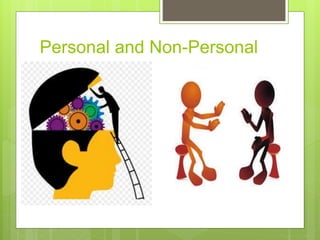
Personal and Non-Personal
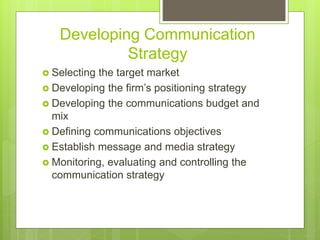
Developing Communication
Strategy
 Selecting the target market
 Developing the firm’s positioning strategy
 Developing the communications budget and
mix
 Defining communications objectives
 Establish message and media strategy
 Monitoring, evaluating and controlling the
communication strategy
Approaches for Effective
positioning
Product
 Features
 Performance
 Conformance
 Durability
 Reliability
 Repairability
Personal
 Competence
 Courtesy
 Credibility
 Reliability
 Responsiveness
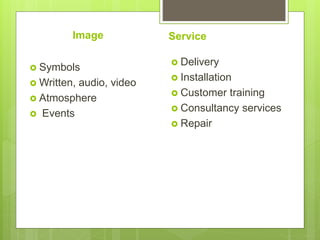
Image
 Symbols
 Written, audio, video
 Atmosphere
 Events
Service
 Delivery
 Installation
 Customer training
 Consultancy services
 Repair
The Target Audience
 Targeting Nonusers
 Targeting Users
 Type 1 service staff
 Type 2 service staff
 Type 3 service staff
Type 1 Service Staff
 Required to deal with customers quickly and
effectively in “ once only “ situations where
large number of customers are present.
 E.g- Front-line personnel at fast-food
restaurants.
Type 2 Service Staff
 Service staff that deal with numerous, often
repeat customers in restricted interactions of
somewhat longer duration.
 E.g.- Floral design from a florist on a regular
basis
Type 3 service staff
 Highly developed communication skills
because of more extended and complex
interactions with customers.
 E.g- qualified service professionals
Special Problems in service
communications
 Mistargeted communications
 Managing expectations
 Advertising to employees
 Selling/operation conflicts
Guide line for developing service
communications
 Word-of-mouth communications
 Promise what is possible
 Make tangible the intangible
 Feature the relationship between customer and
provider
 Reduce consumer fear
 Focus on relevant service quality dimensions
 Differentiate through service delivery
 Make the service more easily understood

Service Communication Mix.pptx

  • 1.
  • 2.
  • 3.
    Developing Communication Strategy  Selectingthe target market  Developing the firm’s positioning strategy  Developing the communications budget and mix  Defining communications objectives  Establish message and media strategy  Monitoring, evaluating and controlling the communication strategy
  • 4.
    Approaches for Effective positioning Product Features  Performance  Conformance  Durability  Reliability  Repairability Personal  Competence  Courtesy  Credibility  Reliability  Responsiveness
  • 5.
    Image  Symbols  Written,audio, video  Atmosphere  Events Service  Delivery  Installation  Customer training  Consultancy services  Repair
  • 6.
    The Target Audience Targeting Nonusers  Targeting Users  Type 1 service staff  Type 2 service staff  Type 3 service staff
  • 7.
    Type 1 ServiceStaff  Required to deal with customers quickly and effectively in “ once only “ situations where large number of customers are present.  E.g- Front-line personnel at fast-food restaurants.
  • 8.
    Type 2 ServiceStaff  Service staff that deal with numerous, often repeat customers in restricted interactions of somewhat longer duration.  E.g.- Floral design from a florist on a regular basis
  • 9.
    Type 3 servicestaff  Highly developed communication skills because of more extended and complex interactions with customers.  E.g- qualified service professionals
  • 10.
    Special Problems inservice communications  Mistargeted communications  Managing expectations  Advertising to employees  Selling/operation conflicts
  • 11.
    Guide line fordeveloping service communications  Word-of-mouth communications  Promise what is possible  Make tangible the intangible  Feature the relationship between customer and provider  Reduce consumer fear  Focus on relevant service quality dimensions  Differentiate through service delivery  Make the service more easily understood