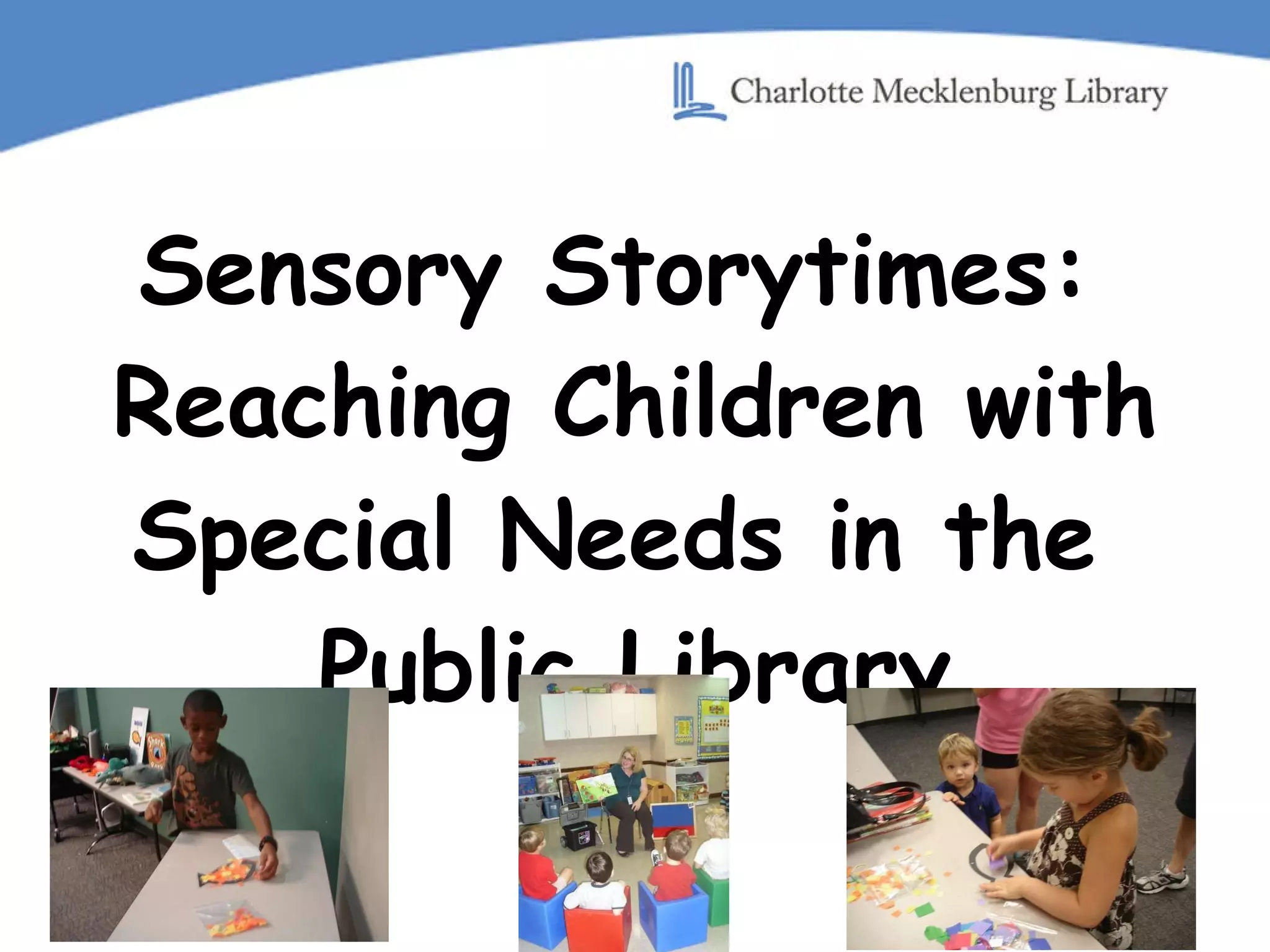
Sensory Storytimes:  Reaching Children with Special Needs in the  Public Library
Panelists Emily Neal and Rhian Vanderburg; Charlotte Speech and Hearing Center Charlotte Beck,  Teacher in Cabarrus Schools Emily Nanney, Interim Children’s Coordinator Charlotte Mecklenburg Library
Overview of Packet Contact information Program Brochure Bookhive Bookmarks Storyplace  Focus Group Questions Program Ideas/Outlines Recommended Books for the Library Collection Helpful Websites
Content of Workshop Starting Sensory Storytimes in the Public Library Partnering with local community agencies and schools Focus Groups Learning from parents about programming needs Connecting with others that offer Sensory Programming Program ideas and outlines Creating Sensory Programming Kits Creating Family and Community Contact Distribution Lists Booklists for the Library Collection Information from community panelists
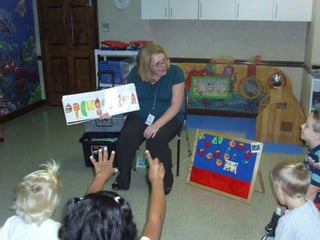
Conducting a Storytime for Children with Special Needs How programming got started in Charlotte Mecklenburg Library Video for staff training Sample storytime http://www.cmlibrary.org/programs/special_needs/default.asp
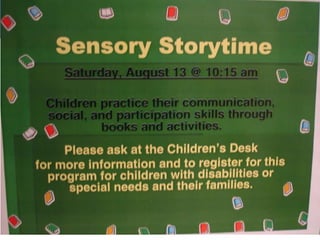
Starting Sensory Storytimes in the Public Library Request from parents Poll of staff interested in offering this type programming Started with Sensory Storytime (content for preschool level) Flexibility and a positive attitude
 
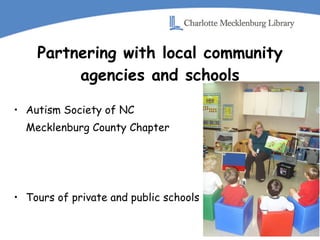
Partnering with local community agencies and schools Autism Society of NC  Mecklenburg County Chapter  Tours of private and public schools
 
Focus Groups What would an effective program look like to you? What services would you like the public library to offer for parents/families of children with special needs? What challenges do you face when you visit the library What tips can you give us for interacting with you and your child? Is there anything you would like to share with library staff about the challenges of having a child with special needs in your family? What resources would you recommend that the library have that we currently don’t? Who would you recommend as potential partners for the public library to have? What would make the public library the first destination for your family to go to spend free time? How often would you like to see special needs programs offered? It there any additional information that you would like to share?
Comments from Parents/Caregivers on Surveys Saturday is a really great day.  Doctors and therapy appointments would prevent us from coming during the week. This is a great idea!  Kids can roam free and make noise without parents worrying they are bothering others. Tip:  It is helpful to talk to my child in short and concise sentences “keep it short and sweet”
Learning from parents about programming needs What services are you looking for? Books that appeal to siblings who have a brother or sister with special needs Picture books that have stories about children with special needs Braille Books Programs where my child can make noise and doesn’t have to sit Drop in programs that I don’t have to register for
What challenges do you face Hide items for storytime so my child does not try and take them Loud hour on the computers would be great It would be helpful to have paper towels in the restrooms instead of the dryers since my child is sensitive to noise Noise is always an issue for my family.  It is helpful to have a program in the community room where we can be loud.
Anything you would like to share? The library is one of the few places that we can come and meet as a group in public Don’t have to worry about food since my child also has allergies and this is a big issue Have pillows and stuffed animals
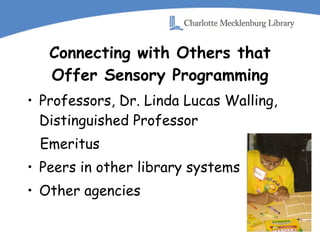
Connecting with Others that Offer Sensory Programming Professors, Dr. Linda Lucas Walling,  Distinguished Professor  Emeritus Peers in other library systems Other agencies
Tips on Offering Programs Be “on your toes” Be ready for anything and don’t expect things to go as planned Might have to redirect children and program plans
Programming Ideas and Outlines It’s OK if kids are at different levels. Feel free to leave and come back if you need to during the program. You are welcome to all of our programs – if you feel this is working well for you and your child, you may wish to consider our other weekly programming. Please fill out a short survey you will find on the table.  We are open to all comments and suggestions.
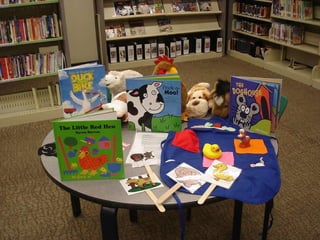
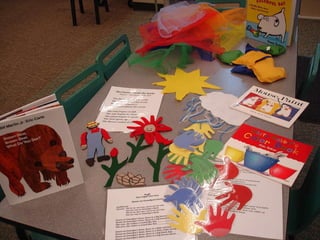
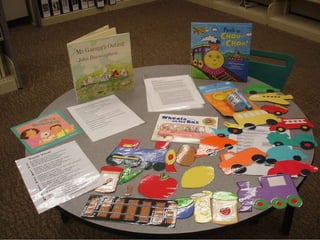
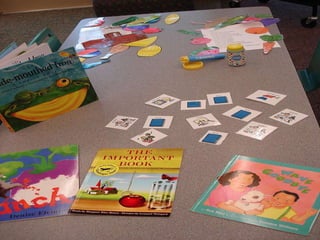
Sensory Programming Kits Themes Farm  Animals Food  Color Transportation (Hand and stick puppets; flannels; scarves; bubbles; bean bags; books; program outlines; schedule cards; etc.)
 
 
Sensory Programming Kits
 
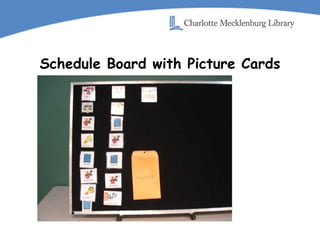
Schedule Board with Picture Cards
Family and Community Contact Distribution Lists Have a sign in sheet during the storytime for parents to leave e-mail contacts Attend an Autism Fair and get contacts
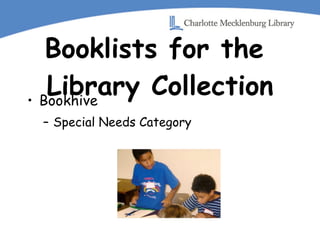
Booklists for the  Library Collection Bookhive Special Needs Category
Goals and Outcomes Outcomes are a way of explaining why you  did what you did and can begin to answer questions such as “So what?” and “What benefits did the participants gain from the program?”  Outcomes should focus on the participants. What funders often ask Changes in behavior and/or attitude Outcomes tell a story that statistics alone cannot do; give meaning to a measure Outcomes can be initial; intermediate; and long-term
Goals and Outcomes Takes a while to build program Not large attendance numbers but that is okay Families feel more comfortable using the library Parents feel relaxed; in a safe place; don’t have to worry; joy you see from parents; not judged; relaxed stories Have items in your children’s area for parents to use stuffed animals; puppets
Helpful websites Autism Society of North Carolina http://www.autismsociety-nc.org/ CML, Programming for Children with Special Needs http://www.plcmc.org/programs/special_needs/default.asp Linda Lucas Walling Collection, Materials for and/or about Children with Disabilities http://www.libsci.sc.edu/walling/bestfolder.htm National Association for Down Syndrome http://www.nads.org/ Allegro Foundation www.allegrofoundation.net Green sheet in your packet includes list of many helpful websites
ALSC Blog Series  by Patricia Twarogowski “ Book the event room for an extra ½ hour for parents to socialize” “ Attend local chapter meetings of the Autism Society and the Down Syndrome Association” “ Double visuals” (book/puppet/flannel) Use as many visuals as possible
Music- sensitivity to music, low key  music Allergies – no food Flexibility E-mail reminders Timing – Saturday mornings seem to  work well Not as bright lighting Rug or carpet squares Pillows/stuffed animals
The Future Programming for older children More partnerships (SmartStart) Charlotte Speech and Hearing spring series Parks & Recreation Schools  (where children/teens are)
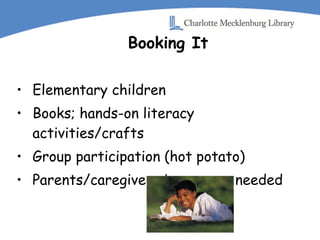
Booking It Elementary children Books; hands-on literacy activities/crafts Group participation (hot potato) Parents/caregivers in room as needed
Book Exploration for Teens Book and CD Activities related to scenes in book
Questions?
Information from Community Panelists Charlotte Beck, Teacher in Cabarrus Schools Emily Neal & Rhian Vanderburg, Charlotte Speech and Hearing Center

Sensory storytimes

  • 1.
    Sensory Storytimes: Reaching Children with Special Needs in the Public Library
  • 2.
    Panelists Emily Nealand Rhian Vanderburg; Charlotte Speech and Hearing Center Charlotte Beck, Teacher in Cabarrus Schools Emily Nanney, Interim Children’s Coordinator Charlotte Mecklenburg Library
  • 3.
    Overview of PacketContact information Program Brochure Bookhive Bookmarks Storyplace Focus Group Questions Program Ideas/Outlines Recommended Books for the Library Collection Helpful Websites
  • 4.
    Content of WorkshopStarting Sensory Storytimes in the Public Library Partnering with local community agencies and schools Focus Groups Learning from parents about programming needs Connecting with others that offer Sensory Programming Program ideas and outlines Creating Sensory Programming Kits Creating Family and Community Contact Distribution Lists Booklists for the Library Collection Information from community panelists
  • 5.
    Conducting a Storytimefor Children with Special Needs How programming got started in Charlotte Mecklenburg Library Video for staff training Sample storytime http://www.cmlibrary.org/programs/special_needs/default.asp
  • 6.
    Starting Sensory Storytimesin the Public Library Request from parents Poll of staff interested in offering this type programming Started with Sensory Storytime (content for preschool level) Flexibility and a positive attitude
  • 7.
  • 8.
    Partnering with localcommunity agencies and schools Autism Society of NC Mecklenburg County Chapter Tours of private and public schools
  • 9.
  • 10.
    Focus Groups Whatwould an effective program look like to you? What services would you like the public library to offer for parents/families of children with special needs? What challenges do you face when you visit the library What tips can you give us for interacting with you and your child? Is there anything you would like to share with library staff about the challenges of having a child with special needs in your family? What resources would you recommend that the library have that we currently don’t? Who would you recommend as potential partners for the public library to have? What would make the public library the first destination for your family to go to spend free time? How often would you like to see special needs programs offered? It there any additional information that you would like to share?
  • 11.
    Comments from Parents/Caregiverson Surveys Saturday is a really great day. Doctors and therapy appointments would prevent us from coming during the week. This is a great idea! Kids can roam free and make noise without parents worrying they are bothering others. Tip: It is helpful to talk to my child in short and concise sentences “keep it short and sweet”
  • 12.
    Learning from parentsabout programming needs What services are you looking for? Books that appeal to siblings who have a brother or sister with special needs Picture books that have stories about children with special needs Braille Books Programs where my child can make noise and doesn’t have to sit Drop in programs that I don’t have to register for
  • 13.
    What challenges doyou face Hide items for storytime so my child does not try and take them Loud hour on the computers would be great It would be helpful to have paper towels in the restrooms instead of the dryers since my child is sensitive to noise Noise is always an issue for my family. It is helpful to have a program in the community room where we can be loud.
  • 14.
    Anything you wouldlike to share? The library is one of the few places that we can come and meet as a group in public Don’t have to worry about food since my child also has allergies and this is a big issue Have pillows and stuffed animals
  • 15.
    Connecting with Othersthat Offer Sensory Programming Professors, Dr. Linda Lucas Walling, Distinguished Professor Emeritus Peers in other library systems Other agencies
  • 16.
    Tips on OfferingPrograms Be “on your toes” Be ready for anything and don’t expect things to go as planned Might have to redirect children and program plans
  • 17.
    Programming Ideas andOutlines It’s OK if kids are at different levels. Feel free to leave and come back if you need to during the program. You are welcome to all of our programs – if you feel this is working well for you and your child, you may wish to consider our other weekly programming. Please fill out a short survey you will find on the table. We are open to all comments and suggestions.
  • 18.
    Sensory Programming KitsThemes Farm Animals Food Color Transportation (Hand and stick puppets; flannels; scarves; bubbles; bean bags; books; program outlines; schedule cards; etc.)
  • 19.
  • 20.
  • 21.
  • 22.
  • 23.
    Schedule Board withPicture Cards
  • 24.
    Family and CommunityContact Distribution Lists Have a sign in sheet during the storytime for parents to leave e-mail contacts Attend an Autism Fair and get contacts
  • 25.
    Booklists for the Library Collection Bookhive Special Needs Category
  • 26.
    Goals and OutcomesOutcomes are a way of explaining why you did what you did and can begin to answer questions such as “So what?” and “What benefits did the participants gain from the program?” Outcomes should focus on the participants. What funders often ask Changes in behavior and/or attitude Outcomes tell a story that statistics alone cannot do; give meaning to a measure Outcomes can be initial; intermediate; and long-term
  • 27.
    Goals and OutcomesTakes a while to build program Not large attendance numbers but that is okay Families feel more comfortable using the library Parents feel relaxed; in a safe place; don’t have to worry; joy you see from parents; not judged; relaxed stories Have items in your children’s area for parents to use stuffed animals; puppets
  • 28.
    Helpful websites AutismSociety of North Carolina http://www.autismsociety-nc.org/ CML, Programming for Children with Special Needs http://www.plcmc.org/programs/special_needs/default.asp Linda Lucas Walling Collection, Materials for and/or about Children with Disabilities http://www.libsci.sc.edu/walling/bestfolder.htm National Association for Down Syndrome http://www.nads.org/ Allegro Foundation www.allegrofoundation.net Green sheet in your packet includes list of many helpful websites
  • 29.
    ALSC Blog Series by Patricia Twarogowski “ Book the event room for an extra ½ hour for parents to socialize” “ Attend local chapter meetings of the Autism Society and the Down Syndrome Association” “ Double visuals” (book/puppet/flannel) Use as many visuals as possible
  • 30.
    Music- sensitivity tomusic, low key music Allergies – no food Flexibility E-mail reminders Timing – Saturday mornings seem to work well Not as bright lighting Rug or carpet squares Pillows/stuffed animals
  • 31.
    The Future Programmingfor older children More partnerships (SmartStart) Charlotte Speech and Hearing spring series Parks & Recreation Schools (where children/teens are)
  • 32.
    Booking It Elementarychildren Books; hands-on literacy activities/crafts Group participation (hot potato) Parents/caregivers in room as needed
  • 33.
    Book Exploration forTeens Book and CD Activities related to scenes in book
  • 34.
  • 35.
    Information from CommunityPanelists Charlotte Beck, Teacher in Cabarrus Schools Emily Neal & Rhian Vanderburg, Charlotte Speech and Hearing Center

Editor's Notes

  • #5 Are you hoping to expand services to youth with disabilities in your community? Are you interested in offering sensory storytimes for children with disabilities or special needs in the public library? Charlotte Mecklenburg library staff along with a couple of community partners will hold a panel discussion on sensory programming. Workshop participants will gain ideas that include: getting sensory storytimes started in the public library; partnering with local community agencies and schools; holding focus groups and learning from parents about programming needs; and connecting with others offering sensory programming. Participants will receive program ideas/outlines; information about creating sensory programming kits; suggestions for creating a family contact distribution list; and booklists to consider for the library collection. In addition, participants will gain information from community panelists about services and what the public library can offer for youth with disabilities or special needs.
  • #19 Need photographs here
  • #20 Need photographs here
  • #27 Future of programming