CENTER FOR PHYSIOTHERAPYAND REHABILITATION
SCIENCE
JAMIA MILLIA ISLAMIA
Submitted to: Dr. Jamal Moiz
Submitted by: Sumaiya Shams
Mpt (cardio)
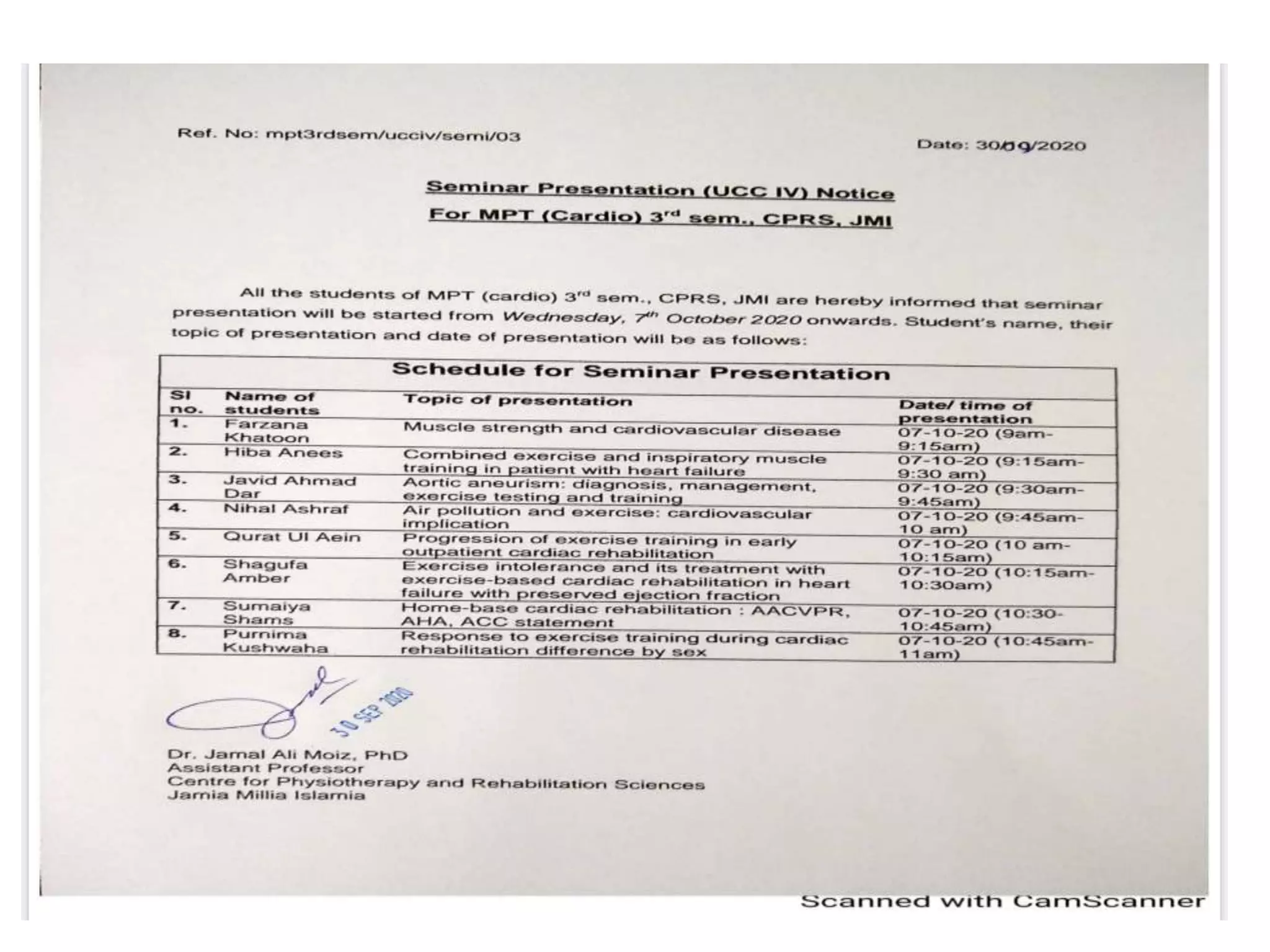
Home based cardiac rehabilitation:
AACVPR, AHA, ACC statement
• The cardiac Rehabilitation plan For the majority of cardiac
patients involved in cardiac rehabilitation the optimal period of
a comprehensive rehabilitation plan is variable many
recommended up to one year. The cardiac rehabilitation plan
should be individually tailored and based on the patient's
medical history, prognosis, functional capacity and specific
needs. The program should be aimed to maximize safety,
efficiency and adherence.
• Phase 2 early outpatient clinic or home-based phase Ideally
should commence within three weeks of hospital discharge.
• The main purpose of this phase is to progressively improve
patient's functional capacity, lower cardiovascular risk factor
and prepare the patient for return of his or her vocation. This
phase should include exercise training and generally should
last up to three months.
• Phase 2 outpatient cardiac rehabilitation- Organized,
supervised outpatient cardiac rehabilitation has become an
important part of the rehabilitation process and should begin
when the patient is discharged from the hospital.
• Most experts believe that the first few weeks after discharge
are the most crucial for the patient with regard to the need for
medical supervision as well as the initial risk factor for
intervention program because of many anxieties and
apprehension that exist when the healing process is incomplete
and because medication dosage is often altered at this time, it
is contradictory not to have a well-planned and well
administrated outpatient program.
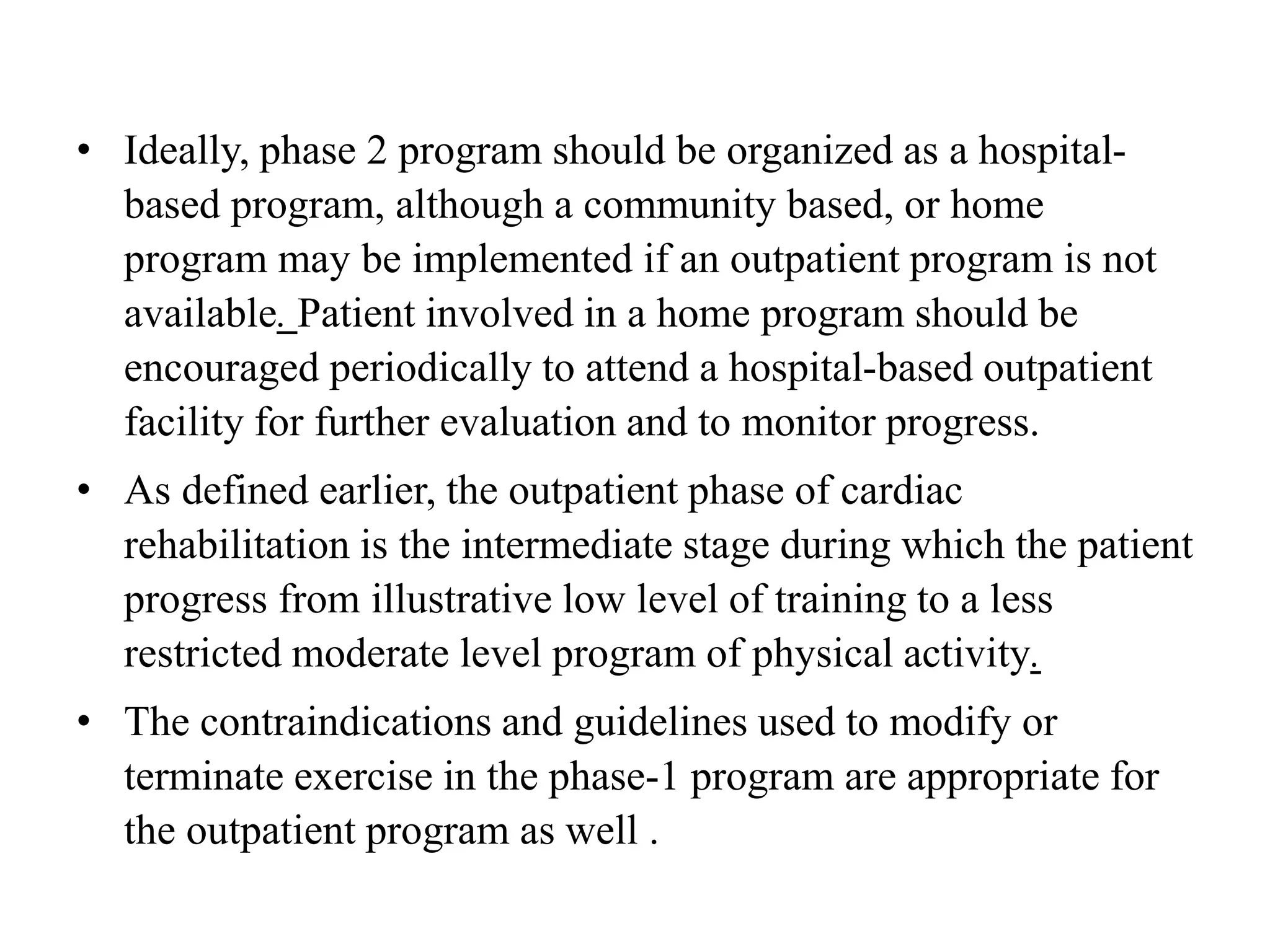
• Ideally, phase 2 program should be organized as a hospital-
based program, although a community based, or home
program may be implemented if an outpatient program is not
available. Patient involved in a home program should be
encouraged periodically to attend a hospital-based outpatient
facility for further evaluation and to monitor progress.
• As defined earlier, the outpatient phase of cardiac
rehabilitation is the intermediate stage during which the patient
progress from illustrative low level of training to a less
restricted moderate level program of physical activity.
• The contraindications and guidelines used to modify or
terminate exercise in the phase-1 program are appropriate for
the outpatient program as well .
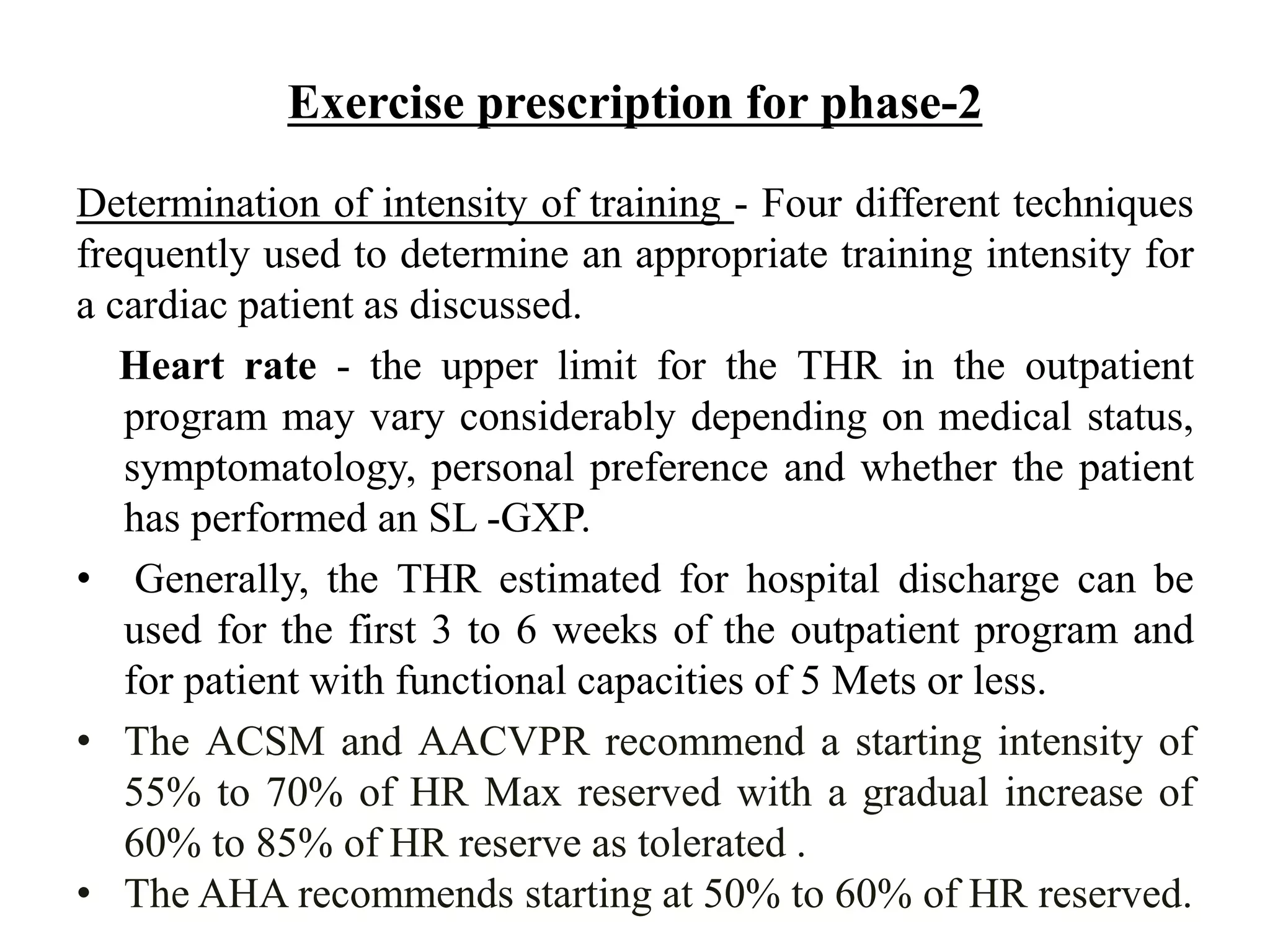
Exercise prescription for phase-2
Determination of intensity of training - Four different techniques
frequently used to determine an appropriate training intensity for
a cardiac patient as discussed.
Heart rate - the upper limit for the THR in the outpatient
program may vary considerably depending on medical status,
symptomatology, personal preference and whether the patient
has performed an SL -GXP.
• Generally, the THR estimated for hospital discharge can be
used for the first 3 to 6 weeks of the outpatient program and
for patient with functional capacities of 5 Mets or less.
• The ACSM and AACVPR recommend a starting intensity of
55% to 70% of HR Max reserved with a gradual increase of
60% to 85% of HR reserve as tolerated .
• The AHA recommends starting at 50% to 60% of HR reserved.
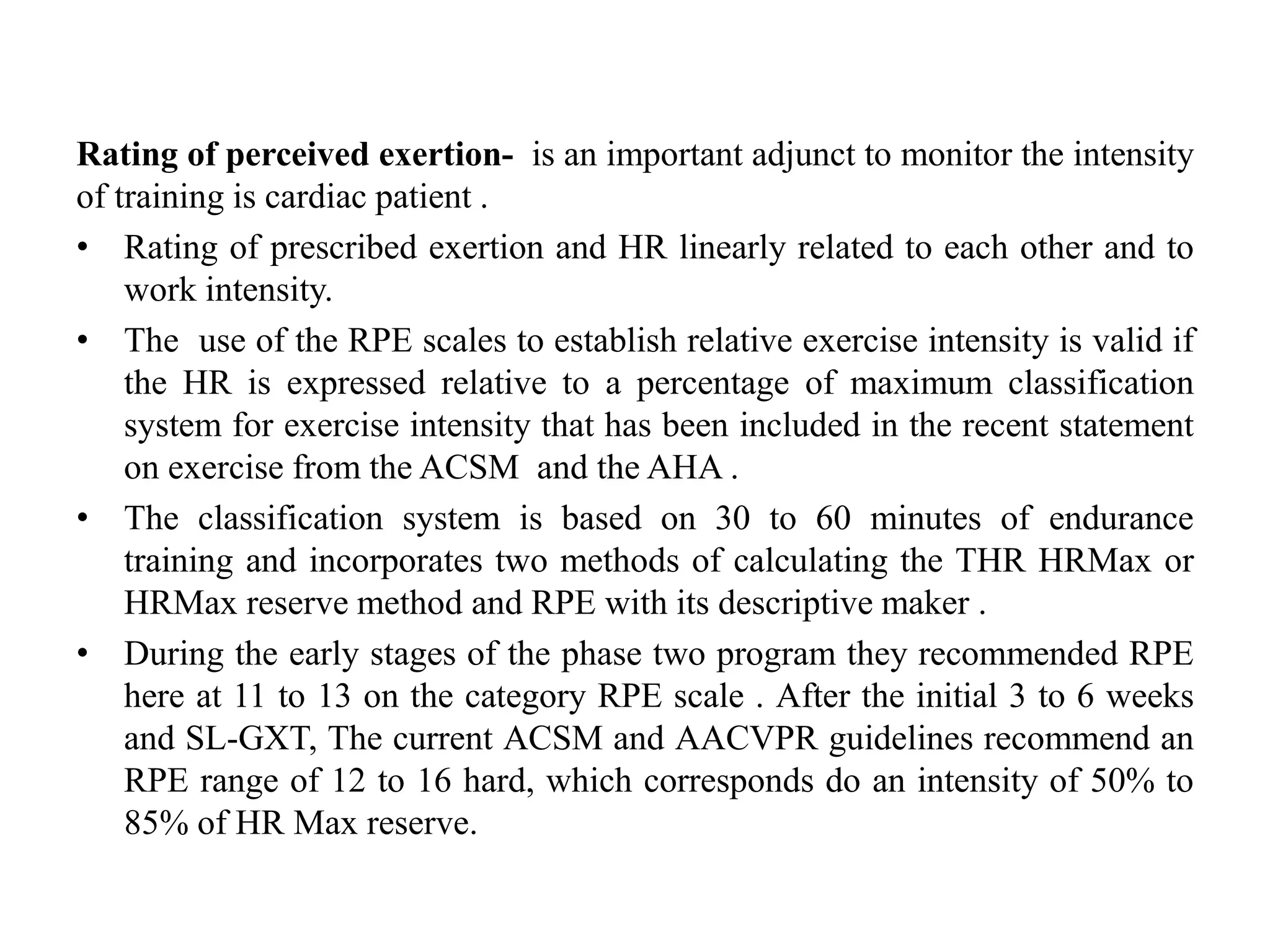
Rating of perceived exertion- is an important adjunct to monitor the intensity
of training is cardiac patient .
• Rating of prescribed exertion and HR linearly related to each other and to
work intensity.
• The use of the RPE scales to establish relative exercise intensity is valid if
the HR is expressed relative to a percentage of maximum classification
system for exercise intensity that has been included in the recent statement
on exercise from the ACSM and the AHA .
• The classification system is based on 30 to 60 minutes of endurance
training and incorporates two methods of calculating the THR HRMax or
HRMax reserve method and RPE with its descriptive maker .
• During the early stages of the phase two program they recommended RPE
here at 11 to 13 on the category RPE scale . After the initial 3 to 6 weeks
and SL-GXT, The current ACSM and AACVPR guidelines recommend an
RPE range of 12 to 16 hard, which corresponds do an intensity of 50% to
85% of HR Max reserve.
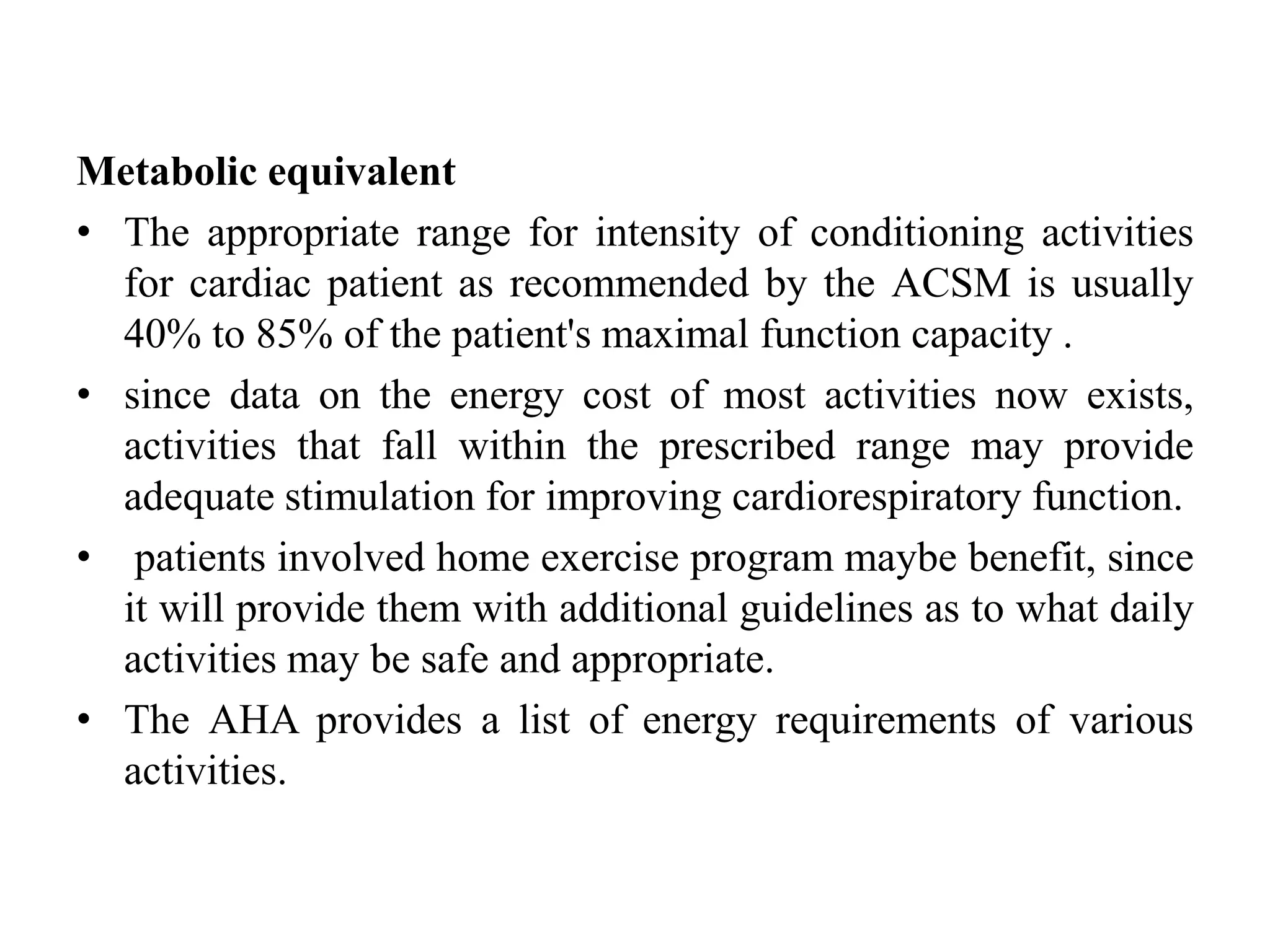
Metabolic equivalent
• The appropriate range for intensity of conditioning activities
for cardiac patient as recommended by the ACSM is usually
40% to 85% of the patient's maximal function capacity .
• since data on the energy cost of most activities now exists,
activities that fall within the prescribed range may provide
adequate stimulation for improving cardiorespiratory function.
• patients involved home exercise program maybe benefit, since
it will provide them with additional guidelines as to what daily
activities may be safe and appropriate.
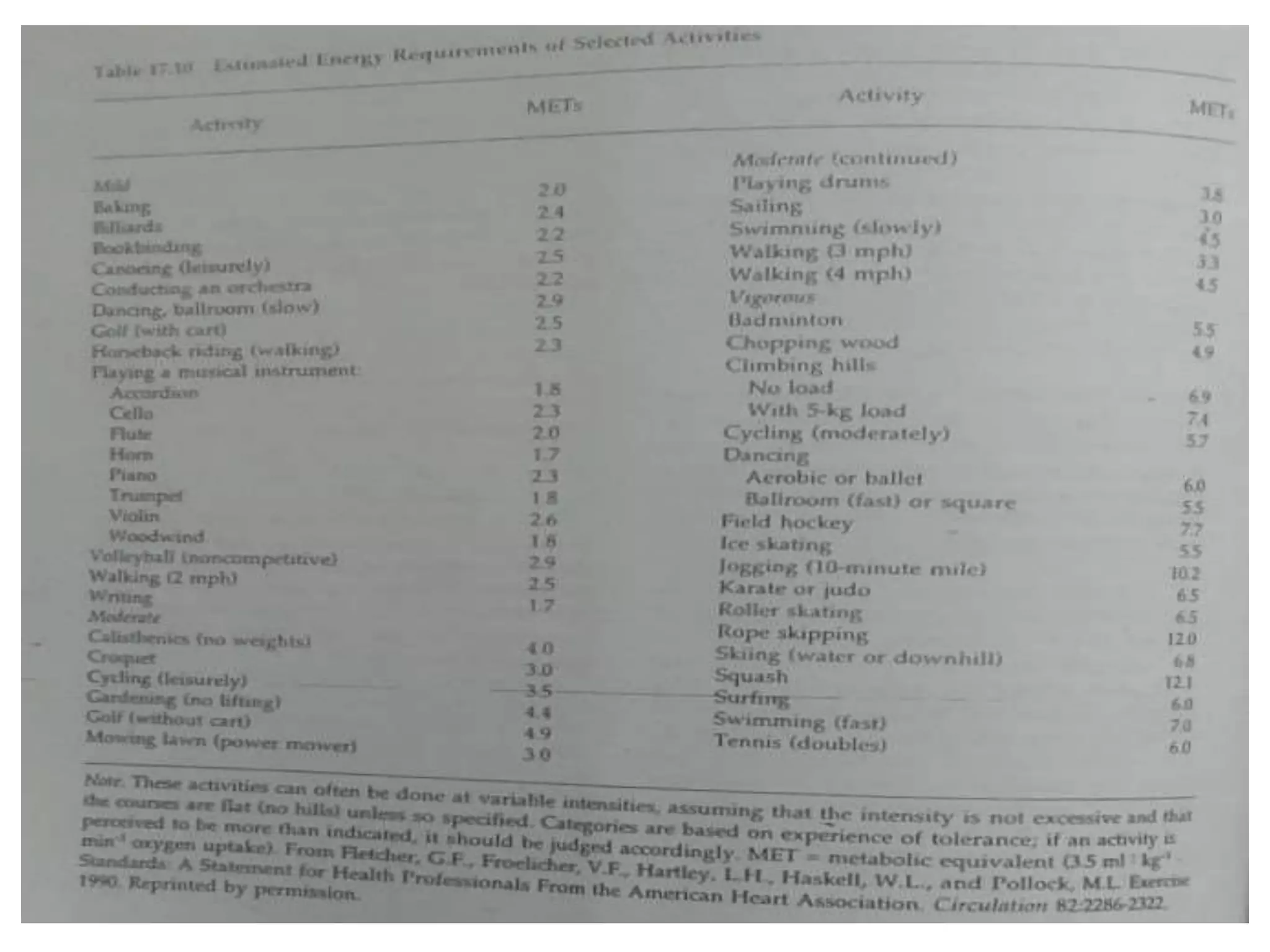
• The AHA provides a list of energy requirements of various
activities.
Anaerobic threshold-
• Cardiopulmonary Exercise testing (CPX) to evaluate the
functional capacity of cardiac patient.
• The concept of the AT was first proposed by Wasserman et al
who defined ATS the level of exercise VO2 above which
aerobic energy production is supplemented by anaerobic
mechanism.
• As a result of training adaptation, the AT tends to occur at
higher workload which would be considered by the exercise
specialist when adjusting the exercise prescription. However,
given the uncertainties of measuring defining or describing the
AT, its use in exercise prescription is limited until further
research has demonstrated adequate reproducibility or
understanding of the phenomena across a broad spectrum of
patients. the use of the AT method to prescribe exercise should
be done only in conjunction with the standard and accepted
method of prescription.
Frequency and duration of training
• The exercise session during early stages of phase II program are of short
duration (15 min to 20 min) depending on medical status and fitness level
,some patients may require an extra exercise session each day during the
early stages of rehabilitation If their calorie expenditure is not sufficient .
• As the patients progress, the duration of the exercise session can gradually
increase in 5 minutes session per week until a 45-minute session is attained.
• Once a 45-minute duration of training has been attained frequency of
training can be reduced or maintain between 3 to 5 times per week. for
most patients this may take 4 to 6 weeks .
• The standard formal outpatient program usually consists of 3 visits per
week and includes both the exercise and educational components of
rehabilitation.
Mode of training
• there are many activities that provide adequate stimulation for improving
cardiorespiratory function, Flexibility ROM and strength.
• Several methods of training have been suggested for use during the phase 2
program and they include continuous single or dual mode circuit .
• The continuous training methods usually walking ,cycling or a combination
impose a submaximal energy requirement that is maintained throughout a
training period. The advantages of this type of training are too easy of
prescribing exercise and the ability to monitor the patient
• Circuit training has been shown to be an excellent method of conditioning
to improve both muscular strength and cardiovascular endurance in cardiac
patient.
• Circuit training incorporates the combination lower body (stationary
cycling, treadmill walking and stair climbing) and upper body exercise like
(rowing , lightweight and wall pulleys).
• Patient exercise for 5 to 12 minutes on each modality
alternating arm and leg activities
• Circuit weight training is a series of resistance training
exercise designed to improve both muscular strength and
cardiorespiratory fitness.
• Generally circuit weight training results in significant gains in
strength but only modest improvement in VO2 max in both
healthy and patient population.
• As a result of these modest improvement in cardiorespiratory
fitness it is recommended that circuit weight training be
utilized only in conjunction with rather than serve as a
substitute for regular performed aerobic exercise .
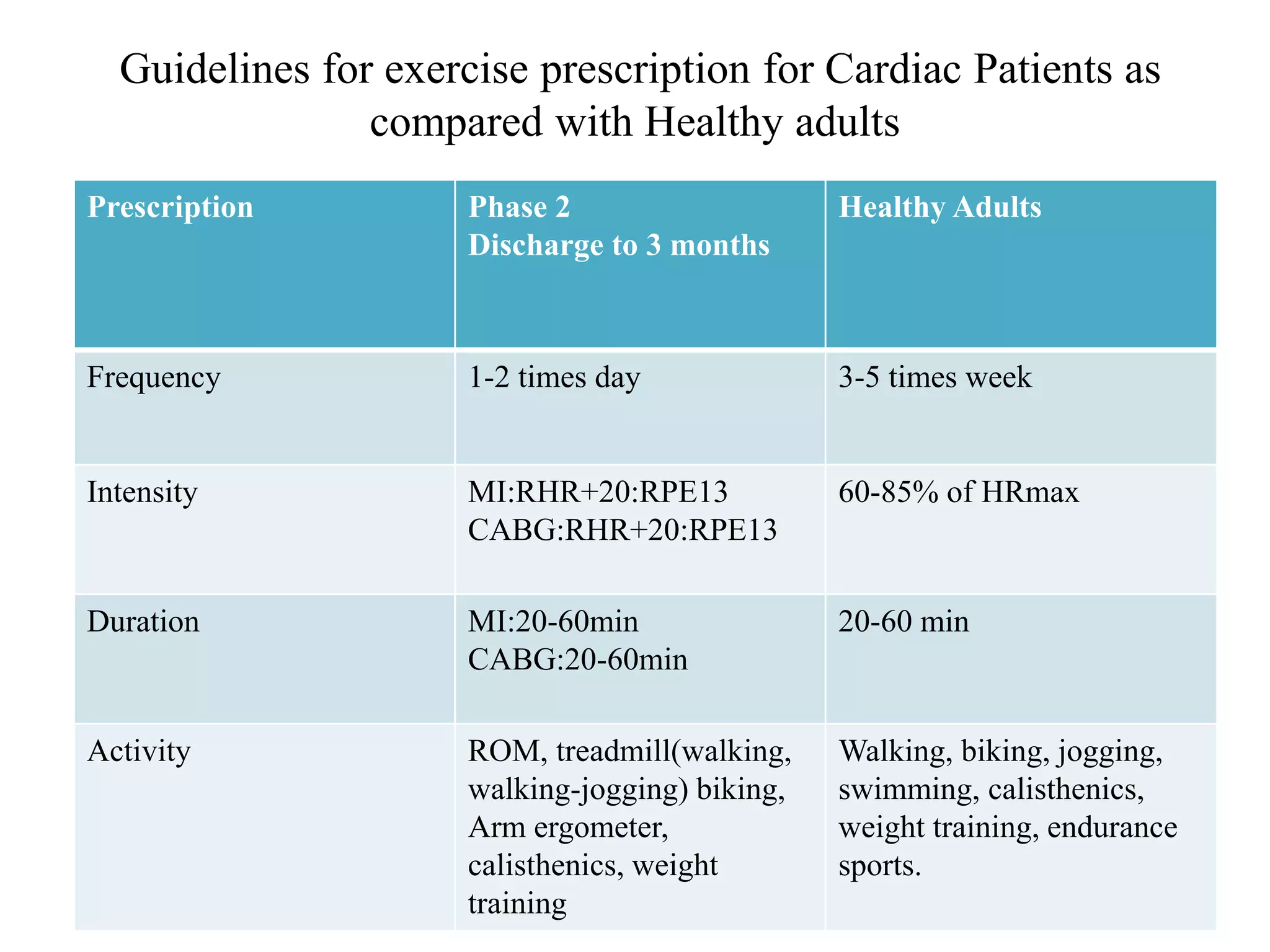
Guidelines for exercise prescription for Cardiac Patients as
compared with Healthy adults
Prescription Phase 2
Discharge to 3 months
Healthy Adults
Frequency 1-2 times day 3-5 times week
Intensity MI:RHR+20:RPE13
CABG:RHR+20:RPE13
60-85% of HRmax
Duration MI:20-60min
CABG:20-60min
20-60 min
Activity ROM, treadmill(walking,
walking-jogging) biking,
Arm ergometer,
calisthenics, weight
training
Walking, biking, jogging,
swimming, calisthenics,
weight training, endurance
sports.
Endurance activities
Walking
• walking is safe for both cardiovascular and orthopedic risk and has been found to
be an excellent activities for improving aerobic fitness. The compliance to walking
program usually high because working required no specific skills, facilities or
equipment and can be incorporated into most busy lifestyle
• a 12 step walking program that can be used in an outpatient or home program.
• The patient progress from step-to-step as tolerated. A patient should be stable at 1
to 2 for 2 weeks before progressing to a higher level .
• Because the caloric expenditure per exercise session for cardiac patient in phase 1
begin at a much lower level approximately (50 calories per session). It is typically
takes the cardiac patient several weeks or months longer than healthy individual to
reach this maximum.
• This amount of activity improves patient’s aerobic capacity 15% to 30% over 4 to 6
months . Therefore at a slow to moderate walking speed patient must eventually
walk 45 to 60 minutes per session or increase their training frequency or both to
reach the required calorie expenditure .
Jogging
• Although jogging is generally not recommended for patient in
an early stage of the phase 2 program, some individual may
progress at level where higher intensity exercise may be
tolerated.
• Cardiac patients entering a jogging program usually began
with short period of jogging interspersed with equal distance
of walking
• As they progress they will walk less and jog more.
• There is a strong relationship between high impact activities
such as jogging and orthopedic injuries, particularly in
beginners, elderly, overweight and post menopausal women .
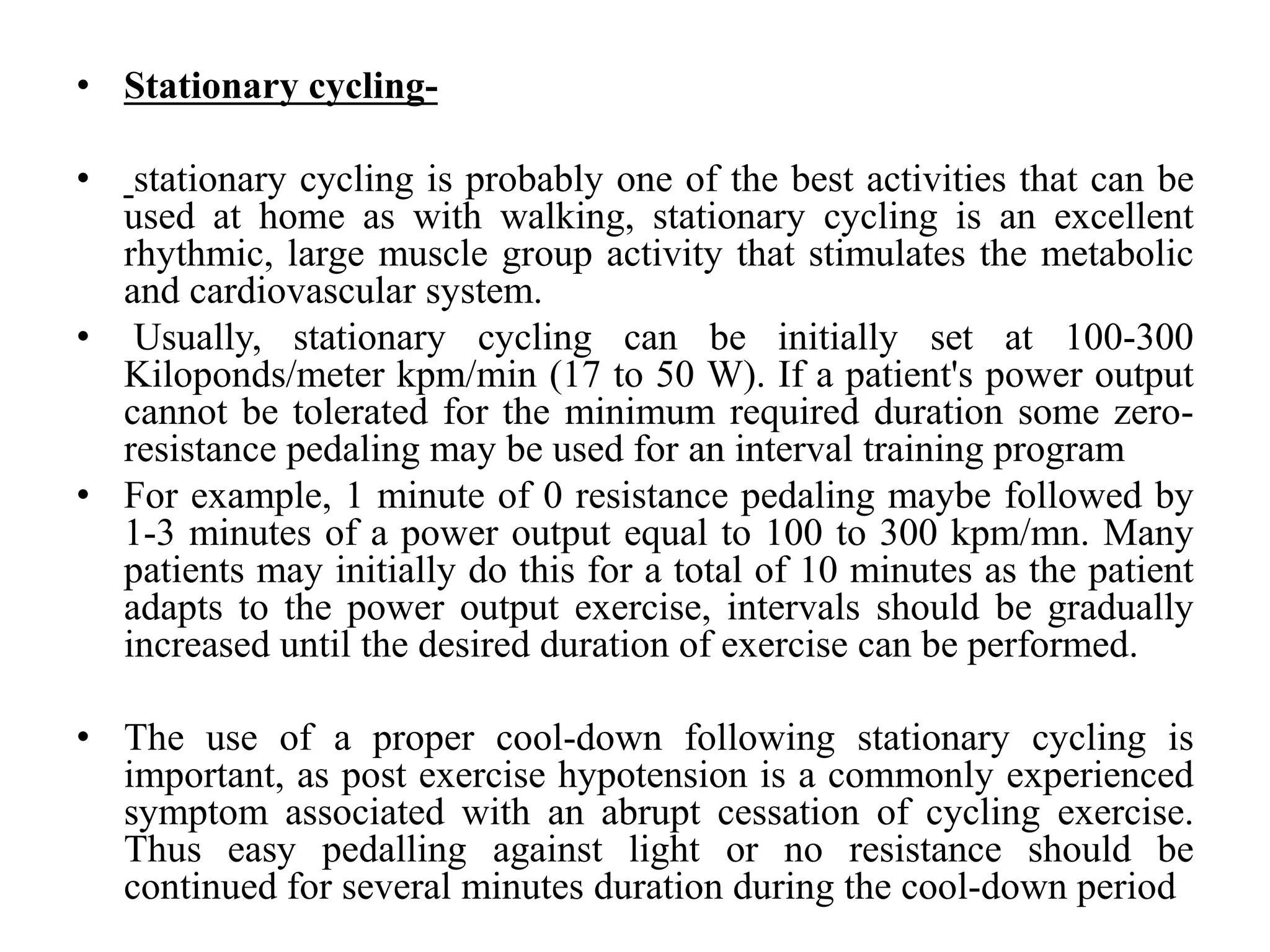
• Stationary cycling-
• stationary cycling is probably one of the best activities that can be
used at home as with walking, stationary cycling is an excellent
rhythmic, large muscle group activity that stimulates the metabolic
and cardiovascular system.
• Usually, stationary cycling can be initially set at 100-300
Kiloponds/meter kpm/min (17 to 50 W). If a patient's power output
cannot be tolerated for the minimum required duration some zero-
resistance pedaling may be used for an interval training program
• For example, 1 minute of 0 resistance pedaling maybe followed by
1-3 minutes of a power output equal to 100 to 300 kpm/mn. Many
patients may initially do this for a total of 10 minutes as the patient
adapts to the power output exercise, intervals should be gradually
increased until the desired duration of exercise can be performed.
• The use of a proper cool-down following stationary cycling is
important, as post exercise hypotension is a commonly experienced
symptom associated with an abrupt cessation of cycling exercise.
Thus easy pedalling against light or no resistance should be
continued for several minutes duration during the cool-down period
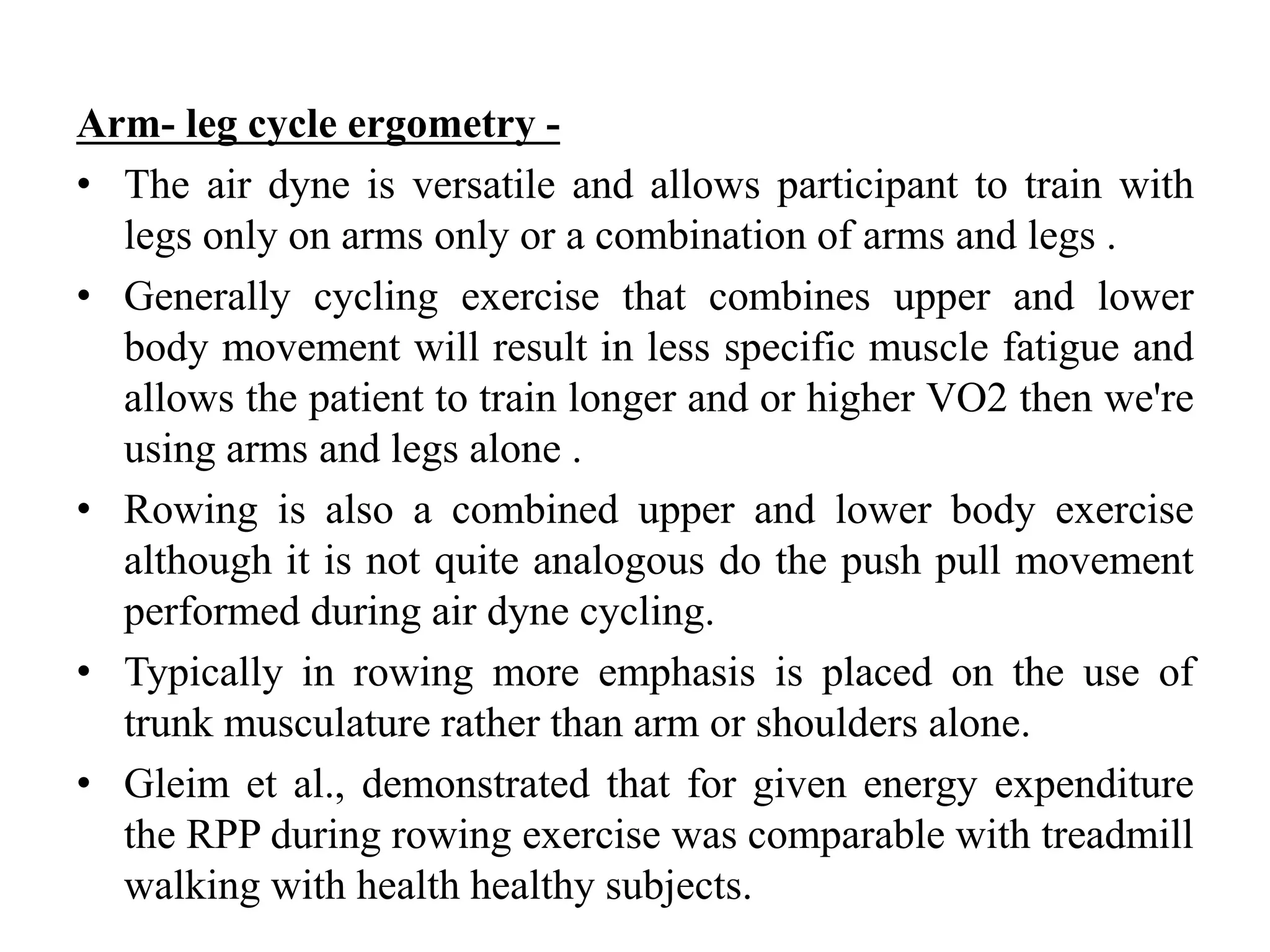
Arm- leg cycle ergometry -
• The air dyne is versatile and allows participant to train with
legs only on arms only or a combination of arms and legs .
• Generally cycling exercise that combines upper and lower
body movement will result in less specific muscle fatigue and
allows the patient to train longer and or higher VO2 then we're
using arms and legs alone .
• Rowing is also a combined upper and lower body exercise
although it is not quite analogous do the push pull movement
performed during air dyne cycling.
• Typically in rowing more emphasis is placed on the use of
trunk musculature rather than arm or shoulders alone.
• Gleim et al., demonstrated that for given energy expenditure
the RPP during rowing exercise was comparable with treadmill
walking with health healthy subjects.
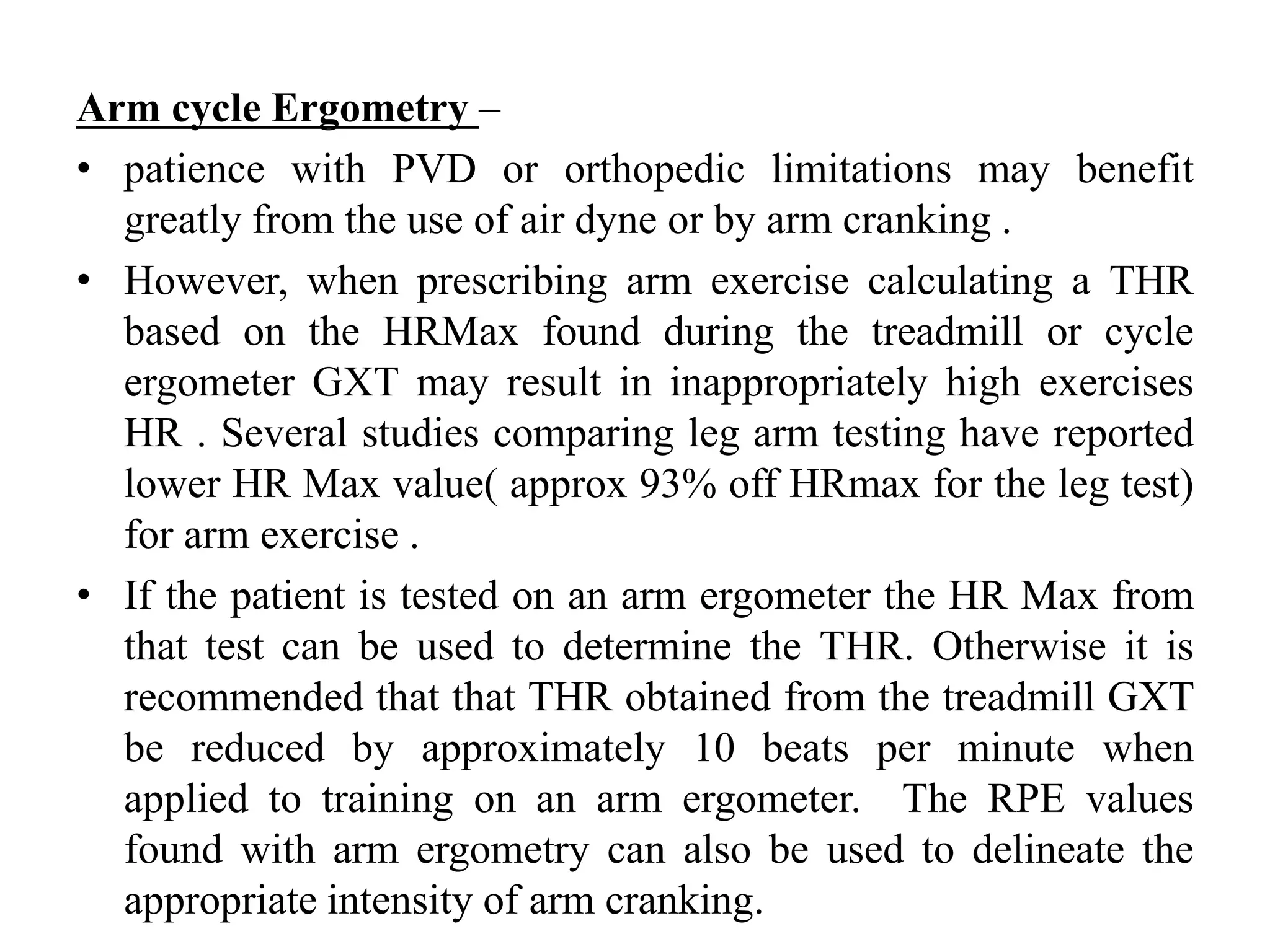
Arm cycle Ergometry –
• patience with PVD or orthopedic limitations may benefit
greatly from the use of air dyne or by arm cranking .
• However, when prescribing arm exercise calculating a THR
based on the HRMax found during the treadmill or cycle
ergometer GXT may result in inappropriately high exercises
HR . Several studies comparing leg arm testing have reported
lower HR Max value( approx 93% off HRmax for the leg test)
for arm exercise .
• If the patient is tested on an arm ergometer the HR Max from
that test can be used to determine the THR. Otherwise it is
recommended that that THR obtained from the treadmill GXT
be reduced by approximately 10 beats per minute when
applied to training on an arm ergometer. The RPE values
found with arm ergometry can also be used to delineate the
appropriate intensity of arm cranking.
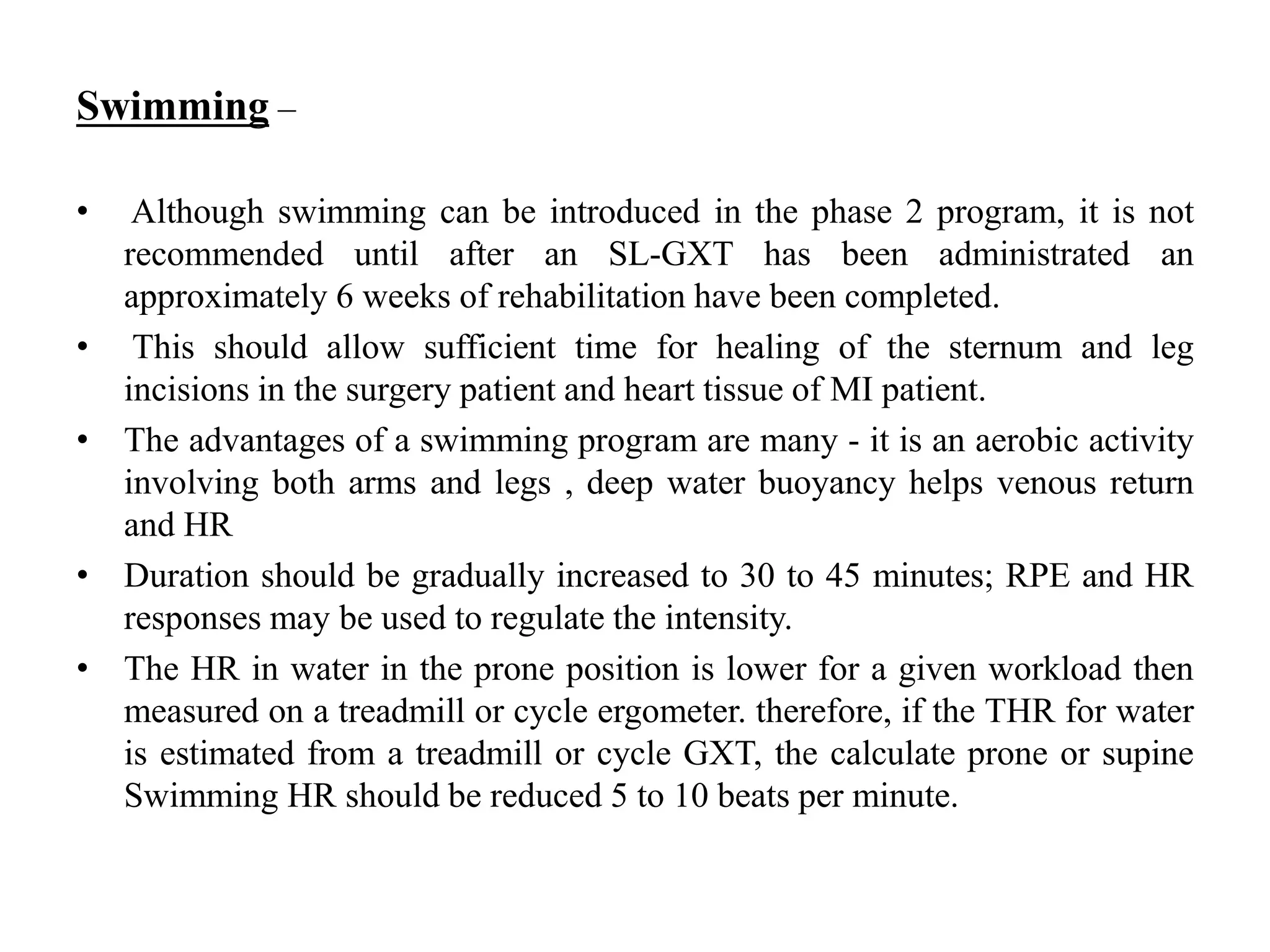
Swimming –
• Although swimming can be introduced in the phase 2 program, it is not
recommended until after an SL-GXT has been administrated an
approximately 6 weeks of rehabilitation have been completed.
• This should allow sufficient time for healing of the sternum and leg
incisions in the surgery patient and heart tissue of MI patient.
• The advantages of a swimming program are many - it is an aerobic activity
involving both arms and legs , deep water buoyancy helps venous return
and HR
• Duration should be gradually increased to 30 to 45 minutes; RPE and HR
responses may be used to regulate the intensity.
• The HR in water in the prone position is lower for a given workload then
measured on a treadmill or cycle ergometer. therefore, if the THR for water
is estimated from a treadmill or cycle GXT, the calculate prone or supine
Swimming HR should be reduced 5 to 10 beats per minute.
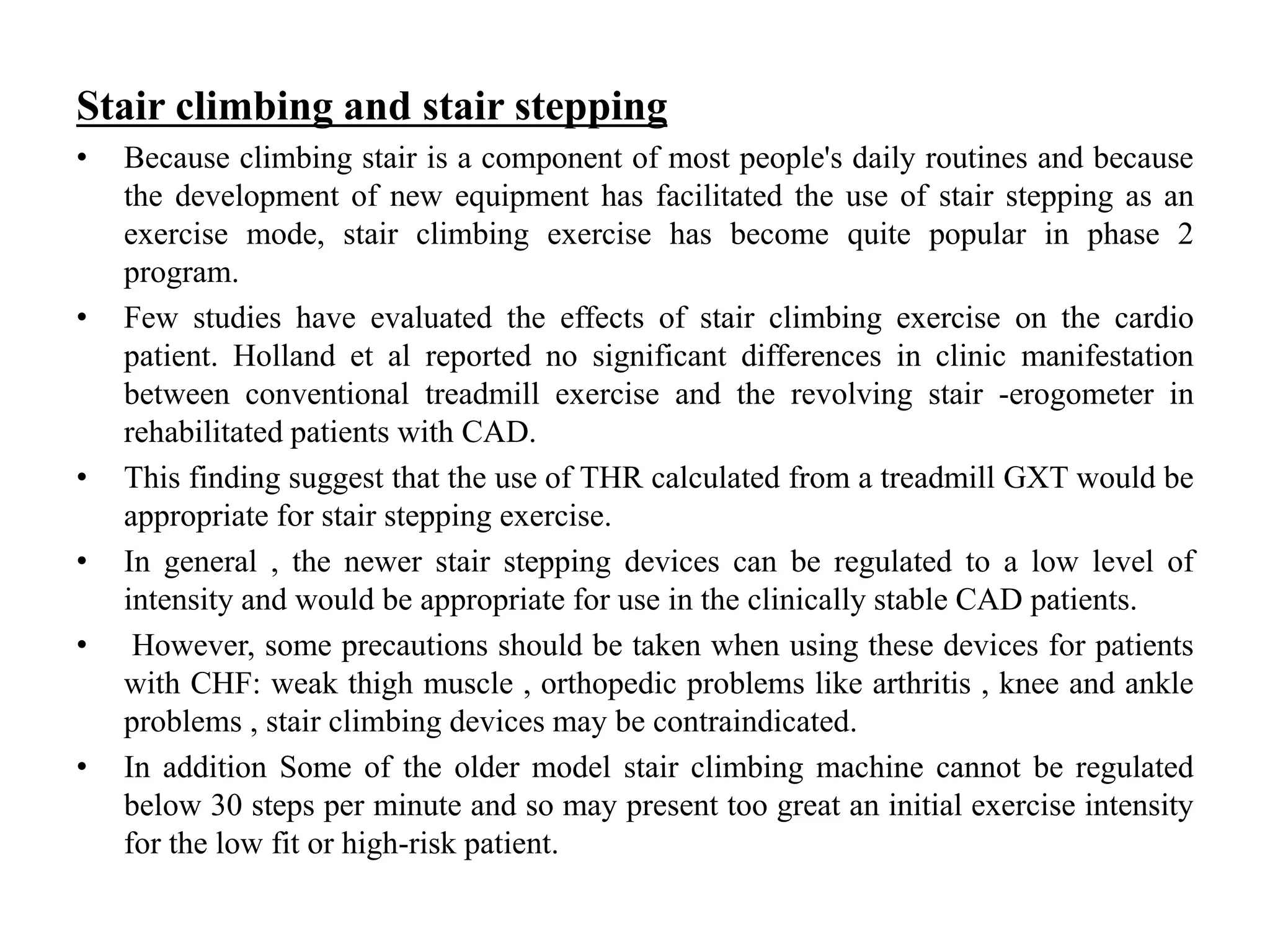
Stair climbing and stair stepping
• Because climbing stair is a component of most people's daily routines and because
the development of new equipment has facilitated the use of stair stepping as an
exercise mode, stair climbing exercise has become quite popular in phase 2
program.
• Few studies have evaluated the effects of stair climbing exercise on the cardio
patient. Holland et al reported no significant differences in clinic manifestation
between conventional treadmill exercise and the revolving stair -erogometer in
rehabilitated patients with CAD.
• This finding suggest that the use of THR calculated from a treadmill GXT would be
appropriate for stair stepping exercise.
• In general , the newer stair stepping devices can be regulated to a low level of
intensity and would be appropriate for use in the clinically stable CAD patients.
• However, some precautions should be taken when using these devices for patients
with CHF: weak thigh muscle , orthopedic problems like arthritis , knee and ankle
problems , stair climbing devices may be contraindicated.
• In addition Some of the older model stair climbing machine cannot be regulated
below 30 steps per minute and so may present too great an initial exercise intensity
for the low fit or high-risk patient.
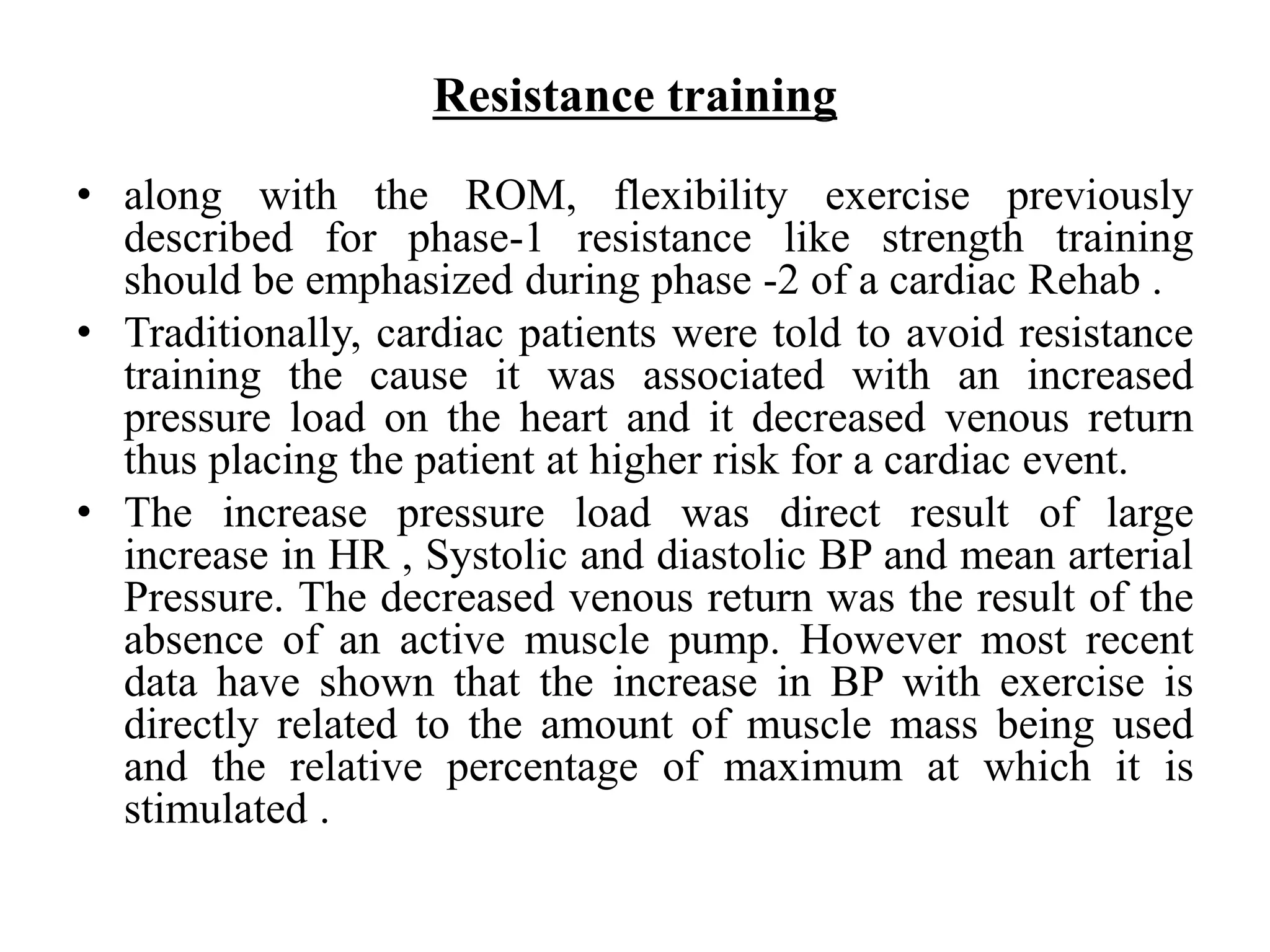
Resistance training
• along with the ROM, flexibility exercise previously
described for phase-1 resistance like strength training
should be emphasized during phase -2 of a cardiac Rehab .
• Traditionally, cardiac patients were told to avoid resistance
training the cause it was associated with an increased
pressure load on the heart and it decreased venous return
thus placing the patient at higher risk for a cardiac event.
• The increase pressure load was direct result of large
increase in HR , Systolic and diastolic BP and mean arterial
Pressure. The decreased venous return was the result of the
absence of an active muscle pump. However most recent
data have shown that the increase in BP with exercise is
directly related to the amount of muscle mass being used
and the relative percentage of maximum at which it is
stimulated .
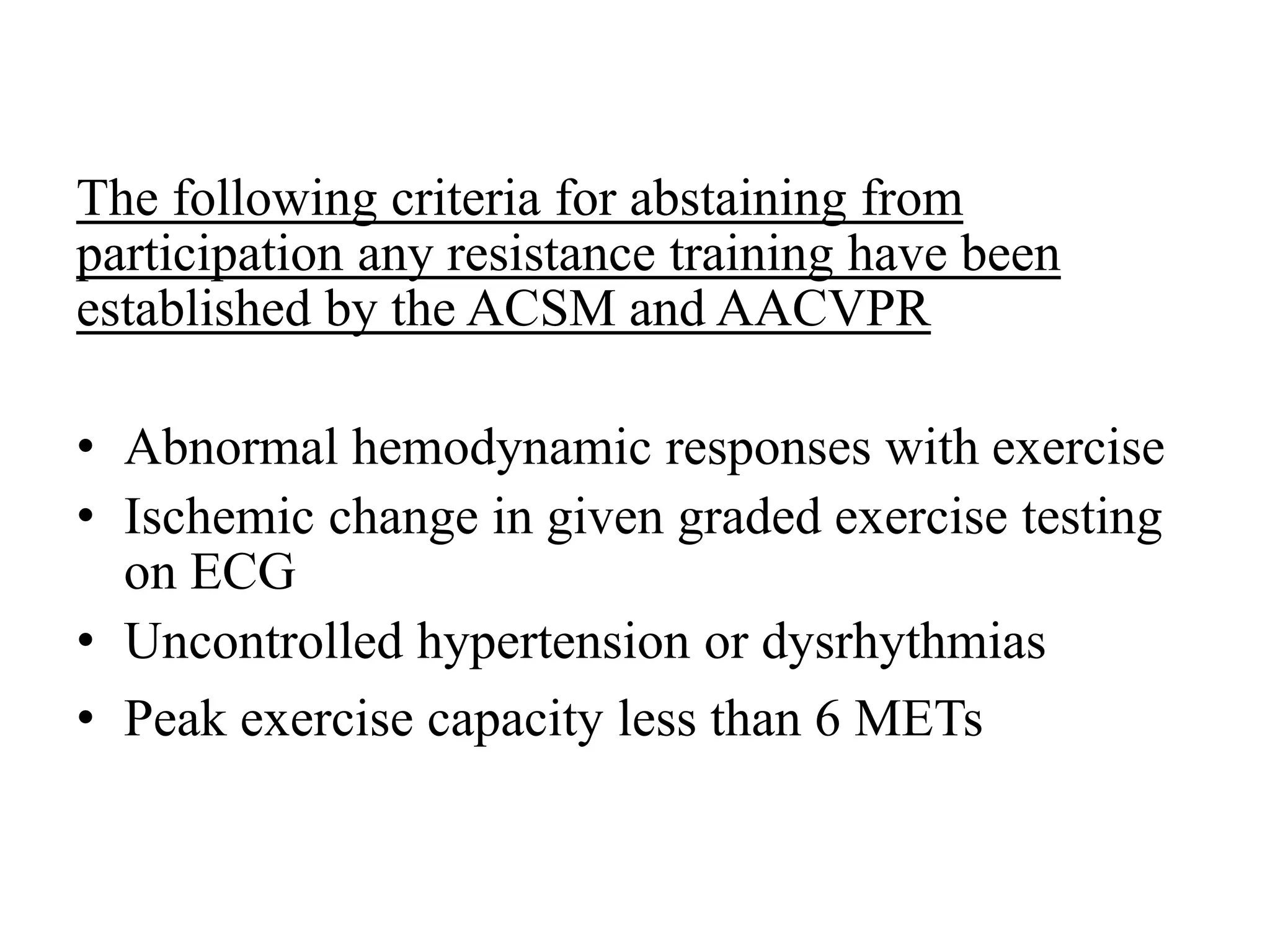
The following criteria for abstaining from
participation any resistance training have been
established by the ACSM and AACVPR
• Abnormal hemodynamic responses with exercise
• Ischemic change in given graded exercise testing
on ECG
• Uncontrolled hypertension or dysrhythmias
• Peak exercise capacity less than 6 METs
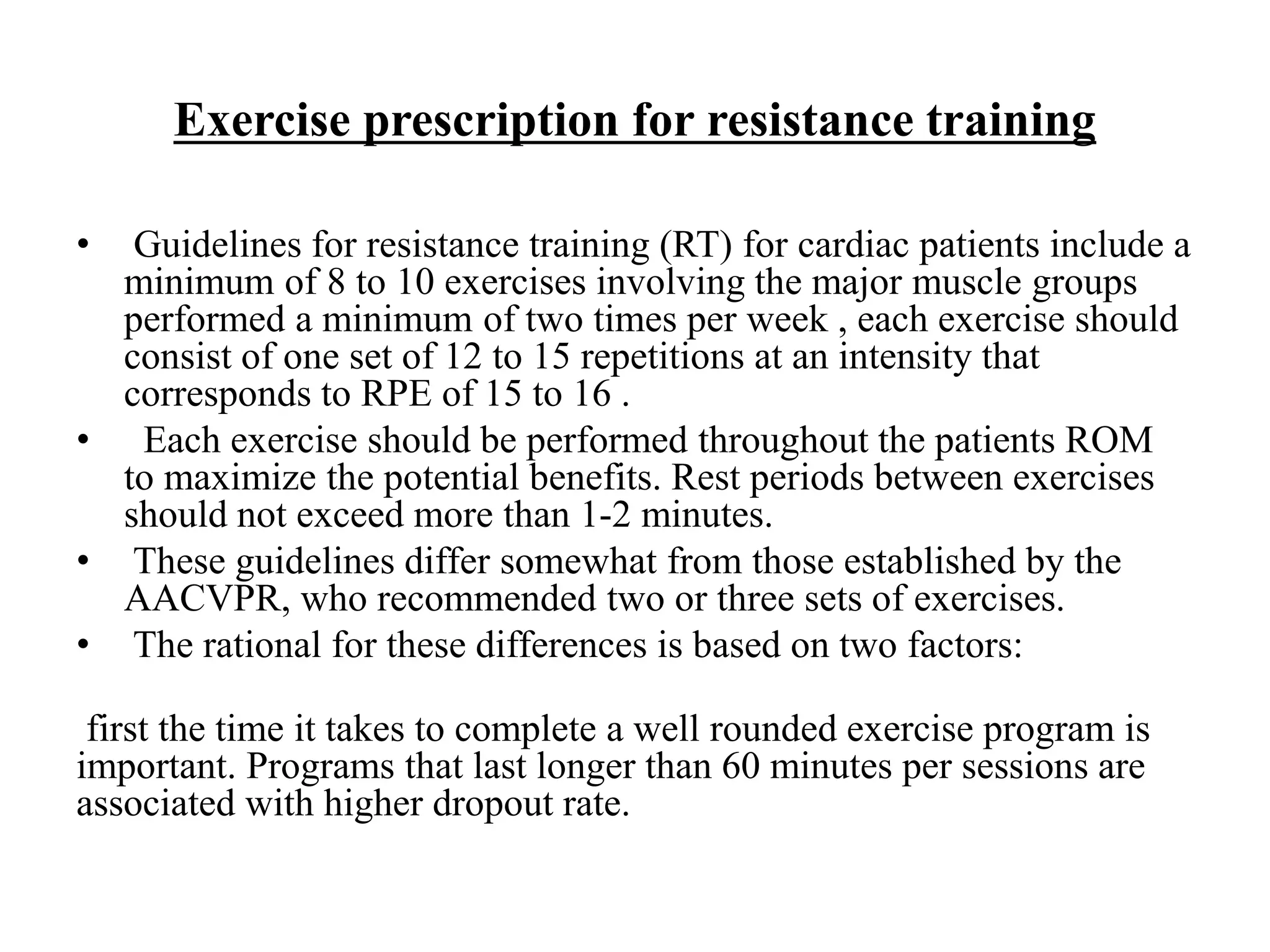
Exercise prescription for resistance training
• Guidelines for resistance training (RT) for cardiac patients include a
minimum of 8 to 10 exercises involving the major muscle groups
performed a minimum of two times per week , each exercise should
consist of one set of 12 to 15 repetitions at an intensity that
corresponds to RPE of 15 to 16 .
• Each exercise should be performed throughout the patients ROM
to maximize the potential benefits. Rest periods between exercises
should not exceed more than 1-2 minutes.
• These guidelines differ somewhat from those established by the
AACVPR, who recommended two or three sets of exercises.
• The rational for these differences is based on two factors:
first the time it takes to complete a well rounded exercise program is
important. Programs that last longer than 60 minutes per sessions are
associated with higher dropout rate.
• Second several investigators have noted considerable gains in
strength greater than 25% following training programs using one set
of 10 to 15 repetition to fatigue.
• The strength gains noted by training one set are not much different
from those found by using additional sets.
• As a result of this research the ACSM current recommendation for
healthy individuals is a minimum of one set of 8 to 12 repetition to
fatigue .
• The author support these recommendations for cardiac patients as
well as although the number of repetitions should be slightly higher
(12 to 15) and the perceived intensity lower (RPE value not to
exceed 15 to 16).
• Proper form including lifting the weight slowly and smoothly should
be emphasized. If possible patient should avoid holding the breath
or using excessive force when gripping the bars of the machine as
this could cause an added increase the BP.
• Patient should be instructed to lift the weight in 2s while exhaling
and to lower it in 4s While inhaling .
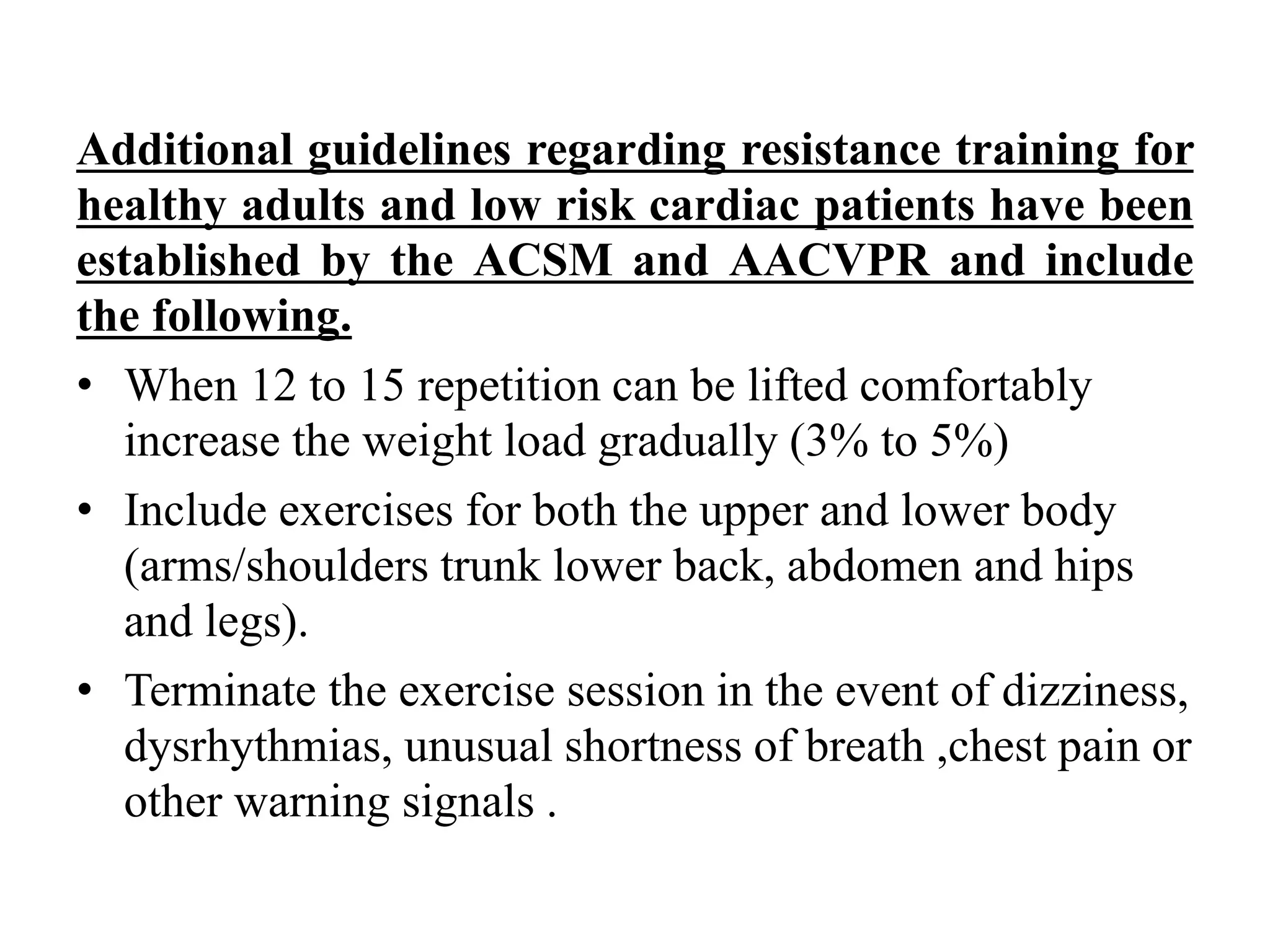
Additional guidelines regarding resistance training for
healthy adults and low risk cardiac patients have been
established by the ACSM and AACVPR and include
the following.
• When 12 to 15 repetition can be lifted comfortably
increase the weight load gradually (3% to 5%)
• Include exercises for both the upper and lower body
(arms/shoulders trunk lower back, abdomen and hips
and legs).
• Terminate the exercise session in the event of dizziness,
dysrhythmias, unusual shortness of breath ,chest pain or
other warning signals .
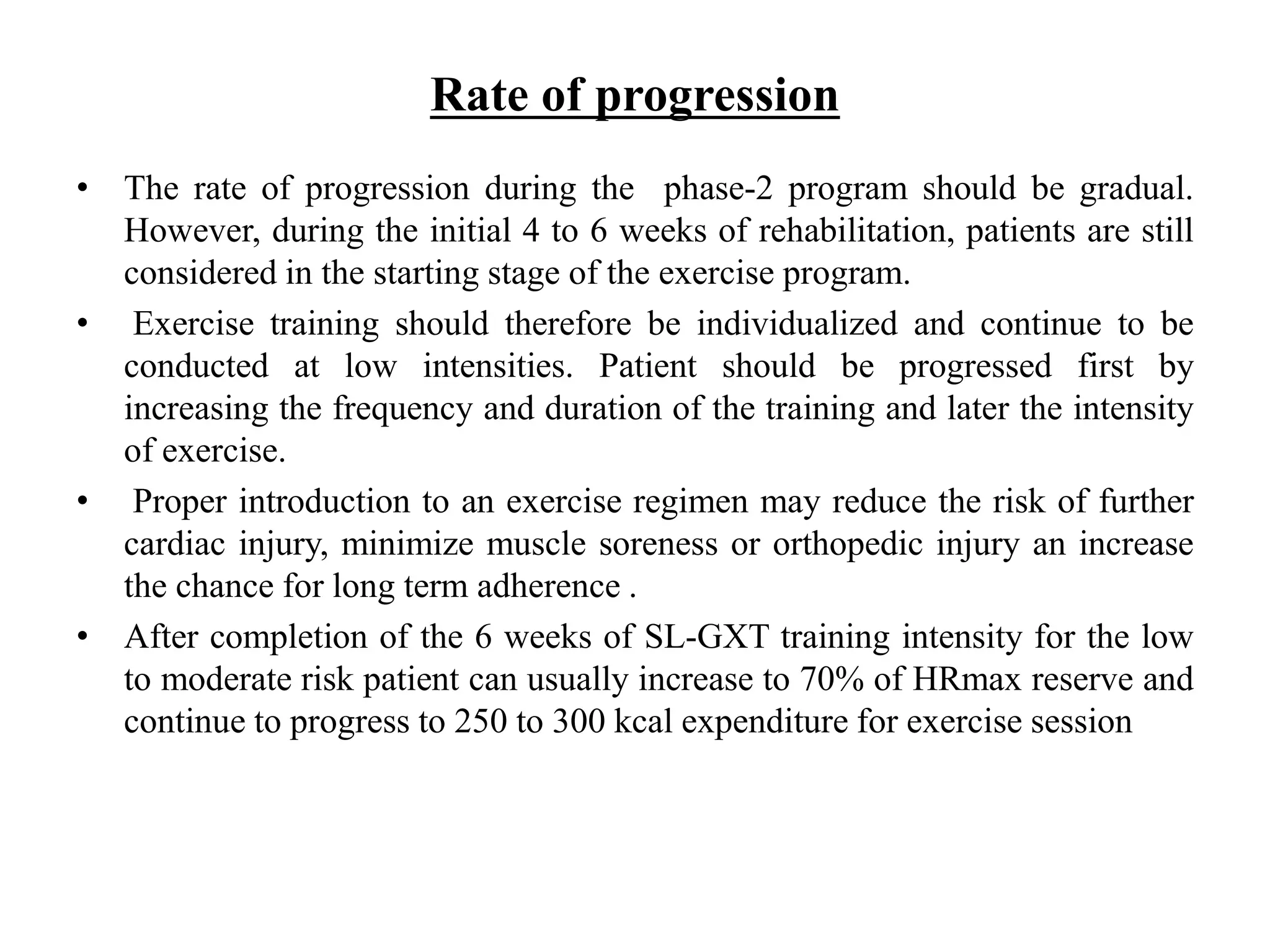
Rate of progression
• The rate of progression during the phase-2 program should be gradual.
However, during the initial 4 to 6 weeks of rehabilitation, patients are still
considered in the starting stage of the exercise program.
• Exercise training should therefore be individualized and continue to be
conducted at low intensities. Patient should be progressed first by
increasing the frequency and duration of the training and later the intensity
of exercise.
• Proper introduction to an exercise regimen may reduce the risk of further
cardiac injury, minimize muscle soreness or orthopedic injury an increase
the chance for long term adherence .
• After completion of the 6 weeks of SL-GXT training intensity for the low
to moderate risk patient can usually increase to 70% of HRmax reserve and
continue to progress to 250 to 300 kcal expenditure for exercise session
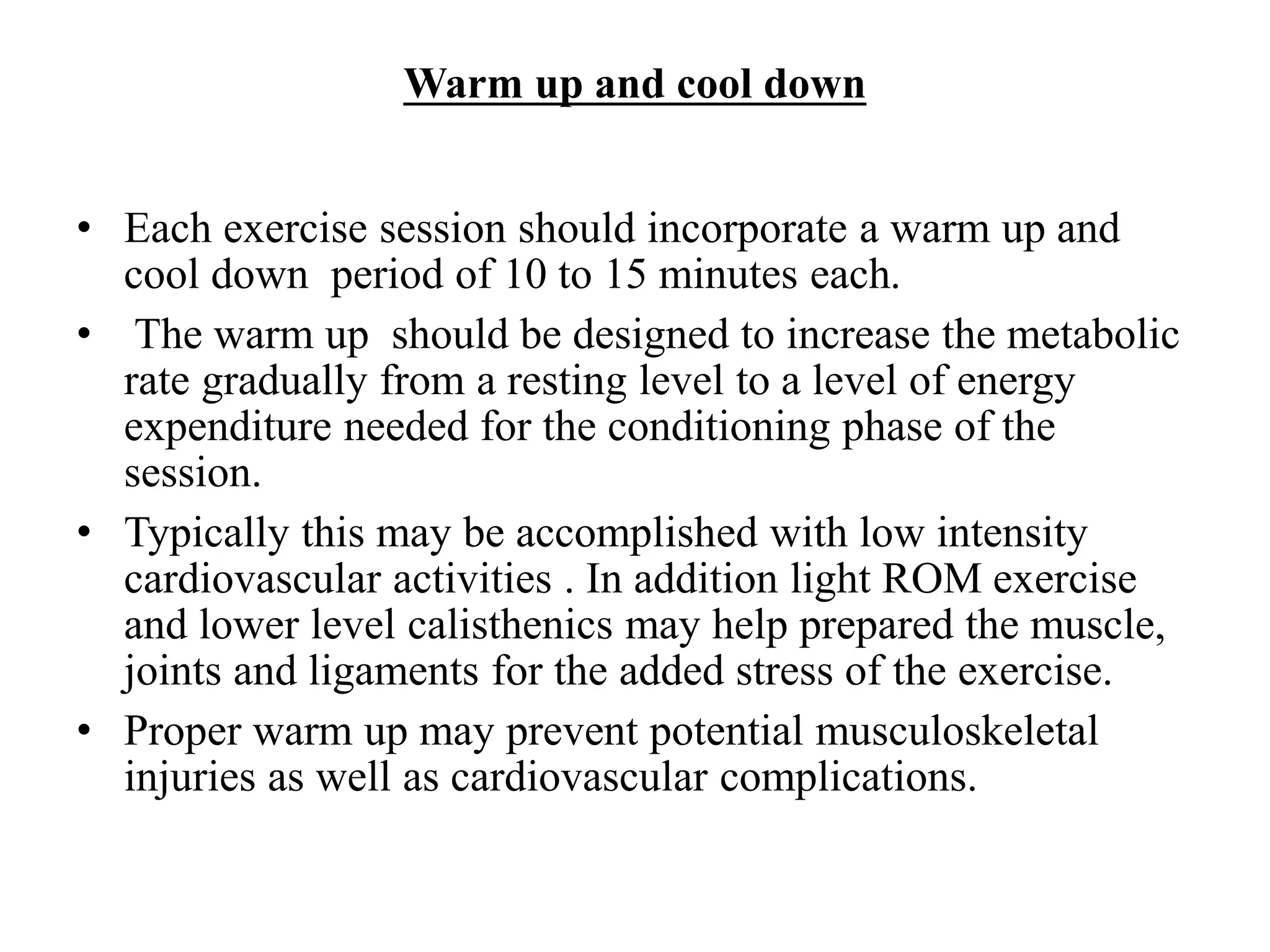
Warm up and cool down
• Each exercise session should incorporate a warm up and
cool down period of 10 to 15 minutes each.
• The warm up should be designed to increase the metabolic
rate gradually from a resting level to a level of energy
expenditure needed for the conditioning phase of the
session.
• Typically this may be accomplished with low intensity
cardiovascular activities . In addition light ROM exercise
and lower level calisthenics may help prepared the muscle,
joints and ligaments for the added stress of the exercise.
• Proper warm up may prevent potential musculoskeletal
injuries as well as cardiovascular complications.
• The importance of the cool-down is equal to that the warm up period. The
major purpose of cooling down is to keep active the primary muscle group
that were involved in the exercise. Since most cardiovascular exercise
involved the muscle of the legs and are performed in the upright position,
blood tends to pool in the lower extremely upon cessation . Therefore
patient should be encouraged to continue the exercise at a gradually
finishing rate during the cool-down period. As described before, post
exercise hypotension has been found to particularly evident after stationary
cycling .
• Continued activity during the cool-down period will also reduce the risk of
cardiac dysrhythmias.This can cause significant dysrhythmias in high risk
individuals. Many cardiovascular events occur during the first few minutes
of recovery. Therefore close surveillance of the patient during the first 15
minutes after exercise is highly recommended .
Seminar presentation 7 oct 2020

Seminar presentation 7 oct 2020

  • 1.
    CENTER FOR PHYSIOTHERAPYANDREHABILITATION SCIENCE JAMIA MILLIA ISLAMIA Submitted to: Dr. Jamal Moiz Submitted by: Sumaiya Shams Mpt (cardio)
  • 2.
    Home based cardiacrehabilitation: AACVPR, AHA, ACC statement
  • 3.
    • The cardiacRehabilitation plan For the majority of cardiac patients involved in cardiac rehabilitation the optimal period of a comprehensive rehabilitation plan is variable many recommended up to one year. The cardiac rehabilitation plan should be individually tailored and based on the patient's medical history, prognosis, functional capacity and specific needs. The program should be aimed to maximize safety, efficiency and adherence. • Phase 2 early outpatient clinic or home-based phase Ideally should commence within three weeks of hospital discharge. • The main purpose of this phase is to progressively improve patient's functional capacity, lower cardiovascular risk factor and prepare the patient for return of his or her vocation. This phase should include exercise training and generally should last up to three months.
  • 4.
    • Phase 2outpatient cardiac rehabilitation- Organized, supervised outpatient cardiac rehabilitation has become an important part of the rehabilitation process and should begin when the patient is discharged from the hospital. • Most experts believe that the first few weeks after discharge are the most crucial for the patient with regard to the need for medical supervision as well as the initial risk factor for intervention program because of many anxieties and apprehension that exist when the healing process is incomplete and because medication dosage is often altered at this time, it is contradictory not to have a well-planned and well administrated outpatient program.
  • 5.
    • Ideally, phase2 program should be organized as a hospital- based program, although a community based, or home program may be implemented if an outpatient program is not available. Patient involved in a home program should be encouraged periodically to attend a hospital-based outpatient facility for further evaluation and to monitor progress. • As defined earlier, the outpatient phase of cardiac rehabilitation is the intermediate stage during which the patient progress from illustrative low level of training to a less restricted moderate level program of physical activity. • The contraindications and guidelines used to modify or terminate exercise in the phase-1 program are appropriate for the outpatient program as well .
  • 6.
    Exercise prescription forphase-2 Determination of intensity of training - Four different techniques frequently used to determine an appropriate training intensity for a cardiac patient as discussed. Heart rate - the upper limit for the THR in the outpatient program may vary considerably depending on medical status, symptomatology, personal preference and whether the patient has performed an SL -GXP. • Generally, the THR estimated for hospital discharge can be used for the first 3 to 6 weeks of the outpatient program and for patient with functional capacities of 5 Mets or less. • The ACSM and AACVPR recommend a starting intensity of 55% to 70% of HR Max reserved with a gradual increase of 60% to 85% of HR reserve as tolerated . • The AHA recommends starting at 50% to 60% of HR reserved.
  • 7.
    Rating of perceivedexertion- is an important adjunct to monitor the intensity of training is cardiac patient . • Rating of prescribed exertion and HR linearly related to each other and to work intensity. • The use of the RPE scales to establish relative exercise intensity is valid if the HR is expressed relative to a percentage of maximum classification system for exercise intensity that has been included in the recent statement on exercise from the ACSM and the AHA . • The classification system is based on 30 to 60 minutes of endurance training and incorporates two methods of calculating the THR HRMax or HRMax reserve method and RPE with its descriptive maker . • During the early stages of the phase two program they recommended RPE here at 11 to 13 on the category RPE scale . After the initial 3 to 6 weeks and SL-GXT, The current ACSM and AACVPR guidelines recommend an RPE range of 12 to 16 hard, which corresponds do an intensity of 50% to 85% of HR Max reserve.
  • 8.
    Metabolic equivalent • Theappropriate range for intensity of conditioning activities for cardiac patient as recommended by the ACSM is usually 40% to 85% of the patient's maximal function capacity . • since data on the energy cost of most activities now exists, activities that fall within the prescribed range may provide adequate stimulation for improving cardiorespiratory function. • patients involved home exercise program maybe benefit, since it will provide them with additional guidelines as to what daily activities may be safe and appropriate. • The AHA provides a list of energy requirements of various activities.
  • 10.
    Anaerobic threshold- • CardiopulmonaryExercise testing (CPX) to evaluate the functional capacity of cardiac patient. • The concept of the AT was first proposed by Wasserman et al who defined ATS the level of exercise VO2 above which aerobic energy production is supplemented by anaerobic mechanism. • As a result of training adaptation, the AT tends to occur at higher workload which would be considered by the exercise specialist when adjusting the exercise prescription. However, given the uncertainties of measuring defining or describing the AT, its use in exercise prescription is limited until further research has demonstrated adequate reproducibility or understanding of the phenomena across a broad spectrum of patients. the use of the AT method to prescribe exercise should be done only in conjunction with the standard and accepted method of prescription.
  • 11.
    Frequency and durationof training • The exercise session during early stages of phase II program are of short duration (15 min to 20 min) depending on medical status and fitness level ,some patients may require an extra exercise session each day during the early stages of rehabilitation If their calorie expenditure is not sufficient . • As the patients progress, the duration of the exercise session can gradually increase in 5 minutes session per week until a 45-minute session is attained. • Once a 45-minute duration of training has been attained frequency of training can be reduced or maintain between 3 to 5 times per week. for most patients this may take 4 to 6 weeks . • The standard formal outpatient program usually consists of 3 visits per week and includes both the exercise and educational components of rehabilitation.
  • 12.
    Mode of training •there are many activities that provide adequate stimulation for improving cardiorespiratory function, Flexibility ROM and strength. • Several methods of training have been suggested for use during the phase 2 program and they include continuous single or dual mode circuit . • The continuous training methods usually walking ,cycling or a combination impose a submaximal energy requirement that is maintained throughout a training period. The advantages of this type of training are too easy of prescribing exercise and the ability to monitor the patient • Circuit training has been shown to be an excellent method of conditioning to improve both muscular strength and cardiovascular endurance in cardiac patient. • Circuit training incorporates the combination lower body (stationary cycling, treadmill walking and stair climbing) and upper body exercise like (rowing , lightweight and wall pulleys).
  • 13.
    • Patient exercisefor 5 to 12 minutes on each modality alternating arm and leg activities • Circuit weight training is a series of resistance training exercise designed to improve both muscular strength and cardiorespiratory fitness. • Generally circuit weight training results in significant gains in strength but only modest improvement in VO2 max in both healthy and patient population. • As a result of these modest improvement in cardiorespiratory fitness it is recommended that circuit weight training be utilized only in conjunction with rather than serve as a substitute for regular performed aerobic exercise .
  • 14.
    Guidelines for exerciseprescription for Cardiac Patients as compared with Healthy adults Prescription Phase 2 Discharge to 3 months Healthy Adults Frequency 1-2 times day 3-5 times week Intensity MI:RHR+20:RPE13 CABG:RHR+20:RPE13 60-85% of HRmax Duration MI:20-60min CABG:20-60min 20-60 min Activity ROM, treadmill(walking, walking-jogging) biking, Arm ergometer, calisthenics, weight training Walking, biking, jogging, swimming, calisthenics, weight training, endurance sports.
  • 15.
    Endurance activities Walking • walkingis safe for both cardiovascular and orthopedic risk and has been found to be an excellent activities for improving aerobic fitness. The compliance to walking program usually high because working required no specific skills, facilities or equipment and can be incorporated into most busy lifestyle • a 12 step walking program that can be used in an outpatient or home program. • The patient progress from step-to-step as tolerated. A patient should be stable at 1 to 2 for 2 weeks before progressing to a higher level . • Because the caloric expenditure per exercise session for cardiac patient in phase 1 begin at a much lower level approximately (50 calories per session). It is typically takes the cardiac patient several weeks or months longer than healthy individual to reach this maximum. • This amount of activity improves patient’s aerobic capacity 15% to 30% over 4 to 6 months . Therefore at a slow to moderate walking speed patient must eventually walk 45 to 60 minutes per session or increase their training frequency or both to reach the required calorie expenditure .
  • 16.
    Jogging • Although joggingis generally not recommended for patient in an early stage of the phase 2 program, some individual may progress at level where higher intensity exercise may be tolerated. • Cardiac patients entering a jogging program usually began with short period of jogging interspersed with equal distance of walking • As they progress they will walk less and jog more. • There is a strong relationship between high impact activities such as jogging and orthopedic injuries, particularly in beginners, elderly, overweight and post menopausal women .
  • 17.
    • Stationary cycling- •stationary cycling is probably one of the best activities that can be used at home as with walking, stationary cycling is an excellent rhythmic, large muscle group activity that stimulates the metabolic and cardiovascular system. • Usually, stationary cycling can be initially set at 100-300 Kiloponds/meter kpm/min (17 to 50 W). If a patient's power output cannot be tolerated for the minimum required duration some zero- resistance pedaling may be used for an interval training program • For example, 1 minute of 0 resistance pedaling maybe followed by 1-3 minutes of a power output equal to 100 to 300 kpm/mn. Many patients may initially do this for a total of 10 minutes as the patient adapts to the power output exercise, intervals should be gradually increased until the desired duration of exercise can be performed. • The use of a proper cool-down following stationary cycling is important, as post exercise hypotension is a commonly experienced symptom associated with an abrupt cessation of cycling exercise. Thus easy pedalling against light or no resistance should be continued for several minutes duration during the cool-down period
  • 18.
    Arm- leg cycleergometry - • The air dyne is versatile and allows participant to train with legs only on arms only or a combination of arms and legs . • Generally cycling exercise that combines upper and lower body movement will result in less specific muscle fatigue and allows the patient to train longer and or higher VO2 then we're using arms and legs alone . • Rowing is also a combined upper and lower body exercise although it is not quite analogous do the push pull movement performed during air dyne cycling. • Typically in rowing more emphasis is placed on the use of trunk musculature rather than arm or shoulders alone. • Gleim et al., demonstrated that for given energy expenditure the RPP during rowing exercise was comparable with treadmill walking with health healthy subjects.
  • 19.
    Arm cycle Ergometry– • patience with PVD or orthopedic limitations may benefit greatly from the use of air dyne or by arm cranking . • However, when prescribing arm exercise calculating a THR based on the HRMax found during the treadmill or cycle ergometer GXT may result in inappropriately high exercises HR . Several studies comparing leg arm testing have reported lower HR Max value( approx 93% off HRmax for the leg test) for arm exercise . • If the patient is tested on an arm ergometer the HR Max from that test can be used to determine the THR. Otherwise it is recommended that that THR obtained from the treadmill GXT be reduced by approximately 10 beats per minute when applied to training on an arm ergometer. The RPE values found with arm ergometry can also be used to delineate the appropriate intensity of arm cranking.
  • 20.
    Swimming – • Althoughswimming can be introduced in the phase 2 program, it is not recommended until after an SL-GXT has been administrated an approximately 6 weeks of rehabilitation have been completed. • This should allow sufficient time for healing of the sternum and leg incisions in the surgery patient and heart tissue of MI patient. • The advantages of a swimming program are many - it is an aerobic activity involving both arms and legs , deep water buoyancy helps venous return and HR • Duration should be gradually increased to 30 to 45 minutes; RPE and HR responses may be used to regulate the intensity. • The HR in water in the prone position is lower for a given workload then measured on a treadmill or cycle ergometer. therefore, if the THR for water is estimated from a treadmill or cycle GXT, the calculate prone or supine Swimming HR should be reduced 5 to 10 beats per minute.
  • 21.
    Stair climbing andstair stepping • Because climbing stair is a component of most people's daily routines and because the development of new equipment has facilitated the use of stair stepping as an exercise mode, stair climbing exercise has become quite popular in phase 2 program. • Few studies have evaluated the effects of stair climbing exercise on the cardio patient. Holland et al reported no significant differences in clinic manifestation between conventional treadmill exercise and the revolving stair -erogometer in rehabilitated patients with CAD. • This finding suggest that the use of THR calculated from a treadmill GXT would be appropriate for stair stepping exercise. • In general , the newer stair stepping devices can be regulated to a low level of intensity and would be appropriate for use in the clinically stable CAD patients. • However, some precautions should be taken when using these devices for patients with CHF: weak thigh muscle , orthopedic problems like arthritis , knee and ankle problems , stair climbing devices may be contraindicated. • In addition Some of the older model stair climbing machine cannot be regulated below 30 steps per minute and so may present too great an initial exercise intensity for the low fit or high-risk patient.
  • 22.
    Resistance training • alongwith the ROM, flexibility exercise previously described for phase-1 resistance like strength training should be emphasized during phase -2 of a cardiac Rehab . • Traditionally, cardiac patients were told to avoid resistance training the cause it was associated with an increased pressure load on the heart and it decreased venous return thus placing the patient at higher risk for a cardiac event. • The increase pressure load was direct result of large increase in HR , Systolic and diastolic BP and mean arterial Pressure. The decreased venous return was the result of the absence of an active muscle pump. However most recent data have shown that the increase in BP with exercise is directly related to the amount of muscle mass being used and the relative percentage of maximum at which it is stimulated .
  • 23.
    The following criteriafor abstaining from participation any resistance training have been established by the ACSM and AACVPR • Abnormal hemodynamic responses with exercise • Ischemic change in given graded exercise testing on ECG • Uncontrolled hypertension or dysrhythmias • Peak exercise capacity less than 6 METs
  • 24.
    Exercise prescription forresistance training • Guidelines for resistance training (RT) for cardiac patients include a minimum of 8 to 10 exercises involving the major muscle groups performed a minimum of two times per week , each exercise should consist of one set of 12 to 15 repetitions at an intensity that corresponds to RPE of 15 to 16 . • Each exercise should be performed throughout the patients ROM to maximize the potential benefits. Rest periods between exercises should not exceed more than 1-2 minutes. • These guidelines differ somewhat from those established by the AACVPR, who recommended two or three sets of exercises. • The rational for these differences is based on two factors: first the time it takes to complete a well rounded exercise program is important. Programs that last longer than 60 minutes per sessions are associated with higher dropout rate.
  • 25.
    • Second severalinvestigators have noted considerable gains in strength greater than 25% following training programs using one set of 10 to 15 repetition to fatigue. • The strength gains noted by training one set are not much different from those found by using additional sets. • As a result of this research the ACSM current recommendation for healthy individuals is a minimum of one set of 8 to 12 repetition to fatigue . • The author support these recommendations for cardiac patients as well as although the number of repetitions should be slightly higher (12 to 15) and the perceived intensity lower (RPE value not to exceed 15 to 16). • Proper form including lifting the weight slowly and smoothly should be emphasized. If possible patient should avoid holding the breath or using excessive force when gripping the bars of the machine as this could cause an added increase the BP. • Patient should be instructed to lift the weight in 2s while exhaling and to lower it in 4s While inhaling .
  • 26.
    Additional guidelines regardingresistance training for healthy adults and low risk cardiac patients have been established by the ACSM and AACVPR and include the following. • When 12 to 15 repetition can be lifted comfortably increase the weight load gradually (3% to 5%) • Include exercises for both the upper and lower body (arms/shoulders trunk lower back, abdomen and hips and legs). • Terminate the exercise session in the event of dizziness, dysrhythmias, unusual shortness of breath ,chest pain or other warning signals .
  • 27.
    Rate of progression •The rate of progression during the phase-2 program should be gradual. However, during the initial 4 to 6 weeks of rehabilitation, patients are still considered in the starting stage of the exercise program. • Exercise training should therefore be individualized and continue to be conducted at low intensities. Patient should be progressed first by increasing the frequency and duration of the training and later the intensity of exercise. • Proper introduction to an exercise regimen may reduce the risk of further cardiac injury, minimize muscle soreness or orthopedic injury an increase the chance for long term adherence . • After completion of the 6 weeks of SL-GXT training intensity for the low to moderate risk patient can usually increase to 70% of HRmax reserve and continue to progress to 250 to 300 kcal expenditure for exercise session
  • 28.
    Warm up andcool down • Each exercise session should incorporate a warm up and cool down period of 10 to 15 minutes each. • The warm up should be designed to increase the metabolic rate gradually from a resting level to a level of energy expenditure needed for the conditioning phase of the session. • Typically this may be accomplished with low intensity cardiovascular activities . In addition light ROM exercise and lower level calisthenics may help prepared the muscle, joints and ligaments for the added stress of the exercise. • Proper warm up may prevent potential musculoskeletal injuries as well as cardiovascular complications.
  • 29.
    • The importanceof the cool-down is equal to that the warm up period. The major purpose of cooling down is to keep active the primary muscle group that were involved in the exercise. Since most cardiovascular exercise involved the muscle of the legs and are performed in the upright position, blood tends to pool in the lower extremely upon cessation . Therefore patient should be encouraged to continue the exercise at a gradually finishing rate during the cool-down period. As described before, post exercise hypotension has been found to particularly evident after stationary cycling . • Continued activity during the cool-down period will also reduce the risk of cardiac dysrhythmias.This can cause significant dysrhythmias in high risk individuals. Many cardiovascular events occur during the first few minutes of recovery. Therefore close surveillance of the patient during the first 15 minutes after exercise is highly recommended .