Self-medication among Undergraduate
Medical Students of Alexandria Faculty
of Medicine: Where do We Stand?
Marwa Desoky, Asmaa R Eltaweel, Tamer El Nakhal, Hanan M Hemead,
Abdelrahman E Maraqa, Doha H Abish , Reem E Eid, Azza Baraka
Faculty of Medicine-Alexandria University
Presented by/
Asmaa Rabie Eltaweel; MBBCH
Alexandria Students’ Hospital
Mentor : Prof. Azza Baraka
Published 2018-05-10
How did it start?
Research Question
Introduction
• Self-medication is the selection and use of medicines by individuals to
treat self-recognised illnesses or symptoms.(1)
(1)World Health Organization: Guidelines for the regulatory assessment of Medicinal Products for use in self-medication. WHO/EDM/QSM/00.1,
2000.
Objectives
• 1. Prevalence?
• 2.knowledge make students more confident using OTCs?
• 3. Gender difference?
• 4. Symptoms?
National level
55% (2)
62.9% (3)
(2) El Ezz NF, Ez-Elarab HS. Knowledge, attitude and practice of medical students towards self-medication at Ain Shams University, Egypt. J Prev Med Hyg 2011;52(4):196-200
(3) Helal R, Abouelwafa H. Self-medication in University students from the city of Mansoura, Egypt. J Enverion Public Health.2017; 2017:9145193
International level
57.5% (5)
44.8% (6)
68% (4)
76% (7)
(4) Bretagne JF, Richard Molyoivd B, Honnorat C, et al. Gastroesophageal reflux in the French general population: national survey of 8000 adults. Presse Med 2006;35:23-31.
(5) Banerjee I, Bhadury T. Self-medication practice among undergraduate medical students in a tertiary care medical college, West Bengal. J Postgrad Med2012;58(2):127.
(6) James H, Handu SS, Al Khaja KA, Otoom S, Sequeira RP. Evaluation of the knowledge, attitude and practice of self-medication among first-year medical students. Med PrincPract 2006;15:270-5
(7) Zafar SN, Syed R, Waqar S, et al. Prescription of medicines by medical students of Karachi, Pakistan: a cross-sectional study. BMC Public Health 2008; 19:162.
Methods
Study type:-
A Cross sectional study was conducted among undergraduate medical
students attending Alexandria Faculty of Medicine from both national
and international programs during the period of June 2013 until
October 2013.
Methods
Questionnaire:-
Methods
Methods
Sample size :-
A sample size of 360 was estimated using Epi Info 7 with the addition
of 15% to account for losses giving a total sample size of 408
students.
Sample size was calculated based on:-
• 95% confidence interval
• 5% confidence limits
• A prevalence rate of 55% as reported by a previous national study.
Methods
Sampling and settings:-
Studied subjects were selected using a stratified random sample of
students from the first to the sixth year with proportion allocation.
Purpose of study was explained and verbal consent was obtained
before administrating questionnaire.
Methods
• Data analysis using SPSS version 20.
• Approval of Ethical Committee in Faculty of Medicine-Alexandria
University was taken.
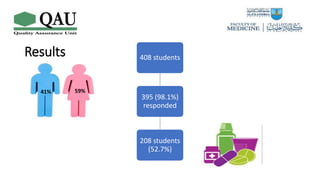
Results 408 students
395 (98.1%)
responded
208 students
(52.7%)
41% 59%
Figure 1: Percentage of self-medication per academic year
Figure (2): Frequency distribution of symptoms associated with self-
medication
34%
25%2%
9%
6%
10%
12%1%
1%
Symptoms associated with self-medication
Chest
Headache and Neurological
Dermatologic
Gastrointestinal
Stomach ache
General
Abdominopelvic
Ocular
Other
Figure (3) Reported advantages and disadvantages of self-medication
0%
5%
10%
15%
20%
25%
30%
35%
40%
Advantages of self medication
Figure (3) Reported advantages and disadvantages of self-medication
0%
5%
10%
15%
20%
25%
30%
35%
Disadvantages of self medication
Results
Behavior& attitude
• Only 10% of students reported that there was no change in self-
medication practice habits while acquiring medical knowledge
• 45% have become more careful
• 27% of students would prefer getting the prescription from a doctor.
• 25% would discourage self-medication.
• 23% became afraid of adverse effects.
Results
• Self-medication was reported by 208 (52.7%) students, with no
significant difference between males and females.
• The Highest percentage of self-medication was reported among
those who have completed six years of academic study and the
lowest was reported among those who have completed two years of
academic study.
Results
• There was a statistically significant association between the
educational stage (preclinical and clinical) and the practice
of self-medication.
• Most common medications involved were analgesic and
anti-inflammatory medication.
• 309 (78.8%) students believed that self-medication is
acceptable.
Conclusion
• The present study demonstrated that self-medication is practiced by
more than half of undergraduate medical students in Faculty of
Medicine- Alexandria University.
• Acquiring medical knowledge seems to be associated with the
practice of self-medication. Therefore, more attention should be paid
for medical curricula to raise awareness and limit the hazardous
effects of this phenomena.
Lessons learned
• This study is the first to assess the prevalence of self-medication among
undergraduate medical students in Alexandria Faculty of Medicine since
data were collected from all six undergraduate years using a stratified
random sampling methodology.
• On the other hand, the main limitation of the present study is the lack of
generalizability to represent all undergraduate medical students in Egypt
since students enrolled in Alexandria Faculty of Medicine are mainly from
four governorates; Alexandria, Behira, Kafr-Elsheikh and Matrouh so a
multi-centric study involving different governorates will be more valuable.
Acknowledgment
• Students of Alexandria Faculty of Medicine.
• Team Members.
• Prof. Azza Baraka and Dr. Marwa Eldesouky.
Our Take-Home Message
• Rejection
• Multicenter study
• Non medical students
Questions?
Thank you!

Self medication master slide

  • 1.
    Self-medication among Undergraduate MedicalStudents of Alexandria Faculty of Medicine: Where do We Stand? Marwa Desoky, Asmaa R Eltaweel, Tamer El Nakhal, Hanan M Hemead, Abdelrahman E Maraqa, Doha H Abish , Reem E Eid, Azza Baraka Faculty of Medicine-Alexandria University Presented by/ Asmaa Rabie Eltaweel; MBBCH Alexandria Students’ Hospital Mentor : Prof. Azza Baraka
  • 2.
  • 3.
    How did itstart?
  • 4.
  • 7.
    Introduction • Self-medication isthe selection and use of medicines by individuals to treat self-recognised illnesses or symptoms.(1) (1)World Health Organization: Guidelines for the regulatory assessment of Medicinal Products for use in self-medication. WHO/EDM/QSM/00.1, 2000.
  • 8.
    Objectives • 1. Prevalence? •2.knowledge make students more confident using OTCs? • 3. Gender difference? • 4. Symptoms?
  • 9.
    National level 55% (2) 62.9%(3) (2) El Ezz NF, Ez-Elarab HS. Knowledge, attitude and practice of medical students towards self-medication at Ain Shams University, Egypt. J Prev Med Hyg 2011;52(4):196-200 (3) Helal R, Abouelwafa H. Self-medication in University students from the city of Mansoura, Egypt. J Enverion Public Health.2017; 2017:9145193
  • 10.
    International level 57.5% (5) 44.8%(6) 68% (4) 76% (7) (4) Bretagne JF, Richard Molyoivd B, Honnorat C, et al. Gastroesophageal reflux in the French general population: national survey of 8000 adults. Presse Med 2006;35:23-31. (5) Banerjee I, Bhadury T. Self-medication practice among undergraduate medical students in a tertiary care medical college, West Bengal. J Postgrad Med2012;58(2):127. (6) James H, Handu SS, Al Khaja KA, Otoom S, Sequeira RP. Evaluation of the knowledge, attitude and practice of self-medication among first-year medical students. Med PrincPract 2006;15:270-5 (7) Zafar SN, Syed R, Waqar S, et al. Prescription of medicines by medical students of Karachi, Pakistan: a cross-sectional study. BMC Public Health 2008; 19:162.
  • 11.
    Methods Study type:- A Crosssectional study was conducted among undergraduate medical students attending Alexandria Faculty of Medicine from both national and international programs during the period of June 2013 until October 2013.
  • 12.
  • 13.
  • 14.
    Methods Sample size :- Asample size of 360 was estimated using Epi Info 7 with the addition of 15% to account for losses giving a total sample size of 408 students. Sample size was calculated based on:- • 95% confidence interval • 5% confidence limits • A prevalence rate of 55% as reported by a previous national study.
  • 15.
    Methods Sampling and settings:- Studiedsubjects were selected using a stratified random sample of students from the first to the sixth year with proportion allocation. Purpose of study was explained and verbal consent was obtained before administrating questionnaire.
  • 16.
    Methods • Data analysisusing SPSS version 20. • Approval of Ethical Committee in Faculty of Medicine-Alexandria University was taken.
  • 17.
    Results 408 students 395(98.1%) responded 208 students (52.7%) 41% 59%
  • 18.
    Figure 1: Percentageof self-medication per academic year
  • 19.
    Figure (2): Frequencydistribution of symptoms associated with self- medication 34% 25%2% 9% 6% 10% 12%1% 1% Symptoms associated with self-medication Chest Headache and Neurological Dermatologic Gastrointestinal Stomach ache General Abdominopelvic Ocular Other
  • 20.
    Figure (3) Reportedadvantages and disadvantages of self-medication 0% 5% 10% 15% 20% 25% 30% 35% 40% Advantages of self medication
  • 21.
    Figure (3) Reportedadvantages and disadvantages of self-medication 0% 5% 10% 15% 20% 25% 30% 35% Disadvantages of self medication
  • 22.
    Results Behavior& attitude • Only10% of students reported that there was no change in self- medication practice habits while acquiring medical knowledge • 45% have become more careful • 27% of students would prefer getting the prescription from a doctor. • 25% would discourage self-medication. • 23% became afraid of adverse effects.
  • 23.
    Results • Self-medication wasreported by 208 (52.7%) students, with no significant difference between males and females. • The Highest percentage of self-medication was reported among those who have completed six years of academic study and the lowest was reported among those who have completed two years of academic study.
  • 24.
    Results • There wasa statistically significant association between the educational stage (preclinical and clinical) and the practice of self-medication. • Most common medications involved were analgesic and anti-inflammatory medication. • 309 (78.8%) students believed that self-medication is acceptable.
  • 25.
    Conclusion • The presentstudy demonstrated that self-medication is practiced by more than half of undergraduate medical students in Faculty of Medicine- Alexandria University. • Acquiring medical knowledge seems to be associated with the practice of self-medication. Therefore, more attention should be paid for medical curricula to raise awareness and limit the hazardous effects of this phenomena.
  • 26.
    Lessons learned • Thisstudy is the first to assess the prevalence of self-medication among undergraduate medical students in Alexandria Faculty of Medicine since data were collected from all six undergraduate years using a stratified random sampling methodology. • On the other hand, the main limitation of the present study is the lack of generalizability to represent all undergraduate medical students in Egypt since students enrolled in Alexandria Faculty of Medicine are mainly from four governorates; Alexandria, Behira, Kafr-Elsheikh and Matrouh so a multi-centric study involving different governorates will be more valuable.
  • 27.
    Acknowledgment • Students ofAlexandria Faculty of Medicine. • Team Members. • Prof. Azza Baraka and Dr. Marwa Eldesouky.
  • 28.
    Our Take-Home Message •Rejection • Multicenter study • Non medical students
  • 29.
  • 30.

Editor's Notes

  • #3 A peer-reviewed, open-access, scientific journal sharing the scientific production of medical students worldwide. The impact factor for the IJMS is 5.62 according to the Index Copernicus (ICV 2012), 3.034 according to the Scientific Journal Impact Factor (SJIF), 1.212 according to the International Impact Factor Services, and 40.16 according to InfoBase Index. This makes the IJMS the number one ranked journal for medical students.
  • #5 It may pop up to your brain .. We’re medical students .. You get sick yourself .. People around you ask you for prescriptions
  • #6 You’re not alone in this world! So you should check first if ppl on this earth didn’t question this topic before and no previous discussed data about this topic
  • #7 Reviewing
  • #19 no significant difference between males and females (p=0.086).Highest percentage of self-medication (67.3%) was reported among those who have completed six years of academic study and the lowest was reported among those who have completed two years of academic study(40.4%)