Blockchain: Revolutionizing Land
Registration for Enhanced
Security
Introduction
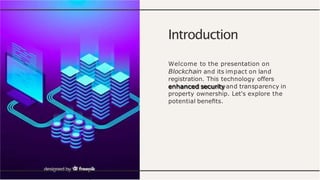
Welcome to the presentation on
Blockchain and its impact on land
registration. This technology offers
enhanced security and transparency in
property ownership. Let's explore the
potential benefits.
Land RegistrationChallenges
Traditional land registration systems are
vulnerable to fraud and disputes.Manual
processes often lead to errors and
inefficiencies, impacting property rights.
Blockchain offers a solution to these
challenges.
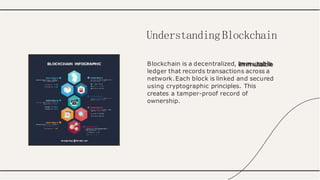
Blockchain is a decentralized, immutable
ledger that records transactions across a
network.Each block is linked and secured
using cryptographic principles. This
creates a tamper-proof record of
ownership.
UnderstandingBlockchain
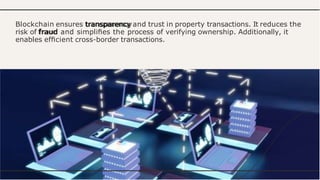
Blockchain ensures transparency and trust in property transactions. It reduces the
risk of fraud and simplifies the process of verifying ownership. Additionally, it
enables efficient cross-border transactions.
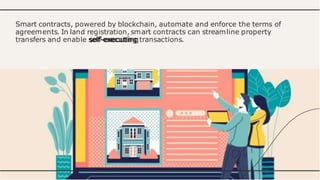
Smart contracts, powered by blockchain, automate and enforce the terms of
agreements. In land registration, smart contracts can streamline property
transfers and enable self-executing transactions.
Regulatory frameworks need to adapt to
accommodate blockchain-based land
registration. Collaboration between
governments,legal experts,and
technology innovators is essential to
ensure compliance and standardization.
RegulatoryConsiderations
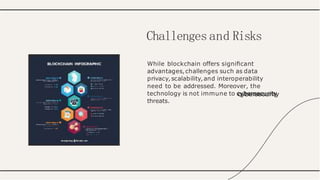
While blockchain offers significant
advantages,challenges such as data
privacy,scalability,and interoperability
need to be addressed. Moreover, the
technology is not immune to cybersecurity
threats.
Challenges and Risks
Real-world examples showcase successful
implementations of blockchain in land
registration. These case studies
demonstrate the technology's ability to
enhance security,reduce costs,and
streamline processes.
Case Studies
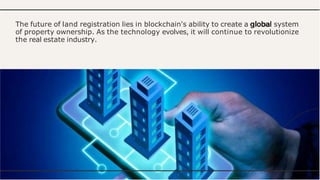
The future of land registration lies in blockchain's ability to create a global system
of property ownership. As the technology evolves, it will continue to revolutionize
the real estate industry.
Successful adoption of blockchain in land
registration requires collaboration among
stakeholders. Governments, industry
players, and technology providers must
work together to implement and integrate
the technology effectively.
Adoption andImplementation
Continued research and development are
crucial to address the evolving needs of
land registration. Innovations in
blockchain technology will drive
advancements in security, efficiency, and
regulatory compliance.
FutureResearchand Development
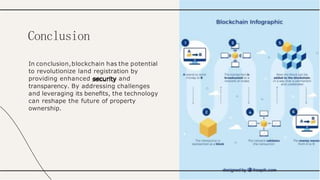
In conclusion,blockchain has the potential
to revolutionize land registration by
providing enhanced security and
transparency. By addressing challenges
and leveraging its benefits, the technology
can reshape the future of property
ownership.
Conclusion

securinglandregistrationusingblockchain.pptx

  • 2.
  • 3.
    Introduction Welcome to thepresentation on Blockchain and its impact on land registration. This technology offers enhanced security and transparency in property ownership. Let's explore the potential benefits.
  • 4.
    Land RegistrationChallenges Traditional landregistration systems are vulnerable to fraud and disputes.Manual processes often lead to errors and inefficiencies, impacting property rights. Blockchain offers a solution to these challenges.
  • 5.
    Blockchain is adecentralized, immutable ledger that records transactions across a network.Each block is linked and secured using cryptographic principles. This creates a tamper-proof record of ownership. UnderstandingBlockchain
  • 6.
    Blockchain ensures transparencyand trust in property transactions. It reduces the risk of fraud and simplifies the process of verifying ownership. Additionally, it enables efficient cross-border transactions.
  • 7.
    Smart contracts, poweredby blockchain, automate and enforce the terms of agreements. In land registration, smart contracts can streamline property transfers and enable self-executing transactions.
  • 8.
    Regulatory frameworks needto adapt to accommodate blockchain-based land registration. Collaboration between governments,legal experts,and technology innovators is essential to ensure compliance and standardization. RegulatoryConsiderations
  • 9.
    While blockchain offerssignificant advantages,challenges such as data privacy,scalability,and interoperability need to be addressed. Moreover, the technology is not immune to cybersecurity threats. Challenges and Risks
  • 10.
    Real-world examples showcasesuccessful implementations of blockchain in land registration. These case studies demonstrate the technology's ability to enhance security,reduce costs,and streamline processes. Case Studies
  • 11.
    The future ofland registration lies in blockchain's ability to create a global system of property ownership. As the technology evolves, it will continue to revolutionize the real estate industry.
  • 12.
    Successful adoption ofblockchain in land registration requires collaboration among stakeholders. Governments, industry players, and technology providers must work together to implement and integrate the technology effectively. Adoption andImplementation
  • 13.
    Continued research anddevelopment are crucial to address the evolving needs of land registration. Innovations in blockchain technology will drive advancements in security, efficiency, and regulatory compliance. FutureResearchand Development
  • 14.
    In conclusion,blockchain hasthe potential to revolutionize land registration by providing enhanced security and transparency. By addressing challenges and leveraging its benefits, the technology can reshape the future of property ownership. Conclusion