Michell Rueda 
8-1
Segundo condicional 
 
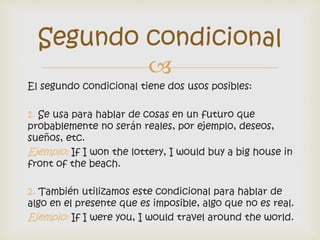
El segundo condicional tiene dos usos posibles: 
1. Se usa para hablar de cosas en un futuro que 
probablemente no serán reales, por ejemplo, deseos, 
sueños, etc. 
Ejemplo: If I won the lottery, I would buy a big house in 
front of the beach. 
2. También utilizamos este condicional para hablar de 
algo en el presente que es imposible, algo que no es real. 
Ejemplo: If I were you, I would travel around the world.
Estructura del second 
conditional 
 
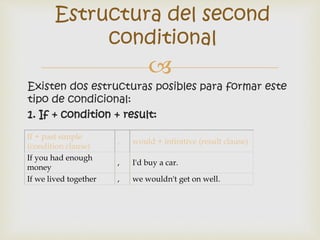
Existen dos estructuras posibles para formar este 
tipo de condicional: 
1. If + condition + result: 
If + past simple 
(condition clause) 
, would + infinitive (result clause) 
If you had enough 
money 
, I'd buy a car. 
If we lived together , we wouldn't get on well.
 
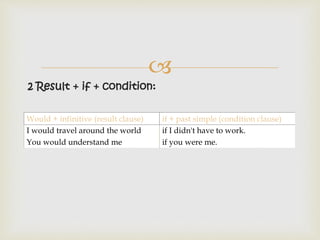
2 Result + if + condition: 
Would + infinitive (result clause) if + past simple (condition clause) 
I would travel around the world if I didn't have to work. 
You would understand me if you were me.
Aquí tienes algunos 
ejemplos traducidos. 
 
 If I won the lottery, I would travel around the world. 
Si ganara la lotería, viajaría por todo el mundo. 
 If I were in Brazil, I would go to Rio de Janeiro. 
Si yo estuviese en Brasil, iría a Río de Janeiro. 
 If I were you, I would buy that car. 
Si yo fuese tú, compraría ese auto. 
 If he were in my place, he wouldn't do this. 
Si él estuviese en mi lugar, no haría esto. 
 If I had more money, I would buy a nice apartment. 
Si yo tuviese más dinero, me compraría un lindo 
apartamento. 
 If she had more time, she would travel more often. 
Si ella tuviera más tiempo, viajaría más a menudo.
 
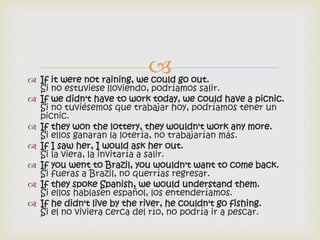
 If it were not raining, we could go out. 
Si no estuviese lloviendo, podríamos salir. 
 If we didn't have to work today, we could have a picnic. 
Si no tuviésemos que trabajar hoy, podríamos tener un 
picnic. 
 If they won the lottery, they wouldn't work any more. 
Si ellos ganaran la lotería, no trabajarían más. 
 If I saw her, I would ask her out. 
Si la viera, la invitaría a salir. 
 If you went to Brazil, you wouldn't want to come back. 
Si fueras a Brazil, no querrías regresar. 
 If they spoke Spanish, we would understand them. 
Si ellos hablasen español, los entenderíamos. 
 If he didn't live by the river, he couldn't go fishing. 
Si el no viviera cerca del río, no podría ir a pescar.
 
fin

Second conditional diapositivas

  • 1.
  • 2.
    Segundo condicional  El segundo condicional tiene dos usos posibles: 1. Se usa para hablar de cosas en un futuro que probablemente no serán reales, por ejemplo, deseos, sueños, etc. Ejemplo: If I won the lottery, I would buy a big house in front of the beach. 2. También utilizamos este condicional para hablar de algo en el presente que es imposible, algo que no es real. Ejemplo: If I were you, I would travel around the world.
  • 3.
    Estructura del second conditional  Existen dos estructuras posibles para formar este tipo de condicional: 1. If + condition + result: If + past simple (condition clause) , would + infinitive (result clause) If you had enough money , I'd buy a car. If we lived together , we wouldn't get on well.
  • 4.
     2 Result+ if + condition: Would + infinitive (result clause) if + past simple (condition clause) I would travel around the world if I didn't have to work. You would understand me if you were me.
  • 5.
    Aquí tienes algunos ejemplos traducidos.   If I won the lottery, I would travel around the world. Si ganara la lotería, viajaría por todo el mundo.  If I were in Brazil, I would go to Rio de Janeiro. Si yo estuviese en Brasil, iría a Río de Janeiro.  If I were you, I would buy that car. Si yo fuese tú, compraría ese auto.  If he were in my place, he wouldn't do this. Si él estuviese en mi lugar, no haría esto.  If I had more money, I would buy a nice apartment. Si yo tuviese más dinero, me compraría un lindo apartamento.  If she had more time, she would travel more often. Si ella tuviera más tiempo, viajaría más a menudo.
  • 6.
      Ifit were not raining, we could go out. Si no estuviese lloviendo, podríamos salir.  If we didn't have to work today, we could have a picnic. Si no tuviésemos que trabajar hoy, podríamos tener un picnic.  If they won the lottery, they wouldn't work any more. Si ellos ganaran la lotería, no trabajarían más.  If I saw her, I would ask her out. Si la viera, la invitaría a salir.  If you went to Brazil, you wouldn't want to come back. Si fueras a Brazil, no querrías regresar.  If they spoke Spanish, we would understand them. Si ellos hablasen español, los entenderíamos.  If he didn't live by the river, he couldn't go fishing. Si el no viviera cerca del río, no podría ir a pescar.
  • 7.