SeaBasing 21
The Army Science Board 1999 report; "Enabling Rapid and Decisive
Strategic Maneuver for the Army After 2010" states:

"DOD shipping is too slow, takes too long to load and off-load, and requires too much
water. Commercial shipping, useful to the Army, is too slow, takes too long to load and
off-load, but does have more potential port access. Neither DOD nor commercial
shipping has fast, austere port off-load capabilities. Lack of consistent packaging and
modularization standards in military is at odds with increased commercial utilization…
Sea lift has been and will continue to be the primary transportation means for large army
forces, equipment, and supplies VISA is decreasing in utility due to dwindling U.S.
shipping sector Army has an opportunity to improve the port-to-port time by 40% and
load/unload time by 75%. Time window to influence High Speed Ships (HSS) opportunity
is short and issues are complex. Recommendations [is] Forward to the Navy revised
Army requirements for strategic sea lift to include HSS. Enter into partnership with the
Navy and DOT to pursue Title XI support for HSS and support the immediate
incorporation of National Defense Features (NDF) to support military cargo and austere
port operations. Work with DARPA and Navy to develop technology alternatives to off-
load ships rapidly in austere ports and across the shore. Advocate (Army Executive
Agent) DoD-wide packaging standards consistent with best commercial industrial
practices and have TRADOC develop and promulgate the associated TTPs to decrease
loading time using containers, flat racks and other intermodal devices
(Equally applicable to air)"
Container Assault Ship
M113 AmphiGavins
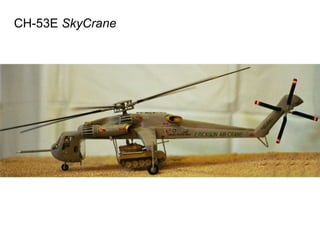
CH-53E Sky/SpeedCranes
RO-RO ramp/LCAC interface
ISO Container BattleBoxes
Container
Assault
Ship


   1st Tactical Studies Group (Airborne) 2004
Container Assault Ship
                                 ISO Container “BattleBoxes”
Ski jump                                                           RO-RO ramp
                   Flight deck


                                        Berthing and Ship’s Crew    LCAC interface
                                        areas


     Cargo hold for tactical vehicles           Ability to reach
                                                any spot in the
                                                world within 10
                                                days
BattleBoxes
              Fortified ISO containers
              replace vulnerable tents
              and living in former dictator
              palaces which fail to protect
              troops and inflame locals to
              rebellion. Earth-filled they
              become hardened check
              points to control supply
              routes. Army is always
              loaded and ready to deploy.
Amphigavins
Flight Deck
CH-53E SkyCrane
CH-53E SpeedCrane
RO-RO Ramp/LCAC interface
Armored Tracked Resupply Vehicles
Ski Jump
Feedback!
SCADS & SKYHOOK: ideas for Container Assault Ships
Dai JONES <keithdaijones@btinternet.com>

Hi, I am a regular reader of your site(s) now for a while but this is the first time I have contacted you concerning
your innovative (yet often common sense) ideas. The idea(s) in question are the ISO "battle box" and the container assault ship. In parallel (and before I saw
your idea) my self and a friend discussed your "battle boxes" and arrived at a similar concept but being British we focused on the SCADS (Sea-borne
Containerised Air-defence System) concept developed in the wake of the Falklands War.

www.vectorsite.net/avav83.htm

This essentially turns cargo ships into v/stovl carriers. All elements to operate a small number of Harriers and helicopters can be modularised within
ISO containers including a lightweight 4-cell seawolf anti-aircraft/missile missile launcher, reloads and control/aiming radars. If this weapon system can be
containerised, couldn't others? CIWS is one ides, but what about offensive weapons?

Being containerised and modular means the systems and aircraft can easily be moved from one ship to another but what about other options...If SCADS
and Battle Boxes could be combined then not only could vehicles and equipment be moved by ship/aircraft/tracked vehicle but so could containerised
weapon systems - go any where air defence? mobile cruise missiles? Battle-field CIWS? I believe this idea has a lot more room for growth, and hope to
hear back from you regarding these simple ideas,

Gareth Jones
Wales, UK
Feedback!
SCADS & SKYHOOK: ideas for Container Assault Ships
Here's an excerpt from the excellent Greg Goebell Vector web site, Keith pointed out to us on SCADS/SKYHOOK:

vectorsite.net/avav83.html

[3.5] FOOTNOTES: SCADS & SKYHOOK / VAAC HARRIER

* Several ingenious ideas were promoted by Harrier enthusiasts in the post-Falklands period to use the Harrier as a naval "force multiplier", based on
unconventional replacements for a traditional aircraft carrier. One was called the "shipborne containerized air-defense system (SCADS)". This was a clever
idea by which all the equipment needed to put together the operational apparatus of a small ski-jump Harrier carrier -- including living quarters, fuel and
munitions storage, maintenance facilities, missile and decoy launchers, antisubmarine helicopter facilities, and of course a ski-jump deck -- would be built in
a modular fashion, based on the standard container sizes used on container ships, and put in storage. The entire kit could be assembled in about two days
on a container ship when needed, with provisions for 30 days of operation without resupply. The kit would be removed and stored again when the emergency
was over.

www.combatreform.org/avav834.jpg

An even cleverer idea was the "Skyhook". This concept was to use a crane that could be mounted on a small ship, such as a helicopter frigate, to lift Harriers
off the deck and allow them to fly off, and then recover them later. On recovery, they could be returned to their deck hangar, or refueled while they dangled on
the crane, and released to continue operations. The crane would be "smart", with stabilization capabilities and a panel indicator mounted to give the Harrier
pilot location information. With such a system, even a helicopter frigate could operate four Harriers as a kind of "mini-carrier".

While British Aerospace experimented with the Skyhook on land using their G-VTOL demonstrator, neither SCADS nor the Skyhook became realities. Critics
suggested that they implied a dispersal of forces that made logistics impractically difficult. Nonetheless, they remain interesting ideas to be kept in mind for
the future of STOVL combat aircraft.
SeaBasing 21 v3.0

SeaBasing 21 v3.0

  • 1.
  • 2.
    The Army ScienceBoard 1999 report; "Enabling Rapid and Decisive Strategic Maneuver for the Army After 2010" states: "DOD shipping is too slow, takes too long to load and off-load, and requires too much water. Commercial shipping, useful to the Army, is too slow, takes too long to load and off-load, but does have more potential port access. Neither DOD nor commercial shipping has fast, austere port off-load capabilities. Lack of consistent packaging and modularization standards in military is at odds with increased commercial utilization… Sea lift has been and will continue to be the primary transportation means for large army forces, equipment, and supplies VISA is decreasing in utility due to dwindling U.S. shipping sector Army has an opportunity to improve the port-to-port time by 40% and load/unload time by 75%. Time window to influence High Speed Ships (HSS) opportunity is short and issues are complex. Recommendations [is] Forward to the Navy revised Army requirements for strategic sea lift to include HSS. Enter into partnership with the Navy and DOT to pursue Title XI support for HSS and support the immediate incorporation of National Defense Features (NDF) to support military cargo and austere port operations. Work with DARPA and Navy to develop technology alternatives to off- load ships rapidly in austere ports and across the shore. Advocate (Army Executive Agent) DoD-wide packaging standards consistent with best commercial industrial practices and have TRADOC develop and promulgate the associated TTPs to decrease loading time using containers, flat racks and other intermodal devices (Equally applicable to air)"
  • 3.
    Container Assault Ship M113AmphiGavins CH-53E Sky/SpeedCranes RO-RO ramp/LCAC interface ISO Container BattleBoxes
  • 4.
    Container Assault Ship 1st Tactical Studies Group (Airborne) 2004
  • 5.
    Container Assault Ship ISO Container “BattleBoxes” Ski jump RO-RO ramp Flight deck Berthing and Ship’s Crew LCAC interface areas Cargo hold for tactical vehicles Ability to reach any spot in the world within 10 days
  • 6.
    BattleBoxes Fortified ISO containers replace vulnerable tents and living in former dictator palaces which fail to protect troops and inflame locals to rebellion. Earth-filled they become hardened check points to control supply routes. Army is always loaded and ready to deploy.
  • 7.
  • 8.
  • 9.
  • 10.
  • 13.
  • 14.
  • 15.
  • 16.
    Feedback! SCADS & SKYHOOK:ideas for Container Assault Ships Dai JONES <keithdaijones@btinternet.com> Hi, I am a regular reader of your site(s) now for a while but this is the first time I have contacted you concerning your innovative (yet often common sense) ideas. The idea(s) in question are the ISO "battle box" and the container assault ship. In parallel (and before I saw your idea) my self and a friend discussed your "battle boxes" and arrived at a similar concept but being British we focused on the SCADS (Sea-borne Containerised Air-defence System) concept developed in the wake of the Falklands War. www.vectorsite.net/avav83.htm This essentially turns cargo ships into v/stovl carriers. All elements to operate a small number of Harriers and helicopters can be modularised within ISO containers including a lightweight 4-cell seawolf anti-aircraft/missile missile launcher, reloads and control/aiming radars. If this weapon system can be containerised, couldn't others? CIWS is one ides, but what about offensive weapons? Being containerised and modular means the systems and aircraft can easily be moved from one ship to another but what about other options...If SCADS and Battle Boxes could be combined then not only could vehicles and equipment be moved by ship/aircraft/tracked vehicle but so could containerised weapon systems - go any where air defence? mobile cruise missiles? Battle-field CIWS? I believe this idea has a lot more room for growth, and hope to hear back from you regarding these simple ideas, Gareth Jones Wales, UK
  • 17.
    Feedback! SCADS & SKYHOOK:ideas for Container Assault Ships Here's an excerpt from the excellent Greg Goebell Vector web site, Keith pointed out to us on SCADS/SKYHOOK: vectorsite.net/avav83.html [3.5] FOOTNOTES: SCADS & SKYHOOK / VAAC HARRIER * Several ingenious ideas were promoted by Harrier enthusiasts in the post-Falklands period to use the Harrier as a naval "force multiplier", based on unconventional replacements for a traditional aircraft carrier. One was called the "shipborne containerized air-defense system (SCADS)". This was a clever idea by which all the equipment needed to put together the operational apparatus of a small ski-jump Harrier carrier -- including living quarters, fuel and munitions storage, maintenance facilities, missile and decoy launchers, antisubmarine helicopter facilities, and of course a ski-jump deck -- would be built in a modular fashion, based on the standard container sizes used on container ships, and put in storage. The entire kit could be assembled in about two days on a container ship when needed, with provisions for 30 days of operation without resupply. The kit would be removed and stored again when the emergency was over. www.combatreform.org/avav834.jpg An even cleverer idea was the "Skyhook". This concept was to use a crane that could be mounted on a small ship, such as a helicopter frigate, to lift Harriers off the deck and allow them to fly off, and then recover them later. On recovery, they could be returned to their deck hangar, or refueled while they dangled on the crane, and released to continue operations. The crane would be "smart", with stabilization capabilities and a panel indicator mounted to give the Harrier pilot location information. With such a system, even a helicopter frigate could operate four Harriers as a kind of "mini-carrier". While British Aerospace experimented with the Skyhook on land using their G-VTOL demonstrator, neither SCADS nor the Skyhook became realities. Critics suggested that they implied a dispersal of forces that made logistics impractically difficult. Nonetheless, they remain interesting ideas to be kept in mind for the future of STOVL combat aircraft.