Software Advice IndustryView: 
SCM Job Listings Analysis
Abstract 
We analyzed 200 job listings for supply chain managers from firms ranging from 
e-commerce giant Amazon to synthetic rubber manufacturer Zeon Corporation. 
Here’s what we found: 
• On average, employers want supply chain managers with at least seven years 
of experience, with the range being two to 20 years. 
• Forty-one percent of employers want supply chain managers who have 
experience with enterprise resource planning (ERP) software. 
• Employers are most likely to prefer certification from the American Production 
and Inventory Control Society (APICS).
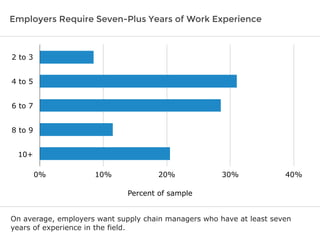
Employers Require Seven-Plus Years of Work Experience 
2 to 3 
4 to 5 
6 to 7 
8 to 9 
10+ 
0% 10% 20% 30% 40% 
Percent of sample 
On average, employers want supply chain managers who have at least seven 
years of experience in the field.
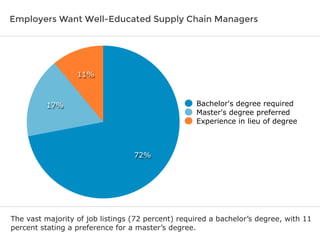
Employers Want Well-Educated Supply Chain Managers 
11% 
17% 
72% 
Bachelor's degree required 
Master's degree preferred 
Experience in lieu of degree 
The vast majority of job listings (72 percent) required a bachelor’s degree, with 11 
percent stating a preference for a master’s degree.
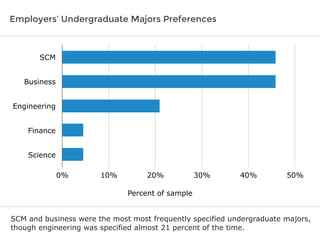
Employers’ Undergraduate Majors Preferences 
0% 10% 20% 30% 40% 50% 
Percent of sample 
SCM 
Business 
Engineering 
Finance 
Science 
SCM and business were the most most frequently specified undergraduate majors, 
though engineering was specified almost 21 percent of the time.
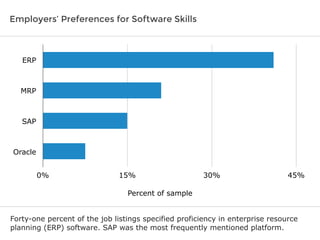
Employers’ Preferences for Software Skills 
0% 15% 30% 45% 
Percent of sample 
ERP 
MRP 
SAP 
Oracle 
Forty-one percent of the job listings specified proficiency in enterprise resource 
planning (ERP) software. SAP was the most frequently mentioned platform.
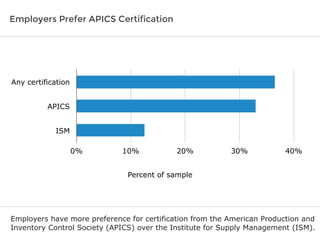
Employers Prefer APICS Certification 
0% 10% 20% 30% 40% 
Percent of sample 
Any certification 
APICS 
ISM 
Employers have more preference for certification from the American Production and 
Inventory Control Society (APICS) over the Institute for Supply Management (ISM).
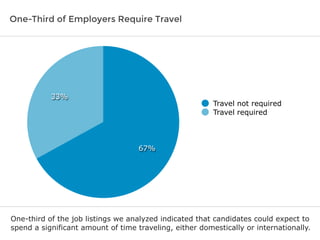
One-Third of Employers Require Travel 
33% 
67% 
Travel not required 
Travel required 
One-third of the job listings we analyzed indicated that candidates could expect to 
spend a significant amount of time traveling, either domestically or internationally.
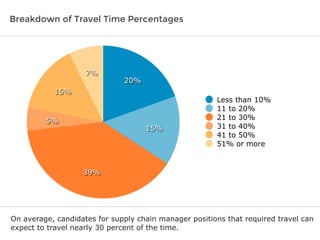
Breakdown of Travel Time Percentages 
7% 
15% 
5% 
39% 
15% 
20% 
Less than 10% 
11 to 20% 
21 to 30% 
31 to 40% 
41 to 50% 
51% or more 
On average, candidates for supply chain manager positions that required travel can 
expect to travel nearly 30 percent of the time.
Read Report Read about our findings in more detail. 
@SoftwareAdvice /company/software-advice 
/SoftwareAdvice @SoftwareAdvice 
Software Advice™ is a trusted resource for software buyers. The company's 
website, www.softwareadvice.com, provides detailed reviews, comparisons and 
research to help organizations choose the right software. Meanwhile, the company’s 
team of software analysts provide free telephone consultations to help each 
software buyer identify systems that best fit their needs. In the process, Software 
Advice connects software buyers and sellers, generating high-quality opportunities 
for software vendors.

Software Advice IndustryView: Job Listings Analysis – Supply Chain Managers

  • 1.
    Software Advice IndustryView: SCM Job Listings Analysis
  • 2.
    Abstract We analyzed200 job listings for supply chain managers from firms ranging from e-commerce giant Amazon to synthetic rubber manufacturer Zeon Corporation. Here’s what we found: • On average, employers want supply chain managers with at least seven years of experience, with the range being two to 20 years. • Forty-one percent of employers want supply chain managers who have experience with enterprise resource planning (ERP) software. • Employers are most likely to prefer certification from the American Production and Inventory Control Society (APICS).
  • 3.
    Employers Require Seven-PlusYears of Work Experience 2 to 3 4 to 5 6 to 7 8 to 9 10+ 0% 10% 20% 30% 40% Percent of sample On average, employers want supply chain managers who have at least seven years of experience in the field.
  • 4.
    Employers Want Well-EducatedSupply Chain Managers 11% 17% 72% Bachelor's degree required Master's degree preferred Experience in lieu of degree The vast majority of job listings (72 percent) required a bachelor’s degree, with 11 percent stating a preference for a master’s degree.
  • 5.
    Employers’ Undergraduate MajorsPreferences 0% 10% 20% 30% 40% 50% Percent of sample SCM Business Engineering Finance Science SCM and business were the most most frequently specified undergraduate majors, though engineering was specified almost 21 percent of the time.
  • 6.
    Employers’ Preferences forSoftware Skills 0% 15% 30% 45% Percent of sample ERP MRP SAP Oracle Forty-one percent of the job listings specified proficiency in enterprise resource planning (ERP) software. SAP was the most frequently mentioned platform.
  • 7.
    Employers Prefer APICSCertification 0% 10% 20% 30% 40% Percent of sample Any certification APICS ISM Employers have more preference for certification from the American Production and Inventory Control Society (APICS) over the Institute for Supply Management (ISM).
  • 8.
    One-Third of EmployersRequire Travel 33% 67% Travel not required Travel required One-third of the job listings we analyzed indicated that candidates could expect to spend a significant amount of time traveling, either domestically or internationally.
  • 9.
    Breakdown of TravelTime Percentages 7% 15% 5% 39% 15% 20% Less than 10% 11 to 20% 21 to 30% 31 to 40% 41 to 50% 51% or more On average, candidates for supply chain manager positions that required travel can expect to travel nearly 30 percent of the time.
  • 10.
    Read Report Readabout our findings in more detail. @SoftwareAdvice /company/software-advice /SoftwareAdvice @SoftwareAdvice Software Advice™ is a trusted resource for software buyers. The company's website, www.softwareadvice.com, provides detailed reviews, comparisons and research to help organizations choose the right software. Meanwhile, the company’s team of software analysts provide free telephone consultations to help each software buyer identify systems that best fit their needs. In the process, Software Advice connects software buyers and sellers, generating high-quality opportunities for software vendors.