
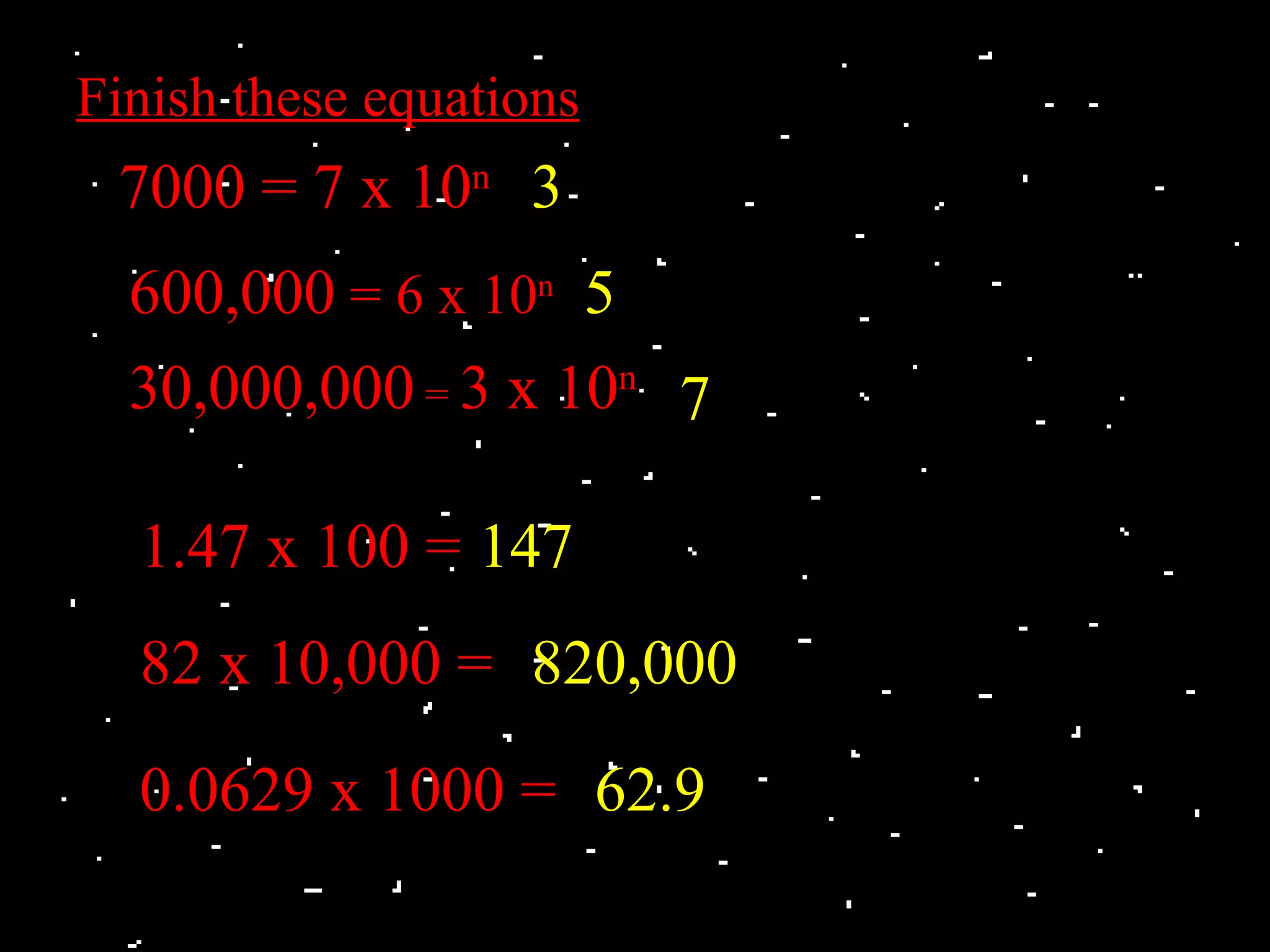
Finish these equations
 7000 = 7 x 10n 3
  600,000 = 6 x 10n 5
  30,000,000 = 3 x 10n 7

  1.47 x 100 = 147
  82 x 10,000 = 820,000

  0.0629 x 1000 = 62.9
Scientists use easy ways to write large numbers.
   This easy way is more compact & more useful.

This compact, useful method is called


To write a number in Scientific Notation, express it as a
product of two factors


There are 2 criteria for writing a number in Scientific
Notation:
Criteria:

•One factor is a number GREATER than or EQUAL to 1, but
LESS than 10. (This will usually be a decimal)

b. The other factor is a POSITIVE POWER of 10.

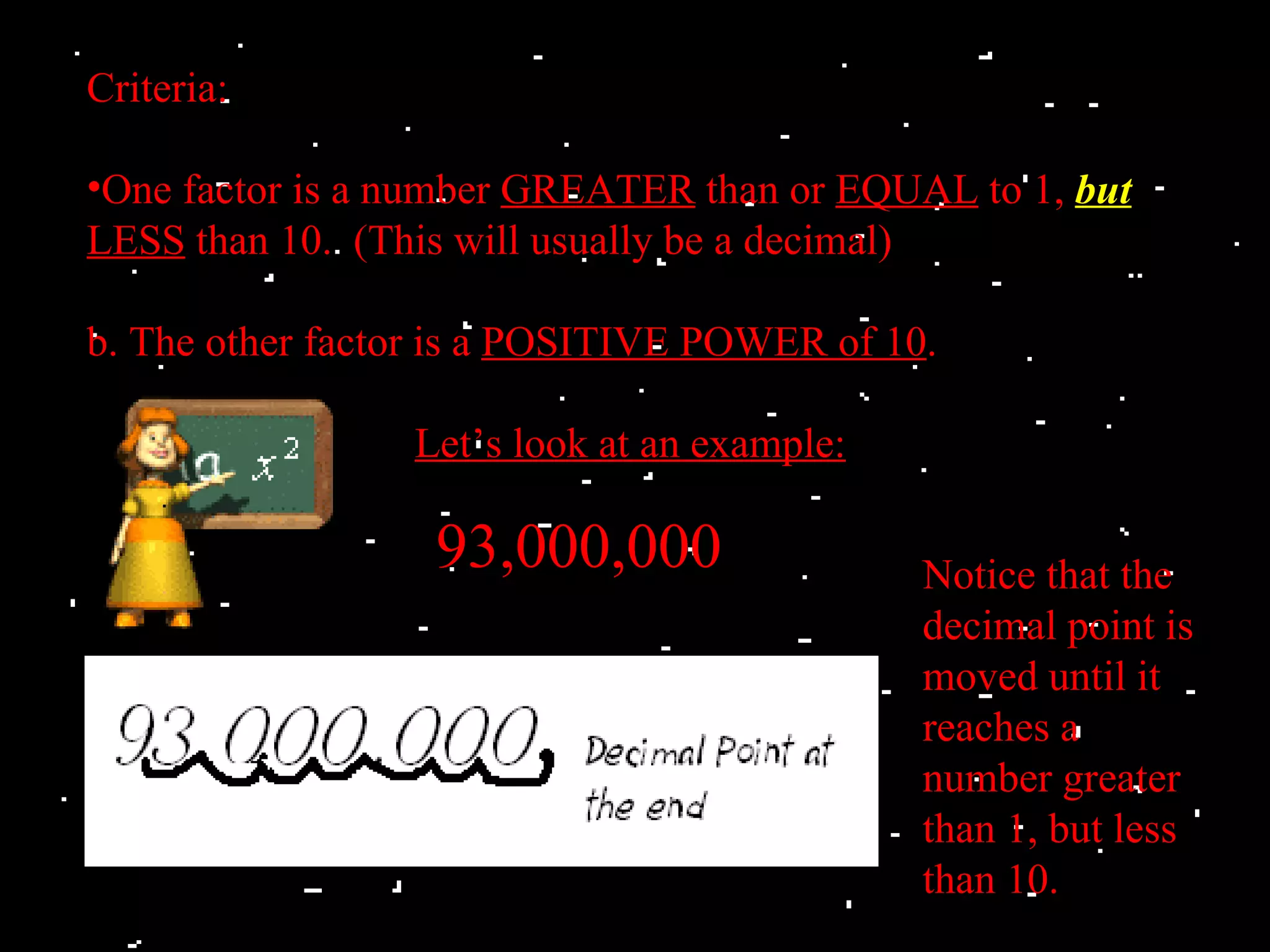
                 Let’s look at an example:

                  93,000,000                 Notice that the
                                             decimal point is
                                             moved until it
                                             reaches a
                                             number greater
                                             than 1, but less
                                             than 10.
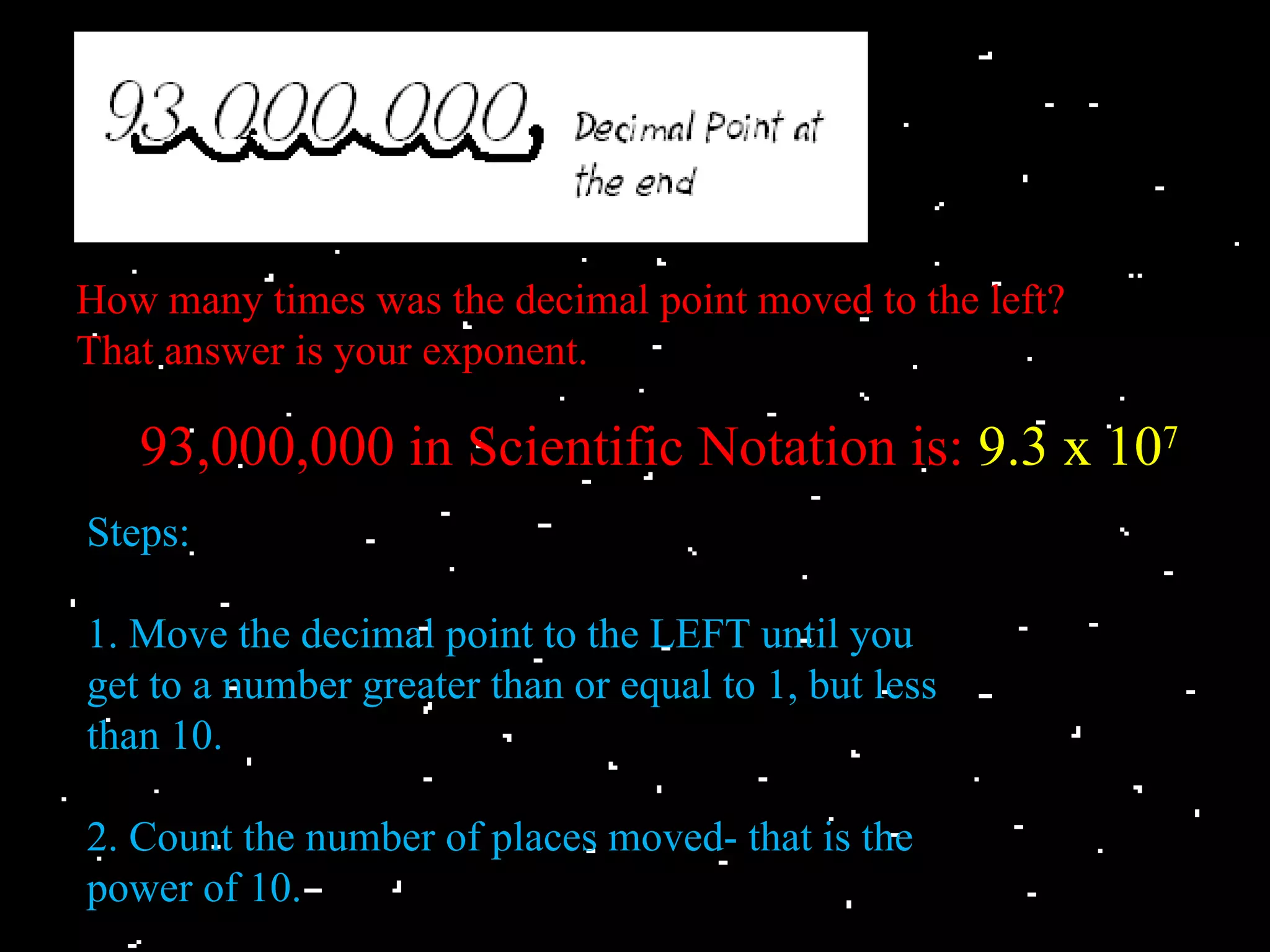
How many times was the decimal point moved to the left?
That answer is your exponent.

   93,000,000 in Scientific Notation is: 9.3 x 10⁷
Steps:

1. Move the decimal point to the LEFT until you
get to a number greater than or equal to 1, but less
than 10.

2. Count the number of places moved- that is the
power of 10.
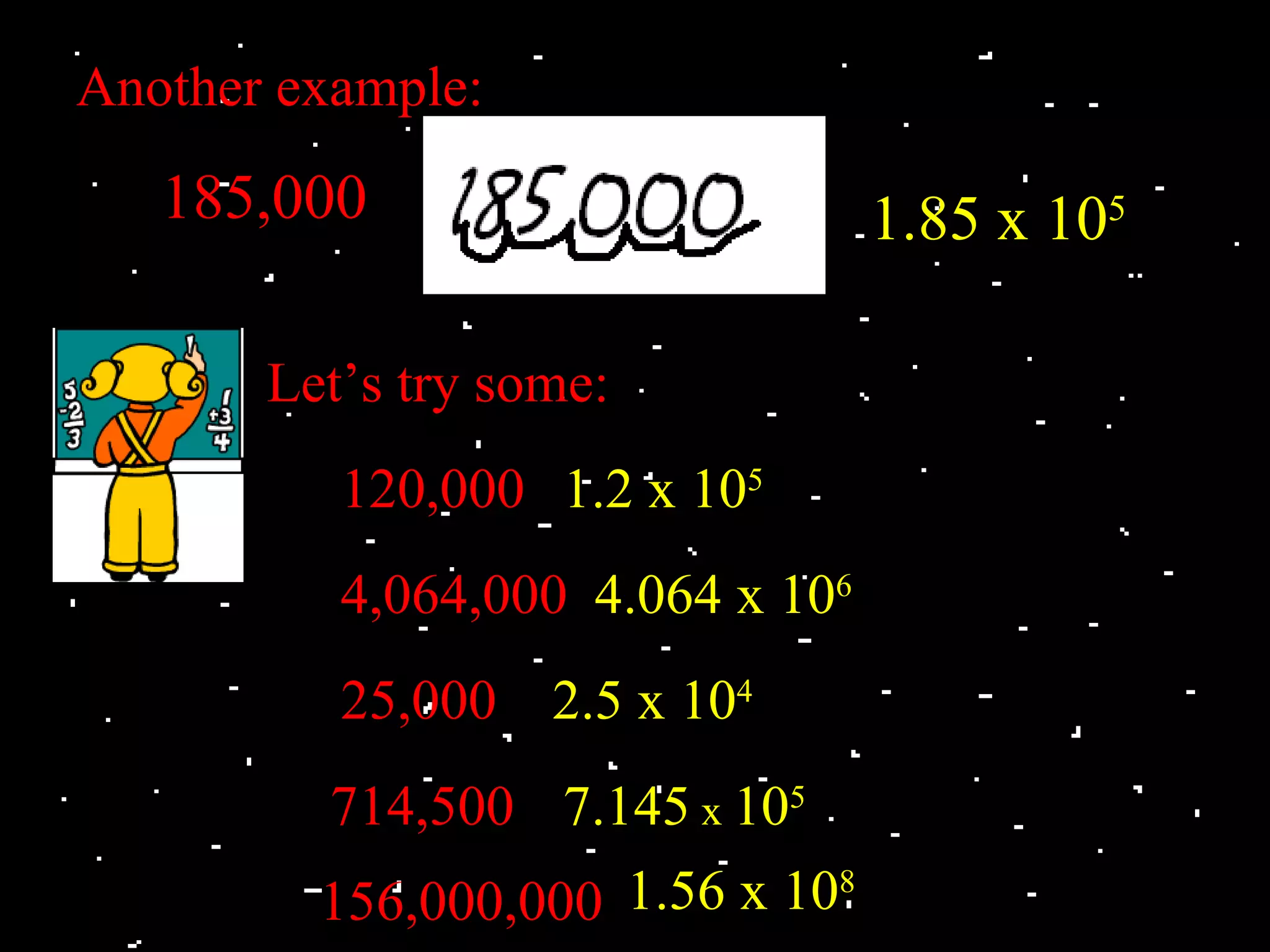
Another example:
   185,000                        1.85 x 10⁵

       Let’s try some:
          120,000 1.2 x 10⁵
          4,064,000 4.064 x 10⁶
          25,000 2.5 x 10⁴
         714,500 7.145 x 10⁵
         156,000,000 1.56 x 10⁸
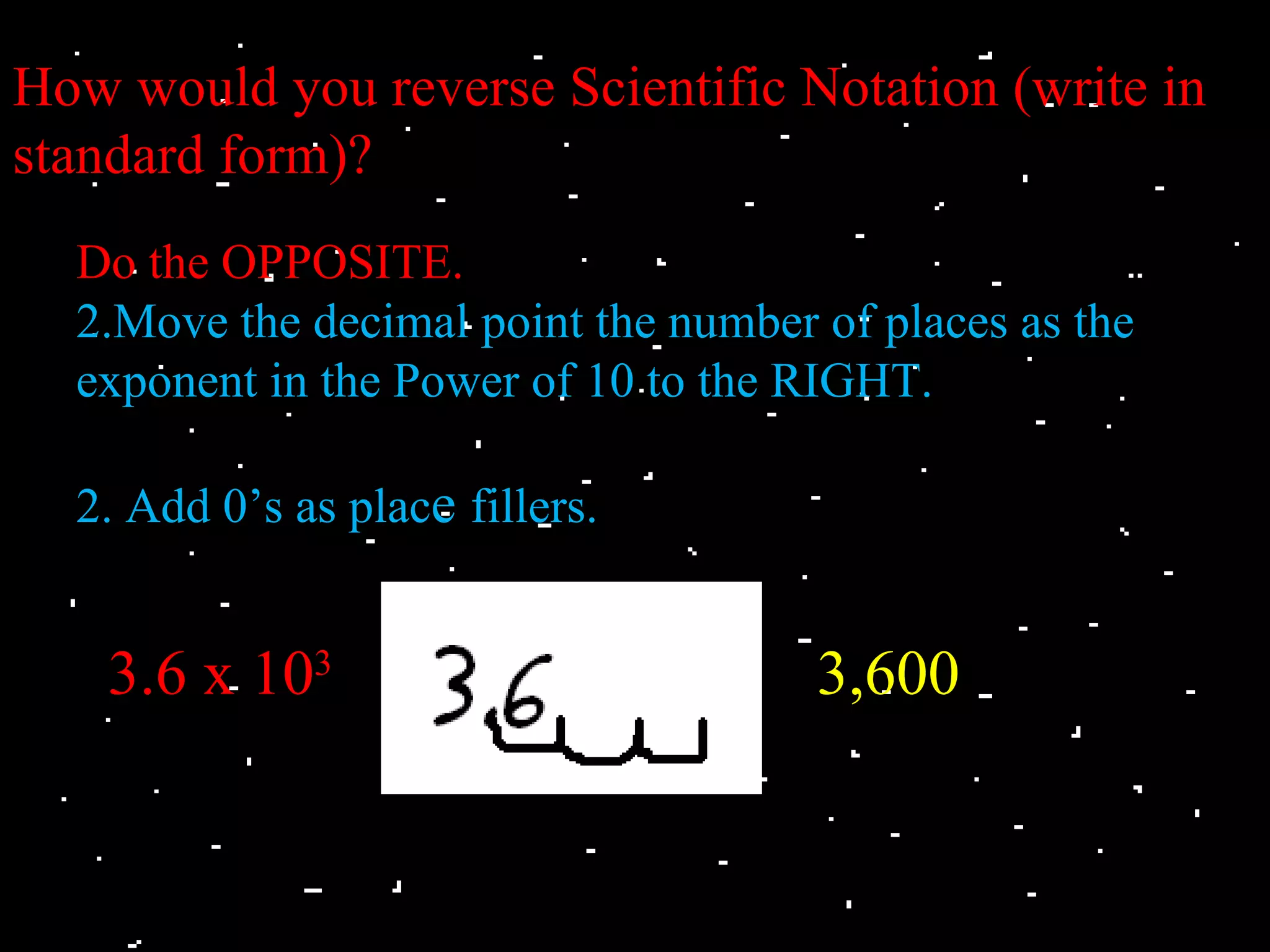
How would you reverse Scientific Notation (write in
standard form)?
  Do the OPPOSITE.
  2.Move the decimal point the number of places as the
  exponent in the Power of 10 to the RIGHT.

  2. Add 0’s as place fillers.


    3.6 x 10³                         3,600
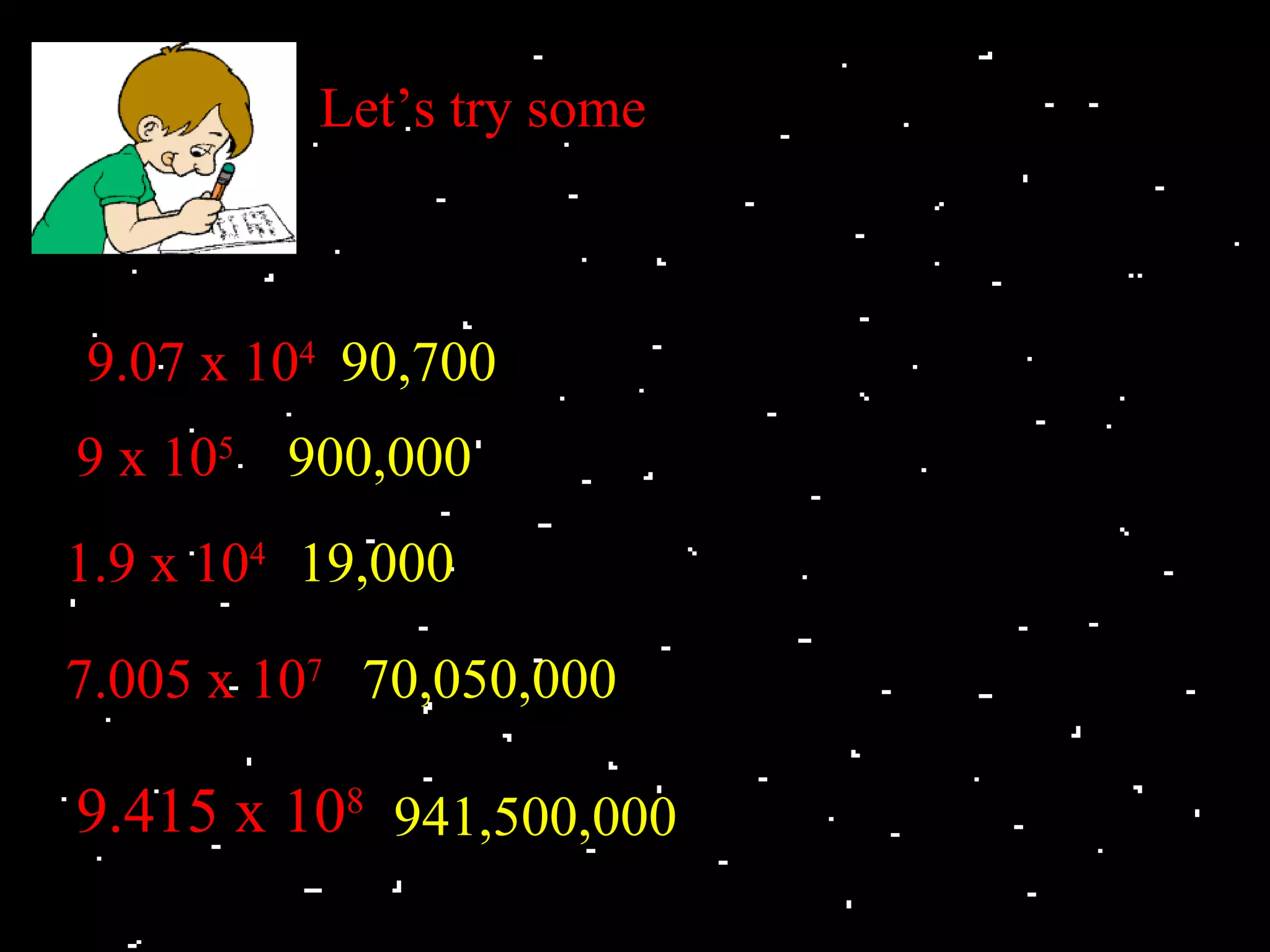
Let’s try some


9.07 x 10⁴ 90,700
9 x 10⁵ 900,000
1.9 x 10⁴ 19,000

7.005 x 10⁷ 70,050,000

9.415 x 10⁸ 941,500,000
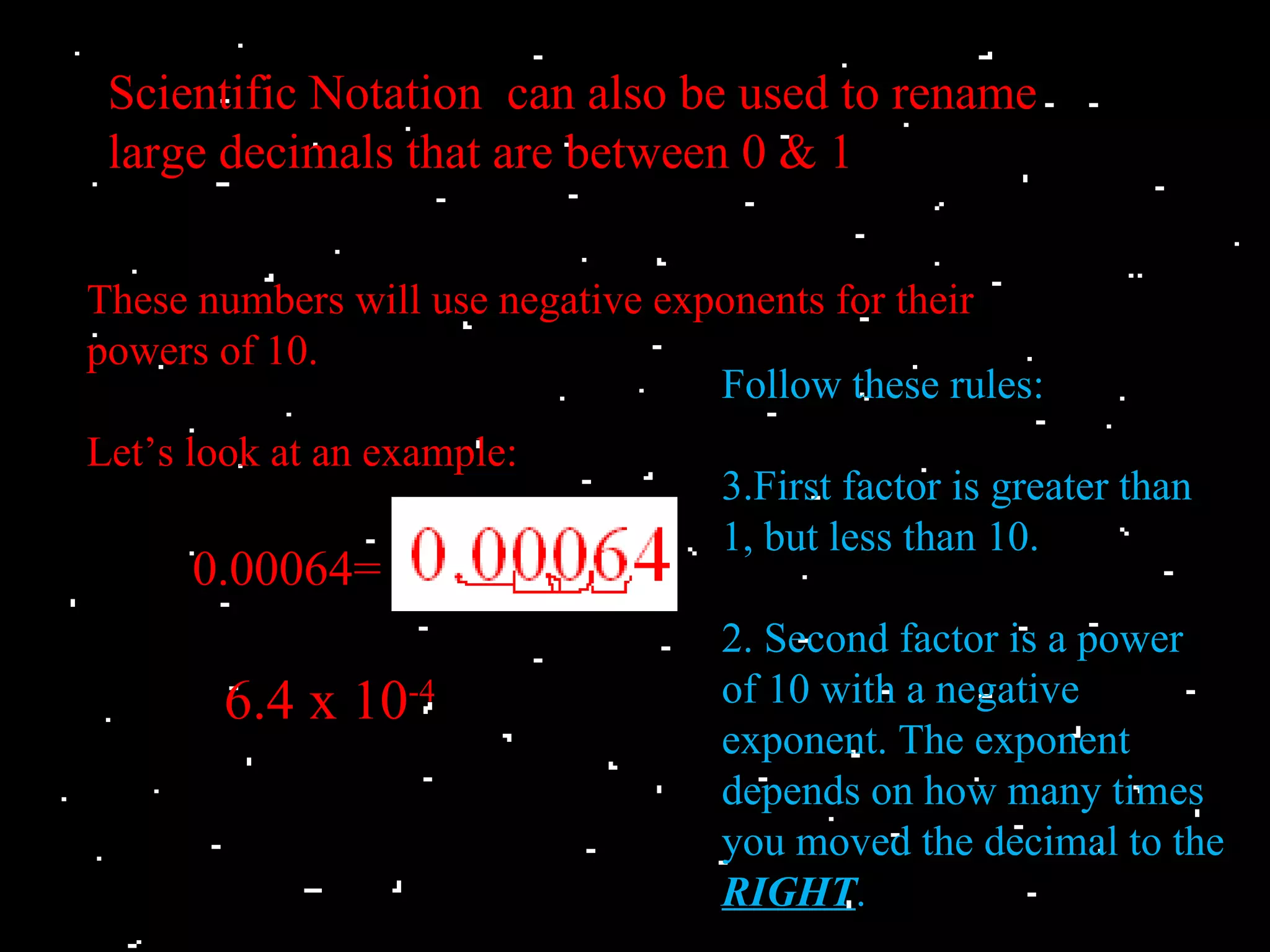
Scientific Notation can also be used to rename
 large decimals that are between 0 & 1

These numbers will use negative exponents for their
powers of 10.
                                   Follow these rules:
Let’s look at an example:
                                   3.First factor is greater than
                                   1, but less than 10.
      0.00064=
                                   2. Second factor is a power
       6.4 x 10⁻⁴                  of 10 with a negative
                                   exponent. The exponent
                                   depends on how many times
                                   you moved the decimal to the
                                   RIGHT.
Here’s another example:

0.0815 =                8.15 x 10⁻²

You try some:
0.015 = 1.5 x 10⁻²

0.0000086= 8.6 x 10⁻⁶

0.000124= 1.24 x 10⁻⁴

0.0069= 6.9 x 10⁻³
0.00000079 = 7.9 x 10⁻⁷

 0.0000716 = 7.16 x 10⁻⁵

 0.0045 = 4.5 x 10⁻³

It is now your turn to explain how to write numbers in
scientific notation. Explain the process of scientific
notation to the person next to you. Explain it using whole
numbers & decimal between 0 & 1. Pretend that your
partner does not understand this process, so explain it
well & with examples!

Scientificnotation

  • 2.
    Finish these equations 7000 = 7 x 10n 3 600,000 = 6 x 10n 5 30,000,000 = 3 x 10n 7 1.47 x 100 = 147 82 x 10,000 = 820,000 0.0629 x 1000 = 62.9
  • 3.
    Scientists use easyways to write large numbers. This easy way is more compact & more useful. This compact, useful method is called To write a number in Scientific Notation, express it as a product of two factors There are 2 criteria for writing a number in Scientific Notation:
  • 4.
    Criteria: •One factor isa number GREATER than or EQUAL to 1, but LESS than 10. (This will usually be a decimal) b. The other factor is a POSITIVE POWER of 10. Let’s look at an example: 93,000,000 Notice that the decimal point is moved until it reaches a number greater than 1, but less than 10.
  • 5.
    How many timeswas the decimal point moved to the left? That answer is your exponent. 93,000,000 in Scientific Notation is: 9.3 x 10⁷ Steps: 1. Move the decimal point to the LEFT until you get to a number greater than or equal to 1, but less than 10. 2. Count the number of places moved- that is the power of 10.
  • 6.
    Another example: 185,000 1.85 x 10⁵ Let’s try some: 120,000 1.2 x 10⁵ 4,064,000 4.064 x 10⁶ 25,000 2.5 x 10⁴ 714,500 7.145 x 10⁵ 156,000,000 1.56 x 10⁸
  • 7.
    How would youreverse Scientific Notation (write in standard form)? Do the OPPOSITE. 2.Move the decimal point the number of places as the exponent in the Power of 10 to the RIGHT. 2. Add 0’s as place fillers. 3.6 x 10³ 3,600
  • 8.
    Let’s try some 9.07x 10⁴ 90,700 9 x 10⁵ 900,000 1.9 x 10⁴ 19,000 7.005 x 10⁷ 70,050,000 9.415 x 10⁸ 941,500,000
  • 9.
    Scientific Notation canalso be used to rename large decimals that are between 0 & 1 These numbers will use negative exponents for their powers of 10. Follow these rules: Let’s look at an example: 3.First factor is greater than 1, but less than 10. 0.00064= 2. Second factor is a power 6.4 x 10⁻⁴ of 10 with a negative exponent. The exponent depends on how many times you moved the decimal to the RIGHT.
  • 10.
    Here’s another example: 0.0815= 8.15 x 10⁻² You try some: 0.015 = 1.5 x 10⁻² 0.0000086= 8.6 x 10⁻⁶ 0.000124= 1.24 x 10⁻⁴ 0.0069= 6.9 x 10⁻³
  • 11.
    0.00000079 = 7.9x 10⁻⁷ 0.0000716 = 7.16 x 10⁻⁵ 0.0045 = 4.5 x 10⁻³ It is now your turn to explain how to write numbers in scientific notation. Explain the process of scientific notation to the person next to you. Explain it using whole numbers & decimal between 0 & 1. Pretend that your partner does not understand this process, so explain it well & with examples!