







=
To Know
Observation
Experimentation
Experience
Science week 2017
Science week 2017
Science week 2017
Science week 2017
Science week 2017
Science week 2017
Science week 2017
Science week 2017
Science week 2017
Science week 2017
Science week 2017
Science week 2017
Science week 2017
Science week 2017
Science week 2017
Science week 2017
Science week 2017
Science week 2017
Science week 2017
Science week 2017
Science week 2017
Science week 2017

Editor's Notes

  • #9 First, some news from the science of the very large
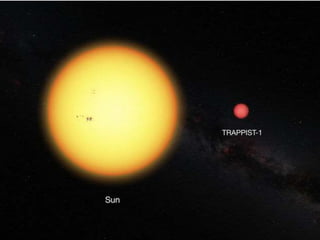
  • #10 Trappist-1 is a small red dwarf star, much smaller and colder than our sun
  • #11 This is their comparative size
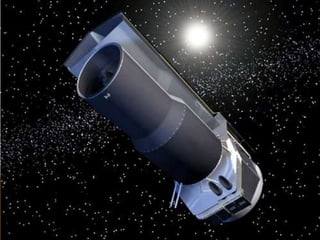
  • #12 The Nasa Spitzer Space Telescope
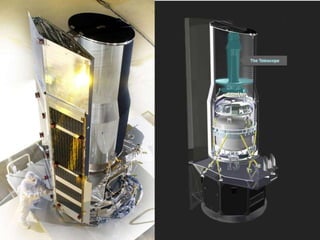
  • #13 On the left you see the Spitzer being built – can you make out the engineer in the with coat? On the right you can see some of the inside of the spizter telescope
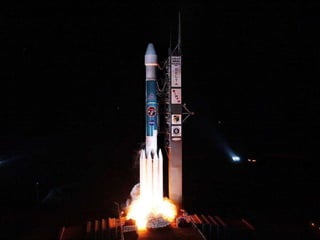
  • #14 This is the rocket that took the Spitzer telescope up into space
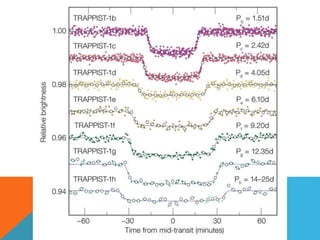
  • #15 This diagram shows how the light of the dim red ultra cool dwarf star TRAPPIST-1 fades as each of its seven known planets passes in front of it and blocks some of its light. The larger planets create deeper dips and the more distance ones have longer lasting transits as they are orbiting more slowly. These data were obtained from observations made with the NASA Spitzer Space Telescope.
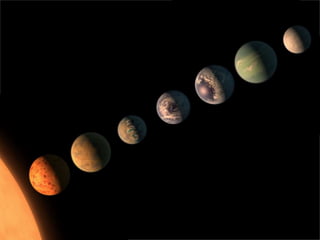
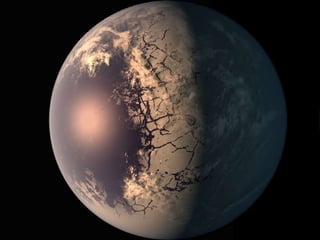
  • #16 This is an artist’s drawing of what the 7 planets might look like – showing that the closest ones will be the most hot, and the farthest ones will be the coolest
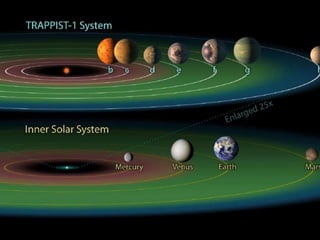
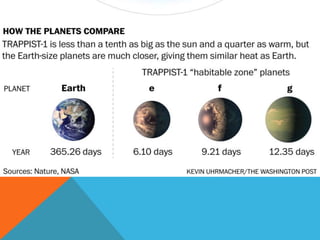
  • #17 7 planets have been found, and they are very close – three of them are in the goldielocks zone
  • #18 Land-locked
  • #19 You can find out much more on the Nasa website: https://exoplanets.nasa.gov/trappist1/
  • #20 Now for the science of the very small
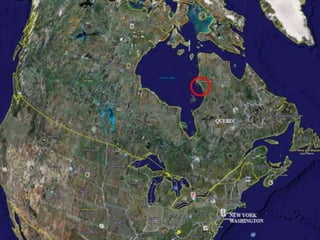
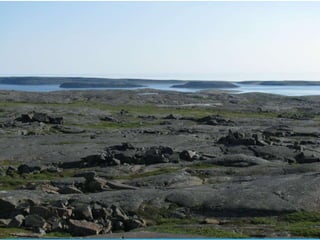
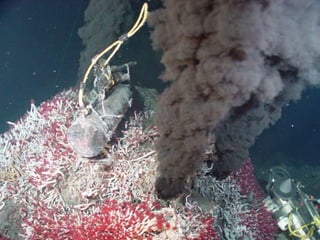
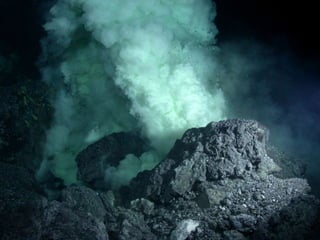
  • #22 About 35 kilometers south of Inukjuak, an Inuit village in the far North of Quebec, lies an unusual rocky outcrop. Known as the Nuvvuagittuq Supracrustal Belt, it's mostly made up of grey-green rock, laced with veins of red. If you took the arduous trip there, and weren't a geologist, you might not realize what you were standing on. These rocks are thought to have formed billions of years ago under a prehistoric ocean, near ancient hydrothermal vents. And now they've yielded signs of extraordinarily ancient life, rewriting our planet's history.
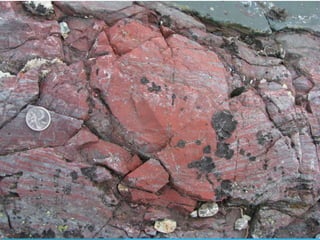
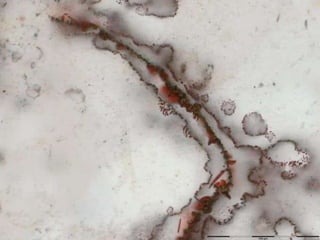
  • #23 The rocks you can find in this part of Canada are from a very very ancient seabed from when our planet was first calming down after being formed https://motherboard.vice.com/en_us/article/oldest-life-quebec-canada-arctic . Our planet is just over 4.5 billion years old, and these rocks are between 3.8 and 4.3 billion years old. The red in this photo is from iron, and the green in the top right corner is volcanic rock
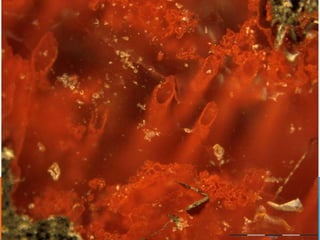
  • #27 http://news.nationalgeographic.com/2017/03/oldest-life-earth-iron-fossils-canada-vents-science/ Seen under a microscope, these iron-rich tubes may be the oldest known fossils on the planet. The microfossils are half the width of a human hair. 300 million years older!