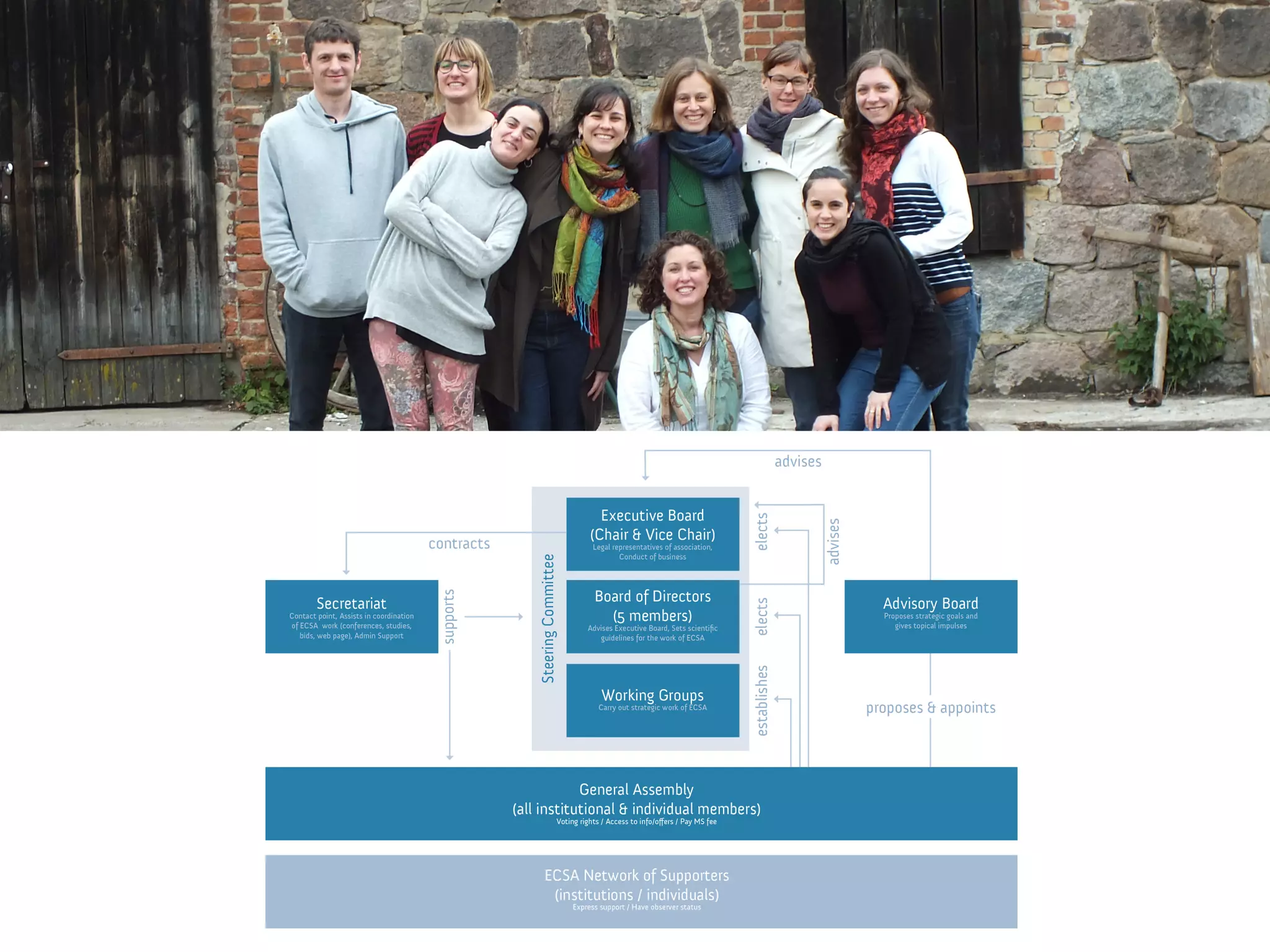
Margaret	Gold	
ECSA	Project	Officer
•  To	encourage	the	growth	of	
the	Citizen	Science	
movement	in	Europe		
•  To	mobilize	Citizen	Science	
as	a	means	for	evidence-
based	sustainable	
development	
–  Initiate	and	support	citizen	
science	projects		
–  Support	interactions	
between	groups	and	
disciplines		
–  Enhance	the	participation	of	
the	general	public	
–  Perform	research	on	citizen	
science	
AIMS
To	connect	citizens	and	science	
through	fostering	active	
participation.		
	
•  Promoting	Sustainability	
•  Building	a	CS	Think	Tank	
•  Developing	Participatory	
Methods	
	
MISSION
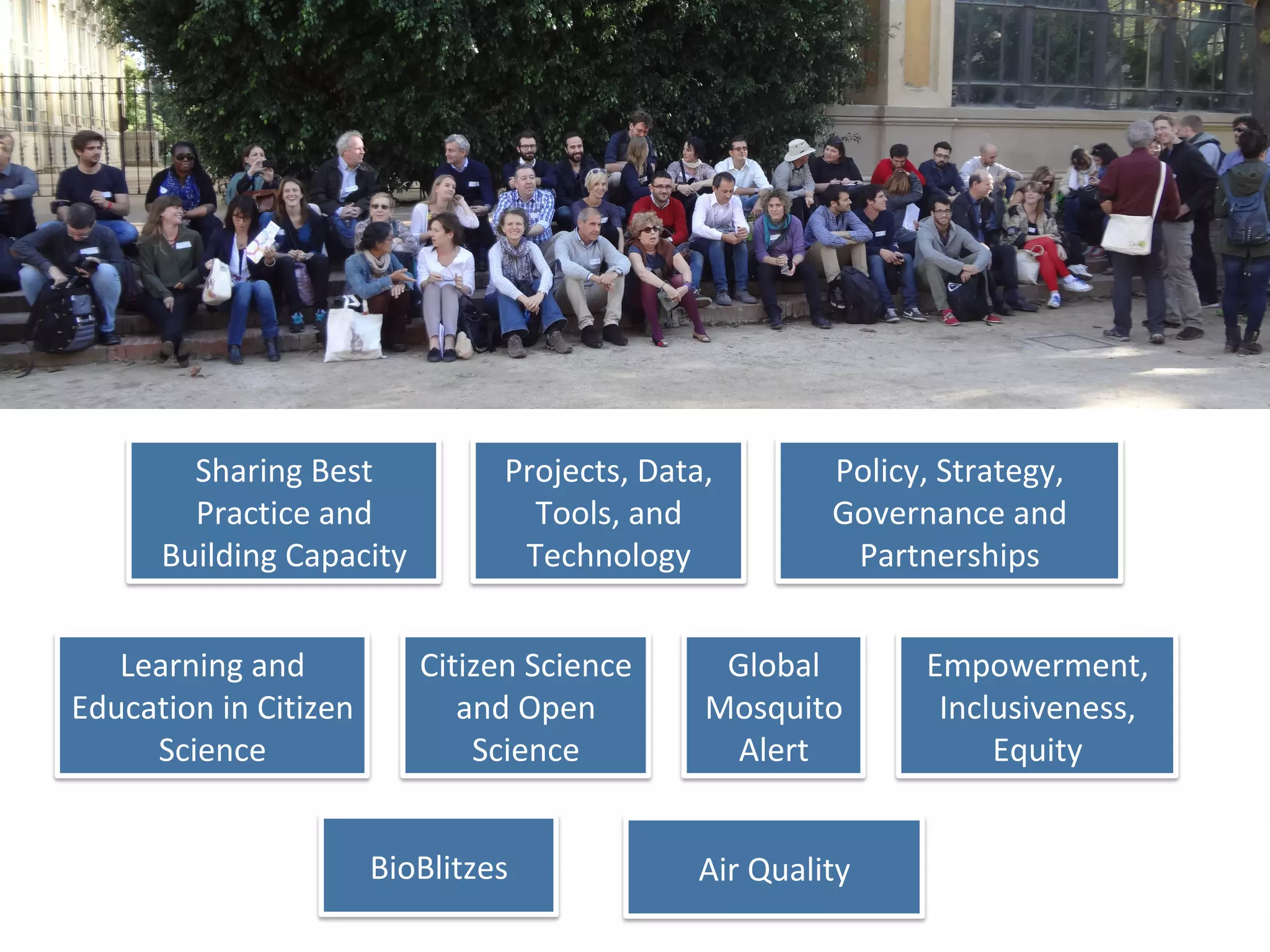
Sharing	Best	
Practice	and	
Building	Capacity	
Projects,	Data,	
Tools,	and	
Technology	
Policy,	Strategy,	
Governance	and	
Partnerships	
Learning	and	
Education	in	Citizen	
Science	
	
Air	Quality	
	
Citizen	Science	
and	Open	
Science	
	
BioBlitzes	
	
Global	
Mosquito	
Alert	
Empowerment,	
Inclusiveness,	
Equity
https://tinyurl.com/10Principles-CitSci
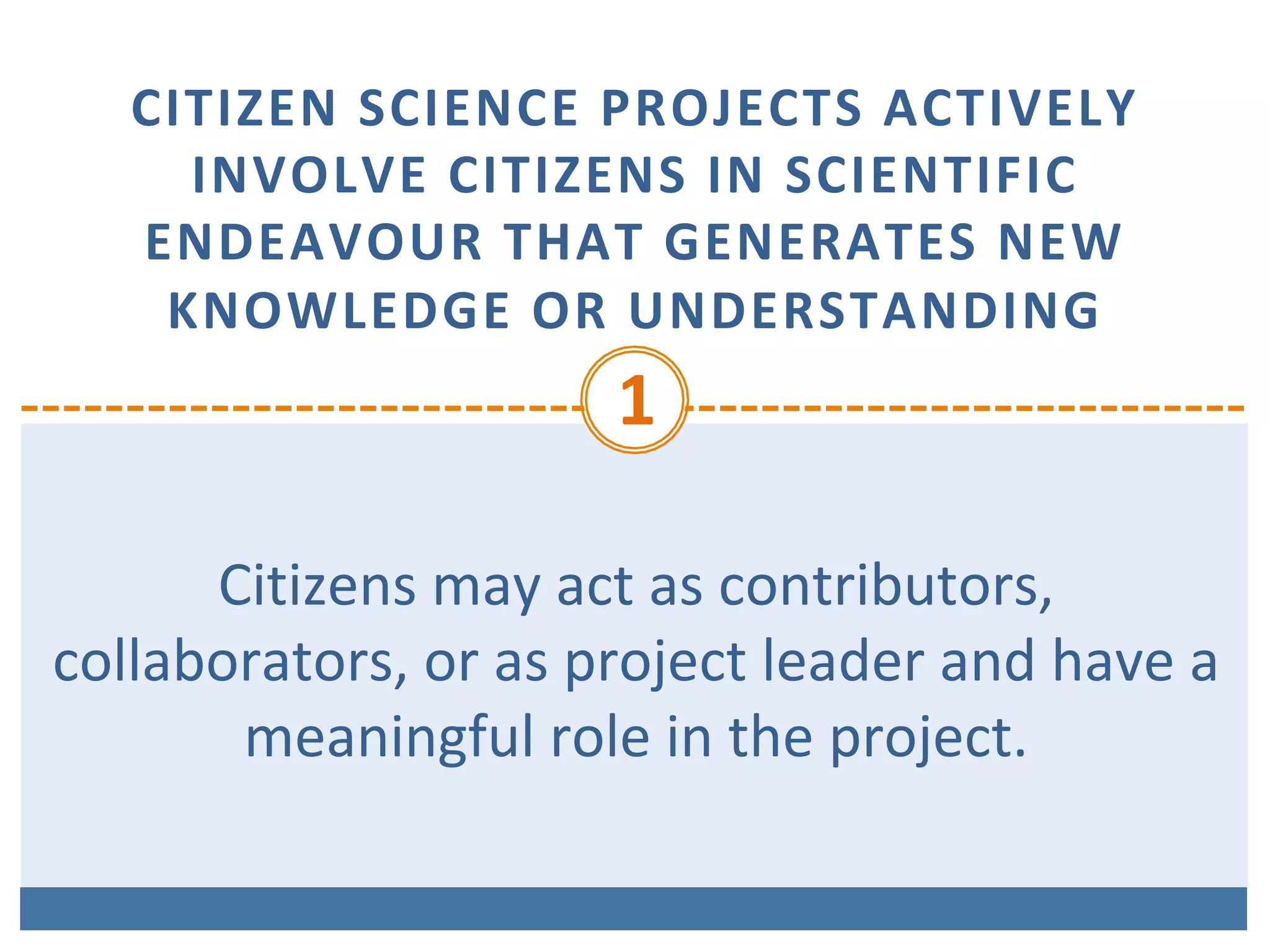
CITIZEN	SCIENCE	PROJECTS	ACTIVELY	
INVOLVE	CITIZENS	IN	SCIENTIFIC	
ENDEAVOUR	THAT	GENERATES	NEW	
KNOWLEDGE	OR	UNDERSTANDING	
1	
Citizens	may	act	as	contributors,	
collaborators,	or	as	project	leader	and	have	a	
meaningful	role	in	the	project.
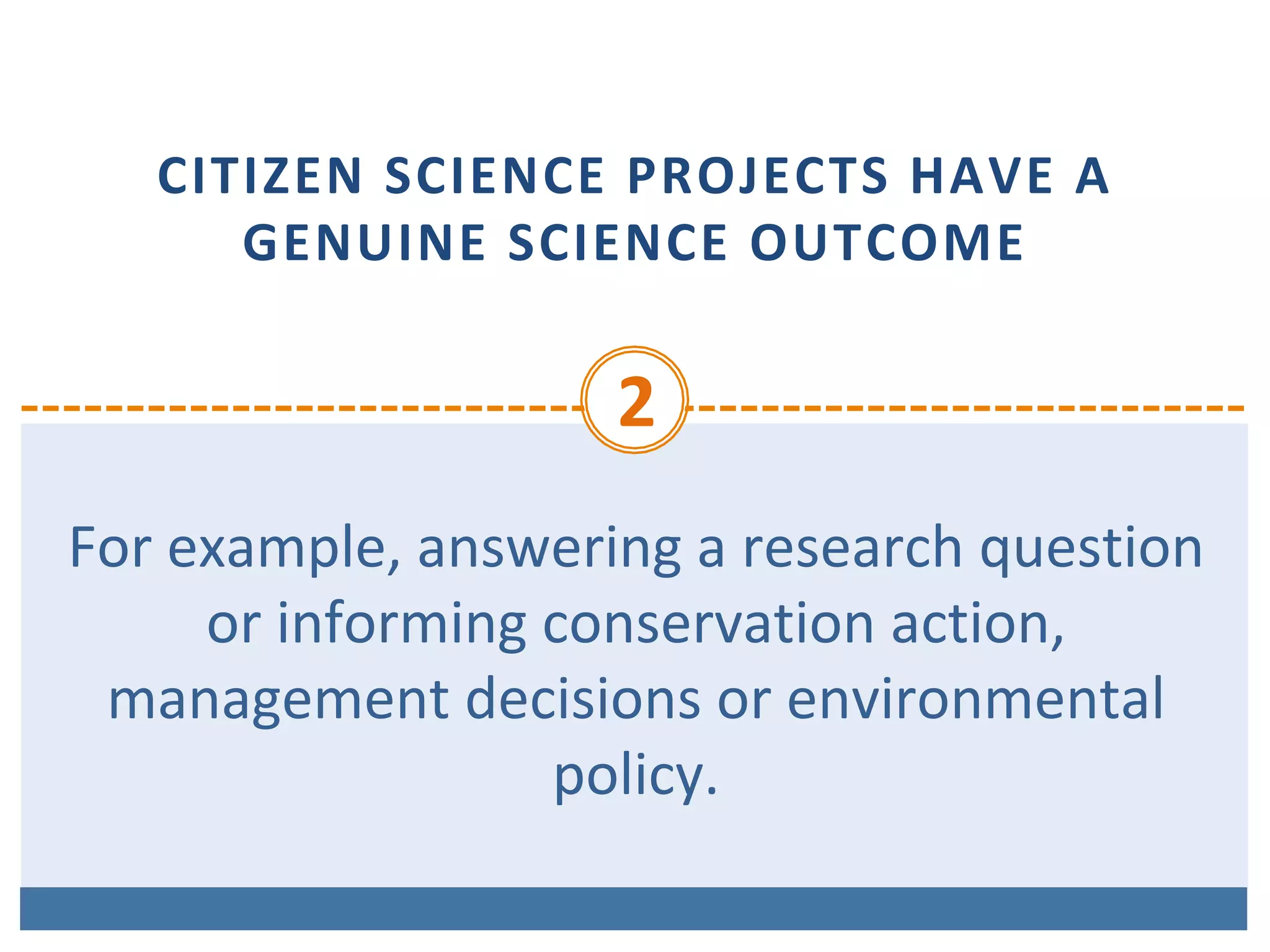
CITIZEN	SCIENCE	PROJECTS	HAVE	A	
GENUINE	SCIENCE	OUTCOME
2	
For	example,	answering	a	research	question	
or	informing	conservation	action,	
management	decisions	or	environmental	
policy.
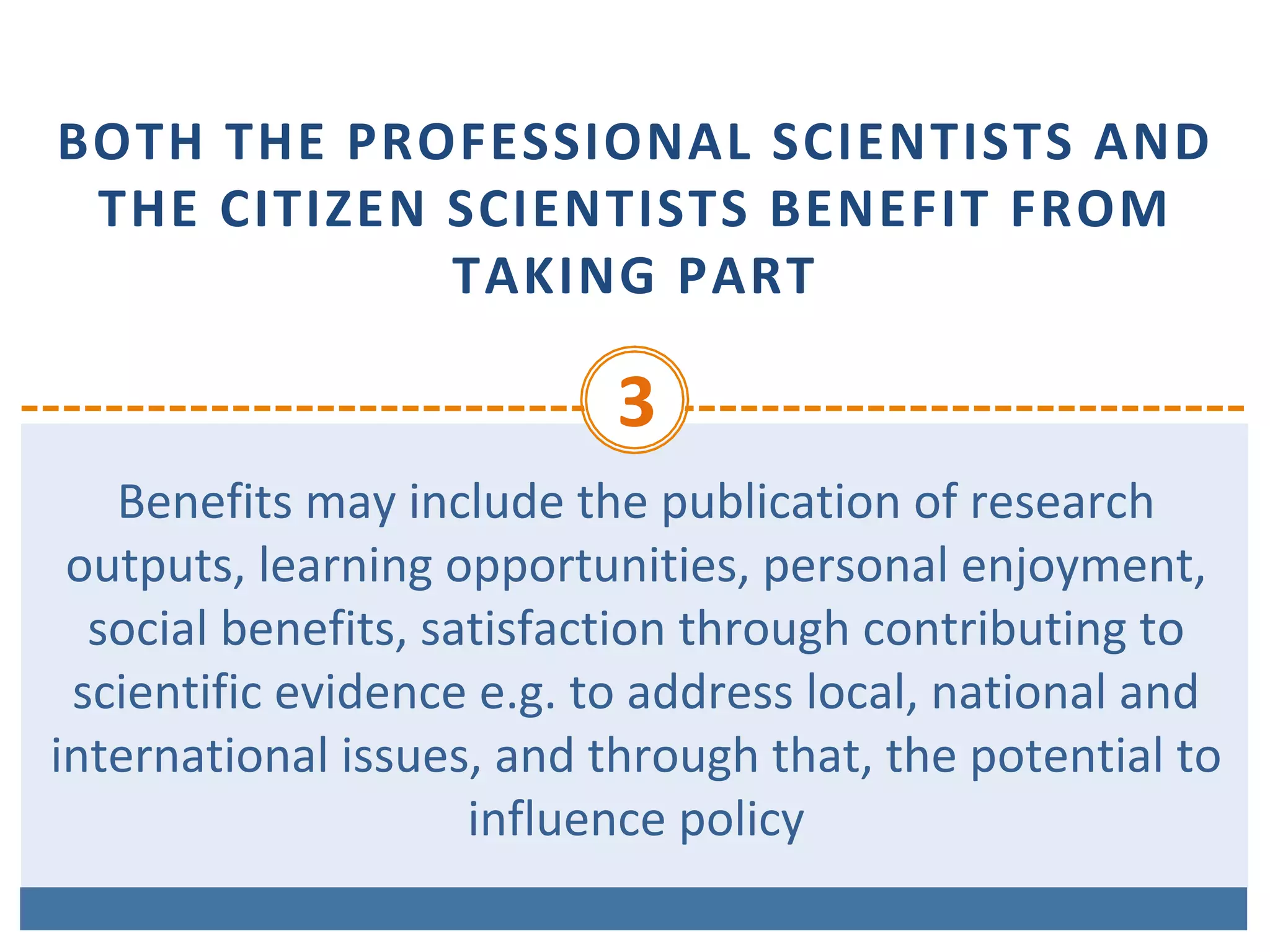
BOTH	THE	PROFESSIONAL	SCIENTISTS	AND	
THE	CITIZEN	SCIENTISTS	BENEFIT	FROM	
TAKING	PART
3	
Benefits	may	include	the	publication	of	research	
outputs,	learning	opportunities,	personal	enjoyment,	
social	benefits,	satisfaction	through	contributing	to	
scientific	evidence	e.g.	to	address	local,	national	and	
international	issues,	and	through	that,	the	potential	to	
influence	policy
CITIZEN	SCIENTISTS	MAY,	IF	THEY	WISH,	
PARTICIPATE	IN	MULTIPLE	STAGES	OF	THE	
SCIENTIFIC	PROCESS
4	
This	may	include	developing	the	research	
question,	designing	the	method,	gathering	
and	analysing	data,	and	communicating	the	
results
CITIZEN	SCIENTISTS	RECEIVE	FEEDBACK	
FROM	THE	PROJECT
5	
For	example,	how	their	data	are	being	used	
and	what	the	research,	policy	or	societal	
outcomes	are
CITIZEN	SCIENCE	IS	CONSIDERED	A	RESEARCH	
APPROACH	LIKE	ANY	OTHER,	WITH	
LIMITATIONS	AND	BIASES	THAT	SHOULD	BE	
CONSIDERED	AND	CONTROLLED	FOR
6	
However	unlike	traditional	research	
approaches,	citizen	science	provides	
opportunity	for	greater	public	engagement	
and	democratisation	of	science
CITIZEN	SCIENCE	PROJECT	DATA	AND	META-
DATA	ARE	MADE	PUBLICLY	AVAILABLE	AND	
WHERE	POSSIBLE,	RESULTS	ARE	PUBLISHED	
IN	AN	OPEN	ACCESS	FORMAT
7	
Data	sharing	may	occur	during	or	after	the	
project,	unless	there	are	security	or	privacy	
concerns	that	prevent	this
CITIZEN	SCIENTISTS	ARE	ACKNOWLEDGED	
IN	PROJECT	RESULTS	AND	PUBLICATIONS
8
CITIZEN	SCIENCE	PROGRAMMES	ARE	
EVALUATED	FOR	THEIR	SCIENTIFIC	OUTPUT,	
DATA	QUALITY,	PARTICIPANT	EXPERIENCE	
AND	WIDER	SOCIETAL	OR	POLICY	IMPACT
9
THE	LEADERS	OF	CITIZEN	SCIENCE	PROJECTS	
TAKE	INTO	CONSIDERATION	LEGAL	AND	ETHICAL	
ISSUES	SURROUNDING	COPYRIGHT,	
INTELLECTUAL	PROPERTY,	DATA	SHARING	
AGREEMENTS,	CONFIDENTIALITY,	ATTRIBUTION,	
AND	THE	ENVIRONMENTAL	IMPACT	OF	ANY	
ACTIVITIES	
10
an	online	platform	and	mutual	learning	space	for	
sharing	useful	tools	&	guidelines,	best	practice	
examples	and	practical	training	modules	for	anyone	
involved	or	interested	in	citizen	science

ECSA and the 10 Principles of Citizen Science