Download to read offline

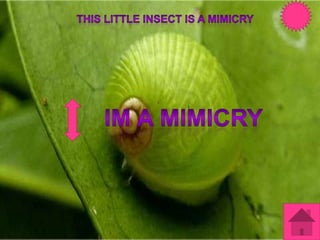
![ In evolutionary biology, mimicry, also
sometimes known as mimetism[citation
needed], is the similarity of one species to
another which protects one or both. This
similarity can be
in appearance, behaviour, sound, scent and l
ocation, with the mimics found in similar
places to their models.
Mimicry occurs when a group of
organisms, the mimics, evolve to share
common perceived characteristics with
another group, themodels.The evolution is
driven by the selective action of a signal-
receiver, or dupe. For example, birds that use
sight to identify palatable insects (the
mimics), whilst avoiding the noxious models.](https://image.slidesharecdn.com/scienceproject-121219024555-phpapp01/85/Science-project-8-320.jpg)
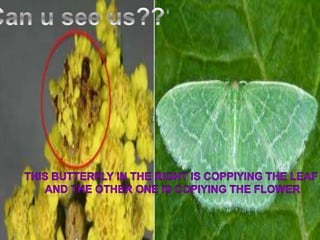
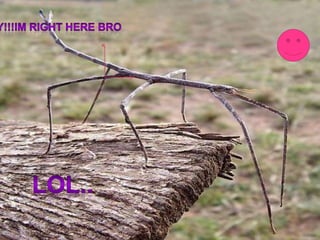



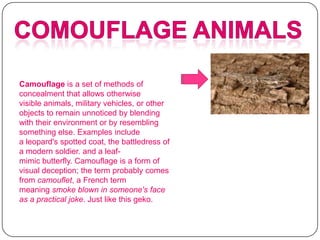
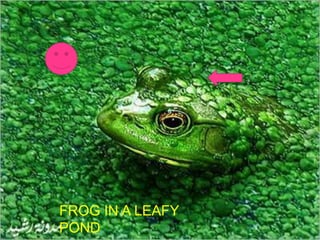
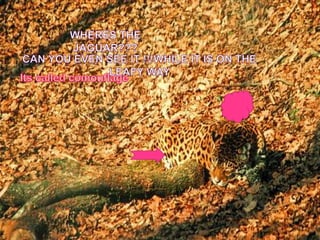
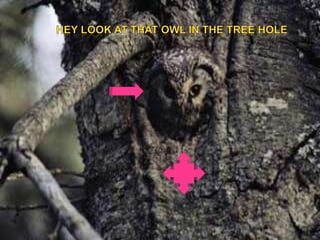
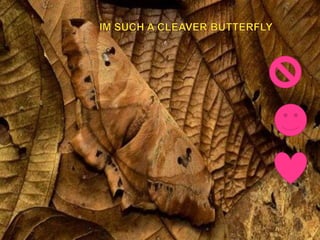
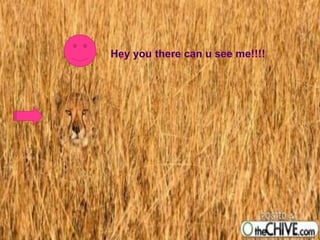
Camouflage allows animals and objects to blend in with their environments to avoid detection. Examples of camouflage include leopard spots, military camouflage uniforms, and butterflies that resemble leaves. Camouflage is a form of visual deception that likely comes from the French word "camouflet" meaning to blow smoke in someone's face as a joke. Mimicry is when one species evolves to resemble another species in appearance, behavior, sounds, or location to gain a protective benefit from the resemblance. Mimics evolve to share characteristics with models to confuse receivers trying to identify them.


