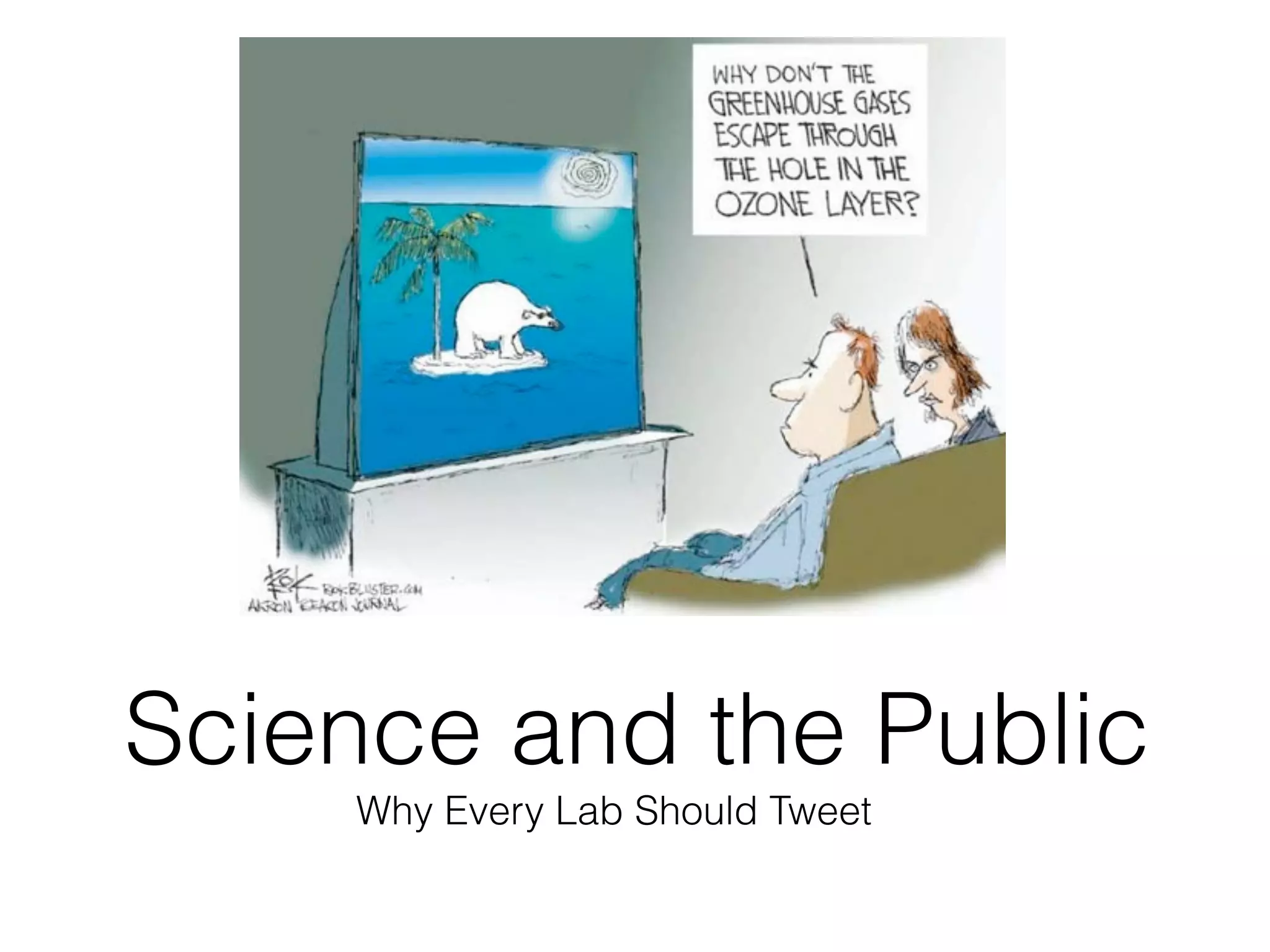
Science and the Public
    Why Every Lab Should Tweet
“…if scientists could communicate more in their
    own voices—in a familiar tone, with a less
 specialized vocabulary—would a wide range of
people understand them better? Would their work
   be better understood by the general public,
policy-makers, funders, and, even in some cases,
                 other scientists?”


                  - Alan Alda
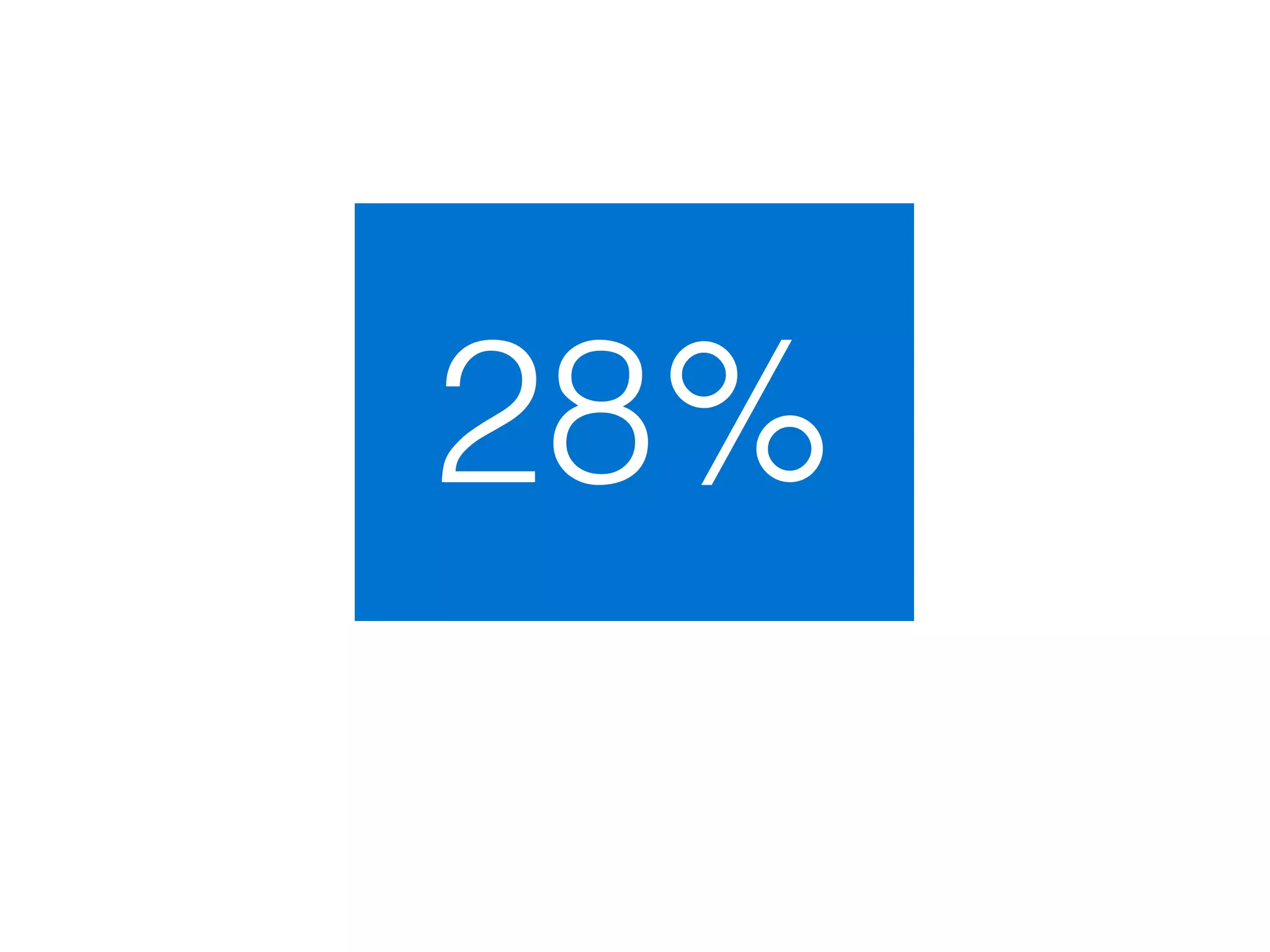
28%
28%
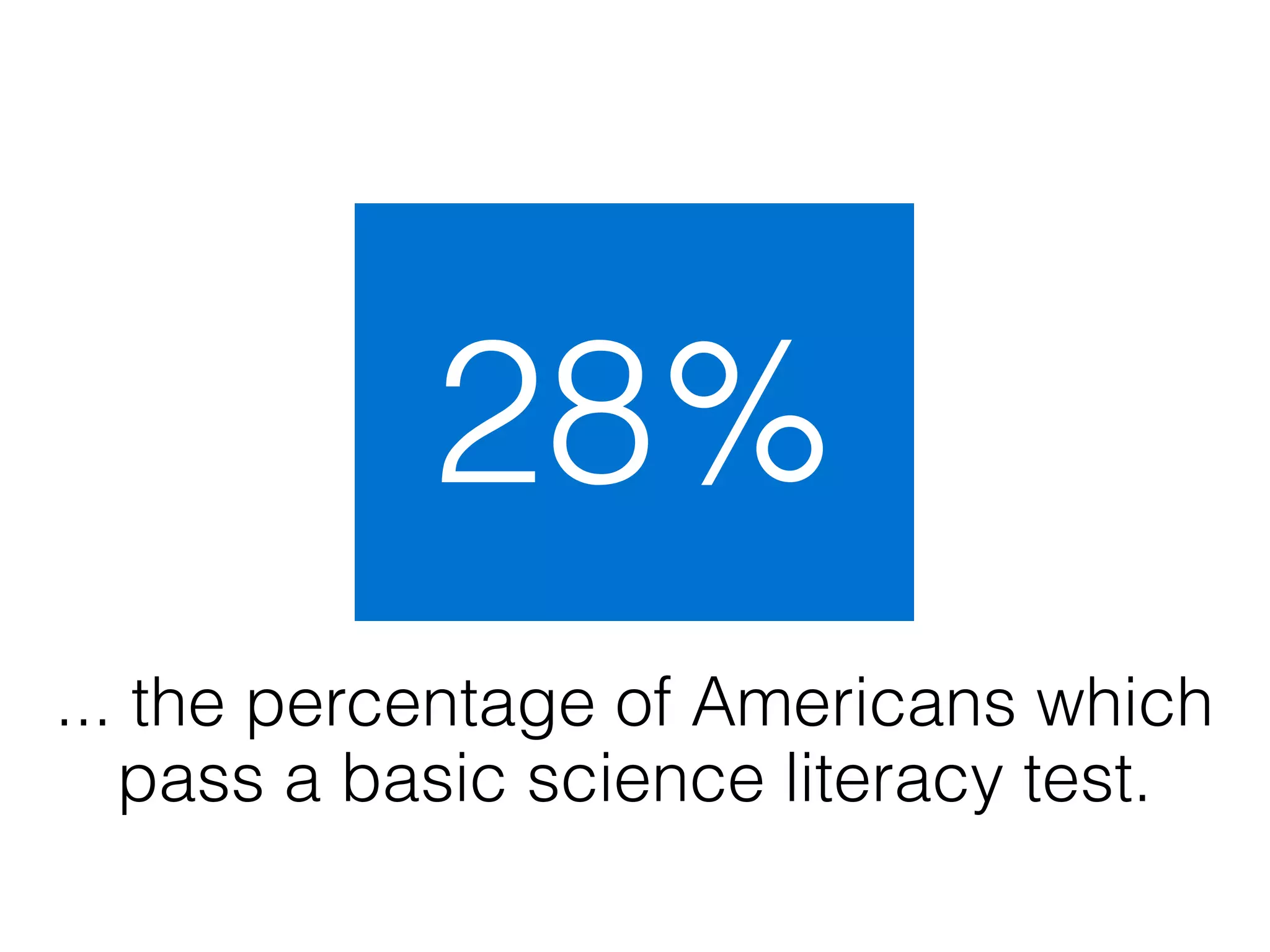
... the percentage of Americans which
   pass a basic science literacy test.
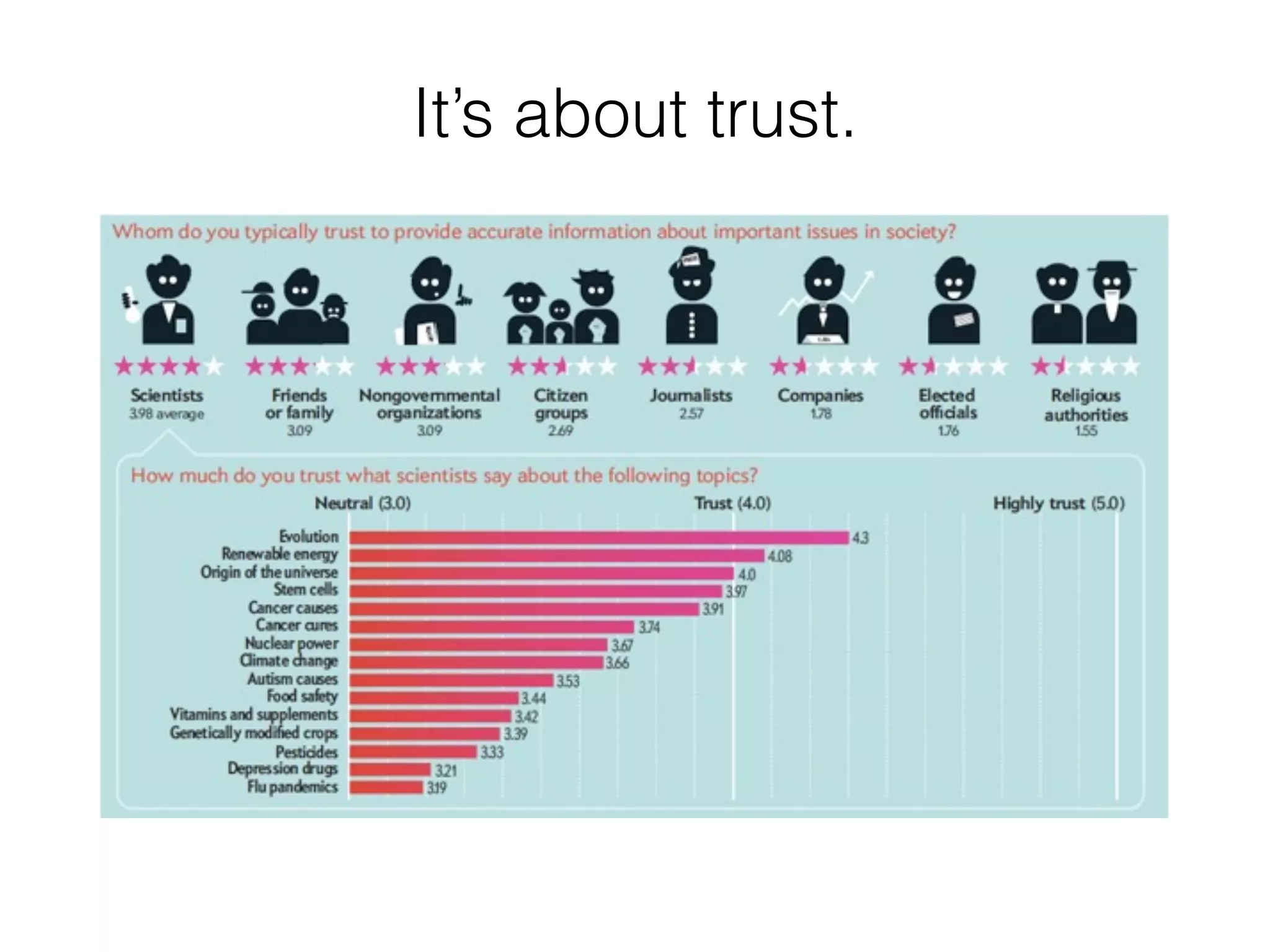
It’s about trust.
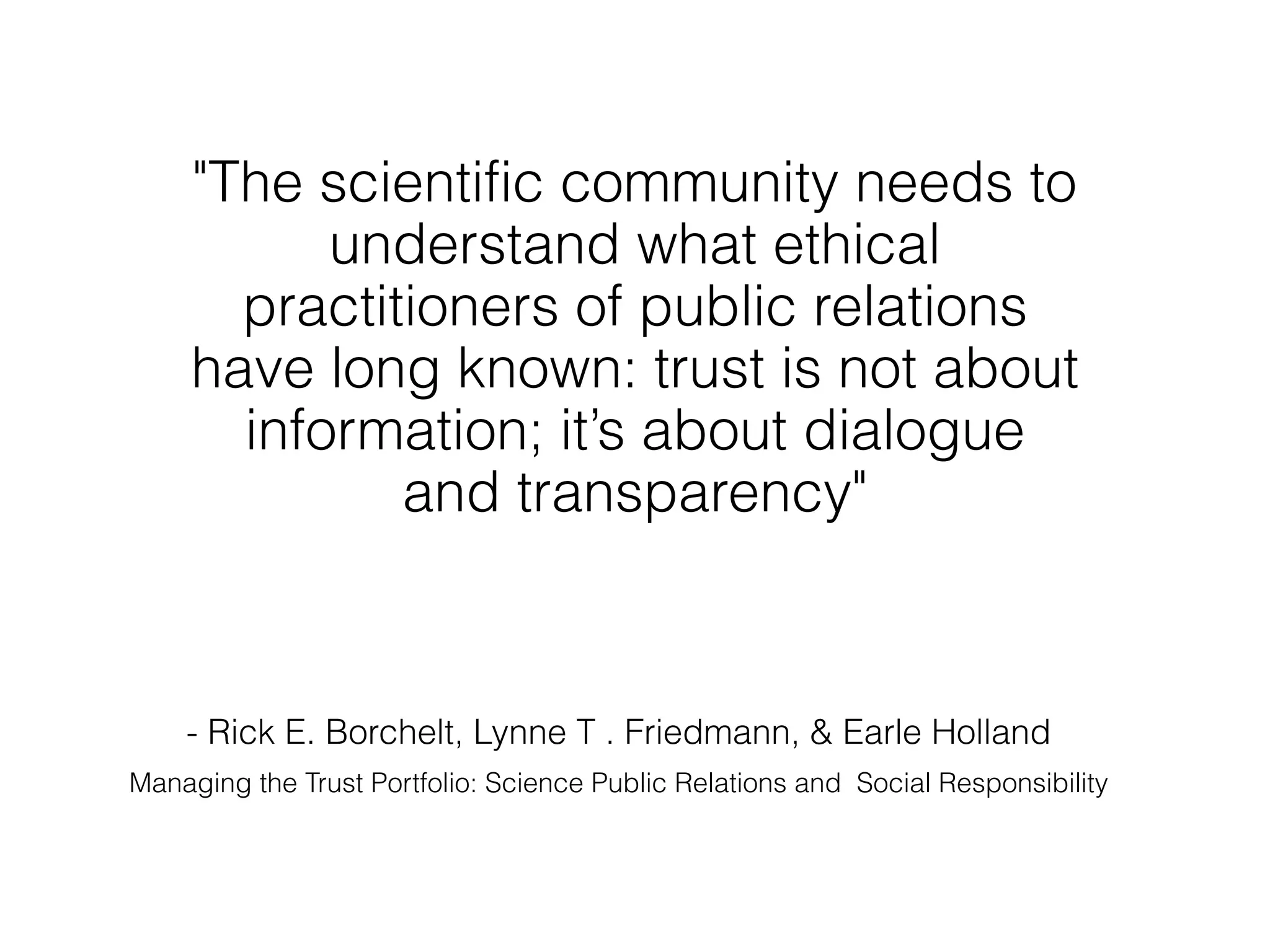
"The scientific community needs to
           understand what ethical
       practitioners of public relations
     have long known: trust is not about
       information; it’s about dialogue
              and transparency"


    - Rick E. Borchelt, Lynne T . Friedmann, & Earle Holland
Managing the Trust Portfolio: Science Public Relations and Social Responsibility
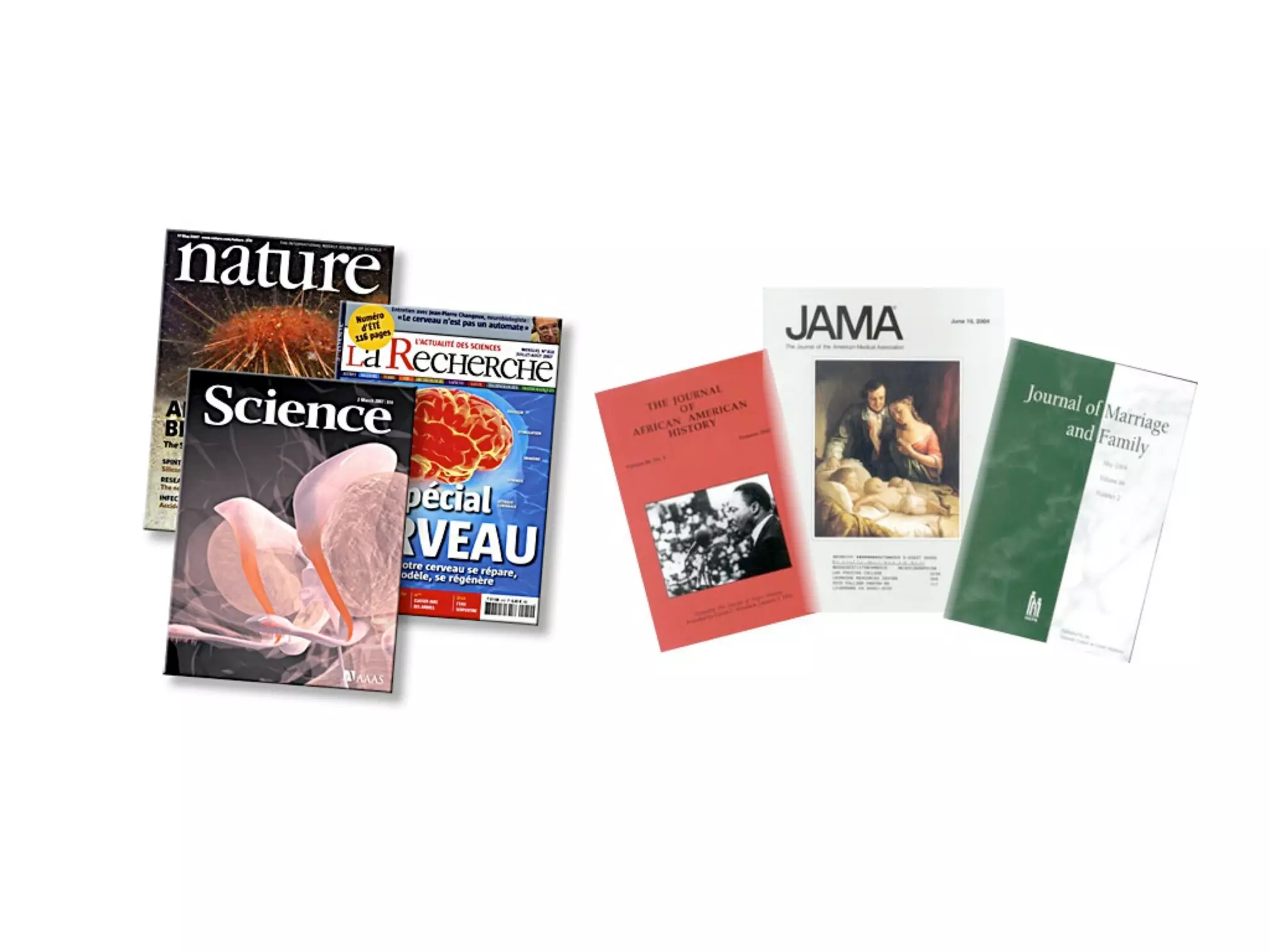
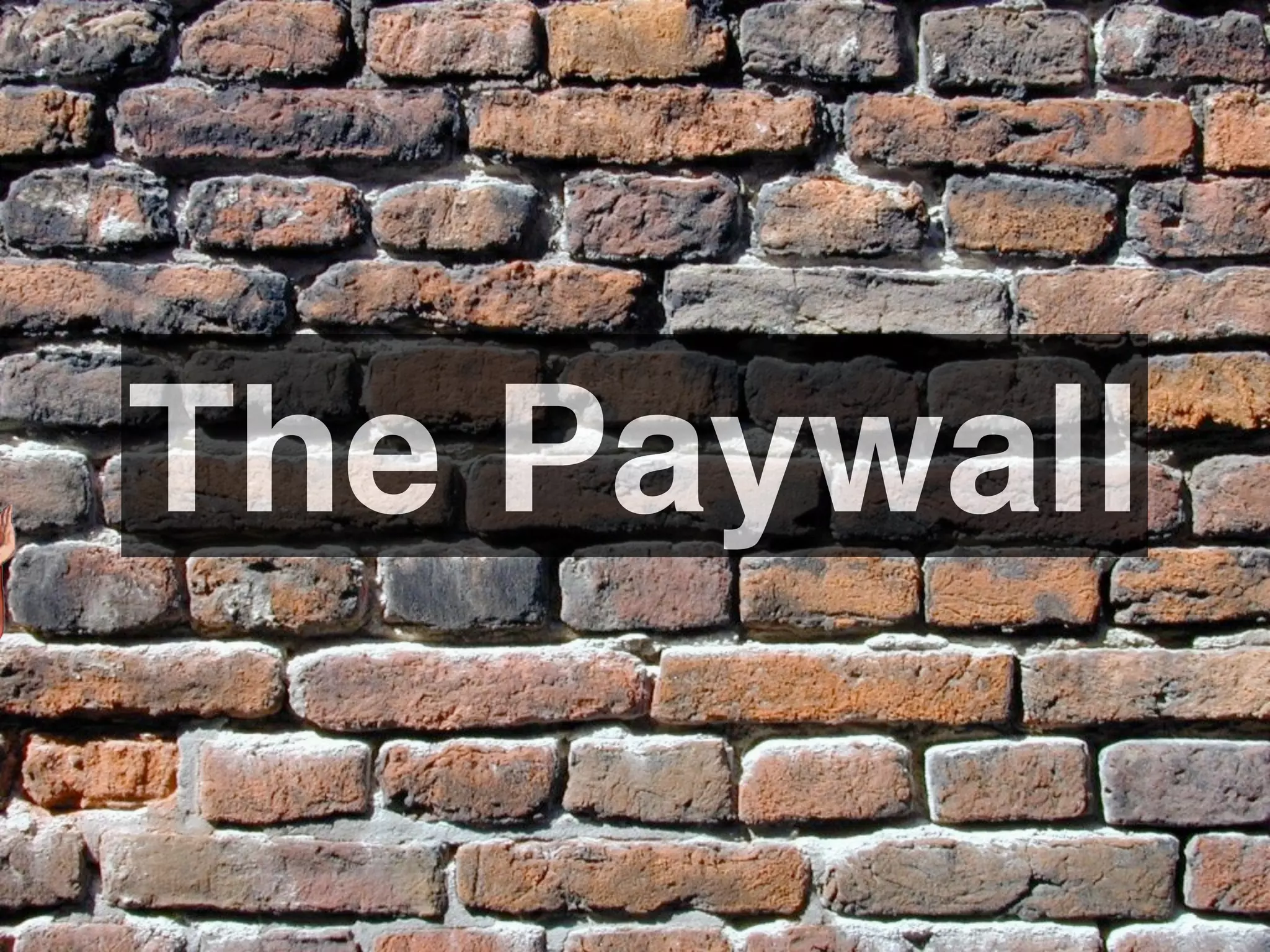
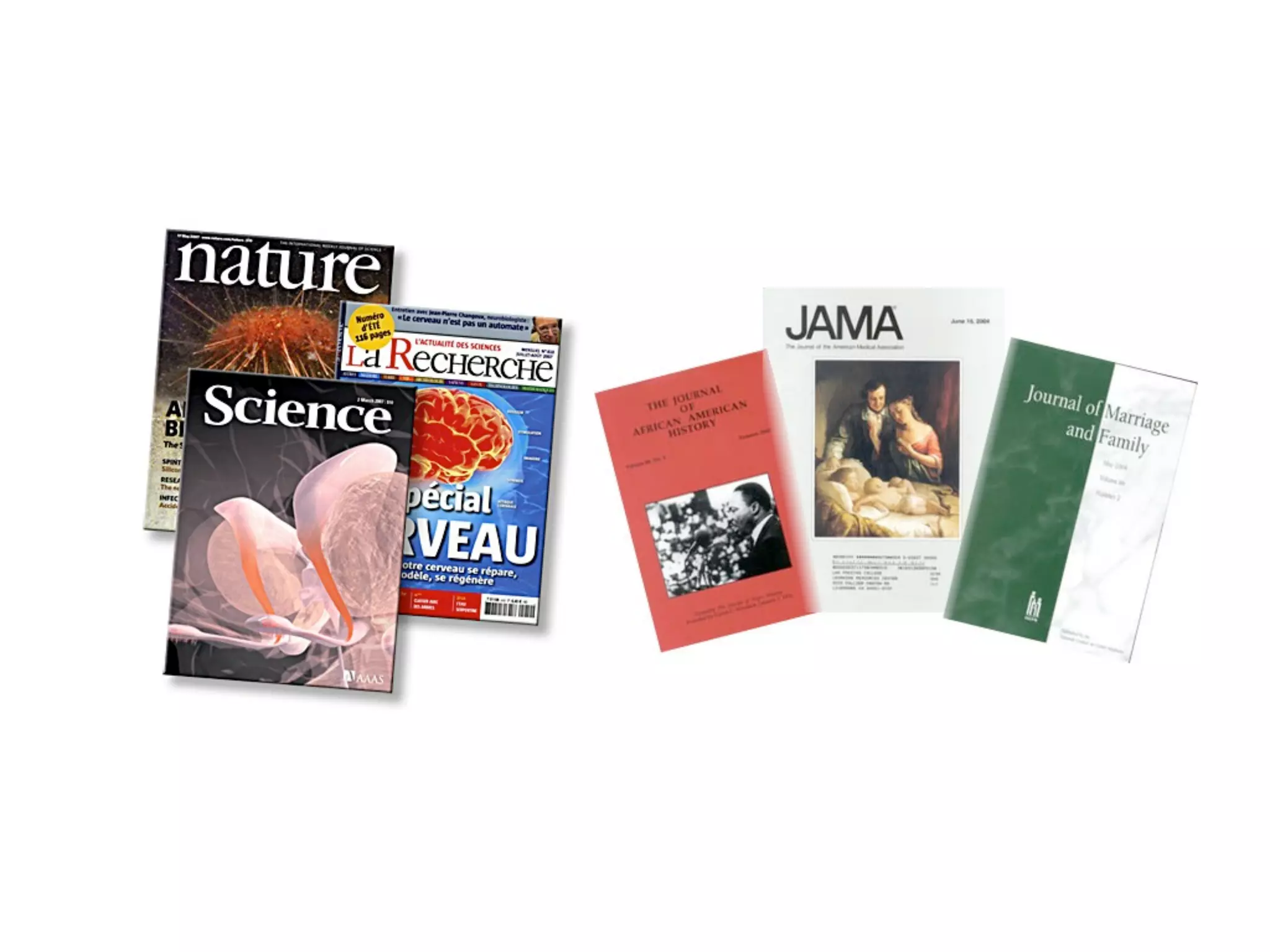
The Paywall
The Jargon Wall
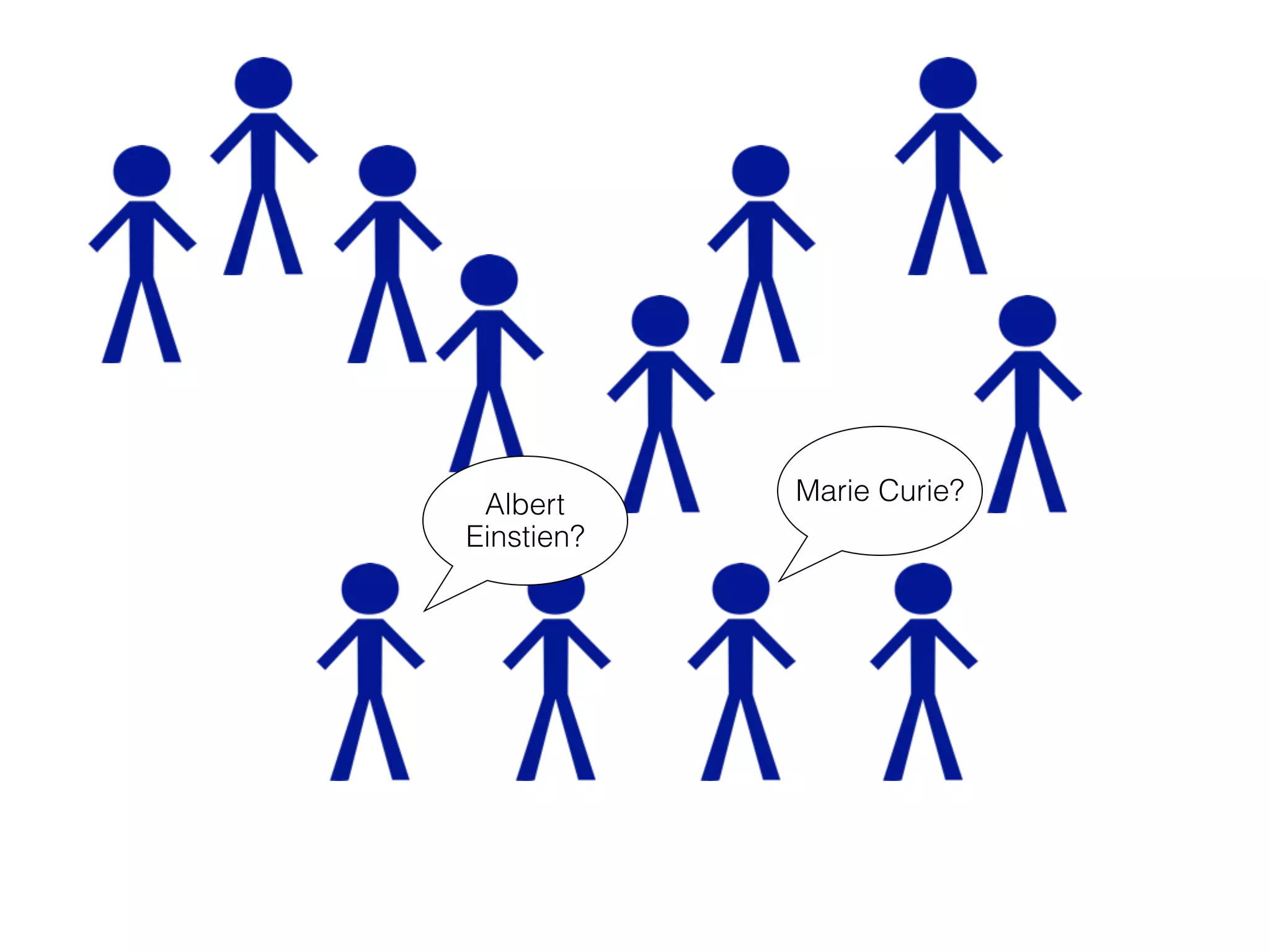
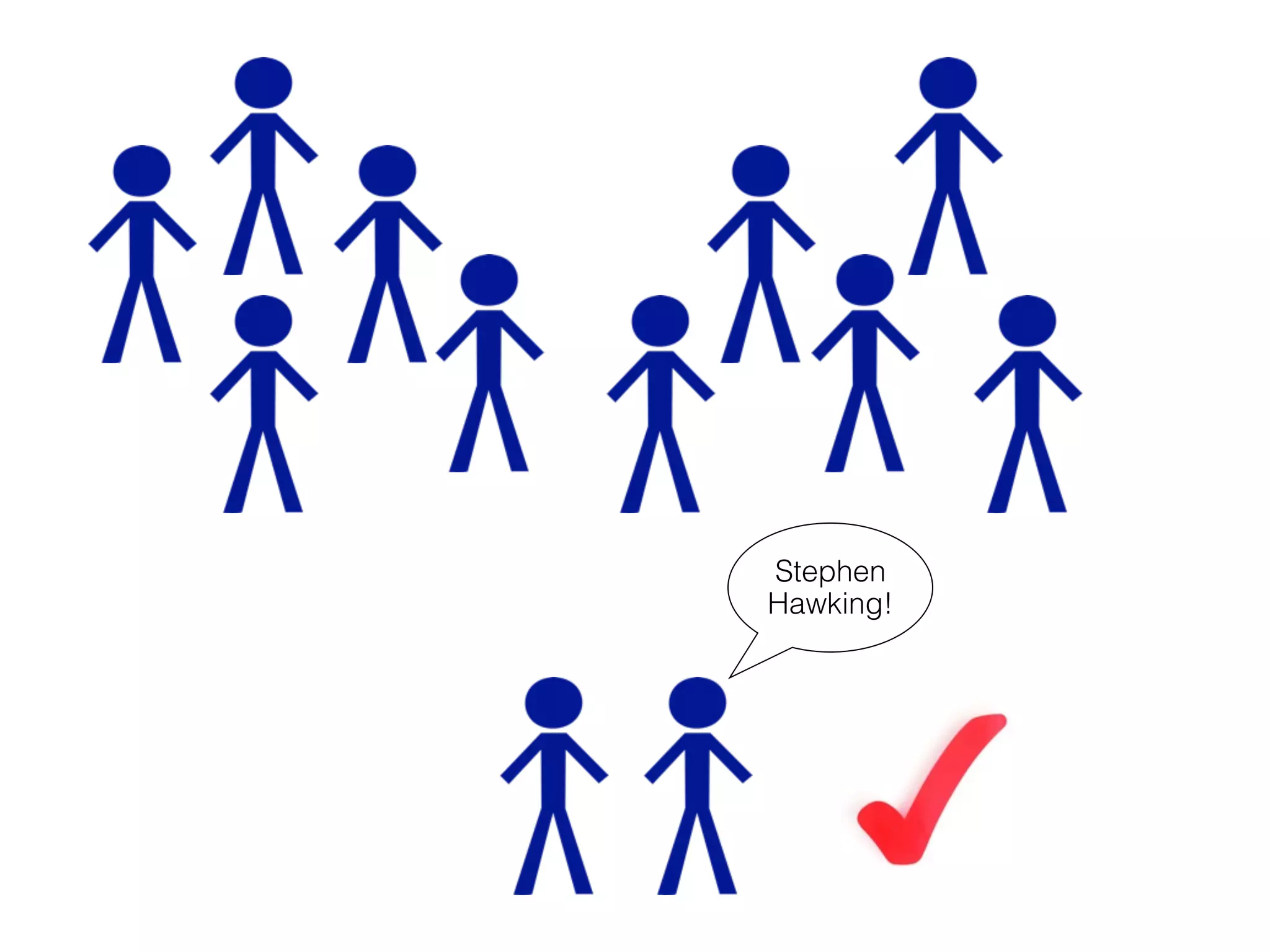
Can you name a living scientist?
Albert     Marie Curie?
Einstien?
Stephen
Hawking!
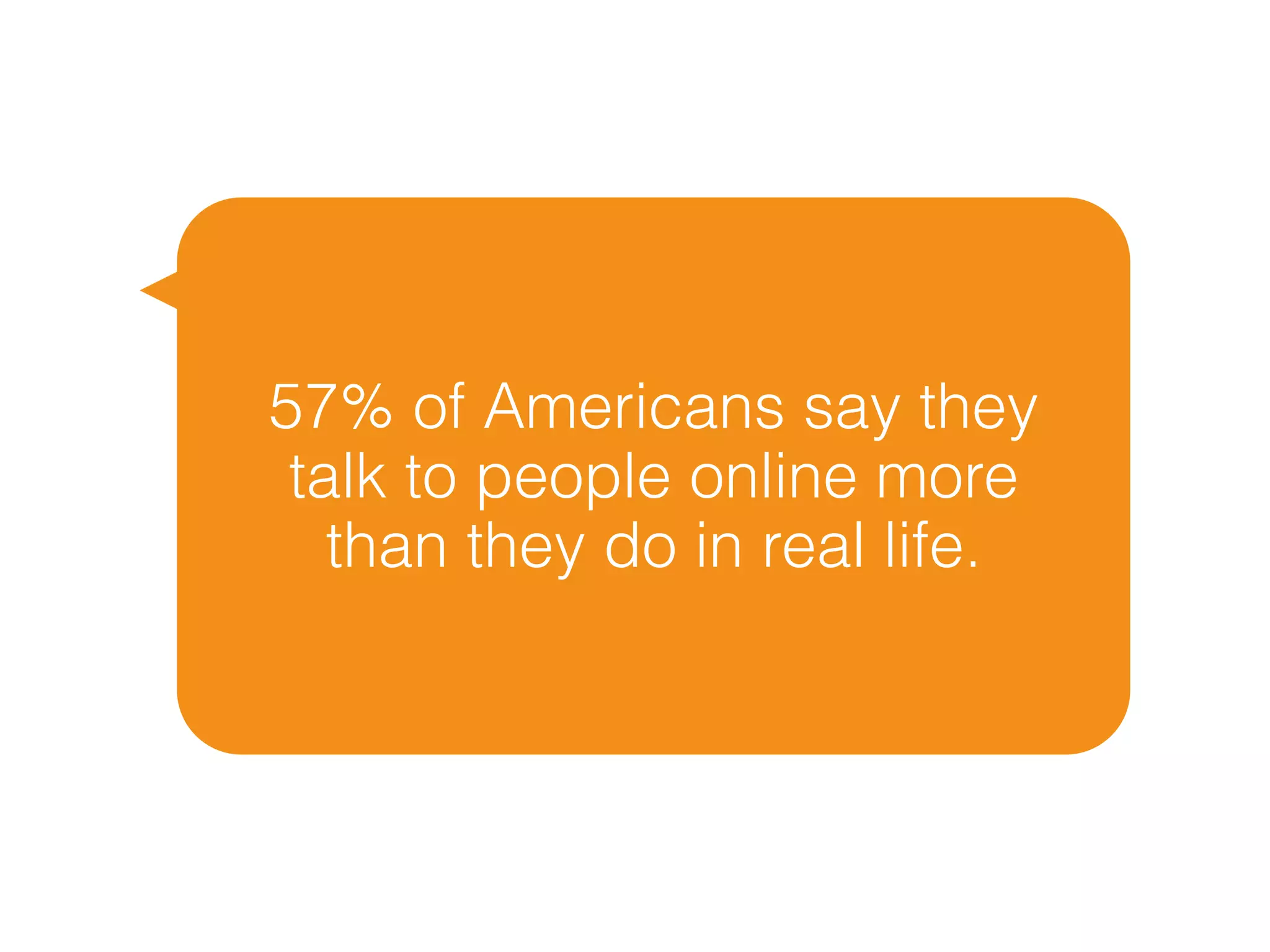
57% of Americans say they
 talk to people online more
   than they do in real life.
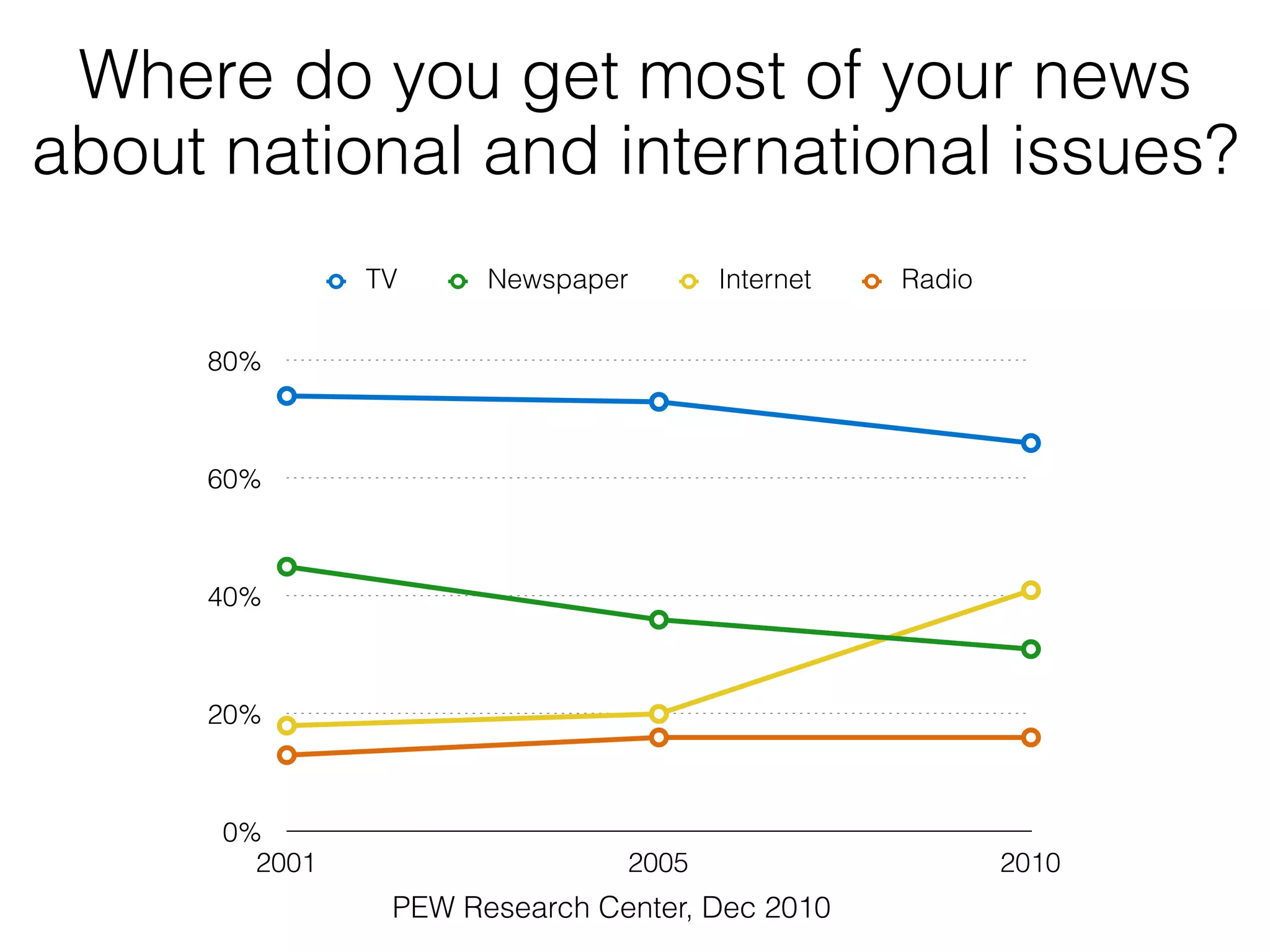
Where do you get most of your news
about national and international issues?
               TV     Newspaper       Internet   Radio


     80%


     60%


     40%


     20%


      0%
        2001                   2005                      2010
                PEW Research Center, Dec 2010
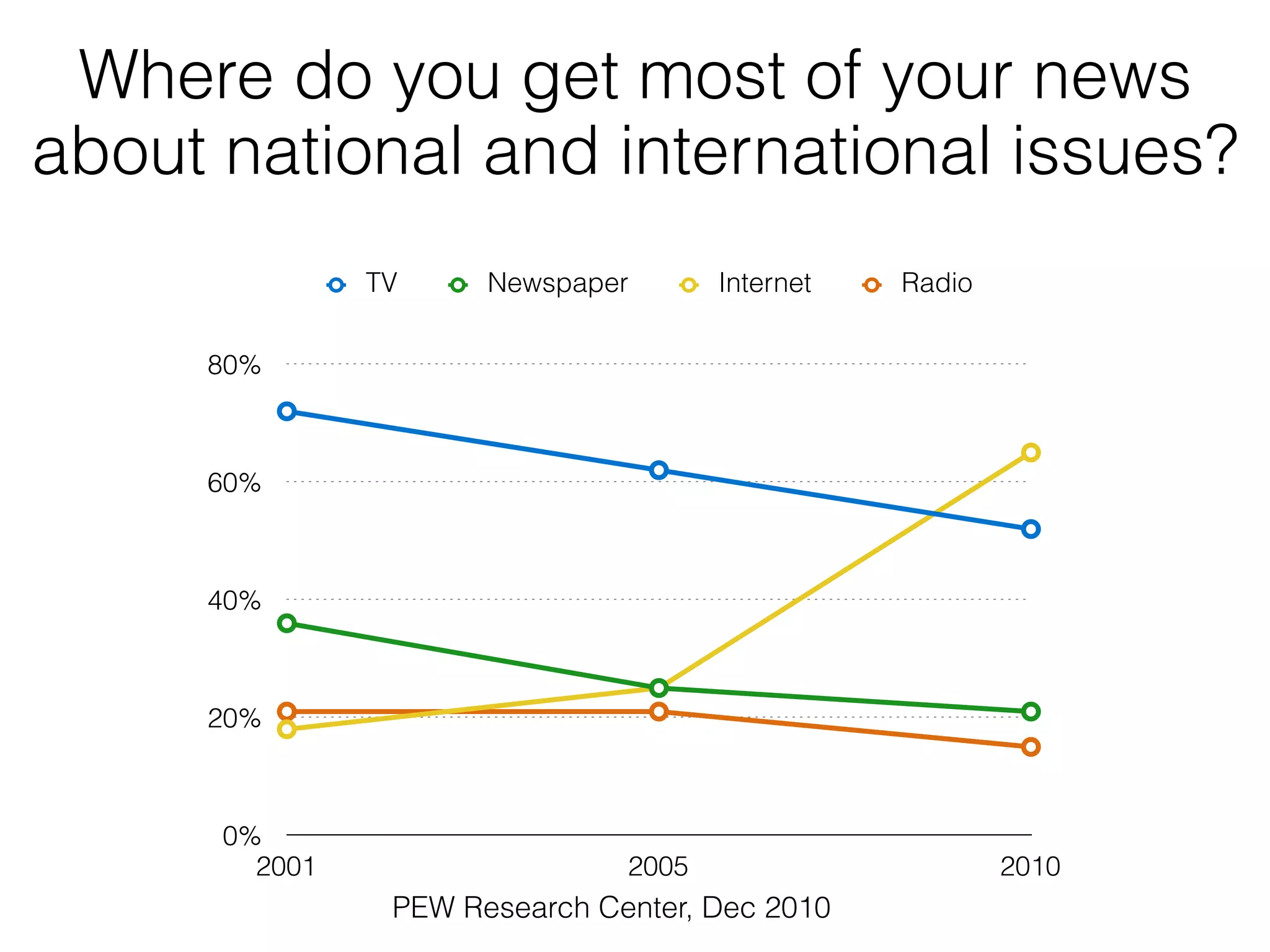
Where do you get most of your news
about national and international issues?
               TV     Newspaper       Internet   Radio


     80%


     60%


     40%


     20%


      0%
        2001                   2005                      2010
                PEW Research Center, Dec 2010
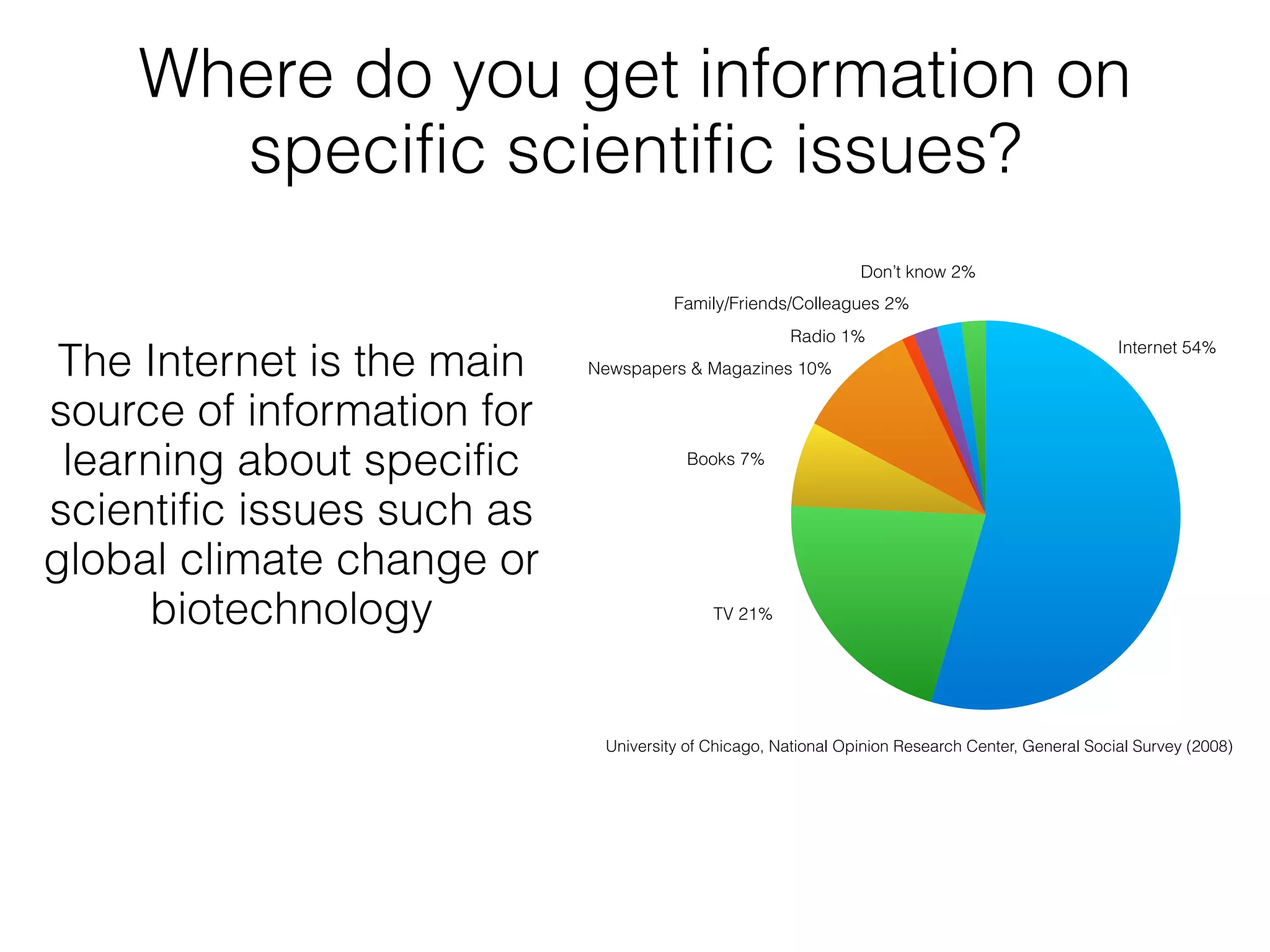
Where do you get information on
      specific scientific issues?
                                                               Don’t know 2%
                                      Family/Friends/Colleagues 2%
                                                      Radio 1%
                                                                                                  Internet 54%
 The Internet is the main   Newspapers & Magazines 10%

source of information for
 learning about specific                Books 7%


scientific issues such as
global climate change or
     biotechnology                         TV 21%


                             University of Chicago, National Opinion Research Center, General Social Survey (2008)
"Younger generations aren’t going to look for
your company or society in print—they’re going
 to go directly to your Web site and then maybe
your Facebook page, and, if interested, they will
               follow you on Twitter.

  If you’re not there, neither will they be—and
 you’ve lost them at a critical point of contact."

                           - Kea Giles
        Managing Editor at the Geological Society of America
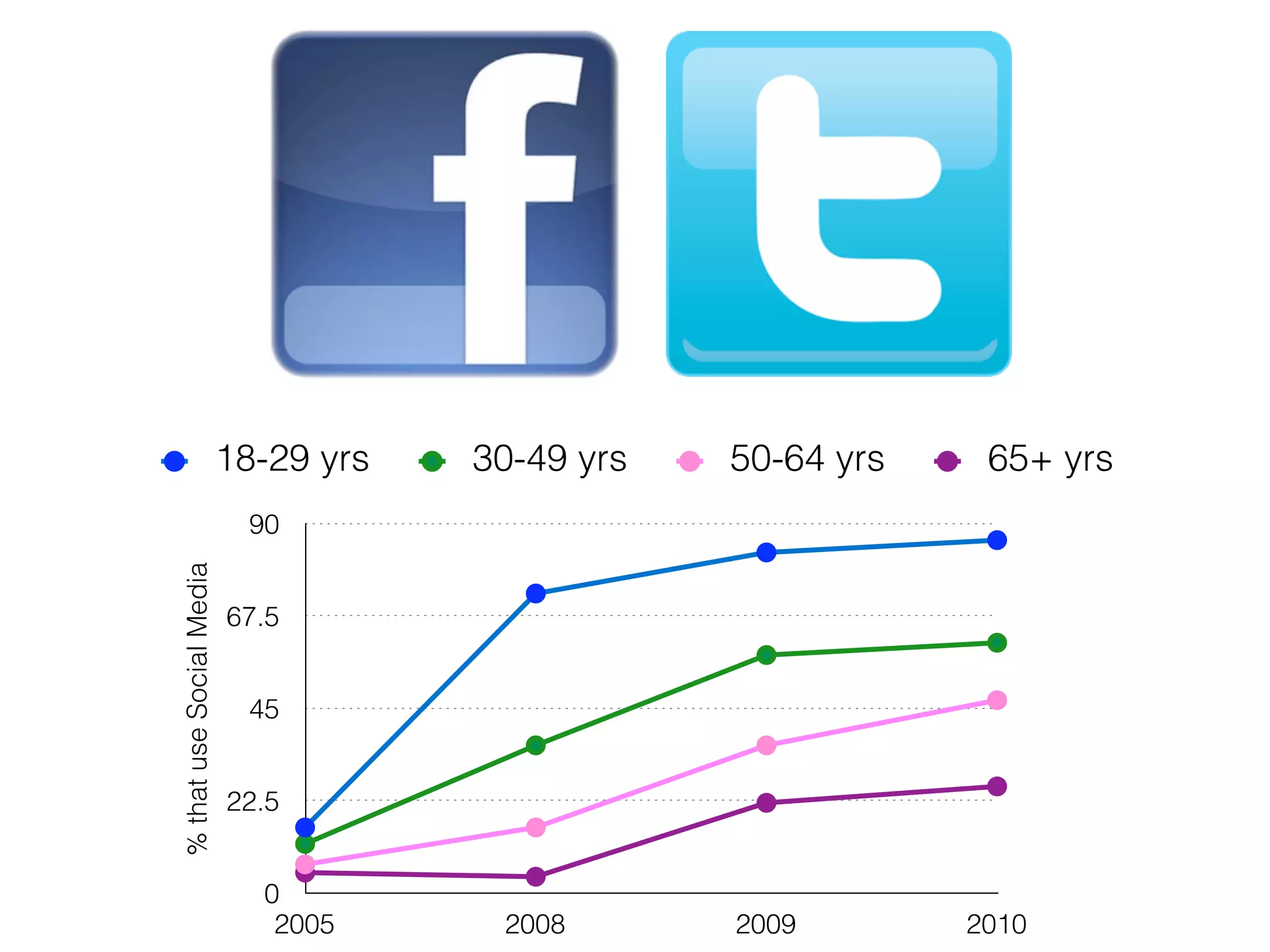
18-29 yrs   30-49 yrs   50-64 yrs    65+ yrs
                           90
% that use Social Media


                          67.5


                           45


                          22.5


                            0
                             2005      2008       2009        2010
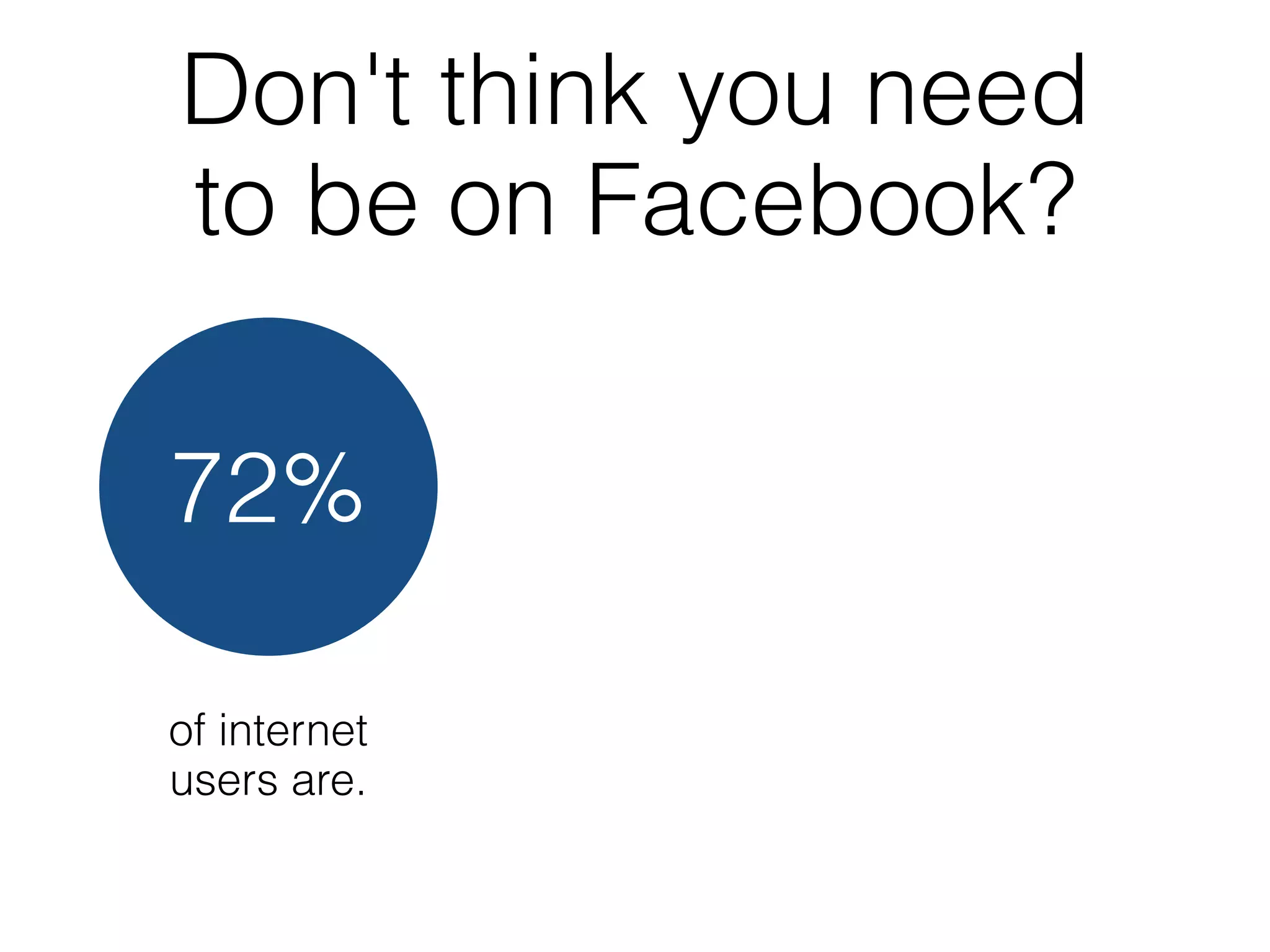
Don't think you need
to be on Facebook?
Don't think you need
to be on Facebook?

72%

of internet
users are.
Don't think you need
to be on Facebook?

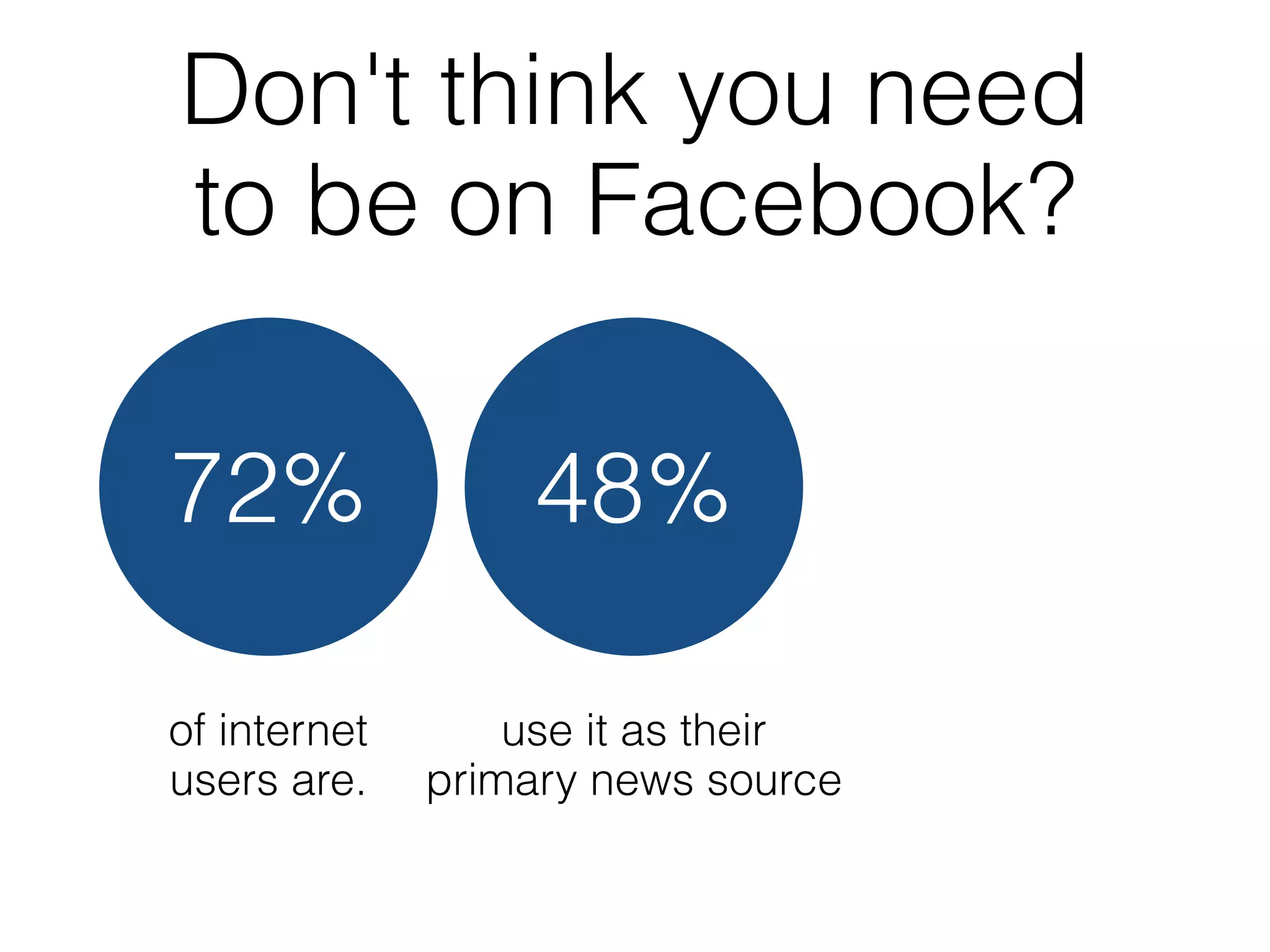
72%               48%

of internet       use it as their
users are.    primary news source
Don't think you need
to be on Facebook?

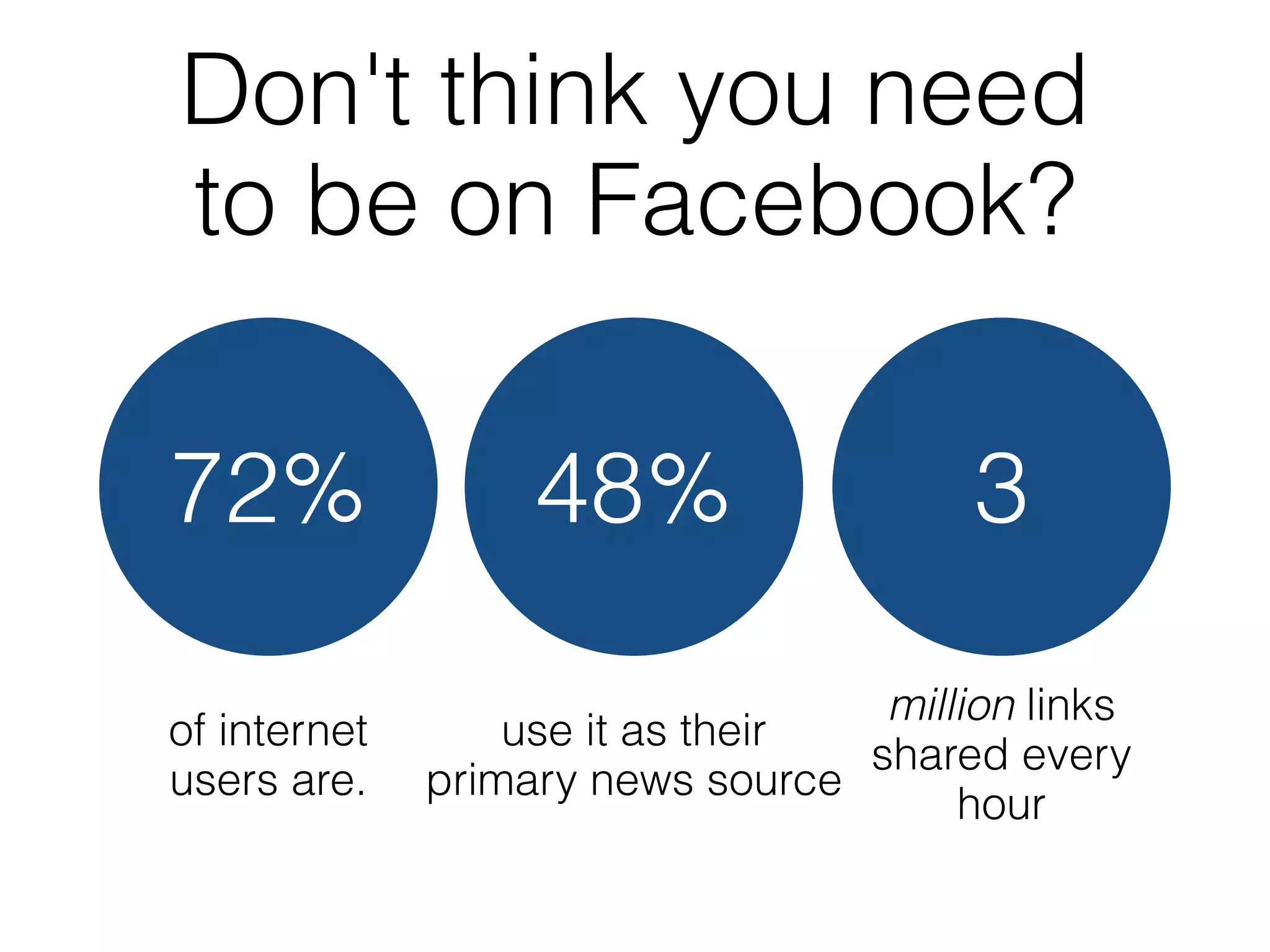
72%                48%                  3
                                   million links
of internet       use it as their
                                  shared every
users are.    primary news source
                                       hour
"The qualities that make
Twitter seem inane and half-
baked are what makes it so
          powerful."

                      Jonathan Zittrain
  Harvard University Law professor and Faculty Co-Director, Berkman
                    Center for Internet and Society
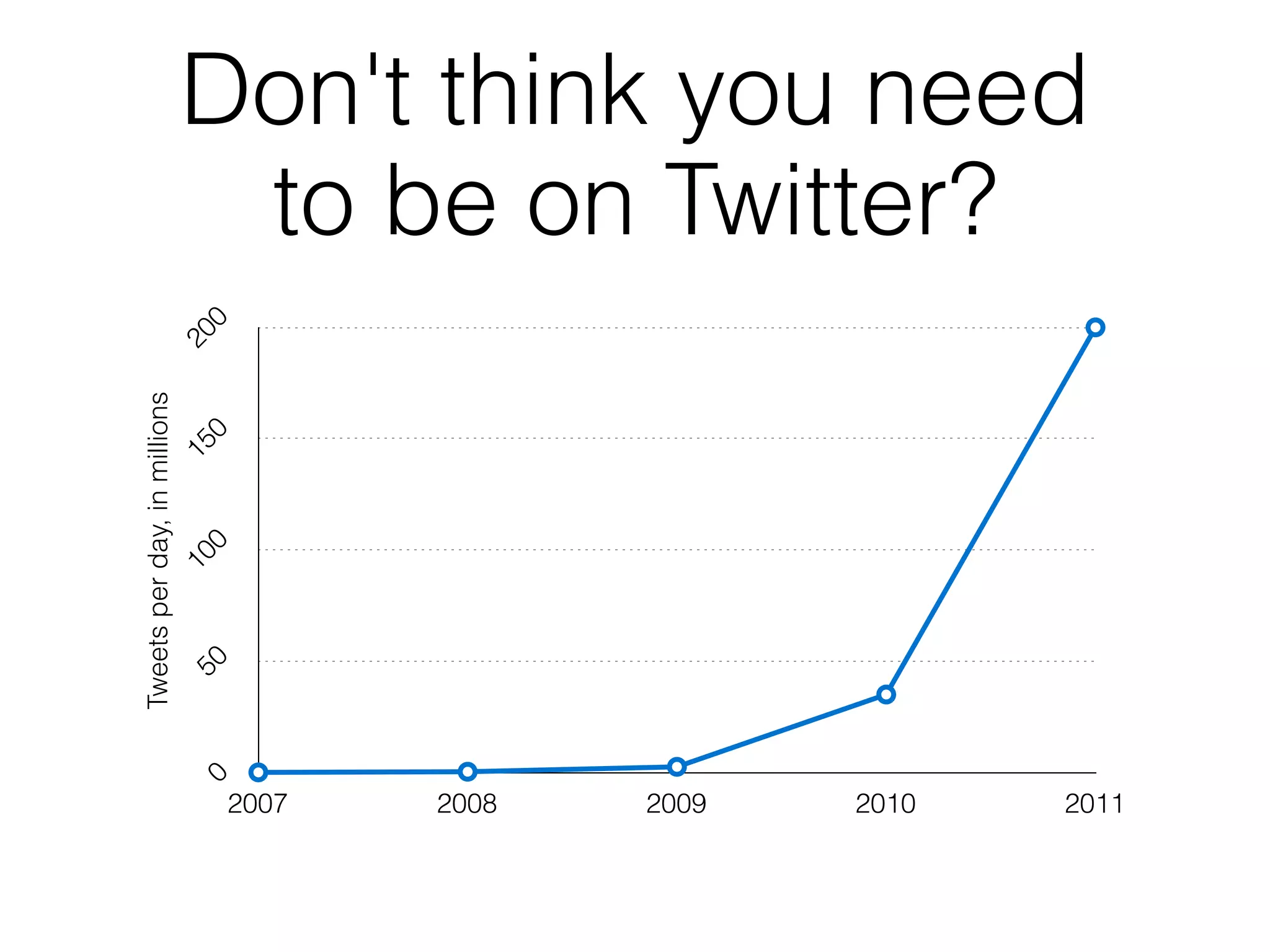
Don't think you need
          20
            to be on Twitter?
                  0
Tweets per day, in millions
                       0
                    15
              0
  50       10
                  0


                              2007   2008   2009   2010   2011
"The essentials of what
twitter does is an integral
part of the news system of
         the future."

                        David Winer
Harvard University Research Fellow and former Wired Magazine Editor
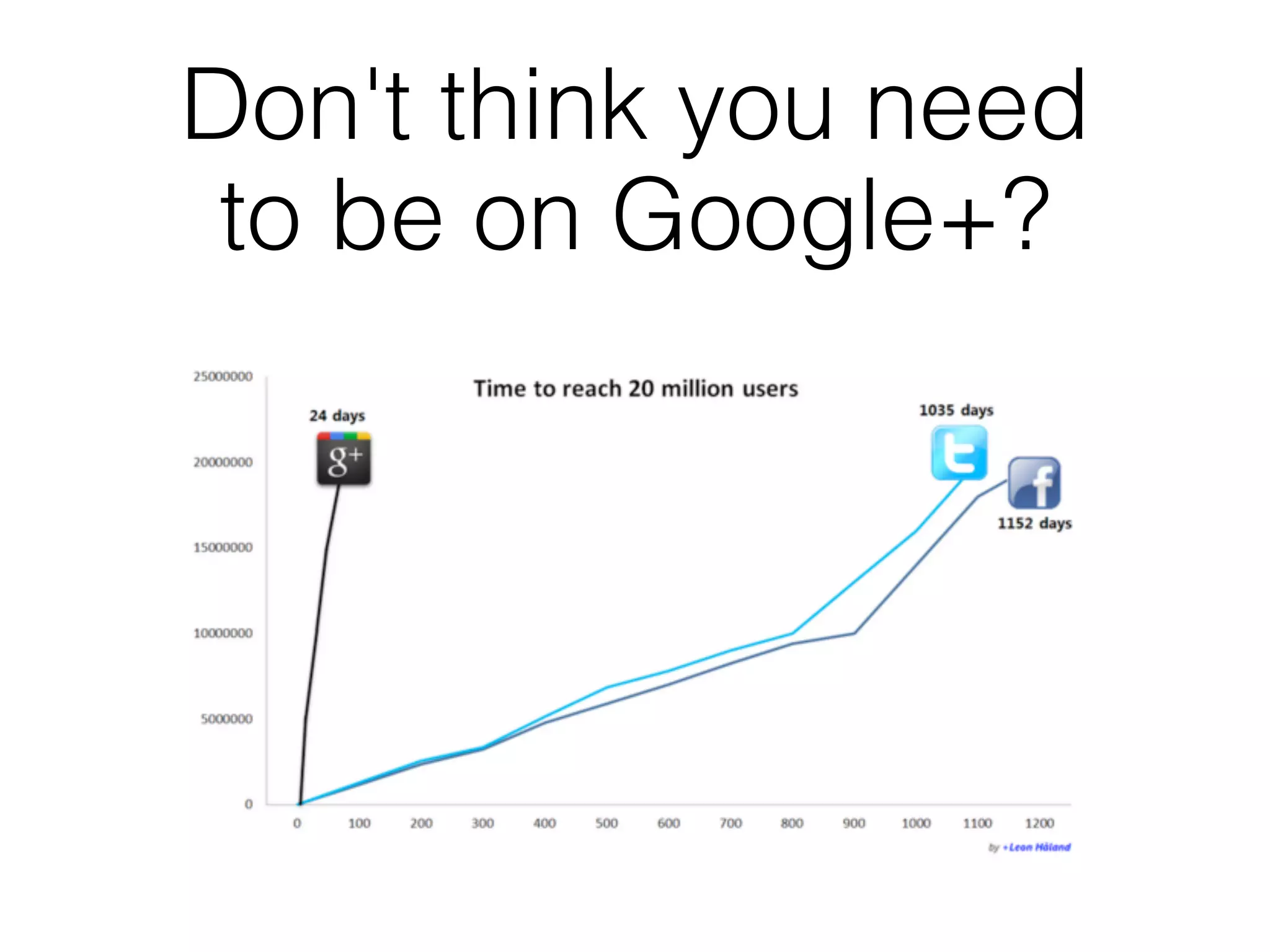
Don't think you need
 to be on Google+?
"Savvy scientists must increasingly engage with
blogs and social media... Even if you choose not to
  blog, you can certainly expect your papers and
ideas will increasingly be blogged about. So there
             it is—blog or be blogged."


    - Paul Knoepfler, UC Davis, in a comment in NatureNews
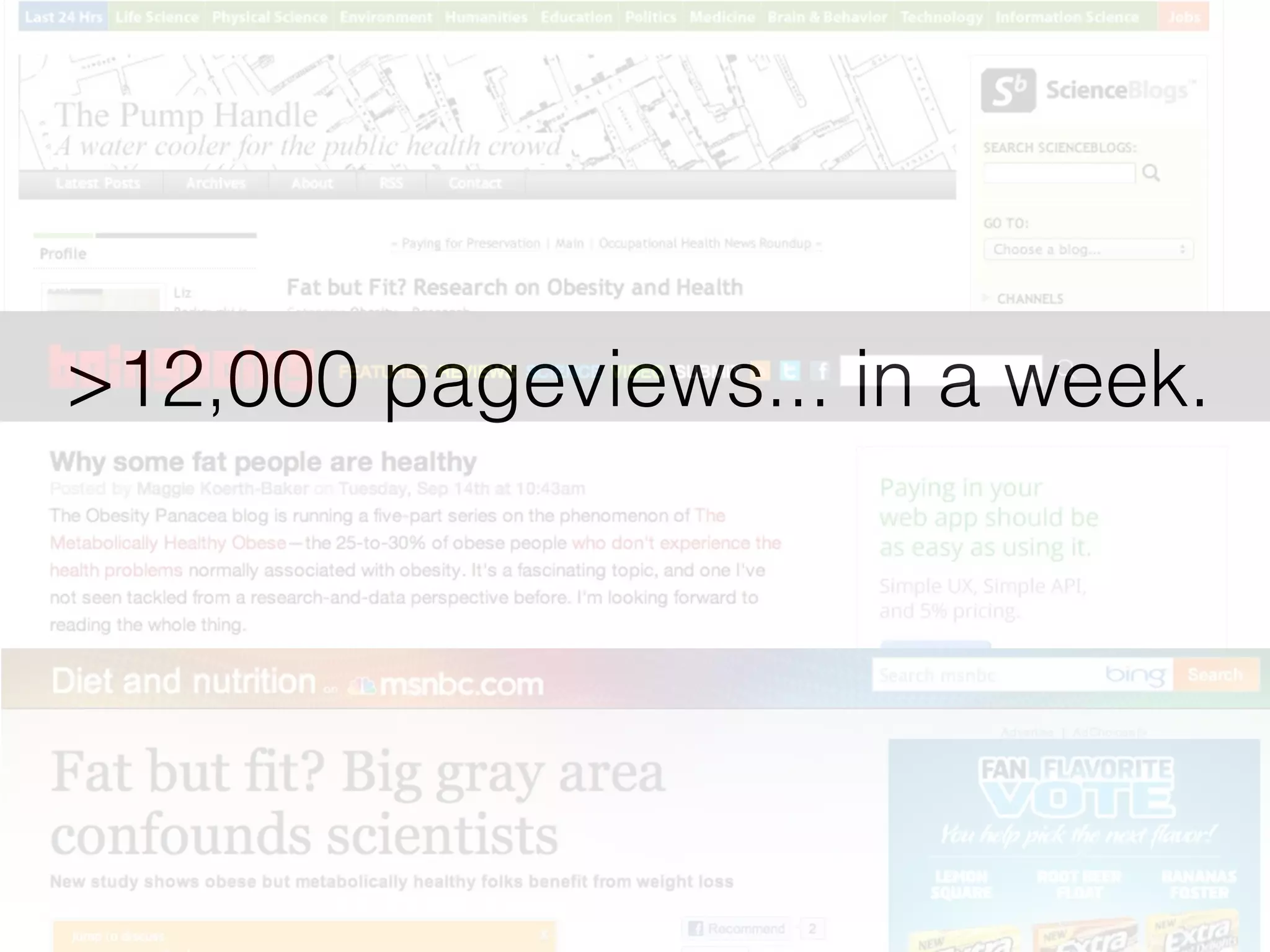
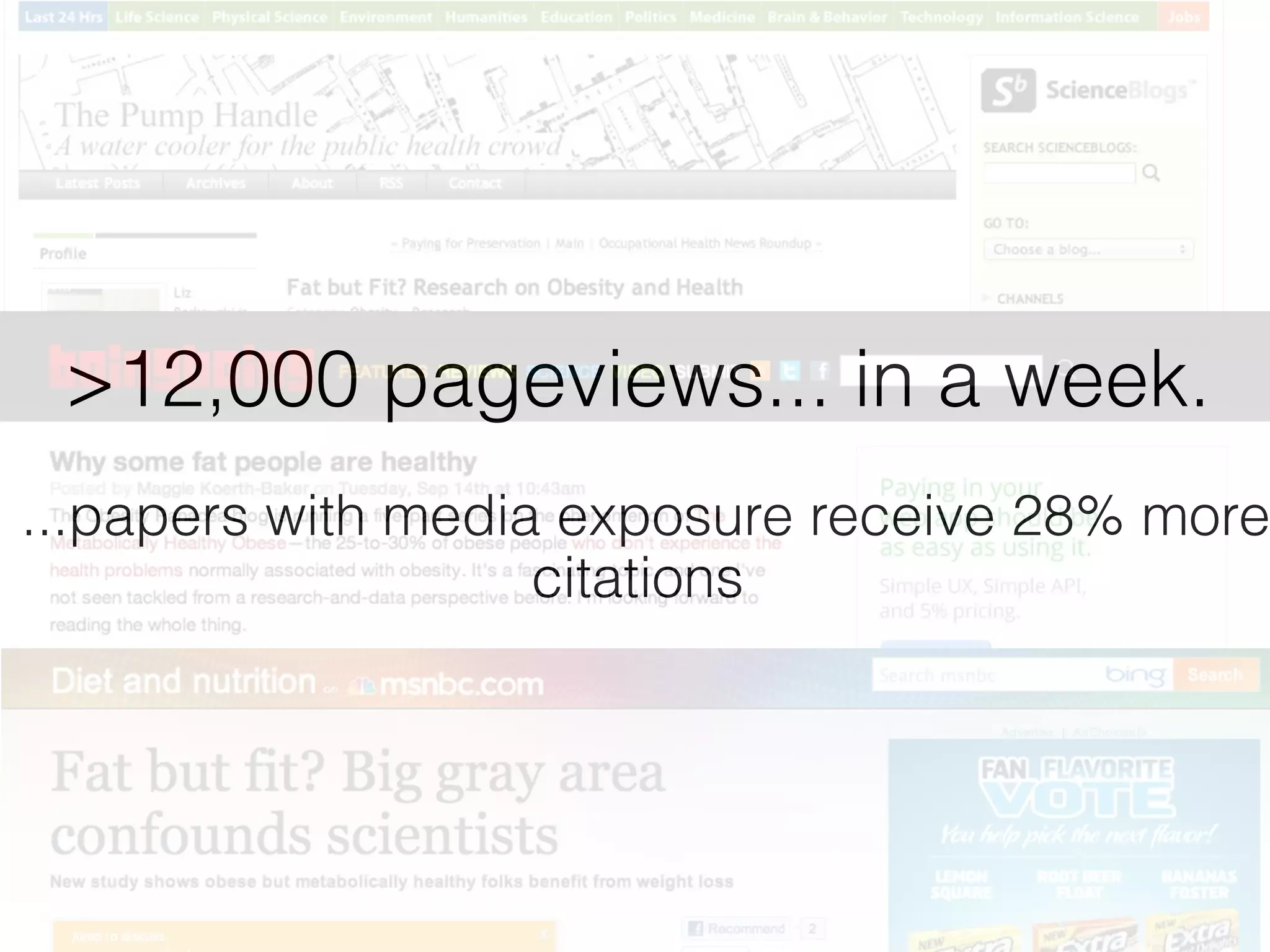
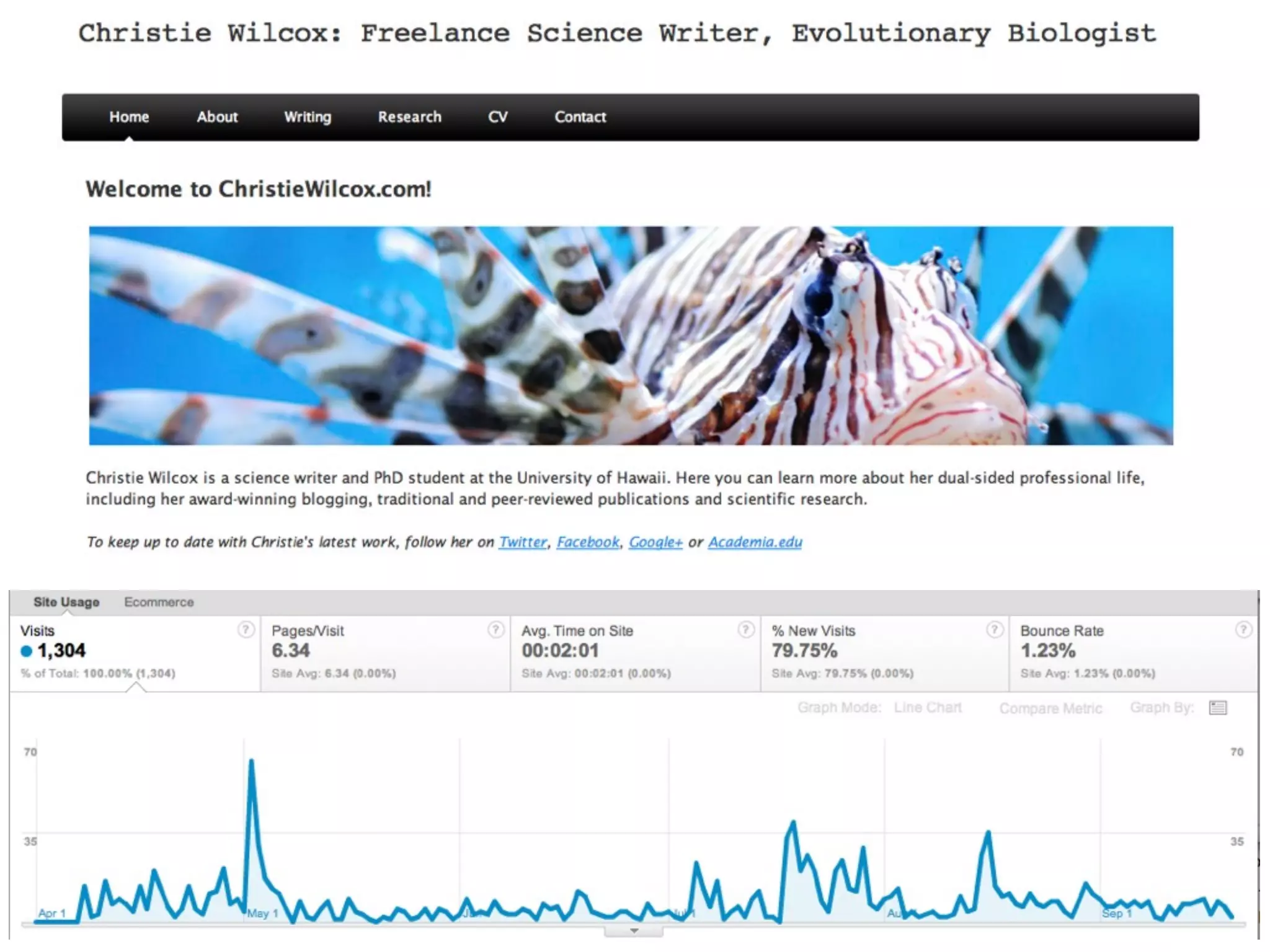
>12,000 pageviews... in a week.
...papers with media exposure receive 28% more
                    citations
Graduate Students
Why am I talking to
     you?
Why am I talking to
     you?

 You're the best
choice for the job
"The in depth knowledge of their system and
   details of field observations, experiments,
     conversations with colleagues and an
  extraordinary breadth of literature gives the
scientist a pool of knowledge to draw from that
      often is unmatched by most science
                  communicators."


      - Kevin Zelnio, blogger for Scientific American
"Right now, this is an anti-intellectual country in
which the media and politics constantly bombard
 us with the message that science is uncool, the
           domain of geeks and nerds."


                           - PZ Myers,
      Associate Professor at University of Minnesota, Morris
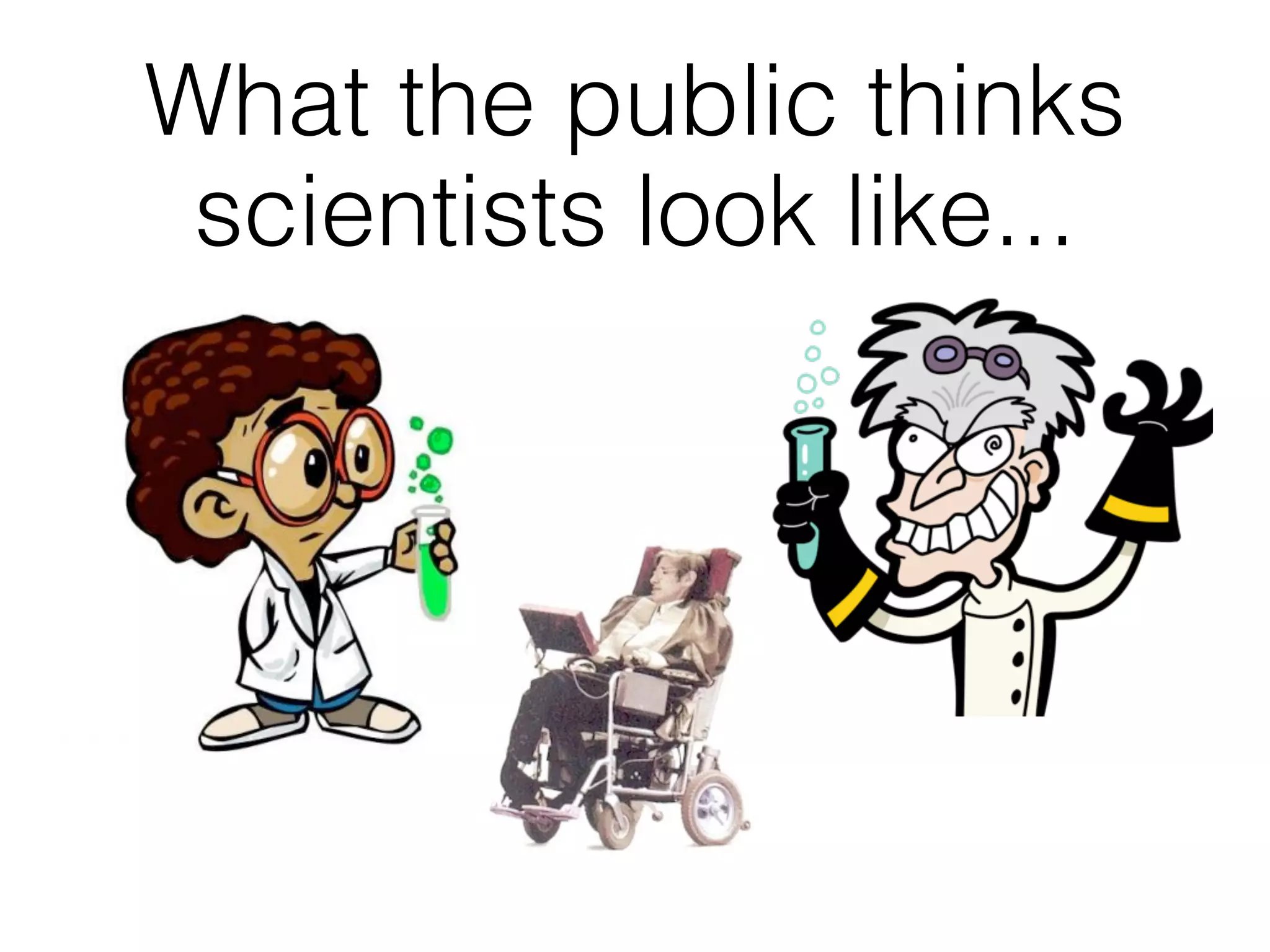
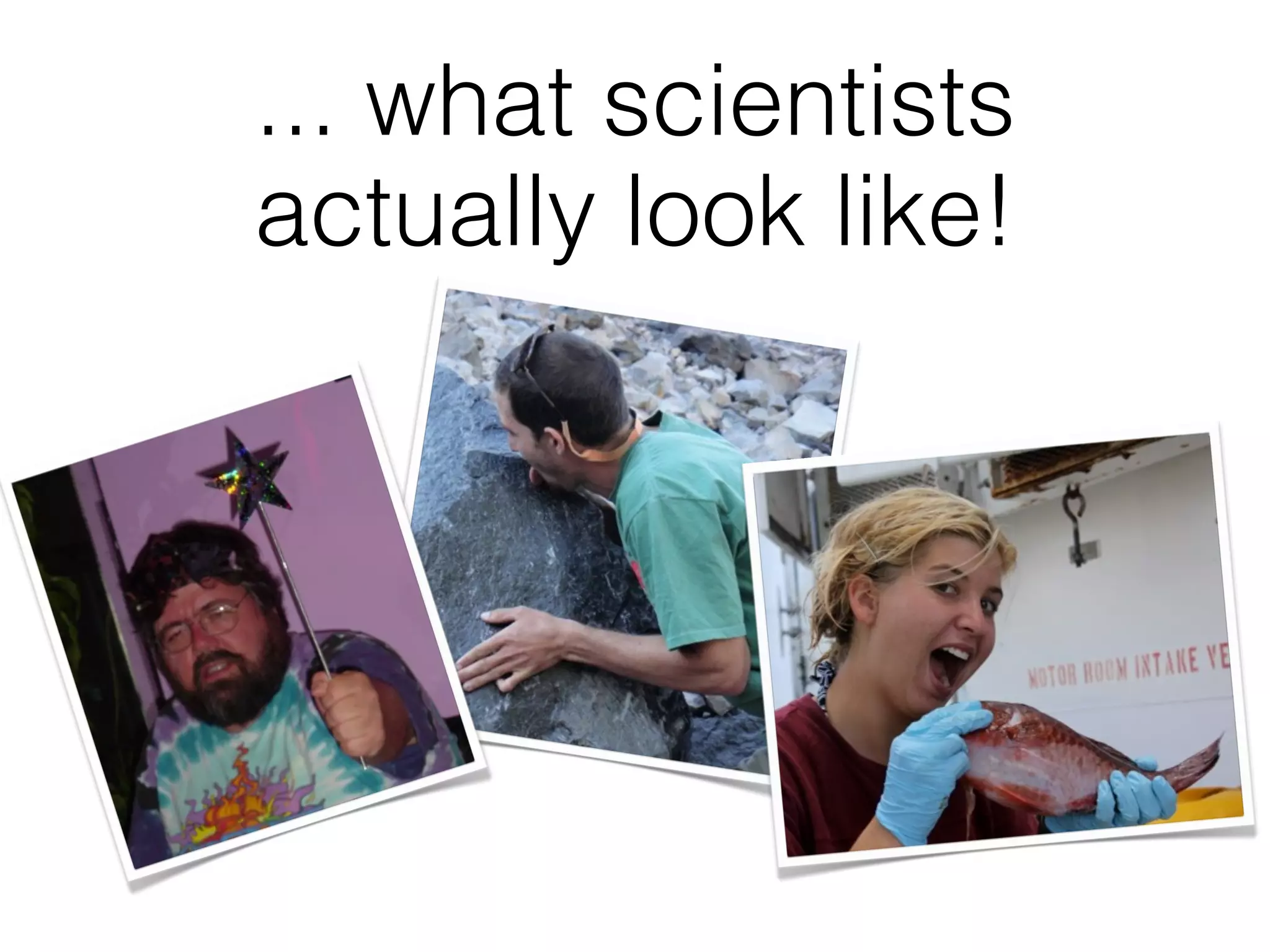
What the public thinks
 scientists look like...
... what scientists
actually look like!
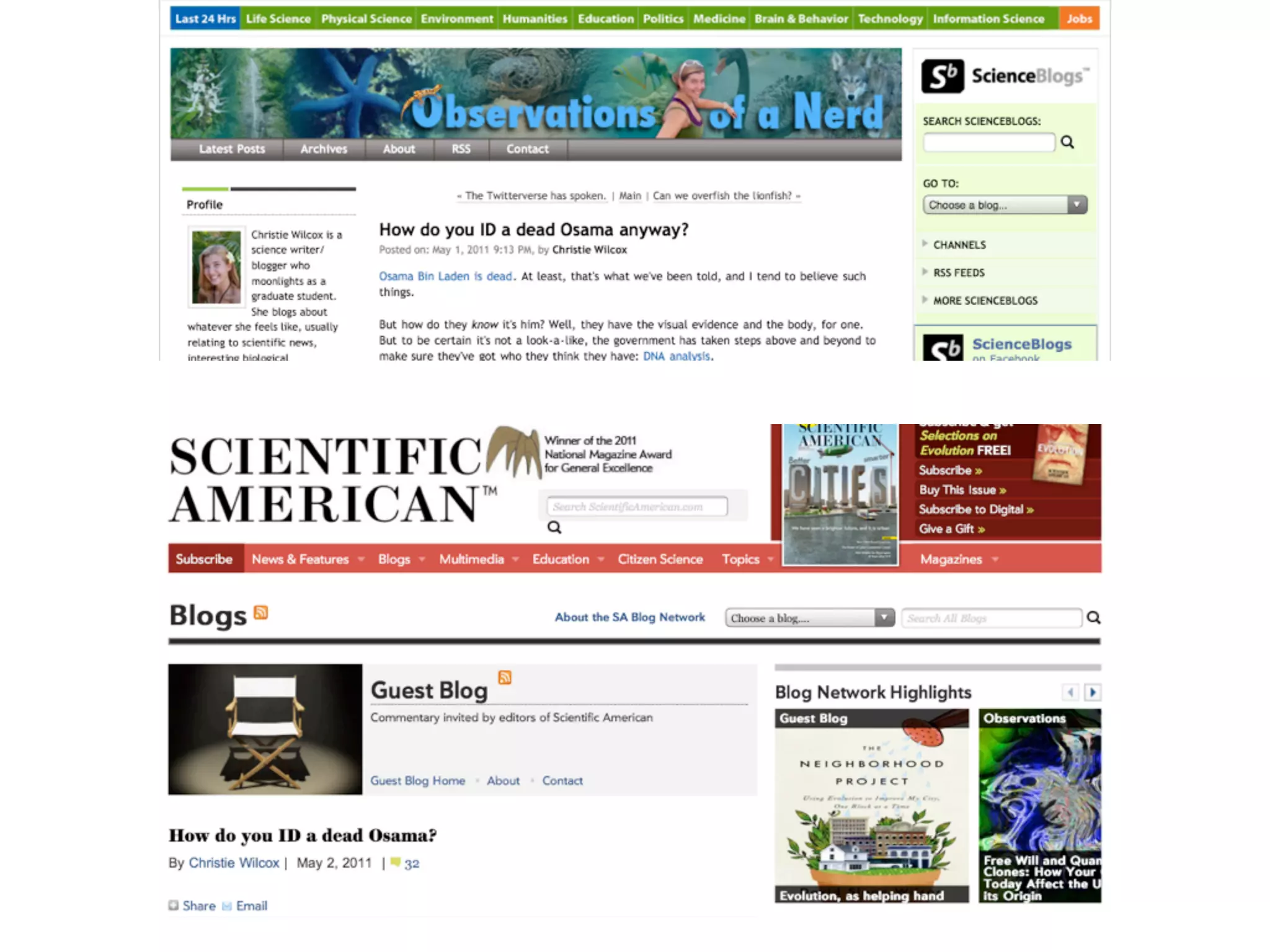
You want broader
    impacts?
You want broader
    impacts?
 I got yer broader
impacts right here.
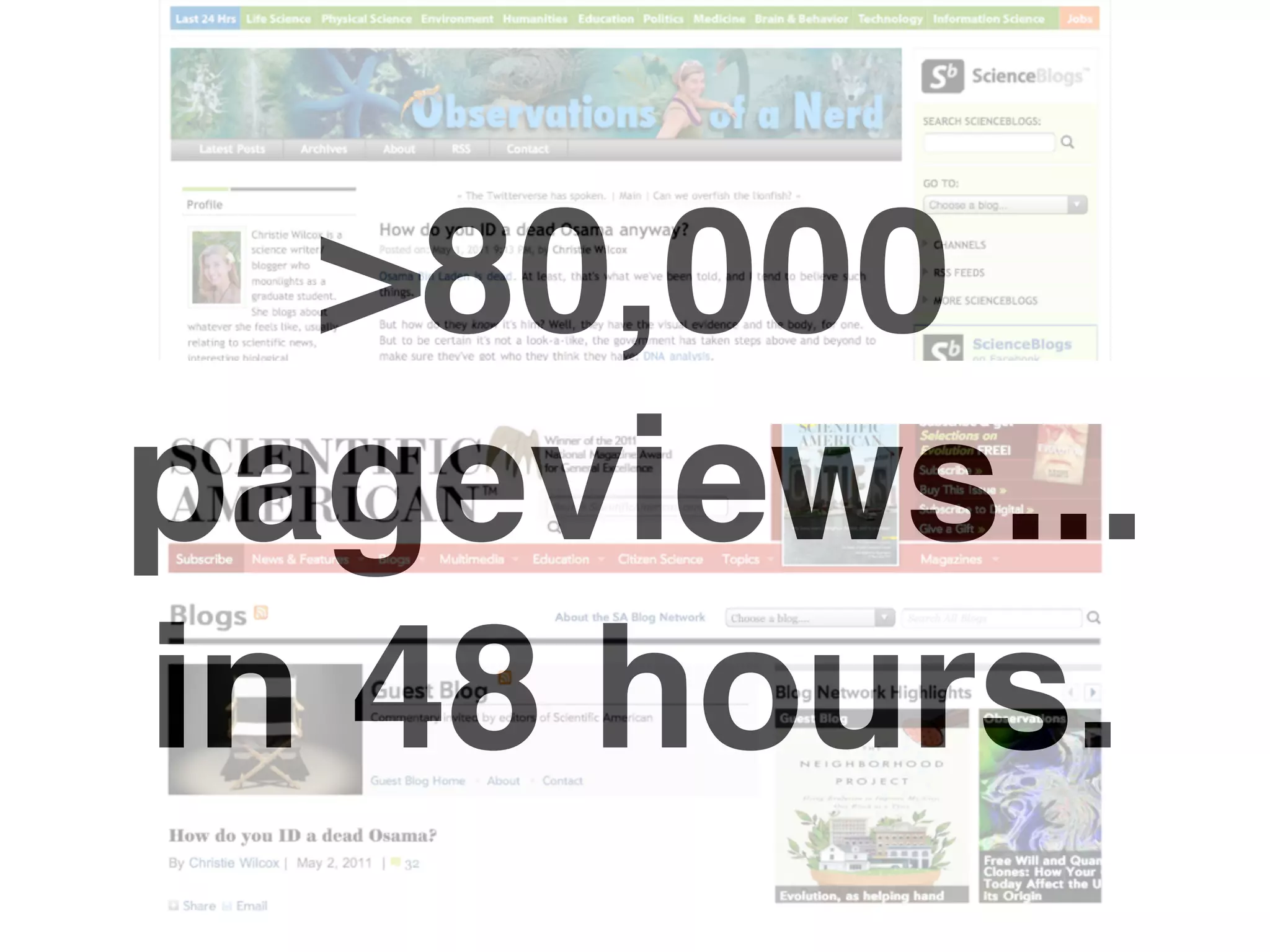
>80,000
pageviews.
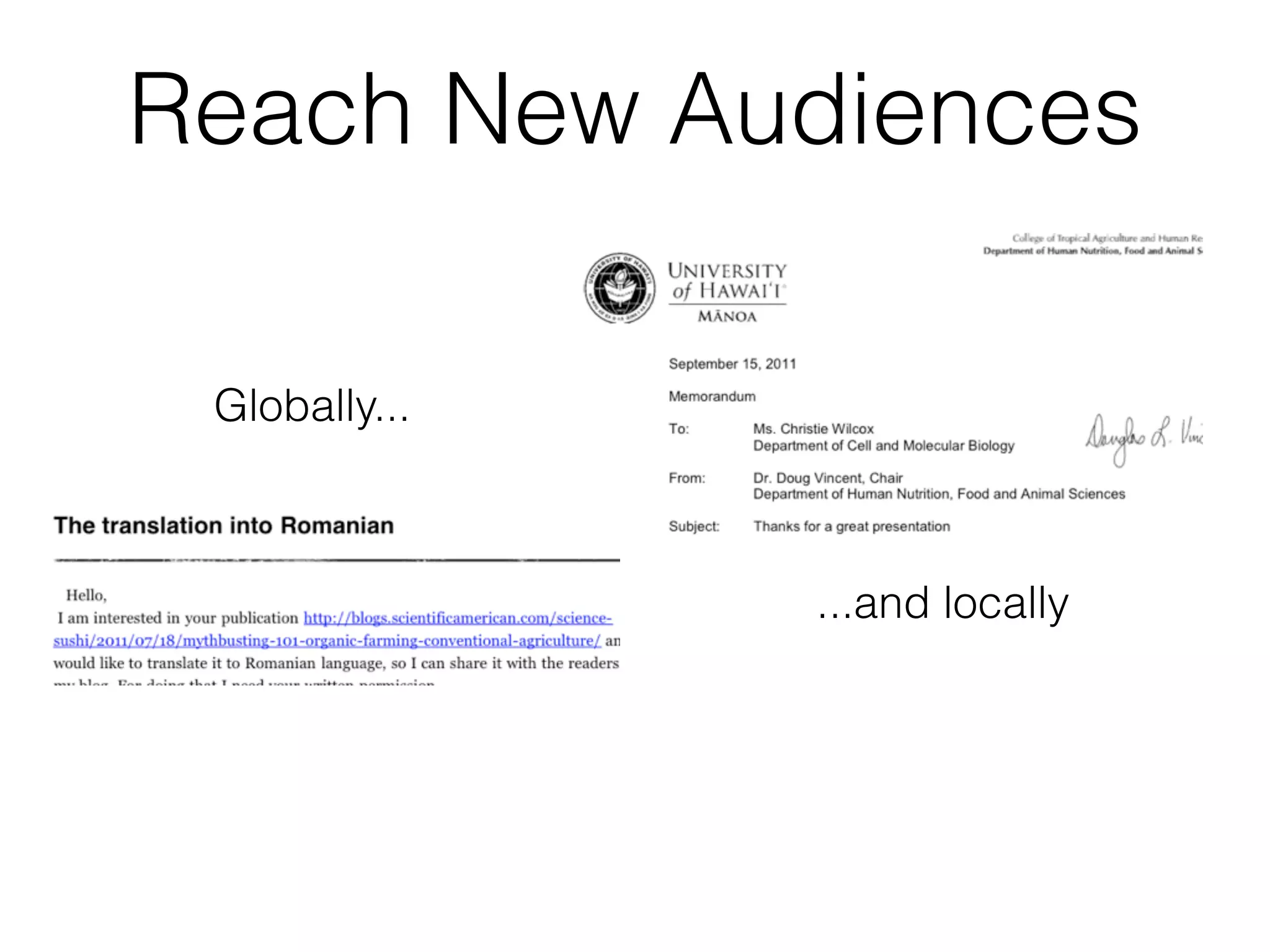
Reach New Audiences

 Globally...


               ...and locally
(you should practice your mad skillz, too)
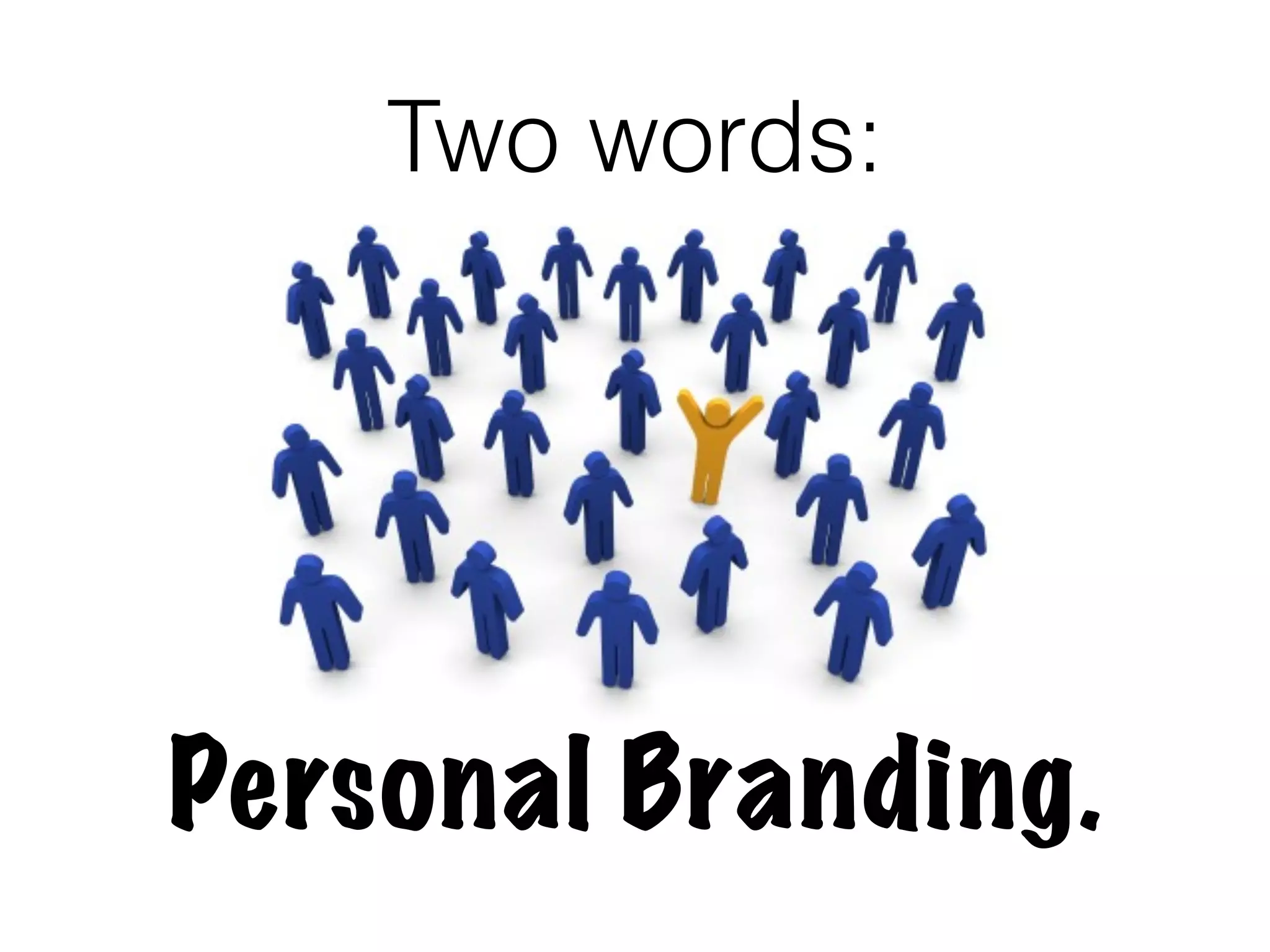
Two words:


Personal Branding.
“One of the things I hear most
 frequently about a new hire is how
disturbing it is that he doesn’t have a
 web presence. Something must be
            wrong, right?”

                      - Danah Boyd
  Assistant Professor, NYU; Visiting Researcher, Harvard Law
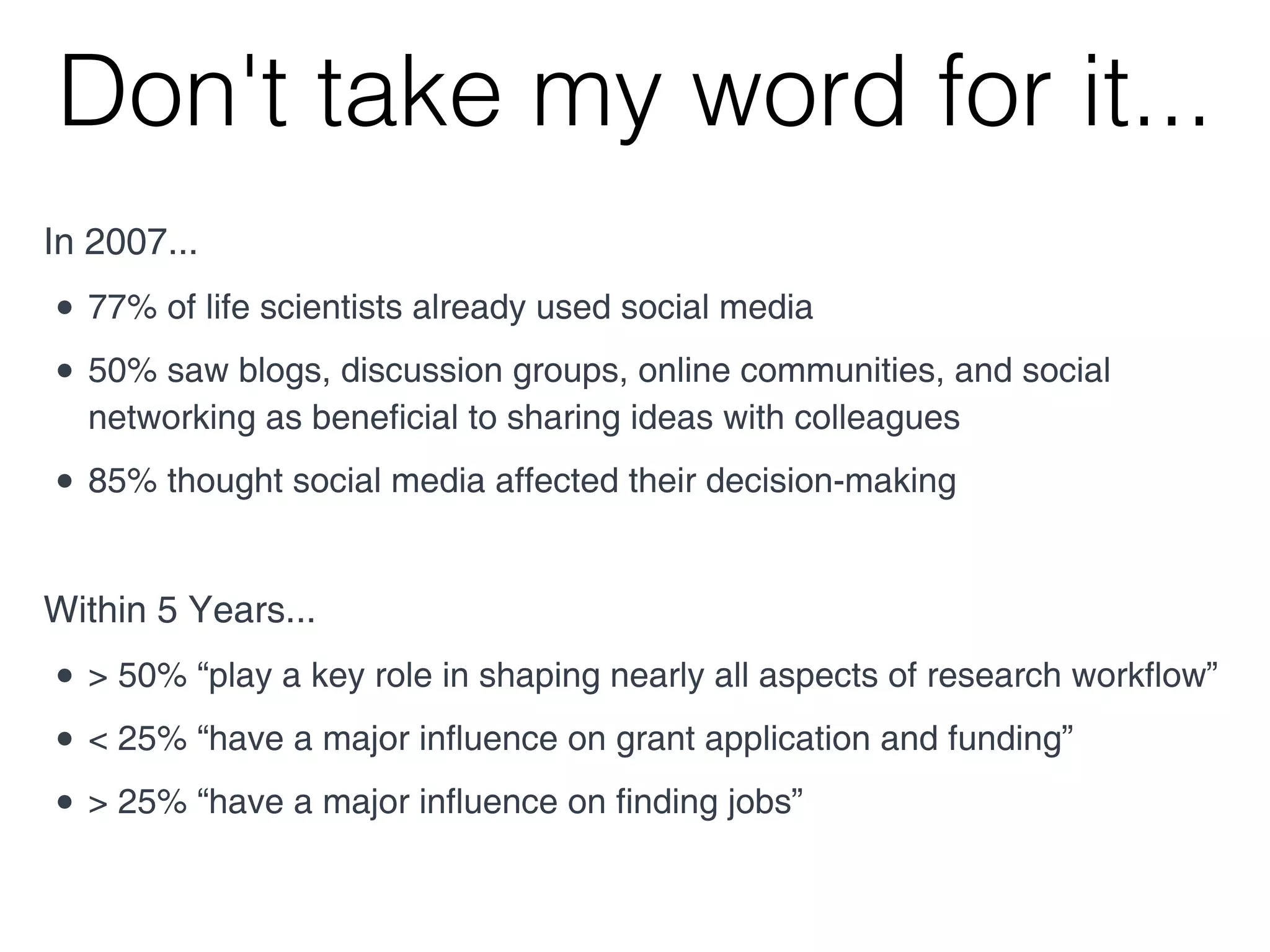
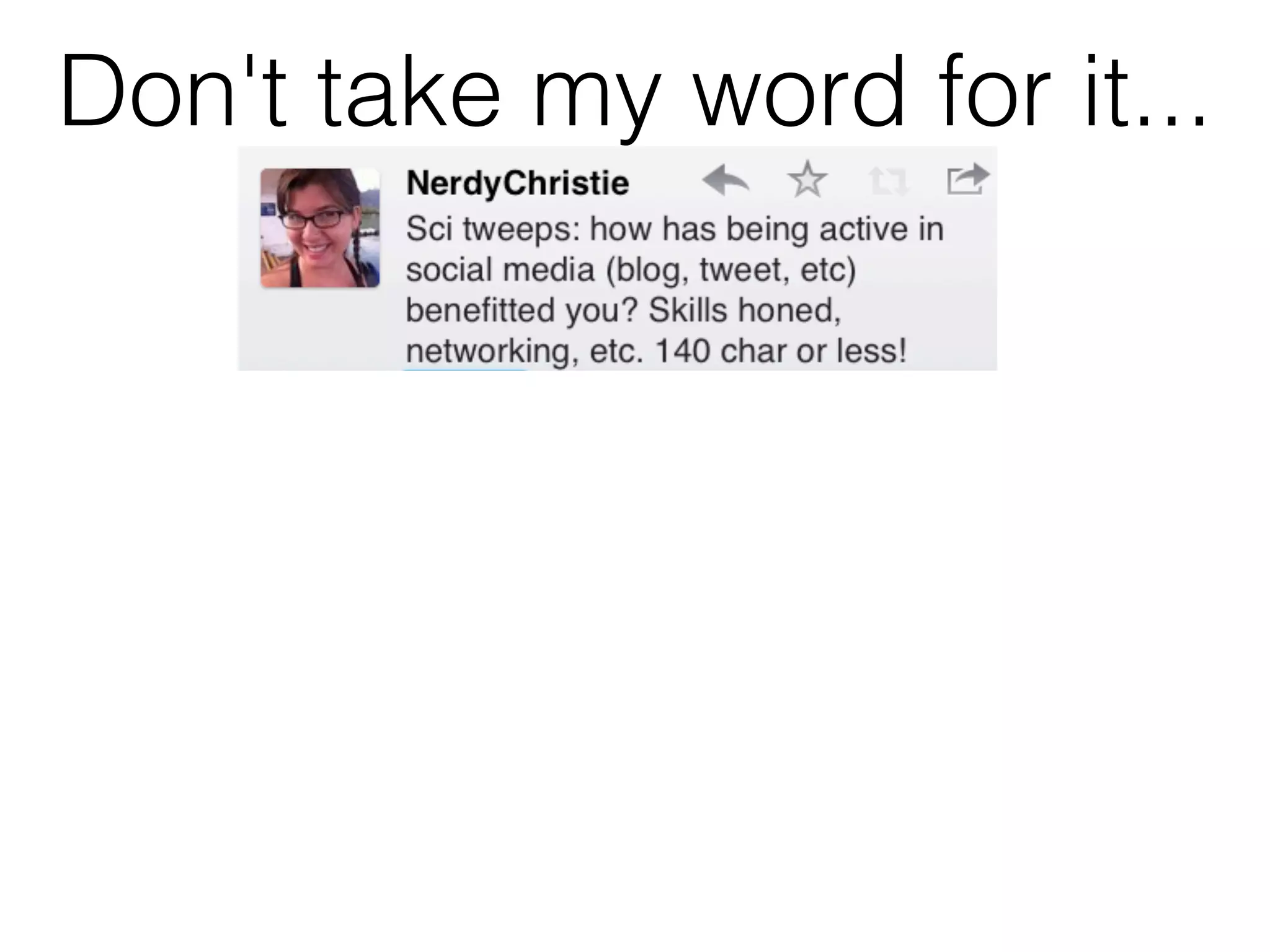
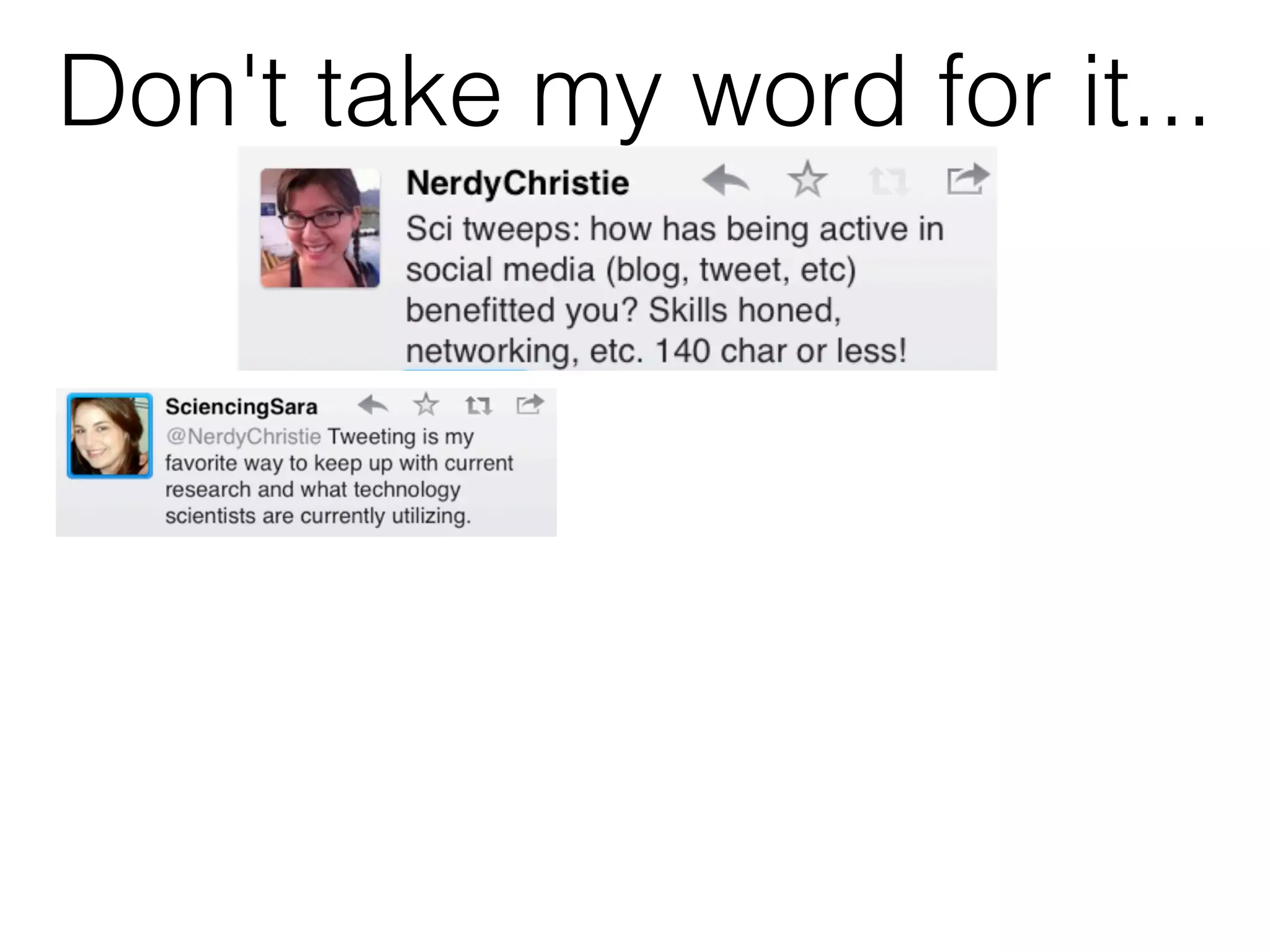
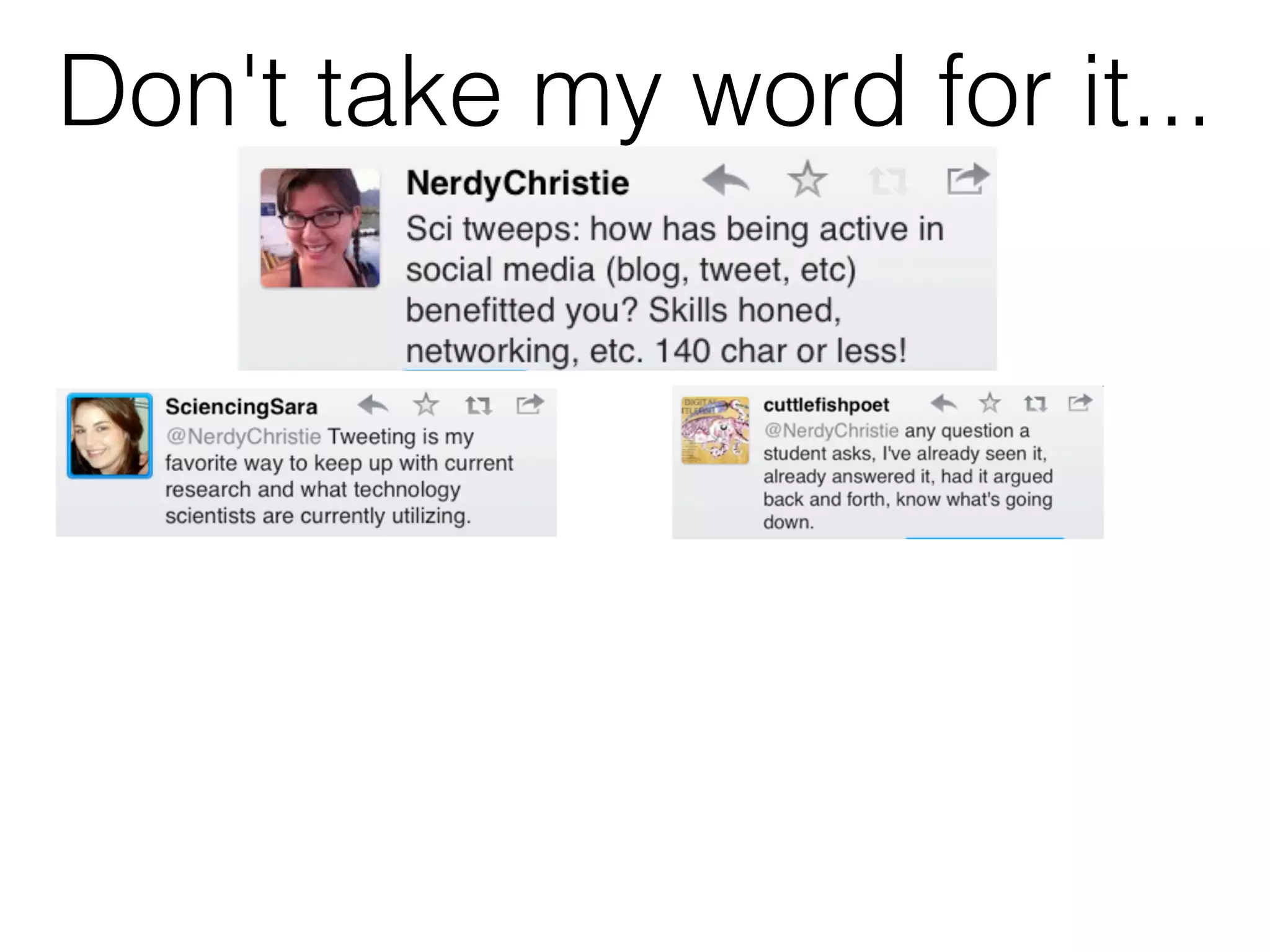
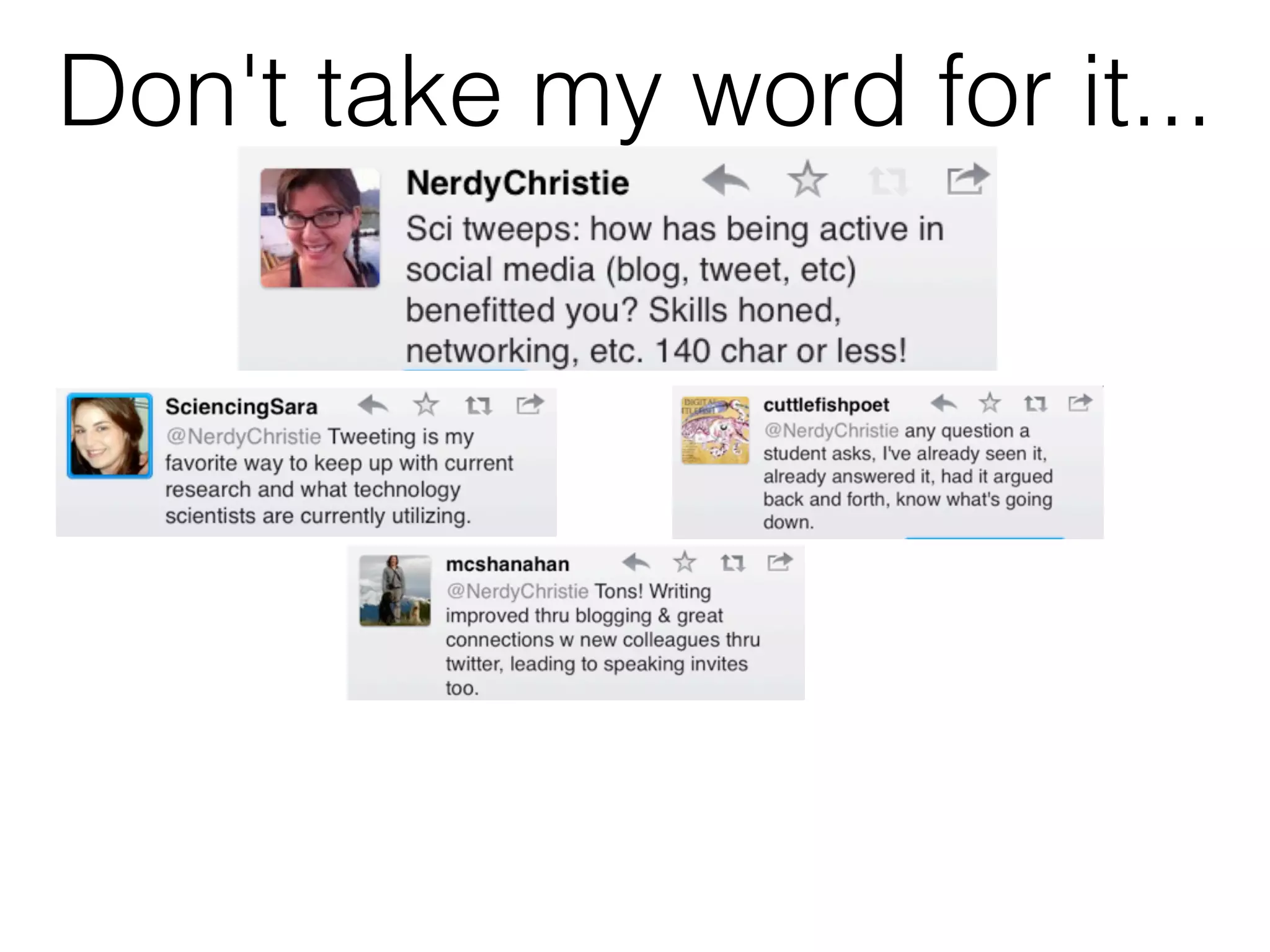
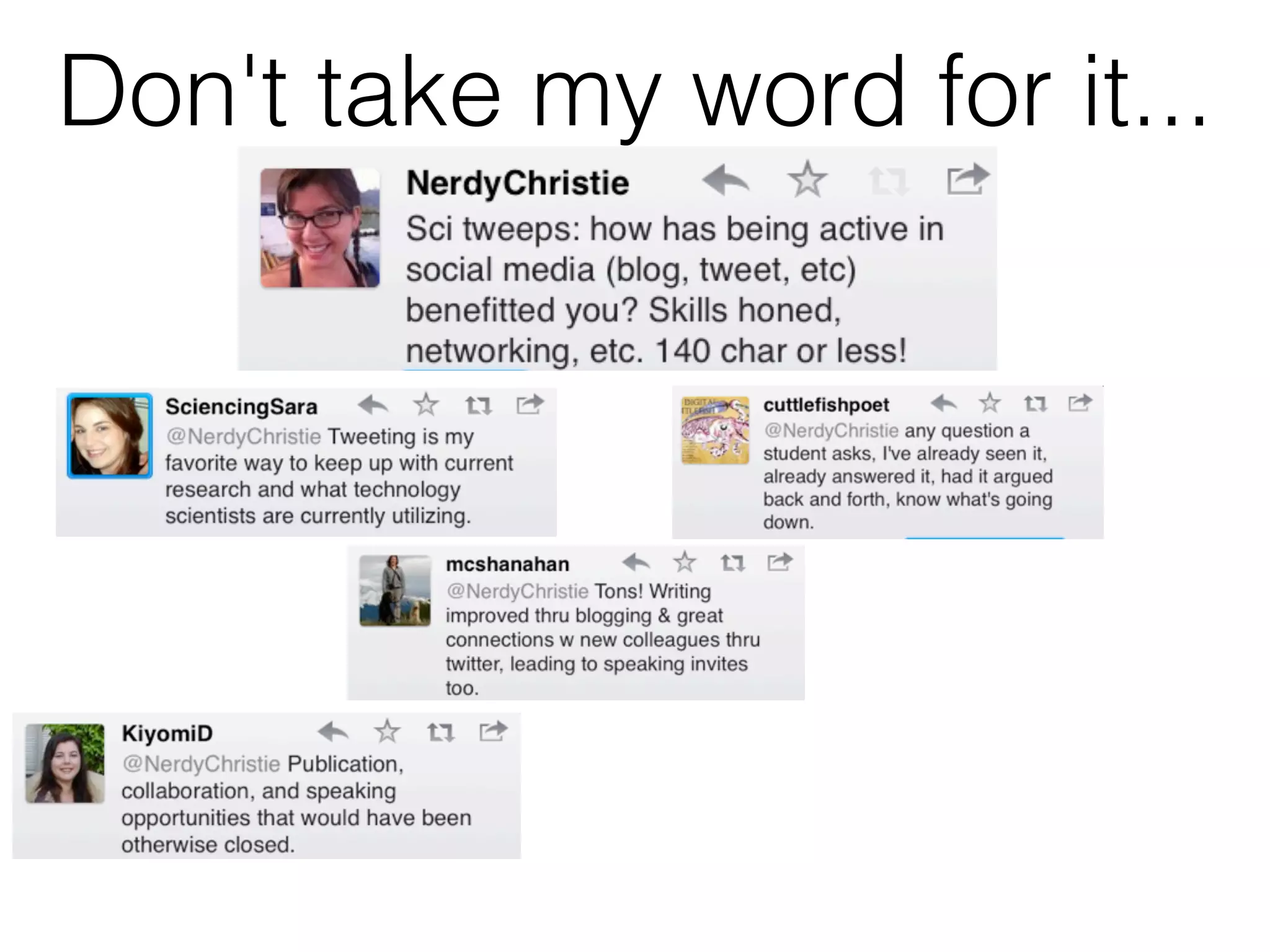
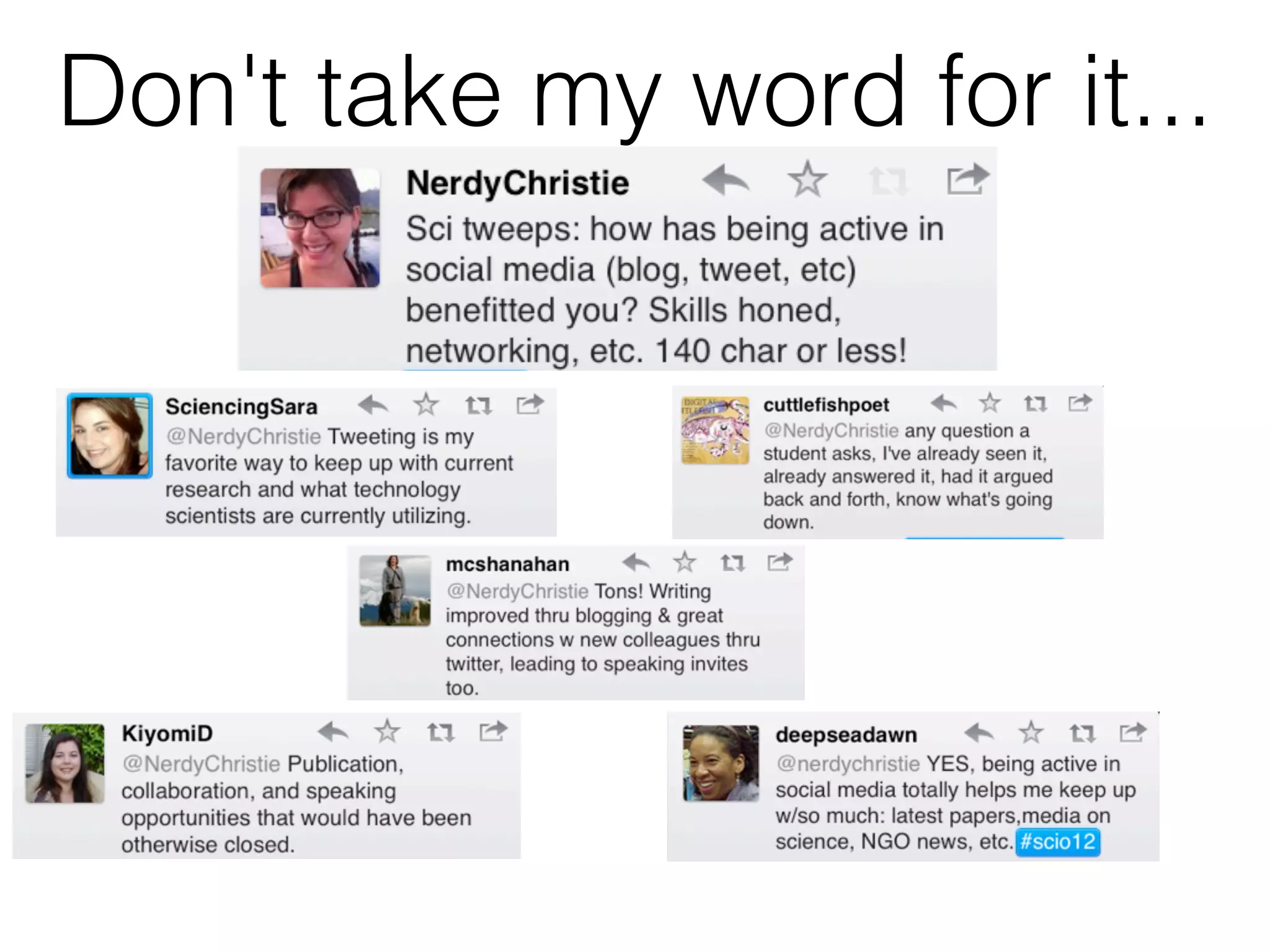
Don't take my word for it...
In 2007...
• 50% saw blogs, discussion groups, online communities, and social
  networking as beneficial to sharing ideas with colleagues
• 85% thought social media affected their decision-making

Within 5 Years...
• > 50% “play a key role in shaping nearly all aspects of research workflow”
• < 25% “have a major influence on grant application and funding”
• > 25% “have a major influence on finding jobs”
Don't take my word for it...
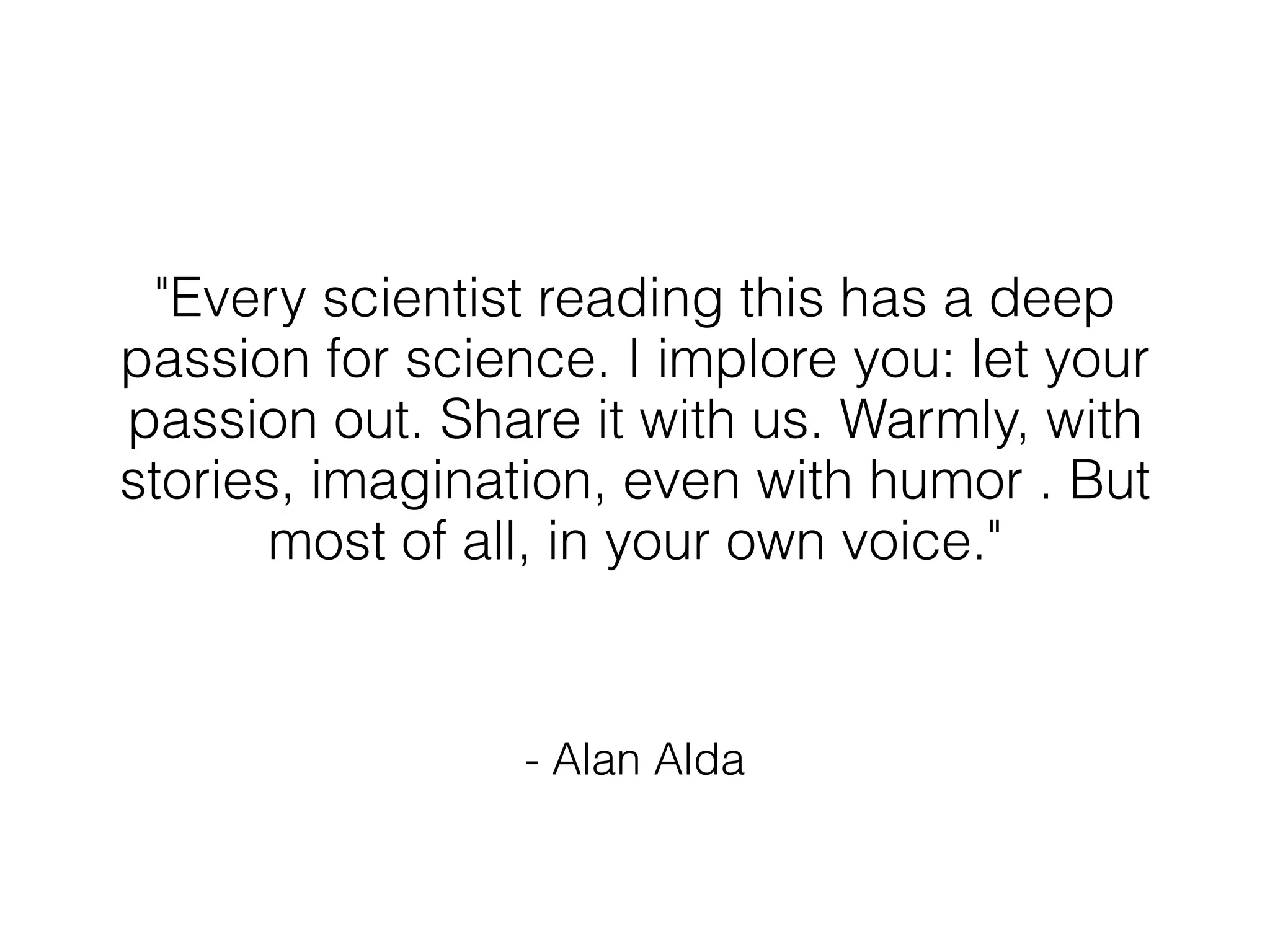
"Every scientist reading this has a deep
passion for science. I implore you: let your
passion out. Share it with us. Warmly, with
stories, imagination, even with humor . But
       most of all, in your own voice."


                 - Alan Alda

Science and the Public: Why Every Lab Should Tweet

  • 1.
    Science and thePublic Why Every Lab Should Tweet
  • 2.
    “…if scientists couldcommunicate more in their own voices—in a familiar tone, with a less specialized vocabulary—would a wide range of people understand them better? Would their work be better understood by the general public, policy-makers, funders, and, even in some cases, other scientists?” - Alan Alda
  • 3.
  • 4.
    28% ... the percentageof Americans which pass a basic science literacy test.
  • 5.
  • 6.
    "The scientific communityneeds to understand what ethical practitioners of public relations have long known: trust is not about information; it’s about dialogue and transparency" - Rick E. Borchelt, Lynne T . Friedmann, & Earle Holland Managing the Trust Portfolio: Science Public Relations and Social Responsibility
  • 8.
  • 10.
  • 14.
    Can you namea living scientist?
  • 16.
    Albert Marie Curie? Einstien?
  • 18.
  • 19.
    57% of Americanssay they talk to people online more than they do in real life.
  • 20.
    Where do youget most of your news about national and international issues? TV Newspaper Internet Radio 80% 60% 40% 20% 0% 2001 2005 2010 PEW Research Center, Dec 2010
  • 21.
    Where do youget most of your news about national and international issues? TV Newspaper Internet Radio 80% 60% 40% 20% 0% 2001 2005 2010 PEW Research Center, Dec 2010
  • 22.
    Where do youget information on specific scientific issues? Don’t know 2% Family/Friends/Colleagues 2% Radio 1% Internet 54% The Internet is the main Newspapers & Magazines 10% source of information for learning about specific Books 7% scientific issues such as global climate change or biotechnology TV 21% University of Chicago, National Opinion Research Center, General Social Survey (2008)
  • 23.
    "Younger generations aren’tgoing to look for your company or society in print—they’re going to go directly to your Web site and then maybe your Facebook page, and, if interested, they will follow you on Twitter. If you’re not there, neither will they be—and you’ve lost them at a critical point of contact." - Kea Giles Managing Editor at the Geological Society of America
  • 25.
    18-29 yrs 30-49 yrs 50-64 yrs 65+ yrs 90 % that use Social Media 67.5 45 22.5 0 2005 2008 2009 2010
  • 27.
    Don't think youneed to be on Facebook?
  • 28.
    Don't think youneed to be on Facebook? 72% of internet users are.
  • 29.
    Don't think youneed to be on Facebook? 72% 48% of internet use it as their users are. primary news source
  • 30.
    Don't think youneed to be on Facebook? 72% 48% 3 million links of internet use it as their shared every users are. primary news source hour
  • 34.
    "The qualities thatmake Twitter seem inane and half- baked are what makes it so powerful." Jonathan Zittrain Harvard University Law professor and Faculty Co-Director, Berkman Center for Internet and Society
  • 35.
    Don't think youneed 20 to be on Twitter? 0 Tweets per day, in millions 0 15 0 50 10 0 2007 2008 2009 2010 2011
  • 36.
    "The essentials ofwhat twitter does is an integral part of the news system of the future." David Winer Harvard University Research Fellow and former Wired Magazine Editor
  • 39.
    Don't think youneed to be on Google+?
  • 47.
    "Savvy scientists mustincreasingly engage with blogs and social media... Even if you choose not to blog, you can certainly expect your papers and ideas will increasingly be blogged about. So there it is—blog or be blogged." - Paul Knoepfler, UC Davis, in a comment in NatureNews
  • 59.
  • 60.
    >12,000 pageviews... ina week. ...papers with media exposure receive 28% more citations
  • 61.
  • 62.
    Why am Italking to you?
  • 63.
    Why am Italking to you? You're the best choice for the job
  • 64.
    "The in depthknowledge of their system and details of field observations, experiments, conversations with colleagues and an extraordinary breadth of literature gives the scientist a pool of knowledge to draw from that often is unmatched by most science communicators." - Kevin Zelnio, blogger for Scientific American
  • 65.
    "Right now, thisis an anti-intellectual country in which the media and politics constantly bombard us with the message that science is uncool, the domain of geeks and nerds." - PZ Myers, Associate Professor at University of Minnesota, Morris
  • 66.
    What the publicthinks scientists look like...
  • 67.
  • 68.
  • 69.
    You want broader impacts? I got yer broader impacts right here.
  • 71.
  • 74.
    Reach New Audiences Globally... ...and locally
  • 76.
    (you should practiceyour mad skillz, too)
  • 78.
  • 79.
    “One of thethings I hear most frequently about a new hire is how disturbing it is that he doesn’t have a web presence. Something must be wrong, right?” - Danah Boyd Assistant Professor, NYU; Visiting Researcher, Harvard Law
  • 85.
    Don't take myword for it... In 2007... • 50% saw blogs, discussion groups, online communities, and social networking as beneficial to sharing ideas with colleagues • 85% thought social media affected their decision-making Within 5 Years... • > 50% “play a key role in shaping nearly all aspects of research workflow” • < 25% “have a major influence on grant application and funding” • > 25% “have a major influence on finding jobs”
  • 86.
    Don't take myword for it...
  • 87.
    Don't take myword for it...
  • 88.
    Don't take myword for it...
  • 89.
    Don't take myword for it...
  • 90.
    Don't take myword for it...
  • 91.
    Don't take myword for it...
  • 92.
    Don't take myword for it...
  • 93.
    "Every scientist readingthis has a deep passion for science. I implore you: let your passion out. Share it with us. Warmly, with stories, imagination, even with humor . But most of all, in your own voice." - Alan Alda

Editor's Notes