SCIENCE 6 – Q1 Week 5 (Lesson 9)
Separating
Mixtures
Through
Sieving
What’s In
Identify whether the
technique of separation of
mixtures is Filtration,
Evaporation, or Decantation
1. salt and water
2. flour and water
3. sugar in maple syrup
4. tea from boiled leaves
5. butter and water
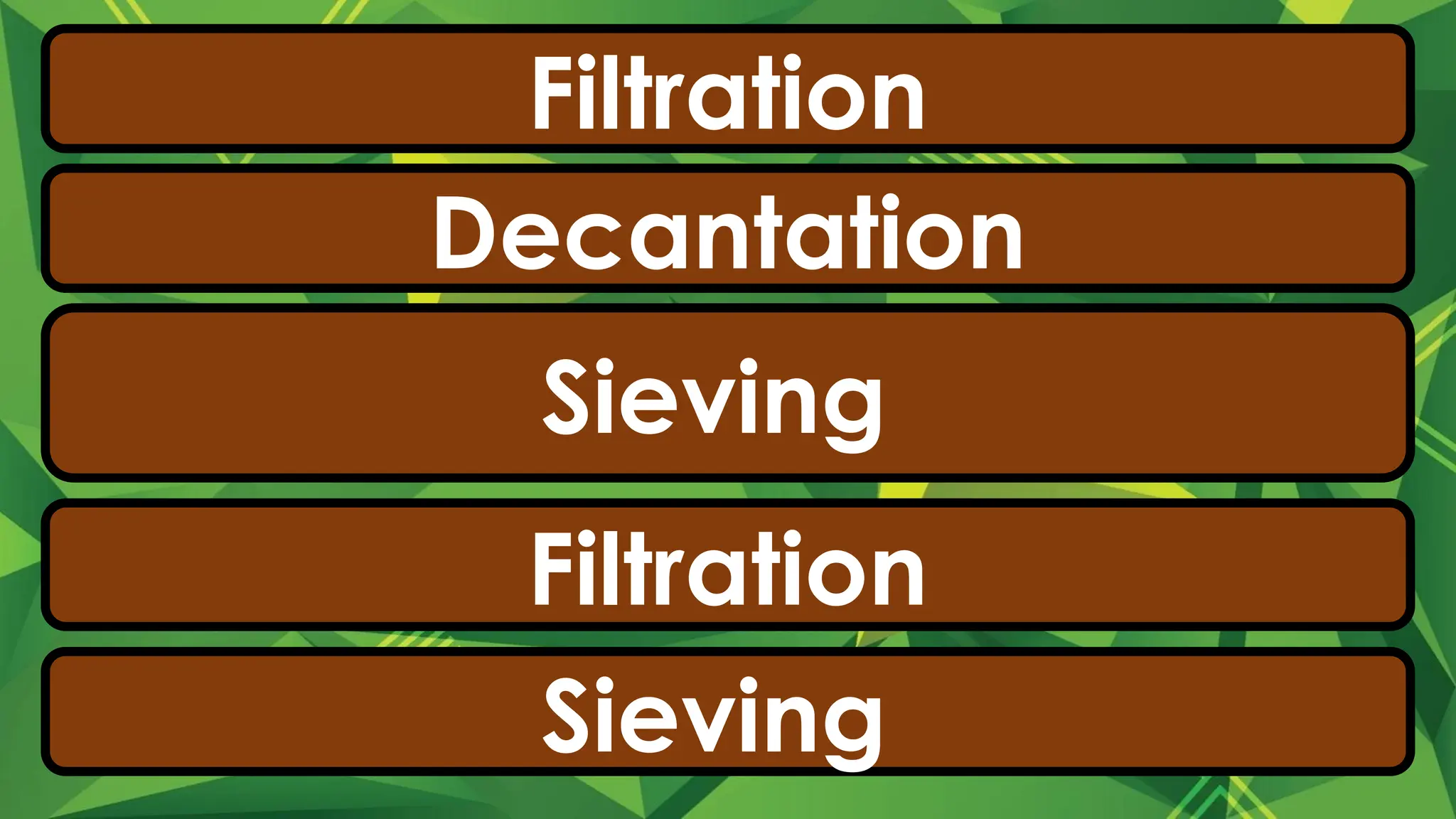
Evaporation
Decantation
Evaporation
Filtration
Decantation
6. brewed coffee
7. water and copper sulfate
8. sugar in maple syrup
9. tamarind extract
10. cooked noodles
Filtration
Evaporation
Evaporation
Filtration
Filtration
What is It
Most of the things that we encounter in our day-to-
day life happen to be a mixture of two or more
substances. We need to separate these substances
from the mixture in order to use them
independently. For example, you must have
noticed that we do not use the flour directly for
cooking pancakes. We use sieving technique in
order to separate the flour from the clumps.
SIEVING is a technique in separating
mixtures made up of differently sized
particles. In this process, the bigger
particles are separated from smaller or
finer particles or from coarse to fine
particles using a sieve or sifter which is
made up of fine wire mesh or net in which
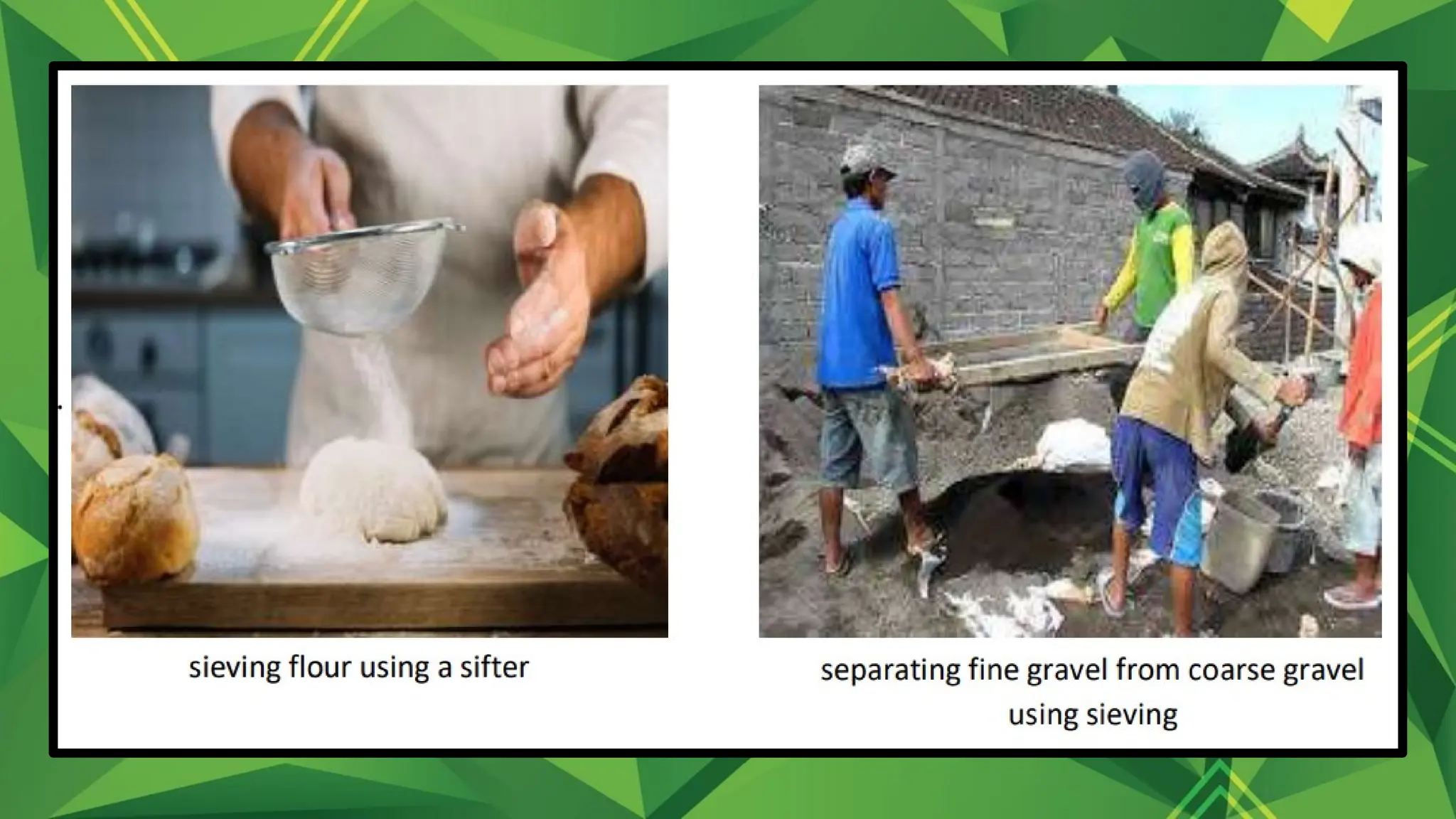
smaller particles can pass. The illustrations
below show the process of sieving.
Sieving can
be used on
the following
situations
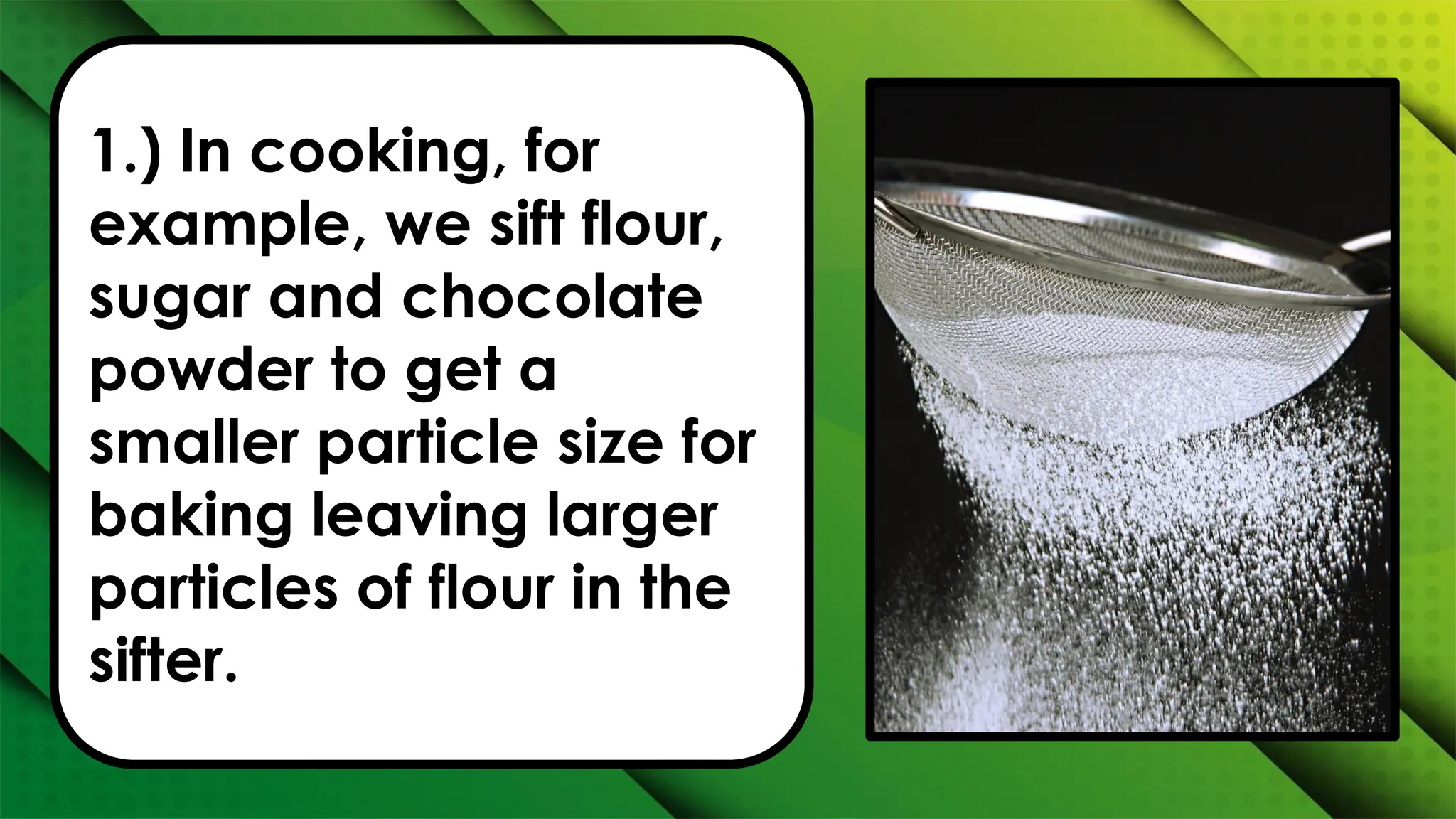
1.) In cooking, for
example, we sift flour,
sugar and chocolate
powder to get a
smaller particle size for
baking leaving larger
particles of flour in the
sifter.
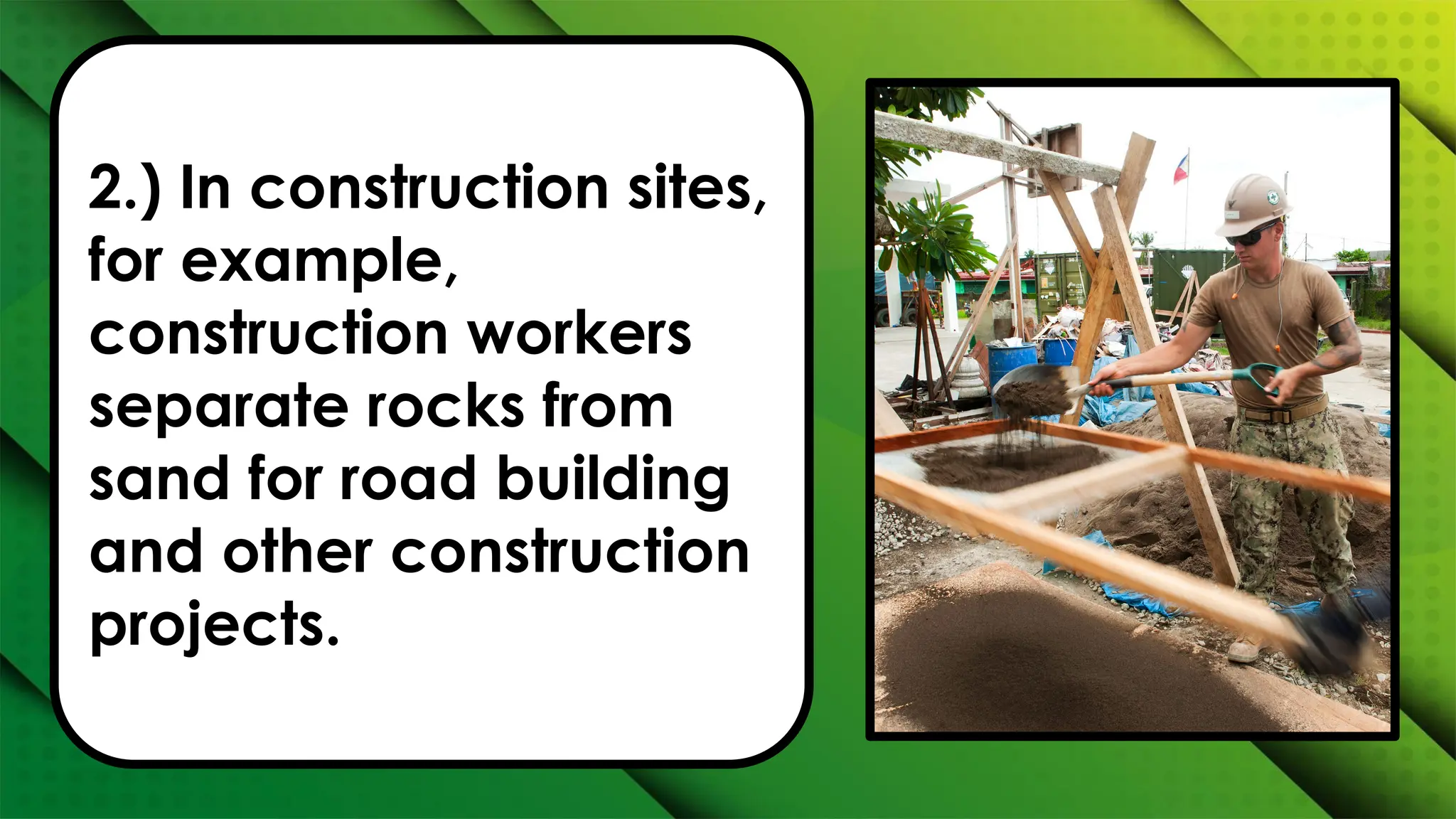
2.) In construction sites,
for example,
construction workers
separate rocks from
sand for road building
and other construction
projects.
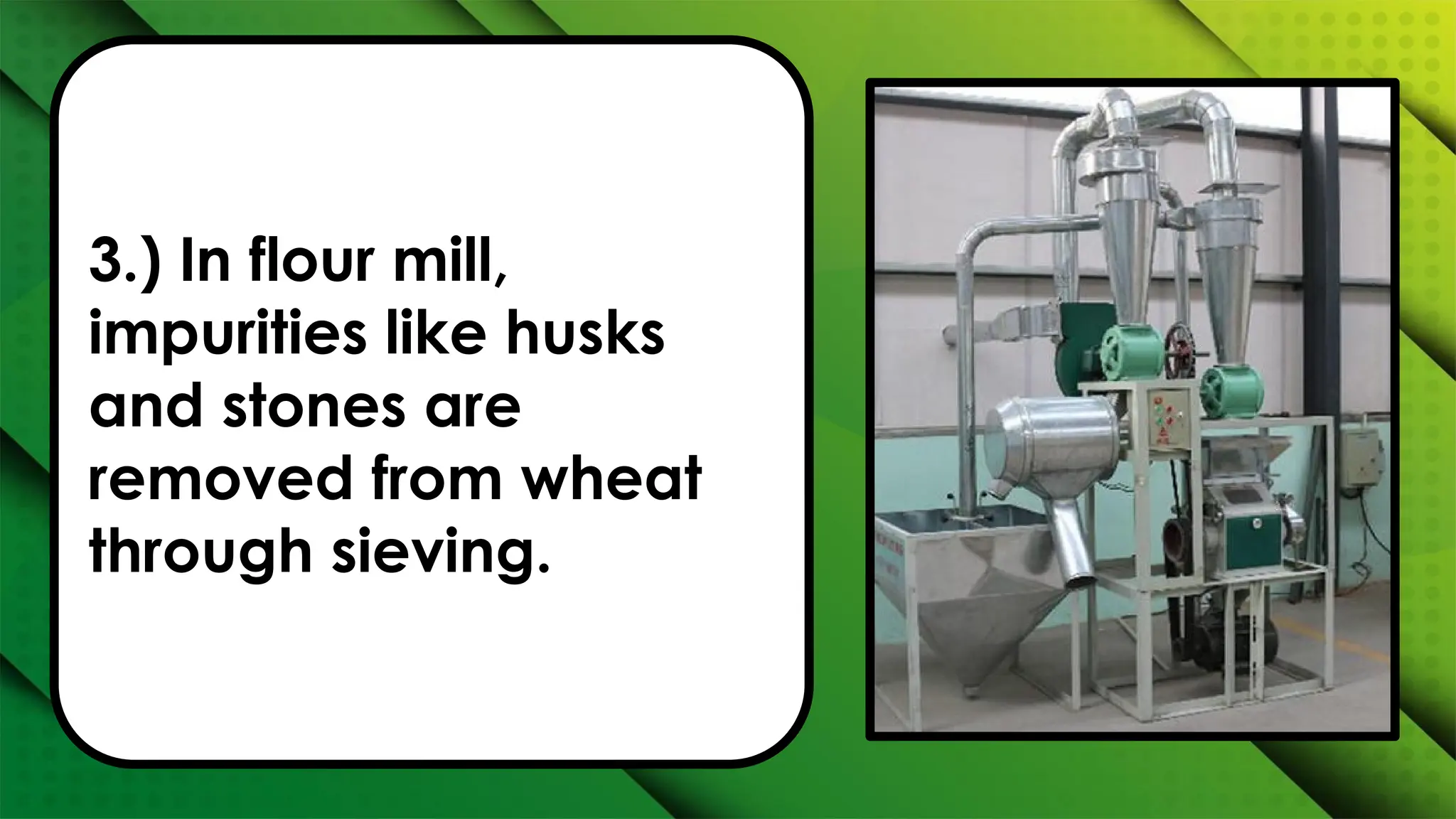
3.) In flour mill,
impurities like husks
and stones are
removed from wheat
through sieving.
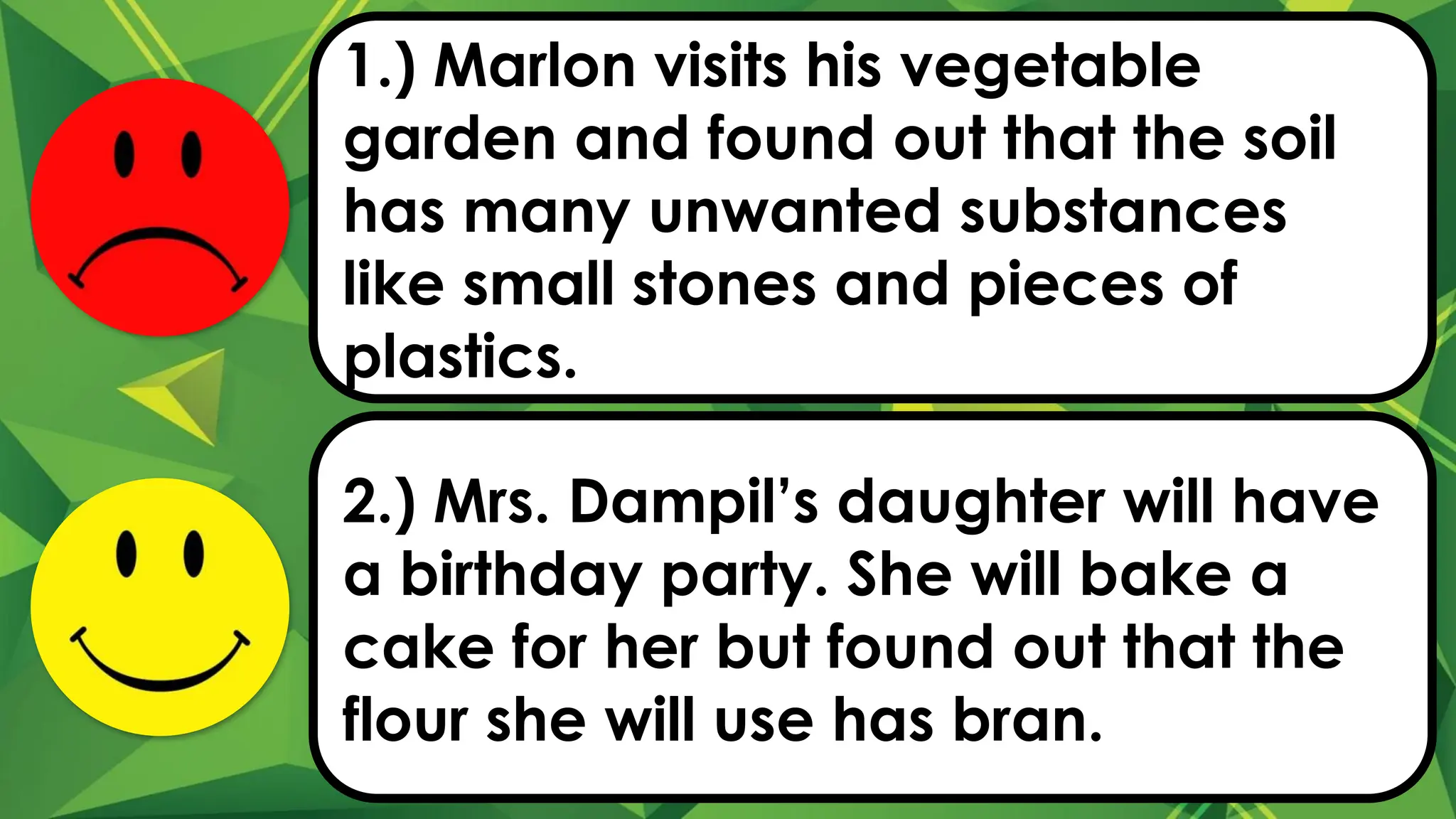
What’s More
Read each situation and
identify the way of separating
the mixture. Draw a happy
face 🙂 if they will use sieving
and a sad face 🙁 if not.
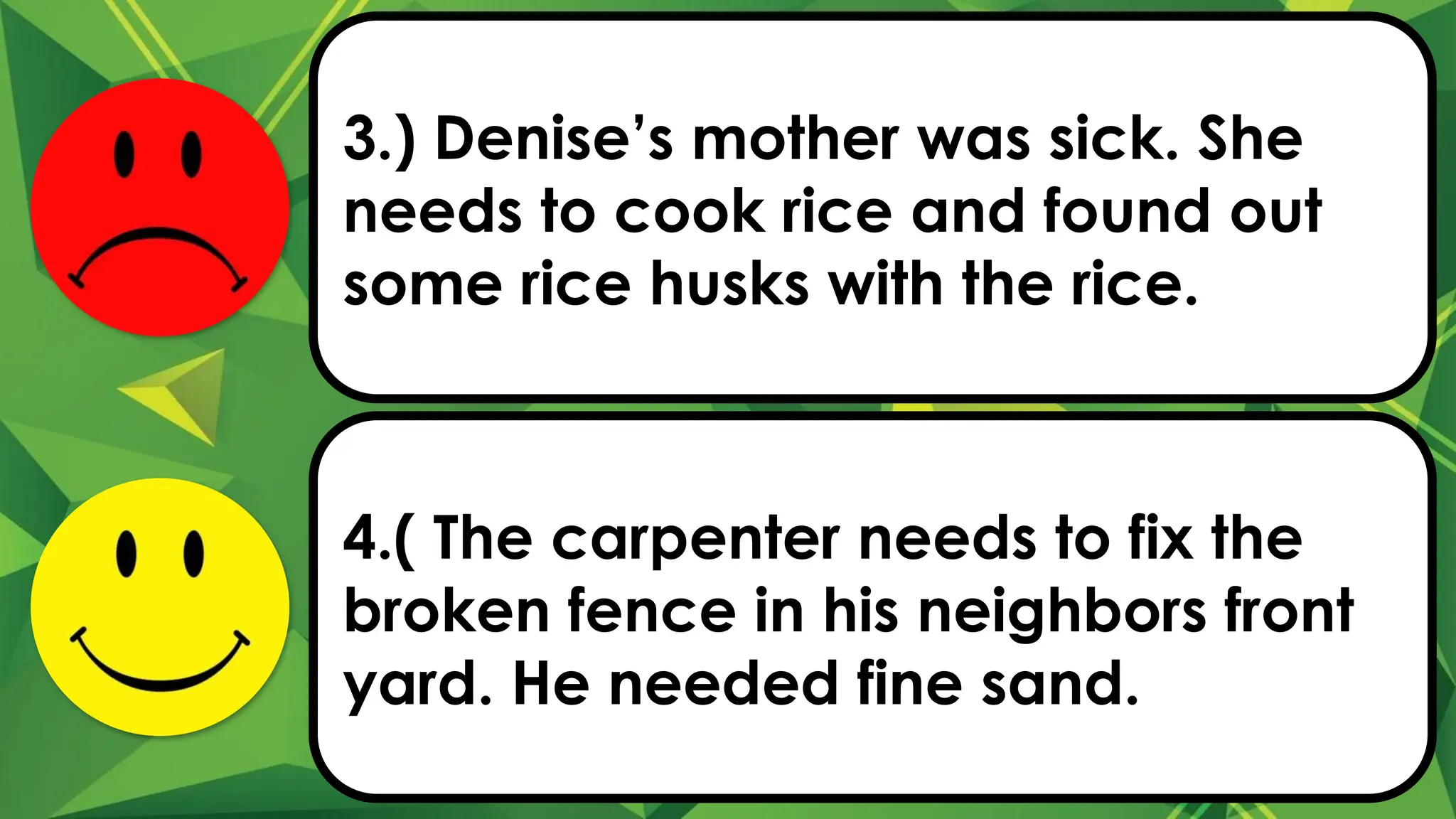
1.) Marlon visits his vegetable
garden and found out that the soil
has many unwanted substances
like small stones and pieces of
plastics.
2.) Mrs. Dampil’s daughter will have
a birthday party. She will bake a
cake for her but found out that the
flour she will use has bran.
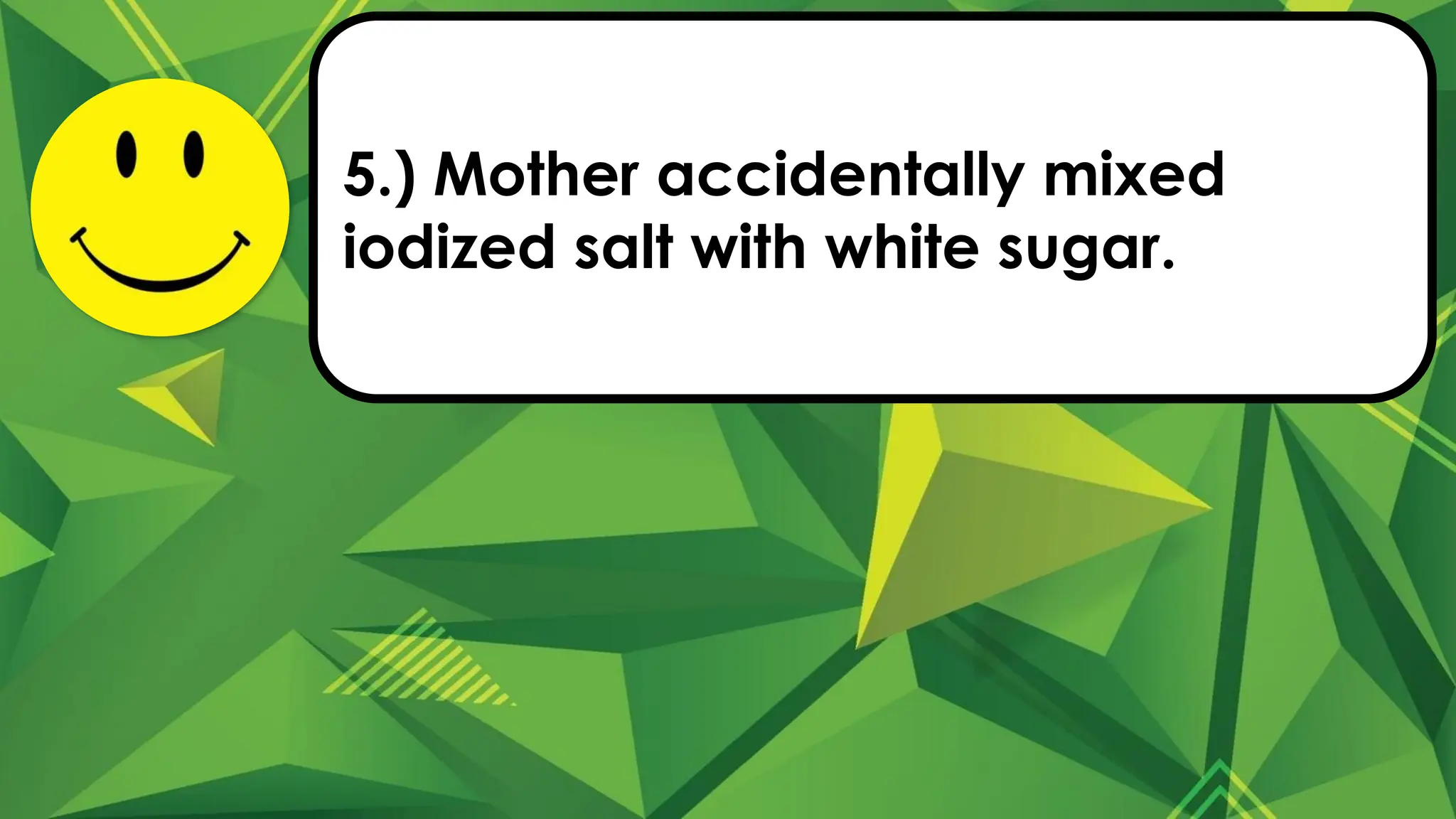
3.) Denise’s mother was sick. She
needs to cook rice and found out
some rice husks with the rice.
4.( The carpenter needs to fix the
broken fence in his neighbors front
yard. He needed fine sand.
5.) Mother accidentally mixed
iodized salt with white sugar.
Assessment
Write the best techniques in
separating the following
mixture.
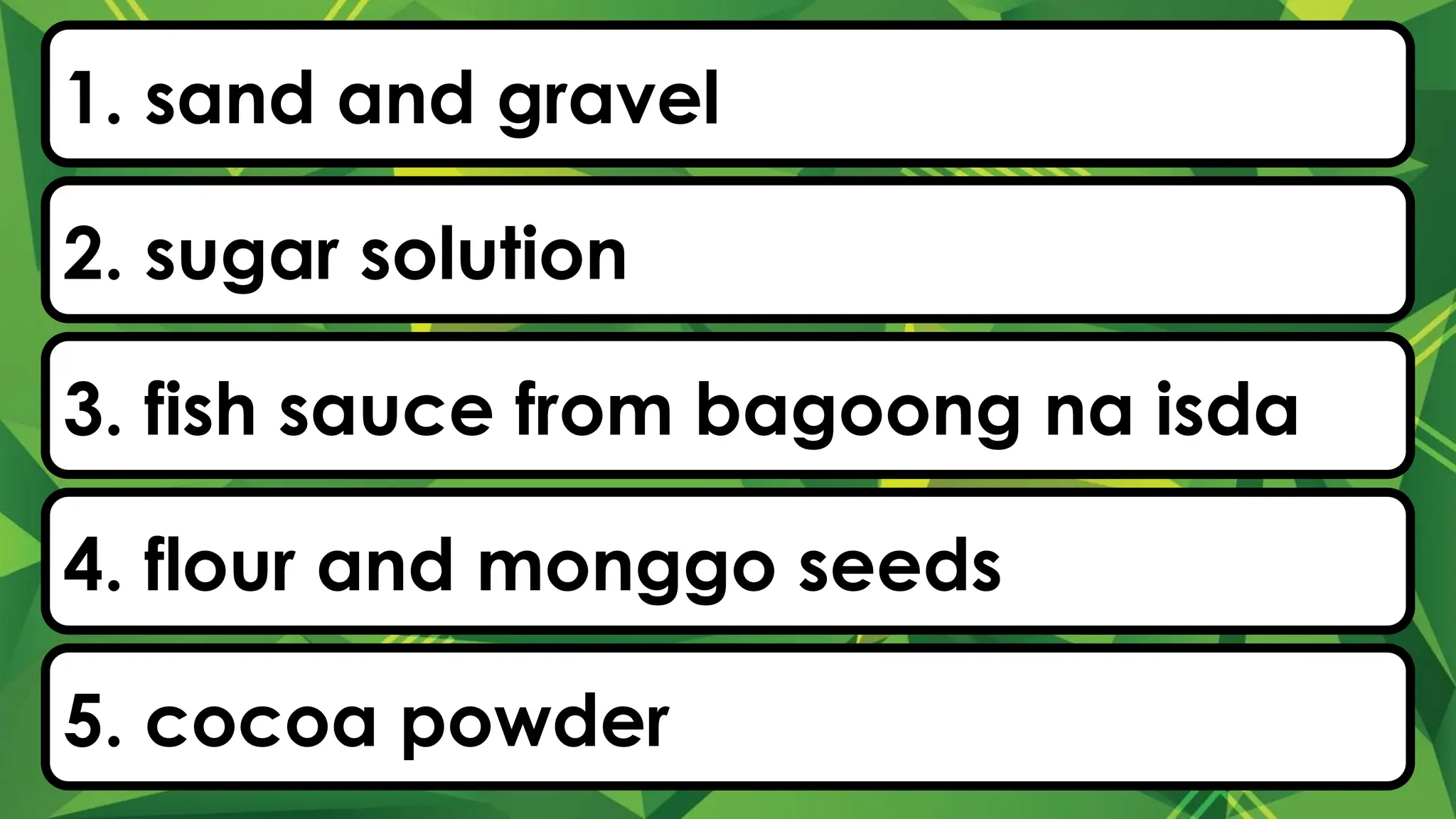
1. sand and gravel
2. sugar solution
3. fish sauce from bagoong na isda
4. flour and monggo seeds
5. cocoa powder
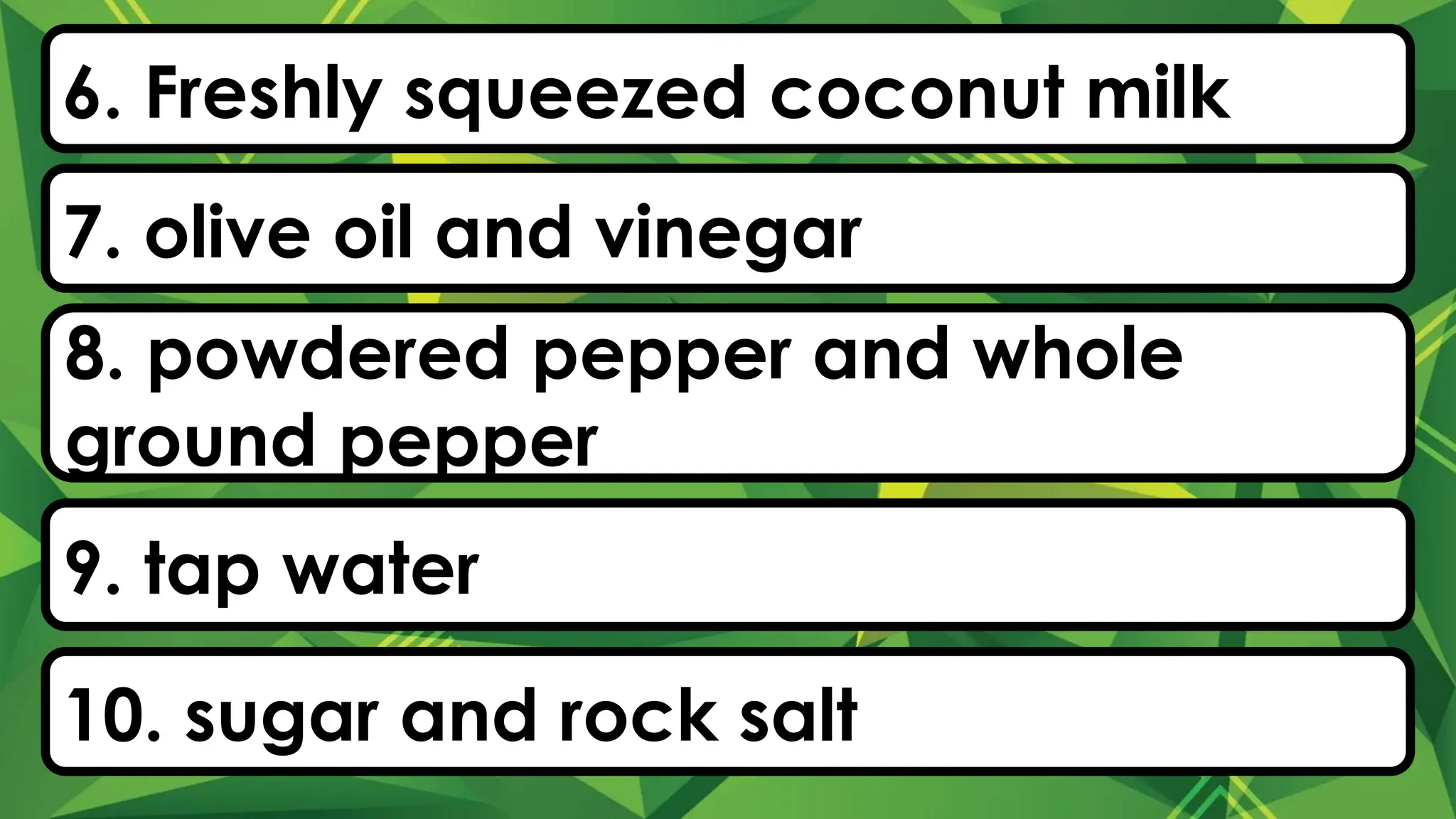
6. Freshly squeezed coconut milk
7. olive oil and vinegar
8. powdered pepper and whole
ground pepper
9. tap water
10. sugar and rock salt
Answers
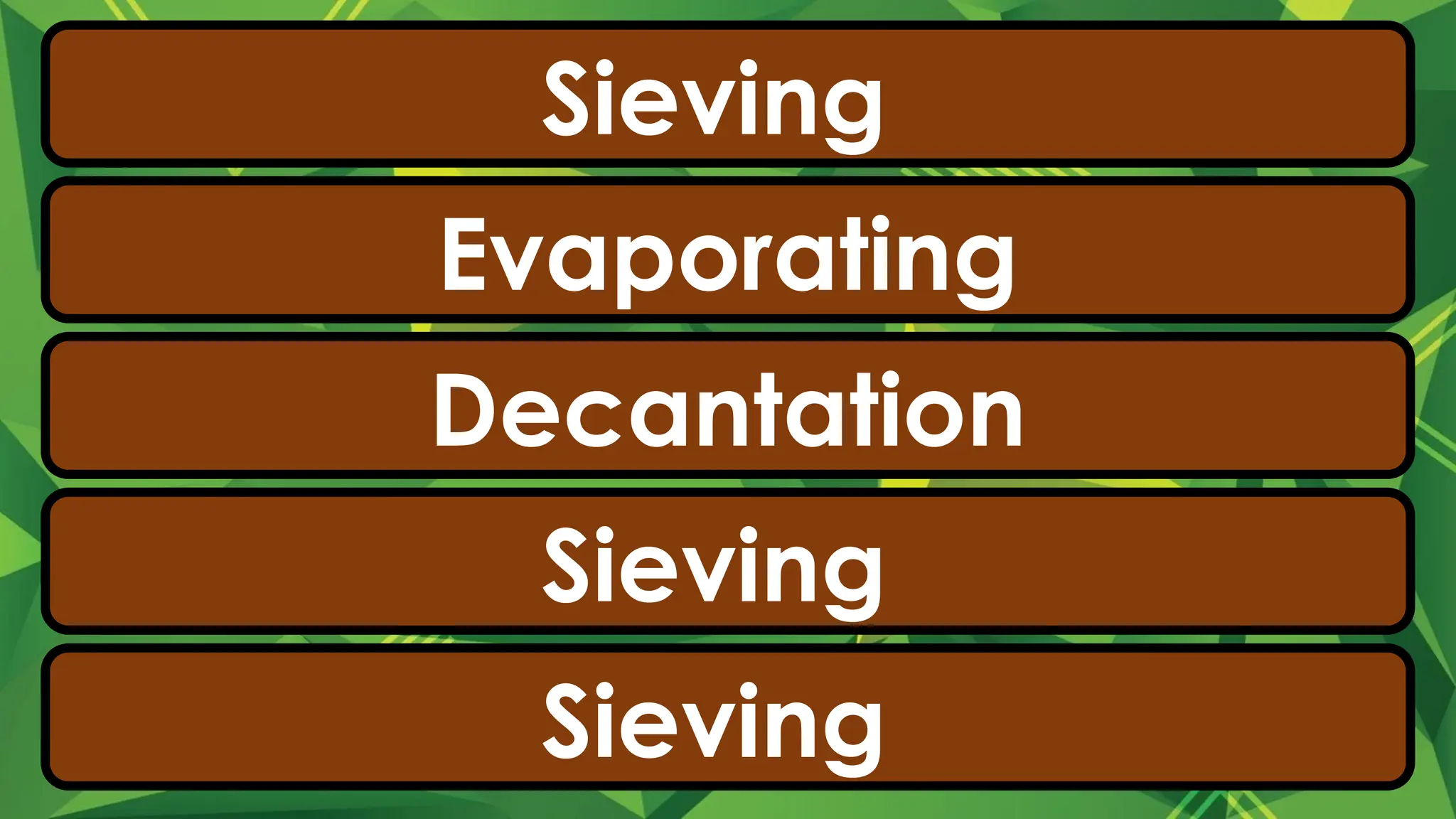
1. sand and gravel
2. sugar solution
3. fish sauce from bagoong na isda
4. flour and monggo seeds
5. cocoa powder
Sieving
Evaporating
Decantation
Sieving
Sieving
6. Freshly squeezed coconut milk
7. olive oil and vinegar
8. powdered pepper and whole
ground pepper
9. tap water
10. sugar and rock salt
Filtration
Decantation
Sieving
Filtration
Sieving
Additional
Activities
Have you ever observed a baker baking
a cake? Why does a baker sift the flour,
baking powder, baking soda and sugar
before using it in baking a cake? What do
you think will be the result of the cake if
they didn’t sift the flour?
Science 6 quarter 1 separating of mixture through sieving

  • 1.
    SCIENCE 6 –Q1 Week 5 (Lesson 9) Separating Mixtures Through Sieving
  • 2.
    What’s In Identify whetherthe technique of separation of mixtures is Filtration, Evaporation, or Decantation
  • 3.
    1. salt andwater 2. flour and water 3. sugar in maple syrup 4. tea from boiled leaves 5. butter and water Evaporation Decantation Evaporation Filtration Decantation
  • 4.
    6. brewed coffee 7.water and copper sulfate 8. sugar in maple syrup 9. tamarind extract 10. cooked noodles Filtration Evaporation Evaporation Filtration Filtration
  • 5.
    What is It Mostof the things that we encounter in our day-to- day life happen to be a mixture of two or more substances. We need to separate these substances from the mixture in order to use them independently. For example, you must have noticed that we do not use the flour directly for cooking pancakes. We use sieving technique in order to separate the flour from the clumps.
  • 6.
    SIEVING is atechnique in separating mixtures made up of differently sized particles. In this process, the bigger particles are separated from smaller or finer particles or from coarse to fine particles using a sieve or sifter which is made up of fine wire mesh or net in which smaller particles can pass. The illustrations below show the process of sieving.
  • 8.
    Sieving can be usedon the following situations
  • 9.
    1.) In cooking,for example, we sift flour, sugar and chocolate powder to get a smaller particle size for baking leaving larger particles of flour in the sifter.
  • 10.
    2.) In constructionsites, for example, construction workers separate rocks from sand for road building and other construction projects.
  • 11.
    3.) In flourmill, impurities like husks and stones are removed from wheat through sieving.
  • 12.
    What’s More Read eachsituation and identify the way of separating the mixture. Draw a happy face 🙂 if they will use sieving and a sad face 🙁 if not.
  • 13.
    1.) Marlon visitshis vegetable garden and found out that the soil has many unwanted substances like small stones and pieces of plastics. 2.) Mrs. Dampil’s daughter will have a birthday party. She will bake a cake for her but found out that the flour she will use has bran.
  • 14.
    3.) Denise’s motherwas sick. She needs to cook rice and found out some rice husks with the rice. 4.( The carpenter needs to fix the broken fence in his neighbors front yard. He needed fine sand.
  • 15.
    5.) Mother accidentallymixed iodized salt with white sugar.
  • 16.
    Assessment Write the besttechniques in separating the following mixture.
  • 17.
    1. sand andgravel 2. sugar solution 3. fish sauce from bagoong na isda 4. flour and monggo seeds 5. cocoa powder
  • 18.
    6. Freshly squeezedcoconut milk 7. olive oil and vinegar 8. powdered pepper and whole ground pepper 9. tap water 10. sugar and rock salt
  • 19.
  • 20.
    1. sand andgravel 2. sugar solution 3. fish sauce from bagoong na isda 4. flour and monggo seeds 5. cocoa powder Sieving Evaporating Decantation Sieving Sieving
  • 21.
    6. Freshly squeezedcoconut milk 7. olive oil and vinegar 8. powdered pepper and whole ground pepper 9. tap water 10. sugar and rock salt Filtration Decantation Sieving Filtration Sieving
  • 22.
    Additional Activities Have you everobserved a baker baking a cake? Why does a baker sift the flour, baking powder, baking soda and sugar before using it in baking a cake? What do you think will be the result of the cake if they didn’t sift the flour?