Identify Hazards and
Risks
By: Rosemel C. Rempillo
TLE Teacher, Balogo HS
“ It’s Better Be Safe Than Sorry”
At the end of the lesson the students are
expected to:
a. Identify types of hazards and its effects
b. Cite ways in determining health and safety problems
c. Gain awareness on safety and risk prevention
HAZARDS AND RISKS
Hazard is anything that may cause harm to an individual, such as
chemicals, electricity, open drawers, and inadequate ventilation.
Risk is the possibility that somebody could be harmed by these
and other hazards and the indication of how serious the harm can be.
Unscramble the letter to determine the
type of hazard a worker is exposed to
based on the description given in each
item.
1. repetitive and forceful movements
R OGIMC E NO
ERGONOMIC
2. spillages of toxic materials
H A L E C M C I
3. bacteria and viruses
L O B G I I O C L A
4. twisted extension cords
H I Y S C A P L
5. stress from night shifts
P C O S Y HOL A G I C L
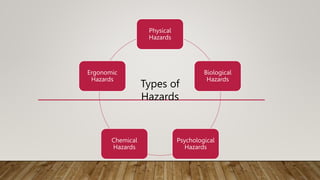
TYPES OF HAZARDS
Physical
Hazards
Biological
Hazards
Psychological
Hazards
Chemical
Hazards
Ergonomic
Hazards
Types of
Hazards
PHYSICAL HAZARDS
are the most normal occurrences in workplaces. They are usually easy to
detect, however, very often are neglected because people are too
accustomed to them.
EXAMPLES:
1. ELECTRICAL HAZARDS
2. ENDLESS LOUD NOISE
3. SPILLS ON FLOORS OR TRIPPING HAZARDS
Effects:
Fire
Decreased efficiency
Annoyance
Falls
BIOLOGICAL HAZARDS
come from working with animals, people or infectious materials. This is,
therefore, one of the most common hazards that a caregiver faces
EXAMPLES:
BLOOD OR OTHER BODY FLUIDS
FUNGI
BACTERIA AND VIRUSES
CONTAMINATED WASTES
Effects:
infections
skin irritations
allergy
Tuberculosis
AIDS
ERGONOMIC HAZARDS
occur when a caregiver’s nature of work, body position and working conditions
put pressure on his/her body. It is difficult to spot this type of hazard, because
caregivers do not immediately notice the effect to their bodies
EXAMPLES:
PERFORMING TASKS THAT REQUIRE LIFTING HEAVY LOADS
TOO MUCH BENDING AND REACHING
STANDING FOR LONG PERIODS OF TIME
HOLDING BODY PARTS FOR LONG PERIOD OF TIME
AWKWARD MOVEMENTS, ESPECIALLY IF THEY ARE
REPETITIVE
REPEATING THE SAME MOVEMENTS OVER AND OVER
Effects:
pain in the shoulders
back injury
too much impact on wrist and hands
numbness in some parts of the body
muscle cramps
CHEMICAL HAZARDS
are present when a worker is exposed to any chemical preparation in the
workplace in any form (solid, liquid or gas). There may be chemicals which are safe,
but some caregivers who are sensitive to solutions may cause skin irritation, illness
or breathing problems.
EXAMPLES:
LIQUIDS LIKE CLEANING PRODUCTS
DISINFECTING SOLUTIONS
Effects:
Lung diseases
Difficulty in breathing
Allergy
PSYCHOLOGICAL HAZARDS
take place when a caregiver’s work environment becomes stressful or demanding
EXAMPLES:
BURN OUT‖, FATIGUE AND ON CALL DUTY
UNREASONABLE EXPECTATIONS FROM
PATIENTS OR CLIENTS
VERBAL ABUSE FORM DISSATISFIED
CLIENTS UNREASONABLE EXPECTATIONS
FROM SUPERVISORS AND MANAGEMENT.
Effects:
Depression
Anxiety
Loss of confidence
Loss of concentration at work
Deterioration of performance at work
THE FOLLOWING ARE SOME WAYS FOR A
CAREGIVER TO DETERMINE HEALTH AND
SAFETY PROBLEMS:
1. A CAREGIVER SHOULD OBSERVE THE
WORKPLACE.
2. A CAREGIVER MAY EXAMINE COMPLAINTS
FROM HIS/HER CO-WORKERS.
3. A CAREGIVER SHOULD CHECK ACCIDENT
RECORDS.
4. A CAREGIVER SHOULD EXAMINE CHART ON
RESULTS OF INSPECTIONS DONE BY THE
EMPLOYERS OR PRIVATE ORGANIZATIONS.
5. A CAREGIVER MAY USE CHECKLISTS AND
INSPECT THE WORKPLACE.
6. A CAREGIVER MAY STUDY REPORTS OR ANY
OTHER VITAL INFORMATION ABOUT THE
NURSING HOME.
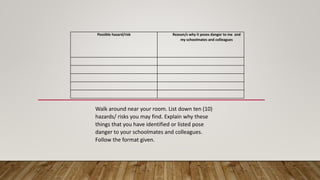
Possible hazard/risk Reason/s why it poses danger to me and
my schoolmates and colleagues
Walk around near your room. List down ten (10)
hazards/ risks you may find. Explain why these
things that you have identified or listed pose
danger to your schoolmates and colleagues.
Follow the format given.
ASSIGNMENT
WRITE DOWN 5-10 HAZARDS AND RISKS WE
ARE FACING TODAY, EVER SINCE THE COVID
19 PANDEMIC STARTED.
Source: https:// www.youtube.com/watch?v=EhpRnnEYViM
Questions and clarifications on the topic can be sent through messenger and/ or cp no.
09155058744
524247351-Identify-Hazards-and-Risk-PPT.pptx

524247351-Identify-Hazards-and-Risk-PPT.pptx

  • 1.
    Identify Hazards and Risks By:Rosemel C. Rempillo TLE Teacher, Balogo HS
  • 2.
    “ It’s BetterBe Safe Than Sorry”
  • 4.
    At the endof the lesson the students are expected to: a. Identify types of hazards and its effects b. Cite ways in determining health and safety problems c. Gain awareness on safety and risk prevention
  • 5.
    HAZARDS AND RISKS Hazardis anything that may cause harm to an individual, such as chemicals, electricity, open drawers, and inadequate ventilation. Risk is the possibility that somebody could be harmed by these and other hazards and the indication of how serious the harm can be.
  • 6.
    Unscramble the letterto determine the type of hazard a worker is exposed to based on the description given in each item.
  • 7.
    1. repetitive andforceful movements R OGIMC E NO ERGONOMIC
  • 8.
    2. spillages oftoxic materials H A L E C M C I
  • 9.
    3. bacteria andviruses L O B G I I O C L A
  • 10.
    4. twisted extensioncords H I Y S C A P L
  • 11.
    5. stress fromnight shifts P C O S Y HOL A G I C L
  • 12.
  • 13.
  • 14.
    PHYSICAL HAZARDS are themost normal occurrences in workplaces. They are usually easy to detect, however, very often are neglected because people are too accustomed to them.
  • 15.
    EXAMPLES: 1. ELECTRICAL HAZARDS 2.ENDLESS LOUD NOISE 3. SPILLS ON FLOORS OR TRIPPING HAZARDS Effects: Fire Decreased efficiency Annoyance Falls
  • 16.
    BIOLOGICAL HAZARDS come fromworking with animals, people or infectious materials. This is, therefore, one of the most common hazards that a caregiver faces
  • 17.
    EXAMPLES: BLOOD OR OTHERBODY FLUIDS FUNGI BACTERIA AND VIRUSES CONTAMINATED WASTES Effects: infections skin irritations allergy Tuberculosis AIDS
  • 18.
    ERGONOMIC HAZARDS occur whena caregiver’s nature of work, body position and working conditions put pressure on his/her body. It is difficult to spot this type of hazard, because caregivers do not immediately notice the effect to their bodies
  • 19.
    EXAMPLES: PERFORMING TASKS THATREQUIRE LIFTING HEAVY LOADS TOO MUCH BENDING AND REACHING STANDING FOR LONG PERIODS OF TIME HOLDING BODY PARTS FOR LONG PERIOD OF TIME AWKWARD MOVEMENTS, ESPECIALLY IF THEY ARE REPETITIVE REPEATING THE SAME MOVEMENTS OVER AND OVER Effects: pain in the shoulders back injury too much impact on wrist and hands numbness in some parts of the body muscle cramps
  • 20.
    CHEMICAL HAZARDS are presentwhen a worker is exposed to any chemical preparation in the workplace in any form (solid, liquid or gas). There may be chemicals which are safe, but some caregivers who are sensitive to solutions may cause skin irritation, illness or breathing problems.
  • 21.
    EXAMPLES: LIQUIDS LIKE CLEANINGPRODUCTS DISINFECTING SOLUTIONS Effects: Lung diseases Difficulty in breathing Allergy
  • 22.
    PSYCHOLOGICAL HAZARDS take placewhen a caregiver’s work environment becomes stressful or demanding
  • 23.
    EXAMPLES: BURN OUT‖, FATIGUEAND ON CALL DUTY UNREASONABLE EXPECTATIONS FROM PATIENTS OR CLIENTS VERBAL ABUSE FORM DISSATISFIED CLIENTS UNREASONABLE EXPECTATIONS FROM SUPERVISORS AND MANAGEMENT. Effects: Depression Anxiety Loss of confidence Loss of concentration at work Deterioration of performance at work
  • 24.
    THE FOLLOWING ARESOME WAYS FOR A CAREGIVER TO DETERMINE HEALTH AND SAFETY PROBLEMS:
  • 25.
    1. A CAREGIVERSHOULD OBSERVE THE WORKPLACE. 2. A CAREGIVER MAY EXAMINE COMPLAINTS FROM HIS/HER CO-WORKERS. 3. A CAREGIVER SHOULD CHECK ACCIDENT RECORDS. 4. A CAREGIVER SHOULD EXAMINE CHART ON RESULTS OF INSPECTIONS DONE BY THE EMPLOYERS OR PRIVATE ORGANIZATIONS. 5. A CAREGIVER MAY USE CHECKLISTS AND INSPECT THE WORKPLACE. 6. A CAREGIVER MAY STUDY REPORTS OR ANY OTHER VITAL INFORMATION ABOUT THE NURSING HOME.
  • 26.
    Possible hazard/risk Reason/swhy it poses danger to me and my schoolmates and colleagues Walk around near your room. List down ten (10) hazards/ risks you may find. Explain why these things that you have identified or listed pose danger to your schoolmates and colleagues. Follow the format given.
  • 27.
    ASSIGNMENT WRITE DOWN 5-10HAZARDS AND RISKS WE ARE FACING TODAY, EVER SINCE THE COVID 19 PANDEMIC STARTED. Source: https:// www.youtube.com/watch?v=EhpRnnEYViM Questions and clarifications on the topic can be sent through messenger and/ or cp no. 09155058744