SCADA Systems: The
Backbone of Industry 4.0
Discover how SCADA systems revolutionized industrial operations,
evolving from manual monitoring to sophisticated control solutions.
Learn about their key components and vital role in modern industries.
by Muhammad Fahad Bashir
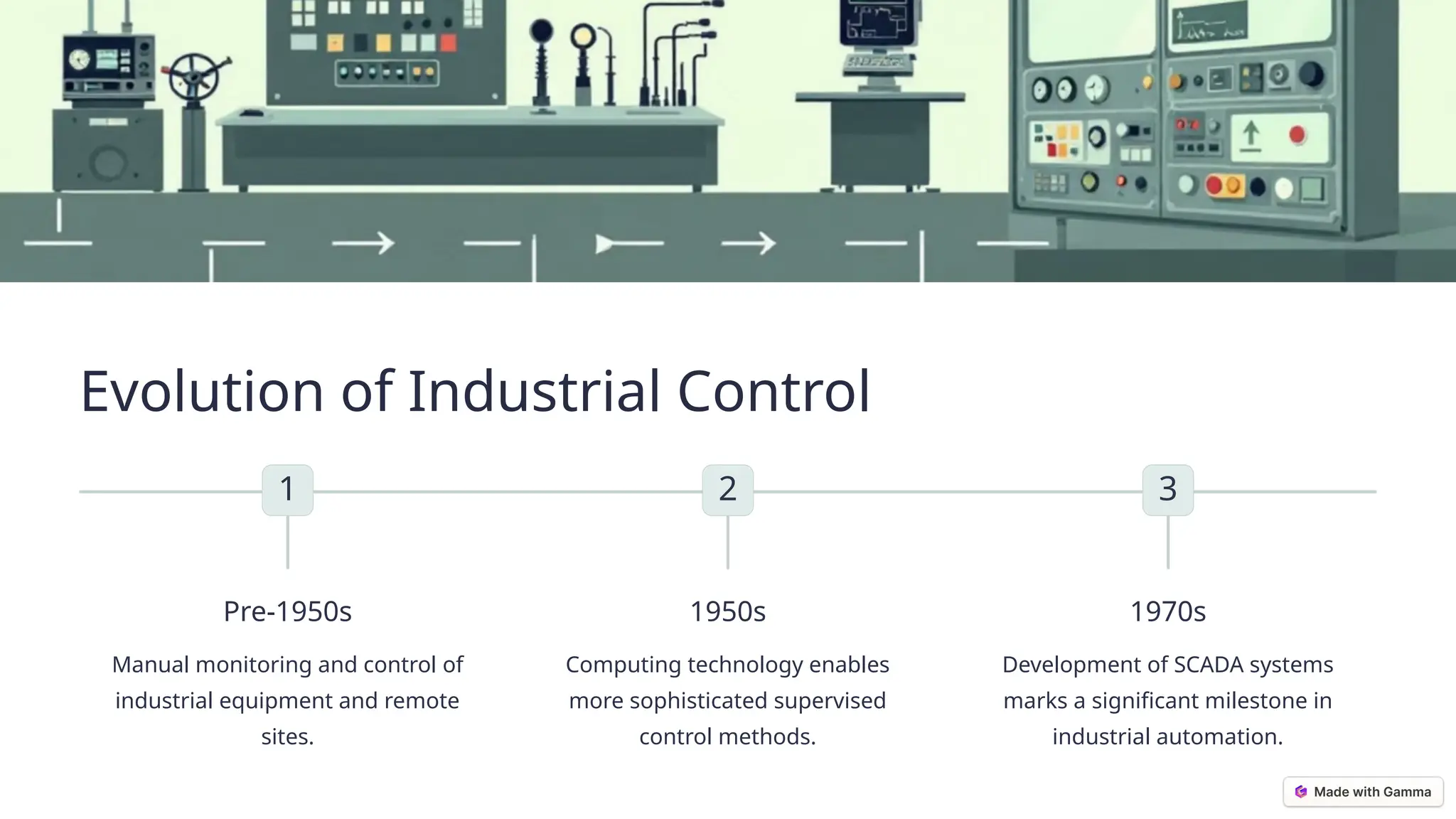
Evolution of Industrial Control
1
Pre-1950s
Manual monitoring and control of
industrial equipment and remote
sites.
2
1950s
Computing technology enables
more sophisticated supervised
control methods.
3
1970s
Development of SCADA systems
marks a significant milestone in
industrial automation.
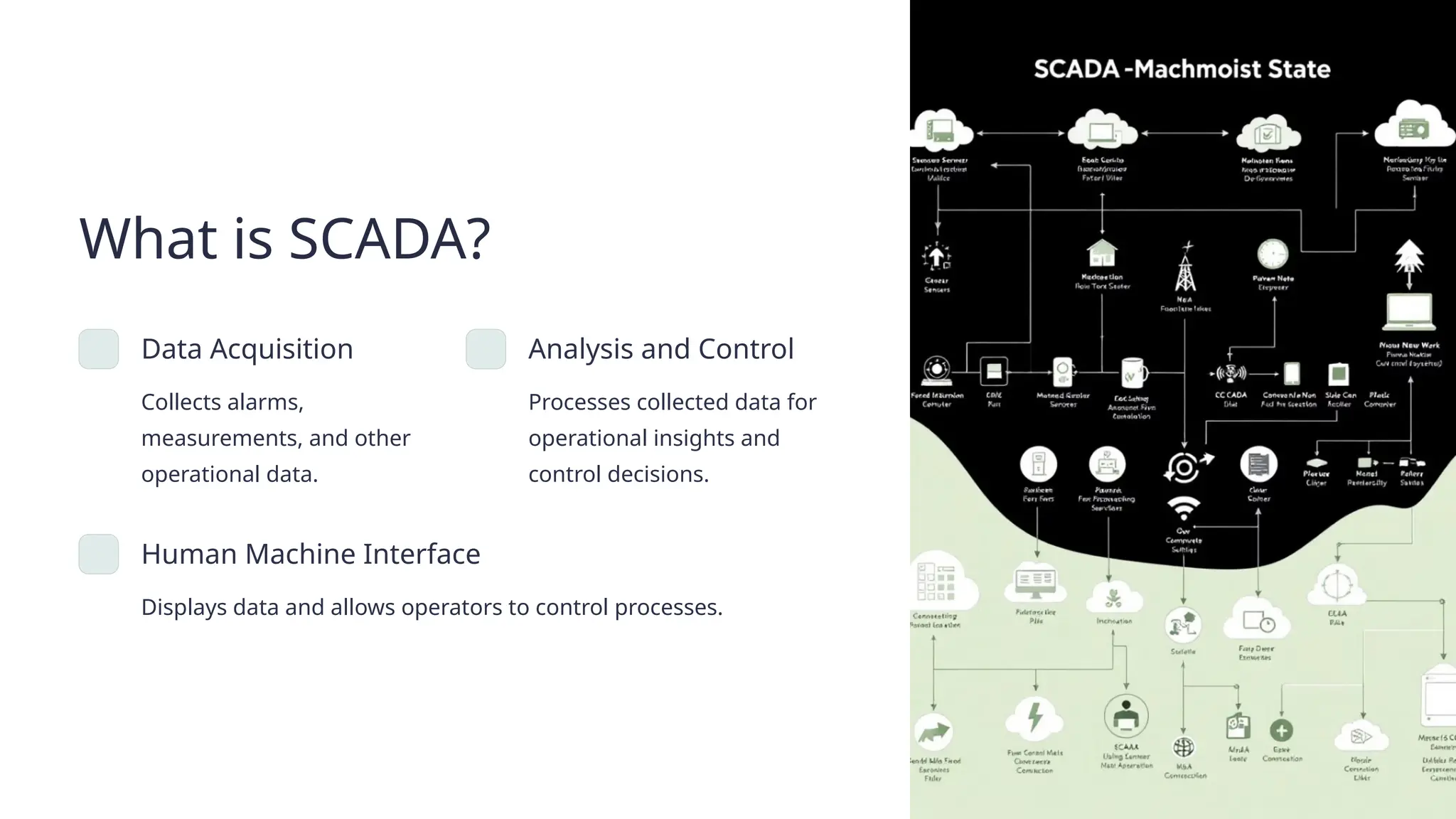
What is SCADA?
Data Acquisition
Collects alarms,
measurements, and other
operational data.
Analysis and Control
Processes collected data for
operational insights and
control decisions.
Human Machine Interface
Displays data and allows operators to control processes.
Industries Using SCADA
Manufacturing
Optimizes production processes and
equipment efficiency.
Water Distribution
Manages water treatment and
distribution systems.
Energy Sector
Controls power generation and
distribution networks.
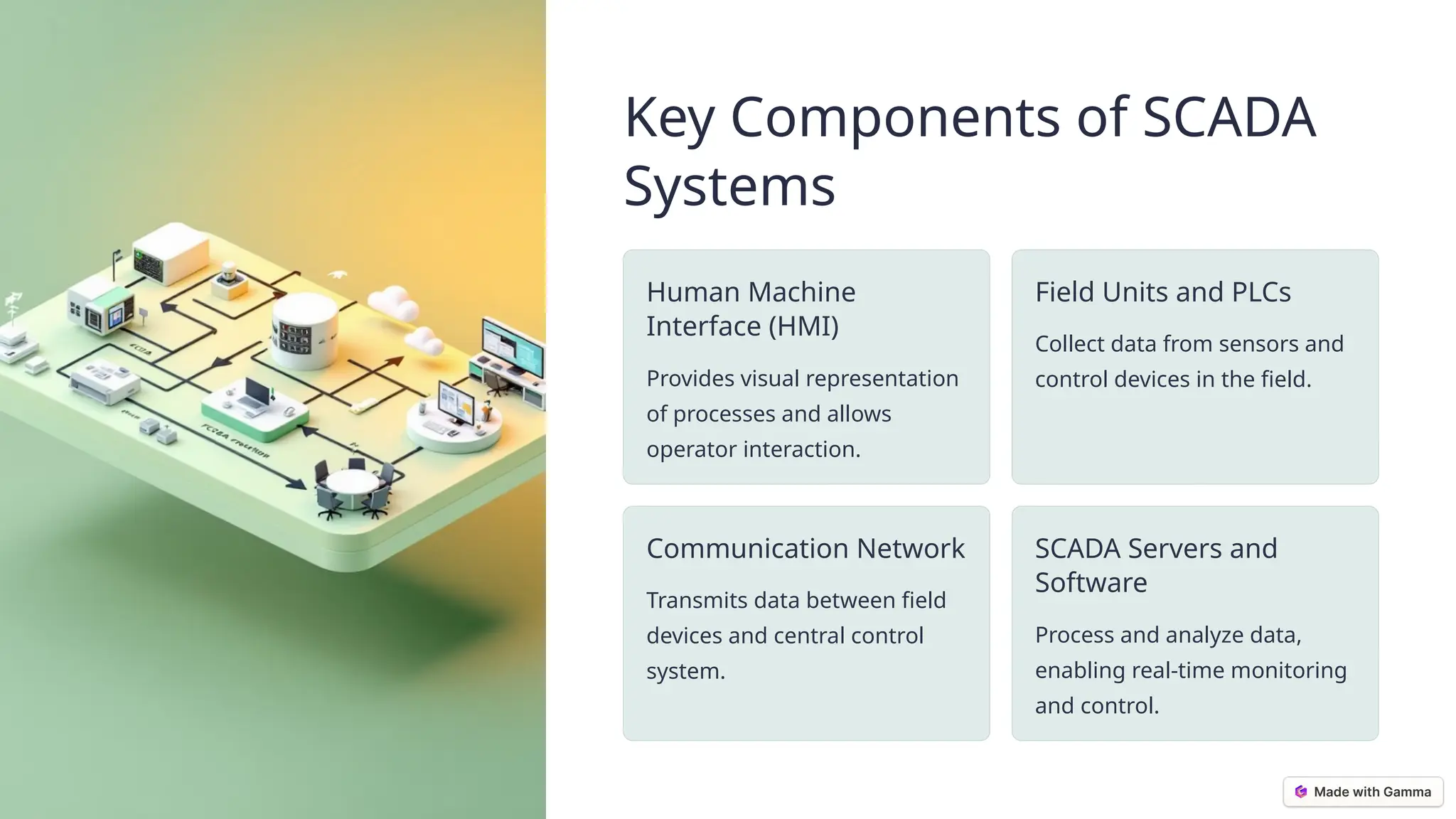
Key Components of SCADA
Systems
Human Machine
Interface (HMI)
Provides visual representation
of processes and allows
operator interaction.
Field Units and PLCs
Collect data from sensors and
control devices in the field.
Communication Network
Transmits data between field
devices and central control
system.
SCADA Servers and
Software
Process and analyze data,
enabling real-time monitoring
and control.
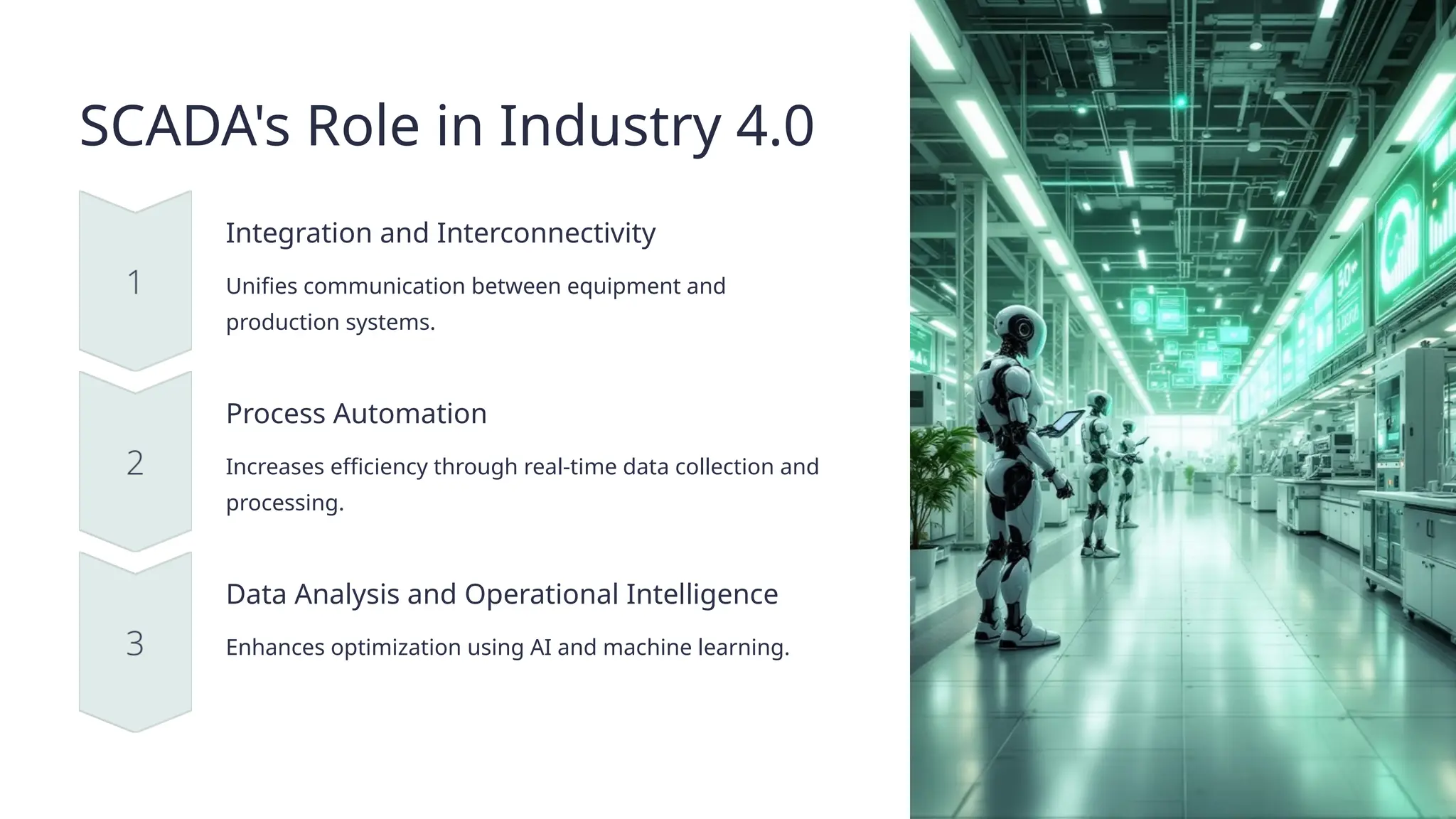
SCADA's Role in Industry 4.0
Integration and Interconnectivity
Unifies communication between equipment and
production systems.
Process Automation
Increases efficiency through real-time data collection and
processing.
Data Analysis and Operational Intelligence
Enhances optimization using AI and machine learning.
SCADA in the Control Room
Video Wall Display
SCADA HMI is typically displayed on the main focus of the
control room.
Strategic Planning
Video wall design must consider various SCADA screens to
be displayed.
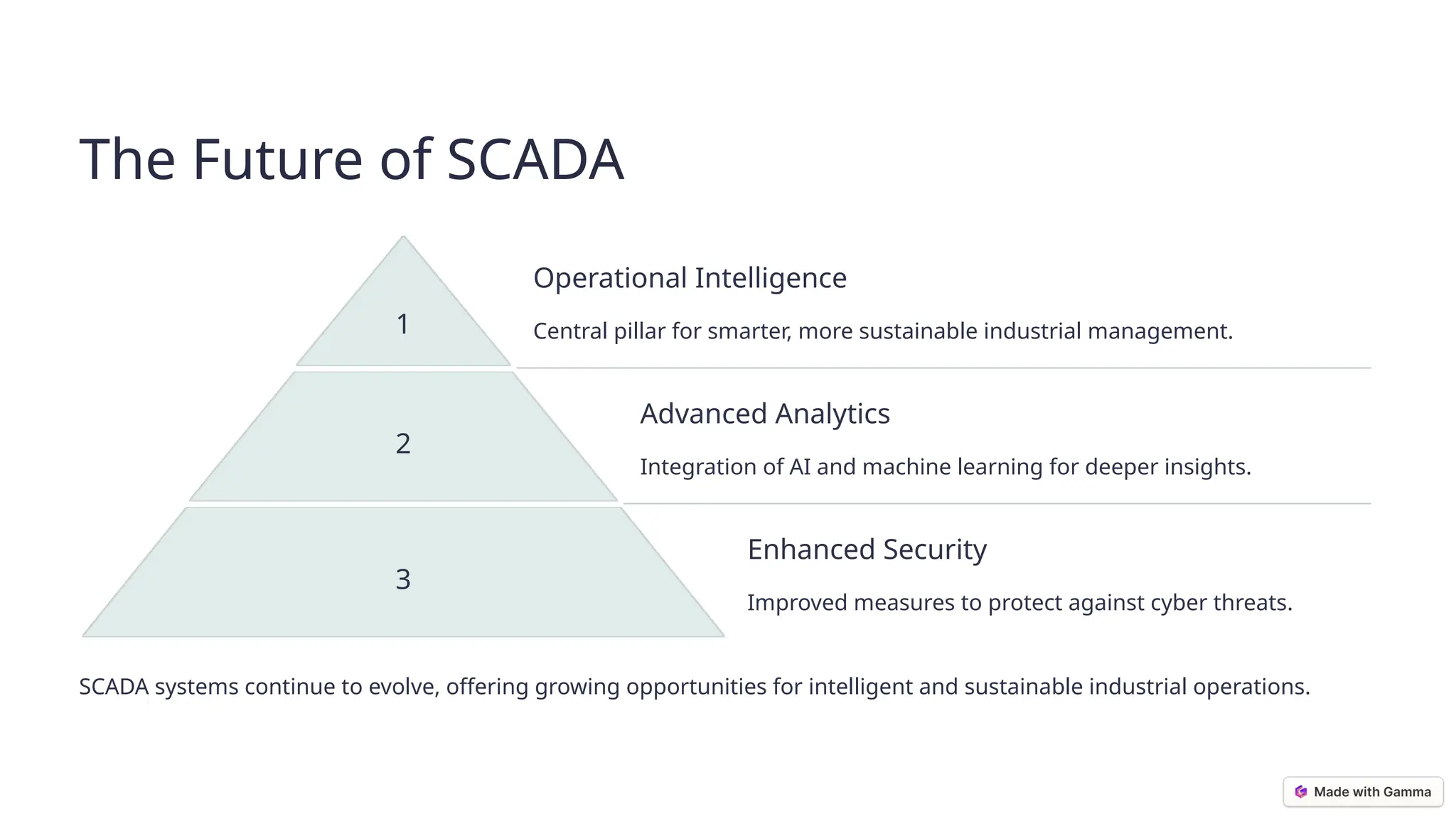
The Future of SCADA
1
Operational Intelligence
Central pillar for smarter, more sustainable industrial management.
2
Advanced Analytics
Integration of AI and machine learning for deeper insights.
3
Enhanced Security
Improved measures to protect against cyber threats.
SCADA systems continue to evolve, offering growing opportunities for intelligent and sustainable industrial operations.

SCADA-Systems-The-Backbone-of-Industry-40.pptx

  • 1.
    SCADA Systems: The Backboneof Industry 4.0 Discover how SCADA systems revolutionized industrial operations, evolving from manual monitoring to sophisticated control solutions. Learn about their key components and vital role in modern industries. by Muhammad Fahad Bashir
  • 2.
    Evolution of IndustrialControl 1 Pre-1950s Manual monitoring and control of industrial equipment and remote sites. 2 1950s Computing technology enables more sophisticated supervised control methods. 3 1970s Development of SCADA systems marks a significant milestone in industrial automation.
  • 3.
    What is SCADA? DataAcquisition Collects alarms, measurements, and other operational data. Analysis and Control Processes collected data for operational insights and control decisions. Human Machine Interface Displays data and allows operators to control processes.
  • 4.
    Industries Using SCADA Manufacturing Optimizesproduction processes and equipment efficiency. Water Distribution Manages water treatment and distribution systems. Energy Sector Controls power generation and distribution networks.
  • 5.
    Key Components ofSCADA Systems Human Machine Interface (HMI) Provides visual representation of processes and allows operator interaction. Field Units and PLCs Collect data from sensors and control devices in the field. Communication Network Transmits data between field devices and central control system. SCADA Servers and Software Process and analyze data, enabling real-time monitoring and control.
  • 6.
    SCADA's Role inIndustry 4.0 Integration and Interconnectivity Unifies communication between equipment and production systems. Process Automation Increases efficiency through real-time data collection and processing. Data Analysis and Operational Intelligence Enhances optimization using AI and machine learning.
  • 7.
    SCADA in theControl Room Video Wall Display SCADA HMI is typically displayed on the main focus of the control room. Strategic Planning Video wall design must consider various SCADA screens to be displayed.
  • 8.
    The Future ofSCADA 1 Operational Intelligence Central pillar for smarter, more sustainable industrial management. 2 Advanced Analytics Integration of AI and machine learning for deeper insights. 3 Enhanced Security Improved measures to protect against cyber threats. SCADA systems continue to evolve, offering growing opportunities for intelligent and sustainable industrial operations.