SAMSUNG ELECTRONICS
Seoul, Korea
Japan / Korea Trip 2001
Fabio Armani
Julian Carey
Jennifer Goodwin
Agenda
• Samsung Group – History & Structure
• Samsung Electronics
– History
– Company Focus
– Financial Overview
– Strategy
– Organizational Structure
– Challenges
Samsung Group
• Founded in 1938
– exporter of dried fish, vegetables, and fruits
– flour mill and confectionery machines
• 1950’s Economic Stabilization
– Korean War - Samsung lost all assets
– aimed to help rebuild Korean economy; entered the
manufacturing industry (sugar,fabrics)
– became a leader in modern business practices (recruiting
from outside)
• 1960’s Expansion of Key Industries
– entered electronics and chemical industries
– 1969 established Samsung Electronics Co.
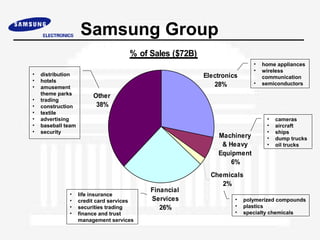
Samsung Group
% of Sales ($72B)
Electronics
28%
Machinery
& Heavy
Equipment
6%
Chemicals
2%
Financial
Services
26%
Other
38%
• distribution
• hotels
• amusement
theme parks
• trading
• construction
• textile
• advertising
• baseball team
• security
• cameras
• aircraft
• ships
• dump trucks
• oil trucks
• polymerized compounds
• plastics
• specialty chemicals
• life insurance
• credit card services
• securities trading
• finance and trust
management services
• home appliances
• wireless
communication
• semiconductors
Samsung Electronics
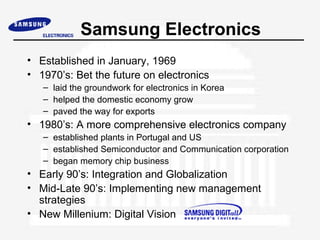
• Established in January, 1969
• 1970’s: Bet the future on electronics
– laid the groundwork for electronics in Korea
– helped the domestic economy grow
– paved the way for exports
• 1980’s: A more comprehensive electronics company
– established plants in Portugal and US
– established Semiconductor and Communication corporation
– began memory chip business
• Early 90’s: Integration and Globalization
• Mid-Late 90’s: Implementing new management
strategies
• New Millenium: Digital Vision
Focus: 4 Core Markets
Home
Multimedia
Mobile Multimedia
Personal Multimedia Core Components
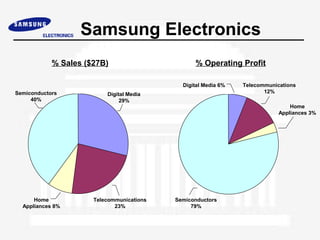
Samsung Electronics
Semiconductors
40%
Digital Media
29%
Telecommunications
23%
Home
Appliances 8%
% Sales ($27B) % Operating Profit
Semiconductors
79%
Digital Media 6% Telecommunications
12%
Home
Appliances 3%
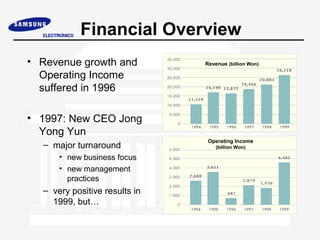
Financial Overview
• Revenue growth and
Operating Income
suffered in 1996
• 1997: New CEO Jong
Yong Yun
– major turnaround
• new business focus
• new management
practices
– very positive results in
1999, but…
Operating Income
(billion Won)
Revenue (billion Won)
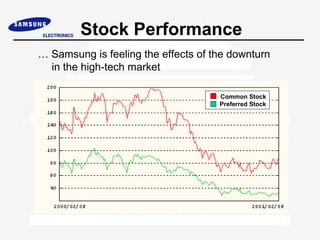
Stock Performance
Common Stock
Preferred Stock
… Samsung is feeling the effects of the downturn
in the high-tech market
Strategy
1997 Turnaround:
• Cut a third of workforce, cut debt
• Sold and spun off divisions
• Set “firewalls” to other Samsung Divisions
• New business proposition: profits
• Streamlined inventories
• Diversification
Strategy
New Economy:
• Exodus of engineers and managers to startups
• Top 4 conglomerates: $1.2B in startups
(Samsung: $520M)
– Stakes of up to 29.9% in 80+ startups
• Startups benefit from links to global networks and
financial expertise
“You simply can’t survive without adapting to the
fast-changing Internet era, and one solution is
linking up with startups”
Strategy
Digital Vision: “A Company that leads the digital
convergence revolution”
• Brand power, logistics, IP:
– High-margin products
– Create value chain that integrates competencies of all
areas
– Customer and market oriented
• Global network by function
• Performance evaluation and compensation
system
Strategy
Digital Vision:
• Innovation, meeting challenges and creativity
• Target debt-to-equity ratio: 50%
• R&D: 7% of total revenues
• Overseas partners:
– Joint R&D projects
– Technology transfer arrangements
– Joint investments
Organization Structure
• 4 main groups with 14 divisions
Digital Media
Semiconductors
Information
&
Communications
Home
Appliances
Samsung Electronics
Management & Employees
• 59,000 employees
• Development of employees strategic to
success
• “Making rounds” encouraged as a key
management practice
Recruiting and Training
• Heavy investment
• Focus on creating agents of change
• Expertise in technology and marketing
Culture
• Entrepreneurial
• Profit focused
• Decisive
• Different from other firms in Korea and within
chaebol
Current Challenges
Internal: “You must maintain a sense of crisis to
stay competitive”
• Profits vs. Growth
– Financial discipline
• Foster creativity
• Executives jumping ship for startups
Current Challenges
External:
• Abandon dependence on cheap commodity
products
• Emphasis on goods developed in-house
– Rivals are outsourcing production and design
• Guide the company into the global electronics
elite
Current Challenges
Corporate Governance:
• Cross-shareholding among affiliates
– Shifth funds among subsidiaries
– Manipulate debt-to-equity ratios
• Outside directors appointed by family
• Lack of accountability to outside shareholders

Samsung electronics master

  • 1.
    SAMSUNG ELECTRONICS Seoul, Korea Japan/ Korea Trip 2001 Fabio Armani Julian Carey Jennifer Goodwin
  • 2.
    Agenda • Samsung Group– History & Structure • Samsung Electronics – History – Company Focus – Financial Overview – Strategy – Organizational Structure – Challenges
  • 3.
    Samsung Group • Foundedin 1938 – exporter of dried fish, vegetables, and fruits – flour mill and confectionery machines • 1950’s Economic Stabilization – Korean War - Samsung lost all assets – aimed to help rebuild Korean economy; entered the manufacturing industry (sugar,fabrics) – became a leader in modern business practices (recruiting from outside) • 1960’s Expansion of Key Industries – entered electronics and chemical industries – 1969 established Samsung Electronics Co.
  • 4.
    Samsung Group % ofSales ($72B) Electronics 28% Machinery & Heavy Equipment 6% Chemicals 2% Financial Services 26% Other 38% • distribution • hotels • amusement theme parks • trading • construction • textile • advertising • baseball team • security • cameras • aircraft • ships • dump trucks • oil trucks • polymerized compounds • plastics • specialty chemicals • life insurance • credit card services • securities trading • finance and trust management services • home appliances • wireless communication • semiconductors
  • 5.
    Samsung Electronics • Establishedin January, 1969 • 1970’s: Bet the future on electronics – laid the groundwork for electronics in Korea – helped the domestic economy grow – paved the way for exports • 1980’s: A more comprehensive electronics company – established plants in Portugal and US – established Semiconductor and Communication corporation – began memory chip business • Early 90’s: Integration and Globalization • Mid-Late 90’s: Implementing new management strategies • New Millenium: Digital Vision
  • 6.
    Focus: 4 CoreMarkets Home Multimedia Mobile Multimedia Personal Multimedia Core Components
  • 7.
    Samsung Electronics Semiconductors 40% Digital Media 29% Telecommunications 23% Home Appliances8% % Sales ($27B) % Operating Profit Semiconductors 79% Digital Media 6% Telecommunications 12% Home Appliances 3%
  • 8.
    Financial Overview • Revenuegrowth and Operating Income suffered in 1996 • 1997: New CEO Jong Yong Yun – major turnaround • new business focus • new management practices – very positive results in 1999, but… Operating Income (billion Won) Revenue (billion Won)
  • 9.
    Stock Performance Common Stock PreferredStock … Samsung is feeling the effects of the downturn in the high-tech market
  • 10.
    Strategy 1997 Turnaround: • Cuta third of workforce, cut debt • Sold and spun off divisions • Set “firewalls” to other Samsung Divisions • New business proposition: profits • Streamlined inventories • Diversification
  • 11.
    Strategy New Economy: • Exodusof engineers and managers to startups • Top 4 conglomerates: $1.2B in startups (Samsung: $520M) – Stakes of up to 29.9% in 80+ startups • Startups benefit from links to global networks and financial expertise “You simply can’t survive without adapting to the fast-changing Internet era, and one solution is linking up with startups”
  • 12.
    Strategy Digital Vision: “ACompany that leads the digital convergence revolution” • Brand power, logistics, IP: – High-margin products – Create value chain that integrates competencies of all areas – Customer and market oriented • Global network by function • Performance evaluation and compensation system
  • 13.
    Strategy Digital Vision: • Innovation,meeting challenges and creativity • Target debt-to-equity ratio: 50% • R&D: 7% of total revenues • Overseas partners: – Joint R&D projects – Technology transfer arrangements – Joint investments
  • 14.
    Organization Structure • 4main groups with 14 divisions Digital Media Semiconductors Information & Communications Home Appliances Samsung Electronics
  • 15.
    Management & Employees •59,000 employees • Development of employees strategic to success • “Making rounds” encouraged as a key management practice
  • 16.
    Recruiting and Training •Heavy investment • Focus on creating agents of change • Expertise in technology and marketing
  • 17.
    Culture • Entrepreneurial • Profitfocused • Decisive • Different from other firms in Korea and within chaebol
  • 18.
    Current Challenges Internal: “Youmust maintain a sense of crisis to stay competitive” • Profits vs. Growth – Financial discipline • Foster creativity • Executives jumping ship for startups
  • 19.
    Current Challenges External: • Abandondependence on cheap commodity products • Emphasis on goods developed in-house – Rivals are outsourcing production and design • Guide the company into the global electronics elite
  • 20.
    Current Challenges Corporate Governance: •Cross-shareholding among affiliates – Shifth funds among subsidiaries – Manipulate debt-to-equity ratios • Outside directors appointed by family • Lack of accountability to outside shareholders