RAPID LITERACY
ASSESSMENT (RLA)
for Grades 4-12
Learners
ENGLISH GROUP
RAPID
LITERACY
ASSESSMENT
(RLA) for Grades
4-12 Learners
ENGLISH GROUP
Purpose:
The Rapid Literacy
Assessment (RLA) is
intended to determine the
word attack or decoding
skills of the Grades 4-12
learners in English and
Filipino.
These basic skills are
necessary to transition Key
Stage 2-4 learners into
successful readers.
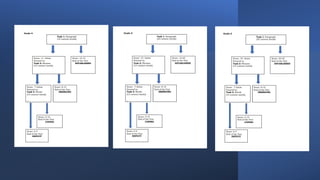
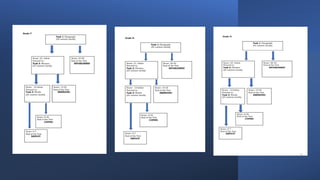
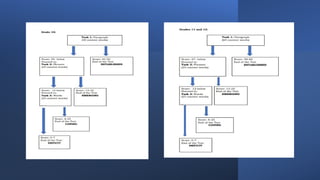
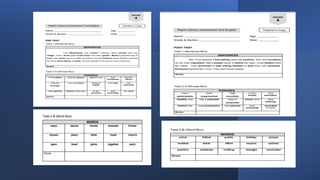
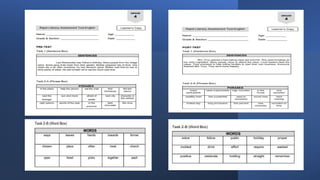
Each grade level has two
sets: the Pre-Test, which
should assist the teachers in
profiling the specific reading
skills of learners in the previous
grade levels and implementing
reading interventions to address
specific reading difficulties;
while the Post-Test reveals the
progress that the learners have
accomplished in a school year.
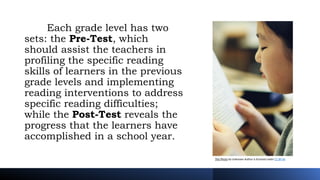
This Photo by Unknown Author is licensed under CC BY-SA
•These assessment
materials have
undergone the thorough
process of content
development; quality
control of passages,
phrases, and words;
pilot testing, and
refinement prior to their
finalization.
The districts are enjoined to orient elementary and
secondary school heads and teachers in the
administration of RLA and develop a district dashboard
that will consolidate the pre and post-test results of the
schools.
Results of the RLA should be carefully analyzed to
guide the district in the implementation of comprehensive
and directed reading intervention programs that are
appropriate to the needs of the Grades 4 to 12 learners
with specific reading difficulties.
Soft copies of the RLA tools shall be provided by this
Office to the 25 districts through the district coordinators
in English, copy furnished the district testing coordinators.
In turn, the district coordinators shall provide schools with
a complete package of the RLA tools.
Pre-test should be administered within the first
month of the school opening, while the post-test should be
made a month before the closing of the school year.
Elementary and secondary school heads should prepare a consolidated report
of the pre and post-test results and submit the same to the District Office
through a dashboard specifically developed by the district for such a purpose.
The District Consolidated Report containing the results of both pre- and post-
tests will be submitted to the Division Office a month after the conduct of the
assessments.
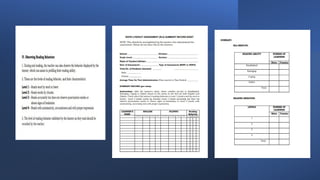
The Rapid Literacy Assessment (RLA) Summary Record Sheet will be
accomplished by the teacher per class.
All concerned in the administration,
consolidation and analysis of the test
results are enjoined to exercise
confidentiality and integrity to ensure
the reliability of the Rapid Literacy
Assessment in Region V.
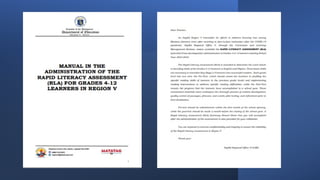
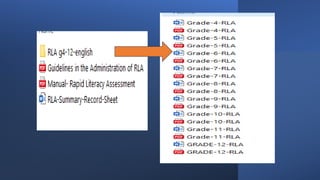
Rapid Literacy
Assessment
(RLA) Manual
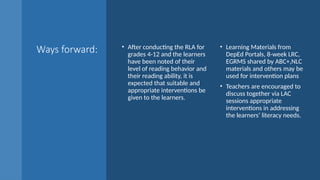
Ways forward: • After conducting the RLA for
grades 4-12 and the learners
have been noted of their
level of reading behavior and
their reading ability, it is
expected that suitable and
appropriate interventions be
given to the learners.
• Learning Materials from
DepEd Portals, 8-week LRC,
EGRMS shared by ABC+,NLC
materials and others may be
used for intervention plans
• Teachers are encouraged to
discuss together via LAC
sessions appropriate
interventions in addressing
the learners’ literacy needs.
Thank You 

Sample RLA-for-Grades-4-12-orientation.pptx

  • 1.
    RAPID LITERACY ASSESSMENT (RLA) forGrades 4-12 Learners ENGLISH GROUP
  • 2.
  • 3.
    Purpose: The Rapid Literacy Assessment(RLA) is intended to determine the word attack or decoding skills of the Grades 4-12 learners in English and Filipino. These basic skills are necessary to transition Key Stage 2-4 learners into successful readers.
  • 4.
    Each grade levelhas two sets: the Pre-Test, which should assist the teachers in profiling the specific reading skills of learners in the previous grade levels and implementing reading interventions to address specific reading difficulties; while the Post-Test reveals the progress that the learners have accomplished in a school year. This Photo by Unknown Author is licensed under CC BY-SA
  • 5.
    •These assessment materials have undergonethe thorough process of content development; quality control of passages, phrases, and words; pilot testing, and refinement prior to their finalization.
  • 6.
    The districts areenjoined to orient elementary and secondary school heads and teachers in the administration of RLA and develop a district dashboard that will consolidate the pre and post-test results of the schools. Results of the RLA should be carefully analyzed to guide the district in the implementation of comprehensive and directed reading intervention programs that are appropriate to the needs of the Grades 4 to 12 learners with specific reading difficulties.
  • 7.
    Soft copies ofthe RLA tools shall be provided by this Office to the 25 districts through the district coordinators in English, copy furnished the district testing coordinators. In turn, the district coordinators shall provide schools with a complete package of the RLA tools. Pre-test should be administered within the first month of the school opening, while the post-test should be made a month before the closing of the school year.
  • 8.
    Elementary and secondaryschool heads should prepare a consolidated report of the pre and post-test results and submit the same to the District Office through a dashboard specifically developed by the district for such a purpose. The District Consolidated Report containing the results of both pre- and post- tests will be submitted to the Division Office a month after the conduct of the assessments. The Rapid Literacy Assessment (RLA) Summary Record Sheet will be accomplished by the teacher per class.
  • 9.
    All concerned inthe administration, consolidation and analysis of the test results are enjoined to exercise confidentiality and integrity to ensure the reliability of the Rapid Literacy Assessment in Region V.
  • 10.
  • 21.
    Ways forward: •After conducting the RLA for grades 4-12 and the learners have been noted of their level of reading behavior and their reading ability, it is expected that suitable and appropriate interventions be given to the learners. • Learning Materials from DepEd Portals, 8-week LRC, EGRMS shared by ABC+,NLC materials and others may be used for intervention plans • Teachers are encouraged to discuss together via LAC sessions appropriate interventions in addressing the learners’ literacy needs.
  • 22.