RESOURCE
MOBILIZATION
AND OVERCOMING CHALLENGES
JOSHUA P. SALCE L.AGR.
WHAT IS RESOURCE
MOBILIZATION?
RESOURCE
MOBILIZATION
The term resource mobilization refers to all
activities undertaken by an organization to
secure new and additional financial, human
and material resources to advance its mission.
Inherent in efforts to mobilize resources is the
drive for organizational sustainability.
WHY IS RESOURCE
MOBILIZATION SO
IMPORTANT?
Ensures the continuation of your organization’s
service provision to constituents.
Supports organizational sustainability
Allows for improvement and scale-up of
products and services the organization
currently provides,
1
2
3
Why is Resource
Mobilization so important?
4 Organizations, both in the public and private
sector, must be in the business of generating
new business to stay in business.
TYPES OF
RESOURCES
FOUR TYPES OF RESOURCES IN
BUSINESS:
PHYSICAL
RESOURCES
1
• PHYSICAL RESOURCES ARE TANGIBLE
ASSETS THAT A ORGANIZATION MAY USE
TO CREATE AND DISTRIBUTE ITS
PRODUCTS OR SERVICES.
• SOME EXAMPLES OF PHYSICAL
RESOURCES INCLUDE EQUIPMENT,
PRODUCTION OR STORAGE FACILITIES
AND INVENTORY.
• EVEN IF A ORGANIZATION DOESN'T
OFFER A TANGIBLE PRODUCT, IT CAN
STILL USE PHYSICAL RESOURCES.
HUMAN
RESOURCES
2
• HUMAN RESOURCES ARE THE PEOPLE
WHO HELP THE ORGANIZATION RUN.
• THIS CAN INCLUDE THOSE WHO HELP
DEVELOP THE CONCEPTS, IDEAS AND
STRATEGIES FOR THE ORGANIZATION.
• LIKE OTHER RESOURCE TYPES, HUMAN
RESOURCES CAN BE A CRUCIAL ASPECT
OF AN ORGANIZATION.
INTELLECTUAL
RESOURCES
3 • INTELLECTUAL RESOURCES CAN INCLUDE ANY
NONTANGIBLE RESOURCES THAT ALLOW A
ORGANIZATION TO OPERATE SUCCESSFULLY.
• DATA CAN ALSO BE AN INTELLECTUAL
RESOURCE.
• INFORMATION ABOUT IMPORTANT TOPICS LIKE
CONSTITUENTS SATISFACTION OR EVALUATION
CAN GREATLY INFLUENCE THE ORGANIZATION'
PERFORMANCE AND DECISION-MAKING.
FINANCIAL
RESOURCES
4 • FINANCIAL RESOURCES ARE THE
MONETARY SOURCES AN ORGANIZATION
CAN USE TO COMPLETE GOALS.
• IN MANY CASES, FINANCIAL RESOURCES
ARE AN IMPORTANT ASPECT OF
SECURING OTHER RESOURCE TYPES.
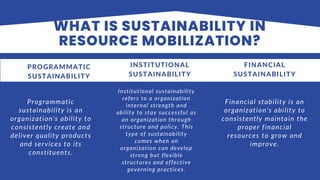
WHAT IS SUSTAINABILITY IN
RESOURCE MOBILIZATION?
Programmatic
sustainability is an
organization's ability to
consistently create and
deliver quality products
and services to its
constituents.
PROGRAMMATIC
SUSTAINABILITY
Institutional sustainability
refers to a organization
internal strength and
ability to stay successful as
an organization through
structure and policy. This
type of sustainability
comes when an
organization can develop
strong but flexible
structures and effective
governing practices.
INSTITUTIONAL
SUSTAINABILITY
Financial stability is an
organization's ability to
consistently maintain the
proper financial
resources to grow and
improve.
FINANCIAL
SUSTAINABILITY
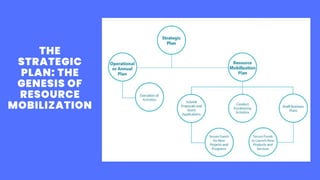
THE
STRATEGIC
PLAN: THE
GENESIS OF
RESOURCE
MOBILIZATION
HOW DO WE
OVERCOME
CHALLENGES?
Intelligence Gathering is the ongoing collection of
information about funders/investors, funding
opportunities, other organizations and the political
environment.
BRIEF AND RESEARCH
1
Resource mobilization efforts should align with your
organizational mission, objectives and strategic plan.
2 CUSTOMIZATION
Be prepared to provide evidence-based results.Your
organizational performance today impacts your ability
to generate resources tomorrow.You must establish
and maintain organizational credibility and
reputation.
3 EXECUTION
THANK YOU!

salce ppt.pptx

  • 1.
  • 2.
  • 3.
    RESOURCE MOBILIZATION The term resourcemobilization refers to all activities undertaken by an organization to secure new and additional financial, human and material resources to advance its mission. Inherent in efforts to mobilize resources is the drive for organizational sustainability.
  • 4.
  • 5.
    Ensures the continuationof your organization’s service provision to constituents. Supports organizational sustainability Allows for improvement and scale-up of products and services the organization currently provides, 1 2 3 Why is Resource Mobilization so important? 4 Organizations, both in the public and private sector, must be in the business of generating new business to stay in business.
  • 6.
    TYPES OF RESOURCES FOUR TYPESOF RESOURCES IN BUSINESS:
  • 7.
    PHYSICAL RESOURCES 1 • PHYSICAL RESOURCESARE TANGIBLE ASSETS THAT A ORGANIZATION MAY USE TO CREATE AND DISTRIBUTE ITS PRODUCTS OR SERVICES. • SOME EXAMPLES OF PHYSICAL RESOURCES INCLUDE EQUIPMENT, PRODUCTION OR STORAGE FACILITIES AND INVENTORY. • EVEN IF A ORGANIZATION DOESN'T OFFER A TANGIBLE PRODUCT, IT CAN STILL USE PHYSICAL RESOURCES.
  • 8.
    HUMAN RESOURCES 2 • HUMAN RESOURCESARE THE PEOPLE WHO HELP THE ORGANIZATION RUN. • THIS CAN INCLUDE THOSE WHO HELP DEVELOP THE CONCEPTS, IDEAS AND STRATEGIES FOR THE ORGANIZATION. • LIKE OTHER RESOURCE TYPES, HUMAN RESOURCES CAN BE A CRUCIAL ASPECT OF AN ORGANIZATION.
  • 9.
    INTELLECTUAL RESOURCES 3 • INTELLECTUALRESOURCES CAN INCLUDE ANY NONTANGIBLE RESOURCES THAT ALLOW A ORGANIZATION TO OPERATE SUCCESSFULLY. • DATA CAN ALSO BE AN INTELLECTUAL RESOURCE. • INFORMATION ABOUT IMPORTANT TOPICS LIKE CONSTITUENTS SATISFACTION OR EVALUATION CAN GREATLY INFLUENCE THE ORGANIZATION' PERFORMANCE AND DECISION-MAKING.
  • 10.
    FINANCIAL RESOURCES 4 • FINANCIALRESOURCES ARE THE MONETARY SOURCES AN ORGANIZATION CAN USE TO COMPLETE GOALS. • IN MANY CASES, FINANCIAL RESOURCES ARE AN IMPORTANT ASPECT OF SECURING OTHER RESOURCE TYPES.
  • 11.
    WHAT IS SUSTAINABILITYIN RESOURCE MOBILIZATION? Programmatic sustainability is an organization's ability to consistently create and deliver quality products and services to its constituents. PROGRAMMATIC SUSTAINABILITY Institutional sustainability refers to a organization internal strength and ability to stay successful as an organization through structure and policy. This type of sustainability comes when an organization can develop strong but flexible structures and effective governing practices. INSTITUTIONAL SUSTAINABILITY Financial stability is an organization's ability to consistently maintain the proper financial resources to grow and improve. FINANCIAL SUSTAINABILITY
  • 12.
  • 13.
  • 14.
    Intelligence Gathering isthe ongoing collection of information about funders/investors, funding opportunities, other organizations and the political environment. BRIEF AND RESEARCH 1 Resource mobilization efforts should align with your organizational mission, objectives and strategic plan. 2 CUSTOMIZATION Be prepared to provide evidence-based results.Your organizational performance today impacts your ability to generate resources tomorrow.You must establish and maintain organizational credibility and reputation. 3 EXECUTION
  • 15.