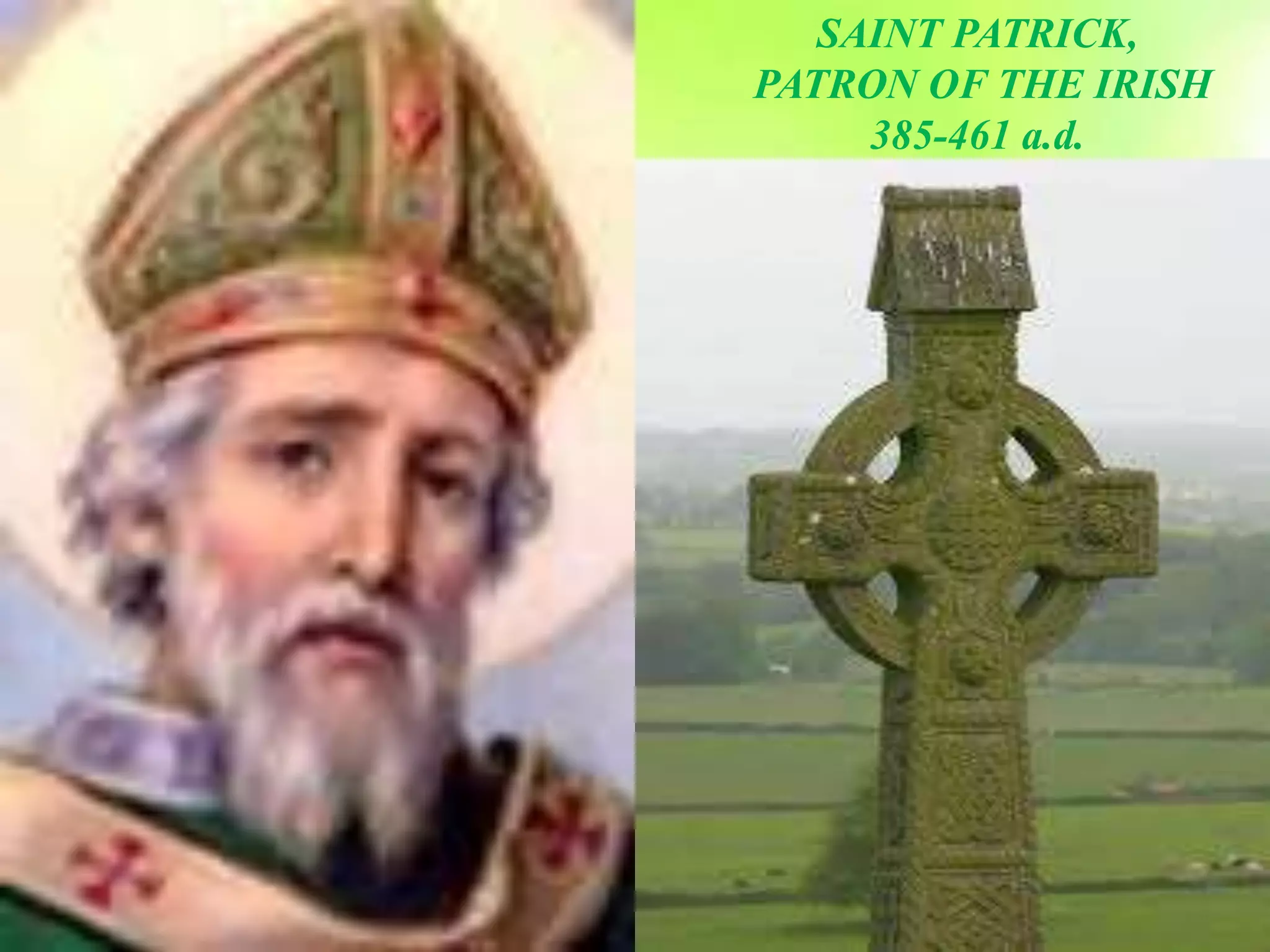
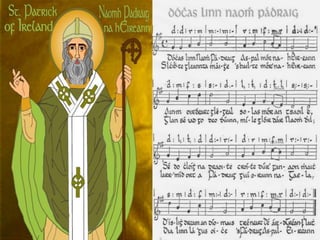
SAINT PATRICK,
PATRON OF THE IRISH
385-461 a.d.
Most of what we know
about Patrick comes from
his book of confessions
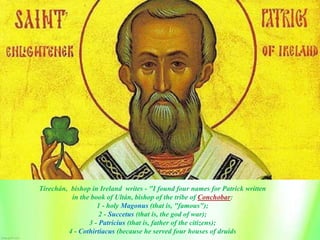
Tírechán, bishop in Ireland writes - "I found four names for Patrick written
in the book of Ultán, bishop of the tribe of Conchobar:
1 - holy Magonus (that is, "famous");
2 - Succetus (that is, the god of war);
3 - Patricius (that is, father of the citizens);
4 - Cothirtiacus (because he served four houses of druids
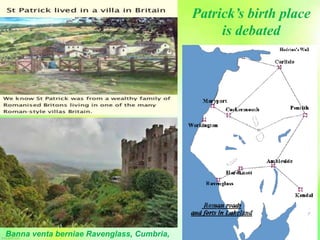
Banna venta berniae Ravenglass, Cumbria,
Patrick’s birth place
is debated
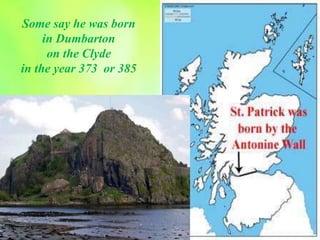
Some say he was born
in Dumbarton
on the Clyde
in the year 373 or 385
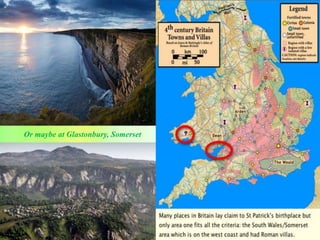
Or maybe at Glastonbury, Somerset
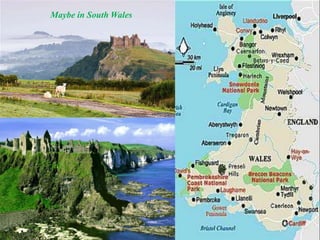
Maybe in South Wales
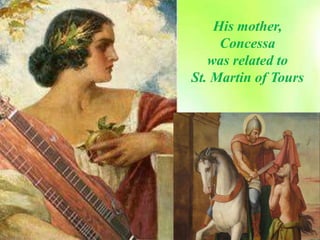
His mother,
Concessa
was related to
St. Martin of Tours
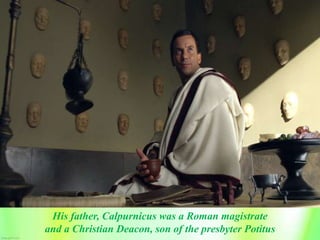
His father, Calpurnicus was a Roman magistrate
and a Christian Deacon, son of the presbyter Potitus
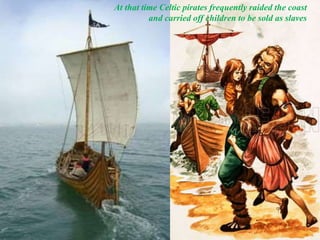
At that time Celtic pirates frequently raided the coast
and carried off children to be sold as slaves
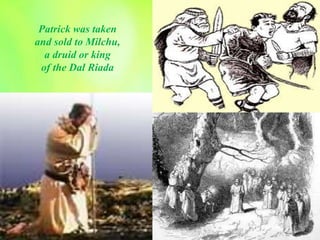
Patrick was taken
and sold to Milchu,
a druid or king
of the Dal Riada
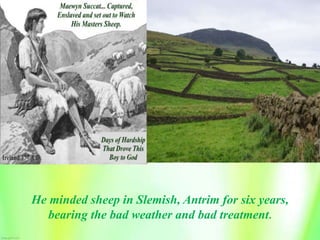
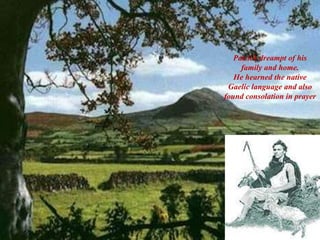
He minded sheep in Slemish, Antrim for six years,
bearing the bad weather and bad treatment.
Patrick dreampt of his
family and home.
He hearned the native
Gaelic language and also
found consolation in prayer
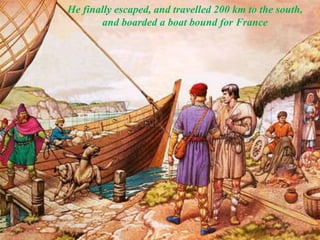
He finally escaped, and travelled 200 km to the south,
and boarded a boat bound for France
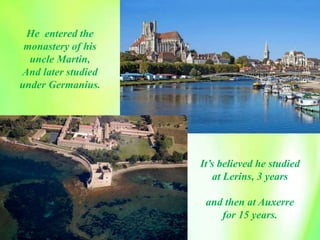
It’s believed he studied
at Lerins, 3 years
and then at Auxerre
for 15 years.
He entered the
monastery of his
uncle Martin,
And later studied
under Germanius.
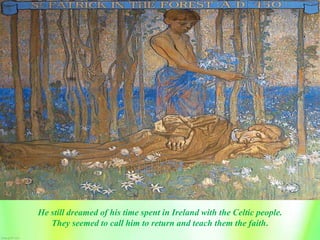
He still dreamed of his time spent in Ireland with the Celtic people.
They seemed to call him to return and teach them the faith.
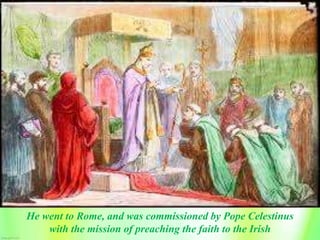
He went to Rome, and was commissioned by Pope Celestinus
with the mission of preaching the faith to the Irish
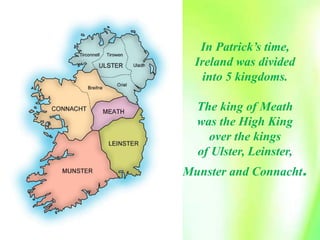
In Patrick’s time,
Ireland was divided
into 5 kingdoms.
The king of Meath
was the High King
over the kings
of Ulster, Leinster,
Munster and Connacht.
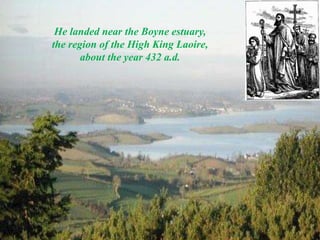
He landed near the Boyne estuary,
the region of the High King Laoire,
about the year 432 a.d.
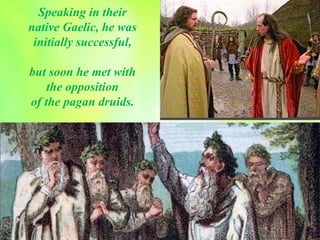
Speaking in their
native Gaelic, he was
initially successful,
but soon he met with
the opposition
of the pagan druids.
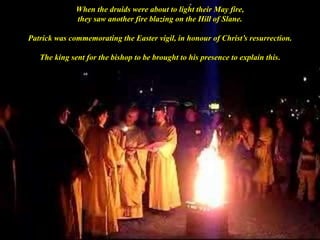
When the druids were about to light their May fire,
they saw another fire blazing on the Hill of Slane.
Patrick was commemorating the Easter vigil, in honour of Christ’s resurrection.
The king sent for the bishop to be brought to his presence to explain this.
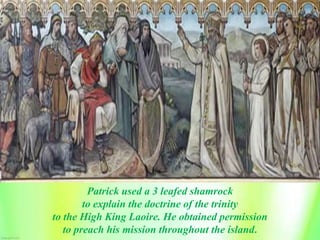
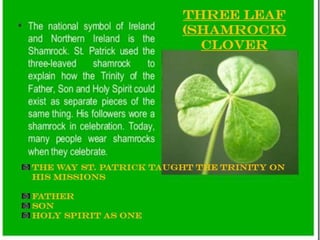
Patrick used a 3 leafed shamrock
to explain the doctrine of the trinity
to the High King Laoire. He obtained permission
to preach his mission throughout the island.
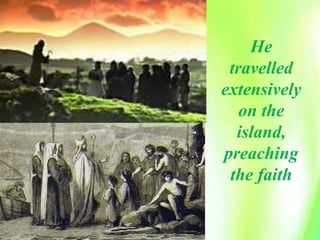
He
travelled
extensively
on the
island,
preaching
the faith
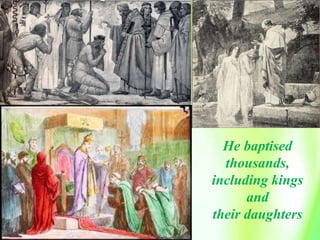
He baptised
thousands,
including kings
and
their daughters
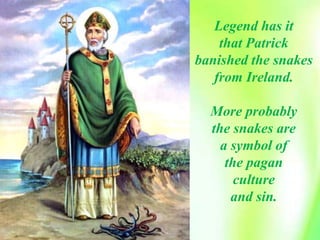
Legend has it
that Patrick
banished the snakes
from Ireland.
More probably
the snakes are
a symbol of
the pagan
culture
and sin.
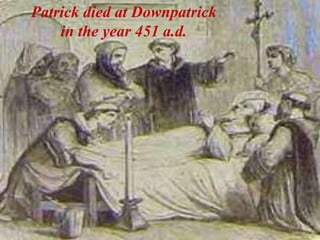
Patrick died at Downpatrick
in the year 451 a.d.
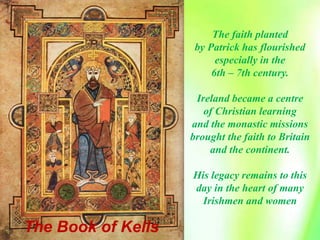
The faith planted
by Patrick has flourished
especially in the
6th – 7th century.
Ireland became a centre
of Christian learning
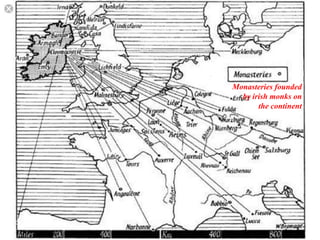
and the monastic missions
brought the faith to Britain
and the continent.
His legacy remains to this
day in the heart of many
Irishmen and women
The Book of Kells
Monasteries founded
by irish monks on
the continent
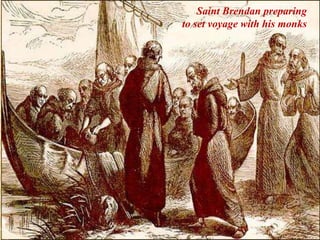
Saint Brendan preparing
to set voyage with his monks
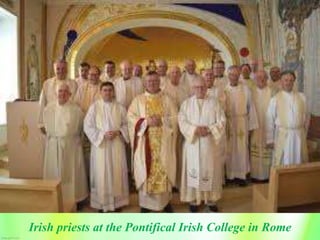
Irish priests at the Pontifical Irish College in Rome
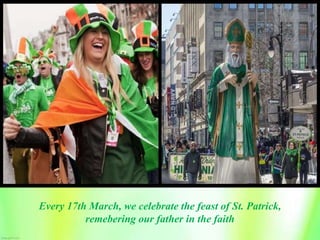
Every 17th March, we celebrate the feast of St. Patrick,
remebering our father in the faith
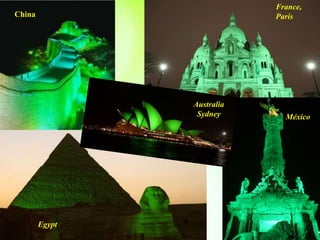
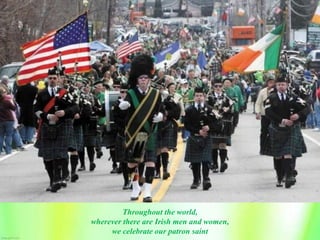
Throughout the world,
wherever there are Irish men and women,
we celebrate our patron saint
China
France,
Paris
Australia
Sydney México
Egypt
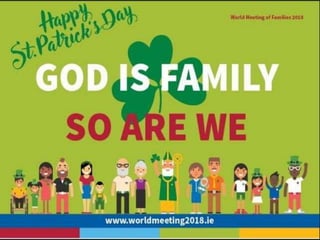
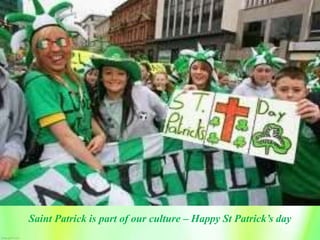
Saint Patrick is part of our culture – Happy St Patrick’s day
Saint Patrick and Ireland..

Saint Patrick and Ireland..