«I AM PATRICK, A SINNER, MOST UNCULTIVATED AND LEAST OF ALL THE FAITHFUL
AND DESPISED IN THE EYES OF MANY»
ST. PATRICK «CONFESSION»
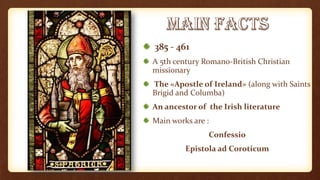
385 - 461
A 5th century Romano-British Christian
missionary
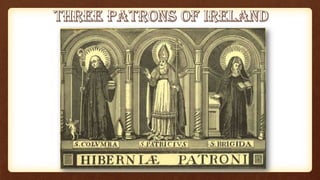
The «Apostle of Ireland» (along with Saints
Brigid and Columba)
An ancestor of the Irish literature
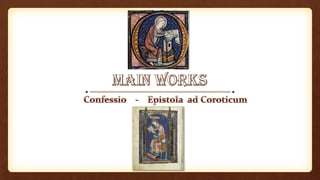
Main works are :
Confessio
Epistola ad Coroticum
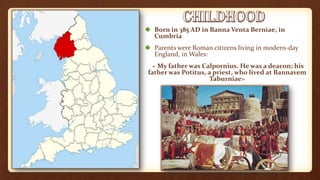
Born in 385 AD in Banna Venta Berniae, in
Cumbria
Parents were Roman citizens living in modern-day
England, in Wales:
« My father was Calpornius. He was a deacon; his
father was Potitus, a priest, who lived at Bannavem
Taburniae»
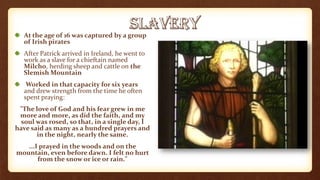
At the age of 16 was captured by a group
of Irish pirates
After Patrick arrived in Ireland, he went to
work as a slave for a chieftain named
Milcho, herding sheep and cattle on the
Slemish Mountain
Worked in that capacity for six years
and drew strength from the time he often
spent praying:
"The love of God and his fear grew in me
more and more, as did the faith, and my
soul was rosed, so that, in a single day, I
have said as many as a hundred prayers and
in the night, nearly the same.
...I prayed in the woods and on the
mountain, even before dawn. I felt no hurt
from the snow or ice or rain."
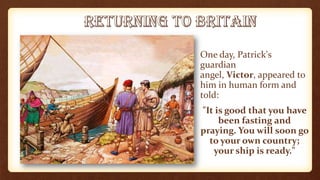
One day, Patrick's
guardian
angel, Victor, appeared to
him in human form and
told:
"It is good that you have
been fasting and
praying. You will soon go
to your own country;
your ship is ready."
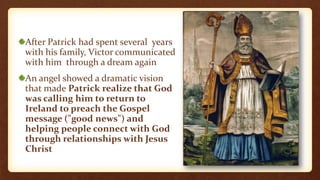
After Patrick had spent several years
with his family, Victor communicated
with him through a dream again
An angel showed a dramatic vision
that made Patrick realize that God
was calling him to return to
Ireland to preach the Gospel
message ("good news") and
helping people connect with God
through relationships with Jesus
Christ
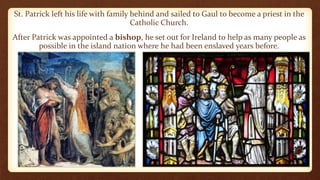
St. Patrick left his life with family behind and sailed to Gaul to become a priest in the
Catholic Church.
After Patrick was appointed a bishop, he set out for Ireland to help as many people as
possible in the island nation where he had been enslaved years before.
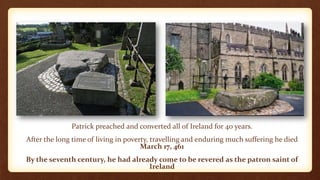
Patrick preached and converted all of Ireland for 40 years.
After the long time of living in poverty, travelling and enduring much suffering he died
March 17, 461
By the seventh century, he had already come to be revered as the patron saint of
Ireland
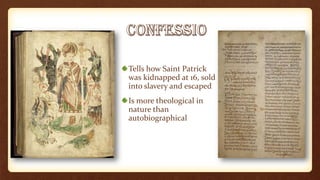
Tells how Saint Patrick
was kidnapped at 16, sold
into slavery and escaped
Is more theological in
nature than
autobiographical
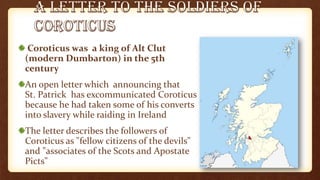
Coroticus was a king of Alt Clut
(modern Dumbarton) in the 5th
century
An open letter which announcing that
St. Patrick has excommunicated Coroticus
because he had taken some of his converts
into slavery while raiding in Ireland
The letter describes the followers of
Coroticus as "fellow citizens of the devils"
and "associates of the Scots and Apostate
Picts"
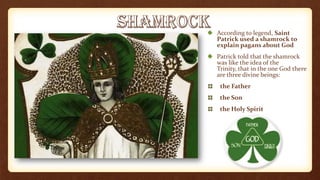
According to legend, Saint
Patrick used a shamrock to
explain pagans about God
Patrick told that the shamrock
was like the idea of the
Trinity, that in the one God there
are three divine beings:
the Father
the Son
the Holy Spirit
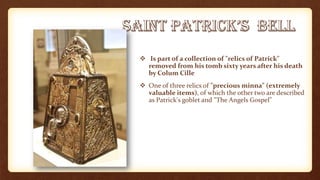
 Is part of a collection of "relics of Patrick"
removed from his tomb sixty years after his death
by Colum Cille
 One of three relics of "precious minna" (extremely
valuable items), of which the other two are described
as Patrick's goblet and "The Angels Gospel"
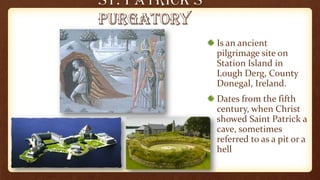
Is an ancient
pilgrimage site on
Station Island in
Lough Derg, County
Donegal, Ireland.
Dates from the fifth
century, when Christ
showed Saint Patrick a
cave, sometimes
referred to as a pit or a
hell
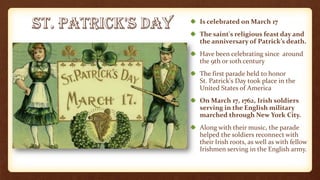
Is celebrated on March 17
The saint's religious feast day and
the anniversary of Patrick’s death.
Have been celebrating since around
the 9th or 10th century
The first parade held to honor
St. Patrick's Day took place in the
United States of America
On March 17, 1762, Irish soldiers
serving in the English military
marched through New York City.
Along with their music, the parade
helped the soldiers reconnect with
their Irish roots, as well as with fellow
Irishmen serving in the English army.
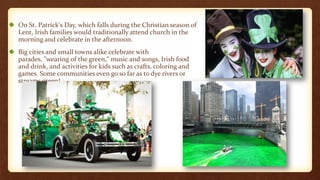
On St. Patrick's Day, which falls during the Christian season of
Lent, Irish families would traditionally attend church in the
morning and celebrate in the afternoon.
Big cities and small towns alike celebrate with
parades, "wearing of the green," music and songs, Irish food
and drink, and activities for kids such as crafts, coloring and
games. Some communities even go so far as to dye rivers or
streams green!
Saint Patrick was miraculously successful: Ireland
became a Christian nation as a result.
Patrick was a humble, pious, whose love and total devotion to
and trust in God should be a shining example to each of us.
He feared nothing, not even death, so complete was his trust
in God, and of the importance of his mission.
Saint Patrick

Saint Patrick

  • 1.
    «I AM PATRICK,A SINNER, MOST UNCULTIVATED AND LEAST OF ALL THE FAITHFUL AND DESPISED IN THE EYES OF MANY» ST. PATRICK «CONFESSION»
  • 2.
    385 - 461 A5th century Romano-British Christian missionary The «Apostle of Ireland» (along with Saints Brigid and Columba) An ancestor of the Irish literature Main works are : Confessio Epistola ad Coroticum
  • 4.
    Born in 385AD in Banna Venta Berniae, in Cumbria Parents were Roman citizens living in modern-day England, in Wales: « My father was Calpornius. He was a deacon; his father was Potitus, a priest, who lived at Bannavem Taburniae»
  • 6.
    At the ageof 16 was captured by a group of Irish pirates After Patrick arrived in Ireland, he went to work as a slave for a chieftain named Milcho, herding sheep and cattle on the Slemish Mountain Worked in that capacity for six years and drew strength from the time he often spent praying: "The love of God and his fear grew in me more and more, as did the faith, and my soul was rosed, so that, in a single day, I have said as many as a hundred prayers and in the night, nearly the same. ...I prayed in the woods and on the mountain, even before dawn. I felt no hurt from the snow or ice or rain."
  • 8.
    One day, Patrick's guardian angel,Victor, appeared to him in human form and told: "It is good that you have been fasting and praying. You will soon go to your own country; your ship is ready."
  • 9.
    After Patrick hadspent several years with his family, Victor communicated with him through a dream again An angel showed a dramatic vision that made Patrick realize that God was calling him to return to Ireland to preach the Gospel message ("good news") and helping people connect with God through relationships with Jesus Christ
  • 10.
    St. Patrick lefthis life with family behind and sailed to Gaul to become a priest in the Catholic Church. After Patrick was appointed a bishop, he set out for Ireland to help as many people as possible in the island nation where he had been enslaved years before.
  • 11.
    Patrick preached andconverted all of Ireland for 40 years. After the long time of living in poverty, travelling and enduring much suffering he died March 17, 461 By the seventh century, he had already come to be revered as the patron saint of Ireland
  • 13.
    Tells how SaintPatrick was kidnapped at 16, sold into slavery and escaped Is more theological in nature than autobiographical
  • 14.
    Coroticus was aking of Alt Clut (modern Dumbarton) in the 5th century An open letter which announcing that St. Patrick has excommunicated Coroticus because he had taken some of his converts into slavery while raiding in Ireland The letter describes the followers of Coroticus as "fellow citizens of the devils" and "associates of the Scots and Apostate Picts"
  • 16.
    According to legend,Saint Patrick used a shamrock to explain pagans about God Patrick told that the shamrock was like the idea of the Trinity, that in the one God there are three divine beings: the Father the Son the Holy Spirit
  • 17.
     Is partof a collection of "relics of Patrick" removed from his tomb sixty years after his death by Colum Cille  One of three relics of "precious minna" (extremely valuable items), of which the other two are described as Patrick's goblet and "The Angels Gospel"
  • 18.
    Is an ancient pilgrimagesite on Station Island in Lough Derg, County Donegal, Ireland. Dates from the fifth century, when Christ showed Saint Patrick a cave, sometimes referred to as a pit or a hell
  • 19.
    Is celebrated onMarch 17 The saint's religious feast day and the anniversary of Patrick’s death. Have been celebrating since around the 9th or 10th century The first parade held to honor St. Patrick's Day took place in the United States of America On March 17, 1762, Irish soldiers serving in the English military marched through New York City. Along with their music, the parade helped the soldiers reconnect with their Irish roots, as well as with fellow Irishmen serving in the English army.
  • 20.
    On St. Patrick'sDay, which falls during the Christian season of Lent, Irish families would traditionally attend church in the morning and celebrate in the afternoon. Big cities and small towns alike celebrate with parades, "wearing of the green," music and songs, Irish food and drink, and activities for kids such as crafts, coloring and games. Some communities even go so far as to dye rivers or streams green!
  • 21.
    Saint Patrick wasmiraculously successful: Ireland became a Christian nation as a result. Patrick was a humble, pious, whose love and total devotion to and trust in God should be a shining example to each of us. He feared nothing, not even death, so complete was his trust in God, and of the importance of his mission.