SAILING


RAMON PAGÀ, MARC SANSALONI, ALEIX VENTURA , JÚLIA
           ALEGRE I ALBERT MONTESÓ.
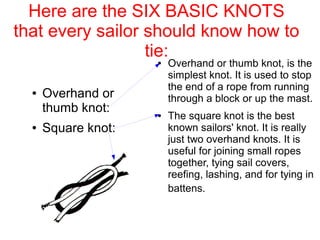
Here are the SIX BASIC KNOTS
that every sailor should know how to
                  tie:
                     ●   Overhand or thumb knot, is the
                         simplest knot. It is used to stop
                         the end of a rope from running
  ●   Overhand or        through a block or up the mast.
      thumb knot:    ●   The square knot is the best
  ●   Square knot:       known sailors' knot. It is really
                         just two overhand knots. It is
                         useful for joining small ropes
                         together, tying sail covers,
                         reefing, lashing, and for tying in
                         battens.
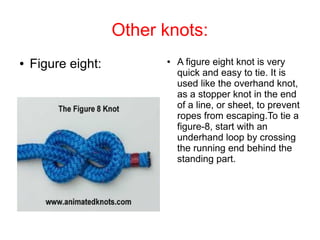
Other knots:
●   Figure eight:         ●   A figure eight knot is very
                              quick and easy to tie. It is
                              used like the overhand knot,
                              as a stopper knot in the end
                              of a line, or sheet, to prevent
                              ropes from escaping.To tie a
                              figure-8, start with an
                              underhand loop by crossing
                              the running end behind the
                              standing part.
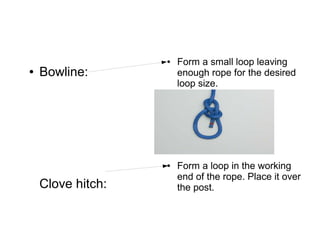
●   Form a small loop leaving
●   Bowline:           enough rope for the desired
                       loop size.


                   ●   Form a loop in the working
                       end of the rope. Place it over
    Clove hitch:       the post.
Types of Sailboats:

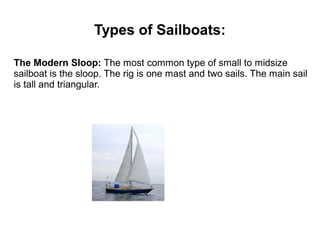
The Modern Sloop: The most common type of small to midsize
sailboat is the sloop. The rig is one mast and two sails. The main sail
is tall and triangular.
Racing Sloop:
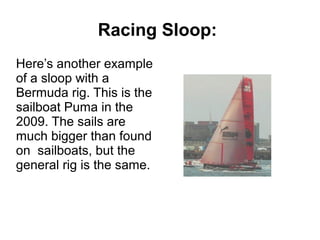
Here’s another example
of a sloop with a
Bermuda rig. This is the
sailboat Puma in the
2009. The sails are
much bigger than found
on sailboats, but the
general rig is the same.
Fractional Sloop Rig:
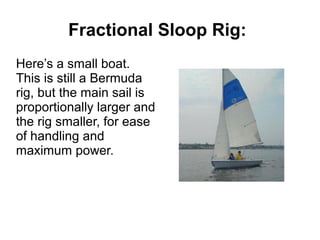
Here’s a small boat.
This is still a Bermuda
rig, but the main sail is
proportionally larger and
the rig smaller, for ease
of handling and
maximum power.
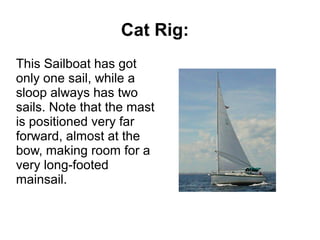
Cat Rig:
This Sailboat has got
only one sail, while a
sloop always has two
sails. Note that the mast
is positioned very far
forward, almost at the
bow, making room for a
very long-footed
mainsail.
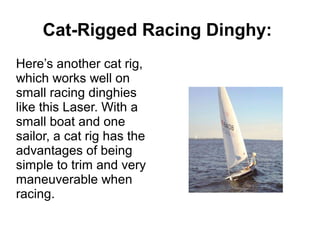
Cat-Rigged Racing Dinghy:
Here’s another cat rig,
which works well on
small racing dinghies
like this Laser. With a
small boat and one
sailor, a cat rig has the
advantages of being
simple to trim and very
maneuverable when
racing.
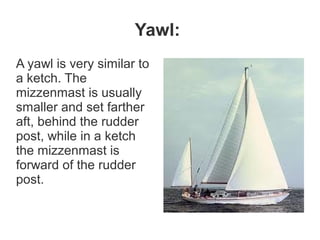
Yawl:
A yawl is very similar to
a ketch. The
mizzenmast is usually
smaller and set farther
aft, behind the rudder
post, while in a ketch
the mizzenmast is
forward of the rudder
post.
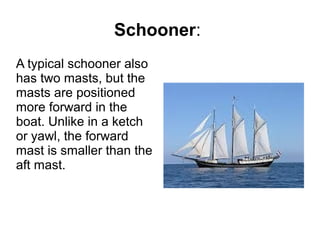
Schooner:
A typical schooner also
has two masts, but the
masts are positioned
more forward in the
boat. Unlike in a ketch
or yawl, the forward
mast is smaller than the
aft mast.
Parts of Boat
• MAST(màstil): Is the basic • PORT (babor): It’s the left
post that holds the big sail. part of the boat.
• FLOC (floc): It’s the       • BOW (proa): It’s the front
smallest sail and is situated of the boat.
in front of boat.             • AFT (popa): It’s the
• STARBOARD (estribor):       behind part of the boat.
It’s right part of the boat.   • FIN (aleta): It’s the corner
• TIMO (timó):It’s the         which is behind of casc.
essential part that controls   • SCOTUS (escota):
the direction of the boat.     Controls the opening of the
                               big sail and floc.
PARTS OF THE SAIL
• MAJOR (major): It’s     • DRISS (puny de
the biggest sail and is   drisa): It’s the point that
situated behind the floc. finishes the big sail.
●   ESPINNAKER(espinn      • BALUMA (baluma): It’s
    aker): It’s a very     the exterior part of the
    potent sail which is   sail where the wind
    used in the biggest    exits.
    boats.                 • GRÀTIL (gràtil): It’s the
                           interior part of the sail
                           where the wind enters.

Sailing

  • 1.
    SAILING RAMON PAGÀ, MARCSANSALONI, ALEIX VENTURA , JÚLIA ALEGRE I ALBERT MONTESÓ.
  • 2.
    Here are theSIX BASIC KNOTS that every sailor should know how to tie: ● Overhand or thumb knot, is the simplest knot. It is used to stop the end of a rope from running ● Overhand or through a block or up the mast. thumb knot: ● The square knot is the best ● Square knot: known sailors' knot. It is really just two overhand knots. It is useful for joining small ropes together, tying sail covers, reefing, lashing, and for tying in battens.
  • 3.
    Other knots: ● Figure eight: ● A figure eight knot is very quick and easy to tie. It is used like the overhand knot, as a stopper knot in the end of a line, or sheet, to prevent ropes from escaping.To tie a figure-8, start with an underhand loop by crossing the running end behind the standing part.
  • 4.
    Form a small loop leaving ● Bowline: enough rope for the desired loop size. ● Form a loop in the working end of the rope. Place it over Clove hitch: the post.
  • 5.
    Types of Sailboats: TheModern Sloop: The most common type of small to midsize sailboat is the sloop. The rig is one mast and two sails. The main sail is tall and triangular.
  • 6.
    Racing Sloop: Here’s anotherexample of a sloop with a Bermuda rig. This is the sailboat Puma in the 2009. The sails are much bigger than found on sailboats, but the general rig is the same.
  • 7.
    Fractional Sloop Rig: Here’sa small boat. This is still a Bermuda rig, but the main sail is proportionally larger and the rig smaller, for ease of handling and maximum power.
  • 8.
    Cat Rig: This Sailboathas got only one sail, while a sloop always has two sails. Note that the mast is positioned very far forward, almost at the bow, making room for a very long-footed mainsail.
  • 9.
    Cat-Rigged Racing Dinghy: Here’sanother cat rig, which works well on small racing dinghies like this Laser. With a small boat and one sailor, a cat rig has the advantages of being simple to trim and very maneuverable when racing.
  • 10.
    Yawl: A yawl isvery similar to a ketch. The mizzenmast is usually smaller and set farther aft, behind the rudder post, while in a ketch the mizzenmast is forward of the rudder post.
  • 11.
    Schooner: A typical schooneralso has two masts, but the masts are positioned more forward in the boat. Unlike in a ketch or yawl, the forward mast is smaller than the aft mast.
  • 12.
    Parts of Boat •MAST(màstil): Is the basic • PORT (babor): It’s the left post that holds the big sail. part of the boat. • FLOC (floc): It’s the • BOW (proa): It’s the front smallest sail and is situated of the boat. in front of boat. • AFT (popa): It’s the • STARBOARD (estribor): behind part of the boat. It’s right part of the boat. • FIN (aleta): It’s the corner • TIMO (timó):It’s the which is behind of casc. essential part that controls • SCOTUS (escota): the direction of the boat. Controls the opening of the big sail and floc.
  • 13.
    PARTS OF THESAIL • MAJOR (major): It’s • DRISS (puny de the biggest sail and is drisa): It’s the point that situated behind the floc. finishes the big sail. ● ESPINNAKER(espinn • BALUMA (baluma): It’s aker): It’s a very the exterior part of the potent sail which is sail where the wind used in the biggest exits. boats. • GRÀTIL (gràtil): It’s the interior part of the sail where the wind enters.