2011 Diversity Survey Update:
         Key Findings *

           Presented by: Leslie M. Altman
                * Source 2011 MSBA
              Diversity Survey Update

May 2012
History
• 1992 HCBA produces Glass Ceiling Task Force
  Report
• 1992 Self Audit for Gender Equity (SAGE)
  program starts
• 2002 First SAGE study
• 2003 MSBA approves SAGE Best Practices
• 2005-06 MSBA Task Force on diversity
  gender, race, sexual
  orientation, religion, disability
• 2010 - 2011 Diversity Survey Update
Methodology
Employer survey
• 42 law firm participants
• 65 non firm participants
     • Included questions about # of GLBT and
       disabled attorneys
Individual survey
     • 1,100 respondents
     • more attorneys with 5 years or less experience
Focus groups — 10 conducted
Firm Composition/Women
Firm Composition/Attorneys of Color
Non Firm Composition/Women
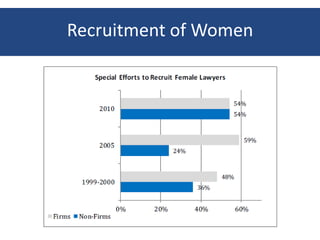
Recruitment of Women
Recruitment of Attorneys of Color
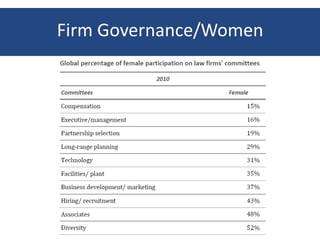
Firm Governance/Women
Firm Governance/Attorneys of Color
Key Committees/Attorneys of Color
Firm Compensation/Women
Non Firm Compensation/Women
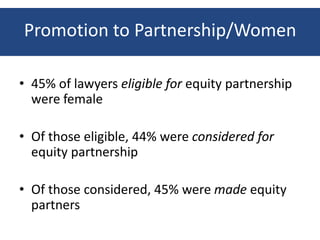
Promotion to Partnership/Women

• 45% of lawyers eligible for equity partnership
  were female

• Of those eligible, 44% were considered for
  equity partnership

• Of those considered, 45% were made equity
  partners
Promotion to Partnership/
           Attorneys Of Color
• 4% of lawyers eligible for equity partnership
  were of color
• Of those eligible, 5% were considered for
  equity partnership
• Of those considered, 7% of lawyers were
  made equity partners
• No lawyers of color were eligible for
  non-equity partnership
Promotion of Women/Non Firms
• 59% of lawyers eligible for promotion to
  supervisory positions were women
• Of those eligible, 55% were considered for
  promotion to supervisory positions
• Of those eligible, 71% were promoted to
  supervisory positions
Promotion of Attorneys
           of Color/Non Firms

• 16% of lawyers eligible for promotion to
  supervisory positions were of color

• Of those eligible, 18% of were considered for
  promotion to supervisory positions

• Of those considered, 14% were promoted to
  supervisory positions
Compensation Criteria/Firms

• For associates the top criterion for setting
  compensation was billable hours

• For equity/non-equity partners the top
  criterion for setting compensation was
  business generation
Compensation Criteria/Non Firms
• The top criteria for setting compensation at
  non firms for all attorneys were:

  – Performance evaluation results

  – Quality of work

  – Communication skills
Work Distribution
Firms
• One quarter had formalized criteria for work
   distribution to associates
• None had formalized criteria for work distribution to
   partners

Non Firms
• Nearly half had formalized criteria for work distribution
  to attorneys with less than 5 years experience
• Nearly one third had formalized criteria for work
  distribution to supervisory attorneys
Performance Evaluations
Firms
• All associates receive reviews
• 32% of equity partners receive reviews
• 21% of non equity partners receive reviews

Non Firms
• All permanent attorneys receive reviews
Perception of Bias
Conclusion

• Some progress

• More to be done
    Work distribution
    Compensation
    Succession planning
    Unconscious bias
Questions?
2011 Diversity Survey
      Update:
    Key Findings
     April 2012

Sage survey presentation

  • 1.
    2011 Diversity SurveyUpdate: Key Findings * Presented by: Leslie M. Altman * Source 2011 MSBA Diversity Survey Update May 2012
  • 2.
    History • 1992 HCBAproduces Glass Ceiling Task Force Report • 1992 Self Audit for Gender Equity (SAGE) program starts • 2002 First SAGE study • 2003 MSBA approves SAGE Best Practices • 2005-06 MSBA Task Force on diversity gender, race, sexual orientation, religion, disability • 2010 - 2011 Diversity Survey Update
  • 3.
    Methodology Employer survey • 42law firm participants • 65 non firm participants • Included questions about # of GLBT and disabled attorneys Individual survey • 1,100 respondents • more attorneys with 5 years or less experience Focus groups — 10 conducted
  • 4.
  • 5.
  • 6.
  • 7.
  • 8.
  • 9.
  • 10.
  • 11.
  • 12.
  • 13.
  • 14.
    Promotion to Partnership/Women •45% of lawyers eligible for equity partnership were female • Of those eligible, 44% were considered for equity partnership • Of those considered, 45% were made equity partners
  • 15.
    Promotion to Partnership/ Attorneys Of Color • 4% of lawyers eligible for equity partnership were of color • Of those eligible, 5% were considered for equity partnership • Of those considered, 7% of lawyers were made equity partners • No lawyers of color were eligible for non-equity partnership
  • 16.
    Promotion of Women/NonFirms • 59% of lawyers eligible for promotion to supervisory positions were women • Of those eligible, 55% were considered for promotion to supervisory positions • Of those eligible, 71% were promoted to supervisory positions
  • 17.
    Promotion of Attorneys of Color/Non Firms • 16% of lawyers eligible for promotion to supervisory positions were of color • Of those eligible, 18% of were considered for promotion to supervisory positions • Of those considered, 14% were promoted to supervisory positions
  • 18.
    Compensation Criteria/Firms • Forassociates the top criterion for setting compensation was billable hours • For equity/non-equity partners the top criterion for setting compensation was business generation
  • 19.
    Compensation Criteria/Non Firms •The top criteria for setting compensation at non firms for all attorneys were: – Performance evaluation results – Quality of work – Communication skills
  • 20.
    Work Distribution Firms • Onequarter had formalized criteria for work distribution to associates • None had formalized criteria for work distribution to partners Non Firms • Nearly half had formalized criteria for work distribution to attorneys with less than 5 years experience • Nearly one third had formalized criteria for work distribution to supervisory attorneys
  • 21.
    Performance Evaluations Firms • Allassociates receive reviews • 32% of equity partners receive reviews • 21% of non equity partners receive reviews Non Firms • All permanent attorneys receive reviews
  • 22.
  • 23.
    Conclusion • Some progress •More to be done Work distribution Compensation Succession planning Unconscious bias
  • 24.
  • 25.
    2011 Diversity Survey Update: Key Findings April 2012