Bullying prevention and response: A GUIDE FOR SCHOOLS
New Zealand Government
By:
Estrella Sotomayor Ruth
Feijoo Zambrano Katherine
López Robalino Michelle
Teacher:
Master Miguel Ponce Medina
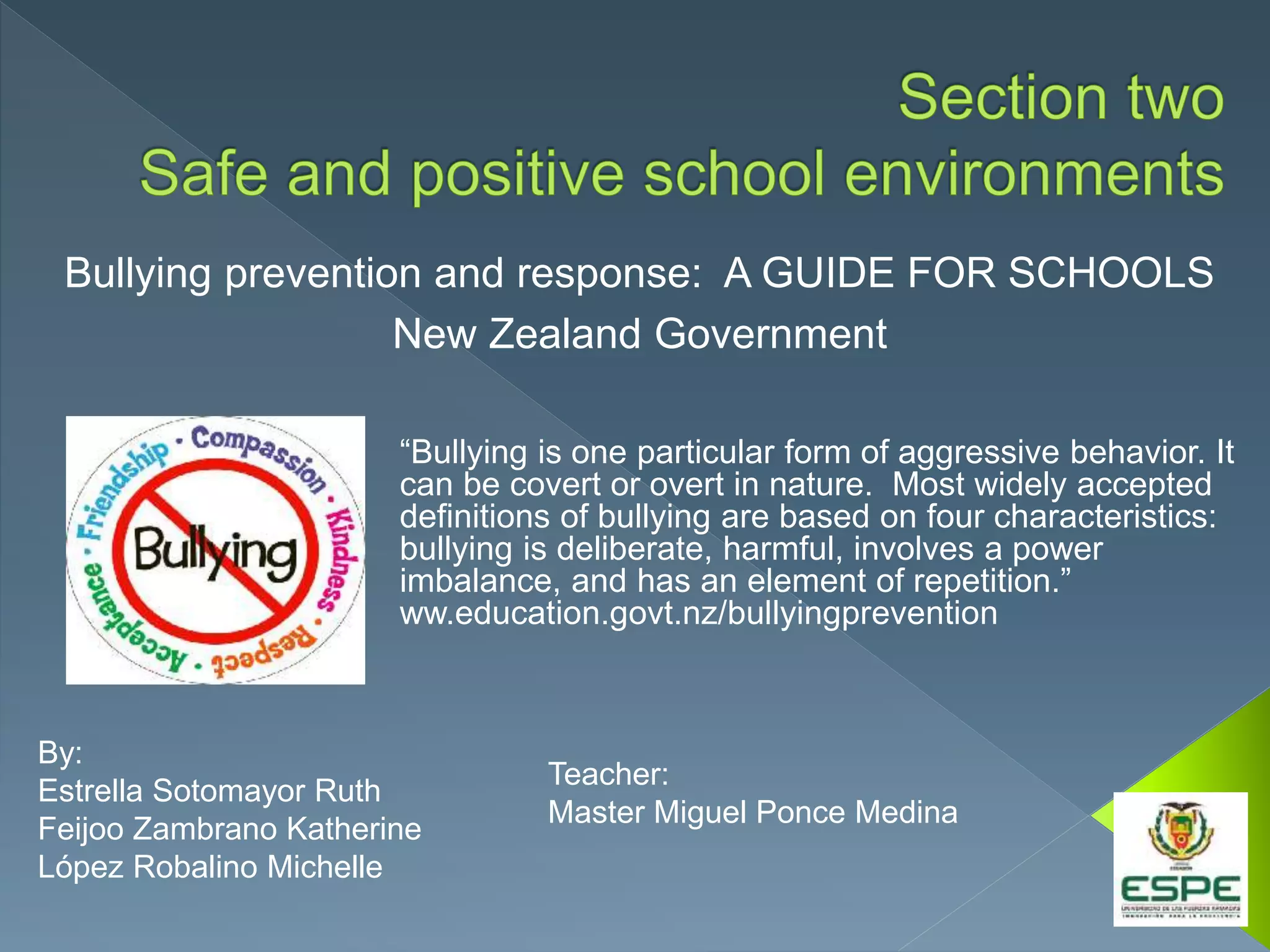
“Bullying is one particular form of aggressive behavior. It
can be covert or overt in nature. Most widely accepted
definitions of bullying are based on four characteristics:
bullying is deliberate, harmful, involves a power
imbalance, and has an element of repetition.”
ww.education.govt.nz/bullyingprevention
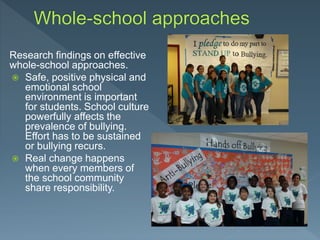
Research findings on effective
whole-school approaches.
 Safe, positive physical and
emotional school
environment is important
for students. School culture
powerfully affects the
prevalence of bullying.
Effort has to be sustained
or bullying recurs.
 Real change happens
when every members of
the school community
share responsibility.
 Strategies to reduce bullying are most
effective when they are part of a wider
focus on creating a positive climate.
Positive social values. Strong leadership
and staff.
 Effective approaches address different
aspects of school life including: Climate,
opportunities for students, social
support, offering professional learning
opportunities for staff.
 Whole-school approaches should extend
into the local community by involving
local sports groups and youth
organizations. Parents have an
important role to play in reverting
bullying.
Guidance about aligning bullying
prevention with the curriculum.
 For maximum impact, bullying
prevention approaches should
align with good teaching practice
and the Curriculum: managing
self, self-motivation, a can-do
attitude, students seeing
themselves as capable learners,
interacting effectively with a
diverse range of people in a
variety of contexts, participating
and contributing being actively
involved in communities.
 Bullying approaches should align
with the Health and Physical
Education (HPE) learning area of
the curriculum. Students are
encouraged to demonstrate
empathy and take responsible
and critical action to contribute to
healthy communities and
environments. Principles of
tolerance and respect for others
must be tough.
 Schools have to explore how
digital technology can supplement
traditional ways of teaching and
enhance opportunities for
students to participate in
communities beyond the
classroom.
 Develop the digital literacy of
students, with teachers’ guidance.
 “One of the most powerful messages teachers
can send students, is to always model
respectful interactions through their actions,
tone of voice, words and non-verbal gestures.
Teachers’ attitudes are central to the task of
supporting students’ relationships with each
other.” (McCay & Keyes, 2002)
 Many schools have responded to bullying incidents using
punishment and does not take account of research findings that:
› bullying incidents often go unreported
› a common student perception is that schools will not address their concerns
› reporting bullying to teachers can make the bullying worse.
 Approaches that work well address incidents of bullying through social
problem solving. This means that students, parents and whānau working
with school staff to create solutions.
 Effective bullying prevention approaches and
programs involve the following elements:
› commitment to a whole-school approach
› a focus on developing healthy social behaviors
and strategies
› provision for planning and regular monitoring and
evaluation of outcomes
› a long-term sustainable approach
› professional development for all staff.
 For bullying prevention programs to be effective and
sustainable schools need to have:
› an ongoing commitment and focus on, fostering a positive,
inclusive and respectful school environment that values
diversity
› good data systems to collect relevant information
› efficient progress
monitoring tools
› skilled and
competent staff
› ongoing and
embedded professional
learning and
development for all staff
 Wellbeing@School
› it is an evidence-based self-review approach that
schools can use to guide their work on preventing
bullying through developing safe, positive physical
and emotional school environments
 Positive Behaviour for Learning (PB4L): School-
Wide
› It is based on the premise that all students should
have access to support to prevent the development
and occurrence of problem behaviour, including
bullying behaviour.
 Kia Kaha
› a school-based program run by New Zealand Police that
helps schools create environments where all members
of the community feel safe, respected and valued, and
where bullying cannot flourish.
 Restorative practice
› an approach that can be used in response to behavior
such as bullying. Restorative practice can be part of a
wider approach that teaches students positive skills for
relating to others, rather than relying only on punishment
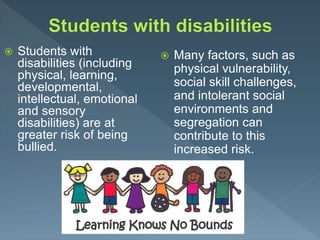
 Students with
disabilities (including
physical, learning,
developmental,
intellectual, emotional
and sensory
disabilities) are at
greater risk of being
bullied.
 Many factors, such as
physical vulnerability,
social skill challenges,
and intolerant social
environments and
segregation can
contribute to this
increased risk.
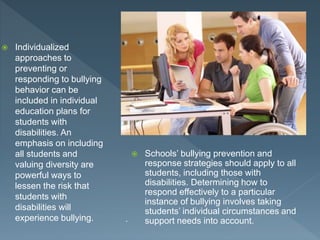
 Individualized
approaches to
preventing or
responding to bullying
behavior can be
included in individual
education plans for
students with
disabilities. An
emphasis on including
all students and
valuing diversity are
powerful ways to
lessen the risk that
students with
disabilities will
experience bullying. .
 Schools’ bullying prevention and
response strategies should apply to all
students, including those with
disabilities. Determining how to
respond effectively to a particular
instance of bullying involves taking
students’ individual circumstances and
support needs into account.
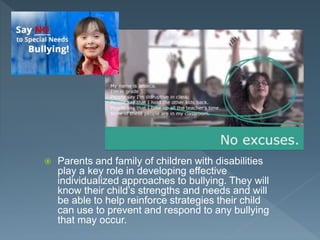
 Parents and family of children with disabilities
play a key role in developing effective
individualized approaches to bullying. They will
know their child’s strengths and needs and will
be able to help reinforce strategies their child
can use to prevent and respond to any bullying
that may occur.
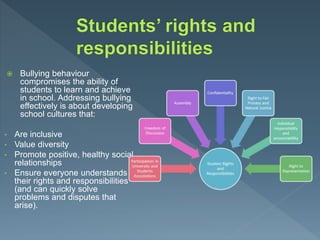
 Bullying behaviour
compromises the ability of
students to learn and achieve
in school. Addressing bullying
effectively is about developing
school cultures that:
• Are inclusive
• Value diversity
• Promote positive, healthy social
relationships
• Ensure everyone understands
their rights and responsibilities
(and can quickly solve
problems and disputes that
arise).
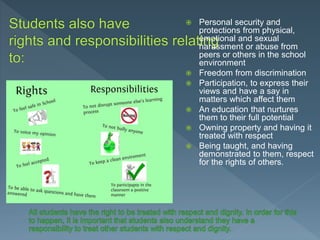
 Personal security and
protections from physical,
emotional and sexual
harassment or abuse from
peers or others in the school
environment
 Freedom from discrimination
 Participation, to express their
views and have a say in
matters which affect them
 An education that nurtures
them to their full potential
 Owning property and having it
treated with respect
 Being taught, and having
demonstrated to them, respect
for the rights of others.

Safe and positive school environments section 2

  • 1.
    Bullying prevention andresponse: A GUIDE FOR SCHOOLS New Zealand Government By: Estrella Sotomayor Ruth Feijoo Zambrano Katherine López Robalino Michelle Teacher: Master Miguel Ponce Medina “Bullying is one particular form of aggressive behavior. It can be covert or overt in nature. Most widely accepted definitions of bullying are based on four characteristics: bullying is deliberate, harmful, involves a power imbalance, and has an element of repetition.” ww.education.govt.nz/bullyingprevention
  • 2.
    Research findings oneffective whole-school approaches.  Safe, positive physical and emotional school environment is important for students. School culture powerfully affects the prevalence of bullying. Effort has to be sustained or bullying recurs.  Real change happens when every members of the school community share responsibility.
  • 3.
     Strategies toreduce bullying are most effective when they are part of a wider focus on creating a positive climate. Positive social values. Strong leadership and staff.  Effective approaches address different aspects of school life including: Climate, opportunities for students, social support, offering professional learning opportunities for staff.  Whole-school approaches should extend into the local community by involving local sports groups and youth organizations. Parents have an important role to play in reverting bullying.
  • 4.
    Guidance about aligningbullying prevention with the curriculum.  For maximum impact, bullying prevention approaches should align with good teaching practice and the Curriculum: managing self, self-motivation, a can-do attitude, students seeing themselves as capable learners, interacting effectively with a diverse range of people in a variety of contexts, participating and contributing being actively involved in communities.
  • 5.
     Bullying approachesshould align with the Health and Physical Education (HPE) learning area of the curriculum. Students are encouraged to demonstrate empathy and take responsible and critical action to contribute to healthy communities and environments. Principles of tolerance and respect for others must be tough.  Schools have to explore how digital technology can supplement traditional ways of teaching and enhance opportunities for students to participate in communities beyond the classroom.  Develop the digital literacy of students, with teachers’ guidance.
  • 6.
     “One ofthe most powerful messages teachers can send students, is to always model respectful interactions through their actions, tone of voice, words and non-verbal gestures. Teachers’ attitudes are central to the task of supporting students’ relationships with each other.” (McCay & Keyes, 2002)
  • 7.
     Many schoolshave responded to bullying incidents using punishment and does not take account of research findings that: › bullying incidents often go unreported › a common student perception is that schools will not address their concerns › reporting bullying to teachers can make the bullying worse.  Approaches that work well address incidents of bullying through social problem solving. This means that students, parents and whānau working with school staff to create solutions.
  • 8.
     Effective bullyingprevention approaches and programs involve the following elements: › commitment to a whole-school approach › a focus on developing healthy social behaviors and strategies › provision for planning and regular monitoring and evaluation of outcomes › a long-term sustainable approach › professional development for all staff.
  • 9.
     For bullyingprevention programs to be effective and sustainable schools need to have: › an ongoing commitment and focus on, fostering a positive, inclusive and respectful school environment that values diversity › good data systems to collect relevant information › efficient progress monitoring tools › skilled and competent staff › ongoing and embedded professional learning and development for all staff
  • 10.
     Wellbeing@School › itis an evidence-based self-review approach that schools can use to guide their work on preventing bullying through developing safe, positive physical and emotional school environments  Positive Behaviour for Learning (PB4L): School- Wide › It is based on the premise that all students should have access to support to prevent the development and occurrence of problem behaviour, including bullying behaviour.
  • 11.
     Kia Kaha ›a school-based program run by New Zealand Police that helps schools create environments where all members of the community feel safe, respected and valued, and where bullying cannot flourish.  Restorative practice › an approach that can be used in response to behavior such as bullying. Restorative practice can be part of a wider approach that teaches students positive skills for relating to others, rather than relying only on punishment
  • 12.
     Students with disabilities(including physical, learning, developmental, intellectual, emotional and sensory disabilities) are at greater risk of being bullied.  Many factors, such as physical vulnerability, social skill challenges, and intolerant social environments and segregation can contribute to this increased risk.
  • 13.
     Individualized approaches to preventingor responding to bullying behavior can be included in individual education plans for students with disabilities. An emphasis on including all students and valuing diversity are powerful ways to lessen the risk that students with disabilities will experience bullying. .  Schools’ bullying prevention and response strategies should apply to all students, including those with disabilities. Determining how to respond effectively to a particular instance of bullying involves taking students’ individual circumstances and support needs into account.
  • 14.
     Parents andfamily of children with disabilities play a key role in developing effective individualized approaches to bullying. They will know their child’s strengths and needs and will be able to help reinforce strategies their child can use to prevent and respond to any bullying that may occur.
  • 15.
     Bullying behaviour compromisesthe ability of students to learn and achieve in school. Addressing bullying effectively is about developing school cultures that: • Are inclusive • Value diversity • Promote positive, healthy social relationships • Ensure everyone understands their rights and responsibilities (and can quickly solve problems and disputes that arise).
  • 16.
     Personal securityand protections from physical, emotional and sexual harassment or abuse from peers or others in the school environment  Freedom from discrimination  Participation, to express their views and have a say in matters which affect them  An education that nurtures them to their full potential  Owning property and having it treated with respect  Being taught, and having demonstrated to them, respect for the rights of others.