Developing a Women-Led Replicable Model on
        WASH: Experience from Odisha


                 Manas Kumar Biswal
                 State Programme Officer


  Regional Centre for Development Cooperation


  National Conference on Women-led Water Management:
    Strategies towards water sustainability in rural India
            November 5-6, 2012, Gurgaon, India
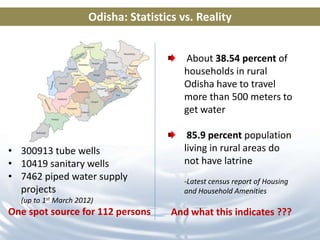
Odisha: Statistics vs. Reality


                                          About 38.54 percent of
                                          households in rural
                                          Odisha have to travel
                                          more than 500 meters to
                                          get water

                                           85.9 percent population
• 300913 tube wells                       living in rural areas do
• 10419 sanitary wells                    not have latrine
• 7462 piped water supply                 -Latest census report of Housing
  projects                                and Household Amenities
  (up to 1st March 2012)
One spot source for 112 persons        And what this indicates ???
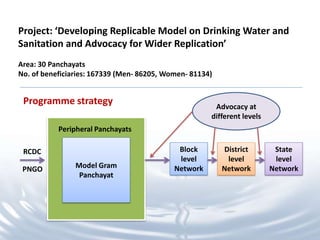
Project: ‘Developing Replicable Model on Drinking Water and
Sanitation and Advocacy for Wider Replication’
Area: 30 Panchayats
No. of beneficiaries: 167339 (Men- 86205, Women- 81134)


 Programme strategy                                    Advocacy at
                                                      different levels
           Peripheral Panchayats

 RCDC                                        Block        District        State
                                             level         level          level
 PNGO           Model Gram                  Network       Network        Network
                 Panchayat
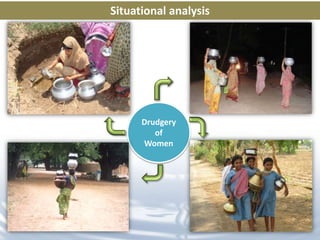
Situational analysis


      Drudgery
         of
      Women
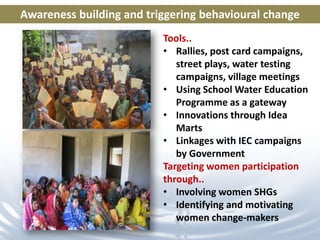
Awareness building and triggering behavioural change
                          Tools..
                          • Rallies, post card campaigns,
                             street plays, water testing
                             campaigns, village meetings
                          • Using School Water Education
                             Programme as a gateway
                          • Innovations through Idea
                             Marts
                          • Linkages with IEC campaigns
                             by Government
                          Targeting women participation
                          through..
                          • Involving women SHGs
                          • Identifying and motivating
                             women change-makers
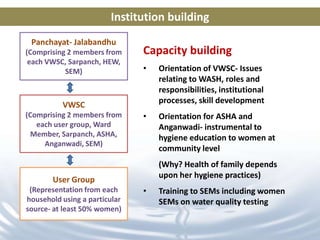
Institution building
 Panchayat- Jalabandhu
(Comprising 2 members from     Capacity building
 each VWSC, Sarpanch, HEW,
           SEM)                •   Orientation of VWSC- Issues
                                   relating to WASH, roles and
                                   responsibilities, institutional
                                   processes, skill development
          VWSC
(Comprising 2 members from     •   Orientation for ASHA and
   each user group, Ward           Anganwadi- instrumental to
  Member, Sarpanch, ASHA,          hygiene education to women at
     Anganwadi, SEM)
                                   community level
                                   (Why? Health of family depends
                                   upon her hygiene practices)
       User Group
 (Representation from each     •   Training to SEMs including women
household using a particular       SEMs on water quality testing
source- at least 50% women)
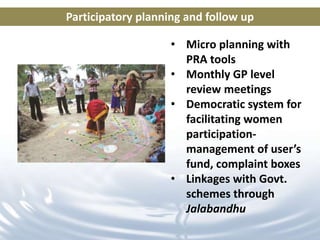
Participatory planning and follow up

                    • Micro planning with
                      PRA tools
                    • Monthly GP level
                      review meetings
                    • Democratic system for
                      facilitating women
                      participation-
                      management of user’s
                      fund, complaint boxes
                    • Linkages with Govt.
                      schemes through
                      Jalabandhu
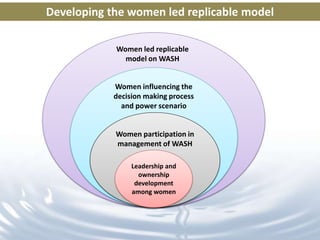
Developing the women led replicable model

            Women led replicable
              model on WASH


            Women influencing the
            decision making process
              and power scenario


            Women participation in
            management of WASH

                 Leadership and
                   ownership
                  development
                 among women
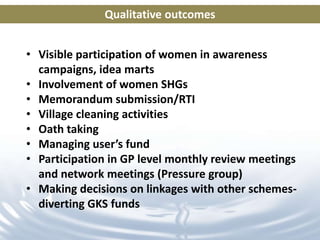
Qualitative outcomes


• Visible participation of women in awareness
  campaigns, idea marts
• Involvement of women SHGs
• Memorandum submission/RTI
• Village cleaning activities
• Oath taking
• Managing user’s fund
• Participation in GP level monthly review meetings
  and network meetings (Pressure group)
• Making decisions on linkages with other schemes-
  diverting GKS funds
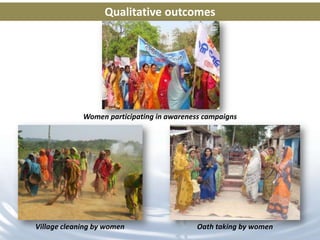
Qualitative outcomes


             Women participating in awareness campaigns


Village cleaning by women                   Oath taking by women

S3 4 manas biswal

  • 1.
    Developing a Women-LedReplicable Model on WASH: Experience from Odisha Manas Kumar Biswal State Programme Officer Regional Centre for Development Cooperation National Conference on Women-led Water Management: Strategies towards water sustainability in rural India November 5-6, 2012, Gurgaon, India
  • 2.
    Odisha: Statistics vs.Reality About 38.54 percent of households in rural Odisha have to travel more than 500 meters to get water 85.9 percent population • 300913 tube wells living in rural areas do • 10419 sanitary wells not have latrine • 7462 piped water supply -Latest census report of Housing projects and Household Amenities (up to 1st March 2012) One spot source for 112 persons And what this indicates ???
  • 3.
    Project: ‘Developing ReplicableModel on Drinking Water and Sanitation and Advocacy for Wider Replication’ Area: 30 Panchayats No. of beneficiaries: 167339 (Men- 86205, Women- 81134) Programme strategy Advocacy at different levels Peripheral Panchayats RCDC Block District State level level level PNGO Model Gram Network Network Network Panchayat
  • 4.
    Situational analysis Drudgery of Women
  • 5.
    Awareness building andtriggering behavioural change Tools.. • Rallies, post card campaigns, street plays, water testing campaigns, village meetings • Using School Water Education Programme as a gateway • Innovations through Idea Marts • Linkages with IEC campaigns by Government Targeting women participation through.. • Involving women SHGs • Identifying and motivating women change-makers
  • 6.
    Institution building Panchayat-Jalabandhu (Comprising 2 members from Capacity building each VWSC, Sarpanch, HEW, SEM) • Orientation of VWSC- Issues relating to WASH, roles and responsibilities, institutional processes, skill development VWSC (Comprising 2 members from • Orientation for ASHA and each user group, Ward Anganwadi- instrumental to Member, Sarpanch, ASHA, hygiene education to women at Anganwadi, SEM) community level (Why? Health of family depends upon her hygiene practices) User Group (Representation from each • Training to SEMs including women household using a particular SEMs on water quality testing source- at least 50% women)
  • 7.
    Participatory planning andfollow up • Micro planning with PRA tools • Monthly GP level review meetings • Democratic system for facilitating women participation- management of user’s fund, complaint boxes • Linkages with Govt. schemes through Jalabandhu
  • 8.
    Developing the womenled replicable model Women led replicable model on WASH Women influencing the decision making process and power scenario Women participation in management of WASH Leadership and ownership development among women
  • 9.
    Qualitative outcomes • Visibleparticipation of women in awareness campaigns, idea marts • Involvement of women SHGs • Memorandum submission/RTI • Village cleaning activities • Oath taking • Managing user’s fund • Participation in GP level monthly review meetings and network meetings (Pressure group) • Making decisions on linkages with other schemes- diverting GKS funds
  • 10.
    Qualitative outcomes Women participating in awareness campaigns Village cleaning by women Oath taking by women