Special Issue
of the International Dairy Federation
1201
IDF International Symposium
on Sheep, Goat and other
non-Cow Milk
16-18 May 2011, Athens, Greece
GREECE
Special Issue of the International Dairy Federation 1201
© 2012, International Dairy Federation
GENERAL TERMS AND CONDITIONS FOR USING THIS ELECTRONIC PUBLICATION
Introduction
Use of the material provided in this publication is subject to the Terms and Conditions in this document. These Terms
and Conditions are designed to make it clear to users of this material what they may and may not do with the content
provided to them. Our aim has been to make the Terms and Conditions unambiguous and fair to all parties, but if
further explanation is required, please send an e-mail to info@fil-idf.org with your question.
Permitted Use
The User may make unlimited use of the Content, including searching, displaying, viewing on-screen and printing for
the purposes of research, teaching or private study but not for commercial use.
Copyright
Site layout, design, images, programs, text and other information (collectively, the “Content”) is the property of the
International Dairy Federation and is protected by copyright and other intellectual property laws. Users may not copy,
display, distribute, modify, publish, reproduce, store, transmit, create derivative works from, or sell or license all or
any part of the content obtained from this publication. Copyright notices must not be modified or removed from any
Content obtained under the terms of this licence.
Any questions about whether a particular use is authorized and any requests for permission to publish, reproduce,
distribute, display or make derivative works from any Content should be directed to info@fil-idf.org
Availability
Although the International Dairy Federation publications are developed in view of maximum user-friendliness, the
International Dairy Federation cannot guarantee any of these products to work on or with any particular computer
system.
Liability
Although the International Dairy Federation has taken reasonable care to ensure that the information, data and other
material made available in its publication is error-free and up-to-date, it accepts no responsibility for corruption to the
information, data and other material thereafter, including but not limited to any defects caused by the transmission
or processing of the information, data and other material. The information made available in this publication, has
been obtained from or is based upon sources believed by the International Dairy Federation to be reliable but is not
guaranteed as to accuracy or completeness. The information is supplied without obligation and on the understanding
that any person who acts upon it or otherwise changes his/her position in reliance thereon does so entirely at his/
her own risk.
Send any comments or inquiries to:
International Dairy Federation (I.N.P.A.)
Boulevard Auguste Reyers 70/B
1030 Brussels
Belgium
Phone: + 32 2 733 98 88
Fax: + 32 2 733 04 13
E-mail: info@fil-idf.org
Web: www.fil-idf.org
VIEW THE UPCOMING IDF EVENTS AT:
http://www.fil-idf.org/EventsCalendar.htm
Special Issue of the International Dairy Federation
©FIL/IDF
CONTENTS
Subscription Price for the electronic version of the 2012 Bulletin : 335 Euro for all issues.
Adress orders to :
INTERNATIONAL DAIRY FEDERATION / FEDERATION INTERNATIONALE DU LAIT
Boulevard Auguste Reyers, 70/B - 1030 Brussels (Belgium)
Telephone : +32 2 733 98 88 - Telefax : +32 2 733 04 13 - E-mail : info@fil-idf.org - http://www.fil-idf.org
IDF International Symposium on Sheep, Goat and
other non-Cow Milk
Proceedings of an International Symposium, 16-18 May 2011, Athens, Greece
1201
Foreword	 1
Session 1: Social Economic &
Environmental Aspects	 3
Posters	 3
1.1. (S1.3) Buffalo-Milk Production Potential
and its Comparative Milk Qualities	 3
A. Iqbal, B.B. Khan, A. Kausar, M.J. Aftab
1.2. (S1.7) The Situation of Sheep and Goat’s
Milk in Iran	 6
M. Soltani, D. Say, N. Güzeler
1.3. (S1.11) Industrial Designs of Feta
Cheese Packaging Using Advance CAD
Systems	 9
V. Alexopoulos, Dr Ing. P. Kyratsis, N. Efkolidis,
S. Peristeri1
Session 2: Raw Milk	 13
Posters	 13
2.1. (S2.10) Comparative Study of Terpenes
Concentration in Blood Plasma and Milk of
Sheep and Goats Fed Indoors	 13
I. Poulopoulou, I. Hadjigeorgiou, E. Zoidis, T. Masouras
2.2. (S2.12) Growth of Psychrotrophic
Bacteria in Raw Goat Milk and Correlations
with Lipolytic and Proteolytic Activities	 16
C.R. Fonseca, K. Bordin, D.V. Neeff, C.A.F. Oliveira
2.3. (S2.19) Assessing The Charm II Bacterial
Receptors System to Detect Antibiotics in
Sheep’s Milk	 19
M. Borras, M.C. Beltran, I. Berruga, A. Molina,
M.P. Molina
2.4. (S2.20) Effect of Freezing Sheep’s Milk on
Microbiological Methods to Detect Antibiotics	 23
M. Borras, M.I. Berruga, A. Molina, M. Roca, M.P. Molina
2.5. (S2.21) Effect of Detergent Residues in
Goat’s Milk on The Response of Screening
Methods for Antibiotic Detection	 27
M.C. Beltrán, T. Romero, O.G. Nagel, R.L. Althaus,
M.P. Molina
2.6. (S2.25) Variation in Cell Population
and Lymphocyte Subpopulation in Milk from
Sarda Dairy Sheep in Relation to The Total
Somatic Cell Content 	 31
S. Dore, P. Bonelli, P. Nicolussi, R. Re, G.A. Pilo,
E.A. Cannas
2.7. (S2.29) Milk Production Parameters
and Cheese Efficiency of Ewes Risen in Two
Different Feeding System	 34
O. Maamouri, N. Atti, S. Smeti, M.H. Othmane
2.8. (S2.30) Levels of PCDDs, PCDFs and
Dioxin-Like PCBs in Sheep Milk Collected in
Sardinia, Italy	 37
C. Scarano, M.M. Storelli, S. Virdis, A. Mudadu, C. Spanu,
E.P.L. De Santis, G.O. Marcotrigiano
2.9. (S2.36) Evaluation of a microbial indicator
test for antibiotic detection in ewe, goat and
cow milk	 40
R. Comunian1, I. Dupré1, A. Paba1, E. Daga1, S. Schirru1,
M. F. Scintu1
2.10. (S2.49) Sheep Milk: Yield, Composition
and Potential Cheese Yield	 44
M.R. Marques, S. Bernardino, J.M. Ribeiro, A.T. Belo,
C.C. Belo
Disclaimer:
The posters in this issue of the Bulletin are presented, for information purposes, as they were received
from the authors and have not been edited in any form. The views and opinions expressed in them are
those of the authors and do not commit IDF in any way.
PRICE : Free of charge
2.11. (S2.50) Effects of Two Diets on Milk
Production and Milk Composition of High
Producing Dairy Goats Milked Once A Day	 47
Y. Lefrileux, S. Raynaud, S. Morge, J. Barral, Y. Gauzere,
E. Doutart, C. Laithier
2.12. (S2.52) The Effect of Somatic Cell Count
on The Plasminogen, Plasmin and Plasminogen
Activator System in Ewe Milk	 51
P.D. Angelopoulos, E.M. Zoidou
Session 3: Processing and Products	 54
Oral Presentation	 54
3.1. (S3.oral) Relationship Between
Technological Steps and Behaviour of French
Goat Cheeses for Culinary Applications	 54
P. Barrucand, K. Raynal-Ljutovac
Posters	 66
3.2. (S3.7) Jordan and Shor, Two Traditional
Milk Products, Which are Produced in Azerbaijan
Region of Iran	 66
Y. Shafiei
3.3. (S3.9) Effect of Raw Goat Milk Storage
Time at 4 °C on Goat Milk Powder Quality	 70
C. R. Fonseca, K. Bordin, D.V. Neeff , C.A.F. Oliveira
3.4. (S3.13) Dairy Products Made from Sheep
and Goat’s Milk in Turkey	 73
D. Say, M. Soltani, N. Güzeler
3.5. (S3.17) Study of The Coloring Properties
of Powdered Saffron Spice in Powdered Skim
Ewe Milk	 77
C. Licón, M. Carmona, A. Molina, M.I. Berruga
3.6. (S3.18) Effect Of Fat Content on The
Coloring Properties of Saffron Spice in Ewe
Milk	 80
C. Licón, M. Carmona, A. Molina, M.I. Berruga
3.7. (S3.20) Teleme White-Brined Cheese
from Sheep or Goat Milk	 83
E.C. Pappa, I. Kandarakis, G.K. Zerfiridis, E.M. Anifantakis,
J.A. Robertson,E.N.C. Mills
3.8. (S3.22) Changes in Lipolysis, Proteolysis
and Volatile Profile of Xinotyri Cheese made
from Raw Goat’s Milk	 87
Th.G. Bontinis, H. Mallatou, E.C. Pappa, Th. Massouras,
E. Alichanidis
3.9. (S3.25) Composition and Sensory
Properties of Feta Cheese Made by Calf or
Artisanal Kids and Lambs Rennet and Stored
in Wooden Barrels or Tin Vessels	 90
E. Kondyli, E. Pappa
3.10. (S3.29) Mattonella Cheese: Production
Process and Microbiological Quality	 94
V. Mariano, S. Gradassi, P. De Santis, E. Vergari, A. Nardi
3.11. (S3.30) Raviggiolo Cheese: Production
Process and Microbiological Quality	 97
V. Mariano, S. Gradassi, P. De Santis, D. Agnelli, A. Nardi
3.12. (S3.31) Influence of Salting Method on
The Mineral Content of Ovine Halloumi Cheese	 101
F. Karali, E. Moschopoulou, S. Kaminarides
3.13. (S3.34) Characteristics of Sjenica
Artisanal Goat Brined Cheeses during
Ripening	 104
J. Miocinović, Z. Radulović, M. Petrušić, N. Mirković,
G. Trpković, M. Radovanović, P. Pudja
3.14. (S3.35) Effect of Commercial and
Potential Probiotics on The Characteristics of
Soft Goat Cheeses	 108
Z. Radulovic, J. Miocinovic, M. Petrusic, N. Mirkovic,
D. Paunovic, T. Petrovic
3.15. (S3.43) Lactic Acid Bacteria Isolated
from Artisanal Sheep Kashkaval Cheese	 112
Z. Radulović, N. Mirković, M. Petrušić, M. Barać,
D. Paunović, D. Obradović
3.16. (S3.45) Consumer Preferences of
Cheeses from The Canary Islands Made With
Traditional Kid Rennet Pastes	 116
M. Fresno, S. Álvarez, M. de Renobales
3.17. (S3.46) Influence of By-Product Diets
on Textural and Colour Properties of Artisanal
Goat Cheeses	 119
S. Álvarez, P. Méndez, T. Pérez, M. Fresno
3.18. (S3.47) Sensory Characteristics of Goat
Cheeses: The Use of Agroindustrial By-Products
in The Diet	 122
S. Álvarez, P. Méndez, T. Pérez, M. Fresno
3.19. (S3.55) Implications of Farm Environment
Microflora and Milk Production Practices for
Acidifying Ability of Raw Goat Milk in Lactic
Cheese-Making	 126
C. Laithier, A. Bonnes, E. Doutart, L. Barbeau, H. Tormo,
M. Pétrier, S. Morge, V. David
3.20. (S3.62) Traditional Cheeses:
Effect of Cheesemaking Technology on The
Physicochemical Composition and Mineral
Contents	 129
A. Nega, C. Kehagias, G. Moatsou
3.21. (S3.64) Use of a Plasminogen Activator
in Kefalotyri Cheese Manufacture	 132
P.D. Angelopoulos, E.M. Zoidou
1201
Special Issue of the International Dairy Federation
©FIL/IDF
3.22. (S3.65) Microbial Flora Associated with
the Sardinian “Semicotto Caprino” goat cheese made
from raw milk	 136
F. Fancello, N.P. Mangia, M.A.Murgia, E.Floris, P. Deiana
3.23. (S3.71) Detection of Caprine Milk in
Ovine Milk	 140
S. Alexandraki, G. Moatsou
Session 4: Characteristics and Nutritional
Value Of Ewe, Goat And Other Non-Cow
Milk And Milk Products	 143
Posters	 143
4.1. (S4.1) Origin and Control of The Typical
Goat Flavour: Example of French Cheeses	 143
P. Gaborit, K. Raynal-Ljutovac
4.2. (S4.2) Study of Sensorial Characteristics
of Ripening Strain on a New Edible Goat Milk
Model Cheese	 147
P. Gaborit, K. Raynal-Ljutovac
4.3. (S4.6) The Nutritional Value of Trahanas :
A Fermented Milk-Cereal Traditional Greek
Food	 151
A. Georgala, E. Anastasaki, D. Xitos, D. Kapogiannis,
T. Malouxos, T. Massouras, I. Kandarakis
4.4. (S4.10) Enhancing Proteolytic Activity,
Nutritional and Physiological Benefits of
Caprine Yogurt	 154
D.M. Beshkova, E.D. Simova, Zh.P. Dimitrov, Zh.I. Simov
4.5. (S4.11) Biochemical Characteristics of
Yogurt Beverage From Donkey Milk	 157
Ch. Salakidou, Zh. Simov, D. Beshkova, Zh. Dimitrov,
E. Simova, K. Yoanidou
4.6. (S4.27) Temporal Variations of Conjugated
Linoleic Acid (Cla) in Goat’s Milk	 161
D. Cattaneo, M. Ferroni, F. Caprino, V. Moretti, A. Agazzi,
G. Savoini
4.7. (S4.28) Fatty Acid Profile of Sarda and
Maltese Goat Milk	 165
D. Pittau, A. Marras, C. Scarano, G. Moniello, S. Banni,
P. Delmonte, E. De Santis
4.8. (S4.36) Composition and Nutritional
Value of Donkey Milk	 168
N. Innocente, M. Parpinel, A. Rinaldi, M. Biasutti
1201
©FIL/IDF
Special Issue of the International Dairy Federation
1
Special Issue of the International Dairy Federation 1201	 IDF International Symposium on
Sheep, Goat and other non-Cow Milk
IDF International Symposium
on Sheep, Goat and other
non-Cow Milk
Foreword
These are the proceedings of the sixth1 international symposium on properties, production,
technology, nutrition, markets and policies with regard to milk of ewes, goats and other non-cattle
milking species. These proceedings are published thanks to the generous support of the IDF
National Committee of Greece.
IDF thanks the fellow organizers of the event, the IDF National Committee of Greece and the
Hellenic Ministry of Rural Development and Food. About 250 delegates from 31 countries from
all parts of the word attended the Symposium, in which 30 lectures and 180 posters were
presented. The new element of this event was the rather high number of scientific contributions
on non-cow, non-ewe, non-goat milk. A selection of presentations is being published in the
International Dairy Journal2 and 46 of them are published in these proceedings.
Objectives of the Symposium:
The overall objective of the Symposium was to provide a renewed vision of knowledge on
husbandry and milk production, technology, chemistry, physics, microbiology and nutrition and
to highlight the significance of markets and appropriate policies as they have evolved since
2007. The event was addressed to scientists and other professionals involved in the sheep’s,
goats’ and other non-cows’ dairy sectors including milk producers, dairy processing industry,
trade associations, academia, research institutes, and governments.
Specific objectives:
To create an opportunity to exchange ideas and strengthen existing links between countries
involved with sheep’s, goats’ and other non-cows’ dairy production, between international
organizations and institutes concerned with production, processing and nutritional qualities of
sheep’s, goats’ and other non-cows’ milk products.
Enhance contact and communication between scientists and technologists, producers and
manufacturers, nutritionists and analysts.
Stimulate improvement in the quality of the raw materials and the products and promote the
expansion of existing and development of new markets.
1	 IDF International Symposium on Sheep, Goat and other non-Cow Milk, 16-18 May 2011, Athens, Greece.
2	 Special Issue: IDF International Symposium on Sheep, Goat and other non-Cow Milk, International Dairy
Journal, Vol. 24, Issue 2 (2012), 50-152, Guest Editors: Effie Tsakalidou & Efstathios Alichanidis.
2
Special Issue of the International Dairy Federation 1201	 IDF International Symposium on
Sheep, Goat and other non-Cow Milk
Improve knowledge of the requirements of international markets concerning quality, safety,
regulations and economics to assist the sectors to achieve these outcomes.
Lead to an improved image for the traditional products and to the development of new products
and new market.
IDF thanks the Scientific Programme Committee: Golfo Moatsou (GR) – Chair, Mohamed
Abd-El_Salam, Efstathios Alichanidis (GR), Christos Kehagias (GR), Silvia Orlandini (IT),
Dimitrios Papageorgiou (GR), Antonio Pirisi (IT), George Psathas (CY), Merxte de Renobales
(ES), Andrea Rosati (IT), Joerg Seifert (IDF), Yvette Soustre (FR) and Effie Tsakalidou (GR),
as well as the members of the Organizing Committee, from the Greek National Committee
side: Effie Tsakalidou (Chair), Emmanuel Anifantakis, Ioannis Kandarakis†, Christos Kehagias,
Christina Ligda, Chrysa Matara, Ekaterini Moschopoulou, Ioanna Pappa, Anna Polychroniadou,
Eudoxios Psomas, Afroditi-Nectaria Vamvakaki, Ioannis Vastardis, George Zervas and Ioanna
Ztaliou, Andreas Marangos from Cyprus Milk Industry Organization and from IDF side: Joerg
Seifert.
IDF also thanks the many speakers and presenters of posters and, last but certainly not
least, the participants in the symposium for their contributions to its success.
Christian Robert
Director General of IDF,
Brussels, April 2012
3
Special Issue of the International Dairy Federation 1201	 IDF International Symposium on
Sheep, Goat and other non-Cow Milk
Session 1: Social Economic & Environmental Aspects
Posters
1.1. (S1.3) Buffalo-Milk Production Potential and its Comparative
Milk Qualities
A. Iqbal1, B.B. Khan1, A. Kausar2, M.J. Aftab2
Summary
Pakistan, India and China are the leading buffalo countries in the world. Indo-Pakistan possess
promising dairy buffalo breeds. Nili-Ravi from Pakistan is the best breed,also called Black Gold.
Its average milk yield is reported 1800-2500 L in 305 days lactation. Water buffalo contribute
5 % towards world milk production. Globally, Pakistan and India produces 90 % of buffalo milk
while the remaining is contributed by Italy and China. The present paper will review the milk
production potential of buffaloes in different ecological regions of the world along with comparison
of its milk with other dairy animals in terms of its nutritional characteristics, therapeutic value
and general usefulness.
Introduction
The world has two main types of buffaloes 1) Riverine and 2) Swamp, whereas the third type
known as Mediterranean is from these two major types. The Riverine is found in South Asia and
South West Asia whereas Swamp is present in East Asia and South East Asia. The Mediterranean
buffalo are found in Italy, the Balkan states, Turkey and in some parts of Russia.
There are 46 countries including Asia, Africa, Latin America and Australia inhabiting 172.2
million Buffaloes. Asia has 166.4 million buffaloes i.e. 96.36% of the world’s population. In Asia
the three major buffalo populated countries are the India, Pakistan and China with the buffalo
population of 96, 27 and 22 million respectively. The other countries with lesser buffalo population
include Indonesia, Malaysia, Thailand, Srilanka, Nepal, Bangladesh Iran, Bhutan, Italy, Brazil.
The best buffaloes of the world are found in the Subcontinent and the leading buffalo country
is the India which produces 96 million tons of milk annually. Pakistan produces 27 million tons
annually. Pakistan has 2 best sub-tropical breeds of buffaloes; Nili-Ravi and Kundi, having the
potential of giving over 5000 liters of milk per lactation, making Pakistan the 2nd highest buffalo
milk producing country in the world. Buffaloes milk is ranked second after cows milk in the world
as the buffalo milk that is produced is more than 12% of the world’s milk production. 80% of
the total buffalo milk is produced by India and Pakistan.
Composition of Buffalo Milk
Buffalo milk is thicker than cow milk because of higher percentages of total solids i.e., 16% than
cow’s milk, with 12-14%. The butterfat content of buffalo is 6-8% but may increase in well fed
animals and in the milk of Swamp buffaloes which are not used for milking normally. On the
other hand the fat content of cow is 3-5%: that is why the energy level of buffalo milk is higher
than cow milk. Buffalo milk contains a higher level of casein, albumin & globulins than cows
milk. Buffalo milk is richer in minerals such as calcium, magnesium & inorganic phosphates.
1	Department of Livestock Management, University of Agriculture, Faisalabad, Pakistan.
2	Faculty of Veterinary Science, University of Agriculture, Faisalabad, Pakistan (jassaraftab@yahoo.com).
4
Special Issue of the International Dairy Federation 1201	 IDF International Symposium on
Sheep, Goat and other non-Cow Milk
Usefulness of Buffalo Milk
Better calcium and phosphorus ratio and less sodium and potassium in buffalo milk than in cows
milk makes it a better nutrition supplement for infants. Buffalo milk is preferred over cows milk
because of its higher butter fat content i.e. more than 7% and higher solids-not-fat content i.e.
9 to 10.5% than cow’s milk. Its average fat globule size is high (2.04 µm) as compared to cows
milk i.e. 1.86 µm. Similarly its calcium level is high and cholesterol level is low (0.65mg/g) as
compared to cows milk (3.14 mg/g). Buffalo milk has 11.42% more protein than cows milk.
Buffalo milk also has high level of natural antioxidant named tocopherol peroxidase. Cow milk
allergic patients can benefit from consuming buffalo milk.
Presence of immunoglobulin, lactoferrin, lactoperoxidase & lysozymes in buffalo milk make it
a good dietary and health food. Buffalo milk has pro-biotic characteristics. Traditional fermented
buffalo milk (Dahi) has beneficial impact on human health which is due to the property of lactic
acid bacteria (LAB). Buffalo milk has better emulsifying power than that of cows milk because
buffalo milk has higher percentage, that is 50%, of butyric acid having triglycerides as compared
to cows milk which has only 37%. Due to this factor more butter & ghee is obtained from buffalo
milk. Buffalo milk is also less prone to hydrolytic rancidity than cow’s milk.
Significance of buffalo milk
Characteristics of buffalo milk make it highly valuable for processing. To produce 1 kg of cheese
only 5 kg of buffalo milk is required compared with 8 kg of cows milk required to produce the
same quantity of cheese & 10 kg of buffalo milk is required as compared to 14 kg of cows milk
for production of 1 kg of butter. Buffalo milk is preferred by dairies because it is best for making
mozzarella cheese. Cheddar cheese from buffalo milk is also superior to cow milk cheese because
of its better nutritional value and acceptability.
References
1.	 Ahmad S., Isabelle, G., Florence, R., Eric, B., Michel, P., Grongnet, F.J. & Gaucheron, F. Effects
of acidification on physico-chemical characteristics of buffalo milk: A comparison with cow’s
milk. Food Chem. 106: 11-17 (2008).
2.	 Ammar, E.M.A., Ismail, M.M., El-Shazly, A.A. & Eid, M.Z. Influence of cold storage and
addition of various lactations on properties of buffalo’s and cow’s milk. African J. Food Sci.
4: 608 -614 (2010).
3.	 Arain, H.H., Khaskheli, M., Arain, M.A., Soomro, A.H. & Nizamani, A.H. Heat Stability and
Quality Characteristics of Postpartum Buffalo Milk. Pakistan J. Nutrition 7: 303-307 (2008).
4.	 Ariota, B., Campanile. G., Potena, A., Napolano, R., Gasparrini, B., Neglia, G. L. & Di Palo, R.
Ca and P in buffalo milk: curd yield and milk clotting parameters. Italian J. Animal Sci. 6:
497-499 (2007).
5.	 Bei-Zhong, H., Meng, Y., Li, M., Ying-Xiao, Y., Fa-Zheng, R., Qing-Kun, Z. & Nout, M.J.R.
A survey on the microbiological and chemical composition of buffalo milk in China. Food
Control 18:742–746 (2006).
6.	 El-Masry, K.A. & Marai, I.F.M. Comparison between Friesians and water buffaloes in growth
rate, milk production and some blood constituents, during winter and summer conditions of
Egypt. Animal Production 53, 39-43 (1991).
7.	 http://www.buffalomilk.co.uk/id20.htm, cited 02-04-2011	
8.	 http://www.holistichealth-guide.com/imporance-of-milk-in-wellness-program,php, cited 26-
03-2011
9.	 http://panther-health blogspot.com/2011/01/composition-of-cow-and-buffalo-milk-at.html
10.	Kanwal, R, Ahmed, T. & Mirza, B. Comparative Analysis of Quality of Milk Collected from
Buffalo, Cow, Goat and Sheep of Rawalpindi/Islamabad Region in Pakistan. Asian J. Plant
Sci. 3: 300-305 (2004).
5
Special Issue of the International Dairy Federation 1201	 IDF International Symposium on
Sheep, Goat and other non-Cow Milk
11.	Khan, M.A.S., Islam, M.N. & Siddiki, M.S.R. Physical and chemical composition of swamp
and water buffalo milk: a comparative study. Italian J. Animal Sci. 6: 1067-1070 (2007).
12.	Murtaza M.A., Salim - Ur - Rehman, Anjum, F.M. & Nawaz, H. Nutritional Comparison of Cow
and Buffalo Milk Cheddar Cheese. Pakistan J. Nutrition, 7: 509-512 (2008).
13.	Napolano, R., Potena, A., Fusco, G., Caso, C., Campanile, G., Di Palo, R. & Zicarelli, F.
Relationships between buffalo milk components and curd characteristics. Italian J. Animal
Sci. 6, 1092-1095 (2007).
14.	Patel, R.S. & Mistry, V.V. Physicochemical and structural properties of ultrafiltered buffalo
milk and milk powder. J. Dairy Sci. 80: 812-817 (1997).
15.	Pece, A., Vodnar, D. & Monica, T. Correlation between microbiological and physical chemical
parameters from buffalo raw milk during different lactation. Bulletin UASVM, Agriculture 65
(2008).
16.	Piccinini, R., Maria, M., Barbara F., Carmela T., Michela B., Valentina D., Silvia, O. & Alfonso,
Z. Relationship between cellular and whey components in buffalo milk. J. Dairy Res. 73:
129-133 (2006).
17.	Tufarelli, V., Dario, M. & Laudadio, V. Diet composition and milk characteristics of
Mediterranean water buffaloes reared in Southeastern Italy during spring season. Volume
20, Article 165. (2008). Retrieved May 24, 2011, from http://www.lrrd.org/lrrd20/10/
tufa20165.htm
18.	Zaman, G., Goswami, R.N. and Aziz, A. Milk constituent of Swamp buffalo of Assam. Buffalo
Bulletin, 26: 25-28 (2007).
6
Special Issue of the International Dairy Federation 1201	 IDF International Symposium on
Sheep, Goat and other non-Cow Milk
1.2. (S1.7) The Situation of Sheep and Goat’s Milk in Iran
M. Soltani1, D. Say2, N. Güzeler1
Summary
Iran’s total raw milk production is 7 905 406 tons and accounts for the 1.12% of the total world
production. 84.43% of total raw milk produced in Iran is cow’s milk, 7.10% is sheep’s milk,
5.26% is goat’s milk and 3.20 % buffalo’s milk. About 60% of total raw milk produced in Iran
is industrially processed. A small part of milk which is used in dairy factories for dairy products
manufacture is sheep’s milk. Sheep’s and goat’s milk are usually used to produce various
traditional cheeses such as Lighvan cheese, Khikki cheese, White cheese and traditional fermented
dairy products such as concentrated yoghurt, Kashk, liquid Kashk and yoghurt drink. The aim
of this review is to assess the situation of sheep and goat’s milk in Iran and to introduce Iran’s
dairy products which are made from them.
1. Sheep and goat’s milk production in Iran
According to the some estimates more than 750 million goats and 1 billion sheep are scattered
around the world [1]. Dairy sheep and goats have an important role in dairy industry of
Mediterranean and Middle East region countries [2]. Iran’s total raw milk production is 7 905
406 tons and accounts for the 1.12% of the total raw milk that is produced in the world [3].
Like the other parts of the world, much more cow’s milk is produced than milk of other lactating
animals in Iran, such that a large amount of raw milk produced is cow’s milk (84.43%). This is
followed by sheep’s milk (7.10%), goat’s milk (5.26%) and buffaloes’ milk (3.20%).
Iran ranks 7th in the world and 4th in Asia for sheep milk production with 534000 tonnes
and is 0.26% of world sheep milk production approximately (Table 1). The ratio of sheep milk
production to sheep population in Iran is lower than elsewhere in the world. It seems that this
subject is related to some parameters such as feeding, race and weather conditions [4].
Iran goat milk production is 410 000 tonnes and is constituted of 0.22 % of world goat milk
production approximately (Table 2). According to amount of goat milk produced, Iran qualified
8th in the world and 4th in Asia. Because of some parameters such as race, feeding and
environmental conditions the ratio of goat milk production to goat population in Iran is lower
than elsewhere in the world [4].
1	Department of Food Engineering, Faculty of Agriculture, University of Çukurova, Adana, Turkey.
2	Vocational School of Pozantı, University of Çukurova, Adana, Turkey (dsay@cu.edu.tr).
Table 1: World and Iran sheep population and sheep milk production in 2005-2008 [4]
2005 2006 2007 2008
World Sheep Population 1091375497m 1104192341m 1105610121m 1086307458m
Iran Sheep Population 52219000* 52219000** 53800000* 53800000*
World Sheep Milk Production
(tonnes)
194101483m 207399826m 210343406m 205304768m
Iran Sheep Milk
Production (tonnes)
534000* 543935** 534000* 534000*
* FAO estimated data; ** Official data; m May include official, semi-official or estimated data
7
Special Issue of the International Dairy Federation 1201	 IDF International Symposium on
Sheep, Goat and other non-Cow Milk
2. Use of Sheep and Goat’s Milk in Iran Dairy Industry
A large part of milk which is used in Iran dairy factories in order to produce industrial dairy products
is cow’s milk and relastively little of it is sheep milk. There is no record about the industrial use
of goat’s milk in Iran dairy industry. Sheep and goat milk generally is used for traditional dairy
production such as lighvan cheeses, concentrated yoghurt, doogh (yoghurt drink), kashk and
traditional liquid kashk.
Lighvan cheese, one of the most popular cheeses in Iran, is produced in small local dairies
in Lighvan, a region of east Azerbaijan Province in north-west of Iran [5]. It is a semi-hard and
starter-free traditional Iranian cheese and is produced from a mixture of raw sheep and goat’s
milk [6]. Khikki cheese is traditionally made from whole sheep’s milk or mixed sheep and goat’s
milk using natural rennet in the Assalem region in the north of Iran. Cheese produced is ripened
and stored in brine in sheep-skin or goat-skin bags [7].
Concentrated yoghurt is made from cow’s milk at industrial level and from sheep and goat’s
milk or mixture of them at traditional level. The traditional production method consists of strain-
ing yoghurt using a cloth bag. The long time taken by production, nutrient value reduction and
contamination are the disadvantages of the traditional production method [8]. Doogh (yoghurt
drink) is a native beverage in Iran and it consists an important part of families’ daily beverage
consumption. Similar products exist as ayran in Turkey, tahn in Armenia and lassi in Southern
Asia. It is usually produced by mixing set or stirred yoghurt and water at the same rate and
addition some aqueous extracts of local herbs [9,10], some spices such as thyme, cucumber
and garlic essence or a mixture of them.
Kashk, a concentrated yogurt-type product, is produced traditionally with dehydration of
yogurt by sun-drying especially in west and north-west of Iran by villagers and nomads, from
sheep and goat’s milk [11]. It can be kept for long time at ambient temperature without loss
of nutritional value or spoiling [12]. The origin of kashk is in Middle East and it has different
names such as kashk in Iran [13], kurut in Turkey [12], kishk in Lebanon, jub-jub in Syria and
kushuk in Iraq [14].
Liquid kashk is a dairy product that is produced by milling, dilution, addition of salt and
pasteurization of kashk in industrial dairy units. Kashk is made traditionally from sheep and
goat’s milk used to traditional liquid kashk production [11]. It is produced according to the
standard defined by Iran Standard and Industrial Research Institute.
3. Conclusion
A wide variety of traditional dairy products such as lighvan cheese, khikki cheese, concentrated
yoghurt, doogh and kashk are produced from raw sheep and goat’s milk under non-standardized
conditions in the different rural areas of Iran. Due to the absence of a standard production
method, depending on processing method and storing conditions, the compositional characteristics
vary. Also, the microbiological quality of these traditional dairy products is low generally.
However, traditional liquid kashk does not have these problems because of the industrial
Table 2: World and Iran goat population and goat milk production in 2005-2008 [4]
2005 2006 2007 2008
World Goat Population 826905503m 827789739m 836893906m
864400877m
Iran Goat Population 25807000* 25833000** 25531000* 25300000*
World Goat Milk Production
(tons)
169617781m 170635173m 174557394m 179085902m
Iran Goat Milk
Production (tons)
396000* 410056** 410000* 410000*
* FAO estimated data; ** Official data; m May include official, semi-official or estimated data
8
Special Issue of the International Dairy Federation 1201	 IDF International Symposium on
Sheep, Goat and other non-Cow Milk
production method. Thus, it is possible to transfer a traditional dairy product to industrial
production and ensure consumer health.
Acknowledgment
Thanks to TÜBİTAK for awarding a doctoral fellowship to Mostafa Soltani.
References
1.	 Haenlein, G.F.W.About the evolution of goat & sheep milk production. Small Ruminant
Research. 68:3–6 (2007).
2.	 FAO, 2003. Production Yearbook. Food Agric. Organization, UN, Rome, Italy, p.271 (2002).
3.	 FAO. Statistical Year Book. Food & Agriculture Organization, http: //www.fao.org (2009).
4.	 FAO. Statistical Year Book. Food & Agriculture Organization, http: //www.fao.org (2008).
5.	 Navidghasemizad, S., Hesari, J., Saris, P., & Nahaei, M.R. Isolation of lactic asit bacteria
from lighvan cheese, a semihard cheese from raw sheep milk in Iran. . Int. J. Dairy Technol.
62:260-264 (2009).
6.	 Fallah, A.A., Rahnama, M., Jafari, T., & Saei-Dehkordi, S.S. Seasonal variation of aflatoxin
M1 contamination in industrial & traditional Iranian dairy products. Food Control. 2011:1-4
(2011).
7.	 Lame, H., & Hekmati, M. Characteristics of traditional iranian ‘khikki’ cheese. Lait. 55:418-
423 (1975).
8.	 Mahdian, E., & Mazaheri Tehrani, M. Optimization of direct production method of concentrated
yoghurt. Iranian Journal of food Science and Technology. 4:45-52 (2008).
9.	 Azarikia, F., & Abbasi, S. On the stabilization mechanism of doogh (iranian yoghurt drink) by
gum tragacanth. Food Hydrocolloids. 24:358–363 (2010).
10.	Kabak, B., & Dobson, A.D.W. An introduction to the traditional fermented foods & beverages
of Turkey. Food Science and Nutrition. 51:248-260 (2011).
11.	Soltani, M. The quality peroperties of kurut & kurut products that produced in Iran. MSc
Thesis, Faculty of Food Engineering, Cukurova University, Turkey (2009).
12.	Kamber, U. The manufacture and some quality characteristics of kurut, a dried dairy product.
Int. J. Dairy Technol. 61:146-150 (2008).
13.	Oghbaei, M., & Prakash, J. Nutritional & functional properties of kashk: fermented sheep
milk. Journal of Food Science and Technology Nepal. 4:38-42 (2008).
14.	Radiati, L. E., & Padaga M. C. Processing of dried yoghurt (kishk). Buletin of Animal Science,
Special edition. 409-412 (1995).
9
Special Issue of the International Dairy Federation 1201	 IDF International Symposium on
Sheep, Goat and other non-Cow Milk
1.3. (S1.11) Industrial Designs of Feta Cheese Packaging Using
Advance CAD Systems
V. Alexopoulos1, Dr Ing. P. Kyratsis1,2, N. Efkolidis1, S. Peristeri1
Summary
Feta is a cheese traditionally made in Greece. Since 2002, Feta has been a protected designation
of origin product. According to the relevant EU legislation, only those cheeses produced in
a traditional way in some areas of Greece and made from sheep’s milk or from a mixture of
sheep’s and goats’ milk (up to 30%) of the same area, may be named “Feta”. The term “Feta” in
Greek means “slice”, which is based on the way that Feta cheese is cut into slices in order to be
served as a starter. Although, it is one of the most famous products of Greece and in a number
of cases synonym of the Greek food quality, its packaging is very simple geometrically and its
promotion is based on label design and graphics.
1. Introduction
The present research aims to propose a number of different innovative packaging designs for
such a product, using the principles of industrial design engineering and advanced CAD systems
[1, 2]. The proposed packaging designs stress its name origin and can be used for both the
everyday consumption and for touristic promotion of the Feta cheese. These proposals are
expected to offer a further added value in the already world renowned Feta cheese product,
increase its sales and deliver higher income to the Greek Feta cheese producers. At the same
time, the product can be clearly distinguished from the other white cheeses available in the
market, that in a number of cases compete with the original Feta cheese.
2. Results and Discussion
Feta and olive oil with oregano
The proposed packaging combines the Feta cheese with olive oil and oregano or thyme (a
combination that is a tradition in Greece). Oregano and thyme, herbs with a strong flavor, also
have antibacterial activity when combined with Feta cheese. Olive oil is an ingredient that the
consumers prefer for its taste, flavor and the expected health benefits.
It is a packaging that offers the opportunity to the non native consumer to taste these
ingredients at the same time, as the Greek tradition requires. Thus it increases the possibility
for the consumer to be satisfied by the taste of the product and prefer it again in the future. As
a result, the milk and Feta cheese producers will be able to promote further their final product
and acquire a higher income, which will increase their capacity for further investments.
In this packaging, the main body of a rather ordinary Feta cheese container is extended, to
make an olive shaped sheath, which contains the extra virgin olive oil together with oregano
or thyme and is air tight sealed with aluminum foil (figure 1). The fact that the ingredients are
offered in separate containers, emphasizes the increased quality of the both products, while at
the same time the consumer has the opportunity to serve the cheese by himself.
The promotion of such a product is expected to be very successful not only in all Mediterranean
countries, but in all over the world too, since it promotes a very healthy way of life, which is
recognised globally.
1	Technological Educational Institution of West Macedonia, Department of Industrial Design Engineering, C3
Laboratory, www.c3.teiwm.gr, Kila Kozani, GR50100, Greece.
2	pkyratsis@teikoz.gr
10
Special Issue of the International Dairy Federation 1201	 IDF International Symposium on
Sheep, Goat and other non-Cow Milk
Feta slices
The proposed packaging is divided into four slices, thus its shape refers to the name of the
cheese (figure 2). Every slice of the package has a seal made of aluminum foil that is air tight,
avoiding the main factor of deterioration. The slice-shaped packaging can easily be detached,
so that the consumer can take only one portion of the product and leave the rest of the cheese
untouched for later consumption.
Figure 1. Packaging of Feta with olive oil and oregano
Figure 2. Packaging “Slices”
11
Special Issue of the International Dairy Federation 1201	 IDF International Symposium on
Sheep, Goat and other non-Cow Milk
The concept of the sliced Feta comes to satisfy consumer needs that the current packaging
designs do not fulfill. It is a packaging that makes possible the consumption of the Feta gradually,
while it prolongs the time that the product can be stored in a refrigerator.
In addition, it could be possible in the proposed packaging to reduce the content of salt, since
salt is an ingredient primarily used as a preservative in Feta rather than a taste enhancer. The
possibility of reducing the salt content without lowering the shelf-life of the product is an area of
research that needs further investigation. Attempts to reduce NaCl in Feta cheese have already
been made by the industry and the academic community. The proposed packaging attempts to
make a further step towards this goal from the industrial design point of view. It is a packaging
concept that targets a group of consumers who are health conscious, since it is well known that
excessive consumption of salt and saturated fat has been linked to health problems in the general
population (high blood pressure and elevated cholesterol levels).
Feta and extra virgin olive oil
This box contains two products: Feta and extra virgin olive oil in a bottle (figure 3). On the
top surface, two openings allow the consumer to see the contents. On the label, a table recalls
a homemade product. The two Greek products, the colors and a rather common table cloth
pattern, make this package a perfect candidate for a souvenir or a present from Greece. In the
inside, a paper frame supports the two products in order to be easily transferred, without the
risk to be damaged e.g. in an airplane or a train.
Feta block
This package design is intended to be offered as a present. It is a packaging that resembles a
block of Feta cheese and contains two pieces of Feta in vacuum packs (figure 4). On its surface
there is an embossed pattern of round glossy cheese holes in order to attract attention. On
the front surface, a hot foil stamp provides information about the content, for the purpose of
promoting the design concept. On the back surface, there embossed a design similar to those
that can be found on Feta blocks, when sold in bulk, that traditionally have the stamp of the
producer.
Figure 3. Packaging box with Feta and olive oil
12
Special Issue of the International Dairy Federation 1201	 IDF International Symposium on
Sheep, Goat and other non-Cow Milk
3. Conclusion
The use of advanced CAD systems eliminates the need for real prototypes and makes possible
to create realistic digital images of the designed packaging, ensures their manufacturability and
drastically reduces the time to market. The use of the principles of industrial design engineering
reinforces the dynamics of targeting different customer groups and expands the appeal of
products like Feta cheese in countries all over the world.
References
1.	 Alexopoulos, V. Industrial design of packaging of Feta cheese. Degree Thesis, Technological
Educational Institution of West Macedonia, Kila Kozani-Greece (2011).
2.	 Alexopoulos, V., Kyratsis, P. & Efkolidis, N. Feta cheese packaging designs. Greek Patent
Office No. 6003319 (2011).
Figure 4. Packaging box with Feta and olive oil
13
Special Issue of the International Dairy Federation 1201	 IDF International Symposium on
Sheep, Goat and other non-Cow Milk
Session 2: Raw Milk
Posters
2.1. (S2.10) Comparative Study of Terpenes Concentration in
Blood Plasma and Milk of Sheep and Goats Fed Indoors
I. Poulopoulou1, I. Hadjigeorgiou1, E. Zoidis1, T. Masouras2
Summary
The aim of the present study was to investigate the use of terpenes as feed tracers for the
identification of animal products. In a 20 day experiment, 8 ewes and 8 goats were divided in
two equal groups, representing control (C) and treatment (T). In T groups 1g/head of each of
the following terpenes, α-pinene, limonene and β-caryophyllene, was administered daily for
18 days. Milk production was recorded daily and blood plasma and milk samples were also
collected. Blood plasma samples were extracted with organic solvents and Solid Phase Micro-
extraction Method used for milk samples before terpenes were identified on a GC-MS. Dosed
terpenes were found in blood plasma and milk samples of T group for both sheep and goats.
β-caryophyllene was not detected in goats’ milk. It was concluded that terpenes can be integrated
in certification schemes as biomarkers in animal products, but always used together with other
indicators.
1. Introduction
Food tracers can be used to certify quality aspects and origin of animal products and to control
public health risks arising from product consumption [1]. Monoterpenes α-pinene and limonene
and sesquiterpene β-caryophyllene were chosen as a representative of the substances that
originate from pasture and can be used as biomarkers for the identification of animal products
[2].
2. Materials and Methods
In a 20 day experiment, 8 adult lactating ewes and 8 adult lactating goats were divided into
two equal groups, representing control (C) and treatment (T) group. Animals of the T group
were orally administered with 1g of each of the following terpenes, α-pinene, limonene and
β-caryophyllene. A 10 ml mixture of the three terpenes in vegetable oil (soybean oil) was pre-
pared and dosed orally each morning to provide 1g of each of the before mentioned terpenes,
to each of the T goats, for a period of 18 days, while the C goats respectively were receiving 10
ml of plain vegetable oil. Milk production was recorded daily for both species. Blood and milk
samples were also collected at 1, 2, 3, 5, 7, 15, 18, 19 and 20th day of the experiment. Blood
plasma samples were extracted with organic solvents and the Solid Phase Micro-extraction
Method, using PDMS/CAR fiber, was used for milk samples, before terpenes were identified on
a GC-MS.
1	Department of Nutritional Physiology and Feeding, Faculty of Animal Science and Aquaculture, Agricultural
University of Athens, 75 Iera Odos, Athens, 11855, Greece (gpoulop@hotmail.com).
2	Department of Dairy Science, Faculty of Food Science and Technology, Agricultural University of Athens, 75
Iera Odos, Athens, 11855, Greece.
14
Special Issue of the International Dairy Federation 1201	 IDF International Symposium on
Sheep, Goat and other non-Cow Milk
3. Results and Discussion
The results indicated that terpenes did not have any effect on milk production for both goats
(Table 1) and sheep (Table 2).Dosed terpenes were found in blood plasma of T group for both
sheep and goats, whereas no differences between species were observed. All three terpenes
were identified in ewes’ milk, while β-caryophyllene was not detected in goats’ milk. Moreover,
milk α-pinene and limonene contents varied greatly (P<0.001) between species and days indicating
differences in transfer mechanisms for both ewes and goats.
The different concentrations determined within species, with monoterpenes α-pinene and
limonene to be transferred to a higher degree than β-caryophyllene, to both blood and milk,
urge us to carefully consider the use of these substances as biomarkers. Moreover the variability
of terpene concentration observed in milk samples between the two species can probably be
attributed to the physiological differences between sheep and goats [3].
Table 2: Evolution of sheep milk production (kg/head/day) for the Control (C) and Treatment
(T) groups of animals
Day
Treatment 1 2 3 5 7 15 18 19 20 SE P
C 0.65 0.60 0.48 0.78 0.70 0.70 0.51 0.93 0.75 0.018 ns
T 0.79 0.65 0.71 0.70 0.78 0.78 0.50 0.90 0.88 0.018 ns
Table 3: Evolution of average terpenes concentration in blood plasma of goat and sheep for
the Treatment (T) group of animals
Day
Substance Species 1 2 3 5 7 15 18 19 20 SE P
α-pinene
Goat 0.000 0.010 0.002 0.007 0.040 0.001 0.007 0.007 0.000
0.0052 ns
Sheep 0.000 0.001 0.004 0.005 0.000 0.002 0.006 0.004 0.002
Limonene
Goat 0.000 0.001 0.002 0.026 0.041 0.015 0.001 0.001 0.000
0.0053 ns
Sheep 0.000 0.001 0.001 0.001 0.000 0.000 0.000 0.000 0.002
β-caryophyllene
Goat 0.000 0.000 0.001 0.000 0.003 0.000 0.000 0.000 0.000
0.0001 ns
Sheep 0.000 0.001 0.001 0.001 0.000 0.000 0.000 0.000 0.000
Table 1: Evolution of goat’s milk production (kg/head/day) for the Control (C) and Treatment
(T) groups of animals
Day
Treatment 1 2 3 5 7 15 18 19 20 SE P
C 1.18 1.33 1.59 1.30 1.35 1.28 1.13 1.24 1.20 0.015 ns
T 1.06 1.10 1.14 1.30 1.15 1.11 1.01 1.01 1.03 0.015 ns
15
Special Issue of the International Dairy Federation 1201	 IDF International Symposium on
Sheep, Goat and other non-Cow Milk
3. Conclusion
It was concluded that terpenes can be integrated in certification schemes as biomarkers in animal
products, providing that they are considered along with other indicators.
References
1.	 Leeman W.R., Van Den Berg K.J. & Houben G.F. Transfer of chemicals from feed to animal
products: The use of transfer factors in risk assessment. Food Addit. Contam. 24:1-13
(2007).
2.	 Prache S., Cornu A., Berdagué J.L. & Priolo A. Traceability of animal feeding diet in the meat
and milk of small ruminants. Small Rum. Res. 59:157-168 (2005).
3.	 Hofmann R.R. Evolutionary steps of ecophysiological adaptation and diversification of
ruminants: a comparative view of their digestive system. Oecologia 78:443-457 (1989).
Table 4: Evolution of average terpenes concentration in milk of goat and sheep for the
Treatment (T) group of animals
Day
Substance Species 1 2 3 5 7 15 18 19 20 SE P
α-pinene
Goat 0.000 0.000 0.000 0.058 0.061 0.159 0.486 0.286 0.201
0.9218 ***
Sheep 0.000 0.766 2.314 1.395 2.351 3,737 1.887 1.919 0.852
Limonene
Goat 0.000 0.000 0.000 0.038 0.000 0.089 0.023 0.170 0.114
1.3071 ***
Sheep 0.000 1.009 1.006 8.855 0.776 2.997 2.289 1.642 0.484
β-caryophyllene
Goat 0.000 0.000 0.000 0.000 0.000 0.000 0.000 0.000 0.000
1.1776 ***
Sheep 0.000 0.101 0.435 6.762 5.028 4.876 3.720 1.689 0.439
16
Special Issue of the International Dairy Federation 1201	 IDF International Symposium on
Sheep, Goat and other non-Cow Milk
2.2. (S2.12) Growth of Psychrotrophic Bacteria in Raw Goat
Milk and Correlations with Lipolytic and Proteolytic Activities
C.R. Fonseca1, K. Bordin1, D.V. Neeff1, C.A.F. Oliveira1
Summary
This study investigated psychrotrophic bacteria growth in raw goat milk stored at 4 °C for 1,
3 and 5 days and its relation to the lipolytic and proteolytic activities in milk, using casein/
true protein ratio (C/TP) and free fatty acids (FFA) content. Linear increase of lipolytic and
proteolytic psychrotrophs growth during storage was observed. The C/TP ratio did not change
significantly (P<0.05) during storage, indicating low proteolytic activity in milk. However, a
linear increase (P<0.05) in FFA content was observed, showing high level of lipolytic activity
during storage (y = 0.3465x + 0.1223). Strong correlations (P<0.01) were found between
the growth of psychrotrophic microorganisms and the increasing of lipolytic activity in raw milk
during the storage. It is concluded that the storage of raw goat milk at 4 °C favors the growth
of proteolytic and lipolytic psychrotrophic bacteria which is related to undesirable biochemical
changes in milk.
1. Introduction
Due to the low quantity of goat milk produced in small farms, it must be kept under cold storage
for long periods before processing in the dairy industry. The bacterial growth in goat milk during
this storage period depends primarily on refrigeration. Psychrotrophic bacteria may grow readily
at temperatures below 7 °C although their optimum temperature is higher [1]. These micro-
organisms have been studied owing to their production of proteolytic and lipolytic enzymes.
Proteases hydrolyse milk proteins, forming smaller compounds that are responsible for bitter
flavor in milk. The lipolytic enzymes are responsible for fat hydrolysis, increasing the FFA in
milk, resulting in rancid, soapy and fruity flavor to milk [2]. This study evaluated the growth
of psychrotrophic bacteria in raw goat milk during the cold storage for different periods and
correlated their growth with the proteolysis and lipolysis of raw milk.
2. Material and methods
About 100 l of raw bulk goat milk (immediately after milking) were collected in the premises of
the College of Animal Science and Food Engineering of University of São Paulo – Brazil, within
three different weeks, during July and August 2009. The milk was refrigerated at 4.0 ± 0.1 °C
for 1, 3 and 5 days.
Mesophilic bacteria were counted in Plate Count Agar (Merck) after incubation at 37 °C/48h.
Proteolytic psychrotrophic bacteria were counted in Calcium Caseinate Agar (Merck) and
lipolytic psychrotrophic bacteria were counted in Tributyrin Agar (Merck), after 10 days of
incubation at 7 °C.
The goat milk proteolysis was quantitatively estimated through the ratio casein (C)/true
protein (TP), expressed as nitrogen-protein equivalent, using Kjeldahl method, as described
by AOAC [3]. The FFA quantification was realized according to Deeth et al. [4], where 4 ml of
milk were added to a mixture of isopropanol: petroleum ether: H2SO4 and then titrated with
methanolic solution of KOH. Results were expressed in meq.kg-1 of milk.
The Complete Randomized Design with factorial arrangement (3 storage times and 3 repetitions
of experiment) experiment was submitted to statistical analysis using SAS® software [5], using
the proc glm procedure and subsequent regression study by orthogonal contrasts. The Pearson
1	Faculdade de Zootecnia e Engenharia de Alimentos, Universidade de São Paulo, Brasil.
	 fonsecacr@usp.br, keliani.bordin@usp.br, dineeff@usp.br, carlosaf@usp.br
17
Special Issue of the International Dairy Federation 1201	 IDF International Symposium on
Sheep, Goat and other non-Cow Milk
correlation coefficients (r) between the values of the log of counts of mesophiles, proteolytic
and lipolytic psychrotrophs and the rates of lipolysis and proteolysis were performed using the
proc corr procedure.
3. Results and discussion
The Brazilian regulations for raw goat milk [6] require maximum level of 5 x 10⁵ cfu.ml-1 of
mesophilic bacteria. The quality of milk used in this study complied with the legislation between
the first and the third day of storage (4.3 x 10⁵ and 4.6 x 10⁵ cfu.ml-1, respectively), but not in
the fifth day, when mesophilic bacteria population reached 3.6 x 10⁶ cfu.ml-1. The populations
of lipolytic psychrotrophic bacteria ranged from 5.2 x 10⁴ to 2.1 x 10⁶ cfu.ml-1 and those of pro-
teolytic bacteria from 2.1 x 10⁵ to 6.0 x 10⁶ cfu.ml-1. As happened with the mesophilic counts,
the growth of psychrotrophs was higher after the third day of storage. Between 1 and 3 days
of storage, the populations of lipolytic and proteolytic psychrotrophs were similar. The increase
was linear (P<0.05), of mesophiles (y = 0.4845x + 4.7626; R2 = 0.96), lipolytic (y = 0.8045x
+ 3.9855; R2 = 0.97) and proteolytic (y = 0.7278x + 4.5022; R2 = 0.95) psychrotrophs in
raw goat milk during storage. This effect was expected, since it is known that psychrotrophs
can grow at low temperatures. Furthermore, psychrotrophs have optimal growth in mesophilic
temperature range, which explains the observed linear increase of mesophilic population in raw
goat milk during storage.
The proteolysis and lipolysis of raw goat milk during the storage on the fifth day was 0.85
for C/TP and 1.088 meq.L-1 for milk for FFA content. Between first and third days, the FFA
contents were similar (0.530 vs 0.693 meq.l-1 of milk). The C/TP ratios were also similar (0.88
and 0.89, respectively). The higher values of lipolytic activity on fifth day of storage coincide
with the higher growth of the lipolytic microorganisms in raw milk, showing increasing linear
effect (P<0.05) during the storage time (y = 0.3465x + 0.1223). However, no effect (P>0.05)
of the storage time was observed on the proteolytic activity in milk.
Highly significant (P<0.01) correlations were found between the growth of microorganisms
and the proteolytic and lipolytic activities in raw milk (Table 1). The correlations between the
proteolytic activity and the counts of mesophiles, proteolytic and lipolytic psychrotrophs were
-0.70, -0.70 and -0.49, respectively, indicating that the growth of these bacteria decreases the
C/TP ratio and consequently, increases the proteolytic activity during the storage. The correlations
between the FFA contents and the same microbial group were 0.87, 0.81 and 0.74, respectively,
showing a high positive correlation between the growth of these microorganisms and the
lipolytic activity in milk during storage.
4. Conclusion
The storage of raw goat milk at 4 °C favors the growth of proteolytic and lipolytic psychrotrophic
bacteria and this group of bacteria is significantly correlated with the increase of proteolysis (by
decreasing the ratio casein/true protein) and lipolysis (by increasing free fatty acids content) in
Table 1: Correlation coefficients (r) between mesophiles, proteolytic and lipolytic psychrotrophs
growth and the lipolysis (FFA content) and proteolysis (ratio casein/true protein) in raw goat milk
stored for up 5 days at 4 °C
C/TP FFA
r P-value r P-value
Mesophilic counts - 0.70 0.001 0.87 <0.001
Proteolytic psychrotrophs - 0.70 0.001 0.81 <0.001
Lipolytic psychrotrophs - 0.49 0.039 0.74 0.003
18
Special Issue of the International Dairy Federation 1201	 IDF International Symposium on
Sheep, Goat and other non-Cow Milk
milk. To keep quality of milk in relation to proteolysis and lipolysis, it is recommended that raw
goat milk should not be kept at 4 °C for more than 3 days.
Aknowledgement
The authors thank FAPESP for the scholarship granted.
References
1.	 Barbano D.M., Ma, Y., Santos, M.V. Influence of raw milk quality on fluid milk shelf life. J.
Dairy Sci. 89:E15-E19 (2006).
2.	 Zall R.R. & Chan J.H. Heating and storing milk on dairy farms before pasteurization in milk
plants. J. Dairy Sci. 64:1540-1544 (1981).
3.	 AOAC International. Official Methods of Analysis of AOAC International. 16. ed. Arlington,
VA: AOAC International (1995).
4.	 Deeth H.C., Fitz-Gerald, H.C., Wood, A.F. A convenient method for determining the extent of
lipolysis in milk. Austr. J. Dairy Technol. 30:109-11 (1975).
5.	 SAS Institute. User’s guide for SAS software navigator. 9. ed. Cary: SAS Institute, 584p.
(2002).
6.	 Brasil. Ministério da Agricultura, Pecuária e Abastecimento. Instrução Normativa No. 37.
Diário Oficial da União, 8 de novembro de 2000 (2000).
19
Special Issue of the International Dairy Federation 1201	 IDF International Symposium on
Sheep, Goat and other non-Cow Milk
2.3. (S2.19) Assessing The Charm II Bacterial Receptors
System to Detect Antibiotics in Sheep’s Milk
M. Borras1, M.C. Beltran1, I. Berruga2, A. Molina2, M.P. Molina1
Summary
The aim of this study is to assess the Charm II bacterial receptor system with sheep´s milk
using a specificity and sensitivity study and different types of milk (lyophilised cow´s milk,
lyophilised sheep´s milk and raw sheep´s milk) to establish the control point. To carry out the
study into the specificity of the methods antimicrobial free milk samples were analysed. To
calculate sensitivity 10 milk samples were analysed for the different antibiotics under study
aminoglycosides, betalactams, macrolides, sulfamides and tetracyclines at the Maximum
Residues Limits (MRL). Specificity was higher when using lyophilised sheep’s milk for the
control point. The sensitivity of the Charm II system method was 100% for ampicillin, cloxacillin,
penicillin G, cephalexin, ceftiofur, cefoperazone, gentamicin, neomicym, tetracycline, oxitet-
racycline, sulfadiazine, sulfadimethoxine, erythromycin, espiramycin and tylosin at the MRL
concentration when using lyophilised sheep’s milk for the control point. Therefore the Charm II
system is appropriate to analyse antimicrobial residues in sheep’s milk.
1. Introduction
Antibiotic residues in milk can cause toxicological problems that affect public health [1] and
could also pose a problem for the manufacturing of fermented products such as cheese and
yoghurt [2].
Screening methods have been developed for the detection of antibiotics in milk, among which
we find the bacterial receptors binding system known as Charm II. This test can detect a wide
range of residues in meat tissues, milk, animal urine, farmed fish, farmed shrimp, water, eggs,
feed and honey [3]. For the detection of any antimicrobial drug, Charm II uses a radioactively-
labelled antimicrobial drug ([14C] or [3H]) which competes for specific binding sites on a cell or
a ribosome (binding reagent) with the contaminating drug. When the binding reagent is added
to the milk with antimicrobial drugs, the contaminating antimicrobial drugs bind to receptors in
the cell. This prevents the [14C] or [3H] antimicrobial drug from binding to these sites. Thus, the
more radioactively-labelled and antibiotic bound, the less contaminating the antibiotic is in the
sample. Furthermore, the counts per minute (cpm) are inversely proportional to the amount of
antibiotic present in the sample [4].
It is necessary to point out that a large number of detection methods for residues of antimi-
crobials has been developed and assessed in analysis of cow’s milk and that assessment studies
in sheep’s milk are very scarce [5]. Therefore, this study aims to assess the use of the Charm II
system with sheep´s milk by means of calculating the specificity and sensitivity for the different
antimicrobials groups.
2. Materials and Methods
The milk samples employed in this study were obtained from the sheep in the University Polytechnic
of Valencia’s experimental flock throughout the lactation period. Animals were healthy and did
not receive any kind of treatment during the experiment.
1	Instituto de Ciencia y Tecnología Animal, Universitat Politècnica de València. 46071 Valencia. Spain
(miborllo@upvnet.upv.es)
2	Departamento de Ciencia y Tecnología Agroforestal, Universidad de Castilla-La Mancha. 02071 Albacete. Spain.
20
Special Issue of the International Dairy Federation 1201	 IDF International Symposium on
Sheep, Goat and other non-Cow Milk
In order to calculate the specificity of the tests, 250 antimicrobial-free milk samples were
analysed (50 samples per test). In the sensitivity study, 10 different milk samples were analysed
for 2 aminoglycosides, 6 betalactams, 3 macrolides, 2 sulfamides and 2 tetracyclines at an
equivalent concentration to the MRL.
To carry out the study, Charm II equipment (Charm LSC 7600, Charm Science Inc. Lawrence,
Massachusetts, USA) was employed and the tests included: aminoglycosides (GTBL-100K),
betalactams (TBL8MRL-100K), macrolides (ETBL-100K), sulfamides (SULFAMRL-100K) and
tetracyclines (TMRL-100K) following the manufacturer’s recommended instructions. It was
necessary to establish a control point to calculate and interpret the results. In order to deter-
mine the control point in this study, different types of milk were used: lyophilised cow´s milk
(Charm Sciences Inc. Lawrence, Massachusetts, USA), lyophilized sheep’s milk (Zeu Inmunotec.
Zaragoza, Spain) and raw sheep´s milk. The results were interpreted as follows: if a sheep´s
milk sample (cpm) > control point (cpm) the sample was assumed negative; if the sheep´s milk
sample (cpm) ≤ control point (cpm) the sample was taken as positive.
3. Results and Discusssion
Table 1 shows the control point (CP) values calculated from lyophilised cow´s milk (CP1),
lyophilised sheep´s milk (CP2) and raw sheep´s milk (CP3); values were lower in all cases for
CP2. This table also presents the mean values and standard deviations obtained in 50 sheep’s
milk samples, as well as specificity. As observed below, when lyophilised sheep´s milk and raw
sheep´s milk were employed, specificity was higher (91-100%) than for lyophilised cow´s milk
(34-100%).
Figure 1 illustrates the counts per minute (cpm) obtained in 10 sheep´s milk samples with
betalactams at the MRL. The lines correspond to the different control points. In all cases, the
cpm of the milk samples were lower than those calculated for all the control points; thus,
sensitivity was 100% for all betalactam antibiotics used.
Table 1: Charm II parameters (cpm) and specificity (%) for sheep´s milk samples
Group
CP (cpm)
Sheep´s milk samples
mean (cpm) ± SD
Specificity (%)
CP1 CP2 CP3 CP1 CP2 CP3
Aminoglycosides 588.0 255 524 992.2±209.2 98 100 100
Betalactams 793.4 501 473 559.2±197.3 34 94 91
Macrolides 857.7 426 715 1121.6±306.9 80 100 92
Sulfamides 808.5 425 508 986.6±289.1 76 100 94
Tetracyclines 1093.0 844 972 1361.7±193.5 92 98 96
cpm: counts per minute; CP1: control point of lyophilized cow´s milk; CP2: control point for lyophilized sheep´s
milk; CP3: control point for raw sheep´s milk; SD: standard deviation; Specificity: negative samples/total
samples x 100
21
Special Issue of the International Dairy Federation 1201	 IDF International Symposium on
Sheep, Goat and other non-Cow Milk
Figure 2 depicts the results corresponding to non-betalactam antibiotics. The milk with
aminoglycosides and sulfamides also presented cpm below the three calculated control points;
therefore, sensibility was 100%. However, the cpm values of the milk samples came close to
those obtained with the control point corresponding to lyophilised cow’s milk (CP1). Conversely
with tetracyclines and macrolides, the control point corresponding to lyophilised sheep’s milk
(CP2) obtained greater sensitivity.
4. Conclusion
Specificity was optimal (between 94-100%) for the different tests in the Charm II system when
the control point was calculated using lyophilised sheep’s milk. Moreover, the sensitivity of the
Charm II system was always 100% for all the assayed antimicrobials when applying the control
100
200
300
400
500
600
700
1 2 3 4 5 6 7 8 9 10
Countsperminute(cpm)
Samples
Ampicillin Cloxacillin Penicillin G
0
100
200
300
400
500
600
700
1 2 3 4 5 6 7 8 9 10
Countsperminute(cpm)
Samples
Cephalexin Ceftiofur Cefoperazone
Figure 1. Charm II counts of sheep´s milk samples with betalactam antimicrobial at MRL
( : CP1 lyophilised cow´s milk; : CP2 lyophilised sheep´s milk; : CP3 raw sheep´s milk)
100
200
300
400
500
600
700
800
900
1000
1 2 3 4 5 6 7 8 9 10
Countsperminute(cpm)
Samples
Gentamicin Neomycin
200
300
400
500
600
700
800
1 2 3 4 5 6 7 8 9 10
Countsperminute(cpm)
Samples
Sulfadiazine Sulfadimethoxine
100
200
300
400
500
600
700
800
900
1000
1 2 3 4 5 6 7 8 9 10
Countsperminute(cpm)
Samples
Erythromycin Espiramycin Tylosin
200
400
600
800
1000
1200
1 2 3 4 5 6 7 8 9 10
Countsperminute(cpm)
Samples
Tetracycline Oxitetracycline
Figure 2. II counts of the sheep´s milk samples with non-betalactam antimicrobials at MRL
( : CP1 lyophilised cow´s milk; : CP2 lyophilised sheep´s milk ; : CP3 raw sheep´s milk)
22
Special Issue of the International Dairy Federation 1201	 IDF International Symposium on
Sheep, Goat and other non-Cow Milk
point calculated with lyophilised sheep’s milk and raw sheep´s milk. In conclusion, the Charm II
system is appropriate to analyse antimicrobial residues in sheep’s milk when the control point
is calculated with lyophilised sheep´s milk or raw sheep´s milk.
Ackowledgments
This work is part of project AGL-2009-11514 funded by the Spanish Ministry of Science and
Innovation (Madrid, Spain). The authors are grateful to Charm Sciences Inc. (Lawrence,
Massachussetts, USA) for their support.
References
1.	 Demoly P., Romano A. Update on beta-lactam allergy diagnosis. Curr. Allergy Asthma Rep.,
1: 9-14. (2005).
2.	 Grundwald L., Petz M. Food processing effects on residues: penicillins in milk and yogurt.
Anal.Chim. Acta., 483: 73-79. (2003).
3.	 Charm Science Inc. Charm II. http://www.charm.com/es/products/charm-ii.html. (2011).
4.	 Okumus I. Preliminary Investigation of the “Charm II” System as a Rapid Method for
Detecting Residue of Antibiotics in Mussels. Tr. J. of Eng. And Env. Scien., 21: 131-136.
(1997).
5.	 Althaus, R.L., Molina M.P., Peris C., Torres A., Fernández N. Accuracy of BRT and Delvotest®
microbial inhibition tests as affected by composition of ewe’s milk. J. Food Prot., 66: 473-
478. (2003).
23
Special Issue of the International Dairy Federation 1201	 IDF International Symposium on
Sheep, Goat and other non-Cow Milk
2.4. (S2.20) Effect of Freezing Sheep’s Milk on Microbiological
Methods to Detect Antibiotics
M. Borras1, M.I. Berruga2, A. Molina2, M. Roca3, M.P. Molina1
Summary
The milk samples collected during quality controls are sometimes frozen in laboratories to
confirm results at a later date. Given the possible degradation of some molecules during storage
at low temperatures, a study was proposed to assess the influence of freezing on the sensitivity
to betalactam antibiotics in some microbiological screening methods used to detect residues
in milk. Antimicrobial-free sheep’s milk samples fortified with 6 betalactam antibiotics at the
Maximum Residue Limits equivalent concentration were used. Each milk sample was divided
into 2 aliquots: without a preservative and with acidiol; frozen at -20ºC, -40ºC and -80ºC
and analysed after 0, 3, 7, 15 and 30 days using the CMT Copan, Delvotest MCS and Eclipse
100 microbiological screening tests. In general, freezing milk samples affects the response of
microbiological screening methods. Thus, it would be advisable to avoid freezing sheep’s milk
samples to detect betalactam antibiotics with these tests.
1. Introduction
The presence of antibiotic residues in milk can be related to serious problems for public health
and have negative consequences for the dairy industry [1, 2]. It is therefore necessary to
establish control measures to ensure that milk does not contain drug residues. Usually tests
for antibiotics detection are done on refrigerated milk, and even freezing raw milk samples is a
common practice in laboratories to repeat analyses and to confirm results.
Some authors have studied the influence of freezing on the stability of antimicrobials and
have generally indicated loss of antimicrobial activity with freezing time [3, 4]. There are very
few studies available on the effect of freezing milk samples on antibiotic detection by microbio-
logical methods. Therefore, the aim of this study was to assess the influence of freezing sheep’s
milk samples on the sensitivity to betalactam antibiotics in some microbiological screening
methods used to detect residues in milk.
2. Materials and methods
This study employed 16 antibiotic-free sheep’s milk samples, according to international standard
ISO 13969/IDF 183 [5]. Each milk sample was divided into 2 aliquots: without a preservative
and with acidiol. Milk samples were fortified with 6 betalactam antibiotics (penicillin, ampicil-
lin, cloxacillin, cephalexin, cefoperazone and ceftiofur) at the Maximum Residue Limits (MRLs)
equivalent concentration. When antibiotics were not detected at this concentration, they were
analysed at 2MRL. Afterwards, milk samples were frozen at -20ºC, -40ºC and -80ºC and were
analysed after 0, 3, 7, 15 and 30 days using the CMT Copan, Delvotest MCS and Eclipse 100
microbiological screening tests. To assess the effect of freezing temperature, freezing time and
acidiol on the sensitivity (positive results*100/total samples) of the microbiological methods, a
statistical analysis was performed using the SAS statistical package [6] and the following logistic
regression model:
1	Instituto de Ciencia y Tecnología Animal, Universitat Politècnica de València. 46071 Valencia, Spain
(miborllo@upvnet.upv.es)
2	Departamento de Ciencia y Tecnología agroforestal, Universidad de Castilla-La Mancha. 02071 Albacete, Spain
3	Centro Superior de Investigación en Salud Pública. 46022 Valencia, Spain.
24
Special Issue of the International Dairy Federation 1201	 IDF International Symposium on
Sheep, Goat and other non-Cow Milk
Lijk = logit [ Pijk ] = β0 + β1 Fi + β2 Tj + β3 Ak + εijkl
where: Lijk= logistic model; [Pijk]= positive or negative probability; β0 = intercept; β1, β2 and
β3= estimated parameters, Fi = freezing temperature as dummy variables: -20ºC: z1=0 and
z2=0; -40ºC: z1=1 and z2=0; -80ºC: z1=0 and z2=1; Tj = freezing time (n=5); Ak= presence of
acidiol as dummy variables: without acidiol, z=0; with acidiol, z=1 and εijkl = residual error.
3. Results and Discussion
The sensitivity of the microbiological methods for betalactam antibiotics calculated from the
non-frozen sheep’s milk samples (freezing time=0) was 100% for all cases, while the percentage
of the positive results obtained lowered when using frozen milk samples. Table 1 offers the
percentages of the decrease in the positive results when samples were frozen regardless of
freezing temperature and time. Freezing-defrosting of sheep’s milk samples interferes with the
results of the microbiological tests for antibiotic detection, mostly for penicillin G, ampicillin and
cefoperazone and for cloxacillin, cephalexin and ceftiofur but to a lesser extent.
The statistical analysis of the factors of variation related to the response of the tests to
detect betalactam antibiotics reveals that the different temperatures studied had no significant
effect (p>0.05). Freezing time significantly (p<0.001) affected the response of the CMT Copan
test for cloxacillin, cephalexin and cefoperazone, and that of Delvotest MCS for ampicillin,
cloxacillin and cefoperazone (Figure 1).
Table 1: Percentage of the decrease in the positive results in microbiological tests when
freezing sheep’s milk samples
Antibiotics
Microbiological Tests
CMT Copan Delvotest MCS Eclipse 100
Penicillin G 69 48 73
Ampicillin 52 48 69
Cloxacillin 11 7 21
Cephalexin 24 17 23
Cefoperazone 54 20 54
Ceftiofur 6 2 5
Frequencyofpositiveresults(%)
Cloxacillin Cephalexin Cefoperazone
3 days
7 days
15days
30days
100
80
60
40
20
0
Copan
Frequencyofpositiveresults(%)
Ampicillin Cloxacillin Cefoperazone
3 days
7 days
15days
30days
100
80
60
40
20
0
Delvotest
Figure 1. Effect of acidiol on the microbiological screening tests’ sensitivity
25
Special Issue of the International Dairy Federation 1201	 IDF International Symposium on
Sheep, Goat and other non-Cow Milk
Moreover, the presence of acidiol had no significant effect on the response of CMT Copan
and Delvotest MCS, except for the detection of cloxacillin (p<0.001) which was affected by the
preservative. In contrast, the use of acidiol affected the response of Eclipse 100 (p <0.001) for
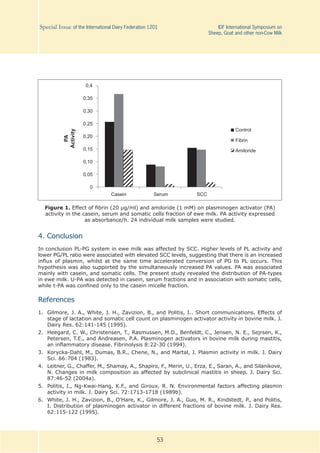
the detection of penicillin, ampicillin, cephalexin and cefoperazone, with a higher percentage of
positive results compared with the milk samples frozen without a preservative (Figure 2).
4. Conclusion
Freezing-defrosting of sheep’s milk samples interferes with the results of the microbiological
tests for antibiotic detection, mostly for penicillin G, ampicillin and cefoperazone, and for
cloxacillin, cephalexin and ceftiofur but to a lesser extent. The freezing temperature of milk
does not influence the response of the microbiological tests for the detection of betalactam
antibiotics. In some cases, a prolonged freezing period may affect the response of CMT Copan
and Delvotest MCS. When applying the Eclipse 100 test to sheep’s milk, it is advisable to add
acidiol as a preservative before freezing. In any case, it is suggested to avoid freezing sheep’s
milk before the detection of antibiotics with microbiological tests because it could affect the
reproducibility of the results.
Acknowledgements
This work is part of the AGL-2009-11514 funded by the Spanish Ministry of Science and Innovation.
The authors are grateful to the manufacturers of the tests.
References
1.	 Packham W., M. C. Broome., G. K. Y. Limsowtin & H. Roginski. Limitations of standard
antibiotic screening assays when applied to milk for cheesemaking. Australian J. Dairy Tech.
56: 15-18 (2001).
2.	 Demoly P. & Romano A. Update on Beta-lactam allergy diagnosis. Curr. Allergy Asthma Rep.
1: 9-14 (2005).
Frequencyofpositiveresults(%)
Penicillin G Ampicillin CefoperazoneCephalexin
Without preservative
Acidiol
100
80
60
40
20
0
Eclipse
Figure 2. Effect of acidiol on the results of Eclipse 100
26
Special Issue of the International Dairy Federation 1201	 IDF International Symposium on
Sheep, Goat and other non-Cow Milk
3.	 Okerman L., Van Hende J. & De Zutter L. Stability of frozen stock solutions of beta-lactam
antibiotics, cephalosporins, tetracyclines and quinolones used in antibiotic residue screening
and antibiotic susceptibility testing. Anal. Chim. Acta, 586:284-288 (2007).
4.	 Haagsma N. Stability of veterinary drug residues during storage, preparation and process-
ing. Residues of veterinary drugs in food, 1-2:41-49 (1993).
5. International Organization for Standardization (ISO) and International Dairy Federation
(IDF). Milk and milk products - Guidelines for a standardized description of microbial inhibitor
tests. International standard ISO 13969/IDF 183 (2001).
6.	 SAS Institute Inc. SAS users guide: Statistics version 9.2. SAS Institute Cary, NC (2001).
27
Special Issue of the International Dairy Federation 1201	 IDF International Symposium on
Sheep, Goat and other non-Cow Milk
2.5. (S2.21) Effect of Detergent Residues in Goat’s Milk on
The Response of Screening Methods for Antibiotic Detection
M.C. Beltrán1, T. Romero1, O.G. Nagel2, R.L. Althaus2, M.P. Molina1
Summary
This study aimed to asses the effect of the presence of residues deriving from detergents
used to clean and disinfect milking machines and milk storage tanks on the response of two
screening methods to detect antibiotics in goat’s milk. Antibiotic-free milk samples spiked with
different commercial detergents (5 acids, 5 alkalis and 5 domestic dishwashing liquids) and 2
disinfectants at different concentrations were used. Spiked milk samples were analysed by a
microbiological method (Eclipse 100) and by a protein receptors binding test (Twinsensor B/T).
Acid detergents and disinfectant products did not affect the response of the methods employed
as the obtained results were negative at the tested concentrations. Alkaline detergents and
domestic dishwashing liquids gave positive results when concentrations were 4-6 ml/l depending
on the product and method employed. These relatively high concentrations are very difficult to
encounter if good practices for cleaning milking machines and milk storage tanks on farms are
implemented.
1. Introduction
Nowadays, residues of antibiotics in raw milk are controlled on livestock farms, in the dairy
industry and/or in quality control laboratories which use microbiological methods and protein
receptor binding tests for a specific group of antibiotics (betalactams and/or tetracyclins).
Screening methods for antibiotic detection can be affected by different factors such as the milk’s
physico-chemical characteristics, natural inhibitors, preservatives, detergents and/or disinfectants
and other substances that are capable of producing non compliant results [1, 2]. Nevertheless,
very few studies about the effect of these factors have been carried out. Thus, this study was
about the effect of the presence of detergent or disinfectant residues on the response of antibiotics
detection methods with goat’s milk.
2. Materials and Methods
Antibiotic-free goat’s milk samples spiked with a selection of specific commercial detergents for
cleaning and disinfection of the milking machine as well as some domestic dishwashing liquids
that are sometimes employed for manual cleaning of milk storage tanks and milking utensils
were used. Eight different testing concentrations were prepared for each of the detergents and
disinfectants considered. These were: 0, 2, 4, 6, 8, 10, 12 and 14 ml/l for alkaline detergent,
disinfectants and domestic dishwashing liquids and 0, 0.25, 0.50, 0.75, 1.0, 1.25, 1.50 and 2.0
ml/l for acid detergents.
Spiked milk samples were analysed in duplicate by a microbiological method, Eclipse100
(Zeu-Inmunotec. Zaragoza, Spain), and by a protein receptor binding test, Twinsensor B/T
(Unisensor S.A. Angleur, Belgium), following each manufacturer’s indications. The Eclipse 100
results were visually interpreted by three trained technicians, while the “ReadSensor” equipment
(Model RS00650) was used with the Twinsensor B/T results. All the results were classified as
negative (compliant) and positive (non compliant).
1	Instituto de Ciencia y Tecnología Animal, Universitat Politècnica de València. 46071 Valencia, Spain
(mbeltran@dca.upv.es)
2	Departamento de Ciencias Básicas. Facultad de Ciencias Veterinarias, Universidad Nacional del Litoral.
3080 Esperanza. Argentina
28
Special Issue of the International Dairy Federation 1201	 IDF International Symposium on
Sheep, Goat and other non-Cow Milk
3. Results and Discussion
Incorporation of acid detergents or disinfectants products into the milk did not affect the response
of the methods employed at any test concentration (specificity 100%). However, Table 2 shows
that alkaline detergents influenced the response of the methods at 4 ml/l for Eclipse100 and at
10 ml/l for Twinsensor B/T, only for detection of betalactam antibiotics.
Table 1: Characteristics of detergents and disinfectants used
Detergent Brand Name Active Material (%)
Recommended dose
(%)
Alkali
Basix sodium hydroxide/sodium hypochlorite (5-15/5-15%) 0.5-1
Circoaction AF sodium hydroxide/sodium hypochlorite (<20/<10%) 0.5-1
Clor FW sodium hydroxide/sodium hypochlorite (5/5%) 0.5-1
Grupaclor sodium hydroxide/sodium hypochlorite (5/10%) 0.5-1
Manobactyl sodium hydroxide/sodium hypochlorite (5-10/5-10%) 0.5-1
Acid
Cid phosphoric acid/sulfuric acid (15-30/5-15%) 0.5-1
105 Nifos phosphoric acid/sulfuric acid (25/5%) 0.5-1
Grupacid phosphoric acid/sulfuric acid (25/5%) 0.5-2
Manocid ortho-phosphoric acid/nitric acid (25/10%) 0.5-1
Circoaction SF ortho-phosphoric acid/sulfuric acid (20-30/5-10%) 0.5-1
Disinfectants
Bleach sodium hypochlorite (1-5%)
Unknown
Quacide P40-EC binguanida hydrochloride (7%)
Domestic
dishwashing
liquids
Carrefour anionic tensioactive (5-15%)
Unknown
Coral
sodium laureth sulfate/benzenesulfonic acid
(5-10/5-10%)
Fairy sodium laureth sulfate/ethanol (20-30/1-5%)
Mistol ethoxylated fatty alcohol (5-10%)
Tenaz sodium hydroxide (<1%)
Table 2: Effect of alkaline detergent concentration on the specificity of Twinsensor B/T and
Eclipse 100
ALKALINE DETERGENTS
Detergent Concentration (ml/l) 0 0.5 1 2 4 6 8 10
Basix
Twinsensor
B1 100 100 100 100 100 100 100 100
T2 100 100 100 100 100 100 100 100
Eclipse 100 100 100 100 100 0 0 0 0
Circoaction AF
Twinsensor
B1 100 100 100 100 100 100 100 100
T2 100 100 100 100 100 100 100 100
Eclipse 100 100 100 100 100 0 0 0 0
Clor FW
Twinsensor
B1 100 100 100 100 100 100 100 100
T2 100 100 100 100 100 100 100 100
Eclipse 100 100 100 100 100 0 0 0 0
Grupaclor
Twinsensor
B1 100 100 100 100 100 100 100 0
T2 100 100 100 100 100 100 100 100
Eclipse 100 100 100 100 83.3 0 0 0 0
Manobactyl
Twinsensor
B1 100 100 100 100 100 100 100 0
T2 100 100 100 100 100 100 100 100
Eclipse 100 100 100 100 100 91.7 0 0 0
1-Betalactams, 2- Tetracyclines
29
Special Issue of the International Dairy Federation 1201	 IDF International Symposium on
Sheep, Goat and other non-Cow Milk
Table 3 shows the results for the milk samples with domestic dishwashing liquids, whose
presence had no effect on the response of Eclipse 100. However, positive results were obtained
with Twinsensor B/T with concentrations from 6 ml/l, but only for the detection of tetracyclins.
Results obtained in this study are similar to those reported by other authors in sheep’s milk
[3] and cow’s milk [2, 4] who also indicated that there were interferences in the microbiological
methods when the detergent concentration is near or equal to the recommended usage dose.
As for protein receptor binding methods, results indicate that only high concentrations of
detergent interfere with the results. This coincides with other authors [2] who suggest that
such methods are affected by the detergent at concentrations equal to the recommended usage
dose.
4. Conclusion
Acid detergents and disinfecting products do not affect the Eclipse 100 and Twisensor B/T
methods. However, alkaline detergents and domestic dishwashing liquids affected them when
concentrations were high, at around 4-6 ml/l. All this suggests that, if good farming practices
are implemented for cleaning and disinfecting milking machines and milk storage tanks,
residual high detergent concentrations that can cause interferences in screening methods for
antibiotics cannot be found.
Acknowlegments
This work was a part of the Project AGL-2009-11514 financed by the Spanish Ministry of Science
and Innovation. The authors also wish to thank ZEU-Inmunotec (Zaragoza, Spain) and UNISENSOR
SA (Angleur, Belgium) for their support.
Table 3: Effect of domestic dishwashing liquids concentration on the specificity of Twinsensor
B/T and Eclipse 100
ALKALINE DETERGENTS
Detergent Concentration (ml/l) 0 0.5 1 2 4 6 8 10
Basix
Twinsensor
B1 100 100 100 100 100 100 100 100
T2 100 100 100 100 100 100 100 100
Eclipse 100 100 100 100 100 0 0 0 0
Circoaction AF
Twinsensor
B1 100 100 100 100 100 100 100 100
T2 100 100 100 100 100 100 100 100
Eclipse 100 100 100 100 100 0 0 0 0
Clor FW
Twinsensor
B1 100 100 100 100 100 100 100 100
T2 100 100 100 100 100 100 100 100
Eclipse 100 100 100 100 100 0 0 0 0
Grupaclor
Twinsensor
B1 100 100 100 100 100 100 100 0
T2 100 100 100 100 100 100 100 100
Eclipse 100 100 100 100 83.3 0 0 0 0
Manobactyl
Twinsensor
B1 100 100 100 100 100 100 100 0
T2 100 100 100 100 100 100 100 100
Eclipse 100 100 100 100 100 91.7 0 0 0
1-Betalactams, 2- Tetracyclines
30
Special Issue of the International Dairy Federation 1201	 IDF International Symposium on
Sheep, Goat and other non-Cow Milk
References
1.	 Althaus, R. L.; Torres, A.; Peris, C.; Beltrán, M. C.; Fernández, N. & Molina, M. P. Accuracy
of BRT and Delvotest microbial inhibition tests as affected by composition of ewe’s milk.
Journal of Food Protection. 66:473-478 (2003).
2.	 Zvirdauskiene, R. & Salomskiene, J. An evaluation of different microbial and rapid test for
determining inhibitors in milk. Food Control. 18:541-547 (2007).
3.	 Beltrán, M. C.; Althaus, R. L. & Molina, M. P. Effect of the presence of detergents on the
response of microbiological methods for detection of inhibitors in sheep milk. 34 Congreso
Nacional de la SEOC. 253-258 (2009).
4.	 Freke C.D. and Booker R. Effect of dairy farm detergents and sanitizers on the standard
test for antibiotic residues. New Zealand Journal of Dairy Science and Technology. 15:87-88
(1981).
31
Special Issue of the International Dairy Federation 1201	 IDF International Symposium on
Sheep, Goat and other non-Cow Milk
2.6. (S2.25) Variation in Cell Population and Lymphocyte
Subpopulation in Milk from Sarda Dairy Sheep in Relation to
The Total Somatic Cell Content
S. Dore1, P. Bonelli1, P. Nicolussi1, R. Re1, G.A. Pilo1, E.A. Cannas1
Summary
In this work the correlation between somatic cell count (SCC) and the variability of the cell
population and lymphocyte subpopulations in Sarda sheep milk at different SCC class levels
is studied. A negative correlation between SCC and epithelial cells and a positive correlation
between SCC and polymorphonuclear leucocytes (PMN) were observed; an inversion of CD4+/
CD8+ ratio in samples with SCC> 2 000 000 cell/ml was found. Evident increase of PMN was
observed at SCC level > 300 000 cell/ml suggesting the use of this value as cut-off in diagnosis
of udder infection in dairy sheep.
1. Introduction
Somatic cells in milk from a healthy udder consist of epithelial cells, macrophages, lymphocytes
and polymorphonuclear leucocytes (PMN). Somatic cell count (SCC) in milk represents the best
indicator of udder health status in lactating animals and several studies demonstrated the
importance of PMN in defence of the mammary gland. The aim of this study is to evaluate the
correlation between SCC and the variability of the cell population and lymphocyte subpopulations
in sheep milk at different levels of SCC class as shown in Table 1.
2. Material and methods
Seventy-two half-udder milk samples from Sarda dairy ewes were collected and tested for SCC
by fluoro-opto-electronic method using a Fossomatic FC instrument (Foss Electric, Hillerød,
Denmark) according to UNI EN ISO 13366-2:2007 (IDF 148-2: 2006), differential cell count by
microscope method (ISO 1366-1 IDF 148-1:2008) and lymphocytes subsets by flow cytome-
try (FACS-Calibur, BD) using 2 different four-colour staining protocols (CD25/CD8/CD45/CD8;
WC1/CD8/CD45/CD4). In statistical analysis (ANOVA) every single half-udder was considered
as an independent sample.
1	C.Re.N.M.O.C.- Centro di Referenza Nazionale per le Mastopatie degli Ovini e dei Caprini, Istituto
Zooprofilattico Sperimentale della Sardegna “G. Pegreffi”, Via Duca degli Abruzzi 8, 07100, Sassari -Italy
(simonedore@hotmail.com)
Table 1: Classes of somatic cell content in milk
SCC Class Value (cell/ml*1000)
I <300
II 301-500
III 501-1000
IV 1001-2000
V >2000
32
Special Issue of the International Dairy Federation 1201	 IDF International Symposium on
Sheep, Goat and other non-Cow Milk
3. Results and discussion
Results showed a negative correlation between SCC and epithelial cells (ghost cells and cellular
debris included) and a positive correlation between SCC and PMN. A significant increase of
PMN (P<0.001) and a decrease of epithelial cells (P<0.001) were found from the I to the V
SCC class; no significant differences were observed in lymphocyte and macrophage percentage
content among the different SCC classes (Figure 1). Lymphocyte subsets analysis evidenced a
CD4+/CD8+ inversion in V class samples (Figure 2).
0
10
20
30
40
50
60
70
80
90
100
I II III IV V
SCC classes
%
Epitelial cells PMN Lymphocytes Macrophages
Figure 1. Percentage distribution of each somatic cell type at different levels of SCC classes
0
10
20
30
40
50
60
70
80
90
100
I II III IV V
SCC classes
%
cd4 cd8
Figure 2. Percentage distribution of lymphocyte subpopulations at different levels of SCC
classes
33
Special Issue of the International Dairy Federation 1201	 IDF International Symposium on
Sheep, Goat and other non-Cow Milk
4. Conclusions
PMN become the predominant cell type (>50%) in the III SCC class, but their increase is evident
(19,9 ±7,1 %) in the II SCC class that corresponds to the thresholds proposed by several
authors to diagnose an inflammatory udder status; this cut-off value can be properly used in
mastitis control programs based on milk somatic cell content in dairy sheep. Milk samples with
higher SCC value are characterized by an increase of CD4+ T-lymphocyte percentage and IL-2
receptor co-expression. Presumably this larger presence of regulatory T-cells could be related
to their ability to regulate PMN function in mammary gland inflammation.
References
1.	 ALBENZIO M. AND CAROPRESE M. Differential leukocyte count for ewe milk with low and
somatic cell count. Journal of Dairy Research 78 43-48 (2011)
2.	 CUCCURU C. ET AL. Milk differential cell counts in relation to total counts in Sardinian ewes.
Small Ruminant Research 25 169-173 (1997)
3.	 HARP J.A., WATERS T.E., GOFF J.P. Lymphocytes subsets and adhesion molecule expression
in milk and blood of periparturient dairy cattle, Vet Immunol Immunopathol; 102: 9-17.
(2004)
4.	 INTERNATIONAL DAIRY FEDERATION N.R.7 Ruminant mammary gland immunity, Brussels,
Belgium (2003)
5.	 PERSSON-WALLER K. AND COLDITZ I.G. Expression of surface antigens on blood and
mammary leukocytes in lactating and dry ewes. Vet Immunol Immunopathol; 62: 273-278
(1998)
34
Special Issue of the International Dairy Federation 1201	 IDF International Symposium on
Sheep, Goat and other non-Cow Milk
2.7. (S2.29) Milk Production Parameters and Cheese
Efficiency of Ewes Risen in Two Different Feeding System
O. Maamouri1,2,3, N. Atti1, S. Smeti1,4, M.H. Othmane1,3
Summary
For this experiment on milk production and cheese efficiency, thirty ewes were divided into
three groups. Two groups were reared on a feed lot (FL), receiving silage (FL-S) or hay (FL-H)
ad libitum. The third group was reared on pasture. The concentrate supply was 500 g/day/ewe
for all groups. Milk production of pasture group (540 ml) was significantly higher than FL-H
group (439 ml) while FL-S group had an intermediate level (510 ml). Fat percentage did not differ
between groups, while protein percentage was significantly higher (P=0.05) for FL-S group.
Milk fat and protein content (g/day) were higher for ewes in FL-S and pasture groups than for
FL-H. However, milk urea (mg/dl) was higher for pasture (29) than both FL groups (23). Milk
yield significantly decreased (P<.0001) while fat and protein percentage significantly increased
(P<.0001) as lactation stage advanced. Cheese efficiency was significantly higher (P=0.01) for
FL-S group than other groups.
1. Introduction
In the Mediterranean region, sheep’s milk is used for the manufacture of cheese due to its
richness in useful compounds [Bocquier and Caja, 1993, Othman et al., 2002a]. Control of its
composition, including levels of fat and protein is important, since these parameters largely
determine the cheese yield [Pellegrini et al., 1997]. However, milk yield and cheese efficiency
vary as a result of animal genotype and environment characteristics. Among these factors,
animal feeding plays an important role. The objective of this experiment was to study the milk
production parameters and cheese efficiency of Sicilo-Sarde dairy ewes raised in feedlot (FL) in
comparison to pasture feeding system.
2. Material and methods
The experiment was carried out in the dairy experimental farm (Lafareg) of the National Institute
of Agricultural Research (INRAT). The region has a sub humid climate with 650 mm annual
precipitation. Thirty dairy ewes in middle lactation were divided into three groups. Two groups
were lodged on FL, receiving silage (FL-S) or hay (FL-H) ad libitum. The third group was reared
on triticale pasture (P) with rotational grazing system at a stocking rate of 57 ewes/ha. The
concentrate supply was 500 g/day/ewe for all groups. Individual milk yield was weekly recorded
and samples were analysed for milk fat, protein and urea using Milkoscan 4000 (Foss Electric,
integrated Milk Testing). The cheese yield was determined on individual basis for each sheep.
The process of making cheese until coagulation was applied in test tubes containing 10 ml of
milk [Othmane et al., 2002a].
Data of milk production and composition, and cheese efficiency were analysed by using the
MIXED procedure of SAS® (SAS Institute Inc., 2000, Cary, NC, USA) for block designs with
repeated measures. The statistical model included: diet treatment, time of sampling and their
interaction as fixed effects. Data recorded during pre-experimental period (milk yield, milk
1	INRA-Tunisie, Laboratoire de Productions Animales et Fourragères, 2080 Ariana, Tunisia
(omar_maamouri@yahoo.fr).
2	Institut Supérieur d’Agronomie Chott Meriem, Sousse, Tunisia.
3	Centre Régional de Recherches Agricoles Sidi Bouzid, Tunisia.
4	Faculté des Sciences de Bizerte, Bizerte, Tunisia.
35
Special Issue of the International Dairy Federation 1201	 IDF International Symposium on
Sheep, Goat and other non-Cow Milk
composition and cheese efficiency) were used as covariates and included in the model.
Differences between diets were performed using the procedure of least squares means [SAS®,
2000], at (P<0.05) unless otherwise declared.
3. Results and Discussion
Chemical composition of various feed resources was determined in the Animal & Forage Production
laboratory at INRAT (Table 1). Chemical composition and nutritive values of experimental feeds
were determined following the method described by Sauvant [1981]. The contents in triticale
and oat hay of crude protein were low (9.7% and 7.5%, respectively). These results are due
to the lack of nitrogen fertilization during the growing cycle of the plant. Similarly, oat silage
presents a low crude protein (9%) probably due to inadequate conditions of storage of silage
causing leaching of crude protein [Nefzaoui and Chermiti, 1989].
Data concerning milk production, composition and cheese efficiency were reported in Table
2. Milk production of P group (540 ml) was significantly higher than FL-H one (439 ml) while
FL-S group had an intermediate level (510 ml). Milk yield significantly decreased (P<0.0001) as
lactating stage advanced. Fat percentage did not differ between groups despite the superiority
for FL-S group which may be due to crude fiber content of oat silage, while protein percentage
was significantly higher (P=0.05) for FL-S (5.4%) group than FL-H and P ones (5%). Fat and
protein percentage significantly increased (P<.0001) as lactation stage advanced. Milk fat and
protein content (g/day) were higher for ewes in FL-S and P groups than for ewes of FL-H one.
However, milk urea nitrogen (mg/dl) was higher for P (29) than both FL groups (23), but the
difference was not significant. The values of this parameter are close to the recommended
levels for sheep milk [Cannas, 2002]. Cheese efficiency values followed the same trend of fat
content throughout the recording period with a medium value of 34.8%. This could be due to
the abundance of fat content in the milk of sheep and its importance in determining cheese
yield [Othmane et al., 2002b]. Cheese efficiency was significantly higher (P<0.01) in FL-S group
(40.5%) than in the FL-H and P groups by 33.6% and 30.4%, respectively. This result may due
to silage nutrients properties like soluble nitrogen content. As lactating stage advanced, cheese
efficiency significantly decreased (P<.0001). A low milk urea and high protein content (casein
content) is often linked to improved cheese yield.
Table 1: Chemical composition of experimental feeds
Triticale Oat Hay Oat Silage Concentrate
DM % 23.7 84 26.2 88.1
Ash % 6.5 8 11 3.3
CP % 9.7 7.5 9.0 16.2
CF % 27.2 28.5 39 15.2
Energy (FU/kg DM) 0.6 0.6 0.5 1
DM: dry matter; CP: crude protein; CF: crude fiber; FU: fodder unit
36
Special Issue of the International Dairy Federation 1201	 IDF International Symposium on
Sheep, Goat and other non-Cow Milk
4. Conclusion
In conclusion, for the sub-humid area of Mediterranean region, the cultivated pasture resulted
in higher ewe’s milk production comparing to feedlot system. Oat silage, resulting in high
cheese efficiency, should be used successfully as forage source for dairy ewes.
Acknowledgement
The authors thank workers in the Lafareg experimental farm of INRAT.
References
1.	 Bocquier, F. & Caja, G. Recent advances on nutrition & feeding of dairy sheep. J. Anim Prod.
1: 580-607 (1993).
2.	 Cannas, A. Dairy Sheep Feeding & Nutrition. In: G. Pulina (Editor), Feeding of lactating
ewes. 123-166 Bologna (2002).
3.	 Nefzaoui, A. & Chermiti, A. Composition chimique & valeur nutritive pour les ruminants des
fourrages & des concentrés d’origine tunisienne. Annales INRAT, 62. 36p (1989)
4.	 Othmane, M.H. Carriedo, J.A. De la Fuente, L.F. & San Primitivo, F. An individual laboratory
cheese-making method for selection in dairy ewes. Small Rum. Res. 45: 67-73 (2002a).
5.	 Othmane, M.H.; Carriedo, J.A.; De la Fuente, L.F. & San Primitivo, F. Factors affecting test-day
milk composition in dairy ewes, and relationships amongst various milk components. J.
Dairy Res. 69: 53-62 (2002b).
6.	 Pellegrini, O. Remeuf, F. Rivemale, M. & Barillet, F. Renneting properties of milk from individual
ewes: influence of genetic & non-genetic variables, & the relationship with physicochemical
characteristics. J. Dairy Res. 64: 355-366 (1997).
7.	 Sauvant, D. Prévision de la valeur énergétique des aliments concentrés et composés pour
les ruminants. In: INRA (Editor), Alimentation des ruminants. 580p Paris (1981).
Table 2: Milk yield, composition and cheese yield according to experimental diets
Dietsµ
ESM
Pr > F
P FL-H FL-S diet time diet*time
Milk yield (ml/d)
540
± 36.7
438.5
± 53
510
± 55
8.17 0.3135 <.0001 0.0011
Fat (%)
7.33
± 0.23
7.6
± 0.35
8.23
± 0.34
0.12 0.1354 0.0009 0.3375
Fat yield (g/e/d)
39.6a
± 2
27.3b
± 3.16
39.7a
± 3.04
0.93 0.0126 0.0005 <.0001
Protein (%)
4.88b
± 0.09
5.14ab
± 0.15
5.35a
± 0.13
0.04 0.033 <.0001 ns
Protein yield (g/e/d)
25.3a
± 1.27
19.4b
± 1.94
26.2a
± 1.90
0.52 0.041 0.0155 ns
Milk urea (mg/dl)
28.7
± 2.47
23.1
± 3.52
22.5
± 3.52
0.96 0.2674 0.1031 0.2164
Cheese yield (%)
30.4b
± 1.48
33.6b
± 2.19
40.5a
± 2.18
0.63 0.0094 <.0001 0.0008
µ P: pasture regimen; FL-H: group in feedlot receiving hay; FL-S: group in feedlot receiving silage
a,b Means within rows with same superscript letters are not significantly different (P>0.05).
ESM: mean standard error.
37
Special Issue of the International Dairy Federation 1201	 IDF International Symposium on
Sheep, Goat and other non-Cow Milk
2.8. (S2.30) Levels of PCDDs, PCDFs and Dioxin-Like PCBs in
Sheep Milk Collected in Sardinia, Italy
C. Scarano1, M.M. Storelli2, S. Virdis1, A. Mudadu1, C. Spanu1, E.P.L. De Santis1, G.O.
Marcotrigiano2
Summary
Polychlorinated dibenzo-p-dioxins (PCDDs), polychlorinated dibenzofurans (PCDFs) and dioxin-like
polychlorinated biphenyls (DL-PCBs) are widespread contaminants with important implications for
environmental and human health. Milk and dairy products consumption has been classified
as one of the primary pathways of human exposure to these toxic chemicals. In this study
we evaluated the levels of 17 laterally substituted PCDD/Fs and 12 DL-PCBs in 45 sheep milk
samples collected from 15 farms in Sardinia (Italy). Mean concentrations of PCDDs and PCDFs
were 2.31 and 3.11 pg.g-1 fat basis, respectively. Among DL-PCBs, only PCB 118 was detected
in 51.1% of samples. Contamination of milk by PCDD/Fs and DL-PCBs (0.92 pg WHO-TEQ g-1
fat) being within the permissible limit set by the European Commission (6 pg WHO-TEQ g-1 fat)
gives no indication of particular health risk. However, continuous surveillance in milk is needed
to correctly evaluate both the environmental impact and the human health risk.
1. Introduction
Dioxins and Polychlorinated biphenyls (PCBs) are chlorinated heterocyclic organic compounds
characterized by stability and toxicity to humans and animals. The Dioxins include 75 poly-
chlorinated dibenzo-p-dioxins (PCDDs) and 135 polychlorinated dibenzofurans (PCDFs). They
are volatile organic compounds released in the environment as consequence of organic material
and urban refuse combustion, during industrial activities and woodland fires. PCBs are subdivided
in two groups: the dioxin-like (DL-PCBs) and the non-dioxin-like (NDL-PCBs). PCBs have been
widely used in numerous industrial and commercial applications, as fluid for thermal and
hydraulic loops, adhesive components, paints and flame retardant. Among dioxins, the 2,3,7,8-
tetrachlorodibenzo-p-dioxin (TCDD) is the main toxic compound classified by the International
Agency for Research on Cancer (IARC) as “cancerogenous agent for the human” (group 1).
Although DL-PCB show similar toxicity as dioxins, they are classified by IARC as group 2A
“probable human cancerogens”. Dioxins and DL-PCBs, highly persistent in the atmosphere,
can be found in waters, sediments, air and soil. Due to their lipophilic character and low
biodegradability, PCDD/Fs and DL-PCBs are accumulated in foods, especially those with high
lipid content. After ingestion of contaminated vegetables, the toxic compounds are absorbed
in the gastrointestinal tract of the animals and concentrated in the liver and in the body fat.
Milk represent the main route of excretion of dioxins in human and animals [1]. The average
level of contamination reported in milk ranged between 0.6 and 1.0 pg TEQ g-1 of fat for the
PCDDs and PCDFs, and from 0.6 to 1.3 pg TEQ g-1 of fat for DL-PCBs [2]. The aim of the present
research was to assess the level of PCDD/Fs and DL-PCBs contamination in raw bulk tank milk
of sheep reared in 15 different husbandry areas in Sardinia.
2. Materials and methods
The level of contamination with PCDDs, PCDFs and DL-PCBs was determined in 45 raw sheep
bulk tank milk samples collected from 15 extensively managed flocks in Sardinia (Italy). From
1	Department of Animal Biology, University of Sassari, Italy (scarano@uniss.it).
2	Pharmacological-Biological Department, University of Bari, Italy.
38
Special Issue of the International Dairy Federation 1201	 IDF International Symposium on
Sheep, Goat and other non-Cow Milk
each flock single bulk tank milk samples were collected monthly for three consecutive months
(from March to May). 12 of the 15 flocks were located in an high risk contamination area near
a major industrial pole. 6 farms (group A) were located within 7 Km and 6 farms (group B)
between 7 and 13 km from the industrial sites. 3 farms served as “control” (group C) and were
>140 Km from the main industrial site. The elevation above sea level (a.s.l.) of groups A and
B was between 10 and 49 m, while for group C was between 185 and 400 m a.s.l. Raw milk
samples were collected into glass flasks, transported refrigerated from the site of collection
to the laboratory where they were stored at -20 °C until analysis. Milk was extracted, parti-
tioned, cleaned up, fractionated and analyzed by high resolution gas chromatography-mass
spectrometry (GC/MS Polaris Q, Thermo) according to US EPA Method 1613 modified to include
DL-PCBs [3]. The extraction of lipids for the determination of the DL-PCBs has been carried out
by Erney method [4]. The congeners investigated in the sheep raw milk samples were: PCDDs
(2,3,7,8-TCDD; 1,2,3,7,8-PeCDD; 1,2,3,4,7,8-HxCDD; 1,2,3,6,7,8-HxCDD; 1,2,3,7,8,9-HxCDD;
1,2,3,4,6,7,8-HpCDD; OCDD), PCDFs (2,3,7,8-TCDF; 1,2,3,7,8-PeCDF; 2,3,4,7,8-PeCDF;
1,2,3,4,7,8-HxCDF; 1,2,3,6,7,8-HxCDF; 1,2,3,7,8,9-HxCDF; 2,3,4,6,7,8-HxCDF; 1,2,3,4,6,7,8-
HpCDF; 1,2,3,4,7,8,9-HpCDF; OCDF), non-ortho DL-PCBs (PCB 77; PCB 126; PCB 169) and
mono-ortho DL-PCBs (PCB 105; PCB 114; PCB 118; PCB 123; PCB 156; PCB 157; PCB 167;
PCB 189). The PCDD/Fs and Dl-PCBs contaminations are expressed as concentrations of toxic
equivalents (TEQs), using the toxic equivalency factors (TEFs). Comparison between mean
concentrations was performed by the Least Significance Difference (LSD) test (statistical
significance level P<0.05). The effect of the experimental variables was estimated using the
following generalized linear model: Yijkm=m+Gi+Cj+Ak+eijkm, where the concentration of the
polluting agent Yijkm, is the dependent variable, m is the mean, Gi is the farms group, Cj is the
effect of the sampling date, Ak the altitude and eijkm the residual error. Statistical analysis was
performed using Statgraphics Centurion XVI (StatPoint Technologies, Warrenton, VA, USA).
3. Results and discussion
Milk samples collected near the industrial sites (groups A and B) showed widespread contamina-
tion by PCDDs and PCDFs. PCDDs mean content was 2.31 pg.g-1 fat basis and ranged between
0.11 and 7.13 pg.g-1 fat basis, while PCDFs mean concentrations was 3.11 pg.g-1 fat basis and
ranged between 0.20 and 7.47 pg.g-1 fat basis. Among DL-PCBs, PCB 118 was detected in 48.9% of
milk samples with mean concentration of 0.73 ng.g-1 fat basis, while other congeners were never
found at detectable levels. PCDDs and PCDFs concentrations were lower in the first sampling as
compared to the second and third (P<0.05). The location of the farms (groups A, B and C), the
date of sampling and the altitude had a significant effect on PCDDs and PCDFs concentrations
(P<0.05), while no effects were observed for congener PCB 118. Among PCDDs, OCDD was the
2,3,7,8-substituted congener detected at the highest levels in most of the samples examined
(0.78 pg.g-1 fat basis), followed by 2,3,7,8-TCDD (0.41 pg.g-1 fat basis), 1,2,3,7,8,9-HxCDD
(0.41 pg.g-1 fat basis) and 1,2,3,4,6,7,8-HpCDD (0.39 pg.g-1 fat basis), while 1,2,3,7,8-PeCDD
exhibited the lowest concentration (0.01 pg.g-1 fat basis). Among furans, the lower chlorinated
penta PCDFs were in general more represented than the higher chlorinated PCDFs (hepta and
octa PCDFs). In particular, the prevalent congeners were 1,2,3,7,8-PeCDF and 2,3,4,7,8-PeCDF
which collectively accounted for 40.9% of the PCDFs, followed by OCDF (19.9%), 1,2,3,4,7,8,9-
HpCDF (13.5%) and 1,2,3,4,6,7,8-HpCDF (10.3%) and to a lesser extent by HxCDFs (1.2-
9.0%), while 1,2,3,6,7,8-HxCDF was below the detection limit in all samples analyzed. Com-
parison between dioxins and furans showed that 2,3,7,8-TCDD, the most toxic congener, was
present in 77.8% of milk samples, while 2,3,7,8-TCDF was detected in only four out of 45 sam-
ples. However, in all cases concentrations of 2,3,7,8-TCDD (0.41 pg.g-1 fat basis) were higher
than 2,3,7,8-TCDF (0.03 pg.g-1 fat basis), as well as HxCDDs (0.15-0.41 pg.g-1 fat basis) and
OCDD (0.78 pg.g-1 fat basis) were prevalent compared to HxCDFs (0.04-0.28 pg.g-1 fat basis)
and OCDF (0.62 pg.g-1 fat basis). In contrast, the levels of PeCDFs (0.52-0.75 pg.g-1 fat basis)
and HpCDFs (0.32-0.42 pg.g-1 fat basis) were higher than the corresponding dioxin homologue
groups (PeCDD: 0.01 pg.g-1 fat basis; HpCDD: 0.39 pg.g-1 fat basis). Contaminations of the
samples of groups A and B were not influenced by the distance from the major industrial pole,
39
Special Issue of the International Dairy Federation 1201	 IDF International Symposium on
Sheep, Goat and other non-Cow Milk
while concentrations increased during the lactation period. These data confirm the influence of
the season on the mechanisms of “dry and wet deposition” of the pollutants on soil and vegetables.
The average concentrations of PCDDs and PCDFs in the samples of the groups A and B are
considerably higher than those found in two of the three control farms while, in one of these,
the concentrations was comparable with those observed in groups A and B. This difference was
probably accountable to a woodland fire which occurred in the surrounding area the year previous
to sampling. However, the content of PCDD/Fs and DL-PCBs (0.92 pg WHO-TEQ g-1 fat) was
within the limit set by the European Commission (3 pg WHO-TEQ g-1 fat for PCDDs and PCDFs
and 6 pg WHO-TEQ g-1 fat for total TEQs). Of the total TEQs the contribution of PCDDs was the
prevalent (0.50 pg WHO-TEQ g-1 fat), followed by PCDFs (0.35 pg WHO-TEQ g-1 fat), while the
contribution of Dl-PCB (0.07 pg WHO-TEQ g-1 fat) was negligible.
4. Conclusions
The content of PCDD/Fs and DL-PCBs was within the EC limits. The present research shows that
sheep milk collected in Sardinia does not represent a specific health threat. However, continuous
surveillance on PCDD/Fs and DL-PCBs levels in milk is needed in order to monitor environmental
pollution and potential risk to human health. The presence of a widespread contamination,
although at low levels, nearby the risk area and in raw milk collected from the “control” group,
highlights the need to develop the monitoring system. A revaluation of the actual Sites of
National Interest (SIN) for the environment polluting agents in food of animal origin is also
advisable.
References
1.	 Schulz, A.J., Wiesmuller, T., Appuhn, H., Stehr, D., Severin, K., Landmann, D. & Kamphues,
J. Dioxin concentration in milk and tissues of cows and sheep related to feed and soil
contamination. J. Anim. Physiol. Anim. Nutr. 89:72-78 (2005).
2.	 European Commission (EU) Reports on tasks for scientific cooperation. Assessment of dietary
intake of dioxins and related PCBs by the population of EU Member States. Report of experts
participating in Task 3.2. (2000).
3.	 Storelli, M.M., Barone, G. & Marcotrigiano, G.O. Residues of polychlorinated biphenyls in
edible fish of the Adriatic Sea: Assessment of human exposure. J. Food Sci. 72:C183-C187
(2007).
4.	 Erney, D.R. Rapid screening procedure for pesticides and polychlorinated biphenyls in fish:
collaborative study. J. Assoc. Off. Ana. Chem. 66:969-973 (1983).
40
Special Issue of the International Dairy Federation 1201	 IDF International Symposium on
Sheep, Goat and other non-Cow Milk
2.9. (S2.36) Evaluation of a microbial indicator test for
antibiotic detection in ewe, goat and cow milk
R. Comunian1, I. Dupré1, A. Paba1, E. Daga1, S. Schirru1, M. F. Scintu1
Summary
The presence of residual antibiotics in milk could cause potentially serious problems in human
health and have technological implications in the manufacturing of milk products. The aim of
this study was to evaluate the ability of Delvotest® T in detecting seven antibiotics (penicillin
G, tetracycline, gentamicin, sulfadiazine, oxytetracycline, ceftiofur, and ampicillin) in ewe, goat
and cow milk. Twenty-seven samples of raw, whole, refrigerated bulk-tank milk were analyzed.
Higher detection ability was observed for cow and goat milks, compared with ewe’s milk samples.
Four out seven antibiotics were detected at or below the EU-MRL for all milk samples, while
oxytetracycline and ampicillin over. Tetracycline was detected below the EU-MRL only in cow
milk. Correlations (P<0.05 or P<0.01) between results obtained and some milk parameters
were observed for tetracycline and oxytetracycline. The milk composition affects the bioavailability
of oxytetracycline and tetracycline, and might slightly influence the detection of these drugs.
1. Introduction
Antibiotics are widely used for therapeutic and prophylactic purposes in human and veterinary
medicine. In regard to dairy animals, to avoid risks related to drug residues in milk, maximum
residue limits (MRL) have been established by law in many countries for each antimicrobial
agent. In the European Union, the MRLs (EU-MRL) in foodstuffs of animal origin are established
by the Codex Alimentarius Commission [1], the Regulation (EC) n. 470/09 [2], repealing the
Council Regulation n. 2377/90 [3], and the Commission Regulation (EU) n. 37/10 [4]. Different
methods of analysis for the detection of residues of inhibitors, mostly in cow milk, have been
developed and evaluated [5], whereas few studies have been carried out so far for ewe and
goat milks [6].
The aim of this study was to evaluate the ability of a prototype of Delvotest® T (DSM Food
Specialties - Delft, the Netherlands) in detecting the presence of seven antibiotic residues in
ewe, goat and cow milk, according to what is stipulated in FIL-IDF STANDARD 183:2003 “Milk and
milks products – Guidelines for the standardized evaluation of microbial inhibitor tests” [7].
2. Materials and methods
Milk samples and analyses. Twenty-seven samples of raw, whole, refrigerated bulk-tank
milk (13 ewe, 7 goat, and 7 cow milk samples) were analyzed. According to the guidelines [7]
all the animals were in good health condition, free from antibiotics for at least 8 weeks before
milk collection. Milk samples were analyzed with MilkoScan 4000 (FOSS Electric A/S, Hillerød,
Denmark) to determine the chemical composition (Fat, Protein, Lactose). Somatic cells count
(SCC) was measured with Fossomatic 5000 (FOSS Electric A/S). The pH values were measured
with a pH meter (pH302 Hanna Instruments, UK). Bacteria levels were verified by Standard
Plate Count (SPC) [8].
Antibiotics evaluation trials. The chosen antibiotics, the tested concentrations, and the
respective EU-MRL are reported in Table 1. The experimental plan was designed in 2 phases: 1)
3 concentrations (1, 2 and 3) of each antibiotic were tested on milk samples of each lactiferous
1	Dipartimento per la Ricerca nelle Produzioni Animali, AGRIS Sardegna, Loc. Bonassai – I 07040 Olmedo
(SS), Italy. (rcomunian@agrisricerca.it)?
41
Special Issue of the International Dairy Federation 1201	 IDF International Symposium on
Sheep, Goat and other non-Cow Milk
species; 2) additional concentrations (4, 5 and 6) were tested, when the detection limit was too
high (Amp for goat and cow milk) or not determined in phase 1 (Amp, Tetra and Oxy-tetra for
ewe milk).
Milk samples spiked with the same antibiotic concentration were inoculated into 4 separated
Delvotest® T ampoules and incubated at 64°C. Incubation time was about 3h and 20min for
ewe milk, 3h and 10min for goat milk, and 3h for cow milk. Four negative control ampoules
were incubated in parallel with each spiked milk sample. The assays were analyzed both visually,
comparing with standard samples, and using the Delvo® Scan system. Delvotest® T detection
limit (DL) of each antibiotic was calculated for each lactiferous species and expressed as the two
antibiotics concentrations (ppb) between which the intersection of the dose-response curve and
the 95% positive results line lies.
Statistical Analysis. The possible correlation between the percentage of spiked milk samples
detected and the variations of the milk parameters (pH, fat, protein, lactose, SCC, and SPC)
was calculated, for each antibiotic concentration, as Pearson correlation coefficient. Statistical
analysis was performed using Minitab statistical package, release 15 (Minitab Inc., State College
PA, USA).
3. Results
Milk analyses. Milk analyses results are reported in Table 2. Ewe and goat milk composition
correspond to the characteristics of milk produced at the end of lactation, especially with regard
to the level of somatic cells (SCC).
Table 1: List of the antibiotics used for the evaluation test, the concentrations assessed,
and the respective EU-MRL
Antibiotics EU MRL (ppb)
concentrations (ppb)
1 2 3 4 5 6
Penicillin G potassium salt (Pen G) 4 2 4 6 - - -
Tetraclycine hydrochloride (Tetra) 100 50 100 150 200 - -
Gentamicin sulfate salt hydrate (Genta) 100 50 100 150 - - -
Sulfadiazine sodium salt (Sulf) 100 50 100 150 - - -
Oxitetracycline hydrochloride (Oxy-tetra) 100 50 100 150 200 250 300
Ceftiofur (Ceft) 100 20 50 100 - - -
Ampicillin trihydrate (Amp) 4 2 4 6 8 - -
Table 2: Chemical characteristics, Standard Plate Counts (SPC) and Somatic Cell Counts of
the ewe, goat and cow milk samples
pHa Fata Proteinsa Lactosea SCCa
(x 1000)
SPCa
(Log UFC/ml)
Ewe milk 6.74 ± 0.08 6.49 ± 0.80 5.29 ± 0.36 4.51 ± 0.35 1474 ± 303 4.34 ± 0.81
Goat milk 6.72 ± 0.03 3.62 ± 0.46 3.04 ± 0.07 4.21 ± 0.10 2052 ± 474 6.25 ± 0.20
Cow milk 6.71 ± 0.09 3.26 ± 0.17 3.30 ± 0.11 4.53 ± 0.06 555 ± 352 5.06 ± 0.67
aaverage ± sd
42
Special Issue of the International Dairy Federation 1201	 IDF International Symposium on
Sheep, Goat and other non-Cow Milk
Antibiotics evaluation trials. Higher detection ability was observed for cow and goat milks,
compared with ewe’s milk samples (Table 3).
Penicillin G, gentamicin, sulfadiazine and ceftiofur were detected at or below the EU-MRL for
all milk samples. The range of DL found for oxytretacycline (cow milk: 100-150 μg/l; goat milk:
100-150 μg/l; ewe milk: 250-300 μg/l) and ampicillin (cow milk: 4-6 μg/l; goat milk: 2-4 μg/l;
ewe milk: 6-8 μg/l) was higher than EU-MRL, especially for ewe milk samples. Tetracycline was
detected in cow milk at 50-100 μg/l, below the EU-MRL, while in ewe and goat milk the range of
detection was 150-200 μg/l and 100-150 μg/l, respectively. All ampoules Delvotest® T containing
milk (ewe, goat and cow) not supplemented with antibiotics were negative.
Statistical Analysis. No correlation between the percentage of spiked milk samples detected
and the variations of goat milk parameters was found. A correlation (P<0.05) between percentage
of positive ewe milk samples detected and SPC was found for tetracycline concentrations 100
and 150 ppb. For oxytetracycline (150 ppb) statistical analysis showed: a negative correlation
between the percentage of positive ewe milk samples detected and pH, fat, protein, and a
positive correlation (P<0.01) with lactose content. For cow milk samples, a correlation (P<0.05)
between the percentage of positive detected, at 50 ppb of tetracycline, and fat content turned
out.
4. Conclusion
Delvotest® T microbial test proved to be an effective method to detect in milk residues of most of
the drugs commonly used in veterinary medicine. In some cases, different results were obtained
for the same drug depending on the lactiferous species. For tetracycline and oxytetracycline a few
statistical correlations between the percentage of positive ewe and cow milk samples detected
and the variations of some milk parameters were found. Indeed, the different milk composition
has an influence on the bioavailability of oxytetracycline and tetracycline, and might slightly
affect the detection of these drugs by microbial tests such as Delvotest® T.
References
1.	 Codex Alimentarius Commission. Maximum residue limits for veterinary drugs in foods
updated as at the 32nd session of the Codex Alimentarius Commission (2009).
2.	 Regulation (EC) No 470/2009 laying down Community procedures for the establishment
of residue limits of pharmacologically active substances in foodstuffs of animal origin,
repealing Council Regulation (EEC) No 2377/90 and amending Directive 2001/82/EC of the
European Parliament and of the Council and Regulation (EC) No 726/2004 of the European
Parliament and of the Council. Off. J. L 152:11–22 (2009).
Table 3: Antibiotics tested, MRL and detection limit determined in ewe, goat and cow milk
Antibiotics
EU MRL
(ppb)
Phase 1 Phase 2
Range of detection limit (ppb) Range of detection limit (ppb)
Ewe milk Goat milk Cow milk Ewe milk Goat milk Cow milk
Penicillin G 4 2 1-2 1-2 - - -
Tetraclycinea 100 > 150a 100-150 50-100 150-200 - -
Gentamicin 100 50-100 50-100 50-100 - - -
Sulfadiazine 100 50-100 50-100 < 50 - - -
Oxitetracyclinea 100 > 150a 100-150 100-150 250-300 - -
Ceftiofur 100 20 < 20 < 20 - - -
Ampicillina 4 > 6a 4-6 4-6 6-8 2-4 4-6
a: Using IDF STANDARD 183: 2003 it was not possible to determine the detection limit in ewe milk.
-: not tested.
43
Special Issue of the International Dairy Federation 1201	 IDF International Symposium on
Sheep, Goat and other non-Cow Milk
3.	 Regulation (EEC) No 2377/90 laying down a Community procedure for the establishment of
maximum residue limits of veterinary medicinal products in foodstuffs of animal origin. Off.
J. L 224:1–8 (1990).
4.	 Regulation (EU) No 37/2010 on pharmacologically active substances and their classification
regarding maximum residue limits in foodstuffs of animal origin. Off. J. L 15:1–72 (2009).
5.	 Wang S., Zhang H. Y., Wang L., Duan Z. J., & Kennedy I.. Analysis of sulphonamide residues
in edible animal products: A review. Food Addit. Contam. 23:362–384 (2006).
6.	 Comunian R., Paba A., Dupré I., Daga E. S., & Scintu M. F.. Evaluation of a microbiological
indicator test for antibiotic detection in ewe and goat milk. J. Dairy Sci. 93:5644–5650
(2010).
7.	 International Dairy Federation. Milk and milk products. Guidelines for a standardized
description of microbial inhibitor tests. FIL-IDF Standard No. 183. Int. Dairy Fed., Brussels,
Belgium (2003).
8.	 International Dairy Federation. Milk and milk products. Enumeration of microorganisms-
Colony count at 30°C. FIL-IDF Standard No. 100B. Int. Dairy Fed., Brussels, Belgium
(1991).
44
Special Issue of the International Dairy Federation 1201	 IDF International Symposium on
Sheep, Goat and other non-Cow Milk
2.10. (S2.49) Sheep Milk: Yield, Composition and Potential
Cheese Yield
M.R. Marques1, S. Bernardino2, J.M. Ribeiro1, A.T. Belo1, C.C. Belo1
Summary
Ewes’ milk is mainly used for cheese making. Data regarding cheese yield predictability relative
to seasonal changes in sheep milk composition are scarce. Thus, the effect of lambing period
and lactation day on ewes’ milk yield, composition and potential cheese yield was investigated
in a commercial dairy flock, where the lambing season is spread throughout the year.
Lambing group had no significant effect on average milk yield/ewe (1132 ml/day), but
significantly affected fat (5.97% to 7.05%), protein (4.98% to 5.47%), lactose (4.75% to
5.06%), total solids (16.3% to 17.8%), and potential cheese yield (16.1 to 18.9 g MS/100
ml milk). Lactation day affected all parameters significantly: milk yield and lactose content
decreased, while fat, protein and total solids contents, and potential cheese yield increased
throughout lactation.
Results show that day of lactation had a significant impact on all the traits analyzed, and
lambing season affected milk composition and potential cheese yield.
1. Introduction
Ewes’ milk is mainly used for cheese making, which is an activity of great economic and social
importance in rural Portuguese areas. For the same cheese type and cheese-making process,
the cheese yield depends greatly on milk composition (fat, protein, total solids and casein contents,
casein genetic variants), and hygienic quality (pH, somatic cell counts).
In Portugal, ewes’ milk is paid by quantity regardless of its quality. Ultimately, it results in
the substitution of low milk production autochthonous breeds by foreign breeds with higher
milk productivity. However the adoption of milk payment based on milk components, should be
considered for cheese making. The implementation of such a system could affect shepherds’
flock managing decisions, like the lambing season. Moreover, the main lambing season occurs in
September/October, but producers are willing to allow lambing all the year in order to overcome
seasonality of cheese production. So, it is necessary to know the impact of date of lambing on
cheese yield as milk composition changes throughout the lactation period, particularly in
grazing ewes, since herbage allowance and quality change throughout the year. Thus, the objective
of this work is to evaluate the effect of lambing period and lactation day on ewes’ milk yield,
composition and potential cheese yield in a commercial dairy flock, where the lambing season
is spread throughout the year.
2. Materials and methods
Milk yield, milk composition (fat, protein, lactose and total solids contents) of 136 lactating
ewes and potential cheese yield were evaluated from November 2009 till June 2010, considering
six groups of lambing: November (Nov), December (Dec), January and February (Jan + Feb),
March and April (Mar + Apr), May (May) and June (Jun), according to 1st machine milking date
(on average 30 to 45 days after lambing).
Ewes grazed all year round, from Nov to Feb during the daylight and after mid March
throughout the 24 hours/day. Sheep feeding was supplemented with hay from Nov to Dec and
with concentrate daily at each milking (350 + 350g/day). The average crude protein (% DM)
1	INRB-I.P., L-INIA-Santarém, Vale de Santarém, Portugal (rosario.marques@inrb.pt).
2	Quinta da França, Caria, Portugal.
45
Special Issue of the International Dairy Federation 1201	 IDF International Symposium on
Sheep, Goat and other non-Cow Milk
and the estimated metabolizable energy (MJ/kg DM) (MAFF, 1975) for pasture, hay and concentrate
were respectively: 22% and 9.3 MJ; 8.3% and 8.2 MJ and; 25% and 13 MJ.
Ewes were machine-milked twice daily in a milking parlor at 06:30 h and 17:00 h and the
milk yield of each ewe was recorded. Individual milk samples proportionally composited according
to morning and evening milk yield at 30 and 90 days of lactation were analyzed for fat, protein,
lactose and total solids contents (Milk-o-Scan 4000), and the potential cheese yield of each ewe
was determined.
The methodology to evaluate potential cheese yield was as followed: duplicates of 20 ml of
each individual milk sample, previously warmed to 30°C and mixed by shaking, were transferred
to a pre-weighed tube. One microlitre of an 80 mg / 100 ml diluted solution of rennet (96 ± 2%
Chymosin) was added. Rapid stirring ensured uniform distribution of the rennet. Coagulation
was carried out at 32°C in a water bath for an hour. The gel obtained (curd + whey) was centrifuged
at 3 500 g for 15 min at room temperature. After expulsion of the whey, the centrifuge residues
(curd obtained after expulsion of whey by centrifugation) are weighed, dry matter (DM) was
determined, thus potential cheese yield is expressed in g of DM per 100 ml of milk.
Milk production, composition and potential cheese yield data were analyzed by fitting a
compound symmetry model to the repeated measures at 30 and 90 days of lactation (time) in
a mixed statistical procedure testing the six groups of lambing (Littell et al., 1998). Prediction
of potential cheese yield was tested by finding adequate regression equations derived from
individual ewe’s milk quantity and composition and potential cheese yield data.
3. Results and discussion
Considering milk yield on days 30 and 90 of lactation, lambing group had no significant effect
(P>0.05) on average milk yield/ewe (1132 ml/day), but significantly affected (P<0.0001) fat
(from 5.97% in Mar + Apr to 7.05% in Jun), protein (from 4.98% in Jan + Feb to 5.47% in
Nov), lactose (from 4.75% in Jun to 5.06% in Mar + Apr), total solids (from 16.3% in Jan +
Feb to 17.8% in Nov), and potential cheese yield (from 16.1 g DM/100 ml milk in Mar + Apr
to 18.9 g DM/100 ml milk in Dec). Lactation day, affected significantly all the traits (P<0.001):
milk yield (1386 vs 877 ml/day) and lactose content (5.06% vs 4.80%) decreased from day 30
to 90 of lactation, fat (5.91% vs 7.01%), protein (5.07% vs 5.30%) and total solids contents
(16.4% vs 17.4%), and potential cheese yield (15.9 vs 17.8 g DM/100 ml) increased throughout
lactation.
Interactions between lambing season and lactation day were significant for all the traits
(P<0.0001). Milk yield follows the pattern of herbage allowance throughout the year: it decreased
from Nov to Jan + Feb (minimum of 1101 ml/day), reflecting the decreasing availability of herbage
during those months. In spring, milk yield increased rapidly to a maximum of 1730 ml/day in
May, where herbage allowance was higher. The milk yield of the ewes from lambing groups Jan
+ Feb and Mar + Apr were similar at days 30 and 90 of lactation, those ewes had a lower peak
yield and a higher persistency. The low persistency and the low peak yield in Dec shows that this
is the most adverse season for ewes’ milk production (Figure 1). It was observed that the major
differences in fat, lactose, and total solids contents between the day 30 and 90 of lactation was
observed in ewes lambing in Autumn (Nov, Dec). Lack of significance between day 30 and 90 of
lactation was also observed for fat and total solids content in May and Jun); for lactose content
on Mar + Apr; for protein content from Mar + Apr onward; and for potential cheese yield in all
seasons but Nov.
The values of potential cheese yield were significantly lower at day 30 of lactation than at day
90 in Nov, and it is rather difficult to explain the sudden increase of its value at day 30, from
Nov to Dec. The values of potential cheese yield on Nov and Dec at day 90 of lactation were
significantly higher than in late Winter and in Spring. Milk from Jan to Jun has potential cheese
yields similar to those obtained in “Saloia” breed, and higher than those of “Assaf” breed using
the same methodology (Martins et al., 2009).
The prediction of potential cheese yield, by stepwise selection of variables, resulted in the
following equation: Potential Cheese Yield (g DM/100 ml milk) = -1.14683 + 0.00034652 Milk
(ml) + 8.17472 Fat (%) + 7.38509 Protein (%) + 8.15955 Lactose (%) - 6.69179 total solids (%).
46
Special Issue of the International Dairy Federation 1201	 IDF International Symposium on
Sheep, Goat and other non-Cow Milk
Thus,in this example, the calculated potential cheese yield is 15.88 g / 100 ml of milk.The
adjustment obtained is similar to the high variability observed throughout the lambing months
in milk fat and protein contents.
4. Conclusion
Results show that day of lactation had a significant impact on all the traits analyzed, and lambing
season affected milk composition and potential cheese yield.
Acknowledgments
This work was co-financed by the European Social Fund (ESF) and by National Funding from
Ministry of Science, Technology and Higher Educations (project PTDC/AGR-AAM/69637/2006 -
BioPast - An Integrated Approach to Sown Biodiverse Permanent Pastures Rich in Legumes).
References
1.	 Littell, R.C., Henry, P.R. & Ammerman, C.B. Statistical Analysis of Repeated Measures Data
Using SAS Procedures. J. Anim. Sci. 76: 1216-1231 (1998).
2.	 Martins, A.P.L., Belo, A.T., Vasconcelos, M.M., Fontes, A.L., Pereira, E.A. & Belo, C.C.
Characterisation of production system of Niza cheese (PDO): Effect of sheep breed on milk
composition and coagulation properties. Options Méditerranéennes A 91: 221-225 (2009).
3.	 Ministry of Agriculture, Fisheries and Food (MAFF). Energy Allowances and Feeding Systems
for Ruminants. Techn. Bull. 33 (1975).
Figure 1. a) Milk yield (ml/day), b) total solids content (%), and c) individual potential
cheese yield (g DM/100 ml of milk) according to lambing season and day of lactation
47
Special Issue of the International Dairy Federation 1201	 IDF International Symposium on
Sheep, Goat and other non-Cow Milk
2.11. (S2.50) Effects of Two Diets on Milk Production and Milk
Composition of High Producing Dairy Goats Milked Once A Day
Y. Lefrileux1, S. Raynaud2, S. Morge3, J. Barral4, Y. Gauzere5, E. Doutart2, C. Laithier2
Summary
This study was about the effect of the goats diet on milk composition for farmhouse lactic
cheese-making. On an experimental farm two groups of 60 goats were fed with two different
diets for two months: one group with a high nitrogen level and the second one with a low nitrogen
level. Individual zootechnical measures were taken every week and the milk composition of
each group was measured once or twice a week. The group fed with the high nitrogen level diet
gave more milk, but milk with a lower fat level. The level of urea in the milk and also dry matter
content, fat, sodium chloride and citrate changed according to the diet. There was a small, yet
significant, difference for total nitrogen, soluble nitrogen, non protein nitrogen and potassium.
The urea content of the milk can be linked to the rumen degradable nitrogen balance ratio
(PDIN-PDIE supplies/UFL supplies) of the diet.
1. Introduction
This study was part of a program dealing with the sustainability of the use of natural whey
starter for farmhouse lactic cheeses made from raw goats milk. Its goal was to study the
technological consequences of feed-related milk nitrogen composition variations, since urea
excess in the milk has been suspected to create curd drawbacks for lactic cheeses or a slowdown
in acidification during the making of semi-hard cheeses [8, 9].
The poster and the present article were only focused on the effects of the diet on milk
composition. The technological consequences of these changes in milk composition are described
elsewhere [6].
2. Materials and Methods
The experiment took place at the Pradel Experimental Farm (France). Two groups of 60 goats
were fed with two different diets for two months: one group with a high nitrogen level (20 to
22% of total nitrogen content) and the other with a low nitrogen level (14 to 15% of total nitrogen
content). The rumen degradable nitrogen balance ratios (PDIN-PDIE supplies/UFL supplies)
were very different for the two diets: -4 for group 1 and 26 for the group 2.
Individual zootechnical measures were taken every week and milk composition of each group
was measured once or twice a week. An analysis of variance for longitudinal data was carried
out to study the diet effect on these zootechnical measures. It was impossible to analyse each
individual milk sample in detail. In consequence, once a week for 7 weeks, we created 3 small
groups of 8 randomly chosen goats and their milk was analysed. The diet effect was tested by
analysis of variance.
SAS software was used for these analysis (SAS Institute Inc, Cary, NC, version 9.1).
1	Station expérimentale caprine du Pradel EPLEFPA, Le Pradel, 07170 – MIRABEL, France.
2	Institut de l’Elevage, Agrapole, 23, rue Jean Baldassini, 69364 – LYON CEDEX 07, France
(sabrina.raynaud@idele.fr)
3	PEP caprins Rhône-Alpes, Le Pradel, 07170 – MIRABEL, France.
4	Actilait Centre de Carmejane, Le Château, 04510 – LE CHAFFAUT SAINT JURSON, France.
5	ENILBIO Poligny, rue de Versailles, BP49, 39801 - POLIGNY Cedex, France.
48
Special Issue of the International Dairy Federation 1201	 IDF International Symposium on
Sheep, Goat and other non-Cow Milk
3. Results
The group fed with high nitrogen level gave more milk, with lower fat level (Table 1). No difference
was detected between the two groups regarding the protein rate.
The milk production increase and the fat rate decrease were in accordance with the results
of a previous study [7]. The lower fat rate of the milk of the second group can be explained by
a dilution effect or by a higher fat level in the feeds given to the group 1 [10, 11].
Other authors have already pointed out that a variation of the nitrogen content of the diet
has no effect on the protein level of the milk as soon as the energy needs of the animals are
covered by the diet [10].
Milk composition of the two groups was different for urea but also dry matter content, fat,
sodium chloride and citrates (Table 2). There was a small, yet significant, difference for total
nitrogen, soluble nitrogen, non protein nitrogen and potassium. There did not seem to be any
difference between the groups regarding protein, caseins, lactose, calcium and phosphorus.
Furthermore, the milk urea content could be linked to the rumen degradable nitrogen balance
ratio (PDIN-PDIE supplies/UFL supplies) of the diet.
Table 1: Mean values and standard deviations (in brackets) of milk production, fat and
protein rate for each group / diet (risk 5%)
Criteria
Group 1
(n=60)
Group 2
(n=60)
Group effect
Milk production (kg/goat/d) 3,51 (0,93) 3,77 (0,99) ***
Fat rate (g/kg) 33,08 (3,83) 30,02 (3,96) ***
Protein rate (g/kg) 32,31 (2,05) 32,23 (2,04) ns
* p< 0,05 ** p< 0,01 *** p<0,001 ns : not statistically significant
Table 2: Mean values and standard deviations (in brackets) of milk composition criteria for
each group / diet (risk 5%)
Component
Group 1
(n = 7)
Group 2
(n=7)
Group effect
Dry matter (g/kg) 119,19 (1,43) 115,74 (2,54) **
Fat content (g/l) 33,79 (1,7) 30,45 (2,55) **
True Protein (g/l) 32,5 (0,80) 32,5 (0,45) ns
Total Nitrogen (g/kg) 5,47 (0,14) 5,59 (0,09) *
Soluble Nitrogen (g/kg) 1,27 (0,09) 1,42 (0,06) ***
Non protein nitrogen (g/kg) 0,33 (0,06) 0,44 (0,03) ***
Caseins (g/kg) 26,76 (0,74) 26,61 (0,65) ns
Urea (mg/l) 289,52 (152,88) 609,10 (73,05) ***
Lactose (g/l) 44,0 (1,32) 43,3 (0,87) ns
Calcium (g/kg) 1,14 (0,03) 1,12 (0,04) ns
Phosphorus (g/kg) 0,87 (0,04) 0,88 (0,03) ns
Sodium chloride (g/kg) 2,92 (0,20) 3,06 (0,11) *
Potassium (g/kg) 0,76 (0,03) 0,80 (0,02) **
Citrates (g/kg) 1,23 (0,05) 1,04 (0,10) ***
* p< 0,05 ** p< 0,01 *** p<0,001 ns : not statistically significant
49
Special Issue of the International Dairy Federation 1201	 IDF International Symposium on
Sheep, Goat and other non-Cow Milk
Urea is known to be strongly influenced by the goat’s or cow’s diet [7, 10, 13]. Agabriel et
al. have shown that the citrate content of the cow milk can be influenced by the grazing period
or the type of farm and diet [1, 2].
The differences concerning the potassium, though significant, are very small. A higher sodium
chloride content for the group 2 (+5%) could have been explained by mammary infections, but
the average somatic cell counts are similar for the two groups.
Several criteria were not affected by the diet: lactose plays a role in milk production in the
udder and remains stable in the milk [3], calcium remains stable because the animal can mobilize
the body’s calcium reserves [4]. If the energy and nitrogen needs of the goats are covered by
the diet, the protein and casein contents of the milk are not affected by the nitrogen content of
the diet [5].
4. Conclusion
This study has shown that:
•	 Nitrogen excess in the goat’s diet not only has an impact on milk quantity and milk nitrogen
components, but also on the minerals.
•	 The rumen degradable nitrogen balance ratio (PDIN-PDIE supplies/UFL supplies) of the diet
influences the urea content of the milk.
Another part of this study (data not shown) focussed on the technological consequences of
these differences in milk composition for farmhouse lactic cheeses made from raw goat’s milk
with natural whey starter.
Acknowledgments
This study was funded by the French Ministry of Agriculture, FranceAgriMer and the Rhône-
Alpes region. We thank the staff of the Pradel experimental farm and Elodie Braud.
References
1.	 Agabriel, C., Hauwy, A. & Coulon, J.B. Effet des systèmes d’élevage sur la composition
chimique fine des laits de troupeaux des Alpes du Nord et du Massif Central. 3R, Paris. INRA-
Institut de l’Elevage, 7:292-295 (2000).
2.	 Agabriel, C., Coulon, J.B., Journal, C., De Rancourt, B. Composition chimique du lait et
systèmes de production dans les exploitations du Massif Central. INRA Prod. Anim. 14:119-
128 (2001).
3.	 Alais, C. Les glucides, le lactose, l’acide lactique. In : Science du lait. Sepaic, Paris, 814
pages (1984).
4.	 Brulé, G. Les minéraux. In: Le lait matière première de l’industrie. CEPIL, Paris, 394 pages
(1987).
5.	 Coulon, J.B., Hurtaud, C., Rémond, B., Vérité, R. Facteurs de variation de la proportion de
caséines dans les protéines du lait de vache. INRA Prod. Anim. 11 (4):299-310 (1998).
6.	 Lefrileux, Y., Raynaud, S., Morge, S., Barral, J., Gauzere, Y., Doutart, E., Laithier, C. Influence
de deux systèmes d’alimentation sur la production et la composition du lait de chèvres
hautes productrices et incidences technologiques en fabrication fermière lactique. 3R, Paris.
INRA, Institut de l’Elevage, 16: 139-142 (2009).
7.	 Lefrileux, Y., Le Scouarnec, J., Pommaret, A., Cirier, N. Incidences zootechniques, technologiques
et sensorielles d’une complémentation avec un aliment élaboré ou des céréales chez des
chèvres laitières conduites au pâturage. 3R, Paris. INRA, Institut de l’Elevage, 12:250
(2005).
8.	 Martin, B., Coulon J.B., Chamba J.F., Bugaud C. Effect of milk urea content on characteristics
of matured Reblochon cheeses. Lait, 77:505-514 (1997).
50
Special Issue of the International Dairy Federation 1201	 IDF International Symposium on
Sheep, Goat and other non-Cow Milk
9.	 Mietton, B. Composition du lait de chèvre et aptitudes fromagères. Incidence de l’alimentation.
Bulletin des GTV, 3:7-26 (1986).
10.	Morand-Fehr, P.,. Blanchart, G., Le Mens, P., Remeuf, F., Sauvant, D., Lenoir, J., Lamberet,
G., Le Jaouen, J.C., Bas, P. Données récentes sur la composition du lait de chèvre. 11ème
Journée Recherche Ovine et Caprine, 253-298 (1986).
11.	Morand Fehr, P., Sanz Sampelayo, M.R., Fedele, V., Lefrileux, Y., Eknaes, M., Schmidely, P.,
Giger Reverdin, S., Bas, P., Rubino, R., Havrevoll, O., Sauvant, D. Effects of feeding on the
quality of goat milk and cheeses. 7th International Conference on Goats, Tours. Institut de
l’Elevage, INRA, 1:53-58 (2001).
12.	Morand Fehr, P., Tran, G. La fraction lipidique des aliments et les corps gras utilisés en
alimentation animale. INRA Prod. Anim. 14 (5):285-302 (2001).
13.	Rémond, B. Influence de l’alimentation sur la composition du lait de vache. 2. Taux
protéique: facteurs généraux. Bull Tech CRZV Theix, Inra, 62:53-67 (1985).
51
Special Issue of the International Dairy Federation 1201	 IDF International Symposium on
Sheep, Goat and other non-Cow Milk
2.12. (S2.52) The Effect of Somatic Cell Count on The
Plasminogen, Plasmin and Plasminogen Activator System
in Ewe Milk
P.D. Angelopoulos1,2, E.M. Zoidou1
Summary
The purpose of this study was to evaluate the effect of somatic cell count (SCC) on the plas-
minolytic system in ewe milk. The distribution of plasminogen activator in different fractions
of milk was also examined. The results showed that the high-SCC milk had greater plasmin,
plasmin + plasminogen and plasminogen activator activities when compared with the low-SCC
milk, while plasminogen level and plasminogen:plasmin ratio were less. Greater plasminogen
activator concentrations were found in high-SCC milk compared to low-SCC milk, mainly localized
within the casein fraction, and in association with somatic cells. Two plasminogen activator
types, tissue- and urokinase-type, were associated with casein micelles, while urokinase-type
was the only form in milk serum and somatic cells.
1. Introduction
Plasmin (PL) which occurs in milk together with its inactive proenzyme, plasminogen (PG), is an
important indigenous heat-stable milk proteinase, with a relatively broad specificity on caseins.
The conversion of PG to PL is regulated by a complex system of molecular interactions between
plasminogen activators (PA) -tissue-(t-PA) and urokinase-type (u-PA)- and specific PA inhibitors
[5]. This system enters milk from blood. Somatic cell count (SCC) is a widely used marker for
both udder health and milk quality. The aim of this study was to evaluate the effect of SCC on
PL, PG, and PA activities in ewe milk. The type of PA in different fractions of ewe milk (casein,
serum and somatic cells) were also examined.
2. Materials and methods
A total of 202 milk samples were collected from a Greek dairy ewe breed (Karagouniko) throughout
a lactation period. The SCC was determined by a Fossomatic cell counter (Foss Electric, Hillerod,
Denmark). Milk samples were also analyzed for PL and PG activities [3, 5]. A total of 24 milk
samples were treated to obtain casein, serum and somatic cell fractions according to White et
al. [6]. A colorimetric assay was used to measure PA activity [1]. To identify the type of PA
present in each of the milk fractions, PA activity was determined in the presence and absence
of fibrin (20 μg/min) or amiloride (1 mM). For statistical analysis the software Statgraphics Plus
for Windows v.5.2 (Manugistics Inc., Rockville, Maryland 20852, USA) was used.
3. Results and discussion
3.1. Effect of SCC on the PG and PL activities
The PG and PL activities in ewe milk samples are shown in Table 1, as average values for four
SCC groups (A, Β, C, D). An increase of SCC from < 5 x 10⁵ /ml to SCC > 20 x 105 /ml resulted
in an increase to PL and PL+PG activities, while PG activity and PG:PL ratio were respectively
1	Laboratory of Dairy Research, Department of Food Science and Technology, Agricultural University,
Greece, ezoidou@aua.gr
2	Hellenic Ministry of Rural Development and Food. Department of Milk and Dairy Products, Greece,
peteraggel@gmail.com
52
Special Issue of the International Dairy Federation 1201	 IDF International Symposium on
Sheep, Goat and other non-Cow Milk
decreased. The increase of PL and the decrease of PG:PL ratio in high-SCC ewe milk provide
evidence that there is an increased influx of blood proteins by passing the blood-milk barrier,
whilst at the same time an accelerated conversion of PG to PL occurs.
3.2. Effect of SCC on PA activity in different milk fractions - Type of PA
The quantity and distribution of PA activity in different milk fractions as affected by SCC level is
shown in Table 2. The PA activity presented as the average value for three SCC groups (I, II,
III) was increased with the increasing level of SCC. This elevated PA activity contributed to
the accelerated conversion of PG to PL (shown in Table 1) and maybe resulted from macro-
phages and neutrophils of high SCC milk [4]. PA activity in casein fractions of high SCC milk
(> 20 x 105 /ml) was 2.9 and 1.5-fold higher (P < 0 .05) than that in the casein fractions
of low (< 5 x 10⁵ /ml) or medium (10 x 105 <SCC< 20 x 105 /ml) SCC milk respectively. The
corresponding difference in PA activity for the high SCC serum fractions was 7.16 and 1.07-fold
higher and for the somatic cell extracts was 2.04 and 1.40-fold higher (P < 0.05). It is interest-
ing to note that the majority of PA activity across the SCC groups was in casein fractions and
then in somatic cell extracts. The lower PA values in the serum fractions could be attributed
to the occurrence of inhibitors in milk serum. These findings corroborate the observations by
Heegard et al. (1994) [2] for bovine milk.
The effect of fibrin and amiloride on PA activity in each fraction of ewe milk samples is shown
in Figure 1. There was a 43.7% increase in the PA activity associated with the casein fraction
in the presence of fibrin, indicating that t-PA was present. The ability of amiloride to inhibit PA
activity by 43.6% indicated the presence of u-PA in addition to t-PA. The PA activity associated
with the somatic cell extracts and serum fraction remained almost unaffected by the presence
of fibrin, but was strongly inhibited by amiloride (89% and 87,5% respectively), indicating that
only u-PA was present in serum fraction and somatic cell extracts.
Table 1: Plasmin (PL), plasminogen (PG), PL+PG activities (Units/ml)1 and PG:PL ratio in ewe
milk as affected by SCC (cells/ml)
SCC PG PL PG+PL PG/PL
A: SCC <5 x 10⁵ 29.10a 12.98a 42.08d 4.27a
Β: 5 x 10⁵ <SCC< 10 x 105 23.86ab 19.81b 43.67d 1.79b
C: 10 x 105 /ml <SCC< 20 x 105 20.17ab 23.81b 43.98de 0.85c
D: SCC >20 x 105 19.10b 35.89c 54.99e 0.65c
1 Values are means of 202 individual milk samples
a,b,c Means within the same column with different superscript differ significantly (Duncan test, P < 0.001)
d,e Means within the same column with different superscript differ significantly (Duncan test, P < 0.01)
Table 2: Distribution of plasminogen activator (PA) activity (absorbance/h)1 in ewe milk
fractions as affected by SCC (cells/ml)
PA activity
SCC Casein Serum
Somatic cells
(per 106 cells/ml)
I: < 5 x 10⁵ 0.175a 0.012a 0.075a
II: 10 x 105 <SCC< 20 x 105 0.340b 0.080b 0.109b
III: > 20 x 105 0.510c 0.086b 0.153c
1 Values are means of 24 individual milk samples
a,b,c Means within the same column with different superscript differ significantly (Duncan test, P < 0.05)
53
Special Issue of the International Dairy Federation 1201	 IDF International Symposium on
Sheep, Goat and other non-Cow Milk
4. Conclusion
In conclusion PL-PG system in ewe milk was affected by SCC. Higher levels of PL activity and
lower PG/PL ratio were associated with elevated SCC levels, suggesting that there is an increased
influx of plasmin, whilst at the same time accelerated conversion of PG to PL occurs. This
hypothesis was also supported by the simultaneously increased PA values. PA was associated
mainly with casein, and somatic cells. The present study revealed the distribution of PA-types
in ewe milk. U-PA was detected in casein, serum fractions and in association with somatic cells,
while t-PA was confined only to the casein micelle fraction.
References
1.	 Gilmore, J. A., White, J. H., Zavizion, B., and Politis, I.. Short communications. Effects of
stage of lactation and somatic cell count on plasminogen activator activity in bovine milk. J.
Dairy Res. 62:141-145 (1995).
2.	 Heegard, C. W., Christensen, T., Rasmussen, M.D., Benfeldt, C., Jensen, N. E., Sejrsen, K.,
Petersen, T.E., and Andreasen, P.A. Plasminogen activators in bovine milk during mastitis,
an inflammatory disease. Fibrinolysis 8:22-30 (1994).
3.	 Korycka-Dahl, M., Dumas, B.R., Chene, N., and Martal, J. Plasmin activity in milk. J. Dairy
Sci. 66:704 (1983).
4.	 Leitner, G., Chaffer, M., Shamay, A., Shapiro, F., Merin, U., Erza, E., Saran, A., and Silanikove,
N. Changes in milk composition as affected by subclinical mastitis in sheep. J. Dairy Sci.
87:46-52 (2004a).
5.	 Politis, I., Ng-Kwai-Hang, K.F., and Giroux, R. N. Environmental factors affecting plasmin
activity in milk. J. Dairy Sci. 72:1713-1718 (1989b).
6.	 White, J. H., Zavizion, B., O’Hare, K., Gilmore, J. A., Guo, M. R., Kindstedt, P., and Politis,
I. Distribution of plasminogen activator in different fractions of bovine milk. J. Dairy Res.
62:115-122 (1995).
0,4
0,35
0,30
0,25
0,20
0,15
0,10
0,05
0
Casein Serum
Control
Fibrin
Amiloride
SCC
PA
Activity
Figure 1. Effect of fibrin (20 μg/ml) and amiloride (1 mM) on plasminogen activator (PA)
activity in the casein, serum and somatic cells fraction of ewe milk. PA activity expressed
as absorbance/h. 24 individual milk samples were studied.
54
Special Issue of the International Dairy Federation 1201	 IDF International Symposium on
Sheep, Goat and other non-Cow Milk
Session 3: Processing and Products
Oral Presentation
3.1. (S3.oral) Relationship Between Technological Steps and
Behaviour of French Goat Cheeses for Culinary Applications
P. Barrucand1, K. Raynal-Ljutovac1
Summary
The use of goat milk cheese as an ingredient in ready made meals is increasing. However,
the lack of data concerning its cooking properties could impede the development of such ap-
plications. Therefore, the culinary behaviour of goat milk cheeses currently sold on the French
market (lactic and semi hard cheeses) was studied thanks to the development or adaptation of
methods (sensory analysis, cooking tests coupled with photographs allowing the evaluation of
flowability with image analysis and rheological measurement). The biochemical composition of
cheeses was also assessed. Significant differences in colour and to a lesser extent of flowability
were found between the cheeses studied but also differences concerning the appearance along
with the occurrence of cracks for most trade products. The last step was dedicated to highlighting
the main factors and mechanisms that are associated with the cooking ability of cheeses, using
experimentally made cheeses.
1. Introduction
A major outlet for cheese exploitation is its use as an ingredient. According to Guinee [1], 35
to 45% of global cheese (all species and especially cow) was used as an ingredient in 2000.
The distribution in Europe, given the dairy tradition of many countries, is as follows: 70, 20 and
10% of cheese consumed by retail sales, food services, and industry, respectively. In the U.S.A.,
these proportions are already distributed equally within the three sectors. The main uses are
hot applications (80%) such as savoury tarts, lasagnes, pizzas and burgers but also industrial
casseroles. Cheese can also be transformed into powders, or grated and then re-used in soups,
sauces etc. The goat sector is directly connected to these applications. For some companies,
this outlet is already a large volume market.. Many factors are involved in the variations
of cheese functionalities [1, 2], such as cheese making parameters and cooking intensity of
cheeses, but the greater part of the studies are about cow’s milk cheeses, like Emmental,
Mozzarella and especially low moisture partly skimmmed Mozzarella, Cheddar cheese and
process cheeses. Several tests are commonly applied to measure the culinary properties of
these types of cheeses [3]. No study concerned lactic cheeses, which correspond to 90% of
French goat cheeses, have been performed to date. Therefore, this work aimed at first to set
up and optimize tools and methods to evaluate culinary behaviour. The second step was the
characterisation of the functionalities of commercial French cheeses and the third step was to
establish the relationship between culinary behaviour and the processes by controlling key
factors in experimentally made cheeses.
2. Material and methods
2.1. Sampling of goat milk cheeses
For the setting up and optimization of the tools in order to evaluate the culinary behaviour of
1	Actilait, Avenue François Mitterrand, Surgères, France (k.raynal@actilait.com)
55
Special Issue of the International Dairy Federation 1201	 IDF International Symposium on
Sheep, Goat and other non-Cow Milk
cheeses, 3 classes of products have been targeted: fresh lactic cheeses (15 products) and ripened
lactic cheeses (14 products), especially buchette type cheeses (mini log shape) and crottins,
and finally semi-hard cheese (8 products) named Tome. In order to develop tests that are valid
for a wide range of culinary behaviour, cheese composition used for this purpose had to be
variable. For this purpose, commercial cheeses were used but experimental cheeses were also
manufactured with different fat in dry matter (FDM, from 40 to 60%) and moisture in non fat
substances (MNFS, from 60 to 79%).
For the evaluation of the culinary behaviour of the cheeses of the French market, the main
studied cheese category was the ripened lactic cheeses because of their more frequent use in
culinary sector: ripened lactic cheeses (17 products), fresh lactic cheeses (5 products) and semi
hard cheeses (5 products). All the cheeses were studied at the same stage of ripening : 4 days
after renneting for fresh cheeses and 26 days for the ripened cheeses.
Finally, in order to study the relationship between the culinary behaviour and process,
lactic cheese makings were realised. The classical procedure was applied : starters CHN14
(Chr Hansen, Arpajon, France) 10g/100 l milk and bovine rennet at 520 mg chymosin/l
(Carlin, Texel, Dangé St Romain, France) at 5 ml/100 l milk were added to pasteurised or raw
milk and slow coagulation was conducted at 24°C for 24 h. Then fresh lactic curd was drained
and salt was added. Cheeses were then packed (fresh lactic cheeses) or ripened for about 8
days at 12°C with surface ripening strains, and finally stored at 4°C (shelf life 45-50 days).
Some parameters were modified in order to evaluate their impact:
-	 FDM (4 levels with constant MNFS).
-	 Ripening strains: cocktail A (PC PR1+ DHR form Cargill – dose ratio 4:1) and cocktail B
(PCTN form Danisco +DHR from Cargill – dose ratio 4:1). Cocktail B has higher proteolytic
and lipolytic activities than the cocktail A.
-	 Use of frozen lactic curd, 3 levels: 0% (only fresh curd), 50% frozen and 100% frozen curd.
The fresh curd was frozen in a quick freezing room (from 4 to -20°C in 45 minutes) and then
stored at -20° C. MNFS was 69% and FDM 47%.
-	 Freezing (and stored 30 days at -20°C) of slices of 7 day ripened lactic cheeses either with
A or B cocktail. MNFS after drying was 70% and FDM 53%.
2.2. Biochemical analyses
The following analyses were realised: pH, dry matter [4], proteins by evaluating nitrogen
fractions according to Kjeldhal method [5] , milk fat [6], cheese fat [7], lipolysis [8], calcium by
complexometry, phosphorus [9], chlorides, ash (drying at 525°C), lactose and galactose with
enzymatic kit (Boehringer test, Mannheim, Germany).
Fat organisation in six experimental cheeses of the final step was also observed by confocal
laser scanning microscopy on 5 mm thickness slices of cheeses, using a lipid soluble Nile Red
Fluorescent dye adapted from the protocol of Lopez et al [10].
2.3. Setting up of methods to characterise culinary behaviour
Adaptation or development of representative, repeatable and discriminative tests to assess
culinary behaviour of goat cheeses was the first phase of this study. Six specific protocols were
developed.
2.3.1. Cooking test
Heating protocols
The use of Petri dish (Schreiber test) was rejected soon after preliminary trials due to a too
rapid cooking and the direct contact that is not representative of the real application. Other
media types were tested: dry supports (toasts) and moist supports (pizzas). Different types of
oven and treatment intensity were also tested. Regarding microwaves, an atypical behaviour
56
Special Issue of the International Dairy Federation 1201	 IDF International Symposium on
Sheep, Goat and other non-Cow Milk
was observed for lactic cheeses, so this type of cooking was not used in the next steps. Finally,
the most suitable protocol was: 5 mm thickness slice put on mini pizza (11 cm diameter) + 20 g
of tomato sauce in glass Petri dish (without lid), heated in a fan oven during 8 min at 200°C
(6 pizzas / batch, 5 replicates).
Flow ability
Before and after each cooking test, the cheeses were photographed in a standardized configu-
ration and the cheese surface was evaluated by computer processing by image analysis made
with the Image J Software (developed by National Institute for Health). The ratio (area after
heating - area before heating) x100/ (area before heating) gave the flow ability value (%).
The ranges of variation observed % for fresh lactic cheeses, ripened lactic cheeses and semi
hard cheeses ( 6-75%, 8-21% and 37-74 % respectively)were much larger than the standard
deviations of repeatability and limit of repeatability and reproducibility. Repeatability was deter-
mined on 5 cheeses samples and 3 replicates . The variance of repeatability S²r was 0.01 and
the repeatability limit r (= 2.8 x Sr) which is the maximum acceptable difference between two
measurements on the same sample, with a risk of error of 5%, was determined. On average,
for an initial surface 20 cm², r = 1.2%. Reproducibility was evaluated by 3 operators on a sam-
ple, with 3 replicates. The average limit of reproducibility was 2.3% of the initial surface. The
reproducibility of the complete tool “Heating step + flow ability measurement” was calculated
with 4 replicates on 3 samples per type of product. Sr was 2.3, 4.8 and 4.6 % for fresh lactic
cheeses, ripened lactic cheeses and semi hard cheeses respectively. Therefore, flow ability was
considered as a discrimination tool for this study.
Sensory characteristics after cooking
Owing to a high heterogeneous colour of cheese samples after cooking and to their size, colour
measurements with colorimeter tested in preliminary trials did not give repeatable results and
this parameter was finally assessed only by sensory analysis. A list of sensory descriptors was
generated by an internal panel (6 persons) for each type of cheese, including common descriptors:
flow ability, colour, cracks, fat exudation, granular, dry and sticky. During the last phase
(relationship between culinary behaviour and processes), 36 products were analyzed by 12
trained panellists from the laboratory of Maisons du Gout (Sensory Department of Actilait).
2.3.2. Exudation (laboratory test)
The method involving an aqueous extraction by centrifugation [11, 12] was applied to the un-
cooked cheeses. The standard deviation of repeatability for this method is less than 0.5g/100g
cheese [12], equivalent to about 2 g fat / 100 g of cheese fat. Moreover, the ranges of variation
observed for this parameter, increasing with high FDM values, were very large : 3-59, 11-70
and 50-75 g/100 g cheese fat for fresh lactic cheeses, ripened lactic cheeses and semi hard
cheeses respectively. The tool is therefore suitable for assessing indirectly the fat mobility in the
lactic cheese network, in terms of repeatability and discrimination ability.
2.3.3. Rheological methods
Two types of test have been optimised on uncooked cheeses: small amplitude oscillatory shear
measurements and texture profile analysis (TPA).
Small amplitude oscillatory shear measurements
This test was conducted with thermal scanning on an AR1000 rheometer with a strain of 0.1%
and a frequency of 1Hz. The modules were parallel planes. The cheese samples were 2 cm diameter
(without rind for ripened cheeses) and 5 mm thickness. According to previous works [13, 14],
the sample was protected from dehydration by use of silicone oil. The sample temperature was
increased from 20 to 90°C in 20 minutes. The storage modulus (G’), the loss modulus (G’’) and
57
Special Issue of the International Dairy Federation 1201	 IDF International Symposium on
Sheep, Goat and other non-Cow Milk
the maximum ratio G’’/ G’ (tan δ max) were recorded. The temperature corresponding to tan δ
max was generally used as an indicator of cooking performance and indirectly to flow ability. As
the curves were very specific for lactic cheeses, 6 new descriptors selected according to their
low coefficients of variation (from 0 to 7% for lactic cheeses) given in table 5 : G’ and G”
measured at 39°C, tan δ max, T°C for tan δ max, ∆G’39°C and ∆G”39°C
Texture profile analysis (TPA)
This type of measurement was adapted to the fresh goat lactic cheeses [15] and had to be
validated on ripened lactic cheeses, especially concerning the sample shape. The apparatus
used for this analysis was TAXTPlus texturometer (Stable Micro Systems Ltd. Godalming UK). A
sample of cheese (20 mm diameter and 15 mm high) was compressed twice by a moving metal
plate (7 cm diameter). The compression ratio was 25% of the initial height at 1 mm/s speed.
The maximum forces recorded during successive compressions and areas under the curves
were used to calculate parameters such as hardness (or firmness), adhesiveness, cohesiveness,
springiness (or elasticity).
Comparison of standard deviations of fidelity with the ranges of variation (Table 1) showed
that the method can discriminate for firmness, cohesiveness and elasticity. In contrast, the
parameter measuring adhesiveness is not a discriminate factor because the limit of fidelity is 1
N.s for a ripened lactic cheese while the measured values varied from 0.6 to 2.6 N.s.
3. Results - discussion
3.1. Culinary behaviour of cheeses currently sold on the French Market
The objective of this phase was to characterize a representative range of commercial cheeses
to appreciate the diversity in terms of culinary behaviour with the tools previously developed.
Their biochemical composition given in Table 2 was highly variable for each type of cheese. The
levels of proteolysis and lipolysis remained within a normal range without generating sensory
defects.
Table 1: Comparison of standard deviations of fidelity with the ranges of variation
of TPA parameters
Firmness unit Cohesiveness unit Elasticity unit Adhesiveness unit
Fresh lactic cheeses (p= 6, n=3)
Standard
deviation Sr
0.3 N 2.2 % 1.9 % 0.2 N.s
Fidelity limit r 0.9 N 6.3 % 5.4 % 0.6 N.s
Variation range 6.6-13 N 40-57 % 59-85 % 0.4-1.3 N.s
Ripened lactic cheeses (p = 9, n=3)
Standard
deviation Sr
0.4 N 3.5 % 2.4 % 0.3 N.s
Fidelity limit r 1.2 N 9.9 % 6.7 % 1.0 N.s
Variation range 15-37 N 34-65 % 62-85 % 0.7-2.7 N.s
Semi hard cheeses (p= 11, n=3)
Standard
deviation Sr
0.5 N 0.9 % 0.8 % 0.3 N.s
Fidelity limit r 1.3 N 2.6 % 2.2 % 0.9 N.s
Variation range 16-30 N 67-75 % 59-92 % 1.0-1.8 N.s
p : number of products, n = replicates
58
Special Issue of the International Dairy Federation 1201	 IDF International Symposium on
Sheep, Goat and other non-Cow Milk
Concerning texture parameters (TPA) and especially flow ability and exudation (table 3), a high
variability was observed. The firmness of cheeses, often inversely related to melting in the
mouth, is generally correlated to the amount of intact non hydrolysed casein. For semi hard or
hard cheeses, the fracture strength and hardness decrease during ripening due to proteolysis
(breakdown of the para-casein matrix) and the concomitant increase in the hydration of casein.
The preferential break-down of the αs1-casein by the residual chymosin is the most important
factor as regards the reduction of firmness [1]. Subsequently, the firmness increases by
decreasing of free water. For unpackaged cheeses and lactic cheeses, it seems that the loss of
water accompanied by an increase in firmness occured early and could be the main explaining
factor of our results. Cohesiveness and elasticity were correlated (r = 0.7, p<0.05) due to the
viscoelastic nature of this category of cheese.
The viscoelastic characteristics of the commercial cheeses evidenced a high variability (Table 5)
probably related to their composition and technological steps. An inverse correlation between
tan δ at 39°C and flow ability of ripened lactic cheeses was observed but all these new interesting
data need to be deeper analysed to be correlated to culinary behaviour.
Table 2: Compositions of the studied French commercial goat milk cheeses
Fresh lactic cheeses
(4 days old)
Ripened Lactic cheeses
(26 days old)
Semi hard cheeses
(26 days old)
Mean (SD) Range Mean (SD) Range Mean (SD) Range
pH 4.5 (0.1) 4.4-4.6 5.3 (0.3) 4.8-5.8 5.6 (0.2) 5.4-5.9
Dry matter (g/100g) 42 (4.2) 37-46 47 (3.4) 40-52 58 (3.5) 53-61
FDM (%) 50 (3.7) 46-55 51 (6.2) 48-57 51 (3.8) 47-56
MNFS (%) 74 (2.7) 77-76 70 (2.3) 66-75 60 (3.7) 55-64
Total Nitrogen/dry
matter (%)
38 (3.3) 32-40 41 (14) 27-43 46 (8.3) 35-58
pH4.6 soluble N/TN
(%)
9.7 (2.0) 6.8-12 27 (14) 10-55 23 (7.8) 14-30
Lipolysis (g Oleic Acid
/100 g fat)
0.8 (0.6) 0.3-1.7 4.0 (1.9) 1.6-7.3 0.7 (0.2) 0.5-1.0
Calcium (mg/100g) 115 (37) 75-155 86(25) 36-115 708 (88) 608-828
Phosphorus (g/kg) 1.7 (0.1) 1.6-1.8 1.9 (0.2) 1.6-2.2 4.7 (0.4) 4.3-5.4
Table 3: Variation range of fat mobility , flow ability and TPA parameters of the commercial
goat milk cheeses
Fresh lactic cheeses
(4 days old)
Ripened Lactic cheeses
(26 days old)
Semi hard cheeses
(26 days old)
Mean (SD) Range Mean (SD) Range Mean (SD) Range
Fat mobility
(g/100g cheese fat)
30 (18) 12-50 50 (34) 27-118 64 (19) 46-96
Flowability
(image analysis) (%)
17 (9.9) 3.3-29 25 (20) 3.4-84 55 (28) 21-96
Firmness (N) 6.1 (3.0) 3.7-9.5 22 (8.2) 11-36 30 (12) 21-48
Elasticity (%) 76 (6.2) 70-82 71 (11) 56-83 89 (2.1) 85-91
59
Special Issue of the International Dairy Federation 1201	 IDF International Symposium on
Sheep, Goat and other non-Cow Milk
Sensory characteristics assessed after cooking were specific to each type of product but also
very variable within each group (Figures 1 and 2), concerning especially the percentage of
coloured surface, flow ability, granular texture, presence of cracks and exudation of fat.
Table 4: Identification of discriminating visco elastic parameters of goat milk cheeses
Fresh lactic cheeses Ripened lactic cheeses Semihard cheeses
CV of the
method1
Variation
range for all
the products
CV of the
method1
Variation
range for all
the products
CV of the
method1
Variation
range for all
the products
G’39°C (Pa) 5 % 5600-9700 7 % 9900-20700 16.5 % 5500-19600
G’’39°C (Pa) 5 % 1800-3500 7 % 4900-7000 14 % 3300-7500
∆G’39°C (%)2 3.5 % 56-70 4 % 51-81 4 % 63-85
∆G’’39°C (%)3 2.5 % 56-68 5.5 % 53-77 4 % 56-78
Tan δ max 0.5 % 0.35-0.40 2 % 0.33-0.59 15 % 0.91-1.47
T°C for Tan δ
max (°C)
0 % 58-65 1.5 % 48-61 3 % 66-86
1 6 repetitions on each product for determination of CV; 2 ∆G’39°C (%) = (G’25°C-G’39°C)×100/G’25°C;
3 ∆G’’39°C (%) = (G’’25°C-G’’39°C)×100/G’’25°C.
0
1
2
3
4
5
6
7
8
9
10
Colourintensity
%
coloured
surface
Flow
abilityFatexudation
Cracks
crust
granularin
m
outh
dry
in
m
outh
Sensoryscores(/10)
Min
Max
Mean
Figure 1. Sensory characteristics of ripened lactic cheeses, mean and variation range
60
Special Issue of the International Dairy Federation 1201	 IDF International Symposium on
Sheep, Goat and other non-Cow Milk
This phase of screening allowed the identification and quantification of different behaviours
during cooking that exist among many types of goat cheeses of the French market. This implies
that improvement can be achieved if relationship between process, composition and culinary
behaviour is understood.
3.2. Relationship between culinary behaviour and process
The behaviour of 79 ripened lactic cheeses with controlled characteristics was assessed by
means of six sets of cheese makings.
3.2.1. Influence of proteolysis and lipolysis levels
The higher ripening degree (lipolysis and proteolysis levels) obtained with the cocktail B was
associated with the larger coloured surface and a decrease in the granular texture (Figure 3).
Sensory analysis was the only reliable tool to assess the granular texture in the mouth,
a defect frequently detected for cooked lactic cheeses. This descriptor was not linked to other
sensory attributes of texture and also not linked to the parameters from the instrumental
methods such as TPA [15, 16]. The granular texture could be related to the formation of
aggregates of proteins under acidic conditions in the case of low enzyme activity of the cocktail (A).
The increase in coloured surface observed in cheeses with higher proteolysis levels corroborates
previous works on goat milk Mozzarella [17]. Colour of cheese made with goat milk was less
important than for cow’s milk due probably to a lower proteolysis extend in the goat milk product.
Maillard browning reaction is increased at high pH (above pH 6) and may be promoted by an
extensive proteolysis [18].
0
1
2
3
4
5
6
7
8
9
Colourintensity
%
coloured
surface
Flow
abilityFatexudation
blistered
granularinm
outhCraking
crust
stretching
chewy
Sensoryscores(/10)
Min
Max
Mean
Figure 2. characteristics of semi hard cheeses, mean and variation range
61
Special Issue of the International Dairy Federation 1201	 IDF International Symposium on
Sheep, Goat and other non-Cow Milk
3.2.2. Influence of the freezing
The incorporation of frozen curd was accompanied by changes in lipolysis level (a 0.5-6 g
OA/100g fat decrease) and fat mobility (a 10-40 g/100 g fat increase), depending on the cheese
composition, especially in the 100% frozen curd. These phenomena were sometimes associated
with an increased fat exudation and a slight decrease in flow ability (sensory analysis results
not shown). Only slight modifications were observed by confocal microscopy (figure 4) even
using 100% of frozen lactic curd. The slight effect of freezing on goat milk lactic curd or fresh
cheese on sensory value of cheese was previously studied and the freezing parameters were
optimised (Gaborit, unpublished results). A minor impact of curd freezing was also observed by
Van Hekken et al [19].
Freezing the slices of ripened cheeses seemed to induce greater changes in the supra
molecular organisation of fat (Figure 4) and several changes in sensory quality such as the
decrease in the coloured surface and flow ability and the increase in the granular texture and
the presence of a crust and cracks (Figure 5). Other authors also found an impact of freezing
method on Cheddar and Mozzarella microstructure [20].
% of coloured surface
0
1
2
3
4
5
6
7
score/10
cocktail A
cocktail B
Granular texture
0
1
2
3
4
5
6
7
8
score/10
Proteolysis
0
10
20
30
40
50
60
70
pH4,6solubleN/TN(%)
Lipolysis
0
5
10
15
20
25
30
35
gOleicacid/100gfat
70 70 70 73 MNFS 70 70 70 73
38 42 48 57 FDM (%) 38 42 48 57
Figure 3. Effect of proteolysis level (higher for ripening cocktail A) of ripened lactic cheeses
on the percentage of coloured surface and granular texture in mouth after cooking
62
Special Issue of the International Dairy Federation 1201	 IDF International Symposium on
Sheep, Goat and other non-Cow Milk
Lactic cheese
Lactic cheese
Ripening
Sliced, Freezing- Defrosting
Fresh lactic curd obtained after 24h at 22°C
Freezing Defrosting
Lactic cheese
RipeningRipening
 Some first tendencies :  Fat exudation  Cracks
 Flow ability  Granular texture
50 µm
Figure 4. Impact of freezing at microscopic (confocal microscopy realised by MH Madec,
INRA STLO, Rennes, fat in white or light grey and protein network in black) and macroscopic
(ripened lactic cheese properties after cooking) scales: some tendencies
0
2
4
6
8
colourintensity
%
ofcoloured
surfacefatexudation
cracks
flow
granulartexture
in
m
outh
dry
crust
Sensoryscore(/10)
not frozen
frozen
Figure 5. Impact of freezing on the sensory properties of ripened slices of lactic cheese after
cooking on pizza
63
Special Issue of the International Dairy Federation 1201	 IDF International Symposium on
Sheep, Goat and other non-Cow Milk
3.2.3. Compilation of the data obtained for the three steps
Finally, relationships between sensory and instrumental parameters were determined on the
data obtained during the two last steps by Pearson correlation coefficients and principal
component analysis (PCA). They confirmed the previously results for each step of the study
and also showed an increase in flow ability when higher lipolysis and proteolysis levels were
observed for lactic cheeses (Table 6). After melting of the fat, the integrity of the protein
network and the interactions between proteins and water determine the extent of the protein
flow. Anything that affects the amount and distribution of fat and strength of the protein network
(as is the case during ripening) influences the flow ability [1, 21]. In Raclette type cheese, a
positive impact of proteolysis level on its behaviour during heating and post cooking was
evidenced [22], especially concerning 12% TCA soluble Nitrogen (NPN) fraction [23]. Concerning
soft cheeses, a relationship between pH and flow ability of Cremoso Argentino was found [24],
that is higher flow ability at pH 5.5 compared to pH 4.9 (with similar proteolysis levels).
The results obtained for ripened lactic cheeses also corroborate the inverse relation observed
for Cheddar cheese between melting properties and content in Ca, P, lactose [25, 26].
4. Conclusion
The aim of this study was to characterize the most representative French goat cheese varieties,
in which are highly variable in respect to biochemical composition, sensory characteristics,
rheological properties and culinary behaviour. Many set-up or adapted methods were used for
these specific lactic cheeses. This enabled the highlighting of different behaviours for culinary
applications, in relation to some technological steps and the biochemical composition. These
first data concerning a large panel of lactic cheeses need to be further analysed. Moreover, the
observed tendencies need to be validated in a future research project in order to meet the
producers and users’ expectations (cheese makers, food industry, restaurants, consumers.) for
texture, flow ability, colour and goat flavour of cooked cheeses.
Acknowledgement
The authors wish to thank Isabelle Guillet and Julien Clochet for biochemical and microbiological
analyses, Marie-Noëlle Madec from INRA for confocal microscopy analyses and Romain Richoux
for his advice. The authors also thank Dairies for products supply and R&D department of
Danisco for giving us access to their rheometer. Support from Poitou-Charentes Region depart-
ment for Food, Agriculture and Forest (DRAAF) is gratefully acknowledged.
The authors Pierre Barrucand and Ketsia Raynal-Ljutovac do not have a financial or personal
relationship with other people or organisations that could inappropriately influence or bias the
paper entitled “Relationship between technological steps and behaviour of French goat cheeses
for culinary applications”
Table 5: Correlations (Pearson) observed for the 84 ripened lactic cheeses characterised
during the steps 2 and 3 (screening of the products of the French market and experimental
cheese makings)
r (Pearson)
N= 84
Flowability
(sensory evaluation)
Granular texture
pH 0.8
NCN/TN 0.7 -0.8
Fat/ Dry matter -0.54
Ca -0.88 0.67
Cl 0.64
Lactose -0.67
64
Special Issue of the International Dairy Federation 1201	 IDF International Symposium on
Sheep, Goat and other non-Cow Milk
References
1.	 Guinee, T.P. The functionality of cheese as an ingredient: a review. Aust. J. Dairy Technol.
57:79-91 (2002).
2.	 Lucey, J.A. Some perspectives on the use of cheese as a food ingredient. Dairy Sci. Technol.
88:573-594 (2008).
3.	 Kindstedt, P.S., Hillier A.J. & Mayes J.J. Technology, biochemistry and functionality of pasta
filata/pizza cheese. In : Law, B.A. & Tamime A.(Editors) Technology of Cheese making.
Blackwell Publishing Ltd (2010).
4.	 ISO 5534:2004. Cheese and processed cheese. Determination of the total solids content
(Reference method). 16pp (2004).
5.	 Gripon, J.C., Desmazeaud, M.J., Le Bars D. & Bergère, J.L. Etude du rôle des microorganismes
et des enzymes au cours de la maturation du fromage. II. Influence de la présure. (Remise en
suspension du fromage. Dosage des différentes formes d’azote). Lait 548 :502-516 (1975)
6.	 NF V04-210 Lait - Détermination de la teneur en matière grasse - Méthode acido-butyrométrique
(2000).
7.	 Heiss, E. Versuche zur Bestimmung des Käsefettgehaltes mit Hilfe von Schnellmethoden.
[Studies on the determination of fat matter in cheeses by rapid methods]. Dtsch. Molk. Zeit.
82:67-70 (1961).
8.	 International Dairy Federation. Determination of free fatty acids in milk and milk products.
IDF Bull. n° 265. Appendix A. International Dairy Federation, Brussels (1991).
9.	 ISO 2962 Cheese and processed cheese products -- Determination of total phosphorus
content -- Molecular absorption spectrometric method (2010).
10.	Lopez, C., Camier, B. & Gassi, J.Y. Development of the milk fat microstructure during the
manufacture and ripening of Emmental cheese observed by confocal laser scanning microscopy.
Int. Dairy J. 17:235-247 (2007).
11.	Kindstedt, P.S. & Rippe, J.K. Rapid quantitative test for free oil (oiling off) in melted Mozzarella
cheese. J. Dairy Sci. 73:867–873 (1990).
12.	Richoux, R., Roset, G., Famelart, M.H. & Kerjean, J.R. Diversity of some functional
characteristics of melted French Emmental-cheese. Lait 81: 547-559 (2001).
13.	Reparet, J.M. & Noel, Y. Relation between a temperature-sweep dynamic shear test and
functional properties of cheeses. Lait 83:321-333 (2003).
14.	Stenz, B., Hoglmeier, A., Fischer, U., Rock, S. & Kulozik, U. Comparison of the melting
properties of cheese by means of meltability tests and rheological measurements. Milch-
wissenschaft 61:304-307 (2006).
15.	Laithier, C., Chatelin, Y.M., Doutart, E., Barrucand, P., Duchesne, C., Morge, S., Barral, J.,
Cuvillier, D., Minard, I. & Leroux, V. Evaluation et maîtrise de la texture des fromages frais
de chèvre à coagulation lactique Renc. Rech. Ruminants 16:143-146 (2009).
16.	Foegeding, E.A. & Drake, M.A. Sensory and Mechanical Properties of Cheese Texture. J.
Dairy Sci. 90:1611-1624 (2007).
17.	Imm, J.Y., Oh, E.J., Han, K.S., Oh, S., Park, Y.W. & Kim, S.H. Functionality and physico-chemical
characteristics of bovine and caprine Mozzarella cheeses during refrigerated storage J. Dairy
Sci. 86:2790-2798 (2003).
18.	Mc Sweeney, P.L.H.How may browning of heated cheese be controlled ? In Cheese problems
solved. Woodhead Publishing Limited. P 364 (2007).
19.	Van Hekken, D.L., Tunick, M.H. & Park, Y.W. Effect of Frozen Storage on the Proteolytic and
Rheological Properties of Soft Caprine Milk Cheese. J. Dairy Sci. 88:1966-1972 (2005).
20.	Reid, D.S. & Yan, H.R. Rheological, melting and microstructural properties of cheddar and
mozzarella cheeses affected by different freezing methods. J. Food Qual. 27:436-458
(2004).
65
Special Issue of the International Dairy Federation 1201	 IDF International Symposium on
Sheep, Goat and other non-Cow Milk
21.	Lefevere, I., Dewettinck, K. & Huyghebaert, A. Cheese fat as driving force in cheese flow
upon melting Milchwissenschaft 55:563-566 (2000).
22.	Klantschitsch, T., Bachmann, H.P. & Puhan, Z. Influence of milk treatment and ripening
conditions on quality of Raclette cheese. Lait 80:51-67 (2000).
23.	Eberhard, P., Moor, U. & Ruegg, M. Zusammensetzung und physikalische Eigenschaftengut
und ungenügend schmelzender Raclettekäse. II Walliser Raclettekäse, Schweiz. Michwirt.
Forsch. 17:47-52 (1988).
24.	Candioti, M.C., Alonso, M.J. & Hynes, E. Influence of residual milk-clotting enzyme and
proteolysis on melting properties of soft cheese. Int. J. Dairy Technol. 60:175-181 (2007).
25.	Chevanan, N. & Muthukumarappan, K. Effect of calcium and phosphorus, residual lactose,
and salt-to-moisture ratio on the melting characteristics and hardness of cheddar cheese
during ripening. J. Food Sci. 72:E168-E176 (2007).
26.	Guinee, T.P. & O’Kennedy, B.T. The effect of calcium content on Chedda-style cheese on the
biochemical and rheological properties of processed cheese. Dairy Sci. Technol. 89:317-333
(2009).
66
Special Issue of the International Dairy Federation 1201	 IDF International Symposium on
Sheep, Goat and other non-Cow Milk
Posters
3.2. (S3.7) Jordan and Shor, Two Traditional Milk Products,
Which are Produced in Azerbaijan Region of Iran
Y. Shafiei1
Summary
Jortan and Shor are two traditional milk products of Azerbaijan region of Iran which are mainly
prepared from sheep milk. The main purposes of this study are to examine and to compare
some properties of experimentally prepared products.
After preparation of these products, sensory and chemical properties of them were examined
based on AOAC Official Methods. All of the stages repeated 5 times. For statistical analysis of
data, Software-SPSS was used.
Considering the results, sensory properties of Jortan and Shor were different. Also there was
a highly significant difference between most of chemical properties of two products (p<0.01),
but there was no significant difference between acidity and pH (p>0.05).
The findings suggest that these products have desired properties like that of cheese and
yogurt and have a potential possibility to be produced in large industrial scale with high quality
by utilizing modern dairy processing equipments and new technologies now available.
1. Introduction
In Azerbaijan region of Iran, many different milk products, which are traditionally prepared
from ewe and goat milk, are still unknown elsewhere in spite of their valuable properties. Two
of these products are Jortan (Cortan) and Shor (Şor), traditional fermented milk products
obtained from yogurt after producing Ayran and separation of butter. These products are fat
free or have a negligible fat content due to the extraction of fat from the yogurt as butter, so
they are nutritionally healthful and they could be good alternatives for other high fat content
products. Furthermore, in their manufacture no additional salt is used as preservative.
The main purposes of this study are: to introduce and to describe traditional production
process of these products, to examine some sensory and chemical properties of experimentally
prepared products with ewe milk, and to compare these properties in two products. Also, it
suggests an industrial method and procedure for producing these products by utilizing modern
dairy processing equipments and new technologies available today in order to produce them on
a large industrial scale with high quality.
2. Materials and Methods
Fresh ewe milk was collected during lactation period in the East Azerbaijan Region of Iran, in
April. Mixture of two starter cultures YC-X11 and YC-350 (Chr. Hansen, Denmark) were used by
Iran Dairy Industries Co. (Pegah) of Tabriz as bulk starter culture, ready for inoculation. This
mixture of yogurt starter culture consisting of Lactobacillus delbrueckii supsp. bulgaricus and
Streptococcus salivarius subsp. thermophilus (1:1) was used for the yogurt [6] needed for Jortan
and Shor production (Figure 1).
1	Corresponding author: Department of Food Science & Technology, Faculty of Agriculture Science and Natural
Resources, Islamic Azad University, Khoy Branch, Khoy, Iran.
	 Tel.: +98 461 2550001-6; Mob.: +98 914 404 90 42; fax: +98 461 2553304.
	 E-mail address: Shafieibavil@yahoo.com
67
Special Issue of the International Dairy Federation 1201	 IDF International Symposium on
Sheep, Goat and other non-Cow Milk
Jortan and Shor were analyzed for moisture, total solids, ash and titratable acidity according
to AOAC official methods [1, 2]. To measure fat content of products Gerber Method was used
[3]. All pH measurements were taken with a digital pH meter, model Metrohm 691, manufactured
by Metrohm-co, Switzerland. Due to the lack of special standard tests for Jortan and Shor, we
applied standard tests of yogurt for Jortan and those of white cheese for Shor owing to their
organoleptic similarity.
Sensory evaluation of the samples was conducted by 30 untrained taste panelists. Each
panelist received three samples of each test product and control product for comparison and
was asked to evaluate using a sensory rating scale of 1 to 10.
Data were analyzed using Software-SPSS 11.5 [5]. The mean values and the standard
error were calculated from the data obtained by the five replicate trials for chemical analysis.
For comparison of mean values Independent t-test was used. The results of sensory evaluation
were submitted to the analysis of variance (ANOVA).
3. Results and Discussion
Results of chemical analyses are shown in Table 1 and results of sensory evaluation of Jortan
and Shor and other control products are shown in Table 2.
Raw ewe milk Yogurt production Diluting yogurt by water (1:1) Transfer in Tulugh or Nehra*
Churning (2 to 3 h)
Jortan
Straining in cloth bag
Shor whey
Ghara ghurut
Removing of butter grains
Collection of solid materials
Coagulum formation
Collection of solid materials
Butter
Jortan whey
Shor
Ayran
Straining in cloth bag
Heating at 100°C
Ghurut
Motal cheese
Figure 1. Schematic representation of traditional production procedure of Jortan and Shor.
*	 Tulugh and Nehra are traditional instruments which are used to shake the mixture of yogurt and water to separate
butter and to produce Ayran
Table 1: Chemical properties of Jortan and Shor
Sam. Moisture
(%)
Total solids
(%)
Fat
(%)
Solids non-fat
(%)
Ash
(%)
Acid
(%)
pH value
S1* 80.4 ± 0.4a 19.6 ± 0.4a 0.3 ± 0.009a 19.3 ± 0.4a 0.32 ± 0.05a 0.26 ± 0.01a 4.09 ±0.004a
S2* 69.2 ± 1.8b 30.8 ± 1.8b 1.04 ±0.04b 29 ± 1.78b 0.56 ± 0.04b 0.23 ±0.006a 4.1 ± 0.009a
a, b means in the column with no common superscript letters are significantly different (P<0.01).
* S1= Jortan, S2= Shor
68
Special Issue of the International Dairy Federation 1201	 IDF International Symposium on
Sheep, Goat and other non-Cow Milk
Most of chemical and sensory properties of Jortan and Shor are different, but both of these
products have same characteristics as low acid and low fat content as compared with other milk
products (Table 1 and 2). Also, they have low fat content but they are rich in milk fat globule
membrane (MFGM) components that have valuable health effects.
4. Conclusion
Traditional methods have many disadvantages [4]. Hence, In Figure 2, we present a procedure
for industrial manufacture of Ayran, Jortan and Shor.
Table 2: Mean score of Sensory evaluation of Jortan and Shor and comparison of them with
sensory properties of control products
Evaluated Sample Taste Texture Colour Overall Acceptability
S1* 8.46 ± 0.08ac 8.56 ± 0.06a 8.5 ± 0.05ac 8.5 ± 0.1abc
S2* 8.23 ± 0.06cd 8.2 ± 0.05b 8.3 ± 0.05ab 8.2 ± 0.06b
C1* 8.6 ± 0.05a 8.66 ± 0.03a 8.63 ± 0.03c 8.7 ± 0.05c
C2* 8.33 ± 0.08ac 8.26 ± 0.03bc 8.36 ± 0.06a 8.36 ± 0.03ab
C3* 8.5 ± 0.05a 8.56 ± 0.03a 8.5 ± 0.05a 8.6 ± 0.05c
C4* 8.16 ± 0.03d 8.23 ± 0.06bd 8.16 ± 0.03bd 8.2 ± 0.05ab
a, b, c, d means in the column with no common superscript letters are significantly different (P<0.05).
* S1: Jortan, S2: Shor, C1: concentrated yogurt, C2: plain yogurt, C3: matured cheese, C4: fresh cheese
Raw milk
Clarification
Pasteurization
Stirred yogurt production
Churning of yogurt
Butter
Ayran
Filling
Packing
Cold storage
Heating at 100°C
Coagulum formation
Membrane processing
Membrane processing
Shor whey
Shor
Jortan whey
Jortan
Figure 2. Schematic representation of the industrial production procedure for Jortan and
Shor, as suggested by the author
69
Special Issue of the International Dairy Federation 1201	 IDF International Symposium on
Sheep, Goat and other non-Cow Milk
This study indicated that Jortan and Shor could be appropriate candidates for new functional
milk products, and could be produced industrially by utilizing available dairy processing equipments
and modern technologies.
Acknowledgments
Author appreciates president of Islamic Azad University of Khoy Branch and head of department
of food science & technology for their sincere collaboration, and also thanks Iran Dairy Industries
Co. (Pegah) of Tabriz, Iran, for their sincere assistance to supply starter culture.
References
1.	 AOAC. Official Methods of Analysis. Association of Official Analytical Chemists, 14th ed.
Washington, DC, USA (1980).
2.	 AOAC. Official Methods of Analysis. Association of Official Analytical Chemists, Washington,
DC, USA (1990).
3.	 British Standard. Gerber Method for the Determination of Fat in Milk and Milk products, Part 1
& Part 2, BS 696 (1969).
4.	 El Samragy, Y.A. Labneh or yoghurt cheese: a review. Egyptian J. Dairy Sci. 25:165-178
(1997).
5.	 SPSS Institute, Inc. SPSS for Windows, version 11.5. SPSS Institute, Inc., Chicago, Illinois,
USA (2003).
6.	 Tamime, A.Y. & Robinson, R.K. Yoghurt Sciences & Technology. CRC Press, BocaRaton, FL
(1999).
70
Special Issue of the International Dairy Federation 1201	 IDF International Symposium on
Sheep, Goat and other non-Cow Milk
3.3. (S3.9) Effect of Raw Goat Milk Storage Time at 4 °C on Goat
Milk Powder Quality
C. R. Fonseca1, K. Bordin1, D.V. Neeff 1, C.A.F. Oliveira1
Summary
About 100 L of fresh goat milk was divided into 3 fractions and stored at 4 °C. On 1st, 3rd and
5th days, one sample was collected for microbiological (mesophilic and psychrotrophic bacteria)
and biochemical analysis and the remainder of the fraction was spray dried. Immediately after
manufacture and on 60th, 120th and 180th days, powders were evaluated by microbiological,
proteolysis, lipolysis, fat oxidation and sensorial analysis. The raw milk storage time increased
(P<0.05) peroxide value, caprilic, myristic and total FFA contents in milk powder, but there was
no effect (P>0.05) on milk powder capric and rancid flavors. Milk powder time storage showed
linear increasing effect (P<0.05) on peroxide value, caprilic, capric and FFA total amounts,
capric odor and rancid flavor. It was concluded that the heat treatments used in milk powder
processing were effective to destroy psychrotrophic bacteria, but not their thermoresistant
enzymes.
1. Introduction
The drying process can be considered as an excellent alternative for extending the goat milk
shelf-life without changing nutritional and sensorial characteristics. Also, the product volume
decrease has technological and market advantages. Psychrotrophic bacteria may grow at
temperatures below 7°C in raw goat milk and produce proteolytic and lipolytic enzymes that
can make milk powder deteriorate faster, forming smaller compounds that are responsible for
bitter, rancid, soapy and fruity flavor in milk powder [2]. This study evaluated the effects of raw
milk cold storage on the quality of goat milk powder during its shelf life.
2. Material and methods
About 100 L of fresh goat milk was divided into 3 portions and stored at 4 °C. On 1st, 3rd and
5th days after storage, one of the fractions was submitted to pasteurization (65 °C for 30 min),
vacuum concentration (40% of total solids) and spray drying. The powders were stored in nitrogen
modified atmosphere packages at 25 °C. Immediately after the manufacture and on 60th, 120th
and 180th days powders were analyzed as follows:
Proteolytic and lipolytic psychrotrophic and mesophilic bacteria were counted using Calcium
Caseinate Agar, Tributyrin Agar and Plate Count Agar, respectively.
Proteolysis was quantitatively estimated through the relation casein (C)/true protein (TP) as
described in AOAC [3]. The total FFA quantification was realized according to Deeth et al. [4]
and the individual FFA was analyzed as described in De Jong & Badings [5]. Fat oxidation was
measured by peroxide value analysis [3].
Seven trained panelists evaluated the capric odor, capric and rancid flavor and bitter taste
of reconstituted goat milk (12%) samples using a non structured scale from 0 (no intensity) to
10 (strong intensity).
The Complete Randomized Design with factorial arrangement (3 storage times of raw milk, 4
storage times of milk powder and 3 repetitions) experiment was submitted to statistical analysis
using SAS® software [6], using the proc glm procedure and subsequent regression study by
orthogonal contrasts.
1	Faculdade de Zootecnia e Engenharia de Alimentos, Universidade de São Paulo, Brasil
fonsecacr@usp.br, keliani.bordin@usp.br, dineeff@usp.br, carlosaf@usp.br
71
Special Issue of the International Dairy Federation 1201	 IDF International Symposium on
Sheep, Goat and other non-Cow Milk
3. Results and discussion
The equations obtained for the effects of storage times of raw goat milk and milk powder are
shown in Table 1.
The raw goat milk storage time increased linearly mesophilic populations, total FFA content,
caprilic and myristic FFA, peroxide value and bitter taste. The goat milk powder storage time
increased linearly caprilic, capric and myristic FFA, peroxide value, capric odor and rancid flavor.
There was an interaction between the raw and powdered goat milk in relation to total FFA
content, presenting higher level in powder sample stored at 25 °C for 180 days than that in raw
milk stored for 5 days. Proteolytic and lipolytic psychrotrophic bacteria were not found in milk
powder samples, indicating that these microorganisms are sensible to the heat treatments used
during the milk powder manufacture. However, the effects of raw goat milk and milk powder
storage times and also on the contents of some short-chain FFA (i.e. caprilic and capric acids)
indicate that the lipases produced by the lipolyitic psychrotrophs during the storage of raw milk
continued to act on milk fat during the milk powder shelf life, increasing the undesirable capric
odor and the rancid flavor. Although no effect was observed any of the storage times of raw and
powdered milk on the relation C/TP, there was a linear increasing effect of the raw milk storage
time on the bitter taste of milk powder.
4. Conclusions
It was concluded that the heat treatments used in goat milk powder processing were effective
to destroy psychrotrophic bacteria, but not their thermoresistant enzymes. Considering the
results found, it is recommended that raw goat milk storage at 4 °C must not exceed 3 days to
preserve the goat milk powder quality for up 180 days.
Table 1: Effects of raw goat milk storage time (A), milk powder storage time (B) and
interaction between them (AXB) on the quality of milk powder samples
Parameters A B A X B
Mesophilic counts
y = 0.49x + 2.12
(R2 = 0.99)
* *
Total FFA
y = 0.28x + 0.23
(R2 = 0.90)
y = 0.07z2 – 0.29z + 1.01
(R2 = 0.98)
Significative
Caprilic acid
y = 3.39x + 13.49
(R2 = 0.78)
y = 4.10z + 11.03
(R2 = 0.94)
*
Capric acid
y = -1.37x2 + 6.14x + 8.52
(R2 = 1.00)
y = 1.56z + 10.53
(R2 = 0.96)
*
Myristic acid
y = 0.43x + 2.27
(R2 = 0.98)
* *
Peroxide value
y = 0.13x + 0.08
(R2 = 0.97)
y = 0.15z – 0.03
(R2 = 0.96)
*
Capric odor *
y = 0.75z + 0.98
(R2 = 0,95)
*
Rancid flavor *
y = 0.27z + 0.12
(R2 = 0.89)
*
Bitter taste
y = 0.25x – 0.05
(R2 = 0.89)
* *
y = analysis parameters, x = raw milk storage time (days), z = milk powder storage time (days).
* Not-significant (P > 0.05).
72
Special Issue of the International Dairy Federation 1201	 IDF International Symposium on
Sheep, Goat and other non-Cow Milk
Aknowledgement
The authors thank FAPESP for the scholarship granted.
References
1.	 Barbano D.M., Ma, Y., Santos, M.V. Influence of raw milk quality on fluid milk shelf life. J.
Dairy Sci. 89:E15-E19 (2006).
2.	 Zall R.R. & Chan J.H. Heating and storing milk on dairy farms before pasteurization in milk
plants. J. Dairy Sci. 64:1540-1544 (1981).
3.	 AOAC International. Official Methods of Analysis of AOAC International. 16. ed. Arlington,
VA: AOAC International (1995).
4.	 Deeth H.C., Fitz-Gerald, H.C., Wood, A.F. A convenient method for determining the extent of
lipolysis in milk. Austr. J. Dairy Technol. 30:109-11 (1975).
5.	 De Jong C. & Badings H.T. Determination of free fatty acids in milk and cheese: procedures
of extraction, clean-up and capillary gas chromatographic analysis. J. High Resol. Chromatog.
13:94-98 (1990).
6.	 SAS Institute. User’s guide for SAS software navigator. 9. ed. Cary: SAS Institute, 584p.
(2002).
73
Special Issue of the International Dairy Federation 1201	 IDF International Symposium on
Sheep, Goat and other non-Cow Milk
3.4. (S3.13) Dairy Products Made from Sheep and Goat’s Milk
in Turkey
D. Say1, M. Soltani2, N. Güzeler2
Summary
Average total milk production in Turkey is around 13 million tons per year. Sheep’s milk
provides 5.85% of it , 1.53% is goat’s milk and 0.26% is buffalo’s milk. These kinds of milk are
consumed locally and processed into dairy products such as cheese, yoghurt, ice cream and
butter that are highly appreciated by the consumers. Their particular sensory characteristics
are more preferred than those of the respective cow’s milk products due to the composition of
sheep and goat’s milk. A variety of cheeses is produced: sheep’s milk cheeses named Kashar,
Tulum, Herby, and Orgu and goat’s milk cheeses named Tulum and Carra. Also traditional yo-
ghurt products are produced from sheep and goat’s milk such as Tulum, Salted yoghurt and
Kurut.The aim of this review is to introduce Turkey’s dairy products, which are made from sheep
and goat’s milk and to describe their compositional characteristics.
1. Introduction
After China and Greece, Turkey is the third leading country in the sheep milk production with
734219 tonnes and this represents about 5.85% of the total milk production of the country.
Also, Turkey ranks 13th in the world and 4th in Mediterranean countries after France, Greece
and Spain based on goat milk production with 192210 tonnes. This amount represents 1.53%
of the total milk production of the country [1]. Sheep and goat’s milk is widely used for home
consumption worldwide and to produce different cheeses and yoghurt, which makes them of
particular economic value in countries. Delicious cheese and yoghurt are produced from sheep
and goat’s milk and these products are usually preferred to the ones produced from cow milk.
Thus, raising sheep and goats is of great importance in Turkey. Similarly sheep and goat’s milk
are also used for manufacturing cheese in some countries such as France, Italy and Greece
[2].
2. Cheeses from sheep and goat’s milk
2.1. Kashar (Kaşar) cheese
Kashar cheese which is a semi-hard cheese is one of the the most important cheese varieties
manufactured in Turkey. This cheese is known as maturated Kashar if produced traditionally. In
cheese-making, curd is acidified and then it is scalded in hot water and kneaded. After ripening
period it has a unique flavour, taste and aroma. Cheeses similar to this type are extensively
manufactured in Balkan countries known as Kashkaval, Kasseri and Kachkawaj. The best quality
traditional Kashar cheese is made from sheep milk[3].
2.2. Tulum cheese
Tulum, a hard type traditional cheese, is the most commonly produced cheese after white and
kashar cheeses, respectively. The cheese is generally made from sheep’s milk without starter
culture. Its name, tulum, originates from the goat skin that is traditionally used as a casing
material and ripened in it. Today, tulum cheese is commonly cased in plastic barrels or ceramic
1	Vocational School of Pozantı, University of Çukurova, Adana, Turkey (dsay@cu.edu.tr).
2	Department of Food Engineering, Faculty of Agriculture, University of Çukurova, Adana, Turkey.
74
Special Issue of the International Dairy Federation 1201	 IDF International Symposium on
Sheep, Goat and other non-Cow Milk
pots instead of tulum in some regions of Turkey [4]. Tulum is characterized as having a white or
cream colour, high fat, high protein and high dry material content, butter-like aroma, obvious
acidic taste, and a homogenous structure with no gas holes and not easily broken [5].
2.3. Herby (Otlu) cheese
Herby cheese a semi-hard, salty and herb added, is manufactured in small family businesses
for their needs and commercial purposes from generally made from sheep’s milk between May
and June in the East and South east regions of Turkey. The herbs have noticeable effect on the
taste and flavour of herby cheese, and this cheese is consumed almost every meal in all over
the country with a good taste.
There are 25 kinds of herbs used for this aim. The main herbs used in this cheese are Allium
sp. (local name ‘sirmo’), Anthriscus sp. (local name ‘mendo’), Ferula sp. (local name ‘heliz’),
Mentha sp. (local
name ‘nane’) and Thymus sp. (local name ‘kekik’) etc. Herby cheese is salty, with herb
flavour, white to yellowish colour [6].
2.4. Carra cheese
Carra, which means pottery, is one of the popular semi-hard traditional cheese in Turkey. It is
manufactured in South Anatolia region province in Hatay. Traditionally, Carra cheese is made
from mostly non pasteurized goat’s milk and heated acid curd (cokelek). The difference from
the other cheeses is that the curd is sliced into 1 cm thick pieces, salt is put between the slices
and then left for 2-3 days to harden. When cheese has reached the desired moisture content,
it is coated with black cumin (Nigella sativa) and filled into a Carra, one layer rennet curd and
one layer cokelek in alternating order until the carra is full. The pottery is turned up side down
and stored in a cool place for a few days. Then, some salt and thyme (Thymus vulgaris) are
sprinkled on the surface of the cheese before the potis closed with a piece of cloth. Finally, the
mouth of the potis closed with mud or a mixture containing ash, salt, olive oil and water. When
the mud or slurry dries, the pottery is buried in ground upside down and left for ripening at least
for 3 months [7].
2.5. Orgu (Braided) cheese
Orgu cheese is one of the common traditional cheese types in Eastern region of Turkey from
sheep milk, and becoming more popular and preferred almost all over Turkey. Orgu cheese
production involves intensive manual handling during the manufacturing stage and requires
skillful manipulation of the curd by the cheesemaker [8]. Acidified curd is scalded in hot water
at 70-80°C for 5-6 minutes. The scalded curd is stretched like a string of 1 cm in diameter.
Three strings are knitted together and then cut at approximately 10 cm in length. The Orgu
cheese is usually consumed either fresh or ripened for 60 days in brine of 12-15% salt [9].
Table 1: Composition of cheeses from sheep and goat’s milk
Cheese pH Acidity (LA%) Dry Matter (%) Fat (%) Protein (%) Salt (%) References
Kashar 5.13 - 56.79 - - 3.37 [10]
Tulum - 1.02 50.04 25.05 20.42 2.85 [11]
Herby 5.52 0.48 45.80 17.83 21.37 5.19 [6]
Carra 5.63 0.85 53.43 24.86 18.86 8.83 [12]
Orgu - 1.11 47.75 17.86 19.96 5.32 [9]
75
Special Issue of the International Dairy Federation 1201	 IDF International Symposium on
Sheep, Goat and other non-Cow Milk
3. Yoghurt and yoghurt based products from sheep and goat’s milk
3.1. Tulum yoghurt
“Tulum” yoghurt is made by spontaneous coagulation of milk in a specially prepared sheep’s or
goat’s skin. 3-5 liters of milk are added to the skin every day and 100 g of salt every 2-3 days.
The desired characteristic properties of Tulum yoghurt appear one week later. Tulum yoghurt
has a high dry matter like concentrated yoghurt but higher protein and fat content as compared
with concentrated yoghurt. It has granular structural and salty taste [13].
3.2. Salted yoghurt (ayran)	
In Mediterranean and Southern regions of Turkey, the traditional way of prolonging the keeping
quality of yoghurt is employed in production of “salted yoghurt”. Goat milk is preferred for the
production [14]. Flavour of salted yoghurt must be clean and mildy acidic. Body and texture
are homogenously soft and smooth with no graininess. It should has good spreadability and no
wheying off. Because of low moisture and high salt, salted yoghurt has good shelf life and lends
itself for use in winter which is from 5-6 months to one year of age [15]. There are two proce-
dures in the production of Salted yoghurt. The first procedure is the set-type yoghurt which is
boiled and then salt is added. The second method is where yoghurt whey is removed by using
cloth bag, boiled, and then salt (1-2%) is added in order to shorten cooking time. When the
cooking stage is completed, salted yoghurt is transferred into another container and left for
cooling generally stored under oils or fats [16]. It is sold in plastic trays in local markets and no
federal standards for salted yoghurt composition exist.
3.3. Kurut
Kurut which is a traditional sun-dried dairy products is known as “dried yoghurt” and made in
the villages of Eastern region of Turkey. Kurut is made in spring and consumed in winter while
purchasing fresh milk and dairy products is quite impossible in the region. It is made from
yoghurt or ayran in Anatolia. In production of kurut, salt (2-3%) is added into yoghurt and
salty yoghurt is strained for 12 h and typical kurut dough is obtained. Then, dough is shaped
into lumps of 40-60 g in weight and 3-5 cm in diameter. Kurut lumps are set aside in a shady
place to be dried for 10-15 days. Kurut can be stored at ambient temperature for more than 6
months[17].
4. Conclusions
A large number of traditional dairy products from sheep and goat’s milk are produced in Turkey
and consumed generally in local regions and in the home market. Large scale sheep and goat
farms could be a solution for solving this situation in the many regions, where only goats and
sheep can still support a farm family. It also remains to be accepted that technical knowledge
available can permito the manufacture of quality products from sheep and goat milk. Finally, the
Table 2: Composition of yoghurt and yoghurt based products from sheep and goat’s milk
Product pH Dry Matter (%) Fat (%) Protein (%) Lactose (%) Salt (%) References
Tulum yoghurt - 35.67 22.55 10.6 - 3.1 [13]
Salted yoghurt 4.09 23.27 6.94 8.05 5.85 2.76 [16]
Kurut 3.92 84.25 8.57 53.60 1.06 9.95 [17]
76
Special Issue of the International Dairy Federation 1201	 IDF International Symposium on
Sheep, Goat and other non-Cow Milk
success of the sheep and goat milk industry will be virtually dependant on the establishment of
high producing dairy goat herds, production of high quality milk, improved and carefully control
of product manufacturing, packaging, storage and distribution techniques.
References
1	 FAO. Statistical year book. Food & Agriculture Organization, http://www.fao.org (2009).
2	 Şahan, N. Say, D. & Kaçar, A. Changes in chemical and mineral contents of Awassi ewes milk
during lactation. Turk J. Vet. Anim. Sci. 29:589-593 (2005).
3	 Say, D. & Güzeler, N. Past to present of Kaşar cheese. The 1st International Symposium on
“Traditional Foods from Adriatic to Caucasus”, 15-17 April, Tekirdag, Turkey (2010).
4	 Bayar, N. & Özerk, E. The effect of quality properties on Tulum cheese using different package
materials. Afr. J. Biotechnol. 10:1393-1399 (2011).
5	 Hayaloglu, A.A. Fox, P.F. Guven, M. & Cakmakci, S. Cheeses of Turkey: 1. varieties ripened
in goat-skin bags. Lait. 87:79-95 (2007).
6	 Tarakçı, Z. Coşkun, H. & Tunçtürk, Y. Some properties of fresh and ripened Herby cheese, a
traditional variety produced in Turkey. Food Technol. Biotechnol. 42:47-50 (2004).
7	 Güler-Akın, M.B. Akın, M,S. & Konar, A. Effects of milk type and the packaging material on
the some properties of Carra cheese. The 1st International Symposium on “Traditional Foods
from Adriatic to Caucasus”, 15-17 April, Tekirdag, Turkey (2010).
8	 Toufeili, I. & Ozer, B.H. Brined cheeses from the middle east and Turkey. “In : Brined Cheeses.
A.Y. Tamime (Editor), Chapter 6, Blackwell Publishing, London. UK. (2006).
9	 Turkoglu, H. Ceylan, Z.G. & Dayisoylu, K.S. The microbiological and chemical quality of Orgu
cheese produced in Turkey. Pakistan Journal of Nutrition. 2: 92-94 (2003).
10	 Çetinkaya, F. & Soyutemiz, G.E. Microbiological and chemical changes throughout the
and ripening of Kashar: a traditional Turkish cheese. Turk. J.Vet. Anim. Sci. 30:397-404
(2006).
11	 Ceylan, Z.G. Çağlar, A. & Çakmakçı, S. Some physicochemical, microbiological, and sensory
properties of Tulum cheese produced from ewe’s milk via a modified method. Int. J. Dairy
Technol. 60:191-197 (2007).
12	 Konar, A. & Güler, M.B. Hatay Carra (testi) cheese, chemical composition and level of
proteolysis. Traditional Dairy Products, 5th Milk and Dairy Products Symposium, 21-22 May
1998, Tekirdağ, Turkey (1998).
13	 Yıldırım, M. & Yıldırım, Z. Traditional yoghurts in Turkey. The 1st International Symposium on
“Traditional Foods from Adriatic to Caucasus”, 15-17 April, Tekirdag, Turkey (2010).
14	 Say, D. & Şahan, N. The microbiological properties of Labneh (concentrated yoghurt) stored
with oil at room and refrigerator temperatures. Milchwisenschaft. 57:528-532 (2002).
15	 Say, D. & Şahan, N. Effect of the storage time and storage temperature on the chemical and
sensory properties of Labneh. International Dairy Symposium, 24-28 May 2004, Isparta,
Turkey (2004).
16	 Say, D. Properties of salted yoghurt (concentrated yoghurt) made from cow’s and goat’s
milks and the effects of storage. Department of Food Engineering, Institute of Nature and
Applied Sciences, University of Cukurova, Msc Thesis, p.125 (2001).
17	 Karabulut, I. Hayaloğlu, A.A. & Yıldırım, H. Thin-layer drying characteristics of Kurut, a Turkish
dried dairy by-product. In. J. Food Sci. Tech.. 42:1080-1086 (2007).
77
Special Issue of the International Dairy Federation 1201	 IDF International Symposium on
Sheep, Goat and other non-Cow Milk
3.5. (S3.17) Study of The Coloring Properties of Powdered
Saffron Spice in Powdered Skim Ewe Milk
C. Licón1, M. Carmona2, A. Molina1, M.I. Berruga1
Summary
Color is one of the main food characteristics that influence consumer preferences, saffron spice
(Crocus sativus L.) being highly appreciated for this property. Several milk products use saffron
as an ingredient but its coloring properties in milk have never been reported. The aim of this
work was to study the effect of saffron concentration (2 to 10 mg/ml), temperature (37, 50
and 70ºC) and extraction time (20, 40 and 60 min) in powdered skim ewe milk by tristimulus
colorimetry. Saffron concentration influences color coordinates, but temperature and extraction
time did not have any significant influence.
1. Introduction
Saffron spice (Crocus sativus L.) is an important Spanish product specially used in food, for
its aromatic, flavour and colouring properties, having a Protected Designation of Origin named
“Azafrán Mancha” [1]. This spice has been known since ancient times for its biomedical properties,
such as antioxidant, anti-inflammatory, analgesic, and even by its antitumor and anticancer
activity, as well as antidepressant, respiratory decongestant, antispasmodic, aphrodisiac,
expectorant and sedative [2]. Many dishes are known around the world such as Spanish Paella,
Italian Risotto, French Bouillabaisse and even some cheeses in Germany and Italy that include
saffron, but the coloring properties of saffron in milk or the conditions for preparing these
solutions have never been reported. The aim of this work was to study the effect of saffron
concentration, and the extraction temperature and time on the coloring properties of saffron in
powdered skim ewe milk solutions using tristimulus colorimetry.
2. Material and methods
A 16-litre batch of skim ewe powder milk (18% w/v; 0.01% milkfat; ZEU Inmunotec, Zaragoza,
Spain) was used. Fifty-five grams of Spanish saffron spice (Crocus sativus L.) of the Protected
Designation of Origin “Azafrán de la Mancha” were used from the 2007 harvest. Saffron was
grounded according to ISO 3632 Technical specification [3]. The mixture was prepared in
reconstituted ewe milk following the specification of the pending patent No.P200930912. The
experiment consists on a multilevel factorial design based on the temperature of the saffron
color extraction (37±4, 50±4 and 70±4 ºC); extraction time (20, 40 and 60 minutes) and saffron
concentration (2, 4, 6, 8 and 10 mg/ml). All treatments were done by triplicate. Reflected color
was measured using a Minolta CR-400 (Minolta Camera Co., Osaka, Japan) with a CR-a33f cone
a D65 illuminant and an angle vision of 10º. CIE L*a*b*, CIEL*C*h coordinates were obtained.
Statgraphics Plus 5.1 was used to carried out a General Linear Model (GLM) analysis.
3. Results and Discussion
General Linear Model equations for the different color coordinates studied are shown in Table 1,
where saffron concentration, temperature and time were included. The coordinates L*, a* and
h had regression coefficients higher than 85%, but b* and C* explained no more than 5% of
1	Departamento de Ciencia y Tecnología Agroforestal y Genética, ETSIA-IDR. Universidad de Castilla-La Mancha,
02071, Albacete, Spain (mariaisabel.berruga@uclm.es).
	 Albacete Science and Technology Park, Campus Universitario, 02071 Albacete, Spain.
78
Special Issue of the International Dairy Federation 1201	 IDF International Symposium on
Sheep, Goat and other non-Cow Milk
these variables. Saffron concentration was the only factor that was shown to be statistically
significant for all color coordinates (p<0.007). On the other hand, temperature and extraction
time did not have any influence on saffron color extraction (data not shown). As saffron
concentration was increased, the extracts were less bright and yellow, but more red; besides,
they became more vivid and tended to redder tones (Figure 1).
Table 1: General Linear Model equation for saffron extracts in skim ewe milk
Coordinate Equation R2 P
L* 75.16 - 1.66*S 85.49 0.000
a* 6.08 + 2.55*S 89.44 0.000
b* 76.73 - 0.28*S 2.64 0.007
h 85.53 -1.89*S 91.17 0.000
C* 75.98 + 0.41*S 5.41 0.000
S: saffron concentration
0
10
20
30
40
50
60
70
80
90
2 4 6 8 10
Saffron concentration (mg/ml ewe milk)
a
c b b
a
CoordinateL*
0
10
20
30
40
50
60
70
80
90
2 4 6 8 10
Saffron concentration (mg/ml ewe milk)
a
b
b
dc
Coordinatea*
0
10
20
30
40
50
60
70
80
90
2 4 6 8 10
Saffron concentration (mg/ml ewe milk)
a
bc c
bb
Coordinateb*
0
10
20
30
40
50
60
70
80
90
2 4 6 8 10
Saffron concentration (mg/ml ewe milk)
c
b b
aa
Hueangle(h)
a
0
10
20
30
40
50
60
70
80
90
2 4 6 8 10
Saffron concentration (mg/ml ewe milk)
b c b bc
Chroma(C*)
Figure 1. L*, a*, b*, Chroma (C*) and Hue angle (h) coordinate values for saffron color
extraction in skim ewe milk at 37 °C during 20 minutes
79
Special Issue of the International Dairy Federation 1201	 IDF International Symposium on
Sheep, Goat and other non-Cow Milk
Alonso et al. [4] obtained hue values for powder saffron water extracts at a concentration
of 0.05 mg/ml from 50° to 53°, being lower than the values found in the saffron milk extracts,
since prediction for hue at the same extraction conditions, using skim milk, will have values
near 85° (Table 1), saffron extracts in ewe milk having a yellow hue, while saffron extracts in
water tend to red hue. This color difference could be due by interactions between saffron coloring
compounds and the different milk components, including proteins and lactose, showing the matrix
effect of ewe milk in the saffron extracts, but further research is needed regarding these.
In saffron aqueous solutions, as well as in saffron ewe milk solutions, coordinate a* increased
with saffron concentration, thus the color tended to red [4], demonstrated by the positive sign
in the GLM equation (Table 1, Figure 1). In the other hand, in the saffron extracts coordinate
b* decreased with saffron concentration, having an opposite behavior comparing with saffron
aqueous extracts [4].
Even if temperature was not significant for any coordinate, it has been reported that this
factor could cause isomerization, foaming and degradation of some milk and saffron compounds,
such as crocetin esters, proteins, fat and lactose. In addition, heat treatment application to
milk molecules has been proved to cause denaturalization, lactose degradation, and structural
changes [5]. Some authors suggest the utilization of temperatures between 30 and 70°C for
saffron aqueous extraction to avoid compound damage and hence losses of saffron coloring
strength [6].
Extraction time was also not significant for any color coordinate studied, nevertheless some
authors [5, 6] mentioned that long extraction periods are not recommended because they could
cause loss of coloring strength, as well as saturation.
From the above, 37°C and 20 minutes were selected as suitable conditions for saffron
extraction in skim ewe milk.
4. Conclusion
As saffron concentration was increased, a*and C* coordinates were increased, and L*, b* and
h were decreased. Temperature and extraction time did not have any significant influence on
saffron color coordinates, so that, the lower extraction conditions (37 ºC and 20 minutes) could
be used to avoid milk and saffron damage.
References
1.	 Carmona, M., Zalacaín Aramburu, A. & Alonso Díaz-Marta, G. El color, sabor y aroma del
azafrán especia. Altabán Ediciones, Albacete, Spain (2006).
2.	 ISO 3632-1,2. Technical Specification. Saffron (Crocus sativus L.) Part 1. (Specification) and
Part 2 (Test methods). International Organization for Standarization. Geneva, Switzerland
(2003).
3.	 Licón, C., Carmon,a M., Llorens, S., Berruga, M.I. & Alonso, G.L. Potential healthy effects
of saffron spice (Crocus sativus L. stigmas) consumption. Functional Plant Science and
Biotechnology, 4(2): 63-74 (2010).
4. 	Alonso, G.L., Sánchez-Fernández, M.A., Sáez, J.R., Zalacaín, A. & Salinas, M.R. Evaluation
of the color of Spanish saffron using tristimulus colorimetry. Italian Journal of Food Science,
15(2): 249-258 (2003).
5. Orfanou, O. & Tsimidou, M. Evaluation of the coloring strength of saffron spice by UV-Vis
spectrometry. Food Chemistry, 57 (3): 463-469 (1996).
6. Sánchez, A.M., Carmona, M., Ordoudi, S.A., Tsimidou, M.Z. & Alonso, G.L. Kinectics of individual
crocetin ester degradation in aqueous extracts of saffron (Crocus sativus L.) upon thermal
treatment in the dark. Journal of Agricultural and Food Chemistry, 56: 1627-1637 (2008).
80
Special Issue of the International Dairy Federation 1201	 IDF International Symposium on
Sheep, Goat and other non-Cow Milk
3.6. (S3.18) Effect Of Fat Content on The Coloring Properties of
Saffron Spice in Ewe Milk
C. Licón1, M. Carmona2, A. Molina1, M.I. Berruga1
Summary
Saffron spice (Crocus sativus L.) is widely used for its coloring properties in many dishes, but its
coloring ability in a fatty matrix, such as milk, has not been yet studied. Due to fat concentration
changes in sheep milk during lactation period, the aim of this work was to study by tristimulus
colorimetry, the effect of fat content on saffron coloring properties. A 1% saffron solution in ewe
milk was used, to consider the potential production of color in milk products. As milk fat content
was increased, the saffron extracts were brighter, more yellow and less red, and the values of
ΔE* coordinate were increased. Ewe milk was found an appropriate matrix for saffron color
extraction to elaborate milk products; however, the period of lactation has to be considered
when preparing these solutions.
1. Introduction
Saffron spice (Crocus sativus L.) is widely used for its coloring properties in many milk products
such as Box cheese in Germany, Luneberg in Austria, Piacentinu Ennese in Sicily, spreadable
cheeses in Sardinia, Bouchon allo Zafferano in Lombardia or Cacio allo Zafferano but its coloring
ability on milk, has not been yet studied. Physico-chemical composition of milk is variable and
mainly influenced by breed, feeding, milking system or lactation stage [1]. Particularly in ewe’s
milk, fat and protein concentrations vary significantly during lactation, from 4 to 10% and from
4.8% to 6%, respectively [2]. Standardization, which involves skimming or blending skim and
whole milk, is a common practice used in dairy industry. But many other industries that process
ewe milk do not practise this treatment resulting in variable milk composition during lactation.
Consequently, this variation must be taken into account when dairy products are produced. The
aim of this work was to study the effect of fat content on saffron coloring properties using a 1%
saffron solution in ewe milk with different fat contents by tristimulus colorimetry, to research
the possibility of future production of milk products.
2. Material and methods
Three 3 litre batches of ewe milk with different milk fat contents were used. Batch A, commercial
semi skim UHT ewe milk, had a fat content of 1.6% (Gaza, Zamora, Spain); batch B, obtained
from the Experimental farm “Las Tiesas”, had a 6% of fat content (Albacete, Spain) and batch
C, from the Experimental farm of Universidad de Castilla-La Mancha, had a fat content of 9%
(Albacete, Spain). Thirty-three grams of Spanish saffron spice (Crocus sativus L.) of the Pro-
tected Designation of Origin “Azafrán de la Mancha” were used from the 2007 harvest. Saffron
was ground according to the ISO 3632 Technical specification [3]. The mixture was prepared in
milk following the specification of the pending patent No.P200930912. The temperature of the
saffron color extraction was measured at 37 ± 4 ºC for 20 minutes at a saffron concentration of
1% (w/v). All treatments were done in triplicate. Reflected color was measured using a Minolta
CR-400 (Minolta Camera Co., Osaka, Japan) with a CR-a33f cone, a D65 illuminant and an angle
vision of 10º were used. CIE L*a*b* coordinates were obtained and ΔE*calculated according
to the following formula: ΔE* = (ΔL2 + Δa2 + Δb2)1/2, taking as a reference the corresponded
1	Departamento de Ciencia y Tecnología Agroforestal y Genética, ETSIA-IDR, Universidad de Castilla-La Mancha,
02071, Albacete, Spain (mariaisabel.berruga@uclm.es).
2	Albacete Science and Technology Park, Campus Universitario, 02071 Albacete, Spain.
81
Special Issue of the International Dairy Federation 1201	 IDF International Symposium on
Sheep, Goat and other non-Cow Milk
milk without saffron color, comparing milks with the same fat content. Statgraphics Plus 5.1
was used for analysis of variance (ANOVA; p<0.05) to evaluate the effect of milk fat content.
Tukey’s test at a significance level of p<0.05 was used to determine differences between milkfat
groups.
3. Results and discussion
The ability of ewe’s milk for saffron color extraction was analyzed by tristimulus colorimetry
because a technique able to determine the coloring properties of saffron in a milk matrix has
not been yet developed.
Table 1 presents the color coordinates obtained for the ewe’s milk used in this study. Values
of L* and a* coordinates increased with milk fat, while values of b* decreased. The fat percentage
between 1.6 and 6.0% is greater than the difference between 6.0 and 9.0% (4.4 vs 3.0%), but
a* and b* values from 9.0% milk are significantly different from the rest.
The average values for the color coordinates and the ANOVA studied on the saffron milk
extracts are shown in Table 2. All color coordinates presented positive values in the saffron milk
extracts, approaching to light red and yellow colorations. The values of the coordinates L*, b*
and ΔE* were increased as milkfat was increased (p<0.001), while a* decreased (p<0.000).
This means that milk with more fat makes the extracts brighter, yellower and less red. The matrix
effect of ewe milk was very important on the saffron milk extracts, especially in milk with 9.0%
fat. This is particularly important because as lactation period progresses, milkfat level increases
especially in ewe’s milk, making saffron milk extracts brighter.
Table 1: CIE L*a*b* coordinates in ewe milks according the fat content
Coordinates
Milkfat (%, w/v)
ANOVA
1.6 6.0 9.0
L* 85.03±0.85a 87.28±0.70b 88.34±0.95b 0.002
a* -3.58±0.13a -3.54±0.20a -2.83±0.35b 0.004
b* 7.10±0.24b 6.96±0.37b 5.48±0.73a 0.003
a,b,c, different letters between rows mean significant differences (p<0.05)
Table 2: CIEL*a*b* and ΔE* coordinates on 1% (w/v) saffron milk extracts at 37 ºC and
20 minutes of extraction time
Coordinates
Milkfat (%, w/v)
ANOVA
1.6 6.0 9.0
L* 57.78 ± 0.76 a 60.46 ± 0.94 b 62.86 ± 1.31 c 0.000
a* 33.97 ± 0.83 c 32.39 ± 0.45 b 30.71 ± 1.04 a 0.000
b* 71.44 ± 1.38 a 75.47 ± 0.99 b 76.70 ± 2.58 b 0.000
ΔE* 78.57 ± 1.26 a 82.43 ± 0.84 b 82.02 ± 2.15 b 0.001
a,b,c, different letters between rows mean significant differences (p<0.05)
82
Special Issue of the International Dairy Federation 1201	 IDF International Symposium on
Sheep, Goat and other non-Cow Milk
Frost et al., [4] indicated a perception of a brighter cow milk sample as milkfat was increased,
as well as Popov-Raljic et al., [5], who suggested that milk fat provides a positive effect on L*
coordinate, whole milk being brighter than semi skim milk. Frost et al., [4] also observed that
as milk fat content increases; a yellower milk color is perceived. In ewe milk, b* coordinate
decreases (Table 1), while according to other authors yellow perception increases. This could
be caused by chemical differences between cow and ewe milk, since cow milk contains more
carotenes than ewe milk, and these are responsible for yellow color in milk [5].
Carotenes have a lipophilic structure, so milk with higher fat content would have a greater
influence in b* coordinate, and so that, contributing to make the saffron extracts yellower.
Studies regarding saffron coloration focus mainly on aqueous solutions. Coloration of saffron
milk extracts was different compared to saffron aqueous extracts, having yellow hues, while
saffron extracts in water tend to have red hues at the same concentration. This fact is explained
because the coloring compounds of saffron, crocetin esters, are water soluble substances that
give a reddish color to the aqueous saffron solutions [6].
4. Conclusions
Ewe milk was was found to be an appropriate matrix for saffron color extraction. It can therefore
be used to produce new products. However, the stage of lactation has to be considered when
preparing these solutions.
References
1.	 Pulina, G. & Nudda, A. Milk Production. In Dairy Sheep Feeding and Nutrition. Bologna: Editorial
Avenue Media (2002).
2.	 Molina, M.P., Berruga, M.I. & Molina, A. Calidad de leche de oveja. In Ovinotecnia. Producción
y economía en la especie ovina. Zaragoza: Prensas Universitarias de Zaragoza (2009).
3.	 ISO 3632-1,2. Technical Specification. Saffron (Crocus sativus L.) Part 1. (Specification) and
Part 2 (Test methods). International Organization for Standardization. Geneva, Switzerland
(2003).
4.	 Frost, B.M., Dijksterhuis, G. & Martens, M. Sensory perception of fat in milk. Food Quality
and Preference, 12: 327-336 (2001).
5.	 Popov-Raljic, J., Lakic, N.S., Lalicic-Petronijevic, J.G., Barac, M.B. & Skimic, V.M. Color
changes of UHT milk during storage. Sensors, 8: 5961-5974 (2008).
6.	 Alonso, G.L., Sánchez-Fernández, M.A., Sáez, J.R., Zalacain, A. & Salinas, M.R. Evaluation
of the color of Spanish saffron using tristimulus colorimetry. Italian Journal of Food Science,
15 (2): 249-258 (2003).
83
Special Issue of the International Dairy Federation 1201	 IDF International Symposium on
Sheep, Goat and other non-Cow Milk
3.7. (S3.20) Teleme White-Brined Cheese from Sheep or
Goat Milk
E.C. Pappa1, I. Kandarakis2, G.K. Zerfiridis3, E.M. Anifantakis2, J.A. Robertson4,E.N.C. Mills4
Summary
Teleme white-brined cheese was manufactured from sheep and goat milk. The rate of pH
decrease was faster in cheeses made from goat milk. The highest fat content and yield were
in cheeses made from sheep milk; the highest protein content was in cheeses made from goat
milk, whereas salt content was not affected by the kind of milk. The principal free amino acids
were lysine, leucine, valine, glutamic acid and phenylalanine. Goat milk resulted in harder
cheeses than cheeses made from sheep milk. The main groups of compounds found in the
volatile fraction of Teleme cheese were aldehydes, ketones, alcohols, fatty acids, including large
quantities of 2-butanone, ethanol, 2-butanol and acetic acid. Water-soluble extracts of Teleme
cheese matured 120 days were analysed for constituent peptides and proteins using proteomics.
Overall, the peptide profile of Teleme cheese is typical of other cheeses and the milk source
species can be resolved through proteomics.
1. Introduction
Greece is one of the largest producers of sheep and goat milk within the European Union. Much
of the milk is used to produce white-brined cheeses, like Teleme. Teleme can be produced using
caprine, ovine or bovine milk, either alone or any mixture of them. Product quality may be
affected by milk source so methods to ensure and maintain quality, in relation to composition
and sensory attributes are important.
2. Materials and Methods
Teleme cheese was manufactured using (a) sheep milk of the ‘‘Boutsiko’’ breed (b) goat milk
from the indigenous goat breed of Epirus region (Pappa, Kandarakis, Anifantakis, & Zerfiridis,
2006). Chemical and texture analyses used established methods. Proteomic analyses (Pappa,
Robertson, Rigby, Mellon, Kandarakis, & Mills, 2008) were conducted to profile whey proteins
present, as markers for source species of the ingredient milk. Statistical analysis was applied
to the data.
3. Results and Discussion
The rate of pH decrease was higher in goat (G) cheese, thus transfer of the goat cheeses to the
cold room occurred sooner (day 13) than for sheep (S) cheeses (day16). Teleme sheep cheese
showed higher moisture, fat-in dry-matter content and organoleptic score (Table 1) and lower
protein content than goat cheese. Goat cheeses were harder, with a higher force at the point of
fracture and a higher compression at the point of fracture (P<0.05) than sheep cheeses.
Proteolysis was more pronounced in the sheep cheese than in goat cheese (P<0.05) as
estimated on the basis of nitrogenous fractions, electrophoretic and chromatographic methods.
1	1National Agricultural Research Foundation, Dairy Research Institute, 45221, Katsikas, Ioannina, Greece,
E-mail: instgala@otenet.gr
2	Laboratory of Dairy Technology, Department of Food Science and Technology, Agricultural University of
Athens, Iera Odos 75, 11855, Athens, Greece.
3	School of Agriculture, Aristotle University of Thessaloniki, 54124 Thessaloniki, Greece.
4	Institute of Food Research, Norwich Research Park, Colney, Norwich, NR47UA, UK.
84
Special Issue of the International Dairy Federation 1201	 IDF International Symposium on
Sheep, Goat and other non-Cow Milk
The total free amino acid content (TFAA) in goat cheese was significantly higher than in sheep
cheese (P < 0.001), with lysine, leucine, valine, glutamic acid, phenylalanine predominant at
all stages of ripening, regardless of the milk source. Volatile compounds found in abundance in
each Teleme cheese type and at all stages of ripening were 2-butanone, ethanol, 2-butanol and
acetic acid. In general, levels of total volatile compounds (TVCs) were higher in sheep cheese
than in goat cheese.
Proteomic analyses of water soluble extracts (WSE) of Teleme cheeses prepared from sheep
and goat cheese matured for 120 days were analysed for constituent peptides and proteins. The
WSE from sheep cheese gave a broader spectrum of peptides than that from goat cheese, related
to differences in protein and peptide hydrolysis rates during ripening. The more detailed
analysis, from two-dimensional (2D) gel electrophoresis (Figure 1), with matrix-assisted laser
desorption ionisation-mass spectrometry (MALDI-MS), identified proteins in WSE not hydrolysed
during ripening (Table 2). These were mainly the whey proteins (α-lactalbumin, β-lactoglobulin,
serum albumin). The use of high performance liquid chromatography in conjunction with mass
spectrometry and Edman degradation increased resolution of ‘aggregates’ of proteins and
peptides in WSE and identified peptides which could be either α-lactalbumin or β-lactoglobulin
or could originate from α-casein or β-casein. Tandem mass spectrometry leads to the profiling
of small peptides (with mass range from 3000 to 1500 Da) from the water soluble extract,
originating from β-casein. Peptides and proteins identified in the WSEs from sheep and goat
Teleme cheese were similar and consistent with the profile produced in other cheeses.
Table 1: Characteristics of Teleme cheese made from sheep (S) or goat (G) milk
Milk 1st-day Cold Room 60th-day 120th-day 180th-day
pH
S
G
4.97
4.92
4.45
4.45
4.23
4.32
4.17a
4.33b
4.25
4.35
Moisture, %
S
G
60.62a
59.67b
56.42a
56.46a
55.53a
56.51b
55.78a
56.55b
56.25
56.64
Salt in moisture, %
S
G
3.22a
2.81b
4.63
4.64
4.75a
5.03b
4.96
5.02
5.01
5.14
Fat in dry matter, %
S
G
43.2a
46.6b
55.1a
49.6b
55.4a
48.3b
53.9a
47.1b
54.9a
49.9b
Proteins, %
S
G
15.31a
15.89b
15.47a
15.78b
15.24a
16.31b
15.17
15.17
15.05a
15.65b
TFAA1)
(mg 100g-1 dry matter)
S
G
234.4
264.9
242.0a
329.0b
339.2a
391.7b
378.9a
454.8b
496.1a
550.9b
TVCs2) content (AU)
S
G
24.77a
14.45b
---
---
115.51a
72.68b
---
---
346.84a
227.67b
Organoleptic evaluation
(max 100)
S
G
---
---
---
---
89.8a
86.7b
88.4a
85.6b
85.4a
84.1b
1) total free amino acid content (TFAA), 2) total volatile compounds (TVCs)
Means (of three trials) in each column without the same letter differ significantly
85
Special Issue of the International Dairy Federation 1201	 IDF International Symposium on
Sheep, Goat and other non-Cow Milk
Figure 1. Two-dimensional electrophoresis of water-soluble extracts prepared from
Teleme cheese manufactured from (a) sheep milk, (b) goat milk
(S1-S7, G1-G3: spots selected for identification by MS)
Table 2: Identification of proteins from 2D electrophoresis gels following MALDI-MS
Spot
Protein identification
(ID)
Observed
molecular
weight (Da)
MOWSE
score(a) ID* Accession No(b)
Calculated
molecular
weight; pI
Ovis aries
S1 β-Lactoglobulin 20,362 99 I P67976 18,151;5.26
S2 β-Lactoglobulin 20,362 114 I P67976 18,151;5.26
S3 β-Lactoglobulin 20,362 149 I P67976 18,151;5.26
S4 Serum albumin 71,244 70 U P14639 66,328; 5.58
S5 α-Lactalbumin 14,200 84 I P09462 14,255; 4.70
S6
Immunoglobulin
gamma chain
~50k 61 U gi 388235 52,332;5.65
S7
Immunoglobulin
gamma chain
~50k 61 U gi 388235 52,332;5.65
Capra hircus
G1 α-Lactalbumin 14,641 42 U P00712 14,194; 4.92
G2 β-Lactoglobulin 20,362 112 I P02756 18,191; 5.29
G3 β-Lactoglobulin 20,362 158 I P02756 19,976; 5.50
* I = identified; U = uncertain. (a)MOWSE = Probability score [> 56 is significant ID].
(b) Accession No = SwissProt Acc. No., (http://expasy.org/sprot/) except S6 and S7 = Matrix Science
(http://www.matrixscience.com).
86
Special Issue of the International Dairy Federation 1201	 IDF International Symposium on
Sheep, Goat and other non-Cow Milk
4. Conclusion
High quality Teleme cheese can be produced from sheep or goat milk. Profiling of sheep and
goat cheeses showed that although each differs in rate of maturation, flavour, texture and
proteolysis, markers are similar in the final product. Since sheep milk is used mainly for the
production of Feta cheese in Greece, then goat milk with account taken of composition differences
can be used as a major ingredient for the production of Teleme cheese without compromising
product quality.
Acknowledgments
Funding from the EU Marie Curie Fellowship (EP) and through the BBSRC, UK is gratefully
acknowledged.
References
1.	 Pappa, E.C., Kandarakis, I., Anifantakis, E.M. & Zerfiridis, G.K. Influence of types of milk and
culture on the manufacturing practices, composition and sensory characteristics of Teleme
cheese during ripening. Food Control 17: 570-581 (2006).
2.	 Pappa, E.C., Robertson, J.A., Rigby, N.M., Mellon, F., Kandarakis, I. & Mills, E.N.C. Application
of proteomic techniques to protein and peptide profiling of Teleme cheese made from different
types of milk. Int. Dairy J. 18: 605-614 (2008).
87
Special Issue of the International Dairy Federation 1201	 IDF International Symposium on
Sheep, Goat and other non-Cow Milk
3.8. (S3.22) Changes in Lipolysis, Proteolysis and Volatile
Profile of Xinotyri Cheese made from Raw Goat’s Milk
Th.G. Bontinis1, H. Mallatou1*, E.C. Pappa1, Th. Massouras2, E. Alichanidis3
Summary
The changes in biochemical properties of Xinotyri goat’s milk cheese (an artisanal variety
produced in the mountains of Naxos; a Greek island of the Aegean Sea) during ripening, were
investigated by determining the nitrogen fractions, caseins and their degradation products, the
peptides profile, free fatty acids and volatiles profile. Values obtained for the nitrogen fractions
and for caseins and their degradation products show that this cheese undergoes very little pro-
tein degradation. Both β- and αs-caseins were slightly degraded. The free fatty acids increased
considerably during ripening, resulting in a predominance of long-chain acids, followed by
medium-chain acids. A total of 114 volatile compounds were detected. The most abundant
volatiles isolated in Xinotyri cheese were alcohols followed by acids, ketones and esters. Ethanol,
acetic acid and hexanoic acid ethyl ester were at the highest level during ripening.
1. Introduction
Xinotyri cheese is made from raw goats’ milk by artisanal procedures, with no starter cultures,
in Naxos island in the Aegean Sea (Cyclades complex), Greece. It is a hard cheese with an acidic
and slightly salted taste, a smell of yeast, and a crumbly texture that becomes laminated and
buttery in the mouth. The changes in compositional and microbiological parameters during the
Xinotyri cheese ripening have been studied before (Bontinis, Mallatou, Alichanidis, Kakouri, &
Samelis, 2008). The aim of this work was to study the evolution of proteolysis, lipolysis and
volatile compounds during ripening.
2. Materials and Methods
Xinotyri cheese was manufactured according to the traditional method as described previously
by Bontinis et al. (2008). Extraction of lipids, isolation of FFA and determination of FFA concen-
tration was performed by gas chromatography according to De Jong and Badings (1990). The
volatile profiles were studied by solid-phase microextraction (SPME) connected to GC–MS.
Proteolysis was monitored by Kjeldahl determination of the water-soluble nitrogen (WSN),
the 12% TCA- soluble N (TCA-SN), the 5% PTA-soluble N (PTA-SN), urea-polyacrylamide gel
electrophoresis (PAGE) of cheese proteins, and reverse phase high-performance liquid chroma-
tography (RP-HPLC) analysis of the water – soluble extracts (WSE) of cheeses (Mallatou, Pappa
and Boumba, 2004, Folkertsma and Fox, 1992).
3. Results and Discussion
The amounts of all individual FFA studied increased during ripening and storage. However, not
all FFA increased by the same amounts and, as a result, the FFA composition of the cheese
changed considerably over the 180 ripening d (Figure 1).
1	National Agricultural Research Foundation, Dairy Research Institute, Greece (hmallatou@nagref.gr).
2	Laboratory of Dairy Science &Technology, Department of Food Science & Technology, Agricultural University
of Athens, Greece.
3	Laboratory of Dairy Technology, Department of Food Science and Technology, Faculty of Agriculture, Aristotle
University of Thessaloniki, Greece.
88
Special Issue of the International Dairy Federation 1201	 IDF International Symposium on
Sheep, Goat and other non-Cow Milk
Xinotyri cheese underwent a very slight proteolysis during ripening; generally the WSN %TN
and TCA-SN %TN contents remained stable, while the PTA-SN %TN content increased a little.
Both β- and αs1-caseins were slightly degraded until the age of 22 days and then remained
stable, indicating that primary proteolysis during storage was very limited (Figure 2). RP-HPLC
elution profiles of the WSE of cheese revealed that new peaks appeared while others decreased
or disappeared at different ripening stages (results not shown).
Figure 1. Percentage of short (C4-C8), medium (C10-C14) and long (C16-C18:3)
chain FFA of Xinotyri cheese after 22, 90, 180 days of ripening
y = 0,5189Ln(x) + 4,6162
R2
= 0,8921
y = 0,3471Ln(x) + 3,4758
R2
= 0,7556
y = 0,3146Ln(x) + 0,7393
R2
= 0,7615
0
1
2
3
4
5
6
7
8
0 20 40 60 80 100 120 140 160 180 200
Time (days)
Nfractions
Figure 2. Changes of different parameters of proteolysis of Xinotyri cheese:
WSN water-soluble nitrogen; TCA-SN trichloracetic acid- soluble nitrogen;
PTA-SN phosphotungstic acid-soluble nitrogen
89
Special Issue of the International Dairy Federation 1201	 IDF International Symposium on
Sheep, Goat and other non-Cow Milk
A total of 114 volatile compounds were detected. The most abundant group isolated at day
90 were alcohols followed by acids, ketones and esters (Figure 3).
References
1.	 Bontinis, Th. G., Mallatou, H., Alichanidis, E., Kakouri, A., & Samelis, J. (2008). Physicochemical,
microbiological and sensory changes during ripening and storage of Xinotyri, a traditional
Greek cheese from raw goat’s milk. International Journal of Dairy Technology, 61, 229-
236.
2.	 De Jong, C., & Badings, H. T. (1990). Determination of free fatty acids in milk and cheese:
Procedures for extraction, clean up and capillary gas chromatographic analysis. Journal of
High Resolution Chromatography, 13, 94-98.
3.	 Folkertsma, B., & Fox, P. F. (1992). Use of Cd-ninhydrin reagent to assess proteolysis in
cheese during ripening. Journal of Dairy Research, 59, 217-224.
4.	 Mallatou, H., Pappa E. C., & Boumba V.A. (2004). Proteolysis in Teleme cheese made from
sheep’s, goats’ or a mixture of sheep’s and goats’ milk. International Dairy Journal, 14, 977-
987.
0,00
20,00
40,00
60,00
80,00
100,00
120,00
140,00
160,00
180,00
200,00
Relativeabundance
Acids Aldehydes Ketones Alcohols Esters Other
22D
90D
180D
Figure 3. Evolution of volatile compounds grouped by their chemical nature during ripening
90
Special Issue of the International Dairy Federation 1201	 IDF International Symposium on
Sheep, Goat and other non-Cow Milk
3.9. (S3.25) Composition and Sensory Properties of Feta
Cheese Made by Calf or Artisanal Kids and Lambs Rennet
and Stored in Wooden Barrels or Tin Vessels
E. Kondyli1, E. Pappa1
Summary
Feta cheeses ripened and stored in wooden barrels had lower moisture contents during aging,
higher fat contents at 120 days and lower salt contents at 60 days of ripening than Feta cheeses
stored in tins, regardless of the rennet type. Proteolysis of cheeses was affected neither by the
type of rennet nor by the type of package. No differences were observed for the scores of
appearance and body-texture among the cheeses.. Feta cheese made with artisanal rennet
from kids and lambs abomasa, ripened and stored in wooden barrels received higher flavour
and total scores than the other cheeses at 60 and 120 days of storage but at the age of 180
days no significant differences for the above attributes were observed among cheeses.
1. Introduction
Feta cheese is the most important white brined protected denomination of origin (PDO) Greek
cheese much appreciated for its characteristic flavour by the consumers. The traditional
technology and the new trends in Feta cheese manufacture are described by Anifantakis (1).
During recent decades some convenient modifications have been applied to the cheesemaking
procedure with respect to the basic traditional technology. Industrialized manufacture of Feta
cheese includes milk pasteurization, addition of standardized calf rennet, which is free from
lipolytic activity, and packaging in rectangular tins filled with brine. Moderate heat treatment
of milk and artisanal rennet from kids and lambs abomasa which, apart from the milk clotting
proteinases, also contains pregastric esterases with lipolytic activity, are usually used
in traditionally made Feta (1, 2). Traditional Feta is also packaged in wooden barrels with or
without addition of brine (1, 3). Nowadays there is a trend towards many dairy products
obtained by traditional methods of production having greater acceptance by consumers than
the industrialised products (4). Indeed traditionally made Feta is considered more tasteful than
the industrially made Feta (5) by most consumers.
The aim of this study was to compare the composition, proteolysis and sensory properties of
Feta cheeses made either with calf rennet or with artisanal rennet from kids and lambs abomasa
and ripened and stored either in wooden barrels or in tin vessels.
2. Materials and Methods
Three cheesemaking trials were carried out in a local cheese factory (KARALIS SA, Arta, Greece)
on a 50 kg scale for Feta ripened and stored in wooden barrels and a 17 kg scale for Feta ripened
and stored in tin vessels, according to the procedure described by Anonymou, (3). Fresh raw
ewe milk standardised to 6% fat content and pasteurised at 72° C for 15 sec, was divided into
two portions. After cooling (35° C) the same normal starter culture at a rate of 0.75% and
different types of rennet were added to each milk portion. Calf rennet (CR) was added in the
first portion and artisanal rennet from kids and lambs abomasa (AR) in the second, in equivalent
quantities so as the coagulation could be achieved in about 50 min. The two cheese curds were
cut into small pieces and transferred into rectangular and cylindrical moulds. After draining the
curd from rectangular moulds was put into tin vessels (T) and the curd from the cylindrical moulds
into wooden barrels (W). Granular recrystallised NaCl equivalent to 2.5% of cheese weight was
1	National Agricultural Research Foundation, Dairy Research Institute, 45221, Katsikas, Ioannina, Greece,
eficon.ig@nagerf.gr
91
Special Issue of the International Dairy Federation 1201	 IDF International Symposium on
Sheep, Goat and other non-Cow Milk
added and after one day the aqueous phase was removed and replaced by 7% NaCl solution in
a ratio of brine volume to cheese weight of 1:4 for cheese in tin vessels and 1:6 for cheese in
wooden barrels. The tin vessels and wooden barrels were sealed and left for ripening (16- 18° C)
for about 15 days and then transferred into the storage rooms (3- 4° C) for up to six months.
The above cheesemaking procedure resulted in four cheeses, that is, Feta cheese made with
calf rennet, ripened and stored in wooden barrels (CRW cheese), Feta made with calf rennet,
ripened and stored in tin vessels (CRT cheese), Feta made with traditional artisanal rennet,
ripened and stored in wooden barrels (ARW) and Feta made with traditional artisanal rennet,
ripened and stored in tin vessels (ART cheese).
The composition and sensory evaluation of cheeses were determined according to Katsiari et
al. (6). Proteolysis was evaluated according to Pappa et al. (7) .
Two ways analysis of variance (ANOVA) was used to test the influence of rennet and package
type on the composition, proteolysis and sensory properties of cheeses, using the software
Statgraphics (Statistical Graphics Corp. Rockville, MD, USA) statistical program.
3. Results and discussion
The moisture, fat and salt contents and pH of Feta cheeses are presented in Table 1. Moisture
contents of cheeses were significantly affected by the type of package (wooden barrel or tin
vessel), that is, cheeses ripened and stored in wooden barrels had lower moisture content than
cheeses ripened and stored in tin vessels, regardless of the type of rennet during storage. The
fat contents of cheeses were also significantly affected by the package type, that is, higher fat
contents were found in Feta cheeses ripened and stored in wooden barrels than those in tin
vessels regardless of the rennet type, at 20, 60 and 120 days of storage. Significantly higher
values for the moisture in milk solids non fat (MSNF) were observed in cheeses ripened in tin
vessels than those in wooden barrels at the age of 20, 60 and 120 days, while no significant
differences were observed for the fat in dry matter (FDM) among the cheeses. The salt content
was significantly higher in Feta stored in tin vessels than in wooden barrels at 20 and 60 days of
ripening regardless of the rennet type. At the age of 120 and 180 days no significant differences
were observed for the salt content among the cheeses.
Table 1: Composition of Feta cheese made by calf (CR) or traditional artisanal rennet from
kids and lambs abomasa (AR) and ripened and stored in wooden barrels (W) or tin vessels (T)
Age of
cheese
(days)
Type
of
package
Moisture% Fat % MSNF FDM Salt% S/M pH
CR TR CR TR CR TR CR TR CR TR CR TR CR TR
2
W
T
58.66a1
58.66a1
60.34a2
60.34a2
20.25a1
20.25a1
19.5a1
19.5a1
73.55a1
73.55a1
74.96a2
74.96a2
48.86a1
48.86a1
49.16a1
49.16a1
1.67a1
1.67a1
1.41b1
1.41a1
2.85a1
2.85a1
2.34a1
2.34a1
5.04a1
5.04a1
4.94a1
4.94a1
20
W
T
55.50a1
58.07b1
56.50a1
57.60b1
22,42b1
21.05a1
22.25b1
21,62a1
71.54a1
73.55b1
72.67a1
73.49b1
50.38a1
50.20a1
51.15a1
50.99a1
1,84a1
2,45b1
1,95a1
2,63b1
3.31a1
4.22b1
3.45a1
4.56b1
4,51a1
4,62a1
4,66a1
4,59a1
60
W
T
55,29a1
57,29b1
56,49a1
57,91b1
23,25b1
22,42a1
23,00b1
22,17a1
72.04a1
73.85b1
73.36a1
74.41b1
52.00a1
52.49a1
52.86a1
52.67a1
1,94a1
2,72b1
2.19a1
2,73b1
3.51a1
4.75b1
3.88a1
4.71b1
4,43a1
4,43a1
4,45a1
4,44a1
120
W
T
54,59a1
56,97b1
55.39a1
57,54b1
23.75b1
22,50a1
23.50b1
22,50a1
71.59a1
73.51b1
72.41a1
74.24b1
52.30a1
52.29a1
52.68a1
52.99a1
2,58a1
2,82a1
2,56a1
2,89a1
4.73a1
4.95a1
4.62a1
5.02a1
4,41a1
4,34a1
4,39a1
4,34a1
180
W
T
55.17a1
56.91b1
56.70a1
57.12b1
23.60a1
22.50a1
23.00a1
22.50a1
72.21a1
73.41a1
73.63a1
73.70a1
52.64a1
52.21a1
53.11a1
52.47a1
2.70a1
2.83a1
2.77a1
2.98a1
4.89a1
4.97a1
4.88a1
5.22a1
4.48b1
4.38a1
4.45b1
4.35a1
a,b	Μeans in the same column at the same age with different letters differ significantly (P<0.05).
1,2	Μeans in the same row at the same age with different numbers differ significantly (P<0.05).
92
Special Issue of the International Dairy Federation 1201	 IDF International Symposium on
Sheep, Goat and other non-Cow Milk
The rate and extent of proteolysis were monitored by measuring the levels of water soluble
nitrogen (WSN), the nitrogen soluble in 12% trichloroacetic acid (TCA-SN) and in 5% phospho-
tungstic acid (PTA-SN). No significant differences were observed for the above indexes among
the cheeses (results not shown). It seems that proteolysis of the cheeses was affected neither
by the type of packaging nor by the type of rennet.
The results of the sensory evaluation of cheeses are shown in Table 2. The appearance and
body-texture of all cheeses were very good at all sampling ages with no significant differences
among the cheeses. The rennet and the package type significantly affected the flavour scores
of the cheeses Table (2). Feta cheese made with artisanal rennet and ripened and stored in
wooden barrels received the highest scores for flavour among cheeses, at 60 and 120 days of
storage.
4. Conclusions
The package type significantly affected the moisture content of cheeses during storage, the
fat content at the age of 120 days and the salt content at the age of 60 days. Proteolysis of
cheeses was affected neither by the type of rennet nor by the type of packaging material. Also
no significant differences were observed in the appearance and body-texture scores among the
cheese during aging. The flavour scores of cheeses were significantly affected by the type of
rennet and the type of package and Feta cheese made with artisanal rennet, ripened and stored
in wooden barrels received higher flavour and total scores than the other cheeses at 60 and
120 days of storage.
Acknowledgments
The authors would like to thank the Prefecture of Ioannina for the financial support of this study
and Karalis C. and Karalis J. for their help during cheesemaking, ripening and free supply of
cheese samples.
Table 2: Sensory evaluation of Feta cheese made by calf (CR) or traditional artisanal rennet
(AR) and ripened and stored in wooden barrels (W) or tin vessels (T)
Age of
cheese
(days)
Type
of
packaging
Appearance
(10)*
Body-texture
(40)
Flavour
(50)
Total
(100)
CR AR CR AR CR AR CR AR
60
W
T
8.9
9.1
9.2
9.1
35.3
35.2
35.6
34.8
42.7a2
44.3b2
45.0b1
42.3a1
86.9a2
88.6b2
89.8b1
86.2a1
120
W
T
8.9
8.9
9.1
9.0
35.2
35.4
35.8
34.7
42.8a2
44.5b2
46.0b1
42.3a1
86.5a2
88.9b2
90.3b1
86.0a1
180
W
T
8.7
9.0
8.8
9.0
35.3
35.5
35.3
35.8
42.9
43.4
40.6
42.5
87.1
87.9
84.7
87.3
a,b	Μeans in the same column at the same age without a letter or bearing a common letter did not differ significantly
(P>0.05).
1,2	Μeans in the same row at the same age without a letter or bearing a common letter did not differ significantly
(P>0.05).
*	 Numbers in parentheses are the maximum attainable scores.
93
Special Issue of the International Dairy Federation 1201	 IDF International Symposium on
Sheep, Goat and other non-Cow Milk
References
1.	 Anifantakis, E.M. Greek Cheeses- A tradition of centuries. National Dairy Committee of
Greece (pp.27-42). Athens, Greece (1991).
2.	 Moatsou, G., Moschopoulou, E., Georgala, A., Zoidou, E., Kandarakis, I., Kaminarides, S.,
& Anifantakis, E. Effect of artisanal liquid rennet from kids and lambs abomasa on the
characteristics of Feta Cheese. Food Chem 88: 517-525 (2004).
3.	 Anonymous (1993). Official Journal of the Hellenic Republic, Issue 1, No 36, Articles 1, 2,
National Printing Office, Athens, Greece.
4.	 Pasta, C., Cortese, G., Campo P., & Licitra, G. I fattori della biodiversita incidono realmente
sulle preferenze dei consumatori. Progress in Nutrition 11 :1-9 (2009).
5.	 Moatsou, G., Massouras, T., Kandarakis, I.,& Anifantakis, E. Evolution of proteolysis during
the ripening of traditional Feta cheese. Lait 82: 601-611 (2002).
6.	 Katsiari, M.C., Voutsinas, L.P., Kondyli, E., & Alichanidis, E. Flavour enhanchment of low-fat
feta-type cheese using a commercial adjunct culture. Food Chem. 79:193-198 (2002).
7.	 Pappa, E., Kandarakis, I., Zerfiridis, G., Anifantakis, E.M. & Sotirakoglou, K. Influence of
starter cultures on the proteolysis of Teleme cheese made from different types of milk. Lait,
86:273-290 (2006).
94
Special Issue of the International Dairy Federation 1201	 IDF International Symposium on
Sheep, Goat and other non-Cow Milk
3.10. (S3.29) Mattonella Cheese: Production Process and
Microbiological Quality
V. Mariano1, S. Gradassi1, P. De Santis2, E. Vergari1, A. Nardi1
Summary
The objective of this study was to follow the production process and the bacteriological condi-
tion and to characterize the lactic flora of Mattonella cheese, a typical small scale dairy product
of the Italian Maremma territory, made of goat milk. Five batches were followed and sampled
along the production process. No pathogenic bacteria such as Listeria spp. and Salmonella
spp. were isolated. Staphylococcus spp. were present in low concentrations (max= 8,2 x10³
cfu.g-1) during the first phases of cheese processing and decreased close to the minimum
detectable limit (<1x10² cfu.g-1) during the transformation process. Sulfite-reducting clostridia
were isolated throughout the batches examined. Sample trends for mesophilic lactococci and
lactobacilli, thermophilic lactococci and total mesophilic count were examined throughout the
processing phases. Lactococcus spp. flora, when typified by PCR and DGGE, were identified as
Lactobacillus paracasei paracasei.
1. Introduction
The purpose of Reg. CE 509/2006 and 510/2006 is to guarantee and enhance traditional
productions. Goat milk production in Italy is high with 48520 tonnes/year [5] and destined
mainly to traditional dairy industry. To assure the authenticity of DOP, IGP and STG productions it
is necessary to distinguish these products. Dairy products are characterized from typical lactic
flora naturally present in the primary product and/or in the production environment [2]. The
aim of this preliminary study was to follow the production process and the bacteriological con-
ditions of a typical small scale Maremma dairy products, such as Mattonella cheese, in order
to identify the characteristics and safety of the traditional process. Mattonella is a rectangular,
surface mould goat milk cheese obtained through the addition of Penicillium candidum.
2. Materials and Methods
Five batches of Mattonella cheese were sampled together with environmental samples and followed
along the production process. Samples were taken from curd, from the product into the moulds
(T0), after the transfer into the ripening room (T1= 1st day), at the middle (T2= 7th day) and
at the end of the ripening period (T3=15th day). Two batches of Mattonella were also sampled
after the drying period at T4 (35th day) and T5 (60th day). On each sample the hygiene of the
production process and the bacteriological quality was tested for: Salmonella spp., Listeria
monocytogenes, Staphylococcus aureus, sulfite-reducting clostridia and total bacterial count.
To characterize the product, cheese was examined for: Lactobacillus spp., thermophilic and
mesophilic lactococci. Environmental samples from the working table, ripening rooms and the
working tools utilized (containers, moulds, agitator) were taken along the productive process
for pathogens bacteria. Lactococcus spp. flora was also characterized by PCR and DGGE
reaction.
1	Food Inspection Laboratory, Grosseto Section, Istituto Zooprofilatto Sperimentale delle Regioni Lazio e
Toscana, Viale Europa 30 – 58100 Grosseto- Italy- grosseto@izslt.it (valeria.mariano@izslt.it).
2	Food Inspection Laboratory, Istituto Zooprofilatto Sperimentale delle Regioni Lazio e Toscana,Via Appia
Nuova 1411 – 00178 Rome Italy.
95
Special Issue of the International Dairy Federation 1201	 IDF International Symposium on
Sheep, Goat and other non-Cow Milk
3. Results
The productive processes of Mattonella utilizes pasteurized goat milk, which, together with
lactic starter culture, salt and rennet, is heated at 30°C. The cutting of the curd is made using
traditional manual method. Once transferred into the moulds, it is then stored in the ripening
room for two months at a temperature around 10°-12°C. No pathogenic bacteria such as Listeria
spp. and Salmonella spp. were isolated. Curd examination was negative for sulfite-reducting
clostridia and Staphylococcus aureus. Staphylococcus aureus were isolated in two batches of
cheese, but they were detected in low concentration (max = 8,2x10³ cfu.g-1) during the first
steps of cheese processing and they decreased along the transformation process, reaching
a level close to the minimum detectable limit at the last sampling (<1x10² cfu.g-1). Sulfite-
reducting clostridia were isolated throughout the batches of cheese examined without
showing any particular trend during the production process. Curd lactobacilli and lactococci
count are reported in Table1. The average trend for each processing phase of cheese samples
for mesophilic bacteria is reported in Figure 1 while the one for thermophilic bacteria is reported
in Figure 2. Lactococcus spp. flora, typified by PCR, were identified as Lactobacillus paracasei
paracasei.
Table 1: Curd lactococci, lactobacilli and mesophilic count per batch
Batch
Thermophilic lactococci
(cfu/g)
Mesophilic lactococci
(cfu/g)
Mesophilic lactobacilli
(cfu/g)
Total mesophilic count
(cfu/g)
1 <1,0x10⁴ 3,1x10⁸ 1,5x10⁸ 1,7x10⁷
2 5,2x10² 3,1x10⁷ 2,2x10⁷ 3,2x10⁷
3 6,9x10² 1,0x10⁷ 2,1x10⁷ 3,0x10⁷
4 8,3x10³ 1,3x10⁸ 4,0x10⁷ 5,0x10⁷
5 1,5x10³ 3,1x10¹⁰ 3,0x10¹⁰ 5,5x10¹⁰
0,00E+00
5,00E+09
1,00E+10
1,50E+10
2,00E+10
2,50E+10
3,00E+10
3,50E+10
4,00E+10
T0 T1 T2 T3 T4 T5
Time phase
CFUg-1
Mesophilic Lactococci
Mesophilic Lactobacilli
Mesophilic count
0,00E+00
1,00E+05
2,00E+05
3,00E+05
4,00E+05
5,00E+05
6,00E+05
T0 T1 T2 T3 T4 T5
Time phase
CFUg-1
Thermophilic Lactococci
Figure 1. Average trend of Mattonella
mesophilic bacteria count for processing phase
Figure 2. Average trend of Mattonella
thermophilic lactococci for processing phase
96
Special Issue of the International Dairy Federation 1201	 IDF International Symposium on
Sheep, Goat and other non-Cow Milk
4. Discussion and Conclusions
The study allowed to follow and describe the productive process of Mattonella cheese, a small
scale traditional dairy products. No pathogenic bacteria such as Listeria spp. and Salmonella
spp. were isolated in the cheese, nor in their environment, revealing high hygiene levels in
the processing procedures. The presence and inconstant trend of sulphite-reducting clostridia,
which did not cause any organoleptic alteration of the products, requires further study in order
to better understand the conditions of the production process. Staphylococcus aureus, isolated
in two batches of Mattonella cheese was detected in low concentrations (max = 8,2x10³ cfu.g-1
for Mattonella) during the first steps of cheese processing; moreover they decreased during
the transformation process, reaching a level close to the minimum detectable limit at the final
sampling (<1x10² cfu.g-1) for Mattonella and 5.9x10² cfu.g-1. Thus the antagonist activity of
lactic flora seem to be enough to ensure a good microbiological quality of the products at the
end of the process, since the level of coagulase positive staphylococci is lower than the limit
imposed by Council Regulation (EC) No 2073/2005. Previous studies have demonstrated the
bacteriocin activity of Lactobacillus paracasei subsp. paracasei [1, 3]. Mesophilic lactobacilli, as
well as thermophilic and mesophilic lactococci, in Mattonella cheese maintain high concentrations,
respectively around 1010,105 and 1010 for all the sampling period. The high concentration of
this bacteria is fundamental for the acidification of the product, which in turn contributes to the
demineralization of casein, and therefore to good cheese processing. Furthermore, mesophilic
lactococci and lactobacilli seem to have a proteolytic activity, which contributes to the organoleptic
characteristics of the product [4]. These data collected will help to provide a basis for risk
assessment that evaluate the microbiological safety of traditional and farmstead cheeses in
Grosseto.
Aknowledgments
These preliminary results are part of a research project on “Characterization and definition
of food safety of Italian typical products” supported by the Italian Ministry of Health. Special
thanks to the personnel of the Parrina farm, to Matteo Bruni and to the staff of the Food
Inspection Laboratory: Gianni Bartolini, Deborah Agnelli Amaranta Biancheri Mantovani and
B.M. Varcasia.
References
1.	 Atanassova, M., Chipeva, V., Ivanova, I., Haertle, T. Determination of the growth stages of
Lactobacillus paracasei subsp. paracasei M3 from Bulgarian yellow cheese by electroconduc-
tivity. J Microbiol Methods 46:227-233 (2001).
2.	 Beresford, T. P., Fitzsimons, N. A., Brennan, N. L., Cogan, T. M. Recent advances in cheese
microbiology. Int Dairy J. 11:259-274 (2001).
3.	 Caridi, A. Identification and first characterization of lactic acid bacteria isolated from the
artisanal ovine cheese Pecorino del Poro. Int J Dairy Technol. 56:105-110 (2003).
4.	 Cerri, D., Innocenti, E., Fratini, F., Ebani, V., Ampolla, M., Zucconi, C., Andreani E. Valutazi-
one igienico-sanitaria e caratterizzazione microbiologica della caciotta caprina a latte crudo
dell’isola di capraia. In Veinte años de buiatría: actas del XIV Congreso Internacional de la
Federación Mediterránea de Sanidad y Producción de Rumiantes (pp. 289-298). Universidad
de Santiago de Compostela (2006).
5.	 FAO STAT. Retrieved January, 2011, from http://faostat.fao.org/site/291/default.aspx (2010).
97
Special Issue of the International Dairy Federation 1201	 IDF International Symposium on
Sheep, Goat and other non-Cow Milk
3.11. (S3.30) Raviggiolo Cheese: Production Process and
Microbiological Quality
V. Mariano1, S. Gradassi1, P. De Santis2, D. Agnelli1, A. Nardi1
Abstract
The aim of this study was to follow the production process and the the bacteriological conditions
and to characterize a typical small scale Maremma dairy product, such as Raviggiolo cheese
which is a soft cheese with a short shelf life (4 days). Five batches of each product were followed
and sampled during the production process. No pathogenic bacteria such as Listeria spp. and
Salmonella spp. were isolated. Staphylococcus spp. were present in low concentrations (max=4
x103 cfu g-1) during the first phases of cheese processing and decreased close to the minimum
detectable limit (5,9x10² cfu g-1) during the production process. Sulfite-reductive clostridia
were isolated throughout the batches examined. Sample trends for mesophilic lactococci and
lactobacilli, thermophilic lactococci and total mesophilic count were examined throughout the
processing phases. Lactococcus spp. flora, typified by PCR and DGGE, resulted to be constituted
of Lactococcus lactis and L. delbrueckii subsp. bulgaricus.
1. Introduction
The objective of the European food safety policy is to ensure a high level of human health
protection while also taking into account territorial diversity such as traditional food. The
objectives of Council Regulation (EC) No 509 and 510 of 26 March 2006 are the enhancement
and guarantee of traditional productions [2] In order to recognize traditional cultures and their
products, there are three different kinds of EU warranty labels in Italy: DOP, IGP and STG.
Italian traditional dairy products are exported all over the world. Italy is the largest EU exporter
of cheese, exporting 1.116.397 tonnes/year - 2009 data [3]. There are studies concerning
cheese quality of the best known cheeses but there are none on most of the small scale products
produced and consumed only in some particular territories, sometimes because of their short
shelf-life, sometimes because no marketing strategies are implemented by small scale dairies.
Italy is the third European country for ovine milk production, producing about 580.000 tonnes
of ovine milk per year [3], mainly produced by semi-extensive farms [1]. Tuscany is the 4th
Italian Region for ovine milk production [6] and 50% of its ovine farms are located in Central
Maremma. This area is the homeland of about 227.000 sheep, collected in 1383 farms [1],
mostly devoted to the production of ovine milk. Thus, many of the dairy products made with
ovine milk are known only locally and their characteristics have not been investigated yet. The
aim of this study was to follow the production process, the bacteriological conditions and to
characterize a typical small scale Maremma dairy product, such as Raviggiolo cheese, which
is a soft cheese with a short shelf life (4 days) obtained from breaking the curd of ovine milk,
typically served on fern leaves.
2. Material and Methods
Five batches of the product have been followed along the production process, noting environ-
mental conditions, timing and temperature. Samples were taken from milk, from the product
into the moulds (T0), twice during the shelf life of the product (T1=3rd day; T2=5th day) and
some days after the shelf life (T3=8th day). Each sample was tested for total bacteria count,
1	Food Inspection Laboratory, Grosseto Section, Istituto Zooprofilatto Sperimentale delle Regioni Lazio e Toscana,
Viale Europa 30 – 58100 Grosseto- Italy- grosseto@izslt.it (valeria.mariano@izslt.it).
2	Food Inspection Laboratory, Istituto Zooprofilatto Sperimentale delle Regioni Lazio e Toscana,Via Appia Nuova
1411 – 00178 Rome Italy.
98
Special Issue of the International Dairy Federation 1201	 IDF International Symposium on
Sheep, Goat and other non-Cow Milk
Salmonella spp., Listeria monocytogenes, Staphylococcus aureus, sulfite-reducting Clostridium
spp., Lactobacillus spp., thermophilic and mesophilic lactococci. Environmental samples from
the working surface, refrigerator and the working tools (containers, moulds, agitator) were
taken during the production process for pathogenic bacteria. Lactococcus spp. flora was also
characterized by PCR-DGGE methods.
3. Results
The production processes of Raviggiolo utilizes ovine raw milk to which is added a mesophilic
starter culture, salt and rennet. It is heated at 15°-20°C for the curd formation. The soft cheese
obtained from the curd breaking is transferred into the moulds and then stored in the refrig-
erator at 4°C. No pathogenic bacteria such as Listeria spp. and Salmonella spp. were isolated
in either cheese, nor in their environment. Raviggiolo milk lactic flora results are summarized
in Table 1. The average trend for each processing phase of cheese samples for thermophilic
lactococci, mesophilic lactococci and lactobacilli is reported in Figure 1, while the trend for total
mesophilic bacteria count is reported in Figure 2. Staphylococcus aureus were isolated all over
the batches, but they were detected in low concentrations (max= 4,3x10³ UFC g-1) during the
first phases of cheese processing. They decreased even more during the production process,
reaching a level close to the minimum detectable limit at the final sampling 5,9x10² UFC g-1
(T3). Sulfite-reducting clostridia were isolated throughout the batches of both cheeses examined
without showing any particular trend during the production process. Lactic flora, typified by
PCR-DGGE, resulted to be constituted of L. lactis and L. delbrueckii subsp. bulgaricus.
Table 1: Raviggiolo milk lactic flora of the batches examined
Batch
Thermophilic lactococci
cfu/g
Mesophilic lactococci
cfu/g
Mesophilic lactobacilli
cfu/g
Total mesophilic count
cfu/g
1 <1,0x10² 9,0x10⁴ 1,8x10³ 1,0x10⁶
2 * * * *
3 9,7x101 1,7x10⁴ 8,8x102 *
4 <1,0x10² 3,0x10² 1,2x103 *
5 5,5x10² <1,0x10² 3,4x10² 7,5x10⁵
*	Could not be examined
0,00E+00
1,00E+05
2,00E+05
3,00E+05
4,00E+05
5,00E+05
6,00E+05
7,00E+05
T0 T1 T2 T3
Time phase
CFUg-1
Termophilic Lactococci
Mesophilic Lactobacilli
Mesophilic Lactococci
5,00E+08
Figure 1. Average trend of Raviggiolo mesophilic lactobacilli, thermophilic and mesophilic
lactococci count for each processing phase
99
Special Issue of the International Dairy Federation 1201	 IDF International Symposium on
Sheep, Goat and other non-Cow Milk
4. Discussion and conclusions
No pathogenic bacteria such as Listeria spp. and Salmonella spp. were isolated in cheese, nor
in their environment, revealing high hygiene levels in the processing procedures. The presence
and variable trend of sulphite-reducting clostridia, which did not cause any organoleptic change
in the products, require further study in order to better understand the conditions of the
production process. Staphylococcus aureus was found in all the Raviggiolo batches but in low
concentrations (max= 4,3x10³ cfu g-1) during the first steps of cheese processing; moreover
they decreased during the production process, reaching a level close to the minimum detectable
limit at the final sampling 5,9x10² cfu g-1 (T3). The use of raw milk for the production of
Raviggiolo provides a good chance for contamination by pathogens and survival throughout
manufacture and storage as well. Nevertheless, the antagonistic activity of the lactic flora
seems to be enough to ensure good microbiological quality of the products at the end of the
process, since the level of coagulase positive staphylococci is lower than the limit imposed by
Council Regulation (EC) No 2073/2005. Previous studies have demonstrated the bacteriocin
activity of Lactococcus lactis [5] and Lactococcus delbrueckii [4]. Raviggiolo cheese revealed a
high concentration of mesophilic lactobacilli, as well as thermophilic and mesophilic lactococci,
respectively around 104,104 and 105 until the 4th day. After this time a decrease is noted in
mesophilic lactobacilli, as well as thermophilic and mesophilic lactococci, along with a relevant
increase in the total mesophilic count; a four day shelf life of the product is therefore to be
considered as appropriate. The data collected will help risk assessment that evaluates the
microbiological safety of traditional and farmstead cheeses in Grosseto.
Aknowledgments
These results are part of a research project on “Characterization and definition of food safety of
Italian typical products” supported by the Italian Ministry of Health.
Special thanks to the personnel of the Ovis farm, to Matteo Bruni and to the staff of the Food
Inspection Laboratory: Gianni Bartolini, Amaranta Biancheri Mantovani, Emanuela Vergari and
B.M. Varcasia.
References
1.	 Anagrafe Nazionale Zootecnica. Consistency of ovine farms. Retrieved January, 2011, from
http://statistiche.izs.it/portal/page?_pageid=73,12918&_dad=portal&_schema=PORTAL&op=view_
rep&p_report=plet_rep_r2_ovi&p_liv=P&p_sigla_liv=053. (2010).
0,00E+00
1,00E+05
2,00E+05
3,00E+05
4,00E+05
T0 T1 T2 T3
Time phase
CFUCFUg-1
Termophilic Lactococci
Mesophilic Lactobacilli
Mesophilic Lactococci
0,00E+00
5,00E+07
1,00E+08
1,50E+08
2,00E+08
2,50E+08
3,00E+08
3,50E+08
4,00E+08
4,50E+08
5,00E+08
T0 T1 T2 T3
Time phase
Mesophilic count UFC/g
Figure 2. Average trend of Raviggiolo total mesophilic count for each processing phase
100
Special Issue of the International Dairy Federation 1201	 IDF International Symposium on
Sheep, Goat and other non-Cow Milk
2.	 European Union. Agricultural products and foodstuffs as traditional specialities guaran-
teed. Retrieved May, 2011, from http://europa.eu/legislation_summaries/agriculture/food/
l66043_en.htm (2007)
3.	 FAO. FAO STAT. Retrieved January, 2011, from http://faostat.fao.org/site/291/default.aspx
(2010).
4.	 Guglielmotti, D. M., Marco, M. B., Golowczyc, M., Reinheimer, J. A., Quiberoni, A. L. Probiotic
potential of Lactobacillus delbrueckii strains and their phage resistant mutants. Int Dairy J.
17:916-925 (2007).
5.	 Moschetti, G., Blaiotta, G., Villani, F., Coppola, S. Nisin-producing organisms during traditional
‘Fior di latte’ cheese-making monitored by multiplex-PCR and PFGE analyses. Int J Food
Microbiol. 63:109-116 (2001).
6.	 Porcu, F. & D’Andrea, F. [The current situation of sheep milk and cheese production in Italy];
La situazione della produzione del latte e dei formaggi ovini in Italia. Allevatore Di Ovini e
Caprini (Italy). 20(5):9-12 (2004).
101
Special Issue of the International Dairy Federation 1201	 IDF International Symposium on
Sheep, Goat and other non-Cow Milk
3.12. (S3.31) Influence of Salting Method on The Mineral
Content of Ovine Halloumi Cheese
F. Karali1, E. Moschopoulou1, S. Kaminarides1
Summary
Halloumi cheese was dry-salted or salted in brine under various conditions. The results obtained
showed that the sodium content increased with increasing brine concentration and brining time,
while the rate of increase was affected by the brining temperature. The concentrations of calcium,
magnesium, phosphorus and, in particular, potassium in the cheese were also affected by the
method of salting. Cheeses that were dry-salted exhibited higher levels of calcium, phosphorus,
magnesium and potassium than cheeses salted in brine. In addition, the concentrations of
calcium, phosphorus, magnesium and potassium decreased, as brining time increased.
1. Introduction
The salt content of a cheese depends on several parameters, such as the method of salting
(e.g. dry or brine salting), the temperature, the cheese type and size etc., and affects not only
the flavour but also most of the biochemical characteristics of the cheese. The aim of this study
was to evaluate the effect of various methods of salting on the sodium, potassium, calcium,
magnesium and phosphorus content of ovine Halloumi cheese.
2. Material and methods
Halloumi cheese was manufactured according to the technology described by Anifantakis and
Kaminarides [1] and was salted in 2 ways: a) by dry-salting or b) in brine at three concentrations
(7%, 10% and 13% NaCl) and at two temperatures (4°C and 20°C) for 3, 6, 24 and 48 hours.
The dry-salted cheeses were analyzed after 24 h, while the control cheese was left unsalted.
The salt content was determined by a potentiometric titration method [2], the Ca, Mg, K and
Na contents were determined by Atomic Absorption Spectrometry (AAS) method [3] and the P
content was determined by a spectrometric method [4].
3. Results
The sodium content of cheese salted in brine increased with the brine concentration and the
brining time, while the rate of increase was affected mainly by the brining temperature
(Figure 1a,b).
In contrast, the increase of the duration of brining caused a reduction in the concentrations
of calcium, phosphorus, magnesium and potassium (Figure 2).
A comparison of the results obtained from the different methods of salting for 24 h,
showed that the sodium content was lower in dry salted cheeses than in cheeses salted in
brine (Figure 3a), whereas the reverse was observed for potassium (Figure 3b), calcium
(Figure 3c), phosphorus (Figure 3d) and magnesium (Figure 3e).
4. Conclusion
From the obtained results it is clear that the method and conditions of salting significantly
influenced the mineral content of ovine Halloumi cheese.
1	Laboratory of Dairy Science & Technology, Department of Food Science & Technology, Agricultural University
of Athens, Greece (catmos@aua.gr)
102
Special Issue of the International Dairy Federation 1201	 IDF International Symposium on
Sheep, Goat and other non-Cow Milk
4°C
20°C
300
500
700
900
1100
1300
1500
1700
1900
3h 6h 24h 48h
mgNa/100gcheese
(a)
600
800
1000
1200
1400
1600
3h 6h 24h 48h
mgNa/100gcheese
(b)brine 7%, 4°C
brine 7%, 20°C
brine 10%, 4°C
brine 10%, 20°C
brine 13%, 4°C
brine 13%, 20°C
Figure 1. Influence of brine concentration and temperature (a) and time and temperature
during brining (b) on the sodium content of Halloumi cheese
600
800
1000
1200
3h 6h 24h 48h
mgCa/100gcheese
400
410
420
430
440
450
460
3h 6h 24h 48h
mgP/100gcheese
20
25
30
35
40
45
3h 6h 24h 48h
mgMg/100gcheese
5
15
25
35
45
3h 6h 24h 48h
mgK/100gcheese
(a) (b)
(d)(c)
Figure 2. Influence of the duration of brining on calcium (a), phosphorus (b), magnesium (c)
and potassium (d) contents of Halloumi cheese
103
Special Issue of the International Dairy Federation 1201	 IDF International Symposium on
Sheep, Goat and other non-Cow Milk
References
1.	 Αnifantakis, E. M. & Kaminarides, S. E. Contribution to the study of Halloumi cheese made
from sheep’s milk. Aust. J. Dairy Technol. 58: 29-31 (1983).IDF 88. Cheese and processed
cheese – determination of chloride content – Potentiometric titration method. International
Dairy Federation, Brussels, Belgium(2006).
3.	 IDF 119. Milk and milk products -Determination of calcium, sodium, potassium and magnesium
contents-Atomic absorption spectrometric method. International Dairy Federation, Brussels,
Belgium (2007).
4.	 IDF 42. Milk-Determination of total phosphorus content- Method using molecular absorption
spectrometry. International Dairy Federation, Brussels, Belgium (2006).
No salt
Dry salting
Brine 7%
Brine 10%
Brine 13%
10
510
1010
1510
2010
mgNa/100gcheese
No salt
Dry salting
Brine 7%
Brine 10%
Brine 13%
0
20
40
60
80
mgK/100gcheese
(a) (b)
No salt
Dry salting
Brine 7%
Brine10%
Brine 13%
200
400
600
800
1000
1200
mgCa/100gcheese
No salt
Dry salting
Brine 7%
Brine 10%
Brine 13%
200
300
400
500
600
mgP/100gcheese
(d)(c)
No salt
Dry salting
Brine 7%
Brine 10%
Brine 13%
10
20
30
40
50
60
mgMg/100gcheese
(e)
Figure 3. The effect of dry and 7-13% brine salting for 24 h on the sodium (a), potassium (b),
calcium (c), phosphorus (d) and magnesium (e) content of Halloumi cheese
104
Special Issue of the International Dairy Federation 1201	 IDF International Symposium on
Sheep, Goat and other non-Cow Milk
3.13. (S3.34) Characteristics of Sjenica Artisanal Goat Brined
Cheeses during Ripening
J. Miocinović1, Z. Radulović1, M. Petrušić1, N. Mirković1, G. Trpković1, M. Radovanović2,
P. Pudja1
Summary
Traditional cheeses from raw goat’s milk have a long tradition of production in some regions
of Serbia, such as Sjenica mountain region. The aim of this study was to investigate the ripening
process of traditionally produced brined goat cheeses, which could allow standardization of
production as well as potential preservation of the Serbian dairy heritage.
The brined cheeses, according to fat in dry matter and moisture in non fat solids (MNFS),
belong to full fat and soft cheese category. Autochthonous microflora of lactic acid bacteria
was composed of enterococci, thermophilic and mesophilic lactobacilli as well as lactococci.
Complexity of the autochthonous microflora as well as high level of proteolysis contributed to
the formation of specific sensory properties of cheese. Cheeses, at the end of ripening, can be
characterized by a mild, aromatic taste as well as a smooth structure.
1. Introduction
White brined cheeses are the most widely produced and consumed cheeses in Serbia (Dozet et
al., 2006). Sjenica region is one of the most popular parts of Serbia for the cheese production,
especially of these kinds of cheeses. They are usually produced from cow`s milk (Jovanović et
al., 2006), but they are also made from ewe`s and goat’s milk. Production of goat milk as well
as goat milk cheeses is still at the low level compared to the production of cow’s milk products
but in recent years it has shown a constant increasing trend. Goat milk brined cheeses are
usually made in small scale dairy plants and households according to the traditional method.
Compared to research about the white brined cheeses made from cow’s milk, investigations of
composition and properties of those from goat’s milk are still very rare. The aim of this study
was to investigate the ripening process traditionally produced brined goat cheeses which could
allow standardization of the production procedure as well as potential preservation of the
Serbian dairy heritage.
2. Material and methods
The white brined cheeses were made from fresh goat`s milk which was heated at 32°C. Then
calf rennet was added and the coagulation took place in 45 min. Once curdling was completed,
the coagulum was cut into small pieces (2–5 cm) and stirred three times for 5 min. in the course
of 30 min. The cheese mass was carefully transferred from cheese vats into the mold with
cheese cloths. After about 1h of draining (without pressing), the pressure was applied (max.
3kg.cm-1) for 3h. Then, the cheese curds were cut into pieces of 10x10x7cm with knife. The
curd blocks were dry salted with 2.4% NaCl. The ripening was in brine (8%) at 120C during
60 days of ripening. The cheeses were sampled and analyzed after 1, 7, 21, 35 and 60 days of
ripening.
Cheese samples were analyzed in duplicate for dry matter (DM), fat (MF), total protein (TP)
and salt content (NaCl) by standard methods.
Proteolysis was also studied by means of water-soluble nitrogen (WSN) according to the
method of Kuchroo and Fox, 1982, and phosphotungstic acid (5%) soluble nitrogen (PTAN),
1	Institute for Food Technology and Biochemistry, Faculty of Agriculture, University of Belgrade, Serbia
(jmiocin@agrif.bg.ac.rs).
2	Institute of Meat Hygiene and Technology, Belgrade, Serbia.
105
Special Issue of the International Dairy Federation 1201	 IDF International Symposium on
Sheep, Goat and other non-Cow Milk
according to (Stadhouders, 1960), both expressed as a percentage of the total nitrogen matter
(WSN/TN and PTAN/TN). Autochthonous microflora of lactic acid bacteria was determined on
appropriate selective media as follows: lactococci on M17agar, aerobic conditions at 30 and
44°C/48h; lactobacilli on MRS agar, anaerobic Gas Pack (BBL, Germany), at 30 and 44°C/48h;
Citrate +: on LD agar+ 10g/l Ca citrate, aerobic conditions at 300C; Enterococci: SLANETZ and
BARTLEY (Merck, Germany), aerobic conditions at 37°C.
SDS PAG electrophoresis of cheese samples was performed according to Laemmli (1970)
method,using a vertical slab unit TV200YK (Consort, Belgium) with 100x200x1mm slabs,
Tris-glycine electrode buffer, constant current of 80 mA, a max. voltage of 300V for 4 h, with
4% stacking gel (pH 6.8), and 12% separating gel (pH 8.9).
Data were analysed using STATISTICA 6.0 (StatSoft, USA) data analysis software. LSD test
was used to determine differences among cheeses at a 0.05 statistical level.
3. Results and discussion
The brined cheeses, according to fat in dry matter and moisture in fat free content, belong to
full fat and soft cheese category (Table 1). Compositional parameters of cheeses were slightly
changed especially at the beginning of ripening. pH values of cheeses were decreased from
5.40, immediately after production, to the 4.65 that corresponds to pH of brined cheese group
(data not shown).
Autochthonous microflora of lactic acid bacteria was composed of enterococci, termophilic
and mesophilic lactobacilli as well as cocci (Fig 1.). All of those microorganisms were present
in high numbers (107 - 109 cfu/g) during ripening. Complexity of the autochthonous microflora
contributed to the formation of specific and unique sensory properties of cheese.
The most important biochemical change during ripening of the brined cheeses was the extent
of proteolysis. The water-soluble and PTA-soluble nitrogen to total nitrogen ratio increased
significantly during ripening from 10 to 16% and 0.45 to 2.25%, respectively (Fig. 2a). From
the evolution of the different nitrogen fractions (Fig. 2b), it is possible to conclude that Sjenica
goat brined cheese do not undergoes intense proteolysis.
Cheeses, at the end of ripening, can be characterized by a mild, aromatic taste as well as a
by smooth structure.
Table 1: Composition of Sjenica goat brined cheeses
Days of
ripening
Dry Matter
(%)
Milk Fat
(%)
Fat in Dry Matter
(%)
Total Protein (%)
Moisture in Non
Fat Solids (%)
1 40.57±0.38a 24.50±0.50a 60.38±0.68a 10.95±0.19a 78.71±0.08a
7 41.49±0.35b 22.17±0.29b 53.43±1.05b 11.61±0.23b 75.17±0.67b
21 45.76±0.32c 25.17±0.29c 55.00±0.83c 12.93±0.31c 72.48±0.57c
35 45.93±0.14c 26.17±0.29d 56.97±0.60d 13.48±0.24d 73.23±0.29c
60 45.40±0.22c 25.67±0.29d 56.54±0.37d 13.12±0.10d 73.46±0.05c
*	Means in each column with the same letter did not differ significantly (P > 0.05)
106
Special Issue of the International Dairy Federation 1201	 IDF International Symposium on
Sheep, Goat and other non-Cow Milk
34,07
mesophilic lactobacilli
termophilic lactobacilli
enterococci
citrate + cocci
29,34
24,89
5,62
4,51 1,59
Figure 1. Microflora of Sjenica goat brined cheeses
b)a)
Figure 2. a) The changes of WSN/TN (water soluble nitrogen/total nitrogen) and PTAN
(phosphotungstic acid-soluble nitrogen) of Sjenica goat brined cheese during ripening;
b) SDS gel electrophoretograms of caseins and their degradation products of cheese during 60
days (1-standard molecular weight, 2-6 lines: cheese after 1, 7, 21, 35 and 60 days of ripening)
4. Conclusion
Standardization of production procedures and the potential protection of designation origin may
contribute to the recognition of these as a brand in the Sjenica region as well as in all Serbia.
107
Special Issue of the International Dairy Federation 1201	 IDF International Symposium on
Sheep, Goat and other non-Cow Milk
Acknowledgment
This work was part of Project No 46009 and endorsed by the Ministry of Science and Technological
Development, Republic of Serbia.
References
1.	 Dozet, N.D., Jovanović, S., Maćej, O. Sirevi u salamuri - mjesto i značaj u sirarstvu. in:
Dozet, N., Maćej, O. (Ed.) Autohtoni beli sirevi u salamuri, Belgrade, Faculty of Agriculture,
3-33 (2006) (in Serbian).
2.	 Kuchroo, C.N. & Fox, P.F. Fractionation of the water–soluble nitrogen from Cheddar cheese:
chemical methods. Milchwissenschaft-Milk Science International. 37:651–653 (1982).
3.	 Laemmli, U.K. Cleavage of strucutural properties during the assembly of the head of bacte-
riophage T4. Nature.227:680-685 (1970).
4.	 Maćej, O.D., Dozet, N., Jovanović, S. Karakteristike autohtone proizvodnje sjeničkog,
homoljskog, zlatarskog i svrljiškog belog sira. Dozet, N., Maćej, O. (Ed.) Autohtoni beli sirevi
u salamuri, Belgrade, Faculty of Agriculture, 33-63 (2006) (in Serbian).
5.	 Stadhouders, J (1960) De eiwithydrolyse tijdens de kaasrijping. Netherland Milk Dairy Journal.
14:83-110 (1960).
108
Special Issue of the International Dairy Federation 1201	 IDF International Symposium on
Sheep, Goat and other non-Cow Milk
3.14. (S3.35) Effect of Commercial and Potential Probiotics
on The Characteristics of Soft Goat Cheeses
Z. Radulovic1, J. Miocinovic1, M. Petrusic1, N. Mirkovic1, D. Paunovic1, T. Petrovic1
Summary
The aim of this study was to investigate the survival of commercial and potential probiotic
bacteria and their effect on the chemical composition and sensory quality of soft goat cheeses.
Three variants of soft goat cheeses were produced: 1. control cheese (starter CHN 11; Chr.
Hansen, Denmark); 2. starter + autochthonous potential probiotic Lactobacillus plantarum 564;
3. starter + commercial probiotic Lactobacillus acidophilus LA-5 (Chr. Hansen, Denmark). The
survival of potential and commercial probiotic bacteria, chemical composition, pH values and
sensory evaluation were examined during storage. Lb. plantarum 564 and Lb. acidophilus LA-5
counts were at the level of >107 cfu.g−1. The chemical composition and pH values of cheeses
with probiotic bacteria did not differ significantly from the control variant. High viability of
probiotic bacteria and acceptable cheese sensory properties indicate that these probiotic
bacteria can be successfully used in the production of soft goat cheeses.
1. Introduction
Probiotic bacteria are living microorganisms which have a beneficial effect on human health.
Effects on human health include an enhanced immune response, reduction of serum cholesterol,
vitamin synthesis, anticarcinogenic activity and antibacterial activity [1]. The use of goat’s
milk in combination with probiotic bacterial strains in cheese production represents one of
the technology options for manufacturing new functional dairy products. Considering that the
cheeses has been shown as a very good carrier product for delivering probiotic bacteria, it is
important to conduct more studies of using potential probiotic bacteria in soft cheeses made
from goat milk and their effect on final product characteristics of the cheeses. The objective of
this study was to determine viability and survival of potential and commercial probiotic bacteria
in soft cheeses made from goat milk during 56 days of storage, and their effect on chemical
properties and sensory quality of cheeses.
2. Materials and Methods
Milk was pasteurized at 85°C for 10 min, cooled to 30°C and divided into three equal parts.
Control cheese (C1) was produced using commercial starter culture CHN 11. Cheese C2
contained starter culture + potential probiotic strain Lb. plantarum 564 (isolated from white
brined cheese), from the strain collection of the Department for Food Microbiology, Faculty of
Agriculture, University of Belgrade. Lb. plantarum 564 was tested for its probiotic potential
properties by Radulović et al. (2010). Test cheese C3 contained starter culture + commercial
probiotic strain Lb. acidophilus LA-5. All three batches were inoculated with starter cultures
(1mL/100mL) and potential and commercial probiotic strains were added in order to achieve
7 log cfu.g-1. Solution of rennet (Sacco Clarifici, Italy) was added in concentration of 0.5g/100
L-1 to each batch. Fermentation lasted for 15 hours. After fermentation, cheeses were cut into
small cubes, placed in sterilized cotton cheesecloth, and drained for 10 hours at 15°C. Then,
the cheeses were salted with 1% of NaCl and packed in individual plastic cups. Cheeses were
stored under refrigeration at 4°C for 56 days.
1	University of Belgrade, Faculty of Agriculture, Institute for Food Technology and Biochemistry, Serbia
(zradulovic@agrif.bg.ac.rs)
109
Special Issue of the International Dairy Federation 1201	 IDF International Symposium on
Sheep, Goat and other non-Cow Milk
Potential probiotic strain Lb. plantarum 564 was enumerated on MRS agar (Oxoid, CM 361)
and incubated anaerobically (Gas Pak, BBL, Germany) for 48 h at 37°C. Commercial probiotic
strain Lb. acidophilus LA-5 was enumerated on MRSiM agar with addition of maltose dilution
(200g/L) and incubated anaerobically (Gas Pak, BBL, Germany) at 37°C for 48 h. Cheese
samples were analyzed for the determination of total solid, fat and nitrogen content according
to the IDF standard methods (1982, 1986, 2002). The pH value of cheese slurry was measured
by a pH meter (Consort, Belgium). Five panel members evaluated cheese for exterior and
interior appearance, body and texture, and flavour (odour and taste) using a 5-point scale,
with 1 being the worst and 5 the best quality. Depending on the importance of attributes, they
were multiplied by 3, 7 and 10, respectively. The total sensory quality (100) was expressed as
a percentage of the maximum quality.
3. Results and discussion
The viability of potential probiotic Lb. plantarum 564 and commercial probiotic Lb. acidophilus
LA-5 are shown in Figure 1. Lb. plantarum 564 counts in probiotic cheese C2 was 7.68 log cfu g-¹
at the first day of storage and after 56 day of storage it was 7.02 log cfu g-¹. Number of Lb.
acidophilus LA-05 in cheese C3 was 8.01 log cfu g-¹ on first day, and 7.04 log cfu g-¹ after 56
day of storage.
These results are similar to those obtained by Kılıç et al. (2009) who found viability of
10⁸ cfu/g in a Turkish Beyaz cheese produced with potential probiotic strains after 90 days
of ripening.
Results of chemical composition for C1, C2 and C3 cheeses during storage are summarized
in Table 1.
log(cfu/g)
Time (days)
1
9
8
7
6
5
4
3
7 21 35 56
Lb. plantarum 564 Lb. acidophilus LA-5
Figure 1. Viability of potential and commercial probiotic strains in cheeses
110
Special Issue of the International Dairy Federation 1201	 IDF International Symposium on
Sheep, Goat and other non-Cow Milk
After 7 and 21 days of storage, all variants of cheeses had similar dry mater content (24-25%).
In the beginning there were some differences in fat content, but after 21 days, all variant of
cheeses had the same content (12%). Protein content in cheeses was similar after 7 days of
storage, but after 21 days, variant C1 (7.03) had the lowest protein content. Initially pH ranged
from 4.07-4.16. At the end of storage, cheeses reached their minimum pH values of 3.75-3.81.
There is no significant difference in chemical composition between control cheese (C1) and
cheeses with added probiotic strains (C2 and C3).
Results of sensory evaluation are shown in table 2.
At 7 days of storage, all cheese samples were graded high for every parameter of sensory
quality. After 21 days of storage, all variants of cheeses were similarly graded for exterior and
interior appearance and for body and texture, but there were large difference in flavour grades.
Cheese C2 with potential probiotic Lb. plantarum 564 was similar graded as control variant,
while the variant with commercial probiotic Lb. acidophilus LA-5 had lower grades for flavour
(2.8).
4. Conclusion
Based on the results of the study, it can be concluded that potential and commercial probiotic
strains can be successfully used as adjunct cultures in production of soft cheeses from goat’s
milk. Potential probioitc strains Lb. plantarum 564 and commercial probiotic Lb. acidophilus
Table 1: Chemical composition of cheeses during storage
Parameters Dry matter (%) Fat (%) Protein (%)
Day 7
Variant C1 25.37 10.50 7.7555
Variant C2 25,22 11,00 7,28
Variant C3 24.89 9.50 7.75
Day 21
Variant C1 25.24 12.50 7.0339
Variant C2 25,08 12,00 7,49
Variant C3 24.89 12.00 7.65
Table 2: The sensory evaluation of cheeses
Sensory attributes*
Exterior and Interior
Appearance
Body and texture Flavour and odour
% Maximum quality
Cheeses
Time
(days)
R* W* R* W* R* W*
Cheese 1
7 4.9 14.70 4.9 34.30 4.5 45.00 94.00
21 5.0 15.00 5.0 35.00 4.2 42.00 92.00
Cheese 2
7 4.88 14.63 5.0 35.00 4.75 47.50 97.13
21 5.0 15.00 5.0 35.00 4.9 49.00 99.00
Cheese 3
7 4.88 14.63 4.88 34.13 3.75 37.50 86.25
21 5.00 15.00 4.8 33.60 2.8 28.00 76.60
*Sensory attributes: Appearance 0-15; Body and texture 0-30; Flavour and odour 0-45
111
Special Issue of the International Dairy Federation 1201	 IDF International Symposium on
Sheep, Goat and other non-Cow Milk
LA-5 maintained viability of > 7 log cfu.g-1 during storage period. Chemical composition of
cheeses showed no significant difference between control cheese and probiotic cheeses. Cheese
with potential probiotic strain Lb.plantarum 564 had better sensory quality than cheeses with
commercial probiotic strain Lb. acidophilus LA-5. These results indicate that potential probiotic
strain Lb. plantarum 564 is suitable for the production of soft goat cheeses as a new functional
product.
Acknowledgments
The authors of this paper highly appreciate a financial support from the Ministry of Education
and Science of Republic of Serbia (Project No.046010).
References
1.	 Boylston T.D., Vinderola C.G., Ghoddusi H.B., Reinheimer J.A. Incorporation of bifidobacteria
into cheeses: challlenges and rewards. Inter. Dairy J. 14:375-387 (2004).
2.	 Kiliç G.B., Kuleaşan H., Karahan A.G. Manufacture of Turkish Beyaz cheese added with
probiotic strains. Food Sci. Tech. 42:1003-1008 (2009).
3.	 Radulović Z., Petrović T., Nedović V., Dimitrijević S., Mirković N., Petrušić M., Paunović D.:
Characterization of autochtonus Lactobacillus paracasei strains on potential probiotic
abality. Mljekarstvo. 60:86-93 (2010).
112
Special Issue of the International Dairy Federation 1201	 IDF International Symposium on
Sheep, Goat and other non-Cow Milk
3.15. (S3.43) Lactic Acid Bacteria Isolated from Artisanal
Sheep Kashkaval Cheese
Z. Radulović1, N. Mirković2, M. Petrušić1, M. Barać1, D. Paunović1, D. Obradović1
Summary
Kashkaval is hard cheese, traditionally made from sheep milk, without the addition of starter
cultures. A total of 36 autochthonous lactic acid bacteria from 9 samples of Kashkaval were
isolated. All isolates were tested for their Gram reaction, catalase test, acidification ability,
growth ability in 20, 40, 65 g NaCl/l, proteolytic ability to hydrolyze β-casein by SDS PAGE
electrophoresis and biochemical characterization using API 50 CHL and API RAPID ID 32 Strep.
Results showed that all catalase negative strains, 16 of them were Gram positive bacilli and
20 strains were Gram positive cocci. Thirteen strains were very good acid producers, up to pH
4.12-4.89, while 23 strains reduced pH poorly to 5.10-6.48 after 24 hours of fermentation. All
isolated lactic acid bacteria grew in the presence of 20 and 40 g NaCl/l, while 21 isolates grew
in the presence of 65 g NaCl/l. Some of isolates very extensively degraded β-casein, in contrast
to others.
1. Introduction
Kaskaval is one of the most popular pasta filata cheese types and is produce in almost all
Mediterranean and some Eastern and Central European countries (7). Kashkaval cheese is
traditionally produced from raw ewe’s milk (7), but recently cow’s and sometimes goat’s milk
are also used (3). Raw milk is used without the addition of starter cultures, which means that
present natural microflora has major role in fermentation and ripening. Autochthonous microflora
represents a significant pool of different species of lactic acid bacteria (LAB) and by selection
strains could be obtained for industrial implantation (1). Generally, Kashkaval cheese has good
quality with recognizable sensory characteristics, but question of these characteristics remaining
consistent is very important.
2. Materials and Methods
Isolation was conducted from 9 samples of Kashkaval cheeses. Cheese samples, 20 g, were
homogenized with 180 ml of 2% sodium citrate solution in Stomacher 400 (Seward, UK). Lacto-
bacillus strains were isolated on MRS medium (Oxoid M 361) incubated at 37˚C for mesophilic
and 43˚C for thermophilic bacteria under anaerobic conditions (GasPack System, BBL) for 48
hours. Lactococcus strains were isolated on M17 medium (Oxoid CM 785) and incubated at
30˚C under aerobic conditions for 48 h. Isolated strains were tested for Gram reaction, catalase
test 0.3% (v/v) H2O2 and cell shape by microscopy of overnight cultures. Growth ability at
different NaCl concentrations, 2%, 4%, 6.5% (w/v) NaCl was determined. Acidogenic activity
was determined by inoculation 1% (v/v) broth cultures in 10% (w/v) reconstituised skim milk
(RSM) and incubation overnight. pH values were measured after 2, 4, 6, 8 and 24 h using pH-
meter (InoLab., pH 720, Made in Germany). Proteolytic ability of isolates to hydrolyze β-casein
was examined using SDS-PAGE electrophoresis (LKB 2001-001, Sweden) and Sigma Gel tm
(Jandel Corporation, Germany) software was used for analyses (6). Selected strains were identified
with API 50 CHL (bioMerieux, France), for rod shaped bacteria and API RAPID ID 32 Strep for
coccus shaped bacteria.
1	University of Belgrade, Faculty of Agriculture, Institute for Food Technology and Biochemistry, Serbia.
2	Institute of Meat Hygiene and Technology, Belgrade, Serbia (nemanjamirkovic@hotmail.com)
113
Special Issue of the International Dairy Federation 1201	 IDF International Symposium on
Sheep, Goat and other non-Cow Milk
3. Results and Discussion
From 9 cheese samples 36 autochthonous LAB were isolated on selective media. Sixteen of
them were Gram positive and catalase negative rods, while 20 were Gram positive and catalase
negative cocci.
In Kashkaval cheese, cocci were determined as dominant bacteria (55.6%), including
Enterococcus sp. (22.3%), Lactococcus sp. (22.2%) and Streptococcus sp. (11.1%), and yet
the presence of lactobacilli was significant (44.4%).
Traditionally, Kashkaval cheese ripens in highly concentrated brine, 10% (w/v) NaCl, so it
can be expected that high number of isolated autochthonous LAB are tolerant to high concentration
of NaCl (5). Lactococcus sp. can not grow in the presence of 6.5% NaCl, but according to these
results, some wild Lactococcus strains can tolerate this concentration, so they are often present
in artisanal cheeses (8). Lactococcus and Lactobacillus strains, can grow in the presence 2%
and 4% but only half of them growth in the presence of 6.5% (w/v) NaCl. Enteroccus strains,
grow in the presence 2%, 4% and 6.5% (w/v). Results are shown in Table 2.
The ability to produce acid rapidly is probably the most important property of starter bacteria.
The majority of Lactococcus sp. isolates, all Enterococcus sp. and Streptococcus sp. were good
acid producers. Lactobacillus sp. isolates showed very different acid production ability. Production
of lactic acid reduces the pH which in turn enables expulsion of whey from the curd, has impact
on cheese texture and reduces the microbial spoilage of the cheese (2). Results of acidification
are shown in the Table 2.
Table 1: Autochthonous bacteria isolated from Kashkaval cheese
Genera
Thermophilic Mesophilic
No. Isolates Percent (%) No. Isolates Percent (%)
Lactococci 0 0 8 22.2
Streptococci 4 11.1 0 0
Enterococci 8 22.3 0 0
Lactobacilli 9 25.9 7 18.5
Total 21 59.3 15 40.7
Table 2: Acidogenic activity and growth on different salt concentrations
Isolates from
cheeses
Total no.
tested
Kashkaval cheese
% NaCl pH
2 4 6.5 <4.6 <5.2 <6.0
Lactococcus sp 8 8 8 4 4 4 0
Streptococcus sp 4 4 4 1 4 0 0
Enterococcus sp. 8 8 8 8 8 0 0
Lactobacillus sp 16 16 16 8 3 2 2
Total 36 36 36 21 15 3 2
114
Special Issue of the International Dairy Federation 1201	 IDF International Symposium on
Sheep, Goat and other non-Cow Milk
Biochemical characterization of selected strains was performed with API RAPID ID32 and
resulted in the identification of 4 species of lactococci: Lactococcuus lactis ssp lactis 5 isolates
(13.8%), Lactococcus lactis ssp cremoris 3 isloates (8.3%), Streptococcus thermophilus 4 isolates
(11.1%) and Enterococcus sp. 8 isolates (22.2%). Characterization of lactobacilli by API 50 CHL
resulted in the identification of 5 species: Lactobacillus delbrueckii ssp delbrueckii 4 isolates
(11.1%), Lactobacillus casei 3 isolates (8.3%), Lactobacillus plantarum 4 isolates (11.1%),
Lactobacillus fermentum 3 isolates (8.3%) and Lactobacillus curvatus 2 isolates (5.5%).
Proteolytic activity is very important attribute of starter bacteria, because proteolysis is
important in development of flavor in cheese (4). LAB are weekly proteolytic but possess very
comprehensive proteinase/peptidase system capable of hydrolyzing casein derived peptides to
small peptides and amino acids.
Results showed that isolates of lactococci degraded β-casein in various ways (Figure 1).
There was considerable variation in proteolytic activity within some bacterial groups from the
same cheese, but also there was limited variation in the proteolytic activity of the lactobacilli or
lactococci (2). The reason is not clear.
4. Conclusion
Mesophilic lactic acid bacteria and Lactobacillus sp. constitute the predominant natural lactic
acid microflora of Kashkaval cheeses in Serbia. Considerable variation was found in characteristics
of isolated LAB, concerning their ability to produce acid, tolerance to salt and proteolytic activity.
Screening autochthonous lactic acid bacteria for these important attributes, after additional
testing, e.g. bacteriocins production and phage typing, enables the production of useful starters
for industrial production of cheeses.
Acknowledgments
The authors of this paper highly appreciate a financial support from the Ministry of Education
and Science of Republic of Serbia (Project No.046010).
References
1.	 Ayad, E.H.E., Verheul, A., Wouters, J.T.M. & Smit, G. Population dynamics of lactococci from
industrial, artisanal and non-dairy origins in defined strain starters for Gouda-type cheese.
Int. Dairy J. 11:51-61 (2001).
1, 2, 3, 4, 5, 6 – isolates of lactococci; 7 – pure β-casein; 8 – standard mol. weight
Figure 1. Proteolytic degradation of β-casein by autochthonous lactococci isolates
115
Special Issue of the International Dairy Federation 1201	 IDF International Symposium on
Sheep, Goat and other non-Cow Milk
2.	 Cogan, T.M., Barbosa, M., Beuvier, E., BianchiSalvadori, B., Cocconcelli, P.S., Fernandes, I.,
Gomez, J., Gomez, R., Kalantzopoulos, G., Ledda, A., Medina, M., Rea, M.C. & Rodriquez, E.
Characterization of the lactic acid bacteria in artisanal dairy products. J. of Dairy Research
64:409-421 (1997).
3.	 Dimov, N., Kirov, N., Omakov, H., Georgijev, I., Koev, A., Denkov, C., Mineva, P., Petrova, N.
& Konfortob, A. Handbook of Dairy Technology, Zemizdat, Sofia (1984).
4.	 Farkye, N.Y., Fox, P.F., Fitzgerald, G.F. & Daly, C. Proteolysis and Flavor Development in
Cheddar Cheese Made Exclusively with Single Strain Proteinase-Positive or Proteinase-Negative
Starters. J. of Dairy Sci. 73:874-880 (1990).
5.	 Hayaloglu, A.A., Guven, M. & Fox, P.F. Microbiological, biochemical and technological properties
of Turkish White cheese `Beyaz Peynir'. Int. Dairy J. 12:635-648 (2002).
6.	 Hill, H.A.S. & Gasson, J.M. A qualitative screening procedure for detection of casein hydrolysis
by bacteria, using sodium dodecyl sulphate polyacrylamide gel electrophoresis. J. of Dairy
Research 56: 625-629 (1986).
7.	 Pejic, O. Technology of milk products. Dairy Tech., 12:153 (1956).
8.	 Radulovic, Z., Radin, D. & Obradovic, D. Autochthonous microflora of Sjenica cheese, Food
Industry-Milk and Dairy Products 17:48-51 (2006).
116
Special Issue of the International Dairy Federation 1201	 IDF International Symposium on
Sheep, Goat and other non-Cow Milk
3.16. (S3.45) Consumer Preferences of Cheeses from The
Canary Islands Made With Traditional Kid Rennet Pastes
M. Fresno1, S. Álvarez1, M. de Renobales2
Summary
Preferences of 118 non-expert tasters and 24 expert panellists were analyzed. Cheeses were
made using 2 different traditional kid rennet pastes: 1) rennet prepared from abomasa full of
milk at collection time (TAR); 2) rennet prepared from emptied and washed abomasa which
were then refilled with goat's raw milk (AAR). Recombinant chymosin was used in control cheese
fabrications (CC). According to the expert panel, the intensity of traditional characteristics (pi-
quant odour with rancid notes and rennet taste) of cheeses made with TAR rennet was higher
than those of cheeses made with AAR rennet, but these characteristics were not detected in CC
cheeses. AAR cheeses were preferred by 45% of all panellists (expert and non-expert), whereas
31% of them preferred TAR cheeses and only 24% preferred CC cheeses. However, expert
panellists selected TAR and AAR cheeses with the same frequency, and none of them preferred
CC cheeses. A majority (76.1 %) of consumers chose cheeses made with rennet pastes.
1. Introduction
In the past, cheese makers have used rennet paste preparations for curdling milk that were
produced by macerating the stomachs from suckling ruminants according to various local uses.
Because rennet preparation is cumbersome and time-consuming, nowadays most of the cheeses
are made with commercial rennet and these artisan pastes are used only in some ovine and
caprine raw milk cheeses [1, 2, 3], In contrast, recombinant chymosin is widely used, even
in farmhouse cheeses, resulting in the loss of differentiating characteristics of cheeses with
protected denomination of origin (PDO). Sensory characteristics of these cheeses made with
traditional kid rennet paste should correspond to the traditional product. However, in spite of
technical aspects, cheese makers need to take consumers' preferences into consideration, even
if they differ from those of expert taste panels.
This paper analyses the preferences of non-expert consumers and expert panellists about
cheeses made with traditional kid rennet pastes compared with cheeses made with recombinant
chymosin.
2. Material and methods
Cheeses were made in the traditional way using 2 different traditional rennet pastes: 1) traditional
artisan rennet prepared from abomasa full of milk at collection time (TAR); 2) adapted artisan
rennet prepared from emptied and washed abomasa which were refilled with goat's raw milk
(AAR). Recombinant chymosin was used in control cheese fabrications (CC). All rennet solutions
were prepared to have the same rennet strength and added to the vats in order to complete
clotting in 30-35 min at 30 ± 1 ºC [4]. Cheeses were ripened for 90 days.
Sensory profile analysis was carried out by a panel of 7 formally trained and highly experienced
judges. Odour and flavour attributes were as described by [5] Berodier et al. (1996), and
texture followed the guidelines published by [6] Lavanchy et al. (1999) both adapted to goat
cheeses by [7] Fresno and Álvarez (2007). For the preference test, each participant (n=142;
expert and non-expert) had to choose only one of the 3 different cheese samples presented.
The non-expert panel (n= 118) comprised individuals who consume cheese regularly. It was
1	Animal Production and Forage Research Unit, Canarian Agronomic Research Institute (ICIA), PO Box 60,
38200 La Laguna, S/C de Tenerife, Spain, (mfresno@icia.es).
2	Biochemistry and Molecular Biology, Faculty of Pharmacy, University of the Basque Country, PO Box 450,
01080 Vitoria-Gasteiz, Spain.
117
Special Issue of the International Dairy Federation 1201	 IDF International Symposium on
Sheep, Goat and other non-Cow Milk
divided into 2 groups: 44 university students under 25 years of age, and 74 consumers over
25 years old. Twenty-four expert judges also participated in this preference test following an
adaptation of [8] UNE 87-005-92.
3. Results and discussion
According to the expert panel (n=7), sensory results for cheese description profile were:
•	 Odour and taste intensity: TAR > AAR>CC.
•	 Rennet odour and taste: TAR>AAR
•	 Piquant odour and taste: TAR
•	 Rancid notes in odour and taste: TAR
•	 Butter odour and taste: AAR
•	 Fermented fruits: CC
•	 Pungent in taste: TAR > AAR>CC.
Authors agree that rennet pastes prepared from suckling animals slaughtered right after suckling
have significantly higher pregastric lipase activity than those prepared from animals sacrificed
with empty stomachs [1, 3]. The increase in lipolysis yields cheeses with higher intensity scores
for strong sensory attributes such as pungent and “natural rennet” flavour [1, 9]. This is most
likely the explanation for TAR cheeses receiving higher intensity scores in traditional characteristics
(piquant odour with rancid notes and rennet taste) as compared to cheeses made with AAR
rennet. Those characteristics were not detected in CC cheeses.
Table 1 shows the preference test results. AAR cheeses were preferred by 45% of all panellists,
whereas 31% preferred TAR cheeses, and only 24% preferred CC cheeses. However, expert
panellists selected TAR and AAR cheeses with the same frequency, and none of them preferred
CC cheeses. But non-expert student panellists preferred AAR and CC cheese with the same
frequency, whereas older panellists preferred TAR and AAR cheeses, although almost 19% of
them chose CC cheeses. It was clear that 76.1% of all panellists (expert and non expert)
preferred cheeses made with artisan rennet pastes.
4. Conclusion
TAR cheeses obtained higher scores in strong attributes: odour and flavour intensity, rennet and
pungent odour and flavour, while recombinant rennet cheeses did not present these attributes.
Expert judges and older consumers preferred cheeses made with TAR rennet and university
students preferred AAR and recombinant rennet cheeses because they considered TAR cheeses
to be too strong. TAR cheeses can be a good choice for consumers that like strong traditional
cheeses, and AAR cheeses can be a good solution for consumers that like milder traditional
tastes.
Table 1: Preference test results for cheeses made with different coagulants
Judges CC TAR AAR
Non-expert university students under 25 years of age (n=44) 20 4 20
Non-expert consumers over 25 years of age (n=74) 14 30 30
Trained judges (n=24) - 10 14
Total (n=142) 34 44 64
Judges who selected each cheese (%) 23.94 30.99 45.07
	 CC: control cheese made with recombinant rennet; TAR: traditional kid artisan rennet prepared from abomasa
full of ingested milk; AAR: adapted kid artisan rennet prepared from emptied abomasa refilled with raw goat’s
milk.
118
Special Issue of the International Dairy Federation 1201	 IDF International Symposium on
Sheep, Goat and other non-Cow Milk
Acknowledgments
The authors thanks Mrs Elena Díaz for expert technical .assistance, and Mrs Davinia Sanchez
(Las Palmas de Gran Canaria University) and Mr Oliver Dominguez (La Laguna University) for
their assistant with the preference test. Financial support was provided by a contract between
Hijos de Vera Montelongo, Quesería LacTindaya (Fuerteventura) and ICIA with FEDER funds.
References
1.	 Bustamante, M.A. Virto, M. Aramburu, M. Barrón, L.J.R. Pérez- Elortondo, F.J. Albisu, M. &
de Renobales, M. Lamb rennet paste in ovine cheese (Idiazabal) manufacture. Proteolysis &
relationship between analytical & sensory parameters. Int. Dairy J. 13: 547-557 (2003).
2.	 Fresno, M. Álvarez. S. Rodríguez, V. Castro, N. & Argüello, A. Evaluation of the effect of
rennet type on the texture and colour of goats’ cheese. J. Appl. Anim. Res. 30: 157-160
(2006).
3.	 Addis, M., Pireda, G. & Pirisi, A. The use of lamb rennet paste in traditional sheep milk
production. Small Rum. Res. 79: 2-10 (2008).
4.	 Fresno, M., Álvarez, S., Rodríguez, E., Díaz, C. & Darias, J. Influence of diet and rennet on the
composition of goat’s milk & cheeses. J. Dairy Res. doi 10.1017/500220299111000161:1-7
(2011).
5.	 Beródier F., Lavanchy P., Zannoni M., Cassals J., Herrero L. & Adamo, C. Guía para la evaluación
olfato-gustativa de los quesos de pasta dura o semidura. AIR Project 2039. Poligny, France
(1996).
6.	 Lavanchy P., Mège J., Pérez Elortondo F., Bivar L., Scintu M., Torre P., Bárcenas P. & Loygorri,
S. Guía para la evaluación sensorial de la textura de quesos de pasta dura o semidura de
leche de oveja. COST 95, EUR 1882. European Communities, Belgium (1999).
7.	 Fresno, M. & Álvarez, S. Análisis sensorial de los quesos de cabra de pasta prensada.
Manual de cata para el queso Majorero DOP y Palmero DOP. Editorial Instituto Canario de
Investigaciones Agrarias, Santa Cruz de Tenerife, Fresno M. & Álvarez S (Editors) 225 pp
(2007).
8.	 UNE 87-005-92 Análisis sensorial. Prueba de comparación por parejas. Ed Asociación
Española de Normalización y Certificación (AENOR), Madrid (1992).
9. Virto, M, Chávarri, F., Bustamante M., Barrón, L .J. R., Aramburu, I., Vicente, M. S., Pérez-
Elortondo, F. J. & de Renobales, M. Lamb rennet paste in ovine cheese manufacture: lipolysis
& flavour. Int. Dairy J. 13: 391-399 (2003).
119
Special Issue of the International Dairy Federation 1201	 IDF International Symposium on
Sheep, Goat and other non-Cow Milk
3.17. (S3.46) Influence of By-Product Diets on Textural and
Colour Properties of Artisanal Goat Cheeses
S. Álvarez1, P. Méndez1, T. Pérez2, M. Fresno1
Summary
The objective of this experiment was to analyze the effect of fermented silage diets using
agroindustrial by-products on different physicochemical goat cheese properties. Three ex-
perimental groups were used: DT was fed a standard diet (mixture of cereal grain and straw),
while DB1 and DB2 were supplemented with different increasing amounts of fermented feed:
18% and 36% of DM respectively. A Texture Profile Analysis (TPA) and colour profile was carried
on fresh (7 d) and semihard (45 d) raw milk goat cheeses.
Diet showed higher effect on fresh cheeses than on semihard cheeses. Five of six textural
parameters presented significant differences. No statistical effect was detected on elasticity.
DT fresh cheeses showed lower fracturability, hardness and gumminess scores while they were
more cohesive and adhesive. Diet affected (p<0.001) all colour parameters in fresh and semihard
cheeses. DB1 and DB2 cheeses presented similar colour characteristics in fresh cheeses but not
in 45 day cheeses.
1. Introduction
The use of agro-industrial by-products in animal nutrition can be adopted as a strategy to
reduce feeding costs and also to cope with the need to recycle waste material which is costly
to dispose of. The traditional problems usually encountered with by-products are seasonality of
supply that is often accented by their high moisture content. Hence, they easily spoil creating
a nuisance and are often wasted. Ensiling by-products is the most suitable method for their
conservation for a long period. Silage may be defined as moist forage in the absence of air
and preserved by fermentation [1]. Fermentation is carried out by bacteria acting on plant
carbohydrates in the chopped forage. The bacteria feed on the carbohydrates in the forage and
rapidly produce volatile acids and lactic acid. When the production of this acid reaches a certain
level, it prevents further bacterial action; resulting in the preserved feed we call silage.
The objective of this experiment was to analyze the effect of fermented silage diets using
agroindustrial by-products on instrumental texture and colour goat cheese properties.
2. Material and methods
42 goats belonging to the Canarian breeds were divided into three experimental groups. Each
group received a different diet: group DT was fed a standard diet (mixture of cereal grain and
straw), while groups DB1 and DB2 were supplemented with different increasing amounts of
fermented feed based on agroindustrial by-products (brewer’s grain and bran): 18% and 36%
of DM respectively. Cheeses, to evaluate diet effect, were made according previous methodology
[2]. A Texture Profile Analysis (TPA) was carried on fresh (7 d) and semihard (45 d) raw milk
goat cheeses determining fracturability, hardness, cohesiveness, adhesiveness, elasticity and
gumminess (Texturometer TA-Xt2i, Stable Micro Systems, Surrey, UK). Inside cheese colour
was also measured using a colorimeter, measuring Lightness (L), Croma (C*), Hue angle (H*),
a and b parameters (Colorimeter CR 300, Minolta, Osaka, Japan). Statistical methodologies
were made with SPSS 15.0.
1	Animal Production Unit. Canarian Agronomic Research Institute. Spain. (salvarez@icia.es).
2	Canarias Forestal S.L. Tenerife, Spain.
120
Special Issue of the International Dairy Federation 1201	 IDF International Symposium on
Sheep, Goat and other non-Cow Milk
3. Results and discussion
Diet showed higher effect on fresh cheeses than on semihard cheeses (Table 1 and 2). In 7d
cheeses five of six textural parameters presented significant differences (p<0.01). No statistical
effect was detected on elasticity. DT fresh cheeses showed lower fracturability, hardness and
gumminess scores while they were more cohesive and adhesive.
With the ripening process hardness, fracturability and gumminess increased, while elasticity
decreased. As it is common in Canarian cheeses [3], cohesiveness and adhesiveness did not
change as cheeses matured.
Diet affected (p<0.001) all colour parameters in fresh and semihard cheeses (Tables 3 and 4).
DB1 and DB2 cheeses presented similar colour characteristics in fresh cheeses but not in 45 day
cheeses. In reference to lightness values, cheeses from DB2 group were the lightest, but once
completed the ripening process they became the darkest. Differences were also found in Croma
values where the most intensive colour cheeses were DT cheeses and DB1 the least. Hue Angle
values showed that standard diet cheeses were the least yellow and DB1 the most.
Table 1: Texture parameters determined by TPA of fresh cheeses
Texture
Diet
DT DB1 DB2
Fracturability 7.52±3.45a 28.84±9.39b 22.36±8.12b
Hardness 15.57±1.85a 40.27±8.99b 31.03±13.97b
Cohesiveness 0.22±0.03a 0.15±0.03b 0.13±0.03b
Adhesiveness 1.62±1.88a 0.31±0.71ab 0.10±0.12b
Elasticity 87.70±7.66 81.92±11.14 87.14±5.01
Gumminess 305.80±50.03a 514.19±191.41b 367.23±199.11ab
	 Different letters in the same row mean significant differences a,b=p<0.001
Table 2: Texture parameters determined by TPA of semihard cheeses
Texture
Diet
DT DB1 DB2
Fracturability 67.63±17.95 65.17±18.24 81.53±18.88
Hardness 139.70±33.41a 145.92±40.96ab 181.26±23.10b
Cohesiveness 0.14±0.04 0.14±0.02 0.15±0.01
Adhesiveness 0.64±0.53ab 0.93±0.87b 0.10±0.17a
Elasticity 55.38±20.06 64.26±10.55 62.90±3.91
Gumminess 1006.93±362.52a 1275.23±408.47a 1707.12±306.80b
	 Different letters in the same row mean significant differences a,b=p<0.001
121
Special Issue of the International Dairy Federation 1201	 IDF International Symposium on
Sheep, Goat and other non-Cow Milk
In conclusion, diet affected instrumental texture and colour parameters.
Acknowledgments
This study was supported by the Project RTA2008-00108 with FEDER funds and the contract
with Canarias Forestal S.L.
References
1.	 McDonald, P. Henderson, A.R. & Heron, S.J.E. The Biochemistry of Silage. 2nd ed. Chalcombe
Publications, Marlow, UK (1991).
2.	 Álvarez, S. Fresno, M. Méndez, P. Castro, N. Fernández, J. & Sanz Sampelayo M.R. Alternatives
for improving physical, chemical and sensorial characteristics of goat cheeses: the use of
arid land forages in the diet. J. Dairy Sci. 90: 2181-2188 (2007).
3.	 Fresno, M. Álvarez. S. Rodríguez, V. Castro, N. & Argüello, A. Evaluation of the effect of
rennet type on the texture and colour of goats’ cheese. J. Appl. Anim. Res. 30: 157-160
(2006).
Table 3: Inside colour values of fresh cheeses
Colour
Diet
DT DB1 DB2
L 90.87±0.64a 90.62±0.74a 91.55±0.44b
C 6.77±0.35a 5.90±0.45b 5.83±0.41b
H 61.50±2.60a 50.58±7.50b 49.18±7.16b
a 3.17±0.12a 3.68±0.25b 3.73±0.24b
b 5.98±0.45a 4.56±0.83b 4.44±0.72b
	 Different letters in the same row mean significant differences a,b=p<0.001
Table 4: Inside colour values of semihard cheeses
Colour
Diet
DT DB1 DB2
L 84.50±3.51a 85.82±3.08a 77.14±4.26b
C 8.28±0.60a 6.84±0.66c 7.65±0.74b
H 77.84±1.62b 70.61±6.46a 74.44±4.98ab
a 1.73±0.20a 2.19±0.47b 2.01±0.50ab
b 8.09±0.61a 6.43±0.87c 7.35±0.84b
	 Different letters in the same row mean significant differences a,b=p<0.001
122
Special Issue of the International Dairy Federation 1201	 IDF International Symposium on
Sheep, Goat and other non-Cow Milk
3.18. (S3.47) Sensory Characteristics of Goat Cheeses: The
Use of Agroindustrial By-Products in The Diet
S. Álvarez1, P. Méndez1, T. Pérez2, M. Fresno1
Summary
The main objective of this experiment is the evaluation of some agroindustrial by-products
(beer and flour industry by-products) as silage forages for feeding goats. Three experimental
groups were used: A first group, DT, was fed a standard diet (mixture of cereal grain and straw),
while Groups DB1 and DB2 were supplemented with different increasing amounts of fermented
feed: 18% and 36% of DM respectively. The organoleptic profile of manufactured cheese (7 and 45
days) was determined: texture, odour and flavour parameters were evaluated by an expert panel.
The cheeses studied were different when analyzing their organoleptic profile. DB1 and DB2
fresh cheeses were more elastic (p<0.001) and showed higher granularity scores but had lower
solubility and adhesivity than DT fresh cheeses. The odour and flavour intensity and persistence
were higher in DB1 and DB2 cheeses. All the experimental cheeses showed notes of goat milk,
whey and cream. Six of the nine texture parameters were affected by diet in semihard cheeses.
None of the cheeses studied showed odour and flavours that do not correspond with the typical
characteristics of Canarian goat raw milk cheeses.
1. Introduction
Agro-industrial by-products can be an important source in animal feeding and can minimize two
important problems in the Canary Islands: the high cost of Canarian goat industry now linked
to imported and expensive products and the environmental risk that may result from the un-
controlled dumping of by-products. High-moisture agro-industrial by-products are often of high
nutritional value. In industrial countries there are well-developed technologies for recovering
by-products and converting them into protein-rich meals and/or energy-rich concentrates.
Ensiling by-products is a simple and low-cost option which can preserve feeds that are sea-
sonally abundant for later feeding during periods of feed shortage. Ensiling can also render
some previously unpalatable products useful to livestock by changing the chemical nature of
the feed [1]. The brewer’s residues: extracted malt or spent grain, contains 75 - 80% water
when filtered off. Wet spent grain spoils rather quickly and should be used fresh or stored out of
contact with air. Wet spent grain can be ensiled alone or in association with other ingredients,
for example, with flour industry by-products. The latter has the advantage to absorb the juice
from spent grain and consequently to limit losses during fermentation.
The main objective of this experiment is the evaluation of some agroindustrial by-products
(beer and flour industry by-products) as silage forages for feeding goats.
2. Material and methods
In this study 42 goats belonging to the Canarian breeds were divided into three experimental
groups. Each group received a different diet: group DT was fed a standard diet (mixture of
cereal grain and straw), while in groups DB1 and DB2 concentrate was partially substituted with
different amounts of fermented feed based on agroindustrial by-products (brewer’s grain and
bran): 18% and 36% of DM respectively. Cheeses were made according previous methodology
[2], to evaluate the effect of diet. The organoleptic profile of cheeses (7 and 45 days) was
determined: texture, odour and flavour parameters were evaluated by an expert panel following
the methodology described by (3) Fresno and Álvarez (2007). Statistical methodologies were
made with SPSS 15.0.
1	Animal Production Unit. Canarian Agronomic Research Institute. Spain. (salvarez@icia.es).
2	Canarias Forestal S.L. Tenerife, Spain.
123
Special Issue of the International Dairy Federation 1201	 IDF International Symposium on
Sheep, Goat and other non-Cow Milk
3. Results and discussion
Fresh cheeses were quite different when analyzing their texture profile (Table 1). DB1 and DB2
fresh cheeses were more elastic (p<0.001) and showed higher granulosity scores but had lower
solubility and adhesivity than DT fresh cheeses. Fresh cheeses showed similar firmness, friability
and mouth moisture scores.
Six of the nine texture parameters were affected by diet in semihard cheeses (Table 2). DB2
cheeses where the most different, presenting lower superficial moisture and elasticity scores
while showed higher firmness, solubility and granularity (p<0.001). DT and DB1 cheeses were
quite similar with no differences in all textural parameters. As more silage is added to the diets
differences in cheese texture are extended. In opposite to fresh cheeses where DB1 and DB2
were a homogeneous group, in semihard cheeses DT and DB1 showed the same textural
sensory profile. All experimental cheeses presented typical texture characteristics of Canarian
goat cheeses [3].
Table 1: Texture sensory evaluation of fresh cheeses. DT standard diet (mixture of cereal grain
and straw); DB1 concentrate partially substituted with fermented brewer’s grain and bran 18%
DM; DB2 concentrate partially substituted with fermented brewer’s grain and bran 36% DM
Diet
DT DB1 DB2
Rugosity 3,14±0,24a 2,15±0,27b 2,21±0,26b
Superficial Moisture 5,28±0,27a 5,80±0,28b 5,85±0,28b
Springiness 1,79±0,30a 3,43±0,45b 3,50±0,40b
Firmness 2,57±0,45 2,71±0,39 2,75±0,40
Friability 2,00±0,30 2,00±0,30 2,00±0,30
Adhesivity 4,30±0,27a 2,36±0,24b 2,36±0,24b
Solubility 4,00±0,30a 3,00±0,30b 3,00±0,30b
Mouth moisture 4,14±0,24 4,14±0,24 4,14±0,24
Granulosity 1,71±0,30a 3,00±0,29b 3,00±0,29b
	 Different letters in the same row mean significant differences a,b=p<0.001
Table 2: Texture sensory evaluation of semihard cheeses. DT standard diet (mixture of cereal
grain and straw); DB1 concentrate partially substituted with fermented brewer’s grain and bran
18% DM; DB2 concentrate partially substituted with fermented brewer’s grain and bran 36% DM
Diet
DT DB1 DB2
Rugosity 3,80±0,27 3,80±0,27 3,80±0,27
Superficial moisture 3,00±0,19a 3,10±0,20a 2,28±0,30b
Springiness 3,14±0,24a 3,14±0,24a 2,50±0,29b
Firmness 4,14±0,24a 4,20±0,20a 5,14±0,25b
Friability 4,14±0,24 4,20±0,20 4,00±0,41
Adhesivity 3,14±0,24 3,14±0,24 3,50±0,40
Solubility 4,57±0,18a 4,65±0,20a 4,15±0,25b
Mouth moisture 3,21±0,26a 3,25±0,30a 2,86±0,24b
Granulosity 3,20±0,27a 3,30±0,30a 2,14±0,25b
	 Different letters in the same row mean significant differences a,b=p<0.001
124
Special Issue of the International Dairy Federation 1201	 IDF International Symposium on
Sheep, Goat and other non-Cow Milk
Diet also affected five odour, flavour and taste parameters in fresh cheeses. The odour
intensity, flavour intensity and persistence were higher in cheeses made with milk from goats
fed fermented products. All the experimental cheeses showed notes of goat milk, whey and
cream (data not shown). DT group cheeses were sweeter and less acidic. As is normal in fresh
cheeses, bitterness, astringency or trigeminal sensations were not detected.
The sensory profile showing odour, flavour and taste characteristics of semihard cheeses is
presented in Table 4. As was expected odour and flavour intensity increased compared to fresh
cheeses. DB1 presented the highest intensities (p<0.001) while DT cheeses the lowest. The
persistence value behaved differently, the mouthfeel of DB1 cheeses disappeared before. The
only parameter that showed no significant difference was saltiness, all cheeses showed a proper
degree of salt, slightly below average. It is important to remark that dried and fermented fruit
descriptors appeared in DB1 and DB2 cheeses with the ripening process. None of the cheeses
analysed showed textures, odours or flavours that do not correspond with the typical characteristics
of Canarian goat raw milk cheeses [3].
As a conclusion DB1 and DB2 cheeses showed traditional characteristics. This result may
encourage the use of agroindustrial byproducts in the diets of dairy ruminants.
Table 3: Odour, flavour and taste evaluation of fresh cheeses. DT standard diet (mixture of cereal
grain and straw); DB1 concentrate partially substituted with fermented brewer’s grain and bran
18% DM; DB2 concentrate partially substituted with fermented brewer’s grain and bran 36% DM
Diet
DT DB1 DB2
Odour intensity 1,36±0,24a 1,79±0,27b 1,85±0,30b
Flavour intensity 1,79±0,27a 2,14±0,24b 2,20±0,24b
Saltiness 3,14±0,24 3,14±0,24 3,14±0,24
Sweetness 1,43±0,45a 0,64±0,25b 0c
Acidity 1,64±0,38a 2,07±0,35a 2,64±0,38b
Persistence 1,79±0,26a 2,30±0,28b 2,40±0,30b
	 Different letters in the same row mean significant differences a,b=p<0.001
Table 4: Odour, flavour and taste evaluation of semihard cheeses DT standard diet (mixture
of cereal grain and straw); DB1 concentrate partially substituted with fermented brewer’s
grain and bran 18% DM; DB2 concentrate partially substituted with fermented brewer’s grain
and bran 36% DM
Diet
DT DB1 DB2
Odour intensity 2,86±0,24a 4,21±0,27b 3,79±0,27c
Flavour intensity 3,36±0,38a 4,99±0,26b 4,50±0,41c
Saltiness 3,50±0,15 3,50±0,15 3,50±0,15
Sweetness 0a 1,71±0,27b 0,71±0,30c
Acidity 3,50±0,41a 2,79±0,27b 1,14±0,24c
Spicy 1,14±0,24 1,50±0,55 1,36±0,30
Astringency 0a 0a 1,00±0,08b
Persistence 4,14±0,25a 3,14±0,30b 4,14±0,25a
	 Different letters in the same row mean significant differences a,b=p<0.001
125
Special Issue of the International Dairy Federation 1201	 IDF International Symposium on
Sheep, Goat and other non-Cow Milk
Acknowledgments
This study was supported by the Project RTA2008-00108 with FEDER funds and the contract
with Canarias Forestal S.L.
References
1.	 Chedly, K. & Stephen, L. Silage from by-products for smallholders. In: C. Batello, S. Reynolds,
A. Speedy, L. 'tMannetje & M. Shelton (Editors), FAO Electronic Conference on Tropical
Silage. FAO, Roma (1999).
2.	 Álvarez, S. Fresno, M. Méndez, P. Castro, N. Fernández, J. & Sanz Sampelayo M.R. Alternatives
for improving physical, chemical and sensorial characteristics of goat cheeses: the use of
arid land forages in the diet. J. Dairy Sci. 90: 2181-2188 (2007).
3.	 Fresno M. & Álvarez S. Análisis sensorial de los quesos de cabra de pasta prensada: Queso
Majorero DOP y Queso Palmero DOP. Editorial Instituto Canario de Investigaciones Agrarias,
Santa Cruz de Tenerife, Fresno M. & Álvarez S. (Editors) 225 pp (2007).
126
Special Issue of the International Dairy Federation 1201	 IDF International Symposium on
Sheep, Goat and other non-Cow Milk
3.19. (S3.55) Implications of Farm Environment Microflora
and Milk Production Practices for Acidifying Ability of Raw
Goat Milk in Lactic Cheese-Making
C. Laithier1, A. Bonnes1, E. Doutart1, L. Barbeau1, H. Tormo2, M. Pétrier1, S. Morge3, V. David1
Summary
The control of acidification step in lactic cheese-making based on whey as a starter culture and
raw milk depends on the acidifying ability of milk microflora. This acidifying ability was studied,
in relation with the acidifying ability of two microflora reservoirs: the milking machine (MM) and
the teat’s skin. Twenty farms were visited twice, to collect information about production practices
and samples from the considered reservoirs. The pH measured show that microflora from the
teats and from milking machine can settle and have an acidifying activity in the milk. Among
the two reservoirs investigated, milking machine contributes the most to the raw milk acidifying
ability. The most influential practices on the acidifying capacity of the milking machine reservoir
are the design, the maintenance of the milking parlour and the milking machine. Further
investigations are necessary to make practical recommendations for the farmers.
1. Introduction
This study was part of a three-year program dealing with the sustainability of the use of natural
whey starter for farmhouse lactic goat cheeses. Quality of whey depends on the control of acidi-
fication step, itself linked with the acidifying ability of milk microflora. This acidifying ability was
studied, in relation to the acidifying ability of two microflora reservoirs: the milking machine
(MM) and the teats’ skin. The influence of some farm management practices on these reservoirs
was also investigated.
2. Materials and methods
This study was carried out at 20 goat cheese dairy farms in the Rhône-Alpes region in France.
It was important for the study for the farms chosen to have comparable milking systems, but
different milk production practices. Also farms employing extreme practices resulting in
sub-standard levels of hygiene were eliminated as previous studies have shown that the levels
of flora in these farms are generally higher, thus increasing the risk of the uncontrolled develop-
ment of spoilage flora and even potentially pathogenic flora [2]. Two visits were conducted,
between March and May 2009, with an interval of six weeks between the two visits. During the
visits, the farms were given a comprehensive questionnaire on their milk production practices
and samples were collected for each reservoir. For each sample, 20 ml of milk (UHT milk that
had passed through the milking machine (MM), composite milk used to smear the teats, milk
from one milking before inoculation) was placed to incubate in five sterile test tubes at 22°C
and pH measurements were taken at 0, 8, 24, 32 and 48 hours. In parallel, the enumeration
of microflora and identifications were made (results not presented here). The MPLS (Multiblock
Partial Least Square) statistical method used, was programmed in the Scilab® software (INRIA,
France). This method is used to explain a given data block (Y) in relation to several other blocks
(X) based on the hierarchical structure of the data blocks studied. This method provides three
types of result: BIP (Block Importance for the Projection): contribution of an X block to explain
1	Institut de l’Elevage, Agrapole, 23, rue Jean Baldassini, 69364 – Lyon cedex 07, France (cecile.laithier@idele.fr).
2	Université de Toulouse, Ecole d’Ingénieurs de Purpan, 75, voie du TOEC, BP 57611, 31076 - TOULOUSE cedex 3,
France.
3	PEP Caprins Rhône-Alpes, Le Pradel, 07170 – Mirabel, France.
127
Special Issue of the International Dairy Federation 1201	 IDF International Symposium on
Sheep, Goat and other non-Cow Milk
a Y block; VIP (Variable Importance for the Projection): contribution of each variable in the
explanatory blocks to explain a given Y block; regression coefficients between each Y block
variable and each block X variable. The MPLS method allows us to study on the one hand the
relation between the acidification capacity of the reservoirs and the milk collected and on the
other hand between the milk production practices and the acidification capacity of the flora in
the reservoir.
3. Results and discussion
Acidification capacity of milk and reservoirs.
The microflora in the reservoirs is thus capable of settling in the milk and producing an acidifying
effect (table 1). The pH measurements of the samples of milk inoculated by the microflora in
the MM and the teats explained the 80% plus variability of the pH measurements of the milk
collected.
Between the two reservoirs, the milking machine showed a preponderant importance: the
pH measurements of the samples of UHT milk having passed through the MM explained the
68% plus pH levels of the milk collected (table 2). This confirms the importance of the milking
machine in the acidification capacity of milk [1].
Impact of milk production practices on the acidification capacity of flora in the
milking machine.
The explanatory power of the model is lower than previously shown (24.84%), which is
insufficient to be able to provide practical recommendations for producers but may be useful
for constructing hypotheses. Observing the contribution of each block of practices to the block
of pH measurements does not allow us to confirm that any of them has significantly higher or
lower importance than the others. Examining the values of the VIP showed that the variable
concerning general dust accumulation after milking is considered significantly more important
than the others, as is the age of the teat cup liners, the existence or not of a waiting area, the
percentage of plastic in the milking machine and the dates when liners last changed. It was
Table 1: Acidification characteristics of the reservoir samples
Milk
collected(n=40)
Milking machine milk
(n=40)
Composite milk
(n=40)
Average pH at 48 hours
(standard deviation)
4.58 (0.39) 4.58 (0.37) 4.88 (0.52)
Average pH reduction
(standard deviation)
-2.17 (0.38) -2.16 (0.38) -1.80 (0.51)
% samples attaining a pH level≤4.6
at 48 hours (standard deviation)
72.50% 70.00% 42.50%
Table 2: Influence of each “pH of reservoir” on the “pH of milk collected” (block importance for
the collection, BIP)
Milk collected Confidence interval of 95% (BIP under null hypothesis: 50%)
MM 68.93% 56.87% 80.99%
Teats 31.07% 19.02% 43.13%
128
Special Issue of the International Dairy Federation 1201	 IDF International Symposium on
Sheep, Goat and other non-Cow Milk
observed that the majority of the variables concerning the cleaning practices used on the MM
are significantly less important than the others, while previous studies showed they had an
impact on the acidifying flora in the milk [5, 6]. It is probable that the cleaning practices have
less of an impact in our study due to their lesser variability, in line with the criteria used to select
the farms for the study. Moreover, in previous studies, direct relations were sought, descriptively
without statistical modeling, between the milk collected and combinations of practices involving
other actions than cleaning.
An examination of the regression coefficients showed that the most important variables are
related to the design of the milking parlour and the design and maintenance of the milking
machine. The results are consistent with previous studies [1, 2, 5] or could be explained [3, 4].
Although we were unable to measure their impact on the pH data block in their ensemble, some
cleaning practices were nevertheless in line with the pH levels at end of acidification. A positive
influence of prewashing was noted. The lower delta pH indicating more thorough rinsing is
commensurate with the higher acidifying capacity of the milk, which is similar to what was
observed [2]. Regarding the milking practices, UHT milk that passes through the milking
machine is more acidifying when more air enters when the claws are attached.
4. Conclusion
The microflora in the reservoirs studied (milking machines, teats) is capable of settling in
the milk and producing an acidifying effect. Applying an innovative data analysis method, we
confirmed that the milking machine has an important impact on the acidifying capacity of the
milk collected. The most influential practices on the acidifying capacity of the milking machine
reservoir are the design, the maintenance of the milking parlour and the milking machine. It is
therefore difficult with the current data in hand to recommend more sophisticated management
controls to farmers wishing to maintain a healthy balance between preserving the beneficial
flora and reducing the spoilage flora.
References
1.	 Laithier, C., Talon, R. Biofilms present in farms producing goat cheese and development
of targeted desinfection procedures. Actes du deuxième colloque Food Factory, 7 octobre,
Laval (2004).
2.	 Laithier, C. Le réservoir machine à traire : sa composition et les pratiques influentes. In
« Microflore du lait cru. Vers une meilleure connaissance des écosystèmes microbiens du
lait et de leurs facteurs de variation ». CNAOL, 85-98 (2011).
3.	 Leriche, V., Briandet, R., Carpentier, B. Ecology of mixed biofilms subjected daily to a
chlorinated alkaline solution. Environ. Microbiology. 5:64-71 (2003).
4.	 Lomander, A., Schreuders, P., Russek-Cohen, E., Ali, L. Evaluation of chlorines impact on
biofilms on scratched stainless steel surfaces. Bioresource Technology. 94:275-283 (2004).
5.	 Michel, V., Hauwuy, A., Chamba, J.F. La flore microbienne des laits crus de vache : diversité
et influence des conditions de production. Lait. 81:575-592 (2001).
6.	 Tormo, H., Agabriel, C., Lopez, C., Ali Haimoud Lekhal, C., Roques, C. Relationship between
the production conditions of goat’s milk and the microbial profiles of milk. Int. J. Dairy
Science. 6:13-28 (2010).
129
Special Issue of the International Dairy Federation 1201	 IDF International Symposium on
Sheep, Goat and other non-Cow Milk
3.20. (S3.62) Traditional Cheeses: Effect of Cheesemaking
Technology on The Physicochemical Composition and Mineral
Contents
A. Nega1, C. Kehagias1, G. Moatsou2
Summary
The objective of the present study was to determine the major minerals of various ovine/
caprine Greek cheese types in relation to physicochemical composition and to investigate the
influence of cheesemaking technology on them. Forty eight cheese market samples, belonging to
various cheese groups, i.e. brined, gruyère, hard cheese, and pasta filata types, were analyzed.
Ca, P and Mg contents varied from 318 to 963, from 248 to 623 and from 22 to 59 mg·100 g-1,
respectively following the variability in the ash content, i.e. from 4.08 to 7.58 g·100 g-1. The
results show how the cheesemaking technology is reflected, not only in the gross composition,
but also in the mineral content of various cheese varieties. Especially, pH, calcium and moisture
were strongly correlated and they can serve as identity indices for each cheese group. In fact,
mineral contents and both Ca:P and Ca:Protein ratios were indicative of each cheese type.
1. Introduction
One of the major characteristics of Greek dairy sector is the production of various cheese types
in different regions of the country. A great part of them are cheeses of Protected Designation
of Origin [3]. They are mainly produced from ovine milk or from its mixtures with caprine milk.
These two kinds of milk correspond to the 60% of the total milk production of the country.
They are produced mainly from animals of autochthonous breeds and their exploitation through
cheese production is an ancient practice. In fact, only 15% of the cheese production in the country
is manufactured from bovine milk. Cheese characteristics are determined by the cheesemilk
composition, cheesemaking technology and ripening conditions [1]. The way of cutting and the
thermal treatment of the cheesecurd affect curd moisture and control acid development and pH
that along with the salt determine the environment, in which the biochemical reactions involved
in cheese ripening also have an influence. Thermal treatment of the cheese curd also affects
the numbers and the kinds of bacteria as well as the enzymatic activities in the curd, these
two being the most important ripening factors in cheese [1, 5]. Cheese pH, concentration of
minerals and the ripening changes particular for each cheese variety affect both cheese flavour
and texture [6]. The aim of the present study was to determine the major minerals of various
Greek cheese types, to relate them with the physicochemical composition reported by Nega &
Moatsou [7] and to examine the influence of cheesemaking technology on them.
2. Materials and Methods
Samples of 48 commercial cheeses belonging to various cheese groups, i.e. brined-, Gruyère,
hard cheese, and pasta filata types were analyzed (Table 1). The determination of physicochemical
characteristics have been published by Nega & Moatsou [8]. The estimation of Ca, Mg, K and Na
in the ash fraction of cheeses was carried out by means of the atomic absorption spectrometric
method [3]. For the stock dilution 40 mg of cheese ash was dissolved in 1 ml nitric acid 25%
(v/v) and then the final volume was made up to 100 ml with ultra pure water HPLC grade. Various
quantities of the stock ash dilution were further diluted in ultra pure water after the addition of
10 ml lanthanum trichloride solution (1% in 25% nitric acid). AAS analyses were carried out in
the above-mentioned dilutions and quantification was based on the respective reference curves.
1	Department of Food Technology, Technological Educational Institute of Athens, Greece.
2	Department of Food Science & Technology, Agricultural University of Athens, Greece (mg@aua.gr).
130
Special Issue of the International Dairy Federation 1201	 IDF International Symposium on
Sheep, Goat and other non-Cow Milk
Phosphorus was also determined in the ash fraction of cheeses using molecular absorption
spectrometry [4].
3. Results and Discussion
The major mineral constituents of the ash fraction of the studied cheese samples are presented in
Table 2. The Na content was as expected high in the cheeses with high salt content, confirmed
also by the high correlation coefficient (R=0.951) between Na and NaCl content of cheeses [8].
It is evident that acidic cheeses, i.e. B1 and B2 had the lowest calcium, phosphorus and magnesium
contents due to the effect of intense curd acidification on CCP solubilisation and concomitant
loss of minerals in the whey. High values of these minerals were observed in cheeses with pH
>5.5. Calcium concentration was correlated strongly positively with cheese pH (R=0.845) and
negatively (R=-0.902) with cheese moisture [7]. The pH and therefore calcium content configure
for the most part the particular textural characteristics of each cheese category [5, 6].
According to Lucey and Fox [6], cheeses can be classified on the basis of Ca:PO4 ratio. They
report that this ratio tends to decrease as the overall mineral content of cheese decreases,
because during cheesemaking calcium is lost in the whey more rapidly than phosphorus as
whey pH decreases. This is in accordance with the low Ca:P ratios of B1 and B2 acidic cheese
varieties (1.28 and 1.19 respectively) and the high ratios of hard-type and Gruyère-type cheese
(ranged from 1.34 to 1.55). The same was true for the Ca:protein ratio, which is also indicative of
cheesemaking conditions, i.e. acid development and pH at drainage, as suggested by the same
authors. The ratio Ca:protein was low, i.e. lower than 0.021, in acidic high moisture cheeses,
whereas high ratios were observed in high pH cheeses, i.e. >0.029 [7].
Table 1: Samples of traditional Greek cheese varieties analyzed in the present study
Code Cheese variety Cheese type Number of samples
B1 Feta Brined 19
B2 Kalathaki Limnou Brined 3
B3 Sfela Brined 3
G1 Graviera Kritis Gruyére 6
H1 Kefalograviera Hard 5
H2 Ladotyri Mytilinis Hard 3
P1 Kasseri Pasta filata 9
Table 2: Major minerals of traditional Greek cheeses, in mg×100 g-1 (mean ±SD)
Cheese code* Ca P Mg K Na
B1 318.2 ± 99.1 248.1 ±82.7 22.3 ±8.4 69.8 ±28.2 939.8 ±429.3
B2 320.9 ± 82.8 269.6 ±39.0 24.7 ±3.0 63.7 ±16.0 1371.3±267.8
B3 621.0 ±34.6 458.8 ±11.3 43.2 ±3.8 65.8 ±7.1 2296 ±418.6
G1 963.2 ±104.8 623.9 ±61.9 57.8 ±6.1 94.8 ±17.9 642.0 ±185.8
H1 850.6 ± 91.6 574.1±126.6 55.8 ±3.2 80.9 ±9.6 1509.6±216.2
H2 894.5 ±64.9 575.5 ±61.8 59.0 ±6.1 77.8 ±16.1 803.0 ±137.7
P1 858.2 ±76.7 560.5 ±36.5 48.0 ±4.0 74.1 ±13.0 599.0 ±266.7
*	For cheese codes see Table 1
131
Special Issue of the International Dairy Federation 1201	 IDF International Symposium on
Sheep, Goat and other non-Cow Milk
4. Conclusions
Cheeses of the present study can serve as an example of how the cheesemaking technology is
depicted on the mineral content of various cheese varieties. Especially, pH, calcium and moisture
of the cheeses are strongly inter-correlated and they could serve as identity indices of each
cheese variety. In fact, mineral contents both Ca:P and Ca:Protein ratios are indicative of each
cheese type. These physicochemical characteristics configure the environment in which the
various ripening factors are brought into action during cheese maturation and storage.
Acknowledgments
We thank the Programme of Postgraduate Studies “Food Science and Nutrition”, Department
of Chemistry, University of Ioannina, for its contribution to the financing of this work. We also
thank Dr. E. Moschopoulou for introducing us to the AAS analysis.
References
1.	 Berg van den, G. & Exterkate, F.A. Technological parameters involved in cheese ripening,
Intern. Dairy J. 3:485-507 (1993).
2.	 Commission Regulation (EC) No 1107/96 on the registration of geographical indications
and designations of origin under the procedure laid down in Article 17 of Council Regulation
(EEC) No 2081/92. Official J. of the European Communities No L 148/1-10 (1996).
3.	 International Standard ISO 8070 / IDF 119, Milk and milk products - Determination of
calcium, sodium, potassium and magnesium content - Atomic absorption spectrometric
method, International Dairy Federation, Brussels, Belgium (2007).
4.	 International Standard ISO 9847 / IDF 42, Milk - Determination of total phosphorous content
- Method using molecular absorption spectrometry, International Dairy Federation. Brussels,
Belgium (2006).
5.	 Lawrence, R.C., Creamer, L.K. & Gilles, J. Texture development during cheese ripening, J.
Dairy Sci. 70:1748-1760 (1987).
6.	 Lucey, J.A. & Fox, P.F. Importance of calcium and phosphate in cheese manufacture: A
Review. J. Dairy Sci. 76:1714-1724 (1993).
7.	 Nega, A. & Moatsou, G. Proteolysis and related enzymatic activities in ten Greek cheese
varieties. Dairy Sci. Technol. in press. Doi:10.1007/s13594-011-0043-4 (2011).
8.	 Upreti, P., Bühlmann, P. & Metzger, L.E. Influence of calcium and phosphorus, lactose and
salt-to-moisture ratio on Cheddar cheese quality: pH buffering properties of cheese, J. Dairy
Sci. 89:938-950 (2009).
132
Special Issue of the International Dairy Federation 1201	 IDF International Symposium on
Sheep, Goat and other non-Cow Milk
3.21. (S3.64) Use of a Plasminogen Activator in Kefalotyri
Cheese Manufacture
P.D. Angelopoulos1, 2, E.M. Zoidou1
Summary
Urokinase was added to milk for Kefalotyri cheese manufacture to examine the possibility of
accelerating proteolysis during ripening by conversion of indigenous plasminogen to plasmin.
Cheeses were analyzed for their composition and plasmin activity, plasminogen level, proteolysis
and casein hydrolysis after 1, 9, 60 and 120 days of ripening. The addition of urokinase to the
milk significantly increased plasmin activity in the cheese with concomitant decreases in plas-
minogen level and plasminogen:plasmin ratio. Activation of plasminogen to plasmin occurred
principally during 1st day of manufacture presenting a progressive increase up to 120 days of
ripening. The increased plasmin activity in cheese caused increased production of γ-caseins and
N-fractions during ripening indicating that the addition of urokinase to cheesemilk accelerated
proteolysis in Kefalotyri cheese.
1. Introduction
Kefalotyri is a Greek cheese made from ewes'’ milk or a mixture of ewes'’ and goats'’ milk. The
cheese is scalded at 45 oC and ripened for 90 to 120 days. Plasmin has potential role in cheese
ripening, as it contributes to proteolysis, especially in high temperature-cooked varieties. In the
present study a plasminogen activator (urokinase) was added to ewe milk in order to accelerate
proteolysis in Kefalotyri cheese. Ewe milk with low somatic cell count was chosen and the plas-
minolytic system and proteolytic profile of the resulting cheese during ripening were studied.
2. Materials and methods
Urokinase (Sigma Chemical Co., St. Louis, MO) was added to cheesemilk after pasteurization
at a level of 0.5 Units/l and Kefalotyri cheese (cheese C), was manufactured according to the
traditional protocol described by Anifantakis, 1991 [2]. Two control cheeses, one supplemented
with 80 mM plasmin inhibitor 6-aminohexanoic acid (AHA, Sigma Chemical Co., St. Louis, MO)
(cheese A) and the other without additives (cheese B), were also manufactured at the same
time with the same procedure.
Cheese milk was analyzed for chemical composition, somatic cell count (SCC) and total
mesophilic microflora (TBC) according to IDF standards [7, 9, 5].
Cheeses were analyzed at 1, 9, 60 and 120 days for protein [6], moisture [8], fat [10], salt
content [4], pH, total nitrogen (TN%) and nitrogen fractions (N-fractions):nitrogen soluble at
pH 4.4 (pH 4.4-SN) % and nitrogen soluble fraction at 12% TCA (TCA-SN) % [6]. The proteolytic
profile of cheeses was examined by urea-PAGE [1].
Plasmin (PL) and plasminogen (PG) activity in milk was determined as described by Korycka-
Dahl et al. (1983) and Politis et al. (1989b) [11, 13] and in cheeses according to Farkye et al.
(1992) [3].
For statistical analysis the software Statgraphics Plus for Windows v.5.2 (Manugistics Inc.,
Rockville, Maryland 20852, USA) was used.
1	Laboratory of Dairy Research, Department of Food Science and Technology, Agricultural University, Greece,
ezoidou@aua.gr
2	Hellenic Ministry of Rural Development and Food Department of Milk and Dairy Products, Greece,
peteraggel@gmail.com
133
Special Issue of the International Dairy Federation 1201	 IDF International Symposium on
Sheep, Goat and other non-Cow Milk
3. Results and discussion
3.1. Chemical composition
Chemical composition showed no significant difference between experimental and control
cheeses on the day of manufacture. The mean values were: fat in dry matter 47.4%, protein
23.3%, moisture 40.8%, salt in moisture 3.8% and pH 5.36.
3.2. Plasminolytic system
PL activity in cheeses C during ripening increased with concomitant decreases in the level of
PG and PG:PL ratio (Table 1) indicating increased conversion of PG to PL. Most activation of the
PG to PL by urokinase occurred on the 1st day of manufacture. This activation was also apparent
in cheeses B, suggesting the presence of PG activators in Kefalotyri cheese matrix, while in
cheeses A it was low. After day 1, PG activation was decreased up to 120 days but the conversion
rate of PG to PL was greater in the experimental cheeses C (Figure 1).
Table 1: N-fractions on dry matter (%), PL (U/g)1, PG (U/g)1 and PG/PL during ripening of
Kefalotyri cheese. Values are means of triplicate analyses of three trials
Cheeses code2
Item
Time of ripening
(days)
A B C
Total Nitrogen (TN) (%)
1
9
60
120
6.12a
6.03a
6.02a
5.91a
6.25a
6.10a
6.07a
6.04a
6.13a
6.05a
6.04a
5.77a
pH 4.4-soluble nitrogen SN (%) TN
1
9
60
120
5.88a
7.67a
10.13a
20.29a
5.92a
9.01b
13.18ab
23.17b
6.36a
9.78b
13.59b
25.29c
12% trichloracetic acid-soluble
nitrogen TCA-SN %TN
1
9
60
120
3.32a
5.17a
5.99a
11.05a
2.61a
5.79a
7.94a
13.05ab
2.96a
6.00a
8.82a
15.45b
PG (U/g)
1
9
60
120
92.24a
91.00a
87.88a
85.13a
93.63a
89.70a
86.98a
83.77a
91.92a
89.42a
85.72a
82.36a
PL(U/g)
1
9
60
120
14.70a
15.14a
15.60a
16.72a
24.21b
26.35bc
28.24b
30.90b
24.10b
27.32c
31.10c
35.04c
PG /PL
1
9
60
120
6.30a
6.01a
5.67a
5.13a
3.93b
3.47bc
3.13b
2.76b
3.80b
3.32c
2.80c
2.37c
a,b,c	Means within the same row with a different superscript differ significantly (Duncan test, P<0.05)
1	 Plasmin activity expressed as Units/g (U/g)
2	 Cheese A: Kefalotyri cheese made from ewe milk supplemented with plasmin inhibitor; Cheese Β: Kefalotyri
cheese made from ewe milk without additives; Cheese C: Kefalotyri cheese made from ewe milk supplemented
with 0.5 Units/l urokinase
134
Special Issue of the International Dairy Federation 1201	 IDF International Symposium on
Sheep, Goat and other non-Cow Milk
3.3. Proteolysis
The evolution of the N-fractions during ripening are reported on Table 1. The total nitrogen in
dry matter was not significantly different for cheeses A, B and C throughout ripening. Percentage
pH 4.4-SN expressed on total nitrogen (pH 4.4-SN/ΤΝ%) (maturation index) and on dry matter
and 12% TCA-SN expressed on total nitrogen (TCA-SN/ΤΝ%) and on dry matter, were higher
in experimental cheese C, especially at the end of ripening, compared to the control cheeses. Control
cheese A, had the lowest maturation index. The increased production of nitrogen fractions in
cheese C during ripening is ascribed to the proteolytic process accelerated by the increased
PL activity observed. Our findings are consistent with the observations of Farkye et al. [3] and
McSweeney et al. [12].
3.4. Casein Hydrolysis
Plasmin cleaves β- and αs- caseins into γ-casein fractions and several proteose-peptones. In our
study a breakdown of αs- and β- caseins occurred in cheeses throughout maturation especially
after 9 days of ripening, while more marked bands ascribed to γ-caseins were observed (Figure 2).
The bands were more intense for cheese C, followed by those of cheeses B and A. These results
were in good agreement with PL activity levels (Table 1). Inhibitor added in cheese A prevented,
while urokinase in cheese C accelerated, the hydrolysis of caseins by plasmin.
4. Conclusion
Urokinase successfully activated PG in Kefalotyri cheese to PL, as indicated by increase in PL
activity and concomitant decrease in PG level. Plasminogen activation occurred principally
during 1st day of cheese making and then presented a progressive less increase up to 120 days
of ripening. The resulting elevated plasmin activity led to accelerated proteolysis in Kefalotyri
cheese as apparent from the levels of N-fractions and casein profiles of the cheese.
Figure 1. Plasmin activity expressed as Units/g (U/g) in Kefalotyri cheeses during ripening.
Values are means of triplicate analyses of three trials. Cheese codes are presented in Table 1
135
Special Issue of the International Dairy Federation 1201	 IDF International Symposium on
Sheep, Goat and other non-Cow Milk
References
1.	 Andrews, A.T. Proteinases in normal bovine milk and their action on caseins. J. Dairy Res.
50:45 (1983a).
2.	 Anifantakis, E. Kefalotyri Cheese. In: Greek Cheeses. A tradition of centuries. pp. 68-71,
eds: National Dairy Committee. Athens. Greece. (1991).
3.	 Farkye, N.Y., and Fox, P. F. Contribution of plasmin to Cheddar cheese ripening. Εffect of
added plasmin. J. Dairy Res. 59: 209 (1992).
4.	 IDF Standard, 17. Cheese. Determination of the salt content (1972).
5.	 IDF Standard 100B. Milk and milk products, Enumeration of microorganisms. Colony count
technique at 30°C (1991).
6.	 IDF Standard 20B. Milk. Determination of nitrogen content (1993).
7.	 IDF Standard 141C. Whole Milk. Determination of milk fat, protein and lactose content
(2000).
8.	 IDF Standard 4. Cheese and processed cheese – Determination of the total solids content
(Reference method). (2004).
9.	 IDF Standard 148-2. Milk. Enumeration of somatic cells - Part 2: Guidance on the operation
of fluoro-opto-electronic counters (2006).
10.	IDF Standard 222. Cheese. Determination of fat content-Van Gulik method (2008).
11.	Korycka-Dahl, M., Dumas, B.R., Chene, N., and Martal, J. Plasmin activity in milk. J. Dairy
Sci. 66: 704 (1983).
12.	McSweeney, P. L. H., & Fox, P. F. Chemical methods for the characterization of proteolysis in
cheese during ripening. Lait, 77:41-76 (1997).
13.	Politis, I., Ng-Kwai-Hang, K.F., and Giroux, R.N. Environmental factors affecting plasmin
activity in milk. J. Dairy Sci. 72: 1713 (1989b).
60 Α 60 Β 60 C 120 Α 120 Β 120 C
Figure 2. Urea-PAGE electrophoretograms of Kefalotyri cheese during ripening. Triplicates of
each cheese sample were analyzed in each gel. Lanes 1-3, 4-6, 7-9: cheeses A, B and C at
60days of ripening; Lanes 10-12, 13-15, 16-18: cheeses A, B and C at 120days of ripening;
Cheese codes are presented in Table 1
136
Special Issue of the International Dairy Federation 1201	 IDF International Symposium on
Sheep, Goat and other non-Cow Milk
3.22. (S3.65) Microbial Flora Associated with the Sardinian
“Semicotto Caprino” goat cheese made from raw milk
F. Fancello1, N.P. Mangia1, M.A.Murgia1, E.Floris2, P. Deiana1
Summary
The microbial diversity of “semicotto caprino” cheese made from raw goat milk and without
the use of any starter culture has been studied by the classical culturing method, and also by
culture independent methods (16S rDNA-PCR TTGE). Raw milk, curd and cheese samples from
four different farms were aseptically sampled at 3, 10, 20, 30, 60 and 90 days of ripening and
investigated. The microbial counts showed that mesophilic lactobacilli and lactococci were the
dominant flora throughout the entire ripening. The TTGE analysis of twelve different cheese
batches showed that the microbial consortium associated with the “semicotto caprino” during
the whole ripening was dominated by Lactococcus lactis and Lactobacillus spp.
1. Introduction
Dairy goat breeding has recently gained particular attention in Italy, especially because of the
strong interest of consumers in the different traditional fresh and ripened raw milk cheeses.
Goat breeding is relevant in Sardinia even though its potential is currently not fully expressed.
This is due to a lack of local valorization of both goat milk and milk products such as ripened
and fresh cheese and yogurt. The main milk product manufactured in Sardinia from goat milk
is the “Semicotto Caprino” cheese, a semi-cooked cheese produced using non-pasteurized and
pasteurized milk from the mixture of the evening and the morning milking. The natural microbial
flora present in the raw milk can make a large contribution to the properties of raw milk cheeses,
such as aroma and flavour, especially through their enzymatic action on cheese proteins and
fatty acids. For this reason a full understanding of the microbial evolution in the cheese during
ripening is crucial to improve cheese quality. Therefore, the aim of this work was to study the
evolution of the microbial diversity within the “Semicotto Caprino” cheese during the ripening
by standard culture dependent (microbial counts) and culture independent methods (16S rDNA-
PCR TTGE profile).
2. Materials and Methods
The samples of “Semicotto Caprino” goat cheese analyzed in this study were obtained from
three different batches made in four different cheese farmhouses. Raw milk, curd and cheese
were aseptically sampled at 3, 10, 20, 30, 60, 90 days of ripening. Dilution of samples was made
in a ¼ strength sterile ringer solution. Appropriate dilutions were inoculated onto the relevant
plates. The following media and incubation conditions were used to enumerate microbial counts
of samples. Total mesophilic counts (TMC) were determined on PCA (Oxoid) after incubation at
30°C for 3 days, lactococci were enumerated on M17 agar (Oxoid) after incubation at 22°C for 2
days, mesophilic and thermophilic lactobacilli were counted on MRS agar (Oxoid) after incubation
at 30°C and 45°C, respectively, for 2 days, enterococci were counted on Slanetz & Bartley agar
(Oxoid) after incubation in anaerobically condition at 37°C for 2 days, staphylococci coagulase
positive and coagulase negative were counted in Baird Parker medium (Oxoid) supplemented
with egg yolk tellurite emulsion (Oxoid) after incubation at 37°C for 2 days. Presumptive colo-
nies of coagulase positive staphylococci were tested for confirmation with StaphyTest (Oxoid)
and Coagulase Test (Microbiol). Enterobacteria were counted in Violet Red Bile Glucose
Agar (Oxoid), after incubation at 37°C for 24 h, propionibacteria were counted on Yeast
1	Dipartimento di Scienze Ambientali Agrarie e Biotecnologie Agro-Alimentari, Sezione di Microbiologia Generale ed
Applicata, Università di Sassari, V.le Italia, 39, 07100 Sassari, Italy (fancello@uniss.it)
2	Dipartimento per la Ricerca nelle Produzioni Animali, AGRIS Sardegna, Loc. Bonassai, I-07040 Olmedo (SS), Italy.
137
Special Issue of the International Dairy Federation 1201	 IDF International Symposium on
Sheep, Goat and other non-Cow Milk
Extract Sodium Lactate agar Medium after incubation at 30°C for 7 days, Pseudomonas spp.
were counted in PSA agar medium (Microbiol) after incubation at 22°C for 2 days, yeasts were
enumerated on oxytetracycline glucose yeast extract agar (OGYE-Agar) and the plates were
incubated at 22°C for 5 days. Results were expressed as log of colony forming units (cfu) per ml
or gram of sample.
DNA extraction, PCR amplification of the V3 variable region of the 16s rDNA gene and TTGE
analysis were performed as previously described [1], with the following minor differences: gels
were stained with SBYR safe (Invitrogen), no identification ladder made up of reference species
was utilized, bands were excised from gels after staining, eluted overnight in 50 μl of sterile
water, re-amplified with the same primers used for 16S rDNA PCR without the GC-clamp and
then sequenced.
3. Results and discussion
The evolution of the microbial flora based on three batches per farm were analyzed throughout
the ripening. In Table 1 we report the composition and evolution of the average number of the
different microbial groups. The microbial composition of the raw goat milk collected from different
farms is highly variable, as highlighted by the high standard deviation values. Enterobacteria,
Pseudomonas spp, mesophilic and thermophilic lactobacilli were the most variable populations.
Similar results were obtained by other authors for raw goat and cow milk, Foschino et al. [2],
Delbes et al. [3] respectively. On the contrary, the counts of the different microbial populations
were rather similar between batches of the same farm, except for the enterobacteria group
which was variable. This was most likely due to the different hygienic and sanitary conditions in
the farms. Counts of total mesophilic bacteria reached the highest value at day three (9.8 log
cfu/g of cheese), as did counts of mesophilic lactobacilli and lactococci, with maximal populations
around 9.3 log cfu/g of cheese: these numbers tend to decrease by one logarithm unit towards
the end of ripening. A similar pattern was followed by coagulase negative staphylococci. Coagulase
positive staphylococci were detected in low numbers in milk and tended to disappear after 3
days of ripening. The number of propionibacteria increased from the first day and reached a
peak after 20 days of ripening whereas yeast counts reached a maximum of 5.9 log cfu/g of
cheese at 30 days of ripening.
Table 1: Average microbial count (in Log cfu/ml or g) and standard deviation of diverse microbial
groups along manufacturing and ripening stage of 12 batches made in four different farmhouses
(three batches per farmhouse)
Microbial
Groups
Raw milk Curd C3 C10 C20 C30 C60 C90
TMC 6,29 ± 0,94 7,31 ± 0,22 9,68 ± 0,10 9,40 ± 0,16 9,10 ± 0,24 9,06 ± 0,06 8,66 ± 0,29 8,65 ± 0,32
Mesophilic
lactobacilli
5,18 ± 1,27 6,33 ± 0,50 9,31 ± 0,08 9,16 ± 0,06 9,00 ± 0,32 8,84 ± 0,08 8,40 ± 0,46 8,47 ± 0,14
Thermophilic
lactobacilli
3,29 ± 1,27 4,91 ± 1,10 7,35 ± 0,84 7,29 ± 0,62 7,46 ± 0,65 7,35 ± 0,56 7,49 ± 0,61 7,68 ± 0,54
Enterococci 3,22 ± 1,08 4,73 ± 0,43 7,63 ± 0,43 7,72 ± 0,39 7,69 ± 0,51 7,90 ± 0,38 7,87 ± 0,41 7,86 ± 0,36
Lactococci 6,08 ± 0,83 6,91 ± 0,43 9,39 ± 0,03 9,24 ± 0,09 9,05 ± 0,21 8,81 ± 0,21 8,66 ± 0,09 8,35 ± 0,06
Enterobacteria 3,11 ± 1,97 4,59 ± 2,71 6,57 ± 1,92 5,56 ± 1,58 5,55 ± 0,46 3,72 ± 0,56 1,02 ± 1,76 1,02 ± 1,76
Propionibacteria 3,87 ± 0,54 4,38 ± 0,14 5,57 ± 0,39 5,30 ± 0,60 5,38 ± 1,51 4,75 ± 2,40 3,78 ± 1,76 3,52 ± 3,06
CNS 4,13 ± 1,05 4,67 ± 1,25 6,10 ± 0,58 6,73 ± 0,37 6,32 ± 0,41 6,50 ± 0,40 6,34 ± 0,60 6,52 ± 0,50
CPS 1,78 ± 0,74 2,09 ± 0,88 0,43 ± 0,74 0,47 ± 0,81 0,44 ± 0,76 0,64 ± 1,11 0,00 ± 0,00 0,00 ± 0,00
Pseudomonas
spp.
3,15 ± 2,74 4,38 ± 1,52 3,29 ± 0,85 1,71 ± 1,48 1,29 ± 1,55 0,97 ± 0,89 0,54 ± 0,47 0,33 ± 0,57
Yeast 3,08 ± 0,78 3,79 ± 0,57 5,28 ± 1,74 5,82 ± 0,47 5,84 ± 0,14 5,90 ± 1,15 4,85 ± 0,55 4,84 ± 0,91
	 TMC: Total mesophilic count; CNS: Coagulase Negative Staphylococci; CPS: Coagulase Positive Staphylococci;
C3, C10, C20, C30, C60, C90: cheese at the 3, 10, 20, 30, 60, 90 days of ripening.
138
Special Issue of the International Dairy Federation 1201	 IDF International Symposium on
Sheep, Goat and other non-Cow Milk
Samples of raw milk, curd and cheese at 3, 10, 20, 30, 60, and 90 days of ripening of the 12
batches were analyzed by TTGE. As an example, the fingerprint obtained using the V3 variable
region of the 16S rDNA for one of the batches is presented in figure 1. The electrophoresis pro-
files of the raw milk showed the presence of three principal bands which were identified as Lac-
tococcus lactis (band m), Enterococcus faecalis (band g) and Escherichia coli (band l). During the
ripening, the most prominent band in all samples was that of Lactococcus lactis. The intensity
of the band, as seen in the figure 1, increased throughout the ripening period. The prevalence
of recovery of this species is mostly in agreement with previous findings [4,5]. Two other bands
were also detected during ripening, one faint band in all samples corresponding to Lactobacillus
plantarum, and an intense one corresponding to Enterococcus faecium. Other bands detected
only in some samples were identified as Leuconostoc mesenteroides, Staphylococcus xilosus
and Hafnia alvei. An intense band identified as Lactobacillus casei was only detected at 90
days of ripening. This species together with L. plantarum and others LAB species belonging
to non-starter lactic acid bacteria (NSLAB) can play an important role in the formation of the
aroma and taste of cheese.
Raw Milk Curd C3 C10 C20 C30 C60 C90
a a a aaaa
b b
c c c c c c
d
f
g
i
m m
g
l
m
i
h
m m m m m
b
n n
o
f
e ee
Figure 1. TTGE analysis of V3 16s rDNA fragments from samples of one batch of “Semicotto
Caprino” goat cheese at various stages of manufacturing and ripening. Bands indicated by
letters were selected for sequencing. A, Lactobacillus plantarum; b, Leuconostoc mesenteroides;
c, Enterococcus faecium; d and e, sequencing failure; f, Staphylococcus xilosus; g, Enterococcus
faecalis; h and i, sequencing failure; l, Escherichia coli; m Lactococcus lactis; n, Hafnia alvei;
o, Lactobacillus casei
139
Special Issue of the International Dairy Federation 1201	 IDF International Symposium on
Sheep, Goat and other non-Cow Milk
4. Conclusion
This study provides a complete overview of the composition of the microbial flora in “Semicotto
Caprino” cheese obtained using a polyphasic approach combining culture-dependent and inde-
pendent methods. Lactic acid bacterial species were the predominant species during ripening
and among this group Lactococcus lactis was the most abundant species.
References
1.	 Parayre, S., Falentin, H. , Madec, M.-N., Sivieri, K. , Le Dizes, A.-S., Sohier, D., Lortal, S.
Easy DNA extraction method and optimisation of PCR-Temporal Temperature Gel Electro-
phoresis to identify the predominant high and low GC-content bacteria from dairy products.
J. MICROBIOL. METH. 69(3): 431-441 (2007).
2.	 Foschino, R., Invernizzi, A., Barocco, R., Stradiotto, K. Microbial composition, including the
incidence of pathogens, of goat milk from the Bergamo region of Italy during a lactation
year. J. DAIRY. RES. 69: 213-225 (2002).
3.	 Delbes, C., Ali-Mandjee, L., Montel, M.C. Monitoring bacterial communities in raw milk and
cheese by culture-dependent and -independent 16S rRNA gene-based analyses. APPL.
ENVIRON. MICROB. 73(6): 1882-1891 (2007).
4.	 Psoni, L., Tzanetakis, N., Litopoulou-Tzanetaki, E. Microbiological characteristics of Batzos, a
traditional Greek cheese from raw goat's milk. FOOD MICROBIOL. 20: 575-582 (2003).
5.	 Martín-Platero, A.M., Maqueda, M., Valdivia, E., Purswania, J., Martínez-Bueno, M. Polyphasic
study of microbial communities of two Spanish farmhouse goats' milk cheeses from Sierra
de Aracena. FOOD MICROBIOL. 26: 294-304 (2009).
140
Special Issue of the International Dairy Federation 1201	 IDF International Symposium on
Sheep, Goat and other non-Cow Milk
3.23. (S3.71) Detection of Caprine Milk in Ovine Milk
S. Alexandraki1, G. Moatsou1
Summary
The aim of the present study was the determination of the percentage of bovine, ovine and
caprine milk in mixtures. The para-κ-casein fraction was prepared by rennet treatment of the
above milk mixtures. Analysis of the curds was carried out by means of cation-exchange HPLC.
Para-κ-casein retention times were verified, using hydrolysates of crude preparation of κ-casein
from the three kinds of milk. The quantitative determination of the composition of the mixtures
was successful, based on the area of the para-κ-casein chromatographic peaks which were
standardized taking into account the differences in the protein content of the milks. The results
showed that para-κ-caseins of the three different types of milk were clearly separated. Although
the differences between caprine and ovine para-κ-casein are limited, an average difference of
1.6 minutes between the two retention times with low standard deviations (less than 4% of the
average) was observed.
1. Introduction
The problem of adding bovine milk or proteins to cheesemilk has been addressed in detail by
the official method of isoelectric focusing of γ-casein. However, the discrimination between the
proteins of goat and sheep milk is difficult, since they have very few differences. Also, it is
known that the application of isoelectric focusing for the separation of their para-κ-caseins does
not give safe results due to the occurrence of multiple overlapping zones [2]. Thus, the present
study was designed to identify and quantify the type of milk in mixtures based on para-kappa
casein, using an easily applicable chromatographic method [1, 3].
2. Materials and Methods
Four milk mixtures were prepared in triplicate (w/w, Table 1).
The para-κ-casein fraction was prepared by rennet treatment of the above milk mixtures as
described below. Lyophilized mixtures of milk were reconstituted in 40 ml of distilled water
followed by good stirring and heating at 35oC. At this temperature an aqueous solution of rennet
5% (800 μl) was added. After incubation at 37oC for 1 h, the curd was cut and placed in a fabric
filter to drain. The next day, 5 g of the curd was dissolved in 50 ml trisodium citrate buffer 0.1
M, pH 6.6 with continuous stirring and mild heating until the solution was clear. Subsequently,
1	Department of Food Science and Technology, Agricultural University of Athens, Greece.
(voula_alexandraki@yahoo.gr)
Table 1: Codes, composition and reconstitution concentrations of experimental milk mixtures
Code Composition
Concentration of reconstitution
g/40 ml
M2 70% ovine + 30% caprine milk 4.16
M3 50% ovine + 50% caprine milk 4.00
M4 40% ovine + 40% caprine + 20% bovine milk 3.84
M5 50% ovine + 50% bovine milk 3.80
141
Special Issue of the International Dairy Federation 1201	 IDF International Symposium on
Sheep, Goat and other non-Cow Milk
casein was precipitated by adjusting the pH of the sample to 4.6 with HCl. After centrifugation,
the supernatant was rejected and 2 g of the sediment dissolved in 14 ml of the following buffer:
5 M urea, 10 mM malonic acid, pH 6.0 adjusted using NaOH 1 N. In the sample 210 μl mercap-
toethanol was added followed by dilution with intense stirring and heating. When the sample
was fully dissolved, the pH was adjusted to 6.0 with NaOH. The last step of this procedure was
the filtration of the sample through 0.45 mm filter .
Analysis of the curds was carried out by means of cation-exchange HPLC using a Macrosphere
Ion Exchange Column WCX 7 μm (Alltech Associates, Inc., IL 60015). The results were processed
by MILLENIUM v.2.15 (1994, WATERS) software. The following buffers were used: A, 5 M urea,
10 mM malonic acid, pH 6.0 using NaOH 1 N; B, 5 M urea, 10 mM malonic acid, 0.5 M NaCl, pH
6.0 using NaOH 1 N. The elution was at room temperature at 1 ml/min using solvents A and
B as follows: 100% A for 5 min, 0-80% B in 20 min, 80-100% B in 6 min, 100 % B for 7 min,
0-100% A in 1 min and finally 100% A for 21 min. The volume of the sample was 130 ml. The
eluate was monitored at 280 nm. All assays were in triplicate. Para-κ-casein retention times
were verified, using hydrolysates of crude preparation of κ-casein from the three kinds of milk.
The quantitative determination of the composition of the mixtures was based on the area of the
para-κ-casein chromatographic peaks, which were standardized taking into account the differ-
ences in the protein content of the milk used.
3. Results
The results showed that para-κ-casein of the three different types of milk were clearly separated
(Figure 1). Although the differences between caprine and ovine para-κ-casein are limited, an
average difference of 1.6 minutes between the two retention times with low deviations (less
than 4% of the average) was observed (Table 2). The results of the quantitative determination
of the composition of the mixtures are presented (Table 3).
4. Conclusion
In conclusion, para-κ-casein is a reliable indicator for determining the type of milk. The method
used was effective for the separation of para-κ-caseins in sheep and goat milk mixtures,
although they differ only in 5 amino acids. The advantages of this method include the speed
and the relatively simple analytical equipment required. In addition, cow’s milk can be detected
simultaneously. Finally, it should be noted that the column was very stable throughout the
analysis, and no problems were noticed in respect to the system pressure and the pH of the
eluates.
Table 2: Para-κ-caseins retention times (min) of the three kinds of milk
Ovine Caprine Bovine
18.726 ± 0.801 17.065 ± 0.410 25.014 ± 0.920
Table 3: Identification of ovine, caprine and bovine para-κ-casein in standard mixtures of ovine
(O), caprine (C) and bovine (B) milk (averages of 3 experimental preparations ± SD)
Code / composition of mixtures
Para-κ-casein peak area (×106)
Ovine Caprine Bovine
Μ2: 70%O + 30%C 70.7 ± 3.3 29.3 ± 3.3 -
Μ3: 50%O + 50%C 51.9 ± 9.1 48.1 ± 9.1 -
Μ4: 40%O + 40%C + 20%B 42.0 ± 4.5 41.9 ± 5.1 16.1 ± 0.6
Μ5: 50%O + 50B 53.8 ± 7.6 - 46.2 ± 7.6
142
Special Issue of the International Dairy Federation 1201	 IDF International Symposium on
Sheep, Goat and other non-Cow Milk
References
1.	 Mayer, H.K., Heidler, D. & Rockenbauer, C., Determination of the percentages of cows’, ewes’
and goats’milk in cheese by isoelectric focusing and cation-exchange HPLC of γ- and para-
κ-caseins. Int. Dairy J. 10: 619-628 (1997).
2.	 Moatsou, G. Detection of adulterations: identification of milk origin. In: Leo M. L. Nollet
& Fidel Toldra (Editors), Handbook of Dairy Foods Analysis. CRC Press, Taylor and Francis
Group, Boca Raton, Florida, USA. pp. 733-753 (2009).
3.	 Moatsou, G., Hatzinaki, A., Psathas, G and Anifantakis, E. Detection of caprine casein in
ovine Halloumi cheese. Int. Dairy J. 14:219-226 (2004).
Ovine para--CN
Ovine para--CN
Caprine para--CN
Caprine para--CN
Ovine para--CN
Bovine para--CN
Ovine para--CN
Caprine para--CN
Ovine para--CN
Bovine para--CN
Bovine para--CN
Μ1: 100%O
Μ2: 70%O + 30%C
Μ3: 50%O + 50%C
Μ5: 50%O + 50%B
Μ4: 40%O + 40%C + 20%B
Figure 1. Chromatographic profiles of the paracasein fraction of standard mixtures of ovine
(O), caprine (C) and bovine (B) milk
143
Special Issue of the International Dairy Federation 1201	 IDF International Symposium on
Sheep, Goat and other non-Cow Milk
Session 4: Characteristics and Nutritional Value Of
Ewe, Goat and Other Non-Cow Milk and Milk Products
Posters
4.1. (S4.1) Origin and Control of The Typical Goat Flavour:
Example of French Cheeses
P. Gaborit1, K. Raynal-Ljutovac1
Summary
Goat milk cheeses are characterized by their unique sensorial properties and especially their
typical goat flavor. Compounds such as the 4 ethyl octanoic acid (thresholds, concentration
in milk according to lactation stages and diets), the impact of technological steps of cheese
making and the “quality” of the lipolysis are presented as the main contributors of goat flavour.
Emphasis is placed on the optimum ratio between 4 ethyloctanoic and other free fatty acids
to induce a favorable typical goat flavor. The results concerning the impact of surface ripening
strains (Penicillium camemberti, Geotrichum candidum, yeasts…) in relation to the technological
parameters and biochemical composition of cheeses are also discussed. Finally, the most recent
studies carried out using an edible lactic cheese model for rapid screening of the ripening strains
for their aromatic potentiality are presented.
1. Introduction
Goat milk cheeses are characterized by their typical goat flavour. One of the most influential
compounds is 4 ethyl C8 acid with very low perception thresholds. Parameters controlling its
release in goat milk cheeses are complex and were studied at Actilait. These parameters are the
impact of technological steps, the ripening strains but also its total content in milk according to
lactation stage and feeding of the goats.
2. Perception thresholds
Typical goat flavour is mainly linked to specific free fatty acids: caproïc (C6:0), caprylic (C8:0)
and capric (C10:0) acids but the main marker is 4-ethyloctanoïc acid (4-Ethyl C8) [1, 2] with
very low threshold values (table 1).
1	Actilait, avenue François Mitterrand, Surgères, France (k.raynal@actilait.com).
Table 1: Some perception thresholds according to Le Quéré et al (1996)
Free Fatty acids
Perception thresholdin water
(µg/l)
Perception thresholdin oil
(µg/l)
C8 5,8 - 19 10 - 350
4-methyl C8 0,02 -
4-ethyl C8 0,0018 0,006 – 2,4
144
Special Issue of the International Dairy Federation 1201	 IDF International Symposium on
Sheep, Goat and other non-Cow Milk
In order to evaluate the threshold level for 4 ethyl octanoïc acid in dairy matrices, the latter
was added to cow milk products free of this compound: soft white cheese and UHT skim milk
(Jaubert and Gaborit 1997, unpublished data). The required concentration to obtain a score
of 5/10 for goat flavour (sensory analysis carried out with a trained panel) varied from about
1 ppm in skimmed milk to more than 10 ppm in soft white cheese with 40% fat in dry matter
(Figure 1).
3. Impact of cheese making parameters
In milk and dairy products, fatty acids are included in triacyglycerol molecules; the main condition
for flavour perception is the release of these fatty acids from the triacyglycerol molecule by the
lipases. It can be either lipase from milk (LPL) or from microorganisms. Their activities vary
according to physiological stage, genetic, sanitary status, etc… and can be amplified by milk
processing (homogenisation, cold storage…). Concerning cheeses, lipase activity is attributed
mainly to the surface mold and yeast ripening strains, especially for the French soft surface
mold ripened cheeses. The main ripening strains encountered on French soft cheeses made with
goat milk are yeasts, Geotrichum candidum and Penicillium. The specific lipolytic behaviour of
ripening strains and the predominant role for goat flavour development of G candidum in ripened
goat cheeses in comparison to Penicillium camemberti was shown [3] (Figure 2), by specifically
releasing 4 ethyl octanoic acid (more than 0,25‰ of free fatty acids for G. candidum against
about 0,15‰ for P camemberti).
The analysis of the free fatty acids [4] showed that goat flavour intensity was directly
correlated to the concentration of 4 ethyl octanoïc acid up to a level of lipolysis 10 g Oleic Acid
per 100 g Fat, equivalent to a concentration of total free fatty acids of 20 g/kg (Figure 3). Beyond
this threshold, defects occurred such as rancid-lipolysed flavour at the expense of goat flavour.
The expression of the aromatic potential of these ripening strains also depends on technological
conditions of manufacture such as moisture of non fat cheese [3] and therefore on the type of
cheese, lactic cheese or camembert type cheese (Figure 2).
0
1
2
3
4
5
6
7
8
9
0 0,1 1 10
Goat Flavour
(score/10)
4 ethyl C8 (ppm)
Soft white cheese (40% fat/ dry matter) UHT skim milk
Perception thresholds
for milk
for cheese
Figure 1. Perception levels in milk products according to Jaubert and Gaborit (unpublished)
145
Special Issue of the International Dairy Federation 1201	 IDF International Symposium on
Sheep, Goat and other non-Cow Milk
4. Origin of 4 ethyl octanoic acid
Finally, with the aim of better understanding and controlling goat flavour, the total content of 4
ethyl C8 acid present in goat milk was recently studied by Actilait. The minimum values were
observed at the beginning of lactation (Figure 4) whatever the goat feed (Dehydrated Hay, Corn
Silage or Pasture). These data complete those of Lamberet et al. [5] who also studied levels
of total 4 ethyl octanoic acid in goat milks, not according to the lactation stage but according
to the alpha s1-casein genotype (0.019 % and 0.015 % of 4 ethylC8 for FF and AA genotypes
respectively).
r = -0,7
0.0
0.1
0.2
0.3
0.4
0.5
0.6
0.0 10.0 20.0 30.0 40.0 50.0
Total FFA (g/kg)
Rancid- lipolysed
Goat flavour
4-Ethyl C8 (%FFA)
Figure 3. Influence of the proportion of free 4 ethyl C8 acid on the sensorial characteristics of
cheeses
0
1
2
3
4
5
PC GC PC + GC PC GC GC + PC
Lactic cheese Camembert type cheese
Geotrichum
Gc
Penicillium
Pc
Sensorial
score/10
Goat Odour
Goat Flavour
Pungent
Soap
Figure 2. Influence of the cheese making (lactic or camembert type cheese) and ripening strains
(Penicillium camemberti and Geotrichum candidum) on the sensorial characteristics of cheeses
146
Special Issue of the International Dairy Federation 1201	 IDF International Symposium on
Sheep, Goat and other non-Cow Milk
5. Conclusion and perspectives
All these studies help towards understanding goat flavour of cheeses but further work is needed
to evaluate the possible synergy between total 4EthylC8 in milk and its release by the lipase of
technological yeast and mold strains. Also, it is important to understand the 4 ethyl octanoic
acid origin to understand the factors acting on its biosynthesis better. Reliable data are also
needed concerning the exact position of 4ethyl C8 on triacylglycerol (variability) and the link
with specificity of the lipases.
References
1.	 Ha, J.K. & Lindsay, R.C. Contributions of cow, sheep, and goat milks to characterizing
branched-chain fatty acid and phenolic flavors in varietal cheeses. J. Dairy Sci. 74:3267-
3274 (1991).
2.	 Le Quéré, J.L., Septier, C., Demaizières, D. & Salles, C. Identification and sensory evaluation
of the character-impact compounds of goat cheese flavour. In: Taylor, A.J., Mottram, D.S.
(Eds), Flavour Science. Recent Developments, 8th Weurman Flavour Research Symposium,
The Royal Society of Chemistry (Publ.), Reading , pp. 476 (1996).
3.	 Gaborit, P., Menard, A. & Morgan, F. Impact of ripening strains on the typical flavour of goat
cheeses. Int. Dairy J. 11:315-325 (2001).
4.	 Delacroix Buchet, A., Degas, C., Lamberet, G. & Vassal, L. Influence des variants AA et FF
de la caséine alphaS1 caprine sur le rendement fromager et les caractéristiques sensorielles
des fromages. Lait 76:217-241 (1996).
5.	 Lamberet, G., Degas, C., Delacroix-Buchet, A. & Vassal, L. Influence de caractères liés aux
allèles A et F de la caséine alphaS1 caprine sur la flaveur chèvre : fabrications fromagères
avec échange de protéines et de matières grasses. Lait 76:349-361 (1996).
0
0,005
0,01
0,015
0,02
0,025
0,03
Early
lactation
Early
lactation
M
id
lactation
M
id
lactation
Before
reproduction
After
reproduction
End
of
lactation
End
of
lactation
Physiological stage
%TotalFattyAcids
Dehydrated
Hay
Corn Silage
Pasture
Figure 4. Variability of total 4 ethylC8 content in milk according to lactation stage and goat
feeding (4 herds per group)
147
Special Issue of the International Dairy Federation 1201	 IDF International Symposium on
Sheep, Goat and other non-Cow Milk
4.2. (S4.2) Study of Sensorial Characteristics of Ripening
Strain on a New Edible Goat Milk Model Cheese
P. Gaborit1, K. Raynal-Ljutovac1
Abstract
The flavor of soft surface-ripened goat milk cheeses is related to the activity of ripening strains.
In order to evaluate rapidly, effectively and without significant cost the aromatic potential
of ripening strains an edible experimental lactic cheese was set up, taking into account goat
cheese specificities (goat milkfat and lactic technology),. Lactic curd, prepared with standardized
pasteurized goat milk, was frozen or freeze dried and stored at -20°C. Frozen, reconstituted
freeze dried curd and fresh control curds were ripened with Penicillium or Geotrichum, with or
without yeasts, in Petri dishes at 12°C (= model cheeses) and compared to classical cheeses.
Model cheeses enabled a ripening process twice as fast as that observed during cheese making
with similar biochemical (proteolysis and lipolysis) and sensory patterns. A rapid screening of
genus, species and strains specificities was possible, especially concerning goaty descriptors but
also yeast and mould morphology in the mature cheese.
1. Introduction
Flavor of soft surface-ripened goat milk cheeses is mainly linked to the activity of their ripening
strains. Many models, based on cow milk components, have been used or developed to study
strains or specific compounds [1-4] but these models do not meet our requirements in respect
to goat milkfat in the raw material, lactic cheese composition and edible product. Therefore, in
order to evaluate rapidly, effectively and with minimal costs the aromatic potential of ripening
strains, an edible experimental lactic cheese was set up.
2. Material and methods
After lactic coagulation of standardised pasteurized bulk goat milk, curd was either frozen or
freeze dried and then stored at -20°C. The model cheese, made with frozen curd or reconsti-
tuted from freeze dried curd to get the same characteristics as the control (43% dry matter for
fresh curd) and all were salted at 1.3 %. Model cheeses inoculated with ripening strains were
poured into large Petri dishes (140 mm diameter with a non hermetical lid) and ripened at
12°C (Figure 1). All the trials were compared to classic lactic buchette-type (small log-shaped)
cheeses ripened with the same strains. The strains used in the study were commercial strains
of Geotrichum candidum (Gc), Penicillium camemberti (Pc), Debaryomyces hansenii (Dh) and
Kluyveromyces lactis (Kl). At this stage only mixtures (two strains) were studied that are related
to the cheese making process:
2 cocktails with Pc as the main strain (Pc at 2 doses/ 100 kg of curd + Gc at 1 dose/ 100 kg of
curd): PC Neige + GEO17 and PC02 + GCM33 (Choozit - Danisco, Dangé St Romain, France)
2 cocktails with Gc as the main strain (Gc at 2 doses/ 100kg of curd + yeast at 1 dose/ 100
kg of curd): GCD (Cargill, La Ferté-sous-Jouarre, France) + DhR (Cargill) and GEO18 (Danisco)
+ KL71 (Danisco).
The ripening tests made on reconstituted model cheeses, including visual development,
sensorial analysis, microbiological and biochemical characterisations were conducted on curds
stored 0, 1, 3, 6 and 9 months at -20°C.
Total solids (TS) were assessed [5]. Total nitrogen (TN), non casein nitrogen (NCN) and
Non Protein Nitrogen (NPN) were prepared according to [6] and analysed according to Kjeldhal
1	Actilait, avenue François Mitterrand, Surgères, France (k.raynal@actilait.com).
148
Special Issue of the International Dairy Federation 1201	 IDF International Symposium on
Sheep, Goat and other non-Cow Milk
method. Fat was measured according to [7] and lipolysis according to a procedure adapted from
[8]. pH was also measured.
The total bacteria [9] and yeast and moulds [10] were assessed. The absence of the main
pathogens E. coli, L. monocytogenes, Salmonella and S. aureus was checked before each
sensorial analysis.
Sensorial analysis was performed with 12 trained panelists of the sensorial department of
ENILIA (Surgères, France), specialised for goat milks products, who evaluated the samples
according to [11].
3. Results and discussion
Lipolysis and proteolysis levels observed for fresh curd and stored frozen and freeze dried curds
indicated a faster expression of enzymatic potential of the surface ripening strains on the model
cheese, compared to a classical buchette-type lactic cheese making. Actually, at 12 and 26 days
after the inoculation of ripening strains, the proteolysis and lipolysis levels of the model cheese
corresponded to those observed in ½ shelf life cheeses (about 20-25 days after inoculation =
average consumption stage) and at the end of cheese shelf-life (40-45 days after inoculation),
respectively. For instance, average lipolysis levels were about 5,5 g oleic acid/ 100 g fat for both
Geotrichum candidum strains grown 12 days on freeze dried curd (whatever the cold storage time
before use) and Gc grown 20 days on buchette-type cheese. The early expression of the ripening
strains can be related to a large contact area of the ripening strain surface with its substrate in
the Petri dish and to the very low dehydration throughout the ripening (very low increase in dry
matter, data not shown).
For each cocktail of strains, the overall intensities of odor and flavor were very similar for
all the tested curds, either cold stored or fresh curd. As for the biochemical characteristics, the
intensities of odor and flavor descriptors at day 12 and 26 were close to those of a ½ shelf life
(Figure 2) and an end-shelf life cheese respectively.
A significant differentiation was observed not only between genera but also between strains
of ripening microorganisms, concerning both expression of their potential enzymatic proteolysis
and lipolysis and their sensory specificities (Figure 3). For example, G2 strain specifically
released more free 4-ethyl octanoïc acid (0,14 ‰ of total free fatty acids) than G1 (0,03 ‰).
This was related to the sensory profile meaning a higher intensity of the goaty descriptors
for G2.
P.camemberti
Figure 1. Example of model cheese in Petri dish (140 mm diameter) ripened with Penicillium
camemberti
149
Special Issue of the International Dairy Federation 1201	 IDF International Symposium on
Sheep, Goat and other non-Cow Milk
0
1
2
4
Global odor intensity
Goat odor
Goat house odor
Mushroom odor
Ammoniac odor
Pungent odor
Salty flavor
Acid flavor
Bitter flavor
Soap flavor
F base, 12 days
B cheese, 26 days
Goat flavor
3
Figure 2. Sensory profiles obtained using a mixture of Geotrichum candidum + yeast grown on
freeze (F) dried curd in Petri dish (solid line) and lactic buchette-type (B) cheese (dotted line)
0
1
2
3
Goat odor
Goat house
odor
Goat flavor
Mushroom odor
Pungent flavorRancid flavor
Oxidized flavor
Soap flavor
Mushroom flavor
P1
P2
G1
G2
0
1
2
3
Goat odor
Goat house
odor
Goat flavor
Mushroom odor
Pungent flavorRancid flavor
Oxidized flavor
Soap flavor
Mushroom flavor
P1
P2
G1
G2
Figure 3. Sensorial profiles of strains of Penicillium camemberti (P1 and P2) or Geotrichum
candidum (G1 and G2) (Petri dish) at day 12 and after a 9 month cold storage of freeze dried curd
150
Special Issue of the International Dairy Federation 1201	 IDF International Symposium on
Sheep, Goat and other non-Cow Milk
4. Conclusion
Owing to this innovative work in goat milk cheese field, surface ripening strains can be rapidly
evaluated for their flavour and odour but also for the yeast and mould morphology in the ripened
lactic goat milk cheeses. Depending on the ripening time, the model cheese may also amplify
the sensory characteristics of the strains, which enable the anticipation of their behaviour when
technological parameters are changed (ripening temperature, dry matter and salt content). This
model could be appropriate for the screening of strains that are not used nowadays but which
could be of technological interest.
Acknowledgements
The authors wish to thank DRAAF (French Regional Direction of Agriculture and Forest of Poitou
Charentes) for its financial support, the dairies for their participation to the sensorial evaluations
and milk supply but also the ripening strain producers for the supply of the micro organisms
(Cargill, Danisco).
References
1.	 Salles, C., Dalmas, S., Septier, C., Issanchou, S., Noël, Y., Etievant, P. & Le Quere, J.L.
Production of a cheese model for sensory evaluation of flavour compounds. Lait 75:535-549
(1995).
2.	 Molimard, P., Berger, C., Martin, N., Dreyfuss, A., Brousse, M. & Spinnler, H.E. Propriétés
aromatiques de diverses souches de Geotrichum candidum en milieu fromager. 5eme congrès
de la société française de microbiologie, 27-29 avril 1998. Lille. France (1998).
3.	 Martin, N., Savonitto, S., Molimard, P., Berger, C., Brousse, M. & Spinnler, H.E. Flavor
generation in cheese curd by coculturing with selected yeast, mold, and bacteria. J. Dairy
Sci. 82:1072-1080 (1999).
4.	 Leclercq Perlat, M.N., Corrieu, G. & Spinnler, H.E. Comparison of volatile compounds
produced in model cheese medium deacidified by Debaryomyces hansenii or Kluyveromyces
marxianus. J. Dairy Sci. 87:154-1550 (2004).
5.	 ISO 5534:2004. Cheese and processed cheese. Determination of the total solids content
(Reference method). 16pp.
6.	 Gripon, J.C., Desmazeaud, M.J., Le Bars D. & Bergère, J.L. Etude du rôle des microorganismes
et des enzymes au cours de la maturation du fromage. II. Influence de la présure. (Remise en
suspension du fromage. Dosage des différentes formes d'azote). Lait 548:502-516 (1975).
7.	 Heiss, E. Versuche zur Bestimmung des Käsefettgehaltes mit Hilfe von Schnellmethoden.
[Studies on the determination of fat matter in cheeses by rapid methods]. Dtsch. Molk. Zeit.
82:67-70 (1961).
8.	 International Dairy Federation. Determination of free fatty acids in milk and milk products.
IDF Bull. n° 265. International Dairy Federation, Brussels (1991).
9.	 International Dairy Federation. Milk and milk products: enumeration of microorganisms. IDF
standard 100B. International Dairy Federation, Brussels (1991).
10.	ISO 6611: 2004 Milk and milk products. Enumeration of colony-forming units of yeasts and/
or moulds. Colony-count technique at 25°C (2004)
11.	Gaborit, P., Menard, A. & Morgan, F. Impact of ripening strains on the typical flavour of goat
cheeses. Int. Dairy J. 11:315-325 (2001).
151
Special Issue of the International Dairy Federation 1201	 IDF International Symposium on
Sheep, Goat and other non-Cow Milk
4.3. (S4.6) The Nutritional Value of Trahanas : A Fermented
Milk-Cereal Traditional Greek Food
A. Georgala1, E. Anastasaki1, D. Xitos1, D. Kapogiannis1, T. Malouxos2, T. Massouras1,
I. Kandarakis+1
Summary
Trahanas is one of the most popular fermented milk-cereal products in Greece which is produced
during summer mainly from whole fresh ewes’, goats’ milk or a mixture of them. Acidified (sour)
milk or sweet milk is used and the final products are called sour or sweet trahanas, respectively.
Sometimes instead of milk a pulp of vegetables is used and the product is called nistisimos
trahanas.
40 trahanas samples were examined for their gross composition, fatty acid and mineral
composition. The most significant differences were found to be in the amount of total saturated
fatty acids (TSFAs) and total unsaturated fatty acids (TUFAs) and the mineral calcium.
1. Introduction
Traditional dried fermented milk/cereal foods are widely used in the diet of people in the
Middle East, Asia, Africa and some parts of Europe. These products have high nutritive value
and interesting organoleptic characteristics. There are similar products with different names
such as ‘Kishk’ in Egypt, Syria, Lebanon and Jordan, ‘Kushuk’ in Iraq, ‘Tarhana’ in Turkey,
‘Trahanas’ in Cyprus and Greece, ‘Tarhonya/Talkuna’ in Hungary and Finland [1, 3, 4]. Trahanas
is one of the most popular fermented milk-cereal products of Greece which is produced during
summer mainly from whole fresh ewes’, goats’ milk or a mixture of them. Sometimes instead
of milk a pulp of vegetables is used and the product taken is called nistisimos trahanas. For the
production of trahanas fresh milk is allowed to be acidified for some days either spontaneously
or by adding a culture of yoghurt. It is stirred every day until it reaches the desired acidity.
Then it is heated and some ground wheat and salt are added gradually. The mixture is heated
thereafter to the boiling point and cooled down. The paste taken is cut in finger sized pieces and
subsequently sun-dried. When it is dry enough, it is stored in a cool place. Sometimes instead
of sour milk, sweet milk is used for the production of sweet trahana [1, 3, 5]. In this study the
gross, fatty acid and mineral composition of 40 trahanas samples was studied.
2. Materials and Methods
40 trahanas samples purchased from local market, dairy companies or home made were studied.
The methods used were : 1. Moisture content : drying of samples at 105°C for 24 h. 2. Ash
content : samples were ashed at 550 ± 5°C for 6 hours. 3. Total crude fat content : Soxhlet
method. 4. Salt content : BSI method [2]. 5. Dietary fiber : Fibertec System. 6. Protein content
: Kjeldhal method. 7. Fatty acid content : Gas chromatography (GC) after methylation of the
lipid extraction taken by the Sohxlet method. 8. Minerals : in ash using atomic absorption.
3. Results and Discussion
The mean composition of ‘nistisimos’ trahanas was: moisture 11.1, total solids 88.9, total
carbohydrates 70.5 g/100g product, protein 11.9, fat 2.9, dietary fiber 1.4, ash 2.5, salt 1.6
1	Laboratory of Dairy Science and Technology, Department of Food Science and Technology, Agricultural University
of Athens, Greece (georgala@aua.gr).
2	Laboratory of Food Chemistry, Department of Food Science and Technology, Agricultural University of Athens,
Greece.
152
Special Issue of the International Dairy Federation 1201	 IDF International Symposium on
Sheep, Goat and other non-Cow Milk
g/100g dry matter while for the ‘sour’ product, ‘sour with eggs’ and ‘sweet’ trahanas it was :
moisture 9.8, total solids 90.2, total carbohydrates 67.6 g/100 g product, protein 15.3, fat 3.9,
dietary fiber 1.5, ash 3.2 and salt 1.9 g/100 g dry matter (Table 1). The variation in moisture
and fat content is probably due to the ingredients used in the formulation and the production
technology for trahanas. The mean protein content of trahanas made with milk was higher than
that of nistisimos trahanas due to the presence of milk. The highest ash content was found in
sour trahanas made with eggs. The different flours usually used for trahanas making are mainly
responsible for the great variation in ash content. The variation in salt content was mainly due
to the fact that different amounts of salt are added by trahana makers. The variation in dietary
fiber content was due to the fact that different kinds of wheat flour are used for its production.
Wheat germ and wheat flour are known to be good sources of carbohydrates: that is a reason
for the high concentration of carbohydrates in trahanas samples.
In trahanas made with milk the TSFAs were the 58.4% and the TUFAs the 41.7, % w/w. In
trahanas made without milk (nistisimos trahanas) the TSFAs were the 25.9% and the TUFAs
the 74.1, % w/w. Nistisimos trahanas had the highest amount of total unsaturated fatty acids
(74.1%) (Table 1). In trahanas made with milk the mean mineral composition composition was:
calcium 96.0, magnesium 64.7, potassium 304.2, natrium 1510.0 mg/100 g dry matter, man-
ganese 1112.0, copper 352.0, lead 12.1 μg/100 g dry matter, while in trahanas made without
milk it was : calcium 51.2, magnesium 70.8, potassium 319.4, natrium 1230,0, mg/100 g dry
matter, manganese 829.0, copper 465.5, lead 6.0, μg/100 g dry matter. The lowest amount of
calcium was observed in nistisimos trahanas due to the absence of milk (Table 1).
Table 1: Composition of different Greek Trahanas samples
Types of Trahanas
Trahanas without
milk
Trahanas made with milk
‘Nistisimos
trahanas’
‘Sour trahanas
without eggs’
‘Sour trahanas
with eggs’
‘Sweet
trahanas’
Chemical composition Mean SD Mean SD Mean SD Mean SD
Moisture (%) 11.1 1.6 10.7 2.2 9.2 1.4 9.6 2.2
Total Solids (%) 88.9 1.6 89.3 2.2 90.8 1.4 90.4 2.2
Proteina 11.9 0.7 15.3 1.1 15.3 1.1 15.3 2.2
Fata 2.9 2.6 4.3 2.0 3.1 0.9 4.4 3.0
Total Carbohydratesb 70.5 2.1 65.2 4.0 69.4 3.1 68.0 5.9
Dietary Fibera 1.4 0.5 1.4 0.6 1.0 0.2 2.1 0.8
Asha 2.5 1.1 4.1 1.6 2.6 1.0 2.9 1.0
Salta 1.6 1.1 2.6 1.5 1.7 1.1 1.4 0.9
Fatty acids (% w/w)
SFA 25.9 6.64 63.4 0.9 54.7 0.4 57.0 2.1
MUFA 24.3 6.40 22.1 1.3 24.9 0.7 23.3 2.1
PUFA 49.8 2.34 14.5 1.0 20.4 0.7 19.8 3.0
UFA (MUFA+PUFA) 74.1 5.0 36.6 1.0 45.3 0.5 43.1 2.5
Minerals
Calcium (Ca) *
51.2
28.5 118.6 49.3 78.3 9.1 91.2 46.2
Magnesium (Mg) *
70.8
55.4 60.2 20.4 45.4 15.5 88.4 44.3
Potassium (K) * 319.4 68.0 328.9 115.9 235.4 41.2 348.4 159.4
Sodium (Na) *
1230
931 2358 1577 1017 795.7 1154 910.3
Maganese (Mn) **
829
458.4 1238 619.8 559.1 206.4 1539 657.4
a : Values were g/100g dry matter, b : carbohydrates = Total solids - (Protein + Fat + Ash), SFA : Saturated
Fatty Acids, MUFA : Mono-Unsaturated Fatty Acids, PUFA : Poly Unsaturated Fatty Acids, * Values in mg/100g
dry matter, ** Values in μg/100g dry matter.
153
Special Issue of the International Dairy Federation 1201	 IDF International Symposium on
Sheep, Goat and other non-Cow Milk
4. Conclusion
Between trahanas made without milk and trahanas made with milk the most significant differences
were found to be in the amount of saturated and unsaturated fatty acids and the mineral
calcium. Trahanas is a very nutritive food as it is a good source of proteins, minerals and other
components that is why it is widely used for feeding people.
Acknowledgments
This paper is dedicated to the memory of Professor Kandarakis+. Authors are grateful to Professor
Anifantakis for his contribution to this work.
References
1.	 Anifantakis, E., Georgala, A., Kandarakis, J., Vambakaki, A., Moschopoulou, E. & Miaris, C.
Xinochondros. A traditional biological product of Crete. Laboratory of Dairy Research,
Agricultural University of Athens (2004).
2.	 BSI. Determination of Chloride Content (Confirmed 1995). BS 770-Part 4. London. British
Standards Institution (1989).
3.	 Economidou, Phr. Studies on Greek Trahanas – a wheat fermented milk food. MSc. Thesis.
Cornell Unoversity (1975).
4.	 Ibanoglu, S., Ibanoglu, E. & Ainsworth, P. Effect of different ingredients on the fermentation
activity in tarhana. Food Chem. 64 : 103-106 (1999).
5.	 Steinkraus, K.H. Handbook of Indigenous Fermented Foods. Marcel Dekker Inc., New York,
USA, 244-299 (1983).
154
Special Issue of the International Dairy Federation 1201	 IDF International Symposium on
Sheep, Goat and other non-Cow Milk
4.4. (S4.10) Enhancing Proteolytic Activity, Nutritional and
Physiological Benefits of Caprine Yogurt
D.M. Beshkova1, E.D. Simova2, Zh.P. Dimitrov3, Zh.I. Simov2
Summary
The proteolytic systems play an essential role in nitrogen metabolism of lactic acid bacteria in
milk. A novel approach for enhancing the nutritional and physiological benefits of caprine yogurt
involves effective use of the proteolytic potential of the Lactobacillus bulgaricus by including in
the fermentation process a probiotic and bacteriocinogenic culture with high lytic effect against
the starter proteolytic. The strain Lactobacillus bulgaricus P1 had a highly developed proteolytic
system – a broad spectrum of strong amino-, di- and tripepsidases, oligopeptidase and strong
proline-specific peptidases. Co-cultivation of a yogurt culture with a probiotic bacteriocinogenic
culture in caprine milk offers a possibility of producing alternative probiotic yogurt.
1. Introduction
Caprine milk is beneficial to health, however, its physico-chemical properties are not fully
exploited for manufacturing foods with enhanced nutritional and medicinal properties. The
nutritional advantages of caprine milk over cow’s and sheep’s milk are due to the specificity and
higher level of short-chain fatty acids within the lipids. Caprine milk contains higher levels of
caproic, caprylic, capric, medium chain fatty acids and medium chain triglycerides that could be
used to treat some metabolic disorders [1].
Caprine milk proteins are also more easily digestible, and the released amino acids are
absorbed more efficiently than those from cows' milk. The anti-allergic properties of caprine
milk are due to the inability of milk proteins to pass through the walls of the digestive tract in
native and undigested state. Because of this property, caprine milk can be used as an alternative
therapeutic food in the diet of people suffering from allergies to cow's milk and also in patients
with ulcers and ulcerative colitis. [2, 3].
The use of caprine milk for fermented dairy products by combining selected starter cultures
with active peptidase systems, able to produce antimicrobial substances, is an innovative direction
in the production of new products.
Here we report on enhancing the proteolytic activity and the nutritional composition of
fermented caprine milk. Our goal is to improve proteolysis in caprine milk by the lytic action of
bacteriocinogenic strain Lactobacillus delbrueckii ssp. bulgaricus BB18 on the proteolytic strain
Lactobacillus delbrueckii ssp. bulgaricus P1.
2. Material and methods
Samples of goat milk were collected from 3 goat herds in an ecological region in Rodophi
Mountains.
The strains Lactobacillus bulgaricus P1 (Lb. bulgaricus P1), and Streptococcus thermophilus
ТЕР4 (S. thermophilus TEP4) have been isolated from authentic home made fermented milks,
produced in ecological regions in Rodophi Mountains, and the strain Lactobacillus bulgaricus
BB18 (Lb. bulgaricus BB18) isolated from kefir grains. Strain Lb. bulgaricus P1 shows strong
intracellular peptidase activities [4]. Strain Lb. bulgaricus BB18 is an active producer of bacte-
riocins [5].
1	The Stephan Angeloff Institute of Microbiology, Department of Applied Microbiology, Laboratory of Applied
Biotechnology, Bulgarian Academy of Sciences, 139 Ruski Blvd., 4000 Plovdiv, Bulgaria (beshkova@yahoo.com).
2	University of Food Technologies, Department of Technology of Milk and Milk Products, 26 Maritza Blvd., 4002
Plovdiv, Bulgaria.
3	"LB Bulgaricum", Research and Development Center, 12A Malashevska str., 1225 Sofia, Bulgaria.
155
Special Issue of the International Dairy Federation 1201	 IDF International Symposium on
Sheep, Goat and other non-Cow Milk
Each strain in the bacterial starter was cultivated in autoclaved caprine milk, inoculated with
1% of each single-strain culture. The cultures were incubated until coagulation of milk at 37 °C
as follows: S. thermophilus TEP4 for 4.5 h; Lb. bulgaricus P1 for 5.5 h; Lb. bulgaricus BB18 at
37 °C for 9 h;
The yogurt starters were prepared as follows: Starter 1 (for yogurt 1) — A 2% (v/v) individual
inoculum of yogurt strains Lb. bulgaricus P1 + S. thermophilus TEP4 (1:1 v/v) was inoculated
in autoclaved (115 °C for 15 min) caprine milk and incubated at 37 °C for 5.5 h; Starter
2 (for yogurt 2) — the autoclaved caprine milk was inoculated with 2% (v/v) of individual
strains Lb. bulgaricus P1 + S. thermophilus TEP4 + Lb. bulgaricus BB18 in ratio 1:3:1 (v/v/v)
and incubated at 37 °C for 9 h.
Yogurt 1 and yogurt 2 were cultivated in a 6 litre MBR bioreactor (MBR AG Ltd, Zurich,
Switzerland) with repeated agitation, without oxygen, to pH 5.1 for 5.5 h and 9 h, respectively,
portioned in sterile packages for yogurt and after that stored at 6 °C about 168 h.
All methodology for determination of specific hydrolase activities was described by Simova
& Beshkova [4].
All the experiments were carried out in three independent experiments and the results are
shown as mean ± SD. Statistical analysis was undertaken using the software SigmaPlot 2001.
3. Results and discussion
The intracellular peptidases present in Lb. bulgaricus P1 and S. thermophilus TEP4 are presented
in Table 1. It was found that the growth phase significantly (P <0.05) affects the peptidase
activities in cell free extracts of Lb. bulgaricus P1 and S. thermophilus TEP4. The highest activities
were recorded when the cells were harvested at the end of the late log phase of both strains
(Table 1).
The results point to a highly complex peptidase system of Lb. bulgaricus P1, including high
total aminopeptidase activity with significant specificity to substrates containing Lis, Leu and
Arg; strong dipeptidases (Leu-Tyr, Leu-Gly, Leu-Leu and Ala-His); strong proline-specific peptidases
(PepX-X-prolyl-dipeptidyl aminopeptidase, PepI, PepQ-prolidase and Pro-Ile hydrolase).
S. thermophilus TEP4 had significantly lower aminopeptidases, dipeptidases and proline-specific
peptidases (Table 1) than those of Lb. bulgaricus P1. The most remarkable difference between
the specific peptidase activities of both strains was found in the hydrolysis of the Glu-Glu
substrate. It is probably the glutamyl-aminopeptidase (RerA) that is responsible for this activity
of S. thermophilus TEP4. This enzyme is probably less present in the cells of Lb. bulgaricus P1.
In the cell-free extracts of both strains, there was oligopeptidase (PepF) able to hydrolyse
the long peptide bradykinin. The Pro7-Phe8 bond in bradykinin was efficiently hydrolysed by the
oligopeptidase of Lb. bulgaricus P1, which indicates the activity of this enzyme in hydrolysing
prolyl peptide bonds. The oligopeptidase of S. thermophilus TEP4 has about 3.5 times weaker
activity than that of Lb. bulgaricus P1 (Table 1).
The bacteriocinogenic strain Lb. bulgaricus BB18 showed the presence of peptidases with a
significantly lower peptidase activity than that of Lb. bulgaricus P1 (data not presented). The
aminopeptidases of Lb. bulgaricus BB18 showed no capacity for active hydrolysis of substrates.
The dipeptidases showed 2-4 times lower activity, and the proline-specific peptidases PepI,
PepX, PepQ and Pro-Ile hydrolase revealed about 1.5-3 times lower hydrolase activity than that
of Lb. bulgaricus P1.
The results suggest that during the fermentation starter culture 2 actively uses the amino
acids released from Lb. bulgaricus P1 + Lb. bulgaricus BB18 for growth and accumulation of
cell mass (data not presented). During fermentation until coagulation of milk in yogurt 2 the
accumulated free amino acids were around 3.6 times more. The bacteriocins produced during
fermentation provoked the lysis of the Lb. bulgaricus P1 cells and supported the natural cell
lysis, occurring mainly during cooling. Thus, the lytic effect of bacteriocin BB18 raised the level
of free amino acids in the yoghurt until the beginning of cooling. The lysis of the Lb. bulgaricus
P1 cells and the release of free amino acids continued during the cooling after 24 h up to 168
h (data not presented).
156
Special Issue of the International Dairy Federation 1201	 IDF International Symposium on
Sheep, Goat and other non-Cow Milk
5. Conclusion
The reported results indicate for the first time a possible mechanism for enhancing proteolysis,
and hence the nutritional value and health benefits of caprine milk. The caprine milk fermented
with yogurt culture + bacteriocinogenic culture enters into the group of products with great
prospects in the future with regard to their functional and therapeutic properties.
References
1.	 Haenlein, G.F.W. Goat milk in human nutrition. Small Ruminant Res. 51:155-163 (2004).
2.	 Almaas, H., Cases, A.–L., Devold, T.G., Holm, H., Langsrud, T., AAbakken, L., AAodney, T. &
Vegarud, G. E. In vitro digestion of bovine and caprine milk by human gastric and duodenal
enzymes. Int Dairy J. 16:61-968 (2006).
3.	 Ribeiro, A. C. & Ribeiro, S. D. A. Specialty products made from goat milk. Small Ruminant
Res. 9:225-233 (2010).
4.	 Simova, E. & Beshkova, D. Effect of growth phase and growth medium on the peptidase
activities of starter lactic bacteria. Le Lait 6:555-573 (2007).
5.	 Simova, E. D., Beshkova, D. M., Angelov, M. P. & Dimitrov, Zh. P. Bacteriocin production by
strain Lactobacillus delbrueckii ssp. bulgaricus BB18 during continuous prefermentation of
yogurt starter culture and subsequent batch coagulation of milk. J. Ind. Microbiol. Biotechnol,
35:559-567 (2008).
Table 1: Specific hydrolase activities in cell-free extracts of Lb. bulgaricus P1 and S. thermophilus
TEP4 from mid log phase, late log phase and stationary phase in caprine milk
Substrate/
peptidases
Lb. bulgaricus P1 S. thermophilus TEP4
Mid-log
phase
Late-log
phase
Stationary
phase
Mid-log фаза
Late-log
phase
Stationary
phase
Aminopeptidase
Lis-ρNaa 147.15*±1.08 368.96±10.33 226.40±2.05 13.10*±1.71 29.33±4.71 24.12±3.05
Leu-ρNaa 229.06±6.45 393.08±4.42 198.32±8.30 8.12±0.57 20.11±2.03 17.90±1.01
Met-ρNaa 26.63±1.05 96.87±2.38 29.27±3.07 4.83±0.19 16.23±3.47 10.21±1.63
Ala-ρNaa 131.44±0.76 144.65±10.78 49.40±5.48 21.11±3.33 45.04±1.02 17.83±9.21
Arg-ρNaa 198.96±10.12 296.74±2.52 136.20±11.28 23.04±4.03 40.10±2.47 20.61±4.31
Glu-ρNaa 9.74±1,71 11.45±3.10 10.94±2.97 31.28±4.72 58.43±3.21 43.72±3.38
Dipeptidase
Leu-Glyb 80.97±9.05 280.80±9.44 158.21±1.53 107.25±1.78 78.34±7.78 49.06±8.09
Ala-Hisb 111.04±6.48 260.42±1.38 169.16±4.05 67.30±1.12 80.73±6.63 36.02±4.08
Leu-Tyrb 246.13±4.22 697.48±20.68 298.94±4.18 58.40±0.70 66.40±4.10 38.70±2.40
Glu-Glub 22.10±0.76 29.77±0.36 27.89±0.44 167.23±3.70 315.61±8.70 248.25±6.40
Leu-Leub 102.30±4.03 298.03±6.05 206.22±4.25 66.12±4.28 82.70±6.24 73.40±5.70
Tripeptidase
Leu-Leu-Leuc 116.41±17.02 98.96±7.53 90.48±9.73 31.42±0.34 47.70±1.74 28.72±0.47
Proline-specific
peptidase
Pro-ρNaa
152.10±7.60 346.26±10.87 203.12±7.49 27.12±6.20 62.10±4.07 37.44±11.12
Ala-Pro-ρNaa 192.20±4.03 388.11±8.07 301.06±7.02 86.57±8.21 188.43±7.37 147.65±10.12
Leu-Prob 106.78±13.44 265.29±3.34 208.78±9.06 20.34±0.37 48.26±2.10 22.60±1.70
Pro-Ileb 118.27±9.03 240.21±6.20 149.89±1.12 113.23±4.20 221.17±6.11 71.10±2.02
Pro-Gly-Glyc 0±0.0 0.14±0.20 0.21±0.08 0.09±0.04 0.14±0.05 0.17±0.11
Arg-Pro-Proc 9.67±0.79 29.07±3.40 15.43±3.76 4.16±0.06 16.33±0.08 14 .23±0.07
Pro-Leu-Gly-Glyc 3.94±0.43 5.15±0.48 4.10±0.38 0.18±0.04 0.25±0.07 0.17±0.09
Oligopeptidase
Bradykinind 0.48±0.06 0.88±0.12 0.53±0.05 0.18±0.06 0.28±0.06 0.13±0.08
*	Values are the means±SD of triplicate analysis of CFEs prepared in independent triplicate; aSpecific activity expressed as μmoles
ρNa mg protein-1 min-1; bSpecific activity expressed as μmoles amino acid mg protein-1min-1; c Specific activity expressed as nmoles
amino acid mg protein-1 min-1; dSpecific activity expressed in µmoles peptide mg protein-1 min-1
157
Special Issue of the International Dairy Federation 1201	 IDF International Symposium on
Sheep, Goat and other non-Cow Milk
4.5. (S4.11) Biochemical Characteristics of Yogurt Beverage
From Donkey Milk
Ch. Salakidou1, Zh. Simov1, D. Beshkova2, Zh. Dimitrov3, E. Simova1, K. Yoanidou1
Summary
Donkey milk was supplied from the region of Northern Greece. The yogurt beverage was
obtained by a technology developed by the research team, using a symbiotic starter culture
for Bulgarian yogurt from selected probiotic strains of Lactobacillus delbrueckii ssp. bulgaricus
BB18 and Streptococcus thermophilus. The beverage was stored for 15 days at +4 °С – +6 °С.
The biotransformation of casein and milk fat was studied during refrigerated storage of the yogurt
beverage by determining the free amino acids, peptide fractions and content of fatty acids.
During refrigerated storage, the content of free amino acids in the yogurt beverage increased
to 632.50 mg.kg-1 on day 15. A significant increase was found in the proportion of hydrophilic
peptides – up to 59.9% on day 15. The yogurt beverage from donkey milk is characterized by
higher biological value, and high concentrations of monounsaturated and polyunsaturated fatty
acids.
1. Introduction
In recent years there has been a growing interest in donkey milk due to the fact that its composition
is similar to that of breast milk [1]. Donkey milk can be used as a good substitute for cow's milk
for infants and children with severe allergy to cow’s milk proteins [2].
According to Guo et al. [3], donkey milk is poor in proteins and milk fat, but rich in lactose,
making it closer to breast milk and mare's milk. It is characterized as albumin milk with low
casein content and a higher content of whey proteins, β-LG and lysozyme. Donkey milk contains
higher levels of the eight essential amino acids, higher levels of Ser, Glu, Arg and Val, and lower
levels of Cys. Because of that composition, donkey milk exhibits unique nutritional character-
istics and can be potentially used as a new dietary and functional substitute for breast milk.
Pediatric studies point to an increased interest in the consumption of donkey milk in the form of
various dairy products, mainly fermented probiotic milks [4].
The purpose of this study was based on our preliminary studies on the composition and
technological properties of donkey milk in the region of northern Greece, aimed to obtain a
yogurt beverage using symbiotic starter cultures for Bulgarian yogurt from a selected probiotic
strain Lb. bulgaricus BB18 and S. thermophilus, and to trace the biochemical characteristics of
the beverage by determining the fatty acid composition and the products of biotransformation
of casein during cold storage of the yogurt beverage.
2. Materials and methods
In laboratory tests, donkey milk produced in the region of Northern Greece was used with the
following chemical composition (g l-1): total protein - 17.8, including casein -7.4, whey proteins
- 10.4 solids - 89.8, milkfat - 5.6 lactose - 68.0, ash - 3.5, pH- 7.03.
A starter culture for Bulgarian yoghurt was used, consisting of Lb. bulgaricus BB18 and S.
thermophilus. Strain Lb. bulgaricus BB18 was isolated from kefir grain [5]. It has a high and
broad antimicrobial activity against pathogens [5].
1	University of Food Technologies, Department of Technology of Milk and Milk Products, 26, Maritza Blvd., 4002
Plovdiv, Bulgaria.
2	The Stephan Angeloff Institute of Microbiology, Department of Applied Microbiology, Bulgarian Academy of
Sciences, 26 “Acad. G. Bonchev” str., 1113 Sofia, Bulgaria, (beshkova@yahoo.com).
3	"LB Bulgaricum", Research and Development Center, 12A Malashevska str., 1225 Sofia, Bulgaria.
158
Special Issue of the International Dairy Federation 1201	 IDF International Symposium on
Sheep, Goat and other non-Cow Milk
Milk in a quantity of 1 l was pasteurized at 68 °C for 5 min. After cooling to 42 °C, it was
portioned into 100 ml in 200 ml sterile containers and inoculated with the liquid symbiotic starter
culture in a quantity of 40 g l-1. The fermentation was conducted at 42 °C until pH 4.6 was
reached. After coagulation at pH 4.6, the resulting coagulum was stirred very well and cooled
to 6 °C. At this temperature the yogurt beverage was stored for 15 days.
The content of free amino acids was determined by the Pico Taq method (Millipore, USA) with
a HPLC system (Water Corp., Milford, MA, USA), described by Cohen et al. [6].
Peptide fractions were analyzed using a ProSphere C18 column, absorbance at 210 nm.
The fatty acid composition was analyzed on a gas chromatography column (Shimadzu GC
17A, Japan) using a capillary gas chromatography column (Bp-1.30 m and 0.32 mm).
Three independent experiments were carried out and the results are shown as mean ± SD.
The statistical analysis was undertaken using the software SigmaPlot 2001.
3. Results and discussion
The physicochemical composition of the yogurt beverage from donkey milk is as follows (g kg-1):
solids, 90.1±0.29; proteins, 18.0±0.22; milkfat, 6.0±0.12; lactose, 62.5±0.58; ash, 3.8 ±0.18;
pH - 4.61±0.05.
The concentration of free amino acids of the yogurt beverage from donkey milk is shown in
Table 1.
Table 1: Content of free amino acids (mg kg-1) in yogurt beverage from donkey milk during
refrigerated storage at 6 °C
Amino acids,
mg kg-1
Refrigerated storage, d
1 5 15
Asp 18.3±7.93 21.6±5.61 13.2±4.77
Glu 23.5±1.97 33.4±1.08 39.5±1.85
Asn 9.4±0.27 14.1±0.19 12.3±0.08
Ser 51.2±1.01 64.6±1.13 69.8±1.20
Gln 30.3±1.1 40.3±0.93 45.3±3.63
Gly 8.5±0.38 15.0±6.93 12.4±3.4
His 11.4±3.57 19.1±4.77 35.0±3.54
Arg 29.8±21.04 38.6±26.07 47.1±12.63
Thr 13.2±9.93 18.7±7.05 14.3±4.77
Ala 12.1±4.77 16.4±6.89 24.3±8.77
Pro 38.7±26.77 40.8±11.56 45.9±27.07
Tyr 12.5±5.83 18.5±6.29 27.4±11.76
Val 20.3±5.62 24.1±9.46 32.1±10.31
Met 3.2±4.20 6.5±4.45 28.0±5.62
Cys 1.2±1.53 2.3±2.97 3.8±3.70
Ile 23.5±5.62 27.9±5.86 32.2±21.04
Leu 30.1±20.10 39.7±15.56 63.5±35.01
Phe 18.9±8.82 25.6±7.30 45.1±35.29
Trp 3.6±3.65 7.2±9.24 9.1±2.93
Lys 14.5±1.86 26.8±5.01 42.2±13.92
Total 374.3±53.17 501.2±37.23 632.5±64.33
159
Special Issue of the International Dairy Federation 1201	 IDF International Symposium on
Sheep, Goat and other non-Cow Milk
On the first day of refrigeration, the total concentration of free amino acids found in the
yogurt beverage was 374.3 ± 53.17 mg kg-1. The highest concentrations were found for Ser,
Pro, Gln, Leu and Glu. As a result of the proteolytic activity of the starter culture, a significant
increase in the concentration of free amino acids was observed on day 5 (501.2 ± 37.23 mg
kg-1) and day 15 (632.5 ± 64.33 mg kg-1), respectively. On day 15 of the refrigerated storage,
a decrease in the concentration of Asp, Asn, Gly and Thr of the yogurt beverage was recorded.
The analysis of lipids in the yogurt beverage indicated the presence of 23 fatty acids (Table 2).
The lipid fraction of the yogurt beverage is characterized by a high content of monounsaturated
and polyunsaturated fatty acids, 33.67% and 20.48%, respectively, with higher concentrations
of C16:1, C18:1, C18:2, C18:3.
The concentration of hydrophilic and hydrophobic peptides and the total peptide area,
expressed in meV, of the yogurt beverage are presented in Figure 1.
A significant increase was found in the counts of hydrophilic peptides, soluble at pH 4.6,
from 47% to 59.9% on day 5 and day 15 of the cold storage (+6 °C) of the yogurt beverage,
respectively.
Table 2: Content of fatty acids in yogurt beverage from donkey milk
Fatty acids Contents, %
Saturated fatty acids
C4:0 0.15±0.04
С6:0 0.52±0.12
С8:0 5.09±0. 82
С10:0 7.50±2.96
С12:0 5.30±1.02
С14:0 4.81±0.60
С15:0 0.40±0.15
С16:0 20.29±4.04
С17:0 0.23±0.14
С18:0 1.54±0.12
С20:0 trace
Total 45.83±2.82
Monounsaturated fatty acids
C14:1 0.32±0.28
C16:1 6.78±2.82
C17:1 0.76±0.18
C18:1 25.52±1.16
C20:1 0.29±0.14
Total 33.67±3.61
Polyunsaturated fatty acids
C18:2 11.14±1.0
C18:3 8.39±0.65
C18:4 0.30±0.15
C20:2 0.31±0.21
C20:3 0.15±0.10
C20:4 0.07±0.05
C20:5 0.12±0.07
Total 20.48±3.0
160
Special Issue of the International Dairy Federation 1201	 IDF International Symposium on
Sheep, Goat and other non-Cow Milk
4. Conclusion
During the cold storage (6 °C for 15 days) of the yogurt beverage obtained from donkey milk,
using a symbiotic starter culture for Bulgarian yoghurt, a high total concentration of free amino
acids was found on day 15 - 632.5 mg kg-1, with high concentrations of Ser, Pro, Gln, Leu and
Glu. A significant increase from 47.9% to 59.9% was found in the concentration of hydrophilic
peptides, soluble at pH 4.6, on day 5 and day 15, respectively. The analysis of lipids in the yogurt
beverage indicated the presence of 23 fatty acids, including 45.83% of saturated, 33.67% of
monounsaturated, and 20.48% of polyunsaturated acids.
References
1.	 Vincenzetti, S., Polidori, P., Mariani, P., Cammertoni, N., Fantuz, F. & Vita, F. Donkey’s milk
protein fractions characterization. Food Chem. 106:640-649 (2008).
2.	 Businco, L., Gianpietro, P.G., Lucenti, P., Lucaroni, F., Pini, C. & Di Felice, G. Allergenecity
of mare’s milk in children with cow’s milk allergy. J. Allergy Clin. Immunol. 105:1031-1034
(2000).
3.	 Guo, H.Y., Pang, K., Zhang, X.Y., Zhao, L., Chen, S.W., Dong, M.L. & Ren, F.Z. Composition,
physiochemical properties, nitrogen fraction distribution & amino acid profile of donkey milk.
J. Dairy Sci. 90:1635-1643. et al. 2007
4.	 Chiavari, C., Coloretti, F., Nanni, M., Sorrentino, E. & Grazia, L. Use of donkey’s milk for a
fermented beverage with lactobacilli. Lait 85:481-490 (2005).
5.	 Simova, E.D., Beshkova, D.M. & Dimitrov, Zh. Characterization & antimicrobial spectrum of
bacteriocins produced by lactic acid bacteria isolated from traditional Bulgarian dairy prod-
ucts. J. Appl. Microbiol. 106:692-701 (2009).
6.	 Cohen, S.A., Tarvin, T.L.& Bidlingmeyer, B.A. Analysis of amino acids using pre-column deri-
vatization with phenylisothiocyanate. Am. Lab. 16:48-59 (1984).
40 min
15th
day
IS
20 min
0.5
Absorbtion,210nm
0 min
Retention time
40 min
5th
day
IS
20 min
0.5
Absorbtion,210nm
0 min
Retention time
Figure 1. Chromatograms of soluble peptides at pH 4.6 with molecular mass lower than 10
kDa of yogurt beverage from donkey milk in cold storage
161
Special Issue of the International Dairy Federation 1201	 IDF International Symposium on
Sheep, Goat and other non-Cow Milk
4.6. (S4.27) Temporal Variations of Conjugated Linoleic Acid
(Cla) in Goat’s Milk
D. Cattaneo1, M. Ferroni1, F. Caprino1, V. Moretti1, A. Agazzi1, G. Savoini1
Summary
Diet is the most significant factor affecting the quality of ruminant milk fat and the content of
beneficial fatty acids (FA) such as conjugated linoleic acid (CLA). However, other physiological
factors, such as stage of lactation, that may significantly affect milk CLA content, have not been
extensively investigated yet. The aim of this study was to evaluate temporal changes as lactation
progresses of milk FA profile and CLA content of dairy goats fed a constant diet. Individual milk
samples were collected at 60, 90, 120, 150 and 180 d of lactation from seven second parity
Saanen dairy goats fed the same conventional diet throughout the duration of the trial. Milk fat
cis-9, trans-11 CLA (rumenic acid; RA) increased by 61.3% as lactation progressed from 60 to
180 days. Milk trans-11 C18:1, the mammary precursor of RA, did not vary significantly while
cis-9, cis-12 C18:2, the ruminal precursor of RA, increased with progressing lactation.
1. Introduction
A number of studies have investigated the effects of nutrition on the concentration of the cis-9,
trans-11 CLA isomer (rumenic acid, RA) in ruminant milk, but very limited information is available
on the effects of other factors that may affect milk CLA content, such as stage of lactation.
Previous studies [1] with Saanen and Alpine goats fed the same conventional diet showed a
significant increase in milk fat cis-9, trans-11 CLA (averaging 0.56 g/100 g FA methyl esters),
by 62% and by 76% respectively, as lactation progressed. Similar temporal changes have been
confirmed in studies on sheep [2, 3] and were observed also in dairy cows [4, 5]. The variation
in milk CLA content observed has been suggested to be a possible result of changes in stearoyl-
CoA desaturase (SCD) activity in the mammary gland, responsible for the synthesis of most of
the cis-9, trans-11 CLA from its precursor vaccenic acid (VA) (trans -11 C 18:1) and of several
MUFA (monounsaturated FA) from their saturated FA (fatty acids) counterparts.
The aim of this study was to evaluate temporal changes in milk fatty acid profile and CLA
content and of various desaturase indices in dairy goats fed the same constant diet , during 4
months of lactation.
2. Material and methods
Seven second parity Saanen dairy goats, reared at the goat farm G.P. G. Cavalchini of the
University of Milan, were used to determine differences in milk FA as lactation progressed from
60 to 180 days. Goats were housed in a free stall and fed the same total mixed ration for the
entire period (table 1). Individual milk samples were collected at 60, 90, 120, 150 and 180 d of
lactation. For FA analysis, total lipids were extracted from milk samples using a modified Folch
procedure [6]. FAME (FA methyl esters) were prepared using sodium methoxide in methanol [7]
and were separated by an automated gas chromatograph (GC autosystem XL, Perkin Elmer),
equipped with a 100-m fused silica capillary column (0.25 mm i.d.) coated with 0.25 μm of
CP-Sil 88 phase (Chrompack, Middelburg, The Netherlands). Desaturase indices (C14I, C16I,
C18I and CLAI) were used as a proxy for SCD activity and were determined as follows: [product
of SCD] / [product of SCD + substrate of SCD] for each FA pair and multiplied by 100 [8] . Data
of milk FA composition and desaturase indices were analysed statistically as repeated measures
by GLM of SAS [9].
1	Dipartimento di Scienze e Tecnologie Veterinarie per la Sicurezza Alimentare, Università degli Studi di Milano -
Via Trentacoste 2, 20134 Milano, Italy. (donata.cattaneo@unimi.it)
162
Special Issue of the International Dairy Federation 1201	 IDF International Symposium on
Sheep, Goat and other non-Cow Milk
3. Results and discussion
Temporal changes in milk FA profile occurred during lactation of dairy goats fed the same
constant diet and are reported in table 2. Proportions (g/100 g FAME) of several de novo FA
increased (P<0.05) as lactation progressed (C12:0 4.23 vs 5.81; C14:0 9.49 vs 11.92; C15:0
0.8 vs 1.22, respectively at 60 and 150 days) while the proportion of stearic acid decreased
(P<0.01), averaging 14.06 and 9.64 g/100 g FAME, respectively at 60 and 180 days.
Milk fat cis-9, trans-11 CLA increased by 61.3% as lactation progressed from 60 to 180 days
(0.62 vs 1 g/100 g FAME, P<0.05) in agreement with our previous results with different breeds
of goats [1] . Milk trans-11 C18:1 (vaccenic acid), the mammary precursor of cis-9, trans-11
CLA, in the present study did not vary significantly during lactation, while cis-9, cis-12 C18:2
(linoleic acid), the ruminal precursor of cis-9, trans-11 CLA, increased with progressing lactation
(3.46 vs 4.66 g/100 g FAME, respectively at 60 and 150 days, P<0.05).
Temporal changes in desaturase indices, which represent an estimation of SCD activity,
occurred only for C18 index, which was higher at 180 day than at 60 days (70.03 vs 60.55,
P<0.01)
Table 1: Ingredients (DM basis) and fatty acid profile of the diet
Ingredients (% DM)
Alfalfa hay 	 36.00
Beetpulp dry 	 14.80
Triticale silage 	 13.60
Corn 	 10.00
Wheat bran and cereal by-products 	 8.00
Barley 	 5.72
Field bean 	 4.60
Sunflower meal 	 3.75
Alfalfa meal 	 2.00
Molasses 	 0.88
Mineral premix 	 0.65
Fatty acid profile (% total FA)  
C12 	 0.15
C14 	 0.40
C16 	 17.75
C16:1 	 0.20
C18 	 3.35
C18:1, cis - 9 	 30.75
C18:2, cis-9, cis-12 	 36.05
C18:3, cis-9, cis-12, cis-15 	 8.20
163
Special Issue of the International Dairy Federation 1201	 IDF International Symposium on
Sheep, Goat and other non-Cow Milk
4. Conclusion
In conclusion, stage of lactation had an influence on cis-9, trans-11 CLA concentration in goat’s
milk. The increase by 61.3% in milk CLA content was not a result of dietary changes, since all
goats received the same diet throughout the entire duration of the trial, nor did it correspond
to a higher value of SCD desaturase indices (except for C18 index) . Since the greatest part of
cis-9, trans-11 CLA originates from mammary synthesis by means of SCD activity, more studies
are needed to explain this relationship completely.
Table 2: Temporal changes at 60, 90, 120, 150 and 180 days of lactation of goat’s milk FA
profile (g/100 g FAME) and SCD desaturase indices
FA and desaturase 60 90 120 150 180 SEM P
6:0 2.15 1.75 1.97 1.68 2.01 0.19 0.42
8:0 2.75 2.57 2.55 2.4 2.74 0.2 0.73
10:0 9.51 9.58 9.44 10.02 10.06 0.71 0.95
12:0 4.23a 4.34a 4.55 5.81b 5.33 0.45 0.10
14:0 9.49a 9.56a 10.16 11.92b 10.78 0.62 0.07
14:1 0.26 0.3 0.35 0.34 0.41 0.08 0.73
15:0 0.8a 1.02 1.09 1.22b 0.91 0.12 0.18
16:0 26.93 27.42 27.49 30.83 28.15 1.5 0.44
16:1 0.99 1.11 1.03 1.16 1.08 0.06 0.47
17:0 0.86 1.02 0.9 0.97 0.89 0.07 0.43
17:1 0.29 0.33 0.33 0.24 0.23 0.06 0.47
18:0 14.06aA 13.36a 11.08 9.78b 9.64bB 1.08 0.02
18:1, trans-11 (VA) 0.78 0.76 1.16 1.11 1.19 0.31 0.76
18:1, cis-9 19.85 21.58 19.61 18.8 21.04 1.5 0.77
18:2, cis-9, cis-12 3.46a 4.38 4.21 4.66b 4.32 0.43 0.24
18:2, cis-9, trans-11 CLA 0.62a 0.72 0.79 0.98b 1.00b 0.103 0.05
18:3, cis-9, cis-12, cis-15 0.35 0.42 0.36 0.34 0.31 0.05 0.66
20:0 0.3 0.32 0.25 0.25 0.26 0.03 0.34
Saturated FA 71.07 70.89 69.48 74.88 70.6 2.80 0.75
MUFAs 18.52 19.64 15.48 14.25 19.29 3.85 0.83
PUFAs 4.66 5.62 4.79 6.26 5.82 0.68 0.29
C14 desaturase index 2.53 2.95 3.35 2.84 3.68 0.70 0.8
C16 desaturase index 3.75 3.87 3.57 3.65 3.78 0.30 0.97
C18 desaturase index 60.55A 63.21a 63.29a 64.59 70.03Bb 1.70 0.01
CLA desaturase index 47.19 55.05 46.52 53.51 48.16 5.68 0.75
A,B P<0.01; a,b P<0.05
164
Special Issue of the International Dairy Federation 1201	 IDF International Symposium on
Sheep, Goat and other non-Cow Milk
References
1.	 Cattaneo D., Rossi R., Panseri S., Savoini G., Agazzi A., Moretti V.M.. Temporal changes in
milk CLA content and aroma compound profile in two breeds of dairy goats (Brown Alpine
and Saanen). In: 4th Euro Fed Lipid Congress, Madrid. Workshop "Rumen biohydrogenation",
Lecture and Poster Abstracts: RUBI008 (2006).
2.	 Signorelli F. Contarini G., Annicchiarico G., Napolitano F., Orrù L., Catillo G., Haenlein G.F.W.,
Moioli B. Breed differences in sheep milk fatty acid profiles: opportunities for sustainable use
of animal genetic resource. Small Rumin. Res. 78: 24 – 31 (2008).
3.	 Mele M. Serra A., Conte G., Pollicardo A., Formisano G., Secchiari P. Temporal changes of
conjugated linoleic acid in milk from Sarda ewes with different milk fat secretion ability . Ital.
J. Anim. Sci. 8 (Suppl 2): 414-416 (2009).
4.	 Secchiari P. Mele M., Serra A., Buccioni A., Paoletti F., Antongiovani M. Effect of breed, parity
and stage of lactation on milk conjugated linoleic acid content in Italian Friesian and Reggiana
cows. Ital. J. Anim. Sci. 2 (Suppl. 1): 269-271 (2003).
5.	 Kay J.K., Weber W.J., Moore C.E., Bauman D.E., Hansen L.B., Chester-Jones H., Crooker
B.A., Baumgard L.H. Effects of week of lactation and genetic selection for milk yield on milk
fatty acid composition in Holstein Cows. J. Dairy Sci. 88: 3886 – 3893 (2005).
6.	 Cherian G., Sim J.D. Changes in the breast milk fatty acids and plasma lipids of nursing
mothers following consumption of n-3 polyunsaturated fatty acid enriched eggs. Nutrition
12: 8-12 (1996).
7.	 Christie W.W. Lipid analysis, isolation, separation, identification and structural analysis of
lipids. 3rd Edition. The Oily Press, Bridgwater, England (2003).
8.	 Kgwatalala P.M., Ideagha-Awemu E.M., Mustafa A.F., Zhao X. Influence of stearoyl-coenzime
A desaturase 1 genotype and stage of lactation on fatty acid composition of Canadian Jersey
cows. J. Dairy Sci., 92: 1220-1228 (2009).
9.	 SAS Institute: User’s Guide Version 9.1: Statistics. SAS Institute, Cary, NC (2006)
165
Special Issue of the International Dairy Federation 1201	 IDF International Symposium on
Sheep, Goat and other non-Cow Milk
4.7. (S4.28) Fatty Acid Profile of Sarda and Maltese Goat
Milk
D. Pittau1, A. Marras1, C. Scarano1, G. Moniello1, S. Banni2, P. Delmonte3, E. De Santis1
Summary
This study compared the fatty acid (FA) profile of milk produced by Sarda and Maltese goats. It
was carried out utilizing one group of 13 Maltese goats and one group of 13 Sarda goats in two
dairy farms (N=52). Individual milk samples were collected 4 times over one lactation period.
FA were analyzed by gas chromatography utilizing 100 m Supelco SLB-IL111 capillary column,
that provided the separation of most trans-fatty acids (t-FA) and conjugated linoleic acid (CLA)
isomers. For each goat breed we evaluated the milk fat content in saturated (SFA), monoun-
saturated (MUFA), polyunsaturated fatty acids (PUFA), plus the detailed composition in t-FA and
CLA isomers. The n-3 polyunsaturated fatty acid docosahexaenoic acid (C22:6, DHA) content
was higher in the milk of the Sarda breed while CLA, vaccenic acid (VA) and t-FA were higher in
the milk of the Maltese breed, suggesting the influence of breed on milk FA profile.
1. Introduction
Milk of small dairy ruminants was proven to have more beneficial effect on consumer’s health
than cow’s milk. In fact, human consumption of goat milk reduces total and LDL cholesterol
plasma levels due to its high content of medium chain fatty acids (MCFA) which decrease
cholesterol biosynthesis [1]. The high content of short chain fatty acids (SCFA), and of CLA,
plus the favorable n-6/n-3 ratio, provide goat milk with a distinct advantage for human nutrition
[2, 3]. The most abundant FAs in goat milk are 16:0, 18:1 n-9, 14:0 and 10:0 [4]. The lipid
content of milk from healthy animals varies widely among different species, within the same
species, and within breeds. The influence of breed on the Δ9-desaturase metabolic activity in
the mammary gland results in differences in the metabolism of lipids and milk FA composition
[5], especially for PUFA, 18:0 FA, and CLA.
Dairy and meat products from ruminants are a source of t-FAs [6]. The milk content in VA
and CLA, including rumenic acid (c9,t11-18:2), is of special interest because of the reported
beneficial physiological effects of these FAs [7]. The total trans MUFA (t-MUFA) content may
represent up to 23% of total milk fat, considering all the 16:1, 18:1, 20:1, 22:1 and 24:1 t-FA
isomers [8] that occur. The objective of the present study was to determine the influence of the
breed on the milk FA composition and metabolic index for the Sarda and Maltese goat breeds
farmed in Sardinia, under similar dietary conditions.
2. Materials and methods
Goat milk samples were collected from two dairy farms located in Sardinia. Thirteen Maltese
and thirteen Sarda goats from each farm were sampled 4 times in the period from January to
June. Samples were immediately cooled to 4 °C, transported to the laboratory within 12 hours,
and kept frozen at −20 °C until analysis. The total fat content of milk was measured by infrared
spectrometry using an Integrated Milk Testing Milkoscan FT 6000 (CombiFoss 6000 FC instrument,
Denmark) following the method in FIL-IDF 141C:2000 . Fatty acids were extracted from milk
samples applying a liquid/liquid extraction with chloroform–methanol–water, according to the
Bligh and Dyer method (with modifications) [9]. The FA methylation was obtained using sodium
1	Department of Animal Biology, University of Sassari, Italy (dpittau@uniss.it).
2	Department of Sperimental Biology, University of Cagliari, Italy.
3	Office of Regulatory Science, Center for Food Safety and Applied Nutrition, Food and Drug Administration, USA.
166
Special Issue of the International Dairy Federation 1201	 IDF International Symposium on
Sheep, Goat and other non-Cow Milk
methoxide in methanol following the procedure described by Cruz-Hernandez et al. [10]. Gas
chromatographic separation of the FAs as fatty acid methyl esters (FAMEs) was achieved with
a Shimadzu GC-2010 gas chromatograph (Shimadzu Italia, Milano) equipped with a flame
ionization detector (FID), and a SLB-IL111 ionic liquid capillary column (100 m, 0.25 mm i.d.,
0.2 µm film thickness, Supelco, Bellefonte, PA) [11]. The oven temperature was set at 80 °C
for 2 min, then programmed at 15 °C/min to 162 °C, held constant per 18 min, raised at
5 °C/min to 186 °C and held constant 33 min. The injector was maintained at 250 °C and the
detector at 280 °C. The injection port was operated in split injection with 50:1 split ratio, and
typical injection volume was 1µL. The carrier gas was H2 at 1.36 ml/min, while the gases for the
detector were H2 at 30 ml/min, ultrapure air at 400 ml/min, and make-up gas N2 at 30 ml/min.
Tritridecanoin (13:0 triglyceride) was used as internal standard. Individual FA identification was
carried out by retention time comparison with available FA reference standards, and available lit-
erature. The FA content was expressed as mg per gram of milk fat. Each analysis was performed
in triplicate. Statistical analysis was performed using the general linear model (GLM) procedure
of Statgraphics Centurion XVI (StatPoint Technologies, Warrenton, VA, USA).
3. Results and discussion
The data presented in this study are the average of 4 independent samples, expressed as mg
per gram of fat. The milk fat content was higher for the Sarda goat breed (5.55 g per 100mL)
than for the Maltese (4.57 g per 100mL) (P <0.05). The major FA components were 16:0, c9-
18:1, 18:0, 10:0 and 14:0 (NS). Among PUFAs no significant difference was found between the
two breeds, except for the DHA content (P <0.05). The content of DHA, the n-3 fatty acid most
representative and concentrated in human tissues, and the metabolic index DHA/EPA (EPA,
eicosapentaenoic acid) were higher in milk of Sarda goat breed (P <0.05). The concentration
of DHA was respectively 0.51 mg per g in the Maltese milk fat and 0.63 mg per g in the Sarda
milk fat. The content of total CLA was higher (P <0.001) in Maltese goat milk (7.02 mg per g
of fat) compared to the one of Sarda goat milk (5.76 mg per g of fat). Among the CLA isomers
investigated, c9,t11–18:2, t10,t12-18:2 and t9,t11-18:2 were present in higher amounts in
the Maltese goat milk than in Sarda goat milk (P <0.05). The most abundant CLA isomer was
rumenic acid, c9,t11–18:2 with a content of 5.8 mg per g of milk fat for the Maltese breed and
4.8 mg per g for the Sarda breed. Other CLA isomers measured in the milk of both breeds were
t7,c9-18:2, t11,c13-18:2 and t9,c11-18:2. The content of t-FA was higher (P <0.01) in the milk
of the Maltese breed (44.32 mg per g of fat) than in the milk of Sarda breed (37.34 mg per g
of fat). The most abundant t-FA was VA with a content of 14.94 mg per g of fat for the Maltese
breed and 11.36 mg per g of fat for the Sarda, respectively (P <0.05). The other trans-18:1
FAs were found in greater amounts in the milk of the Maltese breed than in Sarda breed, and
consisted of t10-18:1, t13- and t14-18:1 (co-eluting), and t16-18:1 which co-elutes with c14-
18:1 (P <0.05). The trans-16:1 FAs were higher in the milk fat of the Maltese breed (P <0.01)
compared to Sarda; the sum of the trans-16:1 FAs was 5.04 mg per g of fat for the Maltese
breed, compared to 4.57 mg per g of fat for the Sarda. In this study, the measured trans-16:1
FAs were: t6-16:1, t9-16:1 that elute with ai-17:0, t10-16:1; t11-16:1 that co-elutes with c7-
16:1 and t12-16:1. There was no significant difference in the SCFA content (6:0–10:0 FAs) of
both goat breeds. Among medium and long chain saturated fatty acids (12:0–24:0), only the
15:0 content was significantly higher in the milk fat of Maltese breed than in the milk of Sarda,
with values of 9.48 and 8.51 mg per g of fat (P <0.05), respectively.
4. Conclusions
Sarda goat breed milk showed a nutritionally valuable FA profile with higher desiderable n-3
fatty acids (DHA) than that of the Maltese. This suggests that the activity of peroxisomal beta-
oxidation of n-3 FAs, which participates in the formation of DHA from EPA, and it is also involved
in the catabolism of pro inflammatory eicosanoids, is more effective for this breed than for the
Maltese. The beneficial value of Sarda goat milk is also increased by the observed lower content in
t-FAs. Maltese goat milk fat on the other hand showed a higher content in CLA and VA compared
167
Special Issue of the International Dairy Federation 1201	 IDF International Symposium on
Sheep, Goat and other non-Cow Milk
to Sarda goats, which present well-known nutritional value and health benefits [7]. The results
of this study showed that the goat breed significantly affected the FA composition of goat milk
fat when goats receive an identical diet and are housed under the same conditions. Whether
these differences are also nutritionally significant has to be investigated.
Acknowledgements
This work has been carried out with funding RAS - P5A "Attivazione del centro di Biodiversità
animale per la valorizzazione del patrimonio animale con riferimento alla produzione e alla
ricerca al servizio dell’allevamento”
References
1.	 Alferez, M.J.M., Barrionuevo, M., Lopez Aliaga, I., Sanz Sampelayo, M.R., Lisbona, F., Robles,
J.C., Campos, M.S. Digestive utilization of goat and cow milk fat in malabsorption syndrome.
J. Dairy Res. 68:451-461 (2001).
2.	 Haenlein, G.F.W. Goat milk in human nutrition. Small Ruminant Res. 51:155-163 (2004).
3.	 Ceballos, L.S., Morales, E.R., Adarve, G.D.L.T., Castro, J.D., Martìnez, L.P., Sampelayo,
M.R.S. Composition of goat and cow milk produced under similar conditions and analyzed
by identical methodology. J. Food Compos. Anal. 22:322-329 (2009).
4.	 Zan, M., Stibilj, V., Rogelj, I. Milk fatty acid composition of goats grazing on alpine pasture.
Small Ruminant Res. 64:45-52 (2006).
5.	 Zidi, A., Fernández-Cabanás, V.M., Urrutia, B., Carrizosa, J., Polvillo, O., González-Redondo,
P., Jordana, J., Gallardo, D., Amills, M., Serradilla, J.M. Association between the polymorphism
of the goat stearoyl-CoA desaturase 1 (SCD1) gene and milk fatty acid composition in
Murciano-Granadina goats. J. Dairy Sci. 93:4332-4339 (2010).
6.	 Wallace, R.J., McKain, N., Shingfield, K.J., Devillard, E. Isomers of conjugated linoleic acids are
synthesized via different mechanisms in ruminal digesta and bacteria. J. Lipid Res. 48:2247-
2254 (2007).
7.	 Belury, M.A. Dietary conjugated linoleic acid in health: physiological effects and mechanisms
of action. Annu. Rev. Nutr. 22:505-531 (2002).
8.	 Cruz-Hernandez, C., Kramer, J.K.G., Kennelly, J.J., Sorensen, B.M., Okine, E.K., Goonewardene,
L.A., Weselake, R.J. Evaluating the CLA and trans 18:1 isomers in milk fat of dairy cows fed
increasing amounts of sunflower oil. J. Dairy Sci. 90:3786-3801 (2007).
9.	 Bligh, E. G. & Dyer, W. J. A rapid method of total lipid extraction and purification. Can. J.
Biochem. Physiol. 37:911-917 (1959).
10.	Cruz-Hernandez, C., Deng, Z., Zhou, J., Hill, A.R., Yurawecz, M.P., Delmonte, P., Mossoba,
M.M., Dugan, M.E.R., Kramer, J.K.G. Methods to analyze conjugated linoleic acids (CLA) and
trans-18:1 isomers in dairy fats using a combination of GC, silver ion TLC-GC, and silver ion
HPLC. J. AOAC Int. 87:545-562 (2004).
11.	Delmonte, P., Fardin Kia, A.R., Kramer, J.K.G., Mossoba, M.M., Sidisky, L., Rader, J.I. Separation
characteristics of fatty acid methyl esters using SLB-IL111, a new ionic liquid coated capillary
gas chromatographic column. J. Chromatogr. A. 1218:545-554 (2011).
168
Special Issue of the International Dairy Federation 1201	 IDF International Symposium on
Sheep, Goat and other non-Cow Milk
4.8. (S4.36) Composition and Nutritional Value of Donkey Milk
N. Innocente1, M. Parpinel2, A. Rinaldi1, M. Biasutti1
Summary
This study aims to assess the potentialities of donkey milk as functional food. Fat and total
protein contents were low and milk protein fraction was rich in whey proteins. β-lactoglobulin
and α-lactalbumin were the most important whey proteins detected. Furthermore, donkey milk
was found to be richer in the proteose-peptone fraction than cow milk. The high content of
lactose can be considered one of the characteristics of this milk. The glycemic index value and
the Energy content indicated that donkey milk may be considered a low calorie product, potentially
evaluable as an easily digestible and highly bio-available carbohydrate supplement.
1. Introduction
In recent years, interest in donkey milk was considerably increased due to its composition,
which is very close to that of human milk, so much so that it may be considered a good substitute
for dairy cow milk derivatives in feeding children with severe cow milk protein allergy Despite
the number of studies on composition, dietary, therapeutic and functional properties of donkey
milk [1, 2, 3, 4], its characterization in terms of glycemic index (GI) has never been investigated.
Foods containing low GI carbohydrates improve diabetes management and blood cholesterol
levels. On the other hand, foods containing high GI carbohydrates improve glycemia and help
to refuel carbohydrate stores after physical activity [5]. The aim of this study was to assess
the potentialities of donkey milk as functional food, with particular attention to the nutritional
contribution of the lactose. For this purpose, the glycemic index and the evaluation of Energy
content of donkey milk were carried out and compared with the values of other milks.
2. Material and methods
Two independent samplings were performed. For each trial, bulk milk samples were obtained
from 10 Amiatina breed pluriparous donkeys in mid-stage of lactation. The milk samples were
taken from the collection of two daily milkings and they were stored at 4 °C and analyzed within
24 hours. A portion of milk was for chemical composition analyses. The milk portion for the
glycemic index determination was pasteurized at 70 °C for 30 s and then frozen in 400mL
portions until the test.
The following analyses were performed: moisture [6], ash [7], fat [8], lactose [9]. Content
in total protein, casein and the various non-casein proteins was determined according to
Aschaffenburg and Drewry [10]. The whey protein profile was determined by the RP-HPLC
method reported by De Noni et al. [11].
The determination of the glycemic index (GI) was performed on healthy, non-diabetic volunteers
of normal weight (6 men and 5 women; mean age = 24.8 years; mean Body Mass Index =
22.2). They were involved in two tests, one test for the reference food (a glucose solution) and
one for donkey milk. All tests were carried out with a minimum interval of 2 days. The volunteers
submitted to testing fasted the evening before the day of analysis and samples were taken at
0, 15, 30, 60, 90, 120 minutes after the ingestion of food. During the trial, the volunteers were
kept in a state of physical rest. As a reference, a glucose solution (25 g of pure glucose in
approximately 347 mL of water) was used. The isoglucidic portion of donkey milk was equal
1	Department of Food Science, University of Udine, Via Sondrio 2/A, 33100 Udine, Italy.
(nadia.innocente@uniud.it).
2	Unit of Hygiene and Epidemiology Department of Medical Science and Biological, University of Udine, P.le Kolbe
4, 33100 Udine, Italy.
169
Special Issue of the International Dairy Federation 1201	 IDF International Symposium on
Sheep, Goat and other non-Cow Milk
to 347 mL. Blood samples were analyzed with a glucometer (G+meter, A. Menarini Diagnostics)
daily used for monitoring of blood glucose in diabetic subjects. Data on GI were calculated
according to the Tai method [12].
2. Results and discussion
The mean gross composition of the donkey milk samples is reported in Table 1. The major
component of donkey milk was lactose, being present in an amount higher than 7%, whereas
total protein, fat and ash contents were present at about 1.5%, 0.35% and 0.25%, respectively.
These data are consistent with the values reported in the literature for donkey milk [1, 2]. As
regards proteins, the total whey proteins accounted for about 64% of the total protein content.
Donkey milk richer in whey protein fraction was also reported by other authors [2, 3].
Table 2 summarizes the whey protein distribution determined on the donkey milk samples.
β-lactoglobulin and α-lactalbumin were the most important whey proteins, in agreement with
the data reported by Vincenzetti et al. [2]. In comparison with cow milk, the donkey milk
samples were characterized by a lower amount of β-lactoglobulin and a higher percentage of
α-lactalbumin. Moreover, it is noteworthy that donkey milk was found to be richer in the pro-
teose peptone fraction than cow milk. No data on the proteose peptone fraction in donkey milk
have previously been reported in the literature. Therefore, the detection of the proteose peptone
fraction in donkey milk may be considered as new information.
Table 1: Chemical parameters of raw donkey milk
g/100 g ± Standard Deviation
Dry matter 8.58 ± 0.01
Ash 0.34 ± 0.048
Lactose 7.16 ± 0.057
Fat 0.25 ± 0.040
Total protein 1.46 ± 0.022
Whey protein 0.93 ± 0.003
Casein 0.53 ± 0.006
Table 2: Whey proteins distribution in raw donkey milk and in raw cow milk
Raw donkey milk Raw cow milk
α-lactoalbumin (mg/mL) 1.620 ± 0.09 1.093±0.042
Serum albumin (mg/mL) 0.014 ±0.0001 0.381±0.064
β-lactoglobulin (mg/mL) 3.324±0.0900 4.432±0.343
Proteose peptone (mg/mL) 2.270±0.0900 1.221±0.240
170
Special Issue of the International Dairy Federation 1201	 IDF International Symposium on
Sheep, Goat and other non-Cow Milk
Table 3 reports the glycemic index (GI) and the Energy Value (EV) determined in the donkey
milk sample. The mean value of donkey milk GI was equal to 89.25 (SD = 7.03). Therefore,
donkey milk may be consider as a good source of quick energy. If compared with other types
of milk, the GI value of donkey milk is much higher than the data for whole cow milk (31),
skimmed cow milk (47) and soy milk (44) reported by Atkinson et al. [13]. The GI value of
donkey milk is related to its compositional profile, which is poor in fat and protein, but rich in
lactose, as previously discussed. In fact, it is known that the presence of lipids and proteins
and fiber decreases the glucose absorption rate [14]. As regards the Energy, the values were
calculated by appropriate conversion factors [15] taking into account the experimental data of
composition for the donkey milk and the data reported in the literature for the other types of
milk. It can be seen that donkey milk was characterized by a low value, which is similar to the
value of soy milk, but much lower to that of cow milk. The percentage of Energy from lactose is
71.5% for donkey milk against 28.6% and 9.5% for cow milk and soy milk, respectively [16].
3. Conclusion
Donkey milk was found to be poor in protein and fat and rich in lactose and with high value
of GI. These data may suggest the use of donkey milk both as a quick source of energy and
as a low-calorie carbohydrate beverage to restore carbohydrate stores after physical activity.
In comparison with cow milk, donkey milk GI was estimated to be about three times greater,
whereas the Energy intake was found to be much lower. The protein profile was characterized
mainly by the whey protein fraction, in which a significant amount of proteose peptones was
measured.
References
1.	 Salimei, E., Fantuz, F., Coppola, R., Chiofalo, B., Polidori, P., & Varisco, G. Composition and
characteristics of ass’s milk. Anim. Res. 53:67-78 (2004).
2.	 Vincenzetti, S., Polidori, P., Mariani, P., Cammertoni, N., Fantuz, F., & Vita, A. Donkey’s milk
protein fractions characterization. Food Chem. 106:640–649 (2008).
3.	 Polidori, P. & Vincenzetti, S. Differences of protein fractions among fresh, frozen and powdered
donkey milk. Recent Pat. Food Nutr. Agric. 2:56-60 (2010).
4.	 Uniacke-Lowe, T., Huppertz, T., & Fox, P.F. Equine milk proteins: chemistry, structure and
nutritional significance. Int. Dairy J. 20:609-629 (2010).
5.	 Jenkins, D.J., Wolever, T.M., Jenkins, A.L., Josse, R.G., & Wong, G.S. The glycaemic response
to carbohydrate foods. Lancet 2:388–391 (1984).
Table 3: Glycemic index and energy value of different types of milk
Milk Glycemic index Energy (kcal/kJ)c
Donkey 89.25 ± 7.03 36/151
Whole Cow 31a 64/287b
Skimmed Cow 47a 106/441b
Soy 44a 32/132b
a [13]
b [16]
c Energy conversion factors by [15].
171
Special Issue of the International Dairy Federation 1201	 IDF International Symposium on
Sheep, Goat and other non-Cow Milk
6.	 International Dairy Federation. Standard 21B. Determination of total solids in milk.
International Dairy Federation, Brussels, Belgium (1987).
7.	 Association of Official Analytical Chemists. Official methods of analysis. Ash of milk (Gravimetric
method)—method 945.46. Arlington, VA: AOAC Int. (1995).
8.	 International Dairy Federation. Standard 1D Determination of fat content with gravimetric
method (Röse Gottlieb/modified Majonnier)). International Dairy Federation, Brussels,
Belgium (1996).
9.	 Jeon, I.J., Galitzer, S.J., & Hennessy, K.J. Rapid determination of lactose and its hydrolyzates in
whey and whey permeate by high performance liquid chromatography. J. Dairy Sci. 67:884-
887 (1984).
10.	Aschaffenburg, R., & Drewry, J. (1959). New procedure for the routine determination of
the various non–casein proteins of milk. XVth International Dairy Congress 3:1631-1637
(1959).
11.	De Noni, I., Pellegrino, L., Cattaneo, S., & Resmini, P. HPLC of proteose-peptones for evaluating
ageing of packaged pasteurised milk. Int. Dairy J. 17:12-19 (2007).
12.	Tai, M.M. A mathematical model for the determination of total area under glucose tolerance
and other metabolic curves. Diabetes Care 17:152-154 (1994).
13.	Atkinson, F.S, Foster-Powell, K., & Brand-Miller, J.C. International tables of glycemic index
and glycemic load values: 2008. Diabetes Care 31:2281-3 (2008).
14.	Casiraghi, M.C, Garsetti, M., Testolin, G., & Brighenti, F. Post-prandial responses to cereal
products enriched with barley beta-glucan. J. Am. Coll. Nutr. 25:313-320 (2006).
15.	Greenfield, H., & Southgate, D.A.T. Food Composition Data. FAO, Rome (2003).
16.	Gnagnarella, P., Salvini, S., & Parpinel, M. Food composition database for epidemiological
studies in Italy. Version 2.2008, website http://www.ieo.it/bda (2008).
IDF INTERNATIONAL SYMPOSIUM ON SHEEP, GOAT AND OTHER NON-COW
MILK
Proceedings of an International Symposium, 16-18 May 2011, Athens, Greece
ABSTRACT
Developments in ewes milk, goat milk and other non-cow milk in many
countries concerning production of milk, products made from it (cheese,
yogurt, and many local products), microbiology, analysis, composition,
technology, nutritional properties.
KEYWORDS: Donkey, Ewe, Goat, Milk, Cheese, Yogurt, Artisanal
products, Biochemistry, Microbiology, Production, Technology, Analysis,
Animal feed, Human nutrition
171 pages - English only
Special Issue 1201 - Free of charge (electronic) - Date: 2012
INTERNATIONAL DAIRY FEDERATION
INSTRUCTIONS TO AUTHORS
Submission of papers
Submission of a manuscript (whether in the framework of an IDF subject on the programme of work or an IDF event) implies that it is not being
considered contemporaneously for publication elsewhere. Submission of a multi-authored paper implies the consent of all authors.
Types of contribution
Monographs; separate chapters of monographs; review articles; technical and or scientific papers presented at IDF events; communications;
reports on subjects on the IDF programme of work.
Language
All papers should be written in English.
Manuscripts
•	 Files to be sent electronically on CD-ROM, USB key or by e-mail.
•	 Final document in Word 2000 or later.
•	 All tables/figures included in final document to be sent also in separate Word, Excel or PowerPoint files, in colour format.
	 Pictures to be sent in tif or eps format (resolution 300 DPI)
•	 All files to be named with author’s surname plus title of paper/tables/figures.
References
•	 References in the document to be numbered and placed between square brackets.
•	 Reference lists at the end of the document to contain the following:
	 * Names and initials of all authors;
	 * Title of paper (or chapter, if the publication is a book);
	 * If the publication is a journal, title of journal (abbreviated according to ‘Bibliographic Guide for Editors and Authors’, published by
		 The American Chemical Society, Washington, DC), and volume number;
	 * If the publication is a book, names of the publishers, city or town, and the names and initials of the editors;
	 * If the publication is a thesis, name of the university and city or town;
	 * Page number or number of pages, and date.
Example:	 1 Singh, H. & Creamer, L.K. Aggregation & dissociation of milk protein complexes in heated reconstituted skim milks. J. Food Sci.
	 56:238-246 (1991).
Example:	 2 Walstra, P. The role of proteins in the stabilization of emulsions. In: G.O. Phillips, D.J. Wedlock & P.A. William (Editors), Gums &
	 Stabilizers in the Food Industry - 4. IRL Press, Oxford (1988).
Abstracts
An abstract not exceeding 150 words must be provided for each paper/chapter to be published..
Address
Authors & co-authors must indicate their full address (including e-mail address).
Conventions on spelling and editing
IDF’s conventions on spelling and editing should be observed. See Annex 1.
ANNEX 1 IDF CONVENTIONS ON SPELLING AND EDITING
In the case of native English speakers the author’s national conventions (British, American etc.) are respected for spelling, grammar etc. but
errors will be corrected and explanation given where confusion might arise, for example, in the case of units with differing values (gallon) or words
with significantly different meanings (billion).
“.................................................................Usually double quotes and not single quotes
? !..............................................................Half-space before and after question marks, and exclamation marks
±...............................................................Half-space before and after
microorganisms....................................Without a hyphen
Infra-red.................................................With a hyphen
et al..........................................................Not underlined nor italic
e.g., i.e.,................................................Spelled out in English - for example, that is
litre...........................................................Not liter unless the author is American
ml, mg,..................................................Space between number and ml, mg,...
skimmilk.................................................One word if adjective, two words if substantive
sulfuric, sulfite, sulfate............................... Not sulphuric, sulphite, sulphate (as agreed by IUPAC)
AOAC International.............................Not AOACI
programme............................................Not program unless a) author is American or b) computer program
milk and milk product........................rather than “milk and dairy product” - Normally some latitude can be allowed in non scientific texts
-ize, -ization..........................................Not -ise, -isation with a few exceptions
Decimal comma....................................in Standards (only) in both languages (as agreed by ISO)
No space between figure and % - i.e. 6%, etc.
Milkfat......................................................One word
USA, UK, GB..........................................No stops
Figure......................................................To be written out in full
1000-9000 ............................................No comma
10 000, etc............................................No comma, but space
hours........................................................ø h
second.....................................................ø s
litre...........................................................ø l
the Netherlands
Where two or more authors are involved with a text, both names are given on one line, followed by their affiliations, as footnotes
for example	 A.A. Uthar1 & B. Prof2
	 1 University of .......
	 2 Danish Dairy Board .....
IDF does not spell out international organizations
INTERNATIONAL DAIRY FEDERATION / FEDERATION INTERNATIONALE DU LAIT
Boulevard Auguste Reyers, 70/B - 1030 Brussels (Belgium) - http://www.fil-idf.org

S issue 01_2012_finalcat

  • 1.
    Special Issue of theInternational Dairy Federation 1201 IDF International Symposium on Sheep, Goat and other non-Cow Milk 16-18 May 2011, Athens, Greece GREECE
  • 2.
    Special Issue ofthe International Dairy Federation 1201 © 2012, International Dairy Federation GENERAL TERMS AND CONDITIONS FOR USING THIS ELECTRONIC PUBLICATION Introduction Use of the material provided in this publication is subject to the Terms and Conditions in this document. These Terms and Conditions are designed to make it clear to users of this material what they may and may not do with the content provided to them. Our aim has been to make the Terms and Conditions unambiguous and fair to all parties, but if further explanation is required, please send an e-mail to info@fil-idf.org with your question. Permitted Use The User may make unlimited use of the Content, including searching, displaying, viewing on-screen and printing for the purposes of research, teaching or private study but not for commercial use. Copyright Site layout, design, images, programs, text and other information (collectively, the “Content”) is the property of the International Dairy Federation and is protected by copyright and other intellectual property laws. Users may not copy, display, distribute, modify, publish, reproduce, store, transmit, create derivative works from, or sell or license all or any part of the content obtained from this publication. Copyright notices must not be modified or removed from any Content obtained under the terms of this licence. Any questions about whether a particular use is authorized and any requests for permission to publish, reproduce, distribute, display or make derivative works from any Content should be directed to info@fil-idf.org Availability Although the International Dairy Federation publications are developed in view of maximum user-friendliness, the International Dairy Federation cannot guarantee any of these products to work on or with any particular computer system. Liability Although the International Dairy Federation has taken reasonable care to ensure that the information, data and other material made available in its publication is error-free and up-to-date, it accepts no responsibility for corruption to the information, data and other material thereafter, including but not limited to any defects caused by the transmission or processing of the information, data and other material. The information made available in this publication, has been obtained from or is based upon sources believed by the International Dairy Federation to be reliable but is not guaranteed as to accuracy or completeness. The information is supplied without obligation and on the understanding that any person who acts upon it or otherwise changes his/her position in reliance thereon does so entirely at his/ her own risk. Send any comments or inquiries to: International Dairy Federation (I.N.P.A.) Boulevard Auguste Reyers 70/B 1030 Brussels Belgium Phone: + 32 2 733 98 88 Fax: + 32 2 733 04 13 E-mail: info@fil-idf.org Web: www.fil-idf.org VIEW THE UPCOMING IDF EVENTS AT: http://www.fil-idf.org/EventsCalendar.htm
  • 3.
    Special Issue ofthe International Dairy Federation ©FIL/IDF CONTENTS Subscription Price for the electronic version of the 2012 Bulletin : 335 Euro for all issues. Adress orders to : INTERNATIONAL DAIRY FEDERATION / FEDERATION INTERNATIONALE DU LAIT Boulevard Auguste Reyers, 70/B - 1030 Brussels (Belgium) Telephone : +32 2 733 98 88 - Telefax : +32 2 733 04 13 - E-mail : info@fil-idf.org - http://www.fil-idf.org IDF International Symposium on Sheep, Goat and other non-Cow Milk Proceedings of an International Symposium, 16-18 May 2011, Athens, Greece 1201 Foreword 1 Session 1: Social Economic & Environmental Aspects 3 Posters 3 1.1. (S1.3) Buffalo-Milk Production Potential and its Comparative Milk Qualities 3 A. Iqbal, B.B. Khan, A. Kausar, M.J. Aftab 1.2. (S1.7) The Situation of Sheep and Goat’s Milk in Iran 6 M. Soltani, D. Say, N. Güzeler 1.3. (S1.11) Industrial Designs of Feta Cheese Packaging Using Advance CAD Systems 9 V. Alexopoulos, Dr Ing. P. Kyratsis, N. Efkolidis, S. Peristeri1 Session 2: Raw Milk 13 Posters 13 2.1. (S2.10) Comparative Study of Terpenes Concentration in Blood Plasma and Milk of Sheep and Goats Fed Indoors 13 I. Poulopoulou, I. Hadjigeorgiou, E. Zoidis, T. Masouras 2.2. (S2.12) Growth of Psychrotrophic Bacteria in Raw Goat Milk and Correlations with Lipolytic and Proteolytic Activities 16 C.R. Fonseca, K. Bordin, D.V. Neeff, C.A.F. Oliveira 2.3. (S2.19) Assessing The Charm II Bacterial Receptors System to Detect Antibiotics in Sheep’s Milk 19 M. Borras, M.C. Beltran, I. Berruga, A. Molina, M.P. Molina 2.4. (S2.20) Effect of Freezing Sheep’s Milk on Microbiological Methods to Detect Antibiotics 23 M. Borras, M.I. Berruga, A. Molina, M. Roca, M.P. Molina 2.5. (S2.21) Effect of Detergent Residues in Goat’s Milk on The Response of Screening Methods for Antibiotic Detection 27 M.C. Beltrán, T. Romero, O.G. Nagel, R.L. Althaus, M.P. Molina 2.6. (S2.25) Variation in Cell Population and Lymphocyte Subpopulation in Milk from Sarda Dairy Sheep in Relation to The Total Somatic Cell Content 31 S. Dore, P. Bonelli, P. Nicolussi, R. Re, G.A. Pilo, E.A. Cannas 2.7. (S2.29) Milk Production Parameters and Cheese Efficiency of Ewes Risen in Two Different Feeding System 34 O. Maamouri, N. Atti, S. Smeti, M.H. Othmane 2.8. (S2.30) Levels of PCDDs, PCDFs and Dioxin-Like PCBs in Sheep Milk Collected in Sardinia, Italy 37 C. Scarano, M.M. Storelli, S. Virdis, A. Mudadu, C. Spanu, E.P.L. De Santis, G.O. Marcotrigiano 2.9. (S2.36) Evaluation of a microbial indicator test for antibiotic detection in ewe, goat and cow milk 40 R. Comunian1, I. Dupré1, A. Paba1, E. Daga1, S. Schirru1, M. F. Scintu1 2.10. (S2.49) Sheep Milk: Yield, Composition and Potential Cheese Yield 44 M.R. Marques, S. Bernardino, J.M. Ribeiro, A.T. Belo, C.C. Belo Disclaimer: The posters in this issue of the Bulletin are presented, for information purposes, as they were received from the authors and have not been edited in any form. The views and opinions expressed in them are those of the authors and do not commit IDF in any way. PRICE : Free of charge
  • 4.
    2.11. (S2.50) Effectsof Two Diets on Milk Production and Milk Composition of High Producing Dairy Goats Milked Once A Day 47 Y. Lefrileux, S. Raynaud, S. Morge, J. Barral, Y. Gauzere, E. Doutart, C. Laithier 2.12. (S2.52) The Effect of Somatic Cell Count on The Plasminogen, Plasmin and Plasminogen Activator System in Ewe Milk 51 P.D. Angelopoulos, E.M. Zoidou Session 3: Processing and Products 54 Oral Presentation 54 3.1. (S3.oral) Relationship Between Technological Steps and Behaviour of French Goat Cheeses for Culinary Applications 54 P. Barrucand, K. Raynal-Ljutovac Posters 66 3.2. (S3.7) Jordan and Shor, Two Traditional Milk Products, Which are Produced in Azerbaijan Region of Iran 66 Y. Shafiei 3.3. (S3.9) Effect of Raw Goat Milk Storage Time at 4 °C on Goat Milk Powder Quality 70 C. R. Fonseca, K. Bordin, D.V. Neeff , C.A.F. Oliveira 3.4. (S3.13) Dairy Products Made from Sheep and Goat’s Milk in Turkey 73 D. Say, M. Soltani, N. Güzeler 3.5. (S3.17) Study of The Coloring Properties of Powdered Saffron Spice in Powdered Skim Ewe Milk 77 C. Licón, M. Carmona, A. Molina, M.I. Berruga 3.6. (S3.18) Effect Of Fat Content on The Coloring Properties of Saffron Spice in Ewe Milk 80 C. Licón, M. Carmona, A. Molina, M.I. Berruga 3.7. (S3.20) Teleme White-Brined Cheese from Sheep or Goat Milk 83 E.C. Pappa, I. Kandarakis, G.K. Zerfiridis, E.M. Anifantakis, J.A. Robertson,E.N.C. Mills 3.8. (S3.22) Changes in Lipolysis, Proteolysis and Volatile Profile of Xinotyri Cheese made from Raw Goat’s Milk 87 Th.G. Bontinis, H. Mallatou, E.C. Pappa, Th. Massouras, E. Alichanidis 3.9. (S3.25) Composition and Sensory Properties of Feta Cheese Made by Calf or Artisanal Kids and Lambs Rennet and Stored in Wooden Barrels or Tin Vessels 90 E. Kondyli, E. Pappa 3.10. (S3.29) Mattonella Cheese: Production Process and Microbiological Quality 94 V. Mariano, S. Gradassi, P. De Santis, E. Vergari, A. Nardi 3.11. (S3.30) Raviggiolo Cheese: Production Process and Microbiological Quality 97 V. Mariano, S. Gradassi, P. De Santis, D. Agnelli, A. Nardi 3.12. (S3.31) Influence of Salting Method on The Mineral Content of Ovine Halloumi Cheese 101 F. Karali, E. Moschopoulou, S. Kaminarides 3.13. (S3.34) Characteristics of Sjenica Artisanal Goat Brined Cheeses during Ripening 104 J. Miocinović, Z. Radulović, M. Petrušić, N. Mirković, G. Trpković, M. Radovanović, P. Pudja 3.14. (S3.35) Effect of Commercial and Potential Probiotics on The Characteristics of Soft Goat Cheeses 108 Z. Radulovic, J. Miocinovic, M. Petrusic, N. Mirkovic, D. Paunovic, T. Petrovic 3.15. (S3.43) Lactic Acid Bacteria Isolated from Artisanal Sheep Kashkaval Cheese 112 Z. Radulović, N. Mirković, M. Petrušić, M. Barać, D. Paunović, D. Obradović 3.16. (S3.45) Consumer Preferences of Cheeses from The Canary Islands Made With Traditional Kid Rennet Pastes 116 M. Fresno, S. Álvarez, M. de Renobales 3.17. (S3.46) Influence of By-Product Diets on Textural and Colour Properties of Artisanal Goat Cheeses 119 S. Álvarez, P. Méndez, T. Pérez, M. Fresno 3.18. (S3.47) Sensory Characteristics of Goat Cheeses: The Use of Agroindustrial By-Products in The Diet 122 S. Álvarez, P. Méndez, T. Pérez, M. Fresno 3.19. (S3.55) Implications of Farm Environment Microflora and Milk Production Practices for Acidifying Ability of Raw Goat Milk in Lactic Cheese-Making 126 C. Laithier, A. Bonnes, E. Doutart, L. Barbeau, H. Tormo, M. Pétrier, S. Morge, V. David 3.20. (S3.62) Traditional Cheeses: Effect of Cheesemaking Technology on The Physicochemical Composition and Mineral Contents 129 A. Nega, C. Kehagias, G. Moatsou 3.21. (S3.64) Use of a Plasminogen Activator in Kefalotyri Cheese Manufacture 132 P.D. Angelopoulos, E.M. Zoidou 1201 Special Issue of the International Dairy Federation ©FIL/IDF
  • 5.
    3.22. (S3.65) MicrobialFlora Associated with the Sardinian “Semicotto Caprino” goat cheese made from raw milk 136 F. Fancello, N.P. Mangia, M.A.Murgia, E.Floris, P. Deiana 3.23. (S3.71) Detection of Caprine Milk in Ovine Milk 140 S. Alexandraki, G. Moatsou Session 4: Characteristics and Nutritional Value Of Ewe, Goat And Other Non-Cow Milk And Milk Products 143 Posters 143 4.1. (S4.1) Origin and Control of The Typical Goat Flavour: Example of French Cheeses 143 P. Gaborit, K. Raynal-Ljutovac 4.2. (S4.2) Study of Sensorial Characteristics of Ripening Strain on a New Edible Goat Milk Model Cheese 147 P. Gaborit, K. Raynal-Ljutovac 4.3. (S4.6) The Nutritional Value of Trahanas : A Fermented Milk-Cereal Traditional Greek Food 151 A. Georgala, E. Anastasaki, D. Xitos, D. Kapogiannis, T. Malouxos, T. Massouras, I. Kandarakis 4.4. (S4.10) Enhancing Proteolytic Activity, Nutritional and Physiological Benefits of Caprine Yogurt 154 D.M. Beshkova, E.D. Simova, Zh.P. Dimitrov, Zh.I. Simov 4.5. (S4.11) Biochemical Characteristics of Yogurt Beverage From Donkey Milk 157 Ch. Salakidou, Zh. Simov, D. Beshkova, Zh. Dimitrov, E. Simova, K. Yoanidou 4.6. (S4.27) Temporal Variations of Conjugated Linoleic Acid (Cla) in Goat’s Milk 161 D. Cattaneo, M. Ferroni, F. Caprino, V. Moretti, A. Agazzi, G. Savoini 4.7. (S4.28) Fatty Acid Profile of Sarda and Maltese Goat Milk 165 D. Pittau, A. Marras, C. Scarano, G. Moniello, S. Banni, P. Delmonte, E. De Santis 4.8. (S4.36) Composition and Nutritional Value of Donkey Milk 168 N. Innocente, M. Parpinel, A. Rinaldi, M. Biasutti 1201 ©FIL/IDF Special Issue of the International Dairy Federation
  • 6.
    1 Special Issue ofthe International Dairy Federation 1201 IDF International Symposium on Sheep, Goat and other non-Cow Milk IDF International Symposium on Sheep, Goat and other non-Cow Milk Foreword These are the proceedings of the sixth1 international symposium on properties, production, technology, nutrition, markets and policies with regard to milk of ewes, goats and other non-cattle milking species. These proceedings are published thanks to the generous support of the IDF National Committee of Greece. IDF thanks the fellow organizers of the event, the IDF National Committee of Greece and the Hellenic Ministry of Rural Development and Food. About 250 delegates from 31 countries from all parts of the word attended the Symposium, in which 30 lectures and 180 posters were presented. The new element of this event was the rather high number of scientific contributions on non-cow, non-ewe, non-goat milk. A selection of presentations is being published in the International Dairy Journal2 and 46 of them are published in these proceedings. Objectives of the Symposium: The overall objective of the Symposium was to provide a renewed vision of knowledge on husbandry and milk production, technology, chemistry, physics, microbiology and nutrition and to highlight the significance of markets and appropriate policies as they have evolved since 2007. The event was addressed to scientists and other professionals involved in the sheep’s, goats’ and other non-cows’ dairy sectors including milk producers, dairy processing industry, trade associations, academia, research institutes, and governments. Specific objectives: To create an opportunity to exchange ideas and strengthen existing links between countries involved with sheep’s, goats’ and other non-cows’ dairy production, between international organizations and institutes concerned with production, processing and nutritional qualities of sheep’s, goats’ and other non-cows’ milk products. Enhance contact and communication between scientists and technologists, producers and manufacturers, nutritionists and analysts. Stimulate improvement in the quality of the raw materials and the products and promote the expansion of existing and development of new markets. 1 IDF International Symposium on Sheep, Goat and other non-Cow Milk, 16-18 May 2011, Athens, Greece. 2 Special Issue: IDF International Symposium on Sheep, Goat and other non-Cow Milk, International Dairy Journal, Vol. 24, Issue 2 (2012), 50-152, Guest Editors: Effie Tsakalidou & Efstathios Alichanidis.
  • 7.
    2 Special Issue ofthe International Dairy Federation 1201 IDF International Symposium on Sheep, Goat and other non-Cow Milk Improve knowledge of the requirements of international markets concerning quality, safety, regulations and economics to assist the sectors to achieve these outcomes. Lead to an improved image for the traditional products and to the development of new products and new market. IDF thanks the Scientific Programme Committee: Golfo Moatsou (GR) – Chair, Mohamed Abd-El_Salam, Efstathios Alichanidis (GR), Christos Kehagias (GR), Silvia Orlandini (IT), Dimitrios Papageorgiou (GR), Antonio Pirisi (IT), George Psathas (CY), Merxte de Renobales (ES), Andrea Rosati (IT), Joerg Seifert (IDF), Yvette Soustre (FR) and Effie Tsakalidou (GR), as well as the members of the Organizing Committee, from the Greek National Committee side: Effie Tsakalidou (Chair), Emmanuel Anifantakis, Ioannis Kandarakis†, Christos Kehagias, Christina Ligda, Chrysa Matara, Ekaterini Moschopoulou, Ioanna Pappa, Anna Polychroniadou, Eudoxios Psomas, Afroditi-Nectaria Vamvakaki, Ioannis Vastardis, George Zervas and Ioanna Ztaliou, Andreas Marangos from Cyprus Milk Industry Organization and from IDF side: Joerg Seifert. IDF also thanks the many speakers and presenters of posters and, last but certainly not least, the participants in the symposium for their contributions to its success. Christian Robert Director General of IDF, Brussels, April 2012
  • 8.
    3 Special Issue ofthe International Dairy Federation 1201 IDF International Symposium on Sheep, Goat and other non-Cow Milk Session 1: Social Economic & Environmental Aspects Posters 1.1. (S1.3) Buffalo-Milk Production Potential and its Comparative Milk Qualities A. Iqbal1, B.B. Khan1, A. Kausar2, M.J. Aftab2 Summary Pakistan, India and China are the leading buffalo countries in the world. Indo-Pakistan possess promising dairy buffalo breeds. Nili-Ravi from Pakistan is the best breed,also called Black Gold. Its average milk yield is reported 1800-2500 L in 305 days lactation. Water buffalo contribute 5 % towards world milk production. Globally, Pakistan and India produces 90 % of buffalo milk while the remaining is contributed by Italy and China. The present paper will review the milk production potential of buffaloes in different ecological regions of the world along with comparison of its milk with other dairy animals in terms of its nutritional characteristics, therapeutic value and general usefulness. Introduction The world has two main types of buffaloes 1) Riverine and 2) Swamp, whereas the third type known as Mediterranean is from these two major types. The Riverine is found in South Asia and South West Asia whereas Swamp is present in East Asia and South East Asia. The Mediterranean buffalo are found in Italy, the Balkan states, Turkey and in some parts of Russia. There are 46 countries including Asia, Africa, Latin America and Australia inhabiting 172.2 million Buffaloes. Asia has 166.4 million buffaloes i.e. 96.36% of the world’s population. In Asia the three major buffalo populated countries are the India, Pakistan and China with the buffalo population of 96, 27 and 22 million respectively. The other countries with lesser buffalo population include Indonesia, Malaysia, Thailand, Srilanka, Nepal, Bangladesh Iran, Bhutan, Italy, Brazil. The best buffaloes of the world are found in the Subcontinent and the leading buffalo country is the India which produces 96 million tons of milk annually. Pakistan produces 27 million tons annually. Pakistan has 2 best sub-tropical breeds of buffaloes; Nili-Ravi and Kundi, having the potential of giving over 5000 liters of milk per lactation, making Pakistan the 2nd highest buffalo milk producing country in the world. Buffaloes milk is ranked second after cows milk in the world as the buffalo milk that is produced is more than 12% of the world’s milk production. 80% of the total buffalo milk is produced by India and Pakistan. Composition of Buffalo Milk Buffalo milk is thicker than cow milk because of higher percentages of total solids i.e., 16% than cow’s milk, with 12-14%. The butterfat content of buffalo is 6-8% but may increase in well fed animals and in the milk of Swamp buffaloes which are not used for milking normally. On the other hand the fat content of cow is 3-5%: that is why the energy level of buffalo milk is higher than cow milk. Buffalo milk contains a higher level of casein, albumin & globulins than cows milk. Buffalo milk is richer in minerals such as calcium, magnesium & inorganic phosphates. 1 Department of Livestock Management, University of Agriculture, Faisalabad, Pakistan. 2 Faculty of Veterinary Science, University of Agriculture, Faisalabad, Pakistan (jassaraftab@yahoo.com).
  • 9.
    4 Special Issue ofthe International Dairy Federation 1201 IDF International Symposium on Sheep, Goat and other non-Cow Milk Usefulness of Buffalo Milk Better calcium and phosphorus ratio and less sodium and potassium in buffalo milk than in cows milk makes it a better nutrition supplement for infants. Buffalo milk is preferred over cows milk because of its higher butter fat content i.e. more than 7% and higher solids-not-fat content i.e. 9 to 10.5% than cow’s milk. Its average fat globule size is high (2.04 µm) as compared to cows milk i.e. 1.86 µm. Similarly its calcium level is high and cholesterol level is low (0.65mg/g) as compared to cows milk (3.14 mg/g). Buffalo milk has 11.42% more protein than cows milk. Buffalo milk also has high level of natural antioxidant named tocopherol peroxidase. Cow milk allergic patients can benefit from consuming buffalo milk. Presence of immunoglobulin, lactoferrin, lactoperoxidase & lysozymes in buffalo milk make it a good dietary and health food. Buffalo milk has pro-biotic characteristics. Traditional fermented buffalo milk (Dahi) has beneficial impact on human health which is due to the property of lactic acid bacteria (LAB). Buffalo milk has better emulsifying power than that of cows milk because buffalo milk has higher percentage, that is 50%, of butyric acid having triglycerides as compared to cows milk which has only 37%. Due to this factor more butter & ghee is obtained from buffalo milk. Buffalo milk is also less prone to hydrolytic rancidity than cow’s milk. Significance of buffalo milk Characteristics of buffalo milk make it highly valuable for processing. To produce 1 kg of cheese only 5 kg of buffalo milk is required compared with 8 kg of cows milk required to produce the same quantity of cheese & 10 kg of buffalo milk is required as compared to 14 kg of cows milk for production of 1 kg of butter. Buffalo milk is preferred by dairies because it is best for making mozzarella cheese. Cheddar cheese from buffalo milk is also superior to cow milk cheese because of its better nutritional value and acceptability. References 1. Ahmad S., Isabelle, G., Florence, R., Eric, B., Michel, P., Grongnet, F.J. & Gaucheron, F. Effects of acidification on physico-chemical characteristics of buffalo milk: A comparison with cow’s milk. Food Chem. 106: 11-17 (2008). 2. Ammar, E.M.A., Ismail, M.M., El-Shazly, A.A. & Eid, M.Z. Influence of cold storage and addition of various lactations on properties of buffalo’s and cow’s milk. African J. Food Sci. 4: 608 -614 (2010). 3. Arain, H.H., Khaskheli, M., Arain, M.A., Soomro, A.H. & Nizamani, A.H. Heat Stability and Quality Characteristics of Postpartum Buffalo Milk. Pakistan J. Nutrition 7: 303-307 (2008). 4. Ariota, B., Campanile. G., Potena, A., Napolano, R., Gasparrini, B., Neglia, G. L. & Di Palo, R. Ca and P in buffalo milk: curd yield and milk clotting parameters. Italian J. Animal Sci. 6: 497-499 (2007). 5. Bei-Zhong, H., Meng, Y., Li, M., Ying-Xiao, Y., Fa-Zheng, R., Qing-Kun, Z. & Nout, M.J.R. A survey on the microbiological and chemical composition of buffalo milk in China. Food Control 18:742–746 (2006). 6. El-Masry, K.A. & Marai, I.F.M. Comparison between Friesians and water buffaloes in growth rate, milk production and some blood constituents, during winter and summer conditions of Egypt. Animal Production 53, 39-43 (1991). 7. http://www.buffalomilk.co.uk/id20.htm, cited 02-04-2011 8. http://www.holistichealth-guide.com/imporance-of-milk-in-wellness-program,php, cited 26- 03-2011 9. http://panther-health blogspot.com/2011/01/composition-of-cow-and-buffalo-milk-at.html 10. Kanwal, R, Ahmed, T. & Mirza, B. Comparative Analysis of Quality of Milk Collected from Buffalo, Cow, Goat and Sheep of Rawalpindi/Islamabad Region in Pakistan. Asian J. Plant Sci. 3: 300-305 (2004).
  • 10.
    5 Special Issue ofthe International Dairy Federation 1201 IDF International Symposium on Sheep, Goat and other non-Cow Milk 11. Khan, M.A.S., Islam, M.N. & Siddiki, M.S.R. Physical and chemical composition of swamp and water buffalo milk: a comparative study. Italian J. Animal Sci. 6: 1067-1070 (2007). 12. Murtaza M.A., Salim - Ur - Rehman, Anjum, F.M. & Nawaz, H. Nutritional Comparison of Cow and Buffalo Milk Cheddar Cheese. Pakistan J. Nutrition, 7: 509-512 (2008). 13. Napolano, R., Potena, A., Fusco, G., Caso, C., Campanile, G., Di Palo, R. & Zicarelli, F. Relationships between buffalo milk components and curd characteristics. Italian J. Animal Sci. 6, 1092-1095 (2007). 14. Patel, R.S. & Mistry, V.V. Physicochemical and structural properties of ultrafiltered buffalo milk and milk powder. J. Dairy Sci. 80: 812-817 (1997). 15. Pece, A., Vodnar, D. & Monica, T. Correlation between microbiological and physical chemical parameters from buffalo raw milk during different lactation. Bulletin UASVM, Agriculture 65 (2008). 16. Piccinini, R., Maria, M., Barbara F., Carmela T., Michela B., Valentina D., Silvia, O. & Alfonso, Z. Relationship between cellular and whey components in buffalo milk. J. Dairy Res. 73: 129-133 (2006). 17. Tufarelli, V., Dario, M. & Laudadio, V. Diet composition and milk characteristics of Mediterranean water buffaloes reared in Southeastern Italy during spring season. Volume 20, Article 165. (2008). Retrieved May 24, 2011, from http://www.lrrd.org/lrrd20/10/ tufa20165.htm 18. Zaman, G., Goswami, R.N. and Aziz, A. Milk constituent of Swamp buffalo of Assam. Buffalo Bulletin, 26: 25-28 (2007).
  • 11.
    6 Special Issue ofthe International Dairy Federation 1201 IDF International Symposium on Sheep, Goat and other non-Cow Milk 1.2. (S1.7) The Situation of Sheep and Goat’s Milk in Iran M. Soltani1, D. Say2, N. Güzeler1 Summary Iran’s total raw milk production is 7 905 406 tons and accounts for the 1.12% of the total world production. 84.43% of total raw milk produced in Iran is cow’s milk, 7.10% is sheep’s milk, 5.26% is goat’s milk and 3.20 % buffalo’s milk. About 60% of total raw milk produced in Iran is industrially processed. A small part of milk which is used in dairy factories for dairy products manufacture is sheep’s milk. Sheep’s and goat’s milk are usually used to produce various traditional cheeses such as Lighvan cheese, Khikki cheese, White cheese and traditional fermented dairy products such as concentrated yoghurt, Kashk, liquid Kashk and yoghurt drink. The aim of this review is to assess the situation of sheep and goat’s milk in Iran and to introduce Iran’s dairy products which are made from them. 1. Sheep and goat’s milk production in Iran According to the some estimates more than 750 million goats and 1 billion sheep are scattered around the world [1]. Dairy sheep and goats have an important role in dairy industry of Mediterranean and Middle East region countries [2]. Iran’s total raw milk production is 7 905 406 tons and accounts for the 1.12% of the total raw milk that is produced in the world [3]. Like the other parts of the world, much more cow’s milk is produced than milk of other lactating animals in Iran, such that a large amount of raw milk produced is cow’s milk (84.43%). This is followed by sheep’s milk (7.10%), goat’s milk (5.26%) and buffaloes’ milk (3.20%). Iran ranks 7th in the world and 4th in Asia for sheep milk production with 534000 tonnes and is 0.26% of world sheep milk production approximately (Table 1). The ratio of sheep milk production to sheep population in Iran is lower than elsewhere in the world. It seems that this subject is related to some parameters such as feeding, race and weather conditions [4]. Iran goat milk production is 410 000 tonnes and is constituted of 0.22 % of world goat milk production approximately (Table 2). According to amount of goat milk produced, Iran qualified 8th in the world and 4th in Asia. Because of some parameters such as race, feeding and environmental conditions the ratio of goat milk production to goat population in Iran is lower than elsewhere in the world [4]. 1 Department of Food Engineering, Faculty of Agriculture, University of Çukurova, Adana, Turkey. 2 Vocational School of Pozantı, University of Çukurova, Adana, Turkey (dsay@cu.edu.tr). Table 1: World and Iran sheep population and sheep milk production in 2005-2008 [4] 2005 2006 2007 2008 World Sheep Population 1091375497m 1104192341m 1105610121m 1086307458m Iran Sheep Population 52219000* 52219000** 53800000* 53800000* World Sheep Milk Production (tonnes) 194101483m 207399826m 210343406m 205304768m Iran Sheep Milk Production (tonnes) 534000* 543935** 534000* 534000* * FAO estimated data; ** Official data; m May include official, semi-official or estimated data
  • 12.
    7 Special Issue ofthe International Dairy Federation 1201 IDF International Symposium on Sheep, Goat and other non-Cow Milk 2. Use of Sheep and Goat’s Milk in Iran Dairy Industry A large part of milk which is used in Iran dairy factories in order to produce industrial dairy products is cow’s milk and relastively little of it is sheep milk. There is no record about the industrial use of goat’s milk in Iran dairy industry. Sheep and goat milk generally is used for traditional dairy production such as lighvan cheeses, concentrated yoghurt, doogh (yoghurt drink), kashk and traditional liquid kashk. Lighvan cheese, one of the most popular cheeses in Iran, is produced in small local dairies in Lighvan, a region of east Azerbaijan Province in north-west of Iran [5]. It is a semi-hard and starter-free traditional Iranian cheese and is produced from a mixture of raw sheep and goat’s milk [6]. Khikki cheese is traditionally made from whole sheep’s milk or mixed sheep and goat’s milk using natural rennet in the Assalem region in the north of Iran. Cheese produced is ripened and stored in brine in sheep-skin or goat-skin bags [7]. Concentrated yoghurt is made from cow’s milk at industrial level and from sheep and goat’s milk or mixture of them at traditional level. The traditional production method consists of strain- ing yoghurt using a cloth bag. The long time taken by production, nutrient value reduction and contamination are the disadvantages of the traditional production method [8]. Doogh (yoghurt drink) is a native beverage in Iran and it consists an important part of families’ daily beverage consumption. Similar products exist as ayran in Turkey, tahn in Armenia and lassi in Southern Asia. It is usually produced by mixing set or stirred yoghurt and water at the same rate and addition some aqueous extracts of local herbs [9,10], some spices such as thyme, cucumber and garlic essence or a mixture of them. Kashk, a concentrated yogurt-type product, is produced traditionally with dehydration of yogurt by sun-drying especially in west and north-west of Iran by villagers and nomads, from sheep and goat’s milk [11]. It can be kept for long time at ambient temperature without loss of nutritional value or spoiling [12]. The origin of kashk is in Middle East and it has different names such as kashk in Iran [13], kurut in Turkey [12], kishk in Lebanon, jub-jub in Syria and kushuk in Iraq [14]. Liquid kashk is a dairy product that is produced by milling, dilution, addition of salt and pasteurization of kashk in industrial dairy units. Kashk is made traditionally from sheep and goat’s milk used to traditional liquid kashk production [11]. It is produced according to the standard defined by Iran Standard and Industrial Research Institute. 3. Conclusion A wide variety of traditional dairy products such as lighvan cheese, khikki cheese, concentrated yoghurt, doogh and kashk are produced from raw sheep and goat’s milk under non-standardized conditions in the different rural areas of Iran. Due to the absence of a standard production method, depending on processing method and storing conditions, the compositional characteristics vary. Also, the microbiological quality of these traditional dairy products is low generally. However, traditional liquid kashk does not have these problems because of the industrial Table 2: World and Iran goat population and goat milk production in 2005-2008 [4] 2005 2006 2007 2008 World Goat Population 826905503m 827789739m 836893906m 864400877m Iran Goat Population 25807000* 25833000** 25531000* 25300000* World Goat Milk Production (tons) 169617781m 170635173m 174557394m 179085902m Iran Goat Milk Production (tons) 396000* 410056** 410000* 410000* * FAO estimated data; ** Official data; m May include official, semi-official or estimated data
  • 13.
    8 Special Issue ofthe International Dairy Federation 1201 IDF International Symposium on Sheep, Goat and other non-Cow Milk production method. Thus, it is possible to transfer a traditional dairy product to industrial production and ensure consumer health. Acknowledgment Thanks to TÜBİTAK for awarding a doctoral fellowship to Mostafa Soltani. References 1. Haenlein, G.F.W.About the evolution of goat & sheep milk production. Small Ruminant Research. 68:3–6 (2007). 2. FAO, 2003. Production Yearbook. Food Agric. Organization, UN, Rome, Italy, p.271 (2002). 3. FAO. Statistical Year Book. Food & Agriculture Organization, http: //www.fao.org (2009). 4. FAO. Statistical Year Book. Food & Agriculture Organization, http: //www.fao.org (2008). 5. Navidghasemizad, S., Hesari, J., Saris, P., & Nahaei, M.R. Isolation of lactic asit bacteria from lighvan cheese, a semihard cheese from raw sheep milk in Iran. . Int. J. Dairy Technol. 62:260-264 (2009). 6. Fallah, A.A., Rahnama, M., Jafari, T., & Saei-Dehkordi, S.S. Seasonal variation of aflatoxin M1 contamination in industrial & traditional Iranian dairy products. Food Control. 2011:1-4 (2011). 7. Lame, H., & Hekmati, M. Characteristics of traditional iranian ‘khikki’ cheese. Lait. 55:418- 423 (1975). 8. Mahdian, E., & Mazaheri Tehrani, M. Optimization of direct production method of concentrated yoghurt. Iranian Journal of food Science and Technology. 4:45-52 (2008). 9. Azarikia, F., & Abbasi, S. On the stabilization mechanism of doogh (iranian yoghurt drink) by gum tragacanth. Food Hydrocolloids. 24:358–363 (2010). 10. Kabak, B., & Dobson, A.D.W. An introduction to the traditional fermented foods & beverages of Turkey. Food Science and Nutrition. 51:248-260 (2011). 11. Soltani, M. The quality peroperties of kurut & kurut products that produced in Iran. MSc Thesis, Faculty of Food Engineering, Cukurova University, Turkey (2009). 12. Kamber, U. The manufacture and some quality characteristics of kurut, a dried dairy product. Int. J. Dairy Technol. 61:146-150 (2008). 13. Oghbaei, M., & Prakash, J. Nutritional & functional properties of kashk: fermented sheep milk. Journal of Food Science and Technology Nepal. 4:38-42 (2008). 14. Radiati, L. E., & Padaga M. C. Processing of dried yoghurt (kishk). Buletin of Animal Science, Special edition. 409-412 (1995).
  • 14.
    9 Special Issue ofthe International Dairy Federation 1201 IDF International Symposium on Sheep, Goat and other non-Cow Milk 1.3. (S1.11) Industrial Designs of Feta Cheese Packaging Using Advance CAD Systems V. Alexopoulos1, Dr Ing. P. Kyratsis1,2, N. Efkolidis1, S. Peristeri1 Summary Feta is a cheese traditionally made in Greece. Since 2002, Feta has been a protected designation of origin product. According to the relevant EU legislation, only those cheeses produced in a traditional way in some areas of Greece and made from sheep’s milk or from a mixture of sheep’s and goats’ milk (up to 30%) of the same area, may be named “Feta”. The term “Feta” in Greek means “slice”, which is based on the way that Feta cheese is cut into slices in order to be served as a starter. Although, it is one of the most famous products of Greece and in a number of cases synonym of the Greek food quality, its packaging is very simple geometrically and its promotion is based on label design and graphics. 1. Introduction The present research aims to propose a number of different innovative packaging designs for such a product, using the principles of industrial design engineering and advanced CAD systems [1, 2]. The proposed packaging designs stress its name origin and can be used for both the everyday consumption and for touristic promotion of the Feta cheese. These proposals are expected to offer a further added value in the already world renowned Feta cheese product, increase its sales and deliver higher income to the Greek Feta cheese producers. At the same time, the product can be clearly distinguished from the other white cheeses available in the market, that in a number of cases compete with the original Feta cheese. 2. Results and Discussion Feta and olive oil with oregano The proposed packaging combines the Feta cheese with olive oil and oregano or thyme (a combination that is a tradition in Greece). Oregano and thyme, herbs with a strong flavor, also have antibacterial activity when combined with Feta cheese. Olive oil is an ingredient that the consumers prefer for its taste, flavor and the expected health benefits. It is a packaging that offers the opportunity to the non native consumer to taste these ingredients at the same time, as the Greek tradition requires. Thus it increases the possibility for the consumer to be satisfied by the taste of the product and prefer it again in the future. As a result, the milk and Feta cheese producers will be able to promote further their final product and acquire a higher income, which will increase their capacity for further investments. In this packaging, the main body of a rather ordinary Feta cheese container is extended, to make an olive shaped sheath, which contains the extra virgin olive oil together with oregano or thyme and is air tight sealed with aluminum foil (figure 1). The fact that the ingredients are offered in separate containers, emphasizes the increased quality of the both products, while at the same time the consumer has the opportunity to serve the cheese by himself. The promotion of such a product is expected to be very successful not only in all Mediterranean countries, but in all over the world too, since it promotes a very healthy way of life, which is recognised globally. 1 Technological Educational Institution of West Macedonia, Department of Industrial Design Engineering, C3 Laboratory, www.c3.teiwm.gr, Kila Kozani, GR50100, Greece. 2 pkyratsis@teikoz.gr
  • 15.
    10 Special Issue ofthe International Dairy Federation 1201 IDF International Symposium on Sheep, Goat and other non-Cow Milk Feta slices The proposed packaging is divided into four slices, thus its shape refers to the name of the cheese (figure 2). Every slice of the package has a seal made of aluminum foil that is air tight, avoiding the main factor of deterioration. The slice-shaped packaging can easily be detached, so that the consumer can take only one portion of the product and leave the rest of the cheese untouched for later consumption. Figure 1. Packaging of Feta with olive oil and oregano Figure 2. Packaging “Slices”
  • 16.
    11 Special Issue ofthe International Dairy Federation 1201 IDF International Symposium on Sheep, Goat and other non-Cow Milk The concept of the sliced Feta comes to satisfy consumer needs that the current packaging designs do not fulfill. It is a packaging that makes possible the consumption of the Feta gradually, while it prolongs the time that the product can be stored in a refrigerator. In addition, it could be possible in the proposed packaging to reduce the content of salt, since salt is an ingredient primarily used as a preservative in Feta rather than a taste enhancer. The possibility of reducing the salt content without lowering the shelf-life of the product is an area of research that needs further investigation. Attempts to reduce NaCl in Feta cheese have already been made by the industry and the academic community. The proposed packaging attempts to make a further step towards this goal from the industrial design point of view. It is a packaging concept that targets a group of consumers who are health conscious, since it is well known that excessive consumption of salt and saturated fat has been linked to health problems in the general population (high blood pressure and elevated cholesterol levels). Feta and extra virgin olive oil This box contains two products: Feta and extra virgin olive oil in a bottle (figure 3). On the top surface, two openings allow the consumer to see the contents. On the label, a table recalls a homemade product. The two Greek products, the colors and a rather common table cloth pattern, make this package a perfect candidate for a souvenir or a present from Greece. In the inside, a paper frame supports the two products in order to be easily transferred, without the risk to be damaged e.g. in an airplane or a train. Feta block This package design is intended to be offered as a present. It is a packaging that resembles a block of Feta cheese and contains two pieces of Feta in vacuum packs (figure 4). On its surface there is an embossed pattern of round glossy cheese holes in order to attract attention. On the front surface, a hot foil stamp provides information about the content, for the purpose of promoting the design concept. On the back surface, there embossed a design similar to those that can be found on Feta blocks, when sold in bulk, that traditionally have the stamp of the producer. Figure 3. Packaging box with Feta and olive oil
  • 17.
    12 Special Issue ofthe International Dairy Federation 1201 IDF International Symposium on Sheep, Goat and other non-Cow Milk 3. Conclusion The use of advanced CAD systems eliminates the need for real prototypes and makes possible to create realistic digital images of the designed packaging, ensures their manufacturability and drastically reduces the time to market. The use of the principles of industrial design engineering reinforces the dynamics of targeting different customer groups and expands the appeal of products like Feta cheese in countries all over the world. References 1. Alexopoulos, V. Industrial design of packaging of Feta cheese. Degree Thesis, Technological Educational Institution of West Macedonia, Kila Kozani-Greece (2011). 2. Alexopoulos, V., Kyratsis, P. & Efkolidis, N. Feta cheese packaging designs. Greek Patent Office No. 6003319 (2011). Figure 4. Packaging box with Feta and olive oil
  • 18.
    13 Special Issue ofthe International Dairy Federation 1201 IDF International Symposium on Sheep, Goat and other non-Cow Milk Session 2: Raw Milk Posters 2.1. (S2.10) Comparative Study of Terpenes Concentration in Blood Plasma and Milk of Sheep and Goats Fed Indoors I. Poulopoulou1, I. Hadjigeorgiou1, E. Zoidis1, T. Masouras2 Summary The aim of the present study was to investigate the use of terpenes as feed tracers for the identification of animal products. In a 20 day experiment, 8 ewes and 8 goats were divided in two equal groups, representing control (C) and treatment (T). In T groups 1g/head of each of the following terpenes, α-pinene, limonene and β-caryophyllene, was administered daily for 18 days. Milk production was recorded daily and blood plasma and milk samples were also collected. Blood plasma samples were extracted with organic solvents and Solid Phase Micro- extraction Method used for milk samples before terpenes were identified on a GC-MS. Dosed terpenes were found in blood plasma and milk samples of T group for both sheep and goats. β-caryophyllene was not detected in goats’ milk. It was concluded that terpenes can be integrated in certification schemes as biomarkers in animal products, but always used together with other indicators. 1. Introduction Food tracers can be used to certify quality aspects and origin of animal products and to control public health risks arising from product consumption [1]. Monoterpenes α-pinene and limonene and sesquiterpene β-caryophyllene were chosen as a representative of the substances that originate from pasture and can be used as biomarkers for the identification of animal products [2]. 2. Materials and Methods In a 20 day experiment, 8 adult lactating ewes and 8 adult lactating goats were divided into two equal groups, representing control (C) and treatment (T) group. Animals of the T group were orally administered with 1g of each of the following terpenes, α-pinene, limonene and β-caryophyllene. A 10 ml mixture of the three terpenes in vegetable oil (soybean oil) was pre- pared and dosed orally each morning to provide 1g of each of the before mentioned terpenes, to each of the T goats, for a period of 18 days, while the C goats respectively were receiving 10 ml of plain vegetable oil. Milk production was recorded daily for both species. Blood and milk samples were also collected at 1, 2, 3, 5, 7, 15, 18, 19 and 20th day of the experiment. Blood plasma samples were extracted with organic solvents and the Solid Phase Micro-extraction Method, using PDMS/CAR fiber, was used for milk samples, before terpenes were identified on a GC-MS. 1 Department of Nutritional Physiology and Feeding, Faculty of Animal Science and Aquaculture, Agricultural University of Athens, 75 Iera Odos, Athens, 11855, Greece (gpoulop@hotmail.com). 2 Department of Dairy Science, Faculty of Food Science and Technology, Agricultural University of Athens, 75 Iera Odos, Athens, 11855, Greece.
  • 19.
    14 Special Issue ofthe International Dairy Federation 1201 IDF International Symposium on Sheep, Goat and other non-Cow Milk 3. Results and Discussion The results indicated that terpenes did not have any effect on milk production for both goats (Table 1) and sheep (Table 2).Dosed terpenes were found in blood plasma of T group for both sheep and goats, whereas no differences between species were observed. All three terpenes were identified in ewes’ milk, while β-caryophyllene was not detected in goats’ milk. Moreover, milk α-pinene and limonene contents varied greatly (P<0.001) between species and days indicating differences in transfer mechanisms for both ewes and goats. The different concentrations determined within species, with monoterpenes α-pinene and limonene to be transferred to a higher degree than β-caryophyllene, to both blood and milk, urge us to carefully consider the use of these substances as biomarkers. Moreover the variability of terpene concentration observed in milk samples between the two species can probably be attributed to the physiological differences between sheep and goats [3]. Table 2: Evolution of sheep milk production (kg/head/day) for the Control (C) and Treatment (T) groups of animals Day Treatment 1 2 3 5 7 15 18 19 20 SE P C 0.65 0.60 0.48 0.78 0.70 0.70 0.51 0.93 0.75 0.018 ns T 0.79 0.65 0.71 0.70 0.78 0.78 0.50 0.90 0.88 0.018 ns Table 3: Evolution of average terpenes concentration in blood plasma of goat and sheep for the Treatment (T) group of animals Day Substance Species 1 2 3 5 7 15 18 19 20 SE P α-pinene Goat 0.000 0.010 0.002 0.007 0.040 0.001 0.007 0.007 0.000 0.0052 ns Sheep 0.000 0.001 0.004 0.005 0.000 0.002 0.006 0.004 0.002 Limonene Goat 0.000 0.001 0.002 0.026 0.041 0.015 0.001 0.001 0.000 0.0053 ns Sheep 0.000 0.001 0.001 0.001 0.000 0.000 0.000 0.000 0.002 β-caryophyllene Goat 0.000 0.000 0.001 0.000 0.003 0.000 0.000 0.000 0.000 0.0001 ns Sheep 0.000 0.001 0.001 0.001 0.000 0.000 0.000 0.000 0.000 Table 1: Evolution of goat’s milk production (kg/head/day) for the Control (C) and Treatment (T) groups of animals Day Treatment 1 2 3 5 7 15 18 19 20 SE P C 1.18 1.33 1.59 1.30 1.35 1.28 1.13 1.24 1.20 0.015 ns T 1.06 1.10 1.14 1.30 1.15 1.11 1.01 1.01 1.03 0.015 ns
  • 20.
    15 Special Issue ofthe International Dairy Federation 1201 IDF International Symposium on Sheep, Goat and other non-Cow Milk 3. Conclusion It was concluded that terpenes can be integrated in certification schemes as biomarkers in animal products, providing that they are considered along with other indicators. References 1. Leeman W.R., Van Den Berg K.J. & Houben G.F. Transfer of chemicals from feed to animal products: The use of transfer factors in risk assessment. Food Addit. Contam. 24:1-13 (2007). 2. Prache S., Cornu A., Berdagué J.L. & Priolo A. Traceability of animal feeding diet in the meat and milk of small ruminants. Small Rum. Res. 59:157-168 (2005). 3. Hofmann R.R. Evolutionary steps of ecophysiological adaptation and diversification of ruminants: a comparative view of their digestive system. Oecologia 78:443-457 (1989). Table 4: Evolution of average terpenes concentration in milk of goat and sheep for the Treatment (T) group of animals Day Substance Species 1 2 3 5 7 15 18 19 20 SE P α-pinene Goat 0.000 0.000 0.000 0.058 0.061 0.159 0.486 0.286 0.201 0.9218 *** Sheep 0.000 0.766 2.314 1.395 2.351 3,737 1.887 1.919 0.852 Limonene Goat 0.000 0.000 0.000 0.038 0.000 0.089 0.023 0.170 0.114 1.3071 *** Sheep 0.000 1.009 1.006 8.855 0.776 2.997 2.289 1.642 0.484 β-caryophyllene Goat 0.000 0.000 0.000 0.000 0.000 0.000 0.000 0.000 0.000 1.1776 *** Sheep 0.000 0.101 0.435 6.762 5.028 4.876 3.720 1.689 0.439
  • 21.
    16 Special Issue ofthe International Dairy Federation 1201 IDF International Symposium on Sheep, Goat and other non-Cow Milk 2.2. (S2.12) Growth of Psychrotrophic Bacteria in Raw Goat Milk and Correlations with Lipolytic and Proteolytic Activities C.R. Fonseca1, K. Bordin1, D.V. Neeff1, C.A.F. Oliveira1 Summary This study investigated psychrotrophic bacteria growth in raw goat milk stored at 4 °C for 1, 3 and 5 days and its relation to the lipolytic and proteolytic activities in milk, using casein/ true protein ratio (C/TP) and free fatty acids (FFA) content. Linear increase of lipolytic and proteolytic psychrotrophs growth during storage was observed. The C/TP ratio did not change significantly (P<0.05) during storage, indicating low proteolytic activity in milk. However, a linear increase (P<0.05) in FFA content was observed, showing high level of lipolytic activity during storage (y = 0.3465x + 0.1223). Strong correlations (P<0.01) were found between the growth of psychrotrophic microorganisms and the increasing of lipolytic activity in raw milk during the storage. It is concluded that the storage of raw goat milk at 4 °C favors the growth of proteolytic and lipolytic psychrotrophic bacteria which is related to undesirable biochemical changes in milk. 1. Introduction Due to the low quantity of goat milk produced in small farms, it must be kept under cold storage for long periods before processing in the dairy industry. The bacterial growth in goat milk during this storage period depends primarily on refrigeration. Psychrotrophic bacteria may grow readily at temperatures below 7 °C although their optimum temperature is higher [1]. These micro- organisms have been studied owing to their production of proteolytic and lipolytic enzymes. Proteases hydrolyse milk proteins, forming smaller compounds that are responsible for bitter flavor in milk. The lipolytic enzymes are responsible for fat hydrolysis, increasing the FFA in milk, resulting in rancid, soapy and fruity flavor to milk [2]. This study evaluated the growth of psychrotrophic bacteria in raw goat milk during the cold storage for different periods and correlated their growth with the proteolysis and lipolysis of raw milk. 2. Material and methods About 100 l of raw bulk goat milk (immediately after milking) were collected in the premises of the College of Animal Science and Food Engineering of University of São Paulo – Brazil, within three different weeks, during July and August 2009. The milk was refrigerated at 4.0 ± 0.1 °C for 1, 3 and 5 days. Mesophilic bacteria were counted in Plate Count Agar (Merck) after incubation at 37 °C/48h. Proteolytic psychrotrophic bacteria were counted in Calcium Caseinate Agar (Merck) and lipolytic psychrotrophic bacteria were counted in Tributyrin Agar (Merck), after 10 days of incubation at 7 °C. The goat milk proteolysis was quantitatively estimated through the ratio casein (C)/true protein (TP), expressed as nitrogen-protein equivalent, using Kjeldahl method, as described by AOAC [3]. The FFA quantification was realized according to Deeth et al. [4], where 4 ml of milk were added to a mixture of isopropanol: petroleum ether: H2SO4 and then titrated with methanolic solution of KOH. Results were expressed in meq.kg-1 of milk. The Complete Randomized Design with factorial arrangement (3 storage times and 3 repetitions of experiment) experiment was submitted to statistical analysis using SAS® software [5], using the proc glm procedure and subsequent regression study by orthogonal contrasts. The Pearson 1 Faculdade de Zootecnia e Engenharia de Alimentos, Universidade de São Paulo, Brasil. fonsecacr@usp.br, keliani.bordin@usp.br, dineeff@usp.br, carlosaf@usp.br
  • 22.
    17 Special Issue ofthe International Dairy Federation 1201 IDF International Symposium on Sheep, Goat and other non-Cow Milk correlation coefficients (r) between the values of the log of counts of mesophiles, proteolytic and lipolytic psychrotrophs and the rates of lipolysis and proteolysis were performed using the proc corr procedure. 3. Results and discussion The Brazilian regulations for raw goat milk [6] require maximum level of 5 x 10⁵ cfu.ml-1 of mesophilic bacteria. The quality of milk used in this study complied with the legislation between the first and the third day of storage (4.3 x 10⁵ and 4.6 x 10⁵ cfu.ml-1, respectively), but not in the fifth day, when mesophilic bacteria population reached 3.6 x 10⁶ cfu.ml-1. The populations of lipolytic psychrotrophic bacteria ranged from 5.2 x 10⁴ to 2.1 x 10⁶ cfu.ml-1 and those of pro- teolytic bacteria from 2.1 x 10⁵ to 6.0 x 10⁶ cfu.ml-1. As happened with the mesophilic counts, the growth of psychrotrophs was higher after the third day of storage. Between 1 and 3 days of storage, the populations of lipolytic and proteolytic psychrotrophs were similar. The increase was linear (P<0.05), of mesophiles (y = 0.4845x + 4.7626; R2 = 0.96), lipolytic (y = 0.8045x + 3.9855; R2 = 0.97) and proteolytic (y = 0.7278x + 4.5022; R2 = 0.95) psychrotrophs in raw goat milk during storage. This effect was expected, since it is known that psychrotrophs can grow at low temperatures. Furthermore, psychrotrophs have optimal growth in mesophilic temperature range, which explains the observed linear increase of mesophilic population in raw goat milk during storage. The proteolysis and lipolysis of raw goat milk during the storage on the fifth day was 0.85 for C/TP and 1.088 meq.L-1 for milk for FFA content. Between first and third days, the FFA contents were similar (0.530 vs 0.693 meq.l-1 of milk). The C/TP ratios were also similar (0.88 and 0.89, respectively). The higher values of lipolytic activity on fifth day of storage coincide with the higher growth of the lipolytic microorganisms in raw milk, showing increasing linear effect (P<0.05) during the storage time (y = 0.3465x + 0.1223). However, no effect (P>0.05) of the storage time was observed on the proteolytic activity in milk. Highly significant (P<0.01) correlations were found between the growth of microorganisms and the proteolytic and lipolytic activities in raw milk (Table 1). The correlations between the proteolytic activity and the counts of mesophiles, proteolytic and lipolytic psychrotrophs were -0.70, -0.70 and -0.49, respectively, indicating that the growth of these bacteria decreases the C/TP ratio and consequently, increases the proteolytic activity during the storage. The correlations between the FFA contents and the same microbial group were 0.87, 0.81 and 0.74, respectively, showing a high positive correlation between the growth of these microorganisms and the lipolytic activity in milk during storage. 4. Conclusion The storage of raw goat milk at 4 °C favors the growth of proteolytic and lipolytic psychrotrophic bacteria and this group of bacteria is significantly correlated with the increase of proteolysis (by decreasing the ratio casein/true protein) and lipolysis (by increasing free fatty acids content) in Table 1: Correlation coefficients (r) between mesophiles, proteolytic and lipolytic psychrotrophs growth and the lipolysis (FFA content) and proteolysis (ratio casein/true protein) in raw goat milk stored for up 5 days at 4 °C C/TP FFA r P-value r P-value Mesophilic counts - 0.70 0.001 0.87 <0.001 Proteolytic psychrotrophs - 0.70 0.001 0.81 <0.001 Lipolytic psychrotrophs - 0.49 0.039 0.74 0.003
  • 23.
    18 Special Issue ofthe International Dairy Federation 1201 IDF International Symposium on Sheep, Goat and other non-Cow Milk milk. To keep quality of milk in relation to proteolysis and lipolysis, it is recommended that raw goat milk should not be kept at 4 °C for more than 3 days. Aknowledgement The authors thank FAPESP for the scholarship granted. References 1. Barbano D.M., Ma, Y., Santos, M.V. Influence of raw milk quality on fluid milk shelf life. J. Dairy Sci. 89:E15-E19 (2006). 2. Zall R.R. & Chan J.H. Heating and storing milk on dairy farms before pasteurization in milk plants. J. Dairy Sci. 64:1540-1544 (1981). 3. AOAC International. Official Methods of Analysis of AOAC International. 16. ed. Arlington, VA: AOAC International (1995). 4. Deeth H.C., Fitz-Gerald, H.C., Wood, A.F. A convenient method for determining the extent of lipolysis in milk. Austr. J. Dairy Technol. 30:109-11 (1975). 5. SAS Institute. User’s guide for SAS software navigator. 9. ed. Cary: SAS Institute, 584p. (2002). 6. Brasil. Ministério da Agricultura, Pecuária e Abastecimento. Instrução Normativa No. 37. Diário Oficial da União, 8 de novembro de 2000 (2000).
  • 24.
    19 Special Issue ofthe International Dairy Federation 1201 IDF International Symposium on Sheep, Goat and other non-Cow Milk 2.3. (S2.19) Assessing The Charm II Bacterial Receptors System to Detect Antibiotics in Sheep’s Milk M. Borras1, M.C. Beltran1, I. Berruga2, A. Molina2, M.P. Molina1 Summary The aim of this study is to assess the Charm II bacterial receptor system with sheep´s milk using a specificity and sensitivity study and different types of milk (lyophilised cow´s milk, lyophilised sheep´s milk and raw sheep´s milk) to establish the control point. To carry out the study into the specificity of the methods antimicrobial free milk samples were analysed. To calculate sensitivity 10 milk samples were analysed for the different antibiotics under study aminoglycosides, betalactams, macrolides, sulfamides and tetracyclines at the Maximum Residues Limits (MRL). Specificity was higher when using lyophilised sheep’s milk for the control point. The sensitivity of the Charm II system method was 100% for ampicillin, cloxacillin, penicillin G, cephalexin, ceftiofur, cefoperazone, gentamicin, neomicym, tetracycline, oxitet- racycline, sulfadiazine, sulfadimethoxine, erythromycin, espiramycin and tylosin at the MRL concentration when using lyophilised sheep’s milk for the control point. Therefore the Charm II system is appropriate to analyse antimicrobial residues in sheep’s milk. 1. Introduction Antibiotic residues in milk can cause toxicological problems that affect public health [1] and could also pose a problem for the manufacturing of fermented products such as cheese and yoghurt [2]. Screening methods have been developed for the detection of antibiotics in milk, among which we find the bacterial receptors binding system known as Charm II. This test can detect a wide range of residues in meat tissues, milk, animal urine, farmed fish, farmed shrimp, water, eggs, feed and honey [3]. For the detection of any antimicrobial drug, Charm II uses a radioactively- labelled antimicrobial drug ([14C] or [3H]) which competes for specific binding sites on a cell or a ribosome (binding reagent) with the contaminating drug. When the binding reagent is added to the milk with antimicrobial drugs, the contaminating antimicrobial drugs bind to receptors in the cell. This prevents the [14C] or [3H] antimicrobial drug from binding to these sites. Thus, the more radioactively-labelled and antibiotic bound, the less contaminating the antibiotic is in the sample. Furthermore, the counts per minute (cpm) are inversely proportional to the amount of antibiotic present in the sample [4]. It is necessary to point out that a large number of detection methods for residues of antimi- crobials has been developed and assessed in analysis of cow’s milk and that assessment studies in sheep’s milk are very scarce [5]. Therefore, this study aims to assess the use of the Charm II system with sheep´s milk by means of calculating the specificity and sensitivity for the different antimicrobials groups. 2. Materials and Methods The milk samples employed in this study were obtained from the sheep in the University Polytechnic of Valencia’s experimental flock throughout the lactation period. Animals were healthy and did not receive any kind of treatment during the experiment. 1 Instituto de Ciencia y Tecnología Animal, Universitat Politècnica de València. 46071 Valencia. Spain (miborllo@upvnet.upv.es) 2 Departamento de Ciencia y Tecnología Agroforestal, Universidad de Castilla-La Mancha. 02071 Albacete. Spain.
  • 25.
    20 Special Issue ofthe International Dairy Federation 1201 IDF International Symposium on Sheep, Goat and other non-Cow Milk In order to calculate the specificity of the tests, 250 antimicrobial-free milk samples were analysed (50 samples per test). In the sensitivity study, 10 different milk samples were analysed for 2 aminoglycosides, 6 betalactams, 3 macrolides, 2 sulfamides and 2 tetracyclines at an equivalent concentration to the MRL. To carry out the study, Charm II equipment (Charm LSC 7600, Charm Science Inc. Lawrence, Massachusetts, USA) was employed and the tests included: aminoglycosides (GTBL-100K), betalactams (TBL8MRL-100K), macrolides (ETBL-100K), sulfamides (SULFAMRL-100K) and tetracyclines (TMRL-100K) following the manufacturer’s recommended instructions. It was necessary to establish a control point to calculate and interpret the results. In order to deter- mine the control point in this study, different types of milk were used: lyophilised cow´s milk (Charm Sciences Inc. Lawrence, Massachusetts, USA), lyophilized sheep’s milk (Zeu Inmunotec. Zaragoza, Spain) and raw sheep´s milk. The results were interpreted as follows: if a sheep´s milk sample (cpm) > control point (cpm) the sample was assumed negative; if the sheep´s milk sample (cpm) ≤ control point (cpm) the sample was taken as positive. 3. Results and Discusssion Table 1 shows the control point (CP) values calculated from lyophilised cow´s milk (CP1), lyophilised sheep´s milk (CP2) and raw sheep´s milk (CP3); values were lower in all cases for CP2. This table also presents the mean values and standard deviations obtained in 50 sheep’s milk samples, as well as specificity. As observed below, when lyophilised sheep´s milk and raw sheep´s milk were employed, specificity was higher (91-100%) than for lyophilised cow´s milk (34-100%). Figure 1 illustrates the counts per minute (cpm) obtained in 10 sheep´s milk samples with betalactams at the MRL. The lines correspond to the different control points. In all cases, the cpm of the milk samples were lower than those calculated for all the control points; thus, sensitivity was 100% for all betalactam antibiotics used. Table 1: Charm II parameters (cpm) and specificity (%) for sheep´s milk samples Group CP (cpm) Sheep´s milk samples mean (cpm) ± SD Specificity (%) CP1 CP2 CP3 CP1 CP2 CP3 Aminoglycosides 588.0 255 524 992.2±209.2 98 100 100 Betalactams 793.4 501 473 559.2±197.3 34 94 91 Macrolides 857.7 426 715 1121.6±306.9 80 100 92 Sulfamides 808.5 425 508 986.6±289.1 76 100 94 Tetracyclines 1093.0 844 972 1361.7±193.5 92 98 96 cpm: counts per minute; CP1: control point of lyophilized cow´s milk; CP2: control point for lyophilized sheep´s milk; CP3: control point for raw sheep´s milk; SD: standard deviation; Specificity: negative samples/total samples x 100
  • 26.
    21 Special Issue ofthe International Dairy Federation 1201 IDF International Symposium on Sheep, Goat and other non-Cow Milk Figure 2 depicts the results corresponding to non-betalactam antibiotics. The milk with aminoglycosides and sulfamides also presented cpm below the three calculated control points; therefore, sensibility was 100%. However, the cpm values of the milk samples came close to those obtained with the control point corresponding to lyophilised cow’s milk (CP1). Conversely with tetracyclines and macrolides, the control point corresponding to lyophilised sheep’s milk (CP2) obtained greater sensitivity. 4. Conclusion Specificity was optimal (between 94-100%) for the different tests in the Charm II system when the control point was calculated using lyophilised sheep’s milk. Moreover, the sensitivity of the Charm II system was always 100% for all the assayed antimicrobials when applying the control 100 200 300 400 500 600 700 1 2 3 4 5 6 7 8 9 10 Countsperminute(cpm) Samples Ampicillin Cloxacillin Penicillin G 0 100 200 300 400 500 600 700 1 2 3 4 5 6 7 8 9 10 Countsperminute(cpm) Samples Cephalexin Ceftiofur Cefoperazone Figure 1. Charm II counts of sheep´s milk samples with betalactam antimicrobial at MRL ( : CP1 lyophilised cow´s milk; : CP2 lyophilised sheep´s milk; : CP3 raw sheep´s milk) 100 200 300 400 500 600 700 800 900 1000 1 2 3 4 5 6 7 8 9 10 Countsperminute(cpm) Samples Gentamicin Neomycin 200 300 400 500 600 700 800 1 2 3 4 5 6 7 8 9 10 Countsperminute(cpm) Samples Sulfadiazine Sulfadimethoxine 100 200 300 400 500 600 700 800 900 1000 1 2 3 4 5 6 7 8 9 10 Countsperminute(cpm) Samples Erythromycin Espiramycin Tylosin 200 400 600 800 1000 1200 1 2 3 4 5 6 7 8 9 10 Countsperminute(cpm) Samples Tetracycline Oxitetracycline Figure 2. II counts of the sheep´s milk samples with non-betalactam antimicrobials at MRL ( : CP1 lyophilised cow´s milk; : CP2 lyophilised sheep´s milk ; : CP3 raw sheep´s milk)
  • 27.
    22 Special Issue ofthe International Dairy Federation 1201 IDF International Symposium on Sheep, Goat and other non-Cow Milk point calculated with lyophilised sheep’s milk and raw sheep´s milk. In conclusion, the Charm II system is appropriate to analyse antimicrobial residues in sheep’s milk when the control point is calculated with lyophilised sheep´s milk or raw sheep´s milk. Ackowledgments This work is part of project AGL-2009-11514 funded by the Spanish Ministry of Science and Innovation (Madrid, Spain). The authors are grateful to Charm Sciences Inc. (Lawrence, Massachussetts, USA) for their support. References 1. Demoly P., Romano A. Update on beta-lactam allergy diagnosis. Curr. Allergy Asthma Rep., 1: 9-14. (2005). 2. Grundwald L., Petz M. Food processing effects on residues: penicillins in milk and yogurt. Anal.Chim. Acta., 483: 73-79. (2003). 3. Charm Science Inc. Charm II. http://www.charm.com/es/products/charm-ii.html. (2011). 4. Okumus I. Preliminary Investigation of the “Charm II” System as a Rapid Method for Detecting Residue of Antibiotics in Mussels. Tr. J. of Eng. And Env. Scien., 21: 131-136. (1997). 5. Althaus, R.L., Molina M.P., Peris C., Torres A., Fernández N. Accuracy of BRT and Delvotest® microbial inhibition tests as affected by composition of ewe’s milk. J. Food Prot., 66: 473- 478. (2003).
  • 28.
    23 Special Issue ofthe International Dairy Federation 1201 IDF International Symposium on Sheep, Goat and other non-Cow Milk 2.4. (S2.20) Effect of Freezing Sheep’s Milk on Microbiological Methods to Detect Antibiotics M. Borras1, M.I. Berruga2, A. Molina2, M. Roca3, M.P. Molina1 Summary The milk samples collected during quality controls are sometimes frozen in laboratories to confirm results at a later date. Given the possible degradation of some molecules during storage at low temperatures, a study was proposed to assess the influence of freezing on the sensitivity to betalactam antibiotics in some microbiological screening methods used to detect residues in milk. Antimicrobial-free sheep’s milk samples fortified with 6 betalactam antibiotics at the Maximum Residue Limits equivalent concentration were used. Each milk sample was divided into 2 aliquots: without a preservative and with acidiol; frozen at -20ºC, -40ºC and -80ºC and analysed after 0, 3, 7, 15 and 30 days using the CMT Copan, Delvotest MCS and Eclipse 100 microbiological screening tests. In general, freezing milk samples affects the response of microbiological screening methods. Thus, it would be advisable to avoid freezing sheep’s milk samples to detect betalactam antibiotics with these tests. 1. Introduction The presence of antibiotic residues in milk can be related to serious problems for public health and have negative consequences for the dairy industry [1, 2]. It is therefore necessary to establish control measures to ensure that milk does not contain drug residues. Usually tests for antibiotics detection are done on refrigerated milk, and even freezing raw milk samples is a common practice in laboratories to repeat analyses and to confirm results. Some authors have studied the influence of freezing on the stability of antimicrobials and have generally indicated loss of antimicrobial activity with freezing time [3, 4]. There are very few studies available on the effect of freezing milk samples on antibiotic detection by microbio- logical methods. Therefore, the aim of this study was to assess the influence of freezing sheep’s milk samples on the sensitivity to betalactam antibiotics in some microbiological screening methods used to detect residues in milk. 2. Materials and methods This study employed 16 antibiotic-free sheep’s milk samples, according to international standard ISO 13969/IDF 183 [5]. Each milk sample was divided into 2 aliquots: without a preservative and with acidiol. Milk samples were fortified with 6 betalactam antibiotics (penicillin, ampicil- lin, cloxacillin, cephalexin, cefoperazone and ceftiofur) at the Maximum Residue Limits (MRLs) equivalent concentration. When antibiotics were not detected at this concentration, they were analysed at 2MRL. Afterwards, milk samples were frozen at -20ºC, -40ºC and -80ºC and were analysed after 0, 3, 7, 15 and 30 days using the CMT Copan, Delvotest MCS and Eclipse 100 microbiological screening tests. To assess the effect of freezing temperature, freezing time and acidiol on the sensitivity (positive results*100/total samples) of the microbiological methods, a statistical analysis was performed using the SAS statistical package [6] and the following logistic regression model: 1 Instituto de Ciencia y Tecnología Animal, Universitat Politècnica de València. 46071 Valencia, Spain (miborllo@upvnet.upv.es) 2 Departamento de Ciencia y Tecnología agroforestal, Universidad de Castilla-La Mancha. 02071 Albacete, Spain 3 Centro Superior de Investigación en Salud Pública. 46022 Valencia, Spain.
  • 29.
    24 Special Issue ofthe International Dairy Federation 1201 IDF International Symposium on Sheep, Goat and other non-Cow Milk Lijk = logit [ Pijk ] = β0 + β1 Fi + β2 Tj + β3 Ak + εijkl where: Lijk= logistic model; [Pijk]= positive or negative probability; β0 = intercept; β1, β2 and β3= estimated parameters, Fi = freezing temperature as dummy variables: -20ºC: z1=0 and z2=0; -40ºC: z1=1 and z2=0; -80ºC: z1=0 and z2=1; Tj = freezing time (n=5); Ak= presence of acidiol as dummy variables: without acidiol, z=0; with acidiol, z=1 and εijkl = residual error. 3. Results and Discussion The sensitivity of the microbiological methods for betalactam antibiotics calculated from the non-frozen sheep’s milk samples (freezing time=0) was 100% for all cases, while the percentage of the positive results obtained lowered when using frozen milk samples. Table 1 offers the percentages of the decrease in the positive results when samples were frozen regardless of freezing temperature and time. Freezing-defrosting of sheep’s milk samples interferes with the results of the microbiological tests for antibiotic detection, mostly for penicillin G, ampicillin and cefoperazone and for cloxacillin, cephalexin and ceftiofur but to a lesser extent. The statistical analysis of the factors of variation related to the response of the tests to detect betalactam antibiotics reveals that the different temperatures studied had no significant effect (p>0.05). Freezing time significantly (p<0.001) affected the response of the CMT Copan test for cloxacillin, cephalexin and cefoperazone, and that of Delvotest MCS for ampicillin, cloxacillin and cefoperazone (Figure 1). Table 1: Percentage of the decrease in the positive results in microbiological tests when freezing sheep’s milk samples Antibiotics Microbiological Tests CMT Copan Delvotest MCS Eclipse 100 Penicillin G 69 48 73 Ampicillin 52 48 69 Cloxacillin 11 7 21 Cephalexin 24 17 23 Cefoperazone 54 20 54 Ceftiofur 6 2 5 Frequencyofpositiveresults(%) Cloxacillin Cephalexin Cefoperazone 3 days 7 days 15days 30days 100 80 60 40 20 0 Copan Frequencyofpositiveresults(%) Ampicillin Cloxacillin Cefoperazone 3 days 7 days 15days 30days 100 80 60 40 20 0 Delvotest Figure 1. Effect of acidiol on the microbiological screening tests’ sensitivity
  • 30.
    25 Special Issue ofthe International Dairy Federation 1201 IDF International Symposium on Sheep, Goat and other non-Cow Milk Moreover, the presence of acidiol had no significant effect on the response of CMT Copan and Delvotest MCS, except for the detection of cloxacillin (p<0.001) which was affected by the preservative. In contrast, the use of acidiol affected the response of Eclipse 100 (p <0.001) for the detection of penicillin, ampicillin, cephalexin and cefoperazone, with a higher percentage of positive results compared with the milk samples frozen without a preservative (Figure 2). 4. Conclusion Freezing-defrosting of sheep’s milk samples interferes with the results of the microbiological tests for antibiotic detection, mostly for penicillin G, ampicillin and cefoperazone, and for cloxacillin, cephalexin and ceftiofur but to a lesser extent. The freezing temperature of milk does not influence the response of the microbiological tests for the detection of betalactam antibiotics. In some cases, a prolonged freezing period may affect the response of CMT Copan and Delvotest MCS. When applying the Eclipse 100 test to sheep’s milk, it is advisable to add acidiol as a preservative before freezing. In any case, it is suggested to avoid freezing sheep’s milk before the detection of antibiotics with microbiological tests because it could affect the reproducibility of the results. Acknowledgements This work is part of the AGL-2009-11514 funded by the Spanish Ministry of Science and Innovation. The authors are grateful to the manufacturers of the tests. References 1. Packham W., M. C. Broome., G. K. Y. Limsowtin & H. Roginski. Limitations of standard antibiotic screening assays when applied to milk for cheesemaking. Australian J. Dairy Tech. 56: 15-18 (2001). 2. Demoly P. & Romano A. Update on Beta-lactam allergy diagnosis. Curr. Allergy Asthma Rep. 1: 9-14 (2005). Frequencyofpositiveresults(%) Penicillin G Ampicillin CefoperazoneCephalexin Without preservative Acidiol 100 80 60 40 20 0 Eclipse Figure 2. Effect of acidiol on the results of Eclipse 100
  • 31.
    26 Special Issue ofthe International Dairy Federation 1201 IDF International Symposium on Sheep, Goat and other non-Cow Milk 3. Okerman L., Van Hende J. & De Zutter L. Stability of frozen stock solutions of beta-lactam antibiotics, cephalosporins, tetracyclines and quinolones used in antibiotic residue screening and antibiotic susceptibility testing. Anal. Chim. Acta, 586:284-288 (2007). 4. Haagsma N. Stability of veterinary drug residues during storage, preparation and process- ing. Residues of veterinary drugs in food, 1-2:41-49 (1993). 5. International Organization for Standardization (ISO) and International Dairy Federation (IDF). Milk and milk products - Guidelines for a standardized description of microbial inhibitor tests. International standard ISO 13969/IDF 183 (2001). 6. SAS Institute Inc. SAS users guide: Statistics version 9.2. SAS Institute Cary, NC (2001).
  • 32.
    27 Special Issue ofthe International Dairy Federation 1201 IDF International Symposium on Sheep, Goat and other non-Cow Milk 2.5. (S2.21) Effect of Detergent Residues in Goat’s Milk on The Response of Screening Methods for Antibiotic Detection M.C. Beltrán1, T. Romero1, O.G. Nagel2, R.L. Althaus2, M.P. Molina1 Summary This study aimed to asses the effect of the presence of residues deriving from detergents used to clean and disinfect milking machines and milk storage tanks on the response of two screening methods to detect antibiotics in goat’s milk. Antibiotic-free milk samples spiked with different commercial detergents (5 acids, 5 alkalis and 5 domestic dishwashing liquids) and 2 disinfectants at different concentrations were used. Spiked milk samples were analysed by a microbiological method (Eclipse 100) and by a protein receptors binding test (Twinsensor B/T). Acid detergents and disinfectant products did not affect the response of the methods employed as the obtained results were negative at the tested concentrations. Alkaline detergents and domestic dishwashing liquids gave positive results when concentrations were 4-6 ml/l depending on the product and method employed. These relatively high concentrations are very difficult to encounter if good practices for cleaning milking machines and milk storage tanks on farms are implemented. 1. Introduction Nowadays, residues of antibiotics in raw milk are controlled on livestock farms, in the dairy industry and/or in quality control laboratories which use microbiological methods and protein receptor binding tests for a specific group of antibiotics (betalactams and/or tetracyclins). Screening methods for antibiotic detection can be affected by different factors such as the milk’s physico-chemical characteristics, natural inhibitors, preservatives, detergents and/or disinfectants and other substances that are capable of producing non compliant results [1, 2]. Nevertheless, very few studies about the effect of these factors have been carried out. Thus, this study was about the effect of the presence of detergent or disinfectant residues on the response of antibiotics detection methods with goat’s milk. 2. Materials and Methods Antibiotic-free goat’s milk samples spiked with a selection of specific commercial detergents for cleaning and disinfection of the milking machine as well as some domestic dishwashing liquids that are sometimes employed for manual cleaning of milk storage tanks and milking utensils were used. Eight different testing concentrations were prepared for each of the detergents and disinfectants considered. These were: 0, 2, 4, 6, 8, 10, 12 and 14 ml/l for alkaline detergent, disinfectants and domestic dishwashing liquids and 0, 0.25, 0.50, 0.75, 1.0, 1.25, 1.50 and 2.0 ml/l for acid detergents. Spiked milk samples were analysed in duplicate by a microbiological method, Eclipse100 (Zeu-Inmunotec. Zaragoza, Spain), and by a protein receptor binding test, Twinsensor B/T (Unisensor S.A. Angleur, Belgium), following each manufacturer’s indications. The Eclipse 100 results were visually interpreted by three trained technicians, while the “ReadSensor” equipment (Model RS00650) was used with the Twinsensor B/T results. All the results were classified as negative (compliant) and positive (non compliant). 1 Instituto de Ciencia y Tecnología Animal, Universitat Politècnica de València. 46071 Valencia, Spain (mbeltran@dca.upv.es) 2 Departamento de Ciencias Básicas. Facultad de Ciencias Veterinarias, Universidad Nacional del Litoral. 3080 Esperanza. Argentina
  • 33.
    28 Special Issue ofthe International Dairy Federation 1201 IDF International Symposium on Sheep, Goat and other non-Cow Milk 3. Results and Discussion Incorporation of acid detergents or disinfectants products into the milk did not affect the response of the methods employed at any test concentration (specificity 100%). However, Table 2 shows that alkaline detergents influenced the response of the methods at 4 ml/l for Eclipse100 and at 10 ml/l for Twinsensor B/T, only for detection of betalactam antibiotics. Table 1: Characteristics of detergents and disinfectants used Detergent Brand Name Active Material (%) Recommended dose (%) Alkali Basix sodium hydroxide/sodium hypochlorite (5-15/5-15%) 0.5-1 Circoaction AF sodium hydroxide/sodium hypochlorite (<20/<10%) 0.5-1 Clor FW sodium hydroxide/sodium hypochlorite (5/5%) 0.5-1 Grupaclor sodium hydroxide/sodium hypochlorite (5/10%) 0.5-1 Manobactyl sodium hydroxide/sodium hypochlorite (5-10/5-10%) 0.5-1 Acid Cid phosphoric acid/sulfuric acid (15-30/5-15%) 0.5-1 105 Nifos phosphoric acid/sulfuric acid (25/5%) 0.5-1 Grupacid phosphoric acid/sulfuric acid (25/5%) 0.5-2 Manocid ortho-phosphoric acid/nitric acid (25/10%) 0.5-1 Circoaction SF ortho-phosphoric acid/sulfuric acid (20-30/5-10%) 0.5-1 Disinfectants Bleach sodium hypochlorite (1-5%) Unknown Quacide P40-EC binguanida hydrochloride (7%) Domestic dishwashing liquids Carrefour anionic tensioactive (5-15%) Unknown Coral sodium laureth sulfate/benzenesulfonic acid (5-10/5-10%) Fairy sodium laureth sulfate/ethanol (20-30/1-5%) Mistol ethoxylated fatty alcohol (5-10%) Tenaz sodium hydroxide (<1%) Table 2: Effect of alkaline detergent concentration on the specificity of Twinsensor B/T and Eclipse 100 ALKALINE DETERGENTS Detergent Concentration (ml/l) 0 0.5 1 2 4 6 8 10 Basix Twinsensor B1 100 100 100 100 100 100 100 100 T2 100 100 100 100 100 100 100 100 Eclipse 100 100 100 100 100 0 0 0 0 Circoaction AF Twinsensor B1 100 100 100 100 100 100 100 100 T2 100 100 100 100 100 100 100 100 Eclipse 100 100 100 100 100 0 0 0 0 Clor FW Twinsensor B1 100 100 100 100 100 100 100 100 T2 100 100 100 100 100 100 100 100 Eclipse 100 100 100 100 100 0 0 0 0 Grupaclor Twinsensor B1 100 100 100 100 100 100 100 0 T2 100 100 100 100 100 100 100 100 Eclipse 100 100 100 100 83.3 0 0 0 0 Manobactyl Twinsensor B1 100 100 100 100 100 100 100 0 T2 100 100 100 100 100 100 100 100 Eclipse 100 100 100 100 100 91.7 0 0 0 1-Betalactams, 2- Tetracyclines
  • 34.
    29 Special Issue ofthe International Dairy Federation 1201 IDF International Symposium on Sheep, Goat and other non-Cow Milk Table 3 shows the results for the milk samples with domestic dishwashing liquids, whose presence had no effect on the response of Eclipse 100. However, positive results were obtained with Twinsensor B/T with concentrations from 6 ml/l, but only for the detection of tetracyclins. Results obtained in this study are similar to those reported by other authors in sheep’s milk [3] and cow’s milk [2, 4] who also indicated that there were interferences in the microbiological methods when the detergent concentration is near or equal to the recommended usage dose. As for protein receptor binding methods, results indicate that only high concentrations of detergent interfere with the results. This coincides with other authors [2] who suggest that such methods are affected by the detergent at concentrations equal to the recommended usage dose. 4. Conclusion Acid detergents and disinfecting products do not affect the Eclipse 100 and Twisensor B/T methods. However, alkaline detergents and domestic dishwashing liquids affected them when concentrations were high, at around 4-6 ml/l. All this suggests that, if good farming practices are implemented for cleaning and disinfecting milking machines and milk storage tanks, residual high detergent concentrations that can cause interferences in screening methods for antibiotics cannot be found. Acknowlegments This work was a part of the Project AGL-2009-11514 financed by the Spanish Ministry of Science and Innovation. The authors also wish to thank ZEU-Inmunotec (Zaragoza, Spain) and UNISENSOR SA (Angleur, Belgium) for their support. Table 3: Effect of domestic dishwashing liquids concentration on the specificity of Twinsensor B/T and Eclipse 100 ALKALINE DETERGENTS Detergent Concentration (ml/l) 0 0.5 1 2 4 6 8 10 Basix Twinsensor B1 100 100 100 100 100 100 100 100 T2 100 100 100 100 100 100 100 100 Eclipse 100 100 100 100 100 0 0 0 0 Circoaction AF Twinsensor B1 100 100 100 100 100 100 100 100 T2 100 100 100 100 100 100 100 100 Eclipse 100 100 100 100 100 0 0 0 0 Clor FW Twinsensor B1 100 100 100 100 100 100 100 100 T2 100 100 100 100 100 100 100 100 Eclipse 100 100 100 100 100 0 0 0 0 Grupaclor Twinsensor B1 100 100 100 100 100 100 100 0 T2 100 100 100 100 100 100 100 100 Eclipse 100 100 100 100 83.3 0 0 0 0 Manobactyl Twinsensor B1 100 100 100 100 100 100 100 0 T2 100 100 100 100 100 100 100 100 Eclipse 100 100 100 100 100 91.7 0 0 0 1-Betalactams, 2- Tetracyclines
  • 35.
    30 Special Issue ofthe International Dairy Federation 1201 IDF International Symposium on Sheep, Goat and other non-Cow Milk References 1. Althaus, R. L.; Torres, A.; Peris, C.; Beltrán, M. C.; Fernández, N. & Molina, M. P. Accuracy of BRT and Delvotest microbial inhibition tests as affected by composition of ewe’s milk. Journal of Food Protection. 66:473-478 (2003). 2. Zvirdauskiene, R. & Salomskiene, J. An evaluation of different microbial and rapid test for determining inhibitors in milk. Food Control. 18:541-547 (2007). 3. Beltrán, M. C.; Althaus, R. L. & Molina, M. P. Effect of the presence of detergents on the response of microbiological methods for detection of inhibitors in sheep milk. 34 Congreso Nacional de la SEOC. 253-258 (2009). 4. Freke C.D. and Booker R. Effect of dairy farm detergents and sanitizers on the standard test for antibiotic residues. New Zealand Journal of Dairy Science and Technology. 15:87-88 (1981).
  • 36.
    31 Special Issue ofthe International Dairy Federation 1201 IDF International Symposium on Sheep, Goat and other non-Cow Milk 2.6. (S2.25) Variation in Cell Population and Lymphocyte Subpopulation in Milk from Sarda Dairy Sheep in Relation to The Total Somatic Cell Content S. Dore1, P. Bonelli1, P. Nicolussi1, R. Re1, G.A. Pilo1, E.A. Cannas1 Summary In this work the correlation between somatic cell count (SCC) and the variability of the cell population and lymphocyte subpopulations in Sarda sheep milk at different SCC class levels is studied. A negative correlation between SCC and epithelial cells and a positive correlation between SCC and polymorphonuclear leucocytes (PMN) were observed; an inversion of CD4+/ CD8+ ratio in samples with SCC> 2 000 000 cell/ml was found. Evident increase of PMN was observed at SCC level > 300 000 cell/ml suggesting the use of this value as cut-off in diagnosis of udder infection in dairy sheep. 1. Introduction Somatic cells in milk from a healthy udder consist of epithelial cells, macrophages, lymphocytes and polymorphonuclear leucocytes (PMN). Somatic cell count (SCC) in milk represents the best indicator of udder health status in lactating animals and several studies demonstrated the importance of PMN in defence of the mammary gland. The aim of this study is to evaluate the correlation between SCC and the variability of the cell population and lymphocyte subpopulations in sheep milk at different levels of SCC class as shown in Table 1. 2. Material and methods Seventy-two half-udder milk samples from Sarda dairy ewes were collected and tested for SCC by fluoro-opto-electronic method using a Fossomatic FC instrument (Foss Electric, Hillerød, Denmark) according to UNI EN ISO 13366-2:2007 (IDF 148-2: 2006), differential cell count by microscope method (ISO 1366-1 IDF 148-1:2008) and lymphocytes subsets by flow cytome- try (FACS-Calibur, BD) using 2 different four-colour staining protocols (CD25/CD8/CD45/CD8; WC1/CD8/CD45/CD4). In statistical analysis (ANOVA) every single half-udder was considered as an independent sample. 1 C.Re.N.M.O.C.- Centro di Referenza Nazionale per le Mastopatie degli Ovini e dei Caprini, Istituto Zooprofilattico Sperimentale della Sardegna “G. Pegreffi”, Via Duca degli Abruzzi 8, 07100, Sassari -Italy (simonedore@hotmail.com) Table 1: Classes of somatic cell content in milk SCC Class Value (cell/ml*1000) I <300 II 301-500 III 501-1000 IV 1001-2000 V >2000
  • 37.
    32 Special Issue ofthe International Dairy Federation 1201 IDF International Symposium on Sheep, Goat and other non-Cow Milk 3. Results and discussion Results showed a negative correlation between SCC and epithelial cells (ghost cells and cellular debris included) and a positive correlation between SCC and PMN. A significant increase of PMN (P<0.001) and a decrease of epithelial cells (P<0.001) were found from the I to the V SCC class; no significant differences were observed in lymphocyte and macrophage percentage content among the different SCC classes (Figure 1). Lymphocyte subsets analysis evidenced a CD4+/CD8+ inversion in V class samples (Figure 2). 0 10 20 30 40 50 60 70 80 90 100 I II III IV V SCC classes % Epitelial cells PMN Lymphocytes Macrophages Figure 1. Percentage distribution of each somatic cell type at different levels of SCC classes 0 10 20 30 40 50 60 70 80 90 100 I II III IV V SCC classes % cd4 cd8 Figure 2. Percentage distribution of lymphocyte subpopulations at different levels of SCC classes
  • 38.
    33 Special Issue ofthe International Dairy Federation 1201 IDF International Symposium on Sheep, Goat and other non-Cow Milk 4. Conclusions PMN become the predominant cell type (>50%) in the III SCC class, but their increase is evident (19,9 ±7,1 %) in the II SCC class that corresponds to the thresholds proposed by several authors to diagnose an inflammatory udder status; this cut-off value can be properly used in mastitis control programs based on milk somatic cell content in dairy sheep. Milk samples with higher SCC value are characterized by an increase of CD4+ T-lymphocyte percentage and IL-2 receptor co-expression. Presumably this larger presence of regulatory T-cells could be related to their ability to regulate PMN function in mammary gland inflammation. References 1. ALBENZIO M. AND CAROPRESE M. Differential leukocyte count for ewe milk with low and somatic cell count. Journal of Dairy Research 78 43-48 (2011) 2. CUCCURU C. ET AL. Milk differential cell counts in relation to total counts in Sardinian ewes. Small Ruminant Research 25 169-173 (1997) 3. HARP J.A., WATERS T.E., GOFF J.P. Lymphocytes subsets and adhesion molecule expression in milk and blood of periparturient dairy cattle, Vet Immunol Immunopathol; 102: 9-17. (2004) 4. INTERNATIONAL DAIRY FEDERATION N.R.7 Ruminant mammary gland immunity, Brussels, Belgium (2003) 5. PERSSON-WALLER K. AND COLDITZ I.G. Expression of surface antigens on blood and mammary leukocytes in lactating and dry ewes. Vet Immunol Immunopathol; 62: 273-278 (1998)
  • 39.
    34 Special Issue ofthe International Dairy Federation 1201 IDF International Symposium on Sheep, Goat and other non-Cow Milk 2.7. (S2.29) Milk Production Parameters and Cheese Efficiency of Ewes Risen in Two Different Feeding System O. Maamouri1,2,3, N. Atti1, S. Smeti1,4, M.H. Othmane1,3 Summary For this experiment on milk production and cheese efficiency, thirty ewes were divided into three groups. Two groups were reared on a feed lot (FL), receiving silage (FL-S) or hay (FL-H) ad libitum. The third group was reared on pasture. The concentrate supply was 500 g/day/ewe for all groups. Milk production of pasture group (540 ml) was significantly higher than FL-H group (439 ml) while FL-S group had an intermediate level (510 ml). Fat percentage did not differ between groups, while protein percentage was significantly higher (P=0.05) for FL-S group. Milk fat and protein content (g/day) were higher for ewes in FL-S and pasture groups than for FL-H. However, milk urea (mg/dl) was higher for pasture (29) than both FL groups (23). Milk yield significantly decreased (P<.0001) while fat and protein percentage significantly increased (P<.0001) as lactation stage advanced. Cheese efficiency was significantly higher (P=0.01) for FL-S group than other groups. 1. Introduction In the Mediterranean region, sheep’s milk is used for the manufacture of cheese due to its richness in useful compounds [Bocquier and Caja, 1993, Othman et al., 2002a]. Control of its composition, including levels of fat and protein is important, since these parameters largely determine the cheese yield [Pellegrini et al., 1997]. However, milk yield and cheese efficiency vary as a result of animal genotype and environment characteristics. Among these factors, animal feeding plays an important role. The objective of this experiment was to study the milk production parameters and cheese efficiency of Sicilo-Sarde dairy ewes raised in feedlot (FL) in comparison to pasture feeding system. 2. Material and methods The experiment was carried out in the dairy experimental farm (Lafareg) of the National Institute of Agricultural Research (INRAT). The region has a sub humid climate with 650 mm annual precipitation. Thirty dairy ewes in middle lactation were divided into three groups. Two groups were lodged on FL, receiving silage (FL-S) or hay (FL-H) ad libitum. The third group was reared on triticale pasture (P) with rotational grazing system at a stocking rate of 57 ewes/ha. The concentrate supply was 500 g/day/ewe for all groups. Individual milk yield was weekly recorded and samples were analysed for milk fat, protein and urea using Milkoscan 4000 (Foss Electric, integrated Milk Testing). The cheese yield was determined on individual basis for each sheep. The process of making cheese until coagulation was applied in test tubes containing 10 ml of milk [Othmane et al., 2002a]. Data of milk production and composition, and cheese efficiency were analysed by using the MIXED procedure of SAS® (SAS Institute Inc., 2000, Cary, NC, USA) for block designs with repeated measures. The statistical model included: diet treatment, time of sampling and their interaction as fixed effects. Data recorded during pre-experimental period (milk yield, milk 1 INRA-Tunisie, Laboratoire de Productions Animales et Fourragères, 2080 Ariana, Tunisia (omar_maamouri@yahoo.fr). 2 Institut Supérieur d’Agronomie Chott Meriem, Sousse, Tunisia. 3 Centre Régional de Recherches Agricoles Sidi Bouzid, Tunisia. 4 Faculté des Sciences de Bizerte, Bizerte, Tunisia.
  • 40.
    35 Special Issue ofthe International Dairy Federation 1201 IDF International Symposium on Sheep, Goat and other non-Cow Milk composition and cheese efficiency) were used as covariates and included in the model. Differences between diets were performed using the procedure of least squares means [SAS®, 2000], at (P<0.05) unless otherwise declared. 3. Results and Discussion Chemical composition of various feed resources was determined in the Animal & Forage Production laboratory at INRAT (Table 1). Chemical composition and nutritive values of experimental feeds were determined following the method described by Sauvant [1981]. The contents in triticale and oat hay of crude protein were low (9.7% and 7.5%, respectively). These results are due to the lack of nitrogen fertilization during the growing cycle of the plant. Similarly, oat silage presents a low crude protein (9%) probably due to inadequate conditions of storage of silage causing leaching of crude protein [Nefzaoui and Chermiti, 1989]. Data concerning milk production, composition and cheese efficiency were reported in Table 2. Milk production of P group (540 ml) was significantly higher than FL-H one (439 ml) while FL-S group had an intermediate level (510 ml). Milk yield significantly decreased (P<0.0001) as lactating stage advanced. Fat percentage did not differ between groups despite the superiority for FL-S group which may be due to crude fiber content of oat silage, while protein percentage was significantly higher (P=0.05) for FL-S (5.4%) group than FL-H and P ones (5%). Fat and protein percentage significantly increased (P<.0001) as lactation stage advanced. Milk fat and protein content (g/day) were higher for ewes in FL-S and P groups than for ewes of FL-H one. However, milk urea nitrogen (mg/dl) was higher for P (29) than both FL groups (23), but the difference was not significant. The values of this parameter are close to the recommended levels for sheep milk [Cannas, 2002]. Cheese efficiency values followed the same trend of fat content throughout the recording period with a medium value of 34.8%. This could be due to the abundance of fat content in the milk of sheep and its importance in determining cheese yield [Othmane et al., 2002b]. Cheese efficiency was significantly higher (P<0.01) in FL-S group (40.5%) than in the FL-H and P groups by 33.6% and 30.4%, respectively. This result may due to silage nutrients properties like soluble nitrogen content. As lactating stage advanced, cheese efficiency significantly decreased (P<.0001). A low milk urea and high protein content (casein content) is often linked to improved cheese yield. Table 1: Chemical composition of experimental feeds Triticale Oat Hay Oat Silage Concentrate DM % 23.7 84 26.2 88.1 Ash % 6.5 8 11 3.3 CP % 9.7 7.5 9.0 16.2 CF % 27.2 28.5 39 15.2 Energy (FU/kg DM) 0.6 0.6 0.5 1 DM: dry matter; CP: crude protein; CF: crude fiber; FU: fodder unit
  • 41.
    36 Special Issue ofthe International Dairy Federation 1201 IDF International Symposium on Sheep, Goat and other non-Cow Milk 4. Conclusion In conclusion, for the sub-humid area of Mediterranean region, the cultivated pasture resulted in higher ewe’s milk production comparing to feedlot system. Oat silage, resulting in high cheese efficiency, should be used successfully as forage source for dairy ewes. Acknowledgement The authors thank workers in the Lafareg experimental farm of INRAT. References 1. Bocquier, F. & Caja, G. Recent advances on nutrition & feeding of dairy sheep. J. Anim Prod. 1: 580-607 (1993). 2. Cannas, A. Dairy Sheep Feeding & Nutrition. In: G. Pulina (Editor), Feeding of lactating ewes. 123-166 Bologna (2002). 3. Nefzaoui, A. & Chermiti, A. Composition chimique & valeur nutritive pour les ruminants des fourrages & des concentrés d’origine tunisienne. Annales INRAT, 62. 36p (1989) 4. Othmane, M.H. Carriedo, J.A. De la Fuente, L.F. & San Primitivo, F. An individual laboratory cheese-making method for selection in dairy ewes. Small Rum. Res. 45: 67-73 (2002a). 5. Othmane, M.H.; Carriedo, J.A.; De la Fuente, L.F. & San Primitivo, F. Factors affecting test-day milk composition in dairy ewes, and relationships amongst various milk components. J. Dairy Res. 69: 53-62 (2002b). 6. Pellegrini, O. Remeuf, F. Rivemale, M. & Barillet, F. Renneting properties of milk from individual ewes: influence of genetic & non-genetic variables, & the relationship with physicochemical characteristics. J. Dairy Res. 64: 355-366 (1997). 7. Sauvant, D. Prévision de la valeur énergétique des aliments concentrés et composés pour les ruminants. In: INRA (Editor), Alimentation des ruminants. 580p Paris (1981). Table 2: Milk yield, composition and cheese yield according to experimental diets Dietsµ ESM Pr > F P FL-H FL-S diet time diet*time Milk yield (ml/d) 540 ± 36.7 438.5 ± 53 510 ± 55 8.17 0.3135 <.0001 0.0011 Fat (%) 7.33 ± 0.23 7.6 ± 0.35 8.23 ± 0.34 0.12 0.1354 0.0009 0.3375 Fat yield (g/e/d) 39.6a ± 2 27.3b ± 3.16 39.7a ± 3.04 0.93 0.0126 0.0005 <.0001 Protein (%) 4.88b ± 0.09 5.14ab ± 0.15 5.35a ± 0.13 0.04 0.033 <.0001 ns Protein yield (g/e/d) 25.3a ± 1.27 19.4b ± 1.94 26.2a ± 1.90 0.52 0.041 0.0155 ns Milk urea (mg/dl) 28.7 ± 2.47 23.1 ± 3.52 22.5 ± 3.52 0.96 0.2674 0.1031 0.2164 Cheese yield (%) 30.4b ± 1.48 33.6b ± 2.19 40.5a ± 2.18 0.63 0.0094 <.0001 0.0008 µ P: pasture regimen; FL-H: group in feedlot receiving hay; FL-S: group in feedlot receiving silage a,b Means within rows with same superscript letters are not significantly different (P>0.05). ESM: mean standard error.
  • 42.
    37 Special Issue ofthe International Dairy Federation 1201 IDF International Symposium on Sheep, Goat and other non-Cow Milk 2.8. (S2.30) Levels of PCDDs, PCDFs and Dioxin-Like PCBs in Sheep Milk Collected in Sardinia, Italy C. Scarano1, M.M. Storelli2, S. Virdis1, A. Mudadu1, C. Spanu1, E.P.L. De Santis1, G.O. Marcotrigiano2 Summary Polychlorinated dibenzo-p-dioxins (PCDDs), polychlorinated dibenzofurans (PCDFs) and dioxin-like polychlorinated biphenyls (DL-PCBs) are widespread contaminants with important implications for environmental and human health. Milk and dairy products consumption has been classified as one of the primary pathways of human exposure to these toxic chemicals. In this study we evaluated the levels of 17 laterally substituted PCDD/Fs and 12 DL-PCBs in 45 sheep milk samples collected from 15 farms in Sardinia (Italy). Mean concentrations of PCDDs and PCDFs were 2.31 and 3.11 pg.g-1 fat basis, respectively. Among DL-PCBs, only PCB 118 was detected in 51.1% of samples. Contamination of milk by PCDD/Fs and DL-PCBs (0.92 pg WHO-TEQ g-1 fat) being within the permissible limit set by the European Commission (6 pg WHO-TEQ g-1 fat) gives no indication of particular health risk. However, continuous surveillance in milk is needed to correctly evaluate both the environmental impact and the human health risk. 1. Introduction Dioxins and Polychlorinated biphenyls (PCBs) are chlorinated heterocyclic organic compounds characterized by stability and toxicity to humans and animals. The Dioxins include 75 poly- chlorinated dibenzo-p-dioxins (PCDDs) and 135 polychlorinated dibenzofurans (PCDFs). They are volatile organic compounds released in the environment as consequence of organic material and urban refuse combustion, during industrial activities and woodland fires. PCBs are subdivided in two groups: the dioxin-like (DL-PCBs) and the non-dioxin-like (NDL-PCBs). PCBs have been widely used in numerous industrial and commercial applications, as fluid for thermal and hydraulic loops, adhesive components, paints and flame retardant. Among dioxins, the 2,3,7,8- tetrachlorodibenzo-p-dioxin (TCDD) is the main toxic compound classified by the International Agency for Research on Cancer (IARC) as “cancerogenous agent for the human” (group 1). Although DL-PCB show similar toxicity as dioxins, they are classified by IARC as group 2A “probable human cancerogens”. Dioxins and DL-PCBs, highly persistent in the atmosphere, can be found in waters, sediments, air and soil. Due to their lipophilic character and low biodegradability, PCDD/Fs and DL-PCBs are accumulated in foods, especially those with high lipid content. After ingestion of contaminated vegetables, the toxic compounds are absorbed in the gastrointestinal tract of the animals and concentrated in the liver and in the body fat. Milk represent the main route of excretion of dioxins in human and animals [1]. The average level of contamination reported in milk ranged between 0.6 and 1.0 pg TEQ g-1 of fat for the PCDDs and PCDFs, and from 0.6 to 1.3 pg TEQ g-1 of fat for DL-PCBs [2]. The aim of the present research was to assess the level of PCDD/Fs and DL-PCBs contamination in raw bulk tank milk of sheep reared in 15 different husbandry areas in Sardinia. 2. Materials and methods The level of contamination with PCDDs, PCDFs and DL-PCBs was determined in 45 raw sheep bulk tank milk samples collected from 15 extensively managed flocks in Sardinia (Italy). From 1 Department of Animal Biology, University of Sassari, Italy (scarano@uniss.it). 2 Pharmacological-Biological Department, University of Bari, Italy.
  • 43.
    38 Special Issue ofthe International Dairy Federation 1201 IDF International Symposium on Sheep, Goat and other non-Cow Milk each flock single bulk tank milk samples were collected monthly for three consecutive months (from March to May). 12 of the 15 flocks were located in an high risk contamination area near a major industrial pole. 6 farms (group A) were located within 7 Km and 6 farms (group B) between 7 and 13 km from the industrial sites. 3 farms served as “control” (group C) and were >140 Km from the main industrial site. The elevation above sea level (a.s.l.) of groups A and B was between 10 and 49 m, while for group C was between 185 and 400 m a.s.l. Raw milk samples were collected into glass flasks, transported refrigerated from the site of collection to the laboratory where they were stored at -20 °C until analysis. Milk was extracted, parti- tioned, cleaned up, fractionated and analyzed by high resolution gas chromatography-mass spectrometry (GC/MS Polaris Q, Thermo) according to US EPA Method 1613 modified to include DL-PCBs [3]. The extraction of lipids for the determination of the DL-PCBs has been carried out by Erney method [4]. The congeners investigated in the sheep raw milk samples were: PCDDs (2,3,7,8-TCDD; 1,2,3,7,8-PeCDD; 1,2,3,4,7,8-HxCDD; 1,2,3,6,7,8-HxCDD; 1,2,3,7,8,9-HxCDD; 1,2,3,4,6,7,8-HpCDD; OCDD), PCDFs (2,3,7,8-TCDF; 1,2,3,7,8-PeCDF; 2,3,4,7,8-PeCDF; 1,2,3,4,7,8-HxCDF; 1,2,3,6,7,8-HxCDF; 1,2,3,7,8,9-HxCDF; 2,3,4,6,7,8-HxCDF; 1,2,3,4,6,7,8- HpCDF; 1,2,3,4,7,8,9-HpCDF; OCDF), non-ortho DL-PCBs (PCB 77; PCB 126; PCB 169) and mono-ortho DL-PCBs (PCB 105; PCB 114; PCB 118; PCB 123; PCB 156; PCB 157; PCB 167; PCB 189). The PCDD/Fs and Dl-PCBs contaminations are expressed as concentrations of toxic equivalents (TEQs), using the toxic equivalency factors (TEFs). Comparison between mean concentrations was performed by the Least Significance Difference (LSD) test (statistical significance level P<0.05). The effect of the experimental variables was estimated using the following generalized linear model: Yijkm=m+Gi+Cj+Ak+eijkm, where the concentration of the polluting agent Yijkm, is the dependent variable, m is the mean, Gi is the farms group, Cj is the effect of the sampling date, Ak the altitude and eijkm the residual error. Statistical analysis was performed using Statgraphics Centurion XVI (StatPoint Technologies, Warrenton, VA, USA). 3. Results and discussion Milk samples collected near the industrial sites (groups A and B) showed widespread contamina- tion by PCDDs and PCDFs. PCDDs mean content was 2.31 pg.g-1 fat basis and ranged between 0.11 and 7.13 pg.g-1 fat basis, while PCDFs mean concentrations was 3.11 pg.g-1 fat basis and ranged between 0.20 and 7.47 pg.g-1 fat basis. Among DL-PCBs, PCB 118 was detected in 48.9% of milk samples with mean concentration of 0.73 ng.g-1 fat basis, while other congeners were never found at detectable levels. PCDDs and PCDFs concentrations were lower in the first sampling as compared to the second and third (P<0.05). The location of the farms (groups A, B and C), the date of sampling and the altitude had a significant effect on PCDDs and PCDFs concentrations (P<0.05), while no effects were observed for congener PCB 118. Among PCDDs, OCDD was the 2,3,7,8-substituted congener detected at the highest levels in most of the samples examined (0.78 pg.g-1 fat basis), followed by 2,3,7,8-TCDD (0.41 pg.g-1 fat basis), 1,2,3,7,8,9-HxCDD (0.41 pg.g-1 fat basis) and 1,2,3,4,6,7,8-HpCDD (0.39 pg.g-1 fat basis), while 1,2,3,7,8-PeCDD exhibited the lowest concentration (0.01 pg.g-1 fat basis). Among furans, the lower chlorinated penta PCDFs were in general more represented than the higher chlorinated PCDFs (hepta and octa PCDFs). In particular, the prevalent congeners were 1,2,3,7,8-PeCDF and 2,3,4,7,8-PeCDF which collectively accounted for 40.9% of the PCDFs, followed by OCDF (19.9%), 1,2,3,4,7,8,9- HpCDF (13.5%) and 1,2,3,4,6,7,8-HpCDF (10.3%) and to a lesser extent by HxCDFs (1.2- 9.0%), while 1,2,3,6,7,8-HxCDF was below the detection limit in all samples analyzed. Com- parison between dioxins and furans showed that 2,3,7,8-TCDD, the most toxic congener, was present in 77.8% of milk samples, while 2,3,7,8-TCDF was detected in only four out of 45 sam- ples. However, in all cases concentrations of 2,3,7,8-TCDD (0.41 pg.g-1 fat basis) were higher than 2,3,7,8-TCDF (0.03 pg.g-1 fat basis), as well as HxCDDs (0.15-0.41 pg.g-1 fat basis) and OCDD (0.78 pg.g-1 fat basis) were prevalent compared to HxCDFs (0.04-0.28 pg.g-1 fat basis) and OCDF (0.62 pg.g-1 fat basis). In contrast, the levels of PeCDFs (0.52-0.75 pg.g-1 fat basis) and HpCDFs (0.32-0.42 pg.g-1 fat basis) were higher than the corresponding dioxin homologue groups (PeCDD: 0.01 pg.g-1 fat basis; HpCDD: 0.39 pg.g-1 fat basis). Contaminations of the samples of groups A and B were not influenced by the distance from the major industrial pole,
  • 44.
    39 Special Issue ofthe International Dairy Federation 1201 IDF International Symposium on Sheep, Goat and other non-Cow Milk while concentrations increased during the lactation period. These data confirm the influence of the season on the mechanisms of “dry and wet deposition” of the pollutants on soil and vegetables. The average concentrations of PCDDs and PCDFs in the samples of the groups A and B are considerably higher than those found in two of the three control farms while, in one of these, the concentrations was comparable with those observed in groups A and B. This difference was probably accountable to a woodland fire which occurred in the surrounding area the year previous to sampling. However, the content of PCDD/Fs and DL-PCBs (0.92 pg WHO-TEQ g-1 fat) was within the limit set by the European Commission (3 pg WHO-TEQ g-1 fat for PCDDs and PCDFs and 6 pg WHO-TEQ g-1 fat for total TEQs). Of the total TEQs the contribution of PCDDs was the prevalent (0.50 pg WHO-TEQ g-1 fat), followed by PCDFs (0.35 pg WHO-TEQ g-1 fat), while the contribution of Dl-PCB (0.07 pg WHO-TEQ g-1 fat) was negligible. 4. Conclusions The content of PCDD/Fs and DL-PCBs was within the EC limits. The present research shows that sheep milk collected in Sardinia does not represent a specific health threat. However, continuous surveillance on PCDD/Fs and DL-PCBs levels in milk is needed in order to monitor environmental pollution and potential risk to human health. The presence of a widespread contamination, although at low levels, nearby the risk area and in raw milk collected from the “control” group, highlights the need to develop the monitoring system. A revaluation of the actual Sites of National Interest (SIN) for the environment polluting agents in food of animal origin is also advisable. References 1. Schulz, A.J., Wiesmuller, T., Appuhn, H., Stehr, D., Severin, K., Landmann, D. & Kamphues, J. Dioxin concentration in milk and tissues of cows and sheep related to feed and soil contamination. J. Anim. Physiol. Anim. Nutr. 89:72-78 (2005). 2. European Commission (EU) Reports on tasks for scientific cooperation. Assessment of dietary intake of dioxins and related PCBs by the population of EU Member States. Report of experts participating in Task 3.2. (2000). 3. Storelli, M.M., Barone, G. & Marcotrigiano, G.O. Residues of polychlorinated biphenyls in edible fish of the Adriatic Sea: Assessment of human exposure. J. Food Sci. 72:C183-C187 (2007). 4. Erney, D.R. Rapid screening procedure for pesticides and polychlorinated biphenyls in fish: collaborative study. J. Assoc. Off. Ana. Chem. 66:969-973 (1983).
  • 45.
    40 Special Issue ofthe International Dairy Federation 1201 IDF International Symposium on Sheep, Goat and other non-Cow Milk 2.9. (S2.36) Evaluation of a microbial indicator test for antibiotic detection in ewe, goat and cow milk R. Comunian1, I. Dupré1, A. Paba1, E. Daga1, S. Schirru1, M. F. Scintu1 Summary The presence of residual antibiotics in milk could cause potentially serious problems in human health and have technological implications in the manufacturing of milk products. The aim of this study was to evaluate the ability of Delvotest® T in detecting seven antibiotics (penicillin G, tetracycline, gentamicin, sulfadiazine, oxytetracycline, ceftiofur, and ampicillin) in ewe, goat and cow milk. Twenty-seven samples of raw, whole, refrigerated bulk-tank milk were analyzed. Higher detection ability was observed for cow and goat milks, compared with ewe’s milk samples. Four out seven antibiotics were detected at or below the EU-MRL for all milk samples, while oxytetracycline and ampicillin over. Tetracycline was detected below the EU-MRL only in cow milk. Correlations (P<0.05 or P<0.01) between results obtained and some milk parameters were observed for tetracycline and oxytetracycline. The milk composition affects the bioavailability of oxytetracycline and tetracycline, and might slightly influence the detection of these drugs. 1. Introduction Antibiotics are widely used for therapeutic and prophylactic purposes in human and veterinary medicine. In regard to dairy animals, to avoid risks related to drug residues in milk, maximum residue limits (MRL) have been established by law in many countries for each antimicrobial agent. In the European Union, the MRLs (EU-MRL) in foodstuffs of animal origin are established by the Codex Alimentarius Commission [1], the Regulation (EC) n. 470/09 [2], repealing the Council Regulation n. 2377/90 [3], and the Commission Regulation (EU) n. 37/10 [4]. Different methods of analysis for the detection of residues of inhibitors, mostly in cow milk, have been developed and evaluated [5], whereas few studies have been carried out so far for ewe and goat milks [6]. The aim of this study was to evaluate the ability of a prototype of Delvotest® T (DSM Food Specialties - Delft, the Netherlands) in detecting the presence of seven antibiotic residues in ewe, goat and cow milk, according to what is stipulated in FIL-IDF STANDARD 183:2003 “Milk and milks products – Guidelines for the standardized evaluation of microbial inhibitor tests” [7]. 2. Materials and methods Milk samples and analyses. Twenty-seven samples of raw, whole, refrigerated bulk-tank milk (13 ewe, 7 goat, and 7 cow milk samples) were analyzed. According to the guidelines [7] all the animals were in good health condition, free from antibiotics for at least 8 weeks before milk collection. Milk samples were analyzed with MilkoScan 4000 (FOSS Electric A/S, Hillerød, Denmark) to determine the chemical composition (Fat, Protein, Lactose). Somatic cells count (SCC) was measured with Fossomatic 5000 (FOSS Electric A/S). The pH values were measured with a pH meter (pH302 Hanna Instruments, UK). Bacteria levels were verified by Standard Plate Count (SPC) [8]. Antibiotics evaluation trials. The chosen antibiotics, the tested concentrations, and the respective EU-MRL are reported in Table 1. The experimental plan was designed in 2 phases: 1) 3 concentrations (1, 2 and 3) of each antibiotic were tested on milk samples of each lactiferous 1 Dipartimento per la Ricerca nelle Produzioni Animali, AGRIS Sardegna, Loc. Bonassai – I 07040 Olmedo (SS), Italy. (rcomunian@agrisricerca.it)?
  • 46.
    41 Special Issue ofthe International Dairy Federation 1201 IDF International Symposium on Sheep, Goat and other non-Cow Milk species; 2) additional concentrations (4, 5 and 6) were tested, when the detection limit was too high (Amp for goat and cow milk) or not determined in phase 1 (Amp, Tetra and Oxy-tetra for ewe milk). Milk samples spiked with the same antibiotic concentration were inoculated into 4 separated Delvotest® T ampoules and incubated at 64°C. Incubation time was about 3h and 20min for ewe milk, 3h and 10min for goat milk, and 3h for cow milk. Four negative control ampoules were incubated in parallel with each spiked milk sample. The assays were analyzed both visually, comparing with standard samples, and using the Delvo® Scan system. Delvotest® T detection limit (DL) of each antibiotic was calculated for each lactiferous species and expressed as the two antibiotics concentrations (ppb) between which the intersection of the dose-response curve and the 95% positive results line lies. Statistical Analysis. The possible correlation between the percentage of spiked milk samples detected and the variations of the milk parameters (pH, fat, protein, lactose, SCC, and SPC) was calculated, for each antibiotic concentration, as Pearson correlation coefficient. Statistical analysis was performed using Minitab statistical package, release 15 (Minitab Inc., State College PA, USA). 3. Results Milk analyses. Milk analyses results are reported in Table 2. Ewe and goat milk composition correspond to the characteristics of milk produced at the end of lactation, especially with regard to the level of somatic cells (SCC). Table 1: List of the antibiotics used for the evaluation test, the concentrations assessed, and the respective EU-MRL Antibiotics EU MRL (ppb) concentrations (ppb) 1 2 3 4 5 6 Penicillin G potassium salt (Pen G) 4 2 4 6 - - - Tetraclycine hydrochloride (Tetra) 100 50 100 150 200 - - Gentamicin sulfate salt hydrate (Genta) 100 50 100 150 - - - Sulfadiazine sodium salt (Sulf) 100 50 100 150 - - - Oxitetracycline hydrochloride (Oxy-tetra) 100 50 100 150 200 250 300 Ceftiofur (Ceft) 100 20 50 100 - - - Ampicillin trihydrate (Amp) 4 2 4 6 8 - - Table 2: Chemical characteristics, Standard Plate Counts (SPC) and Somatic Cell Counts of the ewe, goat and cow milk samples pHa Fata Proteinsa Lactosea SCCa (x 1000) SPCa (Log UFC/ml) Ewe milk 6.74 ± 0.08 6.49 ± 0.80 5.29 ± 0.36 4.51 ± 0.35 1474 ± 303 4.34 ± 0.81 Goat milk 6.72 ± 0.03 3.62 ± 0.46 3.04 ± 0.07 4.21 ± 0.10 2052 ± 474 6.25 ± 0.20 Cow milk 6.71 ± 0.09 3.26 ± 0.17 3.30 ± 0.11 4.53 ± 0.06 555 ± 352 5.06 ± 0.67 aaverage ± sd
  • 47.
    42 Special Issue ofthe International Dairy Federation 1201 IDF International Symposium on Sheep, Goat and other non-Cow Milk Antibiotics evaluation trials. Higher detection ability was observed for cow and goat milks, compared with ewe’s milk samples (Table 3). Penicillin G, gentamicin, sulfadiazine and ceftiofur were detected at or below the EU-MRL for all milk samples. The range of DL found for oxytretacycline (cow milk: 100-150 μg/l; goat milk: 100-150 μg/l; ewe milk: 250-300 μg/l) and ampicillin (cow milk: 4-6 μg/l; goat milk: 2-4 μg/l; ewe milk: 6-8 μg/l) was higher than EU-MRL, especially for ewe milk samples. Tetracycline was detected in cow milk at 50-100 μg/l, below the EU-MRL, while in ewe and goat milk the range of detection was 150-200 μg/l and 100-150 μg/l, respectively. All ampoules Delvotest® T containing milk (ewe, goat and cow) not supplemented with antibiotics were negative. Statistical Analysis. No correlation between the percentage of spiked milk samples detected and the variations of goat milk parameters was found. A correlation (P<0.05) between percentage of positive ewe milk samples detected and SPC was found for tetracycline concentrations 100 and 150 ppb. For oxytetracycline (150 ppb) statistical analysis showed: a negative correlation between the percentage of positive ewe milk samples detected and pH, fat, protein, and a positive correlation (P<0.01) with lactose content. For cow milk samples, a correlation (P<0.05) between the percentage of positive detected, at 50 ppb of tetracycline, and fat content turned out. 4. Conclusion Delvotest® T microbial test proved to be an effective method to detect in milk residues of most of the drugs commonly used in veterinary medicine. In some cases, different results were obtained for the same drug depending on the lactiferous species. For tetracycline and oxytetracycline a few statistical correlations between the percentage of positive ewe and cow milk samples detected and the variations of some milk parameters were found. Indeed, the different milk composition has an influence on the bioavailability of oxytetracycline and tetracycline, and might slightly affect the detection of these drugs by microbial tests such as Delvotest® T. References 1. Codex Alimentarius Commission. Maximum residue limits for veterinary drugs in foods updated as at the 32nd session of the Codex Alimentarius Commission (2009). 2. Regulation (EC) No 470/2009 laying down Community procedures for the establishment of residue limits of pharmacologically active substances in foodstuffs of animal origin, repealing Council Regulation (EEC) No 2377/90 and amending Directive 2001/82/EC of the European Parliament and of the Council and Regulation (EC) No 726/2004 of the European Parliament and of the Council. Off. J. L 152:11–22 (2009). Table 3: Antibiotics tested, MRL and detection limit determined in ewe, goat and cow milk Antibiotics EU MRL (ppb) Phase 1 Phase 2 Range of detection limit (ppb) Range of detection limit (ppb) Ewe milk Goat milk Cow milk Ewe milk Goat milk Cow milk Penicillin G 4 2 1-2 1-2 - - - Tetraclycinea 100 > 150a 100-150 50-100 150-200 - - Gentamicin 100 50-100 50-100 50-100 - - - Sulfadiazine 100 50-100 50-100 < 50 - - - Oxitetracyclinea 100 > 150a 100-150 100-150 250-300 - - Ceftiofur 100 20 < 20 < 20 - - - Ampicillina 4 > 6a 4-6 4-6 6-8 2-4 4-6 a: Using IDF STANDARD 183: 2003 it was not possible to determine the detection limit in ewe milk. -: not tested.
  • 48.
    43 Special Issue ofthe International Dairy Federation 1201 IDF International Symposium on Sheep, Goat and other non-Cow Milk 3. Regulation (EEC) No 2377/90 laying down a Community procedure for the establishment of maximum residue limits of veterinary medicinal products in foodstuffs of animal origin. Off. J. L 224:1–8 (1990). 4. Regulation (EU) No 37/2010 on pharmacologically active substances and their classification regarding maximum residue limits in foodstuffs of animal origin. Off. J. L 15:1–72 (2009). 5. Wang S., Zhang H. Y., Wang L., Duan Z. J., & Kennedy I.. Analysis of sulphonamide residues in edible animal products: A review. Food Addit. Contam. 23:362–384 (2006). 6. Comunian R., Paba A., Dupré I., Daga E. S., & Scintu M. F.. Evaluation of a microbiological indicator test for antibiotic detection in ewe and goat milk. J. Dairy Sci. 93:5644–5650 (2010). 7. International Dairy Federation. Milk and milk products. Guidelines for a standardized description of microbial inhibitor tests. FIL-IDF Standard No. 183. Int. Dairy Fed., Brussels, Belgium (2003). 8. International Dairy Federation. Milk and milk products. Enumeration of microorganisms- Colony count at 30°C. FIL-IDF Standard No. 100B. Int. Dairy Fed., Brussels, Belgium (1991).
  • 49.
    44 Special Issue ofthe International Dairy Federation 1201 IDF International Symposium on Sheep, Goat and other non-Cow Milk 2.10. (S2.49) Sheep Milk: Yield, Composition and Potential Cheese Yield M.R. Marques1, S. Bernardino2, J.M. Ribeiro1, A.T. Belo1, C.C. Belo1 Summary Ewes’ milk is mainly used for cheese making. Data regarding cheese yield predictability relative to seasonal changes in sheep milk composition are scarce. Thus, the effect of lambing period and lactation day on ewes’ milk yield, composition and potential cheese yield was investigated in a commercial dairy flock, where the lambing season is spread throughout the year. Lambing group had no significant effect on average milk yield/ewe (1132 ml/day), but significantly affected fat (5.97% to 7.05%), protein (4.98% to 5.47%), lactose (4.75% to 5.06%), total solids (16.3% to 17.8%), and potential cheese yield (16.1 to 18.9 g MS/100 ml milk). Lactation day affected all parameters significantly: milk yield and lactose content decreased, while fat, protein and total solids contents, and potential cheese yield increased throughout lactation. Results show that day of lactation had a significant impact on all the traits analyzed, and lambing season affected milk composition and potential cheese yield. 1. Introduction Ewes’ milk is mainly used for cheese making, which is an activity of great economic and social importance in rural Portuguese areas. For the same cheese type and cheese-making process, the cheese yield depends greatly on milk composition (fat, protein, total solids and casein contents, casein genetic variants), and hygienic quality (pH, somatic cell counts). In Portugal, ewes’ milk is paid by quantity regardless of its quality. Ultimately, it results in the substitution of low milk production autochthonous breeds by foreign breeds with higher milk productivity. However the adoption of milk payment based on milk components, should be considered for cheese making. The implementation of such a system could affect shepherds’ flock managing decisions, like the lambing season. Moreover, the main lambing season occurs in September/October, but producers are willing to allow lambing all the year in order to overcome seasonality of cheese production. So, it is necessary to know the impact of date of lambing on cheese yield as milk composition changes throughout the lactation period, particularly in grazing ewes, since herbage allowance and quality change throughout the year. Thus, the objective of this work is to evaluate the effect of lambing period and lactation day on ewes’ milk yield, composition and potential cheese yield in a commercial dairy flock, where the lambing season is spread throughout the year. 2. Materials and methods Milk yield, milk composition (fat, protein, lactose and total solids contents) of 136 lactating ewes and potential cheese yield were evaluated from November 2009 till June 2010, considering six groups of lambing: November (Nov), December (Dec), January and February (Jan + Feb), March and April (Mar + Apr), May (May) and June (Jun), according to 1st machine milking date (on average 30 to 45 days after lambing). Ewes grazed all year round, from Nov to Feb during the daylight and after mid March throughout the 24 hours/day. Sheep feeding was supplemented with hay from Nov to Dec and with concentrate daily at each milking (350 + 350g/day). The average crude protein (% DM) 1 INRB-I.P., L-INIA-Santarém, Vale de Santarém, Portugal (rosario.marques@inrb.pt). 2 Quinta da França, Caria, Portugal.
  • 50.
    45 Special Issue ofthe International Dairy Federation 1201 IDF International Symposium on Sheep, Goat and other non-Cow Milk and the estimated metabolizable energy (MJ/kg DM) (MAFF, 1975) for pasture, hay and concentrate were respectively: 22% and 9.3 MJ; 8.3% and 8.2 MJ and; 25% and 13 MJ. Ewes were machine-milked twice daily in a milking parlor at 06:30 h and 17:00 h and the milk yield of each ewe was recorded. Individual milk samples proportionally composited according to morning and evening milk yield at 30 and 90 days of lactation were analyzed for fat, protein, lactose and total solids contents (Milk-o-Scan 4000), and the potential cheese yield of each ewe was determined. The methodology to evaluate potential cheese yield was as followed: duplicates of 20 ml of each individual milk sample, previously warmed to 30°C and mixed by shaking, were transferred to a pre-weighed tube. One microlitre of an 80 mg / 100 ml diluted solution of rennet (96 ± 2% Chymosin) was added. Rapid stirring ensured uniform distribution of the rennet. Coagulation was carried out at 32°C in a water bath for an hour. The gel obtained (curd + whey) was centrifuged at 3 500 g for 15 min at room temperature. After expulsion of the whey, the centrifuge residues (curd obtained after expulsion of whey by centrifugation) are weighed, dry matter (DM) was determined, thus potential cheese yield is expressed in g of DM per 100 ml of milk. Milk production, composition and potential cheese yield data were analyzed by fitting a compound symmetry model to the repeated measures at 30 and 90 days of lactation (time) in a mixed statistical procedure testing the six groups of lambing (Littell et al., 1998). Prediction of potential cheese yield was tested by finding adequate regression equations derived from individual ewe’s milk quantity and composition and potential cheese yield data. 3. Results and discussion Considering milk yield on days 30 and 90 of lactation, lambing group had no significant effect (P>0.05) on average milk yield/ewe (1132 ml/day), but significantly affected (P<0.0001) fat (from 5.97% in Mar + Apr to 7.05% in Jun), protein (from 4.98% in Jan + Feb to 5.47% in Nov), lactose (from 4.75% in Jun to 5.06% in Mar + Apr), total solids (from 16.3% in Jan + Feb to 17.8% in Nov), and potential cheese yield (from 16.1 g DM/100 ml milk in Mar + Apr to 18.9 g DM/100 ml milk in Dec). Lactation day, affected significantly all the traits (P<0.001): milk yield (1386 vs 877 ml/day) and lactose content (5.06% vs 4.80%) decreased from day 30 to 90 of lactation, fat (5.91% vs 7.01%), protein (5.07% vs 5.30%) and total solids contents (16.4% vs 17.4%), and potential cheese yield (15.9 vs 17.8 g DM/100 ml) increased throughout lactation. Interactions between lambing season and lactation day were significant for all the traits (P<0.0001). Milk yield follows the pattern of herbage allowance throughout the year: it decreased from Nov to Jan + Feb (minimum of 1101 ml/day), reflecting the decreasing availability of herbage during those months. In spring, milk yield increased rapidly to a maximum of 1730 ml/day in May, where herbage allowance was higher. The milk yield of the ewes from lambing groups Jan + Feb and Mar + Apr were similar at days 30 and 90 of lactation, those ewes had a lower peak yield and a higher persistency. The low persistency and the low peak yield in Dec shows that this is the most adverse season for ewes’ milk production (Figure 1). It was observed that the major differences in fat, lactose, and total solids contents between the day 30 and 90 of lactation was observed in ewes lambing in Autumn (Nov, Dec). Lack of significance between day 30 and 90 of lactation was also observed for fat and total solids content in May and Jun); for lactose content on Mar + Apr; for protein content from Mar + Apr onward; and for potential cheese yield in all seasons but Nov. The values of potential cheese yield were significantly lower at day 30 of lactation than at day 90 in Nov, and it is rather difficult to explain the sudden increase of its value at day 30, from Nov to Dec. The values of potential cheese yield on Nov and Dec at day 90 of lactation were significantly higher than in late Winter and in Spring. Milk from Jan to Jun has potential cheese yields similar to those obtained in “Saloia” breed, and higher than those of “Assaf” breed using the same methodology (Martins et al., 2009). The prediction of potential cheese yield, by stepwise selection of variables, resulted in the following equation: Potential Cheese Yield (g DM/100 ml milk) = -1.14683 + 0.00034652 Milk (ml) + 8.17472 Fat (%) + 7.38509 Protein (%) + 8.15955 Lactose (%) - 6.69179 total solids (%).
  • 51.
    46 Special Issue ofthe International Dairy Federation 1201 IDF International Symposium on Sheep, Goat and other non-Cow Milk Thus,in this example, the calculated potential cheese yield is 15.88 g / 100 ml of milk.The adjustment obtained is similar to the high variability observed throughout the lambing months in milk fat and protein contents. 4. Conclusion Results show that day of lactation had a significant impact on all the traits analyzed, and lambing season affected milk composition and potential cheese yield. Acknowledgments This work was co-financed by the European Social Fund (ESF) and by National Funding from Ministry of Science, Technology and Higher Educations (project PTDC/AGR-AAM/69637/2006 - BioPast - An Integrated Approach to Sown Biodiverse Permanent Pastures Rich in Legumes). References 1. Littell, R.C., Henry, P.R. & Ammerman, C.B. Statistical Analysis of Repeated Measures Data Using SAS Procedures. J. Anim. Sci. 76: 1216-1231 (1998). 2. Martins, A.P.L., Belo, A.T., Vasconcelos, M.M., Fontes, A.L., Pereira, E.A. & Belo, C.C. Characterisation of production system of Niza cheese (PDO): Effect of sheep breed on milk composition and coagulation properties. Options Méditerranéennes A 91: 221-225 (2009). 3. Ministry of Agriculture, Fisheries and Food (MAFF). Energy Allowances and Feeding Systems for Ruminants. Techn. Bull. 33 (1975). Figure 1. a) Milk yield (ml/day), b) total solids content (%), and c) individual potential cheese yield (g DM/100 ml of milk) according to lambing season and day of lactation
  • 52.
    47 Special Issue ofthe International Dairy Federation 1201 IDF International Symposium on Sheep, Goat and other non-Cow Milk 2.11. (S2.50) Effects of Two Diets on Milk Production and Milk Composition of High Producing Dairy Goats Milked Once A Day Y. Lefrileux1, S. Raynaud2, S. Morge3, J. Barral4, Y. Gauzere5, E. Doutart2, C. Laithier2 Summary This study was about the effect of the goats diet on milk composition for farmhouse lactic cheese-making. On an experimental farm two groups of 60 goats were fed with two different diets for two months: one group with a high nitrogen level and the second one with a low nitrogen level. Individual zootechnical measures were taken every week and the milk composition of each group was measured once or twice a week. The group fed with the high nitrogen level diet gave more milk, but milk with a lower fat level. The level of urea in the milk and also dry matter content, fat, sodium chloride and citrate changed according to the diet. There was a small, yet significant, difference for total nitrogen, soluble nitrogen, non protein nitrogen and potassium. The urea content of the milk can be linked to the rumen degradable nitrogen balance ratio (PDIN-PDIE supplies/UFL supplies) of the diet. 1. Introduction This study was part of a program dealing with the sustainability of the use of natural whey starter for farmhouse lactic cheeses made from raw goats milk. Its goal was to study the technological consequences of feed-related milk nitrogen composition variations, since urea excess in the milk has been suspected to create curd drawbacks for lactic cheeses or a slowdown in acidification during the making of semi-hard cheeses [8, 9]. The poster and the present article were only focused on the effects of the diet on milk composition. The technological consequences of these changes in milk composition are described elsewhere [6]. 2. Materials and Methods The experiment took place at the Pradel Experimental Farm (France). Two groups of 60 goats were fed with two different diets for two months: one group with a high nitrogen level (20 to 22% of total nitrogen content) and the other with a low nitrogen level (14 to 15% of total nitrogen content). The rumen degradable nitrogen balance ratios (PDIN-PDIE supplies/UFL supplies) were very different for the two diets: -4 for group 1 and 26 for the group 2. Individual zootechnical measures were taken every week and milk composition of each group was measured once or twice a week. An analysis of variance for longitudinal data was carried out to study the diet effect on these zootechnical measures. It was impossible to analyse each individual milk sample in detail. In consequence, once a week for 7 weeks, we created 3 small groups of 8 randomly chosen goats and their milk was analysed. The diet effect was tested by analysis of variance. SAS software was used for these analysis (SAS Institute Inc, Cary, NC, version 9.1). 1 Station expérimentale caprine du Pradel EPLEFPA, Le Pradel, 07170 – MIRABEL, France. 2 Institut de l’Elevage, Agrapole, 23, rue Jean Baldassini, 69364 – LYON CEDEX 07, France (sabrina.raynaud@idele.fr) 3 PEP caprins Rhône-Alpes, Le Pradel, 07170 – MIRABEL, France. 4 Actilait Centre de Carmejane, Le Château, 04510 – LE CHAFFAUT SAINT JURSON, France. 5 ENILBIO Poligny, rue de Versailles, BP49, 39801 - POLIGNY Cedex, France.
  • 53.
    48 Special Issue ofthe International Dairy Federation 1201 IDF International Symposium on Sheep, Goat and other non-Cow Milk 3. Results The group fed with high nitrogen level gave more milk, with lower fat level (Table 1). No difference was detected between the two groups regarding the protein rate. The milk production increase and the fat rate decrease were in accordance with the results of a previous study [7]. The lower fat rate of the milk of the second group can be explained by a dilution effect or by a higher fat level in the feeds given to the group 1 [10, 11]. Other authors have already pointed out that a variation of the nitrogen content of the diet has no effect on the protein level of the milk as soon as the energy needs of the animals are covered by the diet [10]. Milk composition of the two groups was different for urea but also dry matter content, fat, sodium chloride and citrates (Table 2). There was a small, yet significant, difference for total nitrogen, soluble nitrogen, non protein nitrogen and potassium. There did not seem to be any difference between the groups regarding protein, caseins, lactose, calcium and phosphorus. Furthermore, the milk urea content could be linked to the rumen degradable nitrogen balance ratio (PDIN-PDIE supplies/UFL supplies) of the diet. Table 1: Mean values and standard deviations (in brackets) of milk production, fat and protein rate for each group / diet (risk 5%) Criteria Group 1 (n=60) Group 2 (n=60) Group effect Milk production (kg/goat/d) 3,51 (0,93) 3,77 (0,99) *** Fat rate (g/kg) 33,08 (3,83) 30,02 (3,96) *** Protein rate (g/kg) 32,31 (2,05) 32,23 (2,04) ns * p< 0,05 ** p< 0,01 *** p<0,001 ns : not statistically significant Table 2: Mean values and standard deviations (in brackets) of milk composition criteria for each group / diet (risk 5%) Component Group 1 (n = 7) Group 2 (n=7) Group effect Dry matter (g/kg) 119,19 (1,43) 115,74 (2,54) ** Fat content (g/l) 33,79 (1,7) 30,45 (2,55) ** True Protein (g/l) 32,5 (0,80) 32,5 (0,45) ns Total Nitrogen (g/kg) 5,47 (0,14) 5,59 (0,09) * Soluble Nitrogen (g/kg) 1,27 (0,09) 1,42 (0,06) *** Non protein nitrogen (g/kg) 0,33 (0,06) 0,44 (0,03) *** Caseins (g/kg) 26,76 (0,74) 26,61 (0,65) ns Urea (mg/l) 289,52 (152,88) 609,10 (73,05) *** Lactose (g/l) 44,0 (1,32) 43,3 (0,87) ns Calcium (g/kg) 1,14 (0,03) 1,12 (0,04) ns Phosphorus (g/kg) 0,87 (0,04) 0,88 (0,03) ns Sodium chloride (g/kg) 2,92 (0,20) 3,06 (0,11) * Potassium (g/kg) 0,76 (0,03) 0,80 (0,02) ** Citrates (g/kg) 1,23 (0,05) 1,04 (0,10) *** * p< 0,05 ** p< 0,01 *** p<0,001 ns : not statistically significant
  • 54.
    49 Special Issue ofthe International Dairy Federation 1201 IDF International Symposium on Sheep, Goat and other non-Cow Milk Urea is known to be strongly influenced by the goat’s or cow’s diet [7, 10, 13]. Agabriel et al. have shown that the citrate content of the cow milk can be influenced by the grazing period or the type of farm and diet [1, 2]. The differences concerning the potassium, though significant, are very small. A higher sodium chloride content for the group 2 (+5%) could have been explained by mammary infections, but the average somatic cell counts are similar for the two groups. Several criteria were not affected by the diet: lactose plays a role in milk production in the udder and remains stable in the milk [3], calcium remains stable because the animal can mobilize the body’s calcium reserves [4]. If the energy and nitrogen needs of the goats are covered by the diet, the protein and casein contents of the milk are not affected by the nitrogen content of the diet [5]. 4. Conclusion This study has shown that: • Nitrogen excess in the goat’s diet not only has an impact on milk quantity and milk nitrogen components, but also on the minerals. • The rumen degradable nitrogen balance ratio (PDIN-PDIE supplies/UFL supplies) of the diet influences the urea content of the milk. Another part of this study (data not shown) focussed on the technological consequences of these differences in milk composition for farmhouse lactic cheeses made from raw goat’s milk with natural whey starter. Acknowledgments This study was funded by the French Ministry of Agriculture, FranceAgriMer and the Rhône- Alpes region. We thank the staff of the Pradel experimental farm and Elodie Braud. References 1. Agabriel, C., Hauwy, A. & Coulon, J.B. Effet des systèmes d’élevage sur la composition chimique fine des laits de troupeaux des Alpes du Nord et du Massif Central. 3R, Paris. INRA- Institut de l’Elevage, 7:292-295 (2000). 2. Agabriel, C., Coulon, J.B., Journal, C., De Rancourt, B. Composition chimique du lait et systèmes de production dans les exploitations du Massif Central. INRA Prod. Anim. 14:119- 128 (2001). 3. Alais, C. Les glucides, le lactose, l’acide lactique. In : Science du lait. Sepaic, Paris, 814 pages (1984). 4. Brulé, G. Les minéraux. In: Le lait matière première de l’industrie. CEPIL, Paris, 394 pages (1987). 5. Coulon, J.B., Hurtaud, C., Rémond, B., Vérité, R. Facteurs de variation de la proportion de caséines dans les protéines du lait de vache. INRA Prod. Anim. 11 (4):299-310 (1998). 6. Lefrileux, Y., Raynaud, S., Morge, S., Barral, J., Gauzere, Y., Doutart, E., Laithier, C. Influence de deux systèmes d’alimentation sur la production et la composition du lait de chèvres hautes productrices et incidences technologiques en fabrication fermière lactique. 3R, Paris. INRA, Institut de l’Elevage, 16: 139-142 (2009). 7. Lefrileux, Y., Le Scouarnec, J., Pommaret, A., Cirier, N. Incidences zootechniques, technologiques et sensorielles d’une complémentation avec un aliment élaboré ou des céréales chez des chèvres laitières conduites au pâturage. 3R, Paris. INRA, Institut de l’Elevage, 12:250 (2005). 8. Martin, B., Coulon J.B., Chamba J.F., Bugaud C. Effect of milk urea content on characteristics of matured Reblochon cheeses. Lait, 77:505-514 (1997).
  • 55.
    50 Special Issue ofthe International Dairy Federation 1201 IDF International Symposium on Sheep, Goat and other non-Cow Milk 9. Mietton, B. Composition du lait de chèvre et aptitudes fromagères. Incidence de l’alimentation. Bulletin des GTV, 3:7-26 (1986). 10. Morand-Fehr, P.,. Blanchart, G., Le Mens, P., Remeuf, F., Sauvant, D., Lenoir, J., Lamberet, G., Le Jaouen, J.C., Bas, P. Données récentes sur la composition du lait de chèvre. 11ème Journée Recherche Ovine et Caprine, 253-298 (1986). 11. Morand Fehr, P., Sanz Sampelayo, M.R., Fedele, V., Lefrileux, Y., Eknaes, M., Schmidely, P., Giger Reverdin, S., Bas, P., Rubino, R., Havrevoll, O., Sauvant, D. Effects of feeding on the quality of goat milk and cheeses. 7th International Conference on Goats, Tours. Institut de l’Elevage, INRA, 1:53-58 (2001). 12. Morand Fehr, P., Tran, G. La fraction lipidique des aliments et les corps gras utilisés en alimentation animale. INRA Prod. Anim. 14 (5):285-302 (2001). 13. Rémond, B. Influence de l’alimentation sur la composition du lait de vache. 2. Taux protéique: facteurs généraux. Bull Tech CRZV Theix, Inra, 62:53-67 (1985).
  • 56.
    51 Special Issue ofthe International Dairy Federation 1201 IDF International Symposium on Sheep, Goat and other non-Cow Milk 2.12. (S2.52) The Effect of Somatic Cell Count on The Plasminogen, Plasmin and Plasminogen Activator System in Ewe Milk P.D. Angelopoulos1,2, E.M. Zoidou1 Summary The purpose of this study was to evaluate the effect of somatic cell count (SCC) on the plas- minolytic system in ewe milk. The distribution of plasminogen activator in different fractions of milk was also examined. The results showed that the high-SCC milk had greater plasmin, plasmin + plasminogen and plasminogen activator activities when compared with the low-SCC milk, while plasminogen level and plasminogen:plasmin ratio were less. Greater plasminogen activator concentrations were found in high-SCC milk compared to low-SCC milk, mainly localized within the casein fraction, and in association with somatic cells. Two plasminogen activator types, tissue- and urokinase-type, were associated with casein micelles, while urokinase-type was the only form in milk serum and somatic cells. 1. Introduction Plasmin (PL) which occurs in milk together with its inactive proenzyme, plasminogen (PG), is an important indigenous heat-stable milk proteinase, with a relatively broad specificity on caseins. The conversion of PG to PL is regulated by a complex system of molecular interactions between plasminogen activators (PA) -tissue-(t-PA) and urokinase-type (u-PA)- and specific PA inhibitors [5]. This system enters milk from blood. Somatic cell count (SCC) is a widely used marker for both udder health and milk quality. The aim of this study was to evaluate the effect of SCC on PL, PG, and PA activities in ewe milk. The type of PA in different fractions of ewe milk (casein, serum and somatic cells) were also examined. 2. Materials and methods A total of 202 milk samples were collected from a Greek dairy ewe breed (Karagouniko) throughout a lactation period. The SCC was determined by a Fossomatic cell counter (Foss Electric, Hillerod, Denmark). Milk samples were also analyzed for PL and PG activities [3, 5]. A total of 24 milk samples were treated to obtain casein, serum and somatic cell fractions according to White et al. [6]. A colorimetric assay was used to measure PA activity [1]. To identify the type of PA present in each of the milk fractions, PA activity was determined in the presence and absence of fibrin (20 μg/min) or amiloride (1 mM). For statistical analysis the software Statgraphics Plus for Windows v.5.2 (Manugistics Inc., Rockville, Maryland 20852, USA) was used. 3. Results and discussion 3.1. Effect of SCC on the PG and PL activities The PG and PL activities in ewe milk samples are shown in Table 1, as average values for four SCC groups (A, Β, C, D). An increase of SCC from < 5 x 10⁵ /ml to SCC > 20 x 105 /ml resulted in an increase to PL and PL+PG activities, while PG activity and PG:PL ratio were respectively 1 Laboratory of Dairy Research, Department of Food Science and Technology, Agricultural University, Greece, ezoidou@aua.gr 2 Hellenic Ministry of Rural Development and Food. Department of Milk and Dairy Products, Greece, peteraggel@gmail.com
  • 57.
    52 Special Issue ofthe International Dairy Federation 1201 IDF International Symposium on Sheep, Goat and other non-Cow Milk decreased. The increase of PL and the decrease of PG:PL ratio in high-SCC ewe milk provide evidence that there is an increased influx of blood proteins by passing the blood-milk barrier, whilst at the same time an accelerated conversion of PG to PL occurs. 3.2. Effect of SCC on PA activity in different milk fractions - Type of PA The quantity and distribution of PA activity in different milk fractions as affected by SCC level is shown in Table 2. The PA activity presented as the average value for three SCC groups (I, II, III) was increased with the increasing level of SCC. This elevated PA activity contributed to the accelerated conversion of PG to PL (shown in Table 1) and maybe resulted from macro- phages and neutrophils of high SCC milk [4]. PA activity in casein fractions of high SCC milk (> 20 x 105 /ml) was 2.9 and 1.5-fold higher (P < 0 .05) than that in the casein fractions of low (< 5 x 10⁵ /ml) or medium (10 x 105 <SCC< 20 x 105 /ml) SCC milk respectively. The corresponding difference in PA activity for the high SCC serum fractions was 7.16 and 1.07-fold higher and for the somatic cell extracts was 2.04 and 1.40-fold higher (P < 0.05). It is interest- ing to note that the majority of PA activity across the SCC groups was in casein fractions and then in somatic cell extracts. The lower PA values in the serum fractions could be attributed to the occurrence of inhibitors in milk serum. These findings corroborate the observations by Heegard et al. (1994) [2] for bovine milk. The effect of fibrin and amiloride on PA activity in each fraction of ewe milk samples is shown in Figure 1. There was a 43.7% increase in the PA activity associated with the casein fraction in the presence of fibrin, indicating that t-PA was present. The ability of amiloride to inhibit PA activity by 43.6% indicated the presence of u-PA in addition to t-PA. The PA activity associated with the somatic cell extracts and serum fraction remained almost unaffected by the presence of fibrin, but was strongly inhibited by amiloride (89% and 87,5% respectively), indicating that only u-PA was present in serum fraction and somatic cell extracts. Table 1: Plasmin (PL), plasminogen (PG), PL+PG activities (Units/ml)1 and PG:PL ratio in ewe milk as affected by SCC (cells/ml) SCC PG PL PG+PL PG/PL A: SCC <5 x 10⁵ 29.10a 12.98a 42.08d 4.27a Β: 5 x 10⁵ <SCC< 10 x 105 23.86ab 19.81b 43.67d 1.79b C: 10 x 105 /ml <SCC< 20 x 105 20.17ab 23.81b 43.98de 0.85c D: SCC >20 x 105 19.10b 35.89c 54.99e 0.65c 1 Values are means of 202 individual milk samples a,b,c Means within the same column with different superscript differ significantly (Duncan test, P < 0.001) d,e Means within the same column with different superscript differ significantly (Duncan test, P < 0.01) Table 2: Distribution of plasminogen activator (PA) activity (absorbance/h)1 in ewe milk fractions as affected by SCC (cells/ml) PA activity SCC Casein Serum Somatic cells (per 106 cells/ml) I: < 5 x 10⁵ 0.175a 0.012a 0.075a II: 10 x 105 <SCC< 20 x 105 0.340b 0.080b 0.109b III: > 20 x 105 0.510c 0.086b 0.153c 1 Values are means of 24 individual milk samples a,b,c Means within the same column with different superscript differ significantly (Duncan test, P < 0.05)
  • 58.
    53 Special Issue ofthe International Dairy Federation 1201 IDF International Symposium on Sheep, Goat and other non-Cow Milk 4. Conclusion In conclusion PL-PG system in ewe milk was affected by SCC. Higher levels of PL activity and lower PG/PL ratio were associated with elevated SCC levels, suggesting that there is an increased influx of plasmin, whilst at the same time accelerated conversion of PG to PL occurs. This hypothesis was also supported by the simultaneously increased PA values. PA was associated mainly with casein, and somatic cells. The present study revealed the distribution of PA-types in ewe milk. U-PA was detected in casein, serum fractions and in association with somatic cells, while t-PA was confined only to the casein micelle fraction. References 1. Gilmore, J. A., White, J. H., Zavizion, B., and Politis, I.. Short communications. Effects of stage of lactation and somatic cell count on plasminogen activator activity in bovine milk. J. Dairy Res. 62:141-145 (1995). 2. Heegard, C. W., Christensen, T., Rasmussen, M.D., Benfeldt, C., Jensen, N. E., Sejrsen, K., Petersen, T.E., and Andreasen, P.A. Plasminogen activators in bovine milk during mastitis, an inflammatory disease. Fibrinolysis 8:22-30 (1994). 3. Korycka-Dahl, M., Dumas, B.R., Chene, N., and Martal, J. Plasmin activity in milk. J. Dairy Sci. 66:704 (1983). 4. Leitner, G., Chaffer, M., Shamay, A., Shapiro, F., Merin, U., Erza, E., Saran, A., and Silanikove, N. Changes in milk composition as affected by subclinical mastitis in sheep. J. Dairy Sci. 87:46-52 (2004a). 5. Politis, I., Ng-Kwai-Hang, K.F., and Giroux, R. N. Environmental factors affecting plasmin activity in milk. J. Dairy Sci. 72:1713-1718 (1989b). 6. White, J. H., Zavizion, B., O’Hare, K., Gilmore, J. A., Guo, M. R., Kindstedt, P., and Politis, I. Distribution of plasminogen activator in different fractions of bovine milk. J. Dairy Res. 62:115-122 (1995). 0,4 0,35 0,30 0,25 0,20 0,15 0,10 0,05 0 Casein Serum Control Fibrin Amiloride SCC PA Activity Figure 1. Effect of fibrin (20 μg/ml) and amiloride (1 mM) on plasminogen activator (PA) activity in the casein, serum and somatic cells fraction of ewe milk. PA activity expressed as absorbance/h. 24 individual milk samples were studied.
  • 59.
    54 Special Issue ofthe International Dairy Federation 1201 IDF International Symposium on Sheep, Goat and other non-Cow Milk Session 3: Processing and Products Oral Presentation 3.1. (S3.oral) Relationship Between Technological Steps and Behaviour of French Goat Cheeses for Culinary Applications P. Barrucand1, K. Raynal-Ljutovac1 Summary The use of goat milk cheese as an ingredient in ready made meals is increasing. However, the lack of data concerning its cooking properties could impede the development of such ap- plications. Therefore, the culinary behaviour of goat milk cheeses currently sold on the French market (lactic and semi hard cheeses) was studied thanks to the development or adaptation of methods (sensory analysis, cooking tests coupled with photographs allowing the evaluation of flowability with image analysis and rheological measurement). The biochemical composition of cheeses was also assessed. Significant differences in colour and to a lesser extent of flowability were found between the cheeses studied but also differences concerning the appearance along with the occurrence of cracks for most trade products. The last step was dedicated to highlighting the main factors and mechanisms that are associated with the cooking ability of cheeses, using experimentally made cheeses. 1. Introduction A major outlet for cheese exploitation is its use as an ingredient. According to Guinee [1], 35 to 45% of global cheese (all species and especially cow) was used as an ingredient in 2000. The distribution in Europe, given the dairy tradition of many countries, is as follows: 70, 20 and 10% of cheese consumed by retail sales, food services, and industry, respectively. In the U.S.A., these proportions are already distributed equally within the three sectors. The main uses are hot applications (80%) such as savoury tarts, lasagnes, pizzas and burgers but also industrial casseroles. Cheese can also be transformed into powders, or grated and then re-used in soups, sauces etc. The goat sector is directly connected to these applications. For some companies, this outlet is already a large volume market.. Many factors are involved in the variations of cheese functionalities [1, 2], such as cheese making parameters and cooking intensity of cheeses, but the greater part of the studies are about cow’s milk cheeses, like Emmental, Mozzarella and especially low moisture partly skimmmed Mozzarella, Cheddar cheese and process cheeses. Several tests are commonly applied to measure the culinary properties of these types of cheeses [3]. No study concerned lactic cheeses, which correspond to 90% of French goat cheeses, have been performed to date. Therefore, this work aimed at first to set up and optimize tools and methods to evaluate culinary behaviour. The second step was the characterisation of the functionalities of commercial French cheeses and the third step was to establish the relationship between culinary behaviour and the processes by controlling key factors in experimentally made cheeses. 2. Material and methods 2.1. Sampling of goat milk cheeses For the setting up and optimization of the tools in order to evaluate the culinary behaviour of 1 Actilait, Avenue François Mitterrand, Surgères, France (k.raynal@actilait.com)
  • 60.
    55 Special Issue ofthe International Dairy Federation 1201 IDF International Symposium on Sheep, Goat and other non-Cow Milk cheeses, 3 classes of products have been targeted: fresh lactic cheeses (15 products) and ripened lactic cheeses (14 products), especially buchette type cheeses (mini log shape) and crottins, and finally semi-hard cheese (8 products) named Tome. In order to develop tests that are valid for a wide range of culinary behaviour, cheese composition used for this purpose had to be variable. For this purpose, commercial cheeses were used but experimental cheeses were also manufactured with different fat in dry matter (FDM, from 40 to 60%) and moisture in non fat substances (MNFS, from 60 to 79%). For the evaluation of the culinary behaviour of the cheeses of the French market, the main studied cheese category was the ripened lactic cheeses because of their more frequent use in culinary sector: ripened lactic cheeses (17 products), fresh lactic cheeses (5 products) and semi hard cheeses (5 products). All the cheeses were studied at the same stage of ripening : 4 days after renneting for fresh cheeses and 26 days for the ripened cheeses. Finally, in order to study the relationship between the culinary behaviour and process, lactic cheese makings were realised. The classical procedure was applied : starters CHN14 (Chr Hansen, Arpajon, France) 10g/100 l milk and bovine rennet at 520 mg chymosin/l (Carlin, Texel, Dangé St Romain, France) at 5 ml/100 l milk were added to pasteurised or raw milk and slow coagulation was conducted at 24°C for 24 h. Then fresh lactic curd was drained and salt was added. Cheeses were then packed (fresh lactic cheeses) or ripened for about 8 days at 12°C with surface ripening strains, and finally stored at 4°C (shelf life 45-50 days). Some parameters were modified in order to evaluate their impact: - FDM (4 levels with constant MNFS). - Ripening strains: cocktail A (PC PR1+ DHR form Cargill – dose ratio 4:1) and cocktail B (PCTN form Danisco +DHR from Cargill – dose ratio 4:1). Cocktail B has higher proteolytic and lipolytic activities than the cocktail A. - Use of frozen lactic curd, 3 levels: 0% (only fresh curd), 50% frozen and 100% frozen curd. The fresh curd was frozen in a quick freezing room (from 4 to -20°C in 45 minutes) and then stored at -20° C. MNFS was 69% and FDM 47%. - Freezing (and stored 30 days at -20°C) of slices of 7 day ripened lactic cheeses either with A or B cocktail. MNFS after drying was 70% and FDM 53%. 2.2. Biochemical analyses The following analyses were realised: pH, dry matter [4], proteins by evaluating nitrogen fractions according to Kjeldhal method [5] , milk fat [6], cheese fat [7], lipolysis [8], calcium by complexometry, phosphorus [9], chlorides, ash (drying at 525°C), lactose and galactose with enzymatic kit (Boehringer test, Mannheim, Germany). Fat organisation in six experimental cheeses of the final step was also observed by confocal laser scanning microscopy on 5 mm thickness slices of cheeses, using a lipid soluble Nile Red Fluorescent dye adapted from the protocol of Lopez et al [10]. 2.3. Setting up of methods to characterise culinary behaviour Adaptation or development of representative, repeatable and discriminative tests to assess culinary behaviour of goat cheeses was the first phase of this study. Six specific protocols were developed. 2.3.1. Cooking test Heating protocols The use of Petri dish (Schreiber test) was rejected soon after preliminary trials due to a too rapid cooking and the direct contact that is not representative of the real application. Other media types were tested: dry supports (toasts) and moist supports (pizzas). Different types of oven and treatment intensity were also tested. Regarding microwaves, an atypical behaviour
  • 61.
    56 Special Issue ofthe International Dairy Federation 1201 IDF International Symposium on Sheep, Goat and other non-Cow Milk was observed for lactic cheeses, so this type of cooking was not used in the next steps. Finally, the most suitable protocol was: 5 mm thickness slice put on mini pizza (11 cm diameter) + 20 g of tomato sauce in glass Petri dish (without lid), heated in a fan oven during 8 min at 200°C (6 pizzas / batch, 5 replicates). Flow ability Before and after each cooking test, the cheeses were photographed in a standardized configu- ration and the cheese surface was evaluated by computer processing by image analysis made with the Image J Software (developed by National Institute for Health). The ratio (area after heating - area before heating) x100/ (area before heating) gave the flow ability value (%). The ranges of variation observed % for fresh lactic cheeses, ripened lactic cheeses and semi hard cheeses ( 6-75%, 8-21% and 37-74 % respectively)were much larger than the standard deviations of repeatability and limit of repeatability and reproducibility. Repeatability was deter- mined on 5 cheeses samples and 3 replicates . The variance of repeatability S²r was 0.01 and the repeatability limit r (= 2.8 x Sr) which is the maximum acceptable difference between two measurements on the same sample, with a risk of error of 5%, was determined. On average, for an initial surface 20 cm², r = 1.2%. Reproducibility was evaluated by 3 operators on a sam- ple, with 3 replicates. The average limit of reproducibility was 2.3% of the initial surface. The reproducibility of the complete tool “Heating step + flow ability measurement” was calculated with 4 replicates on 3 samples per type of product. Sr was 2.3, 4.8 and 4.6 % for fresh lactic cheeses, ripened lactic cheeses and semi hard cheeses respectively. Therefore, flow ability was considered as a discrimination tool for this study. Sensory characteristics after cooking Owing to a high heterogeneous colour of cheese samples after cooking and to their size, colour measurements with colorimeter tested in preliminary trials did not give repeatable results and this parameter was finally assessed only by sensory analysis. A list of sensory descriptors was generated by an internal panel (6 persons) for each type of cheese, including common descriptors: flow ability, colour, cracks, fat exudation, granular, dry and sticky. During the last phase (relationship between culinary behaviour and processes), 36 products were analyzed by 12 trained panellists from the laboratory of Maisons du Gout (Sensory Department of Actilait). 2.3.2. Exudation (laboratory test) The method involving an aqueous extraction by centrifugation [11, 12] was applied to the un- cooked cheeses. The standard deviation of repeatability for this method is less than 0.5g/100g cheese [12], equivalent to about 2 g fat / 100 g of cheese fat. Moreover, the ranges of variation observed for this parameter, increasing with high FDM values, were very large : 3-59, 11-70 and 50-75 g/100 g cheese fat for fresh lactic cheeses, ripened lactic cheeses and semi hard cheeses respectively. The tool is therefore suitable for assessing indirectly the fat mobility in the lactic cheese network, in terms of repeatability and discrimination ability. 2.3.3. Rheological methods Two types of test have been optimised on uncooked cheeses: small amplitude oscillatory shear measurements and texture profile analysis (TPA). Small amplitude oscillatory shear measurements This test was conducted with thermal scanning on an AR1000 rheometer with a strain of 0.1% and a frequency of 1Hz. The modules were parallel planes. The cheese samples were 2 cm diameter (without rind for ripened cheeses) and 5 mm thickness. According to previous works [13, 14], the sample was protected from dehydration by use of silicone oil. The sample temperature was increased from 20 to 90°C in 20 minutes. The storage modulus (G’), the loss modulus (G’’) and
  • 62.
    57 Special Issue ofthe International Dairy Federation 1201 IDF International Symposium on Sheep, Goat and other non-Cow Milk the maximum ratio G’’/ G’ (tan δ max) were recorded. The temperature corresponding to tan δ max was generally used as an indicator of cooking performance and indirectly to flow ability. As the curves were very specific for lactic cheeses, 6 new descriptors selected according to their low coefficients of variation (from 0 to 7% for lactic cheeses) given in table 5 : G’ and G” measured at 39°C, tan δ max, T°C for tan δ max, ∆G’39°C and ∆G”39°C Texture profile analysis (TPA) This type of measurement was adapted to the fresh goat lactic cheeses [15] and had to be validated on ripened lactic cheeses, especially concerning the sample shape. The apparatus used for this analysis was TAXTPlus texturometer (Stable Micro Systems Ltd. Godalming UK). A sample of cheese (20 mm diameter and 15 mm high) was compressed twice by a moving metal plate (7 cm diameter). The compression ratio was 25% of the initial height at 1 mm/s speed. The maximum forces recorded during successive compressions and areas under the curves were used to calculate parameters such as hardness (or firmness), adhesiveness, cohesiveness, springiness (or elasticity). Comparison of standard deviations of fidelity with the ranges of variation (Table 1) showed that the method can discriminate for firmness, cohesiveness and elasticity. In contrast, the parameter measuring adhesiveness is not a discriminate factor because the limit of fidelity is 1 N.s for a ripened lactic cheese while the measured values varied from 0.6 to 2.6 N.s. 3. Results - discussion 3.1. Culinary behaviour of cheeses currently sold on the French Market The objective of this phase was to characterize a representative range of commercial cheeses to appreciate the diversity in terms of culinary behaviour with the tools previously developed. Their biochemical composition given in Table 2 was highly variable for each type of cheese. The levels of proteolysis and lipolysis remained within a normal range without generating sensory defects. Table 1: Comparison of standard deviations of fidelity with the ranges of variation of TPA parameters Firmness unit Cohesiveness unit Elasticity unit Adhesiveness unit Fresh lactic cheeses (p= 6, n=3) Standard deviation Sr 0.3 N 2.2 % 1.9 % 0.2 N.s Fidelity limit r 0.9 N 6.3 % 5.4 % 0.6 N.s Variation range 6.6-13 N 40-57 % 59-85 % 0.4-1.3 N.s Ripened lactic cheeses (p = 9, n=3) Standard deviation Sr 0.4 N 3.5 % 2.4 % 0.3 N.s Fidelity limit r 1.2 N 9.9 % 6.7 % 1.0 N.s Variation range 15-37 N 34-65 % 62-85 % 0.7-2.7 N.s Semi hard cheeses (p= 11, n=3) Standard deviation Sr 0.5 N 0.9 % 0.8 % 0.3 N.s Fidelity limit r 1.3 N 2.6 % 2.2 % 0.9 N.s Variation range 16-30 N 67-75 % 59-92 % 1.0-1.8 N.s p : number of products, n = replicates
  • 63.
    58 Special Issue ofthe International Dairy Federation 1201 IDF International Symposium on Sheep, Goat and other non-Cow Milk Concerning texture parameters (TPA) and especially flow ability and exudation (table 3), a high variability was observed. The firmness of cheeses, often inversely related to melting in the mouth, is generally correlated to the amount of intact non hydrolysed casein. For semi hard or hard cheeses, the fracture strength and hardness decrease during ripening due to proteolysis (breakdown of the para-casein matrix) and the concomitant increase in the hydration of casein. The preferential break-down of the αs1-casein by the residual chymosin is the most important factor as regards the reduction of firmness [1]. Subsequently, the firmness increases by decreasing of free water. For unpackaged cheeses and lactic cheeses, it seems that the loss of water accompanied by an increase in firmness occured early and could be the main explaining factor of our results. Cohesiveness and elasticity were correlated (r = 0.7, p<0.05) due to the viscoelastic nature of this category of cheese. The viscoelastic characteristics of the commercial cheeses evidenced a high variability (Table 5) probably related to their composition and technological steps. An inverse correlation between tan δ at 39°C and flow ability of ripened lactic cheeses was observed but all these new interesting data need to be deeper analysed to be correlated to culinary behaviour. Table 2: Compositions of the studied French commercial goat milk cheeses Fresh lactic cheeses (4 days old) Ripened Lactic cheeses (26 days old) Semi hard cheeses (26 days old) Mean (SD) Range Mean (SD) Range Mean (SD) Range pH 4.5 (0.1) 4.4-4.6 5.3 (0.3) 4.8-5.8 5.6 (0.2) 5.4-5.9 Dry matter (g/100g) 42 (4.2) 37-46 47 (3.4) 40-52 58 (3.5) 53-61 FDM (%) 50 (3.7) 46-55 51 (6.2) 48-57 51 (3.8) 47-56 MNFS (%) 74 (2.7) 77-76 70 (2.3) 66-75 60 (3.7) 55-64 Total Nitrogen/dry matter (%) 38 (3.3) 32-40 41 (14) 27-43 46 (8.3) 35-58 pH4.6 soluble N/TN (%) 9.7 (2.0) 6.8-12 27 (14) 10-55 23 (7.8) 14-30 Lipolysis (g Oleic Acid /100 g fat) 0.8 (0.6) 0.3-1.7 4.0 (1.9) 1.6-7.3 0.7 (0.2) 0.5-1.0 Calcium (mg/100g) 115 (37) 75-155 86(25) 36-115 708 (88) 608-828 Phosphorus (g/kg) 1.7 (0.1) 1.6-1.8 1.9 (0.2) 1.6-2.2 4.7 (0.4) 4.3-5.4 Table 3: Variation range of fat mobility , flow ability and TPA parameters of the commercial goat milk cheeses Fresh lactic cheeses (4 days old) Ripened Lactic cheeses (26 days old) Semi hard cheeses (26 days old) Mean (SD) Range Mean (SD) Range Mean (SD) Range Fat mobility (g/100g cheese fat) 30 (18) 12-50 50 (34) 27-118 64 (19) 46-96 Flowability (image analysis) (%) 17 (9.9) 3.3-29 25 (20) 3.4-84 55 (28) 21-96 Firmness (N) 6.1 (3.0) 3.7-9.5 22 (8.2) 11-36 30 (12) 21-48 Elasticity (%) 76 (6.2) 70-82 71 (11) 56-83 89 (2.1) 85-91
  • 64.
    59 Special Issue ofthe International Dairy Federation 1201 IDF International Symposium on Sheep, Goat and other non-Cow Milk Sensory characteristics assessed after cooking were specific to each type of product but also very variable within each group (Figures 1 and 2), concerning especially the percentage of coloured surface, flow ability, granular texture, presence of cracks and exudation of fat. Table 4: Identification of discriminating visco elastic parameters of goat milk cheeses Fresh lactic cheeses Ripened lactic cheeses Semihard cheeses CV of the method1 Variation range for all the products CV of the method1 Variation range for all the products CV of the method1 Variation range for all the products G’39°C (Pa) 5 % 5600-9700 7 % 9900-20700 16.5 % 5500-19600 G’’39°C (Pa) 5 % 1800-3500 7 % 4900-7000 14 % 3300-7500 ∆G’39°C (%)2 3.5 % 56-70 4 % 51-81 4 % 63-85 ∆G’’39°C (%)3 2.5 % 56-68 5.5 % 53-77 4 % 56-78 Tan δ max 0.5 % 0.35-0.40 2 % 0.33-0.59 15 % 0.91-1.47 T°C for Tan δ max (°C) 0 % 58-65 1.5 % 48-61 3 % 66-86 1 6 repetitions on each product for determination of CV; 2 ∆G’39°C (%) = (G’25°C-G’39°C)×100/G’25°C; 3 ∆G’’39°C (%) = (G’’25°C-G’’39°C)×100/G’’25°C. 0 1 2 3 4 5 6 7 8 9 10 Colourintensity % coloured surface Flow abilityFatexudation Cracks crust granularin m outh dry in m outh Sensoryscores(/10) Min Max Mean Figure 1. Sensory characteristics of ripened lactic cheeses, mean and variation range
  • 65.
    60 Special Issue ofthe International Dairy Federation 1201 IDF International Symposium on Sheep, Goat and other non-Cow Milk This phase of screening allowed the identification and quantification of different behaviours during cooking that exist among many types of goat cheeses of the French market. This implies that improvement can be achieved if relationship between process, composition and culinary behaviour is understood. 3.2. Relationship between culinary behaviour and process The behaviour of 79 ripened lactic cheeses with controlled characteristics was assessed by means of six sets of cheese makings. 3.2.1. Influence of proteolysis and lipolysis levels The higher ripening degree (lipolysis and proteolysis levels) obtained with the cocktail B was associated with the larger coloured surface and a decrease in the granular texture (Figure 3). Sensory analysis was the only reliable tool to assess the granular texture in the mouth, a defect frequently detected for cooked lactic cheeses. This descriptor was not linked to other sensory attributes of texture and also not linked to the parameters from the instrumental methods such as TPA [15, 16]. The granular texture could be related to the formation of aggregates of proteins under acidic conditions in the case of low enzyme activity of the cocktail (A). The increase in coloured surface observed in cheeses with higher proteolysis levels corroborates previous works on goat milk Mozzarella [17]. Colour of cheese made with goat milk was less important than for cow’s milk due probably to a lower proteolysis extend in the goat milk product. Maillard browning reaction is increased at high pH (above pH 6) and may be promoted by an extensive proteolysis [18]. 0 1 2 3 4 5 6 7 8 9 Colourintensity % coloured surface Flow abilityFatexudation blistered granularinm outhCraking crust stretching chewy Sensoryscores(/10) Min Max Mean Figure 2. characteristics of semi hard cheeses, mean and variation range
  • 66.
    61 Special Issue ofthe International Dairy Federation 1201 IDF International Symposium on Sheep, Goat and other non-Cow Milk 3.2.2. Influence of the freezing The incorporation of frozen curd was accompanied by changes in lipolysis level (a 0.5-6 g OA/100g fat decrease) and fat mobility (a 10-40 g/100 g fat increase), depending on the cheese composition, especially in the 100% frozen curd. These phenomena were sometimes associated with an increased fat exudation and a slight decrease in flow ability (sensory analysis results not shown). Only slight modifications were observed by confocal microscopy (figure 4) even using 100% of frozen lactic curd. The slight effect of freezing on goat milk lactic curd or fresh cheese on sensory value of cheese was previously studied and the freezing parameters were optimised (Gaborit, unpublished results). A minor impact of curd freezing was also observed by Van Hekken et al [19]. Freezing the slices of ripened cheeses seemed to induce greater changes in the supra molecular organisation of fat (Figure 4) and several changes in sensory quality such as the decrease in the coloured surface and flow ability and the increase in the granular texture and the presence of a crust and cracks (Figure 5). Other authors also found an impact of freezing method on Cheddar and Mozzarella microstructure [20]. % of coloured surface 0 1 2 3 4 5 6 7 score/10 cocktail A cocktail B Granular texture 0 1 2 3 4 5 6 7 8 score/10 Proteolysis 0 10 20 30 40 50 60 70 pH4,6solubleN/TN(%) Lipolysis 0 5 10 15 20 25 30 35 gOleicacid/100gfat 70 70 70 73 MNFS 70 70 70 73 38 42 48 57 FDM (%) 38 42 48 57 Figure 3. Effect of proteolysis level (higher for ripening cocktail A) of ripened lactic cheeses on the percentage of coloured surface and granular texture in mouth after cooking
  • 67.
    62 Special Issue ofthe International Dairy Federation 1201 IDF International Symposium on Sheep, Goat and other non-Cow Milk Lactic cheese Lactic cheese Ripening Sliced, Freezing- Defrosting Fresh lactic curd obtained after 24h at 22°C Freezing Defrosting Lactic cheese RipeningRipening  Some first tendencies :  Fat exudation  Cracks  Flow ability  Granular texture 50 µm Figure 4. Impact of freezing at microscopic (confocal microscopy realised by MH Madec, INRA STLO, Rennes, fat in white or light grey and protein network in black) and macroscopic (ripened lactic cheese properties after cooking) scales: some tendencies 0 2 4 6 8 colourintensity % ofcoloured surfacefatexudation cracks flow granulartexture in m outh dry crust Sensoryscore(/10) not frozen frozen Figure 5. Impact of freezing on the sensory properties of ripened slices of lactic cheese after cooking on pizza
  • 68.
    63 Special Issue ofthe International Dairy Federation 1201 IDF International Symposium on Sheep, Goat and other non-Cow Milk 3.2.3. Compilation of the data obtained for the three steps Finally, relationships between sensory and instrumental parameters were determined on the data obtained during the two last steps by Pearson correlation coefficients and principal component analysis (PCA). They confirmed the previously results for each step of the study and also showed an increase in flow ability when higher lipolysis and proteolysis levels were observed for lactic cheeses (Table 6). After melting of the fat, the integrity of the protein network and the interactions between proteins and water determine the extent of the protein flow. Anything that affects the amount and distribution of fat and strength of the protein network (as is the case during ripening) influences the flow ability [1, 21]. In Raclette type cheese, a positive impact of proteolysis level on its behaviour during heating and post cooking was evidenced [22], especially concerning 12% TCA soluble Nitrogen (NPN) fraction [23]. Concerning soft cheeses, a relationship between pH and flow ability of Cremoso Argentino was found [24], that is higher flow ability at pH 5.5 compared to pH 4.9 (with similar proteolysis levels). The results obtained for ripened lactic cheeses also corroborate the inverse relation observed for Cheddar cheese between melting properties and content in Ca, P, lactose [25, 26]. 4. Conclusion The aim of this study was to characterize the most representative French goat cheese varieties, in which are highly variable in respect to biochemical composition, sensory characteristics, rheological properties and culinary behaviour. Many set-up or adapted methods were used for these specific lactic cheeses. This enabled the highlighting of different behaviours for culinary applications, in relation to some technological steps and the biochemical composition. These first data concerning a large panel of lactic cheeses need to be further analysed. Moreover, the observed tendencies need to be validated in a future research project in order to meet the producers and users’ expectations (cheese makers, food industry, restaurants, consumers.) for texture, flow ability, colour and goat flavour of cooked cheeses. Acknowledgement The authors wish to thank Isabelle Guillet and Julien Clochet for biochemical and microbiological analyses, Marie-Noëlle Madec from INRA for confocal microscopy analyses and Romain Richoux for his advice. The authors also thank Dairies for products supply and R&D department of Danisco for giving us access to their rheometer. Support from Poitou-Charentes Region depart- ment for Food, Agriculture and Forest (DRAAF) is gratefully acknowledged. The authors Pierre Barrucand and Ketsia Raynal-Ljutovac do not have a financial or personal relationship with other people or organisations that could inappropriately influence or bias the paper entitled “Relationship between technological steps and behaviour of French goat cheeses for culinary applications” Table 5: Correlations (Pearson) observed for the 84 ripened lactic cheeses characterised during the steps 2 and 3 (screening of the products of the French market and experimental cheese makings) r (Pearson) N= 84 Flowability (sensory evaluation) Granular texture pH 0.8 NCN/TN 0.7 -0.8 Fat/ Dry matter -0.54 Ca -0.88 0.67 Cl 0.64 Lactose -0.67
  • 69.
    64 Special Issue ofthe International Dairy Federation 1201 IDF International Symposium on Sheep, Goat and other non-Cow Milk References 1. Guinee, T.P. The functionality of cheese as an ingredient: a review. Aust. J. Dairy Technol. 57:79-91 (2002). 2. Lucey, J.A. Some perspectives on the use of cheese as a food ingredient. Dairy Sci. Technol. 88:573-594 (2008). 3. Kindstedt, P.S., Hillier A.J. & Mayes J.J. Technology, biochemistry and functionality of pasta filata/pizza cheese. In : Law, B.A. & Tamime A.(Editors) Technology of Cheese making. Blackwell Publishing Ltd (2010). 4. ISO 5534:2004. Cheese and processed cheese. Determination of the total solids content (Reference method). 16pp (2004). 5. Gripon, J.C., Desmazeaud, M.J., Le Bars D. & Bergère, J.L. Etude du rôle des microorganismes et des enzymes au cours de la maturation du fromage. II. Influence de la présure. (Remise en suspension du fromage. Dosage des différentes formes d’azote). Lait 548 :502-516 (1975) 6. NF V04-210 Lait - Détermination de la teneur en matière grasse - Méthode acido-butyrométrique (2000). 7. Heiss, E. Versuche zur Bestimmung des Käsefettgehaltes mit Hilfe von Schnellmethoden. [Studies on the determination of fat matter in cheeses by rapid methods]. Dtsch. Molk. Zeit. 82:67-70 (1961). 8. International Dairy Federation. Determination of free fatty acids in milk and milk products. IDF Bull. n° 265. Appendix A. International Dairy Federation, Brussels (1991). 9. ISO 2962 Cheese and processed cheese products -- Determination of total phosphorus content -- Molecular absorption spectrometric method (2010). 10. Lopez, C., Camier, B. & Gassi, J.Y. Development of the milk fat microstructure during the manufacture and ripening of Emmental cheese observed by confocal laser scanning microscopy. Int. Dairy J. 17:235-247 (2007). 11. Kindstedt, P.S. & Rippe, J.K. Rapid quantitative test for free oil (oiling off) in melted Mozzarella cheese. J. Dairy Sci. 73:867–873 (1990). 12. Richoux, R., Roset, G., Famelart, M.H. & Kerjean, J.R. Diversity of some functional characteristics of melted French Emmental-cheese. Lait 81: 547-559 (2001). 13. Reparet, J.M. & Noel, Y. Relation between a temperature-sweep dynamic shear test and functional properties of cheeses. Lait 83:321-333 (2003). 14. Stenz, B., Hoglmeier, A., Fischer, U., Rock, S. & Kulozik, U. Comparison of the melting properties of cheese by means of meltability tests and rheological measurements. Milch- wissenschaft 61:304-307 (2006). 15. Laithier, C., Chatelin, Y.M., Doutart, E., Barrucand, P., Duchesne, C., Morge, S., Barral, J., Cuvillier, D., Minard, I. & Leroux, V. Evaluation et maîtrise de la texture des fromages frais de chèvre à coagulation lactique Renc. Rech. Ruminants 16:143-146 (2009). 16. Foegeding, E.A. & Drake, M.A. Sensory and Mechanical Properties of Cheese Texture. J. Dairy Sci. 90:1611-1624 (2007). 17. Imm, J.Y., Oh, E.J., Han, K.S., Oh, S., Park, Y.W. & Kim, S.H. Functionality and physico-chemical characteristics of bovine and caprine Mozzarella cheeses during refrigerated storage J. Dairy Sci. 86:2790-2798 (2003). 18. Mc Sweeney, P.L.H.How may browning of heated cheese be controlled ? In Cheese problems solved. Woodhead Publishing Limited. P 364 (2007). 19. Van Hekken, D.L., Tunick, M.H. & Park, Y.W. Effect of Frozen Storage on the Proteolytic and Rheological Properties of Soft Caprine Milk Cheese. J. Dairy Sci. 88:1966-1972 (2005). 20. Reid, D.S. & Yan, H.R. Rheological, melting and microstructural properties of cheddar and mozzarella cheeses affected by different freezing methods. J. Food Qual. 27:436-458 (2004).
  • 70.
    65 Special Issue ofthe International Dairy Federation 1201 IDF International Symposium on Sheep, Goat and other non-Cow Milk 21. Lefevere, I., Dewettinck, K. & Huyghebaert, A. Cheese fat as driving force in cheese flow upon melting Milchwissenschaft 55:563-566 (2000). 22. Klantschitsch, T., Bachmann, H.P. & Puhan, Z. Influence of milk treatment and ripening conditions on quality of Raclette cheese. Lait 80:51-67 (2000). 23. Eberhard, P., Moor, U. & Ruegg, M. Zusammensetzung und physikalische Eigenschaftengut und ungenügend schmelzender Raclettekäse. II Walliser Raclettekäse, Schweiz. Michwirt. Forsch. 17:47-52 (1988). 24. Candioti, M.C., Alonso, M.J. & Hynes, E. Influence of residual milk-clotting enzyme and proteolysis on melting properties of soft cheese. Int. J. Dairy Technol. 60:175-181 (2007). 25. Chevanan, N. & Muthukumarappan, K. Effect of calcium and phosphorus, residual lactose, and salt-to-moisture ratio on the melting characteristics and hardness of cheddar cheese during ripening. J. Food Sci. 72:E168-E176 (2007). 26. Guinee, T.P. & O’Kennedy, B.T. The effect of calcium content on Chedda-style cheese on the biochemical and rheological properties of processed cheese. Dairy Sci. Technol. 89:317-333 (2009).
  • 71.
    66 Special Issue ofthe International Dairy Federation 1201 IDF International Symposium on Sheep, Goat and other non-Cow Milk Posters 3.2. (S3.7) Jordan and Shor, Two Traditional Milk Products, Which are Produced in Azerbaijan Region of Iran Y. Shafiei1 Summary Jortan and Shor are two traditional milk products of Azerbaijan region of Iran which are mainly prepared from sheep milk. The main purposes of this study are to examine and to compare some properties of experimentally prepared products. After preparation of these products, sensory and chemical properties of them were examined based on AOAC Official Methods. All of the stages repeated 5 times. For statistical analysis of data, Software-SPSS was used. Considering the results, sensory properties of Jortan and Shor were different. Also there was a highly significant difference between most of chemical properties of two products (p<0.01), but there was no significant difference between acidity and pH (p>0.05). The findings suggest that these products have desired properties like that of cheese and yogurt and have a potential possibility to be produced in large industrial scale with high quality by utilizing modern dairy processing equipments and new technologies now available. 1. Introduction In Azerbaijan region of Iran, many different milk products, which are traditionally prepared from ewe and goat milk, are still unknown elsewhere in spite of their valuable properties. Two of these products are Jortan (Cortan) and Shor (Şor), traditional fermented milk products obtained from yogurt after producing Ayran and separation of butter. These products are fat free or have a negligible fat content due to the extraction of fat from the yogurt as butter, so they are nutritionally healthful and they could be good alternatives for other high fat content products. Furthermore, in their manufacture no additional salt is used as preservative. The main purposes of this study are: to introduce and to describe traditional production process of these products, to examine some sensory and chemical properties of experimentally prepared products with ewe milk, and to compare these properties in two products. Also, it suggests an industrial method and procedure for producing these products by utilizing modern dairy processing equipments and new technologies available today in order to produce them on a large industrial scale with high quality. 2. Materials and Methods Fresh ewe milk was collected during lactation period in the East Azerbaijan Region of Iran, in April. Mixture of two starter cultures YC-X11 and YC-350 (Chr. Hansen, Denmark) were used by Iran Dairy Industries Co. (Pegah) of Tabriz as bulk starter culture, ready for inoculation. This mixture of yogurt starter culture consisting of Lactobacillus delbrueckii supsp. bulgaricus and Streptococcus salivarius subsp. thermophilus (1:1) was used for the yogurt [6] needed for Jortan and Shor production (Figure 1). 1 Corresponding author: Department of Food Science & Technology, Faculty of Agriculture Science and Natural Resources, Islamic Azad University, Khoy Branch, Khoy, Iran. Tel.: +98 461 2550001-6; Mob.: +98 914 404 90 42; fax: +98 461 2553304. E-mail address: Shafieibavil@yahoo.com
  • 72.
    67 Special Issue ofthe International Dairy Federation 1201 IDF International Symposium on Sheep, Goat and other non-Cow Milk Jortan and Shor were analyzed for moisture, total solids, ash and titratable acidity according to AOAC official methods [1, 2]. To measure fat content of products Gerber Method was used [3]. All pH measurements were taken with a digital pH meter, model Metrohm 691, manufactured by Metrohm-co, Switzerland. Due to the lack of special standard tests for Jortan and Shor, we applied standard tests of yogurt for Jortan and those of white cheese for Shor owing to their organoleptic similarity. Sensory evaluation of the samples was conducted by 30 untrained taste panelists. Each panelist received three samples of each test product and control product for comparison and was asked to evaluate using a sensory rating scale of 1 to 10. Data were analyzed using Software-SPSS 11.5 [5]. The mean values and the standard error were calculated from the data obtained by the five replicate trials for chemical analysis. For comparison of mean values Independent t-test was used. The results of sensory evaluation were submitted to the analysis of variance (ANOVA). 3. Results and Discussion Results of chemical analyses are shown in Table 1 and results of sensory evaluation of Jortan and Shor and other control products are shown in Table 2. Raw ewe milk Yogurt production Diluting yogurt by water (1:1) Transfer in Tulugh or Nehra* Churning (2 to 3 h) Jortan Straining in cloth bag Shor whey Ghara ghurut Removing of butter grains Collection of solid materials Coagulum formation Collection of solid materials Butter Jortan whey Shor Ayran Straining in cloth bag Heating at 100°C Ghurut Motal cheese Figure 1. Schematic representation of traditional production procedure of Jortan and Shor. * Tulugh and Nehra are traditional instruments which are used to shake the mixture of yogurt and water to separate butter and to produce Ayran Table 1: Chemical properties of Jortan and Shor Sam. Moisture (%) Total solids (%) Fat (%) Solids non-fat (%) Ash (%) Acid (%) pH value S1* 80.4 ± 0.4a 19.6 ± 0.4a 0.3 ± 0.009a 19.3 ± 0.4a 0.32 ± 0.05a 0.26 ± 0.01a 4.09 ±0.004a S2* 69.2 ± 1.8b 30.8 ± 1.8b 1.04 ±0.04b 29 ± 1.78b 0.56 ± 0.04b 0.23 ±0.006a 4.1 ± 0.009a a, b means in the column with no common superscript letters are significantly different (P<0.01). * S1= Jortan, S2= Shor
  • 73.
    68 Special Issue ofthe International Dairy Federation 1201 IDF International Symposium on Sheep, Goat and other non-Cow Milk Most of chemical and sensory properties of Jortan and Shor are different, but both of these products have same characteristics as low acid and low fat content as compared with other milk products (Table 1 and 2). Also, they have low fat content but they are rich in milk fat globule membrane (MFGM) components that have valuable health effects. 4. Conclusion Traditional methods have many disadvantages [4]. Hence, In Figure 2, we present a procedure for industrial manufacture of Ayran, Jortan and Shor. Table 2: Mean score of Sensory evaluation of Jortan and Shor and comparison of them with sensory properties of control products Evaluated Sample Taste Texture Colour Overall Acceptability S1* 8.46 ± 0.08ac 8.56 ± 0.06a 8.5 ± 0.05ac 8.5 ± 0.1abc S2* 8.23 ± 0.06cd 8.2 ± 0.05b 8.3 ± 0.05ab 8.2 ± 0.06b C1* 8.6 ± 0.05a 8.66 ± 0.03a 8.63 ± 0.03c 8.7 ± 0.05c C2* 8.33 ± 0.08ac 8.26 ± 0.03bc 8.36 ± 0.06a 8.36 ± 0.03ab C3* 8.5 ± 0.05a 8.56 ± 0.03a 8.5 ± 0.05a 8.6 ± 0.05c C4* 8.16 ± 0.03d 8.23 ± 0.06bd 8.16 ± 0.03bd 8.2 ± 0.05ab a, b, c, d means in the column with no common superscript letters are significantly different (P<0.05). * S1: Jortan, S2: Shor, C1: concentrated yogurt, C2: plain yogurt, C3: matured cheese, C4: fresh cheese Raw milk Clarification Pasteurization Stirred yogurt production Churning of yogurt Butter Ayran Filling Packing Cold storage Heating at 100°C Coagulum formation Membrane processing Membrane processing Shor whey Shor Jortan whey Jortan Figure 2. Schematic representation of the industrial production procedure for Jortan and Shor, as suggested by the author
  • 74.
    69 Special Issue ofthe International Dairy Federation 1201 IDF International Symposium on Sheep, Goat and other non-Cow Milk This study indicated that Jortan and Shor could be appropriate candidates for new functional milk products, and could be produced industrially by utilizing available dairy processing equipments and modern technologies. Acknowledgments Author appreciates president of Islamic Azad University of Khoy Branch and head of department of food science & technology for their sincere collaboration, and also thanks Iran Dairy Industries Co. (Pegah) of Tabriz, Iran, for their sincere assistance to supply starter culture. References 1. AOAC. Official Methods of Analysis. Association of Official Analytical Chemists, 14th ed. Washington, DC, USA (1980). 2. AOAC. Official Methods of Analysis. Association of Official Analytical Chemists, Washington, DC, USA (1990). 3. British Standard. Gerber Method for the Determination of Fat in Milk and Milk products, Part 1 & Part 2, BS 696 (1969). 4. El Samragy, Y.A. Labneh or yoghurt cheese: a review. Egyptian J. Dairy Sci. 25:165-178 (1997). 5. SPSS Institute, Inc. SPSS for Windows, version 11.5. SPSS Institute, Inc., Chicago, Illinois, USA (2003). 6. Tamime, A.Y. & Robinson, R.K. Yoghurt Sciences & Technology. CRC Press, BocaRaton, FL (1999).
  • 75.
    70 Special Issue ofthe International Dairy Federation 1201 IDF International Symposium on Sheep, Goat and other non-Cow Milk 3.3. (S3.9) Effect of Raw Goat Milk Storage Time at 4 °C on Goat Milk Powder Quality C. R. Fonseca1, K. Bordin1, D.V. Neeff 1, C.A.F. Oliveira1 Summary About 100 L of fresh goat milk was divided into 3 fractions and stored at 4 °C. On 1st, 3rd and 5th days, one sample was collected for microbiological (mesophilic and psychrotrophic bacteria) and biochemical analysis and the remainder of the fraction was spray dried. Immediately after manufacture and on 60th, 120th and 180th days, powders were evaluated by microbiological, proteolysis, lipolysis, fat oxidation and sensorial analysis. The raw milk storage time increased (P<0.05) peroxide value, caprilic, myristic and total FFA contents in milk powder, but there was no effect (P>0.05) on milk powder capric and rancid flavors. Milk powder time storage showed linear increasing effect (P<0.05) on peroxide value, caprilic, capric and FFA total amounts, capric odor and rancid flavor. It was concluded that the heat treatments used in milk powder processing were effective to destroy psychrotrophic bacteria, but not their thermoresistant enzymes. 1. Introduction The drying process can be considered as an excellent alternative for extending the goat milk shelf-life without changing nutritional and sensorial characteristics. Also, the product volume decrease has technological and market advantages. Psychrotrophic bacteria may grow at temperatures below 7°C in raw goat milk and produce proteolytic and lipolytic enzymes that can make milk powder deteriorate faster, forming smaller compounds that are responsible for bitter, rancid, soapy and fruity flavor in milk powder [2]. This study evaluated the effects of raw milk cold storage on the quality of goat milk powder during its shelf life. 2. Material and methods About 100 L of fresh goat milk was divided into 3 portions and stored at 4 °C. On 1st, 3rd and 5th days after storage, one of the fractions was submitted to pasteurization (65 °C for 30 min), vacuum concentration (40% of total solids) and spray drying. The powders were stored in nitrogen modified atmosphere packages at 25 °C. Immediately after the manufacture and on 60th, 120th and 180th days powders were analyzed as follows: Proteolytic and lipolytic psychrotrophic and mesophilic bacteria were counted using Calcium Caseinate Agar, Tributyrin Agar and Plate Count Agar, respectively. Proteolysis was quantitatively estimated through the relation casein (C)/true protein (TP) as described in AOAC [3]. The total FFA quantification was realized according to Deeth et al. [4] and the individual FFA was analyzed as described in De Jong & Badings [5]. Fat oxidation was measured by peroxide value analysis [3]. Seven trained panelists evaluated the capric odor, capric and rancid flavor and bitter taste of reconstituted goat milk (12%) samples using a non structured scale from 0 (no intensity) to 10 (strong intensity). The Complete Randomized Design with factorial arrangement (3 storage times of raw milk, 4 storage times of milk powder and 3 repetitions) experiment was submitted to statistical analysis using SAS® software [6], using the proc glm procedure and subsequent regression study by orthogonal contrasts. 1 Faculdade de Zootecnia e Engenharia de Alimentos, Universidade de São Paulo, Brasil fonsecacr@usp.br, keliani.bordin@usp.br, dineeff@usp.br, carlosaf@usp.br
  • 76.
    71 Special Issue ofthe International Dairy Federation 1201 IDF International Symposium on Sheep, Goat and other non-Cow Milk 3. Results and discussion The equations obtained for the effects of storage times of raw goat milk and milk powder are shown in Table 1. The raw goat milk storage time increased linearly mesophilic populations, total FFA content, caprilic and myristic FFA, peroxide value and bitter taste. The goat milk powder storage time increased linearly caprilic, capric and myristic FFA, peroxide value, capric odor and rancid flavor. There was an interaction between the raw and powdered goat milk in relation to total FFA content, presenting higher level in powder sample stored at 25 °C for 180 days than that in raw milk stored for 5 days. Proteolytic and lipolytic psychrotrophic bacteria were not found in milk powder samples, indicating that these microorganisms are sensible to the heat treatments used during the milk powder manufacture. However, the effects of raw goat milk and milk powder storage times and also on the contents of some short-chain FFA (i.e. caprilic and capric acids) indicate that the lipases produced by the lipolyitic psychrotrophs during the storage of raw milk continued to act on milk fat during the milk powder shelf life, increasing the undesirable capric odor and the rancid flavor. Although no effect was observed any of the storage times of raw and powdered milk on the relation C/TP, there was a linear increasing effect of the raw milk storage time on the bitter taste of milk powder. 4. Conclusions It was concluded that the heat treatments used in goat milk powder processing were effective to destroy psychrotrophic bacteria, but not their thermoresistant enzymes. Considering the results found, it is recommended that raw goat milk storage at 4 °C must not exceed 3 days to preserve the goat milk powder quality for up 180 days. Table 1: Effects of raw goat milk storage time (A), milk powder storage time (B) and interaction between them (AXB) on the quality of milk powder samples Parameters A B A X B Mesophilic counts y = 0.49x + 2.12 (R2 = 0.99) * * Total FFA y = 0.28x + 0.23 (R2 = 0.90) y = 0.07z2 – 0.29z + 1.01 (R2 = 0.98) Significative Caprilic acid y = 3.39x + 13.49 (R2 = 0.78) y = 4.10z + 11.03 (R2 = 0.94) * Capric acid y = -1.37x2 + 6.14x + 8.52 (R2 = 1.00) y = 1.56z + 10.53 (R2 = 0.96) * Myristic acid y = 0.43x + 2.27 (R2 = 0.98) * * Peroxide value y = 0.13x + 0.08 (R2 = 0.97) y = 0.15z – 0.03 (R2 = 0.96) * Capric odor * y = 0.75z + 0.98 (R2 = 0,95) * Rancid flavor * y = 0.27z + 0.12 (R2 = 0.89) * Bitter taste y = 0.25x – 0.05 (R2 = 0.89) * * y = analysis parameters, x = raw milk storage time (days), z = milk powder storage time (days). * Not-significant (P > 0.05).
  • 77.
    72 Special Issue ofthe International Dairy Federation 1201 IDF International Symposium on Sheep, Goat and other non-Cow Milk Aknowledgement The authors thank FAPESP for the scholarship granted. References 1. Barbano D.M., Ma, Y., Santos, M.V. Influence of raw milk quality on fluid milk shelf life. J. Dairy Sci. 89:E15-E19 (2006). 2. Zall R.R. & Chan J.H. Heating and storing milk on dairy farms before pasteurization in milk plants. J. Dairy Sci. 64:1540-1544 (1981). 3. AOAC International. Official Methods of Analysis of AOAC International. 16. ed. Arlington, VA: AOAC International (1995). 4. Deeth H.C., Fitz-Gerald, H.C., Wood, A.F. A convenient method for determining the extent of lipolysis in milk. Austr. J. Dairy Technol. 30:109-11 (1975). 5. De Jong C. & Badings H.T. Determination of free fatty acids in milk and cheese: procedures of extraction, clean-up and capillary gas chromatographic analysis. J. High Resol. Chromatog. 13:94-98 (1990). 6. SAS Institute. User’s guide for SAS software navigator. 9. ed. Cary: SAS Institute, 584p. (2002).
  • 78.
    73 Special Issue ofthe International Dairy Federation 1201 IDF International Symposium on Sheep, Goat and other non-Cow Milk 3.4. (S3.13) Dairy Products Made from Sheep and Goat’s Milk in Turkey D. Say1, M. Soltani2, N. Güzeler2 Summary Average total milk production in Turkey is around 13 million tons per year. Sheep’s milk provides 5.85% of it , 1.53% is goat’s milk and 0.26% is buffalo’s milk. These kinds of milk are consumed locally and processed into dairy products such as cheese, yoghurt, ice cream and butter that are highly appreciated by the consumers. Their particular sensory characteristics are more preferred than those of the respective cow’s milk products due to the composition of sheep and goat’s milk. A variety of cheeses is produced: sheep’s milk cheeses named Kashar, Tulum, Herby, and Orgu and goat’s milk cheeses named Tulum and Carra. Also traditional yo- ghurt products are produced from sheep and goat’s milk such as Tulum, Salted yoghurt and Kurut.The aim of this review is to introduce Turkey’s dairy products, which are made from sheep and goat’s milk and to describe their compositional characteristics. 1. Introduction After China and Greece, Turkey is the third leading country in the sheep milk production with 734219 tonnes and this represents about 5.85% of the total milk production of the country. Also, Turkey ranks 13th in the world and 4th in Mediterranean countries after France, Greece and Spain based on goat milk production with 192210 tonnes. This amount represents 1.53% of the total milk production of the country [1]. Sheep and goat’s milk is widely used for home consumption worldwide and to produce different cheeses and yoghurt, which makes them of particular economic value in countries. Delicious cheese and yoghurt are produced from sheep and goat’s milk and these products are usually preferred to the ones produced from cow milk. Thus, raising sheep and goats is of great importance in Turkey. Similarly sheep and goat’s milk are also used for manufacturing cheese in some countries such as France, Italy and Greece [2]. 2. Cheeses from sheep and goat’s milk 2.1. Kashar (Kaşar) cheese Kashar cheese which is a semi-hard cheese is one of the the most important cheese varieties manufactured in Turkey. This cheese is known as maturated Kashar if produced traditionally. In cheese-making, curd is acidified and then it is scalded in hot water and kneaded. After ripening period it has a unique flavour, taste and aroma. Cheeses similar to this type are extensively manufactured in Balkan countries known as Kashkaval, Kasseri and Kachkawaj. The best quality traditional Kashar cheese is made from sheep milk[3]. 2.2. Tulum cheese Tulum, a hard type traditional cheese, is the most commonly produced cheese after white and kashar cheeses, respectively. The cheese is generally made from sheep’s milk without starter culture. Its name, tulum, originates from the goat skin that is traditionally used as a casing material and ripened in it. Today, tulum cheese is commonly cased in plastic barrels or ceramic 1 Vocational School of Pozantı, University of Çukurova, Adana, Turkey (dsay@cu.edu.tr). 2 Department of Food Engineering, Faculty of Agriculture, University of Çukurova, Adana, Turkey.
  • 79.
    74 Special Issue ofthe International Dairy Federation 1201 IDF International Symposium on Sheep, Goat and other non-Cow Milk pots instead of tulum in some regions of Turkey [4]. Tulum is characterized as having a white or cream colour, high fat, high protein and high dry material content, butter-like aroma, obvious acidic taste, and a homogenous structure with no gas holes and not easily broken [5]. 2.3. Herby (Otlu) cheese Herby cheese a semi-hard, salty and herb added, is manufactured in small family businesses for their needs and commercial purposes from generally made from sheep’s milk between May and June in the East and South east regions of Turkey. The herbs have noticeable effect on the taste and flavour of herby cheese, and this cheese is consumed almost every meal in all over the country with a good taste. There are 25 kinds of herbs used for this aim. The main herbs used in this cheese are Allium sp. (local name ‘sirmo’), Anthriscus sp. (local name ‘mendo’), Ferula sp. (local name ‘heliz’), Mentha sp. (local name ‘nane’) and Thymus sp. (local name ‘kekik’) etc. Herby cheese is salty, with herb flavour, white to yellowish colour [6]. 2.4. Carra cheese Carra, which means pottery, is one of the popular semi-hard traditional cheese in Turkey. It is manufactured in South Anatolia region province in Hatay. Traditionally, Carra cheese is made from mostly non pasteurized goat’s milk and heated acid curd (cokelek). The difference from the other cheeses is that the curd is sliced into 1 cm thick pieces, salt is put between the slices and then left for 2-3 days to harden. When cheese has reached the desired moisture content, it is coated with black cumin (Nigella sativa) and filled into a Carra, one layer rennet curd and one layer cokelek in alternating order until the carra is full. The pottery is turned up side down and stored in a cool place for a few days. Then, some salt and thyme (Thymus vulgaris) are sprinkled on the surface of the cheese before the potis closed with a piece of cloth. Finally, the mouth of the potis closed with mud or a mixture containing ash, salt, olive oil and water. When the mud or slurry dries, the pottery is buried in ground upside down and left for ripening at least for 3 months [7]. 2.5. Orgu (Braided) cheese Orgu cheese is one of the common traditional cheese types in Eastern region of Turkey from sheep milk, and becoming more popular and preferred almost all over Turkey. Orgu cheese production involves intensive manual handling during the manufacturing stage and requires skillful manipulation of the curd by the cheesemaker [8]. Acidified curd is scalded in hot water at 70-80°C for 5-6 minutes. The scalded curd is stretched like a string of 1 cm in diameter. Three strings are knitted together and then cut at approximately 10 cm in length. The Orgu cheese is usually consumed either fresh or ripened for 60 days in brine of 12-15% salt [9]. Table 1: Composition of cheeses from sheep and goat’s milk Cheese pH Acidity (LA%) Dry Matter (%) Fat (%) Protein (%) Salt (%) References Kashar 5.13 - 56.79 - - 3.37 [10] Tulum - 1.02 50.04 25.05 20.42 2.85 [11] Herby 5.52 0.48 45.80 17.83 21.37 5.19 [6] Carra 5.63 0.85 53.43 24.86 18.86 8.83 [12] Orgu - 1.11 47.75 17.86 19.96 5.32 [9]
  • 80.
    75 Special Issue ofthe International Dairy Federation 1201 IDF International Symposium on Sheep, Goat and other non-Cow Milk 3. Yoghurt and yoghurt based products from sheep and goat’s milk 3.1. Tulum yoghurt “Tulum” yoghurt is made by spontaneous coagulation of milk in a specially prepared sheep’s or goat’s skin. 3-5 liters of milk are added to the skin every day and 100 g of salt every 2-3 days. The desired characteristic properties of Tulum yoghurt appear one week later. Tulum yoghurt has a high dry matter like concentrated yoghurt but higher protein and fat content as compared with concentrated yoghurt. It has granular structural and salty taste [13]. 3.2. Salted yoghurt (ayran) In Mediterranean and Southern regions of Turkey, the traditional way of prolonging the keeping quality of yoghurt is employed in production of “salted yoghurt”. Goat milk is preferred for the production [14]. Flavour of salted yoghurt must be clean and mildy acidic. Body and texture are homogenously soft and smooth with no graininess. It should has good spreadability and no wheying off. Because of low moisture and high salt, salted yoghurt has good shelf life and lends itself for use in winter which is from 5-6 months to one year of age [15]. There are two proce- dures in the production of Salted yoghurt. The first procedure is the set-type yoghurt which is boiled and then salt is added. The second method is where yoghurt whey is removed by using cloth bag, boiled, and then salt (1-2%) is added in order to shorten cooking time. When the cooking stage is completed, salted yoghurt is transferred into another container and left for cooling generally stored under oils or fats [16]. It is sold in plastic trays in local markets and no federal standards for salted yoghurt composition exist. 3.3. Kurut Kurut which is a traditional sun-dried dairy products is known as “dried yoghurt” and made in the villages of Eastern region of Turkey. Kurut is made in spring and consumed in winter while purchasing fresh milk and dairy products is quite impossible in the region. It is made from yoghurt or ayran in Anatolia. In production of kurut, salt (2-3%) is added into yoghurt and salty yoghurt is strained for 12 h and typical kurut dough is obtained. Then, dough is shaped into lumps of 40-60 g in weight and 3-5 cm in diameter. Kurut lumps are set aside in a shady place to be dried for 10-15 days. Kurut can be stored at ambient temperature for more than 6 months[17]. 4. Conclusions A large number of traditional dairy products from sheep and goat’s milk are produced in Turkey and consumed generally in local regions and in the home market. Large scale sheep and goat farms could be a solution for solving this situation in the many regions, where only goats and sheep can still support a farm family. It also remains to be accepted that technical knowledge available can permito the manufacture of quality products from sheep and goat milk. Finally, the Table 2: Composition of yoghurt and yoghurt based products from sheep and goat’s milk Product pH Dry Matter (%) Fat (%) Protein (%) Lactose (%) Salt (%) References Tulum yoghurt - 35.67 22.55 10.6 - 3.1 [13] Salted yoghurt 4.09 23.27 6.94 8.05 5.85 2.76 [16] Kurut 3.92 84.25 8.57 53.60 1.06 9.95 [17]
  • 81.
    76 Special Issue ofthe International Dairy Federation 1201 IDF International Symposium on Sheep, Goat and other non-Cow Milk success of the sheep and goat milk industry will be virtually dependant on the establishment of high producing dairy goat herds, production of high quality milk, improved and carefully control of product manufacturing, packaging, storage and distribution techniques. References 1 FAO. Statistical year book. Food & Agriculture Organization, http://www.fao.org (2009). 2 Şahan, N. Say, D. & Kaçar, A. Changes in chemical and mineral contents of Awassi ewes milk during lactation. Turk J. Vet. Anim. Sci. 29:589-593 (2005). 3 Say, D. & Güzeler, N. Past to present of Kaşar cheese. The 1st International Symposium on “Traditional Foods from Adriatic to Caucasus”, 15-17 April, Tekirdag, Turkey (2010). 4 Bayar, N. & Özerk, E. The effect of quality properties on Tulum cheese using different package materials. Afr. J. Biotechnol. 10:1393-1399 (2011). 5 Hayaloglu, A.A. Fox, P.F. Guven, M. & Cakmakci, S. Cheeses of Turkey: 1. varieties ripened in goat-skin bags. Lait. 87:79-95 (2007). 6 Tarakçı, Z. Coşkun, H. & Tunçtürk, Y. Some properties of fresh and ripened Herby cheese, a traditional variety produced in Turkey. Food Technol. Biotechnol. 42:47-50 (2004). 7 Güler-Akın, M.B. Akın, M,S. & Konar, A. Effects of milk type and the packaging material on the some properties of Carra cheese. The 1st International Symposium on “Traditional Foods from Adriatic to Caucasus”, 15-17 April, Tekirdag, Turkey (2010). 8 Toufeili, I. & Ozer, B.H. Brined cheeses from the middle east and Turkey. “In : Brined Cheeses. A.Y. Tamime (Editor), Chapter 6, Blackwell Publishing, London. UK. (2006). 9 Turkoglu, H. Ceylan, Z.G. & Dayisoylu, K.S. The microbiological and chemical quality of Orgu cheese produced in Turkey. Pakistan Journal of Nutrition. 2: 92-94 (2003). 10 Çetinkaya, F. & Soyutemiz, G.E. Microbiological and chemical changes throughout the and ripening of Kashar: a traditional Turkish cheese. Turk. J.Vet. Anim. Sci. 30:397-404 (2006). 11 Ceylan, Z.G. Çağlar, A. & Çakmakçı, S. Some physicochemical, microbiological, and sensory properties of Tulum cheese produced from ewe’s milk via a modified method. Int. J. Dairy Technol. 60:191-197 (2007). 12 Konar, A. & Güler, M.B. Hatay Carra (testi) cheese, chemical composition and level of proteolysis. Traditional Dairy Products, 5th Milk and Dairy Products Symposium, 21-22 May 1998, Tekirdağ, Turkey (1998). 13 Yıldırım, M. & Yıldırım, Z. Traditional yoghurts in Turkey. The 1st International Symposium on “Traditional Foods from Adriatic to Caucasus”, 15-17 April, Tekirdag, Turkey (2010). 14 Say, D. & Şahan, N. The microbiological properties of Labneh (concentrated yoghurt) stored with oil at room and refrigerator temperatures. Milchwisenschaft. 57:528-532 (2002). 15 Say, D. & Şahan, N. Effect of the storage time and storage temperature on the chemical and sensory properties of Labneh. International Dairy Symposium, 24-28 May 2004, Isparta, Turkey (2004). 16 Say, D. Properties of salted yoghurt (concentrated yoghurt) made from cow’s and goat’s milks and the effects of storage. Department of Food Engineering, Institute of Nature and Applied Sciences, University of Cukurova, Msc Thesis, p.125 (2001). 17 Karabulut, I. Hayaloğlu, A.A. & Yıldırım, H. Thin-layer drying characteristics of Kurut, a Turkish dried dairy by-product. In. J. Food Sci. Tech.. 42:1080-1086 (2007).
  • 82.
    77 Special Issue ofthe International Dairy Federation 1201 IDF International Symposium on Sheep, Goat and other non-Cow Milk 3.5. (S3.17) Study of The Coloring Properties of Powdered Saffron Spice in Powdered Skim Ewe Milk C. Licón1, M. Carmona2, A. Molina1, M.I. Berruga1 Summary Color is one of the main food characteristics that influence consumer preferences, saffron spice (Crocus sativus L.) being highly appreciated for this property. Several milk products use saffron as an ingredient but its coloring properties in milk have never been reported. The aim of this work was to study the effect of saffron concentration (2 to 10 mg/ml), temperature (37, 50 and 70ºC) and extraction time (20, 40 and 60 min) in powdered skim ewe milk by tristimulus colorimetry. Saffron concentration influences color coordinates, but temperature and extraction time did not have any significant influence. 1. Introduction Saffron spice (Crocus sativus L.) is an important Spanish product specially used in food, for its aromatic, flavour and colouring properties, having a Protected Designation of Origin named “Azafrán Mancha” [1]. This spice has been known since ancient times for its biomedical properties, such as antioxidant, anti-inflammatory, analgesic, and even by its antitumor and anticancer activity, as well as antidepressant, respiratory decongestant, antispasmodic, aphrodisiac, expectorant and sedative [2]. Many dishes are known around the world such as Spanish Paella, Italian Risotto, French Bouillabaisse and even some cheeses in Germany and Italy that include saffron, but the coloring properties of saffron in milk or the conditions for preparing these solutions have never been reported. The aim of this work was to study the effect of saffron concentration, and the extraction temperature and time on the coloring properties of saffron in powdered skim ewe milk solutions using tristimulus colorimetry. 2. Material and methods A 16-litre batch of skim ewe powder milk (18% w/v; 0.01% milkfat; ZEU Inmunotec, Zaragoza, Spain) was used. Fifty-five grams of Spanish saffron spice (Crocus sativus L.) of the Protected Designation of Origin “Azafrán de la Mancha” were used from the 2007 harvest. Saffron was grounded according to ISO 3632 Technical specification [3]. The mixture was prepared in reconstituted ewe milk following the specification of the pending patent No.P200930912. The experiment consists on a multilevel factorial design based on the temperature of the saffron color extraction (37±4, 50±4 and 70±4 ºC); extraction time (20, 40 and 60 minutes) and saffron concentration (2, 4, 6, 8 and 10 mg/ml). All treatments were done by triplicate. Reflected color was measured using a Minolta CR-400 (Minolta Camera Co., Osaka, Japan) with a CR-a33f cone a D65 illuminant and an angle vision of 10º. CIE L*a*b*, CIEL*C*h coordinates were obtained. Statgraphics Plus 5.1 was used to carried out a General Linear Model (GLM) analysis. 3. Results and Discussion General Linear Model equations for the different color coordinates studied are shown in Table 1, where saffron concentration, temperature and time were included. The coordinates L*, a* and h had regression coefficients higher than 85%, but b* and C* explained no more than 5% of 1 Departamento de Ciencia y Tecnología Agroforestal y Genética, ETSIA-IDR. Universidad de Castilla-La Mancha, 02071, Albacete, Spain (mariaisabel.berruga@uclm.es). Albacete Science and Technology Park, Campus Universitario, 02071 Albacete, Spain.
  • 83.
    78 Special Issue ofthe International Dairy Federation 1201 IDF International Symposium on Sheep, Goat and other non-Cow Milk these variables. Saffron concentration was the only factor that was shown to be statistically significant for all color coordinates (p<0.007). On the other hand, temperature and extraction time did not have any influence on saffron color extraction (data not shown). As saffron concentration was increased, the extracts were less bright and yellow, but more red; besides, they became more vivid and tended to redder tones (Figure 1). Table 1: General Linear Model equation for saffron extracts in skim ewe milk Coordinate Equation R2 P L* 75.16 - 1.66*S 85.49 0.000 a* 6.08 + 2.55*S 89.44 0.000 b* 76.73 - 0.28*S 2.64 0.007 h 85.53 -1.89*S 91.17 0.000 C* 75.98 + 0.41*S 5.41 0.000 S: saffron concentration 0 10 20 30 40 50 60 70 80 90 2 4 6 8 10 Saffron concentration (mg/ml ewe milk) a c b b a CoordinateL* 0 10 20 30 40 50 60 70 80 90 2 4 6 8 10 Saffron concentration (mg/ml ewe milk) a b b dc Coordinatea* 0 10 20 30 40 50 60 70 80 90 2 4 6 8 10 Saffron concentration (mg/ml ewe milk) a bc c bb Coordinateb* 0 10 20 30 40 50 60 70 80 90 2 4 6 8 10 Saffron concentration (mg/ml ewe milk) c b b aa Hueangle(h) a 0 10 20 30 40 50 60 70 80 90 2 4 6 8 10 Saffron concentration (mg/ml ewe milk) b c b bc Chroma(C*) Figure 1. L*, a*, b*, Chroma (C*) and Hue angle (h) coordinate values for saffron color extraction in skim ewe milk at 37 °C during 20 minutes
  • 84.
    79 Special Issue ofthe International Dairy Federation 1201 IDF International Symposium on Sheep, Goat and other non-Cow Milk Alonso et al. [4] obtained hue values for powder saffron water extracts at a concentration of 0.05 mg/ml from 50° to 53°, being lower than the values found in the saffron milk extracts, since prediction for hue at the same extraction conditions, using skim milk, will have values near 85° (Table 1), saffron extracts in ewe milk having a yellow hue, while saffron extracts in water tend to red hue. This color difference could be due by interactions between saffron coloring compounds and the different milk components, including proteins and lactose, showing the matrix effect of ewe milk in the saffron extracts, but further research is needed regarding these. In saffron aqueous solutions, as well as in saffron ewe milk solutions, coordinate a* increased with saffron concentration, thus the color tended to red [4], demonstrated by the positive sign in the GLM equation (Table 1, Figure 1). In the other hand, in the saffron extracts coordinate b* decreased with saffron concentration, having an opposite behavior comparing with saffron aqueous extracts [4]. Even if temperature was not significant for any coordinate, it has been reported that this factor could cause isomerization, foaming and degradation of some milk and saffron compounds, such as crocetin esters, proteins, fat and lactose. In addition, heat treatment application to milk molecules has been proved to cause denaturalization, lactose degradation, and structural changes [5]. Some authors suggest the utilization of temperatures between 30 and 70°C for saffron aqueous extraction to avoid compound damage and hence losses of saffron coloring strength [6]. Extraction time was also not significant for any color coordinate studied, nevertheless some authors [5, 6] mentioned that long extraction periods are not recommended because they could cause loss of coloring strength, as well as saturation. From the above, 37°C and 20 minutes were selected as suitable conditions for saffron extraction in skim ewe milk. 4. Conclusion As saffron concentration was increased, a*and C* coordinates were increased, and L*, b* and h were decreased. Temperature and extraction time did not have any significant influence on saffron color coordinates, so that, the lower extraction conditions (37 ºC and 20 minutes) could be used to avoid milk and saffron damage. References 1. Carmona, M., Zalacaín Aramburu, A. & Alonso Díaz-Marta, G. El color, sabor y aroma del azafrán especia. Altabán Ediciones, Albacete, Spain (2006). 2. ISO 3632-1,2. Technical Specification. Saffron (Crocus sativus L.) Part 1. (Specification) and Part 2 (Test methods). International Organization for Standarization. Geneva, Switzerland (2003). 3. Licón, C., Carmon,a M., Llorens, S., Berruga, M.I. & Alonso, G.L. Potential healthy effects of saffron spice (Crocus sativus L. stigmas) consumption. Functional Plant Science and Biotechnology, 4(2): 63-74 (2010). 4. Alonso, G.L., Sánchez-Fernández, M.A., Sáez, J.R., Zalacaín, A. & Salinas, M.R. Evaluation of the color of Spanish saffron using tristimulus colorimetry. Italian Journal of Food Science, 15(2): 249-258 (2003). 5. Orfanou, O. & Tsimidou, M. Evaluation of the coloring strength of saffron spice by UV-Vis spectrometry. Food Chemistry, 57 (3): 463-469 (1996). 6. Sánchez, A.M., Carmona, M., Ordoudi, S.A., Tsimidou, M.Z. & Alonso, G.L. Kinectics of individual crocetin ester degradation in aqueous extracts of saffron (Crocus sativus L.) upon thermal treatment in the dark. Journal of Agricultural and Food Chemistry, 56: 1627-1637 (2008).
  • 85.
    80 Special Issue ofthe International Dairy Federation 1201 IDF International Symposium on Sheep, Goat and other non-Cow Milk 3.6. (S3.18) Effect Of Fat Content on The Coloring Properties of Saffron Spice in Ewe Milk C. Licón1, M. Carmona2, A. Molina1, M.I. Berruga1 Summary Saffron spice (Crocus sativus L.) is widely used for its coloring properties in many dishes, but its coloring ability in a fatty matrix, such as milk, has not been yet studied. Due to fat concentration changes in sheep milk during lactation period, the aim of this work was to study by tristimulus colorimetry, the effect of fat content on saffron coloring properties. A 1% saffron solution in ewe milk was used, to consider the potential production of color in milk products. As milk fat content was increased, the saffron extracts were brighter, more yellow and less red, and the values of ΔE* coordinate were increased. Ewe milk was found an appropriate matrix for saffron color extraction to elaborate milk products; however, the period of lactation has to be considered when preparing these solutions. 1. Introduction Saffron spice (Crocus sativus L.) is widely used for its coloring properties in many milk products such as Box cheese in Germany, Luneberg in Austria, Piacentinu Ennese in Sicily, spreadable cheeses in Sardinia, Bouchon allo Zafferano in Lombardia or Cacio allo Zafferano but its coloring ability on milk, has not been yet studied. Physico-chemical composition of milk is variable and mainly influenced by breed, feeding, milking system or lactation stage [1]. Particularly in ewe’s milk, fat and protein concentrations vary significantly during lactation, from 4 to 10% and from 4.8% to 6%, respectively [2]. Standardization, which involves skimming or blending skim and whole milk, is a common practice used in dairy industry. But many other industries that process ewe milk do not practise this treatment resulting in variable milk composition during lactation. Consequently, this variation must be taken into account when dairy products are produced. The aim of this work was to study the effect of fat content on saffron coloring properties using a 1% saffron solution in ewe milk with different fat contents by tristimulus colorimetry, to research the possibility of future production of milk products. 2. Material and methods Three 3 litre batches of ewe milk with different milk fat contents were used. Batch A, commercial semi skim UHT ewe milk, had a fat content of 1.6% (Gaza, Zamora, Spain); batch B, obtained from the Experimental farm “Las Tiesas”, had a 6% of fat content (Albacete, Spain) and batch C, from the Experimental farm of Universidad de Castilla-La Mancha, had a fat content of 9% (Albacete, Spain). Thirty-three grams of Spanish saffron spice (Crocus sativus L.) of the Pro- tected Designation of Origin “Azafrán de la Mancha” were used from the 2007 harvest. Saffron was ground according to the ISO 3632 Technical specification [3]. The mixture was prepared in milk following the specification of the pending patent No.P200930912. The temperature of the saffron color extraction was measured at 37 ± 4 ºC for 20 minutes at a saffron concentration of 1% (w/v). All treatments were done in triplicate. Reflected color was measured using a Minolta CR-400 (Minolta Camera Co., Osaka, Japan) with a CR-a33f cone, a D65 illuminant and an angle vision of 10º were used. CIE L*a*b* coordinates were obtained and ΔE*calculated according to the following formula: ΔE* = (ΔL2 + Δa2 + Δb2)1/2, taking as a reference the corresponded 1 Departamento de Ciencia y Tecnología Agroforestal y Genética, ETSIA-IDR, Universidad de Castilla-La Mancha, 02071, Albacete, Spain (mariaisabel.berruga@uclm.es). 2 Albacete Science and Technology Park, Campus Universitario, 02071 Albacete, Spain.
  • 86.
    81 Special Issue ofthe International Dairy Federation 1201 IDF International Symposium on Sheep, Goat and other non-Cow Milk milk without saffron color, comparing milks with the same fat content. Statgraphics Plus 5.1 was used for analysis of variance (ANOVA; p<0.05) to evaluate the effect of milk fat content. Tukey’s test at a significance level of p<0.05 was used to determine differences between milkfat groups. 3. Results and discussion The ability of ewe’s milk for saffron color extraction was analyzed by tristimulus colorimetry because a technique able to determine the coloring properties of saffron in a milk matrix has not been yet developed. Table 1 presents the color coordinates obtained for the ewe’s milk used in this study. Values of L* and a* coordinates increased with milk fat, while values of b* decreased. The fat percentage between 1.6 and 6.0% is greater than the difference between 6.0 and 9.0% (4.4 vs 3.0%), but a* and b* values from 9.0% milk are significantly different from the rest. The average values for the color coordinates and the ANOVA studied on the saffron milk extracts are shown in Table 2. All color coordinates presented positive values in the saffron milk extracts, approaching to light red and yellow colorations. The values of the coordinates L*, b* and ΔE* were increased as milkfat was increased (p<0.001), while a* decreased (p<0.000). This means that milk with more fat makes the extracts brighter, yellower and less red. The matrix effect of ewe milk was very important on the saffron milk extracts, especially in milk with 9.0% fat. This is particularly important because as lactation period progresses, milkfat level increases especially in ewe’s milk, making saffron milk extracts brighter. Table 1: CIE L*a*b* coordinates in ewe milks according the fat content Coordinates Milkfat (%, w/v) ANOVA 1.6 6.0 9.0 L* 85.03±0.85a 87.28±0.70b 88.34±0.95b 0.002 a* -3.58±0.13a -3.54±0.20a -2.83±0.35b 0.004 b* 7.10±0.24b 6.96±0.37b 5.48±0.73a 0.003 a,b,c, different letters between rows mean significant differences (p<0.05) Table 2: CIEL*a*b* and ΔE* coordinates on 1% (w/v) saffron milk extracts at 37 ºC and 20 minutes of extraction time Coordinates Milkfat (%, w/v) ANOVA 1.6 6.0 9.0 L* 57.78 ± 0.76 a 60.46 ± 0.94 b 62.86 ± 1.31 c 0.000 a* 33.97 ± 0.83 c 32.39 ± 0.45 b 30.71 ± 1.04 a 0.000 b* 71.44 ± 1.38 a 75.47 ± 0.99 b 76.70 ± 2.58 b 0.000 ΔE* 78.57 ± 1.26 a 82.43 ± 0.84 b 82.02 ± 2.15 b 0.001 a,b,c, different letters between rows mean significant differences (p<0.05)
  • 87.
    82 Special Issue ofthe International Dairy Federation 1201 IDF International Symposium on Sheep, Goat and other non-Cow Milk Frost et al., [4] indicated a perception of a brighter cow milk sample as milkfat was increased, as well as Popov-Raljic et al., [5], who suggested that milk fat provides a positive effect on L* coordinate, whole milk being brighter than semi skim milk. Frost et al., [4] also observed that as milk fat content increases; a yellower milk color is perceived. In ewe milk, b* coordinate decreases (Table 1), while according to other authors yellow perception increases. This could be caused by chemical differences between cow and ewe milk, since cow milk contains more carotenes than ewe milk, and these are responsible for yellow color in milk [5]. Carotenes have a lipophilic structure, so milk with higher fat content would have a greater influence in b* coordinate, and so that, contributing to make the saffron extracts yellower. Studies regarding saffron coloration focus mainly on aqueous solutions. Coloration of saffron milk extracts was different compared to saffron aqueous extracts, having yellow hues, while saffron extracts in water tend to have red hues at the same concentration. This fact is explained because the coloring compounds of saffron, crocetin esters, are water soluble substances that give a reddish color to the aqueous saffron solutions [6]. 4. Conclusions Ewe milk was was found to be an appropriate matrix for saffron color extraction. It can therefore be used to produce new products. However, the stage of lactation has to be considered when preparing these solutions. References 1. Pulina, G. & Nudda, A. Milk Production. In Dairy Sheep Feeding and Nutrition. Bologna: Editorial Avenue Media (2002). 2. Molina, M.P., Berruga, M.I. & Molina, A. Calidad de leche de oveja. In Ovinotecnia. Producción y economía en la especie ovina. Zaragoza: Prensas Universitarias de Zaragoza (2009). 3. ISO 3632-1,2. Technical Specification. Saffron (Crocus sativus L.) Part 1. (Specification) and Part 2 (Test methods). International Organization for Standardization. Geneva, Switzerland (2003). 4. Frost, B.M., Dijksterhuis, G. & Martens, M. Sensory perception of fat in milk. Food Quality and Preference, 12: 327-336 (2001). 5. Popov-Raljic, J., Lakic, N.S., Lalicic-Petronijevic, J.G., Barac, M.B. & Skimic, V.M. Color changes of UHT milk during storage. Sensors, 8: 5961-5974 (2008). 6. Alonso, G.L., Sánchez-Fernández, M.A., Sáez, J.R., Zalacain, A. & Salinas, M.R. Evaluation of the color of Spanish saffron using tristimulus colorimetry. Italian Journal of Food Science, 15 (2): 249-258 (2003).
  • 88.
    83 Special Issue ofthe International Dairy Federation 1201 IDF International Symposium on Sheep, Goat and other non-Cow Milk 3.7. (S3.20) Teleme White-Brined Cheese from Sheep or Goat Milk E.C. Pappa1, I. Kandarakis2, G.K. Zerfiridis3, E.M. Anifantakis2, J.A. Robertson4,E.N.C. Mills4 Summary Teleme white-brined cheese was manufactured from sheep and goat milk. The rate of pH decrease was faster in cheeses made from goat milk. The highest fat content and yield were in cheeses made from sheep milk; the highest protein content was in cheeses made from goat milk, whereas salt content was not affected by the kind of milk. The principal free amino acids were lysine, leucine, valine, glutamic acid and phenylalanine. Goat milk resulted in harder cheeses than cheeses made from sheep milk. The main groups of compounds found in the volatile fraction of Teleme cheese were aldehydes, ketones, alcohols, fatty acids, including large quantities of 2-butanone, ethanol, 2-butanol and acetic acid. Water-soluble extracts of Teleme cheese matured 120 days were analysed for constituent peptides and proteins using proteomics. Overall, the peptide profile of Teleme cheese is typical of other cheeses and the milk source species can be resolved through proteomics. 1. Introduction Greece is one of the largest producers of sheep and goat milk within the European Union. Much of the milk is used to produce white-brined cheeses, like Teleme. Teleme can be produced using caprine, ovine or bovine milk, either alone or any mixture of them. Product quality may be affected by milk source so methods to ensure and maintain quality, in relation to composition and sensory attributes are important. 2. Materials and Methods Teleme cheese was manufactured using (a) sheep milk of the ‘‘Boutsiko’’ breed (b) goat milk from the indigenous goat breed of Epirus region (Pappa, Kandarakis, Anifantakis, & Zerfiridis, 2006). Chemical and texture analyses used established methods. Proteomic analyses (Pappa, Robertson, Rigby, Mellon, Kandarakis, & Mills, 2008) were conducted to profile whey proteins present, as markers for source species of the ingredient milk. Statistical analysis was applied to the data. 3. Results and Discussion The rate of pH decrease was higher in goat (G) cheese, thus transfer of the goat cheeses to the cold room occurred sooner (day 13) than for sheep (S) cheeses (day16). Teleme sheep cheese showed higher moisture, fat-in dry-matter content and organoleptic score (Table 1) and lower protein content than goat cheese. Goat cheeses were harder, with a higher force at the point of fracture and a higher compression at the point of fracture (P<0.05) than sheep cheeses. Proteolysis was more pronounced in the sheep cheese than in goat cheese (P<0.05) as estimated on the basis of nitrogenous fractions, electrophoretic and chromatographic methods. 1 1National Agricultural Research Foundation, Dairy Research Institute, 45221, Katsikas, Ioannina, Greece, E-mail: instgala@otenet.gr 2 Laboratory of Dairy Technology, Department of Food Science and Technology, Agricultural University of Athens, Iera Odos 75, 11855, Athens, Greece. 3 School of Agriculture, Aristotle University of Thessaloniki, 54124 Thessaloniki, Greece. 4 Institute of Food Research, Norwich Research Park, Colney, Norwich, NR47UA, UK.
  • 89.
    84 Special Issue ofthe International Dairy Federation 1201 IDF International Symposium on Sheep, Goat and other non-Cow Milk The total free amino acid content (TFAA) in goat cheese was significantly higher than in sheep cheese (P < 0.001), with lysine, leucine, valine, glutamic acid, phenylalanine predominant at all stages of ripening, regardless of the milk source. Volatile compounds found in abundance in each Teleme cheese type and at all stages of ripening were 2-butanone, ethanol, 2-butanol and acetic acid. In general, levels of total volatile compounds (TVCs) were higher in sheep cheese than in goat cheese. Proteomic analyses of water soluble extracts (WSE) of Teleme cheeses prepared from sheep and goat cheese matured for 120 days were analysed for constituent peptides and proteins. The WSE from sheep cheese gave a broader spectrum of peptides than that from goat cheese, related to differences in protein and peptide hydrolysis rates during ripening. The more detailed analysis, from two-dimensional (2D) gel electrophoresis (Figure 1), with matrix-assisted laser desorption ionisation-mass spectrometry (MALDI-MS), identified proteins in WSE not hydrolysed during ripening (Table 2). These were mainly the whey proteins (α-lactalbumin, β-lactoglobulin, serum albumin). The use of high performance liquid chromatography in conjunction with mass spectrometry and Edman degradation increased resolution of ‘aggregates’ of proteins and peptides in WSE and identified peptides which could be either α-lactalbumin or β-lactoglobulin or could originate from α-casein or β-casein. Tandem mass spectrometry leads to the profiling of small peptides (with mass range from 3000 to 1500 Da) from the water soluble extract, originating from β-casein. Peptides and proteins identified in the WSEs from sheep and goat Teleme cheese were similar and consistent with the profile produced in other cheeses. Table 1: Characteristics of Teleme cheese made from sheep (S) or goat (G) milk Milk 1st-day Cold Room 60th-day 120th-day 180th-day pH S G 4.97 4.92 4.45 4.45 4.23 4.32 4.17a 4.33b 4.25 4.35 Moisture, % S G 60.62a 59.67b 56.42a 56.46a 55.53a 56.51b 55.78a 56.55b 56.25 56.64 Salt in moisture, % S G 3.22a 2.81b 4.63 4.64 4.75a 5.03b 4.96 5.02 5.01 5.14 Fat in dry matter, % S G 43.2a 46.6b 55.1a 49.6b 55.4a 48.3b 53.9a 47.1b 54.9a 49.9b Proteins, % S G 15.31a 15.89b 15.47a 15.78b 15.24a 16.31b 15.17 15.17 15.05a 15.65b TFAA1) (mg 100g-1 dry matter) S G 234.4 264.9 242.0a 329.0b 339.2a 391.7b 378.9a 454.8b 496.1a 550.9b TVCs2) content (AU) S G 24.77a 14.45b --- --- 115.51a 72.68b --- --- 346.84a 227.67b Organoleptic evaluation (max 100) S G --- --- --- --- 89.8a 86.7b 88.4a 85.6b 85.4a 84.1b 1) total free amino acid content (TFAA), 2) total volatile compounds (TVCs) Means (of three trials) in each column without the same letter differ significantly
  • 90.
    85 Special Issue ofthe International Dairy Federation 1201 IDF International Symposium on Sheep, Goat and other non-Cow Milk Figure 1. Two-dimensional electrophoresis of water-soluble extracts prepared from Teleme cheese manufactured from (a) sheep milk, (b) goat milk (S1-S7, G1-G3: spots selected for identification by MS) Table 2: Identification of proteins from 2D electrophoresis gels following MALDI-MS Spot Protein identification (ID) Observed molecular weight (Da) MOWSE score(a) ID* Accession No(b) Calculated molecular weight; pI Ovis aries S1 β-Lactoglobulin 20,362 99 I P67976 18,151;5.26 S2 β-Lactoglobulin 20,362 114 I P67976 18,151;5.26 S3 β-Lactoglobulin 20,362 149 I P67976 18,151;5.26 S4 Serum albumin 71,244 70 U P14639 66,328; 5.58 S5 α-Lactalbumin 14,200 84 I P09462 14,255; 4.70 S6 Immunoglobulin gamma chain ~50k 61 U gi 388235 52,332;5.65 S7 Immunoglobulin gamma chain ~50k 61 U gi 388235 52,332;5.65 Capra hircus G1 α-Lactalbumin 14,641 42 U P00712 14,194; 4.92 G2 β-Lactoglobulin 20,362 112 I P02756 18,191; 5.29 G3 β-Lactoglobulin 20,362 158 I P02756 19,976; 5.50 * I = identified; U = uncertain. (a)MOWSE = Probability score [> 56 is significant ID]. (b) Accession No = SwissProt Acc. No., (http://expasy.org/sprot/) except S6 and S7 = Matrix Science (http://www.matrixscience.com).
  • 91.
    86 Special Issue ofthe International Dairy Federation 1201 IDF International Symposium on Sheep, Goat and other non-Cow Milk 4. Conclusion High quality Teleme cheese can be produced from sheep or goat milk. Profiling of sheep and goat cheeses showed that although each differs in rate of maturation, flavour, texture and proteolysis, markers are similar in the final product. Since sheep milk is used mainly for the production of Feta cheese in Greece, then goat milk with account taken of composition differences can be used as a major ingredient for the production of Teleme cheese without compromising product quality. Acknowledgments Funding from the EU Marie Curie Fellowship (EP) and through the BBSRC, UK is gratefully acknowledged. References 1. Pappa, E.C., Kandarakis, I., Anifantakis, E.M. & Zerfiridis, G.K. Influence of types of milk and culture on the manufacturing practices, composition and sensory characteristics of Teleme cheese during ripening. Food Control 17: 570-581 (2006). 2. Pappa, E.C., Robertson, J.A., Rigby, N.M., Mellon, F., Kandarakis, I. & Mills, E.N.C. Application of proteomic techniques to protein and peptide profiling of Teleme cheese made from different types of milk. Int. Dairy J. 18: 605-614 (2008).
  • 92.
    87 Special Issue ofthe International Dairy Federation 1201 IDF International Symposium on Sheep, Goat and other non-Cow Milk 3.8. (S3.22) Changes in Lipolysis, Proteolysis and Volatile Profile of Xinotyri Cheese made from Raw Goat’s Milk Th.G. Bontinis1, H. Mallatou1*, E.C. Pappa1, Th. Massouras2, E. Alichanidis3 Summary The changes in biochemical properties of Xinotyri goat’s milk cheese (an artisanal variety produced in the mountains of Naxos; a Greek island of the Aegean Sea) during ripening, were investigated by determining the nitrogen fractions, caseins and their degradation products, the peptides profile, free fatty acids and volatiles profile. Values obtained for the nitrogen fractions and for caseins and their degradation products show that this cheese undergoes very little pro- tein degradation. Both β- and αs-caseins were slightly degraded. The free fatty acids increased considerably during ripening, resulting in a predominance of long-chain acids, followed by medium-chain acids. A total of 114 volatile compounds were detected. The most abundant volatiles isolated in Xinotyri cheese were alcohols followed by acids, ketones and esters. Ethanol, acetic acid and hexanoic acid ethyl ester were at the highest level during ripening. 1. Introduction Xinotyri cheese is made from raw goats’ milk by artisanal procedures, with no starter cultures, in Naxos island in the Aegean Sea (Cyclades complex), Greece. It is a hard cheese with an acidic and slightly salted taste, a smell of yeast, and a crumbly texture that becomes laminated and buttery in the mouth. The changes in compositional and microbiological parameters during the Xinotyri cheese ripening have been studied before (Bontinis, Mallatou, Alichanidis, Kakouri, & Samelis, 2008). The aim of this work was to study the evolution of proteolysis, lipolysis and volatile compounds during ripening. 2. Materials and Methods Xinotyri cheese was manufactured according to the traditional method as described previously by Bontinis et al. (2008). Extraction of lipids, isolation of FFA and determination of FFA concen- tration was performed by gas chromatography according to De Jong and Badings (1990). The volatile profiles were studied by solid-phase microextraction (SPME) connected to GC–MS. Proteolysis was monitored by Kjeldahl determination of the water-soluble nitrogen (WSN), the 12% TCA- soluble N (TCA-SN), the 5% PTA-soluble N (PTA-SN), urea-polyacrylamide gel electrophoresis (PAGE) of cheese proteins, and reverse phase high-performance liquid chroma- tography (RP-HPLC) analysis of the water – soluble extracts (WSE) of cheeses (Mallatou, Pappa and Boumba, 2004, Folkertsma and Fox, 1992). 3. Results and Discussion The amounts of all individual FFA studied increased during ripening and storage. However, not all FFA increased by the same amounts and, as a result, the FFA composition of the cheese changed considerably over the 180 ripening d (Figure 1). 1 National Agricultural Research Foundation, Dairy Research Institute, Greece (hmallatou@nagref.gr). 2 Laboratory of Dairy Science &Technology, Department of Food Science & Technology, Agricultural University of Athens, Greece. 3 Laboratory of Dairy Technology, Department of Food Science and Technology, Faculty of Agriculture, Aristotle University of Thessaloniki, Greece.
  • 93.
    88 Special Issue ofthe International Dairy Federation 1201 IDF International Symposium on Sheep, Goat and other non-Cow Milk Xinotyri cheese underwent a very slight proteolysis during ripening; generally the WSN %TN and TCA-SN %TN contents remained stable, while the PTA-SN %TN content increased a little. Both β- and αs1-caseins were slightly degraded until the age of 22 days and then remained stable, indicating that primary proteolysis during storage was very limited (Figure 2). RP-HPLC elution profiles of the WSE of cheese revealed that new peaks appeared while others decreased or disappeared at different ripening stages (results not shown). Figure 1. Percentage of short (C4-C8), medium (C10-C14) and long (C16-C18:3) chain FFA of Xinotyri cheese after 22, 90, 180 days of ripening y = 0,5189Ln(x) + 4,6162 R2 = 0,8921 y = 0,3471Ln(x) + 3,4758 R2 = 0,7556 y = 0,3146Ln(x) + 0,7393 R2 = 0,7615 0 1 2 3 4 5 6 7 8 0 20 40 60 80 100 120 140 160 180 200 Time (days) Nfractions Figure 2. Changes of different parameters of proteolysis of Xinotyri cheese: WSN water-soluble nitrogen; TCA-SN trichloracetic acid- soluble nitrogen; PTA-SN phosphotungstic acid-soluble nitrogen
  • 94.
    89 Special Issue ofthe International Dairy Federation 1201 IDF International Symposium on Sheep, Goat and other non-Cow Milk A total of 114 volatile compounds were detected. The most abundant group isolated at day 90 were alcohols followed by acids, ketones and esters (Figure 3). References 1. Bontinis, Th. G., Mallatou, H., Alichanidis, E., Kakouri, A., & Samelis, J. (2008). Physicochemical, microbiological and sensory changes during ripening and storage of Xinotyri, a traditional Greek cheese from raw goat’s milk. International Journal of Dairy Technology, 61, 229- 236. 2. De Jong, C., & Badings, H. T. (1990). Determination of free fatty acids in milk and cheese: Procedures for extraction, clean up and capillary gas chromatographic analysis. Journal of High Resolution Chromatography, 13, 94-98. 3. Folkertsma, B., & Fox, P. F. (1992). Use of Cd-ninhydrin reagent to assess proteolysis in cheese during ripening. Journal of Dairy Research, 59, 217-224. 4. Mallatou, H., Pappa E. C., & Boumba V.A. (2004). Proteolysis in Teleme cheese made from sheep’s, goats’ or a mixture of sheep’s and goats’ milk. International Dairy Journal, 14, 977- 987. 0,00 20,00 40,00 60,00 80,00 100,00 120,00 140,00 160,00 180,00 200,00 Relativeabundance Acids Aldehydes Ketones Alcohols Esters Other 22D 90D 180D Figure 3. Evolution of volatile compounds grouped by their chemical nature during ripening
  • 95.
    90 Special Issue ofthe International Dairy Federation 1201 IDF International Symposium on Sheep, Goat and other non-Cow Milk 3.9. (S3.25) Composition and Sensory Properties of Feta Cheese Made by Calf or Artisanal Kids and Lambs Rennet and Stored in Wooden Barrels or Tin Vessels E. Kondyli1, E. Pappa1 Summary Feta cheeses ripened and stored in wooden barrels had lower moisture contents during aging, higher fat contents at 120 days and lower salt contents at 60 days of ripening than Feta cheeses stored in tins, regardless of the rennet type. Proteolysis of cheeses was affected neither by the type of rennet nor by the type of package. No differences were observed for the scores of appearance and body-texture among the cheeses.. Feta cheese made with artisanal rennet from kids and lambs abomasa, ripened and stored in wooden barrels received higher flavour and total scores than the other cheeses at 60 and 120 days of storage but at the age of 180 days no significant differences for the above attributes were observed among cheeses. 1. Introduction Feta cheese is the most important white brined protected denomination of origin (PDO) Greek cheese much appreciated for its characteristic flavour by the consumers. The traditional technology and the new trends in Feta cheese manufacture are described by Anifantakis (1). During recent decades some convenient modifications have been applied to the cheesemaking procedure with respect to the basic traditional technology. Industrialized manufacture of Feta cheese includes milk pasteurization, addition of standardized calf rennet, which is free from lipolytic activity, and packaging in rectangular tins filled with brine. Moderate heat treatment of milk and artisanal rennet from kids and lambs abomasa which, apart from the milk clotting proteinases, also contains pregastric esterases with lipolytic activity, are usually used in traditionally made Feta (1, 2). Traditional Feta is also packaged in wooden barrels with or without addition of brine (1, 3). Nowadays there is a trend towards many dairy products obtained by traditional methods of production having greater acceptance by consumers than the industrialised products (4). Indeed traditionally made Feta is considered more tasteful than the industrially made Feta (5) by most consumers. The aim of this study was to compare the composition, proteolysis and sensory properties of Feta cheeses made either with calf rennet or with artisanal rennet from kids and lambs abomasa and ripened and stored either in wooden barrels or in tin vessels. 2. Materials and Methods Three cheesemaking trials were carried out in a local cheese factory (KARALIS SA, Arta, Greece) on a 50 kg scale for Feta ripened and stored in wooden barrels and a 17 kg scale for Feta ripened and stored in tin vessels, according to the procedure described by Anonymou, (3). Fresh raw ewe milk standardised to 6% fat content and pasteurised at 72° C for 15 sec, was divided into two portions. After cooling (35° C) the same normal starter culture at a rate of 0.75% and different types of rennet were added to each milk portion. Calf rennet (CR) was added in the first portion and artisanal rennet from kids and lambs abomasa (AR) in the second, in equivalent quantities so as the coagulation could be achieved in about 50 min. The two cheese curds were cut into small pieces and transferred into rectangular and cylindrical moulds. After draining the curd from rectangular moulds was put into tin vessels (T) and the curd from the cylindrical moulds into wooden barrels (W). Granular recrystallised NaCl equivalent to 2.5% of cheese weight was 1 National Agricultural Research Foundation, Dairy Research Institute, 45221, Katsikas, Ioannina, Greece, eficon.ig@nagerf.gr
  • 96.
    91 Special Issue ofthe International Dairy Federation 1201 IDF International Symposium on Sheep, Goat and other non-Cow Milk added and after one day the aqueous phase was removed and replaced by 7% NaCl solution in a ratio of brine volume to cheese weight of 1:4 for cheese in tin vessels and 1:6 for cheese in wooden barrels. The tin vessels and wooden barrels were sealed and left for ripening (16- 18° C) for about 15 days and then transferred into the storage rooms (3- 4° C) for up to six months. The above cheesemaking procedure resulted in four cheeses, that is, Feta cheese made with calf rennet, ripened and stored in wooden barrels (CRW cheese), Feta made with calf rennet, ripened and stored in tin vessels (CRT cheese), Feta made with traditional artisanal rennet, ripened and stored in wooden barrels (ARW) and Feta made with traditional artisanal rennet, ripened and stored in tin vessels (ART cheese). The composition and sensory evaluation of cheeses were determined according to Katsiari et al. (6). Proteolysis was evaluated according to Pappa et al. (7) . Two ways analysis of variance (ANOVA) was used to test the influence of rennet and package type on the composition, proteolysis and sensory properties of cheeses, using the software Statgraphics (Statistical Graphics Corp. Rockville, MD, USA) statistical program. 3. Results and discussion The moisture, fat and salt contents and pH of Feta cheeses are presented in Table 1. Moisture contents of cheeses were significantly affected by the type of package (wooden barrel or tin vessel), that is, cheeses ripened and stored in wooden barrels had lower moisture content than cheeses ripened and stored in tin vessels, regardless of the type of rennet during storage. The fat contents of cheeses were also significantly affected by the package type, that is, higher fat contents were found in Feta cheeses ripened and stored in wooden barrels than those in tin vessels regardless of the rennet type, at 20, 60 and 120 days of storage. Significantly higher values for the moisture in milk solids non fat (MSNF) were observed in cheeses ripened in tin vessels than those in wooden barrels at the age of 20, 60 and 120 days, while no significant differences were observed for the fat in dry matter (FDM) among the cheeses. The salt content was significantly higher in Feta stored in tin vessels than in wooden barrels at 20 and 60 days of ripening regardless of the rennet type. At the age of 120 and 180 days no significant differences were observed for the salt content among the cheeses. Table 1: Composition of Feta cheese made by calf (CR) or traditional artisanal rennet from kids and lambs abomasa (AR) and ripened and stored in wooden barrels (W) or tin vessels (T) Age of cheese (days) Type of package Moisture% Fat % MSNF FDM Salt% S/M pH CR TR CR TR CR TR CR TR CR TR CR TR CR TR 2 W T 58.66a1 58.66a1 60.34a2 60.34a2 20.25a1 20.25a1 19.5a1 19.5a1 73.55a1 73.55a1 74.96a2 74.96a2 48.86a1 48.86a1 49.16a1 49.16a1 1.67a1 1.67a1 1.41b1 1.41a1 2.85a1 2.85a1 2.34a1 2.34a1 5.04a1 5.04a1 4.94a1 4.94a1 20 W T 55.50a1 58.07b1 56.50a1 57.60b1 22,42b1 21.05a1 22.25b1 21,62a1 71.54a1 73.55b1 72.67a1 73.49b1 50.38a1 50.20a1 51.15a1 50.99a1 1,84a1 2,45b1 1,95a1 2,63b1 3.31a1 4.22b1 3.45a1 4.56b1 4,51a1 4,62a1 4,66a1 4,59a1 60 W T 55,29a1 57,29b1 56,49a1 57,91b1 23,25b1 22,42a1 23,00b1 22,17a1 72.04a1 73.85b1 73.36a1 74.41b1 52.00a1 52.49a1 52.86a1 52.67a1 1,94a1 2,72b1 2.19a1 2,73b1 3.51a1 4.75b1 3.88a1 4.71b1 4,43a1 4,43a1 4,45a1 4,44a1 120 W T 54,59a1 56,97b1 55.39a1 57,54b1 23.75b1 22,50a1 23.50b1 22,50a1 71.59a1 73.51b1 72.41a1 74.24b1 52.30a1 52.29a1 52.68a1 52.99a1 2,58a1 2,82a1 2,56a1 2,89a1 4.73a1 4.95a1 4.62a1 5.02a1 4,41a1 4,34a1 4,39a1 4,34a1 180 W T 55.17a1 56.91b1 56.70a1 57.12b1 23.60a1 22.50a1 23.00a1 22.50a1 72.21a1 73.41a1 73.63a1 73.70a1 52.64a1 52.21a1 53.11a1 52.47a1 2.70a1 2.83a1 2.77a1 2.98a1 4.89a1 4.97a1 4.88a1 5.22a1 4.48b1 4.38a1 4.45b1 4.35a1 a,b Μeans in the same column at the same age with different letters differ significantly (P<0.05). 1,2 Μeans in the same row at the same age with different numbers differ significantly (P<0.05).
  • 97.
    92 Special Issue ofthe International Dairy Federation 1201 IDF International Symposium on Sheep, Goat and other non-Cow Milk The rate and extent of proteolysis were monitored by measuring the levels of water soluble nitrogen (WSN), the nitrogen soluble in 12% trichloroacetic acid (TCA-SN) and in 5% phospho- tungstic acid (PTA-SN). No significant differences were observed for the above indexes among the cheeses (results not shown). It seems that proteolysis of the cheeses was affected neither by the type of packaging nor by the type of rennet. The results of the sensory evaluation of cheeses are shown in Table 2. The appearance and body-texture of all cheeses were very good at all sampling ages with no significant differences among the cheeses. The rennet and the package type significantly affected the flavour scores of the cheeses Table (2). Feta cheese made with artisanal rennet and ripened and stored in wooden barrels received the highest scores for flavour among cheeses, at 60 and 120 days of storage. 4. Conclusions The package type significantly affected the moisture content of cheeses during storage, the fat content at the age of 120 days and the salt content at the age of 60 days. Proteolysis of cheeses was affected neither by the type of rennet nor by the type of packaging material. Also no significant differences were observed in the appearance and body-texture scores among the cheese during aging. The flavour scores of cheeses were significantly affected by the type of rennet and the type of package and Feta cheese made with artisanal rennet, ripened and stored in wooden barrels received higher flavour and total scores than the other cheeses at 60 and 120 days of storage. Acknowledgments The authors would like to thank the Prefecture of Ioannina for the financial support of this study and Karalis C. and Karalis J. for their help during cheesemaking, ripening and free supply of cheese samples. Table 2: Sensory evaluation of Feta cheese made by calf (CR) or traditional artisanal rennet (AR) and ripened and stored in wooden barrels (W) or tin vessels (T) Age of cheese (days) Type of packaging Appearance (10)* Body-texture (40) Flavour (50) Total (100) CR AR CR AR CR AR CR AR 60 W T 8.9 9.1 9.2 9.1 35.3 35.2 35.6 34.8 42.7a2 44.3b2 45.0b1 42.3a1 86.9a2 88.6b2 89.8b1 86.2a1 120 W T 8.9 8.9 9.1 9.0 35.2 35.4 35.8 34.7 42.8a2 44.5b2 46.0b1 42.3a1 86.5a2 88.9b2 90.3b1 86.0a1 180 W T 8.7 9.0 8.8 9.0 35.3 35.5 35.3 35.8 42.9 43.4 40.6 42.5 87.1 87.9 84.7 87.3 a,b Μeans in the same column at the same age without a letter or bearing a common letter did not differ significantly (P>0.05). 1,2 Μeans in the same row at the same age without a letter or bearing a common letter did not differ significantly (P>0.05). * Numbers in parentheses are the maximum attainable scores.
  • 98.
    93 Special Issue ofthe International Dairy Federation 1201 IDF International Symposium on Sheep, Goat and other non-Cow Milk References 1. Anifantakis, E.M. Greek Cheeses- A tradition of centuries. National Dairy Committee of Greece (pp.27-42). Athens, Greece (1991). 2. Moatsou, G., Moschopoulou, E., Georgala, A., Zoidou, E., Kandarakis, I., Kaminarides, S., & Anifantakis, E. Effect of artisanal liquid rennet from kids and lambs abomasa on the characteristics of Feta Cheese. Food Chem 88: 517-525 (2004). 3. Anonymous (1993). Official Journal of the Hellenic Republic, Issue 1, No 36, Articles 1, 2, National Printing Office, Athens, Greece. 4. Pasta, C., Cortese, G., Campo P., & Licitra, G. I fattori della biodiversita incidono realmente sulle preferenze dei consumatori. Progress in Nutrition 11 :1-9 (2009). 5. Moatsou, G., Massouras, T., Kandarakis, I.,& Anifantakis, E. Evolution of proteolysis during the ripening of traditional Feta cheese. Lait 82: 601-611 (2002). 6. Katsiari, M.C., Voutsinas, L.P., Kondyli, E., & Alichanidis, E. Flavour enhanchment of low-fat feta-type cheese using a commercial adjunct culture. Food Chem. 79:193-198 (2002). 7. Pappa, E., Kandarakis, I., Zerfiridis, G., Anifantakis, E.M. & Sotirakoglou, K. Influence of starter cultures on the proteolysis of Teleme cheese made from different types of milk. Lait, 86:273-290 (2006).
  • 99.
    94 Special Issue ofthe International Dairy Federation 1201 IDF International Symposium on Sheep, Goat and other non-Cow Milk 3.10. (S3.29) Mattonella Cheese: Production Process and Microbiological Quality V. Mariano1, S. Gradassi1, P. De Santis2, E. Vergari1, A. Nardi1 Summary The objective of this study was to follow the production process and the bacteriological condi- tion and to characterize the lactic flora of Mattonella cheese, a typical small scale dairy product of the Italian Maremma territory, made of goat milk. Five batches were followed and sampled along the production process. No pathogenic bacteria such as Listeria spp. and Salmonella spp. were isolated. Staphylococcus spp. were present in low concentrations (max= 8,2 x10³ cfu.g-1) during the first phases of cheese processing and decreased close to the minimum detectable limit (<1x10² cfu.g-1) during the transformation process. Sulfite-reducting clostridia were isolated throughout the batches examined. Sample trends for mesophilic lactococci and lactobacilli, thermophilic lactococci and total mesophilic count were examined throughout the processing phases. Lactococcus spp. flora, when typified by PCR and DGGE, were identified as Lactobacillus paracasei paracasei. 1. Introduction The purpose of Reg. CE 509/2006 and 510/2006 is to guarantee and enhance traditional productions. Goat milk production in Italy is high with 48520 tonnes/year [5] and destined mainly to traditional dairy industry. To assure the authenticity of DOP, IGP and STG productions it is necessary to distinguish these products. Dairy products are characterized from typical lactic flora naturally present in the primary product and/or in the production environment [2]. The aim of this preliminary study was to follow the production process and the bacteriological con- ditions of a typical small scale Maremma dairy products, such as Mattonella cheese, in order to identify the characteristics and safety of the traditional process. Mattonella is a rectangular, surface mould goat milk cheese obtained through the addition of Penicillium candidum. 2. Materials and Methods Five batches of Mattonella cheese were sampled together with environmental samples and followed along the production process. Samples were taken from curd, from the product into the moulds (T0), after the transfer into the ripening room (T1= 1st day), at the middle (T2= 7th day) and at the end of the ripening period (T3=15th day). Two batches of Mattonella were also sampled after the drying period at T4 (35th day) and T5 (60th day). On each sample the hygiene of the production process and the bacteriological quality was tested for: Salmonella spp., Listeria monocytogenes, Staphylococcus aureus, sulfite-reducting clostridia and total bacterial count. To characterize the product, cheese was examined for: Lactobacillus spp., thermophilic and mesophilic lactococci. Environmental samples from the working table, ripening rooms and the working tools utilized (containers, moulds, agitator) were taken along the productive process for pathogens bacteria. Lactococcus spp. flora was also characterized by PCR and DGGE reaction. 1 Food Inspection Laboratory, Grosseto Section, Istituto Zooprofilatto Sperimentale delle Regioni Lazio e Toscana, Viale Europa 30 – 58100 Grosseto- Italy- grosseto@izslt.it (valeria.mariano@izslt.it). 2 Food Inspection Laboratory, Istituto Zooprofilatto Sperimentale delle Regioni Lazio e Toscana,Via Appia Nuova 1411 – 00178 Rome Italy.
  • 100.
    95 Special Issue ofthe International Dairy Federation 1201 IDF International Symposium on Sheep, Goat and other non-Cow Milk 3. Results The productive processes of Mattonella utilizes pasteurized goat milk, which, together with lactic starter culture, salt and rennet, is heated at 30°C. The cutting of the curd is made using traditional manual method. Once transferred into the moulds, it is then stored in the ripening room for two months at a temperature around 10°-12°C. No pathogenic bacteria such as Listeria spp. and Salmonella spp. were isolated. Curd examination was negative for sulfite-reducting clostridia and Staphylococcus aureus. Staphylococcus aureus were isolated in two batches of cheese, but they were detected in low concentration (max = 8,2x10³ cfu.g-1) during the first steps of cheese processing and they decreased along the transformation process, reaching a level close to the minimum detectable limit at the last sampling (<1x10² cfu.g-1). Sulfite- reducting clostridia were isolated throughout the batches of cheese examined without showing any particular trend during the production process. Curd lactobacilli and lactococci count are reported in Table1. The average trend for each processing phase of cheese samples for mesophilic bacteria is reported in Figure 1 while the one for thermophilic bacteria is reported in Figure 2. Lactococcus spp. flora, typified by PCR, were identified as Lactobacillus paracasei paracasei. Table 1: Curd lactococci, lactobacilli and mesophilic count per batch Batch Thermophilic lactococci (cfu/g) Mesophilic lactococci (cfu/g) Mesophilic lactobacilli (cfu/g) Total mesophilic count (cfu/g) 1 <1,0x10⁴ 3,1x10⁸ 1,5x10⁸ 1,7x10⁷ 2 5,2x10² 3,1x10⁷ 2,2x10⁷ 3,2x10⁷ 3 6,9x10² 1,0x10⁷ 2,1x10⁷ 3,0x10⁷ 4 8,3x10³ 1,3x10⁸ 4,0x10⁷ 5,0x10⁷ 5 1,5x10³ 3,1x10¹⁰ 3,0x10¹⁰ 5,5x10¹⁰ 0,00E+00 5,00E+09 1,00E+10 1,50E+10 2,00E+10 2,50E+10 3,00E+10 3,50E+10 4,00E+10 T0 T1 T2 T3 T4 T5 Time phase CFUg-1 Mesophilic Lactococci Mesophilic Lactobacilli Mesophilic count 0,00E+00 1,00E+05 2,00E+05 3,00E+05 4,00E+05 5,00E+05 6,00E+05 T0 T1 T2 T3 T4 T5 Time phase CFUg-1 Thermophilic Lactococci Figure 1. Average trend of Mattonella mesophilic bacteria count for processing phase Figure 2. Average trend of Mattonella thermophilic lactococci for processing phase
  • 101.
    96 Special Issue ofthe International Dairy Federation 1201 IDF International Symposium on Sheep, Goat and other non-Cow Milk 4. Discussion and Conclusions The study allowed to follow and describe the productive process of Mattonella cheese, a small scale traditional dairy products. No pathogenic bacteria such as Listeria spp. and Salmonella spp. were isolated in the cheese, nor in their environment, revealing high hygiene levels in the processing procedures. The presence and inconstant trend of sulphite-reducting clostridia, which did not cause any organoleptic alteration of the products, requires further study in order to better understand the conditions of the production process. Staphylococcus aureus, isolated in two batches of Mattonella cheese was detected in low concentrations (max = 8,2x10³ cfu.g-1 for Mattonella) during the first steps of cheese processing; moreover they decreased during the transformation process, reaching a level close to the minimum detectable limit at the final sampling (<1x10² cfu.g-1) for Mattonella and 5.9x10² cfu.g-1. Thus the antagonist activity of lactic flora seem to be enough to ensure a good microbiological quality of the products at the end of the process, since the level of coagulase positive staphylococci is lower than the limit imposed by Council Regulation (EC) No 2073/2005. Previous studies have demonstrated the bacteriocin activity of Lactobacillus paracasei subsp. paracasei [1, 3]. Mesophilic lactobacilli, as well as thermophilic and mesophilic lactococci, in Mattonella cheese maintain high concentrations, respectively around 1010,105 and 1010 for all the sampling period. The high concentration of this bacteria is fundamental for the acidification of the product, which in turn contributes to the demineralization of casein, and therefore to good cheese processing. Furthermore, mesophilic lactococci and lactobacilli seem to have a proteolytic activity, which contributes to the organoleptic characteristics of the product [4]. These data collected will help to provide a basis for risk assessment that evaluate the microbiological safety of traditional and farmstead cheeses in Grosseto. Aknowledgments These preliminary results are part of a research project on “Characterization and definition of food safety of Italian typical products” supported by the Italian Ministry of Health. Special thanks to the personnel of the Parrina farm, to Matteo Bruni and to the staff of the Food Inspection Laboratory: Gianni Bartolini, Deborah Agnelli Amaranta Biancheri Mantovani and B.M. Varcasia. References 1. Atanassova, M., Chipeva, V., Ivanova, I., Haertle, T. Determination of the growth stages of Lactobacillus paracasei subsp. paracasei M3 from Bulgarian yellow cheese by electroconduc- tivity. J Microbiol Methods 46:227-233 (2001). 2. Beresford, T. P., Fitzsimons, N. A., Brennan, N. L., Cogan, T. M. Recent advances in cheese microbiology. Int Dairy J. 11:259-274 (2001). 3. Caridi, A. Identification and first characterization of lactic acid bacteria isolated from the artisanal ovine cheese Pecorino del Poro. Int J Dairy Technol. 56:105-110 (2003). 4. Cerri, D., Innocenti, E., Fratini, F., Ebani, V., Ampolla, M., Zucconi, C., Andreani E. Valutazi- one igienico-sanitaria e caratterizzazione microbiologica della caciotta caprina a latte crudo dell’isola di capraia. In Veinte años de buiatría: actas del XIV Congreso Internacional de la Federación Mediterránea de Sanidad y Producción de Rumiantes (pp. 289-298). Universidad de Santiago de Compostela (2006). 5. FAO STAT. Retrieved January, 2011, from http://faostat.fao.org/site/291/default.aspx (2010).
  • 102.
    97 Special Issue ofthe International Dairy Federation 1201 IDF International Symposium on Sheep, Goat and other non-Cow Milk 3.11. (S3.30) Raviggiolo Cheese: Production Process and Microbiological Quality V. Mariano1, S. Gradassi1, P. De Santis2, D. Agnelli1, A. Nardi1 Abstract The aim of this study was to follow the production process and the the bacteriological conditions and to characterize a typical small scale Maremma dairy product, such as Raviggiolo cheese which is a soft cheese with a short shelf life (4 days). Five batches of each product were followed and sampled during the production process. No pathogenic bacteria such as Listeria spp. and Salmonella spp. were isolated. Staphylococcus spp. were present in low concentrations (max=4 x10³ cfu g-1) during the first phases of cheese processing and decreased close to the minimum detectable limit (5,9x10² cfu g-1) during the production process. Sulfite-reductive clostridia were isolated throughout the batches examined. Sample trends for mesophilic lactococci and lactobacilli, thermophilic lactococci and total mesophilic count were examined throughout the processing phases. Lactococcus spp. flora, typified by PCR and DGGE, resulted to be constituted of Lactococcus lactis and L. delbrueckii subsp. bulgaricus. 1. Introduction The objective of the European food safety policy is to ensure a high level of human health protection while also taking into account territorial diversity such as traditional food. The objectives of Council Regulation (EC) No 509 and 510 of 26 March 2006 are the enhancement and guarantee of traditional productions [2] In order to recognize traditional cultures and their products, there are three different kinds of EU warranty labels in Italy: DOP, IGP and STG. Italian traditional dairy products are exported all over the world. Italy is the largest EU exporter of cheese, exporting 1.116.397 tonnes/year - 2009 data [3]. There are studies concerning cheese quality of the best known cheeses but there are none on most of the small scale products produced and consumed only in some particular territories, sometimes because of their short shelf-life, sometimes because no marketing strategies are implemented by small scale dairies. Italy is the third European country for ovine milk production, producing about 580.000 tonnes of ovine milk per year [3], mainly produced by semi-extensive farms [1]. Tuscany is the 4th Italian Region for ovine milk production [6] and 50% of its ovine farms are located in Central Maremma. This area is the homeland of about 227.000 sheep, collected in 1383 farms [1], mostly devoted to the production of ovine milk. Thus, many of the dairy products made with ovine milk are known only locally and their characteristics have not been investigated yet. The aim of this study was to follow the production process, the bacteriological conditions and to characterize a typical small scale Maremma dairy product, such as Raviggiolo cheese, which is a soft cheese with a short shelf life (4 days) obtained from breaking the curd of ovine milk, typically served on fern leaves. 2. Material and Methods Five batches of the product have been followed along the production process, noting environ- mental conditions, timing and temperature. Samples were taken from milk, from the product into the moulds (T0), twice during the shelf life of the product (T1=3rd day; T2=5th day) and some days after the shelf life (T3=8th day). Each sample was tested for total bacteria count, 1 Food Inspection Laboratory, Grosseto Section, Istituto Zooprofilatto Sperimentale delle Regioni Lazio e Toscana, Viale Europa 30 – 58100 Grosseto- Italy- grosseto@izslt.it (valeria.mariano@izslt.it). 2 Food Inspection Laboratory, Istituto Zooprofilatto Sperimentale delle Regioni Lazio e Toscana,Via Appia Nuova 1411 – 00178 Rome Italy.
  • 103.
    98 Special Issue ofthe International Dairy Federation 1201 IDF International Symposium on Sheep, Goat and other non-Cow Milk Salmonella spp., Listeria monocytogenes, Staphylococcus aureus, sulfite-reducting Clostridium spp., Lactobacillus spp., thermophilic and mesophilic lactococci. Environmental samples from the working surface, refrigerator and the working tools (containers, moulds, agitator) were taken during the production process for pathogenic bacteria. Lactococcus spp. flora was also characterized by PCR-DGGE methods. 3. Results The production processes of Raviggiolo utilizes ovine raw milk to which is added a mesophilic starter culture, salt and rennet. It is heated at 15°-20°C for the curd formation. The soft cheese obtained from the curd breaking is transferred into the moulds and then stored in the refrig- erator at 4°C. No pathogenic bacteria such as Listeria spp. and Salmonella spp. were isolated in either cheese, nor in their environment. Raviggiolo milk lactic flora results are summarized in Table 1. The average trend for each processing phase of cheese samples for thermophilic lactococci, mesophilic lactococci and lactobacilli is reported in Figure 1, while the trend for total mesophilic bacteria count is reported in Figure 2. Staphylococcus aureus were isolated all over the batches, but they were detected in low concentrations (max= 4,3x10³ UFC g-1) during the first phases of cheese processing. They decreased even more during the production process, reaching a level close to the minimum detectable limit at the final sampling 5,9x10² UFC g-1 (T3). Sulfite-reducting clostridia were isolated throughout the batches of both cheeses examined without showing any particular trend during the production process. Lactic flora, typified by PCR-DGGE, resulted to be constituted of L. lactis and L. delbrueckii subsp. bulgaricus. Table 1: Raviggiolo milk lactic flora of the batches examined Batch Thermophilic lactococci cfu/g Mesophilic lactococci cfu/g Mesophilic lactobacilli cfu/g Total mesophilic count cfu/g 1 <1,0x10² 9,0x10⁴ 1,8x10³ 1,0x10⁶ 2 * * * * 3 9,7x101 1,7x10⁴ 8,8x102 * 4 <1,0x10² 3,0x10² 1,2x103 * 5 5,5x10² <1,0x10² 3,4x10² 7,5x10⁵ * Could not be examined 0,00E+00 1,00E+05 2,00E+05 3,00E+05 4,00E+05 5,00E+05 6,00E+05 7,00E+05 T0 T1 T2 T3 Time phase CFUg-1 Termophilic Lactococci Mesophilic Lactobacilli Mesophilic Lactococci 5,00E+08 Figure 1. Average trend of Raviggiolo mesophilic lactobacilli, thermophilic and mesophilic lactococci count for each processing phase
  • 104.
    99 Special Issue ofthe International Dairy Federation 1201 IDF International Symposium on Sheep, Goat and other non-Cow Milk 4. Discussion and conclusions No pathogenic bacteria such as Listeria spp. and Salmonella spp. were isolated in cheese, nor in their environment, revealing high hygiene levels in the processing procedures. The presence and variable trend of sulphite-reducting clostridia, which did not cause any organoleptic change in the products, require further study in order to better understand the conditions of the production process. Staphylococcus aureus was found in all the Raviggiolo batches but in low concentrations (max= 4,3x10³ cfu g-1) during the first steps of cheese processing; moreover they decreased during the production process, reaching a level close to the minimum detectable limit at the final sampling 5,9x10² cfu g-1 (T3). The use of raw milk for the production of Raviggiolo provides a good chance for contamination by pathogens and survival throughout manufacture and storage as well. Nevertheless, the antagonistic activity of the lactic flora seems to be enough to ensure good microbiological quality of the products at the end of the process, since the level of coagulase positive staphylococci is lower than the limit imposed by Council Regulation (EC) No 2073/2005. Previous studies have demonstrated the bacteriocin activity of Lactococcus lactis [5] and Lactococcus delbrueckii [4]. Raviggiolo cheese revealed a high concentration of mesophilic lactobacilli, as well as thermophilic and mesophilic lactococci, respectively around 104,104 and 105 until the 4th day. After this time a decrease is noted in mesophilic lactobacilli, as well as thermophilic and mesophilic lactococci, along with a relevant increase in the total mesophilic count; a four day shelf life of the product is therefore to be considered as appropriate. The data collected will help risk assessment that evaluates the microbiological safety of traditional and farmstead cheeses in Grosseto. Aknowledgments These results are part of a research project on “Characterization and definition of food safety of Italian typical products” supported by the Italian Ministry of Health. Special thanks to the personnel of the Ovis farm, to Matteo Bruni and to the staff of the Food Inspection Laboratory: Gianni Bartolini, Amaranta Biancheri Mantovani, Emanuela Vergari and B.M. Varcasia. References 1. Anagrafe Nazionale Zootecnica. Consistency of ovine farms. Retrieved January, 2011, from http://statistiche.izs.it/portal/page?_pageid=73,12918&_dad=portal&_schema=PORTAL&op=view_ rep&p_report=plet_rep_r2_ovi&p_liv=P&p_sigla_liv=053. (2010). 0,00E+00 1,00E+05 2,00E+05 3,00E+05 4,00E+05 T0 T1 T2 T3 Time phase CFUCFUg-1 Termophilic Lactococci Mesophilic Lactobacilli Mesophilic Lactococci 0,00E+00 5,00E+07 1,00E+08 1,50E+08 2,00E+08 2,50E+08 3,00E+08 3,50E+08 4,00E+08 4,50E+08 5,00E+08 T0 T1 T2 T3 Time phase Mesophilic count UFC/g Figure 2. Average trend of Raviggiolo total mesophilic count for each processing phase
  • 105.
    100 Special Issue ofthe International Dairy Federation 1201 IDF International Symposium on Sheep, Goat and other non-Cow Milk 2. European Union. Agricultural products and foodstuffs as traditional specialities guaran- teed. Retrieved May, 2011, from http://europa.eu/legislation_summaries/agriculture/food/ l66043_en.htm (2007) 3. FAO. FAO STAT. Retrieved January, 2011, from http://faostat.fao.org/site/291/default.aspx (2010). 4. Guglielmotti, D. M., Marco, M. B., Golowczyc, M., Reinheimer, J. A., Quiberoni, A. L. Probiotic potential of Lactobacillus delbrueckii strains and their phage resistant mutants. Int Dairy J. 17:916-925 (2007). 5. Moschetti, G., Blaiotta, G., Villani, F., Coppola, S. Nisin-producing organisms during traditional ‘Fior di latte’ cheese-making monitored by multiplex-PCR and PFGE analyses. Int J Food Microbiol. 63:109-116 (2001). 6. Porcu, F. & D’Andrea, F. [The current situation of sheep milk and cheese production in Italy]; La situazione della produzione del latte e dei formaggi ovini in Italia. Allevatore Di Ovini e Caprini (Italy). 20(5):9-12 (2004).
  • 106.
    101 Special Issue ofthe International Dairy Federation 1201 IDF International Symposium on Sheep, Goat and other non-Cow Milk 3.12. (S3.31) Influence of Salting Method on The Mineral Content of Ovine Halloumi Cheese F. Karali1, E. Moschopoulou1, S. Kaminarides1 Summary Halloumi cheese was dry-salted or salted in brine under various conditions. The results obtained showed that the sodium content increased with increasing brine concentration and brining time, while the rate of increase was affected by the brining temperature. The concentrations of calcium, magnesium, phosphorus and, in particular, potassium in the cheese were also affected by the method of salting. Cheeses that were dry-salted exhibited higher levels of calcium, phosphorus, magnesium and potassium than cheeses salted in brine. In addition, the concentrations of calcium, phosphorus, magnesium and potassium decreased, as brining time increased. 1. Introduction The salt content of a cheese depends on several parameters, such as the method of salting (e.g. dry or brine salting), the temperature, the cheese type and size etc., and affects not only the flavour but also most of the biochemical characteristics of the cheese. The aim of this study was to evaluate the effect of various methods of salting on the sodium, potassium, calcium, magnesium and phosphorus content of ovine Halloumi cheese. 2. Material and methods Halloumi cheese was manufactured according to the technology described by Anifantakis and Kaminarides [1] and was salted in 2 ways: a) by dry-salting or b) in brine at three concentrations (7%, 10% and 13% NaCl) and at two temperatures (4°C and 20°C) for 3, 6, 24 and 48 hours. The dry-salted cheeses were analyzed after 24 h, while the control cheese was left unsalted. The salt content was determined by a potentiometric titration method [2], the Ca, Mg, K and Na contents were determined by Atomic Absorption Spectrometry (AAS) method [3] and the P content was determined by a spectrometric method [4]. 3. Results The sodium content of cheese salted in brine increased with the brine concentration and the brining time, while the rate of increase was affected mainly by the brining temperature (Figure 1a,b). In contrast, the increase of the duration of brining caused a reduction in the concentrations of calcium, phosphorus, magnesium and potassium (Figure 2). A comparison of the results obtained from the different methods of salting for 24 h, showed that the sodium content was lower in dry salted cheeses than in cheeses salted in brine (Figure 3a), whereas the reverse was observed for potassium (Figure 3b), calcium (Figure 3c), phosphorus (Figure 3d) and magnesium (Figure 3e). 4. Conclusion From the obtained results it is clear that the method and conditions of salting significantly influenced the mineral content of ovine Halloumi cheese. 1 Laboratory of Dairy Science & Technology, Department of Food Science & Technology, Agricultural University of Athens, Greece (catmos@aua.gr)
  • 107.
    102 Special Issue ofthe International Dairy Federation 1201 IDF International Symposium on Sheep, Goat and other non-Cow Milk 4°C 20°C 300 500 700 900 1100 1300 1500 1700 1900 3h 6h 24h 48h mgNa/100gcheese (a) 600 800 1000 1200 1400 1600 3h 6h 24h 48h mgNa/100gcheese (b)brine 7%, 4°C brine 7%, 20°C brine 10%, 4°C brine 10%, 20°C brine 13%, 4°C brine 13%, 20°C Figure 1. Influence of brine concentration and temperature (a) and time and temperature during brining (b) on the sodium content of Halloumi cheese 600 800 1000 1200 3h 6h 24h 48h mgCa/100gcheese 400 410 420 430 440 450 460 3h 6h 24h 48h mgP/100gcheese 20 25 30 35 40 45 3h 6h 24h 48h mgMg/100gcheese 5 15 25 35 45 3h 6h 24h 48h mgK/100gcheese (a) (b) (d)(c) Figure 2. Influence of the duration of brining on calcium (a), phosphorus (b), magnesium (c) and potassium (d) contents of Halloumi cheese
  • 108.
    103 Special Issue ofthe International Dairy Federation 1201 IDF International Symposium on Sheep, Goat and other non-Cow Milk References 1. Αnifantakis, E. M. & Kaminarides, S. E. Contribution to the study of Halloumi cheese made from sheep’s milk. Aust. J. Dairy Technol. 58: 29-31 (1983).IDF 88. Cheese and processed cheese – determination of chloride content – Potentiometric titration method. International Dairy Federation, Brussels, Belgium(2006). 3. IDF 119. Milk and milk products -Determination of calcium, sodium, potassium and magnesium contents-Atomic absorption spectrometric method. International Dairy Federation, Brussels, Belgium (2007). 4. IDF 42. Milk-Determination of total phosphorus content- Method using molecular absorption spectrometry. International Dairy Federation, Brussels, Belgium (2006). No salt Dry salting Brine 7% Brine 10% Brine 13% 10 510 1010 1510 2010 mgNa/100gcheese No salt Dry salting Brine 7% Brine 10% Brine 13% 0 20 40 60 80 mgK/100gcheese (a) (b) No salt Dry salting Brine 7% Brine10% Brine 13% 200 400 600 800 1000 1200 mgCa/100gcheese No salt Dry salting Brine 7% Brine 10% Brine 13% 200 300 400 500 600 mgP/100gcheese (d)(c) No salt Dry salting Brine 7% Brine 10% Brine 13% 10 20 30 40 50 60 mgMg/100gcheese (e) Figure 3. The effect of dry and 7-13% brine salting for 24 h on the sodium (a), potassium (b), calcium (c), phosphorus (d) and magnesium (e) content of Halloumi cheese
  • 109.
    104 Special Issue ofthe International Dairy Federation 1201 IDF International Symposium on Sheep, Goat and other non-Cow Milk 3.13. (S3.34) Characteristics of Sjenica Artisanal Goat Brined Cheeses during Ripening J. Miocinović1, Z. Radulović1, M. Petrušić1, N. Mirković1, G. Trpković1, M. Radovanović2, P. Pudja1 Summary Traditional cheeses from raw goat’s milk have a long tradition of production in some regions of Serbia, such as Sjenica mountain region. The aim of this study was to investigate the ripening process of traditionally produced brined goat cheeses, which could allow standardization of production as well as potential preservation of the Serbian dairy heritage. The brined cheeses, according to fat in dry matter and moisture in non fat solids (MNFS), belong to full fat and soft cheese category. Autochthonous microflora of lactic acid bacteria was composed of enterococci, thermophilic and mesophilic lactobacilli as well as lactococci. Complexity of the autochthonous microflora as well as high level of proteolysis contributed to the formation of specific sensory properties of cheese. Cheeses, at the end of ripening, can be characterized by a mild, aromatic taste as well as a smooth structure. 1. Introduction White brined cheeses are the most widely produced and consumed cheeses in Serbia (Dozet et al., 2006). Sjenica region is one of the most popular parts of Serbia for the cheese production, especially of these kinds of cheeses. They are usually produced from cow`s milk (Jovanović et al., 2006), but they are also made from ewe`s and goat’s milk. Production of goat milk as well as goat milk cheeses is still at the low level compared to the production of cow’s milk products but in recent years it has shown a constant increasing trend. Goat milk brined cheeses are usually made in small scale dairy plants and households according to the traditional method. Compared to research about the white brined cheeses made from cow’s milk, investigations of composition and properties of those from goat’s milk are still very rare. The aim of this study was to investigate the ripening process traditionally produced brined goat cheeses which could allow standardization of the production procedure as well as potential preservation of the Serbian dairy heritage. 2. Material and methods The white brined cheeses were made from fresh goat`s milk which was heated at 32°C. Then calf rennet was added and the coagulation took place in 45 min. Once curdling was completed, the coagulum was cut into small pieces (2–5 cm) and stirred three times for 5 min. in the course of 30 min. The cheese mass was carefully transferred from cheese vats into the mold with cheese cloths. After about 1h of draining (without pressing), the pressure was applied (max. 3kg.cm-1) for 3h. Then, the cheese curds were cut into pieces of 10x10x7cm with knife. The curd blocks were dry salted with 2.4% NaCl. The ripening was in brine (8%) at 120C during 60 days of ripening. The cheeses were sampled and analyzed after 1, 7, 21, 35 and 60 days of ripening. Cheese samples were analyzed in duplicate for dry matter (DM), fat (MF), total protein (TP) and salt content (NaCl) by standard methods. Proteolysis was also studied by means of water-soluble nitrogen (WSN) according to the method of Kuchroo and Fox, 1982, and phosphotungstic acid (5%) soluble nitrogen (PTAN), 1 Institute for Food Technology and Biochemistry, Faculty of Agriculture, University of Belgrade, Serbia (jmiocin@agrif.bg.ac.rs). 2 Institute of Meat Hygiene and Technology, Belgrade, Serbia.
  • 110.
    105 Special Issue ofthe International Dairy Federation 1201 IDF International Symposium on Sheep, Goat and other non-Cow Milk according to (Stadhouders, 1960), both expressed as a percentage of the total nitrogen matter (WSN/TN and PTAN/TN). Autochthonous microflora of lactic acid bacteria was determined on appropriate selective media as follows: lactococci on M17agar, aerobic conditions at 30 and 44°C/48h; lactobacilli on MRS agar, anaerobic Gas Pack (BBL, Germany), at 30 and 44°C/48h; Citrate +: on LD agar+ 10g/l Ca citrate, aerobic conditions at 300C; Enterococci: SLANETZ and BARTLEY (Merck, Germany), aerobic conditions at 37°C. SDS PAG electrophoresis of cheese samples was performed according to Laemmli (1970) method,using a vertical slab unit TV200YK (Consort, Belgium) with 100x200x1mm slabs, Tris-glycine electrode buffer, constant current of 80 mA, a max. voltage of 300V for 4 h, with 4% stacking gel (pH 6.8), and 12% separating gel (pH 8.9). Data were analysed using STATISTICA 6.0 (StatSoft, USA) data analysis software. LSD test was used to determine differences among cheeses at a 0.05 statistical level. 3. Results and discussion The brined cheeses, according to fat in dry matter and moisture in fat free content, belong to full fat and soft cheese category (Table 1). Compositional parameters of cheeses were slightly changed especially at the beginning of ripening. pH values of cheeses were decreased from 5.40, immediately after production, to the 4.65 that corresponds to pH of brined cheese group (data not shown). Autochthonous microflora of lactic acid bacteria was composed of enterococci, termophilic and mesophilic lactobacilli as well as cocci (Fig 1.). All of those microorganisms were present in high numbers (107 - 109 cfu/g) during ripening. Complexity of the autochthonous microflora contributed to the formation of specific and unique sensory properties of cheese. The most important biochemical change during ripening of the brined cheeses was the extent of proteolysis. The water-soluble and PTA-soluble nitrogen to total nitrogen ratio increased significantly during ripening from 10 to 16% and 0.45 to 2.25%, respectively (Fig. 2a). From the evolution of the different nitrogen fractions (Fig. 2b), it is possible to conclude that Sjenica goat brined cheese do not undergoes intense proteolysis. Cheeses, at the end of ripening, can be characterized by a mild, aromatic taste as well as a by smooth structure. Table 1: Composition of Sjenica goat brined cheeses Days of ripening Dry Matter (%) Milk Fat (%) Fat in Dry Matter (%) Total Protein (%) Moisture in Non Fat Solids (%) 1 40.57±0.38a 24.50±0.50a 60.38±0.68a 10.95±0.19a 78.71±0.08a 7 41.49±0.35b 22.17±0.29b 53.43±1.05b 11.61±0.23b 75.17±0.67b 21 45.76±0.32c 25.17±0.29c 55.00±0.83c 12.93±0.31c 72.48±0.57c 35 45.93±0.14c 26.17±0.29d 56.97±0.60d 13.48±0.24d 73.23±0.29c 60 45.40±0.22c 25.67±0.29d 56.54±0.37d 13.12±0.10d 73.46±0.05c * Means in each column with the same letter did not differ significantly (P > 0.05)
  • 111.
    106 Special Issue ofthe International Dairy Federation 1201 IDF International Symposium on Sheep, Goat and other non-Cow Milk 34,07 mesophilic lactobacilli mesophilic lactobacilli termophilic lactobacilli termophilic lactobacilli enterococci citrate + cocci 29,34 24,89 5,62 4,51 1,59 Figure 1. Microflora of Sjenica goat brined cheeses b)a) Figure 2. a) The changes of WSN/TN (water soluble nitrogen/total nitrogen) and PTAN (phosphotungstic acid-soluble nitrogen) of Sjenica goat brined cheese during ripening; b) SDS gel electrophoretograms of caseins and their degradation products of cheese during 60 days (1-standard molecular weight, 2-6 lines: cheese after 1, 7, 21, 35 and 60 days of ripening) 4. Conclusion Standardization of production procedures and the potential protection of designation origin may contribute to the recognition of these as a brand in the Sjenica region as well as in all Serbia.
  • 112.
    107 Special Issue ofthe International Dairy Federation 1201 IDF International Symposium on Sheep, Goat and other non-Cow Milk Acknowledgment This work was part of Project No 46009 and endorsed by the Ministry of Science and Technological Development, Republic of Serbia. References 1. Dozet, N.D., Jovanović, S., Maćej, O. Sirevi u salamuri - mjesto i značaj u sirarstvu. in: Dozet, N., Maćej, O. (Ed.) Autohtoni beli sirevi u salamuri, Belgrade, Faculty of Agriculture, 3-33 (2006) (in Serbian). 2. Kuchroo, C.N. & Fox, P.F. Fractionation of the water–soluble nitrogen from Cheddar cheese: chemical methods. Milchwissenschaft-Milk Science International. 37:651–653 (1982). 3. Laemmli, U.K. Cleavage of strucutural properties during the assembly of the head of bacte- riophage T4. Nature.227:680-685 (1970). 4. Maćej, O.D., Dozet, N., Jovanović, S. Karakteristike autohtone proizvodnje sjeničkog, homoljskog, zlatarskog i svrljiškog belog sira. Dozet, N., Maćej, O. (Ed.) Autohtoni beli sirevi u salamuri, Belgrade, Faculty of Agriculture, 33-63 (2006) (in Serbian). 5. Stadhouders, J (1960) De eiwithydrolyse tijdens de kaasrijping. Netherland Milk Dairy Journal. 14:83-110 (1960).
  • 113.
    108 Special Issue ofthe International Dairy Federation 1201 IDF International Symposium on Sheep, Goat and other non-Cow Milk 3.14. (S3.35) Effect of Commercial and Potential Probiotics on The Characteristics of Soft Goat Cheeses Z. Radulovic1, J. Miocinovic1, M. Petrusic1, N. Mirkovic1, D. Paunovic1, T. Petrovic1 Summary The aim of this study was to investigate the survival of commercial and potential probiotic bacteria and their effect on the chemical composition and sensory quality of soft goat cheeses. Three variants of soft goat cheeses were produced: 1. control cheese (starter CHN 11; Chr. Hansen, Denmark); 2. starter + autochthonous potential probiotic Lactobacillus plantarum 564; 3. starter + commercial probiotic Lactobacillus acidophilus LA-5 (Chr. Hansen, Denmark). The survival of potential and commercial probiotic bacteria, chemical composition, pH values and sensory evaluation were examined during storage. Lb. plantarum 564 and Lb. acidophilus LA-5 counts were at the level of >107 cfu.g−1. The chemical composition and pH values of cheeses with probiotic bacteria did not differ significantly from the control variant. High viability of probiotic bacteria and acceptable cheese sensory properties indicate that these probiotic bacteria can be successfully used in the production of soft goat cheeses. 1. Introduction Probiotic bacteria are living microorganisms which have a beneficial effect on human health. Effects on human health include an enhanced immune response, reduction of serum cholesterol, vitamin synthesis, anticarcinogenic activity and antibacterial activity [1]. The use of goat’s milk in combination with probiotic bacterial strains in cheese production represents one of the technology options for manufacturing new functional dairy products. Considering that the cheeses has been shown as a very good carrier product for delivering probiotic bacteria, it is important to conduct more studies of using potential probiotic bacteria in soft cheeses made from goat milk and their effect on final product characteristics of the cheeses. The objective of this study was to determine viability and survival of potential and commercial probiotic bacteria in soft cheeses made from goat milk during 56 days of storage, and their effect on chemical properties and sensory quality of cheeses. 2. Materials and Methods Milk was pasteurized at 85°C for 10 min, cooled to 30°C and divided into three equal parts. Control cheese (C1) was produced using commercial starter culture CHN 11. Cheese C2 contained starter culture + potential probiotic strain Lb. plantarum 564 (isolated from white brined cheese), from the strain collection of the Department for Food Microbiology, Faculty of Agriculture, University of Belgrade. Lb. plantarum 564 was tested for its probiotic potential properties by Radulović et al. (2010). Test cheese C3 contained starter culture + commercial probiotic strain Lb. acidophilus LA-5. All three batches were inoculated with starter cultures (1mL/100mL) and potential and commercial probiotic strains were added in order to achieve 7 log cfu.g-1. Solution of rennet (Sacco Clarifici, Italy) was added in concentration of 0.5g/100 L-1 to each batch. Fermentation lasted for 15 hours. After fermentation, cheeses were cut into small cubes, placed in sterilized cotton cheesecloth, and drained for 10 hours at 15°C. Then, the cheeses were salted with 1% of NaCl and packed in individual plastic cups. Cheeses were stored under refrigeration at 4°C for 56 days. 1 University of Belgrade, Faculty of Agriculture, Institute for Food Technology and Biochemistry, Serbia (zradulovic@agrif.bg.ac.rs)
  • 114.
    109 Special Issue ofthe International Dairy Federation 1201 IDF International Symposium on Sheep, Goat and other non-Cow Milk Potential probiotic strain Lb. plantarum 564 was enumerated on MRS agar (Oxoid, CM 361) and incubated anaerobically (Gas Pak, BBL, Germany) for 48 h at 37°C. Commercial probiotic strain Lb. acidophilus LA-5 was enumerated on MRSiM agar with addition of maltose dilution (200g/L) and incubated anaerobically (Gas Pak, BBL, Germany) at 37°C for 48 h. Cheese samples were analyzed for the determination of total solid, fat and nitrogen content according to the IDF standard methods (1982, 1986, 2002). The pH value of cheese slurry was measured by a pH meter (Consort, Belgium). Five panel members evaluated cheese for exterior and interior appearance, body and texture, and flavour (odour and taste) using a 5-point scale, with 1 being the worst and 5 the best quality. Depending on the importance of attributes, they were multiplied by 3, 7 and 10, respectively. The total sensory quality (100) was expressed as a percentage of the maximum quality. 3. Results and discussion The viability of potential probiotic Lb. plantarum 564 and commercial probiotic Lb. acidophilus LA-5 are shown in Figure 1. Lb. plantarum 564 counts in probiotic cheese C2 was 7.68 log cfu g-¹ at the first day of storage and after 56 day of storage it was 7.02 log cfu g-¹. Number of Lb. acidophilus LA-05 in cheese C3 was 8.01 log cfu g-¹ on first day, and 7.04 log cfu g-¹ after 56 day of storage. These results are similar to those obtained by Kılıç et al. (2009) who found viability of 10⁸ cfu/g in a Turkish Beyaz cheese produced with potential probiotic strains after 90 days of ripening. Results of chemical composition for C1, C2 and C3 cheeses during storage are summarized in Table 1. log(cfu/g) Time (days) 1 9 8 7 6 5 4 3 7 21 35 56 Lb. plantarum 564 Lb. acidophilus LA-5 Figure 1. Viability of potential and commercial probiotic strains in cheeses
  • 115.
    110 Special Issue ofthe International Dairy Federation 1201 IDF International Symposium on Sheep, Goat and other non-Cow Milk After 7 and 21 days of storage, all variants of cheeses had similar dry mater content (24-25%). In the beginning there were some differences in fat content, but after 21 days, all variant of cheeses had the same content (12%). Protein content in cheeses was similar after 7 days of storage, but after 21 days, variant C1 (7.03) had the lowest protein content. Initially pH ranged from 4.07-4.16. At the end of storage, cheeses reached their minimum pH values of 3.75-3.81. There is no significant difference in chemical composition between control cheese (C1) and cheeses with added probiotic strains (C2 and C3). Results of sensory evaluation are shown in table 2. At 7 days of storage, all cheese samples were graded high for every parameter of sensory quality. After 21 days of storage, all variants of cheeses were similarly graded for exterior and interior appearance and for body and texture, but there were large difference in flavour grades. Cheese C2 with potential probiotic Lb. plantarum 564 was similar graded as control variant, while the variant with commercial probiotic Lb. acidophilus LA-5 had lower grades for flavour (2.8). 4. Conclusion Based on the results of the study, it can be concluded that potential and commercial probiotic strains can be successfully used as adjunct cultures in production of soft cheeses from goat’s milk. Potential probioitc strains Lb. plantarum 564 and commercial probiotic Lb. acidophilus Table 1: Chemical composition of cheeses during storage Parameters Dry matter (%) Fat (%) Protein (%) Day 7 Variant C1 25.37 10.50 7.7555 Variant C2 25,22 11,00 7,28 Variant C3 24.89 9.50 7.75 Day 21 Variant C1 25.24 12.50 7.0339 Variant C2 25,08 12,00 7,49 Variant C3 24.89 12.00 7.65 Table 2: The sensory evaluation of cheeses Sensory attributes* Exterior and Interior Appearance Body and texture Flavour and odour % Maximum quality Cheeses Time (days) R* W* R* W* R* W* Cheese 1 7 4.9 14.70 4.9 34.30 4.5 45.00 94.00 21 5.0 15.00 5.0 35.00 4.2 42.00 92.00 Cheese 2 7 4.88 14.63 5.0 35.00 4.75 47.50 97.13 21 5.0 15.00 5.0 35.00 4.9 49.00 99.00 Cheese 3 7 4.88 14.63 4.88 34.13 3.75 37.50 86.25 21 5.00 15.00 4.8 33.60 2.8 28.00 76.60 *Sensory attributes: Appearance 0-15; Body and texture 0-30; Flavour and odour 0-45
  • 116.
    111 Special Issue ofthe International Dairy Federation 1201 IDF International Symposium on Sheep, Goat and other non-Cow Milk LA-5 maintained viability of > 7 log cfu.g-1 during storage period. Chemical composition of cheeses showed no significant difference between control cheese and probiotic cheeses. Cheese with potential probiotic strain Lb.plantarum 564 had better sensory quality than cheeses with commercial probiotic strain Lb. acidophilus LA-5. These results indicate that potential probiotic strain Lb. plantarum 564 is suitable for the production of soft goat cheeses as a new functional product. Acknowledgments The authors of this paper highly appreciate a financial support from the Ministry of Education and Science of Republic of Serbia (Project No.046010). References 1. Boylston T.D., Vinderola C.G., Ghoddusi H.B., Reinheimer J.A. Incorporation of bifidobacteria into cheeses: challlenges and rewards. Inter. Dairy J. 14:375-387 (2004). 2. Kiliç G.B., Kuleaşan H., Karahan A.G. Manufacture of Turkish Beyaz cheese added with probiotic strains. Food Sci. Tech. 42:1003-1008 (2009). 3. Radulović Z., Petrović T., Nedović V., Dimitrijević S., Mirković N., Petrušić M., Paunović D.: Characterization of autochtonus Lactobacillus paracasei strains on potential probiotic abality. Mljekarstvo. 60:86-93 (2010).
  • 117.
    112 Special Issue ofthe International Dairy Federation 1201 IDF International Symposium on Sheep, Goat and other non-Cow Milk 3.15. (S3.43) Lactic Acid Bacteria Isolated from Artisanal Sheep Kashkaval Cheese Z. Radulović1, N. Mirković2, M. Petrušić1, M. Barać1, D. Paunović1, D. Obradović1 Summary Kashkaval is hard cheese, traditionally made from sheep milk, without the addition of starter cultures. A total of 36 autochthonous lactic acid bacteria from 9 samples of Kashkaval were isolated. All isolates were tested for their Gram reaction, catalase test, acidification ability, growth ability in 20, 40, 65 g NaCl/l, proteolytic ability to hydrolyze β-casein by SDS PAGE electrophoresis and biochemical characterization using API 50 CHL and API RAPID ID 32 Strep. Results showed that all catalase negative strains, 16 of them were Gram positive bacilli and 20 strains were Gram positive cocci. Thirteen strains were very good acid producers, up to pH 4.12-4.89, while 23 strains reduced pH poorly to 5.10-6.48 after 24 hours of fermentation. All isolated lactic acid bacteria grew in the presence of 20 and 40 g NaCl/l, while 21 isolates grew in the presence of 65 g NaCl/l. Some of isolates very extensively degraded β-casein, in contrast to others. 1. Introduction Kaskaval is one of the most popular pasta filata cheese types and is produce in almost all Mediterranean and some Eastern and Central European countries (7). Kashkaval cheese is traditionally produced from raw ewe’s milk (7), but recently cow’s and sometimes goat’s milk are also used (3). Raw milk is used without the addition of starter cultures, which means that present natural microflora has major role in fermentation and ripening. Autochthonous microflora represents a significant pool of different species of lactic acid bacteria (LAB) and by selection strains could be obtained for industrial implantation (1). Generally, Kashkaval cheese has good quality with recognizable sensory characteristics, but question of these characteristics remaining consistent is very important. 2. Materials and Methods Isolation was conducted from 9 samples of Kashkaval cheeses. Cheese samples, 20 g, were homogenized with 180 ml of 2% sodium citrate solution in Stomacher 400 (Seward, UK). Lacto- bacillus strains were isolated on MRS medium (Oxoid M 361) incubated at 37˚C for mesophilic and 43˚C for thermophilic bacteria under anaerobic conditions (GasPack System, BBL) for 48 hours. Lactococcus strains were isolated on M17 medium (Oxoid CM 785) and incubated at 30˚C under aerobic conditions for 48 h. Isolated strains were tested for Gram reaction, catalase test 0.3% (v/v) H2O2 and cell shape by microscopy of overnight cultures. Growth ability at different NaCl concentrations, 2%, 4%, 6.5% (w/v) NaCl was determined. Acidogenic activity was determined by inoculation 1% (v/v) broth cultures in 10% (w/v) reconstituised skim milk (RSM) and incubation overnight. pH values were measured after 2, 4, 6, 8 and 24 h using pH- meter (InoLab., pH 720, Made in Germany). Proteolytic ability of isolates to hydrolyze β-casein was examined using SDS-PAGE electrophoresis (LKB 2001-001, Sweden) and Sigma Gel tm (Jandel Corporation, Germany) software was used for analyses (6). Selected strains were identified with API 50 CHL (bioMerieux, France), for rod shaped bacteria and API RAPID ID 32 Strep for coccus shaped bacteria. 1 University of Belgrade, Faculty of Agriculture, Institute for Food Technology and Biochemistry, Serbia. 2 Institute of Meat Hygiene and Technology, Belgrade, Serbia (nemanjamirkovic@hotmail.com)
  • 118.
    113 Special Issue ofthe International Dairy Federation 1201 IDF International Symposium on Sheep, Goat and other non-Cow Milk 3. Results and Discussion From 9 cheese samples 36 autochthonous LAB were isolated on selective media. Sixteen of them were Gram positive and catalase negative rods, while 20 were Gram positive and catalase negative cocci. In Kashkaval cheese, cocci were determined as dominant bacteria (55.6%), including Enterococcus sp. (22.3%), Lactococcus sp. (22.2%) and Streptococcus sp. (11.1%), and yet the presence of lactobacilli was significant (44.4%). Traditionally, Kashkaval cheese ripens in highly concentrated brine, 10% (w/v) NaCl, so it can be expected that high number of isolated autochthonous LAB are tolerant to high concentration of NaCl (5). Lactococcus sp. can not grow in the presence of 6.5% NaCl, but according to these results, some wild Lactococcus strains can tolerate this concentration, so they are often present in artisanal cheeses (8). Lactococcus and Lactobacillus strains, can grow in the presence 2% and 4% but only half of them growth in the presence of 6.5% (w/v) NaCl. Enteroccus strains, grow in the presence 2%, 4% and 6.5% (w/v). Results are shown in Table 2. The ability to produce acid rapidly is probably the most important property of starter bacteria. The majority of Lactococcus sp. isolates, all Enterococcus sp. and Streptococcus sp. were good acid producers. Lactobacillus sp. isolates showed very different acid production ability. Production of lactic acid reduces the pH which in turn enables expulsion of whey from the curd, has impact on cheese texture and reduces the microbial spoilage of the cheese (2). Results of acidification are shown in the Table 2. Table 1: Autochthonous bacteria isolated from Kashkaval cheese Genera Thermophilic Mesophilic No. Isolates Percent (%) No. Isolates Percent (%) Lactococci 0 0 8 22.2 Streptococci 4 11.1 0 0 Enterococci 8 22.3 0 0 Lactobacilli 9 25.9 7 18.5 Total 21 59.3 15 40.7 Table 2: Acidogenic activity and growth on different salt concentrations Isolates from cheeses Total no. tested Kashkaval cheese % NaCl pH 2 4 6.5 <4.6 <5.2 <6.0 Lactococcus sp 8 8 8 4 4 4 0 Streptococcus sp 4 4 4 1 4 0 0 Enterococcus sp. 8 8 8 8 8 0 0 Lactobacillus sp 16 16 16 8 3 2 2 Total 36 36 36 21 15 3 2
  • 119.
    114 Special Issue ofthe International Dairy Federation 1201 IDF International Symposium on Sheep, Goat and other non-Cow Milk Biochemical characterization of selected strains was performed with API RAPID ID32 and resulted in the identification of 4 species of lactococci: Lactococcuus lactis ssp lactis 5 isolates (13.8%), Lactococcus lactis ssp cremoris 3 isloates (8.3%), Streptococcus thermophilus 4 isolates (11.1%) and Enterococcus sp. 8 isolates (22.2%). Characterization of lactobacilli by API 50 CHL resulted in the identification of 5 species: Lactobacillus delbrueckii ssp delbrueckii 4 isolates (11.1%), Lactobacillus casei 3 isolates (8.3%), Lactobacillus plantarum 4 isolates (11.1%), Lactobacillus fermentum 3 isolates (8.3%) and Lactobacillus curvatus 2 isolates (5.5%). Proteolytic activity is very important attribute of starter bacteria, because proteolysis is important in development of flavor in cheese (4). LAB are weekly proteolytic but possess very comprehensive proteinase/peptidase system capable of hydrolyzing casein derived peptides to small peptides and amino acids. Results showed that isolates of lactococci degraded β-casein in various ways (Figure 1). There was considerable variation in proteolytic activity within some bacterial groups from the same cheese, but also there was limited variation in the proteolytic activity of the lactobacilli or lactococci (2). The reason is not clear. 4. Conclusion Mesophilic lactic acid bacteria and Lactobacillus sp. constitute the predominant natural lactic acid microflora of Kashkaval cheeses in Serbia. Considerable variation was found in characteristics of isolated LAB, concerning their ability to produce acid, tolerance to salt and proteolytic activity. Screening autochthonous lactic acid bacteria for these important attributes, after additional testing, e.g. bacteriocins production and phage typing, enables the production of useful starters for industrial production of cheeses. Acknowledgments The authors of this paper highly appreciate a financial support from the Ministry of Education and Science of Republic of Serbia (Project No.046010). References 1. Ayad, E.H.E., Verheul, A., Wouters, J.T.M. & Smit, G. Population dynamics of lactococci from industrial, artisanal and non-dairy origins in defined strain starters for Gouda-type cheese. Int. Dairy J. 11:51-61 (2001). 1, 2, 3, 4, 5, 6 – isolates of lactococci; 7 – pure β-casein; 8 – standard mol. weight Figure 1. Proteolytic degradation of β-casein by autochthonous lactococci isolates
  • 120.
    115 Special Issue ofthe International Dairy Federation 1201 IDF International Symposium on Sheep, Goat and other non-Cow Milk 2. Cogan, T.M., Barbosa, M., Beuvier, E., BianchiSalvadori, B., Cocconcelli, P.S., Fernandes, I., Gomez, J., Gomez, R., Kalantzopoulos, G., Ledda, A., Medina, M., Rea, M.C. & Rodriquez, E. Characterization of the lactic acid bacteria in artisanal dairy products. J. of Dairy Research 64:409-421 (1997). 3. Dimov, N., Kirov, N., Omakov, H., Georgijev, I., Koev, A., Denkov, C., Mineva, P., Petrova, N. & Konfortob, A. Handbook of Dairy Technology, Zemizdat, Sofia (1984). 4. Farkye, N.Y., Fox, P.F., Fitzgerald, G.F. & Daly, C. Proteolysis and Flavor Development in Cheddar Cheese Made Exclusively with Single Strain Proteinase-Positive or Proteinase-Negative Starters. J. of Dairy Sci. 73:874-880 (1990). 5. Hayaloglu, A.A., Guven, M. & Fox, P.F. Microbiological, biochemical and technological properties of Turkish White cheese `Beyaz Peynir'. Int. Dairy J. 12:635-648 (2002). 6. Hill, H.A.S. & Gasson, J.M. A qualitative screening procedure for detection of casein hydrolysis by bacteria, using sodium dodecyl sulphate polyacrylamide gel electrophoresis. J. of Dairy Research 56: 625-629 (1986). 7. Pejic, O. Technology of milk products. Dairy Tech., 12:153 (1956). 8. Radulovic, Z., Radin, D. & Obradovic, D. Autochthonous microflora of Sjenica cheese, Food Industry-Milk and Dairy Products 17:48-51 (2006).
  • 121.
    116 Special Issue ofthe International Dairy Federation 1201 IDF International Symposium on Sheep, Goat and other non-Cow Milk 3.16. (S3.45) Consumer Preferences of Cheeses from The Canary Islands Made With Traditional Kid Rennet Pastes M. Fresno1, S. Álvarez1, M. de Renobales2 Summary Preferences of 118 non-expert tasters and 24 expert panellists were analyzed. Cheeses were made using 2 different traditional kid rennet pastes: 1) rennet prepared from abomasa full of milk at collection time (TAR); 2) rennet prepared from emptied and washed abomasa which were then refilled with goat's raw milk (AAR). Recombinant chymosin was used in control cheese fabrications (CC). According to the expert panel, the intensity of traditional characteristics (pi- quant odour with rancid notes and rennet taste) of cheeses made with TAR rennet was higher than those of cheeses made with AAR rennet, but these characteristics were not detected in CC cheeses. AAR cheeses were preferred by 45% of all panellists (expert and non-expert), whereas 31% of them preferred TAR cheeses and only 24% preferred CC cheeses. However, expert panellists selected TAR and AAR cheeses with the same frequency, and none of them preferred CC cheeses. A majority (76.1 %) of consumers chose cheeses made with rennet pastes. 1. Introduction In the past, cheese makers have used rennet paste preparations for curdling milk that were produced by macerating the stomachs from suckling ruminants according to various local uses. Because rennet preparation is cumbersome and time-consuming, nowadays most of the cheeses are made with commercial rennet and these artisan pastes are used only in some ovine and caprine raw milk cheeses [1, 2, 3], In contrast, recombinant chymosin is widely used, even in farmhouse cheeses, resulting in the loss of differentiating characteristics of cheeses with protected denomination of origin (PDO). Sensory characteristics of these cheeses made with traditional kid rennet paste should correspond to the traditional product. However, in spite of technical aspects, cheese makers need to take consumers' preferences into consideration, even if they differ from those of expert taste panels. This paper analyses the preferences of non-expert consumers and expert panellists about cheeses made with traditional kid rennet pastes compared with cheeses made with recombinant chymosin. 2. Material and methods Cheeses were made in the traditional way using 2 different traditional rennet pastes: 1) traditional artisan rennet prepared from abomasa full of milk at collection time (TAR); 2) adapted artisan rennet prepared from emptied and washed abomasa which were refilled with goat's raw milk (AAR). Recombinant chymosin was used in control cheese fabrications (CC). All rennet solutions were prepared to have the same rennet strength and added to the vats in order to complete clotting in 30-35 min at 30 ± 1 ºC [4]. Cheeses were ripened for 90 days. Sensory profile analysis was carried out by a panel of 7 formally trained and highly experienced judges. Odour and flavour attributes were as described by [5] Berodier et al. (1996), and texture followed the guidelines published by [6] Lavanchy et al. (1999) both adapted to goat cheeses by [7] Fresno and Álvarez (2007). For the preference test, each participant (n=142; expert and non-expert) had to choose only one of the 3 different cheese samples presented. The non-expert panel (n= 118) comprised individuals who consume cheese regularly. It was 1 Animal Production and Forage Research Unit, Canarian Agronomic Research Institute (ICIA), PO Box 60, 38200 La Laguna, S/C de Tenerife, Spain, (mfresno@icia.es). 2 Biochemistry and Molecular Biology, Faculty of Pharmacy, University of the Basque Country, PO Box 450, 01080 Vitoria-Gasteiz, Spain.
  • 122.
    117 Special Issue ofthe International Dairy Federation 1201 IDF International Symposium on Sheep, Goat and other non-Cow Milk divided into 2 groups: 44 university students under 25 years of age, and 74 consumers over 25 years old. Twenty-four expert judges also participated in this preference test following an adaptation of [8] UNE 87-005-92. 3. Results and discussion According to the expert panel (n=7), sensory results for cheese description profile were: • Odour and taste intensity: TAR > AAR>CC. • Rennet odour and taste: TAR>AAR • Piquant odour and taste: TAR • Rancid notes in odour and taste: TAR • Butter odour and taste: AAR • Fermented fruits: CC • Pungent in taste: TAR > AAR>CC. Authors agree that rennet pastes prepared from suckling animals slaughtered right after suckling have significantly higher pregastric lipase activity than those prepared from animals sacrificed with empty stomachs [1, 3]. The increase in lipolysis yields cheeses with higher intensity scores for strong sensory attributes such as pungent and “natural rennet” flavour [1, 9]. This is most likely the explanation for TAR cheeses receiving higher intensity scores in traditional characteristics (piquant odour with rancid notes and rennet taste) as compared to cheeses made with AAR rennet. Those characteristics were not detected in CC cheeses. Table 1 shows the preference test results. AAR cheeses were preferred by 45% of all panellists, whereas 31% preferred TAR cheeses, and only 24% preferred CC cheeses. However, expert panellists selected TAR and AAR cheeses with the same frequency, and none of them preferred CC cheeses. But non-expert student panellists preferred AAR and CC cheese with the same frequency, whereas older panellists preferred TAR and AAR cheeses, although almost 19% of them chose CC cheeses. It was clear that 76.1% of all panellists (expert and non expert) preferred cheeses made with artisan rennet pastes. 4. Conclusion TAR cheeses obtained higher scores in strong attributes: odour and flavour intensity, rennet and pungent odour and flavour, while recombinant rennet cheeses did not present these attributes. Expert judges and older consumers preferred cheeses made with TAR rennet and university students preferred AAR and recombinant rennet cheeses because they considered TAR cheeses to be too strong. TAR cheeses can be a good choice for consumers that like strong traditional cheeses, and AAR cheeses can be a good solution for consumers that like milder traditional tastes. Table 1: Preference test results for cheeses made with different coagulants Judges CC TAR AAR Non-expert university students under 25 years of age (n=44) 20 4 20 Non-expert consumers over 25 years of age (n=74) 14 30 30 Trained judges (n=24) - 10 14 Total (n=142) 34 44 64 Judges who selected each cheese (%) 23.94 30.99 45.07 CC: control cheese made with recombinant rennet; TAR: traditional kid artisan rennet prepared from abomasa full of ingested milk; AAR: adapted kid artisan rennet prepared from emptied abomasa refilled with raw goat’s milk.
  • 123.
    118 Special Issue ofthe International Dairy Federation 1201 IDF International Symposium on Sheep, Goat and other non-Cow Milk Acknowledgments The authors thanks Mrs Elena Díaz for expert technical .assistance, and Mrs Davinia Sanchez (Las Palmas de Gran Canaria University) and Mr Oliver Dominguez (La Laguna University) for their assistant with the preference test. Financial support was provided by a contract between Hijos de Vera Montelongo, Quesería LacTindaya (Fuerteventura) and ICIA with FEDER funds. References 1. Bustamante, M.A. Virto, M. Aramburu, M. Barrón, L.J.R. Pérez- Elortondo, F.J. Albisu, M. & de Renobales, M. Lamb rennet paste in ovine cheese (Idiazabal) manufacture. Proteolysis & relationship between analytical & sensory parameters. Int. Dairy J. 13: 547-557 (2003). 2. Fresno, M. Álvarez. S. Rodríguez, V. Castro, N. & Argüello, A. Evaluation of the effect of rennet type on the texture and colour of goats’ cheese. J. Appl. Anim. Res. 30: 157-160 (2006). 3. Addis, M., Pireda, G. & Pirisi, A. The use of lamb rennet paste in traditional sheep milk production. Small Rum. Res. 79: 2-10 (2008). 4. Fresno, M., Álvarez, S., Rodríguez, E., Díaz, C. & Darias, J. Influence of diet and rennet on the composition of goat’s milk & cheeses. J. Dairy Res. doi 10.1017/500220299111000161:1-7 (2011). 5. Beródier F., Lavanchy P., Zannoni M., Cassals J., Herrero L. & Adamo, C. Guía para la evaluación olfato-gustativa de los quesos de pasta dura o semidura. AIR Project 2039. Poligny, France (1996). 6. Lavanchy P., Mège J., Pérez Elortondo F., Bivar L., Scintu M., Torre P., Bárcenas P. & Loygorri, S. Guía para la evaluación sensorial de la textura de quesos de pasta dura o semidura de leche de oveja. COST 95, EUR 1882. European Communities, Belgium (1999). 7. Fresno, M. & Álvarez, S. Análisis sensorial de los quesos de cabra de pasta prensada. Manual de cata para el queso Majorero DOP y Palmero DOP. Editorial Instituto Canario de Investigaciones Agrarias, Santa Cruz de Tenerife, Fresno M. & Álvarez S (Editors) 225 pp (2007). 8. UNE 87-005-92 Análisis sensorial. Prueba de comparación por parejas. Ed Asociación Española de Normalización y Certificación (AENOR), Madrid (1992). 9. Virto, M, Chávarri, F., Bustamante M., Barrón, L .J. R., Aramburu, I., Vicente, M. S., Pérez- Elortondo, F. J. & de Renobales, M. Lamb rennet paste in ovine cheese manufacture: lipolysis & flavour. Int. Dairy J. 13: 391-399 (2003).
  • 124.
    119 Special Issue ofthe International Dairy Federation 1201 IDF International Symposium on Sheep, Goat and other non-Cow Milk 3.17. (S3.46) Influence of By-Product Diets on Textural and Colour Properties of Artisanal Goat Cheeses S. Álvarez1, P. Méndez1, T. Pérez2, M. Fresno1 Summary The objective of this experiment was to analyze the effect of fermented silage diets using agroindustrial by-products on different physicochemical goat cheese properties. Three ex- perimental groups were used: DT was fed a standard diet (mixture of cereal grain and straw), while DB1 and DB2 were supplemented with different increasing amounts of fermented feed: 18% and 36% of DM respectively. A Texture Profile Analysis (TPA) and colour profile was carried on fresh (7 d) and semihard (45 d) raw milk goat cheeses. Diet showed higher effect on fresh cheeses than on semihard cheeses. Five of six textural parameters presented significant differences. No statistical effect was detected on elasticity. DT fresh cheeses showed lower fracturability, hardness and gumminess scores while they were more cohesive and adhesive. Diet affected (p<0.001) all colour parameters in fresh and semihard cheeses. DB1 and DB2 cheeses presented similar colour characteristics in fresh cheeses but not in 45 day cheeses. 1. Introduction The use of agro-industrial by-products in animal nutrition can be adopted as a strategy to reduce feeding costs and also to cope with the need to recycle waste material which is costly to dispose of. The traditional problems usually encountered with by-products are seasonality of supply that is often accented by their high moisture content. Hence, they easily spoil creating a nuisance and are often wasted. Ensiling by-products is the most suitable method for their conservation for a long period. Silage may be defined as moist forage in the absence of air and preserved by fermentation [1]. Fermentation is carried out by bacteria acting on plant carbohydrates in the chopped forage. The bacteria feed on the carbohydrates in the forage and rapidly produce volatile acids and lactic acid. When the production of this acid reaches a certain level, it prevents further bacterial action; resulting in the preserved feed we call silage. The objective of this experiment was to analyze the effect of fermented silage diets using agroindustrial by-products on instrumental texture and colour goat cheese properties. 2. Material and methods 42 goats belonging to the Canarian breeds were divided into three experimental groups. Each group received a different diet: group DT was fed a standard diet (mixture of cereal grain and straw), while groups DB1 and DB2 were supplemented with different increasing amounts of fermented feed based on agroindustrial by-products (brewer’s grain and bran): 18% and 36% of DM respectively. Cheeses, to evaluate diet effect, were made according previous methodology [2]. A Texture Profile Analysis (TPA) was carried on fresh (7 d) and semihard (45 d) raw milk goat cheeses determining fracturability, hardness, cohesiveness, adhesiveness, elasticity and gumminess (Texturometer TA-Xt2i, Stable Micro Systems, Surrey, UK). Inside cheese colour was also measured using a colorimeter, measuring Lightness (L), Croma (C*), Hue angle (H*), a and b parameters (Colorimeter CR 300, Minolta, Osaka, Japan). Statistical methodologies were made with SPSS 15.0. 1 Animal Production Unit. Canarian Agronomic Research Institute. Spain. (salvarez@icia.es). 2 Canarias Forestal S.L. Tenerife, Spain.
  • 125.
    120 Special Issue ofthe International Dairy Federation 1201 IDF International Symposium on Sheep, Goat and other non-Cow Milk 3. Results and discussion Diet showed higher effect on fresh cheeses than on semihard cheeses (Table 1 and 2). In 7d cheeses five of six textural parameters presented significant differences (p<0.01). No statistical effect was detected on elasticity. DT fresh cheeses showed lower fracturability, hardness and gumminess scores while they were more cohesive and adhesive. With the ripening process hardness, fracturability and gumminess increased, while elasticity decreased. As it is common in Canarian cheeses [3], cohesiveness and adhesiveness did not change as cheeses matured. Diet affected (p<0.001) all colour parameters in fresh and semihard cheeses (Tables 3 and 4). DB1 and DB2 cheeses presented similar colour characteristics in fresh cheeses but not in 45 day cheeses. In reference to lightness values, cheeses from DB2 group were the lightest, but once completed the ripening process they became the darkest. Differences were also found in Croma values where the most intensive colour cheeses were DT cheeses and DB1 the least. Hue Angle values showed that standard diet cheeses were the least yellow and DB1 the most. Table 1: Texture parameters determined by TPA of fresh cheeses Texture Diet DT DB1 DB2 Fracturability 7.52±3.45a 28.84±9.39b 22.36±8.12b Hardness 15.57±1.85a 40.27±8.99b 31.03±13.97b Cohesiveness 0.22±0.03a 0.15±0.03b 0.13±0.03b Adhesiveness 1.62±1.88a 0.31±0.71ab 0.10±0.12b Elasticity 87.70±7.66 81.92±11.14 87.14±5.01 Gumminess 305.80±50.03a 514.19±191.41b 367.23±199.11ab Different letters in the same row mean significant differences a,b=p<0.001 Table 2: Texture parameters determined by TPA of semihard cheeses Texture Diet DT DB1 DB2 Fracturability 67.63±17.95 65.17±18.24 81.53±18.88 Hardness 139.70±33.41a 145.92±40.96ab 181.26±23.10b Cohesiveness 0.14±0.04 0.14±0.02 0.15±0.01 Adhesiveness 0.64±0.53ab 0.93±0.87b 0.10±0.17a Elasticity 55.38±20.06 64.26±10.55 62.90±3.91 Gumminess 1006.93±362.52a 1275.23±408.47a 1707.12±306.80b Different letters in the same row mean significant differences a,b=p<0.001
  • 126.
    121 Special Issue ofthe International Dairy Federation 1201 IDF International Symposium on Sheep, Goat and other non-Cow Milk In conclusion, diet affected instrumental texture and colour parameters. Acknowledgments This study was supported by the Project RTA2008-00108 with FEDER funds and the contract with Canarias Forestal S.L. References 1. McDonald, P. Henderson, A.R. & Heron, S.J.E. The Biochemistry of Silage. 2nd ed. Chalcombe Publications, Marlow, UK (1991). 2. Álvarez, S. Fresno, M. Méndez, P. Castro, N. Fernández, J. & Sanz Sampelayo M.R. Alternatives for improving physical, chemical and sensorial characteristics of goat cheeses: the use of arid land forages in the diet. J. Dairy Sci. 90: 2181-2188 (2007). 3. Fresno, M. Álvarez. S. Rodríguez, V. Castro, N. & Argüello, A. Evaluation of the effect of rennet type on the texture and colour of goats’ cheese. J. Appl. Anim. Res. 30: 157-160 (2006). Table 3: Inside colour values of fresh cheeses Colour Diet DT DB1 DB2 L 90.87±0.64a 90.62±0.74a 91.55±0.44b C 6.77±0.35a 5.90±0.45b 5.83±0.41b H 61.50±2.60a 50.58±7.50b 49.18±7.16b a 3.17±0.12a 3.68±0.25b 3.73±0.24b b 5.98±0.45a 4.56±0.83b 4.44±0.72b Different letters in the same row mean significant differences a,b=p<0.001 Table 4: Inside colour values of semihard cheeses Colour Diet DT DB1 DB2 L 84.50±3.51a 85.82±3.08a 77.14±4.26b C 8.28±0.60a 6.84±0.66c 7.65±0.74b H 77.84±1.62b 70.61±6.46a 74.44±4.98ab a 1.73±0.20a 2.19±0.47b 2.01±0.50ab b 8.09±0.61a 6.43±0.87c 7.35±0.84b Different letters in the same row mean significant differences a,b=p<0.001
  • 127.
    122 Special Issue ofthe International Dairy Federation 1201 IDF International Symposium on Sheep, Goat and other non-Cow Milk 3.18. (S3.47) Sensory Characteristics of Goat Cheeses: The Use of Agroindustrial By-Products in The Diet S. Álvarez1, P. Méndez1, T. Pérez2, M. Fresno1 Summary The main objective of this experiment is the evaluation of some agroindustrial by-products (beer and flour industry by-products) as silage forages for feeding goats. Three experimental groups were used: A first group, DT, was fed a standard diet (mixture of cereal grain and straw), while Groups DB1 and DB2 were supplemented with different increasing amounts of fermented feed: 18% and 36% of DM respectively. The organoleptic profile of manufactured cheese (7 and 45 days) was determined: texture, odour and flavour parameters were evaluated by an expert panel. The cheeses studied were different when analyzing their organoleptic profile. DB1 and DB2 fresh cheeses were more elastic (p<0.001) and showed higher granularity scores but had lower solubility and adhesivity than DT fresh cheeses. The odour and flavour intensity and persistence were higher in DB1 and DB2 cheeses. All the experimental cheeses showed notes of goat milk, whey and cream. Six of the nine texture parameters were affected by diet in semihard cheeses. None of the cheeses studied showed odour and flavours that do not correspond with the typical characteristics of Canarian goat raw milk cheeses. 1. Introduction Agro-industrial by-products can be an important source in animal feeding and can minimize two important problems in the Canary Islands: the high cost of Canarian goat industry now linked to imported and expensive products and the environmental risk that may result from the un- controlled dumping of by-products. High-moisture agro-industrial by-products are often of high nutritional value. In industrial countries there are well-developed technologies for recovering by-products and converting them into protein-rich meals and/or energy-rich concentrates. Ensiling by-products is a simple and low-cost option which can preserve feeds that are sea- sonally abundant for later feeding during periods of feed shortage. Ensiling can also render some previously unpalatable products useful to livestock by changing the chemical nature of the feed [1]. The brewer’s residues: extracted malt or spent grain, contains 75 - 80% water when filtered off. Wet spent grain spoils rather quickly and should be used fresh or stored out of contact with air. Wet spent grain can be ensiled alone or in association with other ingredients, for example, with flour industry by-products. The latter has the advantage to absorb the juice from spent grain and consequently to limit losses during fermentation. The main objective of this experiment is the evaluation of some agroindustrial by-products (beer and flour industry by-products) as silage forages for feeding goats. 2. Material and methods In this study 42 goats belonging to the Canarian breeds were divided into three experimental groups. Each group received a different diet: group DT was fed a standard diet (mixture of cereal grain and straw), while in groups DB1 and DB2 concentrate was partially substituted with different amounts of fermented feed based on agroindustrial by-products (brewer’s grain and bran): 18% and 36% of DM respectively. Cheeses were made according previous methodology [2], to evaluate the effect of diet. The organoleptic profile of cheeses (7 and 45 days) was determined: texture, odour and flavour parameters were evaluated by an expert panel following the methodology described by (3) Fresno and Álvarez (2007). Statistical methodologies were made with SPSS 15.0. 1 Animal Production Unit. Canarian Agronomic Research Institute. Spain. (salvarez@icia.es). 2 Canarias Forestal S.L. Tenerife, Spain.
  • 128.
    123 Special Issue ofthe International Dairy Federation 1201 IDF International Symposium on Sheep, Goat and other non-Cow Milk 3. Results and discussion Fresh cheeses were quite different when analyzing their texture profile (Table 1). DB1 and DB2 fresh cheeses were more elastic (p<0.001) and showed higher granulosity scores but had lower solubility and adhesivity than DT fresh cheeses. Fresh cheeses showed similar firmness, friability and mouth moisture scores. Six of the nine texture parameters were affected by diet in semihard cheeses (Table 2). DB2 cheeses where the most different, presenting lower superficial moisture and elasticity scores while showed higher firmness, solubility and granularity (p<0.001). DT and DB1 cheeses were quite similar with no differences in all textural parameters. As more silage is added to the diets differences in cheese texture are extended. In opposite to fresh cheeses where DB1 and DB2 were a homogeneous group, in semihard cheeses DT and DB1 showed the same textural sensory profile. All experimental cheeses presented typical texture characteristics of Canarian goat cheeses [3]. Table 1: Texture sensory evaluation of fresh cheeses. DT standard diet (mixture of cereal grain and straw); DB1 concentrate partially substituted with fermented brewer’s grain and bran 18% DM; DB2 concentrate partially substituted with fermented brewer’s grain and bran 36% DM Diet DT DB1 DB2 Rugosity 3,14±0,24a 2,15±0,27b 2,21±0,26b Superficial Moisture 5,28±0,27a 5,80±0,28b 5,85±0,28b Springiness 1,79±0,30a 3,43±0,45b 3,50±0,40b Firmness 2,57±0,45 2,71±0,39 2,75±0,40 Friability 2,00±0,30 2,00±0,30 2,00±0,30 Adhesivity 4,30±0,27a 2,36±0,24b 2,36±0,24b Solubility 4,00±0,30a 3,00±0,30b 3,00±0,30b Mouth moisture 4,14±0,24 4,14±0,24 4,14±0,24 Granulosity 1,71±0,30a 3,00±0,29b 3,00±0,29b Different letters in the same row mean significant differences a,b=p<0.001 Table 2: Texture sensory evaluation of semihard cheeses. DT standard diet (mixture of cereal grain and straw); DB1 concentrate partially substituted with fermented brewer’s grain and bran 18% DM; DB2 concentrate partially substituted with fermented brewer’s grain and bran 36% DM Diet DT DB1 DB2 Rugosity 3,80±0,27 3,80±0,27 3,80±0,27 Superficial moisture 3,00±0,19a 3,10±0,20a 2,28±0,30b Springiness 3,14±0,24a 3,14±0,24a 2,50±0,29b Firmness 4,14±0,24a 4,20±0,20a 5,14±0,25b Friability 4,14±0,24 4,20±0,20 4,00±0,41 Adhesivity 3,14±0,24 3,14±0,24 3,50±0,40 Solubility 4,57±0,18a 4,65±0,20a 4,15±0,25b Mouth moisture 3,21±0,26a 3,25±0,30a 2,86±0,24b Granulosity 3,20±0,27a 3,30±0,30a 2,14±0,25b Different letters in the same row mean significant differences a,b=p<0.001
  • 129.
    124 Special Issue ofthe International Dairy Federation 1201 IDF International Symposium on Sheep, Goat and other non-Cow Milk Diet also affected five odour, flavour and taste parameters in fresh cheeses. The odour intensity, flavour intensity and persistence were higher in cheeses made with milk from goats fed fermented products. All the experimental cheeses showed notes of goat milk, whey and cream (data not shown). DT group cheeses were sweeter and less acidic. As is normal in fresh cheeses, bitterness, astringency or trigeminal sensations were not detected. The sensory profile showing odour, flavour and taste characteristics of semihard cheeses is presented in Table 4. As was expected odour and flavour intensity increased compared to fresh cheeses. DB1 presented the highest intensities (p<0.001) while DT cheeses the lowest. The persistence value behaved differently, the mouthfeel of DB1 cheeses disappeared before. The only parameter that showed no significant difference was saltiness, all cheeses showed a proper degree of salt, slightly below average. It is important to remark that dried and fermented fruit descriptors appeared in DB1 and DB2 cheeses with the ripening process. None of the cheeses analysed showed textures, odours or flavours that do not correspond with the typical characteristics of Canarian goat raw milk cheeses [3]. As a conclusion DB1 and DB2 cheeses showed traditional characteristics. This result may encourage the use of agroindustrial byproducts in the diets of dairy ruminants. Table 3: Odour, flavour and taste evaluation of fresh cheeses. DT standard diet (mixture of cereal grain and straw); DB1 concentrate partially substituted with fermented brewer’s grain and bran 18% DM; DB2 concentrate partially substituted with fermented brewer’s grain and bran 36% DM Diet DT DB1 DB2 Odour intensity 1,36±0,24a 1,79±0,27b 1,85±0,30b Flavour intensity 1,79±0,27a 2,14±0,24b 2,20±0,24b Saltiness 3,14±0,24 3,14±0,24 3,14±0,24 Sweetness 1,43±0,45a 0,64±0,25b 0c Acidity 1,64±0,38a 2,07±0,35a 2,64±0,38b Persistence 1,79±0,26a 2,30±0,28b 2,40±0,30b Different letters in the same row mean significant differences a,b=p<0.001 Table 4: Odour, flavour and taste evaluation of semihard cheeses DT standard diet (mixture of cereal grain and straw); DB1 concentrate partially substituted with fermented brewer’s grain and bran 18% DM; DB2 concentrate partially substituted with fermented brewer’s grain and bran 36% DM Diet DT DB1 DB2 Odour intensity 2,86±0,24a 4,21±0,27b 3,79±0,27c Flavour intensity 3,36±0,38a 4,99±0,26b 4,50±0,41c Saltiness 3,50±0,15 3,50±0,15 3,50±0,15 Sweetness 0a 1,71±0,27b 0,71±0,30c Acidity 3,50±0,41a 2,79±0,27b 1,14±0,24c Spicy 1,14±0,24 1,50±0,55 1,36±0,30 Astringency 0a 0a 1,00±0,08b Persistence 4,14±0,25a 3,14±0,30b 4,14±0,25a Different letters in the same row mean significant differences a,b=p<0.001
  • 130.
    125 Special Issue ofthe International Dairy Federation 1201 IDF International Symposium on Sheep, Goat and other non-Cow Milk Acknowledgments This study was supported by the Project RTA2008-00108 with FEDER funds and the contract with Canarias Forestal S.L. References 1. Chedly, K. & Stephen, L. Silage from by-products for smallholders. In: C. Batello, S. Reynolds, A. Speedy, L. 'tMannetje & M. Shelton (Editors), FAO Electronic Conference on Tropical Silage. FAO, Roma (1999). 2. Álvarez, S. Fresno, M. Méndez, P. Castro, N. Fernández, J. & Sanz Sampelayo M.R. Alternatives for improving physical, chemical and sensorial characteristics of goat cheeses: the use of arid land forages in the diet. J. Dairy Sci. 90: 2181-2188 (2007). 3. Fresno M. & Álvarez S. Análisis sensorial de los quesos de cabra de pasta prensada: Queso Majorero DOP y Queso Palmero DOP. Editorial Instituto Canario de Investigaciones Agrarias, Santa Cruz de Tenerife, Fresno M. & Álvarez S. (Editors) 225 pp (2007).
  • 131.
    126 Special Issue ofthe International Dairy Federation 1201 IDF International Symposium on Sheep, Goat and other non-Cow Milk 3.19. (S3.55) Implications of Farm Environment Microflora and Milk Production Practices for Acidifying Ability of Raw Goat Milk in Lactic Cheese-Making C. Laithier1, A. Bonnes1, E. Doutart1, L. Barbeau1, H. Tormo2, M. Pétrier1, S. Morge3, V. David1 Summary The control of acidification step in lactic cheese-making based on whey as a starter culture and raw milk depends on the acidifying ability of milk microflora. This acidifying ability was studied, in relation with the acidifying ability of two microflora reservoirs: the milking machine (MM) and the teat’s skin. Twenty farms were visited twice, to collect information about production practices and samples from the considered reservoirs. The pH measured show that microflora from the teats and from milking machine can settle and have an acidifying activity in the milk. Among the two reservoirs investigated, milking machine contributes the most to the raw milk acidifying ability. The most influential practices on the acidifying capacity of the milking machine reservoir are the design, the maintenance of the milking parlour and the milking machine. Further investigations are necessary to make practical recommendations for the farmers. 1. Introduction This study was part of a three-year program dealing with the sustainability of the use of natural whey starter for farmhouse lactic goat cheeses. Quality of whey depends on the control of acidi- fication step, itself linked with the acidifying ability of milk microflora. This acidifying ability was studied, in relation to the acidifying ability of two microflora reservoirs: the milking machine (MM) and the teats’ skin. The influence of some farm management practices on these reservoirs was also investigated. 2. Materials and methods This study was carried out at 20 goat cheese dairy farms in the Rhône-Alpes region in France. It was important for the study for the farms chosen to have comparable milking systems, but different milk production practices. Also farms employing extreme practices resulting in sub-standard levels of hygiene were eliminated as previous studies have shown that the levels of flora in these farms are generally higher, thus increasing the risk of the uncontrolled develop- ment of spoilage flora and even potentially pathogenic flora [2]. Two visits were conducted, between March and May 2009, with an interval of six weeks between the two visits. During the visits, the farms were given a comprehensive questionnaire on their milk production practices and samples were collected for each reservoir. For each sample, 20 ml of milk (UHT milk that had passed through the milking machine (MM), composite milk used to smear the teats, milk from one milking before inoculation) was placed to incubate in five sterile test tubes at 22°C and pH measurements were taken at 0, 8, 24, 32 and 48 hours. In parallel, the enumeration of microflora and identifications were made (results not presented here). The MPLS (Multiblock Partial Least Square) statistical method used, was programmed in the Scilab® software (INRIA, France). This method is used to explain a given data block (Y) in relation to several other blocks (X) based on the hierarchical structure of the data blocks studied. This method provides three types of result: BIP (Block Importance for the Projection): contribution of an X block to explain 1 Institut de l’Elevage, Agrapole, 23, rue Jean Baldassini, 69364 – Lyon cedex 07, France (cecile.laithier@idele.fr). 2 Université de Toulouse, Ecole d’Ingénieurs de Purpan, 75, voie du TOEC, BP 57611, 31076 - TOULOUSE cedex 3, France. 3 PEP Caprins Rhône-Alpes, Le Pradel, 07170 – Mirabel, France.
  • 132.
    127 Special Issue ofthe International Dairy Federation 1201 IDF International Symposium on Sheep, Goat and other non-Cow Milk a Y block; VIP (Variable Importance for the Projection): contribution of each variable in the explanatory blocks to explain a given Y block; regression coefficients between each Y block variable and each block X variable. The MPLS method allows us to study on the one hand the relation between the acidification capacity of the reservoirs and the milk collected and on the other hand between the milk production practices and the acidification capacity of the flora in the reservoir. 3. Results and discussion Acidification capacity of milk and reservoirs. The microflora in the reservoirs is thus capable of settling in the milk and producing an acidifying effect (table 1). The pH measurements of the samples of milk inoculated by the microflora in the MM and the teats explained the 80% plus variability of the pH measurements of the milk collected. Between the two reservoirs, the milking machine showed a preponderant importance: the pH measurements of the samples of UHT milk having passed through the MM explained the 68% plus pH levels of the milk collected (table 2). This confirms the importance of the milking machine in the acidification capacity of milk [1]. Impact of milk production practices on the acidification capacity of flora in the milking machine. The explanatory power of the model is lower than previously shown (24.84%), which is insufficient to be able to provide practical recommendations for producers but may be useful for constructing hypotheses. Observing the contribution of each block of practices to the block of pH measurements does not allow us to confirm that any of them has significantly higher or lower importance than the others. Examining the values of the VIP showed that the variable concerning general dust accumulation after milking is considered significantly more important than the others, as is the age of the teat cup liners, the existence or not of a waiting area, the percentage of plastic in the milking machine and the dates when liners last changed. It was Table 1: Acidification characteristics of the reservoir samples Milk collected(n=40) Milking machine milk (n=40) Composite milk (n=40) Average pH at 48 hours (standard deviation) 4.58 (0.39) 4.58 (0.37) 4.88 (0.52) Average pH reduction (standard deviation) -2.17 (0.38) -2.16 (0.38) -1.80 (0.51) % samples attaining a pH level≤4.6 at 48 hours (standard deviation) 72.50% 70.00% 42.50% Table 2: Influence of each “pH of reservoir” on the “pH of milk collected” (block importance for the collection, BIP) Milk collected Confidence interval of 95% (BIP under null hypothesis: 50%) MM 68.93% 56.87% 80.99% Teats 31.07% 19.02% 43.13%
  • 133.
    128 Special Issue ofthe International Dairy Federation 1201 IDF International Symposium on Sheep, Goat and other non-Cow Milk observed that the majority of the variables concerning the cleaning practices used on the MM are significantly less important than the others, while previous studies showed they had an impact on the acidifying flora in the milk [5, 6]. It is probable that the cleaning practices have less of an impact in our study due to their lesser variability, in line with the criteria used to select the farms for the study. Moreover, in previous studies, direct relations were sought, descriptively without statistical modeling, between the milk collected and combinations of practices involving other actions than cleaning. An examination of the regression coefficients showed that the most important variables are related to the design of the milking parlour and the design and maintenance of the milking machine. The results are consistent with previous studies [1, 2, 5] or could be explained [3, 4]. Although we were unable to measure their impact on the pH data block in their ensemble, some cleaning practices were nevertheless in line with the pH levels at end of acidification. A positive influence of prewashing was noted. The lower delta pH indicating more thorough rinsing is commensurate with the higher acidifying capacity of the milk, which is similar to what was observed [2]. Regarding the milking practices, UHT milk that passes through the milking machine is more acidifying when more air enters when the claws are attached. 4. Conclusion The microflora in the reservoirs studied (milking machines, teats) is capable of settling in the milk and producing an acidifying effect. Applying an innovative data analysis method, we confirmed that the milking machine has an important impact on the acidifying capacity of the milk collected. The most influential practices on the acidifying capacity of the milking machine reservoir are the design, the maintenance of the milking parlour and the milking machine. It is therefore difficult with the current data in hand to recommend more sophisticated management controls to farmers wishing to maintain a healthy balance between preserving the beneficial flora and reducing the spoilage flora. References 1. Laithier, C., Talon, R. Biofilms present in farms producing goat cheese and development of targeted desinfection procedures. Actes du deuxième colloque Food Factory, 7 octobre, Laval (2004). 2. Laithier, C. Le réservoir machine à traire : sa composition et les pratiques influentes. In « Microflore du lait cru. Vers une meilleure connaissance des écosystèmes microbiens du lait et de leurs facteurs de variation ». CNAOL, 85-98 (2011). 3. Leriche, V., Briandet, R., Carpentier, B. Ecology of mixed biofilms subjected daily to a chlorinated alkaline solution. Environ. Microbiology. 5:64-71 (2003). 4. Lomander, A., Schreuders, P., Russek-Cohen, E., Ali, L. Evaluation of chlorines impact on biofilms on scratched stainless steel surfaces. Bioresource Technology. 94:275-283 (2004). 5. Michel, V., Hauwuy, A., Chamba, J.F. La flore microbienne des laits crus de vache : diversité et influence des conditions de production. Lait. 81:575-592 (2001). 6. Tormo, H., Agabriel, C., Lopez, C., Ali Haimoud Lekhal, C., Roques, C. Relationship between the production conditions of goat’s milk and the microbial profiles of milk. Int. J. Dairy Science. 6:13-28 (2010).
  • 134.
    129 Special Issue ofthe International Dairy Federation 1201 IDF International Symposium on Sheep, Goat and other non-Cow Milk 3.20. (S3.62) Traditional Cheeses: Effect of Cheesemaking Technology on The Physicochemical Composition and Mineral Contents A. Nega1, C. Kehagias1, G. Moatsou2 Summary The objective of the present study was to determine the major minerals of various ovine/ caprine Greek cheese types in relation to physicochemical composition and to investigate the influence of cheesemaking technology on them. Forty eight cheese market samples, belonging to various cheese groups, i.e. brined, gruyère, hard cheese, and pasta filata types, were analyzed. Ca, P and Mg contents varied from 318 to 963, from 248 to 623 and from 22 to 59 mg·100 g-1, respectively following the variability in the ash content, i.e. from 4.08 to 7.58 g·100 g-1. The results show how the cheesemaking technology is reflected, not only in the gross composition, but also in the mineral content of various cheese varieties. Especially, pH, calcium and moisture were strongly correlated and they can serve as identity indices for each cheese group. In fact, mineral contents and both Ca:P and Ca:Protein ratios were indicative of each cheese type. 1. Introduction One of the major characteristics of Greek dairy sector is the production of various cheese types in different regions of the country. A great part of them are cheeses of Protected Designation of Origin [3]. They are mainly produced from ovine milk or from its mixtures with caprine milk. These two kinds of milk correspond to the 60% of the total milk production of the country. They are produced mainly from animals of autochthonous breeds and their exploitation through cheese production is an ancient practice. In fact, only 15% of the cheese production in the country is manufactured from bovine milk. Cheese characteristics are determined by the cheesemilk composition, cheesemaking technology and ripening conditions [1]. The way of cutting and the thermal treatment of the cheesecurd affect curd moisture and control acid development and pH that along with the salt determine the environment, in which the biochemical reactions involved in cheese ripening also have an influence. Thermal treatment of the cheese curd also affects the numbers and the kinds of bacteria as well as the enzymatic activities in the curd, these two being the most important ripening factors in cheese [1, 5]. Cheese pH, concentration of minerals and the ripening changes particular for each cheese variety affect both cheese flavour and texture [6]. The aim of the present study was to determine the major minerals of various Greek cheese types, to relate them with the physicochemical composition reported by Nega & Moatsou [7] and to examine the influence of cheesemaking technology on them. 2. Materials and Methods Samples of 48 commercial cheeses belonging to various cheese groups, i.e. brined-, Gruyère, hard cheese, and pasta filata types were analyzed (Table 1). The determination of physicochemical characteristics have been published by Nega & Moatsou [8]. The estimation of Ca, Mg, K and Na in the ash fraction of cheeses was carried out by means of the atomic absorption spectrometric method [3]. For the stock dilution 40 mg of cheese ash was dissolved in 1 ml nitric acid 25% (v/v) and then the final volume was made up to 100 ml with ultra pure water HPLC grade. Various quantities of the stock ash dilution were further diluted in ultra pure water after the addition of 10 ml lanthanum trichloride solution (1% in 25% nitric acid). AAS analyses were carried out in the above-mentioned dilutions and quantification was based on the respective reference curves. 1 Department of Food Technology, Technological Educational Institute of Athens, Greece. 2 Department of Food Science & Technology, Agricultural University of Athens, Greece (mg@aua.gr).
  • 135.
    130 Special Issue ofthe International Dairy Federation 1201 IDF International Symposium on Sheep, Goat and other non-Cow Milk Phosphorus was also determined in the ash fraction of cheeses using molecular absorption spectrometry [4]. 3. Results and Discussion The major mineral constituents of the ash fraction of the studied cheese samples are presented in Table 2. The Na content was as expected high in the cheeses with high salt content, confirmed also by the high correlation coefficient (R=0.951) between Na and NaCl content of cheeses [8]. It is evident that acidic cheeses, i.e. B1 and B2 had the lowest calcium, phosphorus and magnesium contents due to the effect of intense curd acidification on CCP solubilisation and concomitant loss of minerals in the whey. High values of these minerals were observed in cheeses with pH >5.5. Calcium concentration was correlated strongly positively with cheese pH (R=0.845) and negatively (R=-0.902) with cheese moisture [7]. The pH and therefore calcium content configure for the most part the particular textural characteristics of each cheese category [5, 6]. According to Lucey and Fox [6], cheeses can be classified on the basis of Ca:PO4 ratio. They report that this ratio tends to decrease as the overall mineral content of cheese decreases, because during cheesemaking calcium is lost in the whey more rapidly than phosphorus as whey pH decreases. This is in accordance with the low Ca:P ratios of B1 and B2 acidic cheese varieties (1.28 and 1.19 respectively) and the high ratios of hard-type and Gruyère-type cheese (ranged from 1.34 to 1.55). The same was true for the Ca:protein ratio, which is also indicative of cheesemaking conditions, i.e. acid development and pH at drainage, as suggested by the same authors. The ratio Ca:protein was low, i.e. lower than 0.021, in acidic high moisture cheeses, whereas high ratios were observed in high pH cheeses, i.e. >0.029 [7]. Table 1: Samples of traditional Greek cheese varieties analyzed in the present study Code Cheese variety Cheese type Number of samples B1 Feta Brined 19 B2 Kalathaki Limnou Brined 3 B3 Sfela Brined 3 G1 Graviera Kritis Gruyére 6 H1 Kefalograviera Hard 5 H2 Ladotyri Mytilinis Hard 3 P1 Kasseri Pasta filata 9 Table 2: Major minerals of traditional Greek cheeses, in mg×100 g-1 (mean ±SD) Cheese code* Ca P Mg K Na B1 318.2 ± 99.1 248.1 ±82.7 22.3 ±8.4 69.8 ±28.2 939.8 ±429.3 B2 320.9 ± 82.8 269.6 ±39.0 24.7 ±3.0 63.7 ±16.0 1371.3±267.8 B3 621.0 ±34.6 458.8 ±11.3 43.2 ±3.8 65.8 ±7.1 2296 ±418.6 G1 963.2 ±104.8 623.9 ±61.9 57.8 ±6.1 94.8 ±17.9 642.0 ±185.8 H1 850.6 ± 91.6 574.1±126.6 55.8 ±3.2 80.9 ±9.6 1509.6±216.2 H2 894.5 ±64.9 575.5 ±61.8 59.0 ±6.1 77.8 ±16.1 803.0 ±137.7 P1 858.2 ±76.7 560.5 ±36.5 48.0 ±4.0 74.1 ±13.0 599.0 ±266.7 * For cheese codes see Table 1
  • 136.
    131 Special Issue ofthe International Dairy Federation 1201 IDF International Symposium on Sheep, Goat and other non-Cow Milk 4. Conclusions Cheeses of the present study can serve as an example of how the cheesemaking technology is depicted on the mineral content of various cheese varieties. Especially, pH, calcium and moisture of the cheeses are strongly inter-correlated and they could serve as identity indices of each cheese variety. In fact, mineral contents both Ca:P and Ca:Protein ratios are indicative of each cheese type. These physicochemical characteristics configure the environment in which the various ripening factors are brought into action during cheese maturation and storage. Acknowledgments We thank the Programme of Postgraduate Studies “Food Science and Nutrition”, Department of Chemistry, University of Ioannina, for its contribution to the financing of this work. We also thank Dr. E. Moschopoulou for introducing us to the AAS analysis. References 1. Berg van den, G. & Exterkate, F.A. Technological parameters involved in cheese ripening, Intern. Dairy J. 3:485-507 (1993). 2. Commission Regulation (EC) No 1107/96 on the registration of geographical indications and designations of origin under the procedure laid down in Article 17 of Council Regulation (EEC) No 2081/92. Official J. of the European Communities No L 148/1-10 (1996). 3. International Standard ISO 8070 / IDF 119, Milk and milk products - Determination of calcium, sodium, potassium and magnesium content - Atomic absorption spectrometric method, International Dairy Federation, Brussels, Belgium (2007). 4. International Standard ISO 9847 / IDF 42, Milk - Determination of total phosphorous content - Method using molecular absorption spectrometry, International Dairy Federation. Brussels, Belgium (2006). 5. Lawrence, R.C., Creamer, L.K. & Gilles, J. Texture development during cheese ripening, J. Dairy Sci. 70:1748-1760 (1987). 6. Lucey, J.A. & Fox, P.F. Importance of calcium and phosphate in cheese manufacture: A Review. J. Dairy Sci. 76:1714-1724 (1993). 7. Nega, A. & Moatsou, G. Proteolysis and related enzymatic activities in ten Greek cheese varieties. Dairy Sci. Technol. in press. Doi:10.1007/s13594-011-0043-4 (2011). 8. Upreti, P., Bühlmann, P. & Metzger, L.E. Influence of calcium and phosphorus, lactose and salt-to-moisture ratio on Cheddar cheese quality: pH buffering properties of cheese, J. Dairy Sci. 89:938-950 (2009).
  • 137.
    132 Special Issue ofthe International Dairy Federation 1201 IDF International Symposium on Sheep, Goat and other non-Cow Milk 3.21. (S3.64) Use of a Plasminogen Activator in Kefalotyri Cheese Manufacture P.D. Angelopoulos1, 2, E.M. Zoidou1 Summary Urokinase was added to milk for Kefalotyri cheese manufacture to examine the possibility of accelerating proteolysis during ripening by conversion of indigenous plasminogen to plasmin. Cheeses were analyzed for their composition and plasmin activity, plasminogen level, proteolysis and casein hydrolysis after 1, 9, 60 and 120 days of ripening. The addition of urokinase to the milk significantly increased plasmin activity in the cheese with concomitant decreases in plas- minogen level and plasminogen:plasmin ratio. Activation of plasminogen to plasmin occurred principally during 1st day of manufacture presenting a progressive increase up to 120 days of ripening. The increased plasmin activity in cheese caused increased production of γ-caseins and N-fractions during ripening indicating that the addition of urokinase to cheesemilk accelerated proteolysis in Kefalotyri cheese. 1. Introduction Kefalotyri is a Greek cheese made from ewes'’ milk or a mixture of ewes'’ and goats'’ milk. The cheese is scalded at 45 oC and ripened for 90 to 120 days. Plasmin has potential role in cheese ripening, as it contributes to proteolysis, especially in high temperature-cooked varieties. In the present study a plasminogen activator (urokinase) was added to ewe milk in order to accelerate proteolysis in Kefalotyri cheese. Ewe milk with low somatic cell count was chosen and the plas- minolytic system and proteolytic profile of the resulting cheese during ripening were studied. 2. Materials and methods Urokinase (Sigma Chemical Co., St. Louis, MO) was added to cheesemilk after pasteurization at a level of 0.5 Units/l and Kefalotyri cheese (cheese C), was manufactured according to the traditional protocol described by Anifantakis, 1991 [2]. Two control cheeses, one supplemented with 80 mM plasmin inhibitor 6-aminohexanoic acid (AHA, Sigma Chemical Co., St. Louis, MO) (cheese A) and the other without additives (cheese B), were also manufactured at the same time with the same procedure. Cheese milk was analyzed for chemical composition, somatic cell count (SCC) and total mesophilic microflora (TBC) according to IDF standards [7, 9, 5]. Cheeses were analyzed at 1, 9, 60 and 120 days for protein [6], moisture [8], fat [10], salt content [4], pH, total nitrogen (TN%) and nitrogen fractions (N-fractions):nitrogen soluble at pH 4.4 (pH 4.4-SN) % and nitrogen soluble fraction at 12% TCA (TCA-SN) % [6]. The proteolytic profile of cheeses was examined by urea-PAGE [1]. Plasmin (PL) and plasminogen (PG) activity in milk was determined as described by Korycka- Dahl et al. (1983) and Politis et al. (1989b) [11, 13] and in cheeses according to Farkye et al. (1992) [3]. For statistical analysis the software Statgraphics Plus for Windows v.5.2 (Manugistics Inc., Rockville, Maryland 20852, USA) was used. 1 Laboratory of Dairy Research, Department of Food Science and Technology, Agricultural University, Greece, ezoidou@aua.gr 2 Hellenic Ministry of Rural Development and Food Department of Milk and Dairy Products, Greece, peteraggel@gmail.com
  • 138.
    133 Special Issue ofthe International Dairy Federation 1201 IDF International Symposium on Sheep, Goat and other non-Cow Milk 3. Results and discussion 3.1. Chemical composition Chemical composition showed no significant difference between experimental and control cheeses on the day of manufacture. The mean values were: fat in dry matter 47.4%, protein 23.3%, moisture 40.8%, salt in moisture 3.8% and pH 5.36. 3.2. Plasminolytic system PL activity in cheeses C during ripening increased with concomitant decreases in the level of PG and PG:PL ratio (Table 1) indicating increased conversion of PG to PL. Most activation of the PG to PL by urokinase occurred on the 1st day of manufacture. This activation was also apparent in cheeses B, suggesting the presence of PG activators in Kefalotyri cheese matrix, while in cheeses A it was low. After day 1, PG activation was decreased up to 120 days but the conversion rate of PG to PL was greater in the experimental cheeses C (Figure 1). Table 1: N-fractions on dry matter (%), PL (U/g)1, PG (U/g)1 and PG/PL during ripening of Kefalotyri cheese. Values are means of triplicate analyses of three trials Cheeses code2 Item Time of ripening (days) A B C Total Nitrogen (TN) (%) 1 9 60 120 6.12a 6.03a 6.02a 5.91a 6.25a 6.10a 6.07a 6.04a 6.13a 6.05a 6.04a 5.77a pH 4.4-soluble nitrogen SN (%) TN 1 9 60 120 5.88a 7.67a 10.13a 20.29a 5.92a 9.01b 13.18ab 23.17b 6.36a 9.78b 13.59b 25.29c 12% trichloracetic acid-soluble nitrogen TCA-SN %TN 1 9 60 120 3.32a 5.17a 5.99a 11.05a 2.61a 5.79a 7.94a 13.05ab 2.96a 6.00a 8.82a 15.45b PG (U/g) 1 9 60 120 92.24a 91.00a 87.88a 85.13a 93.63a 89.70a 86.98a 83.77a 91.92a 89.42a 85.72a 82.36a PL(U/g) 1 9 60 120 14.70a 15.14a 15.60a 16.72a 24.21b 26.35bc 28.24b 30.90b 24.10b 27.32c 31.10c 35.04c PG /PL 1 9 60 120 6.30a 6.01a 5.67a 5.13a 3.93b 3.47bc 3.13b 2.76b 3.80b 3.32c 2.80c 2.37c a,b,c Means within the same row with a different superscript differ significantly (Duncan test, P<0.05) 1 Plasmin activity expressed as Units/g (U/g) 2 Cheese A: Kefalotyri cheese made from ewe milk supplemented with plasmin inhibitor; Cheese Β: Kefalotyri cheese made from ewe milk without additives; Cheese C: Kefalotyri cheese made from ewe milk supplemented with 0.5 Units/l urokinase
  • 139.
    134 Special Issue ofthe International Dairy Federation 1201 IDF International Symposium on Sheep, Goat and other non-Cow Milk 3.3. Proteolysis The evolution of the N-fractions during ripening are reported on Table 1. The total nitrogen in dry matter was not significantly different for cheeses A, B and C throughout ripening. Percentage pH 4.4-SN expressed on total nitrogen (pH 4.4-SN/ΤΝ%) (maturation index) and on dry matter and 12% TCA-SN expressed on total nitrogen (TCA-SN/ΤΝ%) and on dry matter, were higher in experimental cheese C, especially at the end of ripening, compared to the control cheeses. Control cheese A, had the lowest maturation index. The increased production of nitrogen fractions in cheese C during ripening is ascribed to the proteolytic process accelerated by the increased PL activity observed. Our findings are consistent with the observations of Farkye et al. [3] and McSweeney et al. [12]. 3.4. Casein Hydrolysis Plasmin cleaves β- and αs- caseins into γ-casein fractions and several proteose-peptones. In our study a breakdown of αs- and β- caseins occurred in cheeses throughout maturation especially after 9 days of ripening, while more marked bands ascribed to γ-caseins were observed (Figure 2). The bands were more intense for cheese C, followed by those of cheeses B and A. These results were in good agreement with PL activity levels (Table 1). Inhibitor added in cheese A prevented, while urokinase in cheese C accelerated, the hydrolysis of caseins by plasmin. 4. Conclusion Urokinase successfully activated PG in Kefalotyri cheese to PL, as indicated by increase in PL activity and concomitant decrease in PG level. Plasminogen activation occurred principally during 1st day of cheese making and then presented a progressive less increase up to 120 days of ripening. The resulting elevated plasmin activity led to accelerated proteolysis in Kefalotyri cheese as apparent from the levels of N-fractions and casein profiles of the cheese. Figure 1. Plasmin activity expressed as Units/g (U/g) in Kefalotyri cheeses during ripening. Values are means of triplicate analyses of three trials. Cheese codes are presented in Table 1
  • 140.
    135 Special Issue ofthe International Dairy Federation 1201 IDF International Symposium on Sheep, Goat and other non-Cow Milk References 1. Andrews, A.T. Proteinases in normal bovine milk and their action on caseins. J. Dairy Res. 50:45 (1983a). 2. Anifantakis, E. Kefalotyri Cheese. In: Greek Cheeses. A tradition of centuries. pp. 68-71, eds: National Dairy Committee. Athens. Greece. (1991). 3. Farkye, N.Y., and Fox, P. F. Contribution of plasmin to Cheddar cheese ripening. Εffect of added plasmin. J. Dairy Res. 59: 209 (1992). 4. IDF Standard, 17. Cheese. Determination of the salt content (1972). 5. IDF Standard 100B. Milk and milk products, Enumeration of microorganisms. Colony count technique at 30°C (1991). 6. IDF Standard 20B. Milk. Determination of nitrogen content (1993). 7. IDF Standard 141C. Whole Milk. Determination of milk fat, protein and lactose content (2000). 8. IDF Standard 4. Cheese and processed cheese – Determination of the total solids content (Reference method). (2004). 9. IDF Standard 148-2. Milk. Enumeration of somatic cells - Part 2: Guidance on the operation of fluoro-opto-electronic counters (2006). 10. IDF Standard 222. Cheese. Determination of fat content-Van Gulik method (2008). 11. Korycka-Dahl, M., Dumas, B.R., Chene, N., and Martal, J. Plasmin activity in milk. J. Dairy Sci. 66: 704 (1983). 12. McSweeney, P. L. H., & Fox, P. F. Chemical methods for the characterization of proteolysis in cheese during ripening. Lait, 77:41-76 (1997). 13. Politis, I., Ng-Kwai-Hang, K.F., and Giroux, R.N. Environmental factors affecting plasmin activity in milk. J. Dairy Sci. 72: 1713 (1989b). 60 Α 60 Β 60 C 120 Α 120 Β 120 C Figure 2. Urea-PAGE electrophoretograms of Kefalotyri cheese during ripening. Triplicates of each cheese sample were analyzed in each gel. Lanes 1-3, 4-6, 7-9: cheeses A, B and C at 60days of ripening; Lanes 10-12, 13-15, 16-18: cheeses A, B and C at 120days of ripening; Cheese codes are presented in Table 1
  • 141.
    136 Special Issue ofthe International Dairy Federation 1201 IDF International Symposium on Sheep, Goat and other non-Cow Milk 3.22. (S3.65) Microbial Flora Associated with the Sardinian “Semicotto Caprino” goat cheese made from raw milk F. Fancello1, N.P. Mangia1, M.A.Murgia1, E.Floris2, P. Deiana1 Summary The microbial diversity of “semicotto caprino” cheese made from raw goat milk and without the use of any starter culture has been studied by the classical culturing method, and also by culture independent methods (16S rDNA-PCR TTGE). Raw milk, curd and cheese samples from four different farms were aseptically sampled at 3, 10, 20, 30, 60 and 90 days of ripening and investigated. The microbial counts showed that mesophilic lactobacilli and lactococci were the dominant flora throughout the entire ripening. The TTGE analysis of twelve different cheese batches showed that the microbial consortium associated with the “semicotto caprino” during the whole ripening was dominated by Lactococcus lactis and Lactobacillus spp. 1. Introduction Dairy goat breeding has recently gained particular attention in Italy, especially because of the strong interest of consumers in the different traditional fresh and ripened raw milk cheeses. Goat breeding is relevant in Sardinia even though its potential is currently not fully expressed. This is due to a lack of local valorization of both goat milk and milk products such as ripened and fresh cheese and yogurt. The main milk product manufactured in Sardinia from goat milk is the “Semicotto Caprino” cheese, a semi-cooked cheese produced using non-pasteurized and pasteurized milk from the mixture of the evening and the morning milking. The natural microbial flora present in the raw milk can make a large contribution to the properties of raw milk cheeses, such as aroma and flavour, especially through their enzymatic action on cheese proteins and fatty acids. For this reason a full understanding of the microbial evolution in the cheese during ripening is crucial to improve cheese quality. Therefore, the aim of this work was to study the evolution of the microbial diversity within the “Semicotto Caprino” cheese during the ripening by standard culture dependent (microbial counts) and culture independent methods (16S rDNA- PCR TTGE profile). 2. Materials and Methods The samples of “Semicotto Caprino” goat cheese analyzed in this study were obtained from three different batches made in four different cheese farmhouses. Raw milk, curd and cheese were aseptically sampled at 3, 10, 20, 30, 60, 90 days of ripening. Dilution of samples was made in a ¼ strength sterile ringer solution. Appropriate dilutions were inoculated onto the relevant plates. The following media and incubation conditions were used to enumerate microbial counts of samples. Total mesophilic counts (TMC) were determined on PCA (Oxoid) after incubation at 30°C for 3 days, lactococci were enumerated on M17 agar (Oxoid) after incubation at 22°C for 2 days, mesophilic and thermophilic lactobacilli were counted on MRS agar (Oxoid) after incubation at 30°C and 45°C, respectively, for 2 days, enterococci were counted on Slanetz & Bartley agar (Oxoid) after incubation in anaerobically condition at 37°C for 2 days, staphylococci coagulase positive and coagulase negative were counted in Baird Parker medium (Oxoid) supplemented with egg yolk tellurite emulsion (Oxoid) after incubation at 37°C for 2 days. Presumptive colo- nies of coagulase positive staphylococci were tested for confirmation with StaphyTest (Oxoid) and Coagulase Test (Microbiol). Enterobacteria were counted in Violet Red Bile Glucose Agar (Oxoid), after incubation at 37°C for 24 h, propionibacteria were counted on Yeast 1 Dipartimento di Scienze Ambientali Agrarie e Biotecnologie Agro-Alimentari, Sezione di Microbiologia Generale ed Applicata, Università di Sassari, V.le Italia, 39, 07100 Sassari, Italy (fancello@uniss.it) 2 Dipartimento per la Ricerca nelle Produzioni Animali, AGRIS Sardegna, Loc. Bonassai, I-07040 Olmedo (SS), Italy.
  • 142.
    137 Special Issue ofthe International Dairy Federation 1201 IDF International Symposium on Sheep, Goat and other non-Cow Milk Extract Sodium Lactate agar Medium after incubation at 30°C for 7 days, Pseudomonas spp. were counted in PSA agar medium (Microbiol) after incubation at 22°C for 2 days, yeasts were enumerated on oxytetracycline glucose yeast extract agar (OGYE-Agar) and the plates were incubated at 22°C for 5 days. Results were expressed as log of colony forming units (cfu) per ml or gram of sample. DNA extraction, PCR amplification of the V3 variable region of the 16s rDNA gene and TTGE analysis were performed as previously described [1], with the following minor differences: gels were stained with SBYR safe (Invitrogen), no identification ladder made up of reference species was utilized, bands were excised from gels after staining, eluted overnight in 50 μl of sterile water, re-amplified with the same primers used for 16S rDNA PCR without the GC-clamp and then sequenced. 3. Results and discussion The evolution of the microbial flora based on three batches per farm were analyzed throughout the ripening. In Table 1 we report the composition and evolution of the average number of the different microbial groups. The microbial composition of the raw goat milk collected from different farms is highly variable, as highlighted by the high standard deviation values. Enterobacteria, Pseudomonas spp, mesophilic and thermophilic lactobacilli were the most variable populations. Similar results were obtained by other authors for raw goat and cow milk, Foschino et al. [2], Delbes et al. [3] respectively. On the contrary, the counts of the different microbial populations were rather similar between batches of the same farm, except for the enterobacteria group which was variable. This was most likely due to the different hygienic and sanitary conditions in the farms. Counts of total mesophilic bacteria reached the highest value at day three (9.8 log cfu/g of cheese), as did counts of mesophilic lactobacilli and lactococci, with maximal populations around 9.3 log cfu/g of cheese: these numbers tend to decrease by one logarithm unit towards the end of ripening. A similar pattern was followed by coagulase negative staphylococci. Coagulase positive staphylococci were detected in low numbers in milk and tended to disappear after 3 days of ripening. The number of propionibacteria increased from the first day and reached a peak after 20 days of ripening whereas yeast counts reached a maximum of 5.9 log cfu/g of cheese at 30 days of ripening. Table 1: Average microbial count (in Log cfu/ml or g) and standard deviation of diverse microbial groups along manufacturing and ripening stage of 12 batches made in four different farmhouses (three batches per farmhouse) Microbial Groups Raw milk Curd C3 C10 C20 C30 C60 C90 TMC 6,29 ± 0,94 7,31 ± 0,22 9,68 ± 0,10 9,40 ± 0,16 9,10 ± 0,24 9,06 ± 0,06 8,66 ± 0,29 8,65 ± 0,32 Mesophilic lactobacilli 5,18 ± 1,27 6,33 ± 0,50 9,31 ± 0,08 9,16 ± 0,06 9,00 ± 0,32 8,84 ± 0,08 8,40 ± 0,46 8,47 ± 0,14 Thermophilic lactobacilli 3,29 ± 1,27 4,91 ± 1,10 7,35 ± 0,84 7,29 ± 0,62 7,46 ± 0,65 7,35 ± 0,56 7,49 ± 0,61 7,68 ± 0,54 Enterococci 3,22 ± 1,08 4,73 ± 0,43 7,63 ± 0,43 7,72 ± 0,39 7,69 ± 0,51 7,90 ± 0,38 7,87 ± 0,41 7,86 ± 0,36 Lactococci 6,08 ± 0,83 6,91 ± 0,43 9,39 ± 0,03 9,24 ± 0,09 9,05 ± 0,21 8,81 ± 0,21 8,66 ± 0,09 8,35 ± 0,06 Enterobacteria 3,11 ± 1,97 4,59 ± 2,71 6,57 ± 1,92 5,56 ± 1,58 5,55 ± 0,46 3,72 ± 0,56 1,02 ± 1,76 1,02 ± 1,76 Propionibacteria 3,87 ± 0,54 4,38 ± 0,14 5,57 ± 0,39 5,30 ± 0,60 5,38 ± 1,51 4,75 ± 2,40 3,78 ± 1,76 3,52 ± 3,06 CNS 4,13 ± 1,05 4,67 ± 1,25 6,10 ± 0,58 6,73 ± 0,37 6,32 ± 0,41 6,50 ± 0,40 6,34 ± 0,60 6,52 ± 0,50 CPS 1,78 ± 0,74 2,09 ± 0,88 0,43 ± 0,74 0,47 ± 0,81 0,44 ± 0,76 0,64 ± 1,11 0,00 ± 0,00 0,00 ± 0,00 Pseudomonas spp. 3,15 ± 2,74 4,38 ± 1,52 3,29 ± 0,85 1,71 ± 1,48 1,29 ± 1,55 0,97 ± 0,89 0,54 ± 0,47 0,33 ± 0,57 Yeast 3,08 ± 0,78 3,79 ± 0,57 5,28 ± 1,74 5,82 ± 0,47 5,84 ± 0,14 5,90 ± 1,15 4,85 ± 0,55 4,84 ± 0,91 TMC: Total mesophilic count; CNS: Coagulase Negative Staphylococci; CPS: Coagulase Positive Staphylococci; C3, C10, C20, C30, C60, C90: cheese at the 3, 10, 20, 30, 60, 90 days of ripening.
  • 143.
    138 Special Issue ofthe International Dairy Federation 1201 IDF International Symposium on Sheep, Goat and other non-Cow Milk Samples of raw milk, curd and cheese at 3, 10, 20, 30, 60, and 90 days of ripening of the 12 batches were analyzed by TTGE. As an example, the fingerprint obtained using the V3 variable region of the 16S rDNA for one of the batches is presented in figure 1. The electrophoresis pro- files of the raw milk showed the presence of three principal bands which were identified as Lac- tococcus lactis (band m), Enterococcus faecalis (band g) and Escherichia coli (band l). During the ripening, the most prominent band in all samples was that of Lactococcus lactis. The intensity of the band, as seen in the figure 1, increased throughout the ripening period. The prevalence of recovery of this species is mostly in agreement with previous findings [4,5]. Two other bands were also detected during ripening, one faint band in all samples corresponding to Lactobacillus plantarum, and an intense one corresponding to Enterococcus faecium. Other bands detected only in some samples were identified as Leuconostoc mesenteroides, Staphylococcus xilosus and Hafnia alvei. An intense band identified as Lactobacillus casei was only detected at 90 days of ripening. This species together with L. plantarum and others LAB species belonging to non-starter lactic acid bacteria (NSLAB) can play an important role in the formation of the aroma and taste of cheese. Raw Milk Curd C3 C10 C20 C30 C60 C90 a a a aaaa b b c c c c c c d f g i m m g l m i h m m m m m b n n o f e ee Figure 1. TTGE analysis of V3 16s rDNA fragments from samples of one batch of “Semicotto Caprino” goat cheese at various stages of manufacturing and ripening. Bands indicated by letters were selected for sequencing. A, Lactobacillus plantarum; b, Leuconostoc mesenteroides; c, Enterococcus faecium; d and e, sequencing failure; f, Staphylococcus xilosus; g, Enterococcus faecalis; h and i, sequencing failure; l, Escherichia coli; m Lactococcus lactis; n, Hafnia alvei; o, Lactobacillus casei
  • 144.
    139 Special Issue ofthe International Dairy Federation 1201 IDF International Symposium on Sheep, Goat and other non-Cow Milk 4. Conclusion This study provides a complete overview of the composition of the microbial flora in “Semicotto Caprino” cheese obtained using a polyphasic approach combining culture-dependent and inde- pendent methods. Lactic acid bacterial species were the predominant species during ripening and among this group Lactococcus lactis was the most abundant species. References 1. Parayre, S., Falentin, H. , Madec, M.-N., Sivieri, K. , Le Dizes, A.-S., Sohier, D., Lortal, S. Easy DNA extraction method and optimisation of PCR-Temporal Temperature Gel Electro- phoresis to identify the predominant high and low GC-content bacteria from dairy products. J. MICROBIOL. METH. 69(3): 431-441 (2007). 2. Foschino, R., Invernizzi, A., Barocco, R., Stradiotto, K. Microbial composition, including the incidence of pathogens, of goat milk from the Bergamo region of Italy during a lactation year. J. DAIRY. RES. 69: 213-225 (2002). 3. Delbes, C., Ali-Mandjee, L., Montel, M.C. Monitoring bacterial communities in raw milk and cheese by culture-dependent and -independent 16S rRNA gene-based analyses. APPL. ENVIRON. MICROB. 73(6): 1882-1891 (2007). 4. Psoni, L., Tzanetakis, N., Litopoulou-Tzanetaki, E. Microbiological characteristics of Batzos, a traditional Greek cheese from raw goat's milk. FOOD MICROBIOL. 20: 575-582 (2003). 5. Martín-Platero, A.M., Maqueda, M., Valdivia, E., Purswania, J., Martínez-Bueno, M. Polyphasic study of microbial communities of two Spanish farmhouse goats' milk cheeses from Sierra de Aracena. FOOD MICROBIOL. 26: 294-304 (2009).
  • 145.
    140 Special Issue ofthe International Dairy Federation 1201 IDF International Symposium on Sheep, Goat and other non-Cow Milk 3.23. (S3.71) Detection of Caprine Milk in Ovine Milk S. Alexandraki1, G. Moatsou1 Summary The aim of the present study was the determination of the percentage of bovine, ovine and caprine milk in mixtures. The para-κ-casein fraction was prepared by rennet treatment of the above milk mixtures. Analysis of the curds was carried out by means of cation-exchange HPLC. Para-κ-casein retention times were verified, using hydrolysates of crude preparation of κ-casein from the three kinds of milk. The quantitative determination of the composition of the mixtures was successful, based on the area of the para-κ-casein chromatographic peaks which were standardized taking into account the differences in the protein content of the milks. The results showed that para-κ-caseins of the three different types of milk were clearly separated. Although the differences between caprine and ovine para-κ-casein are limited, an average difference of 1.6 minutes between the two retention times with low standard deviations (less than 4% of the average) was observed. 1. Introduction The problem of adding bovine milk or proteins to cheesemilk has been addressed in detail by the official method of isoelectric focusing of γ-casein. However, the discrimination between the proteins of goat and sheep milk is difficult, since they have very few differences. Also, it is known that the application of isoelectric focusing for the separation of their para-κ-caseins does not give safe results due to the occurrence of multiple overlapping zones [2]. Thus, the present study was designed to identify and quantify the type of milk in mixtures based on para-kappa casein, using an easily applicable chromatographic method [1, 3]. 2. Materials and Methods Four milk mixtures were prepared in triplicate (w/w, Table 1). The para-κ-casein fraction was prepared by rennet treatment of the above milk mixtures as described below. Lyophilized mixtures of milk were reconstituted in 40 ml of distilled water followed by good stirring and heating at 35oC. At this temperature an aqueous solution of rennet 5% (800 μl) was added. After incubation at 37oC for 1 h, the curd was cut and placed in a fabric filter to drain. The next day, 5 g of the curd was dissolved in 50 ml trisodium citrate buffer 0.1 M, pH 6.6 with continuous stirring and mild heating until the solution was clear. Subsequently, 1 Department of Food Science and Technology, Agricultural University of Athens, Greece. (voula_alexandraki@yahoo.gr) Table 1: Codes, composition and reconstitution concentrations of experimental milk mixtures Code Composition Concentration of reconstitution g/40 ml M2 70% ovine + 30% caprine milk 4.16 M3 50% ovine + 50% caprine milk 4.00 M4 40% ovine + 40% caprine + 20% bovine milk 3.84 M5 50% ovine + 50% bovine milk 3.80
  • 146.
    141 Special Issue ofthe International Dairy Federation 1201 IDF International Symposium on Sheep, Goat and other non-Cow Milk casein was precipitated by adjusting the pH of the sample to 4.6 with HCl. After centrifugation, the supernatant was rejected and 2 g of the sediment dissolved in 14 ml of the following buffer: 5 M urea, 10 mM malonic acid, pH 6.0 adjusted using NaOH 1 N. In the sample 210 μl mercap- toethanol was added followed by dilution with intense stirring and heating. When the sample was fully dissolved, the pH was adjusted to 6.0 with NaOH. The last step of this procedure was the filtration of the sample through 0.45 mm filter . Analysis of the curds was carried out by means of cation-exchange HPLC using a Macrosphere Ion Exchange Column WCX 7 μm (Alltech Associates, Inc., IL 60015). The results were processed by MILLENIUM v.2.15 (1994, WATERS) software. The following buffers were used: A, 5 M urea, 10 mM malonic acid, pH 6.0 using NaOH 1 N; B, 5 M urea, 10 mM malonic acid, 0.5 M NaCl, pH 6.0 using NaOH 1 N. The elution was at room temperature at 1 ml/min using solvents A and B as follows: 100% A for 5 min, 0-80% B in 20 min, 80-100% B in 6 min, 100 % B for 7 min, 0-100% A in 1 min and finally 100% A for 21 min. The volume of the sample was 130 ml. The eluate was monitored at 280 nm. All assays were in triplicate. Para-κ-casein retention times were verified, using hydrolysates of crude preparation of κ-casein from the three kinds of milk. The quantitative determination of the composition of the mixtures was based on the area of the para-κ-casein chromatographic peaks, which were standardized taking into account the differ- ences in the protein content of the milk used. 3. Results The results showed that para-κ-casein of the three different types of milk were clearly separated (Figure 1). Although the differences between caprine and ovine para-κ-casein are limited, an average difference of 1.6 minutes between the two retention times with low deviations (less than 4% of the average) was observed (Table 2). The results of the quantitative determination of the composition of the mixtures are presented (Table 3). 4. Conclusion In conclusion, para-κ-casein is a reliable indicator for determining the type of milk. The method used was effective for the separation of para-κ-caseins in sheep and goat milk mixtures, although they differ only in 5 amino acids. The advantages of this method include the speed and the relatively simple analytical equipment required. In addition, cow’s milk can be detected simultaneously. Finally, it should be noted that the column was very stable throughout the analysis, and no problems were noticed in respect to the system pressure and the pH of the eluates. Table 2: Para-κ-caseins retention times (min) of the three kinds of milk Ovine Caprine Bovine 18.726 ± 0.801 17.065 ± 0.410 25.014 ± 0.920 Table 3: Identification of ovine, caprine and bovine para-κ-casein in standard mixtures of ovine (O), caprine (C) and bovine (B) milk (averages of 3 experimental preparations ± SD) Code / composition of mixtures Para-κ-casein peak area (×106) Ovine Caprine Bovine Μ2: 70%O + 30%C 70.7 ± 3.3 29.3 ± 3.3 - Μ3: 50%O + 50%C 51.9 ± 9.1 48.1 ± 9.1 - Μ4: 40%O + 40%C + 20%B 42.0 ± 4.5 41.9 ± 5.1 16.1 ± 0.6 Μ5: 50%O + 50B 53.8 ± 7.6 - 46.2 ± 7.6
  • 147.
    142 Special Issue ofthe International Dairy Federation 1201 IDF International Symposium on Sheep, Goat and other non-Cow Milk References 1. Mayer, H.K., Heidler, D. & Rockenbauer, C., Determination of the percentages of cows’, ewes’ and goats’milk in cheese by isoelectric focusing and cation-exchange HPLC of γ- and para- κ-caseins. Int. Dairy J. 10: 619-628 (1997). 2. Moatsou, G. Detection of adulterations: identification of milk origin. In: Leo M. L. Nollet & Fidel Toldra (Editors), Handbook of Dairy Foods Analysis. CRC Press, Taylor and Francis Group, Boca Raton, Florida, USA. pp. 733-753 (2009). 3. Moatsou, G., Hatzinaki, A., Psathas, G and Anifantakis, E. Detection of caprine casein in ovine Halloumi cheese. Int. Dairy J. 14:219-226 (2004). Ovine para--CN Ovine para--CN Caprine para--CN Caprine para--CN Ovine para--CN Bovine para--CN Ovine para--CN Caprine para--CN Ovine para--CN Bovine para--CN Bovine para--CN Μ1: 100%O Μ2: 70%O + 30%C Μ3: 50%O + 50%C Μ5: 50%O + 50%B Μ4: 40%O + 40%C + 20%B Figure 1. Chromatographic profiles of the paracasein fraction of standard mixtures of ovine (O), caprine (C) and bovine (B) milk
  • 148.
    143 Special Issue ofthe International Dairy Federation 1201 IDF International Symposium on Sheep, Goat and other non-Cow Milk Session 4: Characteristics and Nutritional Value Of Ewe, Goat and Other Non-Cow Milk and Milk Products Posters 4.1. (S4.1) Origin and Control of The Typical Goat Flavour: Example of French Cheeses P. Gaborit1, K. Raynal-Ljutovac1 Summary Goat milk cheeses are characterized by their unique sensorial properties and especially their typical goat flavor. Compounds such as the 4 ethyl octanoic acid (thresholds, concentration in milk according to lactation stages and diets), the impact of technological steps of cheese making and the “quality” of the lipolysis are presented as the main contributors of goat flavour. Emphasis is placed on the optimum ratio between 4 ethyloctanoic and other free fatty acids to induce a favorable typical goat flavor. The results concerning the impact of surface ripening strains (Penicillium camemberti, Geotrichum candidum, yeasts…) in relation to the technological parameters and biochemical composition of cheeses are also discussed. Finally, the most recent studies carried out using an edible lactic cheese model for rapid screening of the ripening strains for their aromatic potentiality are presented. 1. Introduction Goat milk cheeses are characterized by their typical goat flavour. One of the most influential compounds is 4 ethyl C8 acid with very low perception thresholds. Parameters controlling its release in goat milk cheeses are complex and were studied at Actilait. These parameters are the impact of technological steps, the ripening strains but also its total content in milk according to lactation stage and feeding of the goats. 2. Perception thresholds Typical goat flavour is mainly linked to specific free fatty acids: caproïc (C6:0), caprylic (C8:0) and capric (C10:0) acids but the main marker is 4-ethyloctanoïc acid (4-Ethyl C8) [1, 2] with very low threshold values (table 1). 1 Actilait, avenue François Mitterrand, Surgères, France (k.raynal@actilait.com). Table 1: Some perception thresholds according to Le Quéré et al (1996) Free Fatty acids Perception thresholdin water (µg/l) Perception thresholdin oil (µg/l) C8 5,8 - 19 10 - 350 4-methyl C8 0,02 - 4-ethyl C8 0,0018 0,006 – 2,4
  • 149.
    144 Special Issue ofthe International Dairy Federation 1201 IDF International Symposium on Sheep, Goat and other non-Cow Milk In order to evaluate the threshold level for 4 ethyl octanoïc acid in dairy matrices, the latter was added to cow milk products free of this compound: soft white cheese and UHT skim milk (Jaubert and Gaborit 1997, unpublished data). The required concentration to obtain a score of 5/10 for goat flavour (sensory analysis carried out with a trained panel) varied from about 1 ppm in skimmed milk to more than 10 ppm in soft white cheese with 40% fat in dry matter (Figure 1). 3. Impact of cheese making parameters In milk and dairy products, fatty acids are included in triacyglycerol molecules; the main condition for flavour perception is the release of these fatty acids from the triacyglycerol molecule by the lipases. It can be either lipase from milk (LPL) or from microorganisms. Their activities vary according to physiological stage, genetic, sanitary status, etc… and can be amplified by milk processing (homogenisation, cold storage…). Concerning cheeses, lipase activity is attributed mainly to the surface mold and yeast ripening strains, especially for the French soft surface mold ripened cheeses. The main ripening strains encountered on French soft cheeses made with goat milk are yeasts, Geotrichum candidum and Penicillium. The specific lipolytic behaviour of ripening strains and the predominant role for goat flavour development of G candidum in ripened goat cheeses in comparison to Penicillium camemberti was shown [3] (Figure 2), by specifically releasing 4 ethyl octanoic acid (more than 0,25‰ of free fatty acids for G. candidum against about 0,15‰ for P camemberti). The analysis of the free fatty acids [4] showed that goat flavour intensity was directly correlated to the concentration of 4 ethyl octanoïc acid up to a level of lipolysis 10 g Oleic Acid per 100 g Fat, equivalent to a concentration of total free fatty acids of 20 g/kg (Figure 3). Beyond this threshold, defects occurred such as rancid-lipolysed flavour at the expense of goat flavour. The expression of the aromatic potential of these ripening strains also depends on technological conditions of manufacture such as moisture of non fat cheese [3] and therefore on the type of cheese, lactic cheese or camembert type cheese (Figure 2). 0 1 2 3 4 5 6 7 8 9 0 0,1 1 10 Goat Flavour (score/10) 4 ethyl C8 (ppm) Soft white cheese (40% fat/ dry matter) UHT skim milk Perception thresholds for milk for cheese Figure 1. Perception levels in milk products according to Jaubert and Gaborit (unpublished)
  • 150.
    145 Special Issue ofthe International Dairy Federation 1201 IDF International Symposium on Sheep, Goat and other non-Cow Milk 4. Origin of 4 ethyl octanoic acid Finally, with the aim of better understanding and controlling goat flavour, the total content of 4 ethyl C8 acid present in goat milk was recently studied by Actilait. The minimum values were observed at the beginning of lactation (Figure 4) whatever the goat feed (Dehydrated Hay, Corn Silage or Pasture). These data complete those of Lamberet et al. [5] who also studied levels of total 4 ethyl octanoic acid in goat milks, not according to the lactation stage but according to the alpha s1-casein genotype (0.019 % and 0.015 % of 4 ethylC8 for FF and AA genotypes respectively). r = -0,7 0.0 0.1 0.2 0.3 0.4 0.5 0.6 0.0 10.0 20.0 30.0 40.0 50.0 Total FFA (g/kg) Rancid- lipolysed Goat flavour 4-Ethyl C8 (%FFA) Figure 3. Influence of the proportion of free 4 ethyl C8 acid on the sensorial characteristics of cheeses 0 1 2 3 4 5 PC GC PC + GC PC GC GC + PC Lactic cheese Camembert type cheese Geotrichum Gc Penicillium Pc Sensorial score/10 Goat Odour Goat Flavour Pungent Soap Figure 2. Influence of the cheese making (lactic or camembert type cheese) and ripening strains (Penicillium camemberti and Geotrichum candidum) on the sensorial characteristics of cheeses
  • 151.
    146 Special Issue ofthe International Dairy Federation 1201 IDF International Symposium on Sheep, Goat and other non-Cow Milk 5. Conclusion and perspectives All these studies help towards understanding goat flavour of cheeses but further work is needed to evaluate the possible synergy between total 4EthylC8 in milk and its release by the lipase of technological yeast and mold strains. Also, it is important to understand the 4 ethyl octanoic acid origin to understand the factors acting on its biosynthesis better. Reliable data are also needed concerning the exact position of 4ethyl C8 on triacylglycerol (variability) and the link with specificity of the lipases. References 1. Ha, J.K. & Lindsay, R.C. Contributions of cow, sheep, and goat milks to characterizing branched-chain fatty acid and phenolic flavors in varietal cheeses. J. Dairy Sci. 74:3267- 3274 (1991). 2. Le Quéré, J.L., Septier, C., Demaizières, D. & Salles, C. Identification and sensory evaluation of the character-impact compounds of goat cheese flavour. In: Taylor, A.J., Mottram, D.S. (Eds), Flavour Science. Recent Developments, 8th Weurman Flavour Research Symposium, The Royal Society of Chemistry (Publ.), Reading , pp. 476 (1996). 3. Gaborit, P., Menard, A. & Morgan, F. Impact of ripening strains on the typical flavour of goat cheeses. Int. Dairy J. 11:315-325 (2001). 4. Delacroix Buchet, A., Degas, C., Lamberet, G. & Vassal, L. Influence des variants AA et FF de la caséine alphaS1 caprine sur le rendement fromager et les caractéristiques sensorielles des fromages. Lait 76:217-241 (1996). 5. Lamberet, G., Degas, C., Delacroix-Buchet, A. & Vassal, L. Influence de caractères liés aux allèles A et F de la caséine alphaS1 caprine sur la flaveur chèvre : fabrications fromagères avec échange de protéines et de matières grasses. Lait 76:349-361 (1996). 0 0,005 0,01 0,015 0,02 0,025 0,03 Early lactation Early lactation M id lactation M id lactation Before reproduction After reproduction End of lactation End of lactation Physiological stage %TotalFattyAcids Dehydrated Hay Corn Silage Pasture Figure 4. Variability of total 4 ethylC8 content in milk according to lactation stage and goat feeding (4 herds per group)
  • 152.
    147 Special Issue ofthe International Dairy Federation 1201 IDF International Symposium on Sheep, Goat and other non-Cow Milk 4.2. (S4.2) Study of Sensorial Characteristics of Ripening Strain on a New Edible Goat Milk Model Cheese P. Gaborit1, K. Raynal-Ljutovac1 Abstract The flavor of soft surface-ripened goat milk cheeses is related to the activity of ripening strains. In order to evaluate rapidly, effectively and without significant cost the aromatic potential of ripening strains an edible experimental lactic cheese was set up, taking into account goat cheese specificities (goat milkfat and lactic technology),. Lactic curd, prepared with standardized pasteurized goat milk, was frozen or freeze dried and stored at -20°C. Frozen, reconstituted freeze dried curd and fresh control curds were ripened with Penicillium or Geotrichum, with or without yeasts, in Petri dishes at 12°C (= model cheeses) and compared to classical cheeses. Model cheeses enabled a ripening process twice as fast as that observed during cheese making with similar biochemical (proteolysis and lipolysis) and sensory patterns. A rapid screening of genus, species and strains specificities was possible, especially concerning goaty descriptors but also yeast and mould morphology in the mature cheese. 1. Introduction Flavor of soft surface-ripened goat milk cheeses is mainly linked to the activity of their ripening strains. Many models, based on cow milk components, have been used or developed to study strains or specific compounds [1-4] but these models do not meet our requirements in respect to goat milkfat in the raw material, lactic cheese composition and edible product. Therefore, in order to evaluate rapidly, effectively and with minimal costs the aromatic potential of ripening strains, an edible experimental lactic cheese was set up. 2. Material and methods After lactic coagulation of standardised pasteurized bulk goat milk, curd was either frozen or freeze dried and then stored at -20°C. The model cheese, made with frozen curd or reconsti- tuted from freeze dried curd to get the same characteristics as the control (43% dry matter for fresh curd) and all were salted at 1.3 %. Model cheeses inoculated with ripening strains were poured into large Petri dishes (140 mm diameter with a non hermetical lid) and ripened at 12°C (Figure 1). All the trials were compared to classic lactic buchette-type (small log-shaped) cheeses ripened with the same strains. The strains used in the study were commercial strains of Geotrichum candidum (Gc), Penicillium camemberti (Pc), Debaryomyces hansenii (Dh) and Kluyveromyces lactis (Kl). At this stage only mixtures (two strains) were studied that are related to the cheese making process: 2 cocktails with Pc as the main strain (Pc at 2 doses/ 100 kg of curd + Gc at 1 dose/ 100 kg of curd): PC Neige + GEO17 and PC02 + GCM33 (Choozit - Danisco, Dangé St Romain, France) 2 cocktails with Gc as the main strain (Gc at 2 doses/ 100kg of curd + yeast at 1 dose/ 100 kg of curd): GCD (Cargill, La Ferté-sous-Jouarre, France) + DhR (Cargill) and GEO18 (Danisco) + KL71 (Danisco). The ripening tests made on reconstituted model cheeses, including visual development, sensorial analysis, microbiological and biochemical characterisations were conducted on curds stored 0, 1, 3, 6 and 9 months at -20°C. Total solids (TS) were assessed [5]. Total nitrogen (TN), non casein nitrogen (NCN) and Non Protein Nitrogen (NPN) were prepared according to [6] and analysed according to Kjeldhal 1 Actilait, avenue François Mitterrand, Surgères, France (k.raynal@actilait.com).
  • 153.
    148 Special Issue ofthe International Dairy Federation 1201 IDF International Symposium on Sheep, Goat and other non-Cow Milk method. Fat was measured according to [7] and lipolysis according to a procedure adapted from [8]. pH was also measured. The total bacteria [9] and yeast and moulds [10] were assessed. The absence of the main pathogens E. coli, L. monocytogenes, Salmonella and S. aureus was checked before each sensorial analysis. Sensorial analysis was performed with 12 trained panelists of the sensorial department of ENILIA (Surgères, France), specialised for goat milks products, who evaluated the samples according to [11]. 3. Results and discussion Lipolysis and proteolysis levels observed for fresh curd and stored frozen and freeze dried curds indicated a faster expression of enzymatic potential of the surface ripening strains on the model cheese, compared to a classical buchette-type lactic cheese making. Actually, at 12 and 26 days after the inoculation of ripening strains, the proteolysis and lipolysis levels of the model cheese corresponded to those observed in ½ shelf life cheeses (about 20-25 days after inoculation = average consumption stage) and at the end of cheese shelf-life (40-45 days after inoculation), respectively. For instance, average lipolysis levels were about 5,5 g oleic acid/ 100 g fat for both Geotrichum candidum strains grown 12 days on freeze dried curd (whatever the cold storage time before use) and Gc grown 20 days on buchette-type cheese. The early expression of the ripening strains can be related to a large contact area of the ripening strain surface with its substrate in the Petri dish and to the very low dehydration throughout the ripening (very low increase in dry matter, data not shown). For each cocktail of strains, the overall intensities of odor and flavor were very similar for all the tested curds, either cold stored or fresh curd. As for the biochemical characteristics, the intensities of odor and flavor descriptors at day 12 and 26 were close to those of a ½ shelf life (Figure 2) and an end-shelf life cheese respectively. A significant differentiation was observed not only between genera but also between strains of ripening microorganisms, concerning both expression of their potential enzymatic proteolysis and lipolysis and their sensory specificities (Figure 3). For example, G2 strain specifically released more free 4-ethyl octanoïc acid (0,14 ‰ of total free fatty acids) than G1 (0,03 ‰). This was related to the sensory profile meaning a higher intensity of the goaty descriptors for G2. P.camemberti Figure 1. Example of model cheese in Petri dish (140 mm diameter) ripened with Penicillium camemberti
  • 154.
    149 Special Issue ofthe International Dairy Federation 1201 IDF International Symposium on Sheep, Goat and other non-Cow Milk 0 1 2 4 Global odor intensity Goat odor Goat house odor Mushroom odor Ammoniac odor Pungent odor Salty flavor Acid flavor Bitter flavor Soap flavor F base, 12 days B cheese, 26 days Goat flavor 3 Figure 2. Sensory profiles obtained using a mixture of Geotrichum candidum + yeast grown on freeze (F) dried curd in Petri dish (solid line) and lactic buchette-type (B) cheese (dotted line) 0 1 2 3 Goat odor Goat house odor Goat flavor Mushroom odor Pungent flavorRancid flavor Oxidized flavor Soap flavor Mushroom flavor P1 P2 G1 G2 0 1 2 3 Goat odor Goat house odor Goat flavor Mushroom odor Pungent flavorRancid flavor Oxidized flavor Soap flavor Mushroom flavor P1 P2 G1 G2 Figure 3. Sensorial profiles of strains of Penicillium camemberti (P1 and P2) or Geotrichum candidum (G1 and G2) (Petri dish) at day 12 and after a 9 month cold storage of freeze dried curd
  • 155.
    150 Special Issue ofthe International Dairy Federation 1201 IDF International Symposium on Sheep, Goat and other non-Cow Milk 4. Conclusion Owing to this innovative work in goat milk cheese field, surface ripening strains can be rapidly evaluated for their flavour and odour but also for the yeast and mould morphology in the ripened lactic goat milk cheeses. Depending on the ripening time, the model cheese may also amplify the sensory characteristics of the strains, which enable the anticipation of their behaviour when technological parameters are changed (ripening temperature, dry matter and salt content). This model could be appropriate for the screening of strains that are not used nowadays but which could be of technological interest. Acknowledgements The authors wish to thank DRAAF (French Regional Direction of Agriculture and Forest of Poitou Charentes) for its financial support, the dairies for their participation to the sensorial evaluations and milk supply but also the ripening strain producers for the supply of the micro organisms (Cargill, Danisco). References 1. Salles, C., Dalmas, S., Septier, C., Issanchou, S., Noël, Y., Etievant, P. & Le Quere, J.L. Production of a cheese model for sensory evaluation of flavour compounds. Lait 75:535-549 (1995). 2. Molimard, P., Berger, C., Martin, N., Dreyfuss, A., Brousse, M. & Spinnler, H.E. Propriétés aromatiques de diverses souches de Geotrichum candidum en milieu fromager. 5eme congrès de la société française de microbiologie, 27-29 avril 1998. Lille. France (1998). 3. Martin, N., Savonitto, S., Molimard, P., Berger, C., Brousse, M. & Spinnler, H.E. Flavor generation in cheese curd by coculturing with selected yeast, mold, and bacteria. J. Dairy Sci. 82:1072-1080 (1999). 4. Leclercq Perlat, M.N., Corrieu, G. & Spinnler, H.E. Comparison of volatile compounds produced in model cheese medium deacidified by Debaryomyces hansenii or Kluyveromyces marxianus. J. Dairy Sci. 87:154-1550 (2004). 5. ISO 5534:2004. Cheese and processed cheese. Determination of the total solids content (Reference method). 16pp. 6. Gripon, J.C., Desmazeaud, M.J., Le Bars D. & Bergère, J.L. Etude du rôle des microorganismes et des enzymes au cours de la maturation du fromage. II. Influence de la présure. (Remise en suspension du fromage. Dosage des différentes formes d'azote). Lait 548:502-516 (1975). 7. Heiss, E. Versuche zur Bestimmung des Käsefettgehaltes mit Hilfe von Schnellmethoden. [Studies on the determination of fat matter in cheeses by rapid methods]. Dtsch. Molk. Zeit. 82:67-70 (1961). 8. International Dairy Federation. Determination of free fatty acids in milk and milk products. IDF Bull. n° 265. International Dairy Federation, Brussels (1991). 9. International Dairy Federation. Milk and milk products: enumeration of microorganisms. IDF standard 100B. International Dairy Federation, Brussels (1991). 10. ISO 6611: 2004 Milk and milk products. Enumeration of colony-forming units of yeasts and/ or moulds. Colony-count technique at 25°C (2004) 11. Gaborit, P., Menard, A. & Morgan, F. Impact of ripening strains on the typical flavour of goat cheeses. Int. Dairy J. 11:315-325 (2001).
  • 156.
    151 Special Issue ofthe International Dairy Federation 1201 IDF International Symposium on Sheep, Goat and other non-Cow Milk 4.3. (S4.6) The Nutritional Value of Trahanas : A Fermented Milk-Cereal Traditional Greek Food A. Georgala1, E. Anastasaki1, D. Xitos1, D. Kapogiannis1, T. Malouxos2, T. Massouras1, I. Kandarakis+1 Summary Trahanas is one of the most popular fermented milk-cereal products in Greece which is produced during summer mainly from whole fresh ewes’, goats’ milk or a mixture of them. Acidified (sour) milk or sweet milk is used and the final products are called sour or sweet trahanas, respectively. Sometimes instead of milk a pulp of vegetables is used and the product is called nistisimos trahanas. 40 trahanas samples were examined for their gross composition, fatty acid and mineral composition. The most significant differences were found to be in the amount of total saturated fatty acids (TSFAs) and total unsaturated fatty acids (TUFAs) and the mineral calcium. 1. Introduction Traditional dried fermented milk/cereal foods are widely used in the diet of people in the Middle East, Asia, Africa and some parts of Europe. These products have high nutritive value and interesting organoleptic characteristics. There are similar products with different names such as ‘Kishk’ in Egypt, Syria, Lebanon and Jordan, ‘Kushuk’ in Iraq, ‘Tarhana’ in Turkey, ‘Trahanas’ in Cyprus and Greece, ‘Tarhonya/Talkuna’ in Hungary and Finland [1, 3, 4]. Trahanas is one of the most popular fermented milk-cereal products of Greece which is produced during summer mainly from whole fresh ewes’, goats’ milk or a mixture of them. Sometimes instead of milk a pulp of vegetables is used and the product taken is called nistisimos trahanas. For the production of trahanas fresh milk is allowed to be acidified for some days either spontaneously or by adding a culture of yoghurt. It is stirred every day until it reaches the desired acidity. Then it is heated and some ground wheat and salt are added gradually. The mixture is heated thereafter to the boiling point and cooled down. The paste taken is cut in finger sized pieces and subsequently sun-dried. When it is dry enough, it is stored in a cool place. Sometimes instead of sour milk, sweet milk is used for the production of sweet trahana [1, 3, 5]. In this study the gross, fatty acid and mineral composition of 40 trahanas samples was studied. 2. Materials and Methods 40 trahanas samples purchased from local market, dairy companies or home made were studied. The methods used were : 1. Moisture content : drying of samples at 105°C for 24 h. 2. Ash content : samples were ashed at 550 ± 5°C for 6 hours. 3. Total crude fat content : Soxhlet method. 4. Salt content : BSI method [2]. 5. Dietary fiber : Fibertec System. 6. Protein content : Kjeldhal method. 7. Fatty acid content : Gas chromatography (GC) after methylation of the lipid extraction taken by the Sohxlet method. 8. Minerals : in ash using atomic absorption. 3. Results and Discussion The mean composition of ‘nistisimos’ trahanas was: moisture 11.1, total solids 88.9, total carbohydrates 70.5 g/100g product, protein 11.9, fat 2.9, dietary fiber 1.4, ash 2.5, salt 1.6 1 Laboratory of Dairy Science and Technology, Department of Food Science and Technology, Agricultural University of Athens, Greece (georgala@aua.gr). 2 Laboratory of Food Chemistry, Department of Food Science and Technology, Agricultural University of Athens, Greece.
  • 157.
    152 Special Issue ofthe International Dairy Federation 1201 IDF International Symposium on Sheep, Goat and other non-Cow Milk g/100g dry matter while for the ‘sour’ product, ‘sour with eggs’ and ‘sweet’ trahanas it was : moisture 9.8, total solids 90.2, total carbohydrates 67.6 g/100 g product, protein 15.3, fat 3.9, dietary fiber 1.5, ash 3.2 and salt 1.9 g/100 g dry matter (Table 1). The variation in moisture and fat content is probably due to the ingredients used in the formulation and the production technology for trahanas. The mean protein content of trahanas made with milk was higher than that of nistisimos trahanas due to the presence of milk. The highest ash content was found in sour trahanas made with eggs. The different flours usually used for trahanas making are mainly responsible for the great variation in ash content. The variation in salt content was mainly due to the fact that different amounts of salt are added by trahana makers. The variation in dietary fiber content was due to the fact that different kinds of wheat flour are used for its production. Wheat germ and wheat flour are known to be good sources of carbohydrates: that is a reason for the high concentration of carbohydrates in trahanas samples. In trahanas made with milk the TSFAs were the 58.4% and the TUFAs the 41.7, % w/w. In trahanas made without milk (nistisimos trahanas) the TSFAs were the 25.9% and the TUFAs the 74.1, % w/w. Nistisimos trahanas had the highest amount of total unsaturated fatty acids (74.1%) (Table 1). In trahanas made with milk the mean mineral composition composition was: calcium 96.0, magnesium 64.7, potassium 304.2, natrium 1510.0 mg/100 g dry matter, man- ganese 1112.0, copper 352.0, lead 12.1 μg/100 g dry matter, while in trahanas made without milk it was : calcium 51.2, magnesium 70.8, potassium 319.4, natrium 1230,0, mg/100 g dry matter, manganese 829.0, copper 465.5, lead 6.0, μg/100 g dry matter. The lowest amount of calcium was observed in nistisimos trahanas due to the absence of milk (Table 1). Table 1: Composition of different Greek Trahanas samples Types of Trahanas Trahanas without milk Trahanas made with milk ‘Nistisimos trahanas’ ‘Sour trahanas without eggs’ ‘Sour trahanas with eggs’ ‘Sweet trahanas’ Chemical composition Mean SD Mean SD Mean SD Mean SD Moisture (%) 11.1 1.6 10.7 2.2 9.2 1.4 9.6 2.2 Total Solids (%) 88.9 1.6 89.3 2.2 90.8 1.4 90.4 2.2 Proteina 11.9 0.7 15.3 1.1 15.3 1.1 15.3 2.2 Fata 2.9 2.6 4.3 2.0 3.1 0.9 4.4 3.0 Total Carbohydratesb 70.5 2.1 65.2 4.0 69.4 3.1 68.0 5.9 Dietary Fibera 1.4 0.5 1.4 0.6 1.0 0.2 2.1 0.8 Asha 2.5 1.1 4.1 1.6 2.6 1.0 2.9 1.0 Salta 1.6 1.1 2.6 1.5 1.7 1.1 1.4 0.9 Fatty acids (% w/w) SFA 25.9 6.64 63.4 0.9 54.7 0.4 57.0 2.1 MUFA 24.3 6.40 22.1 1.3 24.9 0.7 23.3 2.1 PUFA 49.8 2.34 14.5 1.0 20.4 0.7 19.8 3.0 UFA (MUFA+PUFA) 74.1 5.0 36.6 1.0 45.3 0.5 43.1 2.5 Minerals Calcium (Ca) * 51.2 28.5 118.6 49.3 78.3 9.1 91.2 46.2 Magnesium (Mg) * 70.8 55.4 60.2 20.4 45.4 15.5 88.4 44.3 Potassium (K) * 319.4 68.0 328.9 115.9 235.4 41.2 348.4 159.4 Sodium (Na) * 1230 931 2358 1577 1017 795.7 1154 910.3 Maganese (Mn) ** 829 458.4 1238 619.8 559.1 206.4 1539 657.4 a : Values were g/100g dry matter, b : carbohydrates = Total solids - (Protein + Fat + Ash), SFA : Saturated Fatty Acids, MUFA : Mono-Unsaturated Fatty Acids, PUFA : Poly Unsaturated Fatty Acids, * Values in mg/100g dry matter, ** Values in μg/100g dry matter.
  • 158.
    153 Special Issue ofthe International Dairy Federation 1201 IDF International Symposium on Sheep, Goat and other non-Cow Milk 4. Conclusion Between trahanas made without milk and trahanas made with milk the most significant differences were found to be in the amount of saturated and unsaturated fatty acids and the mineral calcium. Trahanas is a very nutritive food as it is a good source of proteins, minerals and other components that is why it is widely used for feeding people. Acknowledgments This paper is dedicated to the memory of Professor Kandarakis+. Authors are grateful to Professor Anifantakis for his contribution to this work. References 1. Anifantakis, E., Georgala, A., Kandarakis, J., Vambakaki, A., Moschopoulou, E. & Miaris, C. Xinochondros. A traditional biological product of Crete. Laboratory of Dairy Research, Agricultural University of Athens (2004). 2. BSI. Determination of Chloride Content (Confirmed 1995). BS 770-Part 4. London. British Standards Institution (1989). 3. Economidou, Phr. Studies on Greek Trahanas – a wheat fermented milk food. MSc. Thesis. Cornell Unoversity (1975). 4. Ibanoglu, S., Ibanoglu, E. & Ainsworth, P. Effect of different ingredients on the fermentation activity in tarhana. Food Chem. 64 : 103-106 (1999). 5. Steinkraus, K.H. Handbook of Indigenous Fermented Foods. Marcel Dekker Inc., New York, USA, 244-299 (1983).
  • 159.
    154 Special Issue ofthe International Dairy Federation 1201 IDF International Symposium on Sheep, Goat and other non-Cow Milk 4.4. (S4.10) Enhancing Proteolytic Activity, Nutritional and Physiological Benefits of Caprine Yogurt D.M. Beshkova1, E.D. Simova2, Zh.P. Dimitrov3, Zh.I. Simov2 Summary The proteolytic systems play an essential role in nitrogen metabolism of lactic acid bacteria in milk. A novel approach for enhancing the nutritional and physiological benefits of caprine yogurt involves effective use of the proteolytic potential of the Lactobacillus bulgaricus by including in the fermentation process a probiotic and bacteriocinogenic culture with high lytic effect against the starter proteolytic. The strain Lactobacillus bulgaricus P1 had a highly developed proteolytic system – a broad spectrum of strong amino-, di- and tripepsidases, oligopeptidase and strong proline-specific peptidases. Co-cultivation of a yogurt culture with a probiotic bacteriocinogenic culture in caprine milk offers a possibility of producing alternative probiotic yogurt. 1. Introduction Caprine milk is beneficial to health, however, its physico-chemical properties are not fully exploited for manufacturing foods with enhanced nutritional and medicinal properties. The nutritional advantages of caprine milk over cow’s and sheep’s milk are due to the specificity and higher level of short-chain fatty acids within the lipids. Caprine milk contains higher levels of caproic, caprylic, capric, medium chain fatty acids and medium chain triglycerides that could be used to treat some metabolic disorders [1]. Caprine milk proteins are also more easily digestible, and the released amino acids are absorbed more efficiently than those from cows' milk. The anti-allergic properties of caprine milk are due to the inability of milk proteins to pass through the walls of the digestive tract in native and undigested state. Because of this property, caprine milk can be used as an alternative therapeutic food in the diet of people suffering from allergies to cow's milk and also in patients with ulcers and ulcerative colitis. [2, 3]. The use of caprine milk for fermented dairy products by combining selected starter cultures with active peptidase systems, able to produce antimicrobial substances, is an innovative direction in the production of new products. Here we report on enhancing the proteolytic activity and the nutritional composition of fermented caprine milk. Our goal is to improve proteolysis in caprine milk by the lytic action of bacteriocinogenic strain Lactobacillus delbrueckii ssp. bulgaricus BB18 on the proteolytic strain Lactobacillus delbrueckii ssp. bulgaricus P1. 2. Material and methods Samples of goat milk were collected from 3 goat herds in an ecological region in Rodophi Mountains. The strains Lactobacillus bulgaricus P1 (Lb. bulgaricus P1), and Streptococcus thermophilus ТЕР4 (S. thermophilus TEP4) have been isolated from authentic home made fermented milks, produced in ecological regions in Rodophi Mountains, and the strain Lactobacillus bulgaricus BB18 (Lb. bulgaricus BB18) isolated from kefir grains. Strain Lb. bulgaricus P1 shows strong intracellular peptidase activities [4]. Strain Lb. bulgaricus BB18 is an active producer of bacte- riocins [5]. 1 The Stephan Angeloff Institute of Microbiology, Department of Applied Microbiology, Laboratory of Applied Biotechnology, Bulgarian Academy of Sciences, 139 Ruski Blvd., 4000 Plovdiv, Bulgaria (beshkova@yahoo.com). 2 University of Food Technologies, Department of Technology of Milk and Milk Products, 26 Maritza Blvd., 4002 Plovdiv, Bulgaria. 3 "LB Bulgaricum", Research and Development Center, 12A Malashevska str., 1225 Sofia, Bulgaria.
  • 160.
    155 Special Issue ofthe International Dairy Federation 1201 IDF International Symposium on Sheep, Goat and other non-Cow Milk Each strain in the bacterial starter was cultivated in autoclaved caprine milk, inoculated with 1% of each single-strain culture. The cultures were incubated until coagulation of milk at 37 °C as follows: S. thermophilus TEP4 for 4.5 h; Lb. bulgaricus P1 for 5.5 h; Lb. bulgaricus BB18 at 37 °C for 9 h; The yogurt starters were prepared as follows: Starter 1 (for yogurt 1) — A 2% (v/v) individual inoculum of yogurt strains Lb. bulgaricus P1 + S. thermophilus TEP4 (1:1 v/v) was inoculated in autoclaved (115 °C for 15 min) caprine milk and incubated at 37 °C for 5.5 h; Starter 2 (for yogurt 2) — the autoclaved caprine milk was inoculated with 2% (v/v) of individual strains Lb. bulgaricus P1 + S. thermophilus TEP4 + Lb. bulgaricus BB18 in ratio 1:3:1 (v/v/v) and incubated at 37 °C for 9 h. Yogurt 1 and yogurt 2 were cultivated in a 6 litre MBR bioreactor (MBR AG Ltd, Zurich, Switzerland) with repeated agitation, without oxygen, to pH 5.1 for 5.5 h and 9 h, respectively, portioned in sterile packages for yogurt and after that stored at 6 °C about 168 h. All methodology for determination of specific hydrolase activities was described by Simova & Beshkova [4]. All the experiments were carried out in three independent experiments and the results are shown as mean ± SD. Statistical analysis was undertaken using the software SigmaPlot 2001. 3. Results and discussion The intracellular peptidases present in Lb. bulgaricus P1 and S. thermophilus TEP4 are presented in Table 1. It was found that the growth phase significantly (P <0.05) affects the peptidase activities in cell free extracts of Lb. bulgaricus P1 and S. thermophilus TEP4. The highest activities were recorded when the cells were harvested at the end of the late log phase of both strains (Table 1). The results point to a highly complex peptidase system of Lb. bulgaricus P1, including high total aminopeptidase activity with significant specificity to substrates containing Lis, Leu and Arg; strong dipeptidases (Leu-Tyr, Leu-Gly, Leu-Leu and Ala-His); strong proline-specific peptidases (PepX-X-prolyl-dipeptidyl aminopeptidase, PepI, PepQ-prolidase and Pro-Ile hydrolase). S. thermophilus TEP4 had significantly lower aminopeptidases, dipeptidases and proline-specific peptidases (Table 1) than those of Lb. bulgaricus P1. The most remarkable difference between the specific peptidase activities of both strains was found in the hydrolysis of the Glu-Glu substrate. It is probably the glutamyl-aminopeptidase (RerA) that is responsible for this activity of S. thermophilus TEP4. This enzyme is probably less present in the cells of Lb. bulgaricus P1. In the cell-free extracts of both strains, there was oligopeptidase (PepF) able to hydrolyse the long peptide bradykinin. The Pro7-Phe8 bond in bradykinin was efficiently hydrolysed by the oligopeptidase of Lb. bulgaricus P1, which indicates the activity of this enzyme in hydrolysing prolyl peptide bonds. The oligopeptidase of S. thermophilus TEP4 has about 3.5 times weaker activity than that of Lb. bulgaricus P1 (Table 1). The bacteriocinogenic strain Lb. bulgaricus BB18 showed the presence of peptidases with a significantly lower peptidase activity than that of Lb. bulgaricus P1 (data not presented). The aminopeptidases of Lb. bulgaricus BB18 showed no capacity for active hydrolysis of substrates. The dipeptidases showed 2-4 times lower activity, and the proline-specific peptidases PepI, PepX, PepQ and Pro-Ile hydrolase revealed about 1.5-3 times lower hydrolase activity than that of Lb. bulgaricus P1. The results suggest that during the fermentation starter culture 2 actively uses the amino acids released from Lb. bulgaricus P1 + Lb. bulgaricus BB18 for growth and accumulation of cell mass (data not presented). During fermentation until coagulation of milk in yogurt 2 the accumulated free amino acids were around 3.6 times more. The bacteriocins produced during fermentation provoked the lysis of the Lb. bulgaricus P1 cells and supported the natural cell lysis, occurring mainly during cooling. Thus, the lytic effect of bacteriocin BB18 raised the level of free amino acids in the yoghurt until the beginning of cooling. The lysis of the Lb. bulgaricus P1 cells and the release of free amino acids continued during the cooling after 24 h up to 168 h (data not presented).
  • 161.
    156 Special Issue ofthe International Dairy Federation 1201 IDF International Symposium on Sheep, Goat and other non-Cow Milk 5. Conclusion The reported results indicate for the first time a possible mechanism for enhancing proteolysis, and hence the nutritional value and health benefits of caprine milk. The caprine milk fermented with yogurt culture + bacteriocinogenic culture enters into the group of products with great prospects in the future with regard to their functional and therapeutic properties. References 1. Haenlein, G.F.W. Goat milk in human nutrition. Small Ruminant Res. 51:155-163 (2004). 2. Almaas, H., Cases, A.–L., Devold, T.G., Holm, H., Langsrud, T., AAbakken, L., AAodney, T. & Vegarud, G. E. In vitro digestion of bovine and caprine milk by human gastric and duodenal enzymes. Int Dairy J. 16:61-968 (2006). 3. Ribeiro, A. C. & Ribeiro, S. D. A. Specialty products made from goat milk. Small Ruminant Res. 9:225-233 (2010). 4. Simova, E. & Beshkova, D. Effect of growth phase and growth medium on the peptidase activities of starter lactic bacteria. Le Lait 6:555-573 (2007). 5. Simova, E. D., Beshkova, D. M., Angelov, M. P. & Dimitrov, Zh. P. Bacteriocin production by strain Lactobacillus delbrueckii ssp. bulgaricus BB18 during continuous prefermentation of yogurt starter culture and subsequent batch coagulation of milk. J. Ind. Microbiol. Biotechnol, 35:559-567 (2008). Table 1: Specific hydrolase activities in cell-free extracts of Lb. bulgaricus P1 and S. thermophilus TEP4 from mid log phase, late log phase and stationary phase in caprine milk Substrate/ peptidases Lb. bulgaricus P1 S. thermophilus TEP4 Mid-log phase Late-log phase Stationary phase Mid-log фаза Late-log phase Stationary phase Aminopeptidase Lis-ρNaa 147.15*±1.08 368.96±10.33 226.40±2.05 13.10*±1.71 29.33±4.71 24.12±3.05 Leu-ρNaa 229.06±6.45 393.08±4.42 198.32±8.30 8.12±0.57 20.11±2.03 17.90±1.01 Met-ρNaa 26.63±1.05 96.87±2.38 29.27±3.07 4.83±0.19 16.23±3.47 10.21±1.63 Ala-ρNaa 131.44±0.76 144.65±10.78 49.40±5.48 21.11±3.33 45.04±1.02 17.83±9.21 Arg-ρNaa 198.96±10.12 296.74±2.52 136.20±11.28 23.04±4.03 40.10±2.47 20.61±4.31 Glu-ρNaa 9.74±1,71 11.45±3.10 10.94±2.97 31.28±4.72 58.43±3.21 43.72±3.38 Dipeptidase Leu-Glyb 80.97±9.05 280.80±9.44 158.21±1.53 107.25±1.78 78.34±7.78 49.06±8.09 Ala-Hisb 111.04±6.48 260.42±1.38 169.16±4.05 67.30±1.12 80.73±6.63 36.02±4.08 Leu-Tyrb 246.13±4.22 697.48±20.68 298.94±4.18 58.40±0.70 66.40±4.10 38.70±2.40 Glu-Glub 22.10±0.76 29.77±0.36 27.89±0.44 167.23±3.70 315.61±8.70 248.25±6.40 Leu-Leub 102.30±4.03 298.03±6.05 206.22±4.25 66.12±4.28 82.70±6.24 73.40±5.70 Tripeptidase Leu-Leu-Leuc 116.41±17.02 98.96±7.53 90.48±9.73 31.42±0.34 47.70±1.74 28.72±0.47 Proline-specific peptidase Pro-ρNaa 152.10±7.60 346.26±10.87 203.12±7.49 27.12±6.20 62.10±4.07 37.44±11.12 Ala-Pro-ρNaa 192.20±4.03 388.11±8.07 301.06±7.02 86.57±8.21 188.43±7.37 147.65±10.12 Leu-Prob 106.78±13.44 265.29±3.34 208.78±9.06 20.34±0.37 48.26±2.10 22.60±1.70 Pro-Ileb 118.27±9.03 240.21±6.20 149.89±1.12 113.23±4.20 221.17±6.11 71.10±2.02 Pro-Gly-Glyc 0±0.0 0.14±0.20 0.21±0.08 0.09±0.04 0.14±0.05 0.17±0.11 Arg-Pro-Proc 9.67±0.79 29.07±3.40 15.43±3.76 4.16±0.06 16.33±0.08 14 .23±0.07 Pro-Leu-Gly-Glyc 3.94±0.43 5.15±0.48 4.10±0.38 0.18±0.04 0.25±0.07 0.17±0.09 Oligopeptidase Bradykinind 0.48±0.06 0.88±0.12 0.53±0.05 0.18±0.06 0.28±0.06 0.13±0.08 * Values are the means±SD of triplicate analysis of CFEs prepared in independent triplicate; aSpecific activity expressed as μmoles ρNa mg protein-1 min-1; bSpecific activity expressed as μmoles amino acid mg protein-1min-1; c Specific activity expressed as nmoles amino acid mg protein-1 min-1; dSpecific activity expressed in µmoles peptide mg protein-1 min-1
  • 162.
    157 Special Issue ofthe International Dairy Federation 1201 IDF International Symposium on Sheep, Goat and other non-Cow Milk 4.5. (S4.11) Biochemical Characteristics of Yogurt Beverage From Donkey Milk Ch. Salakidou1, Zh. Simov1, D. Beshkova2, Zh. Dimitrov3, E. Simova1, K. Yoanidou1 Summary Donkey milk was supplied from the region of Northern Greece. The yogurt beverage was obtained by a technology developed by the research team, using a symbiotic starter culture for Bulgarian yogurt from selected probiotic strains of Lactobacillus delbrueckii ssp. bulgaricus BB18 and Streptococcus thermophilus. The beverage was stored for 15 days at +4 °С – +6 °С. The biotransformation of casein and milk fat was studied during refrigerated storage of the yogurt beverage by determining the free amino acids, peptide fractions and content of fatty acids. During refrigerated storage, the content of free amino acids in the yogurt beverage increased to 632.50 mg.kg-1 on day 15. A significant increase was found in the proportion of hydrophilic peptides – up to 59.9% on day 15. The yogurt beverage from donkey milk is characterized by higher biological value, and high concentrations of monounsaturated and polyunsaturated fatty acids. 1. Introduction In recent years there has been a growing interest in donkey milk due to the fact that its composition is similar to that of breast milk [1]. Donkey milk can be used as a good substitute for cow's milk for infants and children with severe allergy to cow’s milk proteins [2]. According to Guo et al. [3], donkey milk is poor in proteins and milk fat, but rich in lactose, making it closer to breast milk and mare's milk. It is characterized as albumin milk with low casein content and a higher content of whey proteins, β-LG and lysozyme. Donkey milk contains higher levels of the eight essential amino acids, higher levels of Ser, Glu, Arg and Val, and lower levels of Cys. Because of that composition, donkey milk exhibits unique nutritional character- istics and can be potentially used as a new dietary and functional substitute for breast milk. Pediatric studies point to an increased interest in the consumption of donkey milk in the form of various dairy products, mainly fermented probiotic milks [4]. The purpose of this study was based on our preliminary studies on the composition and technological properties of donkey milk in the region of northern Greece, aimed to obtain a yogurt beverage using symbiotic starter cultures for Bulgarian yogurt from a selected probiotic strain Lb. bulgaricus BB18 and S. thermophilus, and to trace the biochemical characteristics of the beverage by determining the fatty acid composition and the products of biotransformation of casein during cold storage of the yogurt beverage. 2. Materials and methods In laboratory tests, donkey milk produced in the region of Northern Greece was used with the following chemical composition (g l-1): total protein - 17.8, including casein -7.4, whey proteins - 10.4 solids - 89.8, milkfat - 5.6 lactose - 68.0, ash - 3.5, pH- 7.03. A starter culture for Bulgarian yoghurt was used, consisting of Lb. bulgaricus BB18 and S. thermophilus. Strain Lb. bulgaricus BB18 was isolated from kefir grain [5]. It has a high and broad antimicrobial activity against pathogens [5]. 1 University of Food Technologies, Department of Technology of Milk and Milk Products, 26, Maritza Blvd., 4002 Plovdiv, Bulgaria. 2 The Stephan Angeloff Institute of Microbiology, Department of Applied Microbiology, Bulgarian Academy of Sciences, 26 “Acad. G. Bonchev” str., 1113 Sofia, Bulgaria, (beshkova@yahoo.com). 3 "LB Bulgaricum", Research and Development Center, 12A Malashevska str., 1225 Sofia, Bulgaria.
  • 163.
    158 Special Issue ofthe International Dairy Federation 1201 IDF International Symposium on Sheep, Goat and other non-Cow Milk Milk in a quantity of 1 l was pasteurized at 68 °C for 5 min. After cooling to 42 °C, it was portioned into 100 ml in 200 ml sterile containers and inoculated with the liquid symbiotic starter culture in a quantity of 40 g l-1. The fermentation was conducted at 42 °C until pH 4.6 was reached. After coagulation at pH 4.6, the resulting coagulum was stirred very well and cooled to 6 °C. At this temperature the yogurt beverage was stored for 15 days. The content of free amino acids was determined by the Pico Taq method (Millipore, USA) with a HPLC system (Water Corp., Milford, MA, USA), described by Cohen et al. [6]. Peptide fractions were analyzed using a ProSphere C18 column, absorbance at 210 nm. The fatty acid composition was analyzed on a gas chromatography column (Shimadzu GC 17A, Japan) using a capillary gas chromatography column (Bp-1.30 m and 0.32 mm). Three independent experiments were carried out and the results are shown as mean ± SD. The statistical analysis was undertaken using the software SigmaPlot 2001. 3. Results and discussion The physicochemical composition of the yogurt beverage from donkey milk is as follows (g kg-1): solids, 90.1±0.29; proteins, 18.0±0.22; milkfat, 6.0±0.12; lactose, 62.5±0.58; ash, 3.8 ±0.18; pH - 4.61±0.05. The concentration of free amino acids of the yogurt beverage from donkey milk is shown in Table 1. Table 1: Content of free amino acids (mg kg-1) in yogurt beverage from donkey milk during refrigerated storage at 6 °C Amino acids, mg kg-1 Refrigerated storage, d 1 5 15 Asp 18.3±7.93 21.6±5.61 13.2±4.77 Glu 23.5±1.97 33.4±1.08 39.5±1.85 Asn 9.4±0.27 14.1±0.19 12.3±0.08 Ser 51.2±1.01 64.6±1.13 69.8±1.20 Gln 30.3±1.1 40.3±0.93 45.3±3.63 Gly 8.5±0.38 15.0±6.93 12.4±3.4 His 11.4±3.57 19.1±4.77 35.0±3.54 Arg 29.8±21.04 38.6±26.07 47.1±12.63 Thr 13.2±9.93 18.7±7.05 14.3±4.77 Ala 12.1±4.77 16.4±6.89 24.3±8.77 Pro 38.7±26.77 40.8±11.56 45.9±27.07 Tyr 12.5±5.83 18.5±6.29 27.4±11.76 Val 20.3±5.62 24.1±9.46 32.1±10.31 Met 3.2±4.20 6.5±4.45 28.0±5.62 Cys 1.2±1.53 2.3±2.97 3.8±3.70 Ile 23.5±5.62 27.9±5.86 32.2±21.04 Leu 30.1±20.10 39.7±15.56 63.5±35.01 Phe 18.9±8.82 25.6±7.30 45.1±35.29 Trp 3.6±3.65 7.2±9.24 9.1±2.93 Lys 14.5±1.86 26.8±5.01 42.2±13.92 Total 374.3±53.17 501.2±37.23 632.5±64.33
  • 164.
    159 Special Issue ofthe International Dairy Federation 1201 IDF International Symposium on Sheep, Goat and other non-Cow Milk On the first day of refrigeration, the total concentration of free amino acids found in the yogurt beverage was 374.3 ± 53.17 mg kg-1. The highest concentrations were found for Ser, Pro, Gln, Leu and Glu. As a result of the proteolytic activity of the starter culture, a significant increase in the concentration of free amino acids was observed on day 5 (501.2 ± 37.23 mg kg-1) and day 15 (632.5 ± 64.33 mg kg-1), respectively. On day 15 of the refrigerated storage, a decrease in the concentration of Asp, Asn, Gly and Thr of the yogurt beverage was recorded. The analysis of lipids in the yogurt beverage indicated the presence of 23 fatty acids (Table 2). The lipid fraction of the yogurt beverage is characterized by a high content of monounsaturated and polyunsaturated fatty acids, 33.67% and 20.48%, respectively, with higher concentrations of C16:1, C18:1, C18:2, C18:3. The concentration of hydrophilic and hydrophobic peptides and the total peptide area, expressed in meV, of the yogurt beverage are presented in Figure 1. A significant increase was found in the counts of hydrophilic peptides, soluble at pH 4.6, from 47% to 59.9% on day 5 and day 15 of the cold storage (+6 °C) of the yogurt beverage, respectively. Table 2: Content of fatty acids in yogurt beverage from donkey milk Fatty acids Contents, % Saturated fatty acids C4:0 0.15±0.04 С6:0 0.52±0.12 С8:0 5.09±0. 82 С10:0 7.50±2.96 С12:0 5.30±1.02 С14:0 4.81±0.60 С15:0 0.40±0.15 С16:0 20.29±4.04 С17:0 0.23±0.14 С18:0 1.54±0.12 С20:0 trace Total 45.83±2.82 Monounsaturated fatty acids C14:1 0.32±0.28 C16:1 6.78±2.82 C17:1 0.76±0.18 C18:1 25.52±1.16 C20:1 0.29±0.14 Total 33.67±3.61 Polyunsaturated fatty acids C18:2 11.14±1.0 C18:3 8.39±0.65 C18:4 0.30±0.15 C20:2 0.31±0.21 C20:3 0.15±0.10 C20:4 0.07±0.05 C20:5 0.12±0.07 Total 20.48±3.0
  • 165.
    160 Special Issue ofthe International Dairy Federation 1201 IDF International Symposium on Sheep, Goat and other non-Cow Milk 4. Conclusion During the cold storage (6 °C for 15 days) of the yogurt beverage obtained from donkey milk, using a symbiotic starter culture for Bulgarian yoghurt, a high total concentration of free amino acids was found on day 15 - 632.5 mg kg-1, with high concentrations of Ser, Pro, Gln, Leu and Glu. A significant increase from 47.9% to 59.9% was found in the concentration of hydrophilic peptides, soluble at pH 4.6, on day 5 and day 15, respectively. The analysis of lipids in the yogurt beverage indicated the presence of 23 fatty acids, including 45.83% of saturated, 33.67% of monounsaturated, and 20.48% of polyunsaturated acids. References 1. Vincenzetti, S., Polidori, P., Mariani, P., Cammertoni, N., Fantuz, F. & Vita, F. Donkey’s milk protein fractions characterization. Food Chem. 106:640-649 (2008). 2. Businco, L., Gianpietro, P.G., Lucenti, P., Lucaroni, F., Pini, C. & Di Felice, G. Allergenecity of mare’s milk in children with cow’s milk allergy. J. Allergy Clin. Immunol. 105:1031-1034 (2000). 3. Guo, H.Y., Pang, K., Zhang, X.Y., Zhao, L., Chen, S.W., Dong, M.L. & Ren, F.Z. Composition, physiochemical properties, nitrogen fraction distribution & amino acid profile of donkey milk. J. Dairy Sci. 90:1635-1643. et al. 2007 4. Chiavari, C., Coloretti, F., Nanni, M., Sorrentino, E. & Grazia, L. Use of donkey’s milk for a fermented beverage with lactobacilli. Lait 85:481-490 (2005). 5. Simova, E.D., Beshkova, D.M. & Dimitrov, Zh. Characterization & antimicrobial spectrum of bacteriocins produced by lactic acid bacteria isolated from traditional Bulgarian dairy prod- ucts. J. Appl. Microbiol. 106:692-701 (2009). 6. Cohen, S.A., Tarvin, T.L.& Bidlingmeyer, B.A. Analysis of amino acids using pre-column deri- vatization with phenylisothiocyanate. Am. Lab. 16:48-59 (1984). 40 min 15th day IS 20 min 0.5 Absorbtion,210nm 0 min Retention time 40 min 5th day IS 20 min 0.5 Absorbtion,210nm 0 min Retention time Figure 1. Chromatograms of soluble peptides at pH 4.6 with molecular mass lower than 10 kDa of yogurt beverage from donkey milk in cold storage
  • 166.
    161 Special Issue ofthe International Dairy Federation 1201 IDF International Symposium on Sheep, Goat and other non-Cow Milk 4.6. (S4.27) Temporal Variations of Conjugated Linoleic Acid (Cla) in Goat’s Milk D. Cattaneo1, M. Ferroni1, F. Caprino1, V. Moretti1, A. Agazzi1, G. Savoini1 Summary Diet is the most significant factor affecting the quality of ruminant milk fat and the content of beneficial fatty acids (FA) such as conjugated linoleic acid (CLA). However, other physiological factors, such as stage of lactation, that may significantly affect milk CLA content, have not been extensively investigated yet. The aim of this study was to evaluate temporal changes as lactation progresses of milk FA profile and CLA content of dairy goats fed a constant diet. Individual milk samples were collected at 60, 90, 120, 150 and 180 d of lactation from seven second parity Saanen dairy goats fed the same conventional diet throughout the duration of the trial. Milk fat cis-9, trans-11 CLA (rumenic acid; RA) increased by 61.3% as lactation progressed from 60 to 180 days. Milk trans-11 C18:1, the mammary precursor of RA, did not vary significantly while cis-9, cis-12 C18:2, the ruminal precursor of RA, increased with progressing lactation. 1. Introduction A number of studies have investigated the effects of nutrition on the concentration of the cis-9, trans-11 CLA isomer (rumenic acid, RA) in ruminant milk, but very limited information is available on the effects of other factors that may affect milk CLA content, such as stage of lactation. Previous studies [1] with Saanen and Alpine goats fed the same conventional diet showed a significant increase in milk fat cis-9, trans-11 CLA (averaging 0.56 g/100 g FA methyl esters), by 62% and by 76% respectively, as lactation progressed. Similar temporal changes have been confirmed in studies on sheep [2, 3] and were observed also in dairy cows [4, 5]. The variation in milk CLA content observed has been suggested to be a possible result of changes in stearoyl- CoA desaturase (SCD) activity in the mammary gland, responsible for the synthesis of most of the cis-9, trans-11 CLA from its precursor vaccenic acid (VA) (trans -11 C 18:1) and of several MUFA (monounsaturated FA) from their saturated FA (fatty acids) counterparts. The aim of this study was to evaluate temporal changes in milk fatty acid profile and CLA content and of various desaturase indices in dairy goats fed the same constant diet , during 4 months of lactation. 2. Material and methods Seven second parity Saanen dairy goats, reared at the goat farm G.P. G. Cavalchini of the University of Milan, were used to determine differences in milk FA as lactation progressed from 60 to 180 days. Goats were housed in a free stall and fed the same total mixed ration for the entire period (table 1). Individual milk samples were collected at 60, 90, 120, 150 and 180 d of lactation. For FA analysis, total lipids were extracted from milk samples using a modified Folch procedure [6]. FAME (FA methyl esters) were prepared using sodium methoxide in methanol [7] and were separated by an automated gas chromatograph (GC autosystem XL, Perkin Elmer), equipped with a 100-m fused silica capillary column (0.25 mm i.d.) coated with 0.25 μm of CP-Sil 88 phase (Chrompack, Middelburg, The Netherlands). Desaturase indices (C14I, C16I, C18I and CLAI) were used as a proxy for SCD activity and were determined as follows: [product of SCD] / [product of SCD + substrate of SCD] for each FA pair and multiplied by 100 [8] . Data of milk FA composition and desaturase indices were analysed statistically as repeated measures by GLM of SAS [9]. 1 Dipartimento di Scienze e Tecnologie Veterinarie per la Sicurezza Alimentare, Università degli Studi di Milano - Via Trentacoste 2, 20134 Milano, Italy. (donata.cattaneo@unimi.it)
  • 167.
    162 Special Issue ofthe International Dairy Federation 1201 IDF International Symposium on Sheep, Goat and other non-Cow Milk 3. Results and discussion Temporal changes in milk FA profile occurred during lactation of dairy goats fed the same constant diet and are reported in table 2. Proportions (g/100 g FAME) of several de novo FA increased (P<0.05) as lactation progressed (C12:0 4.23 vs 5.81; C14:0 9.49 vs 11.92; C15:0 0.8 vs 1.22, respectively at 60 and 150 days) while the proportion of stearic acid decreased (P<0.01), averaging 14.06 and 9.64 g/100 g FAME, respectively at 60 and 180 days. Milk fat cis-9, trans-11 CLA increased by 61.3% as lactation progressed from 60 to 180 days (0.62 vs 1 g/100 g FAME, P<0.05) in agreement with our previous results with different breeds of goats [1] . Milk trans-11 C18:1 (vaccenic acid), the mammary precursor of cis-9, trans-11 CLA, in the present study did not vary significantly during lactation, while cis-9, cis-12 C18:2 (linoleic acid), the ruminal precursor of cis-9, trans-11 CLA, increased with progressing lactation (3.46 vs 4.66 g/100 g FAME, respectively at 60 and 150 days, P<0.05). Temporal changes in desaturase indices, which represent an estimation of SCD activity, occurred only for C18 index, which was higher at 180 day than at 60 days (70.03 vs 60.55, P<0.01) Table 1: Ingredients (DM basis) and fatty acid profile of the diet Ingredients (% DM) Alfalfa hay 36.00 Beetpulp dry 14.80 Triticale silage 13.60 Corn 10.00 Wheat bran and cereal by-products 8.00 Barley 5.72 Field bean 4.60 Sunflower meal 3.75 Alfalfa meal 2.00 Molasses 0.88 Mineral premix 0.65 Fatty acid profile (% total FA)   C12 0.15 C14 0.40 C16 17.75 C16:1 0.20 C18 3.35 C18:1, cis - 9 30.75 C18:2, cis-9, cis-12 36.05 C18:3, cis-9, cis-12, cis-15 8.20
  • 168.
    163 Special Issue ofthe International Dairy Federation 1201 IDF International Symposium on Sheep, Goat and other non-Cow Milk 4. Conclusion In conclusion, stage of lactation had an influence on cis-9, trans-11 CLA concentration in goat’s milk. The increase by 61.3% in milk CLA content was not a result of dietary changes, since all goats received the same diet throughout the entire duration of the trial, nor did it correspond to a higher value of SCD desaturase indices (except for C18 index) . Since the greatest part of cis-9, trans-11 CLA originates from mammary synthesis by means of SCD activity, more studies are needed to explain this relationship completely. Table 2: Temporal changes at 60, 90, 120, 150 and 180 days of lactation of goat’s milk FA profile (g/100 g FAME) and SCD desaturase indices FA and desaturase 60 90 120 150 180 SEM P 6:0 2.15 1.75 1.97 1.68 2.01 0.19 0.42 8:0 2.75 2.57 2.55 2.4 2.74 0.2 0.73 10:0 9.51 9.58 9.44 10.02 10.06 0.71 0.95 12:0 4.23a 4.34a 4.55 5.81b 5.33 0.45 0.10 14:0 9.49a 9.56a 10.16 11.92b 10.78 0.62 0.07 14:1 0.26 0.3 0.35 0.34 0.41 0.08 0.73 15:0 0.8a 1.02 1.09 1.22b 0.91 0.12 0.18 16:0 26.93 27.42 27.49 30.83 28.15 1.5 0.44 16:1 0.99 1.11 1.03 1.16 1.08 0.06 0.47 17:0 0.86 1.02 0.9 0.97 0.89 0.07 0.43 17:1 0.29 0.33 0.33 0.24 0.23 0.06 0.47 18:0 14.06aA 13.36a 11.08 9.78b 9.64bB 1.08 0.02 18:1, trans-11 (VA) 0.78 0.76 1.16 1.11 1.19 0.31 0.76 18:1, cis-9 19.85 21.58 19.61 18.8 21.04 1.5 0.77 18:2, cis-9, cis-12 3.46a 4.38 4.21 4.66b 4.32 0.43 0.24 18:2, cis-9, trans-11 CLA 0.62a 0.72 0.79 0.98b 1.00b 0.103 0.05 18:3, cis-9, cis-12, cis-15 0.35 0.42 0.36 0.34 0.31 0.05 0.66 20:0 0.3 0.32 0.25 0.25 0.26 0.03 0.34 Saturated FA 71.07 70.89 69.48 74.88 70.6 2.80 0.75 MUFAs 18.52 19.64 15.48 14.25 19.29 3.85 0.83 PUFAs 4.66 5.62 4.79 6.26 5.82 0.68 0.29 C14 desaturase index 2.53 2.95 3.35 2.84 3.68 0.70 0.8 C16 desaturase index 3.75 3.87 3.57 3.65 3.78 0.30 0.97 C18 desaturase index 60.55A 63.21a 63.29a 64.59 70.03Bb 1.70 0.01 CLA desaturase index 47.19 55.05 46.52 53.51 48.16 5.68 0.75 A,B P<0.01; a,b P<0.05
  • 169.
    164 Special Issue ofthe International Dairy Federation 1201 IDF International Symposium on Sheep, Goat and other non-Cow Milk References 1. Cattaneo D., Rossi R., Panseri S., Savoini G., Agazzi A., Moretti V.M.. Temporal changes in milk CLA content and aroma compound profile in two breeds of dairy goats (Brown Alpine and Saanen). In: 4th Euro Fed Lipid Congress, Madrid. Workshop "Rumen biohydrogenation", Lecture and Poster Abstracts: RUBI008 (2006). 2. Signorelli F. Contarini G., Annicchiarico G., Napolitano F., Orrù L., Catillo G., Haenlein G.F.W., Moioli B. Breed differences in sheep milk fatty acid profiles: opportunities for sustainable use of animal genetic resource. Small Rumin. Res. 78: 24 – 31 (2008). 3. Mele M. Serra A., Conte G., Pollicardo A., Formisano G., Secchiari P. Temporal changes of conjugated linoleic acid in milk from Sarda ewes with different milk fat secretion ability . Ital. J. Anim. Sci. 8 (Suppl 2): 414-416 (2009). 4. Secchiari P. Mele M., Serra A., Buccioni A., Paoletti F., Antongiovani M. Effect of breed, parity and stage of lactation on milk conjugated linoleic acid content in Italian Friesian and Reggiana cows. Ital. J. Anim. Sci. 2 (Suppl. 1): 269-271 (2003). 5. Kay J.K., Weber W.J., Moore C.E., Bauman D.E., Hansen L.B., Chester-Jones H., Crooker B.A., Baumgard L.H. Effects of week of lactation and genetic selection for milk yield on milk fatty acid composition in Holstein Cows. J. Dairy Sci. 88: 3886 – 3893 (2005). 6. Cherian G., Sim J.D. Changes in the breast milk fatty acids and plasma lipids of nursing mothers following consumption of n-3 polyunsaturated fatty acid enriched eggs. Nutrition 12: 8-12 (1996). 7. Christie W.W. Lipid analysis, isolation, separation, identification and structural analysis of lipids. 3rd Edition. The Oily Press, Bridgwater, England (2003). 8. Kgwatalala P.M., Ideagha-Awemu E.M., Mustafa A.F., Zhao X. Influence of stearoyl-coenzime A desaturase 1 genotype and stage of lactation on fatty acid composition of Canadian Jersey cows. J. Dairy Sci., 92: 1220-1228 (2009). 9. SAS Institute: User’s Guide Version 9.1: Statistics. SAS Institute, Cary, NC (2006)
  • 170.
    165 Special Issue ofthe International Dairy Federation 1201 IDF International Symposium on Sheep, Goat and other non-Cow Milk 4.7. (S4.28) Fatty Acid Profile of Sarda and Maltese Goat Milk D. Pittau1, A. Marras1, C. Scarano1, G. Moniello1, S. Banni2, P. Delmonte3, E. De Santis1 Summary This study compared the fatty acid (FA) profile of milk produced by Sarda and Maltese goats. It was carried out utilizing one group of 13 Maltese goats and one group of 13 Sarda goats in two dairy farms (N=52). Individual milk samples were collected 4 times over one lactation period. FA were analyzed by gas chromatography utilizing 100 m Supelco SLB-IL111 capillary column, that provided the separation of most trans-fatty acids (t-FA) and conjugated linoleic acid (CLA) isomers. For each goat breed we evaluated the milk fat content in saturated (SFA), monoun- saturated (MUFA), polyunsaturated fatty acids (PUFA), plus the detailed composition in t-FA and CLA isomers. The n-3 polyunsaturated fatty acid docosahexaenoic acid (C22:6, DHA) content was higher in the milk of the Sarda breed while CLA, vaccenic acid (VA) and t-FA were higher in the milk of the Maltese breed, suggesting the influence of breed on milk FA profile. 1. Introduction Milk of small dairy ruminants was proven to have more beneficial effect on consumer’s health than cow’s milk. In fact, human consumption of goat milk reduces total and LDL cholesterol plasma levels due to its high content of medium chain fatty acids (MCFA) which decrease cholesterol biosynthesis [1]. The high content of short chain fatty acids (SCFA), and of CLA, plus the favorable n-6/n-3 ratio, provide goat milk with a distinct advantage for human nutrition [2, 3]. The most abundant FAs in goat milk are 16:0, 18:1 n-9, 14:0 and 10:0 [4]. The lipid content of milk from healthy animals varies widely among different species, within the same species, and within breeds. The influence of breed on the Δ9-desaturase metabolic activity in the mammary gland results in differences in the metabolism of lipids and milk FA composition [5], especially for PUFA, 18:0 FA, and CLA. Dairy and meat products from ruminants are a source of t-FAs [6]. The milk content in VA and CLA, including rumenic acid (c9,t11-18:2), is of special interest because of the reported beneficial physiological effects of these FAs [7]. The total trans MUFA (t-MUFA) content may represent up to 23% of total milk fat, considering all the 16:1, 18:1, 20:1, 22:1 and 24:1 t-FA isomers [8] that occur. The objective of the present study was to determine the influence of the breed on the milk FA composition and metabolic index for the Sarda and Maltese goat breeds farmed in Sardinia, under similar dietary conditions. 2. Materials and methods Goat milk samples were collected from two dairy farms located in Sardinia. Thirteen Maltese and thirteen Sarda goats from each farm were sampled 4 times in the period from January to June. Samples were immediately cooled to 4 °C, transported to the laboratory within 12 hours, and kept frozen at −20 °C until analysis. The total fat content of milk was measured by infrared spectrometry using an Integrated Milk Testing Milkoscan FT 6000 (CombiFoss 6000 FC instrument, Denmark) following the method in FIL-IDF 141C:2000 . Fatty acids were extracted from milk samples applying a liquid/liquid extraction with chloroform–methanol–water, according to the Bligh and Dyer method (with modifications) [9]. The FA methylation was obtained using sodium 1 Department of Animal Biology, University of Sassari, Italy (dpittau@uniss.it). 2 Department of Sperimental Biology, University of Cagliari, Italy. 3 Office of Regulatory Science, Center for Food Safety and Applied Nutrition, Food and Drug Administration, USA.
  • 171.
    166 Special Issue ofthe International Dairy Federation 1201 IDF International Symposium on Sheep, Goat and other non-Cow Milk methoxide in methanol following the procedure described by Cruz-Hernandez et al. [10]. Gas chromatographic separation of the FAs as fatty acid methyl esters (FAMEs) was achieved with a Shimadzu GC-2010 gas chromatograph (Shimadzu Italia, Milano) equipped with a flame ionization detector (FID), and a SLB-IL111 ionic liquid capillary column (100 m, 0.25 mm i.d., 0.2 µm film thickness, Supelco, Bellefonte, PA) [11]. The oven temperature was set at 80 °C for 2 min, then programmed at 15 °C/min to 162 °C, held constant per 18 min, raised at 5 °C/min to 186 °C and held constant 33 min. The injector was maintained at 250 °C and the detector at 280 °C. The injection port was operated in split injection with 50:1 split ratio, and typical injection volume was 1µL. The carrier gas was H2 at 1.36 ml/min, while the gases for the detector were H2 at 30 ml/min, ultrapure air at 400 ml/min, and make-up gas N2 at 30 ml/min. Tritridecanoin (13:0 triglyceride) was used as internal standard. Individual FA identification was carried out by retention time comparison with available FA reference standards, and available lit- erature. The FA content was expressed as mg per gram of milk fat. Each analysis was performed in triplicate. Statistical analysis was performed using the general linear model (GLM) procedure of Statgraphics Centurion XVI (StatPoint Technologies, Warrenton, VA, USA). 3. Results and discussion The data presented in this study are the average of 4 independent samples, expressed as mg per gram of fat. The milk fat content was higher for the Sarda goat breed (5.55 g per 100mL) than for the Maltese (4.57 g per 100mL) (P <0.05). The major FA components were 16:0, c9- 18:1, 18:0, 10:0 and 14:0 (NS). Among PUFAs no significant difference was found between the two breeds, except for the DHA content (P <0.05). The content of DHA, the n-3 fatty acid most representative and concentrated in human tissues, and the metabolic index DHA/EPA (EPA, eicosapentaenoic acid) were higher in milk of Sarda goat breed (P <0.05). The concentration of DHA was respectively 0.51 mg per g in the Maltese milk fat and 0.63 mg per g in the Sarda milk fat. The content of total CLA was higher (P <0.001) in Maltese goat milk (7.02 mg per g of fat) compared to the one of Sarda goat milk (5.76 mg per g of fat). Among the CLA isomers investigated, c9,t11–18:2, t10,t12-18:2 and t9,t11-18:2 were present in higher amounts in the Maltese goat milk than in Sarda goat milk (P <0.05). The most abundant CLA isomer was rumenic acid, c9,t11–18:2 with a content of 5.8 mg per g of milk fat for the Maltese breed and 4.8 mg per g for the Sarda breed. Other CLA isomers measured in the milk of both breeds were t7,c9-18:2, t11,c13-18:2 and t9,c11-18:2. The content of t-FA was higher (P <0.01) in the milk of the Maltese breed (44.32 mg per g of fat) than in the milk of Sarda breed (37.34 mg per g of fat). The most abundant t-FA was VA with a content of 14.94 mg per g of fat for the Maltese breed and 11.36 mg per g of fat for the Sarda, respectively (P <0.05). The other trans-18:1 FAs were found in greater amounts in the milk of the Maltese breed than in Sarda breed, and consisted of t10-18:1, t13- and t14-18:1 (co-eluting), and t16-18:1 which co-elutes with c14- 18:1 (P <0.05). The trans-16:1 FAs were higher in the milk fat of the Maltese breed (P <0.01) compared to Sarda; the sum of the trans-16:1 FAs was 5.04 mg per g of fat for the Maltese breed, compared to 4.57 mg per g of fat for the Sarda. In this study, the measured trans-16:1 FAs were: t6-16:1, t9-16:1 that elute with ai-17:0, t10-16:1; t11-16:1 that co-elutes with c7- 16:1 and t12-16:1. There was no significant difference in the SCFA content (6:0–10:0 FAs) of both goat breeds. Among medium and long chain saturated fatty acids (12:0–24:0), only the 15:0 content was significantly higher in the milk fat of Maltese breed than in the milk of Sarda, with values of 9.48 and 8.51 mg per g of fat (P <0.05), respectively. 4. Conclusions Sarda goat breed milk showed a nutritionally valuable FA profile with higher desiderable n-3 fatty acids (DHA) than that of the Maltese. This suggests that the activity of peroxisomal beta- oxidation of n-3 FAs, which participates in the formation of DHA from EPA, and it is also involved in the catabolism of pro inflammatory eicosanoids, is more effective for this breed than for the Maltese. The beneficial value of Sarda goat milk is also increased by the observed lower content in t-FAs. Maltese goat milk fat on the other hand showed a higher content in CLA and VA compared
  • 172.
    167 Special Issue ofthe International Dairy Federation 1201 IDF International Symposium on Sheep, Goat and other non-Cow Milk to Sarda goats, which present well-known nutritional value and health benefits [7]. The results of this study showed that the goat breed significantly affected the FA composition of goat milk fat when goats receive an identical diet and are housed under the same conditions. Whether these differences are also nutritionally significant has to be investigated. Acknowledgements This work has been carried out with funding RAS - P5A "Attivazione del centro di Biodiversità animale per la valorizzazione del patrimonio animale con riferimento alla produzione e alla ricerca al servizio dell’allevamento” References 1. Alferez, M.J.M., Barrionuevo, M., Lopez Aliaga, I., Sanz Sampelayo, M.R., Lisbona, F., Robles, J.C., Campos, M.S. Digestive utilization of goat and cow milk fat in malabsorption syndrome. J. Dairy Res. 68:451-461 (2001). 2. Haenlein, G.F.W. Goat milk in human nutrition. Small Ruminant Res. 51:155-163 (2004). 3. Ceballos, L.S., Morales, E.R., Adarve, G.D.L.T., Castro, J.D., Martìnez, L.P., Sampelayo, M.R.S. Composition of goat and cow milk produced under similar conditions and analyzed by identical methodology. J. Food Compos. Anal. 22:322-329 (2009). 4. Zan, M., Stibilj, V., Rogelj, I. Milk fatty acid composition of goats grazing on alpine pasture. Small Ruminant Res. 64:45-52 (2006). 5. Zidi, A., Fernández-Cabanás, V.M., Urrutia, B., Carrizosa, J., Polvillo, O., González-Redondo, P., Jordana, J., Gallardo, D., Amills, M., Serradilla, J.M. Association between the polymorphism of the goat stearoyl-CoA desaturase 1 (SCD1) gene and milk fatty acid composition in Murciano-Granadina goats. J. Dairy Sci. 93:4332-4339 (2010). 6. Wallace, R.J., McKain, N., Shingfield, K.J., Devillard, E. Isomers of conjugated linoleic acids are synthesized via different mechanisms in ruminal digesta and bacteria. J. Lipid Res. 48:2247- 2254 (2007). 7. Belury, M.A. Dietary conjugated linoleic acid in health: physiological effects and mechanisms of action. Annu. Rev. Nutr. 22:505-531 (2002). 8. Cruz-Hernandez, C., Kramer, J.K.G., Kennelly, J.J., Sorensen, B.M., Okine, E.K., Goonewardene, L.A., Weselake, R.J. Evaluating the CLA and trans 18:1 isomers in milk fat of dairy cows fed increasing amounts of sunflower oil. J. Dairy Sci. 90:3786-3801 (2007). 9. Bligh, E. G. & Dyer, W. J. A rapid method of total lipid extraction and purification. Can. J. Biochem. Physiol. 37:911-917 (1959). 10. Cruz-Hernandez, C., Deng, Z., Zhou, J., Hill, A.R., Yurawecz, M.P., Delmonte, P., Mossoba, M.M., Dugan, M.E.R., Kramer, J.K.G. Methods to analyze conjugated linoleic acids (CLA) and trans-18:1 isomers in dairy fats using a combination of GC, silver ion TLC-GC, and silver ion HPLC. J. AOAC Int. 87:545-562 (2004). 11. Delmonte, P., Fardin Kia, A.R., Kramer, J.K.G., Mossoba, M.M., Sidisky, L., Rader, J.I. Separation characteristics of fatty acid methyl esters using SLB-IL111, a new ionic liquid coated capillary gas chromatographic column. J. Chromatogr. A. 1218:545-554 (2011).
  • 173.
    168 Special Issue ofthe International Dairy Federation 1201 IDF International Symposium on Sheep, Goat and other non-Cow Milk 4.8. (S4.36) Composition and Nutritional Value of Donkey Milk N. Innocente1, M. Parpinel2, A. Rinaldi1, M. Biasutti1 Summary This study aims to assess the potentialities of donkey milk as functional food. Fat and total protein contents were low and milk protein fraction was rich in whey proteins. β-lactoglobulin and α-lactalbumin were the most important whey proteins detected. Furthermore, donkey milk was found to be richer in the proteose-peptone fraction than cow milk. The high content of lactose can be considered one of the characteristics of this milk. The glycemic index value and the Energy content indicated that donkey milk may be considered a low calorie product, potentially evaluable as an easily digestible and highly bio-available carbohydrate supplement. 1. Introduction In recent years, interest in donkey milk was considerably increased due to its composition, which is very close to that of human milk, so much so that it may be considered a good substitute for dairy cow milk derivatives in feeding children with severe cow milk protein allergy Despite the number of studies on composition, dietary, therapeutic and functional properties of donkey milk [1, 2, 3, 4], its characterization in terms of glycemic index (GI) has never been investigated. Foods containing low GI carbohydrates improve diabetes management and blood cholesterol levels. On the other hand, foods containing high GI carbohydrates improve glycemia and help to refuel carbohydrate stores after physical activity [5]. The aim of this study was to assess the potentialities of donkey milk as functional food, with particular attention to the nutritional contribution of the lactose. For this purpose, the glycemic index and the evaluation of Energy content of donkey milk were carried out and compared with the values of other milks. 2. Material and methods Two independent samplings were performed. For each trial, bulk milk samples were obtained from 10 Amiatina breed pluriparous donkeys in mid-stage of lactation. The milk samples were taken from the collection of two daily milkings and they were stored at 4 °C and analyzed within 24 hours. A portion of milk was for chemical composition analyses. The milk portion for the glycemic index determination was pasteurized at 70 °C for 30 s and then frozen in 400mL portions until the test. The following analyses were performed: moisture [6], ash [7], fat [8], lactose [9]. Content in total protein, casein and the various non-casein proteins was determined according to Aschaffenburg and Drewry [10]. The whey protein profile was determined by the RP-HPLC method reported by De Noni et al. [11]. The determination of the glycemic index (GI) was performed on healthy, non-diabetic volunteers of normal weight (6 men and 5 women; mean age = 24.8 years; mean Body Mass Index = 22.2). They were involved in two tests, one test for the reference food (a glucose solution) and one for donkey milk. All tests were carried out with a minimum interval of 2 days. The volunteers submitted to testing fasted the evening before the day of analysis and samples were taken at 0, 15, 30, 60, 90, 120 minutes after the ingestion of food. During the trial, the volunteers were kept in a state of physical rest. As a reference, a glucose solution (25 g of pure glucose in approximately 347 mL of water) was used. The isoglucidic portion of donkey milk was equal 1 Department of Food Science, University of Udine, Via Sondrio 2/A, 33100 Udine, Italy. (nadia.innocente@uniud.it). 2 Unit of Hygiene and Epidemiology Department of Medical Science and Biological, University of Udine, P.le Kolbe 4, 33100 Udine, Italy.
  • 174.
    169 Special Issue ofthe International Dairy Federation 1201 IDF International Symposium on Sheep, Goat and other non-Cow Milk to 347 mL. Blood samples were analyzed with a glucometer (G+meter, A. Menarini Diagnostics) daily used for monitoring of blood glucose in diabetic subjects. Data on GI were calculated according to the Tai method [12]. 2. Results and discussion The mean gross composition of the donkey milk samples is reported in Table 1. The major component of donkey milk was lactose, being present in an amount higher than 7%, whereas total protein, fat and ash contents were present at about 1.5%, 0.35% and 0.25%, respectively. These data are consistent with the values reported in the literature for donkey milk [1, 2]. As regards proteins, the total whey proteins accounted for about 64% of the total protein content. Donkey milk richer in whey protein fraction was also reported by other authors [2, 3]. Table 2 summarizes the whey protein distribution determined on the donkey milk samples. β-lactoglobulin and α-lactalbumin were the most important whey proteins, in agreement with the data reported by Vincenzetti et al. [2]. In comparison with cow milk, the donkey milk samples were characterized by a lower amount of β-lactoglobulin and a higher percentage of α-lactalbumin. Moreover, it is noteworthy that donkey milk was found to be richer in the pro- teose peptone fraction than cow milk. No data on the proteose peptone fraction in donkey milk have previously been reported in the literature. Therefore, the detection of the proteose peptone fraction in donkey milk may be considered as new information. Table 1: Chemical parameters of raw donkey milk g/100 g ± Standard Deviation Dry matter 8.58 ± 0.01 Ash 0.34 ± 0.048 Lactose 7.16 ± 0.057 Fat 0.25 ± 0.040 Total protein 1.46 ± 0.022 Whey protein 0.93 ± 0.003 Casein 0.53 ± 0.006 Table 2: Whey proteins distribution in raw donkey milk and in raw cow milk Raw donkey milk Raw cow milk α-lactoalbumin (mg/mL) 1.620 ± 0.09 1.093±0.042 Serum albumin (mg/mL) 0.014 ±0.0001 0.381±0.064 β-lactoglobulin (mg/mL) 3.324±0.0900 4.432±0.343 Proteose peptone (mg/mL) 2.270±0.0900 1.221±0.240
  • 175.
    170 Special Issue ofthe International Dairy Federation 1201 IDF International Symposium on Sheep, Goat and other non-Cow Milk Table 3 reports the glycemic index (GI) and the Energy Value (EV) determined in the donkey milk sample. The mean value of donkey milk GI was equal to 89.25 (SD = 7.03). Therefore, donkey milk may be consider as a good source of quick energy. If compared with other types of milk, the GI value of donkey milk is much higher than the data for whole cow milk (31), skimmed cow milk (47) and soy milk (44) reported by Atkinson et al. [13]. The GI value of donkey milk is related to its compositional profile, which is poor in fat and protein, but rich in lactose, as previously discussed. In fact, it is known that the presence of lipids and proteins and fiber decreases the glucose absorption rate [14]. As regards the Energy, the values were calculated by appropriate conversion factors [15] taking into account the experimental data of composition for the donkey milk and the data reported in the literature for the other types of milk. It can be seen that donkey milk was characterized by a low value, which is similar to the value of soy milk, but much lower to that of cow milk. The percentage of Energy from lactose is 71.5% for donkey milk against 28.6% and 9.5% for cow milk and soy milk, respectively [16]. 3. Conclusion Donkey milk was found to be poor in protein and fat and rich in lactose and with high value of GI. These data may suggest the use of donkey milk both as a quick source of energy and as a low-calorie carbohydrate beverage to restore carbohydrate stores after physical activity. In comparison with cow milk, donkey milk GI was estimated to be about three times greater, whereas the Energy intake was found to be much lower. The protein profile was characterized mainly by the whey protein fraction, in which a significant amount of proteose peptones was measured. References 1. Salimei, E., Fantuz, F., Coppola, R., Chiofalo, B., Polidori, P., & Varisco, G. Composition and characteristics of ass’s milk. Anim. Res. 53:67-78 (2004). 2. Vincenzetti, S., Polidori, P., Mariani, P., Cammertoni, N., Fantuz, F., & Vita, A. Donkey’s milk protein fractions characterization. Food Chem. 106:640–649 (2008). 3. Polidori, P. & Vincenzetti, S. Differences of protein fractions among fresh, frozen and powdered donkey milk. Recent Pat. Food Nutr. Agric. 2:56-60 (2010). 4. Uniacke-Lowe, T., Huppertz, T., & Fox, P.F. Equine milk proteins: chemistry, structure and nutritional significance. Int. Dairy J. 20:609-629 (2010). 5. Jenkins, D.J., Wolever, T.M., Jenkins, A.L., Josse, R.G., & Wong, G.S. The glycaemic response to carbohydrate foods. Lancet 2:388–391 (1984). Table 3: Glycemic index and energy value of different types of milk Milk Glycemic index Energy (kcal/kJ)c Donkey 89.25 ± 7.03 36/151 Whole Cow 31a 64/287b Skimmed Cow 47a 106/441b Soy 44a 32/132b a [13] b [16] c Energy conversion factors by [15].
  • 176.
    171 Special Issue ofthe International Dairy Federation 1201 IDF International Symposium on Sheep, Goat and other non-Cow Milk 6. International Dairy Federation. Standard 21B. Determination of total solids in milk. International Dairy Federation, Brussels, Belgium (1987). 7. Association of Official Analytical Chemists. Official methods of analysis. Ash of milk (Gravimetric method)—method 945.46. Arlington, VA: AOAC Int. (1995). 8. International Dairy Federation. Standard 1D Determination of fat content with gravimetric method (Röse Gottlieb/modified Majonnier)). International Dairy Federation, Brussels, Belgium (1996). 9. Jeon, I.J., Galitzer, S.J., & Hennessy, K.J. Rapid determination of lactose and its hydrolyzates in whey and whey permeate by high performance liquid chromatography. J. Dairy Sci. 67:884- 887 (1984). 10. Aschaffenburg, R., & Drewry, J. (1959). New procedure for the routine determination of the various non–casein proteins of milk. XVth International Dairy Congress 3:1631-1637 (1959). 11. De Noni, I., Pellegrino, L., Cattaneo, S., & Resmini, P. HPLC of proteose-peptones for evaluating ageing of packaged pasteurised milk. Int. Dairy J. 17:12-19 (2007). 12. Tai, M.M. A mathematical model for the determination of total area under glucose tolerance and other metabolic curves. Diabetes Care 17:152-154 (1994). 13. Atkinson, F.S, Foster-Powell, K., & Brand-Miller, J.C. International tables of glycemic index and glycemic load values: 2008. Diabetes Care 31:2281-3 (2008). 14. Casiraghi, M.C, Garsetti, M., Testolin, G., & Brighenti, F. Post-prandial responses to cereal products enriched with barley beta-glucan. J. Am. Coll. Nutr. 25:313-320 (2006). 15. Greenfield, H., & Southgate, D.A.T. Food Composition Data. FAO, Rome (2003). 16. Gnagnarella, P., Salvini, S., & Parpinel, M. Food composition database for epidemiological studies in Italy. Version 2.2008, website http://www.ieo.it/bda (2008).
  • 177.
    IDF INTERNATIONAL SYMPOSIUMON SHEEP, GOAT AND OTHER NON-COW MILK Proceedings of an International Symposium, 16-18 May 2011, Athens, Greece ABSTRACT Developments in ewes milk, goat milk and other non-cow milk in many countries concerning production of milk, products made from it (cheese, yogurt, and many local products), microbiology, analysis, composition, technology, nutritional properties. KEYWORDS: Donkey, Ewe, Goat, Milk, Cheese, Yogurt, Artisanal products, Biochemistry, Microbiology, Production, Technology, Analysis, Animal feed, Human nutrition 171 pages - English only Special Issue 1201 - Free of charge (electronic) - Date: 2012
  • 178.
    INTERNATIONAL DAIRY FEDERATION INSTRUCTIONSTO AUTHORS Submission of papers Submission of a manuscript (whether in the framework of an IDF subject on the programme of work or an IDF event) implies that it is not being considered contemporaneously for publication elsewhere. Submission of a multi-authored paper implies the consent of all authors. Types of contribution Monographs; separate chapters of monographs; review articles; technical and or scientific papers presented at IDF events; communications; reports on subjects on the IDF programme of work. Language All papers should be written in English. Manuscripts • Files to be sent electronically on CD-ROM, USB key or by e-mail. • Final document in Word 2000 or later. • All tables/figures included in final document to be sent also in separate Word, Excel or PowerPoint files, in colour format. Pictures to be sent in tif or eps format (resolution 300 DPI) • All files to be named with author’s surname plus title of paper/tables/figures. References • References in the document to be numbered and placed between square brackets. • Reference lists at the end of the document to contain the following: * Names and initials of all authors; * Title of paper (or chapter, if the publication is a book); * If the publication is a journal, title of journal (abbreviated according to ‘Bibliographic Guide for Editors and Authors’, published by The American Chemical Society, Washington, DC), and volume number; * If the publication is a book, names of the publishers, city or town, and the names and initials of the editors; * If the publication is a thesis, name of the university and city or town; * Page number or number of pages, and date. Example: 1 Singh, H. & Creamer, L.K. Aggregation & dissociation of milk protein complexes in heated reconstituted skim milks. J. Food Sci. 56:238-246 (1991). Example: 2 Walstra, P. The role of proteins in the stabilization of emulsions. In: G.O. Phillips, D.J. Wedlock & P.A. William (Editors), Gums & Stabilizers in the Food Industry - 4. IRL Press, Oxford (1988). Abstracts An abstract not exceeding 150 words must be provided for each paper/chapter to be published.. Address Authors & co-authors must indicate their full address (including e-mail address). Conventions on spelling and editing IDF’s conventions on spelling and editing should be observed. See Annex 1. ANNEX 1 IDF CONVENTIONS ON SPELLING AND EDITING In the case of native English speakers the author’s national conventions (British, American etc.) are respected for spelling, grammar etc. but errors will be corrected and explanation given where confusion might arise, for example, in the case of units with differing values (gallon) or words with significantly different meanings (billion). “.................................................................Usually double quotes and not single quotes ? !..............................................................Half-space before and after question marks, and exclamation marks ±...............................................................Half-space before and after microorganisms....................................Without a hyphen Infra-red.................................................With a hyphen et al..........................................................Not underlined nor italic e.g., i.e.,................................................Spelled out in English - for example, that is litre...........................................................Not liter unless the author is American ml, mg,..................................................Space between number and ml, mg,... skimmilk.................................................One word if adjective, two words if substantive sulfuric, sulfite, sulfate............................... Not sulphuric, sulphite, sulphate (as agreed by IUPAC) AOAC International.............................Not AOACI programme............................................Not program unless a) author is American or b) computer program milk and milk product........................rather than “milk and dairy product” - Normally some latitude can be allowed in non scientific texts -ize, -ization..........................................Not -ise, -isation with a few exceptions Decimal comma....................................in Standards (only) in both languages (as agreed by ISO) No space between figure and % - i.e. 6%, etc. Milkfat......................................................One word USA, UK, GB..........................................No stops Figure......................................................To be written out in full 1000-9000 ............................................No comma 10 000, etc............................................No comma, but space hours........................................................ø h second.....................................................ø s litre...........................................................ø l the Netherlands Where two or more authors are involved with a text, both names are given on one line, followed by their affiliations, as footnotes for example A.A. Uthar1 & B. Prof2 1 University of ....... 2 Danish Dairy Board ..... IDF does not spell out international organizations
  • 179.
    INTERNATIONAL DAIRY FEDERATION/ FEDERATION INTERNATIONALE DU LAIT Boulevard Auguste Reyers, 70/B - 1030 Brussels (Belgium) - http://www.fil-idf.org