Risk Management
Introduction
 Health policy development has focused on individuals and the
role of medical care in preventing and treating disease and
injury .
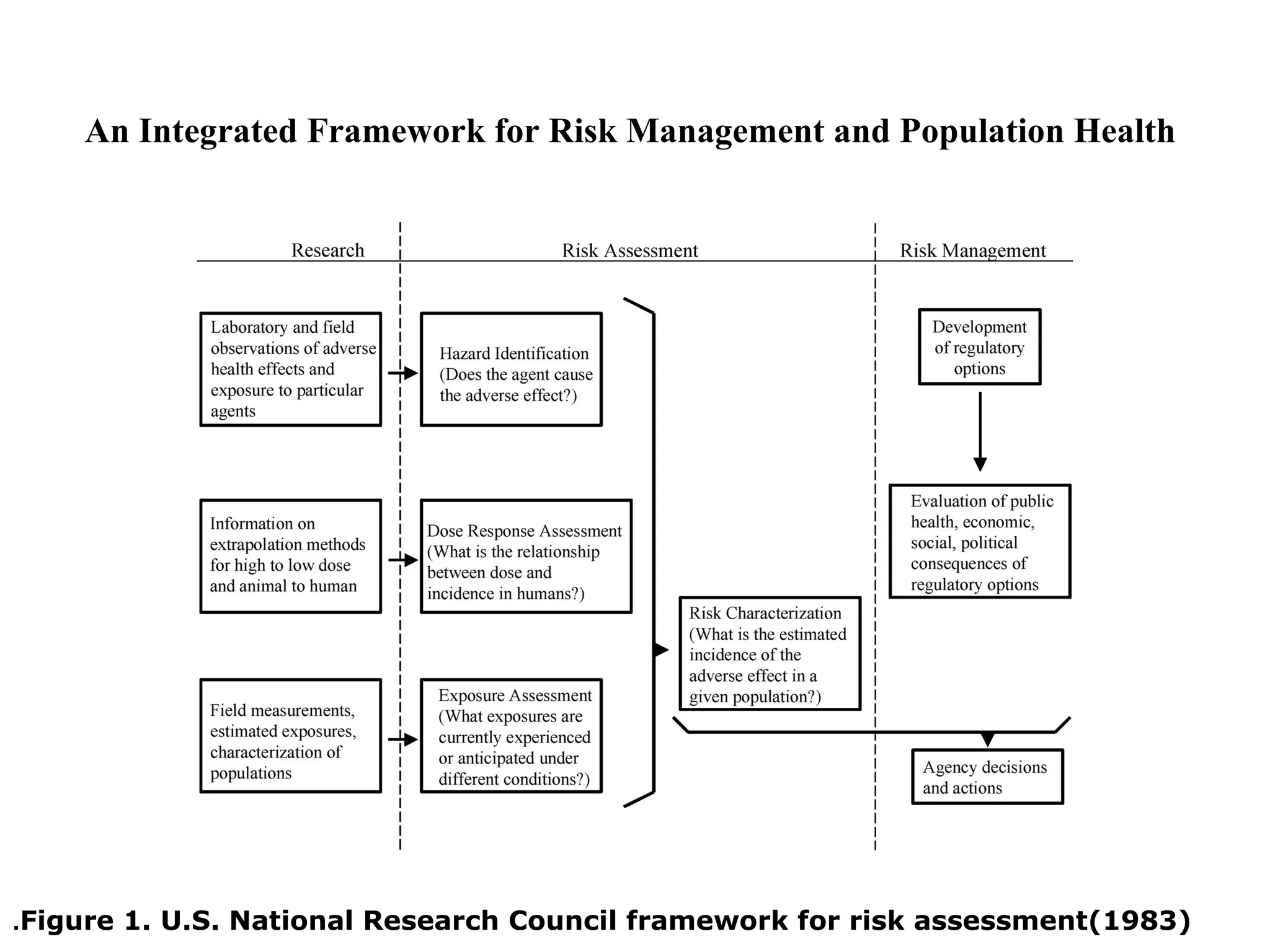
An Integrated Framework for Risk Management and Population Health
Figure 1. U.S. National Research Council framework for risk assessment(1983)
.
RISK MANAGEMENT
 Risk assessment : is defined as characterization of the potential
adverse health effects of human exposures to environmental
hazards.
Risk assessment involves four steps
1. Hazard identification : is the process of determining whether
exposure to an agent can increase the incidence of a health
condition
2. Dose-response assessment: is the process of characterizing
the relation between the dose of an agent administered or
received and the incidence of an adverse health effect in
exposed populations; it expresses incidence as a function of
exposure to the agent.
Risk assessment involves four steps
3. Exposure assessment : is the process of measuring or
estimating the intensity, frequency, and duration of human
exposures to an existing agent or of estimating hypothetical
exposures that might arise from the release of new chemicals
into the environment .
4. Risk characterization: is the process of estimating the
incidence of a health effect under the various conditions of
human exposure described in the exposure assessment
Risk Management
 Risk management: refers to the process of evaluating
alternative regulatory options and selecting among them. The
results of risk characterization are used to identify potential
options that are then evaluated in terms of expected public
health, economic, social, and political consequences.
 The responsible agency then makes a decision and implements
the selected option.
Risk Determination Diagram
 The limitations of the NRC framework are that it is better
suited to dealing with environmental agents than other health
hazards; it only considers regulatory options; it contains no
provision for monitoring, evaluating, or revising the risk
management strategy; nor is stakeholder involvement
explicitly addressed .
 So it was not the best framework .
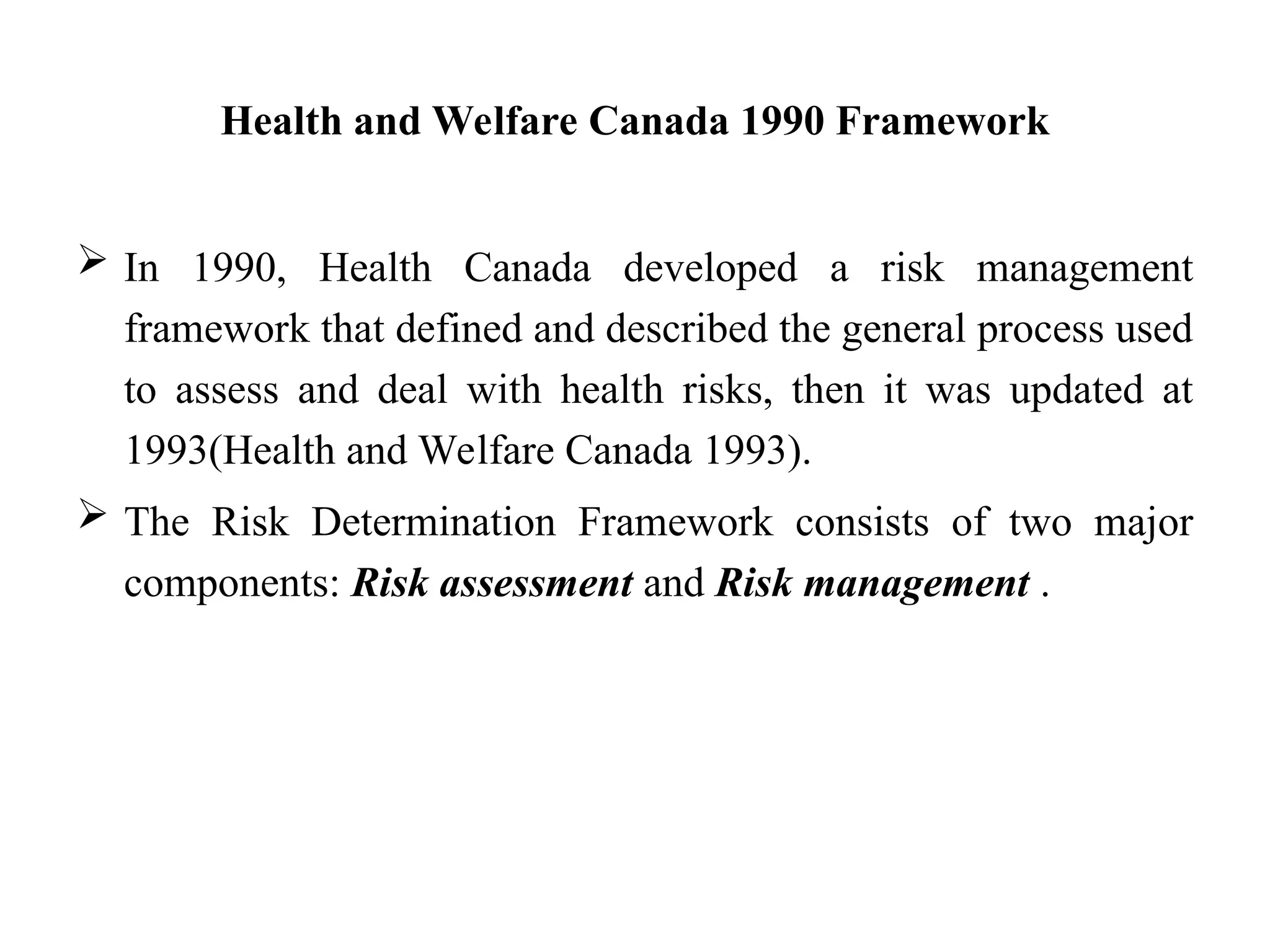
Health and Welfare Canada 1990 Framework
 In 1990, Health Canada developed a risk management
framework that defined and described the general process used
to assess and deal with health risks, then it was updated at
1993(Health and Welfare Canada 1993).
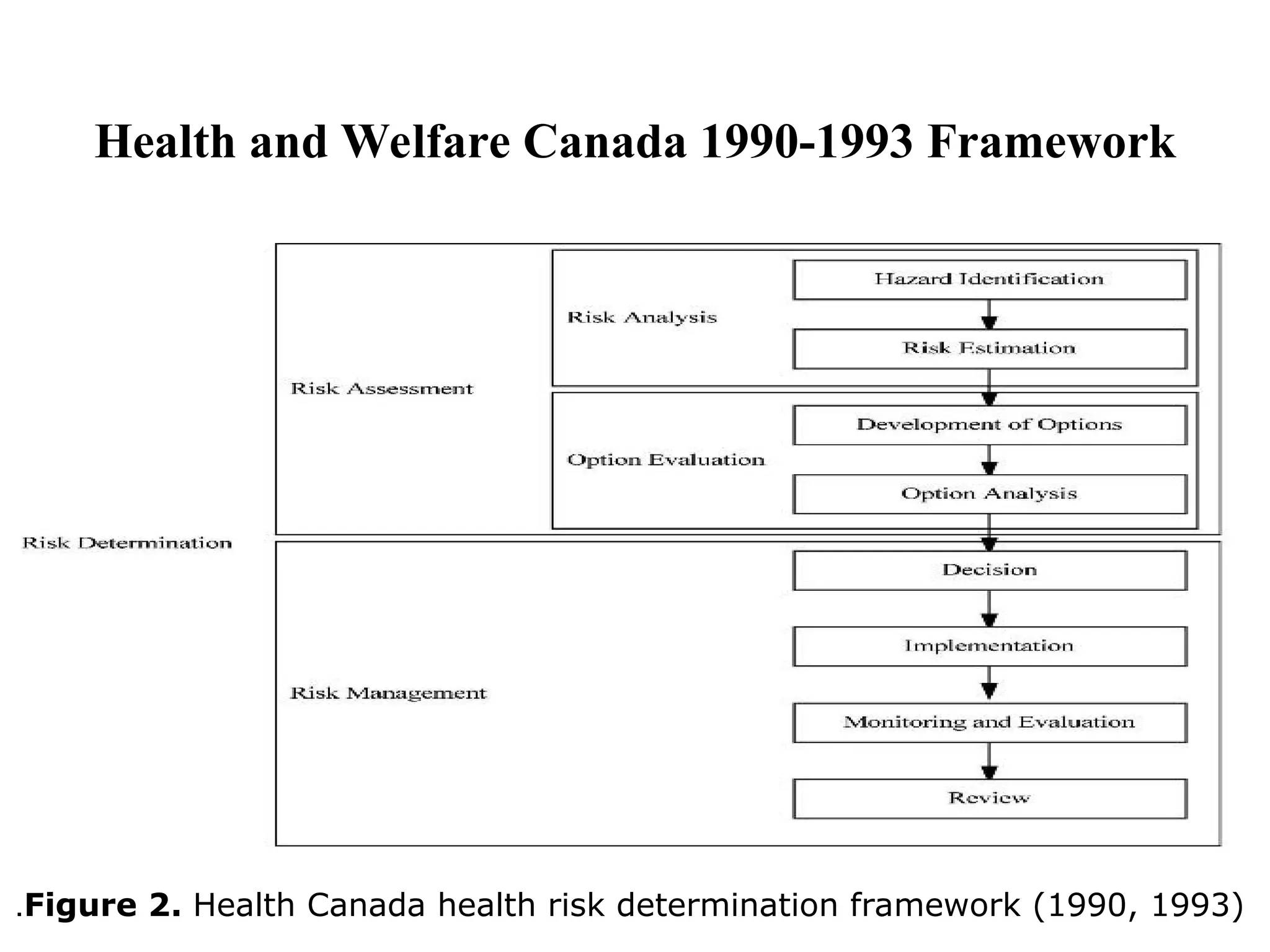
 The Risk Determination Framework consists of two major
components: Risk assessment and Risk management .
Health and Welfare Canada 1990-1993 Framework
Figure 2. Health Canada health risk determination framework (1990, 1993)
.
A- Risk assessment consists of four steps:
1. Hazard Identification: is the process of determining
whether exposure to an agent can increase the incidence of a
health condition .
2. Risk Estimation :is the process of characterizing the relation
between the dose of an agent administered or received and
the incidence of an adverse health effect in exposed
populations; it expresses incidence as a function of exposure
to the agent.
Risk assessment consists of four steps:
3. Exposure Assessment: is the process of measuring or
estimating the intensity, frequency, and duration of human
exposures to an existing agent or of estimating hypothetical
exposures that might arise from the release of new chemicals
into the environment
4. Risk Characterization : is the process of estimating the
incidence of a health effect under the various conditions of
human exposure described in the exposure assessment.
B- Risk management
 Risk management : Refers to the process of evaluating
alternative regulatory options and selecting among them. The
results of risk characterization are used to identify potential
options that are then evaluated in terms of expected public
health, economic, social, and political consequences. The
responsible agency then makes a decision and implements the
selected option.
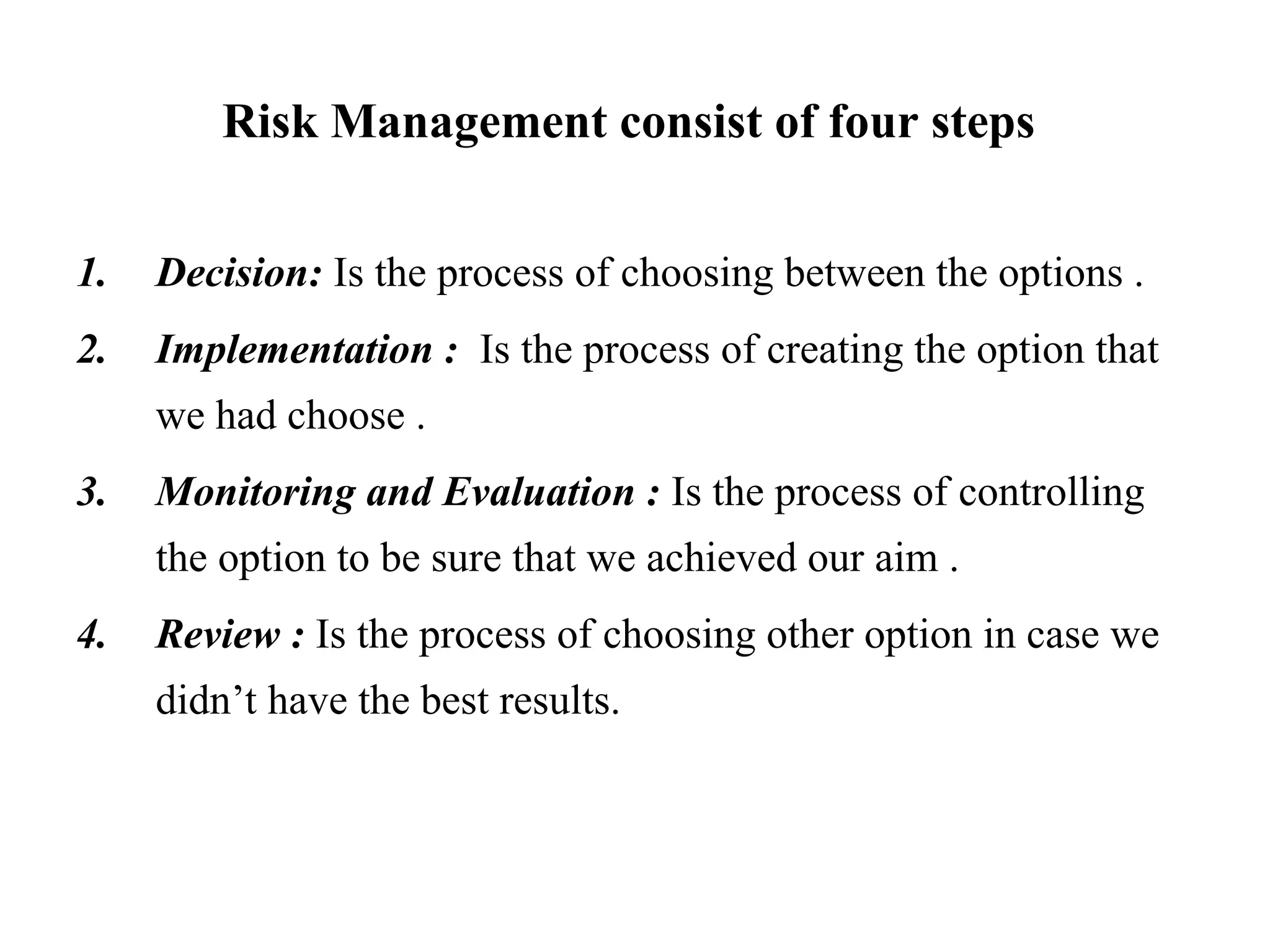
Risk Management consist of four steps
1. Decision: Is the process of choosing between the options .
2. Implementation : Is the process of creating the option that
we had choose .
3. Monitoring and Evaluation : Is the process of controlling
the option to be sure that we achieved our aim .
4. Review : Is the process of choosing other option in case we
didn’t have the best results.
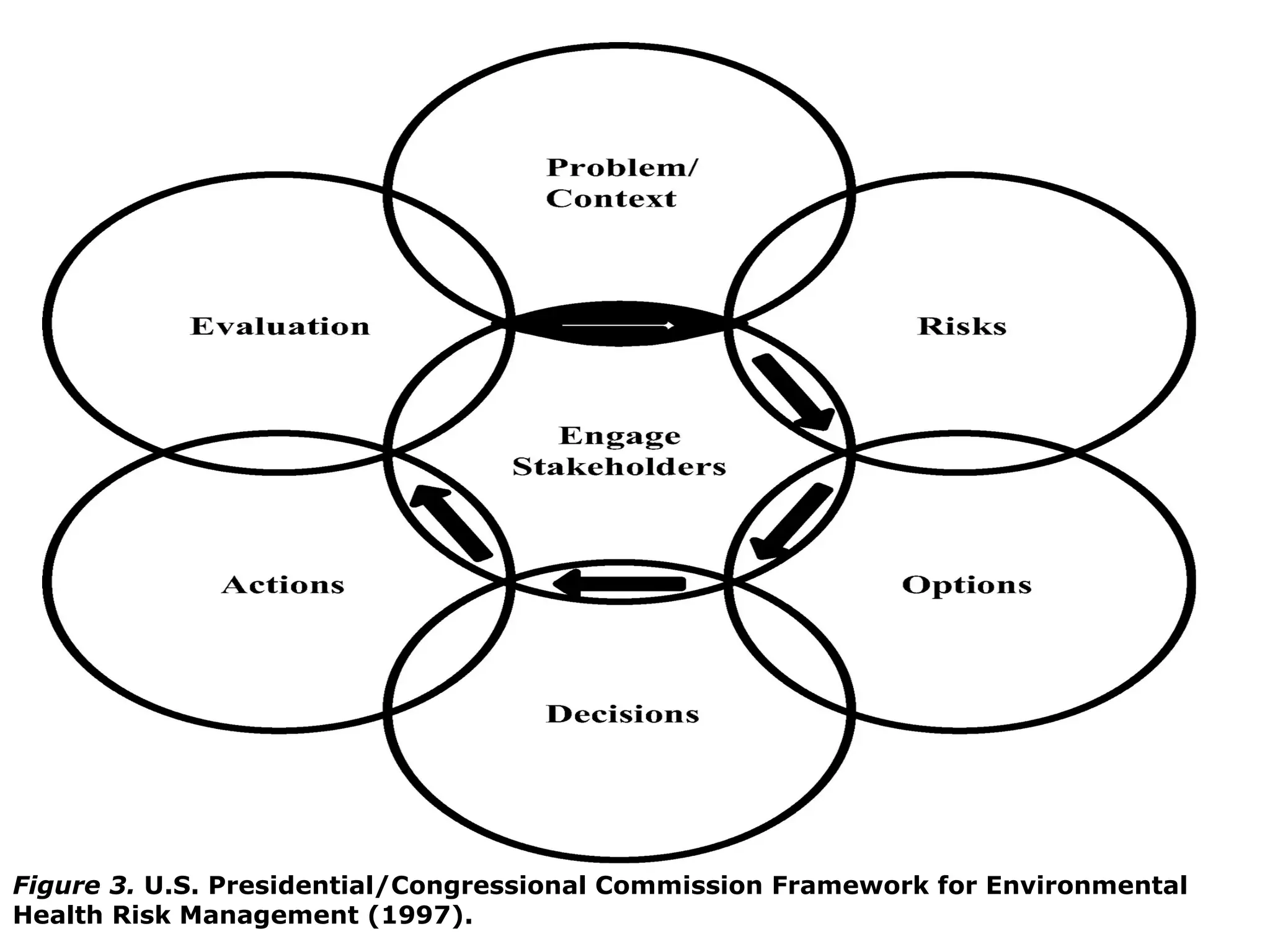
Figure 3. U.S. Presidential/Congressional Commission Framework for Environmental
Health Risk Management (1997).

Risk Management in Public Health Introduction.ppt

  • 1.
  • 2.
    Introduction  Health policydevelopment has focused on individuals and the role of medical care in preventing and treating disease and injury .
  • 3.
    An Integrated Frameworkfor Risk Management and Population Health Figure 1. U.S. National Research Council framework for risk assessment(1983) .
  • 4.
    RISK MANAGEMENT  Riskassessment : is defined as characterization of the potential adverse health effects of human exposures to environmental hazards.
  • 5.
    Risk assessment involvesfour steps 1. Hazard identification : is the process of determining whether exposure to an agent can increase the incidence of a health condition 2. Dose-response assessment: is the process of characterizing the relation between the dose of an agent administered or received and the incidence of an adverse health effect in exposed populations; it expresses incidence as a function of exposure to the agent.
  • 6.
    Risk assessment involvesfour steps 3. Exposure assessment : is the process of measuring or estimating the intensity, frequency, and duration of human exposures to an existing agent or of estimating hypothetical exposures that might arise from the release of new chemicals into the environment . 4. Risk characterization: is the process of estimating the incidence of a health effect under the various conditions of human exposure described in the exposure assessment
  • 7.
    Risk Management  Riskmanagement: refers to the process of evaluating alternative regulatory options and selecting among them. The results of risk characterization are used to identify potential options that are then evaluated in terms of expected public health, economic, social, and political consequences.  The responsible agency then makes a decision and implements the selected option.
  • 8.
    Risk Determination Diagram The limitations of the NRC framework are that it is better suited to dealing with environmental agents than other health hazards; it only considers regulatory options; it contains no provision for monitoring, evaluating, or revising the risk management strategy; nor is stakeholder involvement explicitly addressed .  So it was not the best framework .
  • 9.
    Health and WelfareCanada 1990 Framework  In 1990, Health Canada developed a risk management framework that defined and described the general process used to assess and deal with health risks, then it was updated at 1993(Health and Welfare Canada 1993).  The Risk Determination Framework consists of two major components: Risk assessment and Risk management .
  • 10.
    Health and WelfareCanada 1990-1993 Framework Figure 2. Health Canada health risk determination framework (1990, 1993) .
  • 11.
    A- Risk assessmentconsists of four steps: 1. Hazard Identification: is the process of determining whether exposure to an agent can increase the incidence of a health condition . 2. Risk Estimation :is the process of characterizing the relation between the dose of an agent administered or received and the incidence of an adverse health effect in exposed populations; it expresses incidence as a function of exposure to the agent.
  • 12.
    Risk assessment consistsof four steps: 3. Exposure Assessment: is the process of measuring or estimating the intensity, frequency, and duration of human exposures to an existing agent or of estimating hypothetical exposures that might arise from the release of new chemicals into the environment 4. Risk Characterization : is the process of estimating the incidence of a health effect under the various conditions of human exposure described in the exposure assessment.
  • 13.
    B- Risk management Risk management : Refers to the process of evaluating alternative regulatory options and selecting among them. The results of risk characterization are used to identify potential options that are then evaluated in terms of expected public health, economic, social, and political consequences. The responsible agency then makes a decision and implements the selected option.
  • 14.
    Risk Management consistof four steps 1. Decision: Is the process of choosing between the options . 2. Implementation : Is the process of creating the option that we had choose . 3. Monitoring and Evaluation : Is the process of controlling the option to be sure that we achieved our aim . 4. Review : Is the process of choosing other option in case we didn’t have the best results.
  • 15.
    Figure 3. U.S.Presidential/Congressional Commission Framework for Environmental Health Risk Management (1997).