Downloaded 454 times
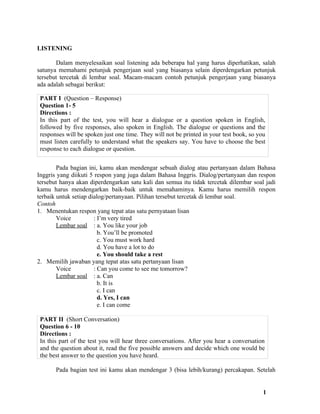
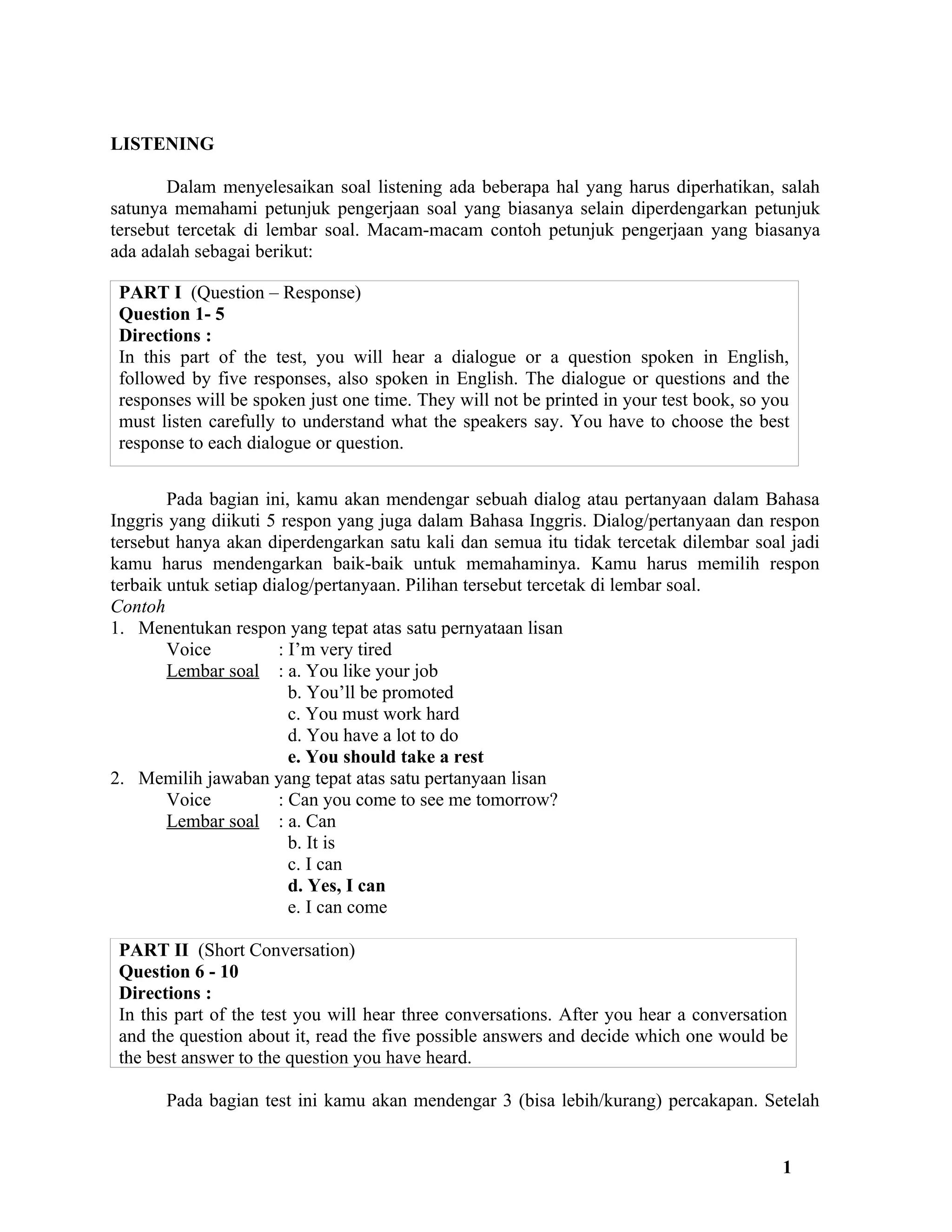
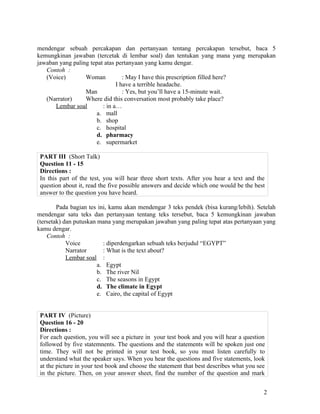
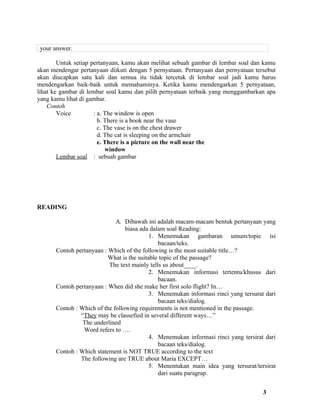
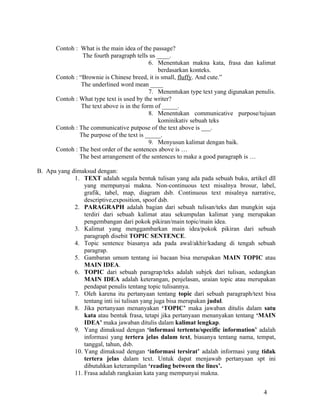
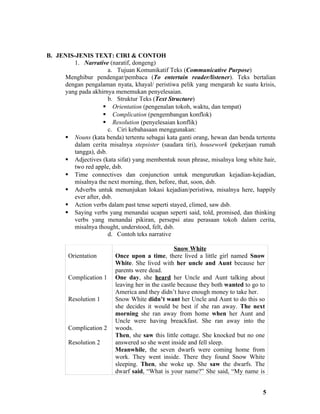
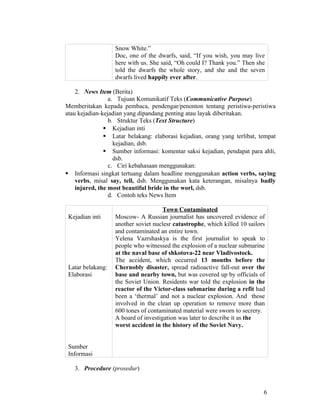
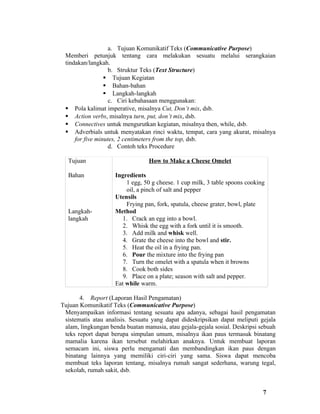
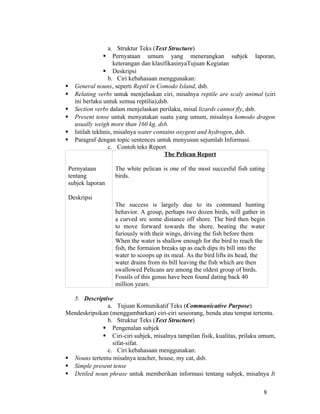
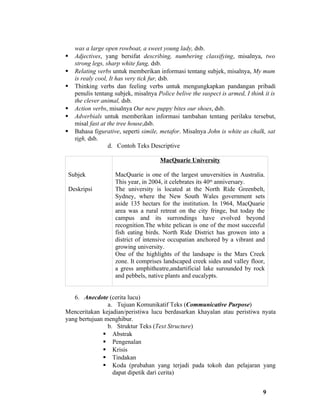
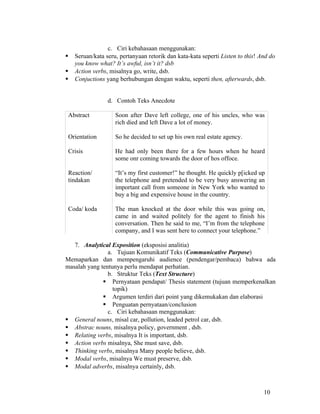
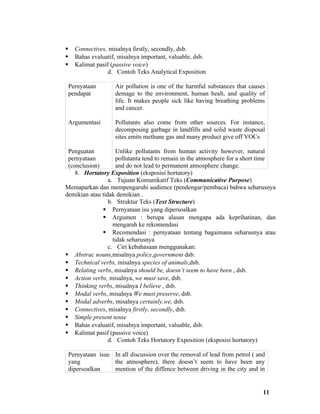
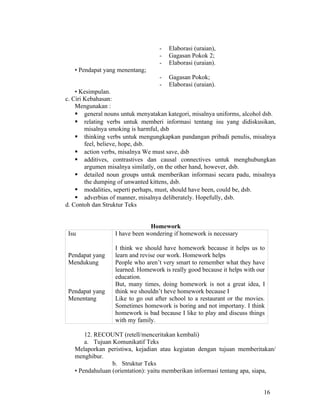
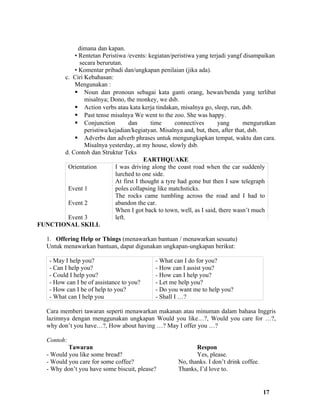
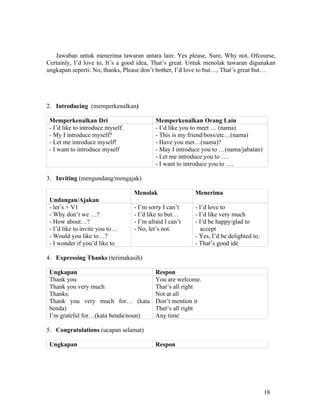
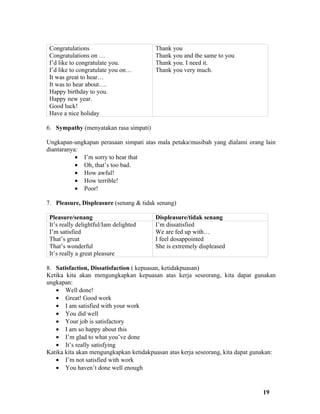
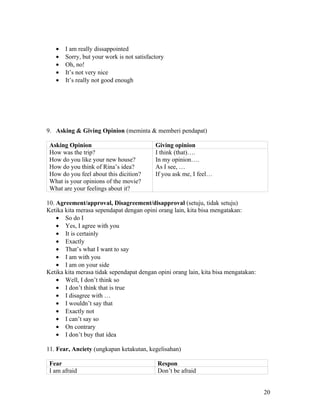
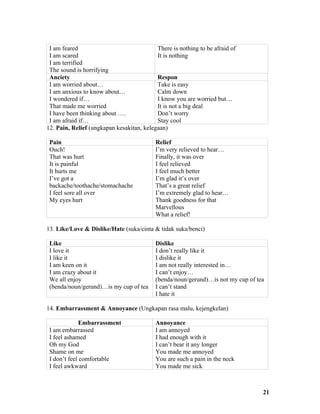
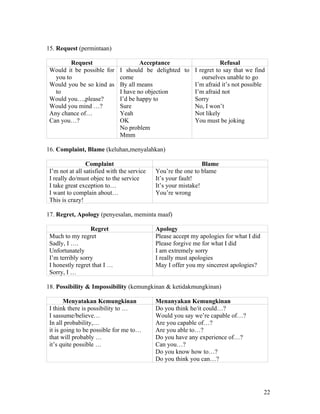
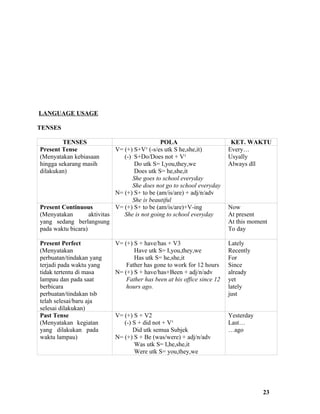
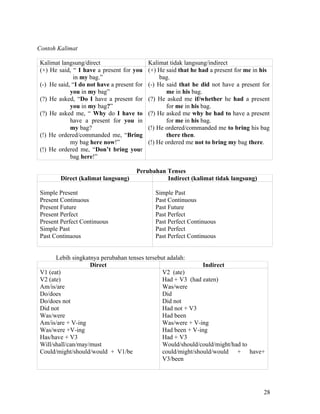
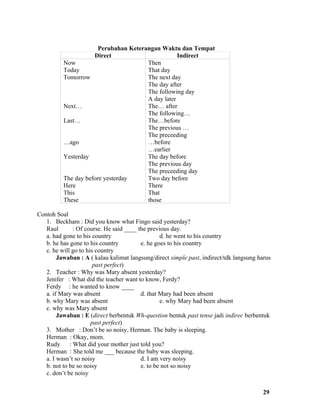
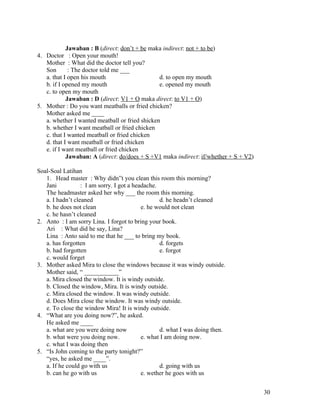
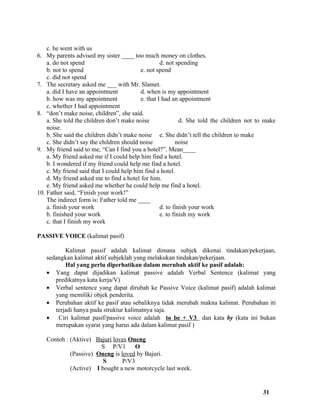
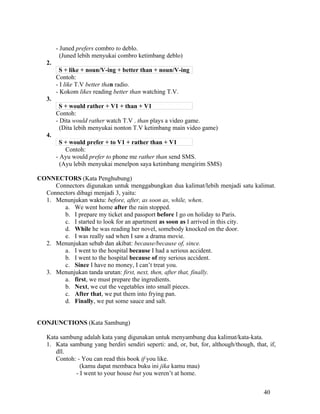
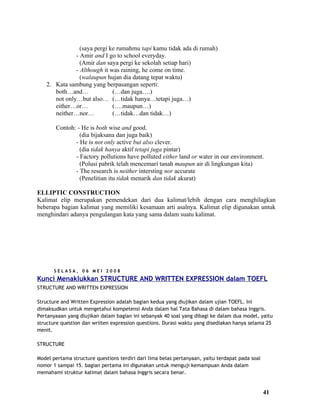
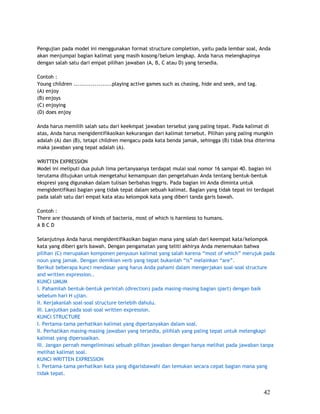


This document provides guidance on several important aspects of listening comprehension questions on tests: 1) Understanding instruction words is crucial, as instructions are spoken and printed. Common question types include choosing the best response to a question or dialogue, and identifying key details in short conversations or talks. 2) For reading comprehension questions, common formats include identifying the main topic or purpose, finding specific or implied details, determining meanings based on context, and arranging sentences logically. Understanding the difference between topics, main ideas, and key details is important for answering questions correctly. 3) Text can be continuous like narratives, or non-continuous like brochures. Paragraphs develop a main topic or idea, often stated clearly in a topic sentence


![Ekonomi - BS SMA KLS XI [www.defantri.com].pdf](https://cdn.slidesharecdn.com/ss_thumbnails/ekonomi-bssmaklsxiwww-230324104815-0acddf81-thumbnail.jpg?width=640&height=640&fit=bounds)


