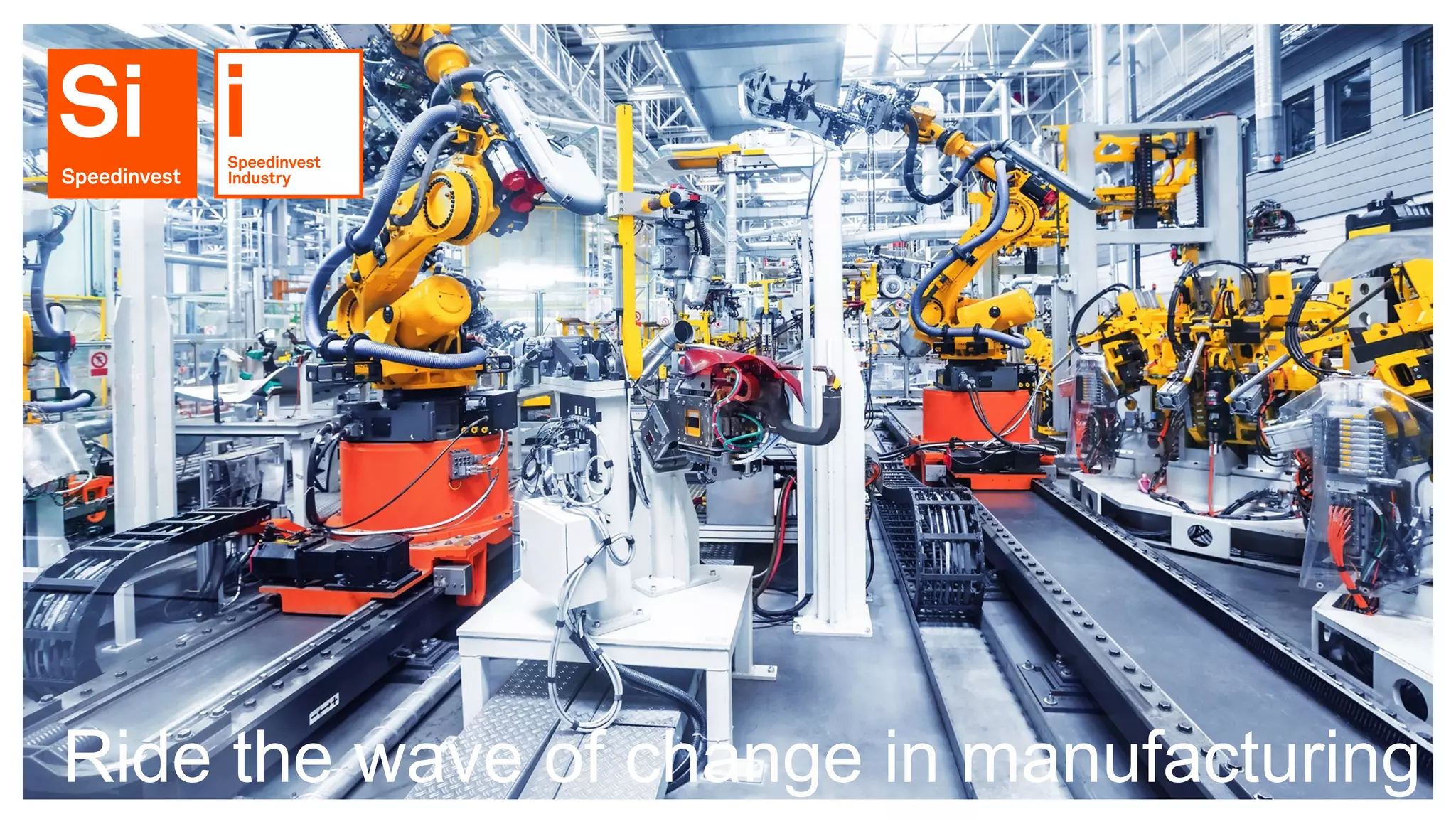
Ride the wave of change in manufacturing
2
“Isn‘t tech a bubble anyway?“
3
This will be your factory
4
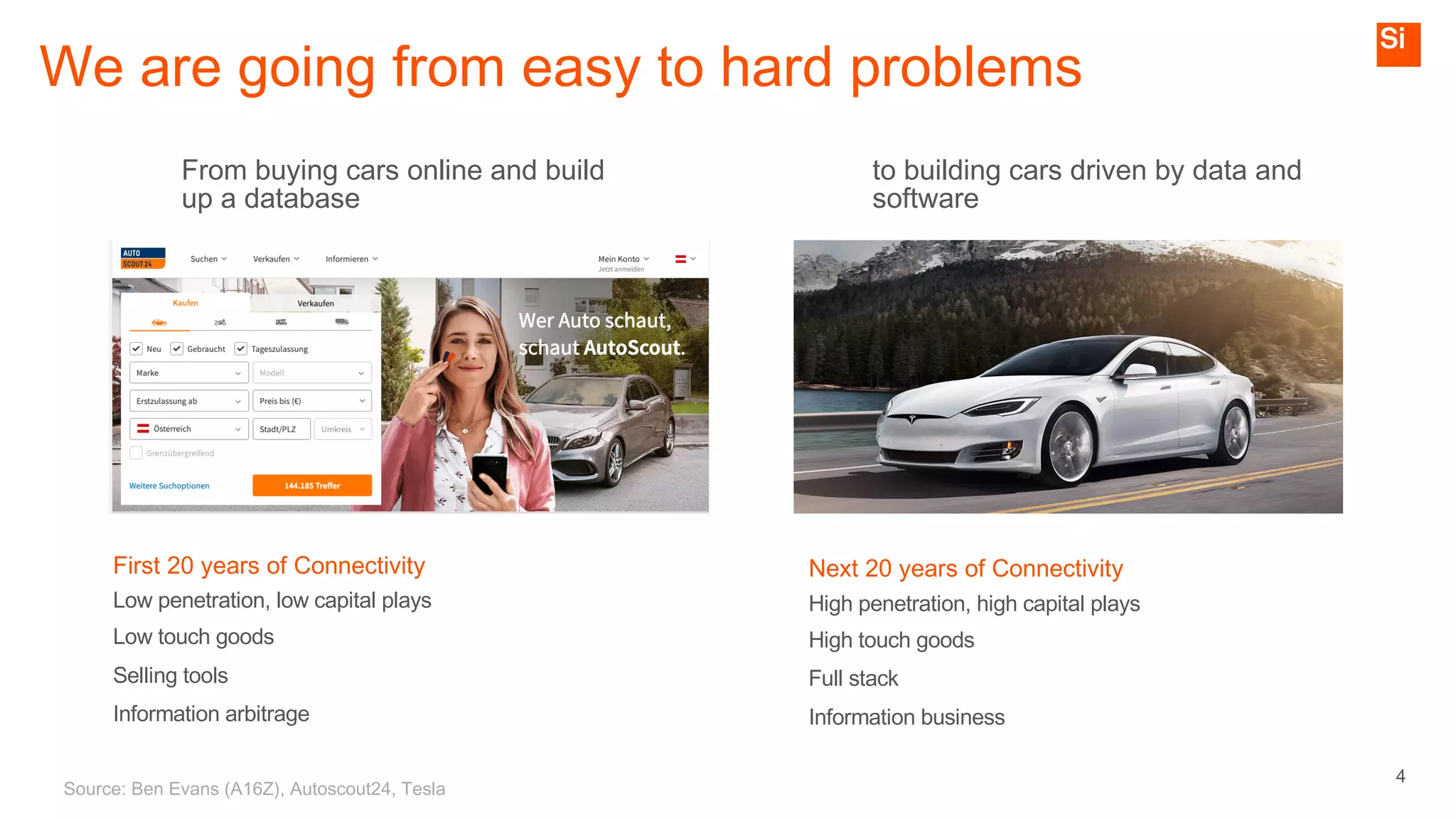
We are going from easy to hard problems
From buying cars online and build
up a database
to building cars driven by data and
software
Source: Ben Evans (A16Z), Autoscout24, Tesla
First 20 years of Connectivity
Low penetration, low capital plays
Low touch goods
Selling tools
Information arbitrage
Next 20 years of Connectivity
High penetration, high capital plays
High touch goods
Full stack
Information business
5
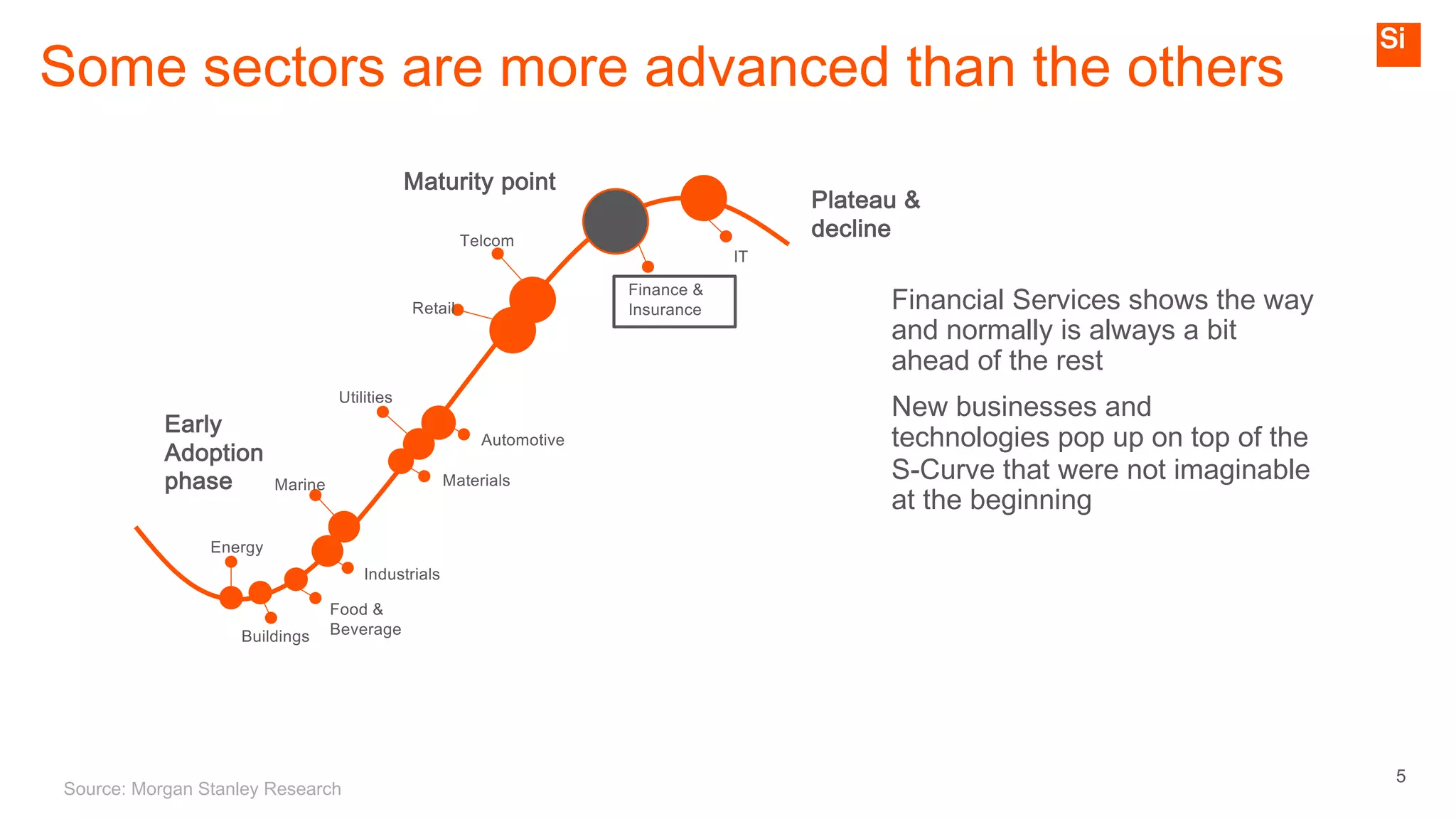
Some sectors are more advanced than the others
Energy
Buildings
Food &
Beverage
Industrials
Marine Materials
Automotive
Utilities
Retail
Telcom
Finance &
Insurance
IT
Source: Morgan Stanley Research
Plateau &
decline
Maturity point
Early
Adoption
phase
Financial Services shows the way
and normally is always a bit
ahead of the rest
New businesses and
technologies pop up on top of the
S-Curve that were not imaginable
at the beginning
6
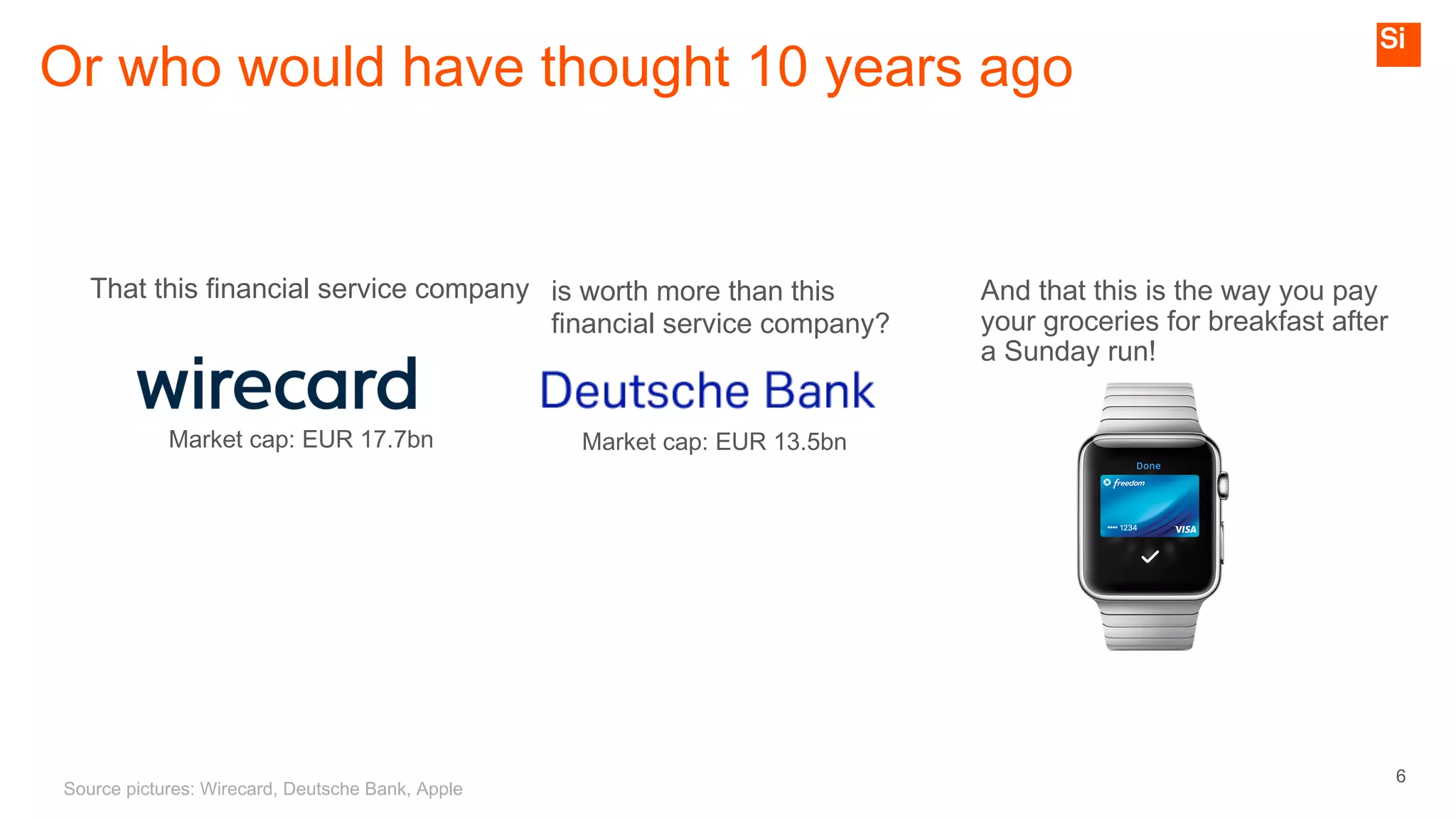
Or who would have thought 10 years ago
That this financial service company
Market cap: EUR 17.7bn
Source pictures: Wirecard, Deutsche Bank, Apple
Market cap: EUR 13.5bn
is worth more than this
financial service company?
And that this is the way you pay
your groceries for breakfast after
a Sunday run!
7
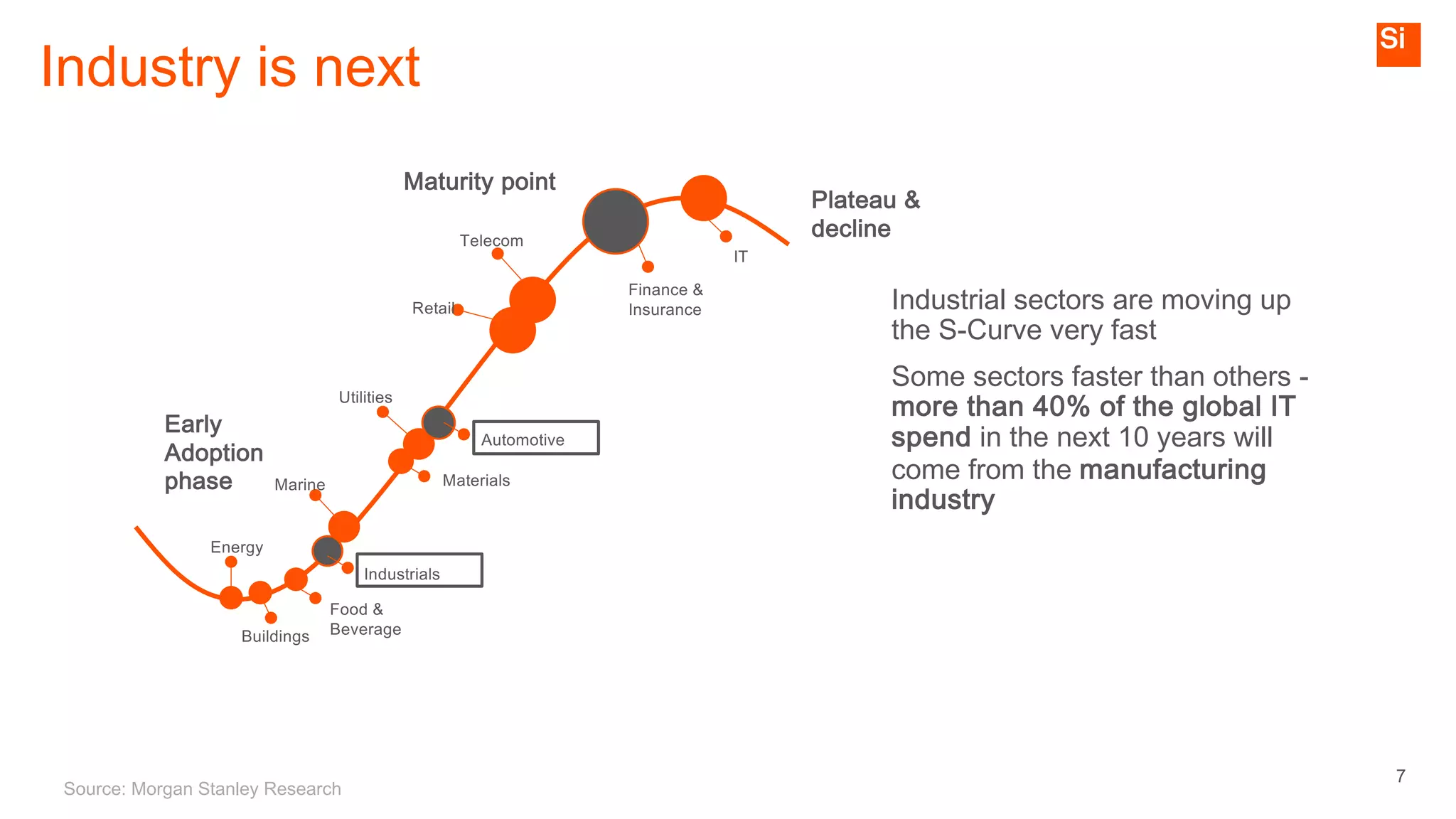
Industry is next
Energy
Buildings
Food &
Beverage
Industrials
Marine Materials
Automotive
Utilities
Retail
Telecom
Finance &
Insurance
IT
Source: Morgan Stanley Research
Plateau &
decline
Maturity point
Early
Adoption
phase
Industrial sectors are moving up
the S-Curve very fast
Some sectors faster than others -
more than 40% of the global IT
spend in the next 10 years will
come from the manufacturing
industry
8
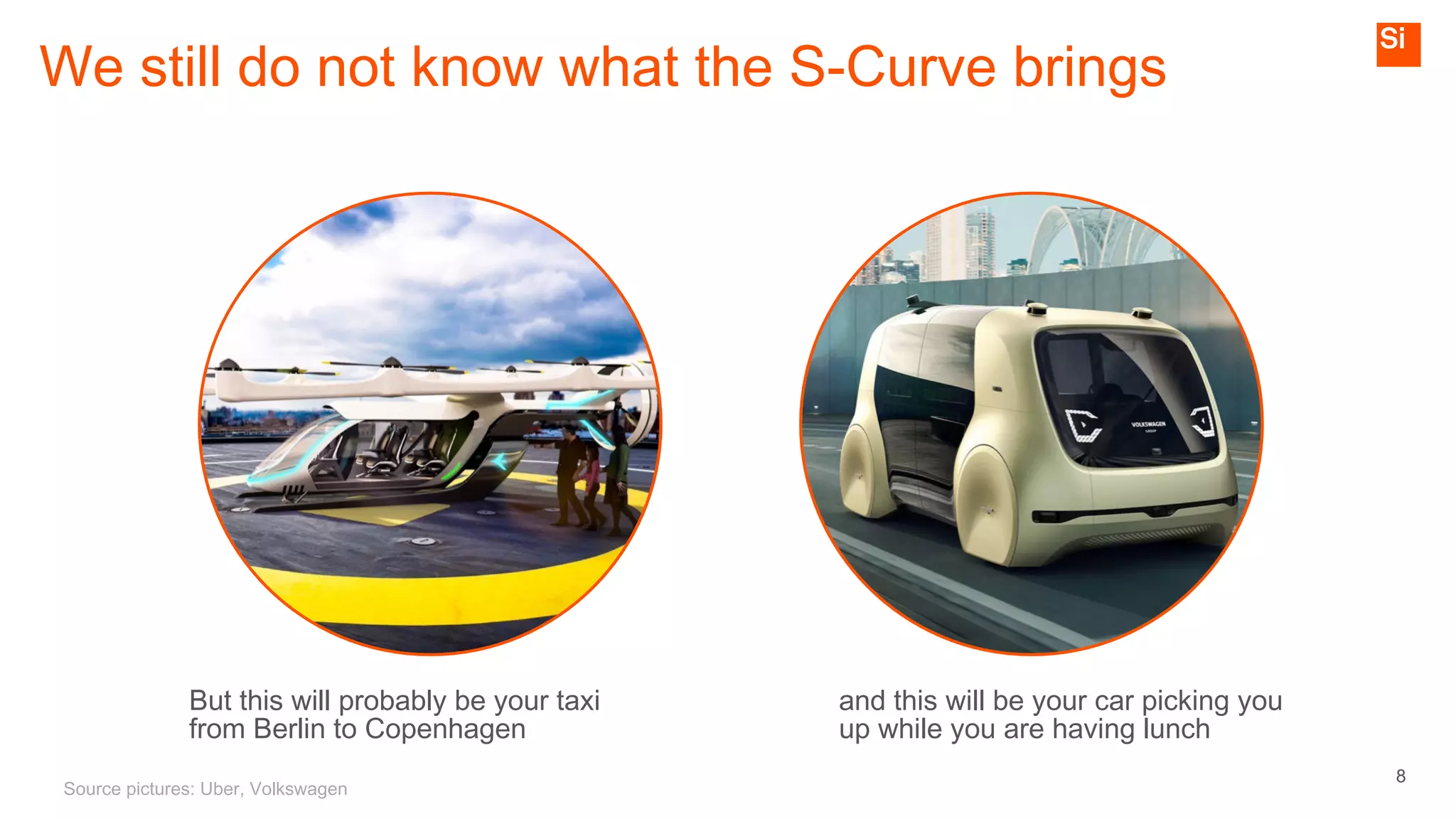
We still do not know what the S-Curve brings
Source pictures: Uber, Volkswagen
But this will probably be your taxi
from Berlin to Copenhagen
and this will be your car picking you
up while you are having lunch
9
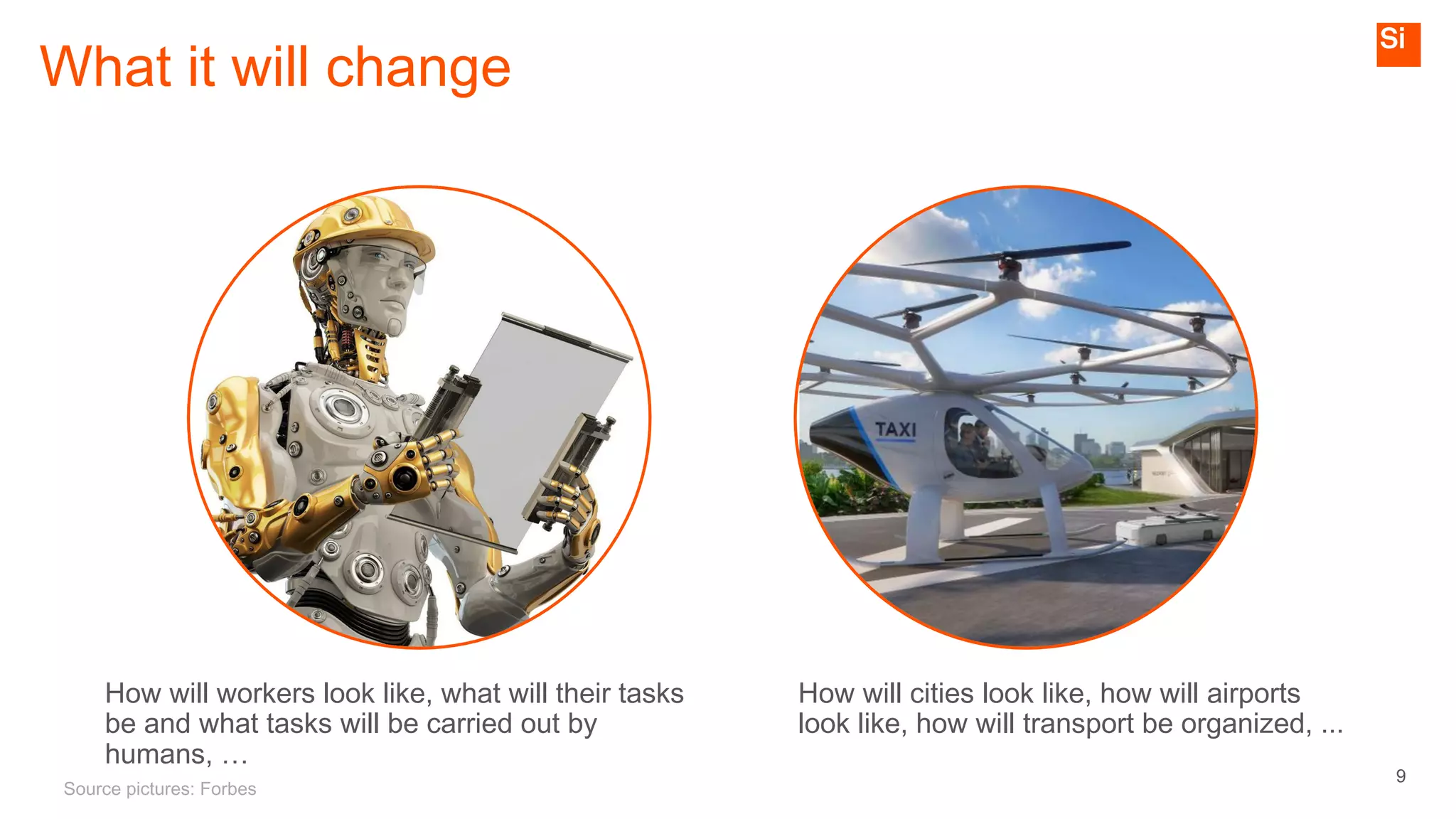
What it will change
Source pictures: Forbes
How will workers look like, what will their tasks
be and what tasks will be carried out by
humans, …
How will cities look like, how will airports
look like, how will transport be organized, ...
10
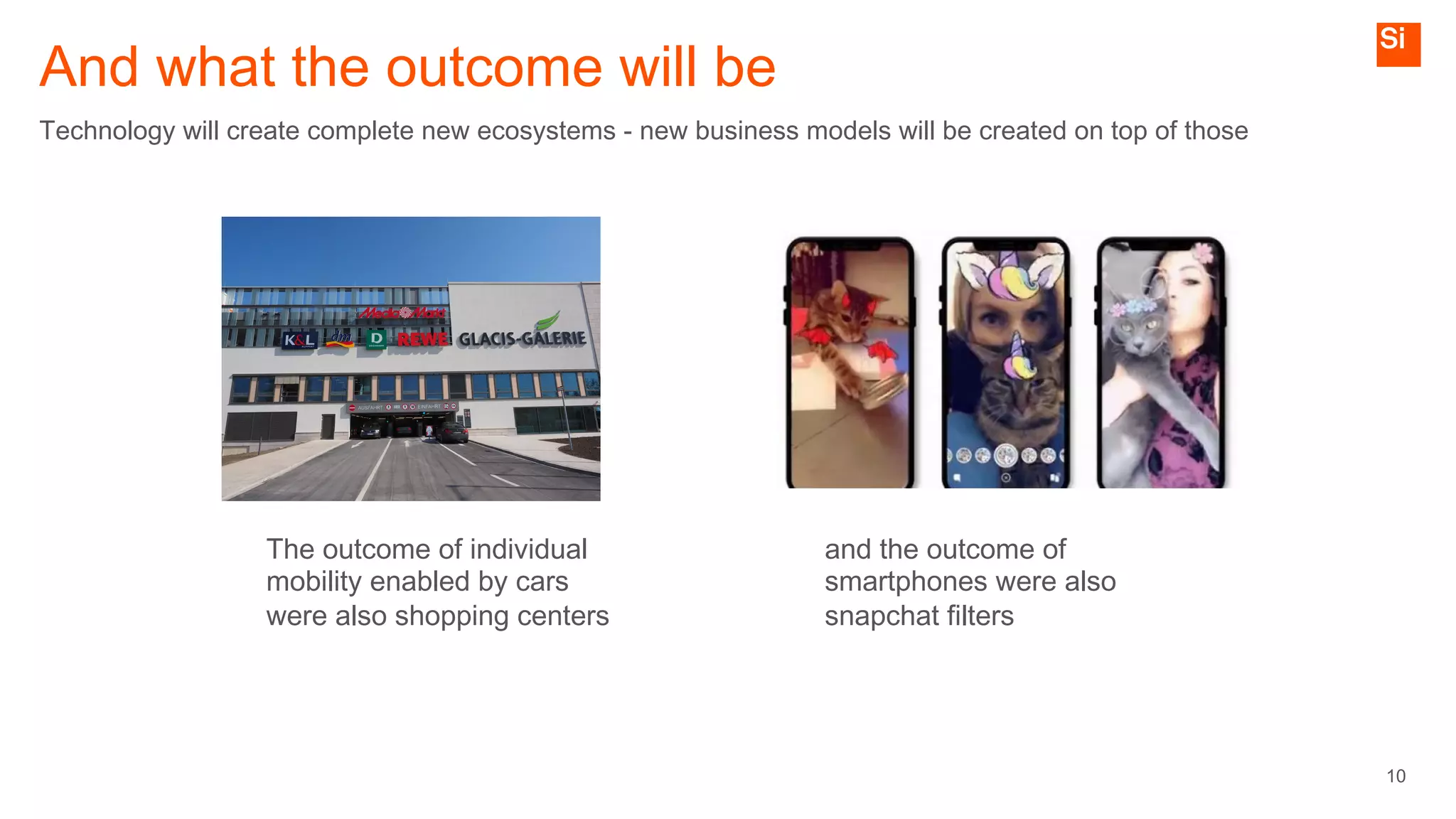
And what the outcome will be
Technology will create complete new ecosystems - new business models will be created on top of those
The outcome of individual
mobility enabled by cars
were also shopping centers
and the outcome of
smartphones were also
snapchat filters
11
§ From design to engineering to
production to a fully automated
supply chain
§ Product customization will be
feasible and better match
customer demands
§ Automation, analytics, digital
tools will enhance workforce
productivity
§ This will lead to enormous
efficiency gains
§ New business models and new
software enabled services will
be created
§ Technology will lead to better
knowledge of customers needs
and can increase customer
loyalty
§ New sales channels will open
up
§ Based on data goods and
services will be better priced
(pay per use etc.)
The way we
produce things
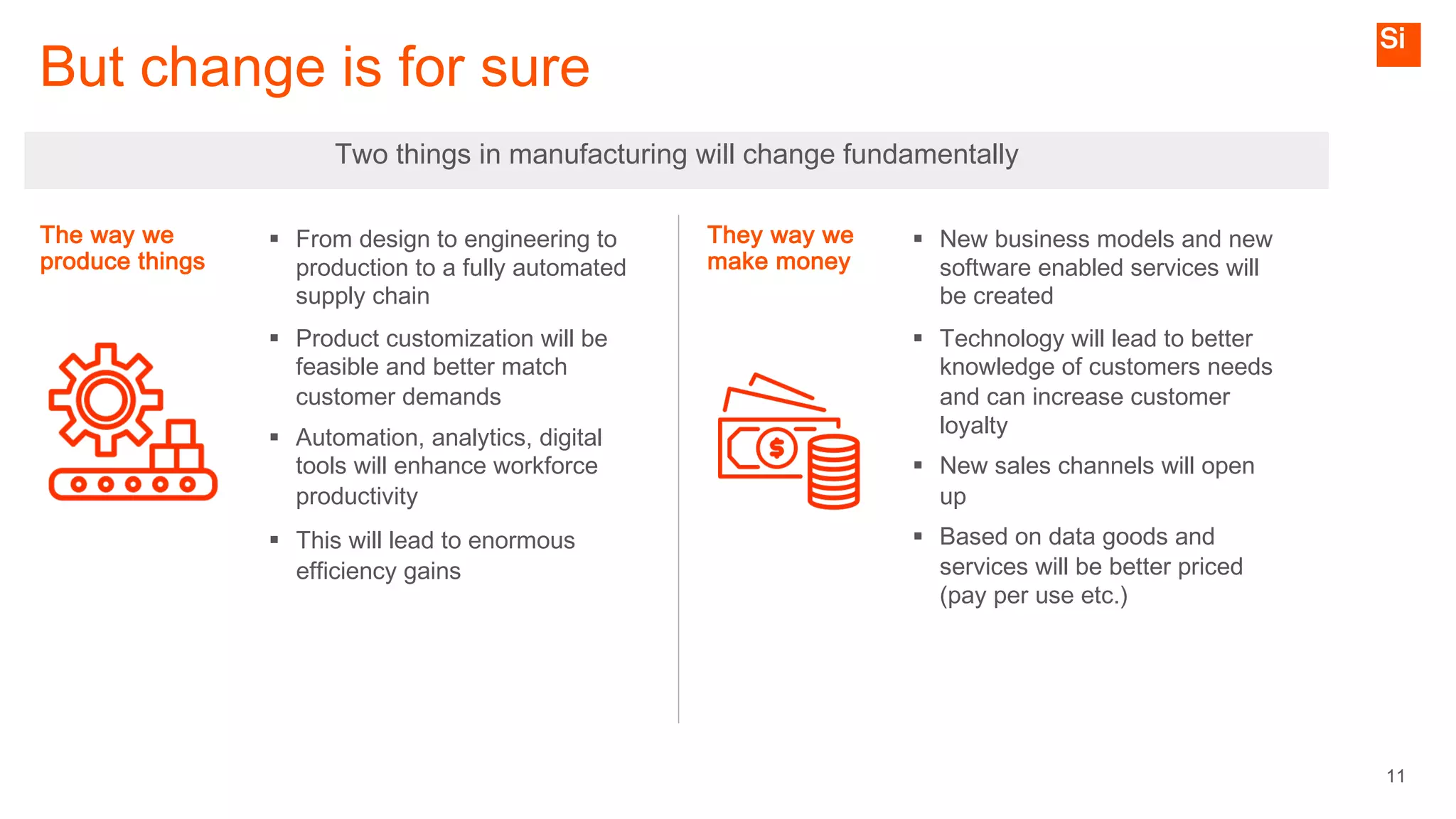
But change is for sure
Two things in manufacturing will change fundamentally
They way we
make money
12
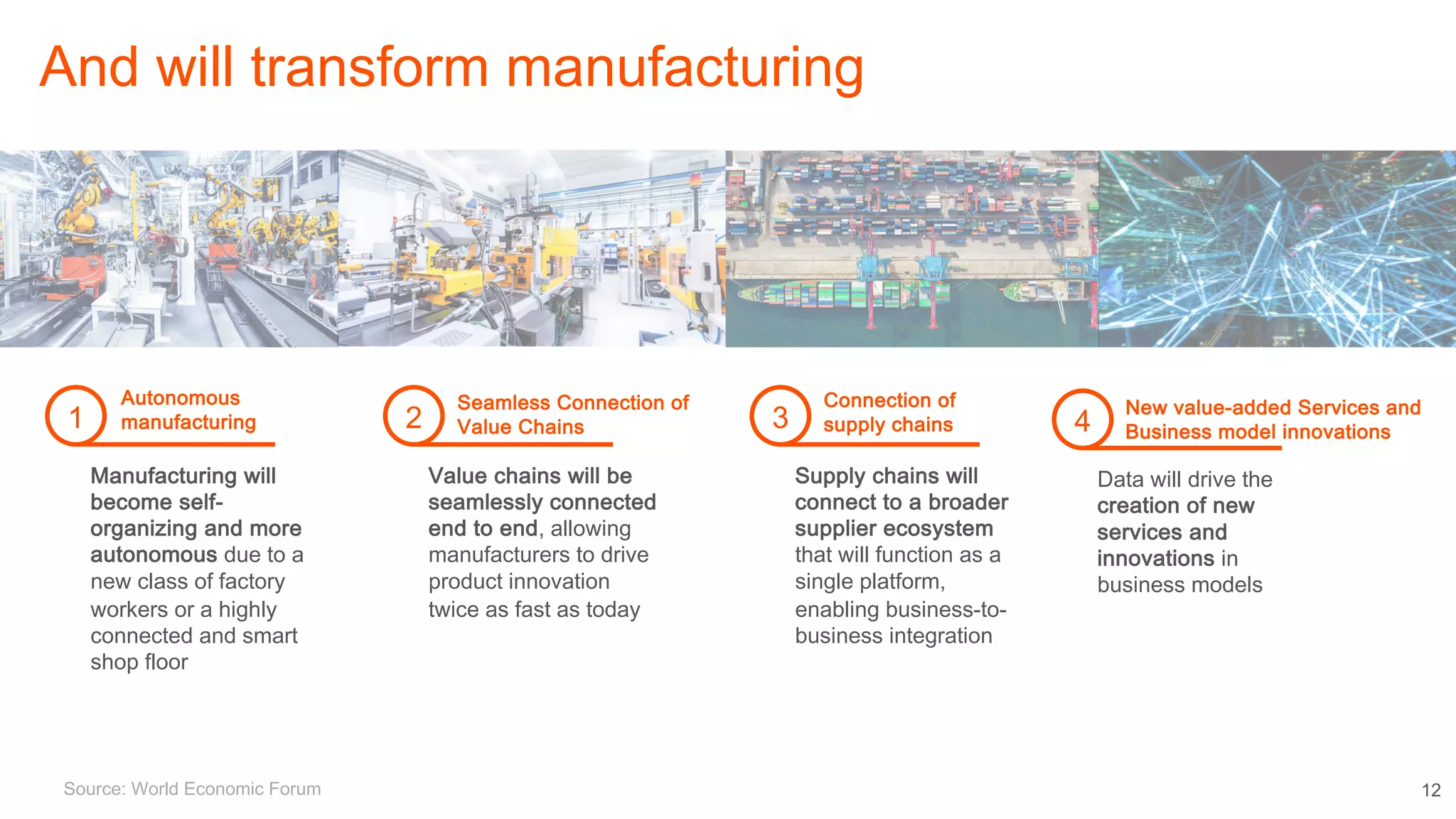
And will transform manufacturing
Manufacturing will
become self-
organizing and more
autonomous due to a
new class of factory
workers or a highly
connected and smart
shop floor
Value chains will be
seamlessly connected
end to end, allowing
manufacturers to drive
product innovation
twice as fast as today
Supply chains will
connect to a broader
supplier ecosystem
that will function as a
single platform,
enabling business-to-
business integration
Data will drive the
creation of new
services and
innovations in
business models
2 3 41
Autonomous
manufacturing
Seamless Connection of
Value Chains
Connection of
supply chains
New value-added Services and
Business model innovations
Source: World Economic Forum
13
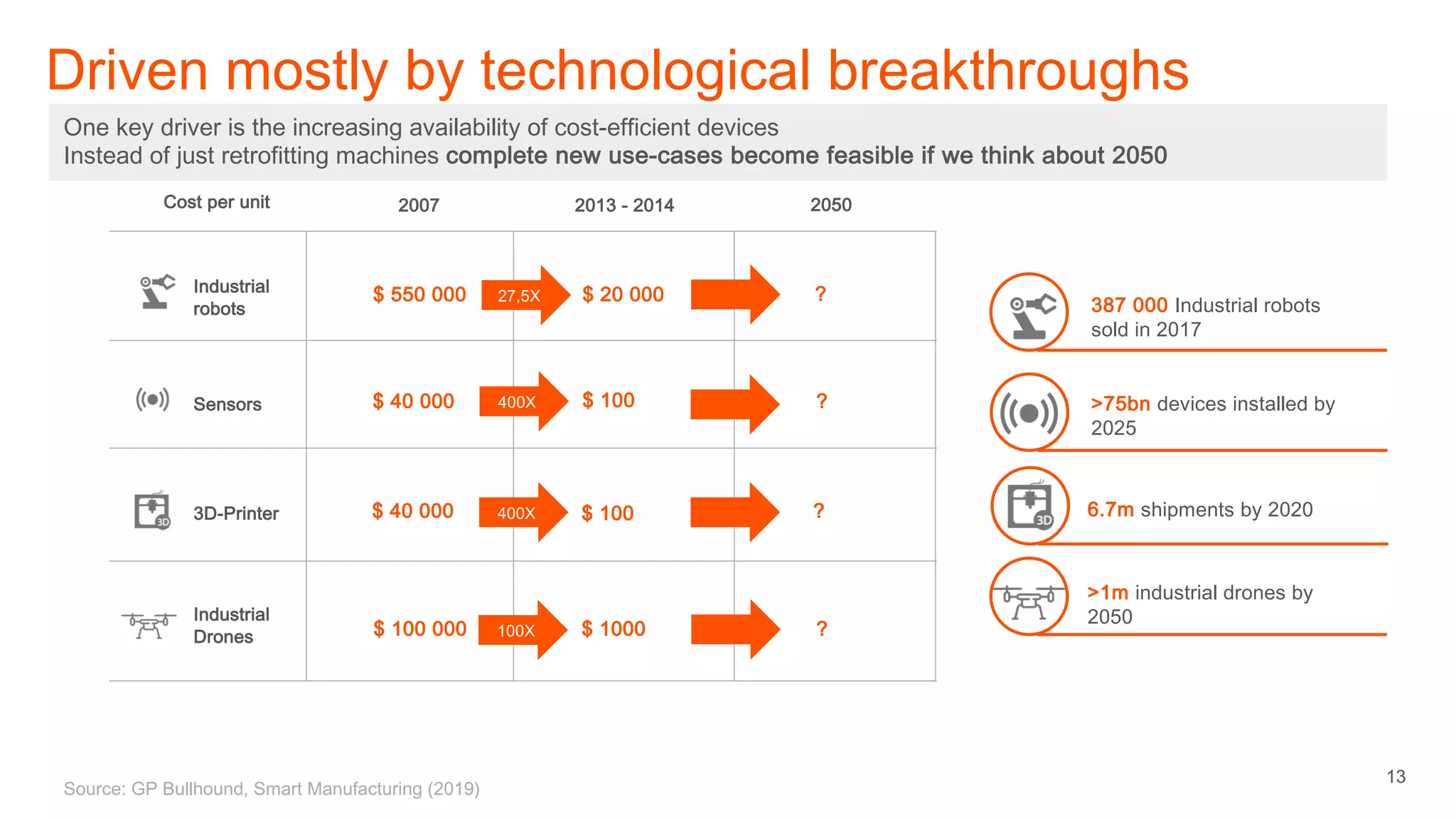
Driven mostly by technological breakthroughs
One key driver is the increasing availability of cost-efficient devices
Instead of just retrofitting machines complete new use-cases become feasible if we think about 2050
387 000 Industrial robots
sold in 2017
>75bn devices installed by
2025
6.7m shipments by 2020
>1m industrial drones by
2050
Industrial
robots
Sensors
3D-Printer
Industrial
Drones
Cost per unit 2007 2013 - 2014 2050
$ 550 000 $ 20 000
$ 40 000 $ 100
$ 40 000 $ 100
$ 1000$ 100 000
?
?
?
?
Source: GP Bullhound, Smart Manufacturing (2019)
27,5X
400X
400X
100X
14
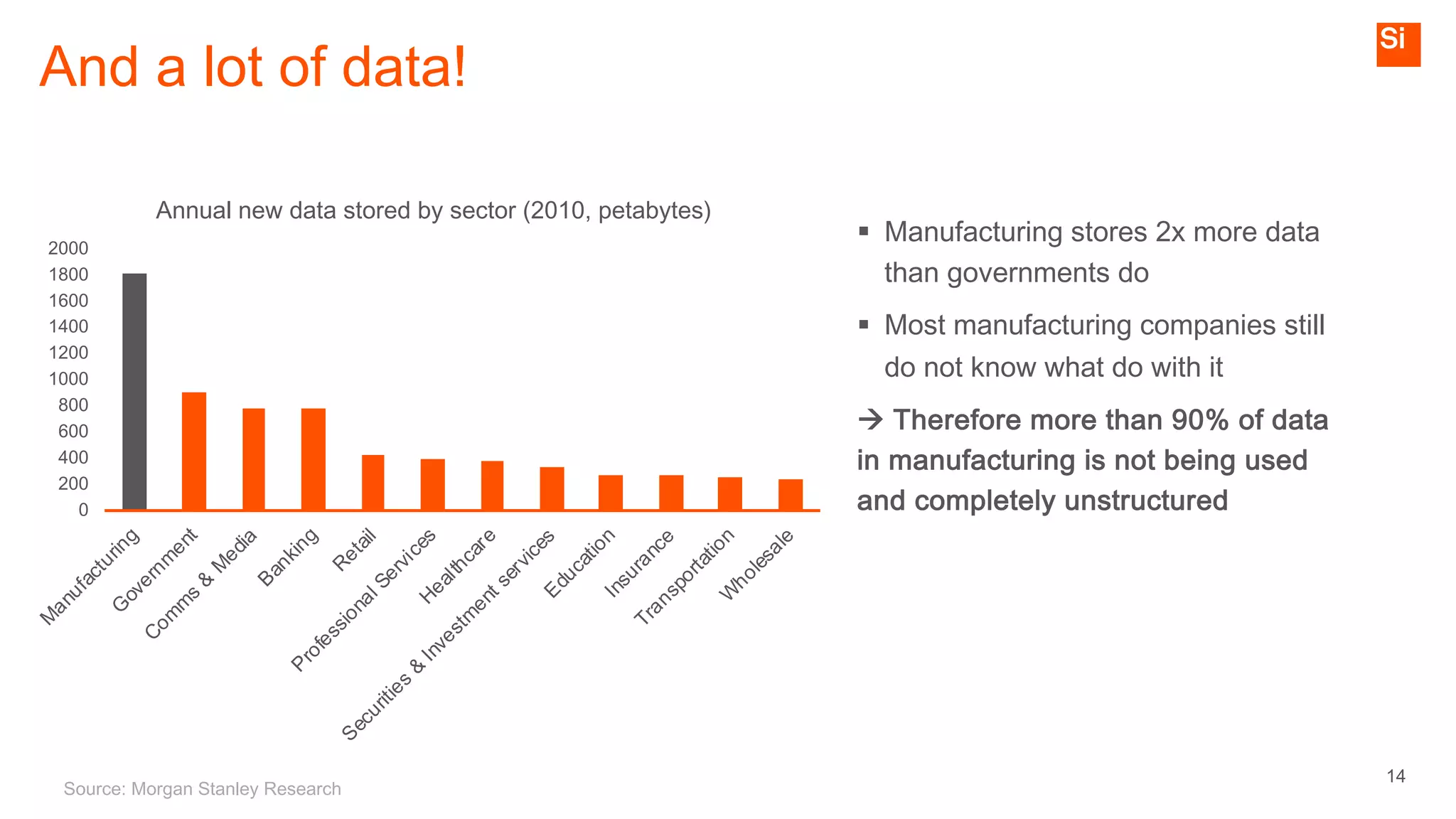
And a lot of data!
§ Manufacturing stores 2x more data
than governments do
§ Most manufacturing companies still
do not know what do with it
à Therefore more than 90% of data
in manufacturing is not being used
and completely unstructured0
200
400
600
800
1000
1200
1400
1600
1800
2000
M
anufacturing
G
overnm
ent
Com
m
s
&
M
edia
Banking
Retail
ProfessionalServicesHealthcare
Securities
&
Investm
entservicesEducationInsurance
TransportationW
holesale
Annual new data stored by sector (2010, petabytes)
Source: Morgan Stanley Research
15
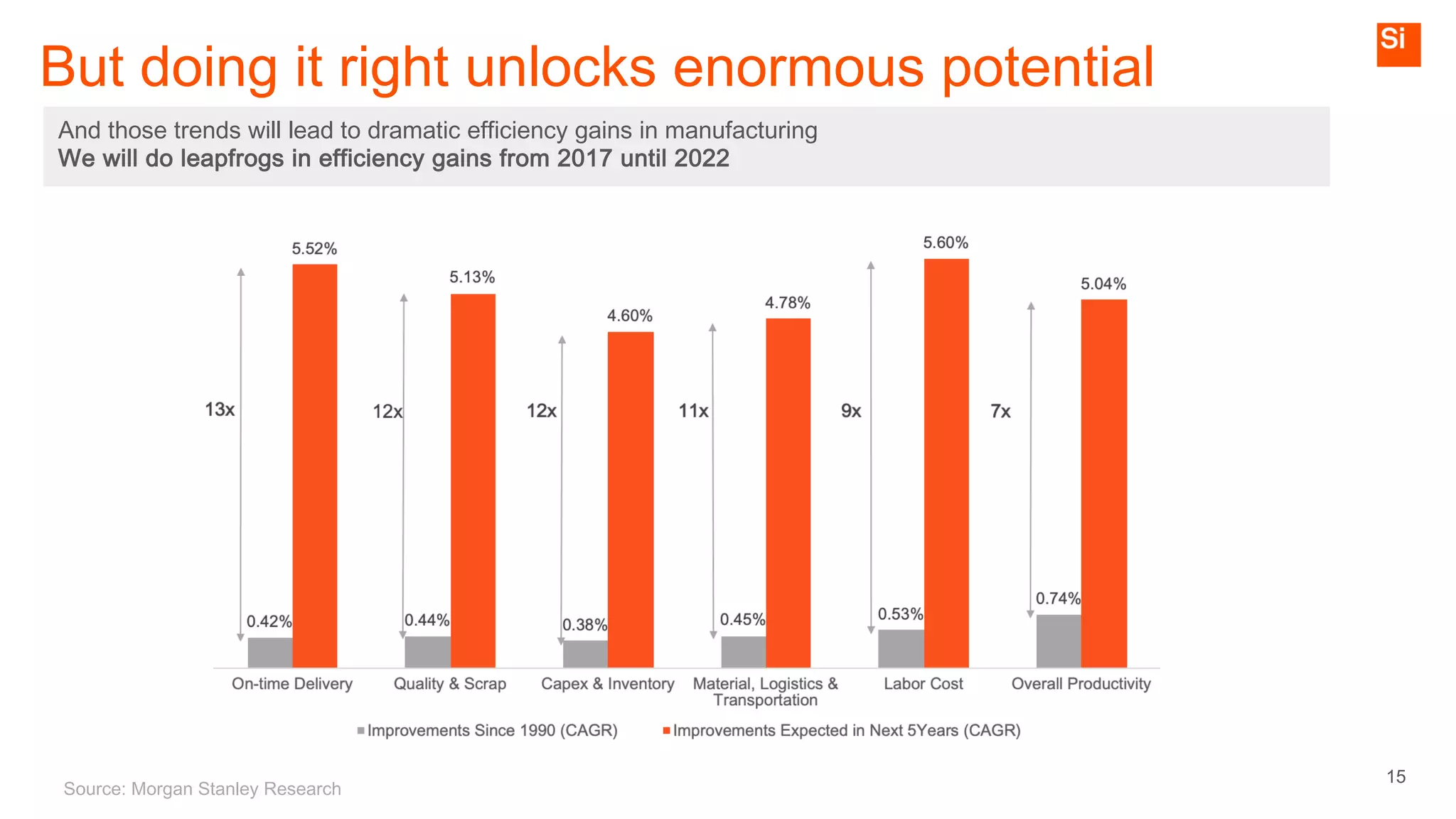
But doing it right unlocks enormous potential
And those trends will lead to dramatic efficiency gains in manufacturing
We will do leapfrogs in efficiency gains from 2017 until 2022
Source: Morgan Stanley Research
16
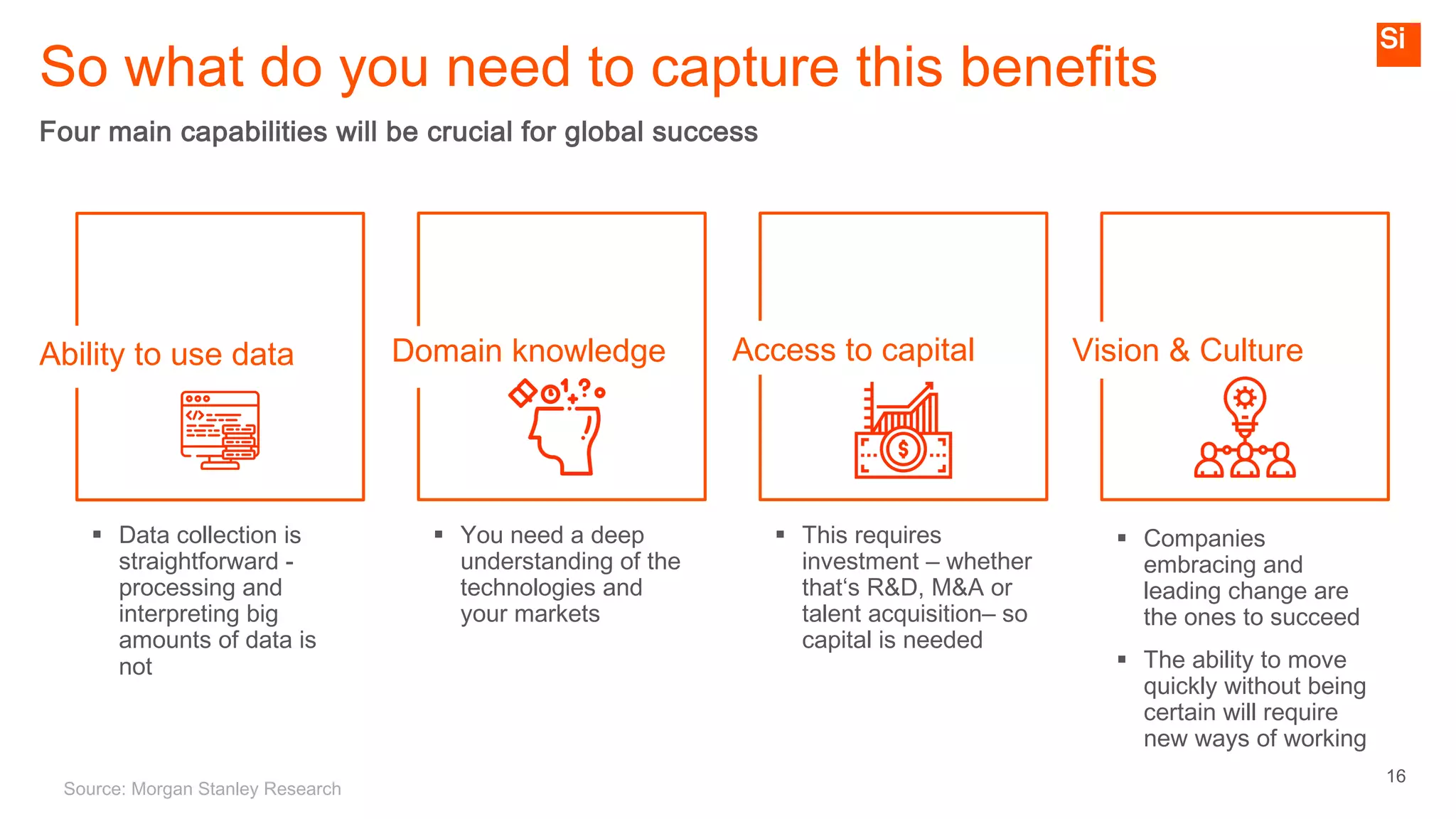
So what do you need to capture this benefits
Four main capabilities will be crucial for global success
Ability to use data Domain knowledge Access to capital Vision & Culture
§ Data collection is
straightforward -
processing and
interpreting big
amounts of data is
not
§ You need a deep
understanding of the
technologies and
your markets
§ This requires
investment – whether
that‘s R&D, M&A or
talent acquisition– so
capital is needed
§ Companies
embracing and
leading change are
the ones to succeed
§ The ability to move
quickly without being
certain will require
new ways of working
Source: Morgan Stanley Research
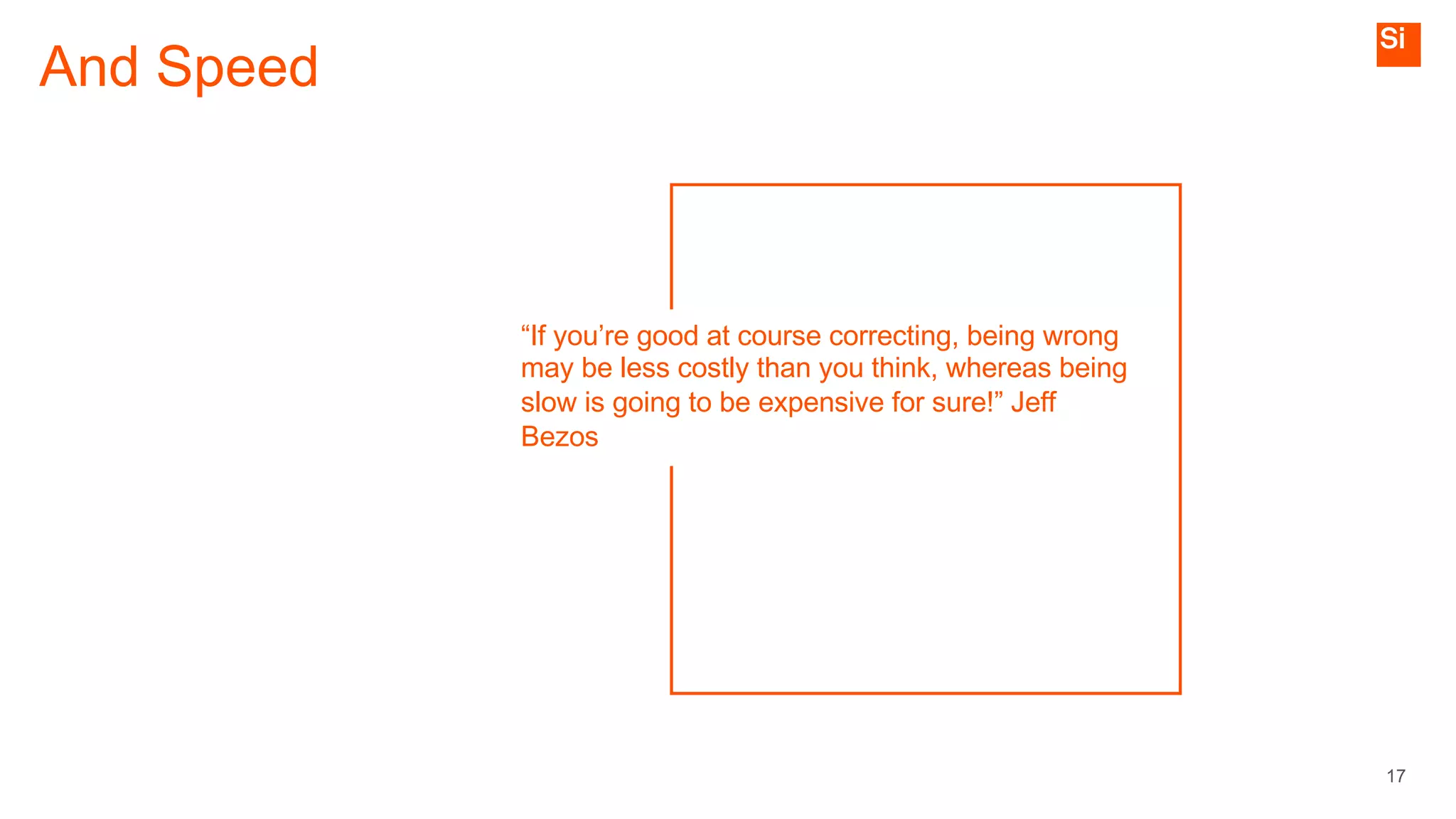
And Speed
17
“If you’re good at course correcting, being wrong
may be less costly than you think, whereas being
slow is going to be expensive for sure!” Jeff
Bezos
18
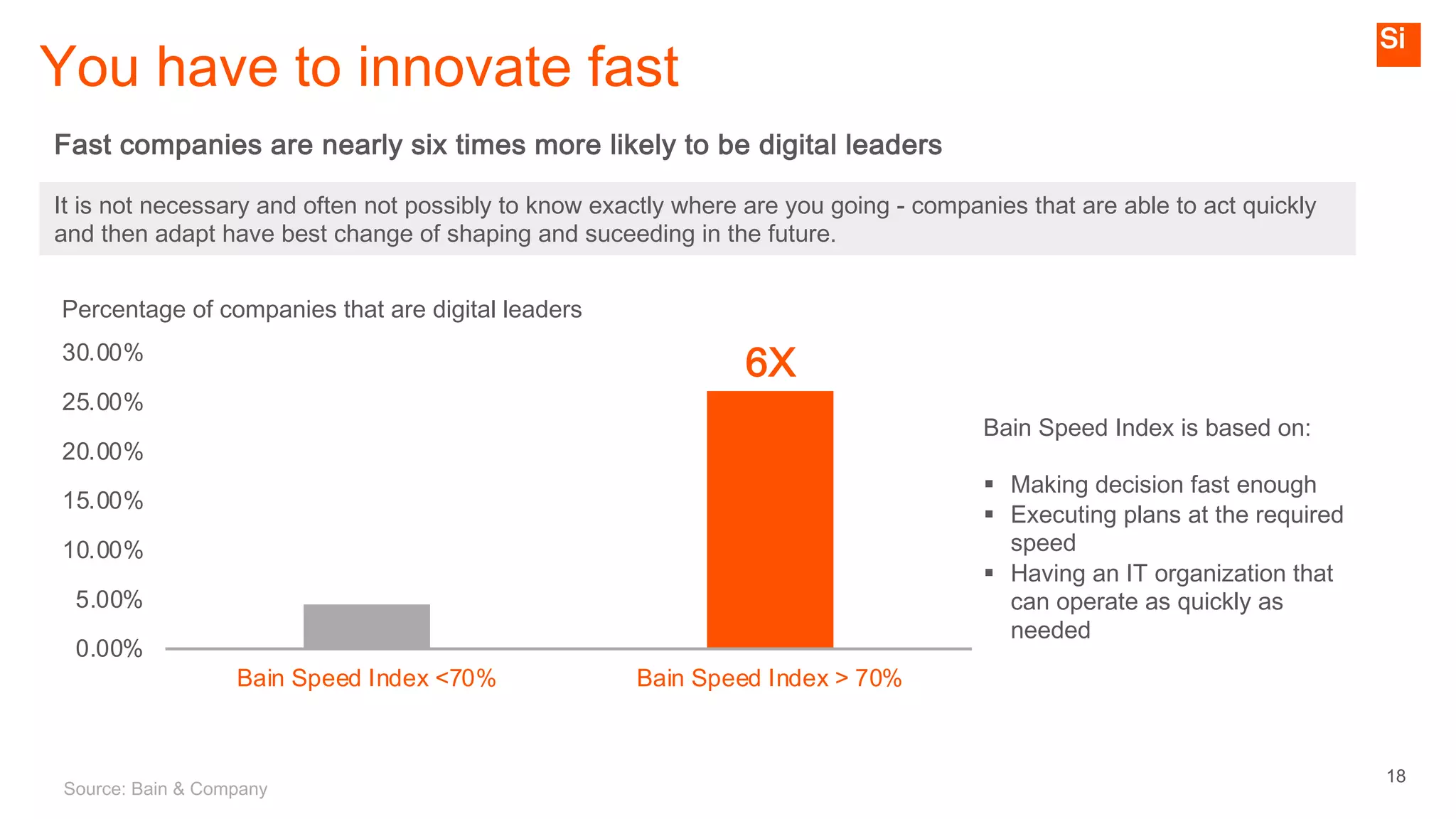
You have to innovate fast
Fast companies are nearly six times more likely to be digital leaders
0.00%
5.00%
10.00%
15.00%
20.00%
25.00%
30.00%
Bain Speed Index <70% Bain Speed Index > 70%
Percentage of companies that are digital leaders
Bain Speed Index is based on:
§ Making decision fast enough
§ Executing plans at the required
speed
§ Having an IT organization that
can operate as quickly as
needed
Source: Bain & Company
6X
It is not necessary and often not possibly to know exactly where are you going - companies that are able to act quickly
and then adapt have best change of shaping and suceeding in the future.
19
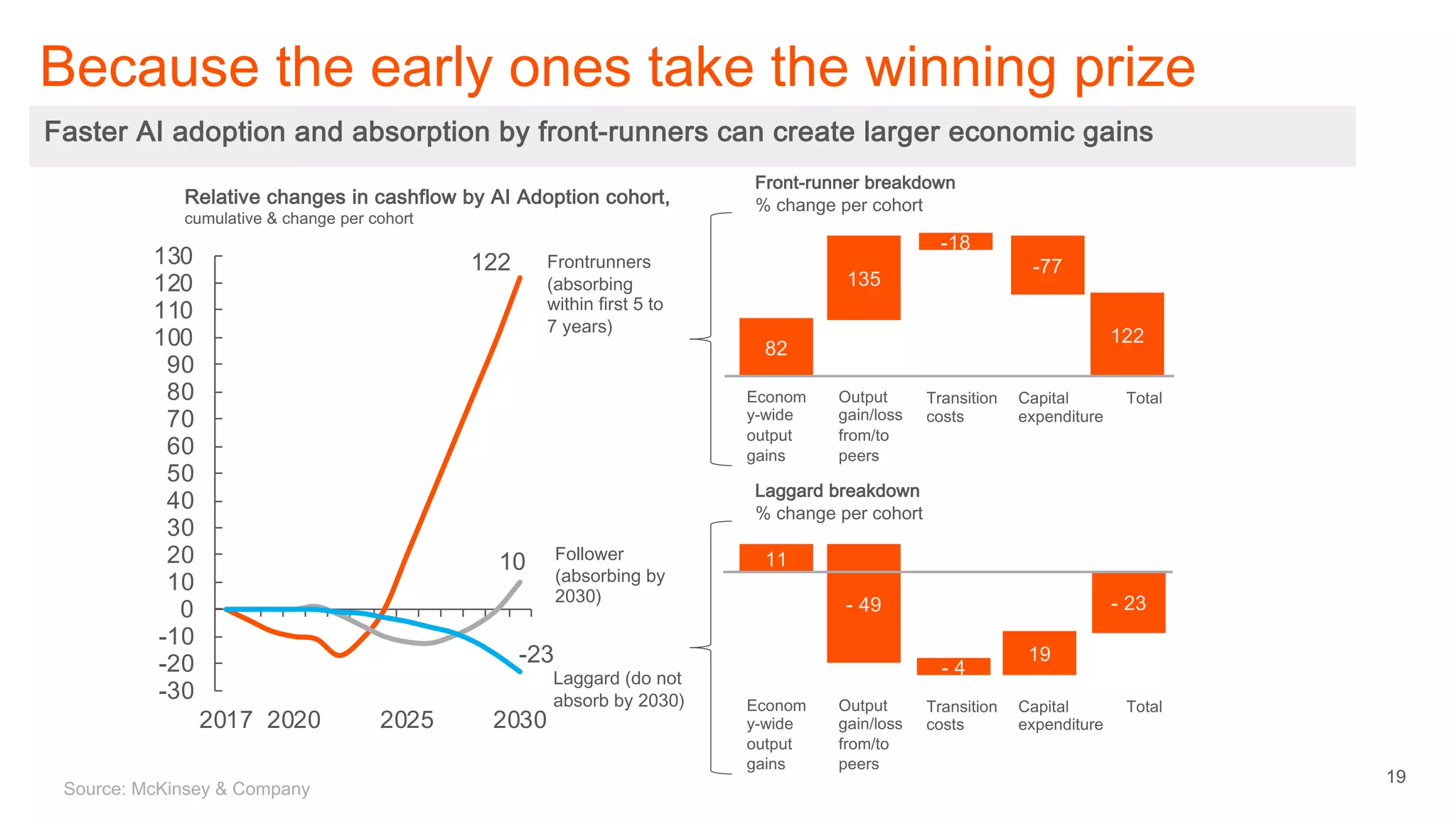
Because the early ones take the winning prize
Faster AI adoption and absorption by front-runners can create larger economic gains
-30
-20
-10
0
10
20
30
40
50
60
70
80
90
100
110
120
130
2017 2020 2025 2030
82
135
122
-77
-18
Econom
y-wide
output
gains
Output
gain/loss
from/to
peers
Transition
costs
Capital
expenditure
Total
Front-runner breakdown
% change per cohort
11
- 49 - 23
19
- 4
Econom
y-wide
output
gains
Output
gain/loss
from/to
peers
Transition
costs
Capital
expenditure
Total
Laggard breakdown
% change per cohort
Frontrunners
(absorbing
within first 5 to
7 years)
Follower
(absorbing by
2030)
Laggard (do not
absorb by 2030)
Source: McKinsey & Company
122
10
-23
Relative changes in cashflow by AI Adoption cohort,
cumulative & change per cohort
Are you too late for the party?
20
“It ain‘t over til it‘s over!“ Lenny Kravitz
21
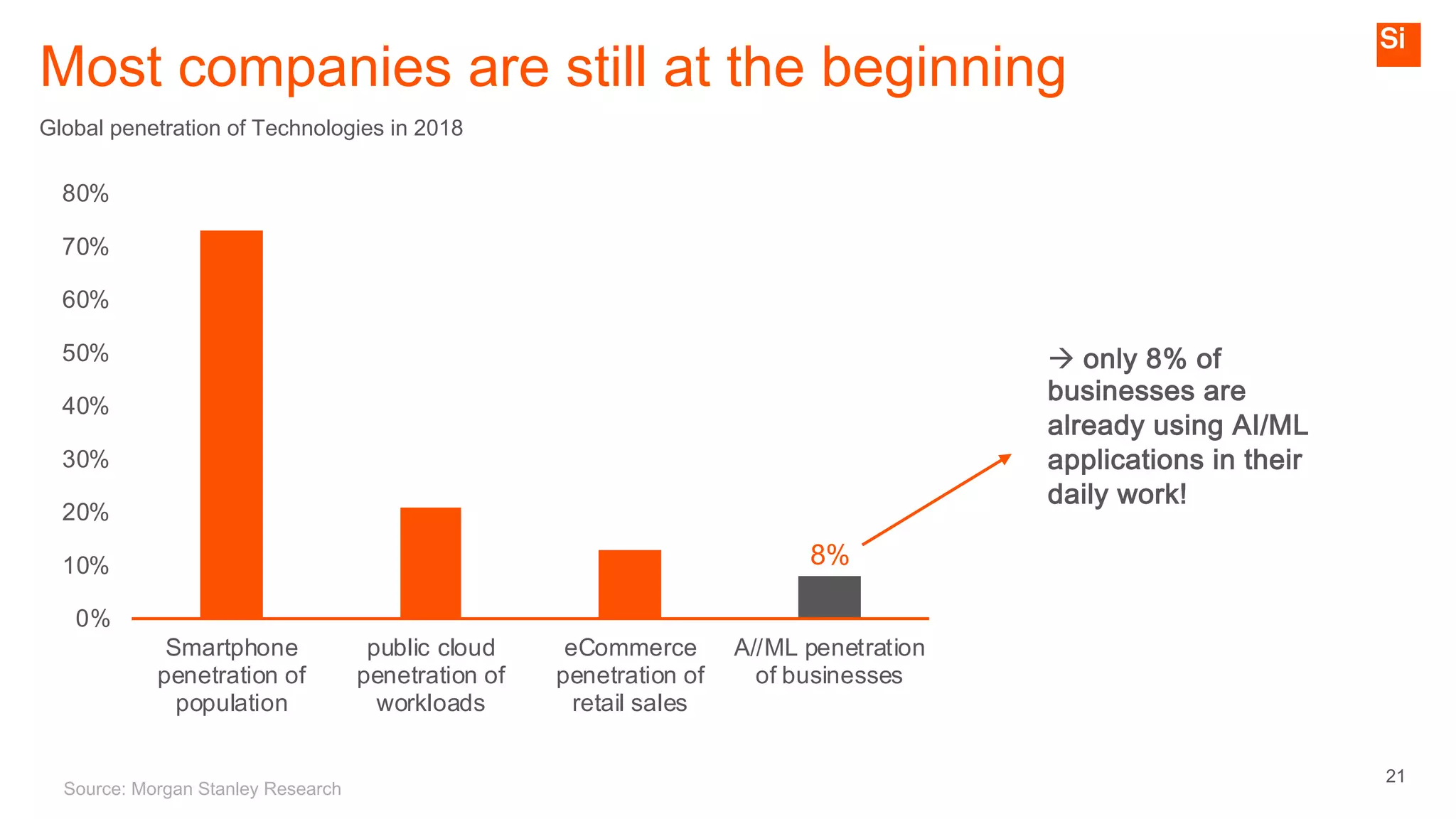
Most companies are still at the beginning
Global penetration of Technologies in 2018
0%
10%
20%
30%
40%
50%
60%
70%
80%
Smartphone
penetration of
population
public cloud
penetration of
workloads
eCommerce
penetration of
retail sales
A//ML penetration
of businesses
8%
à only 8% of
businesses are
already using AI/ML
applications in their
daily work!
Source: Morgan Stanley Research
22
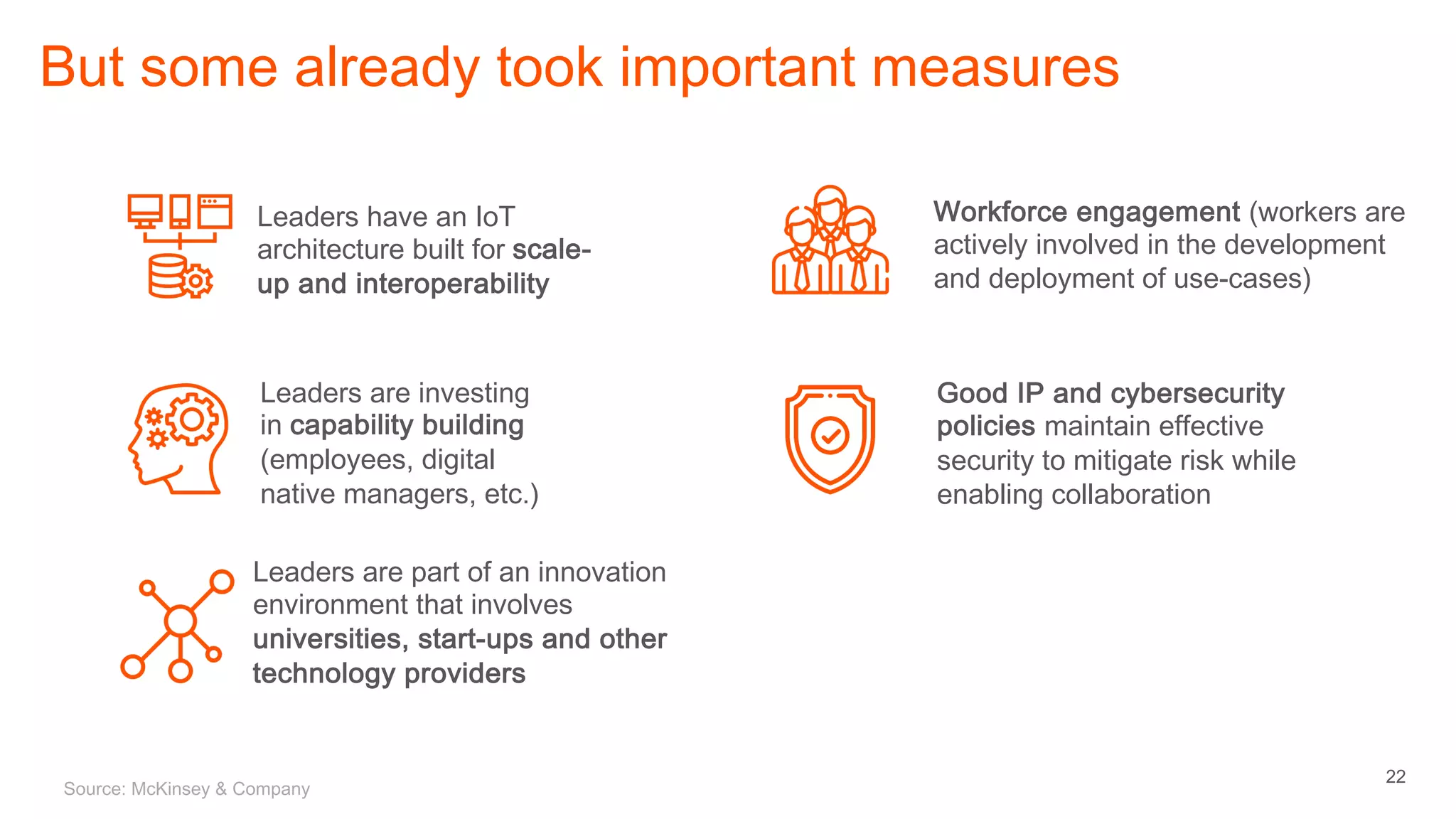
But some already took important measures
Good IP and cybersecurity
policies maintain effective
security to mitigate risk while
enabling collaboration
Leaders have an IoT
architecture built for scale-
up and interoperability
Leaders are investing
in capability building
(employees, digital
native managers, etc.)
Workforce engagement (workers are
actively involved in the development
and deployment of use-cases)
Leaders are part of an innovation
environment that involves
universities, start-ups and other
technology providers
Source: McKinsey & Company
23
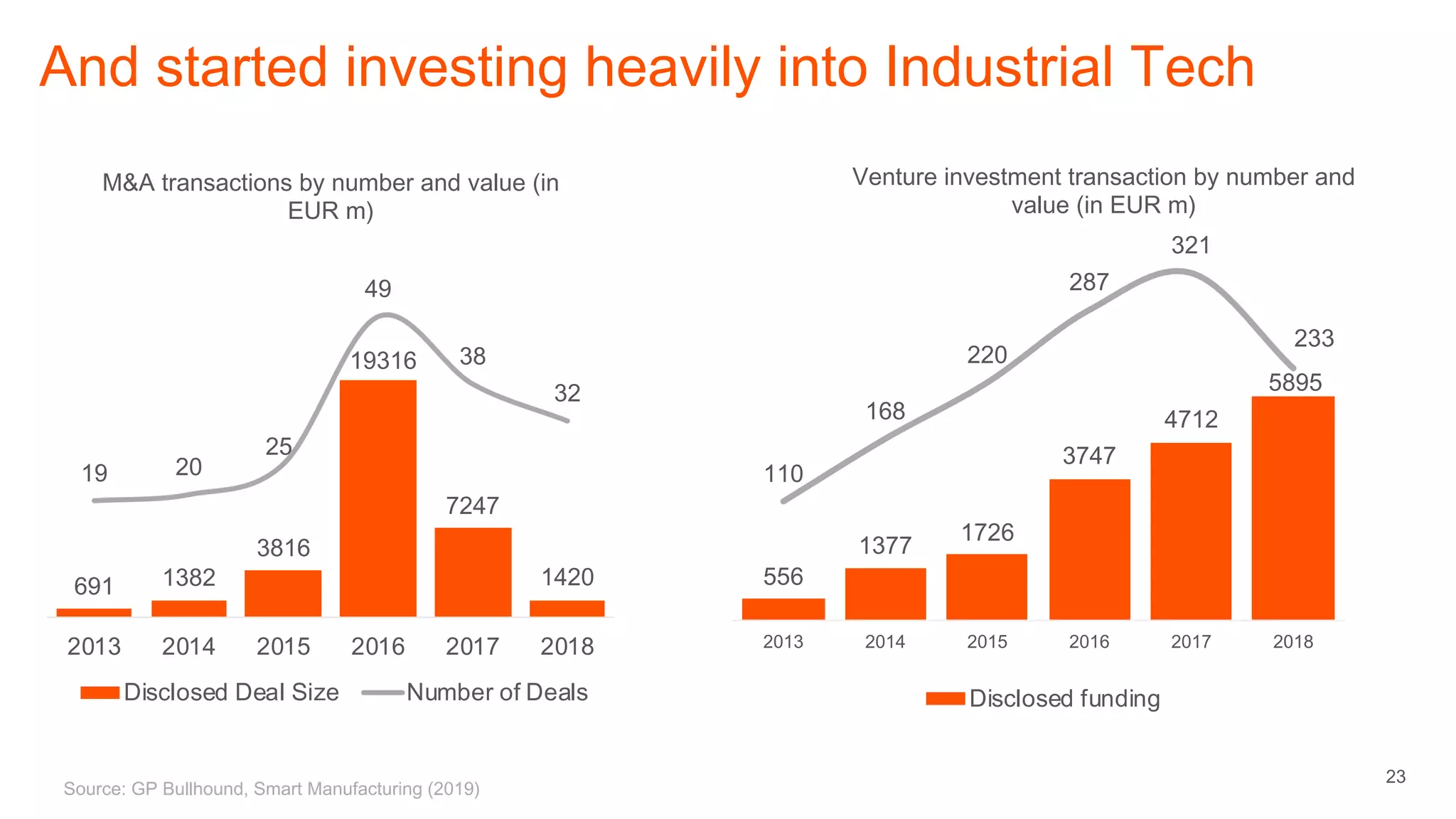
And started investing heavily into Industrial Tech
691 1382
3816
19316
7247
1420
19 20
25
49
38
32
2013 2014 2015 2016 2017 2018
M&A transactions by number and value (in
EUR m)
Disclosed Deal Size Number of Deals
556
1377
1726
3747
4712
5895
110
168
220
287
321
233
2013 2014 2015 2016 2017 2018
Venture investment transaction by number and
value (in EUR m)
Disclosed funding
Source: GP Bullhound, Smart Manufacturing (2019)
24
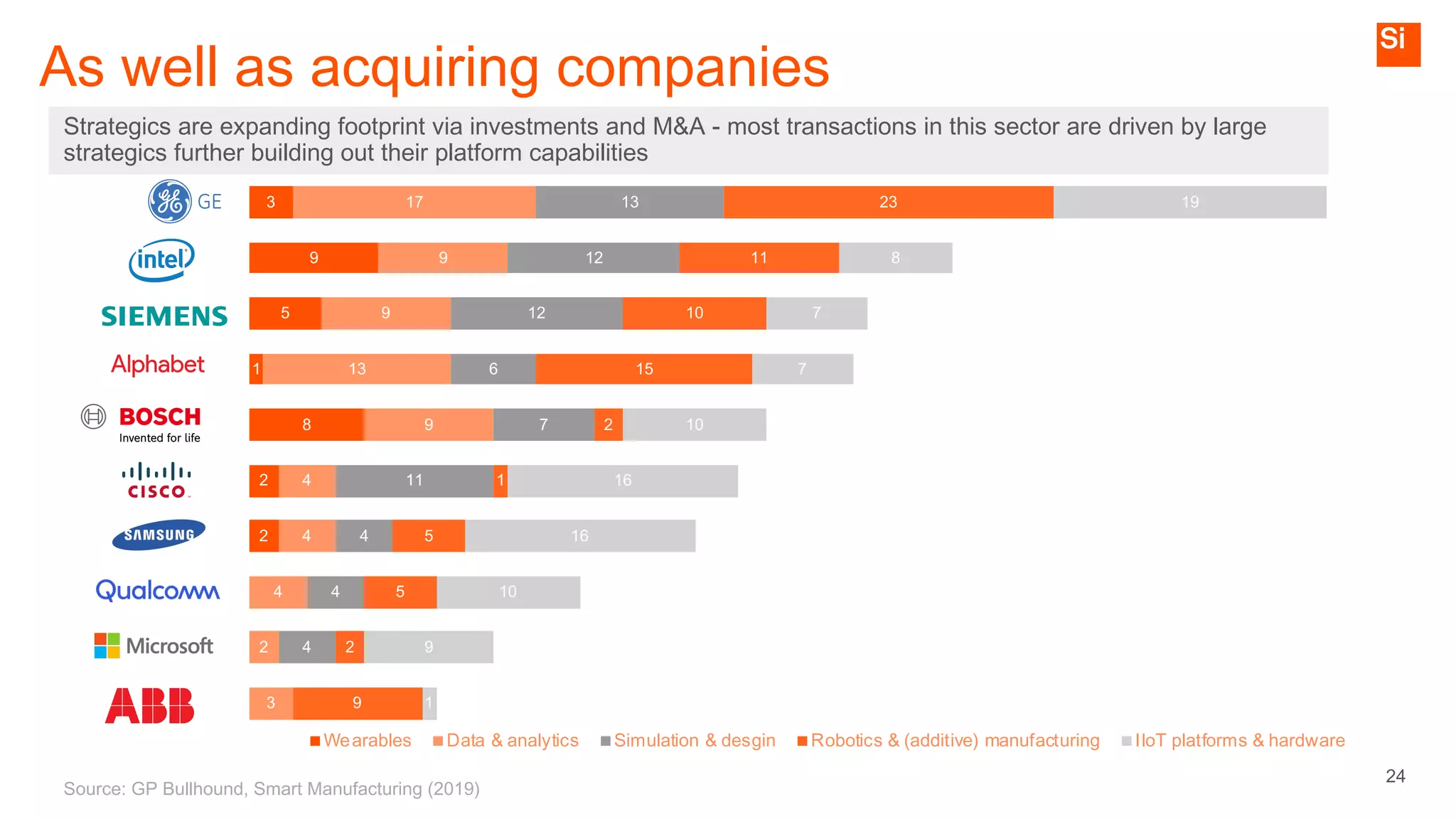
As well as acquiring companies
Strategics are expanding footprint via investments and M&A - most transactions in this sector are driven by large
strategics further building out their platform capabilities
3
9
5
1
8
2
2
17
9
9
13
9
4
4
4
2
3
13
12
12
6
7
11
4
4
4
23
11
10
15
2
1
5
5
2
9
19
8
7
7
10
16
16
10
9
1
Wearables Data & analytics Simulation & desgin Robotics & (additive) manufacturing IIoT platforms & hardware
Source: GP Bullhound, Smart Manufacturing (2019)
25
“The leaders of the future are probably out there
already!“
26
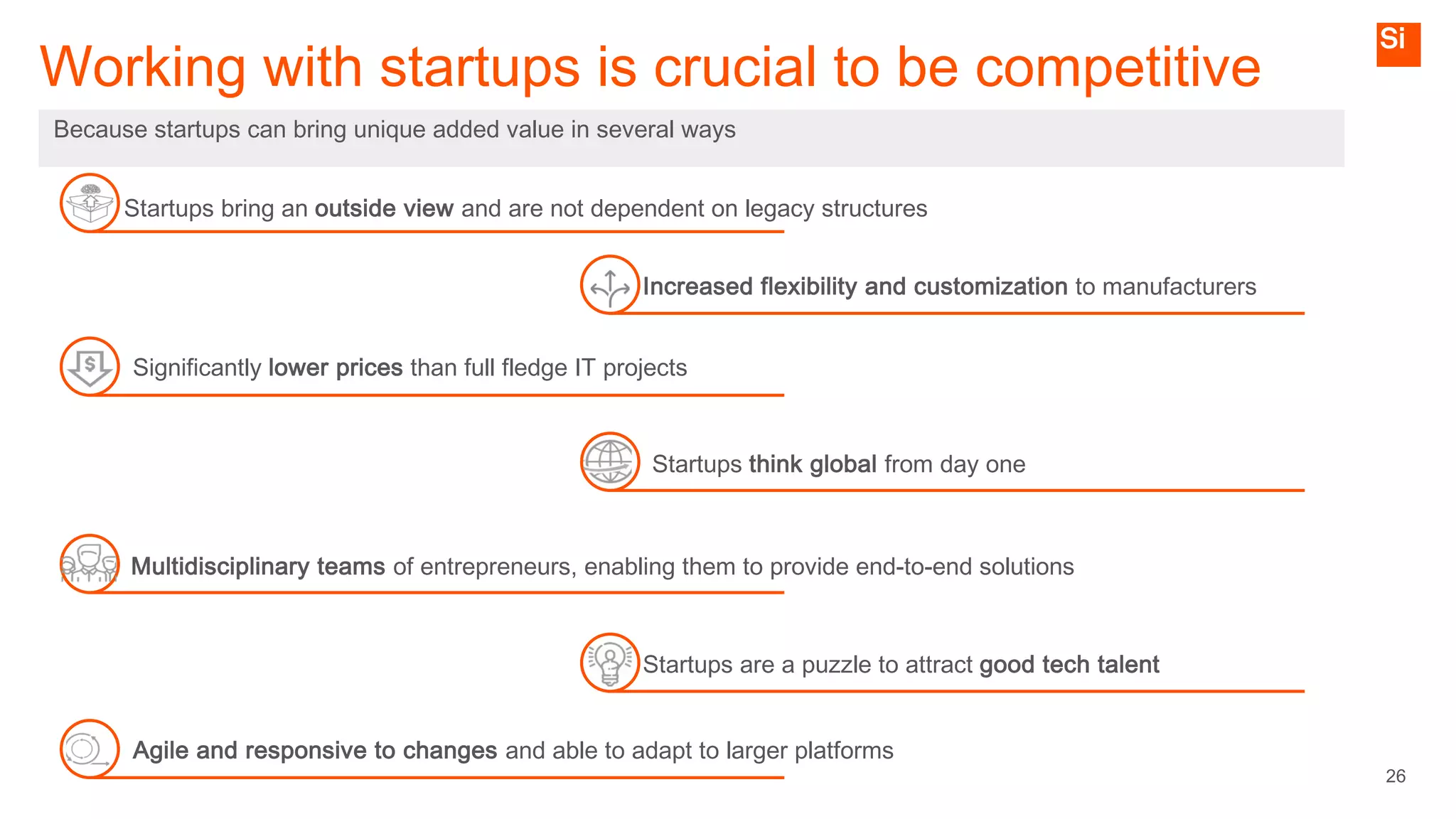
Working with startups is crucial to be competitive
Because startups can bring unique added value in several ways
Increased flexibility and customization to manufacturers
Startups bring an outside view and are not dependent on legacy structures
Significantly lower prices than full fledge IT projects
Multidisciplinary teams of entrepreneurs, enabling them to provide end-to-end solutions
Agile and responsive to changes and able to adapt to larger platforms
Startups are a puzzle to attract good tech talent
Startups think global from day one
27
»Become the preferred
partner of the entrepreneurs
building tomorrow‘s industry
leaders.«
Andreas Schwarzenbrunner, Principal
Niklas Fip, Analyst
Speedinvest
Praterstraße 1, 1020 Vienna, Austria
www.speedinvest.com

Riding the wave of change in manufacturing

  • 1.
    Ride the waveof change in manufacturing
  • 2.
    2 “Isn‘t tech abubble anyway?“
  • 3.
    3 This will beyour factory
  • 4.
    4 We are goingfrom easy to hard problems From buying cars online and build up a database to building cars driven by data and software Source: Ben Evans (A16Z), Autoscout24, Tesla First 20 years of Connectivity Low penetration, low capital plays Low touch goods Selling tools Information arbitrage Next 20 years of Connectivity High penetration, high capital plays High touch goods Full stack Information business
  • 5.
    5 Some sectors aremore advanced than the others Energy Buildings Food & Beverage Industrials Marine Materials Automotive Utilities Retail Telcom Finance & Insurance IT Source: Morgan Stanley Research Plateau & decline Maturity point Early Adoption phase Financial Services shows the way and normally is always a bit ahead of the rest New businesses and technologies pop up on top of the S-Curve that were not imaginable at the beginning
  • 6.
    6 Or who wouldhave thought 10 years ago That this financial service company Market cap: EUR 17.7bn Source pictures: Wirecard, Deutsche Bank, Apple Market cap: EUR 13.5bn is worth more than this financial service company? And that this is the way you pay your groceries for breakfast after a Sunday run!
  • 7.
    7 Industry is next Energy Buildings Food& Beverage Industrials Marine Materials Automotive Utilities Retail Telecom Finance & Insurance IT Source: Morgan Stanley Research Plateau & decline Maturity point Early Adoption phase Industrial sectors are moving up the S-Curve very fast Some sectors faster than others - more than 40% of the global IT spend in the next 10 years will come from the manufacturing industry
  • 8.
    8 We still donot know what the S-Curve brings Source pictures: Uber, Volkswagen But this will probably be your taxi from Berlin to Copenhagen and this will be your car picking you up while you are having lunch
  • 9.
    9 What it willchange Source pictures: Forbes How will workers look like, what will their tasks be and what tasks will be carried out by humans, … How will cities look like, how will airports look like, how will transport be organized, ...
  • 10.
    10 And what theoutcome will be Technology will create complete new ecosystems - new business models will be created on top of those The outcome of individual mobility enabled by cars were also shopping centers and the outcome of smartphones were also snapchat filters
  • 11.
    11 § From designto engineering to production to a fully automated supply chain § Product customization will be feasible and better match customer demands § Automation, analytics, digital tools will enhance workforce productivity § This will lead to enormous efficiency gains § New business models and new software enabled services will be created § Technology will lead to better knowledge of customers needs and can increase customer loyalty § New sales channels will open up § Based on data goods and services will be better priced (pay per use etc.) The way we produce things But change is for sure Two things in manufacturing will change fundamentally They way we make money
  • 12.
    12 And will transformmanufacturing Manufacturing will become self- organizing and more autonomous due to a new class of factory workers or a highly connected and smart shop floor Value chains will be seamlessly connected end to end, allowing manufacturers to drive product innovation twice as fast as today Supply chains will connect to a broader supplier ecosystem that will function as a single platform, enabling business-to- business integration Data will drive the creation of new services and innovations in business models 2 3 41 Autonomous manufacturing Seamless Connection of Value Chains Connection of supply chains New value-added Services and Business model innovations Source: World Economic Forum
  • 13.
    13 Driven mostly bytechnological breakthroughs One key driver is the increasing availability of cost-efficient devices Instead of just retrofitting machines complete new use-cases become feasible if we think about 2050 387 000 Industrial robots sold in 2017 >75bn devices installed by 2025 6.7m shipments by 2020 >1m industrial drones by 2050 Industrial robots Sensors 3D-Printer Industrial Drones Cost per unit 2007 2013 - 2014 2050 $ 550 000 $ 20 000 $ 40 000 $ 100 $ 40 000 $ 100 $ 1000$ 100 000 ? ? ? ? Source: GP Bullhound, Smart Manufacturing (2019) 27,5X 400X 400X 100X
  • 14.
    14 And a lotof data! § Manufacturing stores 2x more data than governments do § Most manufacturing companies still do not know what do with it à Therefore more than 90% of data in manufacturing is not being used and completely unstructured0 200 400 600 800 1000 1200 1400 1600 1800 2000 M anufacturing G overnm ent Com m s & M edia Banking Retail ProfessionalServicesHealthcare Securities & Investm entservicesEducationInsurance TransportationW holesale Annual new data stored by sector (2010, petabytes) Source: Morgan Stanley Research
  • 15.
    15 But doing itright unlocks enormous potential And those trends will lead to dramatic efficiency gains in manufacturing We will do leapfrogs in efficiency gains from 2017 until 2022 Source: Morgan Stanley Research
  • 16.
    16 So what doyou need to capture this benefits Four main capabilities will be crucial for global success Ability to use data Domain knowledge Access to capital Vision & Culture § Data collection is straightforward - processing and interpreting big amounts of data is not § You need a deep understanding of the technologies and your markets § This requires investment – whether that‘s R&D, M&A or talent acquisition– so capital is needed § Companies embracing and leading change are the ones to succeed § The ability to move quickly without being certain will require new ways of working Source: Morgan Stanley Research
  • 17.
    And Speed 17 “If you’regood at course correcting, being wrong may be less costly than you think, whereas being slow is going to be expensive for sure!” Jeff Bezos
  • 18.
    18 You have toinnovate fast Fast companies are nearly six times more likely to be digital leaders 0.00% 5.00% 10.00% 15.00% 20.00% 25.00% 30.00% Bain Speed Index <70% Bain Speed Index > 70% Percentage of companies that are digital leaders Bain Speed Index is based on: § Making decision fast enough § Executing plans at the required speed § Having an IT organization that can operate as quickly as needed Source: Bain & Company 6X It is not necessary and often not possibly to know exactly where are you going - companies that are able to act quickly and then adapt have best change of shaping and suceeding in the future.
  • 19.
    19 Because the earlyones take the winning prize Faster AI adoption and absorption by front-runners can create larger economic gains -30 -20 -10 0 10 20 30 40 50 60 70 80 90 100 110 120 130 2017 2020 2025 2030 82 135 122 -77 -18 Econom y-wide output gains Output gain/loss from/to peers Transition costs Capital expenditure Total Front-runner breakdown % change per cohort 11 - 49 - 23 19 - 4 Econom y-wide output gains Output gain/loss from/to peers Transition costs Capital expenditure Total Laggard breakdown % change per cohort Frontrunners (absorbing within first 5 to 7 years) Follower (absorbing by 2030) Laggard (do not absorb by 2030) Source: McKinsey & Company 122 10 -23 Relative changes in cashflow by AI Adoption cohort, cumulative & change per cohort
  • 20.
    Are you toolate for the party? 20 “It ain‘t over til it‘s over!“ Lenny Kravitz
  • 21.
    21 Most companies arestill at the beginning Global penetration of Technologies in 2018 0% 10% 20% 30% 40% 50% 60% 70% 80% Smartphone penetration of population public cloud penetration of workloads eCommerce penetration of retail sales A//ML penetration of businesses 8% à only 8% of businesses are already using AI/ML applications in their daily work! Source: Morgan Stanley Research
  • 22.
    22 But some alreadytook important measures Good IP and cybersecurity policies maintain effective security to mitigate risk while enabling collaboration Leaders have an IoT architecture built for scale- up and interoperability Leaders are investing in capability building (employees, digital native managers, etc.) Workforce engagement (workers are actively involved in the development and deployment of use-cases) Leaders are part of an innovation environment that involves universities, start-ups and other technology providers Source: McKinsey & Company
  • 23.
    23 And started investingheavily into Industrial Tech 691 1382 3816 19316 7247 1420 19 20 25 49 38 32 2013 2014 2015 2016 2017 2018 M&A transactions by number and value (in EUR m) Disclosed Deal Size Number of Deals 556 1377 1726 3747 4712 5895 110 168 220 287 321 233 2013 2014 2015 2016 2017 2018 Venture investment transaction by number and value (in EUR m) Disclosed funding Source: GP Bullhound, Smart Manufacturing (2019)
  • 24.
    24 As well asacquiring companies Strategics are expanding footprint via investments and M&A - most transactions in this sector are driven by large strategics further building out their platform capabilities 3 9 5 1 8 2 2 17 9 9 13 9 4 4 4 2 3 13 12 12 6 7 11 4 4 4 23 11 10 15 2 1 5 5 2 9 19 8 7 7 10 16 16 10 9 1 Wearables Data & analytics Simulation & desgin Robotics & (additive) manufacturing IIoT platforms & hardware Source: GP Bullhound, Smart Manufacturing (2019)
  • 25.
    25 “The leaders ofthe future are probably out there already!“
  • 26.
    26 Working with startupsis crucial to be competitive Because startups can bring unique added value in several ways Increased flexibility and customization to manufacturers Startups bring an outside view and are not dependent on legacy structures Significantly lower prices than full fledge IT projects Multidisciplinary teams of entrepreneurs, enabling them to provide end-to-end solutions Agile and responsive to changes and able to adapt to larger platforms Startups are a puzzle to attract good tech talent Startups think global from day one
  • 27.
    27 »Become the preferred partnerof the entrepreneurs building tomorrow‘s industry leaders.« Andreas Schwarzenbrunner, Principal Niklas Fip, Analyst Speedinvest Praterstraße 1, 1020 Vienna, Austria www.speedinvest.com