© 2016 Cisco and/or its affiliates. All rights reserved.
Where to Begin Your
Journey to Digital Value in
the Private Sector
© 2016 Cisco and/or its affiliates. All rights reserved. i
Where to Begin Your Journey to Digital Value in the Private Sector
Economic Analysis
2015-2024
Key Insights	 ii
Introduction	 1
Moving at the speed of digital	 2
Industries are leaving value on the table	 4
Cybersecurity is essential	 5
People connections: nearly 2/3 of digital value	 6
Asia Pacific and emerging countries gaining ground	 6
Industry outlook
Manufacturing	8
Financial Services	 11
Retail	14
Service Provider	 16
Healthcare	19
Oil and Gas	 22
How to start building a digital strategy	 24
Authors
Joel Barbier
Amitabh Dixit
Robert Moriarty
Chet Namboodri
Kathy O’Connell
Michael Riegel
© 2016 Cisco and/or its affiliates. All rights reserved. ii
Where to Begin Your Journey to Digital Value in the Private Sector
Economic Analysis
2015-2024
This paper outlines the global value of digitization in the coming
decade and highlights where to start driving digital value.
Key Insights
•	 Six industries—manufacturing, financial services, retail, service provider,
healthcare, and oil and gas—will account for nearly three-quarters of the total
private sector Digital Value at Stake globally from 2015-2024.
•	 Across all 16 private sector industries analyzed, however, companies captured an
average of only 20 percent of their potential Digital Value at Stake in 2015.
•	 Industries realizing the highest digital value in 2015 share two characteristics:
1) they are “IT-intensive” in terms of IT spending, the types of products and
services they deliver, and how they are delivered; and 2) they display greater
convergence between the IT and operational technology (OT) components of
their businesses.
•	 Cybersecurity is essential to digital success, with the potential to fuel an
estimated $5.3 trillion in private sector Value at Stake over the next decade.
Sixty-eight percent of this value is tied to firms’ ability to integrate cybersecurity
into their digital foundation to drive innovation and growth.
•	 People-centric connections (person-to-person, person-to-machine) will drive
64 percent of Digital Value at Stake in the private sector over the next decade—
reflecting organizations’ increased ability to combine the “people” and “process”
elements of digital business with the “things.”
•	 To maximize digital value, firms must first determine where they are on their
digital journey—beginning with enabling IT agility and operational effectiveness;
then using digital technologies to differentiate their strategy through new
products, services, and business processes; and finally, harnessing digital
capabilities to reimagine their industry with new business models.
© 2016 Cisco and/or its affiliates. All rights reserved. 1
Where to Begin Your Journey to Digital Value in the Private Sector
Economic Analysis
2015-2024
Introduction
In late 2012, Cisco sought to calculate the value opportunity for
private sector organizations in the burgeoning digital economy. This
digital value is driven by the networked connections of people,
process, data, and things, currently powered by an estimated 18
billion1
connected devices globally—a number expected to reach 50
billion by 2020.2
In the initial study, Cisco estimated that $14.4 trillion
of digital value would be “at stake” across private
sector industries from 2013 to 2022. This Digital
Value at Stake is based on two components: 1)
entirely new sources of value emanating from digital
investments and innovations, and 2) value shifting
among companies and industries based on their
ability (or inability) to harness digital capabilities (in
essence, value moving from “losers” to “winners”).
The digital landscape has changed dramatically in
the three years since we conducted the original
private sector study. For example:
•	 Digitization is disrupting and redefining
industries. According to a 2015 study by the
Global Center for Digital Business Transformation,
an IMD and Cisco initiative, digital disruption will
displace nearly 4 of the top 10 incumbents by
industry over the next five years. The technology,
media & entertainment, retail, and financial
services industries have already been particularly
disrupted by digitization over the past few years.3
•	 Adoption of digital solutions is accelerating.
Ninety-five percent of the Fortune 1000 expects
to undertake a digital project by 2017.4
•	 Digital technologies are becoming more mature
and pervasive. Many digital solutions and use
cases considered “ahead of their time” three
years ago are now becoming realities in the
private sector.[ ]
•	 New, digitally driven business models are
changing the nature of competition. Digital
capabilities enable organizations to “recombine”
traditional means of providing customer
value, creating entirely new business models.
Organizations like Apple, Uber, and Tesla have
used this “combinatorial disruption” approach to
launch competitive threats across industry lines.
2© 2016 Cisco and/or its affiliates. All rights reserved.
Where to Begin Your Journey to Digital Value in the Private Sector
Economic Analysis
2015-2024
•	 The consumer sector is now driving significant digital value. It’s
not just about B2B anymore—consumer-focused digital solutions
represent a significant portion of Digital Value at Stake across
industries in 2015.[ ] For example, the wearables market exceeded
$1.5 billion in 2014, double its value in 2013.5
These and other advances prompted Cisco to revisit our initial
estimates to reflect the exponential changes that are reshaping the
digital economy.
Because the digital market has grown with the advent of new
business models and innovative technologies, the new analyses
are considerably broader and deeper than the work from 2012-
2013. For example, our original private sector Digital Value at Stake
estimates were based on a total of 21 “use cases”—specific vertical
and “horizontal” (cross-industry) applications of digital capabilities that
deliver value. Our new analysis incorporates more than 350 digital use
cases spanning 16 industries—and also includes 11 horizontal use
cases (for example, next-generation knowledge workers, payments,
supply chain, cybersecurity, and smart grid).
The use cases in this latest study are based on more than three years
of in-depth engagements with Cisco customers regarding how best
to drive value by digitizing their businesses. In addition to addressing
the business value of the various use cases, this study goes one
step further by helping CIOs understand the foundational capabilities
on which they should focus to fund and create a more agile digital
infrastructure.
The new analysis offers other elements, including research on best
practices along with specific value estimates rather than the value
ranges employed by other firms. The results can help private sector
firms pinpoint where to begin their digital journeys.
This private sector overview sets the stage for a series of industry-
specific analyses in 2016 that will provide detailed roadmaps for digital
success in both the private and public sectors.
Moving at the Speed of Digital
Three years ago, we began our analysis by stating that digital
(the “Internet of Everything”) “is happening now,” followed by an
explanation of the tremendous potential awaiting organizations that
“connect the unconnected.”
What a difference three years make.
Not only is digital “happening” in 2015—digital disruption now has
the potential to overturn incumbents and reshape markets faster than
perhaps any force in history.[ ]
For this reason, Cisco and the International Institute for Management
Development (IMD) recently launched a joint, five-year initiative—the
Global Center for Digital Business Transformation (DBT Center)—
to help organizations map out their digital strategies. According
to a recent DBT Center study, the time to digital disruption for
A C-suite Concern
For more insights, please visit
cs.co/vascsuite
3© 2016 Cisco and/or its affiliates. All rights reserved.
Where to Begin Your Journey to Digital Value in the Private Sector
Economic Analysis
2015-2024
most industries is a mere three years.6
Here are just some of the
technology-driven developments contributing to digital disruption:
•	 The wearables market exceeded $1.5 billion in 2014, double its
value in 2013.7
•	 At the end of 2014, the number of people using the mobile Internet
reached 2.4 billion. This
is expected to rise to 3.8 billion by 2020,
driven by growth in developing countries.8
•	 Webpage views from mobile phones now outnumber those from
PCs in 48 countries.9
•	 The number of cars connected to the Internet worldwide will grow
more than sixfold, from 23 million in 2013 to 152 million in 2020.10
•	 The global mobile health and sensor market will grow at 40 percent
CAGR between 2013 and 2018.11
•	 More than two-thirds of consumers plan to buy connected
technologies for their homes by 2019. Smart thermostats are
expected to have 43 percent adoption in the next five years.12
Despite these sweeping changes and their vast potential to upend
the competitive landscape, nearly half (45 percent) of companies
still do not view “digital disruption” as a board-level concern. What’s
more, only 25 percent describe their approach to digital disruption as
proactive—willing to disrupt themselves to compete.13
(See Figure 1.)
“Disrupting yourself” does not mean discarding what has made you
successful or mimicking in-vogue digital tactics.[ ] Rather, it involves
challenging the assumptions that have underpinned that success, and
stress-testing the ways in which you deliver value to customers. It
means changing the organization itself, including its operations, culture,
revenue model, technology maturity, and skill sets—in fundamental
ways, and perpetually.
As explained earlier, Digital Value at Stake encompasses both new
value creation and value that shifts among companies and industries.
43%
25%
Does not
recognize or is
not responding
appropriately
Actively
responding
by disrupting
our own
business
of respondents say
digital disruption
is NOT
a board-level
concern
45%
941 business leaders around the world in 12 industries were surveyed
In general, what is the attitude of your company’s
leadership toward digital disruption?
survey
Q
32%Taking
“follower”
approach
Most Firms Are Not Taking Proactive Steps Toward Digital Transformation
Figure 1
Source: Global
Center for
Digital Business
Transformation,
2015
4© 2016 Cisco and/or its affiliates. All rights reserved.
Where to Begin Your Journey to Digital Value in the Private Sector
Economic Analysis
2015-2024
Our latest analysis shows that 62 percent of private sector Digital
Value at Stake will arise from new value creation across industries from
2015-2024, while 38 percent will come from value shifts—in essence,
value moving from “the disrupted” to “the disruptors.”[ ]
Industries Are Leaving Value on the Table
How much of their potential Digital Value at Stake did private sector
industries actually realize in 2015 (the first year of our 10-year
window) as a function of their current digital capabilities?
Across all 16 private sector industries evaluated, our analysis shows
that in aggregate, firms were on track to realize just $1.3 trillion (20
percent) of their potential Value at Stake in 2015. In other words,
private sector companies failed to capture $5.3 trillion, or 80 percent,
of their total potential Digital Value at Stake in year one of the period
covered by our new analysis (2015-2024).[ ]
Industries realizing the highest percentage of their potential Digital
Value at Stake tend to share two characteristics: 1) they are IT-
intensive, both in terms of the types of products and services they
deliver and how they are delivered; and 2) they also display greater
convergence between the IT and operational technology (OT)
components of their businesses. These firms rely on consistent
technology and process innovation to compete.
As shown in Figure 2, firms in IT-intensive industries such as financial
services and information services/service provider realized a higher
percentage of their Digital Value at Stake in 2015 than firms in less-IT-
intensive industries. Financial services companies realized 29 percent
($236 billion) of the Digital Value at Stake available to them in 2015,
while information services/service providers captured 21 percent.
0% 1% 2% 3% 4% 5% 6% 7%
0%
5%
10%
15%
20%
25%
30%
Financial
Services
Oil & Gas
Retail
Transportation
& Logistics
Utilities
IT Intensity (IT Spend % of Revenues)
ValueRealizedin2015(%)
Construction
& EPCM
Mining
Manufacturing
Education
Healthcare
Other
Business
Services
Information & SP
High value realized,
high IT spend
High value realized,
IT/OT convergence
Financial Services Led All Other Industries in 'Value Realized' During 2015
Figure 2
Source:
Cisco, 2015
5© 2016 Cisco and/or its affiliates. All rights reserved.
Where to Begin Your Journey to Digital Value in the Private Sector
Economic Analysis
2015-2024
By contrast, less-IT-intensive industries such as mining (10 percent)
and utilities (14 percent) fell at the lower end of the “value realized”
ranking. 

Industries such as oil and gas (27 percent value realized) and
manufacturing (24 percent) performed better than many others
because of their relatively high convergence of IT and OT (although,
like many industries, both still have work to do in this regard).
Conversely, the relatively low digital value realized by mining, utilities,
and transportation reflects those industries’ slower adoption of IT/
OT convergence. IT/OT convergence is critical for any firm wanting
to maximize the “people, process, and data” elements of digital
solutions. When this convergence doesn’t occur, IT/OT “silos” hamper
potential digital capabilities in critical areas such as collaboration, data
integration and analytics, and cybersecurity.
For example, the ability for analytics to generate actionable business
insights is largely dependent on the information available for analysis.
Too often in the oil and gas industry, however, organizational “silos”
deny or limit access to this information—severely curtailing the
potential impact of data analytics for many firms. Nearly two-thirds of
respondents to an Accenture survey indicated
that their firms continue
to manage analytics by specific function or department, preventing
an integrated approach for end-to-end workflows throughout the
company’s operations.14
Cybersecurity Is Essential
To capture their share of Digital Value at Stake, private sector firms
must build cybersecurity into their digital solutions as a foundational
element, rather than trying to “bolt it on” as an afterthought.
In fact, many of the use cases detailed in our analysis depend heavily
on the ability to make security and privacy guarantees to customers,
partners, and other players in the overall digital ecosystem. For
example, retailers can significantly improve customer experience by
using analytics to provide “hyper-relevant” services and products,
precisely when and where they’re needed. If a particular retailer has
suffered a data breach, however, customers won’t feel comfortable
about sharing the level of personal information required to offer these
experiences both in-store and online. As a result, they’ll switch to a
retailer that can—a prime example of value shifting from one firm to
another.
Based on detailed economic analysis of 350 private sector use cases,
we estimate that cybersecurity will drive $5.3 trillion in Digital Value
at Stake across private sector industries over the next decade.[ ] A
third of this estimate ($1.7 trillion) applies to protection of intellectual
property and avoidance of data breach costs. The vast majority,
however ($3.6 trillion), is dependent upon organizations’ ability to
improve their cybersecurity practices in order to drive innovation and
growth. Companies lacking the proper cybersecurity practices will
experience slower adoption of digital capabilities, resulting in smaller
realization of their potential digital benefits.
For more insights, please visit
http://cs.co/og-silo
© 2016 Cisco and/or its affiliates. All rights reserved. 6
Where to Begin Your Journey to Digital Value in the Private Sector
Economic Analysis
2015-2024
People Connections: Nearly Two-Thirds of Digital Value
Digital connections are becoming increasingly people-centric. In fact, according
to our analysis, employee productivity (largely fueled by digital capabilities that
enhance collaboration) is the top driver of digital value.
The digital world is powered by three types of connections: machine-to-
machine (M2M), person-to-machine (P2M), and person-to-person (P2P). In
our previous analysis, people-centric connections (P2P, P2M) drove 55 percent
of the estimated Value at Stake for the private sector. In our new study, the
contribution of people-centric connections to private sector Digital Value at
Stake has grown by 9 percentage points—to 64 percent. This increase reflects
the greater ability of organizations to marry the “people” and “process” elements
of digital business with the “things.”
The increased people-centricity of digital solutions is also helping to boost
organizations’ ability to innovate faster and more effectively in the private
sector—aided by digital use cases such as mobility and video collaboration that
enhance interactions among employees, and with partners.
For example, in the retail industry today, the shopping experience begins well
before a customer sets foot in a store. Being able to view in-store inventory
on a mobile phone to ascertain product availability is fundamental to providing
superior customer experience. Likewise, in the banking industry, the ability to
enable “banking on the move” is essential. Mobile apps now allow customers
to deposit a check, transfer money, and make payments while commuting on a
train or waiting for a bus, as opposed to having to visit a bank.
Asia Pacific and Emerging Countries Gaining Ground
As in our previous study, North America (United States, Canada, and Mexico)
leads all other regions in estimated private sector Digital Value at Stake for
the next decade ($9 trillion). However, our new analysis highlighted two major
changes: 1) the rise of Asia Pacific ($6.4 trillion) into a virtual tie with Western
Europe ($6.4 trillion) for the No. 2 position among regions (see Figure 3); and 2)
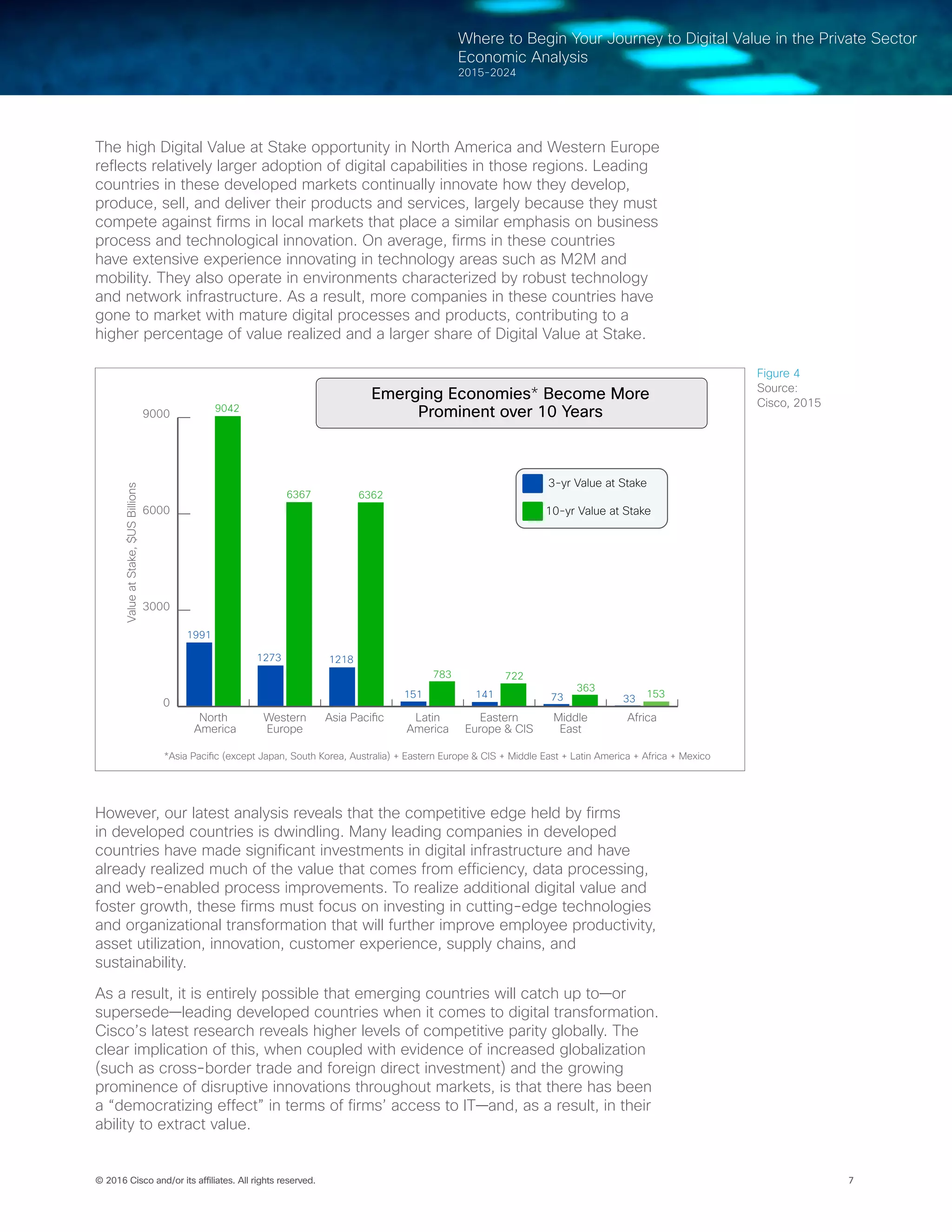
our projection that emerging economies15
will represent nearly one-third of the
global private sector Digital Value at Stake by 2024[ ] (see Figure 4, next page).
North America
$9.0T
United States: $7.7T
Canada: $790B
Mexico: $519B
Western Europe
$6.4T
Germany: $1.1T
United Kingdom: $926B
France: $804B
Asia Pacific
$6.4T
China: $3.0T
Japan: $1.3T
India: $397B
South Korea: $352B
Australia: $241B
Eastern Europe/CIS
$722B
Russia: $538B
Middle East
$363B
Saudi Arabia: $107B
Africa
$153B
South Africa: $38B
Latin America
$783B
Brazil: $405B
Global View: Digital Value at Stake in the Private Sector
(2015–2024)
Figure 3
Source:
Cisco, 2015
© 2016 Cisco and/or its affiliates. All rights reserved. 7
Where to Begin Your Journey to Digital Value in the Private Sector
Economic Analysis
2015-2024
The high Digital Value at Stake opportunity in North America and Western Europe
reflects relatively larger adoption of digital capabilities in those regions. Leading
countries in these developed markets continually innovate how they develop,
produce, sell, and deliver their products and services, largely because they
must
compete against firms in local markets that place a similar emphasis on business
process and technological innovation. On average, firms in these countries
have extensive experience innovating in technology areas such as M2M and
mobility. They also operate in environments characterized by robust technology
and network infrastructure. As a result, more companies in these countries have
gone to market with mature digital processes and products, contributing to a
higher percentage of value realized and a larger share of Digital Value at Stake.
However, our latest analysis reveals that the competitive edge held by firms
in developed countries is dwindling. Many leading companies in developed
countries have made significant investments in digital infrastructure and have
already realized much of the value that comes from efficiency, data processing,
and web-enabled process improvements. To realize additional digital value and
foster growth, these firms must focus on investing in cutting-edge technologies
and organizational transformation that will further improve employee productivity,
asset utilization, innovation, customer experience, supply chains, and
sustainability.
As a result, it is entirely possible that emerging countries will catch up to—or
supersede—leading developed countries when it comes to digital transformation.
Cisco’s latest research reveals higher levels of competitive parity globally. The
clear implication of this, when coupled with evidence of increased globalization
(such as cross-border trade and foreign direct investment) and the growing
prominence of disruptive innovations throughout markets, is that there has been
a “democratizing effect” in terms of firms’ access to IT—and, as a result, in their
ability to extract value.
0
3000
6000
9000
AfricaMiddle
East
Eastern
Europe & CIS
Latin
America
Asia PacificWestern
Europe
North
America
ValueatStake,$USBillions
1991
9042
6367
783
153
1273
151 33
363
73
6362
1218
*Asia Pacific (except Japan, South Korea, Australia) + Eastern Europe & CIS + Middle East + Latin America + Africa + Mexico
10-yr Value at Stake
3-yr Value at Stake
Emerging Economies* Become More
Prominent over 10 Years
722
141
Figure 4
Source:
Cisco, 2015
8© 2016 Cisco and/or its affiliates. All rights reserved.
Where to Begin Your Journey to Digital Value in the Private Sector
Economic Analysis
2015-2024
As a case in point, Asia Pacific and/or emerging economies will drive
the majority of Digital Value at Stake for the global manufacturing
sector over the next decade. In addition, dramatically increased mobile
and online activity in countries like China and India is reshaping the
global retail landscape.
Industry Outlook: Where to Find Digital Value
To help industry leaders map their digital strategies, we’ve identified
the digital use cases that will deliver the most significant business
outcomes in each of the top six industries in terms of Digital Value at
Stake potential. These industries account for about 71 percent of the
total private sector Digital Value at Stake for 2015-2024—with each of
the six contributing $1 trillion-plus in digital value over the next decade
(see Figure 5). Our analysis also includes the key value drivers for
attaining Digital Value at Stake.
It’s important for readers to understand the digital use cases for their
own industry, as well as those recommended for other verticals. In
a digital world, some of the most innovative ideas often come from
outside one’s own industry. And, as we’ve already seen in the case of
Apple, Amazon, Tesla, and many others, digital capabilities are fueling
entirely new business models that blur industry lines. Will the retailers
become less relevant as manufacturers continue to hone their digital
capabilities and supply chain? Only time will tell.
Manufacturing
An enormous, multifaceted set of industries, manufacturing represents
more than a quarter of the total private sector Digital Value at Stake for
2015-2024 ($6.4 trillion).[ ] Forty-four percent of that value will come
from the Asia-Pacific region, with North America (26 percent) and
Western Europe (24 percent) the No. 2- and No. 3-ranked regions,
respectively. Asia Pacific’s leadership comes primarily from the sheer
size of China’s manufacturing industry.
$6.4T
Manufacturing
$3.1T
Financial Services
$2.8T
Retail
$2.0T
Service Provider
$1.4T
Healthcare
$1.1T
Oil & Gas
The Digital ‘Trillion-Dollar Club’
Top Industries, Ranked by Value at Stake (2015-2024)
Figure 5
Source:
Cisco, 2015
Customer Connected Product
Management
Benteler
Based in Germany, Benteler
supplies safety, environmental,
and efficiency solutions to
vehicle manufacturers worldwide.
In Benteler’s automated, self-
running manufacturing plants,
every tool and part is connected
to the network, and every step in
the production process can be
analyzed and controlled from the
cloud. Factories can easily move
production lines and products
from one line to another. The
modular solution will result in
more agile and efficient factory
floors while controlling costs.
[see more]
9© 2016 Cisco and/or its affiliates. All rights reserved.
Where to Begin Your Journey to Digital Value in the Private Sector
Economic Analysis
2015-2024
Digitization can help manufacturers address a wide range of
challenges, including shortening product lifecycles; reshaping the
supply chain to counter global competition; reducing waste through
increased uptime, labor productivity, and asset utilization; dealing with
volatile energy and raw material costs; and improving worker health
and safety. Digitization is also critical to manufacturers seeking to make
the all-important transition from product-centric to service-oriented
revenue models.
While manufacturing will generate the largest Digital Value at Stake of
any industry over the next decade, the sector is falling considerably
short of fulfilling its digital potential. In 2015, the industry was projected
to capture just 24 percent ($409 billion) of its potential Digital Value at
Stake.
To help address that shortfall, manufacturing firms should begin by
focusing on the following industry-specific digital use cases, which will
drive the lion’s share of digital value for manufacturers over the next
decade:
•	 Predictive maintenance with analytics ($418 billion): Estimates
maintenance requirements based on equipment usage and wear,
increasing asset life and uptime. Years to mainstream adoption: 0-2
years
•	 Automation of quality and defect controls ($359 billion): Wearable
technologies and digital signage systems deliver real-time alerts
about defects, reducing rework and scrap. Years to mainstream
adoption: 0-2 years
•	 Energy management ($312 billion): Digitally enabled building
and production control systems provide visibility into energy
consumption for all manufacturing processes; improve capacity
management with real-time analytics; and increase operational
efficiency by controlling energy consumption based on productivity.
Years to mainstream adoption: 5-10 years
•	 Customer connected product management ($295 billion): Monitors
asset usage through sensors. Analytics estimate maintenance
requirements based on usage, increasing life of assets, reducing
excessive wear and tear, and leading to lower maintenance costs.
Turns field sensor and process data from connected products into
real-time intelligence for custom service offers. Years to mainstream
adoption: 2-5 years
•	 Remote monitoring/maintenance ($264 billion): Reduces
maintenance costs by identifying potential equipment failures prior
to significant deterioration. Years to mainstream adoption: 0-2 years
In addition, manufacturers can capture substantial value (more than $3
trillion across the industry over 10 years) from a number of “horizontal”
digital use cases. For example, adoption of next-generation worker
technologies such as mobile collaboration (BYOD), telecommuting, and
video collaboration will enable a 35 percent gain in knowledge worker
productivity and a reduction in business travel of up to 17 percent.
Another horizontal use case, connected advertising, will produce a
revenue uplift of 0.14 percent across the industry by integrating mobile
advertising with location-based services.
Predict Downtime
For more manufacturing
insights, please visit
cs.co/mfgschneider
Predictive Maintenance with
Analytics
FANUC
FANUC makes industrial robots
for manufacturing companies.
In the past, it shipped robots
out but had no feedback about
robot usage unless there was
a problem and downtime. By
building a highly secure hybrid
cloud to extend its existing data
center to customers’ premises,
FANUC can now extract data
from its robots and connect them
with people, processes, and
things. FANUC can analyze the
data to gain visibility into robot
performance, thereby predicting
an issue, rather than reacting to
a problem. Moreover, such data
insights contribute to reduced
cycle times, enhanced product
quality, and improved efficiency
of processes.
[see more]
© 2016 Cisco and/or its affiliates. All rights reserved. 10
Where to Begin Your Journey to Digital Value in the Private Sector
Economic Analysis
2015-2024
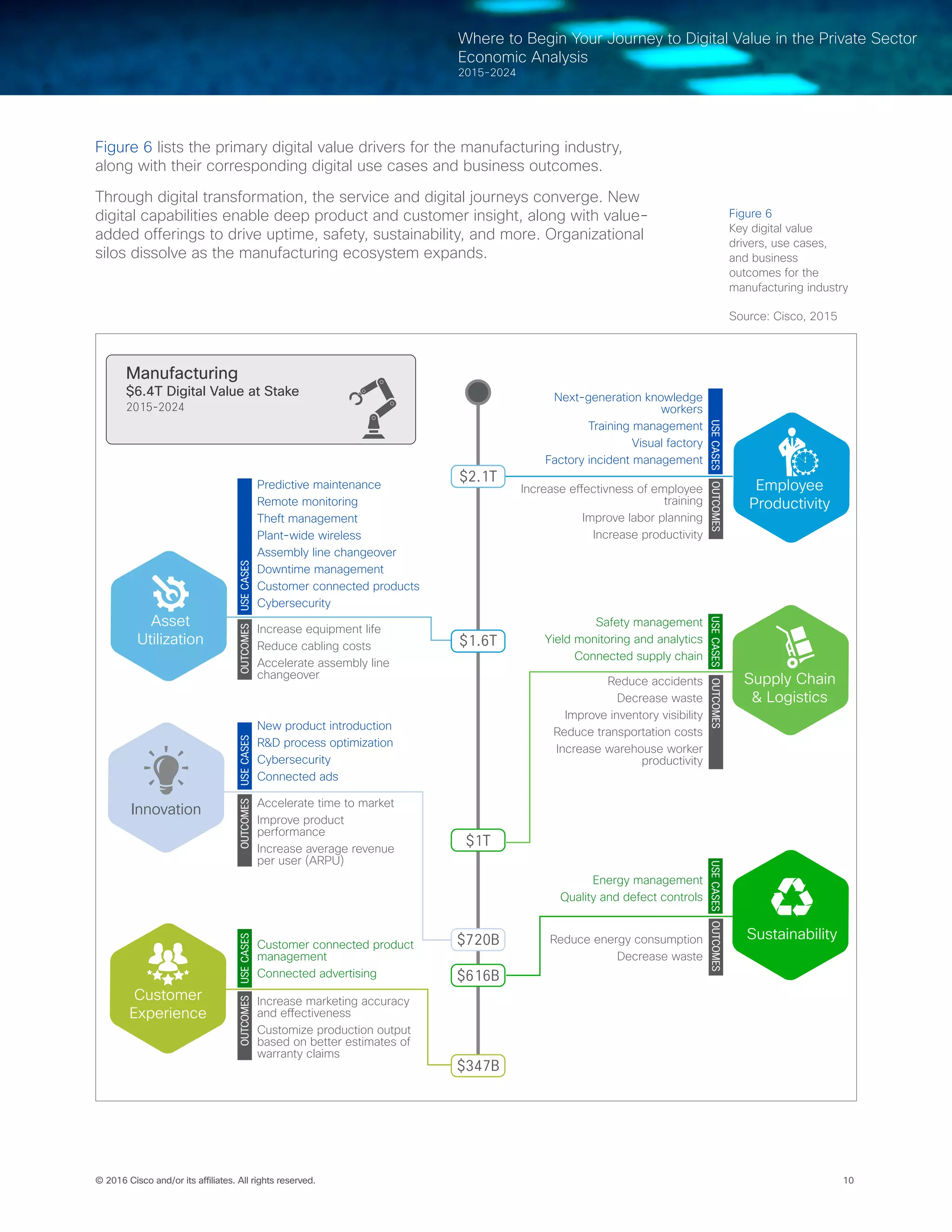
Figure 6 lists the primary digital value drivers for the manufacturing industry,
along with their corresponding digital use cases and business outcomes.
Through digital transformation, the service and digital journeys converge. New
digital capabilities enable deep product and customer insight, along with value-
added offerings to drive uptime, safety, sustainability, and more. Organizational
silos dissolve as the manufacturing ecosystem expands.
Asset
Utilization
Next-generation knowledge
workers
Training management
Visual factory
Factory incident management
Increase effectivness of employee
training
Improve labor planning
Increase productivity
$2.1T
$1.6T
$1T
$720B
$616B
$347B
Customer
Experience
Innovation
Reduce accidents
Decrease waste
Improve inventory visibility
Reduce transportation costs
Increase warehouse worker
productivity
Safety management
Yield monitoring and analytics
Connected supply chain
Supply Chain
& Logistics
Increase equipment life
Reduce cabling costs
Accelerate assembly line
changeover
Predictive maintenance
Remote monitoring
Theft management
Plant-wide wireless
Assembly line changeover
Downtime management
Customer connected products
Cybersecurity
Increase marketing accuracy
and effectiveness
Customize production output
based on better estimates of
warranty claims
Customer connected product
management
Connected advertising
Accelerate time to market
Improve product
performance
Increase average revenue
per user (ARPU)
New product introduction
R&D process optimization
Cybersecurity
Connected ads
Employee
Productivity
SustainabilityReduce energy consumption
Decrease waste
Energy management
Quality and defect controls
Manufacturing
$6.4T Digital Value at Stake
2015-2024
USECASESUSECASESUSECASESOUTCOMESOUTCOMESOUTCOMES
USECASESUSECASESOUTCOMESOUTCOMESUSECASESOUTCOMES
Figure 6
Key digital value
drivers, use cases,
and business
outcomes for the
manufacturing industry
Source: Cisco, 2015
11© 2016 Cisco and/or its affiliates. All rights reserved.
Where to Begin Your Journey to Digital Value in the Private Sector
Economic Analysis
2015-2024
Financial Services
The financial services industry faces a host of challenges, including
changing customer preferences driven by the shift to digital; increasing
pressure from agile competitors using disruptive business models
(such as Wealthfront’s automated investment services and peer-to-
peer lending platforms pioneered by Grameen Bank) and from the
technology industry (such as mobile payment offerings from Google,
Apple, and Vodafone); stiffer regulatory requirements; rising branch
costs; growing customer attrition; and margin pressures due to
human-intensive processes.
In addition, retail banking—the segment of the financial services
industry with the highest potential Digital Value at Stake (53 percent)—
is plagued by a growing lack of customer trust, and a belief that
customers are getting less value from banks than they expect. This
“value gap” is largely the result of customers not receiving financial
advice when and where they need it. According to a recent Cisco
survey, 28 percent of bank customers globally do not trust banks to
represent their best interests. What’s more, nearly one in four intend to
choose another provider for their next financial product or service.16
New services enabled by digital technologies can help banks and
the other major segments of the industry—insurance and investment/
brokerage firms—maximize the value they offer customers. The
solutions will require a convergence of mobility, analytics, and video to
create delightful experiences and effortless transactions for customers.
This will allow the industry to move away from legacy, paper-based
approaches, thereby enabling improved delivery of services in a cost-
effective manner.
These digital opportunities make financial services the No.2-ranked
industry in terms of Digital Value at Stake, with an estimated $3.14
trillion up for grabs over the next decade.[ ] North America will drive
48 percent of this value, with Western Europe (29 percent) and Asia
Pacific (17 percent) the No. 2- and No. 3-ranked regions, respectively.
Financial services was on track to secure 29 percent of its potential
Digital Value at Stake in 2015—the highest percentage of any industry.
To secure an even larger share of potential Value at Stake in the future,
financial services firms should base their digital strategies on the
following industry-specific and cross-industry use cases.
Retail Banking
•	 Sales and services transformation ($508 billion): Connect and
coordinate interactions across multiple channels by systematically
enabling intelligent, personalized customer interactions. Years to
mainstream adoption: 0-2 years
•	 Video-based advisors ($127 billion): Enable customers to speak to
an advisor either in-branch or remotely using mobile devices. Leads
to higher customer satisfaction and drives upsell and cross-sell
opportunities. Years to mainstream adoption: 2-5 years
•	 Mobile payments ($116 billion): Allows customers to use a mobile
phone to pay for products and services. Improves customer
Sales and Services
Transformation
Banamex
Starting in 2013, the bank began
opening its Banamex Smart
Banking Kiosks in shopping
malls in Mexico. The size of a
small retail store, each 24/7
digital branch integrates ATMs,
tablets, touchscreens, video
walls, teleconferencing, and
a virtual hostess to deliver a
completely digital financial self-
service experience. The result
is a high-speed, cost-efficient
digital banking experience that
performs 80 percent of a regular
branch’s transactions, with
higher satisfaction levels.
[see more]
For more financial services
insights, please visit
cs.co/fsi-advice
12© 2016 Cisco and/or its affiliates. All rights reserved.
Where to Begin Your Journey to Digital Value in the Private Sector
Economic Analysis
2015-2024
convenience and acquisition by capturing the unbanked or
underbanked. Years to mainstream adoption: 0-2 years
•	 Cross-industry use cases ($708 billion): Next-generation worker
technologies such as mobile collaboration (BYOD), telecommuting,
and video collaboration have the potential to deliver $299 billion
in Digital Value at Stake during 2015–24. In addition, connected
advertising and marketing and cybersecurity best practices can add
$163 billion and $137 billion, respectively, over the next decade.
Insurance
•	 Claims processing ($82 billion): Uses analytics to reduce claim
costs and process inefficiencies, improves risk selection, and lowers
the cost of compliance and financial reporting. Years to mainstream
adoption: 2-5 years
•	 Product innovation ($41 billion): Targets a larger market with
virtualized insurance services and a multichannel presence. Years to
mainstream adoption: 5-10 years
•	 Customer experience ($39 billion): Keen insights allow insurers to
focus on specific customer needs, wants, and behavior patterns,
increasing customer satisfaction and loyalty. Insurers can derive
higher sales by implementing insight-driven marketing tactics and
real-time analytics for customer-centric services offerings. Years to
mainstream adoption: 0-2 years
•	 Cross-industry use cases ($127 billion): Next-generation worker
technologies such as mobile collaboration (BYOD), telecommuting,
and video collaboration have the potential to deliver $54 billion
in Digital Value at Stake during 2015–24. In addition, connected
advertising and marketing and cybersecurity best practices can add
$29 billion and $25 billion, respectively, over the next decade.
Investment/Brokerage
•	 Video-based advisors ($386 billion): Enable customers to speak
to an advisor either in-branch or remotely using mobile devices,
improving customer satisfaction and driving upsell and cross-sell
opportunities. Helps retain the wealth of existing high-net-worth
individuals (HNI) by collaborating with the family through video-
based remote advisors and gaining share of the self-serve segment
through direct relationship management. Years to mainstream
adoption: 2-5 years
•	 Self-directed brokerage ($106 billion): Provides access to a broad
range of investments via a brokerage account versus the limited
lineup offered by a 401(k) plan. Helps grow the share of wallet with
existing clients and attracts new investors. Years to mainstream
adoption: 2-5 years
•	 Fraud detection ($95 billion): “False positives,” which incorrectly
identify potential fraud during the brokerage account opening
process, trigger a time-consuming, manual review process, and
often deter good customers from opening a new account. With
analytics, brokerage firms can automate fraud review processes,
increase new account revenue, and reduce inefficiencies. Years to
mainstream adoption: 0-2 years
Video-based Advisors
[Remote Expert]
Nationwide
The world’s largest building
society, Nationwide wanted to
increase customer satisfaction
and boost sales by making it
more convenient to apply for
a mortgage. Today, customers
can walk into any of more than
60 branches to meet with a
mortgage specialist over the
network. The specialist can
share charts and comparisons
on a video display, and a
connected printer produces
forms for customers to review
and sign. Ninety-three percent
of customers surveyed rated the
solution as a good or excellent
replacement for face-to-face
meetings. New mortgage
business rose by 66 percent, and
customer satisfaction increased
by double digits.
[see more]
13© 2016 Cisco and/or its affiliates. All rights reserved.
Where to Begin Your Journey to Digital Value in the Private Sector
Economic Analysis
2015-2024
•	 Cross-industry use cases ($504 billion): Next-generation worker
technologies such as mobile collaboration (BYOD), telecommuting,
and video collaboration have the potential to deliver $213 billion
in Digital Value at Stake during 2015–24. In addition, connected
advertising and marketing and cybersecurity best practices can add
$116 billion and $98 billion, respectively, over the next decade.
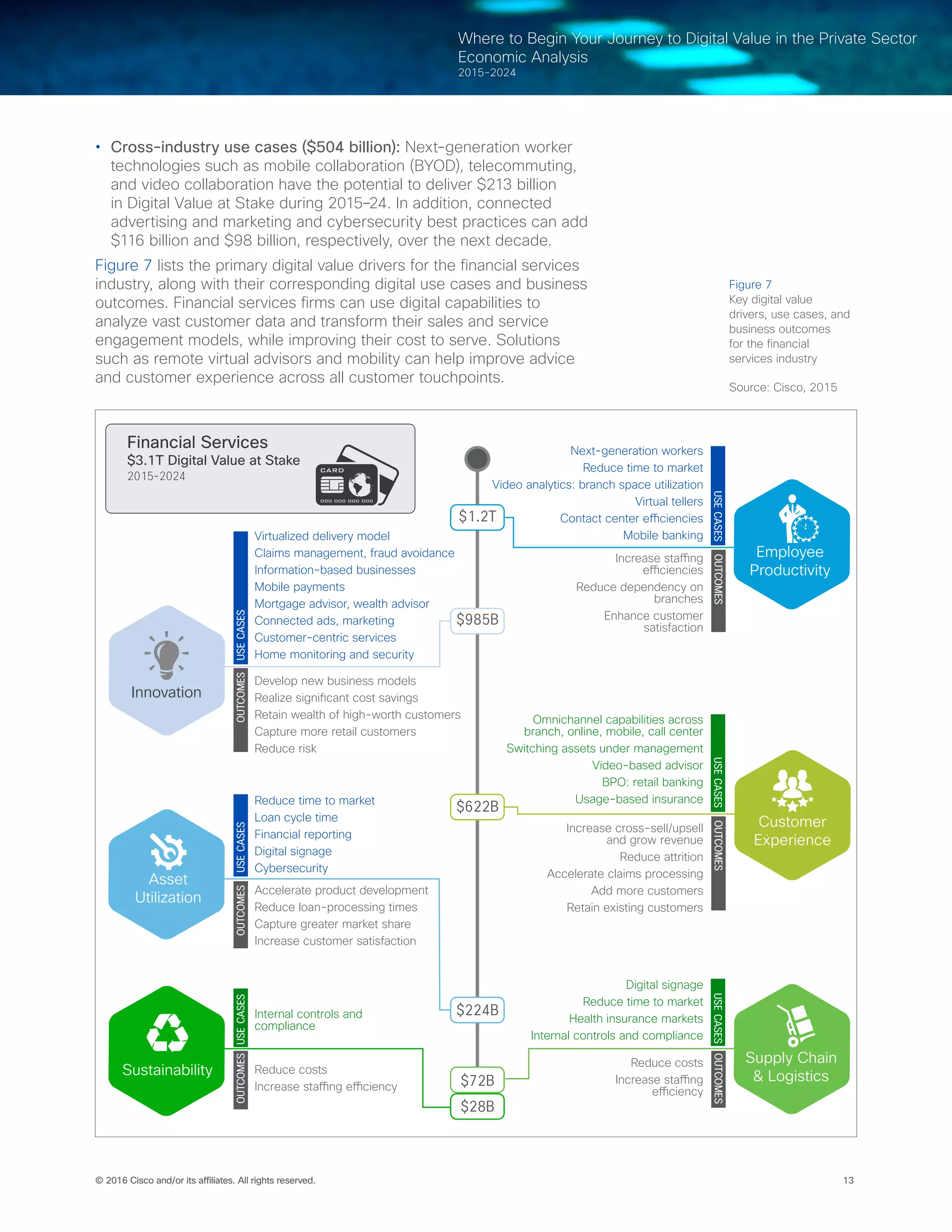
Figure 7 lists the primary digital value drivers for the financial services
industry, along with their corresponding digital use cases and business
outcomes. Financial services firms can use digital capabilities to
analyze vast customer data and transform their sales and service
engagement models, while improving their cost to serve. Solutions
such as remote virtual advisors and mobility can help improve advice
and customer experience across all customer touchpoints.
Financial Services
$3.1T Digital Value at Stake
2015-2024
USECASESUSECASESOUTCOMESOUTCOMESUSECASESOUTCOMES
USECASESUSECASESOUTCOMESOUTCOMES
Sustainability
Asset
Utilization
Develop new business models
Realize significant cost savings
Retain wealth of high-worth customers
Capture more retail customers
Reduce risk
Accelerate product development
Reduce loan-processing times
Capture greater market share
Increase customer satisfaction
Reduce costs
Increase staffing efficiency
Virtualized delivery model
Claims management, fraud avoidance
Information-based businesses
Mobile payments
Mortgage advisor, wealth advisor
Connected ads, marketing
Customer-centric services
Home monitoring and security
Reduce time to market
Loan cycle time
Financial reporting
Digital signage
Cybersecurity
Internal controls and
compliance
Customer
Experience
Increase staffing
efficiencies
Reduce dependency on
branches
Enhance customer
satisfaction
Reduce costs
Increase staffing
efficiency
Next-generation workers
Reduce time to market
Video analytics: branch space utilization
Virtual tellers
Contact center efficiencies
Mobile banking
Digital signage
Reduce time to market
Health insurance markets
Internal controls and compliance
$985B
$622B
$1.2T
$224B
$72B
$28B
Employee
Productivity
Supply Chain
& Logistics
USECASESOUTCOMES
Omnichannel capabilities across
branch, online, mobile, call center
Switching assets under management
Video-based advisor
BPO: retail banking
Usage-based insurance
Increase cross-sell/upsell
and grow revenue
Reduce attrition
Accelerate claims processing
Add more customers
Retain existing customers
Innovation
Figure 7
Key digital value
drivers, use cases, and
business outcomes
for the financial
services industry
Source: Cisco, 2015
14© 2016 Cisco and/or its affiliates. All rights reserved.
Where to Begin Your Journey to Digital Value in the Private Sector
Economic Analysis
2015-2024
Retail
As digital shopping experiences become mainstream, retailers need to
act quickly to ensure they are not disrupted by innovative, online-only
players or traditional competitors that adapt faster than they do. 

In particular, mobility and apps now represent a disruption similar in
scope to what we saw with e-commerce in the late 1990s and early
2000s.17
Throughout the world, new digital customers expect a rich
variety of interactive and contextual retail experiences, channels, and
options—but rarely find them in brick-and-mortar retail settings. 

Retailers have made important strides by creating more channels
(omnichannel). These investments, however, have resulted in growing
operational complexity, and retailers have not consistently achieved
what consumers really desire: greater efficiency, savings, and
engagement, both in-store and out. 

Digital capabilities can enable retailers to address a number of
challenges, including improving in-store customer engagement and
workforce efficiency, reducing shrinkage, and streamlining inventory
management and checkout processes.
Based on these and many other digital opportunities, retail represents
the third-largest industry in terms of Digital Value at Stake. Of the
$2.8 trillion in Digital Value at Stake available to the retail industry over
the next decade, $765 billion will come from industry-specific use
cases, while about $2 trillion will emanate from cross-industry use
cases. North America will drive 46 percent of this value, with Western
Europe (27 percent) and Asia Pacific (20 percent) the No. 2- and No.
3-ranked regions, respectively.
Cisco estimates, however, that the retail industry realized just 15
percent ($130 billion) of its potential Digital Value at Stake for 2015.
Retailers should prioritize the following five industry-specific use cases
to avoid leaving so much “money on the table” moving forward:
•	 In-store analytics ($285 billion): Improve workforce efficiency
through dashboards, real-time information, operational analytics,
workforce management tools, and shopping analytics. Years to
mainstream adoption: 0-2 years
•	 Remote experts/mobile advisors ($226 billion): Counsel customers
on high-ticket items to create upselling opportunities while reducing
customer leakage in case expert assistance is unavailable. Years to
mainstream adoption: 2-5 years
•	 Theft reduction/physical security ($78 billion): Replace analog
cameras with IP-based surveillance systems to reduce operating
costs of legacy systems. Install video analytics in IP cameras to
analyze suspicious behavior and reduce theft. Years to mainstream
adoption: 2-5 years
•	 Endless aisles ($51 billion): Allow customers to view entire product
inventories via interactive kiosks. Customers can order out-of-stock
items from another store or opt for home delivery, helping to reduce
customer leakage. Years to mainstream adoption: 0-2 years
For more retail insights, please
visit cs.co/retailContextual
In-store Analytics
Panasonic
Panasonic Powershelf is an
intelligent retail shelf that
automates pricing and tracks
inventory. Data from Powershelf
can be analyzed in real time,
in the store, for immediate
insight. When a Powershelf
is connected to an analytics
platform, it delivers data that
leads to innovation. Analytics
at the edge enable retailers to
move perishable goods faster,
improve store traffic patterns,
and increase efficiency. By
supplementing edge analytics
with historical data analysis,
retailers can empower decision-
making locally, regionally, and
globally for supply chain, sales
forecasting, and customer
experience planning.
[see more]
15© 2016 Cisco and/or its affiliates. All rights reserved.
Where to Begin Your Journey to Digital Value in the Private Sector
Economic Analysis
2015-2024
•	 Checkout optimizer ($51 billion): Use video cameras to monitor and
predict queue lengths, reduce customer wait times, and improve the
efficiency of cashiers. Years to mainstream adoption: 2-5 years
In addition to the above industry-specific use cases, retailers can
generate additional value from several cross-industry digital use cases.
The largest of these—personalized promotions and marketing—has
the potential to drive $556 billion for the global retail industry over
the next decade through solutions such as analytics-driven precision
marketing and digital signage.[ ] In addition, next-generation worker
technologies such as mobile collaboration (BYOD), telecommuting,
and video collaboration have the potential to deliver $550 billion in
Digital Value at Stake during 2015–24. Retailers also have the potential
to drive $536 billion in Digital Value at Stake globally by integrating
cybersecurity directly into their digital platforms to reduce security
breaches—and drive growth.
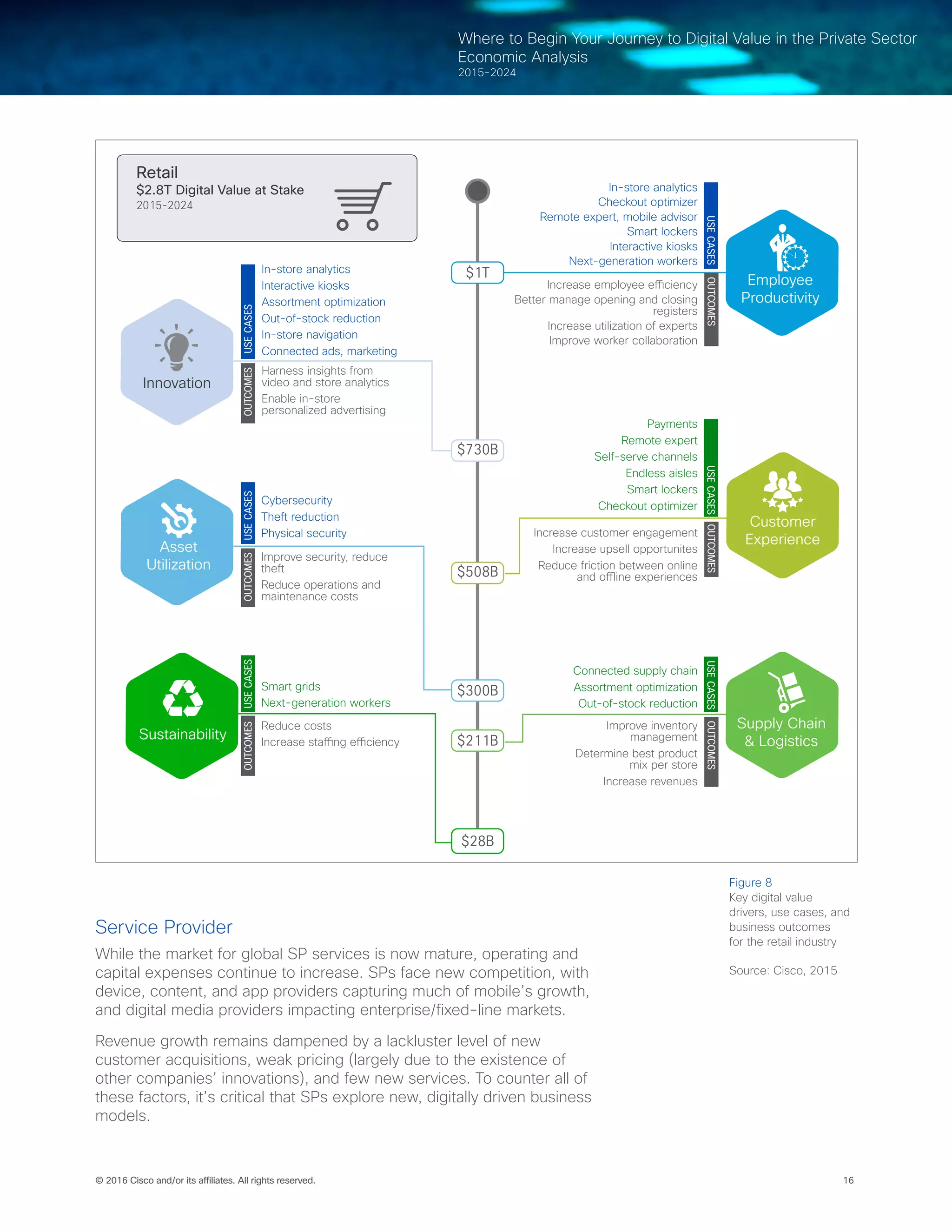
Figure 8 (next page) lists the primary digital value drivers for the retail
industry, along with their corresponding digital use cases and business
outcomes.
The combination of shopper behavior analytics, workforce analytics,
and process transformation can reduce retailers’ in-store operational
costs and improve customers’ shopping experience. Adopting a
consistent approach across all customer touchpoints and sales
channels enables retailers to decrease churn, increase wallet share,
and improve brand loyalty.
Endless Aisles
Tesco
Tesco’s F&F Clothing Group integrated its online and physical stores
to offer customers what they want, when they want it. For example, if
something is out-of-stock at a store, customers can visit an “Online Order
Point” kiosk, ask employees to look it up on their F&F tablets, or order
through Wi-Fi on their personal devices. Today, Tesco can easily provide
customers with information on the latest trends, personalized advice, and
even deals based on store location. This information can be accessed via
the shopper’s personal device or through sales associates who, with their
tablets, now have another way of serving customers. The combined online
and in-store experiences helped the company exceed its online targets
over the 2014 holidays with more than 50 percent sales growth.
[see more]
16© 2016 Cisco and/or its affiliates. All rights reserved.
Where to Begin Your Journey to Digital Value in the Private Sector
Economic Analysis
2015-2024
Service Provider
While the market for global SP services is now mature, operating and
capital expenses continue to increase. SPs face new competition, with
device, content, and app providers capturing much of mobile’s growth,
and digital media providers impacting enterprise/fixed-line markets.
Revenue growth remains dampened by a lackluster level of new
customer acquisitions, weak pricing (largely due to the existence of
other companies’ innovations), and few new services. To counter all of
these factors, it’s critical that SPs explore new, digitally driven business
models.
Asset
Utilization
In-store analytics
Checkout optimizer
Remote expert, mobile advisor
Smart lockers
Interactive kiosks
Next-generation workers
Increase employee efficiency
Better manage opening and closing
registers
Increase utilization of experts
Improve worker collaboration
Sustainability
$1T
$508B
$730B
$300B
$211B
Employee
Productivity
Customer
Experience
Improve inventory
management
Determine best product
mix per store
Increase revenues
Connected supply chain
Assortment optimization
Out-of-stock reduction
Supply Chain
& Logistics
Increase customer engagement
Increase upsell opportunites
Reduce friction between online
and offline experiences
Payments
Remote expert
Self-serve channels
Endless aisles
Smart lockers
Checkout optimizer
Innovation
Harness insights from
video and store analytics
Enable in-store
personalized advertising
In-store analytics
Interactive kiosks
Assortment optimization
Out-of-stock reduction
In-store navigation
Connected ads, marketing
Improve security, reduce
theft
Reduce operations and
maintenance costs
Cybersecurity
Theft reduction
Physical security
Sustainability
Reduce costs
Increase staffing efficiency
Smart grids
Next-generation workers
$28B
Retail
$2.8T Digital Value at Stake
2015-2024
USECASESOUTCOMESUSECASESOUTCOMESUSECASESOUTCOMES
USECASESUSECASESOUTCOMESOUTCOMESUSECASESOUTCOMES
Figure 8
Key digital value
drivers, use cases, and
business outcomes
for the retail industry
Source: Cisco, 2015
17© 2016 Cisco and/or its affiliates. All rights reserved.
Where to Begin Your Journey to Digital Value in the Private Sector
Economic Analysis
2015-2024
With increasing connectivity across consumers and enterprises,
enabled by a foundation of 3G (and now 4G/LTE) networks, SPs can
benefit from adopting a digital strategy internally, and by acting as
enablers of digital innovations for customers.
Internal digital solutions include data analytics, tower management, and
software-defined networking (SDN). Service providers will also have
significant opportunities to leverage and adapt their networks to serve
a broader range of customers who provide and support their own
digital initiatives. These “SP as an enabler” examples include smart
factory initiatives in manufacturing, remote experts in financial services
and retail, and connected homes and connected cars.
In aggregate, these opportunities represent a $2 trillion Digital Value
at Stake opportunity for the service provider industry over the next
decade.[ ] North America will drive 43 percent of this value, with
Western Europe and Asia Pacific the No. 2- and No. 3-ranked regions
in terms of Digital Value at Stake potential.
Across all regions globally, the SP industry was expected to capture
21 percent ($106 billion) of its potential Digital Value at Stake for
2015—better than most industries, but lagging behind sectors such as
manufacturing and financial services. To capture a larger share of this
value in the future, SPs should view the following digital use cases as
their top priorities:
•	 SP as an enabler ($494 billion): Deploy and operate any of more
than 300 digital solutions on behalf of customers across the private
and public sectors. Examples include Connected Warehouse
(manufacturing), Checkout Optimizer (retail), and Smart Parking
(public sector). Perhaps the largest “SP as an enabler” opportunity
is Connected Homes, which represents $44 billion in Digital Value
at Stake over the next decade. This includes IP-based, centralized
control of lighting, HVAC, appliances, security locks, and other
systems in homes. Years to mainstream adoption: 5-10 years
•	 Network transformation ($110 billion): Employing data analytics,
SDN, and network-function virtualization (NFV) in combination to
increase efficiencies and reduce the cost of managing the network.
Years to mainstream adoption: 0-2 years
•	 Personalized customer service through Big Data analytics ($49
billion): Increase average revenue per user (ARPU) of existing
customers through personalized services extracted from Big Data
analytics. Years to mainstream adoption: 0-2 years
•	 Churn control ($48 billion): Personalized customer service, leading
to reduced churn of existing customers. Years to mainstream
adoption: 2-5 years
In addition, SPs can capture significant value ($1.1 trillion across the
industry over 10 years) from a number of “horizontal” digital use cases.
For example, adoption of next-generation worker technologies such
as mobile collaboration (BYOD) and video collaboration will generate
$557 billion in Digital Value at Stake across the industry. Another
horizontal use case, connected advertising, has the potential to
produce $278 billion in digital benefits industry-wide by 2024. SPs can
SP as an Enabler
Smart City Networks
A great Wi-Fi experience
at trade shows and events
requires a flexible network.
Wednesday’s banquet might
have a few hundred attendees,
while Thursday’s may have
thousands. Convention centers
also want to make money from
their Wi-Fi investments. Smart
City Networks built and manages
a Wi-Fi network for Santa Clara
(California) Convention Center.
Sponsors and exhibitors can
purchase banner ads that appear
on attendees’ mobile devices
when they connect targeted
locations, such as a specific
booth, the lobby, a session
meeting room, and so on. The
convention center and event
owners appreciate the service
and the new revenue stream.
Attendees enjoy a better event
experience.
[see more]
18© 2016 Cisco and/or its affiliates. All rights reserved.
Where to Begin Your Journey to Digital Value in the Private Sector
Economic Analysis
2015-2024
drive an additional $209 billion in Digital Value at Stake by integrating
cybersecurity directly into their digital platforms to reduce security
breaches—and drive growth.
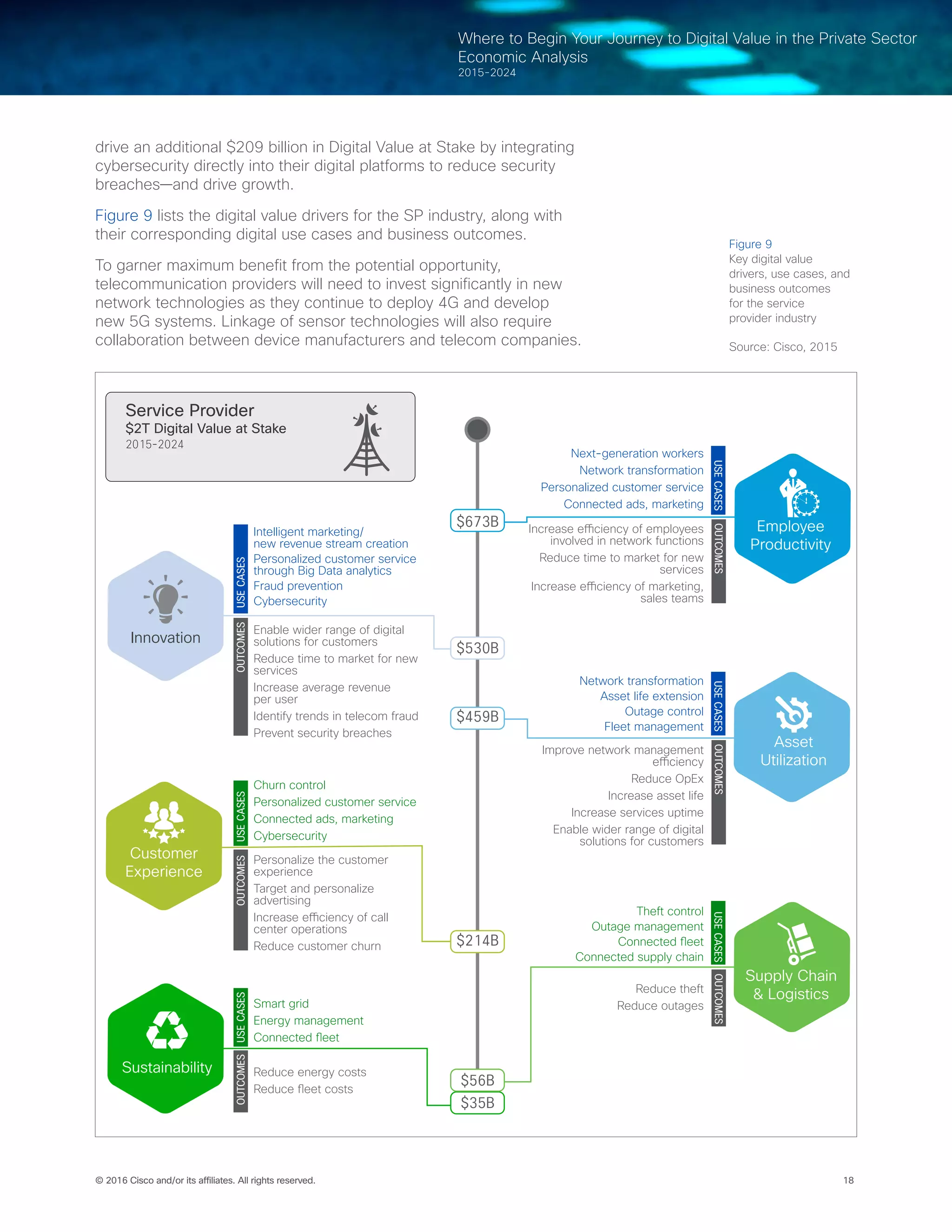
Figure 9 lists the digital value drivers for the SP industry, along with
their corresponding digital use cases and business outcomes.
To garner maximum benefit from the potential opportunity,
telecommunication providers will need to invest significantly in new
network technologies as they continue to deploy 4G and develop
new 5G systems. Linkage of sensor technologies will also require
collaboration between device manufacturers and telecom companies.
$459B
$673B
$214B
$530B
$56B
$35B
Service Provider
$2T Digital Value at Stake
2015-2024
Next-generation workers
Network transformation
Personalized customer service
Connected ads, marketing
Asset
Utilization
Network transformation
Asset life extension
Outage control
Fleet management
Improve network management
efficiency
Reduce OpEx
Increase asset life
Increase services uptime
Enable wider range of digital
solutions for customers
Sustainability
Personalize the customer
experience
Target and personalize
advertising
Increase efficiency of call
center operations
Reduce customer churn
Churn control
Personalized customer service
Connected ads, marketing
Cybersecurity
Employee
Productivity
Customer
Experience
Reduce theft
Reduce outages
Theft control
Outage management
Connected fleet
Connected supply chain
Increase efficiency of employees
involved in network functions
Reduce time to market for new
services
Increase efficiency of marketing,
sales teams
Reduce energy costs
Reduce fleet costs
Smart grid
Energy management
Connected fleet
Supply Chain
& Logistics
Enable wider range of digital
solutions for customers
Reduce time to market for new
services
Increase average revenue
per user
Identify trends in telecom fraud
Prevent security breaches
Intelligent marketing/
new revenue stream creation
Personalized customer service
through Big Data analytics
Fraud prevention
Cybersecurity
Innovation
USECASESOUTCOMESUSECASESOUTCOMESUSECASESOUTCOMES
USECASESUSECASESOUTCOMESUSECASESOUTCOMESOUTCOMES
Figure 9
Key digital value
drivers, use cases, and
business outcomes
for the service
provider industry
Source: Cisco, 2015
19© 2016 Cisco and/or its affiliates. All rights reserved.
Where to Begin Your Journey to Digital Value in the Private Sector
Economic Analysis
2015-2024
Healthcare
Like any other private sector segment, the healthcare industry—
hospitals and pharmaceutical companies—shoulders a number of
challenges that can be remedied through digital solutions.
For hospitals, key care-abouts include the need to reduce operational
costs, improve the quality and efficiency of care, decrease inpatient
volume, shift from volume- to value-based reimbursement, and
enhance physician-hospital relations. Digital solutions that can address
these concerns include electronic health records, mobile apps,
telehealth, social media, and other patient-friendly technologies.
For pharmaceutical companies, on the other hand, the primary issues
are rising customer expectations, the accelerating costs of research
and development, the need to bring new drugs to market faster
and more efficiently, countering low-cost competition, managing
widely distributed supply chains, and ensuring flexible production.
Digital technologies such as data analytics, social media, cloud, and
mobility can play an essential role in improving customer engagement,
developing collaborative R&D and personalized medicines,
collaborating seamlessly with new partners, and optimizing an end-to-
end value chain to reach new markets.
Based on these and other digital capabilities, the healthcare industry
will generate $1.4 trillion in private sector Digital Value at Stake over
the next decade.[ ] North America will drive 50 percent of this value,
with Western Europe (34 percent) and Asia Pacific (13 percent) the
No. 2- and No. 3-ranked regions, respectively.
Our recent analysis, however, estimated that the healthcare industry
would secure just 16 percent ($67 billion) of its potential Digital Value
at Stake in 2015, leaving considerable room for improvement. To
capture an even larger share of the industry’s potential Digital Value at
Stake in the future, healthcare firms should build their digital strategies
around the following industry-specific and cross-industry use cases:
Hospitals
•	 Asset utilization ($49 billion): 1) Real-time location system software
and RFID hardware tracks hospital equipment, saving time formerly
spent by nurses to locate it. 2) RFID tags/sensors improve asset
tracking and monitoring of the utilization and working condition
of equipment. 3) Wireless tracking systems reduce inventory
management costs and inventory/medication waste. Years to
mainstream adoption: 0-2 years
•	 Employee productivity ($46 billion): 1) Analytics-driven systems
align staffing with hospital utilization rates, reducing staffing
shortages/overages and decreasing patient wait times. 2)
Automated dispensing cabinets reduce medication administration
errors and the time spent by nurses to administer medications.
3) Electronic health record systems cut administrative costs. 4)
Analytics help reduce denials by identifying major sources and
frequencies, thus reducing revenue leakage. 5) Linkages to billing
Patient Experience/Employee
Productivity
University of Virginia
Center for Telehealth
What began as a long-distance
care plan for an international
dignitary catalyzed creation of
the University of Virginia (UVA)
Center for Telehealth. The UVA
Center for Telehealth established
a 126-site telehealth network
across Virginia with standards-
based, broadband technologies.
Unified communications include
voice, instant messaging,
presence, voicemail, and
telepresence conferencing,
which interface securely with
other equipment. Other tools
include digital stethoscopes,
otoscopes, and patient cameras.
The telehealth network has
supported 40,000 patient
encounters in 45 specialties,
saving patients more than 15
million miles of travel. It increased
both access to specialty services
and speed of delivery, especially
for stroke care.
[see more]
20© 2016 Cisco and/or its affiliates. All rights reserved.
Where to Begin Your Journey to Digital Value in the Private Sector
Economic Analysis
2015-2024
systems facilitate easier audits of challenged costs. Years to
mainstream adoption: 0-2 years
•	 Patient experience ($6 billion): 1) Telehealth services such as
patient consultations via video conferencing and remote monitoring
of vital signs increase patient reach and revenues. 2) Automated
decision-support tools help reduce medication/diagnostic errors
and associated medical costs, improving physician performance.
3) Automated reminders and mobile apps reduce no-shows
and increase revenues. 4) Digital technologies such as remote
monitoring, mhealth, video conferencing, and social networks
facilitate dynamic interventions that improve adherence to physical
therapy follow-on care. Years to mainstream adoption: 0-2 years
Pharmaceutical Companies
•	 Smart manufacturing ($39 billion): 1) Predictive analytics improve
asset utilization and reduce maintenance costs. 2) Digital adoption
reduces scrap and rework costs by eliminating wasteful effort. 3)
Equipment monitoring and predictive maintenance extend asset
life. 4) Asset-tracking devices and video security reduce lost/stolen
assets. 5) Real-time environmental monitoring solutions decrease
manufacturing downtime. Years to mainstream adoption: 0-2 years
•	 Research and development transformation ($31 billion): 1) Virtual
screening/simulations speed the rate of drug discovery and reduce
the need for expensive lab work and clinical trials, thereby cutting
costs. 2) Open collaboration allows companies to benefit from fresh
ideas submitted by innovative scientists and institutions, reducing
research/idea-generation costs. Years to mainstream adoption: 2-5
years
•	 In-market effectiveness ($14 billion): 1) Technologies such as
medication reminders, medication list software, in-home diagnostic
devices, problem detection algorithms, video conferencing, and
social networks improve medication adherence. 2) Smart monitoring
devices make it easier and more convenient for patients to monitor
themselves, leading to higher-quality preventive care. 3) Drug
delivery technology platforms extend product lifecycles and provide
innovative and convenient means of delivering drugs to patients.
Years to mainstream adoption: 2-5 years
•	 Product development ($4 billion): 1) Big Data analytics improve
drug clinical trial processes, thereby reducing development costs. 2)
Mobile health monitoring helps clinical research organizations gather
data on subjects without bearing the cost of expensive clinical trials.
3) Big Data analytics and improved collaboration between R&D and
product development teams help reduce time to market. Years to
mainstream adoption: 2-5 years
While industry-specific use cases will drive significant value for the
healthcare industry over the next decade, the biggest contribution—86
percent ($1.2 trillion), the highest percentage of any industry—will
come from cross-industry use cases. Of these, the next-generation
worker use case will produce the most value; it has the potential to
deliver $838 billion in Digital Value at Stake from 2015–24 based
on technologies such as mobile and video collaboration. In addition,
cybersecurity best practices, connected payments, and connected
Employee Productivity/Patient
Experience
Lucile Packard
Children’s Hospital
In many rural areas there is a
shortage of pediatric specialists.
Doctors and sick children must
often travel long distances to
give and receive needed care.
A few years ago, Lucile Packard
Children’s Hospital became the
first facility of its kind to provide
remote clinical interactions for
pediatric care using telehealth
technology. With high-quality
video conferencing, instant
access to patient records, and
network-connected medical
devices that route critical data
from patient to doctor, the
hospital’s virtual visits provide a
true-to-life clinical experience.
Approximately 300 pediatric
patients now receive care-at-a-
distance from the Lucile Packard
Children’s Hospital each month.
[see more]
21© 2016 Cisco and/or its affiliates. All rights reserved.
Where to Begin Your Journey to Digital Value in the Private Sector
Economic Analysis
2015-2024
advertising/marketing could add $110 billion, $78 billion, and $61
billion in digital value, respectively, over the next decade.
With one in three consumers projected to have their healthcare
records compromised by cyberattacks in 2016 according to IDC,18
cybersecurity becomes especially critical to driving digital value for the
industry.
Figure 10 lists the primary digital value drivers for the healthcare
industry, along with their corresponding digital use cases and business
outcomes.
Healthcare
$1.4T Digital Value at Stake
2015-2024
[H]=Hospital, [P]=Pharma
Reduced errors [H]
Improved administrative efficiency [H]
Staffing optimization [H]
Improved medication administration [H]
Reduced no-shows [H]
Unplanned downtime management [P]
Research transformation [P]
Next-generation workers
Asset
Utilization
Reduced equipment loss
and theft [H]
Reduced time spent on
equipment search [H]
Predictive maintenance of
equipment
Asset life/loss management [P]
Downtime management [P]
Cybersecurity
Reduce OpEx
Reduce nurse search time
Increase life, reduce depreciation
of medical equipment
Improve equipment utilization
Ensure compliance
Minimize waste
Sustainability
Supply Chain
& Logistics
Reduce inventory waste and
management costs
Reduce denials cost, revenue
leakage
Improve drug clinical trial
processes
Improve manufacturing
productivity
Extend product life cycle
Consumables/perishables
tracking [H]
Claims management [H]
Inventory management [H]
R&D cost control [P]
Reduce scrap and rework
Pharmacy drug delivery [P]
Reach more patients
Increase revenue
Reduce time to market
Telehealth services [H]
Reduced time to market [P]
Next-generation smart devices [P]
Innovation
$880B
$207B
$138B
$81B
$59B
$29B
Employee
Productivity
Customer
Experience
Reduce errors
Improve physician performance
Reduce administrative costs
Allocate staff more efficiently
Reduce no-shows
Reduce cost of drug siscovery
Increase marketing
accuracy, effectiveness
Customize production
output based on better
estimates of warranty claims
Reduce waste
Reduced scrap and rework
Reduce errors and increase
accuracy of diagnoses
Reduce duplications
Improve adherence to therapy
Improve patient engagement
Improved administrative
efficiency [H]
Reduced errors [H]
Telehealth services [H]
Patient compliance [H]
Reduced no-shows [H]
Drug compliance [P]
USECASESOUTCOMESUSECASESOUTCOMESUSECASESOUTCOMES
Figure 10
Key digital value
drivers, use cases, and
business outcomes for
the healthcare industry
Source: Cisco, 2015
22© 2016 Cisco and/or its affiliates. All rights reserved.
Where to Begin Your Journey to Digital Value in the Private Sector
Economic Analysis
2015-2024
As we’ve seen, healthcare firms should build their digital strategies
around capabilities such as sensors, remote diagnostics and
collaboration solutions, automation, and advanced analytics to benefit
patient management and to optimize expenses. By adopting the digital
use cases mentioned above, an average hospital or pharmaceutical
company will enjoy an estimated bottom-line (EBIT) improvement of 11
percent or 8 percent, respectively.
Oil and Gas
With worldwide production outpacing demand, oil price declines of
more than 60 percent have upended the oil and gas (O&G) sector—
and dominate the agendas of industry executives. While the industry
has seen many downturns before, a confluence of powerful dynamics
suggests this one is different. Oil and gas companies must avoid the
temptation simply to cut costs until the price slump passes. 

In a recent Cisco survey, oil and gas leaders indicated that they are
focusing on getting more out of what they already have. Survey
respondents named “operational efficiency of existing projects” and
“maintenance of assets and infrastructure” as the top two areas of
increased investment over the next 24 months.
To maximize operational efficiency, oil and gas companies must
address the “data deluge”—much of it increasingly generated by
networked connections among people, processes, data, and things.
Many view this as a major challenge: a majority of respondents to
Cisco’s survey named “data” as the area they need to improve most to
take advantage of digital technologies. However, O&G leaders clearly
understand data’s potential—they named “data analytics for faster,
better decision-making” as the No. 1 driver for digital investment. 

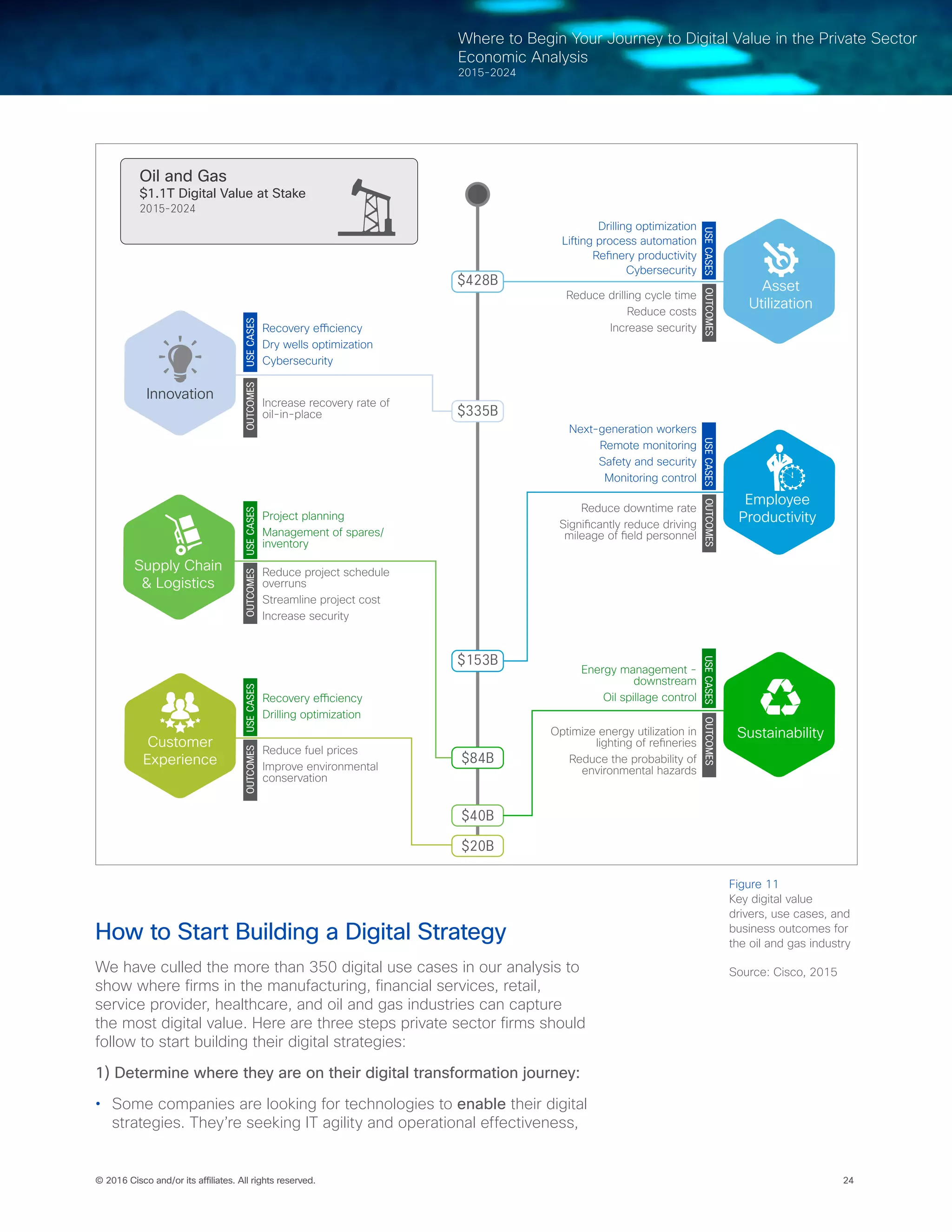
In all, Cisco estimates that the O&G industry will generate $1.1
trillion in Digital Value at Stake from 2015-2024.19
[ ] While digital
technologies and processes can improve efficiency and cost savings
throughout the oil and gas value chain (upstream, midstream,
downstream), Cisco’s analysis indicates that they can make the biggest
impact in upstream operations: improvements in recovery efficiency
and production automation drive the largest benefits. This mirrors the
findings of Cisco’s survey, in which respondents identified production,
development, and exploration (all of which are upstream operations) as
the three areas positioned to benefit most from digital adoption in oil
and gas.
According to Cisco’s analysis, nearly one-third of the O&G industry’s
Digital Value at Stake over the next decade will come from North
America (35 percent), followed by Eastern Europe (17 percent), the
Middle East (13 percent), Latin America (11 percent), Asia Pacific (9
percent), Western Europe (8 percent), and Africa (7 percent).20
Largely due to an increased focus on IT/OT convergence, the oil
and gas industry was poised to capture 27 percent ($69 billion)
of its potential Digital Value at Stake in 2015—the second-highest
percentage of any industry. To secure an even higher share of their
For more insights, please visit
cs.co/og-automate
23© 2016 Cisco and/or its affiliates. All rights reserved.
Where to Begin Your Journey to Digital Value in the Private Sector
Economic Analysis
2015-2024
potential Digital Value at Stake in the future, oil and gas firms should
focus on the following use cases:
•	 Recovery efficiency ($278 billion): Enhanced oil-recovery
techniques include permanent reservoir monitoring (PRM) and
advanced analytics of 4D seismic data analysis. These capabilities
have the potential to increase recovery of oil-in-place from 35
percent to about 42 percent. Years to mainstream adoption: 0-2
years
•	 Lifting-process automation ($194 billion): Automate and remote-
manage the production process, and streamline operations through
accurate measurement of critical field parameters such as pressure,
flow rate, and temperature in near-real-time. Years to mainstream
adoption: 2-5 years
•	 Remote monitoring ($191 billion): Early detection and swift reaction
to leakages, theft, and rig downtime through remote monitoring.
Also supports faster problem resolution by spotting the exact
failure code prior to dispatching a technician. Years to mainstream
adoption: 0-2 years
•	 Drilling optimization ($93 billion): Data management and Big Data
analytics drive efficiencies through standardization and simplification
(by bundling similar wells). This reduces non-productive learning
time and enables faster well execution. Years to mainstream
adoption: 2-5 years
•	 Project planning ($20 billion): By using Big Data analytics to
improve project outlay estimates, firms can prevent cost escalations.
Years to mainstream adoption: 2-5 years
In addition, oil and gas firms can capture substantial value ($232 billion
across the industry over 10 years) from a number of horizontal digital
use cases. For example, O&G companies can drive $86 billion in Digital
Value at Stake by integrating cybersecurity directly into their digital
platforms to reduce security breaches—and drive growth. In addition,
adoption of next-generation worker technologies such as mobile
collaboration, bring your own device (BYOD), and video collaboration
will generate $45 billion in Digital Value at Stake across the industry.
Another horizontal use case, connected supply chain, has the potential
to produce $37 billion in digital benefits industry-wide by 2024.
Figure 11 (next page) lists the primary digital value drivers for the oil
and gas industry, along with their corresponding digital use cases and
business outcomes.
When the price of oil stood at more than $100 per barrel, the need for
oil and gas companies to improve operational efficiencies was primarily
driven by the competitive marketplace—and many firms took no action
at all. Now, however, increased efficiency has become a business
imperative that will determine both survival and competitive advantage.
The time for oil and gas companies to act is now—through a strategic
digital transformation underpinned by a new approach to people,
process, and technology.
Next-generation Worker
Technologies
Explorer Pipeline
Explorer Pipeline’s employees
work in company offices, home
offices, and along 1830 miles of
pipeline. Non-office employees
were left out of certain
conversations. For example, they
could view streaming video of
training and safety meetings, but
they couldn’t participate. Video-
based collaboration brings all
employees together, even from
pump stations and the field.
They can start a voice, video,
or chat session with the touch
of a button. Distributed teams
now meet “in-person” without
travel time and costs. They
collaborate better because of
the personal connection they get
from video. Remote employees
can participate fully in training
and safety meetings. Managers
conduct initial job interviews with
video conferencing, avoiding
travel costs.
[see more]
24© 2016 Cisco and/or its affiliates. All rights reserved.
Where to Begin Your Journey to Digital Value in the Private Sector
Economic Analysis
2015-2024
Customer
Experience
Reduce fuel prices
Improve environmental
conservation
Recovery efficiency
Drilling optimization
Recovery efficiency
Dry wells optimization
Cybersecurity
Asset
Utilization
Drilling optimization
Lifting process automation
Refinery productivity
Cybersecurity
Reduce drilling cycle time
Reduce costs
Increase security
Sustainability
Supply Chain
& Logistics
Reduce downtime rate
Significantly reduce driving
mileage of field personnel
Next-generation workers
Remote monitoring
Safety and security
Monitoring control
$428B
$335B
$153B
$84B
$40B
Employee
Productivity
Optimize energy utilization in
lighting of refineries
Reduce the probability of
environmental hazards
Energy management -
downstream
Oil spillage control
Increase recovery rate of
oil-in-place
Reduce project schedule
overruns
Streamline project cost
Increase security
Project planning
Management of spares/
inventory
Innovation
$20B
Oil and Gas
$1.1T Digital Value at Stake
2015-2024
USECASESOUTCOMESUSECASESOUTCOMESUSECASESOUTCOMES
Figure 11
Key digital value
drivers, use cases, and
business outcomes for
the oil and gas industry
Source: Cisco, 2015
How to Start Building a Digital Strategy
We have culled the more than 350 digital use cases in our analysis
to
show where firms in the manufacturing, financial services, retail,
service provider, healthcare, and oil and gas industries can capture
the most digital value. Here are three steps private sector firms should
follow to start building their digital strategies:
1) Determine where they are on their digital transformation journey:
•	 Some companies are looking for technologies to enable their digital
strategies. They’re seeking IT agility and operational effectiveness,
25© 2016 Cisco and/or its affiliates. All rights reserved.
Where to Begin Your Journey to Digital Value in the Private Sector
Economic Analysis
2015-2024
they want to move faster, and they want to reduce their cost
structure.
•	 Others are using digital to differentiate their strategy, such as by
delivering the ultimate customer experience. They are employing
technology for new products and services, and they are redefining
some of their business processes.
•	 Customers who are furthest along their digital journey are
harnessing technology to define their strategies. These companies
are reimagining entire industries with new business models.
2) Select digital use cases that deliver high-value business
outcomes, such as:
•	 Simplify and automate processes, leading to faster time to market
and leaner operations. 

•	 Empower workforce efficiency and innovation, promoting increased
productivity and better workforce retention. 

•	 Personalize customer experiences, fueling greater loyalty and
deeper insights regarding customers. 

3) Develop digital business agility, which hinges on three
capabilities:
•	 Hyperawareness: Ability to detect and monitor changes in a
company’s business environment.
•	 Informed decision-making: Ability to make the best decision
possible in a given situation. To do this, data collected as part of
company hyperawareness processes must be analyzed, scaled,
packaged, and distributed throughout the organization. Informed
decision-making relies heavily on mature data analytics capabilities
that augment human judgment.
•	 Fast execution: Ability to carry out plans quickly and effectively. Fast
execution depends enormously on change management to ensure
quality and alignment to corporate strategy. It can also include
automation of workflows—or the ability to extend real-time offers
based on shoppers’ location and context. 

These capabilities are especially critical in a time when budgets
are
flat and additional technology investments can appear daunting.
Digital transformation, however, requires a self-funding strategy. It is
important to focus initially on use cases that will deliver the quickest
value. These gains can then help fund longer-term digital strategies
with the potential to drive even greater value.
The nice thing about developing digital capabilities is that they often do
not require entirely new investments. Often, digital investments made
to achieve one business outcome can be repurposed to drive other
digital initiatives.
When it comes to digital transformation, the real cost lies in not
digitizing.
26© 2016 Cisco and/or its affiliates. All rights reserved.
Where to Begin Your Journey to Digital Value in the Private Sector
Economic Analysis
2015-2024
1.	 “Forecast Alert: Internet of Things—Endpoints and Associated Services Worldwide, 2015,”
Gartner, October 2015; Cisco analysis, 2015
2.	 Cisco Consulting Services, 2013
3.	 “Digital Vortex: How Digital Disruption is Redefining Industries,” Global Center for Digital
Business Transformation, 2015
4.	 The Economist
5.	 “Internet of Things by the Numbers,” Forbes, 2014
6.	 “Digital Vortex: How Digital Disruption is Redefining Industries,” Global Center for Digital
Business Transformation, 2015
7.	 “Internet of Things by the Numbers,” Forbes, 2014
8.	 “The Mobile Economy, 2015,” GSMA, 2015
9.	 “Mobile Web has now overtaken PC in 40 nations, including India, Nigeria and Bangladseh,”
mobiForge, September 2014
10.	 “Internet of Things by the Numbers,” Forbes, 2014; “The Race to Market the Connected Car,”
Bloomberg, January 10, 2014
11.	 Infiniti Research Limited report, HIT Consultant, September 2014.
12.	 Internet of Things by the Numbers, Forbes, 2014; 2014 Internet of Things (IoT) Study, Acquity
Group
13.	 “Digital Vortex: How Digital Disruption is Redefining Industries,” Global Center for Digital
Business Transformation, 2015
14.	 “Analytics-Powered Performance: Opportunities for Oil and Gas Companies to Improve
Business 
Outcomes,” Accenture, 2013. 

15.	 “Emerging economies” include the Asia-Pacific (except Japan, South Korea, and Australia),
Eastern Europe (including Commonwealth of Independent States), Middle East, Latin America
(including Mexico), and Africa.
16.	 “The Advice Advantage: How Banks Can Close the ‘Value Gap’ and Regain Customer Trust,”
Cisco, February 2015
17.	 “Mobile Commerce Growth on Fire,” comScore, March 16, 2015
18.	 IDC Health Insights, 2015
19.	 Cisco’s crude oil price assumptions align with EIA forecasts.
20.	 Due to a highly conducive regulatory environment and public infrastructure to support
investments in technology, communications, and innovation in developed economies, Cisco’s
economic model assumes greater adoption of digital technologies and processes in North
American and European operations as compared with the Middle East and other OPEC regions/
countries.
21.	 “Disruptor and Disrupted: Strategy in the Digital Vortex,” Global Center for Digital Business
Transformation, November 2015
Cisco has more than 200 offices worldwide. Addresses, phone numbers, and fax numbers are listed on the Cisco Website at www.cisco.com/go/offices.
Cisco and the Cisco Logo are trademarks of Cisco Systems, Inc. and/or its affiliates in the U.S. and other countries. A listing of Cisco’s trademarks can be found at www.cisco.com/go/
trademarks. Third party trademarks mentioned are the property of their respective owners. The use of the word partner does not imply a partnership relationship between Cisco and any
other company. (1005R)
Americas Headquarters
Cisco Systems, Inc.
San Jose, CA
Asia Pacific Headquarters
Cisco Systems (USA) Pte. Ltd.
Singapore
Europe Headquarters
Cisco Systems International BV Amsterdam,
The Netherlands
Acknowledgments
The authors gratefully
acknowledge the important
contributions of the following
people to the development
of this paper: Kevin Bandy,
Ruba Borno, Lauren Buckalew,
Srivatsan Desikan, Scott Fields,
Pankaj Gupta, Lisa Lahde,
Jeff Loucks, James Macaulay,
Stefanie McCann, Andy Noronha,
Christopher Reberger, Virgil Vidal,
and Michael Wade.

Private Sector Digital Value at Stake

  • 1.
    © 2016 Ciscoand/or its affiliates. All rights reserved. Where to Begin Your Journey to Digital Value in the Private Sector
  • 2.
    © 2016 Ciscoand/or its affiliates. All rights reserved. i Where to Begin Your Journey to Digital Value in the Private Sector Economic Analysis 2015-2024 Key Insights ii Introduction 1 Moving at the speed of digital 2 Industries are leaving value on the table 4 Cybersecurity is essential 5 People connections: nearly 2/3 of digital value 6 Asia Pacific and emerging countries gaining ground 6 Industry outlook Manufacturing 8 Financial Services 11 Retail 14 Service Provider 16 Healthcare 19 Oil and Gas 22 How to start building a digital strategy 24 Authors Joel Barbier Amitabh Dixit Robert Moriarty Chet Namboodri Kathy O’Connell Michael Riegel
  • 3.
    © 2016 Ciscoand/or its affiliates. All rights reserved. ii Where to Begin Your Journey to Digital Value in the Private Sector Economic Analysis 2015-2024 This paper outlines the global value of digitization in the coming decade and highlights where to start driving digital value. Key Insights • Six industries—manufacturing, financial services, retail, service provider, healthcare, and oil and gas—will account for nearly three-quarters of the total private sector Digital Value at Stake globally from 2015-2024. • Across all 16 private sector industries analyzed, however, companies captured an average of only 20 percent of their potential Digital Value at Stake in 2015. • Industries realizing the highest digital value in 2015 share two characteristics: 1) they are “IT-intensive” in terms of IT spending, the types of products and services they deliver, and how they are delivered; and 2) they display greater convergence between the IT and operational technology (OT) components of their businesses. • Cybersecurity is essential to digital success, with the potential to fuel an estimated $5.3 trillion in private sector Value at Stake over the next decade. Sixty-eight percent of this value is tied to firms’ ability to integrate cybersecurity into their digital foundation to drive innovation and growth. • People-centric connections (person-to-person, person-to-machine) will drive 64 percent of Digital Value at Stake in the private sector over the next decade— reflecting organizations’ increased ability to combine the “people” and “process” elements of digital business with the “things.” • To maximize digital value, firms must first determine where they are on their digital journey—beginning with enabling IT agility and operational effectiveness; then using digital technologies to differentiate their strategy through new products, services, and business processes; and finally, harnessing digital capabilities to reimagine their industry with new business models.
  • 4.
    © 2016 Ciscoand/or its affiliates. All rights reserved. 1 Where to Begin Your Journey to Digital Value in the Private Sector Economic Analysis 2015-2024 Introduction In late 2012, Cisco sought to calculate the value opportunity for private sector organizations in the burgeoning digital economy. This digital value is driven by the networked connections of people, process, data, and things, currently powered by an estimated 18 billion1 connected devices globally—a number expected to reach 50 billion by 2020.2 In the initial study, Cisco estimated that $14.4 trillion of digital value would be “at stake” across private sector industries from 2013 to 2022. This Digital Value at Stake is based on two components: 1) entirely new sources of value emanating from digital investments and innovations, and 2) value shifting among companies and industries based on their ability (or inability) to harness digital capabilities (in essence, value moving from “losers” to “winners”). The digital landscape has changed dramatically in the three years since we conducted the original private sector study. For example: • Digitization is disrupting and redefining industries. According to a 2015 study by the Global Center for Digital Business Transformation, an IMD and Cisco initiative, digital disruption will displace nearly 4 of the top 10 incumbents by industry over the next five years. The technology, media & entertainment, retail, and financial services industries have already been particularly disrupted by digitization over the past few years.3 • Adoption of digital solutions is accelerating. Ninety-five percent of the Fortune 1000 expects to undertake a digital project by 2017.4 • Digital technologies are becoming more mature and pervasive. Many digital solutions and use cases considered “ahead of their time” three years ago are now becoming realities in the private sector.[ ] • New, digitally driven business models are changing the nature of competition. Digital capabilities enable organizations to “recombine” traditional means of providing customer value, creating entirely new business models. Organizations like Apple, Uber, and Tesla have used this “combinatorial disruption” approach to launch competitive threats across industry lines.
  • 5.
    2© 2016 Ciscoand/or its affiliates. All rights reserved. Where to Begin Your Journey to Digital Value in the Private Sector Economic Analysis 2015-2024 • The consumer sector is now driving significant digital value. It’s not just about B2B anymore—consumer-focused digital solutions represent a significant portion of Digital Value at Stake across industries in 2015.[ ] For example, the wearables market exceeded $1.5 billion in 2014, double its value in 2013.5 These and other advances prompted Cisco to revisit our initial estimates to reflect the exponential changes that are reshaping the digital economy. Because the digital market has grown with the advent of new business models and innovative technologies, the new analyses are considerably broader and deeper than the work from 2012- 2013. For example, our original private sector Digital Value at Stake estimates were based on a total of 21 “use cases”—specific vertical and “horizontal” (cross-industry) applications of digital capabilities that deliver value. Our new analysis incorporates more than 350 digital use cases spanning 16 industries—and also includes 11 horizontal use cases (for example, next-generation knowledge workers, payments, supply chain, cybersecurity, and smart grid). The use cases in this latest study are based on more than three years of in-depth engagements with Cisco customers regarding how best to drive value by digitizing their businesses. In addition to addressing the business value of the various use cases, this study goes one step further by helping CIOs understand the foundational capabilities on which they should focus to fund and create a more agile digital infrastructure. The new analysis offers other elements, including research on best practices along with specific value estimates rather than the value ranges employed by other firms. The results can help private sector firms pinpoint where to begin their digital journeys. This private sector overview sets the stage for a series of industry- specific analyses in 2016 that will provide detailed roadmaps for digital success in both the private and public sectors. Moving at the Speed of Digital Three years ago, we began our analysis by stating that digital (the “Internet of Everything”) “is happening now,” followed by an explanation of the tremendous potential awaiting organizations that “connect the unconnected.” What a difference three years make. Not only is digital “happening” in 2015—digital disruption now has the potential to overturn incumbents and reshape markets faster than perhaps any force in history.[ ] For this reason, Cisco and the International Institute for Management Development (IMD) recently launched a joint, five-year initiative—the Global Center for Digital Business Transformation (DBT Center)— to help organizations map out their digital strategies. According to a recent DBT Center study, the time to digital disruption for A C-suite Concern For more insights, please visit cs.co/vascsuite
  • 6.
    3© 2016 Ciscoand/or its affiliates. All rights reserved. Where to Begin Your Journey to Digital Value in the Private Sector Economic Analysis 2015-2024 most industries is a mere three years.6 Here are just some of the technology-driven developments contributing to digital disruption: • The wearables market exceeded $1.5 billion in 2014, double its value in 2013.7 • At the end of 2014, the number of people using the mobile Internet reached 2.4 billion. This
is expected to rise to 3.8 billion by 2020, driven by growth in developing countries.8 • Webpage views from mobile phones now outnumber those from PCs in 48 countries.9 • The number of cars connected to the Internet worldwide will grow more than sixfold, from 23 million in 2013 to 152 million in 2020.10 • The global mobile health and sensor market will grow at 40 percent CAGR between 2013 and 2018.11 • More than two-thirds of consumers plan to buy connected technologies for their homes by 2019. Smart thermostats are expected to have 43 percent adoption in the next five years.12 Despite these sweeping changes and their vast potential to upend the competitive landscape, nearly half (45 percent) of companies still do not view “digital disruption” as a board-level concern. What’s more, only 25 percent describe their approach to digital disruption as proactive—willing to disrupt themselves to compete.13 (See Figure 1.) “Disrupting yourself” does not mean discarding what has made you successful or mimicking in-vogue digital tactics.[ ] Rather, it involves challenging the assumptions that have underpinned that success, and stress-testing the ways in which you deliver value to customers. It means changing the organization itself, including its operations, culture, revenue model, technology maturity, and skill sets—in fundamental ways, and perpetually. As explained earlier, Digital Value at Stake encompasses both new value creation and value that shifts among companies and industries. 43% 25% Does not recognize or is not responding appropriately Actively responding by disrupting our own business of respondents say digital disruption is NOT a board-level concern 45% 941 business leaders around the world in 12 industries were surveyed In general, what is the attitude of your company’s leadership toward digital disruption? survey Q 32%Taking “follower” approach Most Firms Are Not Taking Proactive Steps Toward Digital Transformation Figure 1 Source: Global Center for Digital Business Transformation, 2015
  • 7.
    4© 2016 Ciscoand/or its affiliates. All rights reserved. Where to Begin Your Journey to Digital Value in the Private Sector Economic Analysis 2015-2024 Our latest analysis shows that 62 percent of private sector Digital Value at Stake will arise from new value creation across industries from 2015-2024, while 38 percent will come from value shifts—in essence, value moving from “the disrupted” to “the disruptors.”[ ] Industries Are Leaving Value on the Table How much of their potential Digital Value at Stake did private sector industries actually realize in 2015 (the first year of our 10-year window) as a function of their current digital capabilities? Across all 16 private sector industries evaluated, our analysis shows that in aggregate, firms were on track to realize just $1.3 trillion (20 percent) of their potential Value at Stake in 2015. In other words, private sector companies failed to capture $5.3 trillion, or 80 percent, of their total potential Digital Value at Stake in year one of the period covered by our new analysis (2015-2024).[ ] Industries realizing the highest percentage of their potential Digital Value at Stake tend to share two characteristics: 1) they are IT- intensive, both in terms of the types of products and services they deliver and how they are delivered; and 2) they also display greater convergence between the IT and operational technology (OT) components of their businesses. These firms rely on consistent technology and process innovation to compete. As shown in Figure 2, firms in IT-intensive industries such as financial services and information services/service provider realized a higher percentage of their Digital Value at Stake in 2015 than firms in less-IT- intensive industries. Financial services companies realized 29 percent ($236 billion) of the Digital Value at Stake available to them in 2015, while information services/service providers captured 21 percent. 0% 1% 2% 3% 4% 5% 6% 7% 0% 5% 10% 15% 20% 25% 30% Financial Services Oil & Gas Retail Transportation & Logistics Utilities IT Intensity (IT Spend % of Revenues) ValueRealizedin2015(%) Construction & EPCM Mining Manufacturing Education Healthcare Other Business Services Information & SP High value realized, high IT spend High value realized, IT/OT convergence Financial Services Led All Other Industries in 'Value Realized' During 2015 Figure 2 Source: Cisco, 2015
  • 8.
    5© 2016 Ciscoand/or its affiliates. All rights reserved. Where to Begin Your Journey to Digital Value in the Private Sector Economic Analysis 2015-2024 By contrast, less-IT-intensive industries such as mining (10 percent) and utilities (14 percent) fell at the lower end of the “value realized” ranking. 
 Industries such as oil and gas (27 percent value realized) and manufacturing (24 percent) performed better than many others because of their relatively high convergence of IT and OT (although, like many industries, both still have work to do in this regard). Conversely, the relatively low digital value realized by mining, utilities, and transportation reflects those industries’ slower adoption of IT/ OT convergence. IT/OT convergence is critical for any firm wanting to maximize the “people, process, and data” elements of digital solutions. When this convergence doesn’t occur, IT/OT “silos” hamper potential digital capabilities in critical areas such as collaboration, data integration and analytics, and cybersecurity. For example, the ability for analytics to generate actionable business insights is largely dependent on the information available for analysis. Too often in the oil and gas industry, however, organizational “silos” deny or limit access to this information—severely curtailing the potential impact of data analytics for many firms. Nearly two-thirds of respondents to an Accenture survey indicated
that their firms continue to manage analytics by specific function or department, preventing an integrated approach for end-to-end workflows throughout the company’s operations.14 Cybersecurity Is Essential To capture their share of Digital Value at Stake, private sector firms must build cybersecurity into their digital solutions as a foundational element, rather than trying to “bolt it on” as an afterthought. In fact, many of the use cases detailed in our analysis depend heavily on the ability to make security and privacy guarantees to customers, partners, and other players in the overall digital ecosystem. For example, retailers can significantly improve customer experience by using analytics to provide “hyper-relevant” services and products, precisely when and where they’re needed. If a particular retailer has suffered a data breach, however, customers won’t feel comfortable about sharing the level of personal information required to offer these experiences both in-store and online. As a result, they’ll switch to a retailer that can—a prime example of value shifting from one firm to another. Based on detailed economic analysis of 350 private sector use cases, we estimate that cybersecurity will drive $5.3 trillion in Digital Value at Stake across private sector industries over the next decade.[ ] A third of this estimate ($1.7 trillion) applies to protection of intellectual property and avoidance of data breach costs. The vast majority, however ($3.6 trillion), is dependent upon organizations’ ability to improve their cybersecurity practices in order to drive innovation and growth. Companies lacking the proper cybersecurity practices will experience slower adoption of digital capabilities, resulting in smaller realization of their potential digital benefits. For more insights, please visit http://cs.co/og-silo
  • 9.
    © 2016 Ciscoand/or its affiliates. All rights reserved. 6 Where to Begin Your Journey to Digital Value in the Private Sector Economic Analysis 2015-2024 People Connections: Nearly Two-Thirds of Digital Value Digital connections are becoming increasingly people-centric. In fact, according to our analysis, employee productivity (largely fueled by digital capabilities that enhance collaboration) is the top driver of digital value. The digital world is powered by three types of connections: machine-to- machine (M2M), person-to-machine (P2M), and person-to-person (P2P). In our previous analysis, people-centric connections (P2P, P2M) drove 55 percent of the estimated Value at Stake for the private sector. In our new study, the contribution of people-centric connections to private sector Digital Value at Stake has grown by 9 percentage points—to 64 percent. This increase reflects the greater ability of organizations to marry the “people” and “process” elements of digital business with the “things.” The increased people-centricity of digital solutions is also helping to boost organizations’ ability to innovate faster and more effectively in the private sector—aided by digital use cases such as mobility and video collaboration that enhance interactions among employees, and with partners. For example, in the retail industry today, the shopping experience begins well before a customer sets foot in a store. Being able to view in-store inventory on a mobile phone to ascertain product availability is fundamental to providing superior customer experience. Likewise, in the banking industry, the ability to enable “banking on the move” is essential. Mobile apps now allow customers to deposit a check, transfer money, and make payments while commuting on a train or waiting for a bus, as opposed to having to visit a bank. Asia Pacific and Emerging Countries Gaining Ground As in our previous study, North America (United States, Canada, and Mexico) leads all other regions in estimated private sector Digital Value at Stake for the next decade ($9 trillion). However, our new analysis highlighted two major changes: 1) the rise of Asia Pacific ($6.4 trillion) into a virtual tie with Western Europe ($6.4 trillion) for the No. 2 position among regions (see Figure 3); and 2) our projection that emerging economies15 will represent nearly one-third of the global private sector Digital Value at Stake by 2024[ ] (see Figure 4, next page). North America $9.0T United States: $7.7T Canada: $790B Mexico: $519B Western Europe $6.4T Germany: $1.1T United Kingdom: $926B France: $804B Asia Pacific $6.4T China: $3.0T Japan: $1.3T India: $397B South Korea: $352B Australia: $241B Eastern Europe/CIS $722B Russia: $538B Middle East $363B Saudi Arabia: $107B Africa $153B South Africa: $38B Latin America $783B Brazil: $405B Global View: Digital Value at Stake in the Private Sector (2015–2024) Figure 3 Source: Cisco, 2015
  • 10.
    © 2016 Ciscoand/or its affiliates. All rights reserved. 7 Where to Begin Your Journey to Digital Value in the Private Sector Economic Analysis 2015-2024 The high Digital Value at Stake opportunity in North America and Western Europe reflects relatively larger adoption of digital capabilities in those regions. Leading countries in these developed markets continually innovate how they develop, produce, sell, and deliver their products and services, largely because they
must compete against firms in local markets that place a similar emphasis on business process and technological innovation. On average, firms in these countries have extensive experience innovating in technology areas such as M2M and mobility. They also operate in environments characterized by robust technology and network infrastructure. As a result, more companies in these countries have gone to market with mature digital processes and products, contributing to a higher percentage of value realized and a larger share of Digital Value at Stake. However, our latest analysis reveals that the competitive edge held by firms in developed countries is dwindling. Many leading companies in developed countries have made significant investments in digital infrastructure and have already realized much of the value that comes from efficiency, data processing, and web-enabled process improvements. To realize additional digital value and foster growth, these firms must focus on investing in cutting-edge technologies and organizational transformation that will further improve employee productivity, asset utilization, innovation, customer experience, supply chains, and sustainability. As a result, it is entirely possible that emerging countries will catch up to—or supersede—leading developed countries when it comes to digital transformation. Cisco’s latest research reveals higher levels of competitive parity globally. The clear implication of this, when coupled with evidence of increased globalization (such as cross-border trade and foreign direct investment) and the growing prominence of disruptive innovations throughout markets, is that there has been a “democratizing effect” in terms of firms’ access to IT—and, as a result, in their ability to extract value. 0 3000 6000 9000 AfricaMiddle East Eastern Europe & CIS Latin America Asia PacificWestern Europe North America ValueatStake,$USBillions 1991 9042 6367 783 153 1273 151 33 363 73 6362 1218 *Asia Pacific (except Japan, South Korea, Australia) + Eastern Europe & CIS + Middle East + Latin America + Africa + Mexico 10-yr Value at Stake 3-yr Value at Stake Emerging Economies* Become More Prominent over 10 Years 722 141 Figure 4 Source: Cisco, 2015
  • 11.
    8© 2016 Ciscoand/or its affiliates. All rights reserved. Where to Begin Your Journey to Digital Value in the Private Sector Economic Analysis 2015-2024 As a case in point, Asia Pacific and/or emerging economies will drive the majority of Digital Value at Stake for the global manufacturing sector over the next decade. In addition, dramatically increased mobile and online activity in countries like China and India is reshaping the global retail landscape. Industry Outlook: Where to Find Digital Value To help industry leaders map their digital strategies, we’ve identified the digital use cases that will deliver the most significant business outcomes in each of the top six industries in terms of Digital Value at Stake potential. These industries account for about 71 percent of the total private sector Digital Value at Stake for 2015-2024—with each of the six contributing $1 trillion-plus in digital value over the next decade (see Figure 5). Our analysis also includes the key value drivers for attaining Digital Value at Stake. It’s important for readers to understand the digital use cases for their own industry, as well as those recommended for other verticals. In a digital world, some of the most innovative ideas often come from outside one’s own industry. And, as we’ve already seen in the case of Apple, Amazon, Tesla, and many others, digital capabilities are fueling entirely new business models that blur industry lines. Will the retailers become less relevant as manufacturers continue to hone their digital capabilities and supply chain? Only time will tell. Manufacturing An enormous, multifaceted set of industries, manufacturing represents more than a quarter of the total private sector Digital Value at Stake for 2015-2024 ($6.4 trillion).[ ] Forty-four percent of that value will come from the Asia-Pacific region, with North America (26 percent) and Western Europe (24 percent) the No. 2- and No. 3-ranked regions, respectively. Asia Pacific’s leadership comes primarily from the sheer size of China’s manufacturing industry. $6.4T Manufacturing $3.1T Financial Services $2.8T Retail $2.0T Service Provider $1.4T Healthcare $1.1T Oil & Gas The Digital ‘Trillion-Dollar Club’ Top Industries, Ranked by Value at Stake (2015-2024) Figure 5 Source: Cisco, 2015 Customer Connected Product Management Benteler Based in Germany, Benteler supplies safety, environmental, and efficiency solutions to vehicle manufacturers worldwide. In Benteler’s automated, self- running manufacturing plants, every tool and part is connected to the network, and every step in the production process can be analyzed and controlled from the cloud. Factories can easily move production lines and products from one line to another. The modular solution will result in more agile and efficient factory floors while controlling costs. [see more]
  • 12.
    9© 2016 Ciscoand/or its affiliates. All rights reserved. Where to Begin Your Journey to Digital Value in the Private Sector Economic Analysis 2015-2024 Digitization can help manufacturers address a wide range of challenges, including shortening product lifecycles; reshaping the supply chain to counter global competition; reducing waste through increased uptime, labor productivity, and asset utilization; dealing with volatile energy and raw material costs; and improving worker health and safety. Digitization is also critical to manufacturers seeking to make the all-important transition from product-centric to service-oriented revenue models. While manufacturing will generate the largest Digital Value at Stake of any industry over the next decade, the sector is falling considerably short of fulfilling its digital potential. In 2015, the industry was projected to capture just 24 percent ($409 billion) of its potential Digital Value at Stake. To help address that shortfall, manufacturing firms should begin by focusing on the following industry-specific digital use cases, which will drive the lion’s share of digital value for manufacturers over the next decade: • Predictive maintenance with analytics ($418 billion): Estimates maintenance requirements based on equipment usage and wear, increasing asset life and uptime. Years to mainstream adoption: 0-2 years • Automation of quality and defect controls ($359 billion): Wearable technologies and digital signage systems deliver real-time alerts about defects, reducing rework and scrap. Years to mainstream adoption: 0-2 years • Energy management ($312 billion): Digitally enabled building and production control systems provide visibility into energy consumption for all manufacturing processes; improve capacity management with real-time analytics; and increase operational efficiency by controlling energy consumption based on productivity. Years to mainstream adoption: 5-10 years • Customer connected product management ($295 billion): Monitors asset usage through sensors. Analytics estimate maintenance requirements based on usage, increasing life of assets, reducing excessive wear and tear, and leading to lower maintenance costs. Turns field sensor and process data from connected products into real-time intelligence for custom service offers. Years to mainstream adoption: 2-5 years • Remote monitoring/maintenance ($264 billion): Reduces maintenance costs by identifying potential equipment failures prior to significant deterioration. Years to mainstream adoption: 0-2 years In addition, manufacturers can capture substantial value (more than $3 trillion across the industry over 10 years) from a number of “horizontal” digital use cases. For example, adoption of next-generation worker technologies such as mobile collaboration (BYOD), telecommuting, and video collaboration will enable a 35 percent gain in knowledge worker productivity and a reduction in business travel of up to 17 percent. Another horizontal use case, connected advertising, will produce a revenue uplift of 0.14 percent across the industry by integrating mobile advertising with location-based services. Predict Downtime For more manufacturing insights, please visit cs.co/mfgschneider Predictive Maintenance with Analytics FANUC FANUC makes industrial robots for manufacturing companies. In the past, it shipped robots out but had no feedback about robot usage unless there was a problem and downtime. By building a highly secure hybrid cloud to extend its existing data center to customers’ premises, FANUC can now extract data from its robots and connect them with people, processes, and things. FANUC can analyze the data to gain visibility into robot performance, thereby predicting an issue, rather than reacting to a problem. Moreover, such data insights contribute to reduced cycle times, enhanced product quality, and improved efficiency of processes. [see more]
  • 13.
    © 2016 Ciscoand/or its affiliates. All rights reserved. 10 Where to Begin Your Journey to Digital Value in the Private Sector Economic Analysis 2015-2024 Figure 6 lists the primary digital value drivers for the manufacturing industry, along with their corresponding digital use cases and business outcomes. Through digital transformation, the service and digital journeys converge. New digital capabilities enable deep product and customer insight, along with value- added offerings to drive uptime, safety, sustainability, and more. Organizational silos dissolve as the manufacturing ecosystem expands. Asset Utilization Next-generation knowledge workers Training management Visual factory Factory incident management Increase effectivness of employee training Improve labor planning Increase productivity $2.1T $1.6T $1T $720B $616B $347B Customer Experience Innovation Reduce accidents Decrease waste Improve inventory visibility Reduce transportation costs Increase warehouse worker productivity Safety management Yield monitoring and analytics Connected supply chain Supply Chain & Logistics Increase equipment life Reduce cabling costs Accelerate assembly line changeover Predictive maintenance Remote monitoring Theft management Plant-wide wireless Assembly line changeover Downtime management Customer connected products Cybersecurity Increase marketing accuracy and effectiveness Customize production output based on better estimates of warranty claims Customer connected product management Connected advertising Accelerate time to market Improve product performance Increase average revenue per user (ARPU) New product introduction R&D process optimization Cybersecurity Connected ads Employee Productivity SustainabilityReduce energy consumption Decrease waste Energy management Quality and defect controls Manufacturing $6.4T Digital Value at Stake 2015-2024 USECASESUSECASESUSECASESOUTCOMESOUTCOMESOUTCOMES USECASESUSECASESOUTCOMESOUTCOMESUSECASESOUTCOMES Figure 6 Key digital value drivers, use cases, and business outcomes for the manufacturing industry Source: Cisco, 2015
  • 14.
    11© 2016 Ciscoand/or its affiliates. All rights reserved. Where to Begin Your Journey to Digital Value in the Private Sector Economic Analysis 2015-2024 Financial Services The financial services industry faces a host of challenges, including changing customer preferences driven by the shift to digital; increasing pressure from agile competitors using disruptive business models (such as Wealthfront’s automated investment services and peer-to- peer lending platforms pioneered by Grameen Bank) and from the technology industry (such as mobile payment offerings from Google, Apple, and Vodafone); stiffer regulatory requirements; rising branch costs; growing customer attrition; and margin pressures due to human-intensive processes. In addition, retail banking—the segment of the financial services industry with the highest potential Digital Value at Stake (53 percent)— is plagued by a growing lack of customer trust, and a belief that customers are getting less value from banks than they expect. This “value gap” is largely the result of customers not receiving financial advice when and where they need it. According to a recent Cisco survey, 28 percent of bank customers globally do not trust banks to represent their best interests. What’s more, nearly one in four intend to choose another provider for their next financial product or service.16 New services enabled by digital technologies can help banks and the other major segments of the industry—insurance and investment/ brokerage firms—maximize the value they offer customers. The solutions will require a convergence of mobility, analytics, and video to create delightful experiences and effortless transactions for customers. This will allow the industry to move away from legacy, paper-based approaches, thereby enabling improved delivery of services in a cost- effective manner. These digital opportunities make financial services the No.2-ranked industry in terms of Digital Value at Stake, with an estimated $3.14 trillion up for grabs over the next decade.[ ] North America will drive 48 percent of this value, with Western Europe (29 percent) and Asia Pacific (17 percent) the No. 2- and No. 3-ranked regions, respectively. Financial services was on track to secure 29 percent of its potential Digital Value at Stake in 2015—the highest percentage of any industry. To secure an even larger share of potential Value at Stake in the future, financial services firms should base their digital strategies on the following industry-specific and cross-industry use cases. Retail Banking • Sales and services transformation ($508 billion): Connect and coordinate interactions across multiple channels by systematically enabling intelligent, personalized customer interactions. Years to mainstream adoption: 0-2 years • Video-based advisors ($127 billion): Enable customers to speak to an advisor either in-branch or remotely using mobile devices. Leads to higher customer satisfaction and drives upsell and cross-sell opportunities. Years to mainstream adoption: 2-5 years • Mobile payments ($116 billion): Allows customers to use a mobile phone to pay for products and services. Improves customer Sales and Services Transformation Banamex Starting in 2013, the bank began opening its Banamex Smart Banking Kiosks in shopping malls in Mexico. The size of a small retail store, each 24/7 digital branch integrates ATMs, tablets, touchscreens, video walls, teleconferencing, and a virtual hostess to deliver a completely digital financial self- service experience. The result is a high-speed, cost-efficient digital banking experience that performs 80 percent of a regular branch’s transactions, with higher satisfaction levels. [see more] For more financial services insights, please visit cs.co/fsi-advice
  • 15.
    12© 2016 Ciscoand/or its affiliates. All rights reserved. Where to Begin Your Journey to Digital Value in the Private Sector Economic Analysis 2015-2024 convenience and acquisition by capturing the unbanked or underbanked. Years to mainstream adoption: 0-2 years • Cross-industry use cases ($708 billion): Next-generation worker technologies such as mobile collaboration (BYOD), telecommuting, and video collaboration have the potential to deliver $299 billion in Digital Value at Stake during 2015–24. In addition, connected advertising and marketing and cybersecurity best practices can add $163 billion and $137 billion, respectively, over the next decade. Insurance • Claims processing ($82 billion): Uses analytics to reduce claim costs and process inefficiencies, improves risk selection, and lowers the cost of compliance and financial reporting. Years to mainstream adoption: 2-5 years • Product innovation ($41 billion): Targets a larger market with virtualized insurance services and a multichannel presence. Years to mainstream adoption: 5-10 years • Customer experience ($39 billion): Keen insights allow insurers to focus on specific customer needs, wants, and behavior patterns, increasing customer satisfaction and loyalty. Insurers can derive higher sales by implementing insight-driven marketing tactics and real-time analytics for customer-centric services offerings. Years to mainstream adoption: 0-2 years • Cross-industry use cases ($127 billion): Next-generation worker technologies such as mobile collaboration (BYOD), telecommuting, and video collaboration have the potential to deliver $54 billion in Digital Value at Stake during 2015–24. In addition, connected advertising and marketing and cybersecurity best practices can add $29 billion and $25 billion, respectively, over the next decade. Investment/Brokerage • Video-based advisors ($386 billion): Enable customers to speak to an advisor either in-branch or remotely using mobile devices, improving customer satisfaction and driving upsell and cross-sell opportunities. Helps retain the wealth of existing high-net-worth individuals (HNI) by collaborating with the family through video- based remote advisors and gaining share of the self-serve segment through direct relationship management. Years to mainstream adoption: 2-5 years • Self-directed brokerage ($106 billion): Provides access to a broad range of investments via a brokerage account versus the limited lineup offered by a 401(k) plan. Helps grow the share of wallet with existing clients and attracts new investors. Years to mainstream adoption: 2-5 years • Fraud detection ($95 billion): “False positives,” which incorrectly identify potential fraud during the brokerage account opening process, trigger a time-consuming, manual review process, and often deter good customers from opening a new account. With analytics, brokerage firms can automate fraud review processes, increase new account revenue, and reduce inefficiencies. Years to mainstream adoption: 0-2 years Video-based Advisors [Remote Expert] Nationwide The world’s largest building society, Nationwide wanted to increase customer satisfaction and boost sales by making it more convenient to apply for a mortgage. Today, customers can walk into any of more than 60 branches to meet with a mortgage specialist over the network. The specialist can share charts and comparisons on a video display, and a connected printer produces forms for customers to review and sign. Ninety-three percent of customers surveyed rated the solution as a good or excellent replacement for face-to-face meetings. New mortgage business rose by 66 percent, and customer satisfaction increased by double digits. [see more]
  • 16.
    13© 2016 Ciscoand/or its affiliates. All rights reserved. Where to Begin Your Journey to Digital Value in the Private Sector Economic Analysis 2015-2024 • Cross-industry use cases ($504 billion): Next-generation worker technologies such as mobile collaboration (BYOD), telecommuting, and video collaboration have the potential to deliver $213 billion in Digital Value at Stake during 2015–24. In addition, connected advertising and marketing and cybersecurity best practices can add $116 billion and $98 billion, respectively, over the next decade. Figure 7 lists the primary digital value drivers for the financial services industry, along with their corresponding digital use cases and business outcomes. Financial services firms can use digital capabilities to analyze vast customer data and transform their sales and service engagement models, while improving their cost to serve. Solutions such as remote virtual advisors and mobility can help improve advice and customer experience across all customer touchpoints. Financial Services $3.1T Digital Value at Stake 2015-2024 USECASESUSECASESOUTCOMESOUTCOMESUSECASESOUTCOMES USECASESUSECASESOUTCOMESOUTCOMES Sustainability Asset Utilization Develop new business models Realize significant cost savings Retain wealth of high-worth customers Capture more retail customers Reduce risk Accelerate product development Reduce loan-processing times Capture greater market share Increase customer satisfaction Reduce costs Increase staffing efficiency Virtualized delivery model Claims management, fraud avoidance Information-based businesses Mobile payments Mortgage advisor, wealth advisor Connected ads, marketing Customer-centric services Home monitoring and security Reduce time to market Loan cycle time Financial reporting Digital signage Cybersecurity Internal controls and compliance Customer Experience Increase staffing efficiencies Reduce dependency on branches Enhance customer satisfaction Reduce costs Increase staffing efficiency Next-generation workers Reduce time to market Video analytics: branch space utilization Virtual tellers Contact center efficiencies Mobile banking Digital signage Reduce time to market Health insurance markets Internal controls and compliance $985B $622B $1.2T $224B $72B $28B Employee Productivity Supply Chain & Logistics USECASESOUTCOMES Omnichannel capabilities across branch, online, mobile, call center Switching assets under management Video-based advisor BPO: retail banking Usage-based insurance Increase cross-sell/upsell and grow revenue Reduce attrition Accelerate claims processing Add more customers Retain existing customers Innovation Figure 7 Key digital value drivers, use cases, and business outcomes for the financial services industry Source: Cisco, 2015
  • 17.
    14© 2016 Ciscoand/or its affiliates. All rights reserved. Where to Begin Your Journey to Digital Value in the Private Sector Economic Analysis 2015-2024 Retail As digital shopping experiences become mainstream, retailers need to act quickly to ensure they are not disrupted by innovative, online-only players or traditional competitors that adapt faster than they do. 
 In particular, mobility and apps now represent a disruption similar in scope to what we saw with e-commerce in the late 1990s and early 2000s.17 Throughout the world, new digital customers expect a rich variety of interactive and contextual retail experiences, channels, and options—but rarely find them in brick-and-mortar retail settings. 
 Retailers have made important strides by creating more channels (omnichannel). These investments, however, have resulted in growing operational complexity, and retailers have not consistently achieved what consumers really desire: greater efficiency, savings, and engagement, both in-store and out. 
 Digital capabilities can enable retailers to address a number of challenges, including improving in-store customer engagement and workforce efficiency, reducing shrinkage, and streamlining inventory management and checkout processes. Based on these and many other digital opportunities, retail represents the third-largest industry in terms of Digital Value at Stake. Of the $2.8 trillion in Digital Value at Stake available to the retail industry over the next decade, $765 billion will come from industry-specific use cases, while about $2 trillion will emanate from cross-industry use cases. North America will drive 46 percent of this value, with Western Europe (27 percent) and Asia Pacific (20 percent) the No. 2- and No. 3-ranked regions, respectively. Cisco estimates, however, that the retail industry realized just 15 percent ($130 billion) of its potential Digital Value at Stake for 2015. Retailers should prioritize the following five industry-specific use cases to avoid leaving so much “money on the table” moving forward: • In-store analytics ($285 billion): Improve workforce efficiency through dashboards, real-time information, operational analytics, workforce management tools, and shopping analytics. Years to mainstream adoption: 0-2 years • Remote experts/mobile advisors ($226 billion): Counsel customers on high-ticket items to create upselling opportunities while reducing customer leakage in case expert assistance is unavailable. Years to mainstream adoption: 2-5 years • Theft reduction/physical security ($78 billion): Replace analog cameras with IP-based surveillance systems to reduce operating costs of legacy systems. Install video analytics in IP cameras to analyze suspicious behavior and reduce theft. Years to mainstream adoption: 2-5 years • Endless aisles ($51 billion): Allow customers to view entire product inventories via interactive kiosks. Customers can order out-of-stock items from another store or opt for home delivery, helping to reduce customer leakage. Years to mainstream adoption: 0-2 years For more retail insights, please visit cs.co/retailContextual In-store Analytics Panasonic Panasonic Powershelf is an intelligent retail shelf that automates pricing and tracks inventory. Data from Powershelf can be analyzed in real time, in the store, for immediate insight. When a Powershelf is connected to an analytics platform, it delivers data that leads to innovation. Analytics at the edge enable retailers to move perishable goods faster, improve store traffic patterns, and increase efficiency. By supplementing edge analytics with historical data analysis, retailers can empower decision- making locally, regionally, and globally for supply chain, sales forecasting, and customer experience planning. [see more]
  • 18.
    15© 2016 Ciscoand/or its affiliates. All rights reserved. Where to Begin Your Journey to Digital Value in the Private Sector Economic Analysis 2015-2024 • Checkout optimizer ($51 billion): Use video cameras to monitor and predict queue lengths, reduce customer wait times, and improve the efficiency of cashiers. Years to mainstream adoption: 2-5 years In addition to the above industry-specific use cases, retailers can generate additional value from several cross-industry digital use cases. The largest of these—personalized promotions and marketing—has the potential to drive $556 billion for the global retail industry over the next decade through solutions such as analytics-driven precision marketing and digital signage.[ ] In addition, next-generation worker technologies such as mobile collaboration (BYOD), telecommuting, and video collaboration have the potential to deliver $550 billion in Digital Value at Stake during 2015–24. Retailers also have the potential to drive $536 billion in Digital Value at Stake globally by integrating cybersecurity directly into their digital platforms to reduce security breaches—and drive growth. Figure 8 (next page) lists the primary digital value drivers for the retail industry, along with their corresponding digital use cases and business outcomes. The combination of shopper behavior analytics, workforce analytics, and process transformation can reduce retailers’ in-store operational costs and improve customers’ shopping experience. Adopting a consistent approach across all customer touchpoints and sales channels enables retailers to decrease churn, increase wallet share, and improve brand loyalty. Endless Aisles Tesco Tesco’s F&F Clothing Group integrated its online and physical stores to offer customers what they want, when they want it. For example, if something is out-of-stock at a store, customers can visit an “Online Order Point” kiosk, ask employees to look it up on their F&F tablets, or order through Wi-Fi on their personal devices. Today, Tesco can easily provide customers with information on the latest trends, personalized advice, and even deals based on store location. This information can be accessed via the shopper’s personal device or through sales associates who, with their tablets, now have another way of serving customers. The combined online and in-store experiences helped the company exceed its online targets over the 2014 holidays with more than 50 percent sales growth. [see more]
  • 19.
    16© 2016 Ciscoand/or its affiliates. All rights reserved. Where to Begin Your Journey to Digital Value in the Private Sector Economic Analysis 2015-2024 Service Provider While the market for global SP services is now mature, operating and capital expenses continue to increase. SPs face new competition, with device, content, and app providers capturing much of mobile’s growth, and digital media providers impacting enterprise/fixed-line markets. Revenue growth remains dampened by a lackluster level of new customer acquisitions, weak pricing (largely due to the existence of other companies’ innovations), and few new services. To counter all of these factors, it’s critical that SPs explore new, digitally driven business models. Asset Utilization In-store analytics Checkout optimizer Remote expert, mobile advisor Smart lockers Interactive kiosks Next-generation workers Increase employee efficiency Better manage opening and closing registers Increase utilization of experts Improve worker collaboration Sustainability $1T $508B $730B $300B $211B Employee Productivity Customer Experience Improve inventory management Determine best product mix per store Increase revenues Connected supply chain Assortment optimization Out-of-stock reduction Supply Chain & Logistics Increase customer engagement Increase upsell opportunites Reduce friction between online and offline experiences Payments Remote expert Self-serve channels Endless aisles Smart lockers Checkout optimizer Innovation Harness insights from video and store analytics Enable in-store personalized advertising In-store analytics Interactive kiosks Assortment optimization Out-of-stock reduction In-store navigation Connected ads, marketing Improve security, reduce theft Reduce operations and maintenance costs Cybersecurity Theft reduction Physical security Sustainability Reduce costs Increase staffing efficiency Smart grids Next-generation workers $28B Retail $2.8T Digital Value at Stake 2015-2024 USECASESOUTCOMESUSECASESOUTCOMESUSECASESOUTCOMES USECASESUSECASESOUTCOMESOUTCOMESUSECASESOUTCOMES Figure 8 Key digital value drivers, use cases, and business outcomes for the retail industry Source: Cisco, 2015
  • 20.
    17© 2016 Ciscoand/or its affiliates. All rights reserved. Where to Begin Your Journey to Digital Value in the Private Sector Economic Analysis 2015-2024 With increasing connectivity across consumers and enterprises, enabled by a foundation of 3G (and now 4G/LTE) networks, SPs can benefit from adopting a digital strategy internally, and by acting as enablers of digital innovations for customers. Internal digital solutions include data analytics, tower management, and software-defined networking (SDN). Service providers will also have significant opportunities to leverage and adapt their networks to serve a broader range of customers who provide and support their own digital initiatives. These “SP as an enabler” examples include smart factory initiatives in manufacturing, remote experts in financial services and retail, and connected homes and connected cars. In aggregate, these opportunities represent a $2 trillion Digital Value at Stake opportunity for the service provider industry over the next decade.[ ] North America will drive 43 percent of this value, with Western Europe and Asia Pacific the No. 2- and No. 3-ranked regions in terms of Digital Value at Stake potential. Across all regions globally, the SP industry was expected to capture 21 percent ($106 billion) of its potential Digital Value at Stake for 2015—better than most industries, but lagging behind sectors such as manufacturing and financial services. To capture a larger share of this value in the future, SPs should view the following digital use cases as their top priorities: • SP as an enabler ($494 billion): Deploy and operate any of more than 300 digital solutions on behalf of customers across the private and public sectors. Examples include Connected Warehouse (manufacturing), Checkout Optimizer (retail), and Smart Parking (public sector). Perhaps the largest “SP as an enabler” opportunity is Connected Homes, which represents $44 billion in Digital Value at Stake over the next decade. This includes IP-based, centralized control of lighting, HVAC, appliances, security locks, and other systems in homes. Years to mainstream adoption: 5-10 years • Network transformation ($110 billion): Employing data analytics, SDN, and network-function virtualization (NFV) in combination to increase efficiencies and reduce the cost of managing the network. Years to mainstream adoption: 0-2 years • Personalized customer service through Big Data analytics ($49 billion): Increase average revenue per user (ARPU) of existing customers through personalized services extracted from Big Data analytics. Years to mainstream adoption: 0-2 years • Churn control ($48 billion): Personalized customer service, leading to reduced churn of existing customers. Years to mainstream adoption: 2-5 years In addition, SPs can capture significant value ($1.1 trillion across the industry over 10 years) from a number of “horizontal” digital use cases. For example, adoption of next-generation worker technologies such as mobile collaboration (BYOD) and video collaboration will generate $557 billion in Digital Value at Stake across the industry. Another horizontal use case, connected advertising, has the potential to produce $278 billion in digital benefits industry-wide by 2024. SPs can SP as an Enabler Smart City Networks A great Wi-Fi experience at trade shows and events requires a flexible network. Wednesday’s banquet might have a few hundred attendees, while Thursday’s may have thousands. Convention centers also want to make money from their Wi-Fi investments. Smart City Networks built and manages a Wi-Fi network for Santa Clara (California) Convention Center. Sponsors and exhibitors can purchase banner ads that appear on attendees’ mobile devices when they connect targeted locations, such as a specific booth, the lobby, a session meeting room, and so on. The convention center and event owners appreciate the service and the new revenue stream. Attendees enjoy a better event experience. [see more]
  • 21.
    18© 2016 Ciscoand/or its affiliates. All rights reserved. Where to Begin Your Journey to Digital Value in the Private Sector Economic Analysis 2015-2024 drive an additional $209 billion in Digital Value at Stake by integrating cybersecurity directly into their digital platforms to reduce security breaches—and drive growth. Figure 9 lists the digital value drivers for the SP industry, along with their corresponding digital use cases and business outcomes. To garner maximum benefit from the potential opportunity, telecommunication providers will need to invest significantly in new network technologies as they continue to deploy 4G and develop new 5G systems. Linkage of sensor technologies will also require collaboration between device manufacturers and telecom companies. $459B $673B $214B $530B $56B $35B Service Provider $2T Digital Value at Stake 2015-2024 Next-generation workers Network transformation Personalized customer service Connected ads, marketing Asset Utilization Network transformation Asset life extension Outage control Fleet management Improve network management efficiency Reduce OpEx Increase asset life Increase services uptime Enable wider range of digital solutions for customers Sustainability Personalize the customer experience Target and personalize advertising Increase efficiency of call center operations Reduce customer churn Churn control Personalized customer service Connected ads, marketing Cybersecurity Employee Productivity Customer Experience Reduce theft Reduce outages Theft control Outage management Connected fleet Connected supply chain Increase efficiency of employees involved in network functions Reduce time to market for new services Increase efficiency of marketing, sales teams Reduce energy costs Reduce fleet costs Smart grid Energy management Connected fleet Supply Chain & Logistics Enable wider range of digital solutions for customers Reduce time to market for new services Increase average revenue per user Identify trends in telecom fraud Prevent security breaches Intelligent marketing/ new revenue stream creation Personalized customer service through Big Data analytics Fraud prevention Cybersecurity Innovation USECASESOUTCOMESUSECASESOUTCOMESUSECASESOUTCOMES USECASESUSECASESOUTCOMESUSECASESOUTCOMESOUTCOMES Figure 9 Key digital value drivers, use cases, and business outcomes for the service provider industry Source: Cisco, 2015
  • 22.
    19© 2016 Ciscoand/or its affiliates. All rights reserved. Where to Begin Your Journey to Digital Value in the Private Sector Economic Analysis 2015-2024 Healthcare Like any other private sector segment, the healthcare industry— hospitals and pharmaceutical companies—shoulders a number of challenges that can be remedied through digital solutions. For hospitals, key care-abouts include the need to reduce operational costs, improve the quality and efficiency of care, decrease inpatient volume, shift from volume- to value-based reimbursement, and enhance physician-hospital relations. Digital solutions that can address these concerns include electronic health records, mobile apps, telehealth, social media, and other patient-friendly technologies. For pharmaceutical companies, on the other hand, the primary issues are rising customer expectations, the accelerating costs of research and development, the need to bring new drugs to market faster and more efficiently, countering low-cost competition, managing widely distributed supply chains, and ensuring flexible production. Digital technologies such as data analytics, social media, cloud, and mobility can play an essential role in improving customer engagement, developing collaborative R&D and personalized medicines, collaborating seamlessly with new partners, and optimizing an end-to- end value chain to reach new markets. Based on these and other digital capabilities, the healthcare industry will generate $1.4 trillion in private sector Digital Value at Stake over the next decade.[ ] North America will drive 50 percent of this value, with Western Europe (34 percent) and Asia Pacific (13 percent) the No. 2- and No. 3-ranked regions, respectively. Our recent analysis, however, estimated that the healthcare industry would secure just 16 percent ($67 billion) of its potential Digital Value at Stake in 2015, leaving considerable room for improvement. To capture an even larger share of the industry’s potential Digital Value at Stake in the future, healthcare firms should build their digital strategies around the following industry-specific and cross-industry use cases: Hospitals • Asset utilization ($49 billion): 1) Real-time location system software and RFID hardware tracks hospital equipment, saving time formerly spent by nurses to locate it. 2) RFID tags/sensors improve asset tracking and monitoring of the utilization and working condition of equipment. 3) Wireless tracking systems reduce inventory management costs and inventory/medication waste. Years to mainstream adoption: 0-2 years • Employee productivity ($46 billion): 1) Analytics-driven systems align staffing with hospital utilization rates, reducing staffing shortages/overages and decreasing patient wait times. 2) Automated dispensing cabinets reduce medication administration errors and the time spent by nurses to administer medications. 3) Electronic health record systems cut administrative costs. 4) Analytics help reduce denials by identifying major sources and frequencies, thus reducing revenue leakage. 5) Linkages to billing Patient Experience/Employee Productivity University of Virginia Center for Telehealth What began as a long-distance care plan for an international dignitary catalyzed creation of the University of Virginia (UVA) Center for Telehealth. The UVA Center for Telehealth established a 126-site telehealth network across Virginia with standards- based, broadband technologies. Unified communications include voice, instant messaging, presence, voicemail, and telepresence conferencing, which interface securely with other equipment. Other tools include digital stethoscopes, otoscopes, and patient cameras. The telehealth network has supported 40,000 patient encounters in 45 specialties, saving patients more than 15 million miles of travel. It increased both access to specialty services and speed of delivery, especially for stroke care. [see more]
  • 23.
    20© 2016 Ciscoand/or its affiliates. All rights reserved. Where to Begin Your Journey to Digital Value in the Private Sector Economic Analysis 2015-2024 systems facilitate easier audits of challenged costs. Years to mainstream adoption: 0-2 years • Patient experience ($6 billion): 1) Telehealth services such as patient consultations via video conferencing and remote monitoring of vital signs increase patient reach and revenues. 2) Automated decision-support tools help reduce medication/diagnostic errors and associated medical costs, improving physician performance. 3) Automated reminders and mobile apps reduce no-shows and increase revenues. 4) Digital technologies such as remote monitoring, mhealth, video conferencing, and social networks facilitate dynamic interventions that improve adherence to physical therapy follow-on care. Years to mainstream adoption: 0-2 years Pharmaceutical Companies • Smart manufacturing ($39 billion): 1) Predictive analytics improve asset utilization and reduce maintenance costs. 2) Digital adoption reduces scrap and rework costs by eliminating wasteful effort. 3) Equipment monitoring and predictive maintenance extend asset life. 4) Asset-tracking devices and video security reduce lost/stolen assets. 5) Real-time environmental monitoring solutions decrease manufacturing downtime. Years to mainstream adoption: 0-2 years • Research and development transformation ($31 billion): 1) Virtual screening/simulations speed the rate of drug discovery and reduce the need for expensive lab work and clinical trials, thereby cutting costs. 2) Open collaboration allows companies to benefit from fresh ideas submitted by innovative scientists and institutions, reducing research/idea-generation costs. Years to mainstream adoption: 2-5 years • In-market effectiveness ($14 billion): 1) Technologies such as medication reminders, medication list software, in-home diagnostic devices, problem detection algorithms, video conferencing, and social networks improve medication adherence. 2) Smart monitoring devices make it easier and more convenient for patients to monitor themselves, leading to higher-quality preventive care. 3) Drug delivery technology platforms extend product lifecycles and provide innovative and convenient means of delivering drugs to patients. Years to mainstream adoption: 2-5 years • Product development ($4 billion): 1) Big Data analytics improve drug clinical trial processes, thereby reducing development costs. 2) Mobile health monitoring helps clinical research organizations gather data on subjects without bearing the cost of expensive clinical trials. 3) Big Data analytics and improved collaboration between R&D and product development teams help reduce time to market. Years to mainstream adoption: 2-5 years While industry-specific use cases will drive significant value for the healthcare industry over the next decade, the biggest contribution—86 percent ($1.2 trillion), the highest percentage of any industry—will come from cross-industry use cases. Of these, the next-generation worker use case will produce the most value; it has the potential to deliver $838 billion in Digital Value at Stake from 2015–24 based on technologies such as mobile and video collaboration. In addition, cybersecurity best practices, connected payments, and connected Employee Productivity/Patient Experience Lucile Packard Children’s Hospital In many rural areas there is a shortage of pediatric specialists. Doctors and sick children must often travel long distances to give and receive needed care. A few years ago, Lucile Packard Children’s Hospital became the first facility of its kind to provide remote clinical interactions for pediatric care using telehealth technology. With high-quality video conferencing, instant access to patient records, and network-connected medical devices that route critical data from patient to doctor, the hospital’s virtual visits provide a true-to-life clinical experience. Approximately 300 pediatric patients now receive care-at-a- distance from the Lucile Packard Children’s Hospital each month. [see more]
  • 24.
    21© 2016 Ciscoand/or its affiliates. All rights reserved. Where to Begin Your Journey to Digital Value in the Private Sector Economic Analysis 2015-2024 advertising/marketing could add $110 billion, $78 billion, and $61 billion in digital value, respectively, over the next decade. With one in three consumers projected to have their healthcare records compromised by cyberattacks in 2016 according to IDC,18 cybersecurity becomes especially critical to driving digital value for the industry. Figure 10 lists the primary digital value drivers for the healthcare industry, along with their corresponding digital use cases and business outcomes. Healthcare $1.4T Digital Value at Stake 2015-2024 [H]=Hospital, [P]=Pharma Reduced errors [H] Improved administrative efficiency [H] Staffing optimization [H] Improved medication administration [H] Reduced no-shows [H] Unplanned downtime management [P] Research transformation [P] Next-generation workers Asset Utilization Reduced equipment loss and theft [H] Reduced time spent on equipment search [H] Predictive maintenance of equipment Asset life/loss management [P] Downtime management [P] Cybersecurity Reduce OpEx Reduce nurse search time Increase life, reduce depreciation of medical equipment Improve equipment utilization Ensure compliance Minimize waste Sustainability Supply Chain & Logistics Reduce inventory waste and management costs Reduce denials cost, revenue leakage Improve drug clinical trial processes Improve manufacturing productivity Extend product life cycle Consumables/perishables tracking [H] Claims management [H] Inventory management [H] R&D cost control [P] Reduce scrap and rework Pharmacy drug delivery [P] Reach more patients Increase revenue Reduce time to market Telehealth services [H] Reduced time to market [P] Next-generation smart devices [P] Innovation $880B $207B $138B $81B $59B $29B Employee Productivity Customer Experience Reduce errors Improve physician performance Reduce administrative costs Allocate staff more efficiently Reduce no-shows Reduce cost of drug siscovery Increase marketing accuracy, effectiveness Customize production output based on better estimates of warranty claims Reduce waste Reduced scrap and rework Reduce errors and increase accuracy of diagnoses Reduce duplications Improve adherence to therapy Improve patient engagement Improved administrative efficiency [H] Reduced errors [H] Telehealth services [H] Patient compliance [H] Reduced no-shows [H] Drug compliance [P] USECASESOUTCOMESUSECASESOUTCOMESUSECASESOUTCOMES USECASESOUTCOMESUSECASESOUTCOMESUSECASESOUTCOMES Figure 10 Key digital value drivers, use cases, and business outcomes for the healthcare industry Source: Cisco, 2015
  • 25.
    22© 2016 Ciscoand/or its affiliates. All rights reserved. Where to Begin Your Journey to Digital Value in the Private Sector Economic Analysis 2015-2024 As we’ve seen, healthcare firms should build their digital strategies around capabilities such as sensors, remote diagnostics and collaboration solutions, automation, and advanced analytics to benefit patient management and to optimize expenses. By adopting the digital use cases mentioned above, an average hospital or pharmaceutical company will enjoy an estimated bottom-line (EBIT) improvement of 11 percent or 8 percent, respectively. Oil and Gas With worldwide production outpacing demand, oil price declines of more than 60 percent have upended the oil and gas (O&G) sector— and dominate the agendas of industry executives. While the industry has seen many downturns before, a confluence of powerful dynamics suggests this one is different. Oil and gas companies must avoid the temptation simply to cut costs until the price slump passes. 
 In a recent Cisco survey, oil and gas leaders indicated that they are focusing on getting more out of what they already have. Survey respondents named “operational efficiency of existing projects” and “maintenance of assets and infrastructure” as the top two areas of increased investment over the next 24 months. To maximize operational efficiency, oil and gas companies must address the “data deluge”—much of it increasingly generated by networked connections among people, processes, data, and things. Many view this as a major challenge: a majority of respondents to Cisco’s survey named “data” as the area they need to improve most to take advantage of digital technologies. However, O&G leaders clearly understand data’s potential—they named “data analytics for faster, better decision-making” as the No. 1 driver for digital investment. 
 In all, Cisco estimates that the O&G industry will generate $1.1 trillion in Digital Value at Stake from 2015-2024.19 [ ] While digital technologies and processes can improve efficiency and cost savings throughout the oil and gas value chain (upstream, midstream, downstream), Cisco’s analysis indicates that they can make the biggest impact in upstream operations: improvements in recovery efficiency and production automation drive the largest benefits. This mirrors the findings of Cisco’s survey, in which respondents identified production, development, and exploration (all of which are upstream operations) as the three areas positioned to benefit most from digital adoption in oil and gas. According to Cisco’s analysis, nearly one-third of the O&G industry’s Digital Value at Stake over the next decade will come from North America (35 percent), followed by Eastern Europe (17 percent), the Middle East (13 percent), Latin America (11 percent), Asia Pacific (9 percent), Western Europe (8 percent), and Africa (7 percent).20 Largely due to an increased focus on IT/OT convergence, the oil and gas industry was poised to capture 27 percent ($69 billion) of its potential Digital Value at Stake in 2015—the second-highest percentage of any industry. To secure an even higher share of their For more insights, please visit cs.co/og-automate
  • 26.
    23© 2016 Ciscoand/or its affiliates. All rights reserved. Where to Begin Your Journey to Digital Value in the Private Sector Economic Analysis 2015-2024 potential Digital Value at Stake in the future, oil and gas firms should focus on the following use cases: • Recovery efficiency ($278 billion): Enhanced oil-recovery techniques include permanent reservoir monitoring (PRM) and advanced analytics of 4D seismic data analysis. These capabilities have the potential to increase recovery of oil-in-place from 35 percent to about 42 percent. Years to mainstream adoption: 0-2 years • Lifting-process automation ($194 billion): Automate and remote- manage the production process, and streamline operations through accurate measurement of critical field parameters such as pressure, flow rate, and temperature in near-real-time. Years to mainstream adoption: 2-5 years • Remote monitoring ($191 billion): Early detection and swift reaction to leakages, theft, and rig downtime through remote monitoring. Also supports faster problem resolution by spotting the exact failure code prior to dispatching a technician. Years to mainstream adoption: 0-2 years • Drilling optimization ($93 billion): Data management and Big Data analytics drive efficiencies through standardization and simplification (by bundling similar wells). This reduces non-productive learning time and enables faster well execution. Years to mainstream adoption: 2-5 years • Project planning ($20 billion): By using Big Data analytics to improve project outlay estimates, firms can prevent cost escalations. Years to mainstream adoption: 2-5 years In addition, oil and gas firms can capture substantial value ($232 billion across the industry over 10 years) from a number of horizontal digital use cases. For example, O&G companies can drive $86 billion in Digital Value at Stake by integrating cybersecurity directly into their digital platforms to reduce security breaches—and drive growth. In addition, adoption of next-generation worker technologies such as mobile collaboration, bring your own device (BYOD), and video collaboration will generate $45 billion in Digital Value at Stake across the industry. Another horizontal use case, connected supply chain, has the potential to produce $37 billion in digital benefits industry-wide by 2024. Figure 11 (next page) lists the primary digital value drivers for the oil and gas industry, along with their corresponding digital use cases and business outcomes. When the price of oil stood at more than $100 per barrel, the need for oil and gas companies to improve operational efficiencies was primarily driven by the competitive marketplace—and many firms took no action at all. Now, however, increased efficiency has become a business imperative that will determine both survival and competitive advantage. The time for oil and gas companies to act is now—through a strategic digital transformation underpinned by a new approach to people, process, and technology. Next-generation Worker Technologies Explorer Pipeline Explorer Pipeline’s employees work in company offices, home offices, and along 1830 miles of pipeline. Non-office employees were left out of certain conversations. For example, they could view streaming video of training and safety meetings, but they couldn’t participate. Video- based collaboration brings all employees together, even from pump stations and the field. They can start a voice, video, or chat session with the touch of a button. Distributed teams now meet “in-person” without travel time and costs. They collaborate better because of the personal connection they get from video. Remote employees can participate fully in training and safety meetings. Managers conduct initial job interviews with video conferencing, avoiding travel costs. [see more]
  • 27.
    24© 2016 Ciscoand/or its affiliates. All rights reserved. Where to Begin Your Journey to Digital Value in the Private Sector Economic Analysis 2015-2024 Customer Experience Reduce fuel prices Improve environmental conservation Recovery efficiency Drilling optimization Recovery efficiency Dry wells optimization Cybersecurity Asset Utilization Drilling optimization Lifting process automation Refinery productivity Cybersecurity Reduce drilling cycle time Reduce costs Increase security Sustainability Supply Chain & Logistics Reduce downtime rate Significantly reduce driving mileage of field personnel Next-generation workers Remote monitoring Safety and security Monitoring control $428B $335B $153B $84B $40B Employee Productivity Optimize energy utilization in lighting of refineries Reduce the probability of environmental hazards Energy management - downstream Oil spillage control Increase recovery rate of oil-in-place Reduce project schedule overruns Streamline project cost Increase security Project planning Management of spares/ inventory Innovation $20B Oil and Gas $1.1T Digital Value at Stake 2015-2024 USECASESOUTCOMESUSECASESOUTCOMESUSECASESOUTCOMES USECASESOUTCOMESUSECASESOUTCOMESUSECASESOUTCOMES Figure 11 Key digital value drivers, use cases, and business outcomes for the oil and gas industry Source: Cisco, 2015 How to Start Building a Digital Strategy We have culled the more than 350 digital use cases in our analysis
to show where firms in the manufacturing, financial services, retail, service provider, healthcare, and oil and gas industries can capture the most digital value. Here are three steps private sector firms should follow to start building their digital strategies: 1) Determine where they are on their digital transformation journey: • Some companies are looking for technologies to enable their digital strategies. They’re seeking IT agility and operational effectiveness,
  • 28.
    25© 2016 Ciscoand/or its affiliates. All rights reserved. Where to Begin Your Journey to Digital Value in the Private Sector Economic Analysis 2015-2024 they want to move faster, and they want to reduce their cost structure. • Others are using digital to differentiate their strategy, such as by delivering the ultimate customer experience. They are employing technology for new products and services, and they are redefining some of their business processes. • Customers who are furthest along their digital journey are harnessing technology to define their strategies. These companies are reimagining entire industries with new business models. 2) Select digital use cases that deliver high-value business outcomes, such as: • Simplify and automate processes, leading to faster time to market and leaner operations. 
 • Empower workforce efficiency and innovation, promoting increased productivity and better workforce retention. 
 • Personalize customer experiences, fueling greater loyalty and deeper insights regarding customers. 
 3) Develop digital business agility, which hinges on three capabilities: • Hyperawareness: Ability to detect and monitor changes in a company’s business environment. • Informed decision-making: Ability to make the best decision possible in a given situation. To do this, data collected as part of company hyperawareness processes must be analyzed, scaled, packaged, and distributed throughout the organization. Informed decision-making relies heavily on mature data analytics capabilities that augment human judgment. • Fast execution: Ability to carry out plans quickly and effectively. Fast execution depends enormously on change management to ensure quality and alignment to corporate strategy. It can also include automation of workflows—or the ability to extend real-time offers based on shoppers’ location and context. 
 These capabilities are especially critical in a time when budgets are
flat and additional technology investments can appear daunting. Digital transformation, however, requires a self-funding strategy. It is important to focus initially on use cases that will deliver the quickest value. These gains can then help fund longer-term digital strategies with the potential to drive even greater value. The nice thing about developing digital capabilities is that they often do not require entirely new investments. Often, digital investments made to achieve one business outcome can be repurposed to drive other digital initiatives. When it comes to digital transformation, the real cost lies in not digitizing.
  • 29.
    26© 2016 Ciscoand/or its affiliates. All rights reserved. Where to Begin Your Journey to Digital Value in the Private Sector Economic Analysis 2015-2024 1. “Forecast Alert: Internet of Things—Endpoints and Associated Services Worldwide, 2015,” Gartner, October 2015; Cisco analysis, 2015 2. Cisco Consulting Services, 2013 3. “Digital Vortex: How Digital Disruption is Redefining Industries,” Global Center for Digital Business Transformation, 2015 4. The Economist 5. “Internet of Things by the Numbers,” Forbes, 2014 6. “Digital Vortex: How Digital Disruption is Redefining Industries,” Global Center for Digital Business Transformation, 2015 7. “Internet of Things by the Numbers,” Forbes, 2014 8. “The Mobile Economy, 2015,” GSMA, 2015 9. “Mobile Web has now overtaken PC in 40 nations, including India, Nigeria and Bangladseh,” mobiForge, September 2014 10. “Internet of Things by the Numbers,” Forbes, 2014; “The Race to Market the Connected Car,” Bloomberg, January 10, 2014 11. Infiniti Research Limited report, HIT Consultant, September 2014. 12. Internet of Things by the Numbers, Forbes, 2014; 2014 Internet of Things (IoT) Study, Acquity Group 13. “Digital Vortex: How Digital Disruption is Redefining Industries,” Global Center for Digital Business Transformation, 2015 14. “Analytics-Powered Performance: Opportunities for Oil and Gas Companies to Improve Business 
Outcomes,” Accenture, 2013. 
 15. “Emerging economies” include the Asia-Pacific (except Japan, South Korea, and Australia), Eastern Europe (including Commonwealth of Independent States), Middle East, Latin America (including Mexico), and Africa. 16. “The Advice Advantage: How Banks Can Close the ‘Value Gap’ and Regain Customer Trust,” Cisco, February 2015 17. “Mobile Commerce Growth on Fire,” comScore, March 16, 2015 18. IDC Health Insights, 2015 19. Cisco’s crude oil price assumptions align with EIA forecasts. 20. Due to a highly conducive regulatory environment and public infrastructure to support investments in technology, communications, and innovation in developed economies, Cisco’s economic model assumes greater adoption of digital technologies and processes in North American and European operations as compared with the Middle East and other OPEC regions/ countries. 21. “Disruptor and Disrupted: Strategy in the Digital Vortex,” Global Center for Digital Business Transformation, November 2015 Cisco has more than 200 offices worldwide. Addresses, phone numbers, and fax numbers are listed on the Cisco Website at www.cisco.com/go/offices. Cisco and the Cisco Logo are trademarks of Cisco Systems, Inc. and/or its affiliates in the U.S. and other countries. A listing of Cisco’s trademarks can be found at www.cisco.com/go/ trademarks. Third party trademarks mentioned are the property of their respective owners. The use of the word partner does not imply a partnership relationship between Cisco and any other company. (1005R) Americas Headquarters Cisco Systems, Inc. San Jose, CA Asia Pacific Headquarters Cisco Systems (USA) Pte. Ltd. Singapore Europe Headquarters Cisco Systems International BV Amsterdam, The Netherlands Acknowledgments The authors gratefully acknowledge the important contributions of the following people to the development of this paper: Kevin Bandy, Ruba Borno, Lauren Buckalew, Srivatsan Desikan, Scott Fields, Pankaj Gupta, Lisa Lahde, Jeff Loucks, James Macaulay, Stefanie McCann, Andy Noronha, Christopher Reberger, Virgil Vidal, and Michael Wade.