By: Rica ZaletaEarth's Hydrosphere and Water Pollution
hydrosphere (from Greekὕδωρ - hydor, "water" and σφαῖρα - sphaira, "sphere") in physical geography describes the combined mass of water found on, under, and over the surface of a planet.The total mass of the Earth's hydrosphere is about 1.4 × 10¹⁸tonnes, which is about 0.023% of the Earth's total mass. About 20 × 1012tonnes of this is in the Earth's atmosphere (the volume of one tonne of water is approximately 1 cubic metre). Approximately 75% of the Earth's surface, an area of some 361 million square kilometres (139.5 million square miles), is covered by ocean. The average salinity of the Earth's oceans is about 35 grams of salt per kilogram of sea water (35 ‰).HYDROSPHERE
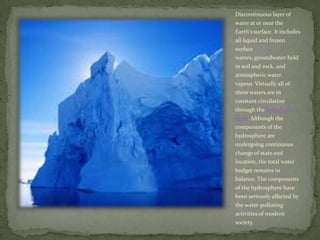
Discontinuous layer of water at or near the Earth's surface. It includes all liquid and frozen surface waters, groundwater held in soil and rock, and atmospheric water vapour. Virtually all of these waters are in constant circulation through the hydrologic cycle. Although the components of the hydrosphere are undergoing continuous change of state and location, the total water budget remains in balance. The components of the hydrosphere have been seriously affected by the water-polluting activities of modern society.
Water pollution is the contamination of water bodies (e.g. lakes, rivers, oceans and groundwater). Water pollution occurs when pollutants are discharged directly or indirectly into water bodies without adequate treatment to remove harmful compounds.Water Pollution
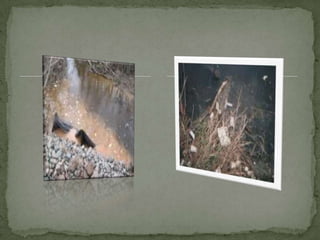
One of the reasons that the water pollution problem is so severe is that it is not actually illegal to dump pollutants into water bodies.Sewage, sludge, garbage, and even toxic pollutants are all dumped into the water.  Often, governments either do not care or simply look the other way.Across the world, about half of all sewage is dumped into water bodies in its original form.  No efforts are made to disinfect the sewage or to remove especially harmful pollutants.Even if sewage is treated, problems still arise.  Treated sewage forms sludge, which is sent out into the sea and dumped.Many cities and countries dump sewage out at sea.  Often, they place it not far from their own coastline, often killing all the sea wildlife in the dumping area.In addition to sewage, chemicals dumped by industries and governments are another major source of water pollution.Oil, such as that spilled by transport ships, has been dumped into the water since the US Civil War.  Every year, between 1 and 10 billion tons of oil are spilt, killing many species and destroying the ecosystem in the area.  Cleanup efforts have been weak, as only about 10% of the oil is removed by the most successful efforts.
Rica zaleta

Rica zaleta

  • 1.
    By: Rica ZaletaEarth'sHydrosphere and Water Pollution
  • 2.
    hydrosphere (from Greekὕδωρ- hydor, "water" and σφαῖρα - sphaira, "sphere") in physical geography describes the combined mass of water found on, under, and over the surface of a planet.The total mass of the Earth's hydrosphere is about 1.4 × 10¹⁸tonnes, which is about 0.023% of the Earth's total mass. About 20 × 1012tonnes of this is in the Earth's atmosphere (the volume of one tonne of water is approximately 1 cubic metre). Approximately 75% of the Earth's surface, an area of some 361 million square kilometres (139.5 million square miles), is covered by ocean. The average salinity of the Earth's oceans is about 35 grams of salt per kilogram of sea water (35 ‰).HYDROSPHERE
  • 3.
    Discontinuous layer ofwater at or near the Earth's surface. It includes all liquid and frozen surface waters, groundwater held in soil and rock, and atmospheric water vapour. Virtually all of these waters are in constant circulation through the hydrologic cycle. Although the components of the hydrosphere are undergoing continuous change of state and location, the total water budget remains in balance. The components of the hydrosphere have been seriously affected by the water-polluting activities of modern society.
  • 5.
    Water pollution isthe contamination of water bodies (e.g. lakes, rivers, oceans and groundwater). Water pollution occurs when pollutants are discharged directly or indirectly into water bodies without adequate treatment to remove harmful compounds.Water Pollution
  • 6.
    One of thereasons that the water pollution problem is so severe is that it is not actually illegal to dump pollutants into water bodies.Sewage, sludge, garbage, and even toxic pollutants are all dumped into the water.  Often, governments either do not care or simply look the other way.Across the world, about half of all sewage is dumped into water bodies in its original form.  No efforts are made to disinfect the sewage or to remove especially harmful pollutants.Even if sewage is treated, problems still arise.  Treated sewage forms sludge, which is sent out into the sea and dumped.Many cities and countries dump sewage out at sea.  Often, they place it not far from their own coastline, often killing all the sea wildlife in the dumping area.In addition to sewage, chemicals dumped by industries and governments are another major source of water pollution.Oil, such as that spilled by transport ships, has been dumped into the water since the US Civil War.  Every year, between 1 and 10 billion tons of oil are spilt, killing many species and destroying the ecosystem in the area.  Cleanup efforts have been weak, as only about 10% of the oil is removed by the most successful efforts.