RFID IN
SUPPLY CHAIN MANAGEMENT
OVERVIEW
• RFID in Supply Chain Management
• How RFID Works?
• How RFID Works in Supply Chain Management
• Benefits Of Using RFID
• Applications in Supply Chain Management
• Challenges in RFID Adoption
• Real World Example
• Challenges In Traditional Supply Chains
encstore.com
What is RFID in Supply Chain Management?
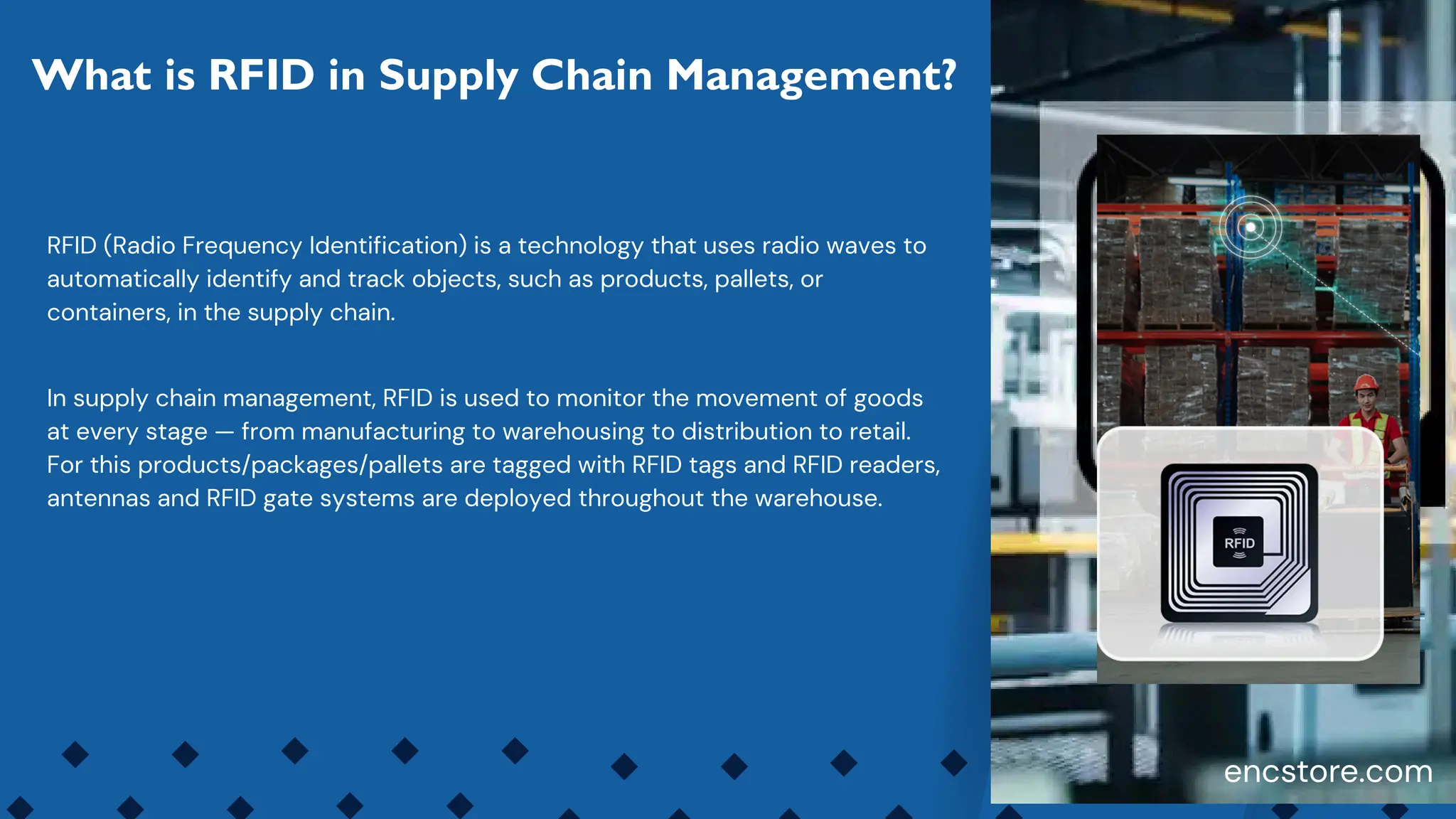
RFID (Radio Frequency Identification) is a technology that uses radio waves to
automatically identify and track objects, such as products, pallets, or
containers, in the supply chain.
In supply chain management, RFID is used to monitor the movement of goods
at every stage — from manufacturing to warehousing to distribution to retail.
For this products/packages/pallets are tagged with RFID tags and RFID readers,
antennas and RFID gate systems are deployed throughout the warehouse.
encstore.com
encstore.com
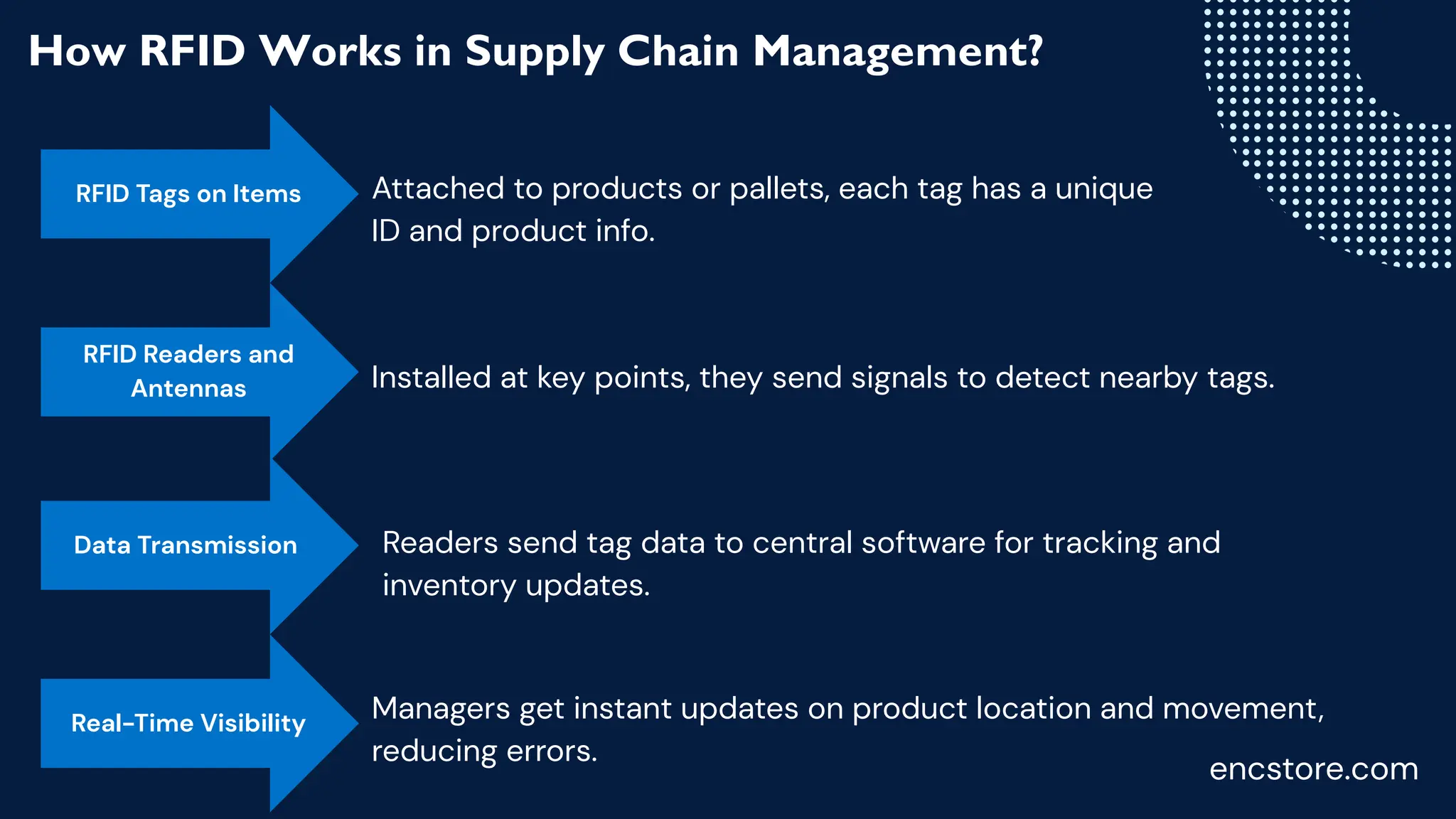
RFID Tags on Items
How RFID Works in Supply Chain Management?
RFID Readers and
Antennas
Data Transmission
Real-Time Visibility
Attached to products or pallets, each tag has a unique
ID and product info.
Installed at key points, they send signals to detect nearby tags.
Readers send tag data to central software for tracking and
inventory updates.
Managers get instant updates on product location and movement,
reducing errors.
encstore.com
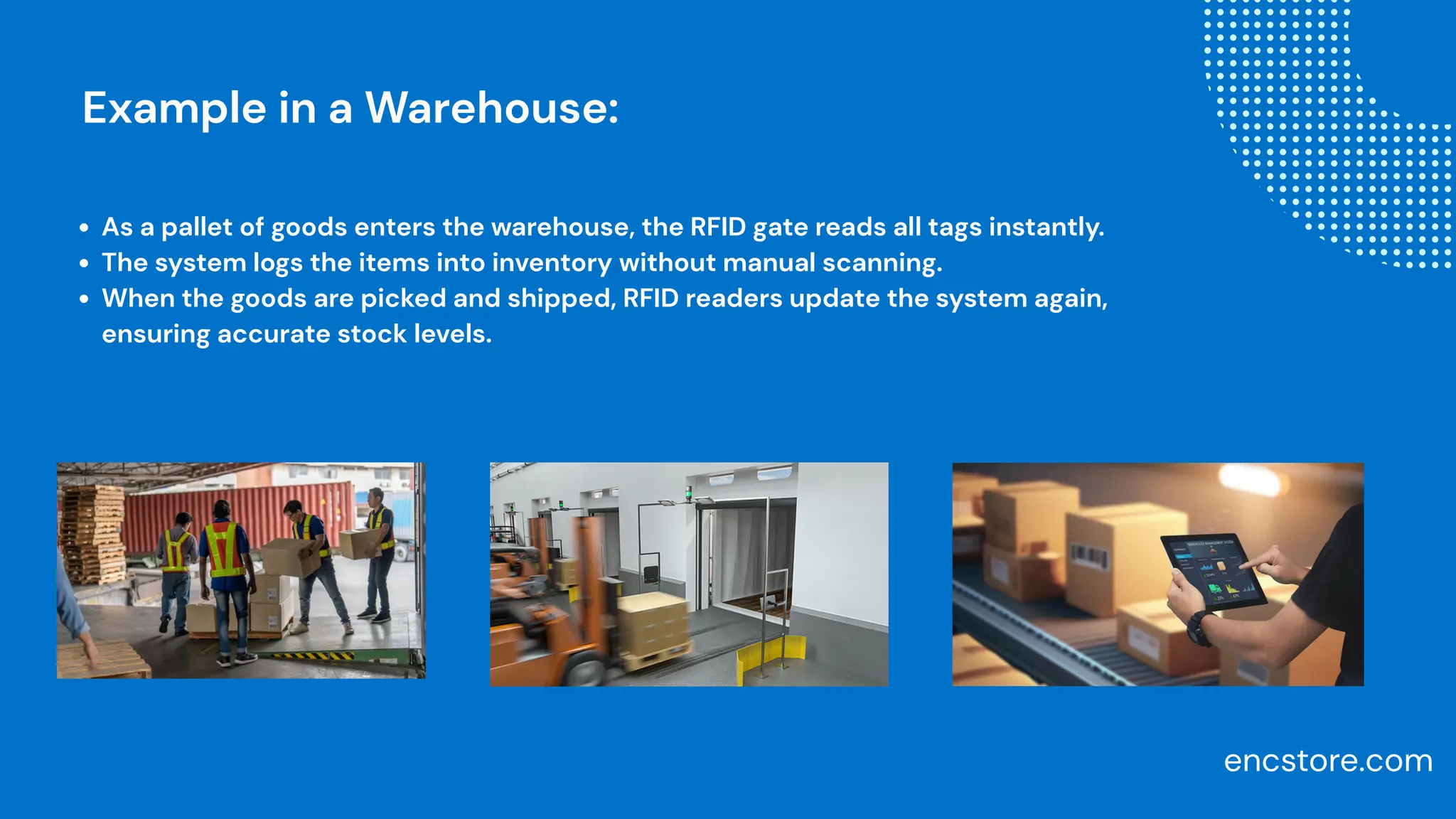
Example in a Warehouse:
As a pallet of goods enters the warehouse, the RFID gate reads all tags instantly.
The system logs the items into inventory without manual scanning.
When the goods are picked and shipped, RFID readers update the system again,
ensuring accurate stock levels.
encstore.com
Manual Data
Entry
Lack of Real-
Time Visibility
Difficulty in knowing the exact location
and status of products.
High Operational
Costs
Poor Demand
Forecasting
Loss and Theft of
Goods
High risk of human errors in inventory
records and shipping documents.
Labor-intensive tracking and checking
processes
May lead to stockouts or overstocking
Inability to track items increases risk of
theft or misplacement
Challenges In Traditional Supply Chains
encstore.com
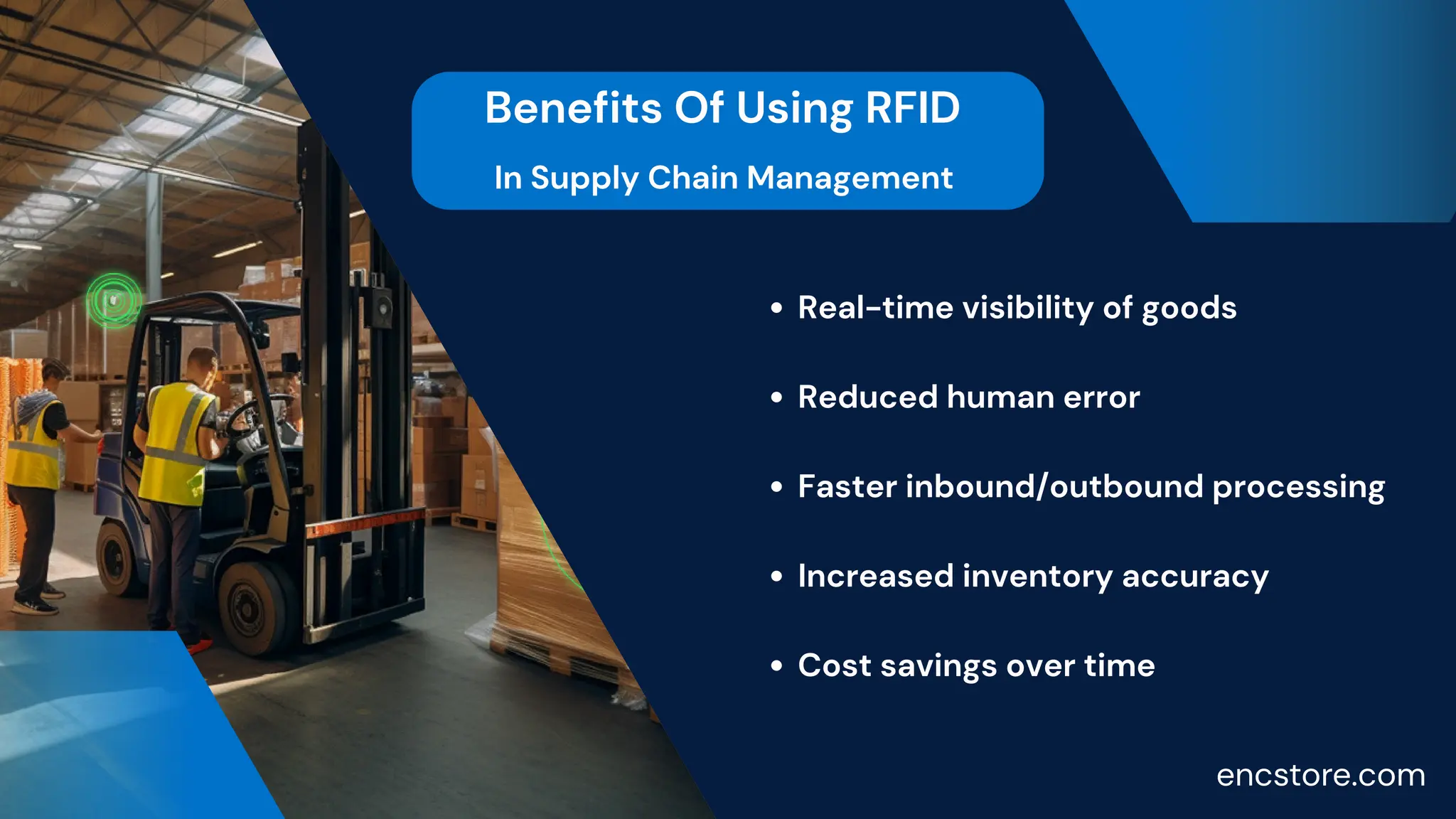
Benefits Of Using RFID
In Supply Chain Management
Real-time visibility of goods
Reduced human error
Faster inbound/outbound processing
Increased inventory accuracy
Cost savings over time
encstore.com
Warehouse
Automation
Transport
and
Logistics
Retail
Distribution
Centers
Inventory
Management
Warehouse
Asset
Management
encstore.com
High Initial Costs
RFID tags, readers, antennas, and software require
significant upfront investment, Infrastructure setup
and employee training add to the cost.
Integration with Existing Systems
RFID needs to work seamlessly with existing ERP,
WMS, or legacy systems and Customization and
compatibility issues can delay implementation.
Data Privacy & Tag Readability Issues
Unauthorized reading of RFID tags can lead to data
breaches.
Improper tag placement, damage, or poor quality
can cause read failures.
encstore.com
Project 2 Project 3
Uses RFID for faster inventory
replenishment
Uses RFID and automation in
warehouses
Tracks fashion inventory from
factory to store
encstore.com
Connect with us.
presales@encstore.com
+91-8130501143

RFID in Supply chain management and logistics.pdf

  • 1.
  • 2.
    OVERVIEW • RFID inSupply Chain Management • How RFID Works? • How RFID Works in Supply Chain Management • Benefits Of Using RFID • Applications in Supply Chain Management • Challenges in RFID Adoption • Real World Example • Challenges In Traditional Supply Chains encstore.com
  • 3.
    What is RFIDin Supply Chain Management? RFID (Radio Frequency Identification) is a technology that uses radio waves to automatically identify and track objects, such as products, pallets, or containers, in the supply chain. In supply chain management, RFID is used to monitor the movement of goods at every stage — from manufacturing to warehousing to distribution to retail. For this products/packages/pallets are tagged with RFID tags and RFID readers, antennas and RFID gate systems are deployed throughout the warehouse. encstore.com
  • 4.
  • 5.
    RFID Tags onItems How RFID Works in Supply Chain Management? RFID Readers and Antennas Data Transmission Real-Time Visibility Attached to products or pallets, each tag has a unique ID and product info. Installed at key points, they send signals to detect nearby tags. Readers send tag data to central software for tracking and inventory updates. Managers get instant updates on product location and movement, reducing errors. encstore.com
  • 6.
    Example in aWarehouse: As a pallet of goods enters the warehouse, the RFID gate reads all tags instantly. The system logs the items into inventory without manual scanning. When the goods are picked and shipped, RFID readers update the system again, ensuring accurate stock levels. encstore.com
  • 7.
    Manual Data Entry Lack ofReal- Time Visibility Difficulty in knowing the exact location and status of products. High Operational Costs Poor Demand Forecasting Loss and Theft of Goods High risk of human errors in inventory records and shipping documents. Labor-intensive tracking and checking processes May lead to stockouts or overstocking Inability to track items increases risk of theft or misplacement Challenges In Traditional Supply Chains encstore.com
  • 8.
    Benefits Of UsingRFID In Supply Chain Management Real-time visibility of goods Reduced human error Faster inbound/outbound processing Increased inventory accuracy Cost savings over time encstore.com
  • 9.
  • 10.
    High Initial Costs RFIDtags, readers, antennas, and software require significant upfront investment, Infrastructure setup and employee training add to the cost. Integration with Existing Systems RFID needs to work seamlessly with existing ERP, WMS, or legacy systems and Customization and compatibility issues can delay implementation. Data Privacy & Tag Readability Issues Unauthorized reading of RFID tags can lead to data breaches. Improper tag placement, damage, or poor quality can cause read failures. encstore.com
  • 11.
    Project 2 Project3 Uses RFID for faster inventory replenishment Uses RFID and automation in warehouses Tracks fashion inventory from factory to store encstore.com
  • 12.