Click to start..


© Copyrights Saad Munir. smsulari@gmail.com   Click to see credits.
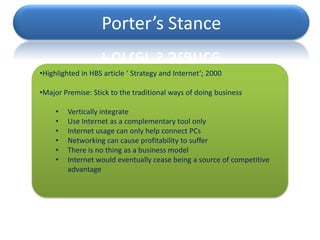
Porter’s Stance

•Highlighted in HBS article ‘ Strategy and Internet’; 2000

•Major Premise: Stick to the traditional ways of doing business

     •   Vertically integrate
     •   Use Internet as a complementary tool only
     •   Internet usage can only help connect PCs
     •   Networking can cause profitability to suffer
     •   There is no thing as a business model
     •   Internet would eventually cease being a source of competitive
         advantage
Vertically Integrate


• Develop competencies internally

• The organizational goals haven’t changed, why should the ways
  to achieve them change either

• Tried and proven ways to do things( if the company was
  profitable before internet, why shift to internet)
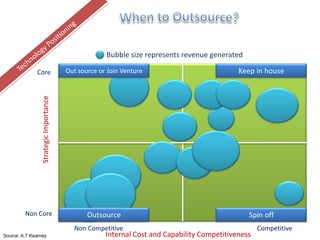
Bubble size represents revenue generated

              Core                      Out source or Join Venture                           Keep in house
                 Strategic Importance


         Non Core                              Outsource                                        Spin off
                                          Non Competitive                                           Competitive
Source: A.T Kearney                                  Internal Cost and Capability Competitiveness
Unilever Outsources to Accenture


        “The outsourcing programme is part of the
  company’s 'One Unilever' initiatives to increase
   leverage of its scale, improve its marketplace
competitiveness, deliver functional excellence, and
create a more competitive cost-structure allowing it
     to focus on its consumers and customers”
Partnering


• Resources that are not owned can be used

• Co-create with customers and other outside sources

• Suppliers and distributors can contribute to cheaper
  disruptive innovation

• Risk and cost reduction ( Revenue of top 5 contract
  manufacturers aggregated $ 50 B, ROIC > 25%)
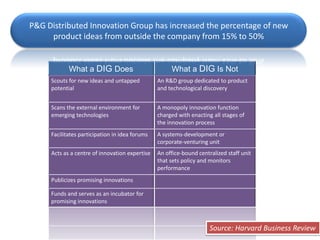
P&G Distributed Innovation Group has increased the percentage of new
     product ideas from outside the company from 15% to 50%


            What a DIG Does                          What a DIG Is Not
     Scouts for new ideas and untapped          An R&D group dedicated to product
     potential                                  and technological discovery


     Scans the external environment for         A monopoly innovation function
     emerging technologies                      charged with enacting all stages of
                                                the innovation process
     Facilitates participation in idea forums   A systems-development or
                                                corporate-venturing unit
     Acts as a centre of innovation expertise   An office-bound centralized staff unit
                                                that sets policy and monitors
                                                performance
     Publicizes promising innovations

     Funds and serves as an incubator for
     promising innovations


                                                                     Source: Harvard Business Review
Why Partner ?
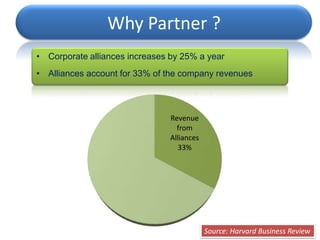
• Corporate alliances increases by 25% a year
• Alliances account for 33% of the company revenues


                                Revenue
                                  from
                                Alliances
                                   33%


                                            Source: Harvard Business Review
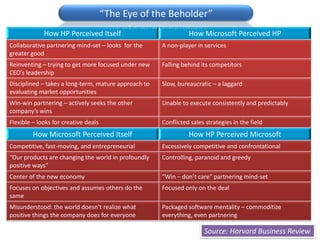
“The Eye of the Beholder”
             How HP Perceived Itself                            How Microsoft Perceived HP
Collaborative partnering mind-set – looks for the     A non-player in services
greater good
Reinventing – trying to get more focused under new    Falling behind its competitors
CEO’s leadership
Disciplined – takes a long-term, mature approach to   Slow, bureaucratic – a laggard
evaluating market opportunities
Win-win partnering – actively seeks the other         Unable to execute consistently and predictably
company’s wins
Flexible – looks for creative deals                   Conflicted sales strategies in the field
         How Microsoft Perceived Itself                         How HP Perceived Microsoft
Competitive, fast-moving, and entrepreneurial         Excessively competitive and confrontational
“Our products are changing the world in profoundly    Controlling, paranoid and greedy
positive ways”
Center of the new economy                             “Win – don’t care” partnering mind-set
Focuses on objectives and assumes others do the       Focused only on the deal
same
Misunderstood: the world doesn’t realize what         Packaged software mentality – commoditize
positive things the company does for everyone         everything, even partnering

                                                                      Source: Harvard Business Review
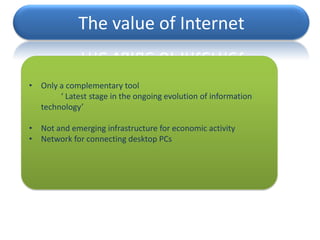
The value of Internet


• Only a complementary tool
       ‘ Latest stage in the ongoing evolution of information
  technology’

• Not and emerging infrastructure for economic activity
• Network for connecting desktop PCs
The TRUE value of Internet


• A complete infrastructure and architecture
• More effective than earlier communication media
• Used for transactions
• Market Research
• Recruiting
• Brings the company closer to the market [ better CRM, greater
  customer insight]
• Allows for better governance
There is no such thing as Business Model


•   The meaning of ‘business model’ has been misunderstood

•   The term "Business model” is used more or less synonymously
    with “business strategy”

•   Historically strategist have not been concerned about business
    models because each industry had a standard model
Internet based Business Models


•   The core architecture of the firm
          • how deploy relevant resources
          • How to create differentiated value for its customers

•   The business world is more customer driven these days which
    necessitates the companies to have continuous interaction with them

•   Internet allows for development of newer, more innovative types of
    business models

•   Allows greater speed of execution
Internet would eventually lose its importance


 •   All companies come to embrace internet, and the internet itself
     neutralize as the source of competitive advantage.

 •   The competitive advantage increases from traditional strengths
Competitive advantage of Internet

•   “As the current technological revolution continues to change the face
    of the world market, only the businesses that are the fastest to
    anticipate change and to participate in the revolution will prosper”
    Southwick ; keynote speaker at the New Jersey Software Forum 2000

•   Once the second generation of eMarkets gets going, the cost of entry
    will go up“; Bill Van Emburg, director of Quadrix Solutions

•   Internet must not be considered only with reference to its present
    existence [ nobody had imagined any thing such as the internet and
    so cannot anticipate any future advancements]

•   Internet would provide a basis for continuous innovation
     • Unique Products
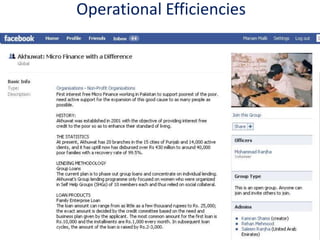
     • operational efficiencies
     • customer services and relationships
Unique Products
Operational Efficiencies
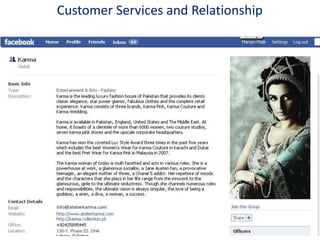
Customer Services and Relationship
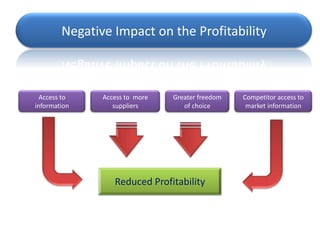
Negative Impact on the Profitability


  Access to    Access to more   Greater freedom   Competitor access to
information       suppliers        of choice       market information


                  Reduced Profitability
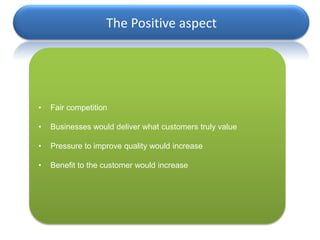
The Positive aspect


•   Fair competition

•   Businesses would deliver what customers truly value

•   Pressure to improve quality would increase

•   Benefit to the customer would increase
‘Business fundamentals, indeed. Fundamentalism, no’


              HurraH’s Creativity
Credits

          Sara Parveen
          Ume Kalsoom
          Mariam Malik
          Sadaf Iwbal
          Fahad Siddiqui
          Aesha Shamshad Butt
          and Wardah Munir and all other subgroups.


                   HurraH’s Creativity

Rethinking - HBR Case Study Analysis

  • 1.
    Click to start.. ©Copyrights Saad Munir. smsulari@gmail.com Click to see credits.
  • 2.
    Porter’s Stance •Highlighted inHBS article ‘ Strategy and Internet’; 2000 •Major Premise: Stick to the traditional ways of doing business • Vertically integrate • Use Internet as a complementary tool only • Internet usage can only help connect PCs • Networking can cause profitability to suffer • There is no thing as a business model • Internet would eventually cease being a source of competitive advantage
  • 3.
    Vertically Integrate • Developcompetencies internally • The organizational goals haven’t changed, why should the ways to achieve them change either • Tried and proven ways to do things( if the company was profitable before internet, why shift to internet)
  • 4.
    Bubble size representsrevenue generated Core Out source or Join Venture Keep in house Strategic Importance Non Core Outsource Spin off Non Competitive Competitive Source: A.T Kearney Internal Cost and Capability Competitiveness
  • 5.
    Unilever Outsources toAccenture “The outsourcing programme is part of the company’s 'One Unilever' initiatives to increase leverage of its scale, improve its marketplace competitiveness, deliver functional excellence, and create a more competitive cost-structure allowing it to focus on its consumers and customers”
  • 6.
    Partnering • Resources thatare not owned can be used • Co-create with customers and other outside sources • Suppliers and distributors can contribute to cheaper disruptive innovation • Risk and cost reduction ( Revenue of top 5 contract manufacturers aggregated $ 50 B, ROIC > 25%)
  • 7.
    P&G Distributed InnovationGroup has increased the percentage of new product ideas from outside the company from 15% to 50% What a DIG Does What a DIG Is Not Scouts for new ideas and untapped An R&D group dedicated to product potential and technological discovery Scans the external environment for A monopoly innovation function emerging technologies charged with enacting all stages of the innovation process Facilitates participation in idea forums A systems-development or corporate-venturing unit Acts as a centre of innovation expertise An office-bound centralized staff unit that sets policy and monitors performance Publicizes promising innovations Funds and serves as an incubator for promising innovations Source: Harvard Business Review
  • 8.
    Why Partner ? •Corporate alliances increases by 25% a year • Alliances account for 33% of the company revenues Revenue from Alliances 33% Source: Harvard Business Review
  • 9.
    “The Eye ofthe Beholder” How HP Perceived Itself How Microsoft Perceived HP Collaborative partnering mind-set – looks for the A non-player in services greater good Reinventing – trying to get more focused under new Falling behind its competitors CEO’s leadership Disciplined – takes a long-term, mature approach to Slow, bureaucratic – a laggard evaluating market opportunities Win-win partnering – actively seeks the other Unable to execute consistently and predictably company’s wins Flexible – looks for creative deals Conflicted sales strategies in the field How Microsoft Perceived Itself How HP Perceived Microsoft Competitive, fast-moving, and entrepreneurial Excessively competitive and confrontational “Our products are changing the world in profoundly Controlling, paranoid and greedy positive ways” Center of the new economy “Win – don’t care” partnering mind-set Focuses on objectives and assumes others do the Focused only on the deal same Misunderstood: the world doesn’t realize what Packaged software mentality – commoditize positive things the company does for everyone everything, even partnering Source: Harvard Business Review
  • 10.
    The value ofInternet • Only a complementary tool ‘ Latest stage in the ongoing evolution of information technology’ • Not and emerging infrastructure for economic activity • Network for connecting desktop PCs
  • 11.
    The TRUE valueof Internet • A complete infrastructure and architecture • More effective than earlier communication media • Used for transactions • Market Research • Recruiting • Brings the company closer to the market [ better CRM, greater customer insight] • Allows for better governance
  • 12.
    There is nosuch thing as Business Model • The meaning of ‘business model’ has been misunderstood • The term "Business model” is used more or less synonymously with “business strategy” • Historically strategist have not been concerned about business models because each industry had a standard model
  • 13.
    Internet based BusinessModels • The core architecture of the firm • how deploy relevant resources • How to create differentiated value for its customers • The business world is more customer driven these days which necessitates the companies to have continuous interaction with them • Internet allows for development of newer, more innovative types of business models • Allows greater speed of execution
  • 14.
    Internet would eventuallylose its importance • All companies come to embrace internet, and the internet itself neutralize as the source of competitive advantage. • The competitive advantage increases from traditional strengths
  • 15.
    Competitive advantage ofInternet • “As the current technological revolution continues to change the face of the world market, only the businesses that are the fastest to anticipate change and to participate in the revolution will prosper” Southwick ; keynote speaker at the New Jersey Software Forum 2000 • Once the second generation of eMarkets gets going, the cost of entry will go up“; Bill Van Emburg, director of Quadrix Solutions • Internet must not be considered only with reference to its present existence [ nobody had imagined any thing such as the internet and so cannot anticipate any future advancements] • Internet would provide a basis for continuous innovation • Unique Products • operational efficiencies • customer services and relationships
  • 16.
  • 17.
  • 18.
  • 19.
    Negative Impact onthe Profitability Access to Access to more Greater freedom Competitor access to information suppliers of choice market information Reduced Profitability
  • 20.
    The Positive aspect • Fair competition • Businesses would deliver what customers truly value • Pressure to improve quality would increase • Benefit to the customer would increase
  • 21.
    ‘Business fundamentals, indeed.Fundamentalism, no’ HurraH’s Creativity
  • 22.
    Credits Sara Parveen Ume Kalsoom Mariam Malik Sadaf Iwbal Fahad Siddiqui Aesha Shamshad Butt and Wardah Munir and all other subgroups. HurraH’s Creativity

Editor's Notes

  • #2 Dept. Of Management SciencesFAST – National University of Computer and Emerging Sciences, Lahore.Saad MunirL050411 - BBACourse: Advance Business ConceptsInstructor: Mr. Hassan Khawarsmsulari@gmail.com