1500 1600 1700 1800 1900 2000
Restoration
Drama
(England)
Neoclassical
Drama
(France)
Elizabethan Drama
Shakespeare
(England)
Restoration England
1660-1700
For history of the monarchy after Queen Elizabeth I, go to:
http://www.royal.gov.uk/history/stuart.htm
Charles I
Charles I
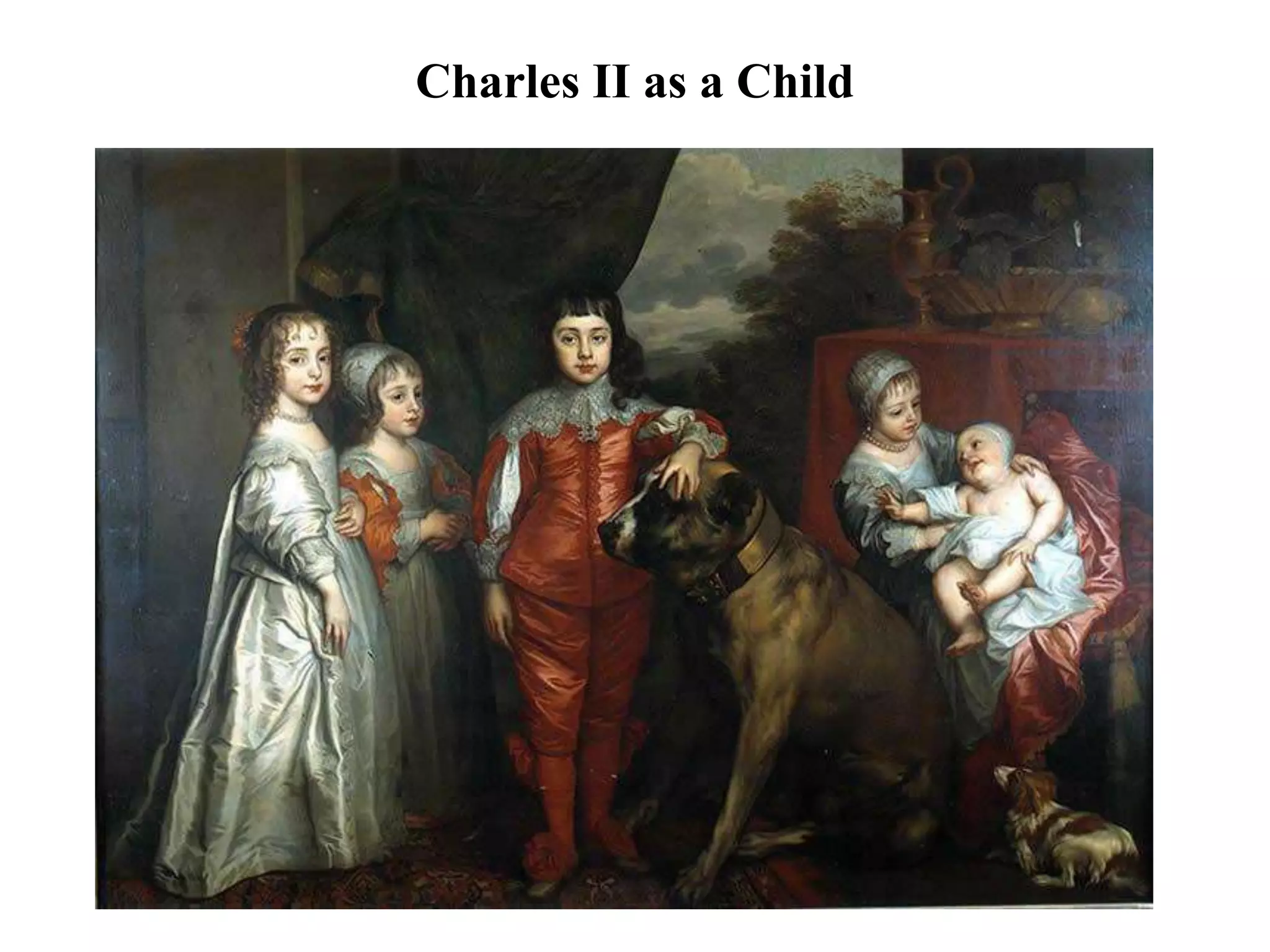
Charles II as a Child
Execution of Charles I
Oliver Cromwell
Protectorate
during
the Interregnum
Inigo Jones
Inigo Jones’ Backdrop Design for Opera
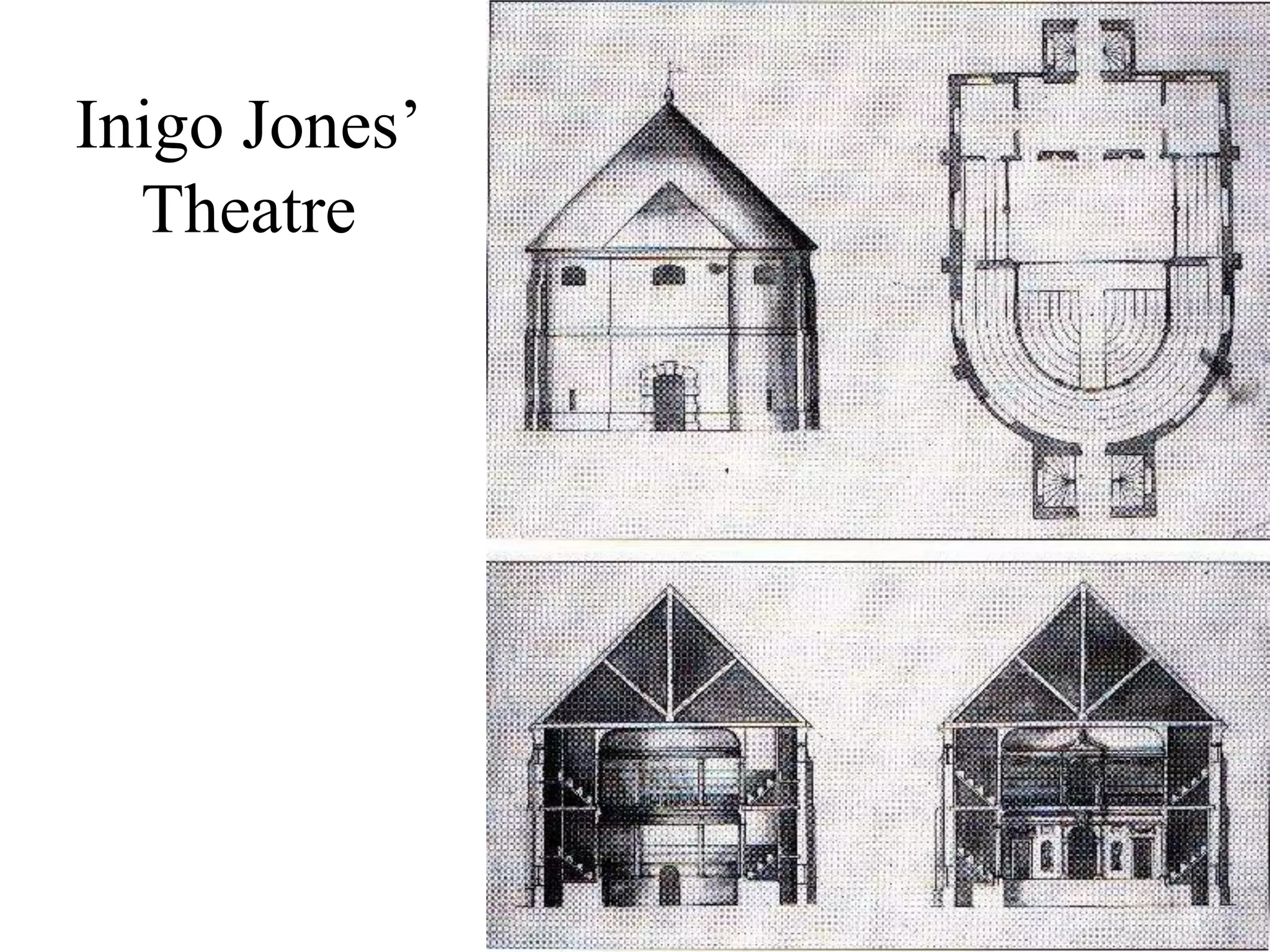
Inigo Jones’
Theatre
Costume Design by Inigo Jones
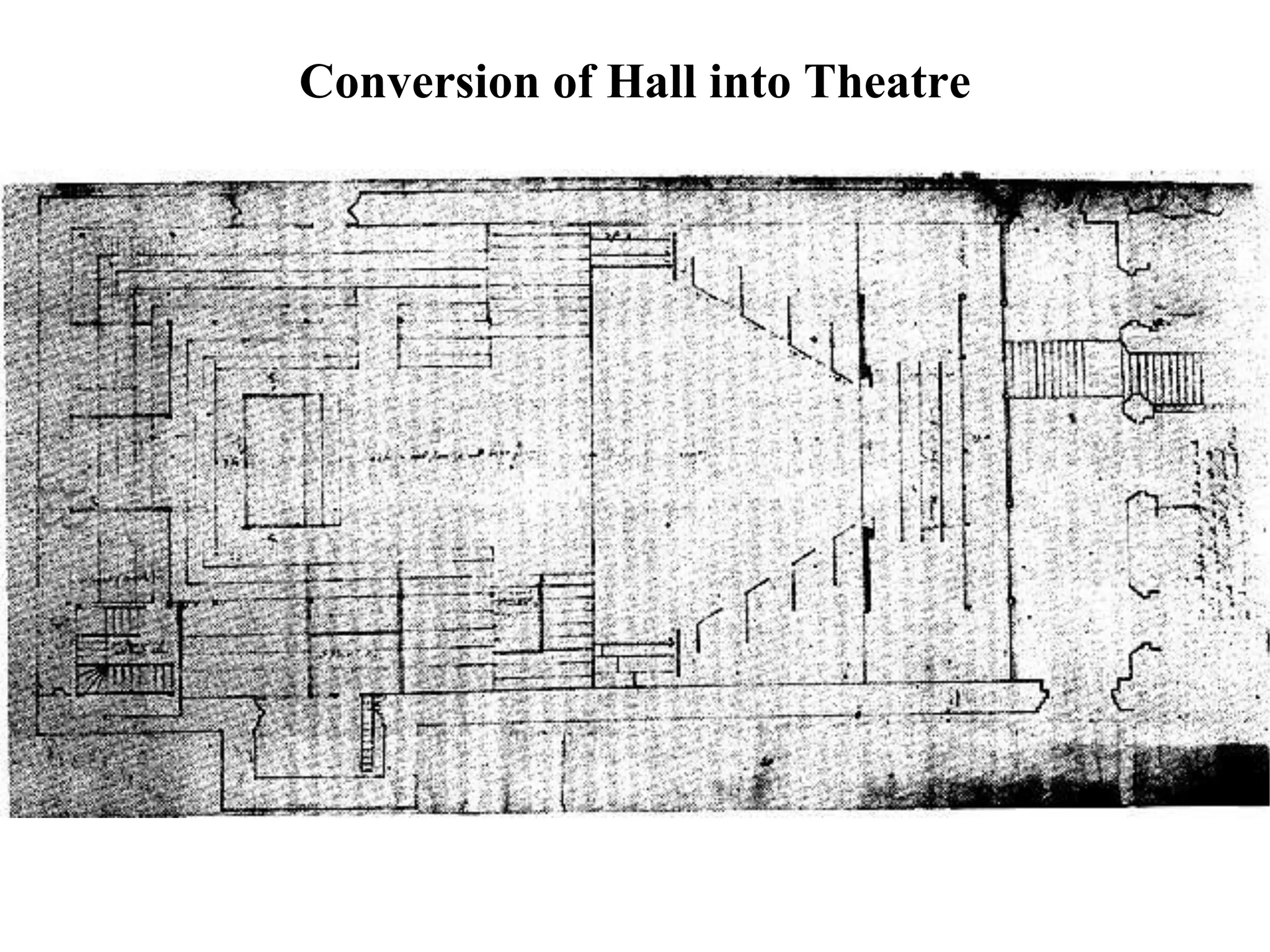
Conversion of Hall into Theatre
Charles II
Charles II
Charles II Healing Subject
London c. 1690
Great Fire of London (1666)
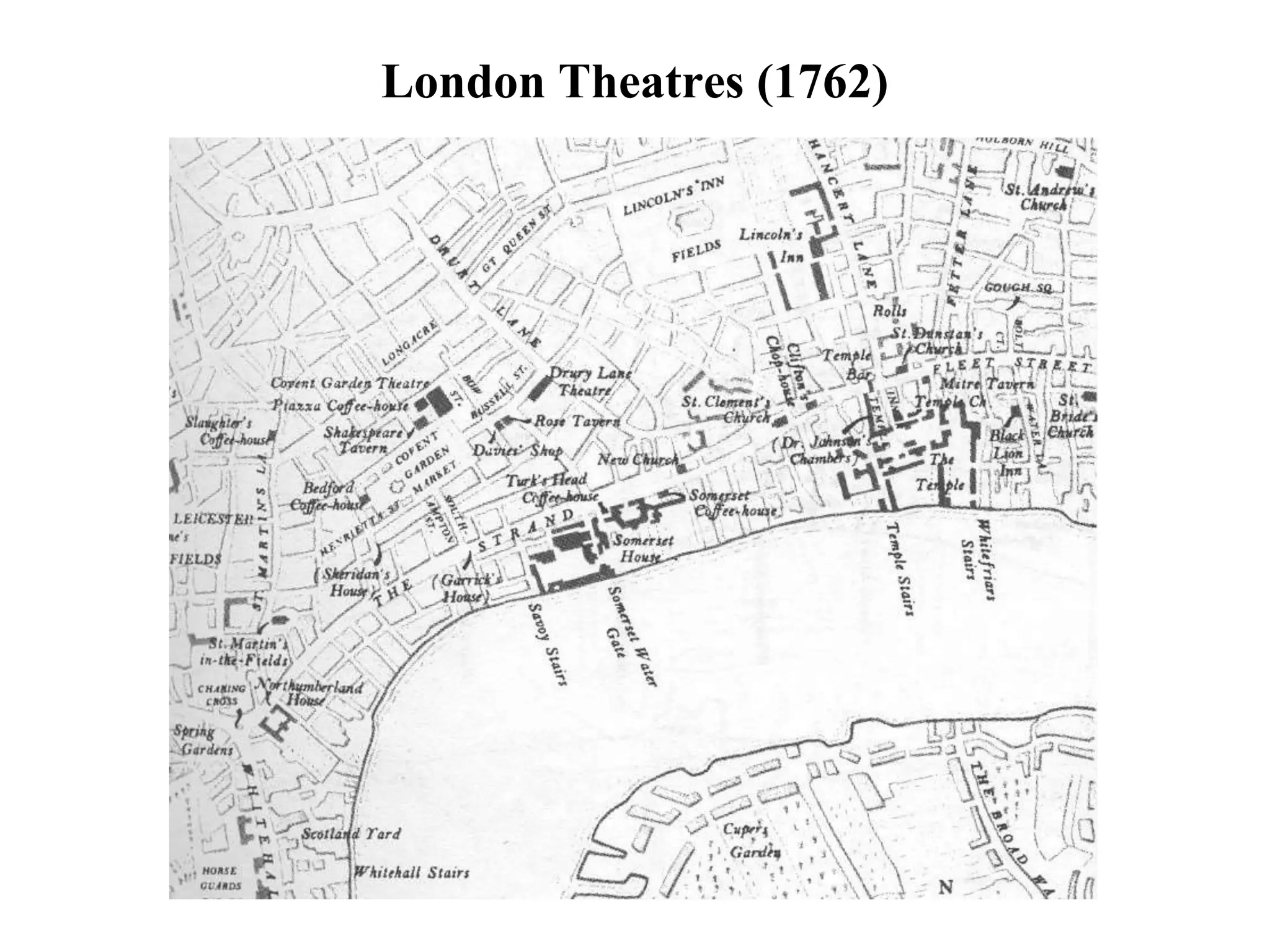
London Theatres (1762)
Thomas Killigrew & William Davenant
Notables:
• women onstage beginning 1660
• repertory system
• possession of parts
• audience comprised primarily of leisure class
• favorite genre: comedy of manners
• most comedy of manners plays about sex and adultery
• indoor theatres with proscenium arch
• actors in front of arch on forestage
• changeable scenery behind proscenium arch
• monopoly of theatres (only 2 allowed regular drama)
Nell Gwynne
Nell
Gwynn
Persuades
Charles II
to Build
Hospital
Nell Gwynn
Samuel Pepys
Duke’s Theatre, Dorset Gardens
Empress of Morocco at Dorset Garden (1673)
Shakespeare’s Tempest at Dorset Gardens
"The front of the stage is opened, and the band of 24 violins, with the
harpsichords and theorbos ... are placed between the pit and the stage.
While the overture is playing, the curtain rises, and discovers a new
frontispiece, joined to the great pilasters on each side of the stage ...
behind this is the scene, which represents a thick cloudy sky, a very
rocky coast, and a tempestuous sea in perpetual agitation. This tempest
(supposed to be raised by magic) has many dreadful objects in it, as
several spirits in horrid shapes flying down amongst the sailors, then
rising and crossing in the air. And when the ship is sinking, the whole
house is darkened, and a shower of fire falls upon 'em. This is
accompanied with lightning, and several claps of thunder, to the end of
the storm."
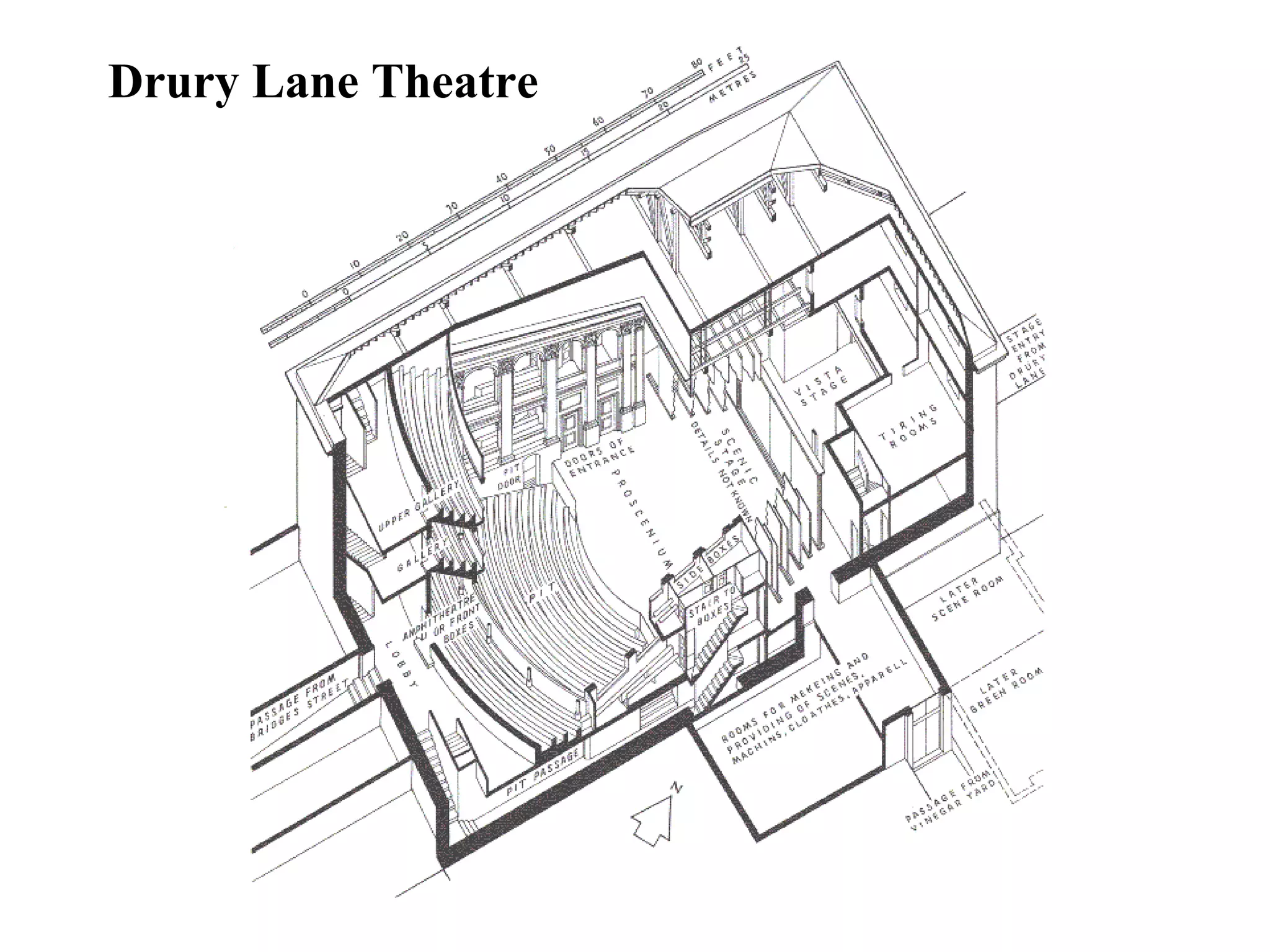
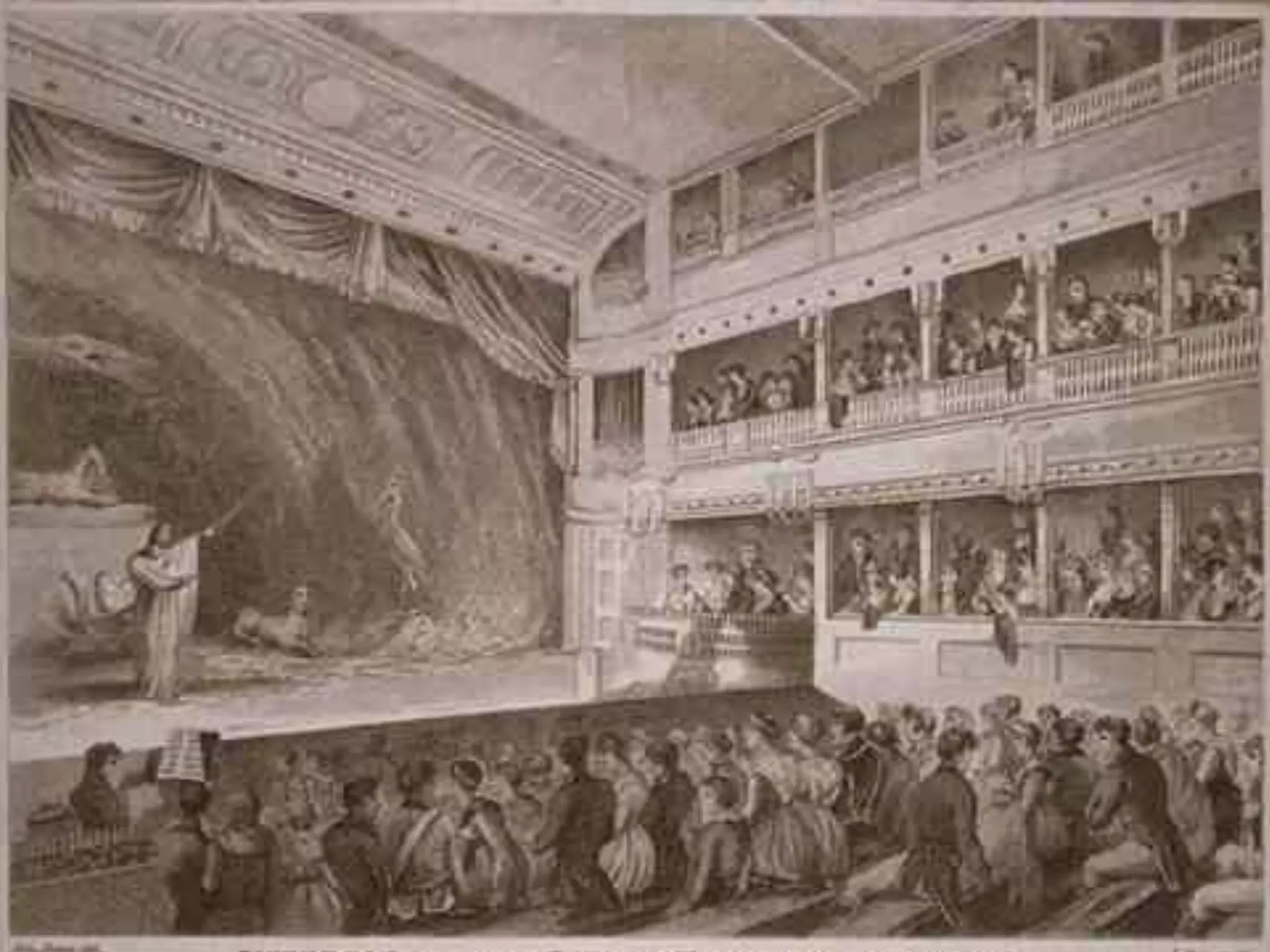
Drury Lane Theatre
Drury Lane (Cross-Sectional)
Drury Lane (1674)
Diagram of Covent Garden Theater, 1732
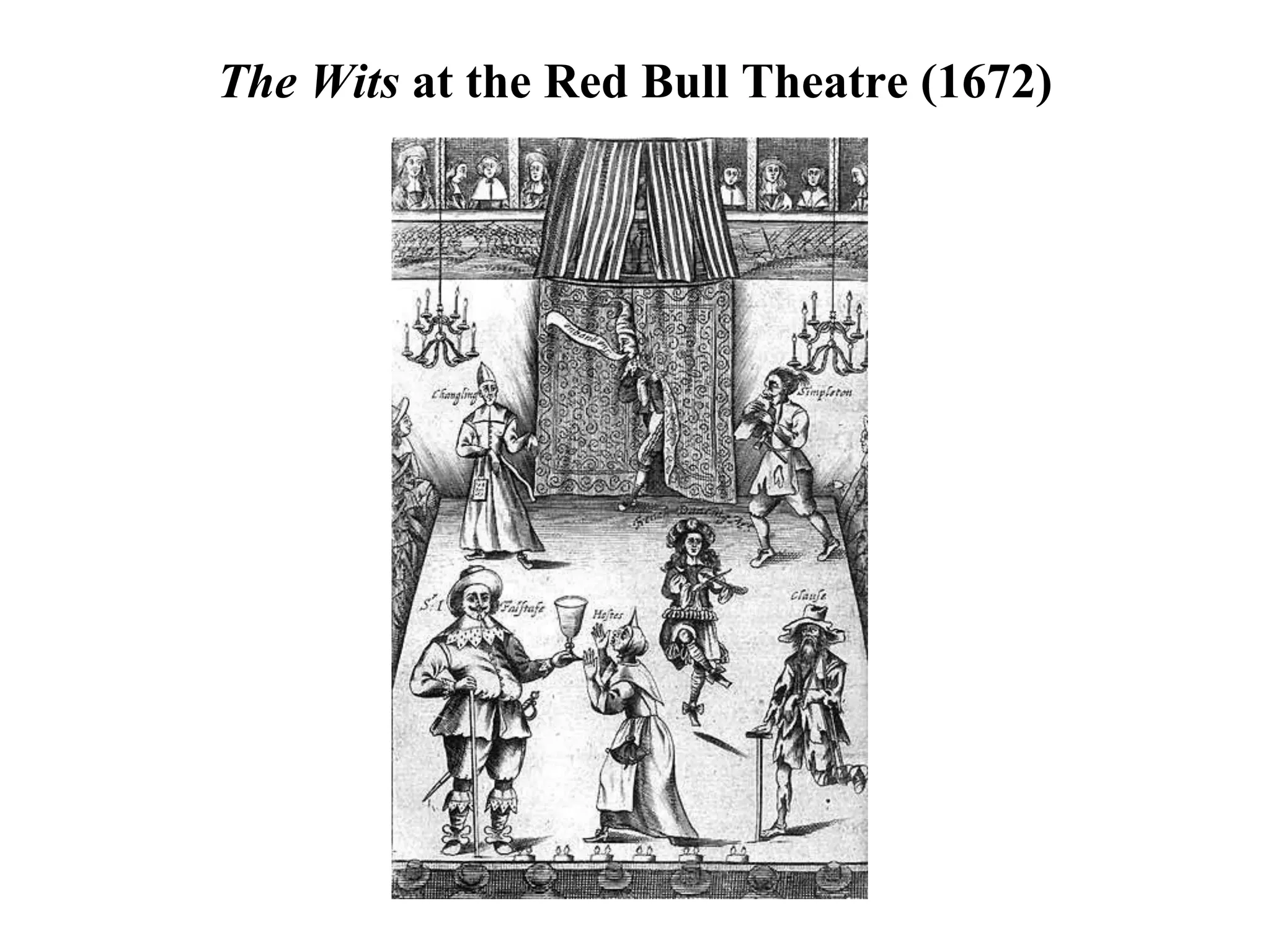
The Wits at the Red Bull Theatre (1672)
Covent Garden, 1674
Oil Lamp and Lucerna
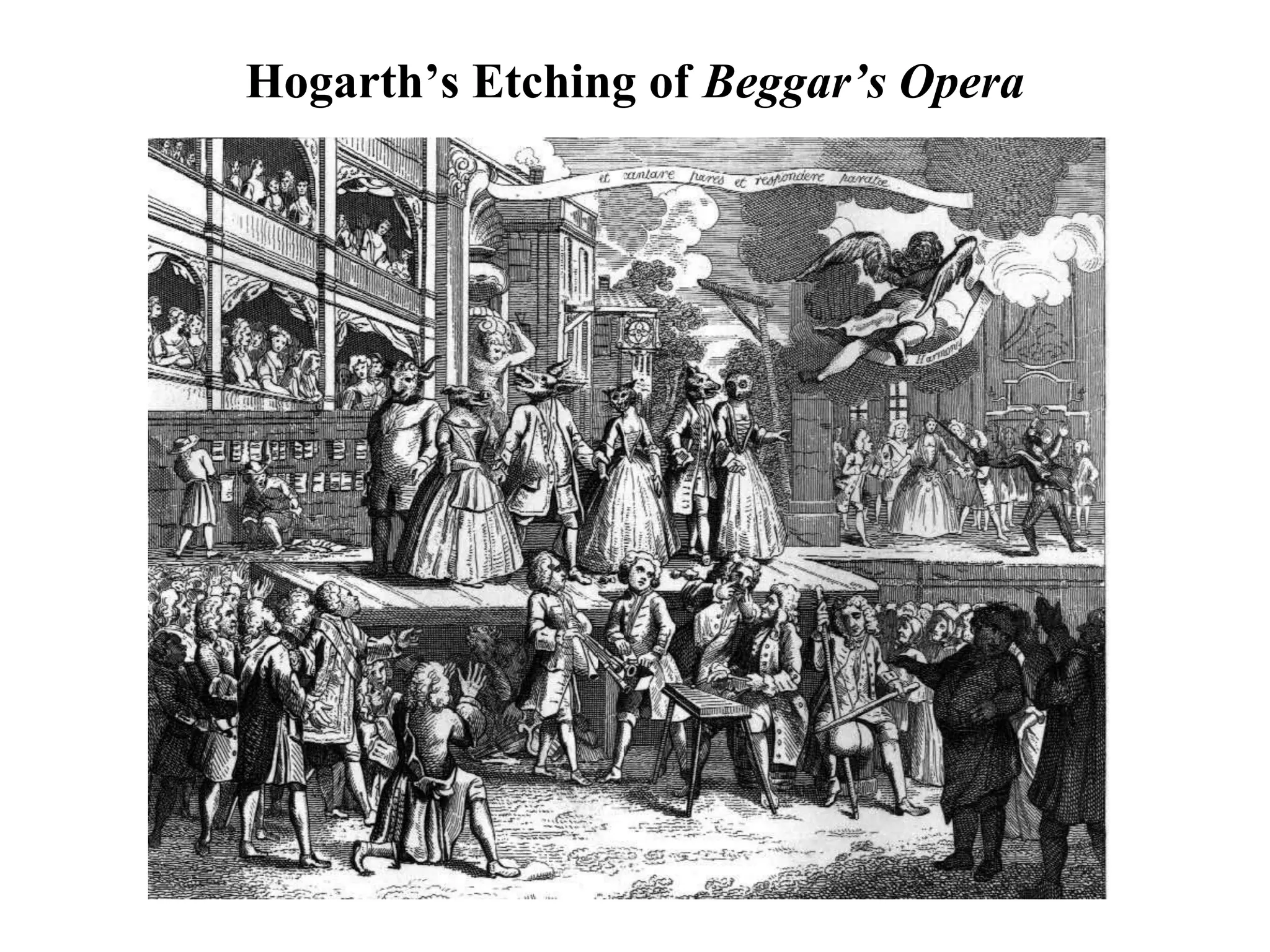
Hogarth’s Etching of Beggar’s Opera
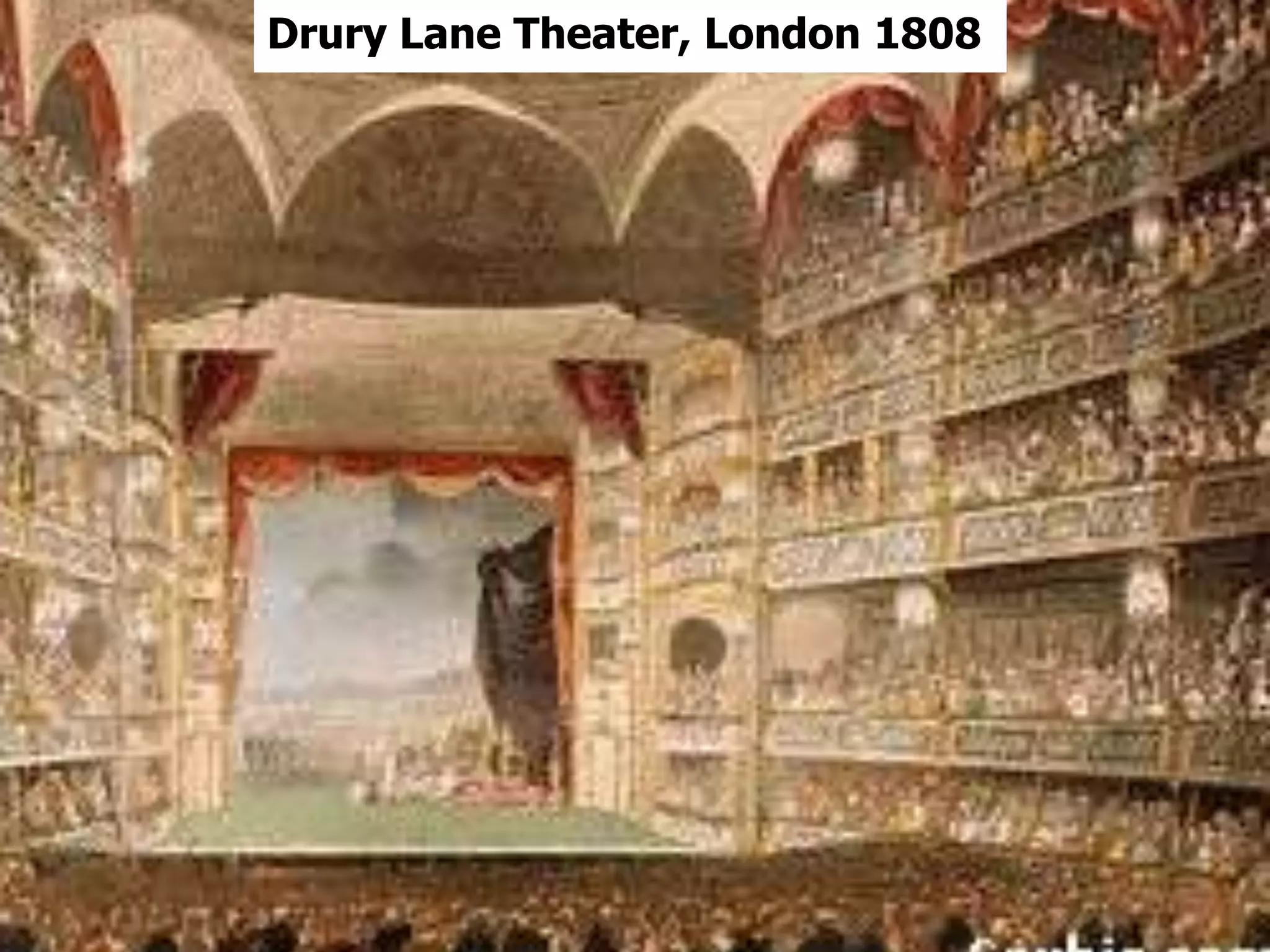
Drury Lane Theater, London 1808
Hogarth’s
The
Laughing
Audience
(1733)
Vizard (mask)
The Comedy of Manners
 pictures the carefree, immoral world of the aristocracy.
 brilliant, witty comedies.
 "virtue" comes form succeeding in catching a lover or cuckolding a
husband without getting caught
 "honor" comes from reputation, not integrity.
 "witty"—saying things in clever ways.
 influenced by the comedies of Moliere in France.
 example: Tartuffe, by Moliere; or The Country Wife, by Wycherley.
William Wycherley
Online Text: Wycherley’s The Country Wife
http://www.bibliomania.com/0/6/274/1876/frameset.html
Mr. Horner.
Mr. Harcourt.
Mr. Dorilant.
Mr. Pinchwife.
Mr. Sparkish.
Sir Jasper Fidget.
A Boy.
A Quack.
Waiters, Servants, and Attendants.
Mrs. Margery Pinchwife.
Alithea, Sister of Pinchwife.
Lady Fidget.
Mrs. Dainty Fidget, Sister of Sir Jasper.
Mrs. Squeamish.
Old Lady Squeamish.
Lucy, Alithea’s Maid.
Characters
in
The Country Wife
Horn. [aside]. A quack is as fit for a pimp, as a midwife for a bawd;
they are still but in their way, both helpers of nature.—[Aloud.]
Well, my dear doctor, hast thou done what I desired?
Quack. I have undone you for ever with the women, and reported
you throughout the whole town as bad as an eunuch, with as much
trouble as if I had made you one in earnest.
Horn. But have you told all the midwives you know, the orange
wenches at the playhouses, the city husbands, and old fumbling
keepers of this end of the town? for they’ll be the readiest to report
it.
Quack. I have told all the chambermaids, waiting-women, tire-
women, and old women of my acquaintance; nay, and whispered it
as a secret to ’em, and to the whisperers of Whitehall; so that you
need not doubt ’twill spread, and you will be as odious to the
handsome young women as—
Horn.As the small-pox. Well—
Quack. And to the married women of this end of the town, as—
Horn. As the great one; nay, as their own husbands.
Quack.And to the city dames, as aniseed Robin, of filthy and
contemptible memory; and they will frighten their children with
your name, especially their females.
Horn.And cry, Horner’s coming to carry you away. I am only afraid
’twill not be believed. You told ’em it was by an English-French
disaster, and an English-French chirurgeon, who has given me at
once not only a cure, but an antidote for the future against that
damned malady, and that worse distemper, love, and all other
women’s evils?
Aphra Behn (1640-1689)
Ticket for a Benefit
Breeches Role

Restoration Theatre

  • 1.
    1500 1600 17001800 1900 2000 Restoration Drama (England) Neoclassical Drama (France) Elizabethan Drama Shakespeare (England)
  • 2.
    Restoration England 1660-1700 For historyof the monarchy after Queen Elizabeth I, go to: http://www.royal.gov.uk/history/stuart.htm
  • 3.
  • 4.
  • 5.
  • 6.
  • 7.
  • 8.
  • 9.
    Inigo Jones’ BackdropDesign for Opera
  • 10.
  • 11.
    Costume Design byInigo Jones
  • 12.
    Conversion of Hallinto Theatre
  • 13.
  • 14.
  • 15.
  • 16.
  • 17.
    Great Fire ofLondon (1666)
  • 18.
  • 19.
    Thomas Killigrew &William Davenant
  • 20.
    Notables: • women onstagebeginning 1660 • repertory system • possession of parts • audience comprised primarily of leisure class • favorite genre: comedy of manners • most comedy of manners plays about sex and adultery • indoor theatres with proscenium arch • actors in front of arch on forestage • changeable scenery behind proscenium arch • monopoly of theatres (only 2 allowed regular drama)
  • 21.
  • 22.
  • 23.
  • 24.
  • 26.
  • 27.
    Empress of Moroccoat Dorset Garden (1673)
  • 28.
    Shakespeare’s Tempest atDorset Gardens "The front of the stage is opened, and the band of 24 violins, with the harpsichords and theorbos ... are placed between the pit and the stage. While the overture is playing, the curtain rises, and discovers a new frontispiece, joined to the great pilasters on each side of the stage ... behind this is the scene, which represents a thick cloudy sky, a very rocky coast, and a tempestuous sea in perpetual agitation. This tempest (supposed to be raised by magic) has many dreadful objects in it, as several spirits in horrid shapes flying down amongst the sailors, then rising and crossing in the air. And when the ship is sinking, the whole house is darkened, and a shower of fire falls upon 'em. This is accompanied with lightning, and several claps of thunder, to the end of the storm."
  • 29.
  • 30.
  • 31.
  • 32.
    Diagram of CoventGarden Theater, 1732
  • 33.
    The Wits atthe Red Bull Theatre (1672)
  • 34.
  • 35.
    Oil Lamp andLucerna
  • 36.
    Hogarth’s Etching ofBeggar’s Opera
  • 38.
  • 39.
  • 40.
  • 41.
    The Comedy ofManners  pictures the carefree, immoral world of the aristocracy.  brilliant, witty comedies.  "virtue" comes form succeeding in catching a lover or cuckolding a husband without getting caught  "honor" comes from reputation, not integrity.  "witty"—saying things in clever ways.  influenced by the comedies of Moliere in France.  example: Tartuffe, by Moliere; or The Country Wife, by Wycherley.
  • 43.
  • 44.
    Online Text: Wycherley’sThe Country Wife http://www.bibliomania.com/0/6/274/1876/frameset.html
  • 45.
    Mr. Horner. Mr. Harcourt. Mr.Dorilant. Mr. Pinchwife. Mr. Sparkish. Sir Jasper Fidget. A Boy. A Quack. Waiters, Servants, and Attendants. Mrs. Margery Pinchwife. Alithea, Sister of Pinchwife. Lady Fidget. Mrs. Dainty Fidget, Sister of Sir Jasper. Mrs. Squeamish. Old Lady Squeamish. Lucy, Alithea’s Maid. Characters in The Country Wife
  • 46.
    Horn. [aside]. Aquack is as fit for a pimp, as a midwife for a bawd; they are still but in their way, both helpers of nature.—[Aloud.] Well, my dear doctor, hast thou done what I desired? Quack. I have undone you for ever with the women, and reported you throughout the whole town as bad as an eunuch, with as much trouble as if I had made you one in earnest. Horn. But have you told all the midwives you know, the orange wenches at the playhouses, the city husbands, and old fumbling keepers of this end of the town? for they’ll be the readiest to report it. Quack. I have told all the chambermaids, waiting-women, tire- women, and old women of my acquaintance; nay, and whispered it as a secret to ’em, and to the whisperers of Whitehall; so that you need not doubt ’twill spread, and you will be as odious to the handsome young women as—
  • 47.
    Horn.As the small-pox.Well— Quack. And to the married women of this end of the town, as— Horn. As the great one; nay, as their own husbands. Quack.And to the city dames, as aniseed Robin, of filthy and contemptible memory; and they will frighten their children with your name, especially their females. Horn.And cry, Horner’s coming to carry you away. I am only afraid ’twill not be believed. You told ’em it was by an English-French disaster, and an English-French chirurgeon, who has given me at once not only a cure, but an antidote for the future against that damned malady, and that worse distemper, love, and all other women’s evils?
  • 48.
  • 49.
    Ticket for aBenefit
  • 50.