It’s a chemical reaction that happens in all our cells to
release energy.
This can be used for
-Contraction of muscle cells producing movement.
-Cell division
-Building large molecules, such as proteins
-The reaction releases heat which can be used to
maintain steady body temperature.
Respiration
• Respiration is the chemical reactions that break down
nutrient molecules in living cells to release energy.
• All this energy comes from the food we eat. Water soluble
molecules are absorbed from the intestine into the blood.
• The main energy–providing nutrient: glucose (contains a lot
of chemical energy).
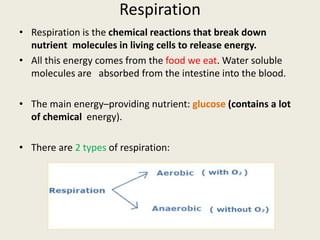
• There are 2 types of respiration:
There are 2 kinds of respiration:
Aerobic and Anaerobic. The main difference between them is that
aerobic respiration involves oxygen and anaerobic respiration does not!
A. Aerobic respiration
The release of a relatively large amount of energy in cells by the
breakdown of food substances in the presence of O2.
• B. Anaerobic respiration
Anaerobic respiration: the release of a relatively small amount of
energy by the breakdown of food substances in the absence of O2.
Anaerobic respiration in muscles during exercise:
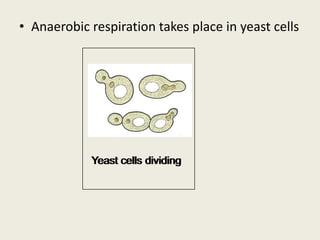
• Anaerobic respiration takes place in yeast cells
Yeast cells dividingYeast cells dividing
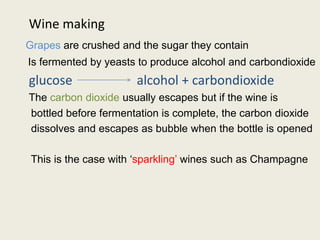
Wine making
Grapes are crushed and the sugar they contain
Is fermented by yeasts to produce alcohol and carbondioxide
glucose alcohol + carbondioxide
The carbon dioxide usually escapes but if the wine is
bottled before fermentation is complete, the carbon dioxide
dissolves and escapes as bubble when the bottle is opened
This is the case with ‘sparkling’ wines such as Champagne
Black grapes growing in a vineyard
© Ilan’s Wine Making
Brewing
In brewing beer, a sugary product (malt) is dissolved out
of germinating barley
Yeast is added to this solution and fermentation begins,
producing alcohol and carbon dioxide
Some of the carbon dioxide escapes but the rest
dissolves in the beer when it is bottled or put into casks
When the bottles or casks are opened, the dissolved
carbondioxide escapes as bubbles
At 8-9% the alcohol (which is toxic) kills the yeast, (higher
concentrations of alcohol are achieved by distillation)
Beer fermenting
©Stuart Boreham/CEPHAS
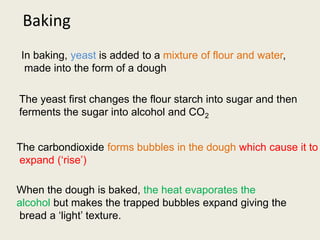
Baking
In baking, yeast is added to a mixture of flour and water,
made into the form of a dough
The yeast first changes the flour starch into sugar and then
ferments the sugar into alcohol and CO2
The carbondioxide forms bubbles in the dough which cause it to
expand (‘rise’)
When the dough is baked, the heat evaporates the
alcohol but makes the trapped bubbles expand giving the
bread a ‘light’ texture.
Dough rising
The yeast is mixed
with the dough
After 1 hour in a warm
place the dough has
risen as a result of the
carbon dioxide
produced by the yeast
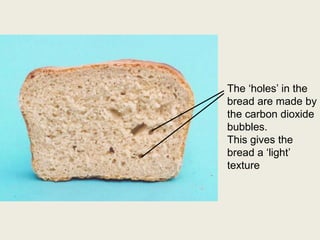
The ‘holes’ in the
bread are made by
the carbon dioxide
bubbles.
This gives the
bread a ‘light’
texture

Respiration

  • 1.
    It’s a chemicalreaction that happens in all our cells to release energy. This can be used for -Contraction of muscle cells producing movement. -Cell division -Building large molecules, such as proteins -The reaction releases heat which can be used to maintain steady body temperature.
  • 2.
    Respiration • Respiration isthe chemical reactions that break down nutrient molecules in living cells to release energy. • All this energy comes from the food we eat. Water soluble molecules are absorbed from the intestine into the blood. • The main energy–providing nutrient: glucose (contains a lot of chemical energy). • There are 2 types of respiration:
  • 3.
    There are 2kinds of respiration: Aerobic and Anaerobic. The main difference between them is that aerobic respiration involves oxygen and anaerobic respiration does not! A. Aerobic respiration The release of a relatively large amount of energy in cells by the breakdown of food substances in the presence of O2. • B. Anaerobic respiration Anaerobic respiration: the release of a relatively small amount of energy by the breakdown of food substances in the absence of O2. Anaerobic respiration in muscles during exercise:
  • 5.
    • Anaerobic respirationtakes place in yeast cells Yeast cells dividingYeast cells dividing
  • 6.
    Wine making Grapes arecrushed and the sugar they contain Is fermented by yeasts to produce alcohol and carbondioxide glucose alcohol + carbondioxide The carbon dioxide usually escapes but if the wine is bottled before fermentation is complete, the carbon dioxide dissolves and escapes as bubble when the bottle is opened This is the case with ‘sparkling’ wines such as Champagne
  • 7.
    Black grapes growingin a vineyard © Ilan’s Wine Making
  • 8.
    Brewing In brewing beer,a sugary product (malt) is dissolved out of germinating barley Yeast is added to this solution and fermentation begins, producing alcohol and carbon dioxide Some of the carbon dioxide escapes but the rest dissolves in the beer when it is bottled or put into casks When the bottles or casks are opened, the dissolved carbondioxide escapes as bubbles At 8-9% the alcohol (which is toxic) kills the yeast, (higher concentrations of alcohol are achieved by distillation)
  • 9.
  • 10.
    Baking In baking, yeastis added to a mixture of flour and water, made into the form of a dough The yeast first changes the flour starch into sugar and then ferments the sugar into alcohol and CO2 The carbondioxide forms bubbles in the dough which cause it to expand (‘rise’) When the dough is baked, the heat evaporates the alcohol but makes the trapped bubbles expand giving the bread a ‘light’ texture.
  • 11.
    Dough rising The yeastis mixed with the dough After 1 hour in a warm place the dough has risen as a result of the carbon dioxide produced by the yeast
  • 12.
    The ‘holes’ inthe bread are made by the carbon dioxide bubbles. This gives the bread a ‘light’ texture