Land water
Soil natural vegetation
and wildlife
Natural resources
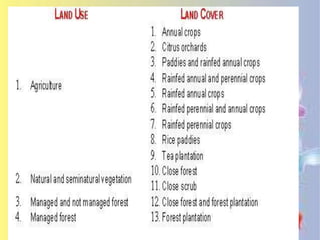
Land use
Cultivation of crops
Grazing of animals
Building houses , roads & airports
Mining
Manufacturing
Physical factors
Topography
Soil
climate
Availability of water
Mineral resources
Economic andhuman
factors
population
Industrialization
Level of development
Distribution of land
3 stages of soil formationStage – 1
Soil formation starts due to weathering of
rocks and it develop a organic layer.
Stage – 2
Bacteria and micro-organisms act on the
remains of plants and other organic material
forming humus.
Stage -3
Humus helps loose soil grains to stay –
together and also makes the soil more fertile.
Soil erosion - removal of soil
Causes of soil erosion
Deforestation
Over grazing of land
Improper farming techniques
wind and rainfall
Methods to conserve soil
Afforestation
Mulching
Contour barrier
Rock dam
Terrace farming
Intercropping
Contour ploughing
Shelter belts
Hard facts about water
71% of earth surface is water.
97% of earth water is salty found in
oceans.
3% of earth water is fresh water.
Two-third of fresh water is locked in
northern and southern poles
Only one- third is found in lakes, rivers,
streams and aquifiers.
Importance of water
Irrigation
Industries
For formation of water
Drinking
Power generation
transportation
For recreational activities like
swimming, boating and fishing
Factors responsible for water
scarcityGrowing population
Commercialization of agriculture
Variatation in seasonal and annual
precipitation
Industrializatation and urbanization
Over -utilization and mis- utilization of water
pollution
Natural vegetation and wildlife
Vegetation supports function of biosphere.
It regulates flow of water, carbon and
nitrogen.
Vegetation affects soil properties.
Vegetation is important in use of fossil fuels as
energy source.
Source of energy in atmosphere.
Natural vegetation and wildlife
Wildlife includes animals, birds, insects and
aquatic life.
They give us milk, meat, hides and wool
Insects like bees gives honey.
Insects help in pollination of flowers.
Birds like vultures decompose dead livestock
and cleans environment.
Human resources
This refers to the number and abilities
(mental and physical) of the people of the
people . People can make the best use of
nature to create more resources when they
have the knowledge, skill and the technology
to do so. That is why human beings are special
resources. People are human resources.
Education and health help in making people a
valuable resources.
Human made resources
Sometimes natural substances become
resources only when their original form has
been changed. Iron ore was not a resources
until people learnt to extract iron from it.
People use natural resources to make
buildings, bridges, roads, machinery, and
vehicles , which are known as human made
resources. Technology is also a human made
resources.
Resources
Resources

Resources

  • 5.
    Land water Soil naturalvegetation and wildlife Natural resources
  • 6.
    Land use Cultivation ofcrops Grazing of animals Building houses , roads & airports Mining Manufacturing
  • 8.
    Physical factors Topography Soil climate Availability ofwater Mineral resources Economic andhuman factors population Industrialization Level of development
  • 10.
  • 11.
    3 stages ofsoil formationStage – 1 Soil formation starts due to weathering of rocks and it develop a organic layer. Stage – 2 Bacteria and micro-organisms act on the remains of plants and other organic material forming humus. Stage -3 Humus helps loose soil grains to stay – together and also makes the soil more fertile.
  • 12.
    Soil erosion -removal of soil Causes of soil erosion Deforestation Over grazing of land Improper farming techniques wind and rainfall
  • 13.
    Methods to conservesoil Afforestation Mulching Contour barrier Rock dam Terrace farming Intercropping Contour ploughing Shelter belts
  • 15.
    Hard facts aboutwater 71% of earth surface is water. 97% of earth water is salty found in oceans. 3% of earth water is fresh water. Two-third of fresh water is locked in northern and southern poles Only one- third is found in lakes, rivers, streams and aquifiers.
  • 16.
    Importance of water Irrigation Industries Forformation of water Drinking Power generation transportation For recreational activities like swimming, boating and fishing
  • 17.
    Factors responsible forwater scarcityGrowing population Commercialization of agriculture Variatation in seasonal and annual precipitation Industrializatation and urbanization Over -utilization and mis- utilization of water pollution
  • 18.
    Natural vegetation andwildlife Vegetation supports function of biosphere. It regulates flow of water, carbon and nitrogen. Vegetation affects soil properties. Vegetation is important in use of fossil fuels as energy source. Source of energy in atmosphere.
  • 19.
    Natural vegetation andwildlife Wildlife includes animals, birds, insects and aquatic life. They give us milk, meat, hides and wool Insects like bees gives honey. Insects help in pollination of flowers. Birds like vultures decompose dead livestock and cleans environment.
  • 22.
    Human resources This refersto the number and abilities (mental and physical) of the people of the people . People can make the best use of nature to create more resources when they have the knowledge, skill and the technology to do so. That is why human beings are special resources. People are human resources. Education and health help in making people a valuable resources.
  • 25.
    Human made resources Sometimesnatural substances become resources only when their original form has been changed. Iron ore was not a resources until people learnt to extract iron from it. People use natural resources to make buildings, bridges, roads, machinery, and vehicles , which are known as human made resources. Technology is also a human made resources.