HAVE YOU EVER EXPERIENCED…
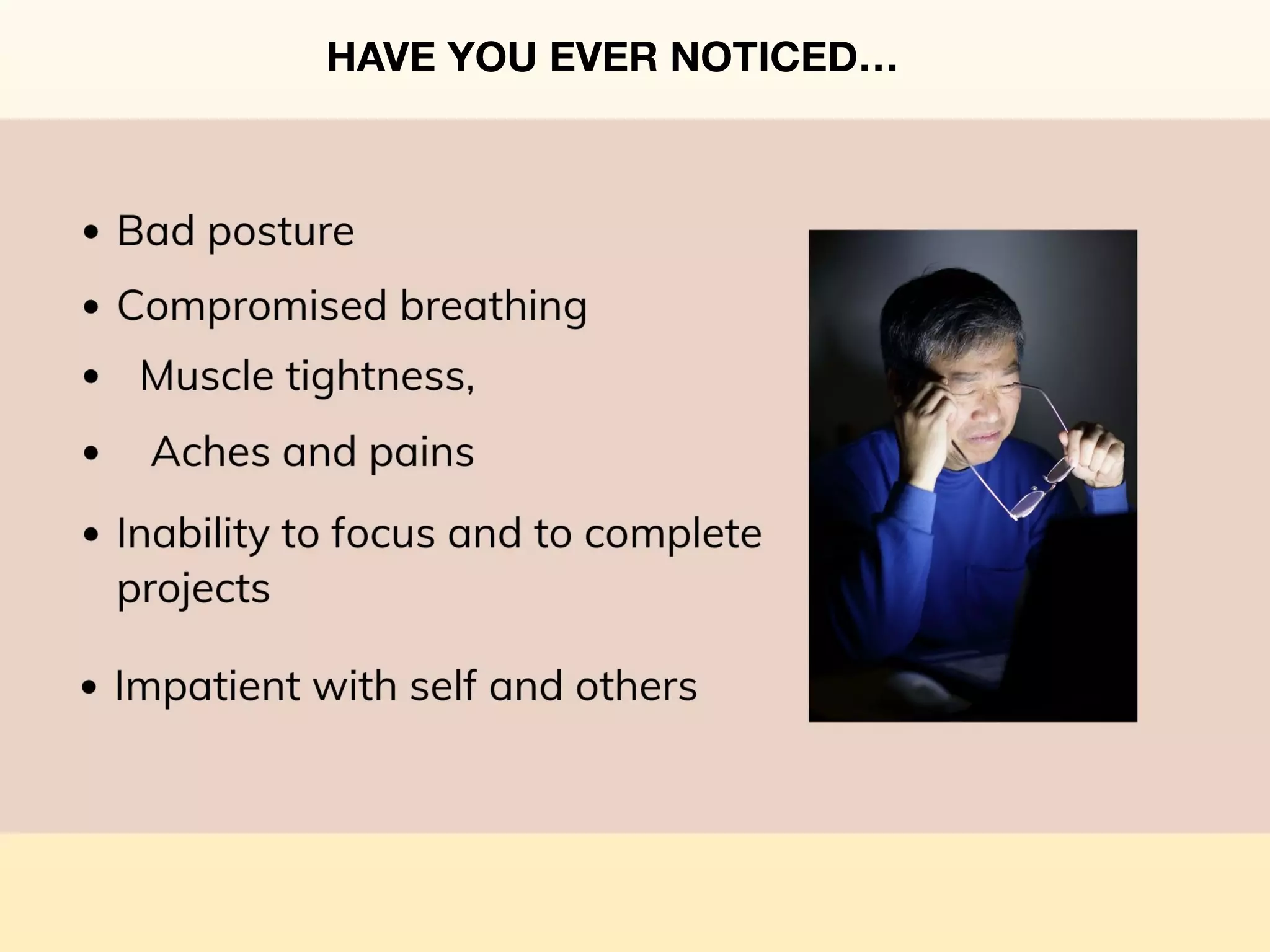
HAVE YOU EVER NOTICED…
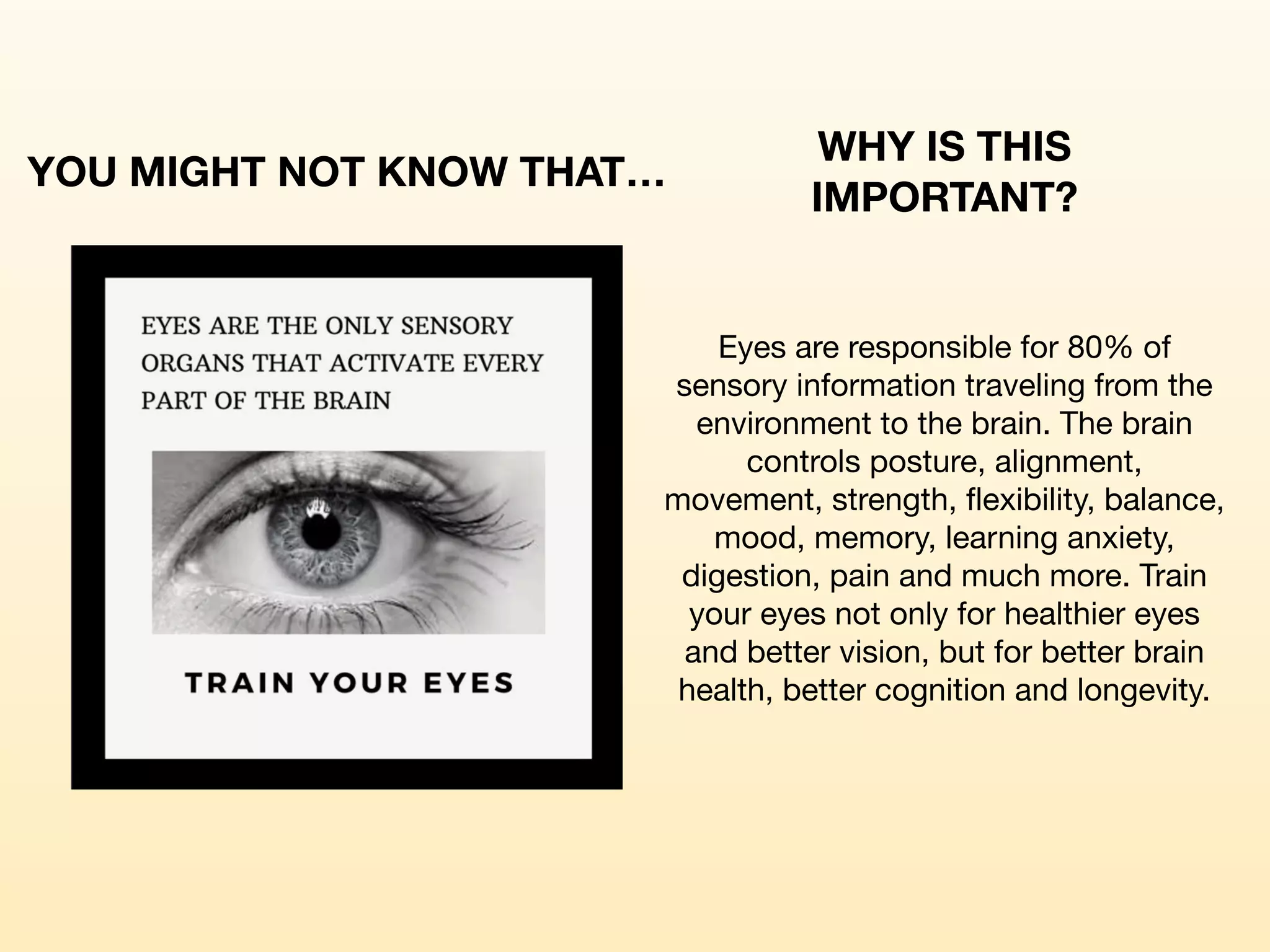
YOU MIGHT NOT KNOW THAT…
WHY IS THIS
IMPORTANT?
Eyes are responsible for 80% of
sensory information traveling from the
environment to the brain. The brain
controls posture, alignment,
movement, strength, flexibility, balance,
mood, memory, learning anxiety,
digestion, pain and much more. Train
your eyes not only for healthier eyes
and better vision, but for better brain
health, better cognition and longevity.
Training the eyes is not always attractive. Eye exercises will
not make it to the most “fashionable” trends,
but they will bring significant benefits to our vision,
balance, overall health and wellbeing.
• First, read through all pages.

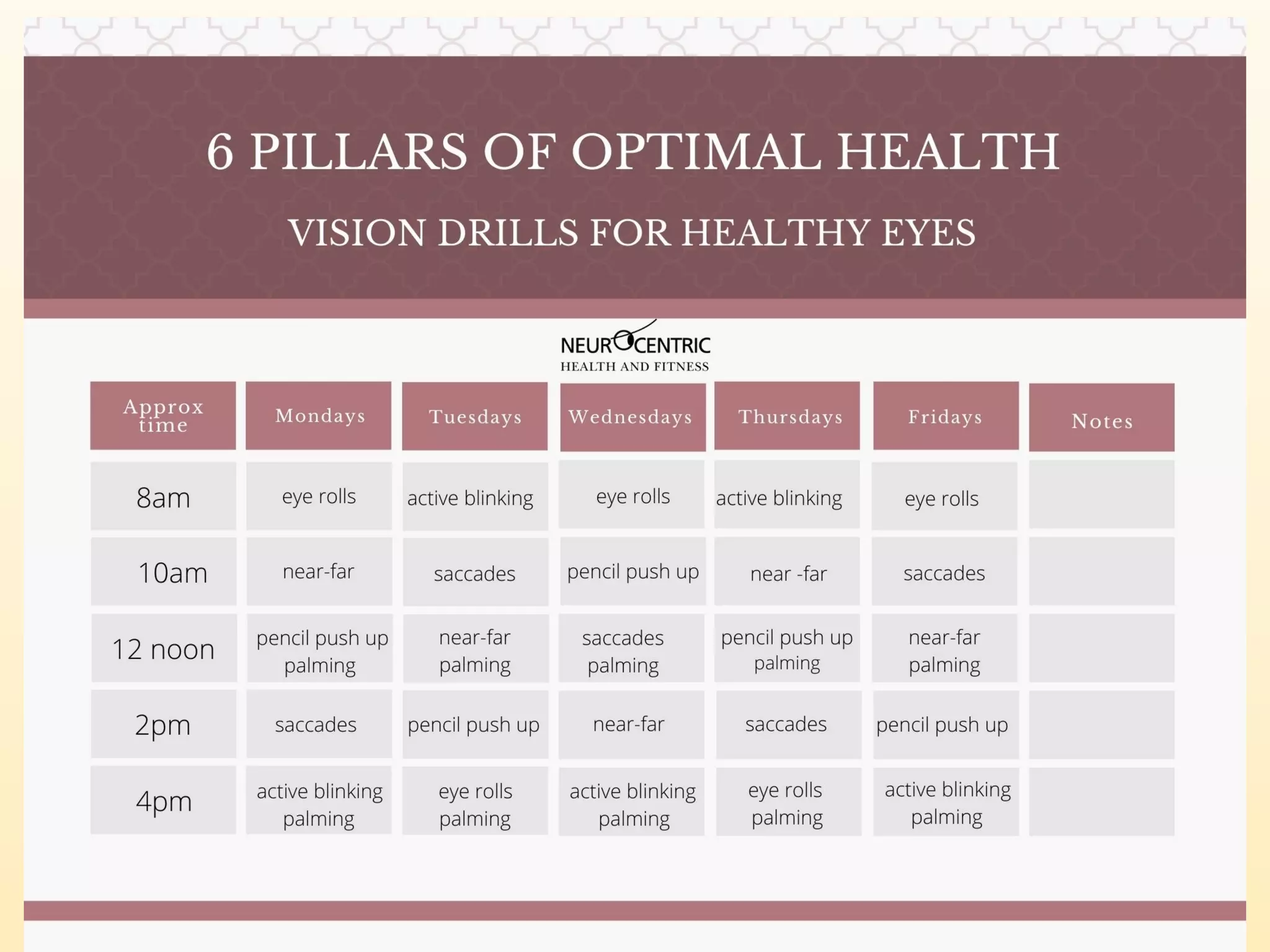
• Print out the “Clock Chart” and the “Table” with the daily routine.

• Take a week to learn the 6 exercises very well (one a day), so you don’t have to keep reading them when you start the program.

• Follow the suggested routine daily for 4 weeks to start noticing changes.

• If the suggested number of repetitions seems too much, do less. 

• Do all exercises seated. If you have not exercised your eyes before you might get dizzy or get a headache. Stop for that day and
restart next day. Listen to your body and your eyes and be safe!

• Stay hydrated. These exercise might seem simple, but remember when you’re exercising your eyes, you are also working your
brain!

• Email ildikovarhelyi@me.com if you have any questions.

• Once you learned the exercises well, you won’t need the clock chart in front of you, you could find external targets to do the
work, and you can mix and match the exercises to benefit your needs. That will give you the freedom to exercises your eyes
anywhere. 

• Times on the Table Chart are suggested, you can make up your own timetable according to your own schedule.

• Remember the eyes will not like the exercises that are challenging for the visual system, same as we try to avoid doing push ups
when we are not good at it. However, if we want to get better at anything, we need to stick to the program that can hep us to do
so.
How do I use this program?
• Palming

• Active Blinking

• Eye Rolls

• Pencil Push Up

• Saccades (eye jumps)

• Near -Far
Practice with attention and consistency to improve eye health,
vision, balance, focus and much much more…
SIX BASIC EYE EXERCISES
Of course there are more than six basic exercises for the eyes, 

but we need to start somewhere…
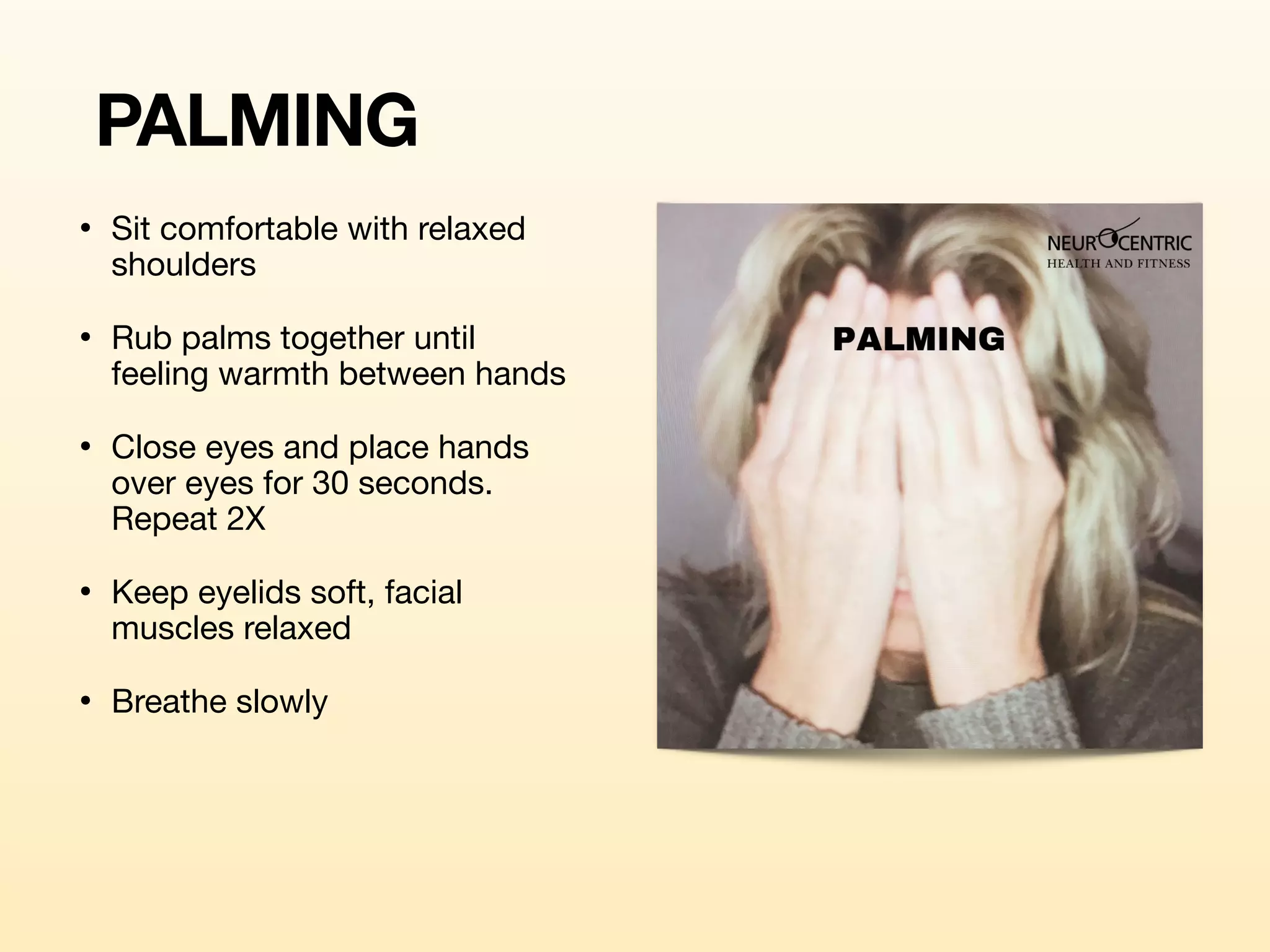
PALMING
• Sit comfortable with relaxed
shoulders 

• Rub palms together until
feeling warmth between hands

• Close eyes and place hands
over eyes for 30 seconds.
Repeat 2X

• Keep eyelids soft, facial
muscles relaxed

• Breathe slowly
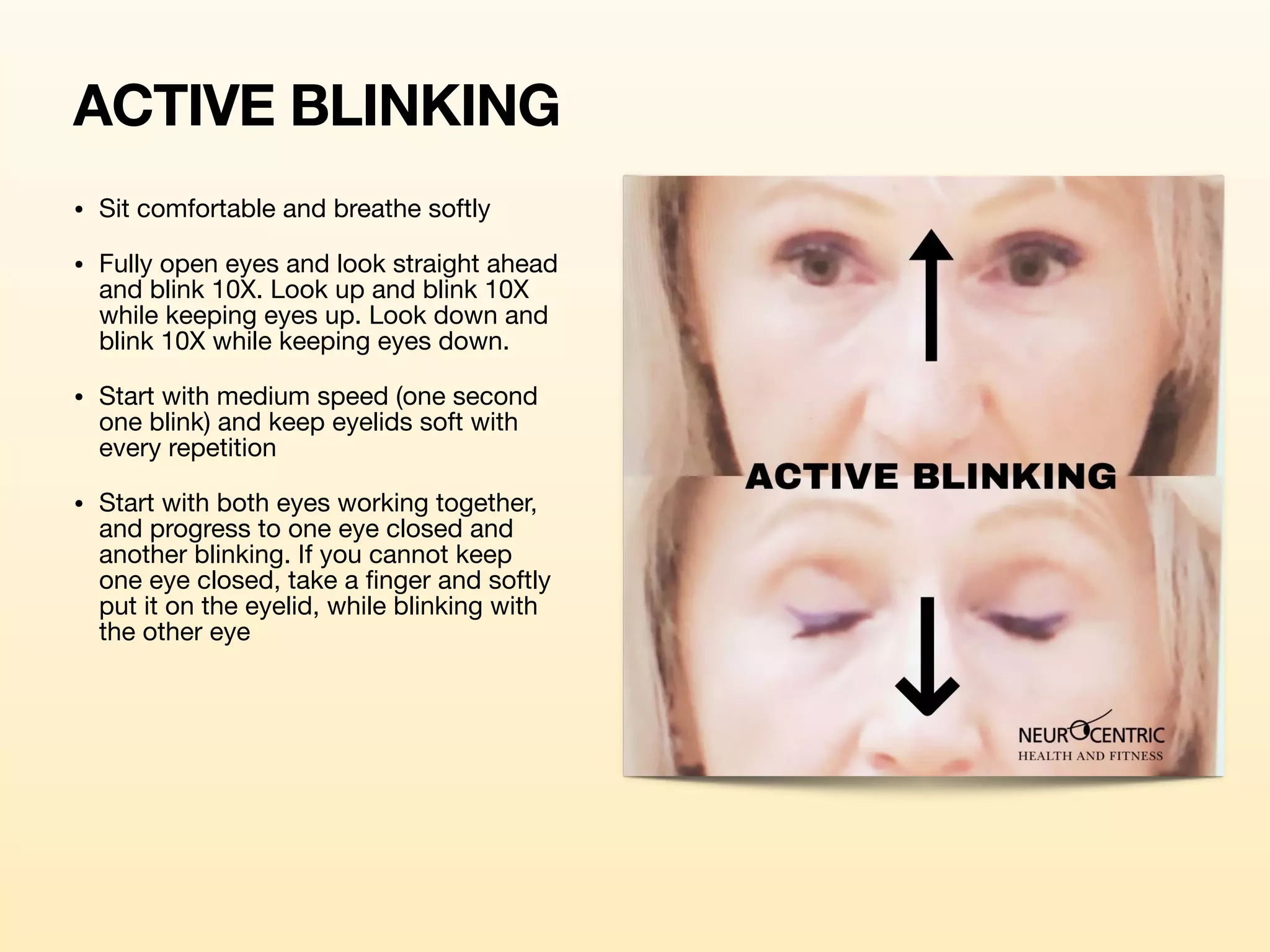
ACTIVE BLINKING
• Sit comfortable and breathe softly

• Fully open eyes and look straight ahead
and blink 10X. Look up and blink 10X
while keeping eyes up. Look down and
blink 10X while keeping eyes down. 

• Start with medium speed (one second
one blink) and keep eyelids soft with
every repetition

• Start with both eyes working together,
and progress to one eye closed and
another blinking. If you cannot keep
one eye closed, take a finger and softly
put it on the eyelid, while blinking with
the other eye
EYE ROLLS
• Sit comfortable and breathe slowly

• Start with small movements, roll
eyes around, clockwise and
counter clockwise. (Next page has
a clock template that you can print
out) Repeat 5X in both directions 

• Make sure that you create a
circular motion not a straight line
between the numbers of the clock

• Notice where the eyes want to
jump, slow down and control the
movement
PENCIL PUSH UP
• Hold pencil directly in front of
you at arm’s length

• Focusing on the tip of the pencil,
slowly bring pencil towards nose

• Feel your eyes moving inwards,
(converging) and stop when start
seeing two tips or lost focus

• Follow pencil away from nose till
arm is fully extended
(divergence)

• Repeat 5X
CONVERGENCE - DIVERGENCE
SACCADES
• Look at the clock chart that you
printed out.

• Keep head still (put finger on chin to
detect unwanted movement)

• Target 3 and 9. Jump eyes from left to
right, and right to left (3-9, 9-3) as fast
as you can. Make sure to focus on
end target clearly. Repeat drill 10X

• Same drill, but go from top to bottom,
bottom to top. (6-12, 12-6) repeat
10X

• Slow down if cannot keep target in
focus or if head wants to move when
jumping the eyes
EYE JUMPS
NEAR - FAR
• Hold your thumb about 6”
from face and focus on it for 6
seconds

• Find a target about 15’ away
from you and focus on it for 6
seconds

• Return eyes to focus on thumb

• Return eyes to focus on far
target

• Repeat 10X
Reset your eyes in 4 weeks

Reset your eyes in 4 weeks

  • 2.
    HAVE YOU EVEREXPERIENCED…
  • 3.
    HAVE YOU EVERNOTICED…
  • 4.
    YOU MIGHT NOTKNOW THAT… WHY IS THIS IMPORTANT? Eyes are responsible for 80% of sensory information traveling from the environment to the brain. The brain controls posture, alignment, movement, strength, flexibility, balance, mood, memory, learning anxiety, digestion, pain and much more. Train your eyes not only for healthier eyes and better vision, but for better brain health, better cognition and longevity.
  • 5.
    Training the eyesis not always attractive. Eye exercises will not make it to the most “fashionable” trends, but they will bring significant benefits to our vision, balance, overall health and wellbeing.
  • 6.
    • First, readthrough all pages. • Print out the “Clock Chart” and the “Table” with the daily routine. • Take a week to learn the 6 exercises very well (one a day), so you don’t have to keep reading them when you start the program. • Follow the suggested routine daily for 4 weeks to start noticing changes. • If the suggested number of repetitions seems too much, do less. • Do all exercises seated. If you have not exercised your eyes before you might get dizzy or get a headache. Stop for that day and restart next day. Listen to your body and your eyes and be safe! • Stay hydrated. These exercise might seem simple, but remember when you’re exercising your eyes, you are also working your brain! • Email ildikovarhelyi@me.com if you have any questions. • Once you learned the exercises well, you won’t need the clock chart in front of you, you could find external targets to do the work, and you can mix and match the exercises to benefit your needs. That will give you the freedom to exercises your eyes anywhere. • Times on the Table Chart are suggested, you can make up your own timetable according to your own schedule. • Remember the eyes will not like the exercises that are challenging for the visual system, same as we try to avoid doing push ups when we are not good at it. However, if we want to get better at anything, we need to stick to the program that can hep us to do so. How do I use this program?
  • 7.
    • Palming • ActiveBlinking • Eye Rolls • Pencil Push Up • Saccades (eye jumps) • Near -Far Practice with attention and consistency to improve eye health, vision, balance, focus and much much more… SIX BASIC EYE EXERCISES Of course there are more than six basic exercises for the eyes, but we need to start somewhere…
  • 8.
    PALMING • Sit comfortablewith relaxed shoulders • Rub palms together until feeling warmth between hands • Close eyes and place hands over eyes for 30 seconds. Repeat 2X • Keep eyelids soft, facial muscles relaxed • Breathe slowly
  • 9.
    ACTIVE BLINKING • Sitcomfortable and breathe softly • Fully open eyes and look straight ahead and blink 10X. Look up and blink 10X while keeping eyes up. Look down and blink 10X while keeping eyes down. • Start with medium speed (one second one blink) and keep eyelids soft with every repetition • Start with both eyes working together, and progress to one eye closed and another blinking. If you cannot keep one eye closed, take a finger and softly put it on the eyelid, while blinking with the other eye
  • 10.
    EYE ROLLS • Sitcomfortable and breathe slowly • Start with small movements, roll eyes around, clockwise and counter clockwise. (Next page has a clock template that you can print out) Repeat 5X in both directions • Make sure that you create a circular motion not a straight line between the numbers of the clock • Notice where the eyes want to jump, slow down and control the movement
  • 12.
    PENCIL PUSH UP •Hold pencil directly in front of you at arm’s length • Focusing on the tip of the pencil, slowly bring pencil towards nose • Feel your eyes moving inwards, (converging) and stop when start seeing two tips or lost focus • Follow pencil away from nose till arm is fully extended (divergence) • Repeat 5X CONVERGENCE - DIVERGENCE
  • 13.
    SACCADES • Look atthe clock chart that you printed out. • Keep head still (put finger on chin to detect unwanted movement) • Target 3 and 9. Jump eyes from left to right, and right to left (3-9, 9-3) as fast as you can. Make sure to focus on end target clearly. Repeat drill 10X • Same drill, but go from top to bottom, bottom to top. (6-12, 12-6) repeat 10X • Slow down if cannot keep target in focus or if head wants to move when jumping the eyes EYE JUMPS
  • 14.
    NEAR - FAR •Hold your thumb about 6” from face and focus on it for 6 seconds • Find a target about 15’ away from you and focus on it for 6 seconds • Return eyes to focus on thumb • Return eyes to focus on far target • Repeat 10X