Social and Political Factors
that Influence the Voting
Preference of Generation
X and Y Voters
Social and Political
Factors that Influence
the Voting Preferences
of Generation X and Y
Voters
Diana O. Dela Torre
Research Proposal
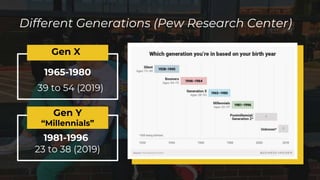
Different Generations (Pew Research Center)
Gen X
Gen Y
“Millennials”
1981-1996
1965-1980
23 to 38 (2019)
39 to 54 (2019)
An increase in voter turnout was observed by the COMELEC during
the 2016 presidential elections. It was by far the highest turnout in the
context of automated elections. Generation X and Y voters largely
contributed to this increase, since almost half of the voters who
participated were millennials (gen Y).
Studying the factors that influence generation X and Y’s preferences
will help us understand better the majority group that makes up the
Filipino electorate.
CONTEXT & SIGNIFICANCE
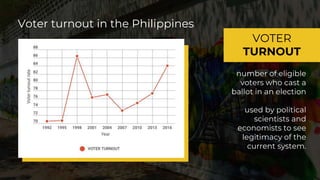
VOTER
TURNOUT
Voter turnout in the Philippines
number of eligible
voters who cast a
ballot in an election
used by political
scientists and
economists to see
legitimacy of the
current system.
What are the top three social and political factors that influence
the preferences of generation X and Y voters?
How are these factors supposed to influence the voting
preferences of generation X and Y voters from Metro Manila?
RESEARCH AIM & QUESTIONS
To determine the social and political factors that influence the
voting preferences of generation X and Y voters in Metro Manila
(for the position of president).
METHODOLOGY
2016 PRESIDENTIAL ELECTIONS
- had the highest voter turnout
- more than 116 polling precints
from 18 provinces reported
100% voter turnout (COMELEC
Transparency Server).
Qualitative
Research
(Descriptive)
Independent Variable/s:
Social and political factors/generation
where voter belongs to
Dependent Variables:
Voting preference
Respondents:
Students and young
professionals
Sample size: X
Millennial Voters’ Preference for the 2016
Philippine Presidential Elections: A
Simulation Using Conjoint Analysis
Vianne Murcia & Ritz Bolo, July 2017
The study conducted by UM students Murcia and Bolo revealed that
millennials prefer a president with enough political experience and
good educational credentials. Factors that scored the least are
popularity and profession.
Study
The Problem with Elections
by Sen. Miriam Defensor Santiago
Senator Santiago mentioned in the speech that unfortunately,
majority of Filipino voters are not intelligent enough and the same
goes for the candidates as well.
Also, while elections allow the voters to participate in the important
political activity, there is electoral corruption; uneducated voters can
willingly sell their votes to the politicians who can give them money or
positions in return (vote-buying).
Full transcript of speech made on November 22, 2012 at the Far Eastern University
Knowing the Filipino Voters
Bong Osorio for Philippine Star (2015).
Presented the results of a survey conducted by Vox Opinion Research
regarding the political attitudes, opinions, and beliefs of young voters.
Some results included: (1) TV is still the most popular medium for
advocating ads for political personalities (2) Readership of news via the
internet is at the same level as the newspapers’ reach (3) Only half of
the adult population express confidence in the reliability of the results
of polling surveys, and (4) Family opinions play a large role in
influencing other family members who to vote.
Newspaper article
The Voting Preferences of Selected Voters
in the City of Calapan for 2016 National and
Local Elections
Stephenson Calda, PhD student, Divine Word College- Calapan
The study revealed that Calapan city voters are likely to vote for
politicians who are a part of large political clans or large businesses.
There seems to be a sense of trust in political families which may be the
reason why political dynasties are very prominent in the country.
But, if any member of the political clan gets involved in any controversy,
other clan members in politics can also lose the favor of the electorate.
Study
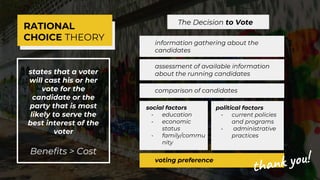
RATIONAL
CHOICE THEORY
states that a voter
will cast his or her
vote for the
candidate or the
party that is most
likely to serve the
best interest of the
voter
Benefits > Cost
The Decision to Vote
social factors
- education
- economic
status
- family/commu
nity
political factors
- current policies
and programs
- administrative
practices
information gathering about the
candidates
assessment of available information
about the running candidates
comparison of candidates
voting preference

Research Proposal on Voting Preferences

  • 1.
    Social and PoliticalFactors that Influence the Voting Preference of Generation X and Y Voters Social and Political Factors that Influence the Voting Preferences of Generation X and Y Voters Diana O. Dela Torre Research Proposal
  • 2.
    Different Generations (PewResearch Center) Gen X Gen Y “Millennials” 1981-1996 1965-1980 23 to 38 (2019) 39 to 54 (2019)
  • 3.
    An increase invoter turnout was observed by the COMELEC during the 2016 presidential elections. It was by far the highest turnout in the context of automated elections. Generation X and Y voters largely contributed to this increase, since almost half of the voters who participated were millennials (gen Y). Studying the factors that influence generation X and Y’s preferences will help us understand better the majority group that makes up the Filipino electorate. CONTEXT & SIGNIFICANCE
  • 4.
    VOTER TURNOUT Voter turnout inthe Philippines number of eligible voters who cast a ballot in an election used by political scientists and economists to see legitimacy of the current system.
  • 5.
    What are thetop three social and political factors that influence the preferences of generation X and Y voters? How are these factors supposed to influence the voting preferences of generation X and Y voters from Metro Manila? RESEARCH AIM & QUESTIONS To determine the social and political factors that influence the voting preferences of generation X and Y voters in Metro Manila (for the position of president).
  • 6.
    METHODOLOGY 2016 PRESIDENTIAL ELECTIONS -had the highest voter turnout - more than 116 polling precints from 18 provinces reported 100% voter turnout (COMELEC Transparency Server). Qualitative Research (Descriptive) Independent Variable/s: Social and political factors/generation where voter belongs to Dependent Variables: Voting preference Respondents: Students and young professionals Sample size: X
  • 7.
    Millennial Voters’ Preferencefor the 2016 Philippine Presidential Elections: A Simulation Using Conjoint Analysis Vianne Murcia & Ritz Bolo, July 2017 The study conducted by UM students Murcia and Bolo revealed that millennials prefer a president with enough political experience and good educational credentials. Factors that scored the least are popularity and profession. Study
  • 8.
    The Problem withElections by Sen. Miriam Defensor Santiago Senator Santiago mentioned in the speech that unfortunately, majority of Filipino voters are not intelligent enough and the same goes for the candidates as well. Also, while elections allow the voters to participate in the important political activity, there is electoral corruption; uneducated voters can willingly sell their votes to the politicians who can give them money or positions in return (vote-buying). Full transcript of speech made on November 22, 2012 at the Far Eastern University
  • 9.
    Knowing the FilipinoVoters Bong Osorio for Philippine Star (2015). Presented the results of a survey conducted by Vox Opinion Research regarding the political attitudes, opinions, and beliefs of young voters. Some results included: (1) TV is still the most popular medium for advocating ads for political personalities (2) Readership of news via the internet is at the same level as the newspapers’ reach (3) Only half of the adult population express confidence in the reliability of the results of polling surveys, and (4) Family opinions play a large role in influencing other family members who to vote. Newspaper article
  • 10.
    The Voting Preferencesof Selected Voters in the City of Calapan for 2016 National and Local Elections Stephenson Calda, PhD student, Divine Word College- Calapan The study revealed that Calapan city voters are likely to vote for politicians who are a part of large political clans or large businesses. There seems to be a sense of trust in political families which may be the reason why political dynasties are very prominent in the country. But, if any member of the political clan gets involved in any controversy, other clan members in politics can also lose the favor of the electorate. Study
  • 11.
    RATIONAL CHOICE THEORY states thata voter will cast his or her vote for the candidate or the party that is most likely to serve the best interest of the voter Benefits > Cost The Decision to Vote social factors - education - economic status - family/commu nity political factors - current policies and programs - administrative practices information gathering about the candidates assessment of available information about the running candidates comparison of candidates voting preference