Livelihood Vulnerability and Sub-Government
 Position Analysis on the Possible Impacts of
   Mainstream Hydropower Development


   (A case study of vulnerable livelihood in lowland area of
                  Takeo Province, Cambodia)

       2nd Mekong Forum on Water, Food and Energy
                 13-14 November 2012

               Research Fellow: Socheath SOU
Main Objectives
• To identify the livelihood dependency of the
  communities living in the low-land area of
  Takeo Province on the Mekong mainstream,
• To determine alternative livelihood options of
  those communities,
• To examine sub-government’s position on
  hydropower development, and
• To access the effectiveness of current water
  governance practices within the province.
Key Questions (1)
• How do rural communities make use the
  advantages of Mekong seasonal water’s regimes?
  At what level?
• What are alternatives or livelihood options for
  those rural communities?
• Do local governments are aware of the risks of
  hydropower development in the country or along
  the Mekong mainstream? How would they
  describe the costs/benefits of such the
  development?
Key Questions (2)
• What is the sub-national government position on
  hydropower issues?
• What are the common practices of water
  governance in the area?
• Would the current practices of water governance
  equally share benefits and risks?
• Are there any challenges in local water
  governance in the province?
• Are there any social inclusion and exclusion in
  decision making in the governance of water
  resources?
Approaches
• Engage in a wide-range of stakeholders, a so-
  called participatory approach,
  – sub-national government level and commune
    level,
  – local villagers who are living along the low-land
    area in Takeo Province
  – findings could be simply generalized into or
    reflected to the context of the water governance
    of the lower Mekong Basin in Cambodia
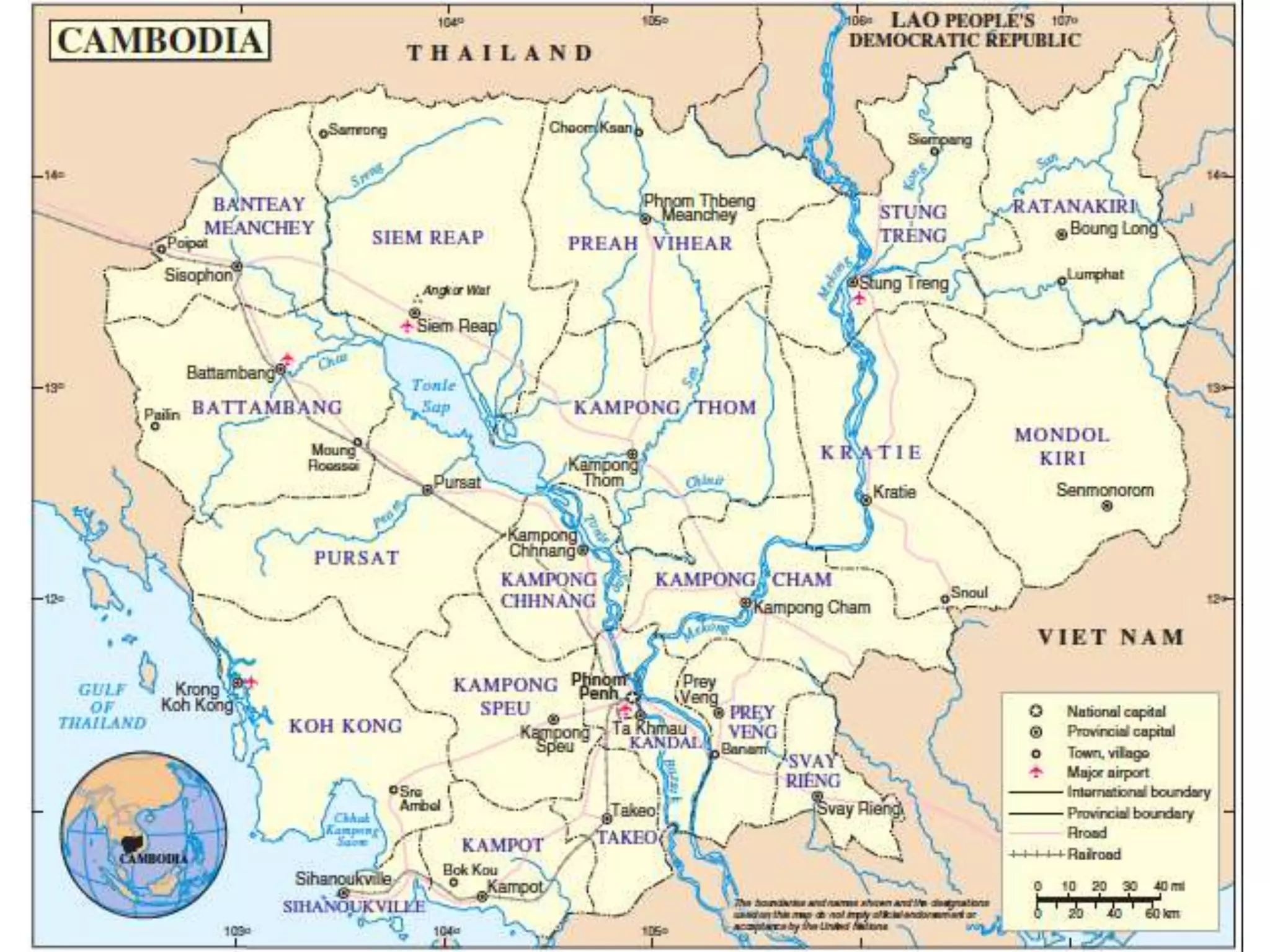
Coverage Area
• The research will focus in four difference
  districts in Takeo Province residing in the low-
  land area,
  – Borei Chulsa,
  – Angkor Borie,
  – Koh Andeth and
  – Kirivong.
Methods (1)
• The research uses qualitative and quantitative
  approach
• Data will be derived from both secondary and
  primary data,
  –   Household questionnaire based survey,
  –   Community meetings, and
  –   focus group discussions
  –   Key informants will be made with all the relevant
      governments (sub-national government’s bodies) and
      NGOs agencies
Methods (2)
• A study case of the local water governance
  practices will be produced.
• Field observations are also included in the
  data collection process.
• A provincial consultation workshop
Preliminary findings (1)
• The man-made infrastructure mostly comes
  from a series of water canals and waterways
• The province consists of the typical plain wet
  area for Cambodia, covering rice fields and
  other agricultural plantations.
• Takeo’s economy consists basically of
  agricultural farming and its related sub-sector,
  including fishery, rice and fruit cropping.
Preliminary findings (2)
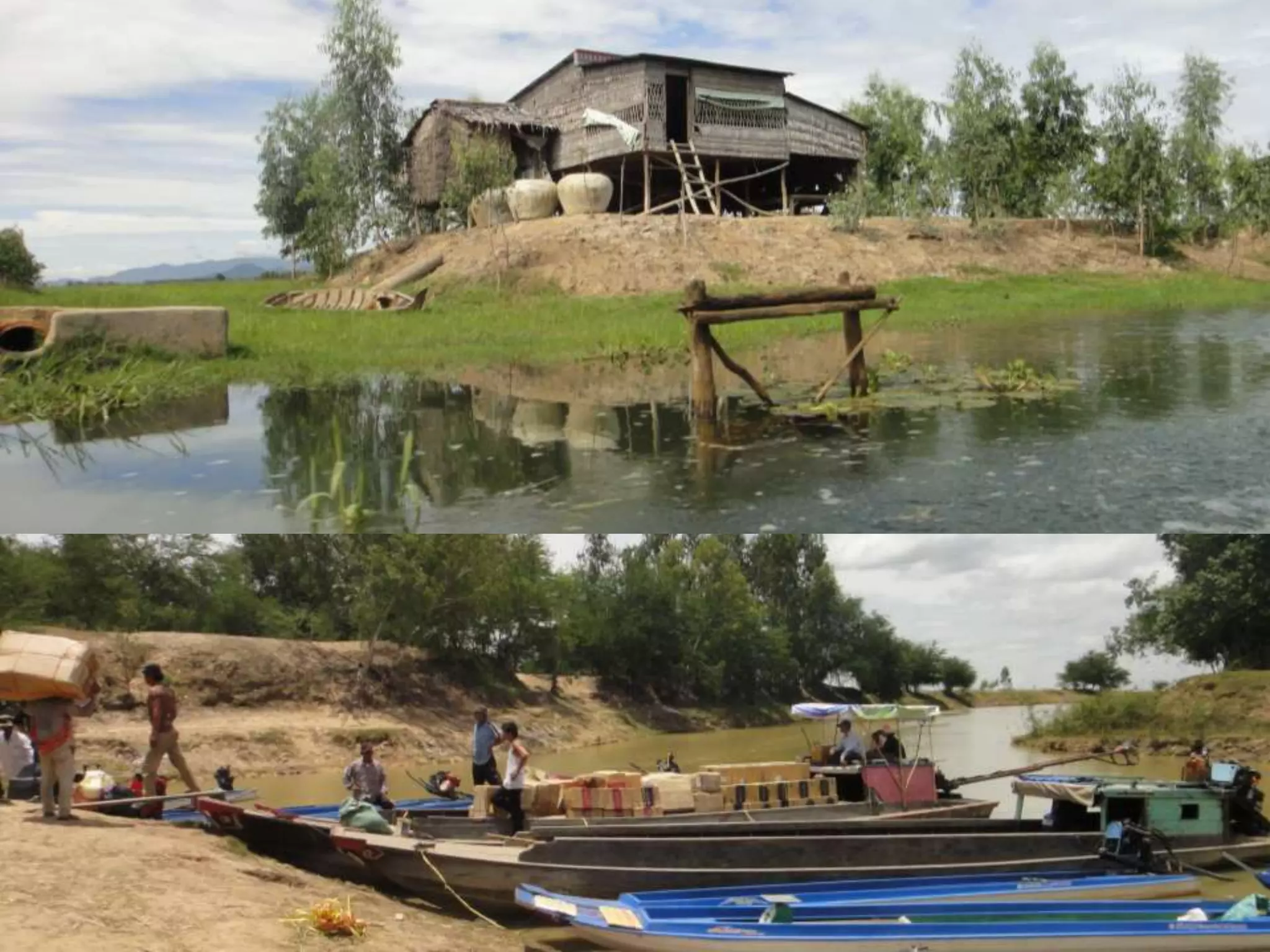
• The floods usually stay long period of times, from
  July to November
• the increase of water level on the upper Mekong
  mainstream and heavy rainfall in Takeo Province
• big dams in Mekong delta for agricultural
  purposes.
• Flood frequency in these areas is very high and
  “living with the flood” can almost be considered
  a way of life for people living in the four districts.
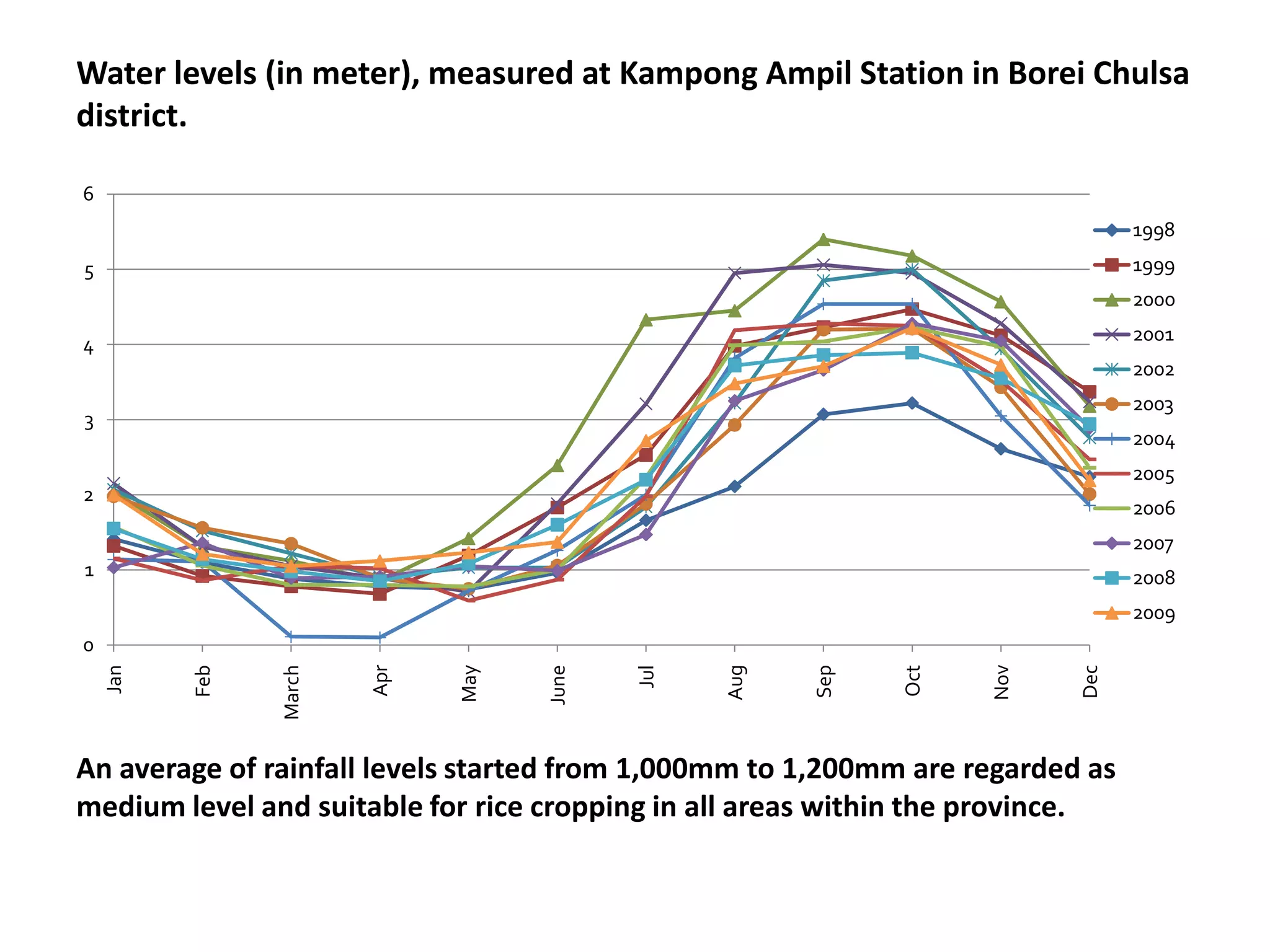
Water levels (in meter), measured at Kampong Ampil Station in Borei Chulsa
district.

6
                                                                                1998
5                                                                               1999
                                                                                2000

4                                                                               2001
                                                                                2002
                                                                                2003
3
                                                                                2004
                                                                                2005
2
                                                                                2006
                                                                                2007
1                                                                               2008
                                                                                2009
0


                                                                   Nov
                              May


                                                 Aug
                        Apr


                                                                          Dec
    Jan


                March


                                                       Sep
                                    June


                                           Jul


                                                             Oct
          Feb


An average of rainfall levels started from 1,000mm to 1,200mm are regarded as
medium level and suitable for rice cropping in all areas within the province.
Preliminary findings (3)
• Even so, there still have victims of the flood
  and trapped with poverty. Poor families have
  tried to get addition incomes from off-village
  jobs in cities.
• Water privatization in Cambodia has been
  adopted through several legal frameworks.
• Groups of people have taken the opportunity
  and have tried to dominate water resource
  management.
Preliminary findings (4)
• It is found out that a good water management
  policy and participation from local farmer give
  large and sustainable use water resource.
• Farmer water user groups have been
  established.
Observation/Conclusion
• Water management and governance are believed
  to stay very critical.
• Government plays a very important role in water
  governance and fairly use of water
• Water governance is generally a new concept for
  local people.
• People has very poor knowledge on hydropower
• Livelihood is found to have huge dependency on
  river basin.
Thank you for your attention!

Livelihood Vulnerability and Sub-Government Position Analysis on the Possible Impacts of Mainstream Hydropower Development

  • 1.
    Livelihood Vulnerability andSub-Government Position Analysis on the Possible Impacts of Mainstream Hydropower Development (A case study of vulnerable livelihood in lowland area of Takeo Province, Cambodia) 2nd Mekong Forum on Water, Food and Energy 13-14 November 2012 Research Fellow: Socheath SOU
  • 3.
    Main Objectives • Toidentify the livelihood dependency of the communities living in the low-land area of Takeo Province on the Mekong mainstream, • To determine alternative livelihood options of those communities, • To examine sub-government’s position on hydropower development, and • To access the effectiveness of current water governance practices within the province.
  • 4.
    Key Questions (1) •How do rural communities make use the advantages of Mekong seasonal water’s regimes? At what level? • What are alternatives or livelihood options for those rural communities? • Do local governments are aware of the risks of hydropower development in the country or along the Mekong mainstream? How would they describe the costs/benefits of such the development?
  • 5.
    Key Questions (2) •What is the sub-national government position on hydropower issues? • What are the common practices of water governance in the area? • Would the current practices of water governance equally share benefits and risks? • Are there any challenges in local water governance in the province? • Are there any social inclusion and exclusion in decision making in the governance of water resources?
  • 6.
    Approaches • Engage ina wide-range of stakeholders, a so- called participatory approach, – sub-national government level and commune level, – local villagers who are living along the low-land area in Takeo Province – findings could be simply generalized into or reflected to the context of the water governance of the lower Mekong Basin in Cambodia
  • 7.
    Coverage Area • Theresearch will focus in four difference districts in Takeo Province residing in the low- land area, – Borei Chulsa, – Angkor Borie, – Koh Andeth and – Kirivong.
  • 8.
    Methods (1) • Theresearch uses qualitative and quantitative approach • Data will be derived from both secondary and primary data, – Household questionnaire based survey, – Community meetings, and – focus group discussions – Key informants will be made with all the relevant governments (sub-national government’s bodies) and NGOs agencies
  • 9.
    Methods (2) • Astudy case of the local water governance practices will be produced. • Field observations are also included in the data collection process. • A provincial consultation workshop
  • 10.
    Preliminary findings (1) •The man-made infrastructure mostly comes from a series of water canals and waterways • The province consists of the typical plain wet area for Cambodia, covering rice fields and other agricultural plantations. • Takeo’s economy consists basically of agricultural farming and its related sub-sector, including fishery, rice and fruit cropping.
  • 11.
    Preliminary findings (2) •The floods usually stay long period of times, from July to November • the increase of water level on the upper Mekong mainstream and heavy rainfall in Takeo Province • big dams in Mekong delta for agricultural purposes. • Flood frequency in these areas is very high and “living with the flood” can almost be considered a way of life for people living in the four districts.
  • 12.
    Water levels (inmeter), measured at Kampong Ampil Station in Borei Chulsa district. 6 1998 5 1999 2000 4 2001 2002 2003 3 2004 2005 2 2006 2007 1 2008 2009 0 Nov May Aug Apr Dec Jan March Sep June Jul Oct Feb An average of rainfall levels started from 1,000mm to 1,200mm are regarded as medium level and suitable for rice cropping in all areas within the province.
  • 13.
    Preliminary findings (3) •Even so, there still have victims of the flood and trapped with poverty. Poor families have tried to get addition incomes from off-village jobs in cities. • Water privatization in Cambodia has been adopted through several legal frameworks. • Groups of people have taken the opportunity and have tried to dominate water resource management.
  • 15.
    Preliminary findings (4) •It is found out that a good water management policy and participation from local farmer give large and sustainable use water resource. • Farmer water user groups have been established.
  • 16.
    Observation/Conclusion • Water managementand governance are believed to stay very critical. • Government plays a very important role in water governance and fairly use of water • Water governance is generally a new concept for local people. • People has very poor knowledge on hydropower • Livelihood is found to have huge dependency on river basin.
  • 17.
    Thank you foryour attention!