OPEN LOOP AND
CLOSE LOOP SYSTEM
Wyznytz L. Macabulos
CONTROL
SYSTEM
WHAT IS A CONTROL
SYSTEM?
A control system is defined as a system of devices that
manages, commands, directs, or regulates the behavior of
other devices or systems to achieve a desired result. A
control system achieves this through control loops, which
are a process designed to maintain a process variable at
a desired set point.
In other words, the definition of a control system can be
simplified as a system, which controls other systems.
3
3
TWO TYPES OF
CONTROL SYSTEMS:
 Open-loop control system
 Closed-loop control
system.
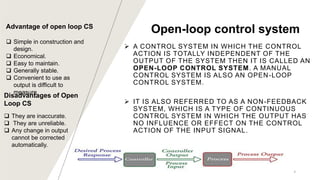
 A CONTROL SYSTEM IN WHICH THE CONTROL
ACTION IS TOTALLY INDEPENDENT OF THE
OUTPUT OF THE SYSTEM THEN IT IS CALLED AN
OPEN-LOOP CONTROL SYSTEM. A MANUAL
CONTROL SYSTEM IS ALSO AN OPEN-LOOP
CONTROL SYSTEM.
Open-loop control system
5
 IT IS ALSO REFERRED TO AS A NON-FEEDBACK
SYSTEM, WHICH IS A TYPE OF CONTINUOUS
CONTROL SYSTEM IN WHICH THE OUTPUT HAS
NO INFLUENCE OR EFFECT ON THE CONTROL
ACTION OF THE INPUT SIGNAL.
Advantage of open loop CS
 Simple in construction and
design.
 Economical.
 Easy to maintain.
 Generally stable.
 Convenient to use as
output is difficult to
measure
Disadvantages of Open
Loop CS
 They are inaccurate.
 They are unreliable.
 Any change in output
cannot be corrected
automatically.
EXAMPLE OF
AN OPEN
LOOP
CONTROL
SYSTEM
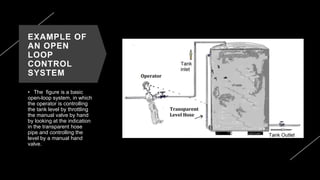
• The figure is a basic
open-loop system, in which
the operator is controlling
the tank level by throttling
the manual valve by hand
by looking at the indication
in the transparent hose
pipe and controlling the
level by a manual hand
valve.
CLOSED-LOOP CONTROL
SYSTEM
 A system In which the controlling action is dependent
on the output is called a Closed-loop system. In
which the output has an effect on input quantity in
such a manner that the input quantity will adjust itself
based on the output generated.
Advantage of closed
loop CS
 This system is less affected
by noise
 Highly accurate as any error
arising is corrected due to the
presence of a feedback
signal.
 This system is less affected
by noise.
Disadvantages of closed Loop CS
 They are complicated to design
 Require more maintenance
 They are costlier
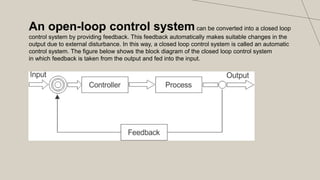
An open-loop control systemcan be converted into a closed loop
control system by providing feedback. This feedback automatically makes suitable changes in the
output due to external disturbance. In this way, a closed loop control system is called an automatic
control system. The figure below shows the block diagram of the closed loop control system
in which feedback is taken from the output and fed into the input.
EXAMPLE OF AN
CLOSED LOOP CONTROL SY
STEM
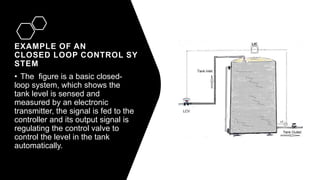
• The figure is a basic closed-
loop system, which shows the
tank level is sensed and
measured by an electronic
transmitter, the signal is fed to the
controller and its output signal is
regulating the control valve to
control the level in the tank
automatically.
Open Loop vs
Closed Loop
Control Systems
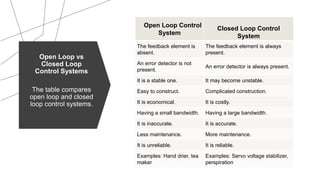
The table compares
open loop and closed
loop control systems.
Open Loop Control
System
Closed Loop Control
System
The feedback element is
absent.
The feedback element is always
present.
An error detector is not
present.
An error detector is always present.
It is a stable one. It may become unstable.
Easy to construct. Complicated construction.
It is economical. It is costly.
Having a small bandwidth. Having a large bandwidth.
It is inaccurate. It is accurate.
Less maintenance. More maintenance.
It is unreliable. It is reliable.
Examples: Hand drier, tea
maker
Examples: Servo voltage stabilizer,
perspiration
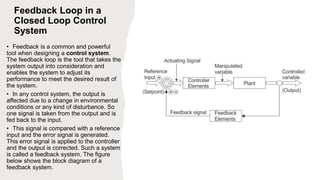
Feedback Loop in a
Closed Loop Control
System
• Feedback is a common and powerful
tool when designing a control system.
The feedback loop is the tool that takes the
system output into consideration and
enables the system to adjust its
performance to meet the desired result of
the system.
• In any control system, the output is
affected due to a change in environmental
conditions or any kind of disturbance. So
one signal is taken from the output and is
fed back to the input.
• This signal is compared with a reference
input and the error signal is generated.
This error signal is applied to the controller
and the output is corrected. Such a system
is called a feedback system. The figure
below shows the block diagram of a
feedback system.
When the feedback signal is positive then the system called a positive feedback system. For a
positive feedback system, the error signal is the addition of a reference input signal and a feedback
signal.
When the feedback signal is negative then the system is called a negative feedback system. For the
negative feedback system, the error signal is given by the difference between the reference input
signal and the feedback signal.
13

REPORTTTTTT.pptx

  • 1.
    OPEN LOOP AND CLOSELOOP SYSTEM Wyznytz L. Macabulos
  • 2.
  • 3.
    WHAT IS ACONTROL SYSTEM? A control system is defined as a system of devices that manages, commands, directs, or regulates the behavior of other devices or systems to achieve a desired result. A control system achieves this through control loops, which are a process designed to maintain a process variable at a desired set point. In other words, the definition of a control system can be simplified as a system, which controls other systems. 3 3
  • 4.
    TWO TYPES OF CONTROLSYSTEMS:  Open-loop control system  Closed-loop control system.
  • 5.
     A CONTROLSYSTEM IN WHICH THE CONTROL ACTION IS TOTALLY INDEPENDENT OF THE OUTPUT OF THE SYSTEM THEN IT IS CALLED AN OPEN-LOOP CONTROL SYSTEM. A MANUAL CONTROL SYSTEM IS ALSO AN OPEN-LOOP CONTROL SYSTEM. Open-loop control system 5  IT IS ALSO REFERRED TO AS A NON-FEEDBACK SYSTEM, WHICH IS A TYPE OF CONTINUOUS CONTROL SYSTEM IN WHICH THE OUTPUT HAS NO INFLUENCE OR EFFECT ON THE CONTROL ACTION OF THE INPUT SIGNAL. Advantage of open loop CS  Simple in construction and design.  Economical.  Easy to maintain.  Generally stable.  Convenient to use as output is difficult to measure Disadvantages of Open Loop CS  They are inaccurate.  They are unreliable.  Any change in output cannot be corrected automatically.
  • 6.
    EXAMPLE OF AN OPEN LOOP CONTROL SYSTEM •The figure is a basic open-loop system, in which the operator is controlling the tank level by throttling the manual valve by hand by looking at the indication in the transparent hose pipe and controlling the level by a manual hand valve.
  • 7.
    CLOSED-LOOP CONTROL SYSTEM  Asystem In which the controlling action is dependent on the output is called a Closed-loop system. In which the output has an effect on input quantity in such a manner that the input quantity will adjust itself based on the output generated. Advantage of closed loop CS  This system is less affected by noise  Highly accurate as any error arising is corrected due to the presence of a feedback signal.  This system is less affected by noise. Disadvantages of closed Loop CS  They are complicated to design  Require more maintenance  They are costlier
  • 8.
    An open-loop controlsystemcan be converted into a closed loop control system by providing feedback. This feedback automatically makes suitable changes in the output due to external disturbance. In this way, a closed loop control system is called an automatic control system. The figure below shows the block diagram of the closed loop control system in which feedback is taken from the output and fed into the input.
  • 9.
    EXAMPLE OF AN CLOSEDLOOP CONTROL SY STEM • The figure is a basic closed- loop system, which shows the tank level is sensed and measured by an electronic transmitter, the signal is fed to the controller and its output signal is regulating the control valve to control the level in the tank automatically.
  • 10.
    Open Loop vs ClosedLoop Control Systems The table compares open loop and closed loop control systems. Open Loop Control System Closed Loop Control System The feedback element is absent. The feedback element is always present. An error detector is not present. An error detector is always present. It is a stable one. It may become unstable. Easy to construct. Complicated construction. It is economical. It is costly. Having a small bandwidth. Having a large bandwidth. It is inaccurate. It is accurate. Less maintenance. More maintenance. It is unreliable. It is reliable. Examples: Hand drier, tea maker Examples: Servo voltage stabilizer, perspiration
  • 11.
    Feedback Loop ina Closed Loop Control System • Feedback is a common and powerful tool when designing a control system. The feedback loop is the tool that takes the system output into consideration and enables the system to adjust its performance to meet the desired result of the system. • In any control system, the output is affected due to a change in environmental conditions or any kind of disturbance. So one signal is taken from the output and is fed back to the input. • This signal is compared with a reference input and the error signal is generated. This error signal is applied to the controller and the output is corrected. Such a system is called a feedback system. The figure below shows the block diagram of a feedback system.
  • 12.
    When the feedbacksignal is positive then the system called a positive feedback system. For a positive feedback system, the error signal is the addition of a reference input signal and a feedback signal. When the feedback signal is negative then the system is called a negative feedback system. For the negative feedback system, the error signal is given by the difference between the reference input signal and the feedback signal.
  • 13.