




REPORTING ON CHILDREN
HAS CHANGE COME YET?
Tess Bacalla, PPI Training Director
Media play an important role in
protecting and promoting children’s
rights
Children’s issues have yet to
enter the mainstream media
Echo Maryadi, chairman of Alliance of Independent
Journalists
WHAT DRIVES MEDIA
REPORTING ON CHILDREN?
“Because children are afforded special
protection under the law, and because
of the notions of innocence and, purity
that we attach to them, the violation of
children is often very newsworthy.”
Editorial Guidelines and Principles for Reporting
on Children in the Media, Save the Children
“Different media outlets produce coverage
designed for their main consumers. Thus
different media outlets adopt styles that
reinforce stereotypes understood to
appeal to their particular audience group.”
Protecting the Rights of Children, Internews
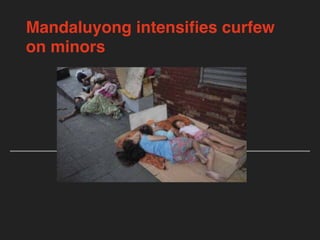
Mandaluyong intensifies curfew
on minors
Girl, 15, gang-raped by 38 men in
Malaysia and then arrested
“A 15-year-old schoolgirl has
reportedly been gang-raped by 38
men in an abandoned house in
Malaysia.
“She survived the horrific ordeal
but was then arrested by police in
the Kelantan region as part of
their investigation.”
Independent, May 2014
11-year-old charged with
stabbing classmate in France
UN: Violations against children
in conflict rose in 2015
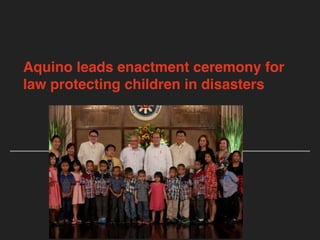
Aquino leads enactment ceremony for
law protecting children in disasters
Children bring perspectives to stories
which contest stereotypes and bring
other dimensions to such stories
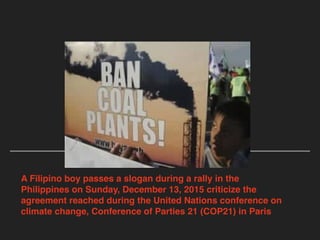
A Filipino boy passes a slogan during a rally in the
Philippines on Sunday, December 13, 2015 criticize the
agreement reached during the United Nations conference on
climate change, Conference of Parties 21 (COP21) in Paris
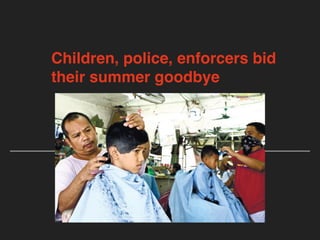
Children, police, enforcers bid
their summer goodbye
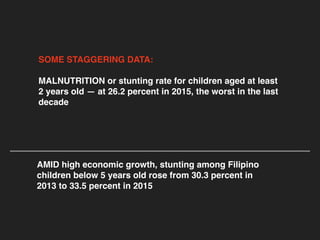
SOME STAGGERING DATA:
MALNUTRITION or stunting rate for children aged at least
2 years old — at 26.2 percent in 2015, the worst in the last
decade
AMID high economic growth, stunting among Filipino
children below 5 years old rose from 30.3 percent in
2013 to 33.5 percent in 2015
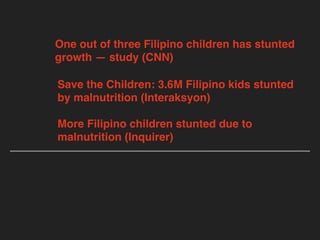
One out of three Filipino children has stunted
growth — study (CNN)
Save the Children: 3.6M Filipino kids stunted
by malnutrition (Interaksyon)
More Filipino children stunted due to
malnutrition (Inquirer)
Reporting children’s
plight as events/incidents
Coverage of child
abuse:
Which gets the most
press?
Three men arrested for gang-rape and
murder of 7-year-old girl in Paco, Manila
Physical abuse and sexual
abuse are often the most
featured, with fewer coverage
of corporal punishment at
school and emotional abuse.
Whose voices …?
SOURCES?
“Media should not report the
conditions of children only as
events but should continuously
report the process … leading to the
occurrence of these events.”
Nordicom (Nordic Information Centre for
Media and Communication Research )
Place child protection issues
in the minds of the public and
on political agendas
“We hope the media, as a major player in
this society, can develop this potential and
prioritize children, especially the
vulnerable and those who are most
overlooked, so that their views and
opinions can be heard.”
UNICEF chief representative Angela Kearney
It’s time to reframe our stories on
children …
Mainstream children’s issues in our
coverage
IT’S TIME FOR CHANGE!

Reporting on Children, Has change come yet?

  • 1.
    REPORTING ON CHILDREN HASCHANGE COME YET? Tess Bacalla, PPI Training Director
  • 2.
    Media play animportant role in protecting and promoting children’s rights
  • 3.
    Children’s issues haveyet to enter the mainstream media Echo Maryadi, chairman of Alliance of Independent Journalists
  • 4.
  • 5.
    “Because children areafforded special protection under the law, and because of the notions of innocence and, purity that we attach to them, the violation of children is often very newsworthy.” Editorial Guidelines and Principles for Reporting on Children in the Media, Save the Children
  • 6.
    “Different media outletsproduce coverage designed for their main consumers. Thus different media outlets adopt styles that reinforce stereotypes understood to appeal to their particular audience group.” Protecting the Rights of Children, Internews
  • 7.
  • 8.
    Girl, 15, gang-rapedby 38 men in Malaysia and then arrested
  • 9.
    “A 15-year-old schoolgirlhas reportedly been gang-raped by 38 men in an abandoned house in Malaysia.
  • 10.
    “She survived thehorrific ordeal but was then arrested by police in the Kelantan region as part of their investigation.” Independent, May 2014
  • 11.
  • 12.
    UN: Violations againstchildren in conflict rose in 2015
  • 13.
    Aquino leads enactmentceremony for law protecting children in disasters
  • 14.
    Children bring perspectivesto stories which contest stereotypes and bring other dimensions to such stories
  • 15.
    A Filipino boypasses a slogan during a rally in the Philippines on Sunday, December 13, 2015 criticize the agreement reached during the United Nations conference on climate change, Conference of Parties 21 (COP21) in Paris
  • 16.
    Children, police, enforcersbid their summer goodbye
  • 17.
    SOME STAGGERING DATA: MALNUTRITIONor stunting rate for children aged at least 2 years old — at 26.2 percent in 2015, the worst in the last decade AMID high economic growth, stunting among Filipino children below 5 years old rose from 30.3 percent in 2013 to 33.5 percent in 2015
  • 18.
    One out ofthree Filipino children has stunted growth — study (CNN) Save the Children: 3.6M Filipino kids stunted by malnutrition (Interaksyon) More Filipino children stunted due to malnutrition (Inquirer)
  • 19.
  • 20.
    Coverage of child abuse: Whichgets the most press?
  • 21.
    Three men arrestedfor gang-rape and murder of 7-year-old girl in Paco, Manila
  • 22.
    Physical abuse andsexual abuse are often the most featured, with fewer coverage of corporal punishment at school and emotional abuse.
  • 23.
  • 24.
    “Media should notreport the conditions of children only as events but should continuously report the process … leading to the occurrence of these events.” Nordicom (Nordic Information Centre for Media and Communication Research )
  • 25.
    Place child protectionissues in the minds of the public and on political agendas
  • 26.
    “We hope themedia, as a major player in this society, can develop this potential and prioritize children, especially the vulnerable and those who are most overlooked, so that their views and opinions can be heard.” UNICEF chief representative Angela Kearney
  • 27.
    It’s time toreframe our stories on children … Mainstream children’s issues in our coverage
  • 28.